




Introduction
Chronic diseases, such as obesity, diabetes, and cardiovascular conditions remain the leading causes of mortality globally.1 Although several key risk factors, primarily dietary factors, have been identified,Reference Afshin, Sur and Fay2,Reference Vaduganathan, Mensah, Turco, Fuster and Roth3 they do not fully explain the growing burden of these diseases. The Developmental Origins of Health and Disease (DOHaD) hypothesis suggests that chronic disease susceptibility is shaped by exposures occurring during sensitive developmental windows, including the preconception period.Reference Barker4
Within DOHaD, the role of maternal nutrition in shaping offspring health has been extensively studied.Reference Stephenson, Heslehurst and Hall5–Reference Miliku, Felix and Voortman12 Evidence from cohort studies demonstrates that maternal dietary patterns, macro- and micronutrient intakes, and adverse exposures (e.g., exposure to famine, pro-inflammatory diets, and ultra-processed food consumption) are associated with birth outcomes and long-term child cardiometabolic, cognitive, and respiratory health.Reference Stephenson, Heslehurst and Hall5–Reference Morales-Suarez-Varela and Rocha-Velasco17 Randomized controlled trials have further demonstrated the impact of maternal preconception and prenatal nutrition interventions.Reference Crovetto, Nakaki and Arranz18–Reference Mintjens, Van Poppel and Groen21 The depth of this literature has supported multiple systematic reviews and meta-analyses,Reference Xu, Wang and Bian6,Reference Abdollahi, Soltani, De Souza, Forbes, Toupchian and Salehi-Abargouei7,Reference Veena, Gale, Krishnaveni, Kehoe, Srinivasan and Fall14,Reference Thorne-Lyman and Fawzi15,Reference Aziz Ali, Genkinger and Kahe19,Reference Saville, Dulal and Miller20 and maternal diet is now widely recognized as a critical component of the early-life environment.
In contrast, paternal nutritional exposures remain understudied. Emerging evidence suggests that paternal preconception health may influence offspring health through direct mechanisms such as sperm epigenetic modificationsReference Billah, Khatiwada, Morris and Maloney22–Reference L.Charest, Tessougue and Lessard27 and indirect mechanisms, such as placental alterations.Reference Skerrett-Byrne, Pepin and Laurent28–Reference Jazwiec, Patterson and Ribeiro30 Animal models demonstrate that paternal high-fat, high-sugar, or low-protein diets can induce adverse metabolic phenotypes in offspring,Reference César, Sertorio and De Souza31,Reference Watkins and Sinclair32 while targeted nutritional interventions may mitigate these effects.Reference Freitas, Dos Reis Araujo and Vettorazzi33–Reference Chleilat, Schick, Deleemans and Reimer35 Human evidence, however, remains limited and largely observational, with many studies focusing on historical famine exposure.Reference Kaati, Bygren and Edvinsson36–Reference Hu, Cui and Zhang38 For instance, the Överkalix Study reported reduced cardiovascular mortality in offspring of fathers exposed to food scarcity during their slow growth period.Reference Kaati, Bygren and Edvinsson36 In contrast, studies from the Great Chinese Famine indicated an increased risk of obesity and metabolic syndrome in the offspring of famine-exposed fathers.Reference Yan, Hou and Wu37,Reference Hu, Cui and Zhang38
Notably, paternal and maternal diets and lifestyle factors are often correlated,Reference De Lauzon-Guillain, Krinitzki, Lioret and Charles39–Reference Van Dijk, Huijgen, Willemsen, Laven, Steegers and Steegers-Theunissen41 yet most studies do not adequately account for these shared exposures. Previous narrative, scoping, and systematic reviews, particularly those focused on fertility outcomes, have consistently highlighted the scarcity of well-designed prospective studies and male-focused randomized controlled trials examining nutrition.Reference Dimofski, Meyre, Dreumont and Leininger-Muller42–Reference Salas-Huetos, Bulló and Salas-Salvadó47 Compared with the substantial literature on maternal diet, research on paternal nutritional determinants of offspring health lags considerably behind. There is growing interest in paternal and couple-based preconception interventions, particularly in fertility clinic settings, underscoring the requirement for a clearer understanding of the current evidence base. Given these considerations, there is a critical need to systematically map what is known, and where substantial gaps remain, regarding paternal preconception nutrition and offspring health.
We therefore conducted an Evidence Gap Map (EGM) to describe and visually synthesize existing research on paternal preconception dietary exposures and offspring health outcomes. Rather than pooling effect estimates, this EGM aims to characterize the scope, quality, and distribution of the evidence to inform priority areas for future DOHaD research.
Methods
An EGM is a systematic evidence synthesis method used to map and visually display evidence and identify literature gaps related to a specific research question.Reference Campbell, Tricco and Munn48 To map the evidence, we first conducted a literature review following the Preferred Reporting Items for Systematic Reviews and Meta-Analyses (PRISMA) 2020 guidelines.Reference Page, McKenzie and Bossuyt49 We created the interactive EGM using the Evidence for Policy and Practice Information Centre (EPPI) Mapper.50 Our study protocol is published on the Open Science Framework.Reference Hart, Saha, Campisi and Miliku51
Eligibility criteria
Studies were included in this EGM if they assessed paternal diet or nutrition in the preconception period, and health outcome(s) in their offspring. No age constraints were imposed on the fathers or their offspring. We considered all dietary and nutritional interventions or exposures, as defined by the study authors. These included, but were not limited to, macronutrient-imbalanced diets (e.g., high-fat, low-protein), micronutrient supplementation or deficiency, undernutrition (e.g., fasting, famine exposure), consumption of food groups (e.g., vegetables, whole grains, fast food), and dietary indices (e.g., Healthy Eating Index). We included animal experimental studies with obesity as an exposure, provided that obesity was strictly diet-induced in the preconception period. However, because obesity has a multifactorial etiology in the human context and is not solely related to preconception diet, we excluded human studies that examined paternal obesity without any paternal dietary exposure. For studies with an intervention, we considered the comparators identified by the authors, and we did not make exclusions based on comparators.
We examined health outcomes in the offspring, with a focus on non-communicable chronic diseases and their indicators. We included birth outcomes (birthweight, gestational age at birth) and outcomes related to cardiovascular diseases (e.g., obesity, high blood pressure, dyslipidemia), diabetes mellitus (glucose tolerance, insulin resistance), mental health conditions (anxiety, depression), and neurodevelopment (autism, cognitive development). We excluded studies with cancer outcomes and health outcomes with an identified genetic (e.g., cystic fibrosis), chromosomal (e.g., trisomy 21), or congenital (e.g., congenital heart defect) etiology, as the main exposure of interest is diet.
Lastly, we included all original research methodologies, including experimental studies, observational studies (prospective and retrospective), and case-control studies. Only published studies were included. We excluded qualitative research, opinion literature, case series, case reports, and conference abstracts. No exclusions were made by study year or setting.
Literature search
The literature search was conducted on September 3, 2024, in four electronic databases: Ovid MEDLINE (1946–present including ePub ahead of print, in-process, and other unindexed citations), Ovid EMBASE (1947–present), EBSCO CINAHL Plus with Full Text (1981–present) and Scopus (Elsevier). Reference lists of relevant reviews yielded by the search were also examined for inclusion on December 5, 2024.
The search strategy was developed in consultation with a health sciences librarian, using four concepts: fathers, preconception, diet, and offspring. It was initially developed in OVID Medline and subsequently translated to the other databases using their command languages. The search strategy is available in Supplementary Table S1.
All citations were imported to Covidence (Veritas Health Innovation Ltd.), an online software designed to facilitate literature reviews. Two reviewers independently screened each record for eligibility by title and abstract. For citations that met the eligibility criteria, the full text was retrieved and again independently screened by two reviewers. Conflicts were resolved by discussion with a third reviewer. Duplicate records were identified by Covidence, or manually by authors, and excluded.
Data extraction
Data was extracted independently by two reviewers. Any disagreements during data collection were resolved by discussion, or by a third reviewer if necessary. We extracted the following data from the studies: first author, year of publication, country, study design, sample size (fathers and offspring), paternal exposure/intervention, sex of offspring (male, female, or both), primary and secondary outcomes, and age of offspring at outcome assessments.
In the animal studies, we also extracted: diet composition, duration of intervention, maternal diet, and offspring diet. In the human studies, we also extracted: the mean paternal age or age range, mean paternal BMI, method of diet assessment (including the tool used and whether or not it was validated), time of diet assessment, and role of maternal diet in statistical analyses.
Quality assessment
Human studies were assessed for quality and risk of bias using the Newcastle–Ottawa Scale (NOS).Reference Wells, Shea and O’Connell52 The NOS Quality Assessment tools for cohort studies and case-control studies allow a maximum of 9 points to be awarded for domains including selection, comparability, exposure, and outcome. A score of 7–9 was considered high quality; 5–6 was considered moderate quality; and ≤4 was considered low qualityReference Wells, Shea and O’Connell52 (refer to Supplementary Table S2).
Results
The search of four databases resulted in 7169 total studies (Figure 1). Duplicates were identified by Covidence (n = 2962) and manually by authors (n = 27), yielding 4207 unique studies. After title and abstract screening, 3987 studies were excluded and 220 were sought for full text screening. As described in Figure 1, of the 220 studies, 159 were excluded for reasons such as not capturing preconception paternal nutrition or child health outcomes, being narrative reviews rather than original research, or if they were conference abstracts rather than full articles. This resulted in 61 articles being included through database screening. An additional 14 articles were identified through citation searching or other sources, yielding a total of 75 articles included in this EGM (Figure 1). Our EGM identified a lack of human studies (n = 15, 20%) compared to animal experimental studies (n = 60, 80%).
PRISMA flow chart of included studies (n = 75).

Long description
The flowchart begins with the identification phase, where studies are sourced from databases and registers, totaling 7169 studies. These include Scopus with 3121 studies, Embase with 2052 studies, MEDLINE with 1564 studies, and CINAHL with 432 studies. During this phase, 2962 references are removed due to duplicates identified by Covidence and manually. The screening phase follows, where 4207 studies are screened, and 3987 studies are excluded. This leaves 220 studies sought for retrieval. These 220 studies are assessed for eligibility, resulting in the exclusion of 159 studies for various reasons such as conference proceedings, wrong study design, wrong population, wrong exposure, wrong outcomes, wrong intervention, and non-English language articles. Finally, 61 studies are included in the review. Additionally, 13 references from other sources through citation searching are included, bringing the total studies included in the review to 74.
Human study characteristics
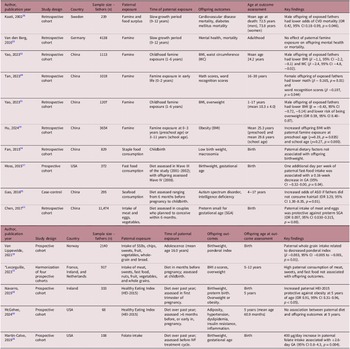
Of the human studies examining paternal nutrition, most were observational studies, with prospective (n = 8)Reference Chen, Zhu and Zhu53–Reference McGehee, Saben and Sims60 and retrospective, primarily historical, cohort studies (n = 6);Reference Kaati, Bygren and Edvinsson36,Reference Hu, Cui and Zhang38,Reference Yao, Yu, Li and Xu61–Reference Tan, Tan and Zhang64 and, one was a case-control study.Reference Gao, Cui, Han, Dai, Su and Zhang65 Eleven of the fifteen studies reported a statistically significant relationship between paternal dietary factors and offspring outcomes. We did not identify any randomized controlled trials nor systematic reviews. One human study was published in 2002, and the rest were published between 2015 and 2024. The human studies conducted in China formed the largest group (n = 7), followed by the United States (n = 3). Other studies came from France (n = 1), Ireland (n = 1), Norway (n = 1), Germany (n = 1), and Sweden (n = 1). The NOS Quality Assessment revealed n = 6 high quality studies,Reference Hu, Cui and Zhang38,Reference Navarro, Mehegan, Murrin, Kelleher and Phillips58,Reference Yao, Yu, Li and Xu61–Reference Tan, Tan and Zhang64 n = 7 moderate quality studies,Reference Kaati, Bygren and Edvinsson36,Reference Lecorguille, Schipper and O’Donnell55–Reference Moss and Harris57,Reference Van Lippevelde, Vik and Wills59,Reference McGehee, Saben and Sims60,Reference Gao, Cui, Han, Dai, Su and Zhang65 and n = 2 low quality studiesReference Chen, Zhu and Zhu53,Reference Fan, Huang, Cui, Gao, Song and Wang54 (see Figure 2, Supplementary Table S2). The characteristics and results of the human studies included are summarized in Table 1.
Characteristics and key findings of human studies included in the EGM

Table 1. Long description
The table presents a detailed summary of human studies examining the relationship between paternal nutrition and offspring outcomes. It includes columns for author and publication year, study design, country, sample size, paternal exposure, time of paternal exposure, offspring outcomes, age at outcome assessment, and key findings. The studies are observational, primarily cohort studies, with one case-control study. Most studies report statistically significant relationships between paternal dietary factors and offspring outcomes. The studies were conducted in various countries, with the largest group from China, followed by the United States. The table highlights the diversity in study designs, exposures, and outcomes, providing a comprehensive overview of the current research in this field.
*results only included for ELFE Cohort from France, as this was the only cohort that considered paternal preconception diet.
Almost half of the studies considered paternal famine exposure (n = 6), while others looked at the Healthy Eating Index-2015 (HEI-2015) (n = 2), folate intake (n = 1) or intake of different food groups (n = 6). Commonly studied food groups were fast food (n = 3), vegetables (n = 3), meat (n = 2), fruit (n = 2), sweets (n = 2), whole grains (n = 2), seafood (n = 1), eggs (n = 1), sugar-sweetened beverages (n = 1), and staple foods (n = 1). Paternal nutritional exposures were assessed using various methods. Six studies examined paternal famine exposure based on father’s birth year relative to a famine;Reference Kaati, Bygren and Edvinsson36,Reference Hu, Cui and Zhang38,Reference Yao, Yu, Li and Xu61–Reference Tan, Tan and Zhang64 other methods included using validated food frequency questionnaires (FFQ) (n = 3),Reference Martin-Calvo, Minguez-Alarcon and Gaskins56,Reference Navarro, Mehegan, Murrin, Kelleher and Phillips58,Reference McGehee, Saben and Sims60 diet questionnaires that were not validated (n = 4),Reference Lecorguille, Schipper and O’Donnell55,Reference Moss and Harris57,Reference Van Lippevelde, Vik and Wills59,Reference Gao, Cui, Han, Dai, Su and Zhang65 or interviews with trained research staff (n = 2).Reference Chen, Zhu and Zhu53,Reference Fan, Huang, Cui, Gao, Song and Wang54
Offspring outcomes were assessed at different time points, including at birth (n = 5), in childhood and adolescence (n = 5), and in early adulthood (n = 4), with n = 2 studies following offspring to mortality. Only n = 2 studies were longitudinal, considering offspring outcomes at more than one time point.Reference Lecorguille, Schipper and O’Donnell55,Reference Navarro, Mehegan, Murrin, Kelleher and Phillips58 The outcomes assessed in the human studies were birthweight (n = 5), gestational age or preterm birth (n = 4), small for gestational age (n = 1), overweight or obesity (n = 7), adiposity (n = 3), blood pressure (n = 1), lipid metabolism (n = 1), glucose metabolism (n = 1), insulin resistance (n = 1), mental health (n = 1), autism spectrum disorder (n = 1), cognitive development (n = 3), and mortality (n = 2) (Table 1).
Several human studies reported associations between paternal preconception nutrition and offspring health outcomes, which can be broadly grouped into macronutrient- and micronutrient-related exposures. For example, paternal exposure to famine, a proxy for undernutrition, was consistently associated with lower obesity riskReference Hu, Cui and Zhang38,Reference Yao, Yu, Li and Xu61,Reference Yao, Li, Jiang, Yu and Xu62 and reduced cardiovascular disease mortalityReference Kaati, Bygren and Edvinsson36 in male offspring, and lower cognitive scores in female offspring.Reference Tan, Tan and Zhang64 When looking at diet quality, it was found that higher preconception paternal HEI-2015 scores were protective against offspring obesity at 5 years, even after adjusting for maternal energy intake.Reference Navarro, Mehegan, Murrin, Kelleher and Phillips58 Paternal HEI-2015 was not associated with preterm birth.Reference Navarro, Mehegan, Murrin, Kelleher and Phillips58
Several studies examined intakes of specific food groups or nutrients. For example, higher paternal consumption of fast-food during adolescence was inversely associated with gestational age.Reference Moss and Harris57 Meanwhile, whole grain consumption during adolescence, and egg and meat consumption up to 6 months before conception were linked to favorable birth outcomes, including decreased ponderal index and reduced risk of preterm small-for-gestational age infants, respectively.Reference Chen, Zhu and Zhu53,Reference Van Lippevelde, Vik and Wills59 However, no consistent associations were seen between paternal intake of these, or other, food groups and offspring birthweightReference Fan, Huang, Cui, Gao, Song and Wang54,Reference Martin-Calvo, Minguez-Alarcon and Gaskins56–Reference Van Lippevelde, Vik and Wills59 In one case-control study, paternal non-consumption of seafood was associated with increased odds of autism spectrum disorder in offspring.Reference Gao, Cui, Han, Dai, Su and Zhang65 Among micronutrients, paternal folate intake prior to conception was positively associated with gestational age at delivery.Reference Martin-Calvo, Minguez-Alarcon and Gaskins56 Importantly, this association remained significant even after adjusting for maternal folate and other methyl donor intakes, suggesting an independent paternal effect.Reference Martin-Calvo, Minguez-Alarcon and Gaskins56 However, paternal folate intake was not significantly associated with birthweight.Reference Martin-Calvo, Minguez-Alarcon and Gaskins56 The inconsistencies across different studies may be due to the different study designs, study populations, and methodologies.
Role of maternal diet when studying paternal preconception diet
As the impact of maternal diet on offspring outcomes has been previously established in DOHaD,Reference Abdollahi, Soltani, De Souza, Forbes, Toupchian and Salehi-Abargouei7,Reference Miliku, Voortman, Van Den Hooven, Hofman, Franco and Jaddoe8,Reference Hu, Tylavsky and Kocak10–Reference Miliku, Mesu and Franco13,Reference Mensink-Bout, Van Meel and De Jongste16,Reference Morales-Suarez-Varela and Rocha-Velasco17 it is a necessary consideration when investigating the effect of paternal diet. Different statistical methods may be used to account for maternal nutritional exposures, which are often correlated with their paternal counterpart. Many of the studies which examined famine exposure identified dyads where the father was famine exposed, but the mother was unexposed, providing insight into the unique paternal effect.Reference Hu, Cui and Zhang38,Reference Yao, Yu, Li and Xu61–Reference Tan, Tan and Zhang64 Kaati et al. introduced maternal food availability as a covariate into their regression models.Reference Kaati, Bygren and Edvinsson36 Two prospective studies also treated maternal dietary variables as covariates.Reference Martin-Calvo, Minguez-Alarcon and Gaskins56,Reference Navarro, Mehegan, Murrin, Kelleher and Phillips58 Martin-Calvo et al., adjusted for maternal BMI and maternal dietary factors (folate intake, intake of other methyl donors, and energy intake) when examining the effect of paternal preconception folate intake on gestational age at birth.Reference Martin-Calvo, Minguez-Alarcon and Gaskins56 Navarro et al. adjusted for maternal energy intake when examining associations between paternal HEI-2015 and obesity at 5 years.Reference Navarro, Mehegan, Murrin, Kelleher and Phillips58 Importantly, the studies that considered maternal nutritional factors found a statistically significant relationship between paternal factors and offspring health outcomes (Table 1). The remaining studies did not account for the role of maternal dietary exposures.Reference Chen, Zhu and Zhu53–Reference Lecorguille, Schipper and O’Donnell55,Reference Moss and Harris57,Reference Van Lippevelde, Vik and Wills59,Reference McGehee, Saben and Sims60,Reference Gao, Cui, Han, Dai, Su and Zhang65 Future studies should appropriately consider maternal diet in their study design and in their statistical analyses, either considering it as a covariate, or potentially considering its moderating or mediating role.
Sex differences in offspring outcomes
Previous research within DOHaD has revealed that fetal programming is an offspring sex specific process, but there is conflicting evidence in the POHaD literature when examining differences by offspring sex.Reference Eberle, Kirchner, Herden and Stichling43 Nine out of fifteen human studies in this EGM did not report on sex differences,Reference Chen, Zhu and Zhu53–Reference McGehee, Saben and Sims60,Reference Gao, Cui, Han, Dai, Su and Zhang65 and two studies reported no sex differences in the outcomes of interest.Reference Hu, Cui and Zhang38,Reference van den Berg and Pinger63 Three studies revealed significant outcomes in male offspring only when fathers were exposed to famine: lower BMI in childhood,Reference Yao, Yu, Li and Xu61 lower BMI and waist circumference in adulthood,Reference Yao, Li, Jiang, Yu and Xu62 and reduced risk of cardiovascular mortality.Reference Kaati, Bygren and Edvinsson36 On the other hand, female offspring of famine exposed fathers had lower cognitive development, although the authors attributed this effect to post-natal mechanisms (i.e., son preference).Reference Tan, Tan and Zhang64 Other studies in this EGM did not report sex differences in offspring outcomes (Table 1). Therefore, further research should consider sex-differences when examining the effects of paternal programming.
Consideration of postnatal environment
It is equally important to consider the postnatal environment when examining offspring outcomes in childhood and adulthood. In our EGM, only one studyReference Hu, Cui and Zhang38 adjusted for offspring postnatal factors (physical activity, alcohol intake, dietary factors, and self-reported chronic disease) when examining the relationship between paternal famine exposure and adult offspring obesity. The remaining n = 9 studies with offspring outcomes later in life did not account for postnatal factors, representing a limitation (Table 1).
Animal study characteristics
The animal studies were published between 2006 and 2024. The most common intervention was diet-induced obesity (n = 42), typically with a high-fat diet. Several studies employed additional interventions with diet-induced obese fathers, including exercise (n = 7) and supplementation of fish oil (n = 3), methyl donors (n = 2), taurine (n = 2), capsaicin (n = 1), and calorie restriction (n = 1). Other interventions included high or low protein diet (n = 6), undernutrition (n = 3), fatty acid supplementation or deficiency (n = 3), micronutrient supplementation or deficiency (n = 3), high fructose or sucrose diet (n = 3), and prebiotic supplementation (n = 1).
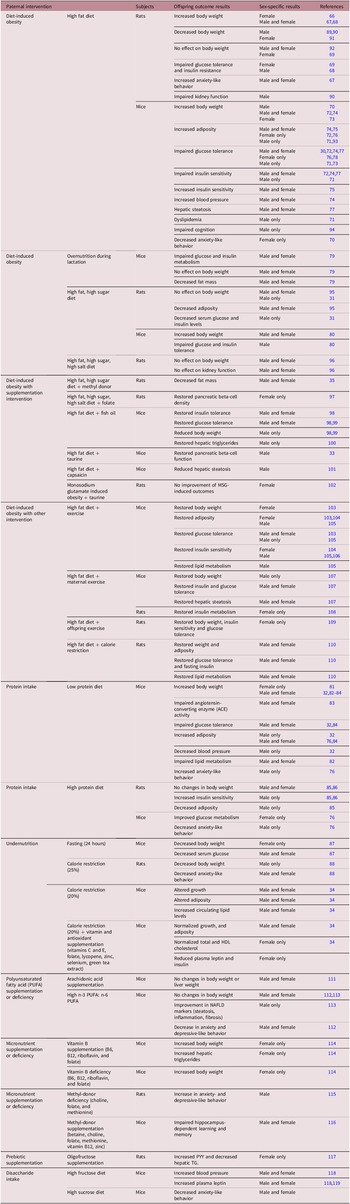
Common outcomes were related to weight or adiposity (n = 56), diabetes (n = 48), other cardiovascular outcomes (e.g., blood pressure) (n = 26), and neurocognitive and mental health outcomes (n = 8). The characteristics and results of the included animal studies are summarized in Table 2. In general, obesity-inducing (e.g. high fat) and low protein paternal preconception diets resulted in increased body weight and impaired glucose and insulin tolerance among male and female offspring.Reference Jazwiec, Patterson and Ribeiro30,Reference Watkins and Sinclair32,Reference Chambers, Morgan, Heger, Sharpe and Drake66–Reference Watkins, Dias and Tsuro84 Paternal high protein diet was associated with improved offspring insulin and glucose metabolism.Reference Crean, Senior and Freire76,Reference Chleilat, Schick and Deleemans85,Reference Gong, Bailbe and Bianchi86 Paternal undernutrition (fasting or calorie restriction) was shown to decrease offspring body weight, but interestingly increased circulating lipid levels.Reference McPherson, Fullston and Kang34,Reference Anderson, Riffle, Wilson, Travlos, Lubomirski and Alvord87,Reference Govic, Penman, Tammer and Paolini88
Characteristics and key findings of animal experimental studies included in the EGM
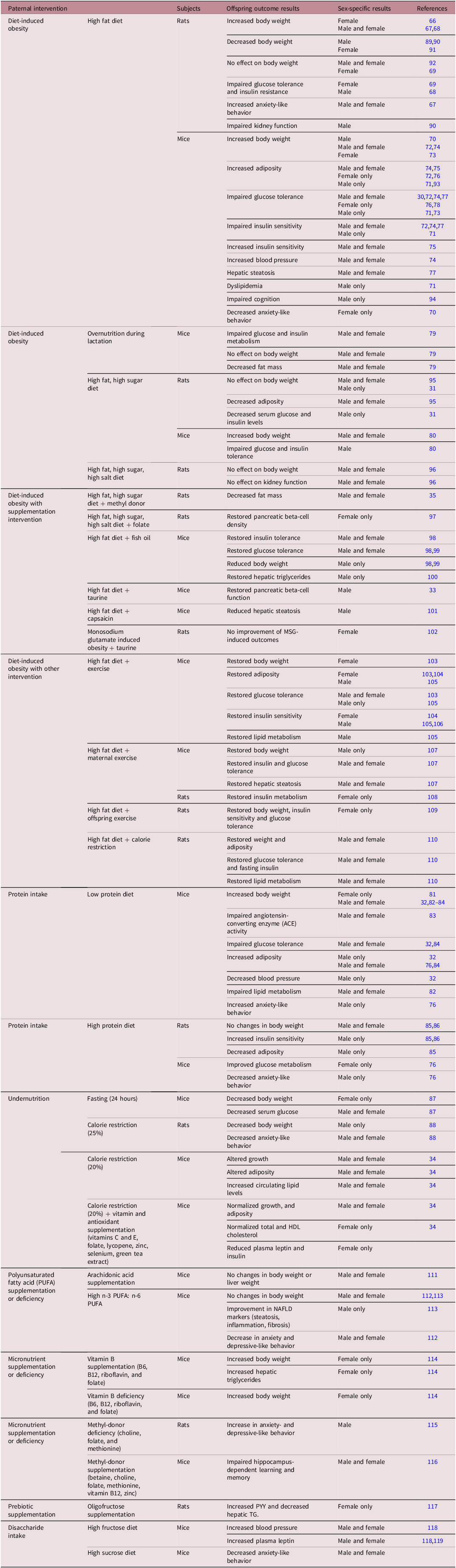
Table 2. Long description
A table with 12 rows and 6 columns summarizing characteristics and key findings of animal experimental studies. The columns include, species, paternal intervention, offspring outcome results, sex-specific results, and references. The table highlights outcomes related to weight or adiposity, diabetes, cardiovascular outcomes, and neurocognitive and mental health outcomes. Notable trends include increased body weight and impaired glucose and insulin tolerance among offspring from obesity-inducing and low protein paternal preconception diets. Paternal high protein diet improved offspring insulin and glucose metabolism, while paternal undernutrition decreased offspring body weight but increased circulating lipid levels.
Other studies had interventions involving paternal micronutrient and fatty acid intake, with heterogenous results.Reference Li, Shi and Jiang112–Reference Ryan, Henzel and Pearson116 Paternal B-vitamin deficiency and supplementation both resulted in increased body weight in female offspring only.Reference Sabet, Park and Iyer114 One experiment reported that paternal methyl-donor deficiency increased anxiety and depressive behavior in offspring,Reference McCoy, Jackson, Brewer, Moughnyeh, Smith and Clinton115 while another found that paternal methyl-donor supplementation impaired offspring cognitive function.Reference Ryan, Henzel and Pearson116 Increasing the ratio of omega-3 to omega-6 polyunsaturated fatty acids in the paternal diet resulted in improved liver functionReference Shi, Fan and Yang113 and decreased anxiety and depressive symptoms in the offspring.Reference Li, Shi and Jiang112
Interestingly, several studies examined the potential to mitigate the effects of paternal overnutrition through diet and exercise-based interventions.Reference Freitas, Dos Reis Araujo and Vettorazzi33–Reference Chleilat, Schick, Deleemans and Reimer35,Reference Li, Lu and Tsuprykov97–Reference Hu, Lin and Yang101,Reference Stanford, Rasmussen and Baer103–Reference Falcao-Tebas, Kuang and Arceri109,Reference Li, Shi and Jiang112 Paternal supplementation with methyl donors, fish oil, and taurine attenuated offspring outcomes, particularly insulin and glucose metabolism.Reference Freitas, Dos Reis Araujo and Vettorazzi33,Reference Chleilat, Schick, Deleemans and Reimer35,Reference Li, Lu and Tsuprykov97–Reference Shrestha, Dellett, Yang, Sharma and Ramalingam100,Reference Li, Shi and Jiang112 Paternal, maternal, and offspring exercise interventions also counteracted the negative effects of paternal diet-induced obesity.Reference Stanford, Rasmussen and Baer103–Reference Falcao-Tebas, Kuang and Arceri109 When undernourished fathers were supplemented with vitamins and antioxidants, offspring growth, adiposity, and lipid levels were normalized.Reference McPherson, Fullston and Kang34
Sex-specific effects were inconsistent in the animal studies (Table 2). For example, in mice model experiments with paternal high fat diet, two studies reported increased body weight among male and female offspring,Reference Fullston, Teague and Palmer72,Reference Masuyama, Mitsui, Eguchi, Tamada and Hiramatsu74 one reported this result among male offspring only,Reference Freire, Pulpitel and Clark70 and another found it in female offspring only.Reference da Cruz, Clarke and Curi73 These differences may be attributed to variability in study design (e.g., diet composition and timing of intervention), sample size, and species differences.
Lastly, all the results reported are for experiments with maternal control diets and therefore demonstrate an independent effect of paternal diet on offspring outcomes.
Quality assessment and evidence gap map
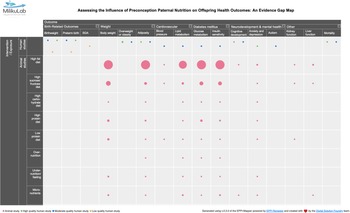
A partial static version of the EGM is displayed in Figure 2, whereas the interactive version can be found in Supplementary File S1. The rows show paternal preconception nutrition exposures (human studies) and interventions (animal studies), while the columns display offspring outcomes. The size of the bubbles represents the number of studies in each cell, with a larger bubble representing a higher number of studies. The color of the bubbles denotes the study design (pink for animal experimental studies) and additionally represents the quality of human observational studies. High, moderate, and low-quality human studies are represented by green, blue, and yellow bubbles, respectively. Six human studies were high quality,Reference Hu, Cui and Zhang38,Reference Navarro, Mehegan, Murrin, Kelleher and Phillips58,Reference Yao, Yu, Li and Xu61–Reference Tan, Tan and Zhang64 seven were moderate quality,Reference Kaati, Bygren and Edvinsson36,Reference Lecorguille, Schipper and O’Donnell55–Reference Moss and Harris57,Reference Van Lippevelde, Vik and Wills59,Reference McGehee, Saben and Sims60,Reference Gao, Cui, Han, Dai, Su and Zhang65 and two were low qualityReference Chen, Zhu and Zhu53,Reference Fan, Huang, Cui, Gao, Song and Wang54 (see Table S2). Additional filtering segments allow users to identify human studies by 1) observational study design (prospective, retrospective, or case–control); 2) consideration of maternal dietary factors; 3) consideration of postnatal factors. Importantly, no human studies with experimental designs (e.g., randomized controlled trials) nor systematic reviews were identified, representing a methodological gap.
Static version (partial) of Evidence Gap Map showing the number and quality of included studies. Rows represent paternal preconception nutrition intervention or exposures, grouped by human and animal studies. Columns represent offspring health outcomes. The full interactive version of the EGM is available in Supplementary File S1.

Figure 2. Long description
The matrix chart titled Assessing the Influence of Preconception Paternal Nutrition on Offspring Health Outcomes: An Evidence Gap Map features a grid layout with rows and columns. The rows represent different types of paternal diet interventions or exposures, such as high-fat, high-sucrose/fructose, high-carbohydrate, high-protein, low-protein, over-nutrition, under-nutrition/fasting, and micronutrients. The columns represent various health outcomes categorized into birth-related outcomes, weight, cardiovascular, diabetes mellitus, neurodevelopment and mental health, and other outcomes. Each cell within the matrix contains colored circles indicating the presence and quality of studies, with different colors representing high, moderate, and low-quality human studies, as well as animal studies. The chart highlights the distribution and gaps in evidence regarding the impact of paternal nutrition on offspring health outcomes.
The EGM reveals a substantial imbalance between the volume of animal and human studies, with the former far outnumbering the latter. Moreover, only a subset of human studies were of high quality, underscoring the urgent need for well-designed, longitudinal studies within the field of POHaD. The EGM identified that micronutrient exposures were rarely examined in human studies, with only one study assessing paternal folate intake.Reference Martin-Calvo, Minguez-Alarcon and Gaskins56 Furthermore, overall diet quality was evaluated in just two human studies, both using the HEI-2015.Reference Navarro, Mehegan, Murrin, Kelleher and Phillips58,Reference McGehee, Saben and Sims60 Notably, no studies examined paternal data-driven dietary patterns or diet quality indices other than HEI-2015, which poses a significant gap. Lastly, animal studies have already shown the positive impacts of dietary interventions in male mice, emphasizing the need for randomized control trials in humans during the preconception period.
In summary, most human studies focused on birth and weight-related outcomes, with only one study assessing additional cardiovascular measures such as blood pressure, dyslipidemia, and diabetes mellitus.Reference McGehee, Saben and Sims60 Evidence from animal models demonstrates that paternal preconception diet can influence these cardiometabolic outcomes, highlighting the need for targeted human studies. Mental health outcomes were examined in just one human study,Reference van den Berg and Pinger63 despite multiple animal studies supporting a potential link. No human studies investigated kidney or liver function, and neither human nor animal research explored respiratory outcomes in offspring despite their relevance within the DOHaD framework.Reference Yuan, Tao and Wang120,Reference Azad and Kozyrskyj121 These gaps, as visualized in the EGM and compounded by the limited proportion of high-quality human evidence, represent priority areas for future DOHaD research to test mechanistic hypotheses and inform the design of longitudinal and interventional studies.
Discussion
To our knowledge, this is the first EGM to synthesize the literature on preconception paternal nutritional exposures and offspring health outcomes. This EGM demonstrates that paternal diet before conception is an underexplored but potentially important determinant of offspring health. The body of evidence is dominated by animal experiments, which consistently show a detrimental impact of paternal high-fat or low-protein diets on offspring adiposity and glucose metabolism, alongside promising findings that dietary supplementation or exercise interventions in fathers can mitigate these effects. In contrast, human studies remain few, methodologically limited, and narrow in scope, primarily examining famine exposure or selected food groups.
Our EGM identified several important gaps in the exposures and outcomes of human studies. Most studies examined isolated nutrients or food groups,Reference Fan, Huang, Cui, Gao, Song and Wang54–Reference Moss and Harris57,Reference Van Lippevelde, Vik and Wills59,Reference Gao, Cui, Han, Dai, Su and Zhang65 rather than comprehensive dietary exposures. No studies evaluated paternal data-driven dietary patterns, and many diet quality indices which are commonly studied in maternal DOHaD research (e.g. Mediterranean diet or DASH diet scores) were lacking.Reference Stephenson, Heslehurst and Hall5–Reference Abdollahi, Soltani, De Souza, Forbes, Toupchian and Salehi-Abargouei7,Reference Hu, Tylavsky and Kocak10,Reference Monthé-Drèze, Rifas-Shiman and Aris11 These exposures are critical in nutritional epidemiology for capturing the complex interplay of foods consumed together.Reference Shim, Oh and Kim122 Similarly, micronutrient exposures were rarely investigated, with only one human study assessing folate intake.Reference Martin-Calvo, Minguez-Alarcon and Gaskins56 The child health outcomes in the included studies were also narrow. Thus far, POHaD studies have been focused on birth outcomes and weight-related/obesity outcomes, with minimal investigation into other relevant and high prevalent conditions such as cardiovascular risk factors, mental health, kidney and liver function, or respiratory outcomes, given the established influence of maternal diet on these childhood outcomes.
Animal studies provide mechanistic and interventional insights largely absent in human research. For example, many animal studies demonstrate that paternal high-fat diets induce adverse metabolic phenotypes in offspring,Reference César, Sertorio and De Souza31,Reference Chambers, Morgan, Heger, Sharpe and Drake66–Reference Grandjean, Fourré, De Abreu, Derieppe, Remy and Rassoulzadegan80,Reference Lecomte, Maloney, Wang and Morris89–Reference De Castro Barbosa, Ingerslev and Alm91,Reference Ornellas, Bringhenti, Mattos, Mandarim-de-Lacerda and Aguila93–Reference Zhang, Hasan and Wu96 but the effect can be mitigated through targeted nutritional or lifestyle interventions (e.g., methyl donor or fish oil supplementation).Reference Freitas, Dos Reis Araujo and Vettorazzi33–Reference Chleilat, Schick, Deleemans and Reimer35,Reference Li, Lu and Tsuprykov97–Reference Hu, Lin and Yang101,Reference Stanford, Rasmussen and Baer103–Reference Falcao-Tebas, Kuang and Arceri109,Reference Li, Shi and Jiang112 Yet, equivalent exposures and interventions remain unstudied in human populations, hindering translation into clinical or public health contexts.
The findings of our EGM align with previously published reviews on paternal preconception health behaviors and offspring outcomes.Reference Eberle, Kirchner, Herden and Stichling43,Reference Carter, Schoenaker, Adams and Steel45 Both Eberle et al. and Carter et al. highlighted the lack of nutrition-focused paternal studies compared with other exposures such as BMI, age, and smoking.Reference Eberle, Kirchner, Herden and Stichling43,Reference Carter, Schoenaker, Adams and Steel45 For example, Carter et al., identified n = 65 observational studies, of which only n = 13 focused on nutritional exposures in relation to fertility outcomes, birth outcomes, and childhood health and cancer.Reference Carter, Schoenaker, Adams and Steel45 The authors further noted that less than half of the total included studies (n = 23) statistically adjusted for appropriate maternal exposures, thus introducing potential bias.Reference Carter, Schoenaker, Adams and Steel45
In contrast to these broader reviews, our EGM specifically focuses on paternal preconception dietary exposures and maps the methodological characteristics of the evidence base, including study design, quality appraisal, and the extent to which maternal confounding was addressed. This more targeted approach allows clearer identification of both topical and methodological gaps that must be addressed to advance the field.
Potential mechanisms
The mechanisms through which paternal diet influences offspring health are increasingly understood to involve both direct and indirect pathways. Here, we focus on paternal diet-induced epigenetic modifications to sperm (direct mechanism), and placental alterations (indirect mechanism).
Intervention studies in men have shown that even short-term dietary changes, e.g. increasing intake of olive oil, vitamin D, and omega-3 fatty acids, can modify the sperm small non-coding RNA (sncRNA) landscape, including genes involved in fatty acid metabolism.Reference Vaz, Burton and Kermack123 Similarly, a high-sugar diet intervention has been shown to rapidly alter sperm motility and sncRNA profiles, underscoring the sensitivity of human sperm to nutritional exposures.Reference Nätt, Kugelberg and Casas124
Animal studies reinforce these findings, demonstrating that paternal diets high in fat or sugar, or deficient in protein, can reprogram the sperm epigenome and have lasting metabolic consequences for offspring.Reference Carone, Fauquier and Habib125–Reference Wu and Suzuki127 Such changes have been linked to alterations in imprinted gene methylation, particularly in loci related to growth regulation, and shifts in seminal plasma composition.Reference Morgan, Eid and Holmes128–Reference Soubry, Guo and Huang130
Experimental evidence also supports a potential indirect pathway of paternal programming via the placenta, a critical organ for fetal development.Reference Skerrett-Byrne, Pepin and Laurent28 Studies employing a paternal high-fat diet have demonstrated an impact on placental development, resulting in impaired blood vessel development and placental hypoxia,Reference Jazwiec, Patterson and Ribeiro30 changes in cellular composition,Reference Deshpande, Bera, Khambata and Balasinor29 and changes in the expression of critical nutrient transporters.Reference Jazwiec, Patterson and Ribeiro30,Reference Claycombe-Larson, Bundy and Roemmich131 Further studies have demonstrated that paternal high-fat diet programs epigenetic modifications within placental tissue.Reference Skerrett-Byrne, Pepin and Laurent28,Reference Deshpande, Bera, Khambata and Balasinor29,Reference Claycombe-Larson, Bundy and Roemmich131,Reference Pepin, Lafleur, Lambrot, Dumeaux and Kimmins132 These findings suggest that paternal nutritional status may influence offspring development not only through sperm-mediated epigenetic transmission, but also through modulation of placental gene expression, structure, and function.
Beyond epigenetics, the paternal gut and seminal microbiome may contribute.Reference Capobianco and Pirrone133–Reference Argaw-Denboba, Schmidt and Di Giacomo135 Dietary factors can shape microbial communities, influencing metabolite availability for epigenetic processes and potentially affecting placental developmental and fetal growth.Reference Capobianco and Pirrone133–Reference Argaw-Denboba, Schmidt and Di Giacomo135 In animal models, disrupting the paternal microbiome has been shown to impair reproductive outcomes and reduce offspring fitness.Reference Argaw-Denboba, Schmidt and Di Giacomo135 Paternal diet-induced oxidative stress, which can damage to sperm DNA and alter seminal plasma composition, is another plausible mechanism contributing to intergenerational programming.Reference Watkins, Rubini, Hosier and Morgan136
Strengths and limitations
Our EGM has several strengths. It is the first to comprehensively map the evidence on preconception paternal nutrition and offspring health, integrating data from both human and animal studies. We used a rigorous methodology, following PRISMA 2020 guidelines, searching multiple databases and independently screening all articles. We conducted a quality assessment of the human studies using the NOS, allowing for the identification of potential bias, and enhancing validity and confidence in the results.
However, certain limitations should be acknowledged. We did not conduct a formal risk-of-bias assessment for animal studies, which may limit comparability across experimental findings. The objective of an EGM is to map and describe the breadth of evidence rather than to provide pooled effect estimates; therefore, no meta-analysis was undertaken. The small number and heterogeneity of human studies precluded quantitative synthesis, and this limitation likely explains the absence of prior systematic reviews in this field.
In addition, paternal exposures are often examined as secondary or sensitivity analyses within studies primarily designed to investigate maternal factors and may not be highlighted in titles or abstracts. Because our search strategy relied on paternal- and parental-related terminology in indexed fields, it is possible that some paternal findings embedded within maternal-focused studies were not captured. This limitation reflects a broader structural issue in DOHaD research, where paternal contributions are frequently underreported or treated as ancillary analyses rather than primary exposures of interest. Birth cohorts typically recruit women during pregnancy and often have lower participation from male partners; as a result, paternal dietary data are frequently unavailable, incomplete, or reported by their partners.Reference Easey, Gkatzionis, Millard, Tilling, Lawlor and Sharp137 Moreover, paternal variables are sometimes incorporated as negative controls in studies of maternal prenatal exposures, further emphasizing their secondary role in study design. Taken together, these structural and reporting limitations likely contribute to the underrepresentation of paternal dietary exposures in the literature and should be considered when interpreting the apparent scarcity of human evidence in this field.
Future directions
Addressing the gaps identified in this EGM will require both expansion of the evidence base and methodological strengthening. High-quality longitudinal studies that recruit men prior to conception and prospectively assess dietary exposures using validated tools are essential. These designs should incorporate comprehensive measurement of maternal diet, shared lifestyle factors, and postnatal environments to better distinguish independent paternal effects from correlated or mediated influences.Reference Huang, Low and Kee138
Couple-based approaches that jointly model maternal and paternal diet are particularly important, given the interdependence of parental behaviors. Maternal diet may function as a confounder, mediator, or moderator depending on the research question, and analytical strategies such as dyadic modelingReference Galovan, Holmes and Proulx139 can help account for this interdependence. Where feasible, causal inference approaches may further strengthen interpretation.
Researchers may draw on literature from other subfields within DOHaD which have extensively employed such methodologies. For example, studies examining paternal preconception exposure to environmental toxicants have more consistently addressed correlated maternal exposures, applied analytical approaches, and assessed a broader spectrum of child outcomes.Reference Braun, Messerlian and Hauser140,Reference Guo, Luo and Zhang141 These methodological advances provide a useful benchmark for the evolution of paternal nutrition research and highlight feasible strategies for strengthening causal inference in this emerging field.
Randomized controlled trials in men, particularly within fertility clinic settings, represent a promising and underutilized opportunity to test dietary interventions while integrating mechanistic biomarkers such as sperm epigenetic profiles, oxidative stress markers, and microbiome signatures. Expanding offspring outcomes beyond birthweight and adiposity to include cardiometabolic, neurodevelopmental, immune, kidney, and liver outcomes will also be critical for evaluating long-term clinical relevance. Accordingly, postnatal factors that contribute to these outcomes should be considered in study design and statistical methodologies. Studies should be appropriately powered for sex-stratified analyses in offspring outcomes, where appropriate, to better understand potential differential effects.
Dietary assessment should rely on validated tools administered directly to fathers, such as FFQs, repeated 24-hour recalls, dietary records, or AI enhanced - image assisted mobile applications during the preconception period. Many of the human studies included in this EGM relied on non-validated dietary measures, such as yes/no questions about food consumption,Reference Chen, Zhu and Zhu53,Reference Fan, Huang, Cui, Gao, Song and Wang54,Reference Gao, Cui, Han, Dai, Su and Zhang65 which reduce the precision with which paternal exposures can be linked to offspring outcomes. Use of a-priori dietary indices (e.g., Alternative Healthy Eating Index,Reference Chiuve, Fung and Rimm142 Mediterranean Diet ScoreReference Xu, Wang and Bian6) may improve comparability across studies, and analyses of specific nutrients should also account for overall dietary quality.
Finally, harmonization of existing cohort data and pooled individual-level analyses may help evaluate paternal findings currently embedded within maternal-focused studies. Expanding the scope and methodological rigor of this research will be critical to generate the evidence needed within DOHaD to shape paternal-focused preconception nutrition guidelines and interventions, an area with substantial potential to improve intergenerational health but currently underrepresented in science and policy.
Conclusion
This EGM shows that paternal preconception diet impacts offspring health, but the human evidence base is limited in both scope and quality. While animal studies provide robust proof-of-concept and mechanistic insights, translation to clinical and public health contexts is lacking. Expanding high-quality human research on paternal diet represents a missed but actionable opportunity for DOHaD science.
By identifying exposures and outcomes where evidence is most scarce, this work provides a roadmap for future studies. Advancing DOHaD research will be essential for developing paternal-inclusive preconception guidelines, public health interventions, and policies aimed at reducing chronic disease risk across generations.
Supplementary material
The supplementary material for this article can be found at https://doi.org/10.1017/S2040174426100592.
Acknowledgments
We would like to acknowledge the contribution of Glyneva Bradley-Ridout (librarian at the University of Toronto) to the development of the search strategy.
Author contribution
KM designed and managed this project. MH, SS and KM developed the search strategy. MH, SS and AK completed screening of articles. MH and SS completed data extraction and quality appraisal. MH and KM wrote the paper. SCC provided feedback in the conceptualization of the project. MH and KM have primary responsibility for the final content. All authors have read and approved the final manuscript.
Financial support
This work was supported by funding from the Heart and Stroke Foundation of Canada. MH was supported by a Canadian Graduate Research Scholarship - Master's award from the Canadian Institutes of Health Research. KM holds a Tier 2 Canada Research Chair in Nutrition and Child and Youth Health. The funding agencies had no role in the design and conduct of the study.
Competing interests
The authors declare no conflict of interest.



 Open access

