

Introduction
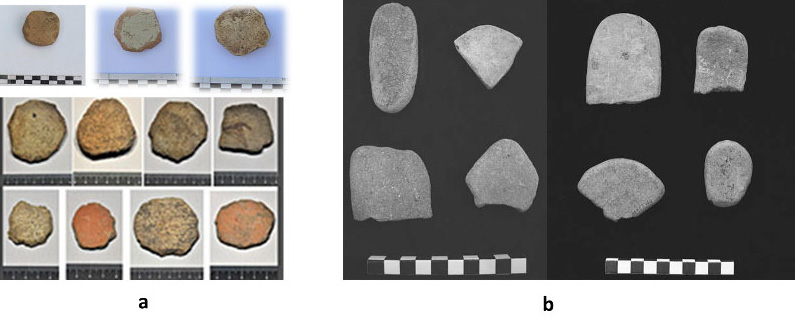
Excavation of sites across the Fertile Crescent from Syria to Iran has yielded ceramic objects, characterised by rounded, square or oval shapes. With the development of agriculture, around 7500 BC, came the need for counting and accounting in order to control and manage community surpluses and redistributive economies (Reference Schmandt-BesseratSchmandt-Besserat 2007: 162; 2009: 147). The rounded ceramic objects discovered at these sites are typically interpreted to be the 'tokens' used to administer these new agricultural economies (Figure 1). This short contribution assesses two alternative hypotheses:
1. These objects were deliberately manufactured as standardised artefacts intended for specific use(s), such as counting objects.
2. These objects are sherds of broken pottery vessels which have been transformed by long-term natural taphonomic processes.
Samples of reused potsherds: a) tokens from prehistoric sites in Iran (Fazeli Nashli & Moghimi 2013: fig. 4b); b) abraded potsherds possibly used as tools (van Gijn & Hofman 2008: fig. 2).

Recent fieldwork at the site of Tepeh Ferizi, Iran, permits consideration of these alternative scenarios and specifically the possible role of natural erosion and other taphonomic processes in the creation and movement of these objects.
Tepeh Ferizi
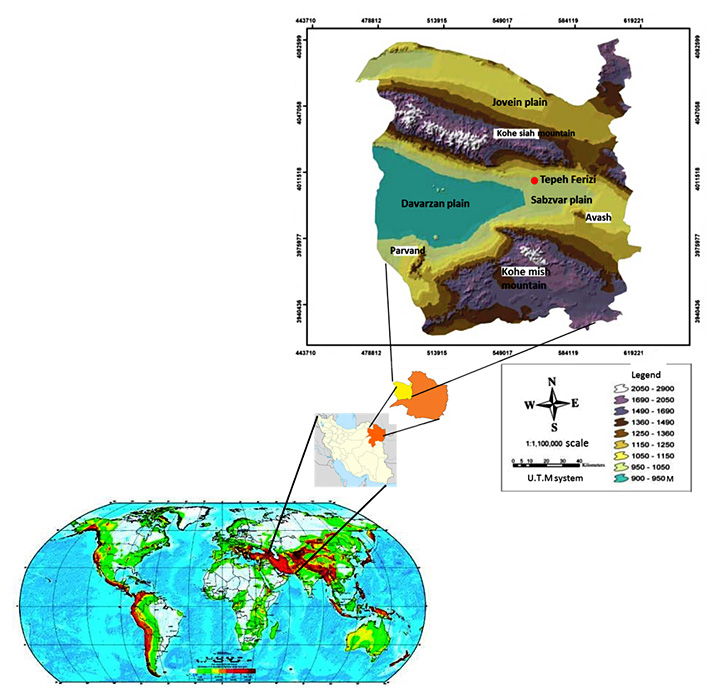
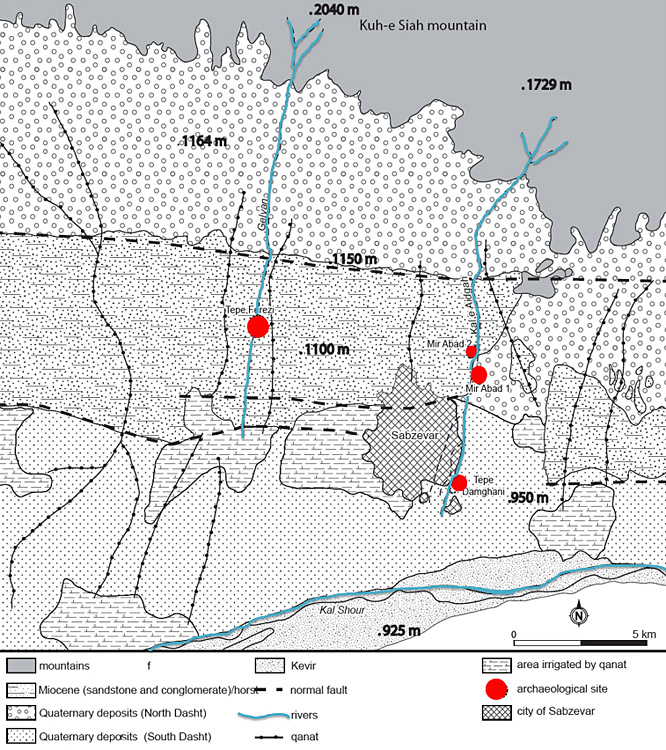
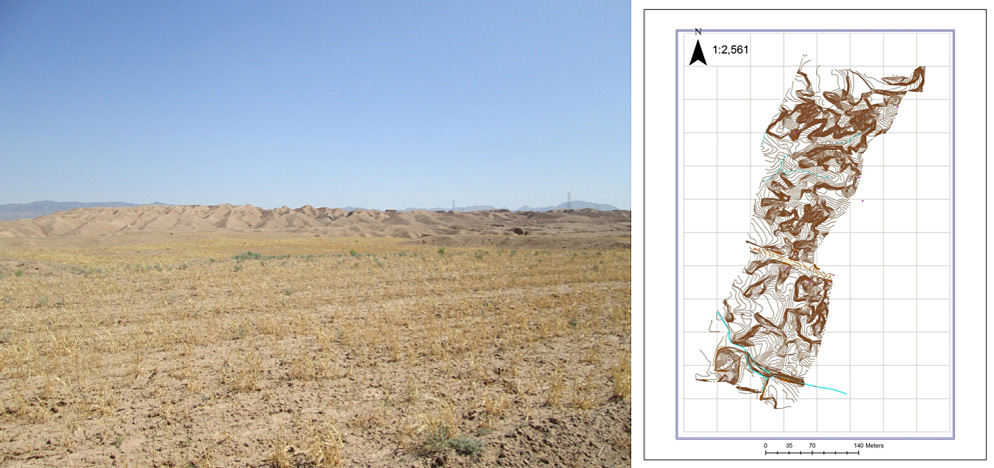
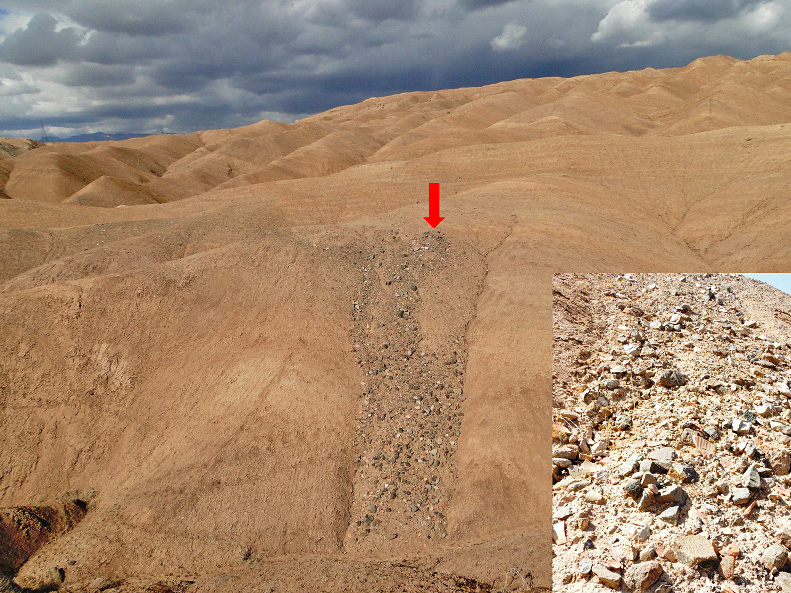
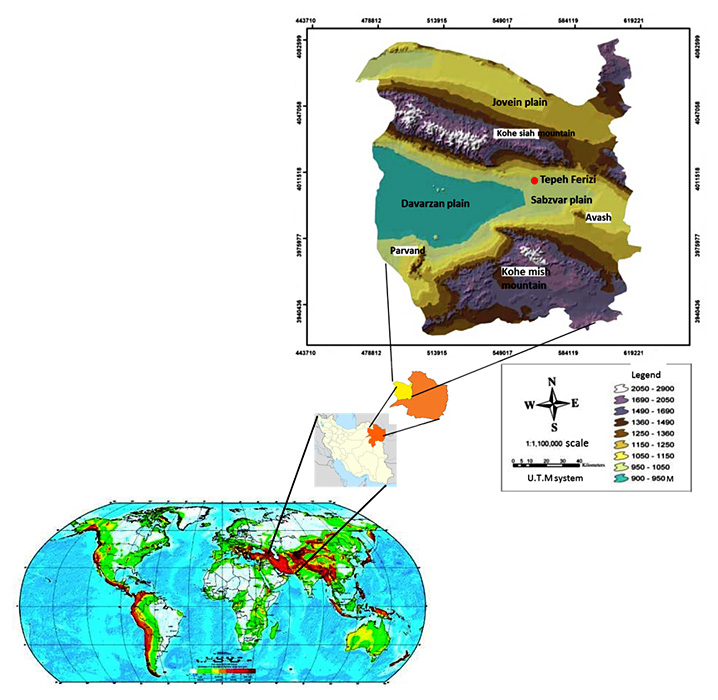
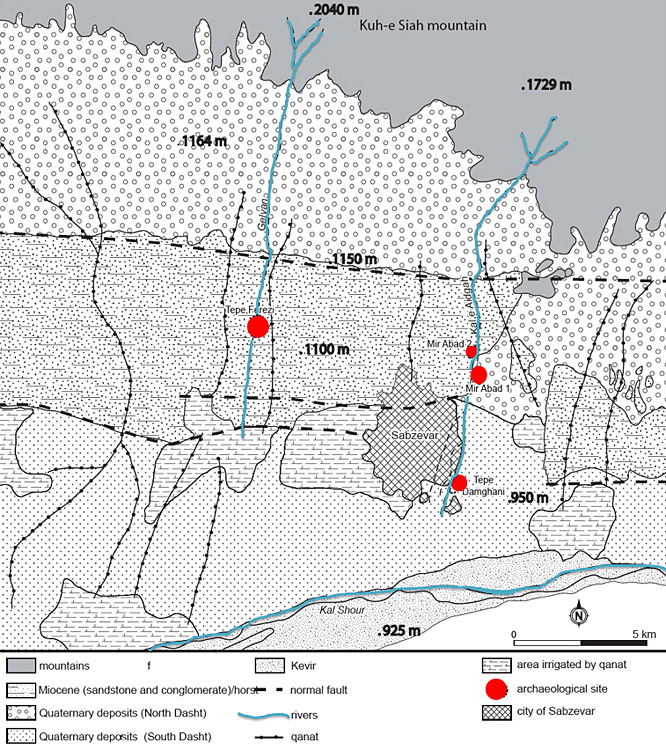
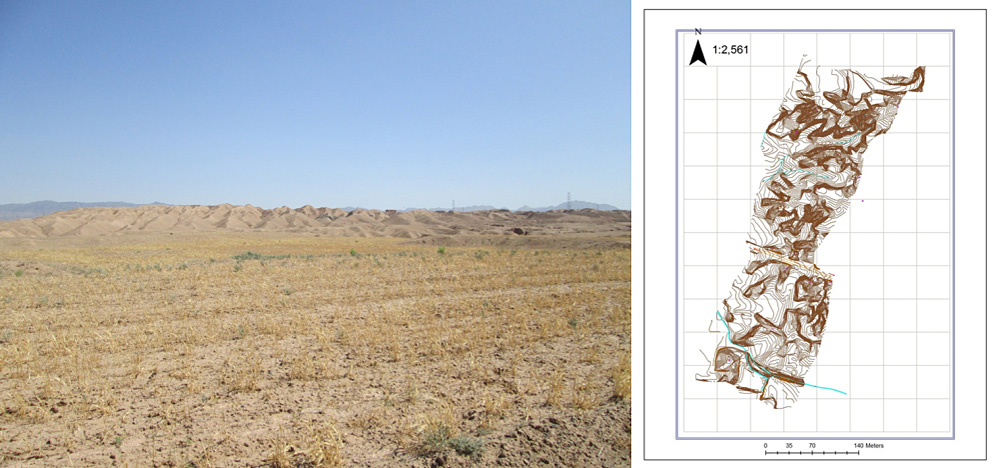
Tepeh Ferizi (E 57° 36' 50" , N 36° 15' 30") is located 5km north-west of Sabzevar in the west of the province of Khorasan Razavi, in north-eastern Iran (Figure 2). This site is positioned on a series of Miocene hills (Figure 3). On the evidence of surface survey, Tepeh Ferizi started life as a vast settlement related to the Bactrian-Margiana Archaeological Complex (BMAC; early second millennium BC) with artefacts dispersed over approximately 18ha (Garazhian & Papoli Yazdi 2005) (Figure 4). In 2013, surface survey was conducted to assess post-depositional processes at Tepeh Ferizi. This work led to the discovery of artefacts dating to the Late Chalcolithic through to the Late Bronze Age (late fourth to early second millennia BC) (Reference SaboriSabori 2013). Analysis of the dynamic geomorphological conditions indicates that the site and its artefacts have undergone significant transformation over time. Of specific interest here is the identification of a number of rounded ceramic objects.
The location of Tepeh Ferizi in the north-east of Iran.
Geomorphological context of the Sabzevar plain (Fouache et al. 2010: fig. 2).
Landscape and topography of Tepeh Ferizi.
Results
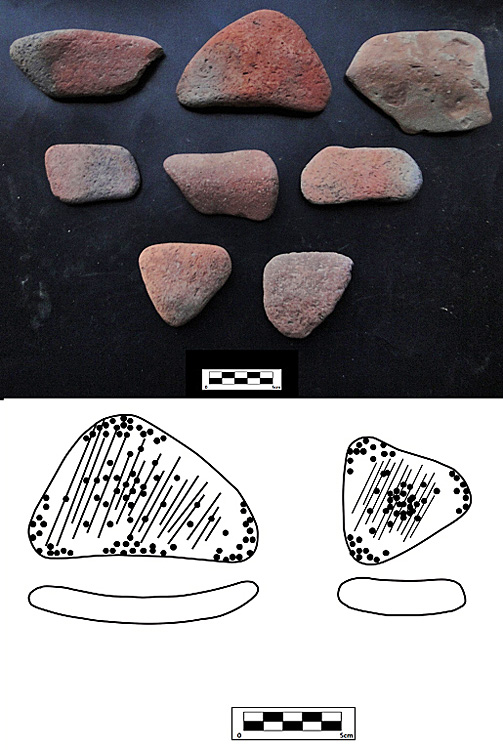
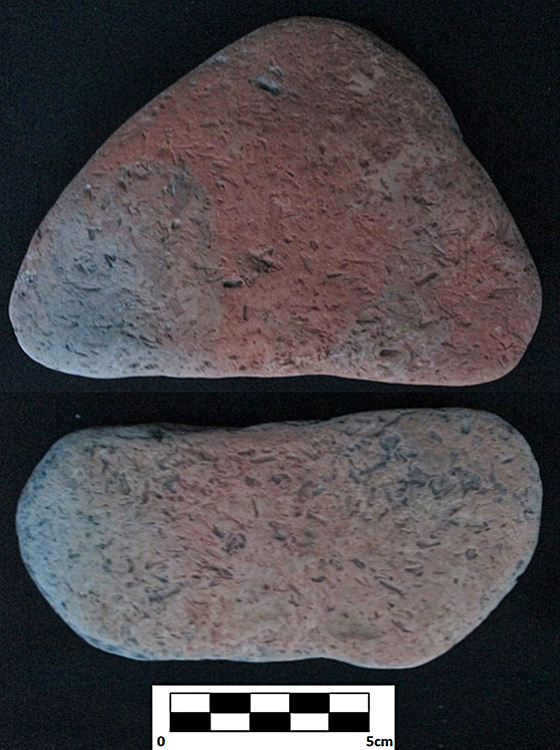
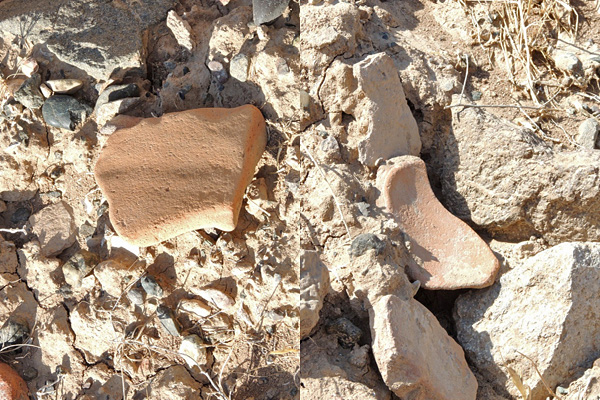
Samples of rounded ceramic objects were collected from the ground surface at Tepeh Ferizi (Figure 5). These vary from red to brown in colour and have a sand temper. They are triangular, oval or circular in shape; their edges have been rounded off and, due to long-term weathering, they have slightly porous surfaces (Figure 6). Additionally, we undertook random sampling of sedimentary accumulations on the site surface. The pottery and soil samples were studied in order to assess post-depositional processes on the Sabzevar plain. Our approach relies on geographical and geomorphological techniques to reconstruct taphonomic processes affecting the archaeological material.
Photographs and drawings of rounded potsherds.
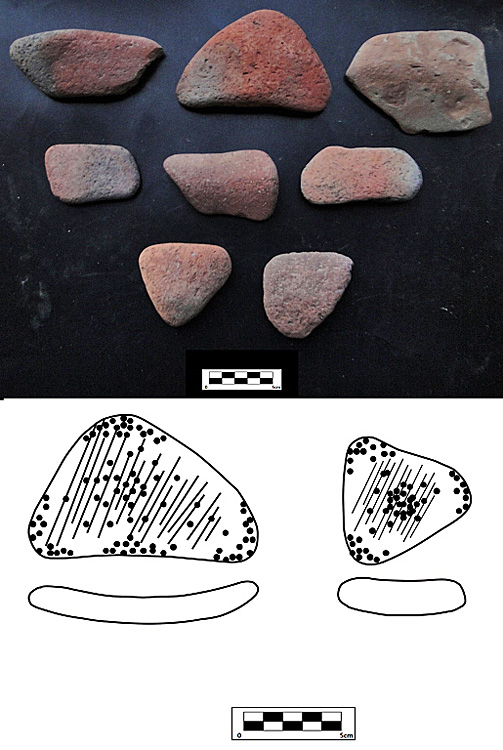
Rough surface of rounded potsherds, due to the climate and weathering conditions.

In general terms, the following can be observed about the ceramic objects and the contexts in which they are identified:
-
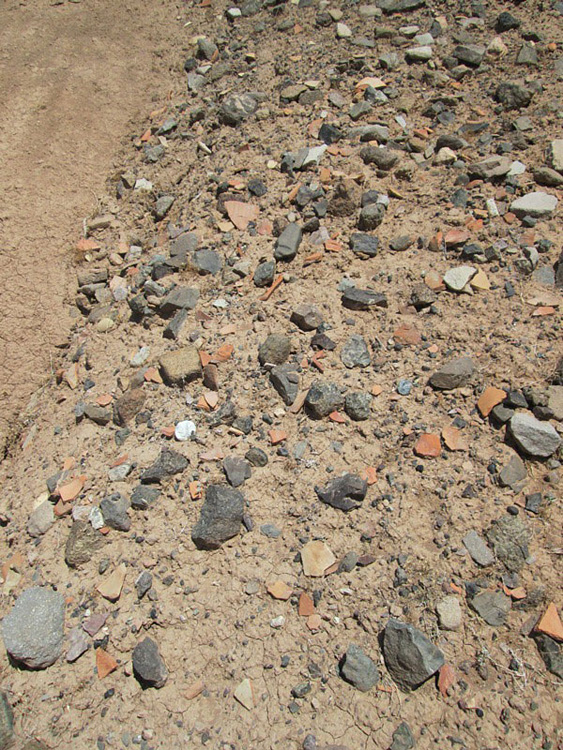
• The ceramic objects were detected in locations with accumulations of floodplain sediment and various rock types (Figure 7).
-
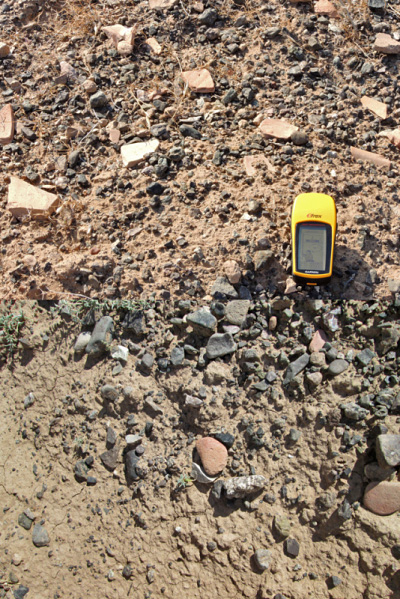
• The sediments in which the ceramic objects were discovered are large- or coarse-grained, whereas typical archaeological contexts on the site have a fine-grained sedimentary texture (Figure 8).
-
• Analysis of these large-grained sediments indicates that these deposits—and the ceramic objects in them—were transported by flows of floodwater from further upstream.
-
• The presence of ophiolite rock in these deposits indicates that they have been transported from the ophiolitic belt of Sabzevar, several kilometres north of Tepeh Ferizi (Figure 9).
-
• Some partly abraded pottery sherds were also detected (Figure 10).
Accumulation of floodplain sediments.
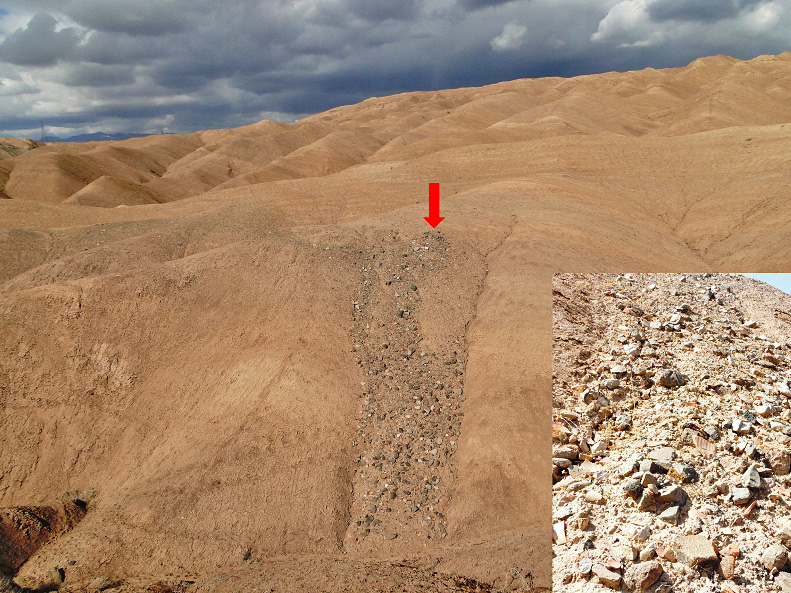
Coarse sediments and alluvial deposits at the site.

Rounded potsherds among pieces of ophiolitic rock.

Potsherd samples which had not completed the rounding process.

Discussion
The study of post-depositional processes at Tepeh Ferizi is important for understanding the significance of rounded ceramic objects. The research reported here shows that prehistoric surface evidence is significantly affected by natural geomorphological processes. Definitive comment on the nature of these ceramic objects would require microscopic analysis. Comparison, however, of these objects with those used as counting tokens and other tools reveals that the Tepeh Ferizi objects were shaped by natural—not cultural—processes. The presence of partially abraded pottery sherds in the same deposits supports this interpretation. As a result, the first hypothesis proposed above—which holds that the distinctive form of these objects results from their specific manufacture for a particular task such as counting objects—can be rejected.
Many prehistoric populations regarded pottery sherds as useful objects in their own right or as the raw material from which to make new artefacts. In some cases, abraded and rounded potsherds were used as tools for the shaping and finishing of vessels (López Varela et al. 2002). Reused pottery fragments are known from assemblages of the Halaf culture in Iraq (Merpert & Reference Munchaev and Merpert NMunchaev 1971), in Azerbaijan and from southern Turkmenistan (Altin-depe, Tekkem-depe) (Reference HlopinaHlopina 1974; Reference SkakunSkakun 1977).
Instead, we can accept the alternative hypothesis that the specific form (and location) of these ceramic objects was produced by the movement of water from upstream in the northern plains. Indeed, this latter location was more favourable than the area around Tepeh Ferizi for the formation of earlier prehistoric settlements.
It is the not the aim here to comment definitively on the specific function of these potsherds before or after their taphonomic transformation and transportation. Instead, the main objective here is to draw attention to the long-term, natural post-depositional processes which have contributed to the rounding and redefinition of these pottery sherds and their relocation in the landscape.
Acknowledgements
I would like to thank O. Garazhian, S. Alibaigi, M. Jahangardi, R. Bolandi, Z. Rahimi and M. Nikzad for their comments and help.