



INTRODUCTION
In Croatia the influenza season usually occurs between Christmas and Easter and influenza vaccination starts in October or November. Influenza is a mandatory notifiable disease according to Croatian legislation which includes laboratory-confirmed cases and reports based only on clinical investigation [1, 2]. Reporting of individual influenza cases is mandatory throughout the entire year, but during the influenza season the reporting is aggregated weekly by age groups. The Croatian National Institute of Public Health (CNIPH) acts as a national WHO influenza centre and is responsible for both epidemiological and virological surveillance of influenza.
According to the CNIPH Epidemiology Service data, from 2002 to 2009, about 11–14% of the Croatian population received vaccination against influenza each year [Reference Kaic3]. In the last decade only subunit and split trivalent influenza vaccines were used in Croatia.
In the 2010–2011 season the influenza vaccination campaign started on 12 November 2010. The influenza virus composition of the 2010–2011 seasonal trivalent influenza vaccine was as follows: A/California/07/2009 (H1 subtype), A/Perth/16/2009 (H3 subtype) and B/Brisbane 60/2008 viruses, as recommended by WHO in February 2010 [4]. The influenza A(H1) strain was the same as that used in the monovalent 2009–2010 pandemic vaccine, which showed good effectiveness in preventing A(H1N1)pdm09 influenza in 2009–2010 [Reference Valenciano5]. The CNIPH Epidemiology Service recommended influenza vaccination primarly for the following groups: all persons aged ⩾65 years, individuals aged ⩾6 months with the following chronic medical conditions: chronic heart and respiratory diseases, chronic diseases of metabolism (including diabetes mellitus), chronic kidney and liver diseases, haemoglobinopathy and immunosuppression. In addition, the influenza vaccine was recommended to people with severe obesity, children and adolescents (age 6 months to 18 years) on long-term therapy with medications containing acetylsalicylic acid, healthcare professionals, elderly residents of care homes and institutions providing care for the chronically ill (regardless of age, including children) and employees of the same institutions. Household members of persons recommended for influenza vaccination but who have contraindications for vaccination or persons providing medical care to such persons are also target groups for vaccination.
The Croatian Health Insurance Fund provided free influenza vaccination for these target groups. Croatian citizens can also receive vaccination outside the funded programme. Around 470 000 influenza vaccine doses were administered. There have been no influenza vaccine effectiveness (VE) studies using epidemiological methods in Croatia so far. The aim of this case-control study was to estimate the VE of the 2010–2011 trivalent seasonal influenza vaccine in the prevention of laboratory-confirmed influenza in Croatia.
METHODS
In the 2010–2011 influenza season virological surveillance was performed, as usual, by the CNIPH Virology Department, acting as a WHO national influenza laboratory. Samples from influenza like illness (ILI) patients were collected from 14 December 2010 to 1 June 2011 and tested for influenza. For reporting purposes the 2008 European Union ILI case definition was used: sudden onset of symptoms and at least one of the following four systematic symptoms (fever or feverishness, malaise, headache, myalgia) and at least one of the following three respiratory symptoms (cough, sore throat, shortness of breath) [6].
The selection of ILI patients from whom the samples were taken was made at the physician's discretion. However there was a general recommendation to take samples from patients with a severe clinical indication. Therefore most samples were taken in the hospital setting.
Nucleic acids were isolated from respiratory specimens and placed in viral transport medium (Hanks). RNA was extracted using an automated system QIAxtractor (Qiagen, USA).
Real-time reverse transcriptase–polymerase chain reaction (RT–PCR) was applied to the detection of viral RNA using a single-tube RT–PCR kit according to the manufacturer's instructions (Invitrogen SuperScript™ III Platinum® One-Step Quantitative kit, USA). Amplification and detection were performed with a 7500 Real Time PCR System machine (Applied Biosystems, USA).
Using random number tables we randomly selected 1000 patients from the ILI patients with a RT–PCR result and interviewed them by phone using a structured questionnaire. The study was approved by CNIPH Ethics Committee and all participants provided oral consent.
The following data were collected: date of birth, gender, 2010–2011 seasonal influenza vaccination status (including place of vaccination and name of the vaccinator), time elapsed between vaccination and disease onset, time elapsed between disease onset and specimen collection, information on admission to hospital, vaccination with seasonal and pandemic influenza vaccine in the previous 2009–2010 season, comorbidities, pregnancy status, smoking status (never, stopped more than a year ago, active smoker), if the patient has been vaccinated against influenza regularly for at least 2 years, and the reason for vaccination. In cases where the patient reported they had received an influenza vaccination, the vaccine provider was contacted and full information on vaccination was obtained (exact date of vaccination, name of the vaccine).
We classified ILI patients as a case if they tested positive for influenza virus by RT–PCR. We classified those testing negative as controls.
Patients were considered unvaccinated if there was <14 days between the date of vaccination and disease onset. Participants who had been interviewed were excluded from the VE analysis if they had contraindications for influenza vaccination, if there was an interval >7 days between disease onset and specimen collection, or this information was missing, and if the date of specimen collection was after week 14, 2011, the week after which influenza circulation was negligible. We excluded from the VE estimate patients with an interval unknown or >7 days between disease onset and specimen collection due to the fact that influenza virus shedding after day 7 is rare [Reference Valenciano7].
VE was estimated as (1 – OR) × 100%, where the odds ratio (OR) is the ratio of odds of cases being vaccinated to the odds of controls being vaccinated. We performed a complete case analysis where records with missing data were dropped. Multivariable logistic regression was used to calculate ORs and 95% confidence intervals (CIs). VE was adjusted for age, presence of a chronic condition (including pregnancy), sex, month of specimen collection and smoking status (current vs. non-current smoker).
Stata v. 12·0 (StataCorp LP, USA) was used for all analyses. Fisher's exact test was used to compare proportions, with P < 0·05 considered statistically significant.
Ethical standards
The authors assert that all procedures contributing to this work comply with the ethical standards of the relevant national and institutional committees on human experimentation and with the Helsinki Declaration of 1975, as revised in 2008.
RESULTS
In the 2010–2011 influenza season the CNIPH Epidemiology Service received 55281 ILI notifications via the routine communicable diseases surveillance system.
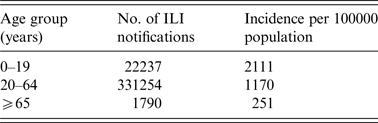
The incidence of ILI notifications, as reported via weekly aggregated reports, was highest in the youngest age group (0–19 years); 2% of the Croatian population in that age group had clinical influenza. ILI incidence in the 20–64 years age group was 1170/100 000 population, meaning that 1% of the Croatian population in that age group had clinical influenza. The lowest incidence was in persons aged ⩾65 years (0·25% of that age group had clinical influenza) (Table 1).
Influenza-like illness (ILI) notifications by age group, Croatia, season 2010–2011
Between 14 December 2010 and 1 June 2011 the CNIPH Virology Department tested samples from 3660 ILI patients for influenza. In 1692 ILI patients a direct immunofluorescence assay (DFA) was the method used for determining influenza. The RT–PCR method was used to determine influenza in 1968 ILI patients. Samples were sent from all 21 Croatian counties. Out of the 1968 patients, 872 (44%) were positive for influenza. Out of 1000 randomly selected ILI patients with a RT–PCR laboratory result, 785 patients were contacted by phone and interviewed. Of the 785 patients interviewed, 40 had contraindications for vaccination and were excluded from the VE analysis, as well as 250 patients whose interval between symptom onset and specimen collection was unknown or reported to be >7 days, and patients with laboratory results after week 14, 2011 (Fig. 1).
Flowchart of data exclusion for vaccine effectiveness analysis, influenza season 2010–2011, Croatia. RT–PCR, Reverse transcriptase–polymerase chain reaction; ILI, influenza-like illness.

A total of 495 ILI patients were included in the study. Of these, 217 (44%) were cases and 278 (56%) were controls. The median age of cases and controls was 27 years [interquartile range (IQR) 7–48 years] and 27·5 years (IQR 3–53 years), respectively (Table 2). Controls comprised 41·0% female, and cases 51·6% female (P = 0·023). Of controls 47·1% had presence of a chronic condition compared to 40·1% of cases (P = 0·122). With respect to delay between symptom onset and specimen collection, 24·1% of controls had a delay of 4–7 days as did 22·7% of cases (P = 0·749). Of controls, 55·0% of specimens were collected after week 5, 2011 compared to 62·2% of cases. Specimens were sent by medical specialists working in the hospitals for 98·9% of controls and 96·3% of cases.
Characteristics of cases and controls, vaccine effectiveness study, Croatia, season 2010–2011 (N = 495)

* For this record it was known that the delay between symptom onset and specimen collection was 3–6 days, but the exact number of days was unknown.
Influenza virus A(H1N1)pdm09 was predominantly circulating in the 2010–2011 season (Fig. 2).
Influenza cases by virus subtype by International Organization for Standardization (ISO) week of laboratory testing, Croatia, 2010–2011 (N = 495).

In total, 201 (92·6%) cases had A(H1N1)pdm09 influenza virus and 16 (7·4%) cases had influenza B virus confirmed by RT–PCR.
Of the 495 patients eligible for VE analysis, 34 (6·9%) were reported as vaccinated (12 cases, 22 controls) (P = 0·371).
Vaccination coverage varied by age group and status of cases and controls; of those aged ⩾65 years, 22·2% were vaccinated (15·0% of cases, 25·6% of controls) (Table 3). In the 0–17 years age group, vaccination coverage was low (2·6%), with only one vaccinated case.
Number and vaccination status of cases and controls by age group, vaccine effectiveness study, Croatia, season 2010–2011 (N = 495)

The crude VE against any influenza was 31·9% (95% CI −40·9 to 67·1) and against influenza A(H1N1)pdm09 it was 33·4 (−40·6 to 68·5) (Table 4). The fully adjusted VE estimates were 20·7% (95% CI −71·4 to 63·3) and 17·3% (95% CI −84·1 to 62·9) against any influenza and influenza A(H1N1)pdm09, respectively.
Crude and adjusted vaccine effectiveness of seasonal influenza vaccine against any influenza and against influenza A(H1N1)pdm09, Croatia, season 2010–2011

VE, Vaccine effectiveness; CI, confidence interval,
* April dropped for A(H1N1)pdm09 analysis (two observations).
Crude VE estimates against any influenza by age group were 65·1% (95% CI -215·6 to 96·2), −19·5% (95% CI −240·6 to 58·1) and 48·7% (95% CI −109·4 to 87·4) for the 0–17, 18–64 and ⩾65 years age groups, respectively (Table 5). Crude VE estimates against influenza A(H1N1)pdm09 were 63·2% (95% CI −236·1 to 96·0), −27·6% (95% CI −264·2 to 55·3) and 61·2% (95% CI −97·3 to 92·4) for the 0–17, 18–64 and ⩾65 years age groups, respectively.
Crude vaccine effectiveness of seasonal vaccine against influenza by age group, Croatia, season 2010–2011

CI, Confidence interval.
DISCUSSION
This test-negative case-control study suggests overall low VE in 2010–2011 for the seasonal influenza vaccine used in Croatia. Crude VE against any influenza was estimated at 31·9% (95% CI -40·9 to 67·1) for all ages (N = 495) and adjusted VE as 20·7% (95% CI −71·4 to 63·3). This is different from other 2010–2011 influenza VE estimates in Europe for all ages where results suggest moderate protection from 2010–2011 trivalent vaccine against medically attended ILI laboratory-confirmed influenza across Europe [Reference Kissling8, Reference Jiménez-Jorge9].
Age-specific crude VE estimates against any influenza and against influenza A(H1N1)pdm09 were higher in the 0–17 and ⩾65 years age groups than for those aged 18–64 years. The age-specific crude VE estimates against any influenza for the 0–17 and ⩾65 years age groups were 65·1% and 48·7%, respectively, and against influenza A(H1N1)pdm09 were 63·2% and 61·2%, respectively. The crude VE estimate for the 18–64 years age group was −19·5% against any influenza and −27·6% against influenza A(H1N1)pdm09. However, confidence intervals were wide for all age-specific estimates.
While the precision around the estimates was low, the estimates for the 0–17 and ⩾65 years age groups were comparable to estimates from a European multicentre case-control study [Reference Kissling8]. In the European multicentre study, estimates in the adult age range were also lower compared to the younger and older age groups.
In 2010–2011 influenza season there was a good match between the vaccine and circulating A and B influenza virus strains as reported by the Community Network of Reference Laboratories (CNRL) for Human Influenza in Europe [10]. Antigenic analysis of A(H1N1) viruses by HI (turkey RBCs) reported by CNRL in a summary report in March 2011 included test viruses from Croatia [11].
A very wide interval of the 95% CIs of the adjusted VE estimates indicates that the results of this retrospective study should be interpreted with caution and that a larger sample size is needed for more conclusive results.The precision of VE estimates in Croatia is influenced by the sample size and vaccination coverage. In addition to only a limited number of ILI patients with RT–PCR results available in the country, we interviewed only a sample of those patients. The questionnaire was administered retrospectively and it proved difficult to reach patients for the phone inteview after the influenza season ended. However, due to the questionnaire design, we were able to collect information on a variety of potential confounders and apart from the data on interval between disease onset and specimen collection, the data completeness was about 100%.
Vaccine coverage of trivalent seasonal influenza vaccine in controls in our study was 8% which is below the average Croatian influenza vaccine coverage of about 11% for this season.
The age distribution of the study population is different than the age distribution of the Croatian population. The proportion of older people is higher in the Croatian population than it is seen in this study population, which may explain the lower vaccine coverage.
The 2010–2011 VE study in Croatia is subject to the usual biases of an observational study. It uses the test-negative design, which is a design that still needs to be thoroughly validated. These biases have been described by other authors in detail [Reference Valenciano5, Reference Valenciano7, Reference Hak12]. In addition, the selection of patients to swab by clinicians was done at the discretion of the clinician, which may have introduced a bias. However, clinicians were blinded to the case status of patients, so this bias may be limited.
VE estimates are affected by the specificity of outcome [Reference Orenstein13]. Laboratory confirmation is the preffered method in VE studies as it offers the most specific outcome [Reference Orenstein14]. The method of obtaining the specimen should be standardized as it may influence the specificity of the outcome [Reference Valenciano7]. It may be that clinicians in Croatia did not take the swabs in a systematic manner and bias was introduced.
We have also applied the study questionnaire retrospectively, which may have caused recall bias in patients. Patients had difficulties in remembering how many days had elapsed between onset of symptoms and specimen collection (out of 672 patients in the study population and within the study period, 177 could not remember how many days had elapsed). We have excluded from the VE analysis patients with missing information on period between disease onset and specimen collection. Additionally persons who responded to this question might be different in terms of case and vaccination status from patients who could not answer this question.
We did not collect information on antiviral prescriptions and therefore could not assess the influence of antivirals (neuraminidase inhibitors) on virus shedding.
Age group was the strongest confounder in the study. VE estimates decreased by around 9% absolutely when adjusting for age. In this study, A(H1N1)pdm09 influenza virus mostly affected younger age groups, vaccination coverage was also different for the different age groups, which caused this confounding.
Still, this rather low influenza VE estimate in Croatia could also be explained by several factors that made the 2010–2011 influenza season unique. During the 2009–2010 pandemic, 0·4% of the Croatian population were vaccinated against influenza with the monovalent pandemic vaccine, which is far below the numbers reported for the majority of European countries [Reference Mereckiene15]. In our study, out of 495 participants only six received 2009 pandemic vaccine. Some studies estimated a higher VE in patients who had received both 2010–2011 seasonal trivalent and 2009 monovalent pandemic vaccines [Reference Jiménez-Jorge9]. The second dose acting as a booster has been reported by other authors [Reference Gilca16–Reference Castilla18]. As the majority of persons in our study were not vaccinated with the pandemic vaccine, a potential booster effect may be missing. However, in the 2010–2011 season reported VE was low to moderate in many countries [Reference Puig-Barbera19, Reference Steens20].
Some 2010–2011 mid-season VE studies have mentioned the possible role of antigenic drift and different study populations as possible explanations of lower 2010–2011 influenza VE in comparison to pandemic VE [Reference Kissling and Valenciano21, Reference Savulescu22].
After considering all the limitations of this retrospective test-negative case-control study we believe this study has several strengths: this is the first influenza VE study in Croatia to explore the possibility of using epidemiological methodology. We believe that such an initiative will further increase the importance of understanding the epidemiology of influenza and influenza surveillance. In an influenza season with a low number of ILI notifications the power of small studies to detect VE may be compromised [Reference Fiore, Plotkin, Orenstein and Offit23]. Due to variability in ILI rates, influenza type/subtypes and vaccine match from season to season it is important to estimate VE in several seasons or even annually. Having country-specific VE estimates is important as each country has unique characteristics: vaccination recommendations and vaccines used might be significantly different between countries and the vaccines administered are supplied by different manufacturers. On the other hand, to obtain influenza type/subtype-specific VE estimates by age group and risk group with reasonable precision, we realize the importance of having the opportunities to increase the sample size. Therefore we also support the initiative of networks that can perform a pooled analysis on data from several countries. A further strength of our study is the very high data completeness obtained in potentially confounding variables.
Despite low to moderate 2010–2011 influenza VE estimates, influenza vaccine should be considered as the most effective measure for prevention of influenza and its complications, especially for the most vulnerable population groups for whom there could be fatal consequences.
ACKNOWLEDGEMENTS
We gratefully acknowledge the general practitioners and epidemiologists who provided all the relevant data. We also thank the Croatian citizens participating in this study and the staff of the Department of Virology of the Croatian National Institute of Public Health.
This research received no specific grant from any funding agency, commercial or not-for-profit sectors.
DECLARATION OF INTEREST
None.



