

Teotihuacan was an unprecedented phenomenon in the Basin of Mexico during the third through sixth centuries AD and catapulted this region as a pivotal actor in Mesoamerica. The urban settlement is huge for its time (22 km2). It had exceptional traits that stand out in Central Mexico: it had a strict urban grid, as René Millon (Reference Millon1973) brilliantly demonstrated; the metropolis of Teotihuacan was surrounded mainly by rural sites (an anomalous settlement pattern as seen in the Sanders et al. [Reference Sanders, Parsons and Santley1979] map of the Classic period); it housed a multiethnic population (Manzanilla Reference Manzanilla2015); and it was the capital of what I call an “octopus-type of state” (Manzanilla Reference Manzanilla2017a). I have emphasized elsewhere that this type of first-generation state was based on a multiethnic pact and included alliances of each of the approximately 22 neighborhoods (Manzanilla Reference Manzanilla2012, Reference Manzanilla2015, Reference Manzanilla2017a) with particular sites along corridors to different sectors of Mesoamerica (Manzanilla Reference Manzanilla2012, Reference Manzanilla2015).
The presence of corporate groups based in apartment compounds (Manzanilla Reference Manzanilla2017a; Manzanilla et al. Reference Manzanilla, López and Freter1996) is also a new phenomenon in Central Mexico. Another corporate characteristic may have been the shared rulership of four lords coming from the four districts of the city (Manzanilla Reference Manzanilla2017a, Reference Manzanilla and Matthew2017b, Reference Manzanilla2019). Opposite these corporate organizations is the competitive and entrepreneurial character of the intermediate elite managing the neighborhood centers (Manzanilla Reference Manzanilla2012, Reference Manzanilla2015).
The fall of Teotihuacan began with the Great Fire event occurring around AD 550–570 (Beramendi-Orosco et al. Reference Beramendi-Orosco, González-Hernández, Soler-Arechalde and Manzanilla2021; Manzanilla Reference Manzanilla, Inomata and Webb2003, Reference Manzanilla2017a), which revealed an uprising against the ruling elite of Teotihuacan, perhaps by the very competitive neighborhoods of the city. It involved not only setting on fire the main building complexes of the Street of the Dead and the palace of Xalla, which were the complexes of the ruling elite, but also the shattering of sculptures and generalized destruction of the constructions. In the palace of Xalla (Manzanilla Reference Manzanilla and Matthew2017b, Reference Manzanilla2019), located to the north of the Pyramid of the Sun, which I have been excavating since the year 2000, huge walls with no foundations were built around AD 540–550 to protect the main plaza where some of the possible co-rulers may have lived. Nevertheless, these massive walls were also destroyed by the revolt as were the sculptures that represented deities in this main plaza. In contrast, what we have seen in neighborhood centers such as Teopancazco was the desacralization of representations of gods, such as the Fire God or vessels depicting the Storm God broken into pieces; fire is only seen in certain portions where the intermediate elite dwelt (Manzanilla Reference Manzanilla, Inomata and Webb2003, Reference Manzanilla2012). This reminded us of Millon’s (Reference Millon, Yoffee and Cowgill1988) statement that the Great Fire was focused on the core of the city. This central part of Teotihuacan was abandoned, but in the periphery, a Metepec phase of very poor constructions was assessed (see Manzanilla [Reference Manzanilla2012] for Teopancazco). By this time of the revolt, different lakes in Central Mexico indicate the beginnings of a long-lasting drought that affected the Epiclassic period (see Figure 6 in Caballero et al. Reference Caballero, Ortega, Valadez, Metcalfe, Luis Macías and Sugiura2002; Manzanilla Reference Manzanilla1997).
After the Metepec construction level, the Epiclassic Coyotlatelco people organized in small groups occupied Teopancazco (Manzanilla Reference Manzanilla2012). They looted major Classic palaces such as Xalla (Manzanilla Reference Manzanilla and Matthew2017b) and constructed rooms and sweat-baths around the Pyramid of the Sun. Their burials and activity areas are found inside tunnels around the Pyramid of the Sun after AD 640–650 (Manzanilla et al. Reference Manzanilla, López and Freter1996). Traces of their occupation are also seen in La Ventilla, and great quantities of Coyotlatelco pottery are found on top of the debris of the Classic constructions, along the Street of the Dead, and in Tetitla and Atetelco. Most of the urban dwellers of Teotihuacan left the Basin of Mexico (probably toward sites where alliances had been developed), and the Coyotlatelco from the Bajío were the newcomers (Manzanilla Reference Manzanilla1997, Reference Manzanilla and Gunn2025; Manzanilla et al. Reference Manzanilla, López and Freter1996; see Price et al. [Reference Price, Manzanilla and William2000] for the strontium isotope analysis of some of the migrants from the tunnels).
The Epiclassic and Postclassic Occupations to the East of the Pyramid of the Sun
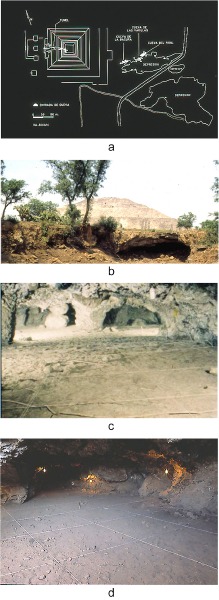
This special section will introduce the results of my interdisciplinary project “The Study of Tunnels and Caves in Teotihuacan (1987–1996)” (Manzanilla Reference Manzanilla2023), which deals with the vast amount of information from the extensive excavations and analyses of four tunnels to the east of the Pyramid of the Sun (Figure 1), two of which (the Varillas and Pirul tunnels) had important data on the Epiclassic and Postclassic occupations.
The tunnels to the east of the Pyramid of the Sun excavated by Linda R. Manzanilla and her team (1993–1996): (a) map with the location of three of the excavated tunnels; (b) the entrance of the Varillas Tunnel; (c) the main chamber of the Varillas Tunnel; (d) the Pirul Tunnel. Photos by Linda R. Manzanilla. (Color online)

Figure 1 Long description
Image A shows a map detailing the location of three excavated tunnels near the Pyramid of the Sun in Teotihuacan. The map includes labels for various tunnels and pathways. Image B depicts the entrance of the Varillas Tunnel, surrounded by trees and vegetation, with the Pyramid of the Sun visible in the background. Image C shows the main chamber of the Varillas Tunnel, featuring a spacious area with visible rock formations and excavation lines on the ground. Image D displays the Pirul Tunnel, with a view of the interior showing rock formations and lighting that highlights the tunnel's features.
Different cavities, originally quarry tunnels to extract volcanic scoria and tuff to build the city (as William Sanders stated and as Luis Barba confirmed), are found under the northern half of the metropolis. Our first hypotheses (Manzanilla Reference Manzanilla, Carrasco, Jones and Sessions2002) involved the ritual use of these subterranean spaces for purposes related to the world of the dead and places where fertility and rain may be petitioned, as well as observatories for the zenith passage of the sun in May, just before the rainy season. Nevertheless, two tunnels excavated extensively revealed life of the Epiclassic Coyotlatelco, transitional Coyotlatelco/Mazapa, and Mazapa people, as well as Aztec occupations of these subterranean spaces.
Different geophysical techniques were used by our geophysical team led by Luis Barba, as well as the participation of geophysicists from the Geophysics Institute, particularly René Chávez and Leticia Flores, and the engineering faculty of UNAM, with Andrés Tejero and his team. By 1990, along with the magnetic survey, electrical resistivity, seismic refraction, and gravimetry, it was the first time we used ground-penetrating radar in our interdisciplinary research.
Two of the four cavities, the Pirul and the Varillas tunnels, provided evidence for domestic activities related to food preparation and consumption, craft activities associated with textile and basket-making, and funerary and ritual activity areas.
Different scientific methods were employed, some for the first time in Mexico during the 1990s. We dated activity areas with radiocarbon and obsidian hydration dates, this last with the help of AnnCorinne Freter (Manzanilla et al. Reference Manzanilla, López and Freter1996), and Laura Beramendi studied the dates with Bayesian statistics (Beramendi-Orosco et al. Reference Beramendi-Orosco, González-Hernández and Linda2023). For the first time we used strontium isotopes to reveal the origins of some of the Epiclassic migrants in a collaboration with Douglas Price (see Price et al. Reference Price, Manzanilla and William2000); trace element analysis to assess the paleodiet of these immigrants, with Samuel Tejeda (Manzanilla et al. Reference Manzanilla, Tejeda and Carlos Martínez2000); and it was the first time ancient nuclear DNA was used at UNAM, with Rocío Vargas. Chemical analyses of activity areas inside the Varillas Tunnel were studied by Claudia Trejo, as one of the venues to assess different types of activities. An enormous amount of archaeobotanical and archaeofaunal material was recovered, and the participation of Emily McClung de Tapia and her team, as well as Raúl Valadez and Bernardo Rodríguez, were crucial to understanding subsistence and use of ecofacts by the Epiclassic and Postclassic occupants.
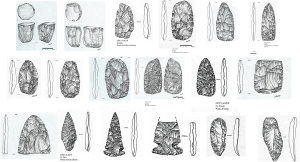
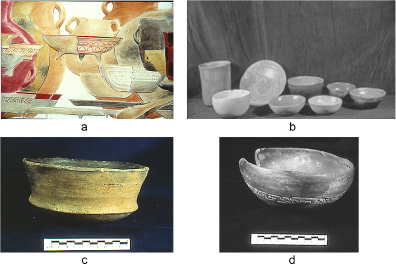
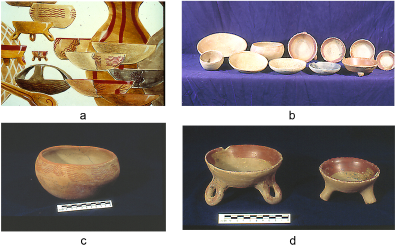
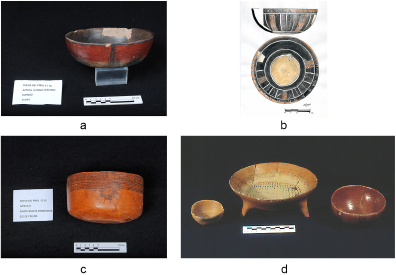
A vast quantity of very interesting obsidian and flint instruments and debris were studied by Marcela Zapata and Beatriz Maldonado, of which activity area 218 (of the Pirul Tunnel) stands out (Figure 2), as it involved a workshop for the manufacture of bifacial tools from the Coyotlatelco to Mazapa transition. All the Epiclassic pottery complexes were analyzed by Claudia López and Claudia Nicolás, and many different complete vessels were found in various types of activity areas (Figure 3), some of which involved their association with Mazapa funerary bundles in the Varillas Tunnel (Figure 4). Different types of Aztec pottery were found in the Pirul Tunnel, from Aztec II to IV, including polychrome Aztec vessels, studied by Claudia López (Figure 5; see Manzanilla Reference Manzanilla2023, volume 2). We also observed that the Epiclassic and Postclassic people recovered early Teotihuacan figurines and reassembled them in their activity areas, as can be shown in Warren Barbour’s study (see Manzanilla Reference Manzanilla2023, volume 2); obviously there are also late figurines related to the different activity areas. Of particular interest are the Xipe figurines found in Chamber 5 of the Pirul Tunnel, in activity areas that reveal the consumption of human flesh.
A bifacial-tool workshop from activity area 218 in the Pirul Tunnel (Chamber 5). Drawings by Fernando Botas.

Figure 2 Long description
The image shows a collection of detailed illustrations of bifacial tools and pottery vessels. Each tool and vessel is accompanied by precise drawings and measurements. The tools vary in shape and size, with some having pointed ends and others being more rounded. The pottery vessels are depicted with intricate designs and patterns. Each illustration includes a scale for reference, highlighting the dimensions of the objects. The arrangement of the tools and vessels is systematic, allowing for easy comparison of their features and sizes.
Some examples of complete Coyotlatelco vessels from the excavated tunnels: (a) the Coyotlatelco ceramic group from the tunnels (see Manzanilla Reference Manzanilla2023:Figure 19.34); (b) different Coyotlatelco vessels from the tunnels; (c) Coyotlatelco bowl from the tunnels; (d) Coyotlatelco Jimenez Sealed pottery from the tunnels. Photos by José Saldaña and Rafael Reyes. (Color online)

Figure 3 Long description
Four-panel composite photograph of Coyotlatelco vessels. The first panel shows a close-up of painted pottery decoration with curved outlines and geometric motifs. The second panel displays a group of vessels, including a tall cylindrical vessel and several bowls, arranged on a flat surface against a plain backdrop. The third panel presents a side-view of a single Coyotlatelco bowl with a measurement scale below it, set against a dark background. The fourth panel features an angled view of a Coyotlatelco Jimenez Sealed pottery bowl, also with a measurement scale below, against a dark background. The image reflects archaeological documentation with studio-style presentation and measurement scales.
Complete Mazapa vessels found associated with funerary bundles in Chamber 2 of the Varillas Tunnel: (a) the Mazapa pottery ensemble from the tunnels (see Manzanilla Reference Manzanilla2023:Figure 19.199); (b) different Mazapa complete vessels from the tunnels; (c) Mazapa wavy-line bowl from the Varillas Tunnel; (d) Mazapa Macana molcajetes from the Varillas Tunnel. Photos by Linda R. Manzanilla and José Saldaña. (Color online)

Figure 4 Long description
Image A shows a collection of Mazapa pottery, including various shapes and sizes, arranged together. Image B displays different complete Mazapa vessels, including bowls and pots, lined up against a blue background. Image C features a single Mazapa wavy-line bowl with a scale for reference. Image D presents two Mazapa Macana vessels, one with three legs and the other with a flat base, also accompanied by a scale.
Complete Aztec vessels from the Pirul Tunnel: (a) Texcoco Red pottery from the Pirul Tunnel; (b) polychrome Aztec pottery from the Varillas Tunnel; (c) black on orange Aztec pottery from the Pirul Tunnel; (d) other Aztec vessels from the tunnels. Photos by Rafael Reyes; drawings by Fernando Botas. (Color online)

Figure 5 Long description
Image A shows a Texcoco Red pottery bowl from the Pirul Tunnel, placed on a stand with a scale and label indicating its origin. Image B displays a polychrome Aztec pottery piece from the Varillas Tunnel, with a detailed drawing showing its design. Image C features a black on orange Aztec pottery vessel from the Pirul Tunnel, accompanied by a label and scale. Image D presents a collection of other Aztec vessels from the tunnels, including three different bowls with a scale for reference.
Many polished stone instruments, related to food preparation, construction, and woodworking, were found, together with lapidary objects and sculptures, which were analyzed by Miguel Ángel Báez. Bone instruments and objects, studied by Johanna Padró, were used in textile and basket production as well as for sound-producing instruments—the omechicahuaztli—used in ritual.
Different kinds of seals may be found in the archaeological record of the excavated tunnels. Some were related to the sealing of bundles; others were used to imprint motifs on textiles, and still others, which are curved, were used for body paints, especially on arms and legs.
Of the most common activity areas, some stand out, leaving aside the Coyotlatelco and many Mazapa burials: these are the bin-bottoms, found everywhere in the Varillas Tunnel. As our study together with Emily McClung de Tapia shows, some of these were used to store chenopods (Chenopodium sp.), and others were used for amaranth (Amaranthus sp.), which the written sources relate to making masks for the Storm God rituals.
It is also important to state that dog burials were found in the Pirul Tunnel, as we will see with Raúl Valadez and Bernardo Rodríguez’s study. These burials may suggest the first use of dogs as guides for the dead in the underworld, and, consequently, the first idea of the subterranean holes as abodes of the dead during the Epiclassic (see Manzanilla Reference Manzanilla, Carrasco, Jones and Sessions2002).
I would like to stress the importance of extensive excavations as well as activity-area analysis for the recovery of primary contexts that reveal what happened inside these subterranean spaces. Many students, now heads of interdisciplinary projects, were trained in this methodology.
I would like to conclude that this was one of the five interdisciplinary projects I have headed in the Teotihuacan Valley. The amount of information related to the Epiclassic and Postclassic occupations of the valley is such that the 1,725 pages, in two volumes, thoroughly report the many years devoted to the study of these materials (Manzanilla, ed. Reference Manzanilla2023, Volumes 1 and 2).
Acknowledgments
I thank the collaborators of my project “The Study of Tunnels and Caves in Teotihuacan” (1987–1996) for the interesting data, analyses, and interpretations that broadened our understanding of the Epiclassic and Postclassic occupations of the Valley of Teotihuacan.
Funding Statement
The project was financed by the National Council of Science and Technology of Mexico (P218CC00892832, H9106-0060, 400358-5-5412-S), the National Autonomous University of Mexico (UNAM) (DGAPA IN214694), and FAMSI (95007). The federal permit was granted by the National Institute of Anthropology and History (INAH).
Data Availability Statement
The objects cited in this article are located in the Teotihuacan Archaeological Zone deposit or in Linda R. Manzanilla’s laboratory at the Institute for Anthropological Research, National Autonomous University of Mexico.
Competing Interests
The author declares none.

 Open access

