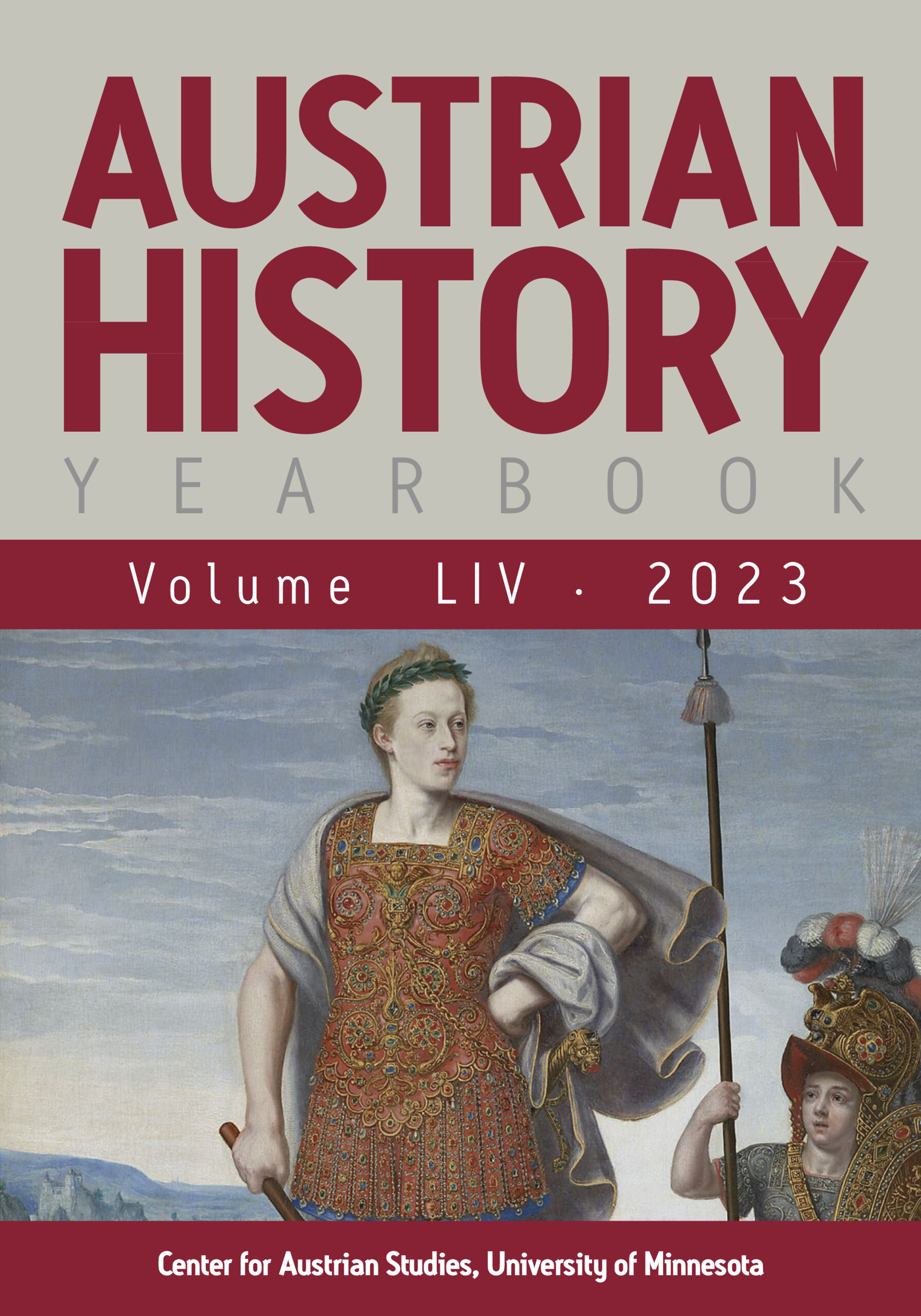





Leonardo Bruni (1377–1444), chancellor of Florence, is today more famous as an initiator of civic humanism and a proponent of early modern republicanism than as a historian of medieval Florence. He owes this position most of all to Hans Baron, who argued that Florentine civic humanism—an exemplary mode of communal existence dedicated to the active life—as found particularly in Bruni's writings, stemmed from the resurgence of interest in antiquity, which pointed forward to a liberating, civilizing, and progressive modernity.Footnote 1 Other historians such as J. G. A. Pocock have located Bruni as a major exponent of a theory of republican politics, based on a concept of liberty as non-domination, which would come to exert a powerful influence on later political discourse in England and its revolutionary thirteen colonies.Footnote 2 Though James Hankins has recently argued that the dual theses of civic humanism and republicanism are mischaracterizations of the larger thrust of Italian Renaissance political thought, the scholarly literature overwhelmingly portrays Leonardo Bruni as incipiently modern and, by definition, un-medieval.Footnote 3 But in emphasizing the role of antiquity in Bruni's “modern” thought, scholars have overlooked the importance of medieval history in the formulation and the content of Bruni's arguments.
This article seeks to rectify this misappreciation by demonstrating how that quintessential medieval struggle, the conflict between popes and emperors, plays a central role in Bruni's political thought as it is found in the History of the Florentine People, written from 1415/16 to 1442.Footnote 4 I will argue that in the History Bruni outlined his vision for individual and common good inhering in a self-sufficient, independent city republic. The medieval emperors and popes appear in this historical-theoretical account as the last limit on the attainment by the Florentine People (florentinus populus) of the self-sufficiency and independence that would permit Florence to achieve temporal longevity. The article will show how the history of medieval papal-imperial conflict played a central role in Bruni's political thought—an unsurprising fact when one remembers that Bruni, famous as the chancellor of Florence, also served as secretary to a number of popes (1404–14).Footnote 5
This reevaluation of the role of medieval history in Bruni's political thought contributes to the ongoing revisualization of the fifteenth century, so often seen as a prelude to later history, according to its own terms and problems. This reappraisal calls attention, at the level of political thought, to some of the challenges of late medieval urban political life, the practical dimensions of which are the subject of articles to come in this collection. It further helps us to reconsider the role of the papacy and the Holy Roman Empire in late medieval political discourse, as Duncan Hardy does in his contribution to this special issue.
The History
The choice of the History requires some explanation. In twelve books, the History describes the collapse of the Roman Empire, the foundation of Florence, and the rise to prominence in Florentine society of the Florentine People (florentinus populus). The work was treated as the official history of Florence and was preserved as such in the chapel of the Palazzo Vecchio, the communal palace, along with the Pandects of Justinian and other trophies of the city.Footnote 6 Whereas earlier scholars tended to write about Bruni's treatises and oratory as the best examples of his political thought, treatments of the History often focused on its methodological innovations qua historiography, in celebration of which Bruni has been called the first modern European historian.Footnote 7 But Hankins and Gary Ianziti now argue for the primacy of Bruni's History as a repository of Bruni's political thought. They contend that the History was a mirror for statesmen and Florentine citizens, from which readers could extract examples (exempla) of conduct for imitation and so learn how to effectively govern Florence.Footnote 8 Seen in this way, the History appears to be Bruni's prime example of political argumentation: its didactic value eclipses that of the speeches and other writings emphasized by Baron, Pocock, and others.
Though in agreement with this reappraisal of the value of the History, this article demonstrates how Bruni's historical account of political flourishing and decay is best understood as an account of how Florence achieved self-sufficiency. By centering the analysis on this Aristotelian concept, it turns attention away from issues such as sovereignty, as discussed by Ianziti; de-emphasizes the role of virtue, with which concept Hankins has characterized Renaissance political thought; and refocuses attention on issues of political obligation.Footnote 9 Bruni celebrates how the Florentines began to eschew the universal medieval authorities of the Holy Roman Empire and the papacy, which appear as the final constraints on Florentine independence, and he connects this to the whole of his historical-political vision. Just as historians have increasingly found that medieval controversies between popes and emperors played important roles in sixteenth-century polemics between Protestants and Catholics—polemics which would come to define confessional identities—this article demonstrates how the same events held a central place in Bruni's account of political life—and in this tradition, urban political life was all that counted for political life.Footnote 10
A Response to a Polycentric Political Environment
This analysis of Bruni's arguments contributes to this collection's focus on the difficulties of polycentric political life in the later Middle Ages, though it does so at the conceptual level and not from the perspective of the complexities of day-to-day politics, as do several of the articles that follow. Bruni argues that the individual good of Florentines and the common good of Florence is secured when Florentines give their first loyalty to Florence and disregard obligations to external authorities. Such an argument was necessary because reality was messier: those obligations to external authorities were still felt and respected when he wrote.
As we will see, Bruni argues that Florence achieved independence from the authority of both the papacy and the Holy Roman Empire by the early fifteenth century. But in point of fact, as a description of Florentine diplomacy in the fourteenth and fifteenth centuries, this is far from the truth. After a breach with Emperor Henry VII in 1311 to 1313, the Florentines concluded a treaty with Emperor Charles IV in March 1355 to resubmit to imperial overlordship and pay the emperor substantial sums for the confirmation of their liberties and possessions. As Nicolai Rubinstein explains, “there was no question of a non-recognition of the de iure supremacy of the empire in Tuscany: their dominions were situated in terra imperii. But the de facto submission to the emperor, however limited in scope, was another matter.”Footnote 11 This latter issue was especially dangerous from the Florentine point of view because such a recognition opened the possibility of imperial intervention in internal Florentine politics. At least until the sixteenth century Florentine elites promised fidelity to the emperors, purchased confirmations of imperial rights from afar, and negotiated military operations with armed emperors when they were present in Tuscany.Footnote 12
Bruni's picture of a Florence that learned to disregard papal politics presents similar difficulties. For one, Florence remained, of course, broadly respectful of the doctrinal authority of the pope and of the institutions that manifested that authority. Bruni's arguments focus on the political sphere of papal authority following the defeat of the Hohenstaufen rulers of southern Italy by Pope Innocent IV (1243–54) and his successors.Footnote 13 His presentation of Florentine attitudes toward papal politics centers on five attempts by a series of popes and papal legates in the late thirteenth and early fourteenth centuries to make peace between different Florentine factions.Footnote 14 For Bruni, the result of these attempts, as we will see, was the disregarding by the Florentines of the papacy's claims to transmute divine knowledge into political authority. Modern historians have generally agreed that the late thirteenth century witnessed the loss of much of papal authority not only in Florence and the rest of Italy but throughout Christendom, and Bruni would seem to agree.Footnote 15 Nonetheless, as George Holmes showed us as long ago as 1986, Florence's thirteenth-century rise—political, financial, and artistic—was based in large part on its salubrious relationship with Rome and the papacy.Footnote 16
Political Obligation and Aristotle
Bruni offered his Florentine readers, in the mode of history, a lesson about how Florentine citizens should think of Florence as the primary locus of their political obligation and then act accordingly. In the face of a political world marked by a plurality of conflicting obligations and rights, Bruni focused the political obligations of his readers to their city, Florence, and in the process helped to negotiate the interlocking and sometimes contradictory duties posed by a polycentric political environment. To accomplish this reordering, Bruni resorted to the conceptual vocabulary of Aristotle and other ancient writers who assumed that the individual, self-sufficient city was the natural location for the flourishing of individual humans. The problem then became to show how Florence came to fit the specifications of such a city: one that allowed for the cultivation of human happiness through the reordering of political obligation. Such a city would be self-sufficient.
Bruni came to the issue of self-sufficiency through his probing of ancient history, an activity quintessential to the Renaissance and close to Bruni's own work as a translator of ancient Greek texts into humanistic Latin. In his study of ancient and medieval history, Bruni noticed that previous empires and republics had risen, fallen, ceased to exist, or continued to exist but in name only. This historical observation led to a question that Bruni answered through a combination of historical argument and political theory in his History: How could a republic be structured or governed so that it will remain stable in time and neither collapse completely nor come to exist only in name, as the ancient Roman Empire continued to exist in merely nominal form in the medieval Holy Roman Empire? It was because the question came to him through his study of historical scholarship, and perhaps because of his careful study of the ancient histories of Livy and Polybius, that he couched his answers in the form of a historical narrative rather than that of an abstract treatise.
The History was implicitly written in response to this question, and it is in a sense its answer. As Bruni states in his preface, the History allows readers to perceive the deeds and councils of past generations, and so to learn from them which actions to imitate and which to avoid, even as “the glory won by great men . . . inspires us to perform acts of virtue.”Footnote 17 The History allowed readers to see antiquity face-to-face, and to learn from it. In this way it resembled Bruni's translation of Aristotle's Politics, in the preface of which Bruni stated that translations like his allow the uneducated to directly speak with the ancients.Footnote 18 Bruni devised an account of Florentine history that demonstrated how, through the knowledge of history, the leaders of the city republic attained a measure of independence—self-sufficiency—from external powers, and he showed how by this self-sufficiency the republic could withstand the corrupting influences of faction and external threats and so attain a measure of stability.
Self-sufficiency here refers to Aristotle's concept, well-known to Bruni, that a city that has attained its telos, in which its citizens may successfully cultivate virtue and pursue human flourishing, is self-sufficient: independent, wanting little from beyond its territory, and able to withstand sudden reversals of fortune.Footnote 19 As Bruni writes in the preface to his translation of Aristotle's Politics, “man is a weak animal, that draws from civil society the self-sufficiency and capacity for perfection it lacks on its own.” Therefore, he continues, there is no more useful knowledge for citizens than to “know what is a city and what a republic and to understand how civil society [civilis societas] is maintained and destroyed.”Footnote 20 Such knowledge—which would supply some of the practical wisdom (according to Aristotle this is “the true and reasoned state of capacity to act with regard to the things that are good or bad for men”) according to which humans decide on actions which lead to happiness or misfortune—could be offered by Bruni's History to its readers.Footnote 21
But it is at least ironic that Bruni employed Aristotelian concepts to make an argument about the location of political obligation. The question of the locus of political authority is a topic that would indeed be incumbent on someone considering politics in a polycentric political environment, but not to one such as Aristotle who assumed that the polis was the natural location for human flourishing. In using ancient concepts to make his argument about the self-sufficiency of Florence as consisting in freedom from the papacy and the Holy Roman Empire, Bruni overstepped the bounds of his sources. The issue of the locus of obligation did not interest Aristotle: it was as it were a settled fact that the city-state was the best location for the pursuit of happiness, even if non-Greeks happened to live in empires and kingdoms.Footnote 22
For Bruni, however, it was not at all obvious that the best political association to live in was a city-state, which led him to an issue undelved by Aristotle, that of political obligation. Bruni would show that the first loyalty of a Florentine was to Florence, not to the pope or the emperor or even an internal Florentine faction, and that such an undivided sense of political obligation would help ensure the longevity of Florence as an independent and self-sufficient political association. In this respect, Bruni carried onward the evaluation of the location and the sources of political authority, which, as Joseph Canning has demonstrated, began to comprise a mounting share of the discourse of political theory in late medieval Europe. Canning attributes this to the growing need for political theorists to give “solutions to problems presented by the realities of political life,” especially those posed by the ill-fitting puzzles of papal and imperial authority.Footnote 23 The arguments of Bruni's History were themselves an attempt to explain and clarify issues of authority and obligation in a world riven by conflicting political loyalties.
The remainder of this article consists of the explication of my argument that Bruni's History was an answer to the question of how Florence achieved independence from the empire and the papacy in the course of its medieval history. But to do this, we must begin where Bruni began: with the story of the Etruscans, the Romans, and the foundations of Florence. For in his discussion of antique history Bruni developed a conceptual scheme of independent city-states as the sites of the pursuit of happiness in virtue of their independence from external authorities. We must first understand this scheme before we can see how he applied it to later Florentine history.
Citizenship and Political Good in Antiquity
In the History's first book, Bruni established a framework to explain how political associations rise, fall, and are remembered or almost entirely forgotten. This framework or vision of political and ethical life conditioned by historical change was then applied to Florentine history to show how Florence achieved, and could maintain, a stable existence. Bruni begins his account of historical change and political life by narrating the origins of the city of Florence. Through this narration, he initiates a theoretical account of citizenship as it relates to the pursuit of human flourishing.
The origin of Florence was a popular subject among Florentine historiographers beginning at least with the De origine citivatis Florentinae of the early thirteenth century, but Bruni uses the topic to introduce the necessary conditions of citizenship in a city.Footnote 24 Bruni argues that Roman colonists, former soldiers of Sulla (dictator from 82 to 80 BCE), established Florence. These original Florentines knew how to fight well and even supported Catiline's rebellion—a sign of an uncivil way of life, for it was Cicero, whom Bruni elsewhere called “our king,” the teacher of eloquence and politics to Renaissance humanists, who put down Catiline and his army.Footnote 25 Bruni dates the transformation of these warriors into citizens to the period immediately following the failure of Catiline's rebellion. He describes it as a conscious choice, the product of rational deliberation. The decision to live as citizens entailed a transformation of their form of life: “So all at once they changed, not only their ideas, but their way of life.”Footnote 26 This recalls Aristotle's insistence that virtue, and hence the good, must be chosen rationally in the conditions of a city: here the earliest Florentines step toward human flourishing by way of establishing a civil way of life.Footnote 27
With this short history of the origins of Florence, Bruni demonstrated a dynamic relationship between the two activities of a participating member of a city: soldiering and living at peace according to the law, a distinction that he repeats later in the History. This distinction, which Bruni founded in the origins of Florentine citizenship, mapped the two facets of what he took to be normative activity for citizens and echo his arguments in works such as the On Knighthood.Footnote 28 Already we become aware that this history of Florence doubles as a treatment of how Florence fulfills certain necessary conditions of how a republic could endure through time and withstand its corrosion.
Bruni puts the rest of his account of Florentine origins to similar theoretical work, and contrary to the historiographic tradition in Florence argues that Roman power quelled Florentine flourishing. Florentine authors typically proclaimed that ancient Rome brought prosperity to all Italy. The fourteenth-century Florentine chronicler Giovanni Villani described Roman-era Florence as a “piccolo Roma”; in Villani's Nuova Cronica, Florence resembled the mother city in all physical ways, and assisted Rome in the creation of the Roman Empire.Footnote 29 Ianziti has shown that Leonardo Bruni himself argued that ancient Italians felt a common identity and loyalty to the Romans in Bruni's abridgement of Polybius and other authors, the De primo bello punico (1422). But Bruni here asserted that the Roman Empire was antithetical to the flourishing of cities other than Rome. Roman power precluded the development of Florentine civil life.
Roman power induced the Florentines to live in luxury, a state inimical to civil life. Bruni critiques the “luxurious” manner in which the earliest Florentines lived their lives, “without thought of the future and without saving any part of their wealth.”Footnote 30 The citizens could not help but be dependent on Roman largesse.Footnote 31 Even after they chose to live as peaceful citizens, however, they found their progress toward the attainment of a flourishing life in a well-ordered city stilted. Rome thus limited the growth of civil society in Florence, and this was a general issue for all Italian cities: “As mighty trees overshadow young seedlings that grow nearby and keep them stunted, so did Rome overwhelm her neighbors with her sheer size, allowing no greater city to arise in Italy.”Footnote 32 Florence had no means by which to increase: the Florentines could not wage foreign wars, and domestic government was also limited because the jurisdiction of her magistrates “was narrowly circumscribed and subject to Roman officials.”Footnote 33 In this sense, Florence under Rome was hardly a city, for Roman stability precluded the possibility of the political activity and hence the temporal instability which results from the flourishing of civil society. All people of ambition went to Rome, and so “Rome drew to herself everything wonderful that was engendered in Italy and drained all other cities.”Footnote 34 Under Rome, Florentine citizenship became an empty shell.
Freedom and Empire, Virtue and Republics
Before Bruni describes the decline of Rome and the consequent republican resurgence, he advances a theoretical argument about the causes of political degeneration. He accomplishes this by way of an examination of the baleful influence of Rome on the ancient Italian republics of the Etruscans, amounting to a disquisition on how free republican cities contain internal forces that can lead to their subjugation by external forces.
Bruni states that before Rome, “the greatest wealth and power in Italy and the greatest fame in war and peace belonged to the Etruscans.”Footnote 35 They were the dominant power in the region, as shown by the place names they left behind.Footnote 36 The Etruscans were formed of twelve tribes who obeyed one king. Over time, however, this political unity fractured and each tribe, divided into cities, elected its own magistrate. These magistrates were political as opposed to tyrannical rulers because they ruled not by force but by council and authority.Footnote 37 The effectiveness of this political arrangement caused the increase of the Etruscan federation: “internal concord, as it usually does, gave them wealth and power.” This loose political association formed on consent and council came to dominate other regions near and wide, from the era before the Trojan War until the invasion of Italy by the Gauls.Footnote 38
Bruni discovered in Cicero and other classical sources the primordial history of Tuscany, and from those authorities—used here as sources—he conjured a model for republican political arrangements. But as much as this history was interesting as a means for setting straight the myths told about Florentine origins, it was even more effective as a primer on the causes of republican ruin. The example of the Etruscans was a lesson in the possibilities of political dissolution and the attendant loss of memory (memoria), the very process that Bruni's History was meant to counteract. Bruni was aware that if the Etruscans prevailed over their neighbors for six hundred years, still they had vanished so that even their memoria nearly vanished. Cities and city associations succumbed to decline, and this decline led to the loss of all but the names (nomina) of past political associations. Besides the classical sources—shrines of their memoria—all that remained of the Etruscans was the name Tuscany.
How did the Etruscans, so powerful and well-organized, vanish? Bruni identified Roman power as one cause of Etruscan collapse, but Roman power itself depended on Etruscan disunity. Though the Etruscans held sway in their vicinity, they were squeezed between the Gauls and the Romans. But the Romans managed to conquer the Etruscans through their superior virtue.Footnote 39 In part he credits the Roman conquest of Etruria to the voluntary submission of some of the Etruscans, made because of their admiration for the Romans: “Men who could not be subdued by fire or sword or by siege or by the devastation of their fields were moved by the splendor of justice and honor.”Footnote 40 Against other Etruscan cities, such as Veii, the Romans prevailed after bitter wars, in which they managed to divide the Etruscans from each other. The Roman victory was thus possible due to the increasing instability of the Etruscan federation and especially to the decline of a sense of common good shared by all Etruscan cities. The result was Roman superiority after centuries of warfare.Footnote 41
The end of Etruscan independence did not entail the destruction of Etruscan cities, but it did lead to the decline of civil society. Bruni notes that the Romans gave the Etruscans the “honorable name of allies.”Footnote 42 How then did even the memoria of Etruria vanish by Bruni's time? The answer to this question allows us to perceive some of the essential categories by which Bruni interpreted political and ethical life. Bruni constructed a framework that describes how the virtue of citizens and the liberty of their cities together set the conditions for the growth and the decline of their cities. He relied on the distinction between leisure (otium) and competitive political behavior.
Under Roman peace, the Etruscan elites—much as the Florentine who existed among them—were free to pursue their leisure. Such leisure corrupted civil society: “when the way lies open to greatness and honors, people are ready to better themselves; when that way is blocked, they become lifeless and do nothing (inertes desideant).”Footnote 43 After Rome conquered the Etruscans, they “neither gained honors nor put their energies into major enterprises. . . . Etruscan virtue [etrusca virtus] grew completely enfeebled [consenuit].”Footnote 44 The Etruscans were “brought low far more by inactivity than by the enemy's sword.” Leisure aged the body politic; it diminished its capacity for virtuous activity by accustoming the citizens to peace imposed by an external power.
Bruni argues that this process of decline was replicated in Rome itself. In this way, the interrelations of liberty, virtue, and fortune become the causal framework for understanding the end of the ancient world, with which Bruni prepares the reader to understand the circumstances for the renewal of ancient virtue and freedom in Bruni's own time. According to Bruni, the decline of the Roman Empire should be dated to the moment that “Rome gave up her liberty to serve a series of emperors.”Footnote 45 The resultant destabilization of political order entailed an increasing dependence on transient monarchs, who in turn contributed to political destabilization.Footnote 46 For Bruni, monarchy appears less resistant to the vagaries of fortune and more subject to destabilization than well-ordered republics in which fortune is harnessed through the controlled competition of internal elites.
Republican Resurgence
Bruni argues that the reality of the Roman Empire vanished, though its name (nomen) persisted. The collapse of Roman power allowed for the reestablishment of the liberty of the various Tuscan towns. After Rome's collapse they “began to grow and flourish and gradually regained their ancient prestige.”Footnote 47 Florence soon revived.Footnote 48 The other cities of Tuscany experienced a similar revival, and at first they lived in harmony with each other, “but as soon as they had begun to grow larger, with no fear of external enemies, they started to behave in an envious and competitive way.”Footnote 49 The succession of time led not so much to an open horizon as to a closed and recurring pattern of behavior. In this way, the medieval Tuscan cities existed in a continuum marked by superficial disruptions in phenomena but still bound to the patterns of behavior attributed by Bruni to the ancient Etruscans and Romans. Distant, republican antiquity recurred. But external forces still threatened their internal liberty. These were the holdovers of antiquity: the faux Roman Empire of the German emperors and the men through whom divine words continued to enter the human world, the popes. Each presided over some portion of Florentine sympathies, and so their discords introduced factions dangerous to the internal cohesion of the Florentine polity and that of other Tuscan republics.
For Bruni, the conflict of popes and emperors depended on the false understanding of the world created by words for antique political structures (the Roman Empire) that, though still used, did not appertain to medieval realities; thus, though Bruni deemed that Charlemagne deserved the title of Roman emperor, he thought that under the German emperors, “the city of Rome and the name of Rome were venerated for their ancient power but were no longer regarded as formidable.”Footnote 50 Ancient Rome ceased to exist, but its name continued, and this persistence prevented the apprehension of historical change.Footnote 51 The medieval empire, so Bruni argued, was founded by Charlemagne to protect the Roman Church, but its German rulers sought to persecute the popes. The issue was an imperial insistence to the prerogatives of the empire, by which the emperors attempted to deprive the popes of their rights—another instance of the medieval emperors laying claim to the nomen of the ancient empire.Footnote 52 The “emperors” lacked the legitimacy of claim and the means of enforcing it. Against them the popes could use their words: condemnations and censures “which at that time were their arms,” by which the popes “urged cities and princes to oppose the imperial excesses” and threatened the cities with “heavy punishments.”Footnote 53 This was a shadow conflict of words fought by emperors who had a “Roman” empire only in name, if still possessing arms, and popes whose political power could manifest only through persuasive speech. In such linguistic conditions, the res remained ambiguous, an epistemic condition that led to the introduction of discord between and even within cities.Footnote 54 Ambiguous words gave rise to factions that threatened the liberty of the towns.
Threats of Faction
With his discussion of factionalism Bruni introduces into his History perhaps one of the most notorious aspects of medieval Italian history. Modern historians tend to argue that the Guelfs and Ghibellines, after the initial period of papal–imperial conflict, mapped onto existing differences in political culture between the rival factions of the popolo and the magnates. Under this description, the Florentine Guelfs, often educated in the Roman classics, were guildsmen who first came to power with the so-called primo popolo of the 1250s; their first chancellor was Brunetto Latini, considered to be a proto-humanist. In contrast, the Florentine Ghibellines were marked, as were the magnates, by a chivalric way of life and an aristocratic cultivation of the blood feud, which the Guelfs and the popolo considered dangerous for the law and themselves.Footnote 55 These factions—which emerged throughout much of northern and central Italy in the thirteenth century—threatened to tear apart the medieval communes and are a recurring theme in sources from the period. Furthermore, they continued into the fifteenth century, making them a live issue even as Bruni wrote.
John Najemy has argued that Florentine humanists such as Leonardo Bruni were propagandists for the victorious Florentine Guelf-popolo faction.Footnote 56 There is truth in this: as we will see, Bruni favors the medieval Guelfs and the popolo in his account of Florentine history, and he states that the Parte Guelfa became a cornerstone of Florence's customary political order, which he likens to the censor of the ancient Roman senate.Footnote 57 On the other hand, James Hankins and Robert Black have argued that until 1464 the Florentine chancellors were chosen for their neutrality.Footnote 58 Whatever one thinks of this question, the dictates of Bruni's argument about political obligation and self-sufficiency required him to pick sides, and the realities of Florentine politics forced him to choose the popolo and the Guelfs over the magnates and the Ghibellines. In his History, he used these medieval factions to show that Florentines should place their first loyalty not in factions or in the external authorities which supported the factions, but in the city and their co-citizens.
For Bruni, the factions posed a dangerous threat to the self-sufficiency of the city, and he made this argument by stating that the Ghibellines, and to a lesser extent the Guelfs, thought that their first political obligation was outside of the city. The factions were organized around loyalty toward the empire and the papacy, which crystallized during the dispute between Gregory IX (1227–41) and Innocent IV (1243–54) with Emperor Frederick II (1220–50) in the middle of the thirteenth century.Footnote 59 The pro-papal faction—the Guelfs—was according to Bruni “composed of those who were more inclined to embrace the liberty of peoples,” who decried the degradation caused to Italy by its subjection to Germans “under the pretext of the Roman name.”Footnote 60 The other side—the Ghibellines, who supported the emperors—had “forgotten the liberty and glory of their ancestors” and “was entirely devoted to the imperial name.”Footnote 61 This factionalism introduced political difficulties because it led to uncontrollable conflict that tended to threaten the very existence of the republic and so make human flourishing impossible.
Factionalism became a disease that threatened the existence of civil life—a common metaphor that here recalls that for Bruni, as for Aristotle, the city was a natural phenomenon comparable to the human body.Footnote 62 This situation, Bruni argues, became pronounced during the reign of Emperor Frederick II, whom Bruni makes out to be the enemy of Italian liberty.Footnote 63 But Frederick's irrational cruelty—Bruni describes how he blinded Florentine Guelfs—set the stage for the rise of Florentine particularism, and Bruni points to the future success of the Guelf Florentines who prevailed over the imperial faction in their retributive vendetta against Frederick and his family.Footnote 64 This vendetta became the public activity of the new protagonist in Bruni's narrative, the Florentine People (florentinus populus), whose pursuit of liberty in accordance with virtue occupies the bulk of Bruni's History of the Florentine People. Here we must recall that the Florentine People was not the faction arrayed against the magnates. In Bruni's History, it becomes the Florentine version of the Roman People (Romanus Populus), which together with the Senate constituted the highest authority in ancient Rome. By making the Florentinus Populus the actor of his history, Bruni indicates that the contemporary Florentines resemble the ancient republican Romans. The triumph of the Florentine People marks the recurrence of antiquity and the self-sufficient city republic.
With the emergence of the Florentine People, Bruni's style of narration changes from that of a theoretical essay to an exemplary history. The increased remit of Florentine political behavior served to increase the range of good and bad political actions that were retained by Florentine memoria, and the historical continuity of the Florentine People—still dominant in Bruni's era—made these actions germane for contemporary instruction. Just as Livy recorded the deeds of Romans as exempla for latter-day Romans, Bruni recorded the deeds of the Florentine as exempla for his Florentine readership.Footnote 65 Whereas we have so far discussed a “Polybian” mode of historical analysis—by which Bruni established a metahistorical framework for comprehending political phenomena—we now enter into the “Livian” stage of the History, in which historical examples of the Florentine ancestors are offered for the rejuvenation of the Florentine citizen body.
Threats to Florentine independence persisted, and so this exemplary style intertwined with further theoretical expostulations, all of which tend toward the argument that Florence was becoming increasingly self-sufficient through time. This progressed in two related ways: first through the development of internal cohesion centered around laws in Florence, and second through the advance of Florence's independence from external authorities. We begin with internal cohesion. The feuds of the aristocrats, one of the central medieval threats to Florentine stability, are gradually made illegal by marriage alliances designed and enforced by the popolo.Footnote 66 These alliances, however, were not enough to cure the “disease” of faction and feud.Footnote 67 This “ancient, even primeval” Florentine struggle between the popolo and the aristocrats strengthened the unity of the popolo: as Bruni says, their hatred of the nobility led the popolo to “share a common purpose, suffer injury to none of their own, and exact public vengeance for private offenses.”Footnote 68 Phrased in slightly anachronistic terms, internal warfare led to the stiffening of the friend-enemy distinction, which gave way to the dominance of one faction over the other. Thus, internal cohesion—sovereignty—was established.
In a speech in the mouth of Giano della Bella, the man who introduced legal constitutions against the nobility (the Ordinances of Justice of 1293), Bruni states that liberty is protected by law and courts; both have been corrupted by the nobility, and their rejuvenation is required to halt the corruption of Florentine liberty. For Bruni, the successful establishment of the Ordinances of Justice in 1293 and their gradual implementation marked the freedom of the Florentine People and the city from the tyranny of internal warfare and the establishment of liberty. This is a classic statement of freedom as non-domination. The People signified the creation of the popular regime with the construction of its own public building, the Palazzo Vecchio, erected on lands confiscated from aristocratic households.Footnote 69 The stage was now set for the elimination of one of the most dangerous limits on Florentine liberty, the popes.
Threats from Popes
For Bruni, one last threat remained from the conflict between the emperors and the popes: the authority the popes held over the Florentine Guelfs. Following the defeat first of the emperor and then of the magnates, the external authority of the popes constituted the final block on the development of Florentine independence. Papal authority limited the capacity of the Florentines to exercise their liberty and thus to live flourishing lives in a self-sufficient polity. The decades following the death of Frederick II in 1250 were marked by a gradual effort by the popes or papal legates to impose their own rulership on the city. In response to these attempts, Bruni argues, the Florentines learned to reject papal political authority and so attained self-sufficiency from external authorities.
Bruni's arguments about the decline of papal authority match the judgment of a number of modern historians about the intentions of the late thirteenth-century popes and the effects of their overreach. Philip Jones for instance wrote that “in the thirteenth century . . . there were certain signs . . . of an impulse if not design to unite all Italy under a papal-Guelf domination.”Footnote 70 In 1300–02, for example, Boniface VIII (1294–1303) attempted to install a direct papal rectorate in Florence: the attempt led to the exile of Dante Alighieri, who then became a pronounced foe of the popes and the Guelfs. Modern historians have universally argued that the effort by the popes to increase their control of Italy marked the rapid decline of papal authority.Footnote 71 However, it is equally clear that these historians are anticipating the events of the later Middle Ages and even the Reformation.Footnote 72 In doing so they have accepted part of Bruni's argument about the attainment by the Florentines of self-sufficiency and the entailing priority of political obligation to Florence, not to the empire or papacy.
As already stated, Bruni notes that the medieval popes relied on their words and their threats of divine punishment to ward off imperial armies. Such threats were only effective insofar as people believed that the punishment promised by the threat was forthcoming, and this belief depended on the sense that the popes spoke God's mind in human affairs. But Bruni argues that the popes after 1250 began to act and speak in extremely variable ways, and this variability revealed a severed, or tenuous, connection with eternal, unchanging divinity. Such variability could manifest as Pope Urban IV's (1261–64) partisan attitude toward the French Charles of Anjou (1227–85), successor of the Hohenstaufen in the Kingdom Sicily,Footnote 73 which accompanied the devolution of the Florentine Guelfs into a party seeking vengeance on the Hohenstaufen.Footnote 74 Or, even worse, it could manifest as a refusal to honor past commitments to Florentine Guelfs.Footnote 75 It was this latter issue that Bruni identified as the occasion through which the Florentines learned to disregard papal authority in things political and to separate the otherworldly scriptural authority of the popes from the mundane but essential knowledge of political history.
Bruni separates, through another analysis centering on the issues of memory and the meanings of words, the biblical morality of forgiveness from the political morality of memoria. In this way, he drives a wedge between papal authority and Florentine stability. He relates how Pope Gregory X (1271–76), on his visit to Florence in 1274 to make peace between the warring Florentine factions, argued that the Florentine Guelfs, the traditional supporters of the papacy, hated their co-citizens solely by reason of the mere names (nomina) of Ghibelline.Footnote 76 Their animosity was irrational: they lacked reasons human or divine for their hatred, by which they tore apart their own city, which is “nothing other than its citizens.”Footnote 77 Gregory framed the feud as causing the degeneration of the common good necessary for civil life. But he then urged the Florentines to disregard the historical knowledge by which, according to Bruni, they could maintain the stability of their city. To effect a reunion of the warring factions, Gregory ordered the Florentine Guelfs to forget the memoria of the recent discords. In response the Guelfs argued that the pope was inconstant, and that to forget the memoria of the discords would be to forget the examples of Florentine laws and their ancestors. The Guelf spokesman then attacked the pope's inconstancy:
We cannot say that the Roman See has altered (for it is one and eternal), but we can say that we have been forced into fraud by the Roman See, since things we were once urged vehemently to do are now bitterly reproached and condemned . . . . Time brings many changes, and human affairs coil back and forth like a snake.Footnote 78
Here memoria turns against the pope himself and is used to demonstrate papal variability. To maintain civic prudence, one must retain in memoria the exempla of previous eras, and this is exactly what the pope asks the Florentines to forgo in favor of divine wisdom. Cognizance of this fissure between political memoria and Christian ethics leads to the bracketing of their respective spheres. As the Florentine spokesman says, “Yes, to hate one's neighbors is contrary to divine command. But . . . it is one thing to rule heaven, another, earth.”Footnote 79 To forgive in an apostolic manner requires the loss of memoria, the essential component for the maintenance of the civil way of life: thus, Bruni separates the scriptural authority of the pope from the political knowledge, stemming from the remembrance of historical memoria, which is necessary for the use of practical understanding in political affairs.
Bruni amply narrates the dangers of a papal politics that hides human motivations behind divine language. The Florentines learn to distrust the popes and their legates. For example, a papal legate, Niccolo da Prato (c.1250–1321), was granted full command in the city to put to rest renewed factions, but instead he began to create his own destabilizing faction. The Florentines finally ejected him.Footnote 80 The experience of this legate's attempt to be a tyrant proved useful for Bruni's argument. Bruni shows how the Florentines develop an increasingly critical attitude toward papal politics, until the point when Niccolo da Prato convinced the pope to lay an interdict on the city and excommunicate its leaders. At this point, Bruni notes that the city's rulers learned that “the papal curia's intentions were neither fixed nor sincere.”Footnote 81 The belief that papal punishment would lead to everlasting penalties waned: though the city was under interdict, “there was no immediate hope of absolution, nor, frankly, any desire to seek it on the part of the citizens.”Footnote 82 The variability of papal conduct indicated that the popes did not translate God's eternal wisdom into human words. The consequence was a lapse of papal authority; instead of begging for papal mercy, the Florentines were content to raise taxes on clerics. They achieved independence from the popes and could now survive the ravages of time through the study of their history: self-sufficient, aware of history, and free.
Conclusion
This article has argued that Bruni used Aristotelian concepts and medieval political history to craft a sophisticated response to the fractured political environment of fifteenth-century Europe—one that utilized an innovative historical methodology in the service of political theory. Bruni adapted the ethical-political theory of Aristotle to answer new questions of political obligation. He thus appears not as a visionary looking to the past of antiquity and to the future of “early modern” Europe, but as a practical and learned humanist who made the particularities of medieval Florentine history into grains of wisdom usable by his readers. In part it was due to the very success of his History that we can think of fifteenth-century Florence as independent of the empire and the papacy when it remained under the aegis of both authorities. Bruni's broad vistas of historical change and his illusion of self-sufficiency have long enshrouded the reality of diffuse, polycentric polities.Footnote 83

 Open access

