


Introduction
In recent years, the evidence base to support the use of pharmacotherapy in personality disorders has grown. A number of recent systematic reviews examining this issue concluded that, of the available treatments, mood stabilizers and atypical antipsychotics demonstrated the most clinical benefit.Reference Ingenhoven, Lafay and Rinne 1 – Reference Stoffers, Völlm and Rücker 3
A number of atypical antipsychotics, including quetiapine,Reference Bellino, Paradiso and Bogetto 4 – Reference Villeneuve and Lemelin 6 aripiprazole,Reference Nickel, Muehlbacher and Nickel 7 and paliperidone,Reference Bellino, Bozzatello, Rinaldi and Bogetto 8 have been found to be effective in improving the clinical symptoms of borderline personality disorder (BPD).Reference Grootens and Verkes 9 In addition to displaying a positive effect in BPD,Reference Bogenschutz and Nurnberg 10 – Reference Zanarini and Frankenburg 14 olanzapine also reduces symptoms of psychosis and depression in schizotypal personality disorder.Reference Keshavan, Shad, Soloff and Schooler 15 Similarly, low-dose risperidone reduces the severity of schizotypalReference Koenigsberg, Reynolds and Goodman 16 and borderlineReference Rocca, Marchiaro, Cocuzza and Bogetto 17 personality disorders.
Of the atypical antipsychotics, clozapine has shown promising results in the treatment of personality disorder. Clozapine, an atypical antipsychotic with a wide-ranging receptor profile,Reference Vauquelin, Bostoen, Vanderheyden and Seeman 18 is used in the treatment of schizophrenia. Studies have shown that it is of particular benefit in treatment-resistant schizophrenia,Reference Fakra and Azorin 19 with response rates between 30% and 60%.Reference Chakos, Lieberman, Hoffman, Bradford and Sheitman 20 – Reference Meltzer and Herbert 22 Clozapine was found to significantly reduce incidents of self-harm and aggression in a case series of 7 female patients with severe BPD.Reference Chengappa, Ebeling, Kang, Levine and Parepally 23 Other studies, including a case report,Reference Vohra 24 2 case series,Reference Benedetti, Sforzini, Colombo, Maffei and Smeraldi 25 , Reference Swinton 26 and a prospective open-label study involving 15 patients,Reference Frankenburg and Zanarini 27 replicated similarly positive results.
Clozapine is also widely known for its anti-aggressive effects,Reference Buckley, Bartell and Donenwirth 28 , Reference Frogley, Taylor, Dickens and Picchioni 29 which have most commonly been demonstrated among schizophrenia patients.Reference Chengappa, Vasile and Levine 30 – Reference Volavka 35 In a randomized control trial comparing clozapine, olanzapine, and haloperidol, all 3 drugs showed similar antipsychotic effects; however, clozapine showed a significantly better effect in reducing violent incidents, thus indicating its specific anti-aggressive effects.Reference Krakowski, Czobor, Citrome, Bark and Cooper 36
As clozapine has been shown to be of benefit in certain subtypes of personality disorder and also in reducing aggression in schizophrenia, it is reasonable to hypothesize that it may improve the clinical severity and also reduce aggression and violence in patients with antisocial personality disorder. There is currently limited research in this area.
We present a case series of 7 men with a primary diagnosis of antisocial personality disorder (ASPD) and who also scored high on psychopathy (as assessed by a validated psychopathy checklist).Reference Hare 37 , Reference Hart, Cox and Hare 38 All patients had a significant history of serious violence and were commenced on clozapine treatment while being cared for in a high-security hospital.
Method
All patients reported in this article were inpatients at Broadmoor Hospital (a high-security hospital). There are three high-security hospitals in England and Wales with 797 beds, caring for a population of 56 million. High-security hospitals treat patients who have committed serious offences, have severe psychiatric conditions, and therefore pose the highest level of risk to others such that they cannot be managed in other security settings. Typically, the most common diagnosis is schizophrenia, followed by personality disorder. Patients are detained under the Mental Health Act and include patients transferred from less security hospital units or prisons, or those who receive a hospital treatment order at sentencing from court. The hospital has wards that are distinguished by the level of dependency or risk that the patient poses. This ranges from Intensive Care or High Dependency to rehabilitation wards from where patients are discharged. Patients are discharged to less security hospitals or repatriated to prison once their treatment is complete.
At the time of writing of this case series, 6 ASPD patients were receiving clozapine in the hospital. Through examining pharmacy records, 1 further patient was noted to have received a previous discontinued trial of clozapine, and he was also included in this case-series study. All the patients were able to provide informed consent for this retrospective case series. Patients were initiated on clozapine as per the hospital's titration protocol while they were inpatients on a high-dependency ward in the hospital. Doses of clozapine for each patient were recorded, and any changes in these doses and any concurrent medications were noted.
The Clinical Global Impression Scale (CGI) was used to assess the clinical severity and post-intervention changes of patient symptoms.Reference Guy 39 CGI is a commonly used scale for measuring the effect of pharmacological intervention in various studies on personality disorders.Reference Frankenburg and Zanarini 40 , Reference Binks, Fenton and McCarthy 41 Scores were formulated retrospectively by the authors (MD, DB) using clinical information examining the patients’ illness severity before and after commencement of clozapine treatment. Outcome variables (as described by SoloffReference Soloff 42 and Ingenhoven etalReference Ingenhoven, Lafay and Rinne 1 ) were also derived, this time by the treating psychiatrist using the following symptom domains: cognitive-perceptual symptoms, impulsive-behavioral dyscontrol, and affective dysregulation. The treating psychiatrists were asked to rate patients’ response, following clozapine treatment, in these domains as follows: worsened, remained the same, some improvement, or much improvement. The cognitive-perceptual domain included feelings of paranoia, suspiciousness, referential thinking, depersonalization, illusions, and hallucination-like symptoms; impulsive -behavioral dyscontrol described symptoms such as impulsive aggression, self-harm, promiscuity, excessive spending, and substance abuse; the affective dysregulation domain illustrated abnormal emotional responses such as mood lability, rejection sensitivity, outbursts of temper, low mood, and inappropriateness of intense anger. This final domain had 4 subdomains: low mood, anxiety, anger, and mood lability.
Psychopathy was assessed by either the Revised Psychopathy Checklist (PCL-R),Reference Hare 37 which is a validated tool assessing psychopathy, or the Psychopathy Checklist–Screening Version (PCL-SV).Reference Hart, Cox and Hare 38 Scores of 28 or more out of a possible score of 40 on PCL-R or a score of 16 or more out of a possible score of 24 on PCL-SV were considered indicative of psychopathy.
The case notes were also reviewed for episodes of seclusion, violent incidents, and episodes of self-harm and positive factors such as engagement in occupational therapy (OT), vocational activities, and psychological therapies. Formal risk assessments (HCR-20)Reference Webster, Douglas, Eaves and Hart 43 and the hospital's own high risk assessment were reviewed to gauge change in risk status. Planned moves to lower or higher dependency wards were also noted. Clinical reports were examined for details of patients’ index offences. All of this information was used to measure risk of aggression prior to and after commencement of clozapine.
We examined metabolic parameters, where these were available, using the latest value prior to and after initiation of clozapine, including BMI (body mass index), total cholesterol:high density lipid (HDL) ratio, and blood glucose levels.
Results
None of the patients had a comorbid diagnosis of schizophrenia or schizoaffective disorder. They also did not have any history of learning disability, brain injury, epilepsy, or concurrent substance abuse. Patients had an average age of 33.3 years. All patients were diagnosed by the treating consultant psychiatrist with primary ASPD. They also had other personality disorder traits (see Table 1). All clinical diagnoses and exclusions were made by the treating consultant psychiatrist using International Statistical Classification of Diseases and Related Health Problems, 10th revision (ICD-10) 44 and Diagnostic and Statistical Manual of Mental Disorders, 4th edition (DSM-IV) 45 criteria. Patients received a mean clozapine dosage of 171 mg per day (range 100 mg to 325 mg per day) for at least 7 weeks (range 7 to 67 weeks, median 14 weeks).
Sample clinical characteristics

PCL-SV: Psychopathy Checklist-Screening Version.Reference Hart, Cox and Hare 38 A score of 16/24 or greater indicates psychopathy; HSH: High-security hospital.
*This patient had an additional PCL-R (Hare Psychopathy Checklist–Revised).Reference Hare 37 This patient scored 28/40, which indicates psychopathy.
Symptom improvement
Of the 7 patients, 1 had a CGI score that displayed “vast improvement” (reduced CGI by 4 points), 1 showed “major improvement” (reduced CGI by 3 points), and all other patients (N = 5) displayed “significant improvement” (reduced CGI by 2 points). The severity of illness decreased significantly for all patients (see Table 2).
Treatment details and results

mg: milligrams; ng/mL: nanograms per milliliter; Pre: before clozapine initiation; Post: after clozapine initiation; CGI: Clinical Global Impression Scale.Reference Guy 39 1 = normal, not at all ill, 2 = borderline mentally ill, 3 = mildly ill, 4 = moderately ill, 5 = markedly ill, 6 = severely ill, 7 = among the most extremely ill, 0 = not assessed.
Symptom domains: CP: cognitive perceptual symptoms; IB: impulsive-behavioral dyscontrol; AD: affective dysregulation; ↓ worse; ↔ no change; ↑ some improvement; ↑↑ much improved.
With regard to improvement in specific symptom domains, 6 of the 7 patients showed improvement in the cognitive-perceptual domain. All of the patients showed improvement in impulsive-behavioral dyscontrol. All patients showed improvement in some aspect of affective dysregulation; specifically, 4 showed improved symptoms of low mood, 5 in anxiety, all demonstrated improved anger control, and 6 of the 7 improved mood lability.
Clozapine and nor-clozapine serum levels, concurrent medication
Data were available for clozapine and nor-clozapine levels for 6 of the 7 patients. Levels were not available for one patient (Patient F), as he was on clozapine for 7 weeks only, and subsequently it was discontinued. Serum clozapine level results were as follows: 150, 160, 170, 230, 270, and 350 ng/mL. Concurrent psychotropic medication was recorded (see Table 2). None of the patients was started on any antipsychotic or other psychotropic medication concurrently after the initiation of clozapine.
PCL-SV and PCL-R scores
All patients scored highly on psychopathy as assessed by the PCL-SV (all scored 19 or above out of 24; mean: 19.6; range: 19–21). One patient had an additional PCL-R assessment and scored 28 out of 40. These tests were administered by a trained psychologist or doctor.
Improvement in aggression and violence
All patients’ risk of violence and aggression to others reduced following treatment with clozapine, as quantified by formal risk assessment changes and staff opinions recorded in the weekly records. In all cases, this risk reduction was associated with clinical improvement in symptoms and positive engagement with OT and psychological therapies. In 3 of the 7 patients, their risk reduced sufficiently to merit a move to a lower dependency ward or transfer to a medium-security unit. None of the patients had to be moved to a higher dependency ward following commencement on clozapine.
Incidents of violence logged in the hospital's incident reporting system were assessed in the 90 days before clozapine was initiated and in the most recent 90 days on clozapine at the time of the writing of this report. It will be pertinent to mention here that in cases where clozapine was started less than 90 days after admission to the hospital, potential incidents may have been missed, as we did not have access to other hospitals’ or prison service records. Post-clozapine initiation, no incidents were missed for any patient, as all hospital records were available. Incidents were divided into the following subgroups: verbal aggression, aggression toward property, aggression toward others (physical), and self-harm.
Six of the 7 patients showed a reduction in their number of total violent incidents, with 4 of the 6 demonstrating a 100% reduction (see Table 3 and Figure 1). The remaining patient (Patient C: see Case Reports) did not have any recorded incidents before or after clozapine was initiated, but reported a diminished preoccupation with violent fantasies.
Metabolic parameters
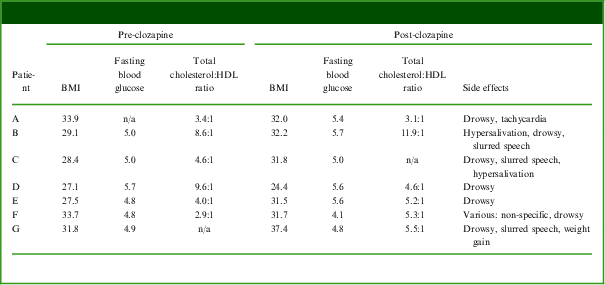
BMI: Body Mass Index, HDL: high density lipid, n/a: information not available.
Number of violent incidents before and after clozapine treatment. Before clozapine: number of incidents in 90 days prior to starting clozapine; After clozapine: number of incidents in most recent 90 days on clozapine.

Metabolic Parameters (see Table 4) and side effects
Four patients’ body mass index (BMI) increased and 3 decreased over the treatment time period. The mean BMI was 30.2 before clozapine was initiated; this increased to 31.6 after treatment. The result was positively skewed by Patient G's significant BMI increase from 31.7 to 37.4. There was a minor increase in fasting blood sugar results (mean 5.0 pre-clozapine and 5.2 post-clozapine). Finally, there was a slight increase in total cholesterol:HDL ratios (mean 5.5:1 pre-clozapine, 5.9:1 post-clozapine).
Change in levels of aggression 90 days before and after clozapine initiation
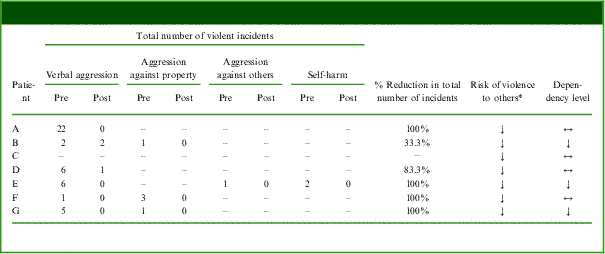
Pre: number of incidents in 90 days prior to starting clozapine; Post: number of incidents in most recent 90 days on clozapine; ↓ reduction; ↑ increase; ↔ no change; and – no incidents.
*As assessed by HCR-20Reference Binks, Fenton and McCarthy 41 ( Reference Webster, Douglas, Eaves and Hart 43 ) and hospital risk assessment.
All patients reported a similar profile of side effects. These included drowsiness, hypersalivation, and slurred speech. One patient (Patient F) discontinued clozapine, despite “feeling better,” due to various side effects and his subsequent noncompliance. None of the patients presented with neutropenia or agranulocytosis after initiation of clozapine.
Patient case reports
Patient A has a history of conduct disorder as a child, and presented in his adolescence with violent thoughts, animal abuse, and incidents of interpersonal violence. His index offence involved a serious assault on one of his parents with a knife, and he was convicted of attempted murder. He came to the hospital with symptoms of self-harm, emotional lability, and numerous acts of violence against fellow patients and staff. He has remained an inpatient for the last 7 years. Since 2011, he has had over 88 incidents of verbal aggression and has physically assaulted or attempted to assault fellow patients and staff on 16 accounts. Two years ago, he responded to clozapine for 8 months, but this was stopped due to poor compliance. Since being re-challenged on clozapine, his incidents of aggression have completely ceased, his seclusion hours have more than halved, he is less irritable, and he engages better with staff and fellow patients.
Patient B has a significant history of violence dating back to his early childhood and has over 60 convictions, including assault, arson, criminal damage, sexual assault, attempted murder, and witness intimidation. His index offence was the murder of a fellow prisoner by strangulation and attempted decapitation. He has had several incidents since moving from prison to hospital services, including barricading a door and making serious threats of violence toward staff. Since starting clozapine, he has appeared calmer, violent incidents have reduced, there has been no self-harm, and he has engaged better with staff and other patients. In light of clinical improvement, there are now plans to move him back to prison and prepare him for release on license after he has finished serving his sentence.
Patient C has multiple convictions for assault, actual bodily harm, and the possession of weapons. His index offence was an extremely violent homicide where the victim was hit over the head 30–40 times with a metal bar. He frequently has violent fantasies about killing others and stabbing people with knives. Despite these intense feelings, he has managed to control his impulses while in the hospital and has had no recent incidents of outward aggression toward staff or patients. After the addition of clozapine to his treatment regime, which already included chlorpromazine, Patient C reported feeling better “mentally.” Since starting clozapine, his internal aggression and tendency for violence has improved, and he has engaged well with dialectical behavioral therapy and occupational therapies.
Patient D has an index offence of robbery and wounding with intent to cause grievous bodily harm. He has a significant history of assault, robbery, animal cruelty, and substance misuse, and he poses a significant risk of violence to others. Before starting clozapine, the patient was stable but could be verbally abusive toward staff at times. He also refused to engage in any OT or psychological therapies. After commencing treatment on clozapine, his episodes of aggression have reduced, he is now engaging better with staff, and he has been removed from the high risk register.
Patient E has multiple convictions of rape and sexual violence, and he has displayed significant interpersonal violence toward others while in prison and hospital care. He also has a high risk of self-harm and made serious attempts to self-mutilate while in prison. Before starting clozapine, Patient E could be aggressive and had to be reminded about inappropriate behavior toward female staff. After clozapine was started, it was noted by staff that he appeared calmer. At this point, he also began to engage more frequently in OT and psychological treatment with great success. He has displayed few incidences of violence, engages well, and has been moved to a rehabilitation ward. There is a plan to move him to a medium security unit.
Patient F has numerous violent convictions, including assault, actual bodily harm, and the possession of weapons. While in the hospital, this violence has continued, and he is at high risk of aggression, assault, and fashioning weapons from sharp objects. During his short trial of clozapine, it was noted by staff that he showed improvement and was more settled. The patient stated that he “felt better,” and he continued to engage well with psychological therapies. There were plans for him to be moved to a lower dependency rehabilitation ward. However, clozapine was stopped after only 7 weeks due to side effects, including drowsiness, which led to patient noncompliance. In the weeks following discontinuation of clozapine, Patient F did not show any signs of immediate relapse. However, several months later, he had to be moved to a higher dependency ward, as he had begun to destabilize. While writing this report, it was noted that patient F has been restarted on clozapine in the hope he will show a similar response as in his previous trial.
Patient G has various convictions beginning at adolescence. His index offence was robbery with assault, which resulted in grievous bodily harm, and assaults on prison staff on numerous occasions causing serious injuries. Upon admission to the hospital, he had a history of self-harm, failure to comply with medication, and violence toward staff. His aggression toward others seemed to settle after only a few weeks on clozapine, and there was a significant reduction in the frequency of incidents reported. At this time, he has begun engaging well with activities off-ward and was moved to a lower security, rehabilitation ward. He has recently been recommended for transfer to a medium security unit.
Discussion
We report a case series of 7 forensic patients with ASPD and significant histories of violence toward others who were being treated with clozapine in a high security hospital. Among the robust socio-demographic and clinical predictors for dangerousness in people suffering with mental illnesses, previous history of violence and/or incarceration, aggression at the time of referral, and aggression at the time of hospitalization have been identified.Reference Glazer and Dickson 46 These factors are present in our patients, and hence initiation of clozapine was clinically justified, keeping in perspective the additional facts that clozapine has been shown to be of benefit in certain subtypes of personality disorders,Reference Chengappa, Ebeling, Kang, Levine and Parepally 23 , Reference Frankenburg and Zanarini 27 coupled with reducing aggression in schizophrenia.Reference Glazer and Dickson 46
All of the patients also scored high on psychopathy as determined by PCL-SV and additionally by PCL-R (in one patient). All 7 of the patients showed clinical improvement in symptoms with the commencement of clozapine treatment and also a reduction in their risk of violence to others. Specifically, 6 of the 7 patients showed improvement in cognitive-perceptual symptoms, all showed improvement in impulsive-behavioral dyscontrol, 4 in low mood, 5 in anxiety, 7 in anger, and 6 in mood lability domains. Overall, clozapine treatment showed exceptional improvement in treating all symptom domains, with maximum benefit in the improvement of the severity of impulsive-behavioral dyscontrol and reducing anger.
Two of the patients who had a presentation of self-harming behavior showed a reduction in this risk. Six of the 7 patients displayed a reduction in the total number of violent incidents, with 4 of the 6 showing a 100% reduction. The dose of clozapine prescribed was below the therapeutic dose for schizophrenia (350 ng/mL)Reference Spina, Avenoso and Facciolà 47 for 5 of the 6 patients whose levels were sampled. All patients showed an improvement in engagement with occupational, vocational, and/or psychological work. Metabolic parameters (where available) were largely unchanged, except for 1 patient who had a significant increase in BMI from 31.8 to 37.4. Considering this effect, clozapine may have caused minor weight gain in our patient sample. In some cases, there was unexpected improvement in metabolic parameters, which may be due to increased engagement in physical activities such as sports and leisure facilities. Side effects reported by the patients included drowsiness, hypersalivation, and slurred speech, which are all commonly reported side-effects. It is relevant to mention here that patients were notified of the potential for these side-effects before commencing clozapine. In 1 patient, various side-effects led to the discontinuation of clozapine treatment after only 7 weeks. To our knowledge, this is the first report to demonstrate that clozapine treatment may have a beneficial effect on ASPD patients with high psychopathy, especially in reducing the risk of violence to others.
Pharmacodynamic rationale for treatment with clozapine
Clozapine has an extensive range of actions, and has a potent affinity for D1, D2, D4, 5-HT2A, 5-HT2C, 5-HT3, muscarinic, α1-adrenergic, and histamine H1 receptors; inverse agonist activity at histamine H2 receptors.Reference Humbert-Claude, Davenas, Gbahou, Vincent and Arrang 48 The full range of actions induced by clozapine is not yet fully understood.Reference Vauquelin, Bostoen, Vanderheyden and Seeman 18 , Reference Fakra and Azorin 19 , Reference Kane, Honigfeld, Singer and Meltzer 21 , Reference Stahl 49 The virtue by which clozapine is particularly efficacious in treatment resistant schizophrenia, and in reducing violence, may be because of this diverse receptor profile.
Animal studies suggest that dopamine has considerable influence in mediating emotion, stress response, aggression, and impulsivity.Reference Harrison, Everitt and Robbins 50 – Reference Wade, Wit and Richards 52 Additionally several studies have demonstrated the association between abnormal dopamine metabolite (HVA) levels and impulsivity.Reference Chotai, Kullgren and Åsberg 53 , Reference Coccaro and Silk 54 These effects are particularly relevant to borderline and antisocial personality disorders, which are characterized by emotional dysregulation and impulsivity. 45 Dopamine dysfunction has been postulated as an underlying pathology in BPD, and this is supported by evidence that personality disorder symptoms can be treated by neuromodulators that improve dopamine dysfunction, such as the atypical antipsychotic clozapine.Reference Friedel 55
Additionally, it has been shown that serotonin (5HT) has a key role in the modulation of aggressive behavior,Reference Coccaro and Silk 54 – Reference Moss, Yao and Panzak 62 and several studies have identified an association between serotonin metabolite (5-HIAA) in human cerebrospinal fluid and antisocial behavior such as violence, homicide, arson, and child abuse.Reference Berman, Tracy and Coccaro 57 , Reference Brown 58 , Reference Constantino, Morris and Murphy 63 The extent to which serotoninergic dysfunction influences aggression is dependent on a complex interplay between multiple environmental factors.Reference Krakowski 64
Through its complex action on both the dopaminergic and serotinergic systems, clozapine induces anti-aggressive properties,Reference Buckley, Bartell and Donenwirth 28 , Reference Umukoro, Aladeokin and Eduviere 65 which can be of benefit in the treatment of personality disorders. However, further research is needed to evaluate the pharmacodynamic basis for clozapine's efficacy in this patient group.
Existing literature
It is difficult to compare our results with the current literature due to scarcity of studies reporting on pharmacological treatment in ASPD. However, there are several studies that demonstrate the positive effect of clozapine treatment in BPD.Reference Chengappa, Ebeling, Kang, Levine and Parepally 23 – Reference Frankenburg and Zanarini 27 While we report 7 patients with primary ASPD, it is notable that 5 of these patients had concurrent borderline personality traits. Hence, one may argue that the improvement in violence may be the effect of clozapine in ameliorating the borderline pathology. Antisocial personality is remarkably similar to borderline type personality, as they share the same core pathology—affective instability and impulsivity.Reference Paris 66 It can therefore be suggested that the benefit of clozapine is not due to the treatment of comorbid borderline traits, but rather that it targets the same spectrum of symptoms that are found in both BPD and ASPD.
However, our patient subgroup is very different to the subgroups in literature that have demonstrated the effectiveness of clozapine in BPD. Our patients’ primary difficulties were antisocial behavior, histories of serious violence including homicide, and levels of risk such that they necessitated high-security hospital treatment. Therefore, we suggest that the benefits of clozapine our patients displayed are not merely explained by an amelioration of their borderline pathology.
We have considered the role of concurrent medication, as 5 of the patients were on antidepressants, and 4 were on mood stabilizers. Both can improve symptom domains. However, it is to be noted that these concurrent medications predated the initiation of clozapine, and no changes in dose were made after initiation of clozapine. Also, clozapine treatment was only considered because the concurrent medication (antidepressant or mood stabilizer) in itself was ineffective.
A meta-analysisReference Ingenhoven, Lafay and Rinne 1 examined the actions of psychotropic medication on various symptom domains in severe personality disorder and found that antipsychotics rather than mood stabilizers or antidepressants (level of evidence: randomized controlled trials) led to improvement in cognitive perceptual symptoms, whereas improvement in the impulsive-behavioral dyscontrol and in the affective dysregulation domains were found to respond to either antipsychotics, antidepressants, or mood stabilizers. Therefore, the mechanism for improvement in the cognitive perceptual domain may be due to improvement in potential dopamine dysfunction, whereas, impulsive-behavior dyscontrol and affective dysregulation domains are governed in addition by potential serotonin and noradrenergic dysfunction, respectively.Reference Bateman and Tyrer 67 Our findings were that clozapine improved functioning in all symptom domains, which may be attributed to the diverse spectrum of receptor actions by clozapine.Reference Chengappa, Ebeling, Kang, Levine and Parepally 23
Our patients were detained in a high-security hospital by virtue of posing the highest levels of risk of violence toward others. Importantly, there was a significant reduction in this risk as demonstrated by reduction in incidents, risk assessments, and movement of patients to lower dependency wards. While this may be due to the specific anti-aggressive property of clozapine, it may be secondary to improvement in cognitive perceptual or impulsive-behavioral dyscontrol domains.
Low dose
The patients in our study achieved clinical response with relatively low doses of clozapine (mean dose: 171 mg, range: 100–325 mg). Five of the 6 clozapine level samples were below the recommended therapeutic dose level for treatment of schizophrenia (350 ng/mL),Reference Spina, Avenoso and Facciolà 47 and the seventh patient (for whom clozapine levels could not be done) showed clinical benefit with only 100 mg/day of clozapine.
Our findings of low-dose treatment efficacy are similar to that of a previous study that investigated successful low-dose clozapine treatment in BPDReference Benedetti, Sforzini, Colombo, Maffei and Smeraldi 25 and recent reviews on pharmacotherapy of BPD.Reference Bellino, Paradiso and Bogetto 68 , Reference Nelson and Schulz 69 Hence, further research is warranted on treatment dosing and plasma levels of clozapine for the specific treatment of personality disorders, especially ASPD.
We consider that personality disorder treatment may require lower doses of clozapine, as the focus is on improvement in impulsivity and emotion regulation, ie, symptomatic improvement. Treatment of these symptoms may require lower doses of clozapine compared to the psychotic symptoms displayed in schizophrenia.Reference Bellino, Paradiso and Bogetto 68 In fact, in a recent review, it has been pointed out that heterogeneous presentation of BPD lends itself to a symptom-targeted approach based on available research evidenceReference Nelson and Schulz 69 ; this issue may operate similarly for patients with ASPD.
Psychopathy
All the patients presented with high psychopathy, with the minimum assessed PCL-SV level falling at the 83rd percentile for forensic psychiatric populations (mean: 19.7; approximately 88th percentile).Reference Hart, Cox and Hare 38 The prevalence of psychopathy in the general population is estimated to be 1%, and between 15–25% of the prison population.Reference Dolan 70 Although similar and often comorbid, ASPD and psychopathy are considered separate diagnoses. Research on prisoners found that 50–80% had ASPD, but only 20% qualified, and therefore were considered to be high psychopathy.Reference Hare 71 High psychopathy in ASPD patients is considered to be clinically relevant because it has proven to be a valid predictor of future violence and risk of reoffending.Reference Salekin, Rogers and Sewell 72
There is emerging evidence that psychopathy is strongly associated with dopaminergic system abnormalities and possibly serotonin dysregulation.Reference Buckholtz, Treadway and Cowan 73 – Reference Soderstrom, Blennow, Sjodin and Forsman 75 Neuro-imaging studies support prefrontal structural and functional impairments in this offender subgroup.Reference Barkataki, Kumar, Das, Taylor and Sharma 76 – Reference Yang and Raine 78 To date there is no literature on the effectiveness of antipsychotics in psychopathic personality disorder. Our findings support the notion that clozapine may provide clinical benefit leading to risk reduction of violence in psychopathic ASPD. We consider this an important area for future research.
Concurrent Axis I diagnosis
Our patients benefited from detailed psychiatric assessments by a range of professionals and treatment in both hospital and prison settings. This detailed evaluation process did not substantiate the presence of an Axis I disorder such as schizophrenia or schizo-affective disorder. The presentation of quasipsychotic symptoms or psychotic-like symptoms in severe personality disorder with borderline/paranoid pathology is not uncommonly encountered,Reference Chopra and Beatson 79 and symptoms are known to respond to treatment with atypical antipsychotics.Reference Frankenburg and Zanarini 27 It is unlikely that our patients showed a response due to treatment of a concurrent psychotic illness, but instead benefited from the reduction in the severity of their personality disorder.
Important considerations
The retrospective nature of this case series, lack of objective rating scales, and the small sample size are some of the factors that limit our ability to draw firm conclusions from our data. The data in the medical records as available to the authors may not have been collected similarly across and within subjects. Studies conducted in a high-security hospital typically involve patients who are considered extreme cases in terms of their presentation and associated risks (and accordingly their management), and this may limit the ability of our results to be generalized and be representative of a larger population. This study also did not control for confounding variables such as other medications or psychological therapies and the therapeutic relationship between the patients and their treating team, and this may well have contributed to their improvement. All subjects reported drowsiness as a side-effect, which may have confounded behavioral outcomes; however, this may not be the case, as their increased engagement in occupational therapies indicated a genuine behavioral improvement.
However, there are also advantages to our approach. We were able to access large volumes of historical data in a longitudinal perspective for all patients, as participants were inpatients in a high-security setting with stringent and detailed recording of clinical information. Additionally, in such a setting, there are no confounding issues in the form of concurrent substance misuse or irregular/lack of adherence to medications. All patients were fully adherent to the clozapine treatment, and only 1 patient had to stop treatment due to its side effects. However, this aspect of adherence to a medication such as clozapine merits further consideration, keeping in perspective earlier research that has acknowledged and cautioned regarding the issue of ensuring compliance to oral antipsychotics (including clozapine) after discharge into the community.Reference Dalal, Larkin, Leese and Taylor 32
Cost benefit and future recommendations
All these patients had been transferred to high-security hospital services from medium-security hospitals or from custodial settings due to unmanageable aggression and their need for treatment. High-security hospital care is extremely expensive in comparison to these alternatives, and therefore, if proved beneficial, clozapine would be of immense cost benefit to health services. Effective treatment with clozapine in these patients would reduce the duration of high-security hospital stay and encourage progression to a medium-security hospital or return to prison services, thereby mitigating the overall cost of treatment.
There is a considerable lack of evidence to support pharmacological treatment in ASPD; if available, it is of low impact due to small sample sizes.Reference Kendal, Pilling and Tyrer 80 Additionally, research exploring pharmacotherapy in forensic patients is difficult to conduct, and the subjects that are enrolled in randomized controlled trials are not representative of the most difficult-to-manage patients in security units.Reference Volavka and Citrome 81 Due to the scarcity of evidence, future research is definitely indicated in the field of pharmacotherapy for patients with ASPD and psychopathy.
Conclusion
Clozapine is an atypical antipsychotic that has shown to be of benefit in reducing the risk of violence in schizophrenia. We report our experience of clozapine treatment in violent ASPD patients, with predominantly high psychopathic traits, in the setting of a high-security hospital, where we found that all patients achieved clinical benefit and had reduced risk of violence toward others. To the best our knowledge, this is the first time that clozapine has been shown to be of benefit in patients with ASPD with comorbid high psychopathy. Therefore, there is need for further research to explore the effectiveness of clozapine or other atypical antipsychotics in this subgroup of personality disorder patients.
Disclosures
The authors do not have an affiliation with or financial interest in any organization that might pose a conflict of interest.


 Open access

