

Introduction
As climatic warming causes immense changes in the Arctic environment, competing imaginaries of how the north’s unfreezing lands and waters should be used have manifested in legal, economic, and material conflicts and negotiations (Steinberg, Tasch, & Gerhardt, Reference Steinberg, Tasch and Gerhardt2015). In particular, northern lands have in the 21st century become susceptible to the pressure of being designated “arable,” making them into objects of what Bradley and Stein (Reference Bradley and Stein2022) call “climate opportunism.” Narrowly determined by simplified projections of warmer climatic futures (Hulme Reference Hulme2011), these “climate-driven agricultural frontiers” (Hannah et al., Reference Hannah, Roehrdanz, KC, Fraser, Donatti, Saenz, Wright, Hijmans, Mulligan, Berg and van Soesbergen2020) have begun to refigure narratives of changing cryo-terrestrial systems into opportunity narratives for policy intervention and capital investment (Bradley & Stein, Reference Bradley and Stein2022; Hannah et al., Reference Hannah, Roehrdanz, KC, Fraser, Donatti, Saenz, Wright, Hijmans, Mulligan, Berg and van Soesbergen2020; Price et al., Reference Price, Latta, Spring, Temmer, Johnston, Chicot and Leishman2022). Growing food in high-latitude regions is likely to gain importance due to climate-driven shifts in global food production (King et al., Reference King, Altdorff, Li, Galagedara, Holden and Unc2018; Lesk et al., Reference Lesk, Anderson, Rigden, Coast, Jägermeyr, McDermid, Davis and Konar2022) and regional food security concerns, which have been magnified by supply shortages brought on by the COVID-19 pandemic (Johnson et al., Reference Johnson, Erickson, Jäger, Jennings, Larson, Smythe, Strawhacker, Walker and Carroll2021; Weiss, Reference Weiss2020) and the loss of subsistence food sources, such as the collapse of Yukon River salmon (Ebertz, Reference Ebertz2021).
Agricultural activities in the North have to contend with the widespread presence of permafrost, defined as ground material (including rock, soil, ice, and organic matter) that remains below 0 °C for two or more consecutive years, which underlies seasonally thawed soils across 25% of the terrestrial northern hemisphere (van Everdingen, Reference van Everdingen1998). The lateral extent of permafrost has been classified into four zones: the continuous permafrost zone has permafrost present in 90% or more land area; the discontinuous zone has between 50 and 90%; the sporadic zone features between 10 and 50%; and the isolated zone has less than 10% (Obu et al., Reference Obu, Westermann, Bartsch, Berdnikov, Christiansen, Dashtseren, Delaloye, Elberling, Etzelmüller, Kholodov and Khomutov2019). Permafrost serves as the literal foundation for arctic and subarctic socio-ecological systems (Vincent, Lemay, & Allard, Reference Vincent, Lemay and Allard2017) but its rapid warming (Biskaborn et al., Reference Biskaborn, Smith, Noetzli, Matthes, Vieira, Streletskiy, Schoeneich, Romanovsky, Lewkowicz, Abramov and Allard2019) presages complex and cascading changes, requiring an adaptive response (Ward Jones et al., Reference Ward Jones, Habeck, Ulrich, Crate, Gannon, Schwoerer and Borchard2024).
Land clearing for agriculture exposes underlying permafrost to climate-driven thaw, a process that varies depending on ground material composition, such as ground ice content (Ward Jones et al., Reference Ward Jones, Schwoerer, Gannon, Jones, Kanevskiy, Sutton and Russell2022; Ward Jones et al., Reference Ward Jones, Habeck, Ulrich, Crate, Gannon, Schwoerer and Borchard2024). Land underlain by ice-rich permafrost will collapse (or subside) as ground ice melts and removes the volume and structure of the ice provided to the soil. Ward Jones et al. (Reference Ward Jones, Schwoerer, Gannon, Jones, Kanevskiy, Sutton and Russell2022) outline four possible permafrost degradation scenarios based on ground ice content: (1) ice-poor permafrost that generates little to no subsidence upon thaw; (2) presence of shallow ice layers that will generate some subsidence that is manageable with some surface grading; (3) presence of vertical ice bodies, called ice wedges, that will require several rounds of grading until the ice bodies have completely melted; and (4) deep ice wedges common in Yedoma deposits (Pleistocene deposits with high volumes of ground ice and distinct fauna and flora fossil remains; Strauss et al., Reference Strauss, Laboor, Schirrmeister, Fedorov, Fortier, Froese and Grosse2021) that disrupt cultivation activities and commonly lead to field abandonment. Furthermore, subsidence can lead to problems with equipment, soil saturation, loss of topsoil, and soil fertility, which require a large investment of labour and capital to mitigate (Ward Jones et al., Reference Ward Jones, Schwoerer, Gannon, Jones, Kanevskiy, Sutton and Russell2022). Land clearing also alters the permafrost hydrology regime of surrounding uncleared areas and can lead to cascading impacts on large swathes of boreal forest (Iijima & Fedorov, Reference Iijima and Fedorov2019).
Permafrost has long been excluded from the purview of state regulation but must increasingly inform land use objectives and priorities in the North. Klöffel et al. (Reference Klöffel, Young, Borchard, Vallotton, Nurmi, Shurpali and Unc2022, p. 3), citing attendees of a 2021 UN Summit on northern food production, unequivocally state that “current policies are poorly developed in most northern regions, which leads to rapid and uncontrolled land use change.” Among the reasons permafrost has long remained outside the purview of state agricultural regulation are low levels of settlement and production on frozen lands (Price et al., Reference Price, Latta, Spring, Temmer, Johnston, Chicot and Leishman2022), the disciplinary siloing of permafrost and agricultural sciences (Ward Jones et al., Reference Ward Jones, Schwoerer, Gannon, Jones, Kanevskiy, Sutton and Russell2022), and permafrost’s treatment as a residue (Tironi, Kearnes, Krzywoszynska, Granjou, & Salazar, Reference Tironi, Kearnes, Krzywoszynska, Granjou and Salazar2020, pp. 18–19), threat, or capitalist surplus (Collard and Dempsey, Reference Collard and Dempsey2017). As climate change processes continue to affect human beings’ social, economic, and political lives, the complex interaction of hunger, law, and frozen land must increasingly inform land use objectives and priorities. Authors such as Ward Jones et al. (Reference Ward Jones, Schwoerer, Gannon, Jones, Kanevskiy, Sutton and Russell2022) emphasise that law, policy, and regulation need to account for both geo-ecological and socioeconomic dimensions of farming in permafrost regions, and that they must be informed by transdisciplinary research with Indigenous collaboration and input. The presence of permafrost in northern food systems will become a major concern as more land is cleared and used for agriculture. Policy instruments can contribute to the sustainable development of agriculture and support agricultural techniques and communities in high-latitude environments, similar to what has been done previously with engineering (Johnston, Reference Johnston1981).
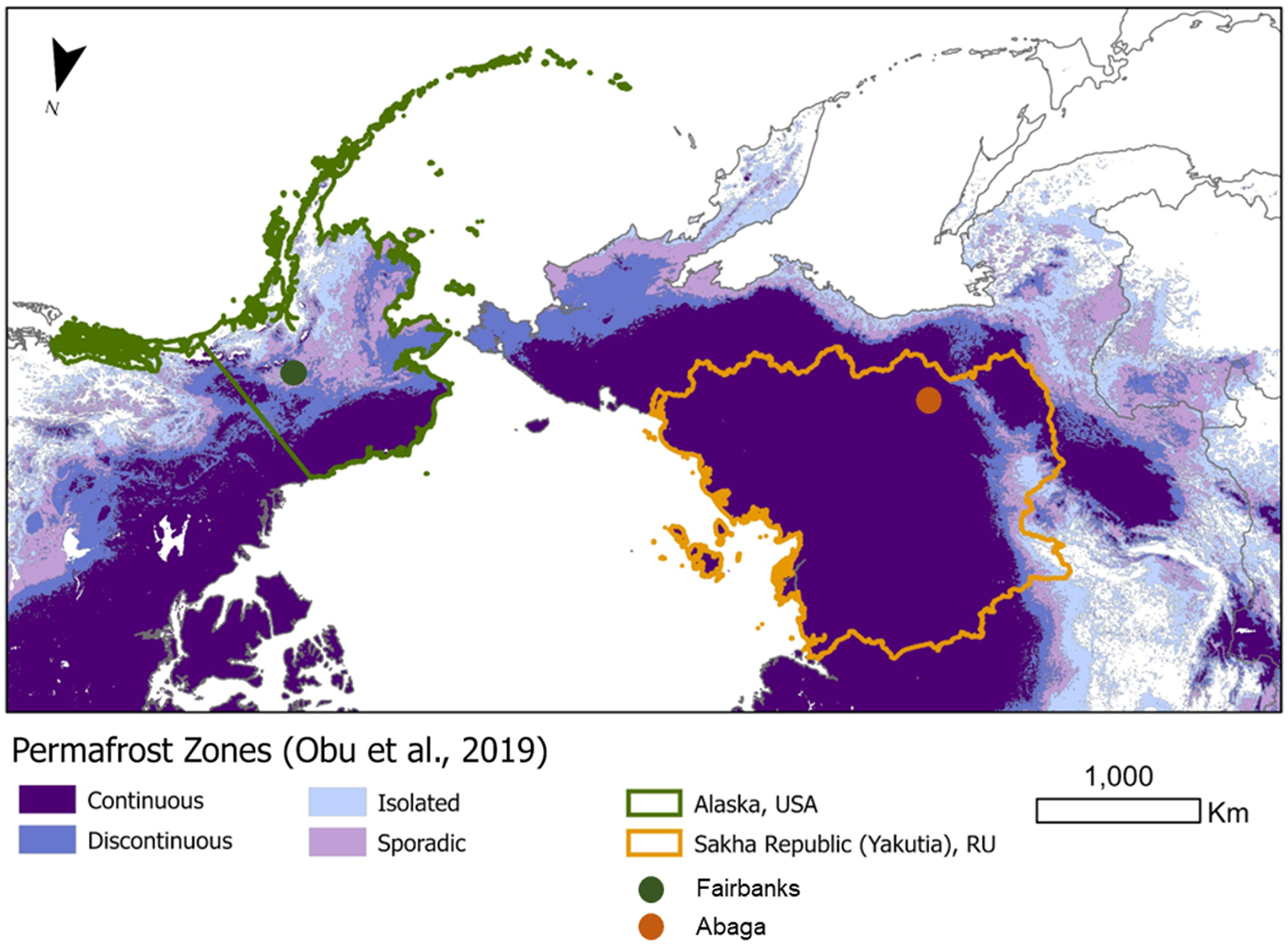
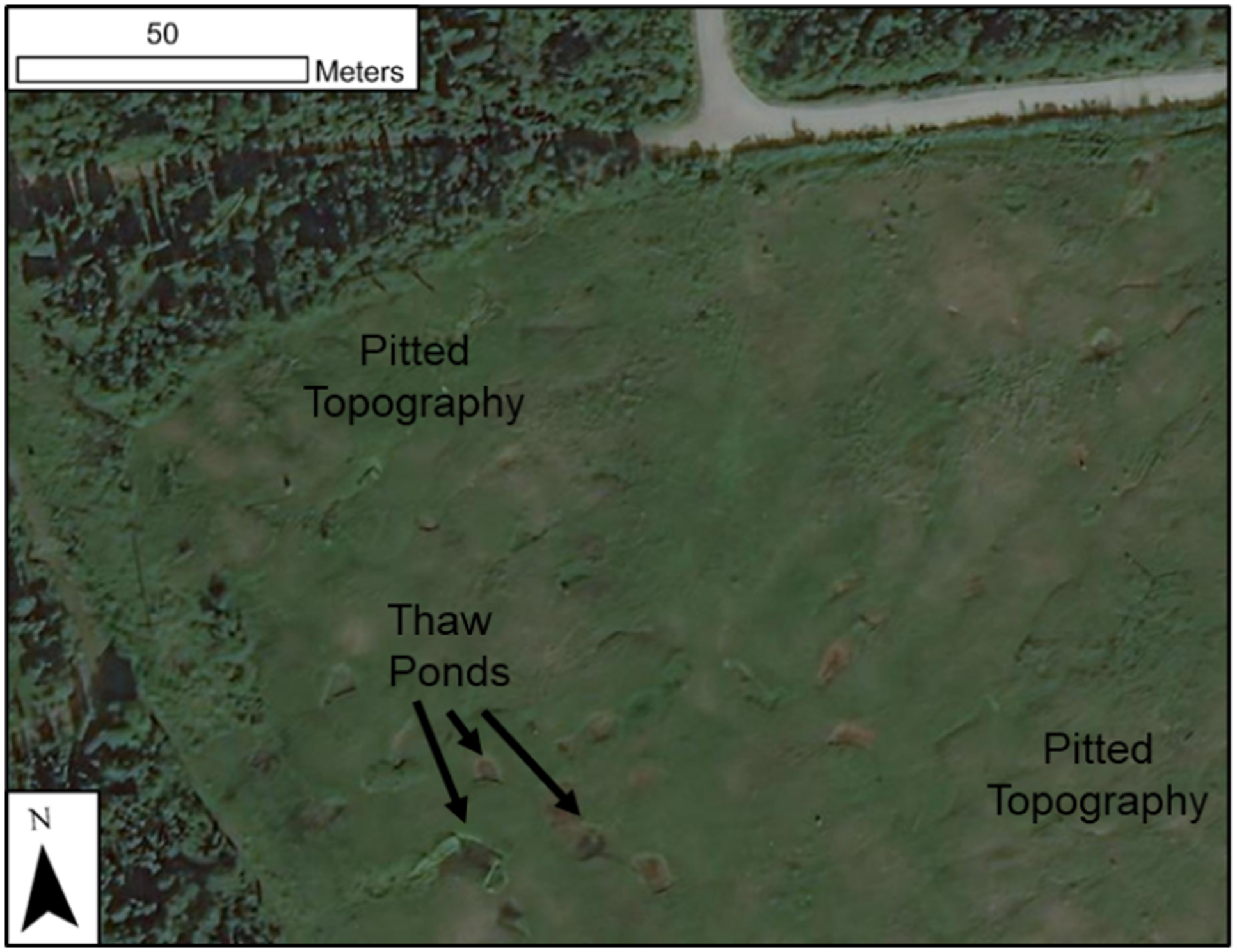
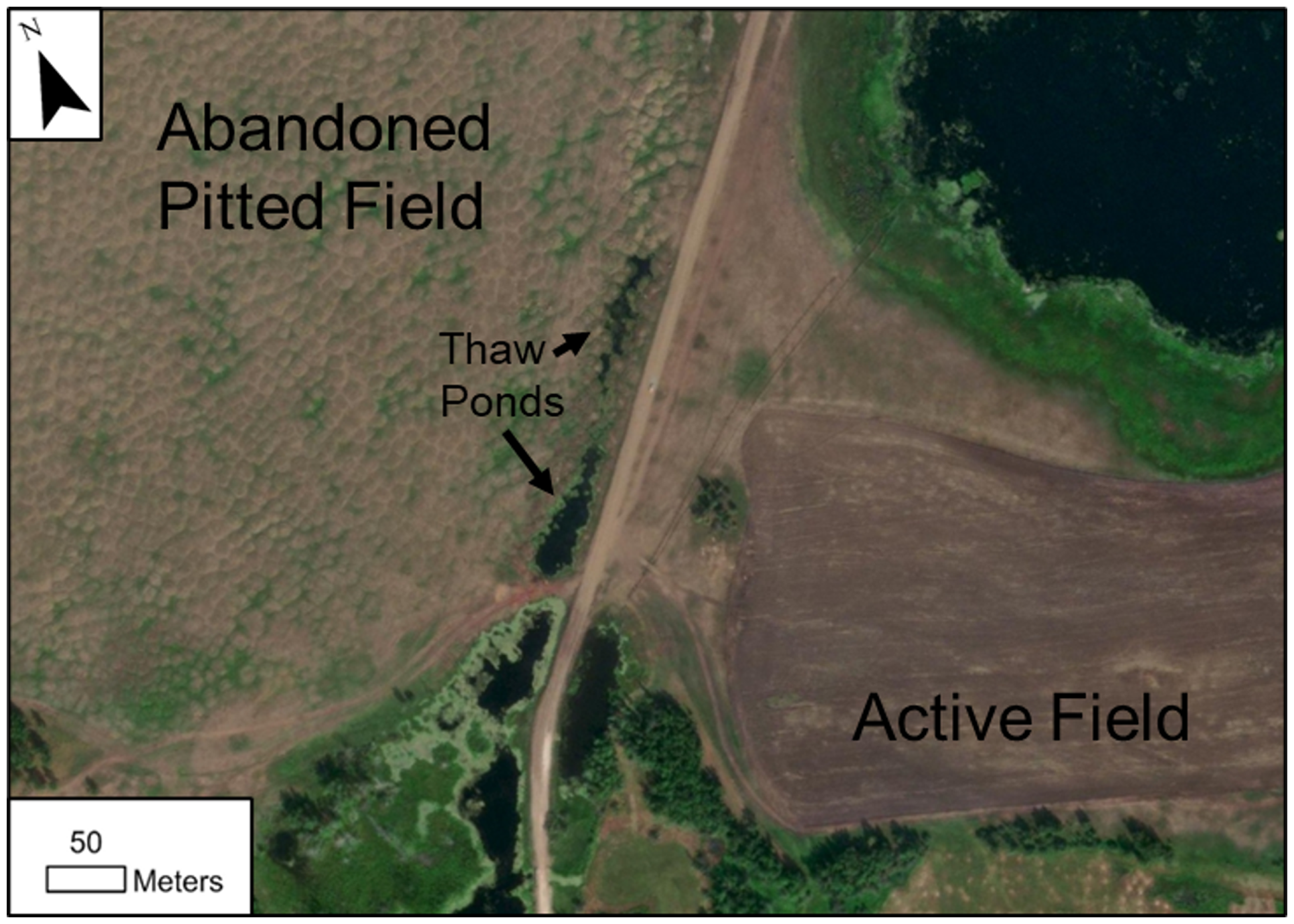
In this paper, we focus on how regional agricultural law, policy, and state discourse are shaping the evolution of permafrost-agroecosystems (agricultural systems with arable permafrost-affected soils) in two northern regions: Alaska, US, and the Republic of Sakha (Yakutia) (RSY), Russia (Figure 1). Both are homelands for Indigenous communities, including the Sakha who are recognised as Indigenous internationally if not by the Russian Government (Ksenofontov and Petrov, Reference Ksenofontov and Petrov2024). These regions were selected for several reasons. Both regions have agricultural sectors in areas containing permafrost that have been active for at least 100 years. Both places contain an extensive presence of permafrost: it is estimated that 80% of Alaska (Jorgenson et al., Reference Jorgenson, Yoshikawa, Kanevskiy, Shur, Romanovsky, Marchenko, Grosse, Brown, Jones, Kane and Hinkel2008) and nearly 100% of the Sakha Republic are in the permafrost zone (MSK 2021). Both places are known to contain ice-rich permafrost, including a ground ice type known as Yedoma that only occurs in a few areas in the Arctic (Strauss et al., Reference Strauss, Laboor, Schirrmeister, Fedorov, Fortier, Froese and Grosse2021), which has led to problems with subsidence in fields (Figures 2 and 3). Historically, both have been subject to government policies that attempted to encourage agricultural development in Alaska through homesteading and agricultural projects such as the Delta Barley Project and the current Nenana-Totchaket Project (Bradley and Stein, Reference Bradley and Stein2022), and in Russia through agricultural land zoning (Naumov et al., Reference Naumov, Akimova, Sidorova and Topnikov2020) and the Far East Hectare (RF 2016), or Russian Homestead Act (Fondahl et al., Reference Fondahl, Filippova, Savvinova, Ivanova, Stammler and Hoogensen Gjørv2019). Lastly, their respective 20th-century histories of capitalist and socialist development present a valuable opportunity to examine the contrasting sociolegal norms and conventions of distinct northern land tenure systems faced with similar climatic risks.
Map depicting permafrost extent in North America and Eurasia, with political boundaries of Alaska and the Sakha Republic (Yakutia), and locations of Figures 3 and 4 marked.
Fairbanks, AK: Farm field within the discontinuous zone in the Fairbanks, AK (see Figure 1 for location) showing signs of permafrost degradation including pitted topography and thaw ponds. The 2021 image was derived from ESRI basemap accessed using ArcGIS Pro v.2.7, ba.
Abaga, SRY: An active and abandoned field in the continuous permafrost zone in Abaga, Sakha Republic, RU (see Figure 1 for location). The abandoned field shows constant pitted topography with two thaw ponds adjacent to the road. The 2017 image was derived from ESRI.
Law and policy play a central role in ordering nonhuman nature by formalising normative designations of its value and non-value (Collard and Dempsey, Reference Collard and Dempsey2017). Transformations of the northern environment will generate legal liabilities, costs, and risks for human communities, which will be adjudicated in accordance with the standing and valuation of nonhuman nature within policy and law, with consequences for the long-term viability of different socionatures (Nightingale, Reference Nightingale2018). In short, our changing climate has induced a destabilizing “liveliness” in geo- and hydrological systems at smaller timescales than has been seen in recent history, obliging human governance systems to respond and adapt (Yusoff, Reference Yusoff2018). Paying attention to the dynamic materiality of water, including ground ice, can deepen and complicate how we think about geopolitics, borders, and our relationship to the earth (Steinberg & Peters, Reference Steinberg and Peters2015). The prevalence of ground ice in the North demands we invite liquid dimensions such as depth, volume, temperature, and seasonality into legal geographic analysis, and, furthermore, address how changing land volume interacts with political power (Elden, Reference Elden2013). We thus engage the following questions: how is permafrost oriented within current northern agricultural land tenure systems? What kind of lawscape is guiding the climate-driven expansion of “arable” land into more northern latitudes? What kind of food security futures do subnational land use institutions open and close? What kind of legal adaptations may permafrost thaw induce? Through a comparative lens, we examine a) how policy instruments in each subnational region render permafrost as an object of governance, and b) the extent to which permafrost and climate changes are brought to bear on public processes of land disposal and development. This paper is cautionary, as regulating land development of any kind always has unexpected, unpredictable social and environmental impacts, now even more so as the climate changes.
Methods
To identify pertinent statutes, laws, regulations, and other policy instruments dealing with the cultivation of permafrost-rich lands, combinations of the following key search terms1 were inputted into the Russian/RSY and US/Alaskan legislative databases: “permafrost,” “north(ern)”/“Arctic” + “agriculture(e/al),” “clearing” (obezleseniye/расчистка), “draining” (osusheniye), and “food security” (prodovol’stvennaya bezopasnost’). Though there are several pertinent terms, rural land use practices in Russia are most frequently discussed under the broad heading of sel’skoye khozyastvo, which translates roughly as “rural husbandry” and includes such diverse activities as vegetable, grain, and fruit production, sedentary animal husbandry, reindeer herding, hunting, and fishing.
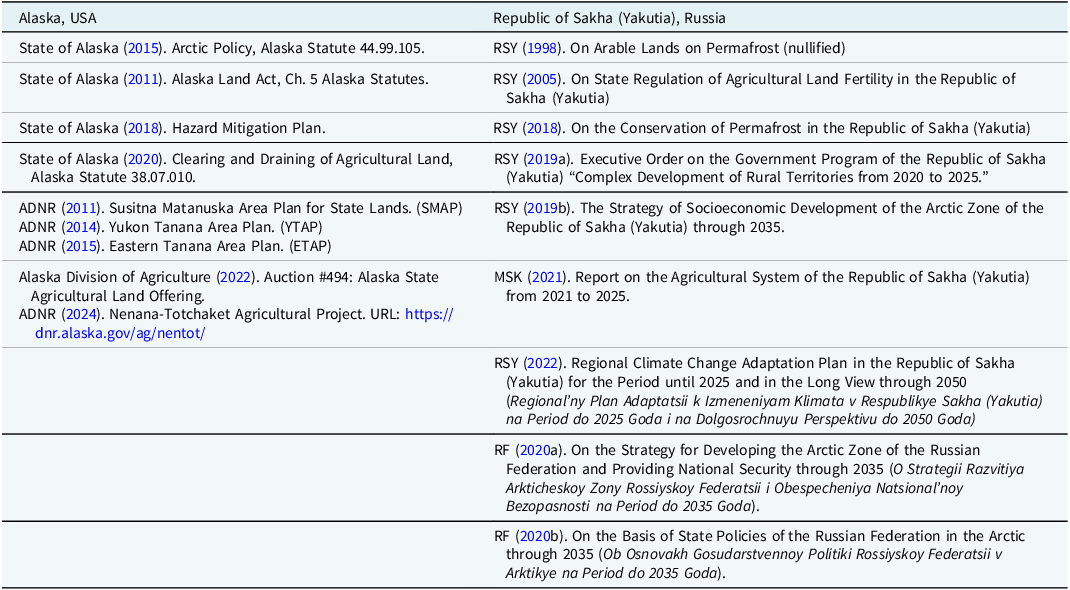
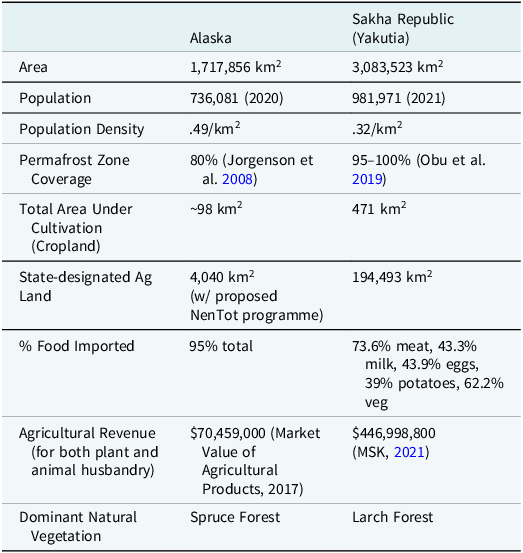
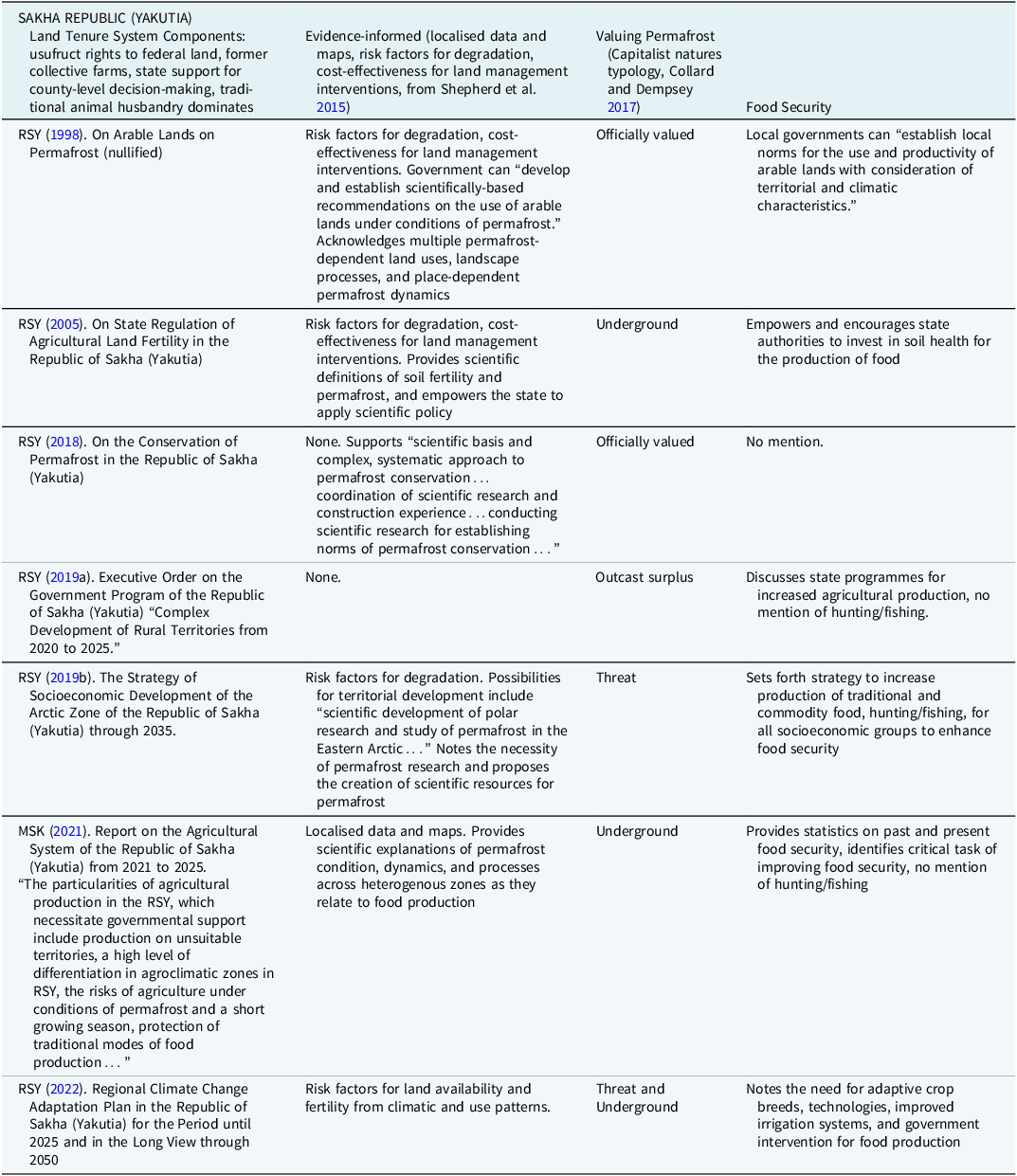
Results dealing with non-agricultural infrastructure and economic activities were removed, resulting in eighteen candidate texts (Table 1) with analytical value. Each selected text was sifted for sections, articles, and statements relating to permafrost, the conduct of land preparation and clearing, and geographically- and culturally-specific approaches to food security. Assessing the use of scientific or other evidence in policy instruments is accomplished using Shepherd, Shepherd, & Walsh’s (Reference Shepherd, Shepherd and Walsh2015) list of information products for evidence-informed land management. Classifying the value afforded to permafrost is accomplished through Collard and Dempsey’s (Reference Collard and Dempsey2017) typology for “capitalist natures,” which includes “Officially valued” (nonhuman goods/commodities), “Reserve Army” (nonhumans with future exchange value), “Underground” (unpriced ecosystem functions), “Outcast Surplus” (expendable and unpriced nonhumans), and “Threat” (disruptors of capitalist accumulation). The analysis seeks to understand how permafrost and its attendant ecosystems are treated as objects of agricultural policy and state regulation, what formal juridical status, if any, they are afforded, and what attitudes shape the language surrounding permafrost. Each regional analysis includes a background summary of agricultural land markets to contextualize the analysis (Table 2).
List of all identified policy instruments
Demographic and agricultural statistics for Alaska and the Republic of Sakha (Yakutia)
Alaska, USA
Background on Alaska Agricultural Land Markets
Over 50% of the contiguous US’s land base is considered by the US Department of Agriculture (USDA) to be under cultivation for agricultural purposes, which includes rangeland for cattle and forestry as well as cropland in different states of use (USDA, 2023). But in Alaska, cultivated land currently comprises less than .001% of the state’s over 425 million acres, and large agribusiness remains notably absent (Stevenson et al., Reference Stevenson, Alessa, Kliskey, Rader, Pantoja, Clark and Giguère2014; USDA NASS, 2019). Presently, agricultural enterprises in Alaska serve almost exclusively regional markets; the state’s only crop exports are the peony along with negligible quantities of animal products and feed (ibid.). At their present peak, farmers in the state are annually cultivating approximately 83,732 acres of cropland, raising primarily hay, barley, potatoes, and vegetables. In the 2019 USDA survey, it was shown that the majority of Alaska farms (nearly 700) were smaller than 49 acres, and only 43 operations measured 1000 or more acres (USDA NASS, 2019).
According to the USDA, in 2021, Alaska had 1050 distinct farming operations, including both plant and animal husbandry, primarily located across the Mat-Su Valley, the western Kenai Peninsula, and the Tanana Valley of the Interior Region of the state (USDA 2021). Most Alaska residents have always required shipments of food (everything from canned milk to vegetables, dried fruit, and sugar), and their dependence on outside foodstuffs has grown exponentially since the mid-1950s when Alaska produced about half of its food needs in-state; today the state imports 95% of its food supply and only keeps a 3- to-5-day food supply at any one time (Stevenson et al., Reference Stevenson, Alessa, Kliskey, Rader, Pantoja, Clark and Giguère2014). This shift is the result of complex interactions between population growth, medical advances, food prices, markets, geopolitics, and Alaska’s geographic isolation. In the last few decades, there has been a renewed interest, despite greater costs, in buying locally grown and produced Alaskan food products, leading to an increase in local food production since the 1980s that corresponds to the creation of an Alaska Grown product designation (Meter & Goldenberg, Reference Meter and Goldenberg2014).
Alaska Policy Instruments Facilitating Agricultural Development on Permafrost
Out of the total 2.3 billion acres of the contiguous US land surface, 60% is privately owned, with the remaining 40% divided among the federal government (29%), state and local governments (9%), and Tribal governments (2%) (Wiebe & Gollehon, Reference Wiebe and Gollehon2007). In Alaska, however, the situation is reversed, with the federal government holding approximately 60% of the land, the state holding around 25%, Alaska Native Corporations privately holding around 12%, and conventional private ownership comprising just under 1% (AKRDC, 2009). With low levels of private land ownership in the state, state and private actors exercising Constitutional Fifth Amendment property rights and the right to sell or dispose of land for express purposes are generally unfettered in their ability to alter the bio- and geophysical characteristics of land parcels. It is an axiom of US economic strategy that well-established and well-enforced property rights are necessary for the achievement of efficiency and productivity for land-based operations. For farmers in particular, the security of having long-term guaranteed rights to land is correlated to higher investment and sustained productivity (Hornbeck, Reference Hornbeck2010). The expectations of stable property rights enjoyed by many landowners and agriculturalists have only been ensured through the resolution of property conflicts in US courts (Colby, Reference Colby1995). However, the fee-simple system of land ownership and market regulations that once allowed small-scale plant and animal cultivation enterprises to thrive now operates as a mechanism for the large-scale enclosure of land and water by private interests (De Schutter, Reference De Schutter2011).
The structure and procedures of Alaska farmland preparation and distribution play a direct role in shaping the region’s permafrost regime. In the AK Department of Natural Resources Fact Sheet: Agricultural Land for Alaska, one finds information on state programmes for obtaining land for cultivation, including auctions, lotteries, and over-the-counter sales, as well as associated stipulations regarding purchase, disposal, multiple use, and participant eligibility. It declares that the State of Alaska agricultural parcels are offered without guarantee of the quality or suitability of the soil for cultivation, the determination of which is left to the potential purchaser by means of consultation with the USDA and other agricultural information services, including the Cooperative Extension Service (CES) of the University of Alaska. Currently, CES publications only address permafrost as a concern for hard infrastructure. The State of Alaska Department of Natural Resources Division of Geological and Geophysical Surveys has conducted a large number of studies on geologic resources that address regional permafrost characteristics, only one of which, the Guide to Permafrost and Quaternary Geology of the Fairbanks Area, Alaska (State of Alaska, Reference Stevens2023), provides two half-page case studies of permafrost thaw induced, in part, by agricultural clearing. The Division may be prepared to provide information and analyses on future permafrost-agriculture interactions, but this is not reflected in their current policies or studies.
Among the “agricultural purposes” indicated in the Fact Sheet for legitimate land procurement is the “removal and disposition of timber in order to bring agricultural land into use” (p. 3), a process that according to Alaska Statute Title 38, Chapter 7 can be conducted at either purchaser or state expense on plots of no less than 320 acres. As noted previously, such large changes in land cover are capable of producing unanticipated feedback effects like bog formation and subsidence (Fedorov et al., Reference Fedorov, Iwahana, Konstantinov, Machimura, Argunov, Efremov and Takakai2017; Klöffel et al., Reference Klöffel, Young, Borchard, Vallotton, Nurmi, Shurpali and Unc2022; Nicholas & Hinkel, Reference Nicholas and Hinkel1996; Ward Jones et al., Reference Ward Jones, Schwoerer, Gannon, Jones, Kanevskiy, Sutton and Russell2022). Furthermore, as stated in Alaska Statute Title 38, Chapter 5, once a parcel has been established as agricultural land, it is often inscribed with an “agricultural covenant,” which ensures that the land cannot be used for any other purpose in the future. Once a parcel is under private ownership, it can be subdivided into parcels of no less than 40 acres, which must still be used for agricultural purposes but would nonetheless alter the spatial makeup of land use. Should an agricultural landowner demonstrate that an expansion of their parcel into surrounding uncultivated lands is in the “highest and best use of unoccupied land,” they are eligible to formally apply for it (Title 38, Chapter 5).
All prospective purchasers of agricultural land are required to submit a State Farm Conservation Plan prior to the assumption of managerial authority of a parcel. According to the Fact Sheet (p. 3), this document “helps the state ensure that appropriate site-specific soil and water conservation planning” will guide activities such as crop selection and field size adjustment. Such plans require approval from independent, USDA-affiliated Soil and Water Conservation District specialists. Permafrost is not identified at all in programme documents for the USDA Alaska Natural Resources Conservation Service programmes or the public websites for SWCDs in discontinuous or sporadic permafrost zones such as Fairbanks and Salcha-Delta. These absences in key government information products, while not excluding permafrost from consideration in practice and assessment, mean that permafrost management is subsumed under routine soil and water management.
In such a manner can public state promotion of agricultural development invisibilize its potential impacts on the permafrost ecosystem. An evidence-based rubric for weighing the pros and cons of bringing “unoccupied land” into cultivation is not provided in any policy instrument. No pertinent regulations were found with the AK Department of Environmental Conservation. But regional Area Plans (2011, 2014, 2015), which serve as zoning and development guides, offer that in addition to regulatory actions for enhancing human well-being, decisions on land management and use must also protect access to and health of public resources such as animals, watersheds, and trails. In establishing new land use regimes for specific tracts and parcels, the Area Plans do not mention permafrost but do emphasise that state and private entities should avoid and minimise damage to public resources as well as reduce the potential for conflict between resource users. Legal precedent, however, complicates users’ ability to argue damage has been incurred by private land uses or conversions impacting permafrost. Though permafrost has played a role in no fewer than 60 US legal cases (based on a refined search of Google Scholar Case Law), none of these was brought by a litigant involved in agricultural activity; all cases revolved around either undisclosed permafrost on land parcels, contracting disputes, wetlands protections, or drilling permits. Only two cases (9th Circuit, 2008, 2018) involved any discussion of permafrost suitability for agriculture, and only because the litigants contested the application of the U.S. Army Corps of Engineers (USACE) definition of a wetland based on growing seasons. The current precedent, stated in the 1986 case, Braham v. Fuller (Alaska Supreme Court, 1986), declares that Alaska has
“adopt[ed] the rule of reasonable use with respect to one’s right to drain his land of surface waters. That rule … provides “that each possessor is legally privileged to make a reasonable use of his land, even though the flow of surface waters is altered thereby and causes some harm to others, but incurs liability when his harmful interference with the flow of surface waters is unreasonable.”
What constitutes “reasonable” or “unreasonable” use in land and water rights has been discussed extensively in legal scholarship (Caponera & Nanni Reference Caponera and Nanni2019; Graham, Reference Graham1992; Trelease, Reference Trelease1957), and the legal precedent described here only applies to significant increases of drainage across property lines. As climate change intensifies the risk and occurrence of permafrost thaw, this precedent may come to be seen as inadequate. The one outlying appearance of permafrost in state law is in the Alaska Administrative Code, Article 6, Section 18, where regions of continuous permafrost are designated as “very sensitive terrestrial environments,” though, within the purview of the Article, this only refers to issues dealing with petroleum-related pollution and not land clearing. Nonetheless, landscape sensitivity may become a legal consideration for agriculture should previously “reasonable” decisions become more consequential.
The recent Nenana-Totchaket Agricultural Project (NTAP) has the potential to induce legally-salient landscape changes by incrementally disposing of 148,502 acres of state land for agricultural development (ADNR 2024) in Alaska’s zone of discontinuous permafrost (Jorgenson et al., Reference Jorgenson, Yoshikawa, Kanevskiy, Shur, Romanovsky, Marchenko, Grosse, Brown, Jones, Kane and Hinkel2008). NTAP’s website features climate projections for expanded growing seasons in the future as well as a quotation from Governor Mike Dunleavy stating, “the project will continue to grow for generations and become a vital key to our agricultural industry and the state’s economy,” without mention of permafrost, land clearing costs, or impacts on boreal ecosystems. As regards soil quality, the website features a map with parcels and USDA Land Capability Class ratings, showing a predominance of classes 3, 4, and 6; the website asserts that “those areas with an LCC rating of 3 to 4 are considered most appropriate for agriculture” even though the USDA’s own definitions describe both classes as having “severe” or “very severe limitations.” The 72-page brochure released to advertise the land auction mentions permafrost once, in a disclaimer that certain physical conditions may “limit crop selection and/or require special management techniques in developing the agricultural potential” (AKDA, 2022, p. 14). The impression of unbounded agricultural opportunity presented in the NTAP materials bears a strong resemblance to early 20th-century media coverage that fueled settlement and farming in the Alaskan territory (Willis, Reference Willis2010). Simplifying and targeting the message of opportunity invariably accompanies the streamlining of land parcelling and disposal.
Alaska policy instruments restricting or regulating permafrost land use
With one aforementioned exception, the Alaska Administrative Code and Statutes identify permafrost as a source of risk in areas of wastewater treatment, landfills, hard infrastructure, and impact mitigation. Across policy instruments in Alaska, none restrict or caution against land conversion for agriculture on the basis of permafrost or soil fertility, though many documents identify permafrost as a risk or hazard. Foundationally, the State of Alaska’s Arctic Policy (2015), contained in Title 44, Chapter 99 of the Alaska Statutes, lists under state policy the objective to “sustain current, and develop new approaches for responding to a changing climate, and adapt to the challenges of coastal erosion, permafrost melt, and ocean acidification” (1.D). Without any details as to the nature of these approaches or what sectors they may impact, however, the policy offloads them onto future regulatory or legal action. Its focus on risk and inattention to the spatially distributed ecosystem and cultural services of permafrost landscapes renders the Arctic Policy shallow in light of the State’s unique needs, massive land base, and agricultural aspirations. It entails the state’s generic obligation to consider the occurrence of permafrost thaw in planning and executive operations of the state but without clear intent. Agriculture, furthermore, is absent from the entire document.
The permafrost thaw threat is reiterated in the State Hazard Mitigation Plan (SHMP), issued by the Alaska Division of Homeland Security & Emergency Management in 2018. The SHMP describes permafrost as “a major factor in the geography of Alaska,” providing “a stable foundation for structures and infrastructure.” The SHMP profiles a diversity of permafrost hazards including landslides, ground subsidence, erosion, lake drainage, thaw lake formation, and saltwater contamination of aquifers and groundwater; these specific hazards are said to occur in “permafrost-affected” regions, suggesting that permafrost is exogenous to rather than constitutive of Alaska lands. Unlike Alaska’s Arctic Policy, which refers to permafrost in a general way, the SHMP contains extensive scientific information on heterogenous cryologic formations and dynamics, citing pore ice, segregated ice, tabular ice, and ice wedges as components influencing place-specific changes in permafrost. Such differentiation supports the SHMP’s mandate to “define natural hazards, their nature or characteristics, historical events, potential structure and infrastructure impacts, and the State’s strategy to guide future activities” (1-1). Still, in neither document are permafrost’s “ecosystem services” directly targeted as valuable or eligible for valuation in light of thaw hazards, against which humans bear the only legal rights. The words conserve and preserve are not present and emergency prevention is mentioned in only one article of the state’s Arctic Policy.
Chapter 6 of the SHMP identifies farming as a sector uniquely affected by climate change but focuses mainly on describing the quality and diversity of Alaskan agriculture. The SHMP states that across Alaska, there are 18–20 million acres of potentially suitable cropland of which fewer than 20 thousand acres are or have been under cultivation (p. 6–125). With this statement, the yet-uncultivated land is rhetorically prepared as a site of investment and untapped source of both economic growth and food security, situated within Bradley and Stein’s (Reference Bradley and Stein2022) framing of “climate opportunism.” “Potentially suitable cropland” is qualified neither by the driving force of climate change that will lengthen the growing season nor by the ecological, cryologic, or soil conditions of these millions of acres. Such language aligns with what Exner et al. (Reference Exner, Bartels, Windhaber, Fritz, See, Politti and Hochleithner2015) identify as the process of simplification, monetisation, and inscription of complex landscapes, wherein agriculture is intimated as the more desirable form of land use through a narrative of underutilisation of natural potential.
Republic of Sakha (Yakutia), Russia
Background for Republic of Sakha (Yakutia) agricultural land markets
In the Republic of Sakha (Yakutia) (RSY), where nearly 100% of the landmass lies in the permafrost zone (MSK 2021), in-ground cropping agriculture remains marginal to more widely practiced modes of animal pastoralism, including horse, cattle, and reindeer husbandry. Potatoes and certain vegetables like cucumbers and leafy greens are raised only in select districts of the Republic, and there, often in private gardens, while hay, straw, and silage use less than 50% of designated agricultural land, much of that even being “underutilized” (MSK, 2021, p. 31). According to Schepaschenko et al. (Reference Schepaschenko, Shvidenko, Lesiv, Ontikov, Shchepashchenko and Kraxner2015), forests cover approximately 35% of RSY’s immense three million plus square kilometre land base, the rest being tundra. About 83% of RSY’s land base falls under the federal Land Fund, and 6.3% of that is designated for agricultural purposes.
According to the RSY Ministry of Agriculture (MSK to use the Russian acronym), in 2021, there were 741 distinct organisations involved in land production activities, including “traditional Northern sectors.” MSK (2021) points out that because of the permafrost, 94% of the land designated for agriculture isn’t in fact used for in-ground cropping or typical meat production, with much used for “traditional Northern sectors” such as horse and reindeer pasturing. Regional land use and production of all foodstuffs between 2010 and 2019 showed significant interannual variability, with generally declining trends for commercial producers of vegetables, potatoes, and grain and generally increasing trends for small-scale family and individual farmers (Rosstat, 2020, pp. 37–38). According to MSK (2021, p. 22), the RSY is relatively food insecure, producing 26.4% of meat, 56.7% of dairy, 56.1% of eggs, 61% of potatoes, and 37.8% of vegetables consumed regionally. Like with Alaska, food insecurity has arisen due to factors associated with population growth, medical advances, changing food preferences, and geographic remoteness.
RSY policy instruments facilitating agricultural development on permafrost
In Russia, according to the Federal Service on State Registration, Cadaster, and Cartography, 92% of all land is owned by federal, regional, and municipal governments, with only 6.7% owned privately and 1.1% owned by legal entities, a category that includes Joint Stock Companies, Production Cooperatives, State and Municipal Enterprises, and Subsidiary Farms (Sagaydak & Sagaydak, Reference Sagaydak and Sagaydak2018). Of this, nearly 67% of agricultural land is owned by federal, regional, and municipal governments, while only 5% belongs to legal entities and the remainder is in the ownership of private individuals and families (Khlystun, Reference Khlystun2019). These and other statistics are, however, to be taken with a grain of salt as the reports of multiple Russian state agencies tasked with tracking land use demonstrate enormous discrepancies that call into question the state’s authority to register or dispose of land (ibid.). Across Russia, problems with the post-Soviet land market include inefficiencies in cadastral and documentary work, land boundary disputes, illegal transactions and uses of land, and “declarative” legislation (Erma et al., Reference Erma, Yufeng, Mingkai and Jiaxing2018). As Russian agronomists Mikhail Kabanenko et al. (Reference Kabanenko, Dubrova, Andreeva, Orekhova and Ivanova2020, p. 6) state,
“Currently, there are no contemporary land management, planning and mapping, soil, land assessment, environmental plans, maps and materials at the regional and local level. Most localities do not have masterplans for development or borders of buffer zones. A significant number of landowners do not have title-establishing documents for land plots indicating corresponding regulations, rules and terms of land use. These days, the government has basically no reliable relevant land management, city-planning and environmental policy instruments for implementation of land policy and regulation of land matters.”
Private ownership of productive land is subsequently ambiguous or undocumented. In the agricultural sector, the Russian Land Codex instead affords usufruct rights in perpetuity to agricultural enterprises that preexisted its ratification (Chernomorets, Reference Chernomorets2003). The leasing of land shares controlled, but not owned, by former members of state farms is the most common form of agricultural land transaction in Russia, while the actual sale and purchase of land is more limited except by the growing agribusiness sector (Sagaydak & Sagaydak, Reference Sagaydak and Sagaydak2018). Because the vast majority of state and collective farms retained authority over their lands through the post-Soviet market transition, the usufruct right applies to virtually all incorporated land users. Until recently, in the vast and sparsely-populated regions in the Russian Far East, decisions on land use, including clearing and forestry management, were undertaken as needed, often without formal notice or permits but with the sanction of local authorities. Development of RSY’s agricultural land management system took place through decades-long coordinated efforts among government agencies, the creation of procedures and databases, and the adaptation of regional expertise to market conditions (Bosikov Reference Bosikov2009; Dayanova et al. Reference Dayanova, Yegorova, Protopopova, Nikitina and Krylova2020). A large effort was undertaken in 2022 to map and register all lands in the RSY, which are now incorporated into the federal land registry, enhancing management capacities, advancing accountability in land use, and placing the RSY ahead of many other federal subjects in this field (GO Zhatay 2023).
RSY’s approach to northern land development is encapsulated in the 2018 decree “On Strategic Directions for Developing Agriculture in RSY” and the 2019 public document, “Strategy for the Socioeconomic Development of the Arctic Zone of the RSY through 2035” (2019a), developed in accordance with a host of laws and executive orders allowing for subnational strategic planning. Both documents establish ambitious goals for the expansion of cropland production in the Republic, with the former slating an enormous 28,000 hectares (∼69,000 acres) for conversion and 19,000 hectares (∼47,000 acres) for drainage between 2020 and 2024. The primary economic base for sparsely-populated rural areas in the Sakha Arctic, the latter declares, is to be agriculture (sel’skoye khozyaystvo), with a focus on traditional animal husbandry but also including crop production in four of the SRY’s thirteen Arctic districts. It proposes an increase in the Arctic region’s export potential and identifies among the expected results of the programme a 30% increase in small and mid-sized enterprises in the agro-industrial complex. To accomplish these goals in the realm of vegetable, tuber, and grain production, RSY authorities are tasked with providing wide-ranging financial and educational support, as detailed in the government programme Complex Development of Rural Territories from 2020 to 2025 (RSY, 2019b). Despite identifying the state’s responsibilities in the area of food production and security, particularly in the provisioning of scientific information, none of these policy instruments contains permafrost-relevant agricultural information, which is only available in other sources.
RSY policy instruments restricting or regulating permafrost land use
In 2021, the RSY MSK released an extensive report titled “The Land Production System of the Sakha Republic (Yakutia) from 2021 to 2025,” which identifies in its introduction the “risky conduct of in-ground agriculture under conditions of permafrost and a short vegetative period” (p. 7). It goes on to provide detailed statistics and descriptions of the region’s farming and husbandry practices. Directly addressing Russia’s Arctic Zone, the authors observe that “on the basis of analyses and material from the Ninth Soil-Agrochemical Survey (2010–2015) the assessment of fertility conditions for ice-laden soils has shown and affirmed that in recent years there has been an observable decrease in levels of soil fertility for agricultural lands in the Republic” (2021, p. 106), going so far as to acknowledge that the nutrient conditions of the humus are too low to provide adequate nourishment to cultivated plants. The only mention of land clearing (raschistka) across all RSY documents is found in this report, as a form of “improvement” (melioratsiya) and preparation. The authors note numerous other obstacles to agriculture on permafrost-laden soils, including the short vegetative season for both silage and grain growth and the formation of bogs following wildfires, which have intensified in recent years. Despite this prognosis, however, the authors also identify genetically modified grains and “adaptive technologies” as a potential path to maximally taking advantage of climate change and improve ice-laden soil quality (ibid., 201). The nearly 600-page document contains further scientific and agronometric information on numerous aspects of soil health and amendments, as well as the region’s distinct climatic conditions as they relate to agricultural potential and challenges. Such conditions, the authors state, form the foundation of state financial and technical intervention in the crop-based agricultural sector, which can be broadly characterised through several key laws.
The RSY law “On Arable Lands on Permafrost” was ratified in 1998 and addresses types of historic and permitted land use as well as Republican authority in the development of legislation on the transformation, use, disposal, reclamation, quality control, and registration of “arable” permafrost land. This law, however, underwent heavy redaction in 2004 before being annulled in 2005 when some, but not all, provisions of the law were incorporated into “On State Regulation of Soil Fertility Enhancement of Lands of Agricultural Significance in the Sakha Republic (Yakutia).” Other provisions from the 1998 law, for example, those on the conditions for lands to be removed from the category “of agricultural significance,” were absorbed and replaced by the 2004 federal law “On the Transfer of Lands or Land Plots from One Category to Another,” which doesn’t mention permafrost at all. The loss of a regionally-guided mode of land designation is significant, as Article 3 of the 1998 law details permafrost-related land changes such as forest growth, flooding, swamp formation, and salination that are absent in the federal law. The 2005 RSY law likewise does not address the issue, as the right of land use designation falls to the federal government, whose 1998 law (RF 1998) of the same name was amended in 2004 with the aim of consolidating federal authority over land.
Despite its more limited remit, the 2005 RSY law on soil fertility does provide a general basis for RSY executive agencies and local governments to support, through legislative and budgetary means, the enhancement of permafrost and soil health in RSY. The law begins by offering scientifically literate definitions of both permafrost and fertility of lands of agricultural significance under conditions of permafrost. The latter is defined as “the ability of soil to satisfy requirements for agriculturally-valuable plants in terms of nutrients, air, water, warmth, biological and geochemical medium, with consideration for the specific hydrothermal and nutrient regime, high indicators for frost heaving and precipitation, underlying ice lenses of permafrost, heightened vulnerability to anthropogenic impacts, as they relate to providing harvestable crops” (Art. 1.1). It goes on to detail a range of RSY and municipal powers for the regulation, guidance, and financial incentivization for maintaining and improving soil health, in which the RSY government is mandated to lead “holistic technical-scientific policy for enhancing soil fertility” (Art. 5.7) and to generate reports and other informational products for land users on soil health (Art. 14.2).
Under this law, government-funded or conducted studies can furthermore provide “scientifically-based recommendations on the use of agricultural plots underlain by permafrost and effective irrigation techniques.” Indeed, property owners, land users, and leasers and lessees of land in RSY are endowed with a right, in Article 7.1, to request information from the RSY government on the condition of soil fertility and other natural dynamics on their land. Across this and the previous two laws, permafrost is treated as a defining and integral feature of the landscape, which conditions all potential land uses. At least in words, these laws empower state bodies, municipal governments, and landowners with scientific literacy to manage the complex permafrost agroecosystem. As climate change progresses, these laws will provide viable mechanisms for reassessing current policies and responding to geographically- and ecologically-specific challenges.
A more recent and controversial law passed by Il Tyumen is the 2018 “On Protection of Permafrost in the Sakha Republic (Yakutia)” (N 2006-З N 1571-V), described by Fedotov and Alekseeva (Reference Fedotov and Alekseeva2020, p. 60) as “a first in the world of legal practice.” While this, like many laws in Russia, remains broadly declarative and lacking in further normative legal acts (often called bylaws in the US), and as the federal parliament has yet to adopt a nationwide permafrost regulatory regime, leaders in RSY see the law as a positive development (Il Tyumen, 2020). As described by the aforementioned authors, “in the RSY, people are convinced that there should be clearly defined levels and zones of responsibility in the area of permafrost conservation and the conduct of adaptive measures” (p. 61). In terms of raising the visibility and legitimacy of permafrost as a legal entity, the RSY law explicitly states in Article 2 that relationships in the sphere of permafrost preservation are regulated by the Russian Constitution, federal laws, other normative federal acts, the RSY Constitution, this law, and other normative acts of RSY. This law, however, is not a mere expression of other legislation higher in the national hierarchy, but has emerged at the regional level and tasks both federal and republican bodies to attend to key principles in its activities relating to permafrost, including,
-
a. “The priority of protecting the life and health of the population, in the interests of present and future generations
-
b. The provision of favourable ecological conditions for life, work, and recreation
-
c. The prevention of irreversible consequences of permafrost degradation as a result of geo-cryological processes
-
d. State monitoring and regulation of all factors related to degradation
-
e. Transparency, completeness, and accuracy of information on permafrost conditions and changes, prognoses on the sensitivity and sustainability of permafrost landscapes
-
f. Requirements to observe this legislation in the area of preserving permafrost, and responsibilities for violating this law” (Article 4)
These principles constitute legal norms that, as Sargylana Ignat’eva (Reference Ignat’eva2019, p. 88), rector of the Arctic State Institute of Arts and Culture asserts, recognise the voice of the Arctic scientific community by combining academic research methods with the traditional knowledge of Indigenous peoples of the North. These principles lay the groundwork for Article 6, which details the specific powers and authorities of SRY and federal executive bodies: these bodies can advance legislation on protecting permafrost, organise monitoring efforts, lead events and public meetings regarding emergency responses to rapid permafrost loss, establish scientific standards for measuring permafrost health, and coordinate other relevant state bodies when necessary. Coordination with local government is especially enshrined, with local authorities empowered to formally request and receive evaluations of permafrost landscapes in their localities, and with citizens and localities broadly entitled to access state scientific and econometric information. The RSY Government importantly empowers itself to restrict the amount of capital construction and other activities across the region based on their potential impacts on permafrost, not merely the potential risks that permafrost poses to infrastructure and society. Such a provision is in accordance with the RSY’s Regional Climate Change Adaptation Plan (RSY, 2022), which indicates the government’s responsibility to respond to permafrost processes among other changes framed as risks/hazards.
Because of the federal status of both the Land and Forest Funds, however, enforcement of this provision of the law remains uncertain. A federal law currently under discussion/development titled “On the Rational Use and Protection of Permafrost,” driven by Sakha parliamentarians and supported by other permafrost-laden regions (Manner, Reference Manner2020, p. 40), would create a federal database on the conditions of permafrost and support environmental impact assessments and monitoring (Fedotov & Alekseeva, Reference Fedotov and Alekseeva2020). But like many other federal laws proposed by subnational parliaments under the Putin regime, this one may also languish for many years before ever, if at all, being adopted.
Discussion
How we choose to govern and use permafrost land represents a single relational layer among many other material and sociolegal dimensions of planetary interconnectivity. Permafrost is usefully understood as a dynamic assemblage, within which “materiality persists and is re-formed amidst constant processes of ‘arranging’, ‘gathering’, ‘mixture’, and ‘turbulence’” (Steinberg & Peter Reference Steinberg and Peters2015, p. 17). Permafrost processes are enabled by variable arrangements and mixtures among temperature, water, mineral components, bacteria, organic matter, and other elements, which in turn condition the spatiality, composition, and behaviour of plant and animal communities (Cho, Reference Cho2021). Permafrost soils support boreal, tundra, and montane ecosystems, which have developed over thousands of years to maintain a resilient balance of nutrient flows and caloric exchange (Schuur and Mack, Reference Schuur and Mack2018). These ecosystems have subsequently nourished Indigenous human communities for thousands of years, and since the early 20th century, interacted with ever more diverse human societies and systems (Crate et al., Reference Crate2017). In fact, the actions and behaviours of frozen land and soil mediate the creation of political, economic, and legal spaces, determining the extent and costs to which settler colonial states can enact territory (Salazar & Dodds, Reference Salazar, Dodds, Salazar, Granjou, Kearnes, Krzywoszynska and Tironi2020). Permafrost doesn’t just underlie the land as physical substrate but conditions the possibility of state territory, property regimes, regional identities, and the assumptions guiding economic and geospatial calculations. Evaluating the legal language relating to uses of ice-laden northern lands approaches the political technology of territory on its own presumed terms of “weighing, calculating, measuring, surveying, managing, controlling and ordering” (Elden, Reference Elden2013, p. 49). In this regard, one can say that the visibility or invisibility of permafrost in statutes, provisions, and policy reflects the capacity of a state to maintain and govern its territory under conditions of variability in its terrain.
As demonstrated by this overview of Alaskan and RSY legislation, there are obvious failings and advantages inherent to their respective approaches towards permafrost-agriculture relations and their legal underpinning. For better or worse, the regulatory and litigatory environment for a future where thaw is widespread will emerge from the present suite of policy instruments and institutions. To identify all the doctrinal sites where permafrost becomes a material concern, one cannot, therefore, rely only on instances where it is explicitly mentioned but must consider legal treatments of its component parts and human activities that have scientifically demonstrated impacts on those parts. This paper’s focus on agricultural policy instruments further narrows the kinds of activities requiring analysis and allows for deeper engagement with both legal texts and underlying sociolegal norms. Centrally, land clearing, as a prerequisite for agriculture, exposes underlying permafrost to climate-driven thaw, a process that varies depending on ground material composition, such as ground ice content (Klöffel et al., Reference Klöffel, Young, Borchard, Vallotton, Nurmi, Shurpali and Unc2022; Runyan & D’Oridico, Reference Runyan and D’Odorico2012; Ward Jones et al., Reference Ward Jones, Schwoerer, Gannon, Jones, Kanevskiy, Sutton and Russell2022). In these ways, the pursuit of agriculture on permafrost land risks both the viability of cultivation itself and the resilience of Arctic and Subarctic ecosystems (Klöffel et al., Reference Klöffel, Young, Borchard, Vallotton, Nurmi, Shurpali and Unc2022).
These conditions raise issues of food security in the uncultivated north, where energy-intensive transport makes the obligatory importation of foodstuffs economically unsustainable, and climate change threatens traditional subsistence species (Stevenson et al., Reference Stevenson, Alessa, Kliskey, Rader, Pantoja, Clark and Giguère2014). The value produced by cultivated land, in contrast to “wilderness,” is typically more measurable and, through its reliable production of calories, more politically defensible as a solution to food insecurity, even as industrial agriculture itself places multiple major pressures on the earth system (Horrigan et al., Reference Horrigan, Lawrence and Walker2002). “Wild” ecosystems furthermore cannot support the large populations that now reside in the north (Stevenson et al., Reference Stevenson, Alessa, Kliskey, Rader, Pantoja, Clark and Giguère2014), and scientific calculations of wild game populations or edible plants by state agencies are inevitably burdened by the incentives of the permitting economy and cultural biases towards recreational, commercial, and subsistence forms of harvest (Loring & Gerlach, Reference Loring and Gerlach2015). The ecological and cultural tradeoffs of land conversion are different everywhere, but extractive resource development and conflicts in northern places are strongly associated with myriad risks to rural Indigenous communities, foodways, and ecosystems (e.g. Avango et al., Reference Avango, Hacquebord and Wråkberg2014; Gerlach & Loring, Reference Gerlach and Loring2013; Horowitz et al., Reference Horowitz, Keeling, Lévesque, Rodon, Schott and Thériault2018; Jacka, Reference Jacka2018). Agricultural development shares many of these risks, but also takes its own unique forms in exotic plant pathogens and pests (McCann, Reference McCann2020; Wiréhn, Reference Wiréhn2018,), carbon storage tradeoffs (Lacroix et al., Reference Lacroix, Petrenko and Friedland2016), desertification processes (Klöffel et al., Reference Klöffel, Young, Borchard, Vallotton, Nurmi, Shurpali and Unc2022), and the many unknowns of disturbing ancient frozen organic matter (e.g. Cohen, Reference Cohen2023). Below, we address how agricultural policy instruments deploy and build upon both regional and global evidence bases to manage costs and benefits of land conversion and cultivation.
Policy instruments in the RSY are deeply informed by the earth sciences, a likely carry-over from the scientific management of the Soviet era when expert evaluation was coupled with the command economy in service to “rational” development (Morgounov & Zuidema, Reference Morgounov and Zuidema2001). While there is a lack of engagement with the impacts of deforestation and draining on permafrost, not only the MSK document but all permafrost-centered RSY laws evince a detailed knowledge of diverse cryologic formations and processes, not only in the abstract but also on a geoclimatic regional basis. The regional and national government’s stake in land, upheld through their obligation to manage the Land and Forest Funds, has the effect of empowering the government to intervene in and support land-based activities like agriculture with science-informed fiscal tools and expertise. Policy instruments reviewed evince use of geographic and climatic data, cost-benefit analyses, and norms for standardized risk and health assessments, all indicators of effective, systematic land management according to Shepherd et al. (Reference Shepherd, Shepherd and Walsh2015). The vision and language of Russian legal texts in general, however, are underlain with irony as laws in Russia are notoriously underenforced and, as described earlier, disfigured by informal and supralegal practices. Powerful legal language often does not translate into powerful norm creation and enforcement. The legitimacy and expertise afforded by scientifically informed policy, then, are still subject to the dysfunctional bureaucracies and financial misappropriations of the government, undermining their rather progressive promise. Still, Russia’s longstanding expertise in permafrost and soil science, and the strong if illiberal relationship between research institutions and government warrant note, even if climate change science remains contested in Russian political and popular discourse.
Alaska legal documents and agricultural reports and plans, in contrast, appear to be barren of rigorous scientific information, with most detail provided in the SHMP. This absence seems to predate even the major 2019 budget cuts to the Alaskan Division of Agriculture and its affiliated programmes, with all responsibility for obtaining information on potential agricultural land placed on the individual buyer and the federal USDA, and other permafrost knowledge creation left to the discretion of non-governmental scientific actors. Though the state’s Division of Geologic and Geophysical Surveys provides high levels of expertise on permafrost to state-led development projects and permits, its research has not informed agricultural policy. The Area Plans designate numerous management units for diverse purposes and contain cartographic information products, but delegate scientific assessments and analyses to other government agencies without specific criteria. The lack of reference to relationships between forests, deforestation, and permafrost landscapes, however, parallels the omission in RSY law. Without the support of permafrost science, executive decision-making over land use that is theoretically enshrined in the language and procedures of policy instruments remains underinformed, unaccountable, and therefore potentially hazardous for long-term environmental health and agricultural productivity.
As an expression of collective values, the RSY regional policy instruments reviewed demonstrate concern for permafrost as it faces unprecedented threats. According to Collard and Dempsey’s (Reference Collard and Dempsey2017) typology, permafrost is treated either as “officially valued” or “reserve army” (potential future value), and only in one case as “threat.” The documents enrol the government in the mediation of relations between humans and permafrost landscapes and, in the context of agricultural development mandates, broadly espouse informed engagement with the ice-laden soils endemic to the region. The law “On Protection of Permafrost in the Sakha Republic (Yakutia)” stands out not only thanks to its audacious agenda but because it contravenes the more widespread discourse wherein permafrost loss is a foregone conclusion. In contrast to the dire predictions of the international scientific community, this law grounds its language and mandates on the fact that permafrost remains abundant and vital. Even though the federal parliament is drafting its own permafrost conservation bill, much Russian discourse on climate change paints warming trends as a net gain (Poberezhskaya, Reference Poberezhskaya2015; Tynkkynen & Tynkkynen, Reference Tynkkynen and Tynkkynen2018). This assertion of permafrost’s importance from the perspective of RSY lawmakers can thus be understood as an assertion of a regional value, couched in the traditional foodways and culture of the Sakha and other Indigenous Northerners that depend on natural abundance, ecological stability, and cold (not to mention the critical relationship between permafrost and infrastructure in RSY). Both the high level of scientific literacy found in RSY documents and the unprecedented attention given to the interaction between permafrost and land use across legislation speak to the power of the RSY to introduce new norms into broader Russian legal space.
Diverging sharply from those of the RSY, Alaskan policy instruments in the above analysis showed a dearth of information on permafrost dynamics or their interaction with non-infrastructural land use practices, tending towards the framing of permafrost as a threat. Without presenting mitigation techniques or best practices for particular land uses, the threat framing, more than simply showing precaution or risk-awareness, only casts permafrost as a source of harm, expense, and frustration. This doesn’t address the need to still work with and understand fragile land, especially for agricultural purposes. Despite being the literal foundation of northern life (Vincent et al., Reference Vincent, Lemay and Allard2017), neither permafrost nor the boreal and tundra ecosystems that it supports are credited for their services if they are even mentioned at all, implying that for land uses unrelated to hard infrastructure, permafrost is not of legal consequence. This additionally points to the overwhelming influence of federal interests in Alaska and the lack of a regionalized approach to land tenure and landscape preservation. Alaska’s longstanding treatment as a resource colony for southern US interests (Ganapathy, Reference Ganapathy2011) corroborates Blomley’s (Reference Blomley2008) observation that Western property law simplifies and homogenizes nature for the purposes of extraction and commodification. A lack of cryologically-specific legal provisions in agriculture or property law allows for the integration of northern lands into well-developed US land markets with minimal friction.
Conclusion
The policy instruments and legal traditions reviewed here present an opportunity for legal innovation within both Alaska and RSY subnational polities. If healthy permafrost-agroecosystems and resilient food systems are in the interests of these governments, there is much they can learn from each other to improve both policy and governmental performance. The administrative state in RSY is empowered to co-manage land with federal and local governments, all of whom have only recently been equipped with thorough land cadasters, inventories, and registries. However, RSY remains disadvantaged by the absence of reliable courts, legal practitioners, or adjudication around land use decisions, a system that in the US is extremely well-established. Corruption, legal nihilism, paternalism, and a scepticism towards the notion of rights render RSY policy instruments frequently declarative. Nonetheless, under the RSY system, more food is produced regionally, resulting in higher, if still precarious, levels of food security. The RSY furthermore has implemented policies and programmes that align with the traditional food cultures of their predominantly Indigenous residents and thus place value on permafrost and its associated ecosystems. The privatisation-oriented US land market, in contrast, requires a minimisation of state-enforced norms of land use and a rigorous system of land tenure documentation and landowner rights. Alaska defies the norm with its vast federal protected areas, but the neoliberal logic by which the government increasingly figures itself as a facilitator of free market enterprise and speculation threatens its capacity to elevate non-market values in conservation and Indigenous foodways. As Alaska seeks to increase in-state agriculture in service to food security, it should not do so at the expense of permafrost ecosystem-dependent subsistence and wild food gathering and hunting practices. Communication and input from local communities should be prioritised as the state seeks to develop more agricultural land.
Current and future climate warming demands new types of institutions that can better reflect and centre nonhuman nature and its human protectors as vital to the health of the biosphere. In the Arctic, the geopolitical interests of nation-states shape the scope of action to preserve colonial territorial formations and pursue national economic priorities. Current policy instruments prevent the formation of new political boundaries or binding agreements on transboundary environmental health in a pernicious example of the problem of institutional fit. A transnational legal order for the cryosphere that combines the procedural flexibility and legal pluralism of Russian political life with the rules-based order and civic engagement of the US could provide one solution. In lieu of a genuine “rights of permafrost” declaration or regime, diverse governance entities at all levels could enter into a polycentric arrangement grounded in collective responsibility for the fate of the cryosphere. Implementation of a scientifically informed land management policy can be accomplished through equitable partnerships between national, subnational, local, and Indigenous governments to meet complex food security imperatives without undermining regional ecosystems (Tables 3 and 4).
Abridged findings for Alaska agricultural policy instruments

Abridged findings for Republic of Sakha (Yakutia) agricultural policy instruments
Agriculture, furthermore, needs to be reconsidered as the primary source of food security since other parallel systems like commercial fisheries and game management facilitate the large-scale extraction of critical food resources from the region and thus intensify food insecurity. Food security is not simply a matter of more food production, but more importantly, less wasteful and export-oriented production in current practice. Whether because of progressive but unenforceable policy instruments in RSY or the privatisation imperative and abstraction of land in Alaska, the new legal frontier of land use in the North is shaping up to be incoherent, inadequate, and invariably hazardous to permafrost-ecosystems and predominantly Indigenous communities that rely on them. Governing and regulating the cryosphere requires a “think globally, act locally” approach that isn’t beholden to centralised state politics or the ideology of the free market.
This exploration of the legal and policy dimensions of permafrost-agroecology opens space for further analyses of subterranean complexity and the ephemeral cryosphere as objects of developmental, extractive, and conservation-oriented policy. Both Alaska and RSY occupy unique positions as northern spaces dominated by public land tenure, where democratically responsive institutions can facilitate scientifically- and Indigenous-informed permafrost-agroecosystem management. Both polities are products of divergent political, legal, cultural, and economic traditions that limit the scope and form of adaptative institutional change in response to Arctic warming and food insecurity, but the existential unification of the Arctic under climate change drives their interests together.
It is not a leap to classify all frozen earth and cold-dependent ecosystems in the contiguous Arctic and Subarctic as a set of networked, interdependent spatial configurations that together form the northern cryosphere. This self-regulating network, composed of living and nonliving matter, can be understood as a thermically, but not politically bounded community of dynamic entities seeking ecological equilibrium. Indigenous ways of procuring the stuff of life from this assemblage prioritise the preservation of the whole and the recognition of interdependence, which differs considerably from ecologically fragmenting Western property and agricultural norms. Northern food systems in both places have been radically disrupted by colonialism, making comprehensive, ecosystem-based management of all viable food sources urgent. In-ground cropping can better integrate into Northern foodways if undertaken at ecologically appropriate scales and under a non-extractivist political economy. Even as warming trends accelerate exponentially, the diminishing cryosphere still demands respect and deep engagement from anyone intent on settling or using ice-rich land. Ultimately, it is not the law on the books but the law of thaw that will shape how and where people live and eat in a warmer Arctic.
Supplementary material
The supplementary material for this article can be found at https://doi.org/10.1017/S0032247424000263.
Acknowledgements
This research was made possible with funding through the Permafrost Grown project, funded by the US National Science Foundation RISE Award 2126965 through its Navigating the New Arctic Initiative. We thank Tobias Schwoerer for providing feedback on an early draft of this manuscript and for the three anonymous reviewers’ comments and suggestions that improved the text.
Competing interests
The authors declare that no competing interests exist.


 Open access

