


The relationship between blood pressure and depression is controversial. Several cross-sectional studies have described ‘hypotensive syndrome’ characterised by somatic complaints of tiredness, weakness, fainting (Reference PembertonPemberton, 1989; Reference Wessely, Nickson and CoxWessely et al, 1990; Reference Pilgrim, Stansfeld and MarmotPilgrim et al, 1992), symptoms of low well-being (Reference Rosengren, Tibblin and WilhelmsenRosengren et al, 1993) and depression (Reference Barrett-Connor and PalinkasBarrett-Connor & Palinkas, 1994). On the contrary, several clinical studies have reported an association between depression and hypertension. The few longitudinal studies which have examined the relationship between depression and blood pressure proved to be inconclusive (Reference Goldberg, Comstock and GravesGoldberg et al, 1980; Reference Henderson, Korten and JacombHenderson et al, 1997). Jonas et al (Reference Jonas, Franks and Ingram1997) suggested that depression and anxiety were both predictors of incident hypertension at follow-up. Discrepancies between cross-sectional and longitudinal data raise the issue of the temporal relationship between low blood pressure and depression. Is low blood pressure a risk factor for, or a consequence of, depression? In a prospective study of a community-based elderly cohort, we investigated the temporal relationship between depression and low blood pressure.
METHOD
Study design
The EVA (Epidémiologie du Vieillissiment Artériel) study is a longitudinal study of vascular and cognitive ageing. The study population is composed of volunteers born between 1922 and 1932 who were recruited from the electoral rolls of the city of Nantes (western France). The study protocol was approved by the Comité d'Ethique du Centre Hospitalier Universitaire de Kremlin-Bicêtre, and written consent was obtained from all participants. During the baseline visit, which took place between June 1991 and July 1993, 1389 subjects were included in the study. Of the 1382 that were still alive, 1272 (92%) were examined at two-year follow-up.
Procedure and instruments
Interviews and examinations were conducted at the study centre. Data on demographic background, occupation, medical history, drug use and smoking and drinking habits were obtained using a standardised questionnaire during a face-to-face interview. Depressive symptoms were assessed by the Center for Epidemiological Studies—Depression Scale (CES—D) (Reference RadloffRadloff, 1977). The CES—D consists of 20 self-report items concerning symptoms and feeling experienced during the preceding week. Each item is scored from 0-3 according the frequency of the symptom. Validation of the CES—D in a French population has shown that men and women scoring more than 16 and 22, respectively, were considered at high risk for clinical depression; the sensitivity and specificity of the CES—D were, respectively, 0.76 and 0.71 (Reference Fuhrer and RouillonFuhrer & Rouillon, 1989). The CES—D scale has been widely used in epidemiological studies, including studies in elderly populations (Reference Radloff and TeriRadloff & Teri, 1986; Reference Beekman, Deeg and TilburgBeekman et al, 1995). Trait anxiety was evaluated by means of the French translation of the 20-item Spielberger Inventory Trait questionnaire (Form X-2) (Reference Spielberger, Gorsuch and LusheneSpielberger et al, 1970). The Spielberger Inventory Trait questionnaire (Form X-2) is a self-report questionnaire, which has been used extensively in research and practice; its factorial validity has been shown in elderly (Reference Nesselroade, Mitteness and ThompsonNesselroade et al, 1984). Each item of this scale is rated from 1-4 in terms of frequency categories (‘almost never’, ‘sometimes’, ‘often’, ‘almost always’).
Two independent measurements of systolic and diastolic blood-pressure (SBP and DPB, respectively) using a digital electronic tensiometer (SP9; Spengler, Paris) were made after a 10-minute rest. The mean value was used for the analysis. Weight and height were measured and body mass index (BMI) was computed as weight (kg) divided by height squared (m2).
The current use of drugs was investigated as follows. The interviewer asked the participant for all medical prescriptions corresponding to the drugs (psychotropics and other drugs) regularly used in the last month and recorded the name of the drug directly from the medical prescription. The drugs were subsequently coded according to the classification proposed by the French national prescription formulary ( Guide National de Prescription des Médicaments, 1990). Psychotropic drugs included anxiolytics, hypnotics, sedatives, neuroleptics, antidepressants and normothimics.
Statistical analysis
Since there is no well established definition of low blood pressure, men with SBP or DBP in the first quartile of the SBP/DBP distribution were classified as having low SBP/DBP. Women were classified in the same way. Changes in blood pressure were defined as difference between baseline value from the two-year follow-up value. The quartiles of the gender-specific distribution of blood pressure changes were defined such as individuals with the greatest decrease were included in the first quartile.
Associations between blood pressure and the covariates were assessed using variance analysis and Pearson's correlation coefficient.
Relationship between baseline low blood pressure and depression at two-year follow-up was tested with four logistic regression models, using as independent variables low SBP and low DBP and high decrease of SBP and DBP and as dependent variable a high depressive symptomatology at follow-up (CES—D score above the gender-specific cut-off). Individuals with high depressive symptomatology or taking antidepressant at baseline were excluded from the analysis.
Conversely, relationship between baseline high depressive symptomatology, low SBP or DBP at follow-up and a high SBP or DBP decrease was tested with four logistical regressions, using blood pressure variables as dependent variables and high depressive symptomatology as independent variable. Individuals with low blood pressure at baseline were excluded from the analysis.
All analyses were adjusted for gender, age, BMI, use of antihypertensive drugs and Spielberger and CES—D scores at baseline. For logistic regressions examining the relationship between blood pressure changes and depression, baseline blood pressure and BMI change were added to the adjustment variables.
All analyses were carried out using the SAS Institute (1989) statistical package.
RESULTS
Characteristics of the study population
Among the 1389 individuals (574 men and 815 women; mean age: 65.0 years (s.d.=3.0) years) who were included in the EVA Study, 8.4% (117/1389) did not participate in the two-year follow-up. Non-participants had a higher baseline level of depressive and anxious symptoms, when compared with participants. Participants and non-participants did not differ for age, gender, use of antihypertensive drugs, smoking and drinking habits. The general characteristics of our study population are shown in Table 1.
Characteristics of the study population (n=1272)

| Men (n=525) | Women (n=747) | |
|---|---|---|
| Age, mean (s.d.) | 65.1 (3.0) | 65.0 (3.0) |
| Body mass index (kg/m2), mean (s.d.) | 26.4 (3.4) | 24.6 (3.8) |
| Daily alcohol consumption (ml/week), mean (s.d.) | 28.1 (26.0) | 8.1 (12.5) |
| Smoker n (%) | ||
| Never | 124 (23.6) | 617 (82.6) |
| Former | 324 (61.7) | 97 (13.0) |
| Current | 77 (14.7) | 33 (4.4) |
| Systolic blood pressure, mean (s.d.) | 136.6 (18.1) | 128.4 (16.3) |
| Diastolic blood pressure, mean (s.d.) | 81.3 (11.6) | 77.7 (10.5) |
| Anxiety score, mean (s.d.)1 | 36.0 (8.5) | 40.8 (9.2) |
| Depressive score, mean (s.d.)2 | 9.2 (6.9) | 13.2 (8.5) |
| High depressive symptomatology, n (%)2 | 74 (14.6) | 97 (13.4) |
| Anti-hypertensive drugs, n (%) | 138 (26.3) | 192 (25.7) |
| Psychotropic drugs, n (%) | 69 (13.1) | 190 (25.4) |
Of the 1272 individuals who participated in the follow-up, 60 had not completed either baseline or follow-up CES—D. One hundred and ninety-eight on 1212 remaining individuals (13.6%) had high depressive symptomatology at baseline. These 198 subjects were excluded from the logistic regression testing the relationship between blood pressure and follow-up high depressive symptomatology.
Covariates
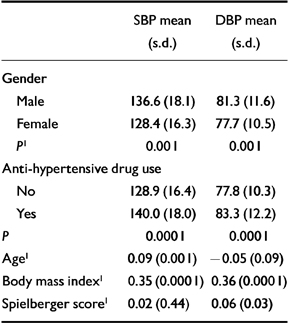
Age, gender, BMI, use of antihypertensive drugs and anxiety scores were considered as covariates in logistic regression models, because of the strong relationship between these variables and blood pressure (Table 2).
Associations between blood pressure and covariates (n=1272)
| SBP mean (s.d.) | DBP mean (s.d.) | |
|---|---|---|
| Gender | ||
| Male | 136.6 (18.1) | 81.3 (11.6) |
| Female | 128.4 (16.3) | 77.7 (10.5) |
| P 1 | 0.001 | 0.001 |
| Anti-hypertensive drug use | ||
| No | 128.9 (16.4) | 77.8 (10.3) |
| Yes | 140.0 (18.0) | 83.3 (12.2) |
| P | 0.0001 | 0.0001 |
| Age1 | 0.09 (0.001) | -0.05 (0.09) |
| Body mass index1 | 0.35 (0.0001) | 0.36 (0.0001) |
| Spielberger score1 | 0.02 (0.44) | 0.06 (0.03) |
In our sample, the other plausible co-variates of depression and low blood pressure (alcohol and tobacco use, number of chronic diseases, antidepressant and neuroleptic drugs) were not associated with low blood pressure or depressive symptoms (data not shown).
Low baseline blood pressure and depression at follow-up
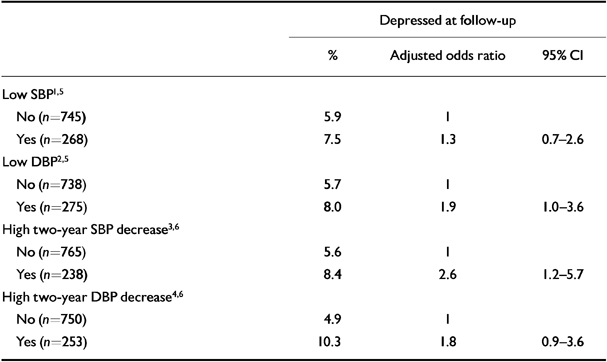
The logistic regressions which were performed in the 422 men and 592 women who were considered as non-depressed at baseline showed that low DBP at baseline was a significant risk factor for depression at two-year follow-up (adjusted odds ratios=1.9; 95% CI 1.0-3.6) (Table 3). The association between low SBP and depression was not statistically significant (adjusted odds ratio=1.3; 95% CI 0.7-2.6). Moreover, it appeared that depression at follow-up was associated with decrease of SBP or DBP (adjusted odds ratios for low SBP=2.6, 95% CI 1.2-5.7; adjusted odds ratios for low DBP=1.8, 95% CI 0.9-3.6). Further adjustment on psychotropic use did not change the findings (data not shown).
Depression at two-year follow-up according to blood pressure at baseline and two-year change in blood pressure
| Depressed at follow-up | |||
|---|---|---|---|
| % | Adjusted odds ratio | 95% CI | |
| Low SBP1,5 | |||
| No (n=745) | 5.9 | 1 | |
| Yes (n=268) | 7.5 | 1.3 | 0.7-2.6 |
| Low DBP2,5 | |||
| No (n=738) | 5.7 | 1 | |
| Yes (n=275) | 8.0 | 1.9 | 1.0-3.6 |
| High two-year SBP decrease3,6 | |||
| No (n=765) | 5.6 | 1 | |
| Yes (n=238) | 8.4 | 2.6 | 1.2-5.7 |
| High two-year DBP decrease4,6 | |||
| No (n=750) | 4.9 | 1 | |
| Yes (n=253) | 10.3 | 1.8 | 0.9-3.6 |
Antihypertensive drugs are associated with higher blood pressure at baseline and they are known to produce depressive symptoms; therefore they could mask the association between low blood pressure and the incidence of depression. On the other hand, they may decrease blood pressure, so an association between blood pressure decrease and depression incidence could be due to the antihypertensive drug effects. When we excluded subjects taking antihypertensive drugs (n=330), results were similar (low SBP, odds ratio=1.7, 95% CI 0.8-3.5, low DBP, odds ratio=1.2, 95% CI 0.6-2.5; SBP decrease, odds ratio=2.2, 95% CI 0.9-5.2, DBP decrease, odds ratio=4.0, 95% CI 1.5-10.8).
Baseline depressive symptomatology and low blood pressure at follow-up
Individuals who were classified as having low blood pressure at baseline (see Method) were not included in this part of the analysis. We did not find any association between high baseline depressive symptomatology and subsequent low blood pressure (adjusted odds ratios for low SBP=0.6 (95% CI 0.3-1.1), low DBP=0.8 (95% CI 0.4-1.5)). Similar results were obtained when the analysis was performed including individuals with low blood pressure at baseline (adjusted odds ratios for low SBP=0.9 (95% CI 0.6-1.4), low DBP=0.6 (95% CI 0.4-1.0)). The results remained unchanged when CES—D scores at follow-up were included in the multivariate logistic regression model.
DISCUSSION
Main findings
This study of a large community-based cohort supports a prodromal role of low blood pressure in the occurrence of high depressive symptomatology. Low DBP at entry, and blood pressure decrease between baseline and follow-up, were risk factors for high depressive symptomatology at two-year follow-up. Conversely, baseline depressive symptoms did not predict later low blood pressure.
Cross-sectional relations between depression and low blood pressure have been described in a large population study by Barrett-Connor & Palinkas (Reference Barrett-Connor and Palinkas1994), who found an association of low blood pressure with higher depressive symptoms scores measured with the Beck Depression Inventory, which was independent of age or weight loss. However, in the absence of a longitudinal study, chronology of the relationship could not be examined.
Mechanisms of association
One simple explanation for the cross-sectional relationship between depression and low blood pressure is that decreasing blood pressure is due to loss of weight and decrease of activities that are associated with depression. The present study does not support this explanation. Indeed, our data suggested that low blood pressure is succeeded by depression.
There are pathophysiological mechanisms that would explain that hypotension produces somatic symptoms and fatigue (Reference SimpsonSimpson, 1990). These chronic symptoms could lead to psychological discomfort and subsequent depressive symptoms. An alternative explanation is that a common factor gives rise to both depression and low blood pressure. For instance, a disorder of central monoamine activity could produce both psychological (depression) and physiological (low blood pressure) symptoms. Finally, the effect of chronic low blood pressure on brain functioning is debated. Studies in elderly populations have suggested that low blood pressure was associated with cognitive decline (Reference Elias, Wolf and D'AgostinoElias et al, 1993) and accelerated worsening of dementia (Reference Guo, Viitanen and FratiglioniGuo et al, 1996). Other studies did not confirm these findings. On another hand, high blood pressure is a well-established risk factor for dementia and cognitive deterioration (Reference Strandgaard and PaulsonStrandgaard & Paulson, 1994). The fact that high blood pressure has deleterious effects on brain functioning does not allow us to exclude the possibility that low blood pressure also might have some negative consequences.
Finally, some drugs prescribed in the elderly may lower blood pressure and also predispose to depression. Many of these drugs were included in the class ‘antihypertensive drugs’ (reserpine, β-adrenergic, blocking agents, α-methyldopa, clonidine, calcium channel blockers and angiotensin-converting enzyme-inhibitors), which were considered as covariate. Some of these drugs were also prescribed with indications different from hypertension in a small group of subjects (n=29); levodopa, which may lower blood pressure and predispose to depression was prescribed only for four subjects. So, it is not likely that the association between low blood pressure and depressive symptoms is explained, in our study, by drug use.
Depression is not predictive of low blood pressure
In our study, baseline high depressive symptomatology was not a risk factor for low blood pressure irrespective of the CES—D score at follow-up. Recovery from depression may be associated with blood pressure increase. Alternatively, sustained depression may result in increased blood pressure. Indeed chronic depression is commonly associated with a higher risk of hypertension (Reference Chrousos and GoldChrousos & Gold, 1992).
Limitations of the study
While conducted on a large population, the methodology of the present study carries some limitations. The symptoms or depressive episodes during the two-year interval were not assessed. Subjects with high depressive symptomatology at follow-up could have suffered from depression throughout the two years or only the week preceding the interview. Also, data could be biased because the individuals who were not followed up differed from those followed up for psychopathological and blood pressure measure. However, 91.6% of subjects were followed up, which is a high response rate. Furthermore, the absence of a clinical diagnosis of the patients may actually have led to inclusion of patients with chronic fatigue syndrome or atypical depression. Finally, we did not consider exercise as a confounding factor, as we had not standardised measures for this variable.
Clinical Implications and Limitations
CLINICAL IMPLICATIONS
-
▪ High blood pressure is a major risk factor for vascular disease. In elderly people, the minor physical symptoms that are often associated with low blood pressure may affect physical activities, and subsequently, social activities and mood.
-
▪ In this follow-up study, elderly people with relatively low blood pressure at baseline had high depressive scores two years later. Conversely, people with high baseline depressive scores had no increased risk of low blood pressure at follow-up.
-
▪ More attention should be given to the psychological symptoms of elderly people with relatively low blood pressure.
LIMITATIONS
-
▪ This study was limited to self-reported depressive symptoms; standardised diagnoses were not available.
-
▪ Although the follow-up rate was high (91.6%), a participation bias cannot be excluded.
-
▪ The definition of low blood pressure was arbitrary.




eLetters
No eLetters have been published for this article.