


Introduction
The exploration the factors related to induced abortion is vital for the understanding of fertility variation and the improvement of child and maternal health (Canning & Schultz, Reference Canning and Schultz2012). The identification of inequalities in abortion levels and the factors associated with them is critical, as such inequalities are not only unfair and unjust (Whitehead & Dahlgren, Reference Whitehead and Dahlgren1991; Gwatkin, Reference Gwatkin2002; Woodward & Kawachi, Reference Woodward and Kawachi2000; Marmot, Reference Marmot2005, Reference Marmot2010), but pose a serious challenge to the improvement of population health and fertility (Whitehead & Dahlgren, Reference Whitehead and Dahlgren1991). Studies on abortion are scarce as it is not allowed in some countries, and where it is allowed research requires asking sensitive questions (Bankole et al., Reference Bankole, Singh and Haas1998; Bankole et al., Reference Bankole, Singh and Haas1999). Studies examining abortion in Turkey are rare, even though abortion is allowed (under certain conditions).
Turkey has been going through a far-reaching reform process over the last decade, not only socially and economically, but also in health and fertility (Tatar et al., Reference Tatar, Mollahaliloglu, Sahin, Aydin, Maresso and Hernandez-Quevedo2011). Impressive achievements in health and fertility have been reported, with radical changes in Turkish health care (Atun et al., Reference Atun, Gürol, Nazlıoğlu, Özgülcü, Aydoğan and Ayar2013). There has been a notable declining trend in abortion rates in Turkey since 1993 (TDHS, 2008), but there is still a lack of evidence of the extent to which this decline is due to recent health care reforms. The present study therefore aimed to be a comprehensive review of abortion in Turkey and to provide evidence to inform the country’s family planning service as it reforms health care provision.
This study investigated socioeconomic variations in induced abortion in Turkey using the two most recent waves of the Turkish Demographic and Health Survey (TDHS 2003 and 2008). Ordinary least square estimation was used to identify the socioeconomic determinants of induced abortion, and concentration indices were calculated to measure the level of income-related inequality in induced abortion among Turkish women of reproductive age (15–49). Finally, measured inequalities were decomposed into their components to see how effective each component was in contributing to income-related inequality in abortion.
The present findings suggest that age, education, ethnicity, region, marital status, wealth and social security are related to (induced) abortion in Turkey. Achieving an ideal number of children is thought to play a role in the abortion decision since induced abortion has been shown to decrease with increasing age at first marriage. Additionally, better socioeconomic characteristics (such as higher levels of wealth and education and better neighbourhood) have been found to be associated with relatively higher rates of abortion. However, no (statistically) significant associations between education, ethnicity, social security and living in an urban area have been observed on induced abortion in the 2008 TDHS. This may be related to improved accessibility of family planning services over time. In other words, it may be the case that every individual (no matter what her educational level, ethnicity, level of social security or the area of living) can access abortion services. Inequality analyses confirm that income-related inequalities in abortion decreased over the period 2003 to 2008. However abortion was still more concentrated among affluent women in the later survey. Additionally, decomposition analyses suggest that wealth, age, education and living in developed regions are the most important contributors to income-related inequalities in abortion.
Review of literature on abortion in Turkey
Modern economic theories of fertility explain the demand for children as a function not only of the benefits of children to parents (Liebenstein, Reference Leibenstein1957; Schultz, Reference Schultz1973) but also the direct and opportunity costs of children (Becker, Reference Becker1960; Mincer, Reference Mincer1963; Willis, Reference Willis1973; Bongaarts, Reference Bongaarts1978; Becker, Reference Becker1992). The direct costs of children include the costs of childcare and childrearing, while opportunity costs imply the loss of socioeconomic opportunities such as income (Becker, Reference Becker1960; Mincer, Reference Mincer1963; Willis, Reference Willis1973; Becker, Reference Becker1992). Since the labour market opportunities of women are higher in modern economies, the opportunity costs of children are greater, so the higher costs of children lead to reductions in fertility in modern societies (Willis, Reference Willis1973; Becker, Reference Becker1992).
Bongaarts and Watkins (Reference Bongaarts and Watkins1996) argued that as society modernizes, economic and social changes lead to declines not only in mortality but also in fertility as the costs of children increase. They also suggested that developed societies have lower fertility than less developed societies. This may be explained by the quality–quantity model of Becker and Lewis (Reference Becker and Lewis1973), which suggests a trade-off between the quantity and quality of children. Specifically, higher labour market opportunities for women (i.e. higher costs of children) have positive effects on the quality of children and negative effects on the quantity of children. Since it is well-evidenced that women enjoy higher labour market opportunities in developed societies (Adsera, Reference Adsera2005), the higher costs of children may direct people to improve the quality of children rather than increasing their quantity. Schultz (Reference Schultz1973) confirmed the fact that developing societies prefer to increase the quantity of children instead of their quality. He also proposed that lower costs of children and their contributions to family income are two underlying motivations of higher fertility in developing societies.
Although fertility in Turkey has been declining steadily for approximately the last 20 years, it has been dealing with a higher fertility rate than developed Western societies (Adsera, Reference Adsera2005). Since Bongaarts (Reference Bongaarts1978) identified variations in abortion as one of the primary reasons for fertility differences among populations, this study investigated the extent to which socioeconomic factors determine induced abortion in a society in socioeconomic transition.
There has been a declining trend in abortion rates in Turkey since 1993 and a slight increase in the demand for family planning (TDHS, 2008). The rate of induced abortion decreased from eighteen cases per 100 pregnancies in 1993 (TDHS, 1993) to ten cases per 100 pregnancies in 2008 (TDHS, 2008). Limiting-related factors are the main reason given for having an induced abortion, followed by spacing-related and economic factors (TDHS, 2003, 2008). Although the share of publicly provided abortion services increased in 2008 compared with 2003, induced abortions were predominantly performed by private providers (TDHS, 2003, 2008). Almost 80% of the abortions in 2003 and 70% of those in 2008 were performed by private providers. As for the demand for family planning, it increased from 76% in 2003 to 80% in 2008. Additionally, total unmet need for family planning remained almost same: 6% in 2003 and 6.2% in 2008.
Abortion is completely banned, and not even allowed to save a mother’s life, in most countries with very low fertility rates, such as Andorra, Malta and San Marino (Singh et al., Reference Singh, Wulf, Bankole and Sedgh2009). However, it is allowed with the aim of protecting mothers’ health in many countries, such as Spain, New Zealand, South Korea and Mexico (ibid.). It is also allowed in cases of fetal impairment (Great Britain), incest (Iceland) and rape (Finland and Luxembourg) (ibid.). Most countries apply gestational limits, usually in the first 12 weeks of gestation (ibid.). Accordingly, abortion is allowed without restriction as to reason before the limit and it is allowed upon meeting certain conditions (such as health, social and economic issues) in late pregnancies (ibid.). As for Turkey, abortion is allowed upon obtaining parental (for adolescents) and spousal consent up to the first 10 weeks of gestation (Koc, Reference Koc2000; Singh et al., Reference Singh, Wulf, Bankole and Sedgh2009). It is permitted under certain conditions if the mother’s health is at risk, for instance to save her life, or in cases of fetal impairment, during the later weeks of pregnancy (Koc, Reference Koc2000; Singh et al., Reference Singh, Wulf, Bankole and Sedgh2009).
Abortion can be an option for people experiencing unintended pregnancy (Bankole et al., Reference Bankole, Singh and Haas1998; Lara et al., Reference Lara, García, Ellertson, Camlin and Suárez2006; Font-Ribera et al., Reference Font-Ribera, Perez, Salvador and Borrell2008; Gil-Lacruz et al., Reference Gil-Lacruz, Gil-Lacruz and Bernal-Cuenca2012). It occurs in almost all countries (Bongaarts et al., Reference Bongaarts, Clealand, Townsend, Bertrand and Gupta2012), but collecting information about abortion is difficult since it is prohibited in some countries and/or requires asking sensitive questions even if it is allowed. Therefore, it raises moral and ethical issues (Barreto et al., Reference Barreto, Campbell, Davies, Fauveau, Filippi and Graham1992; Bankole et al., Reference Bankole, Singh and Haas1998) that may cause under-reporting (Bankole et al., Reference Bankole, Singh and Haas1999). One common strategy to overcome this is to check the confidence of the data by comparing other data sets (such as national statistics) even though they also bear risk of under-reporting (Bankole et al., Reference Bankole, Singh and Haas1999). However, for this study, there was no external data set against which data from the TDHS could be compared.
It has been suggested that variations in abortion are related to variations in levels of unintended pregnancies, and the intention to choose abortion (as a family planning option) if unintended pregnancy occurs (Bankole et al., Reference Bankole, Singh and Haas1998, Reference Bankole, Singh and Haas1999). Beyond these, opportunity costs of children, moral and religious reasons, patterns of contraceptive use and accessibility of family planning services are the main factors affecting variations in abortion rates in a society (Bankole et al., Reference Bankole, Singh and Haas1999; Singh et al., Reference Singh, Wulf, Bankole and Sedgh2009). However, this study focused on how social and economic factors affect induced abortion rates.
Although empirical research on abortion has been limited by the scarcity of data on abortion (Bankole et al., Reference Bankole, Singh and Haas1998, Reference Bankole, Singh and Haas1999; Gil-Lacruz et al., Reference Gil-Lacruz, Gil-Lacruz and Bernal-Cuenca2012), it seems to be related to lower socioeconomic characteristics such as lower levels of education, employment and income (Addor et al., Reference Addor, Narring and Michaud2003; Helström et al., Reference Helström, Zätterström and Odlind2006; Font-Ribera et al., Reference Font-Ribera, Perez, Salvador and Borrell2008; Gil-Lacruz et al., Reference Gil-Lacruz, Gil-Lacruz and Bernal-Cuenca2012) and to be more concentrated among poorer individuals (Font-Ribera et al., Reference Font-Ribera, Perez, Salvador and Borrell2008; Rasch et al., Reference Rasch, Gammeltoft, Knudsen, Tobiassen, Ginzel and Kempf2008) in developed countries. This may be related to the lower prevalence of unintended pregnancies (or higher prevalence of contraceptive use) among people of higher socioeconomic status, and therefore lower abortion rates, in developing countries (Gillespie, Reference Gillespie2007; Creanga et al., Reference Creanga, Gillespie, Karklins and Tsui2011). However, in contrast, abortion in developing countries has been found by other researchers to be associated with higher socioeconomic characteristics (Henshaw, Reference Henshaw1990; Lara et al., Reference Lara, García, Ellertson, Camlin and Suárez2006; Agrawal, Reference Agrawal2008) and to be more concentrated among affluent individuals (Lara et al., Reference Lara, García, Ellertson, Camlin and Suárez2006; Diniz et al., Reference Diniz, d’Oliveira and Lansky2012). This may be due to the limited availability of abortion services among the poor, and therefore better access to these by relatively affluent people (Uygur & Erkaya, Reference Uygur and Erkaya2001; Gakidou & Vayena, Reference Gakidou and Vayena2007; Bongaarts, Reference Bongaarts2011; Diniz et al., Reference Diniz, d’Oliveira and Lansky2012).
Addor et al. (Reference Addor, Narring and Michaud2003) investigated abortion among reproductive age women (14–49 years of age) in Switzerland and found that lower levels of education and employment were associated with higher rates of abortion. They also observed higher abortion rates among foreign women in the Swiss region. In addition, Helström et al. (Reference Helström, Zätterström and Odlind2006) examined abortion and contraceptive use among Swedish adolescents and detected higher abortion rates among foreign adolescents. Rasch et al. (Reference Rasch, Gammeltoft, Knudsen, Tobiassen, Ginzel and Kempf2008) examined abortion in Denmark and confirmed a higher prevalence of abortion among people of lower socioeconomic status. Font-Ribera et al. (Reference Font-Ribera, Perez, Salvador and Borrell2008) analysed abortion among women of reproductive age (15–49) in Spain and found that lower socioeconomic characteristics (e.g. lower income, lower education) were associated with higher numbers of unintended pregnancies, as well as higher (induced) abortion rates (if the unintended pregnancy occurs). Gil-Lacruz et al. (Reference Gil-Lacruz, Gil-Lacruz and Bernal-Cuenca2012) also investigated abortion in Spain, and detected lower abortion rates in developed regions. In addition they observed the indirect effects of education on abortion through health- and fertility-related behaviours. They reported that better educated women were more likely to be against abortion.
Uria and Mosquera (Reference Uria and Mosquera1999) also investigated abortion among women of reproductive age (15–49) in Spain and observed contrasting results to those of Font-Ribera (Reference Font-Ribera, Perez, Salvador and Borrell2008) and Gil-Lacruz et al. (Reference Gil-Lacruz, Gil-Lacruz and Bernal-Cuenca2012). They found that higher levels of education and employment were associated with higher rates of (induced) abortion. They suggested that the relatively higher opportunity costs of children and better accessibility of abortion services for those women may be responsible for these results. Ananat et al. (Reference Ananat, Gruber, Levine and Staiger2009) analysed accessibility of abortion among 21- to 31-year-old women in the United States. They highlighted that better socioeconomic opportunities (better employment, higher education and higher income) have increasing effects on abortion among young adults and therefore are associated with better maternal and child health. Diniz et al. (Reference Diniz, d’Oliveira and Lansky2012) investigated abortion in Brazil and highlighted a higher prevalence of (safe) abortion among wealthier individuals (compared with their poorer counterparts). Lara et al. (Reference Lara, García, Ellertson, Camlin and Suárez2006) investigated abortion among Mexican women aged 15–55 years and detected the augmentative effect of living in urban areas on abortion, and confirm a higher concentration of abortion among relatively affluent people. Finally, Agrawal (Reference Agrawal2008) examined abortion among Indian women of reproductive age (15–49) and confirmed that urban women and those with better socioeconomic circumstances (such as better education, better employment and higher income) had higher abortion rates.
Methods
Data
Data were taken from the 2003 and 2008 Turkish Demographic and Health Survey (TDHS 2003 and 2008). The TDHS is a national representative cross-sectional survey, based on standardized DHS survey questionnaires that have been applied worldwide, that has been repeated every five years since 1968. The survey has two questionnaires: (i) a household questionnaire and (ii) an ever-married women questionnaire. The household questionnaire lists all usual members of selected households (Rutstein & Rojas, Reference Rutstein and Rojas2006), and gathers information on level of wealth, age, gender, education, employment status, marital status, region and neighbourhood for each person. The prime objective of the household questionnaire is to detect the women eligible for individual interview in the ever-married women questionnaire (Rutstein & Rojas, Reference Rutstein and Rojas2006).
The ever-married women questionnaire seeks to obtain information about the respondent’s background characteristics (and those of her husband), including migration history, current marriage and marriage history, pregnancy, birth history and fertility preferences, knowledge and use of contraceptive methods, antenatal and postnatal care, breast-feeding, nutrition, women’s current employment status and employment history and anthropometric measurement of women and children under five (TDHS, 2008). The focus of the survey is women of reproductive age (15–49) (Rutstein & Rojas, Reference Rutstein and Rojas2006), so the survey fieldwork is structured to identify eligible women respondents. Thus the present study was based on a ‘base file’ created by merging the datasets from the two questionnaires. As a result the characteristics of a respondent’s household were assigned to every women respondent in the ever-married women questionnaire.
The 2003 survey included 10,836 households (response rate: 92.9%) and 8075 individual interviews with ever-married women within these households (TDHS, 2003). The 2008 survey included 10,525 households (response rate: 88.4%) and 7405 individual interviews with ever-married women within selected households (TDHS, 2008).
Variables
The summary statistics of the study sample are shown in Table 1. Although dummy variables were created to illustrate age groups, continuous age variables fitted better in the models. Accordingly, respondent’s age and a squared function of this were employed, referring to the non-linear relationship between age and the outcome of interest. In addition, respondent’s age at first marriage was included as previous research has shown this to affect fertility (Kirdar et al., Reference Kirdar, Dayioglu-Tayfur and Koc2011; Güneş, Reference Güneş2013).
Summary statistics (mean levels of each variable) of socioeconomic variables, ever-married women aged 15–49 (N=15,480), 2003 and 2008 TDHS

Four different dummy variables were generated for education level, varying from no education to higher education. The durations of educational stages (primary, secondary and higher education) were modified in 1997 and 2012. These were coded according to the regulations prior to the 1997 modification since most of the respondents were educated according to these regulations. Therefore, the ‘no education’ variable indicates women with no education at all; ‘primary education’ indicates up to the first five years of education; secondary education refers to the next six years of education after primary education (reference category); and higher education denotes twelve years or more in education.
Dummy variables for ethnic background were used: Turkish (reference category), Kurdish, Arabic and other ethnic minorities. All observations were for ever-married women, so three dummy variables (married, divorced (reference category) and widowed) were generated to indicate current marital status.
There are seven official regions in Turkey, and observations were classified within five different regional groups according to the TDHS (2003, 2008) classification: the five region dummies were north, south, west, east (reference category) and central.
It was intended that income would be used in the analyses but there were insufficient observations in the 2003 survey, so a variable related to family wealth was used instead, with a wealth score being derived from ownership of assets (such as a car or computer) and housing characteristics (such as building material, source of water). Observations were classified into five dummy wealth groups ranging from the poorest to the richest (the middle-wealth group was the reference category), with a higher wealth score indicating a more affluent household. It is important to note that the wealth scores were calculated for households, and therefore each member of a family has the same score. This may raise allocation issues within a household; however, scarcity of data regarding allocation did not allow this to be tested. The determination of the wealth score and the classification were made by TDHS (2003, 2008).
At the time of the surveys, five different public social security schemes were operating in Turkey. The Social Insurance Organization (SIO) covered blue collar workers and private sector employees. The Social Insurance Agency of Merchants, Artisans and the Self-employed (BAG-KUR) covered self-employed people and their dependants, unemployed people (those who could pay their premiums), housewives and agricultural workers. The Government Employees’ Retirement Fund (GERF) covered retired civil servants and their dependants, retired military personnel and retired parliamentarians. The Active Civil Servants Scheme covered civil servants, military personnel and parliamentarians who were currently working. In the data, the Active Civil Servants Scheme was combined with the Government Employees’ Retirement Fund by the nature of the survey. Finally, the Green Card covered all those who could not afford health care services, with the condition being that the applicant must: (i) be a citizen of the Republic of Turkey, (ii) be uncovered by any of the other insurance schemes; (iii) earn less than one-third of the minimum wage (after tax) per month. It is important to keep in mind that the GERF is the most privileged social security group, while Green Card is the least beneficial (Liu et al., Reference Liu, Celik and Sahin2005; Buğra & Keyder, Reference Buğra and Keyder2006; Tatar et al., Reference Tatar, Ozgen, Sahin, Belli and Berman2007; Yardim et al., Reference Yardim and Cilingiroglu2010; Erus & Aktakke, Reference Erus and Aktakke2012). Additionally, BAG-KUR and SIO are more beneficial than Green Card (when the coverage and quality of care are considered) even though their benefits are limited (compared with those provided by GERF) (Buğra & Keyder, Reference Buğra and Keyder2006; Erus & Aktakke, Reference Erus and Aktakke2012). Individuals covered by the Government Employees’ Retirement Fund is the reference category, and dummy variables were generated for each of the insurance schemes. In addition, two dummy variables were created to identify individuals with private insurance and those with no insurance at all.
Abortion was measured by two variables: (i) an unbounded variable, i.e. the number of induced abortions, and (ii) a bounded variable, i.e. whether or not have had an induced abortion. The question related to the bounded abortion variable was ‘Have you ever had a pregnancy that ended in an induced abortion?’, while the continuous abortion variable related to ‘In all, how many induced abortion have you had?’.
Concentration indices
Concentration indices were calculated to measure income-related inequalities in abortion. The concentration index is an indicator of health inequality in relation to the socioeconomic position of an individual (Erreygers, Reference Erreygers2009a, Reference Erreygersb). It was introduced by Kakwani (Reference Kakwani and Bank1980) and Wagstaff et al. (Reference Wagstaff, Paci and van Doorslaer1991). The value of the concentration index is twice the area between concentration curve and the diagonal (Wagstaff et al., Reference Wagstaff, Paci and van Doorslaer1991); the concentration curve is obtained by plotting the cumulative proportions of the population, ranked by socioeconomic status beginning with the most advantaged (well-off), against the cumulative proportions of the health variable (Wagstaff et al., Reference Wagstaff, Paci and van Doorslaer1991). The concentration index takes values of between ${{1{\minus}n} \over n}$
and
${{1{\minus}n} \over n}$
and ${{n{\minus}1} \over n}$
(where n is the number of observations) and
${{n{\minus}1} \over n}$
(where n is the number of observations) and ${{1{\minus}n} \over n}$
and
${{1{\minus}n} \over n}$
and ${{n{\minus}1} \over n}$
approach −1 and 1, respectively, when the number of observations increases. The concentration index takes positive values when health inequalities favour the well-off (e.g. the variable of interest is more concentrated among the well-off) and vice versa (Wagstaff & van Doorslaer, Reference van Doorslaer and Wagstaff1997). If the value of the concentration index is 0, this means the health variable is equally distributed (Wagstaff et al., Reference Wagstaff, Paci and van Doorslaer1991; Wagstaff & van Doorslaer, Reference van Doorslaer and Wagstaff1997). The concentration index can be calculated using the formula:
${{n{\minus}1} \over n}$
approach −1 and 1, respectively, when the number of observations increases. The concentration index takes positive values when health inequalities favour the well-off (e.g. the variable of interest is more concentrated among the well-off) and vice versa (Wagstaff & van Doorslaer, Reference van Doorslaer and Wagstaff1997). If the value of the concentration index is 0, this means the health variable is equally distributed (Wagstaff et al., Reference Wagstaff, Paci and van Doorslaer1991; Wagstaff & van Doorslaer, Reference van Doorslaer and Wagstaff1997). The concentration index can be calculated using the formula:
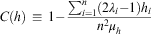 $$C\left( h \right)\,\equiv\,1{\minus}{{\sum_{i=1}^n \left( {2\lambda _{i} {\minus}1} \right)h_{i} } \over {n^{2} \mu _{h} }}$$
where C(h) is the concentration index of the health variable, λ is the rank of the individual, h
i
is the health of individual i, n is the number of observations, and $\mu _{{\rm h}} $
is the mean of the health variable. As mentioned before, the value of the concentration index is bounded to −1 and 1 (Wagstaff et al., Reference Wagstaff, Paci and van Doorslaer1991). However, when the variable of interest is binary, the mean of the binary variable further bounds the value of the concentration index (Wagstaff, Reference Wagstaff2005). In this case the concentration index can take values between
$\mu _{{\rm h}} $
is the mean of the health variable. As mentioned before, the value of the concentration index is bounded to −1 and 1 (Wagstaff et al., Reference Wagstaff, Paci and van Doorslaer1991). However, when the variable of interest is binary, the mean of the binary variable further bounds the value of the concentration index (Wagstaff, Reference Wagstaff2005). In this case the concentration index can take values between $\mu {\minus}1{\plus}\left( {1/n} \right)$
and
$\mu {\minus}1{\plus}\left( {1/n} \right)$
and $1{\minus}\mu {\plus}\left( {1/n} \right)$
instead of −1 and 1 (ibid.). As the mean of the variable of interest increases, the range of the values that the concentration index can take gets smaller. To overcome this, Wagstaff (Reference Wagstaff2005) suggested normalizing the concentration index by dividing it by its upper bound (
$1{\minus}\mu {\plus}\left( {1/n} \right)$
instead of −1 and 1 (ibid.). As the mean of the variable of interest increases, the range of the values that the concentration index can take gets smaller. To overcome this, Wagstaff (Reference Wagstaff2005) suggested normalizing the concentration index by dividing it by its upper bound ( $1{\minus}\mu {\plus}\left( {1/n} \right)$
):
$1{\minus}\mu {\plus}\left( {1/n} \right)$
):
 $$W\left( h \right)={{2\left( {b_{h} {\minus}a_{h} } \right)} \over {n^{2} \left( {b_{h} {\minus}\mu _{h} } \right)\left( {\mu _{h} {\minus}a_{h} } \right)}}\mathop{\sum}\nolimits_{i=1}^n {z_{i} h_{i} =C(h)/\left( {1{\minus}\mu } \right)} $$
where b
h
and a
h
are the upper and lower bounds of the variable of interest, $\mu _{h} $
is the mean of the variable of interest, n is the number of observations,
$\mu _{h} $
is the mean of the variable of interest, n is the number of observations, $\lambda _{i} $
is the rank of individual i, z
i
equals
$\lambda _{i} $
is the rank of individual i, z
i
equals ${{n{\plus}1} \over 2}{\minus}\lambda _{i} $
for individual i and the expression (1/n) approaches zero when the number of observations increases.
${{n{\plus}1} \over 2}{\minus}\lambda _{i} $
for individual i and the expression (1/n) approaches zero when the number of observations increases.
This normalization (Wagstaff, Reference Wagstaff2005) was specific to the case of the binary variable of interest (Wagstaff, Reference Wagstaff2009). However, Erreygers (Reference Erreygers2009a) generalized the normalization and introduced a corrected concentration index that facilitated the remedy of the bounds issue (Erreygers, Reference Erreygers2009a, Reference Erreygersb). Accordingly, the corrected concentration index can be written as:
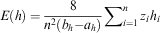 $$E\left( h \right)={8 \over {n^{2} (b_{h} {\minus}a_{h} )}}\mathop{\sum}\nolimits_{i=1}^n {z_{i} h_{i} } $$
where:
 $$z_{i} ={{n{\plus}1} \over 2}{\minus}\lambda _{i} $$
where b
h
and a
h
are the upper and lower bounds of the variable of interest, $\mu _{h} $
is the mean of the variable of interest, n is the number of observations and
$\mu _{h} $
is the mean of the variable of interest, n is the number of observations and $\lambda _{i} $
is the rank of individual i.
$\lambda _{i} $
is the rank of individual i.
Therefore the concentration index (Wagstaff et al., Reference Wagstaff, Paci and van Doorslaer1991) was employed for the unbounded outcome variable. Due to the existing bounds issue of the concentration index (Wagstaff, Reference Wagstaff2005), Wagstaff’s normalization (Reference Wagstaff2005) and Erreygers’s correction (Reference Erreygers2009a) were preferred for that bounded variable of interest.
Concentration indices (Wagstaff et al., Reference Wagstaff, Paci and van Doorslaer1991; Wagstaff, Reference Wagstaff2005; Erreygers, Reference Erreygers2009a) can be used to measure levels of inequality; however they are unable to highlight the individual factors leading to the inequalities (Wagstaff et al., Reference Wagstaff, van Doorslaer and Watanabe2003; O’Donnell et al., Reference O’Donell and van Doorslaer2006). Instead, decomposition methods provide the opportunity of unpacking the individual contributions of socioeconomic factors to the outcome of interest (Wagstaff et al., Reference Wagstaff, van Doorslaer, Paci and Joshi2001, Reference Wagstaff, van Doorslaer and Watanabe2003; Wildman, Reference Wildman2003; O’Donnell & van Doorslaer, Reference O’Donell and van Doorslaer2006). Therefore, in this study, the decomposition of the income-related inequalities for 2003 and 2008 was performed using the methods of Wagstaff et al. (Reference Wagstaff, van Doorslaer and Watanabe2003) in order to understand the factors leading inequalities in abortion. Accordingly, for a linear regression model of selected outcome such as:
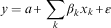 $$y=a{\plus}\mathop{\sum}\limits_k {\beta _{k} x_{k} {\plus}{\varepsilon}} $$
the concentration index for y can be written as:
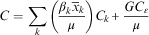 $$C=\mathop{\sum}\limits_k {\left( {{{\beta _{k} \bar{x}_{k} } \over \mu }} \right){\rm }C_{k} {\plus}{{GC_{{\varepsilon}} } \over \mu }} $$
where $\mu $
is the mean of the variable of interest (y), x
k
variables are the explanatory variables (k regressors),
$\mu $
is the mean of the variable of interest (y), x
k
variables are the explanatory variables (k regressors), $\bar{x}_{k} $
is the mean of x
k
, C
k
is the concentration index for x
k
,
$\bar{x}_{k} $
is the mean of x
k
, C
k
is the concentration index for x
k
, ${\varepsilon}$
is the error term and
${\varepsilon}$
is the error term and $GC_{{\varepsilon}} $
is the generalized concentration index for the error term. Accordingly, observed inequalities in the outcome of interest (y) can be decomposed into explained and unexplained parts (Wagstaff et al., Reference Wagstaff, van Doorslaer, Paci and Joshi2001). The explained part is equal to the weighted sum of the concentration indices of explanatory variables (captured by the first term in eqn (6)), where the weight for each variable (x
k
) is the elasticity of outcome (y) with respect to relevant variable (x
k
) (Wagstaff et al., Reference Wagstaff, van Doorslaer and Watanabe2003; van Doorslaer & Koolman, Reference van Doorslaer and Koolman2004; O’Donnell et al., Reference O’Donell and van Doorslaer2006). The unexplained part (captured by the last term in eqn (6)), which should approach zero for a well-specified model, is the inequality in the outcome of interest that is not explained by the variations in its determinants (ibid.). Therefore, each contribution is produced by (i) the sensitivity of outcome with respect to the related factor (
$GC_{{\varepsilon}} $
is the generalized concentration index for the error term. Accordingly, observed inequalities in the outcome of interest (y) can be decomposed into explained and unexplained parts (Wagstaff et al., Reference Wagstaff, van Doorslaer, Paci and Joshi2001). The explained part is equal to the weighted sum of the concentration indices of explanatory variables (captured by the first term in eqn (6)), where the weight for each variable (x
k
) is the elasticity of outcome (y) with respect to relevant variable (x
k
) (Wagstaff et al., Reference Wagstaff, van Doorslaer and Watanabe2003; van Doorslaer & Koolman, Reference van Doorslaer and Koolman2004; O’Donnell et al., Reference O’Donell and van Doorslaer2006). The unexplained part (captured by the last term in eqn (6)), which should approach zero for a well-specified model, is the inequality in the outcome of interest that is not explained by the variations in its determinants (ibid.). Therefore, each contribution is produced by (i) the sensitivity of outcome with respect to the related factor ( $\beta _{k} (\bar{x}_{k} /\mu )$
) and (ii) the degree of income-related inequality in the related factor (C
k
) (Wagstaff et al., Reference Wagstaff, van Doorslaer and Watanabe2003; O’Donnell et al., Reference O’Donell and van Doorslaer2006). Hence the larger elasticity (
$\beta _{k} (\bar{x}_{k} /\mu )$
) and (ii) the degree of income-related inequality in the related factor (C
k
) (Wagstaff et al., Reference Wagstaff, van Doorslaer and Watanabe2003; O’Donnell et al., Reference O’Donell and van Doorslaer2006). Hence the larger elasticity ( $\beta _{k} (\bar{x}_{k} /\mu )$
) and more unequally distributed x
k
(across the income range; i.e. larger C
k
) the greater its importance in explaining the inequalities in the outcome of interest (Wagstaff et al., Reference Wagstaff, van Doorslaer, Paci and Joshi2001).
$\beta _{k} (\bar{x}_{k} /\mu )$
) and more unequally distributed x
k
(across the income range; i.e. larger C
k
) the greater its importance in explaining the inequalities in the outcome of interest (Wagstaff et al., Reference Wagstaff, van Doorslaer, Paci and Joshi2001).
The changes in income-related inequalities over time were then decomposed using an approach proposed by Wagstaff et al. (Reference Wagstaff, van Doorslaer and Watanabe2003). It was derived by applying Oaxaca-type decomposition (Oaxaca, Reference Oaxaca1973) to the aforementioned technique, which decomposes the concentration index (Wagstaff et al., Reference Wagstaff, van Doorslaer and Watanabe2003). The changes in the inequalities over time can be decomposed as:
 $$\Delta C={\rm }\mathop{\sum}\limits_k {\eta _{k} \left( {C_{{kt}} {\minus}C_{{kt{\minus}1}} } \right)} {\plus}\mathop{\sum}\limits_k {C_{{kt{\minus}1}} \left( {\eta _{{kt}} {\minus}\eta _{{kt{\minus}1}} } \right){\plus}\left({{GC_{{{\varepsilon}t}} } \over {\mu _{t} }}\right)} $$
where t is time (t=2008, t−1=2003 for this study) and $\Delta $
indicates the first difference,
$\Delta $
indicates the first difference, $\eta _{{kt}} $
is the elasticity of y with respect to k regressor at time t, C
kt
is the concentration index of the k regressor at time t and
$\eta _{{kt}} $
is the elasticity of y with respect to k regressor at time t, C
kt
is the concentration index of the k regressor at time t and $GC_{{\varepsilon}} $
is the generalized concentration index for the error term. Accordingly, the changes in the inequalities over time were separated out: (i) the changes in inequality in the determinants of the outcome interest, and (ii) the changes in health effects of the determinants over time (Wagstaff et al., Reference Wagstaff, van Doorslaer and Watanabe2003; O’Donnell et al., Reference O’Donell and van Doorslaer2006). Therefore, the first part of the formula indicates the changes in concentration indices due to the differences in inequalities in the determinants of abortion. The second bit indicates the changes in the effects of abortion determinants and the last part captures the unexplained part of the changes. Hence, this allows one to understand the extent to which changes in income-related inequalities in abortion are due to changes in inequality in its determinants, rather than to changes in its elasticity and vice versa (Wagstaff et al., Reference Wagstaff, van Doorslaer and Watanabe2003).
$GC_{{\varepsilon}} $
is the generalized concentration index for the error term. Accordingly, the changes in the inequalities over time were separated out: (i) the changes in inequality in the determinants of the outcome interest, and (ii) the changes in health effects of the determinants over time (Wagstaff et al., Reference Wagstaff, van Doorslaer and Watanabe2003; O’Donnell et al., Reference O’Donell and van Doorslaer2006). Therefore, the first part of the formula indicates the changes in concentration indices due to the differences in inequalities in the determinants of abortion. The second bit indicates the changes in the effects of abortion determinants and the last part captures the unexplained part of the changes. Hence, this allows one to understand the extent to which changes in income-related inequalities in abortion are due to changes in inequality in its determinants, rather than to changes in its elasticity and vice versa (Wagstaff et al., Reference Wagstaff, van Doorslaer and Watanabe2003).
Results
The socioeconomic determinants of abortion in Turkey in 2003 and 2008 were identified, and the normalized and corrected concentration indices calculated for each period. The measured inequalities were decomposed into the contributions of the socioeconomic covariates in order determine their effective on income-related inequalities. Two different decomposition techniques were applied. First, decomposition using the methods of Wagstaff et al. (Reference Wagstaff, van Doorslaer and Watanabe2003) was performed for the 2003 and 2008 data separately. The percentage contributions of covariates can be interpreted as follows: income-related inequalities in the outcome of interest would be, ceteris paribus, that much lower (or higher) if the relevant covariates were equally distributed across income distribution, or it had zero elasticity. Thereafter, decomposition using the methods of Wagstaff et al. (Reference Wagstaff, van Doorslaer and Watanabe2003) was carried out to see the differences in inequalities over time. The contribution of each covariate can be interpreted as follows: if the relevant variable was equally distributed along the income ranges in 2003 and 2008, or if it had zero elasticity, income-related inequalities would be that much lower or higher.
The determinants of abortion can be seen in Table 2, and the concentration indices are presented in Table 3. Table 4–6 decompose the inequalities and Table 7 and 8 show the decomposition first differences in the inequalities over time.
Determinants of abortion, ever-married women aged 15–49, 2003 and 2008 TDHS

* p<0.1; **p<0.05; ***p<0.01.
Concentration indices for induced abortion, 2003 and 2008 TDHS

Decomposition of concentration index (CI), number of induced abortions, 2003 and 2008 TDHS

Decomposition of concentration index, ever had an induced abortion, Wagstaff normalizationFootnote a , 2003 and 2008 TDHS

a Wagstaff (Reference Wagstaff2005).
Decomposition of concentration index, ever had an induced abortion, Erreygers correctionFootnote a , 2003 and 2008 TDHS

a Erreygers (Reference Erreygers2009a).
Decomposing the differences in the inequalities over time: number of induced abortions

Decomposition of the differences in inequalities over time: ever had an induced abortion

Determinants of abortion
The findings indicate that age, education (only for 2003), ethnicity (only for 2003), marital status, neighbourhood, wealth and social security were associated with abortion. Abortion increased slightly with increasing age, and decreased with increasing age at first marriage. In other words, late-married women were less likely to have an abortion. This may be related to preferences; late-married women may be more likely to plan for children, while early-married women may be satisfied with their number of children. This confirms the argument of Sahoo (Reference Sahoo2007) and Sousa et al. (Reference Sousa, Lozano and Gakidou2010) that achieving the ideal number of children may play a role in decisions about having abortion.
For education, the effects were only observed for 2003. Abortion increased with increasing education, i.e. highly educated women have higher abortion levels than less educated ones. The findings show similarities with the literature indicating that better educated women had higher abortion levels (Uria & Mosquera, Reference Uria and Mosquera1999). This may be related to higher opportunity costs of children among better-educated individuals. Since increasing level of education increases the opportunity costs of children (Willis, Reference Willis1973; Becker & Lewis, Reference Becker and Lewis1973; Schultz, Reference Schultz1973; Becker, Reference Becker1992), highly educated individuals may have higher abortion rates to avoid having more children.
As for ethnicity, Turkish women had higher abortion levels than those from all other ethnic backgrounds. This was expected, especially for Kurdish women since their fertility rates are higher (Koc, Reference Koc2000; Adato et al., Reference Adato, Roopnaraine and Becker2011). Additionally, divorced women had higher abortion levels than their married or widowed counterparts. This may be related to fertility preferences. If divorced individuals do not want to have children, they may be more likely to have an abortion. This confirms the findings of Uria and Mosquera (Reference Uria and Mosquera1999), suggesting higher abortion rates among divorced/separated individuals than married women.
Slightly different impacts have been observed by region. Women from the western region of Turkey had higher abortion rates than eastern women. Furthermore, rural women had fewer abortions than urban ones in 2003. These results confirm the literature (Lara et al., Reference Lara, García, Ellertson, Camlin and Suárez2006), indicating higher abortion levels among women from developed regions, which may be because of the better accessibility of abortion services. As for wealth, there was a clear gradient such that abortion decreased with worsening level of wealth. The results show similarities with the literature, suggesting higher abortion among people with higher socioeconomic status (Bankole et al., Reference Bankole, Singh and Haas1999; Agrawal, Reference Agrawal2008; Ananat et al., Reference Ananat, Gruber, Levine and Staiger2009).
Women holding SIO, Green Card (the least privileged social security scheme) or no social security had fewer abortions than those in the most beneficial group (GERF) in 2003. These findings may be related to the accessibility of family planning services. Since there was limited accessibility of health care services, especially for deprived parts of the population (Adato et al., Reference Adato, Roopnaraine and Becker2011), lower abortion may be observed among rural women, poorer women and the women from disadvantaged social security schemes. In contrast, the two least advantaged groups had higher abortion levels than the most advantaged group in 2008. This may be associated with their access to family planning services if it was enhanced somehow (maybe via the implemented health care reforms in the post-2003 period) over the years.
Concentration indices for induced abortion
The findings suggest that induced abortion was more concentrated among affluent women in both 2003 and 2008. A normalized (Wagstaff, Reference Wagstaff2005) and a corrected (Erreygers, Reference Erreygers2009a) concentration index was calculated for the bounded abortion variable. The normalized concentration index found higher inequalities than the corrected one; nevertheless, all indicate that there was a pro-rich distribution of abortion. In addition, the findings indicate that income-related inequalities in abortion decreased over time. Additionally, for the bounded indicator of abortion, the normalized concentration index captured higher inequalities than the corrected index.
Decomposition of the concentration indices
Abortion in 2003. It seems that the major contributors to income-related inequalities in abortion in 2003 were the current age of respondents and their age at first marriage. The next most important contributors were wealth (for the number of abortions) and living in an urban area (for whether had an induced abortion).
For the number of induced abortions, the explained concentration index was 0.176 out of 0.177, which means that almost the whole of the detected income-related inequalities were explained. Age, age at first marriage and being in the poorest and the richest quintiles were the most effective covariates. In contrast, marital status and regional variables had almost no effect on income-related inequalities in abortion. Having no education is a trait more concentrated among less well-off individuals, while having higher education is more common among the better-off. If they were evenly distributed, income-related inequalities would be almost 20% lower. Furthermore, the income distribution of Kurdish women had a notable impact on increasing income-related inequality as they were over-represented at the lower bound of income distribution. If the poorest and the richest women were evenly distributed along the income range, income-related inequalities in abortion would be 40% lower in total. Other income variables had negligible impacts since their coefficients were not statistically significant. Having no social security had some effects in increasing income-related inequalities; however, the aggregate impact of social security was negligible.
As for the bounded abortion variable, income-related inequalities were mainly driven by age effects for both cases (those calculated using Wagstaff’s normalized index and those calculated using Erreygers’s corrected index). In addition, living in urban areas and being in either the poorest or the richest category had some additional effects in increasing income-related inequalities in abortion. On the other hand, marital status, region, social security (apart from having no social security) had almost no effects. Having no education and having no social security were traits more concentrated among poorer individuals. Their uneven distribution on the income range increased income-related inequalities by approximately 15% in both cases. Although wealth was not as effective as it was for the unbounded indicator, the uneven distribution of being in the poorest and the richest quintiles increased income-related inequalities in both cases.
Abortion in 2008. Income-related inequalities in abortion were mainly driven by age and wealth effects in 2008. The next largest contributors were living in western Turkey and living in urban areas. Additionally, the findings suggest that education, ethnicity, marital status and region (excluding western Turkey) had negligible impacts on income-related inequalities in abortion.
For the number of induced abortions, the variables representing age, age at first marriage and being in the poorest and the richest quintiles had the largest impacts on income-related inequalities in abortion. Education had no effects on the inequalities as education coefficients were statistically insignificant. Also, being Kurdish was not as effective as expected, having only a slight impact on increasing the inequalities. In addition, marital status and regional variables (excluding western Turkey) had almost no effect on income-related inequalities in abortion. Living in western Turkey and living in urban areas are characteristics more concentrated among the better-off and they had increasing impacts on abortion. They are important as they indicate the more developed parts of the Turkey. On the other hand, being in the poorest wealth category had the effect of decreasing the number of abortions, while being in the richest category had the effect of increasing them. Taking all these results into consideration, it is highly possible that development issues (such as the accessibility of health care services, knowledge about family planning) are the underlying determinants of income-related inequalities in abortion. Finally, holding the least beneficial social security scheme (Green Card) or having no social insurance are associated with decreased abortion. In addition these are more concentrated at the lower bound of the income distribution, and may be associated with their appreciable contributions to income-related inequalities.
As for the bounded abortion variable, the explained parts were small for both indices of inequalities. However, the decompositions of these indices suggest that income-related inequalities are mainly driven by age effects. In addition, being in the poorest and the richest wealth categories, and living in urban areas, had some additional effects in increasing income-related inequalities in abortion. On the other hand, marital status and region (excluding western Turkey) had almost no effects. Living in western Turkey and living in urban areas are traits more concentrated among wealthier individuals, and were associated with an increased likelihood of having an abortion. Their uneven distribution on the income range increased income-related inequalities in both cases. In addition, being in the richest wealth category had increasing impacts on the likelihood of having an induced abortion, while being in the poorest wealth group had decreasing effects. These findings again confirm that fertility-related development issues (such as accessibility of health care services, knowledge about family planning) may be the underlying determinants of income-related inequalities in abortion.
Decomposing the differences in inequalities over time
In general, elasticity differences over time dominated inequality differences implying that the partial associations between covariates and abortion were more influential than income-related inequalities of covariates.
For the number of abortions, social security and education were the greatest contributors to the differences in inequalities over time. Further, living in urban and western Turkey also made notable contributions to the inequalities. However, age, marital status, ethnicity and region (excluding living in western Turkey) made minor contributions. Having no education significantly increased income-related inequalities and its contribution is attributable to the differences in its impacts on abortion. The inequality difference of living in urban areas and age at first marriage made some contributions to income-related inequalities; however, they were eliminated by the opposite contribution of elasticity difference. Overall, living in urban areas and age at first marriage have notable effects on the inequalities that are attributable to the changes in the elasticities. In addition, living in western Turkey contributed to decreasing income-related inequalities and its contribution is attributable to inequality differences. Further, affluent categories were significantly effective in decreasing income-related inequalities, while deprived categories were effective in increasing inequalities. However, on the whole, the aggregated wealth contribution had an impact in reducing income-related inequalities. In addition, social security variables made various contributions to income-related inequalities, with having the least advantageous social security scheme or having no insurance making the greatest contributions. Accordingly, the distributions of having either a Green Card or no insurance (by income) significantly contributed to increasing income-related inequalities. Their elasticity differences over the years were more effective than inequality differences suggesting that the differences in the partial associations of holding these schemes and abortion were more effective in increasing income-related inequalities in abortion.
For the bounded abortion variable, decompositions of the first differences (differences in inequalities between 2003 and 2008) for both indices suggest that age had the largest impacts on the change in income-related inequalities. Wealth and living in urban areas also made notable contributions to the changes in the inequalities, while education, ethnicity, marital status, region and social security had almost no effect on the differences in income-related inequalities. In all cases elasticity differences dominated inequality differences. The differences in the distributions of age (age at first marriage) by income increased income-related inequalities over time. Such contributions predominantly stemmed from the differences in the partial effects of age (age at first marriage) on abortion. Living in urban areas contributed to increasing income-related inequalities and its contribution was attributable to the elasticity differences. Surprisingly, wealth variables were not as effective as expected, even though being in the poorest and the richest wealth categories had some impact in increasing income-related inequalities in abortion. The contributions of wealth were predominantly driven by the differences in the partial associations between wealth and abortion rather than the differences in income inequalities.
Discussion
This aimed to identify the socioeconomic determinants of induced abortion in Turkey. Levels of income-related inequalities in abortion were measured and the inequalities were decomposed into their components. Exploring the factors affecting abortion is crucial to understand fertility variations, and to achieve better health and fertility outcomes. Also, identifying the level of inequalities and the factors associated with them is critical for tackling the inequalities, which are a serious challenge to improving population health (Whitehead & Dahlgren, Reference Whitehead and Dahlgren1991), as well as being unfair and unjust (Whitehead & Dahlgren, Reference Whitehead and Dahlgren1991; Gwatkin, 2002; Woodward & Kawachi, Reference Woodward and Kawachi2000; Marmot, Reference Marmot2005, Reference Marmot2010).
The two waves of the TDHS, in 2003 and 2008, were employed in the analyses, and the determinants of induced abortion in the two periods revealed. Separate measurements of income-related inequalities were made for 2003 and 2008. Thus, at the first stage, income-related inequalities were decomposed for the two periods separately. This allowed the factors associated with increases (or decreases) in income-related inequalities in abortion in the two periods to be identified. At the second stage, the first differences in income-related inequalities over time were decomposed, and factors related to increases (or decreases) in income-related inequalities in abortion over time revealed.
The findings suggest that, on the one hand, increases in respondent’s age were associated with increases in both number and probability of abortion. On the other hand, increases in age at first marriage were related to decreases in both number and probability of abortion. These associations may be related to fertility preferences (i.e. achieving an ideal number of children). Namely, older women may have more chance of having children, and therefore may be more likely to be satisfied with their number of children (Sahoo, Reference Sahoo2007; Sousa et al., Reference Sousa, Lozano and Gakidou2010). If this is the case, they may be more likely to abort. In addition, late-married women may be more likely to plan for children, while early-married women may be satisfied with their number of children. Hence a women may be less likely to abort if married (for the first time) at older reproductive ages (15–49). The findings confirm the arguments suggested by Sahoo (Reference Sahoo2007) and Sousa et al. (Reference Sousa, Lozano and Gakidou2010) implying that achieving the ideal number of children may play a role in decisions about family planning. In addition, being divorced is associated with higher rates of abortion and this may be related to the fertility preferences of divorced women: they may be less eager to have children after separation (Uria & Mosquera, Reference Uria and Mosquera1999).
Deprived women (poorer, lower educated, eastern and rural women, and those holding a disadvantageous social security scheme) and Kurdish women were found to have a relatively lower number and probability of abortion (than their counterparts). This may be related to accessibility of family planning. They may have poorer access to family planning services (Adato et al., Reference Adato, Roopnaraine and Becker2011) and therefore lower rates of abortion. It is important to note that no (statistically) significant associations between education, ethnicity, social security and living in urban areas with induced abortion were observed in 2008. This may be related to knowledge and accessibility of family planning services if they had been enhanced somehow (maybe via the implemented health care reforms of the post-2003 period) over time. In other words, it may be the case if every individual (regardless of her educational level, ethnicity, social security or the area of living) is able to access abortion services and has knowledge about family planning.
The inequality analyses confirm that income-related inequalities in abortion decreased during the period between 2003 and 2008. In other words, poorer individuals became more familiar with abortion over the years. However, abortion was still more prevalent among wealthier individuals in the later survey. The decompositions of the inequalities suggest that wealth, age and living in developed parts of Turkey (like western and urban Turkey) significantly contributed to income-related inequalities. Also, age and wealth (in addition to education and social security for the probability of having abortion) made important contributions to the decrease in the inequalities over time. In general, their elasticity differences over time dominated the inequality differences suggesting that the different partial associations of covariates and abortion over time mattered more, rather than the differences in their inequalities. In sum, not only wealth and education but also living in developed parts of Turkey significantly contributed to the inequalities in (induced) abortion. It is understood that issues regarding socioeconomic development lead to income-related inequalities in abortion since the results highlight the importance of accessibility of family planning services and knowledge about family planning as well as socioeconomic development. Therefore, policies (i) to increase level of wealth and education among deprived women, (ii) to develop the deprived regions of Turkey, (iii) to improve knowledge about family planning and especially (iv) to enhance the accessibility of family planning services among deprived and/or rural women may help reduce socioeconomic variations in abortion of the country.
Acknowledgments
The paper was derived from the author’s PhD thesis. The author is grateful to his PhD supervisors Professor John Wildman and Dr Nils Braakmann for their contributions.


 Open access

