





1. Introduction
Over the field $\mathbb C$
of complex numbers, Enriques and Kodaira’s classification of surfaces with numerically trivial canonical divisors (K-trivial), has four basic classes: abelian, bielliptic, K3, and Enriques surfaces. This classification is achieved by considering their Albanese morphisms: for a K-trivial surface X, the Albanese morphism
$\mathbb C$
of complex numbers, Enriques and Kodaira’s classification of surfaces with numerically trivial canonical divisors (K-trivial), has four basic classes: abelian, bielliptic, K3, and Enriques surfaces. This classification is achieved by considering their Albanese morphisms: for a K-trivial surface X, the Albanese morphism $a_X\colon X\to A$
, according to
$a_X\colon X\to A$
, according to $\dim a_X(X) = 2,1,0$
, is, respectively, an isomorphism, an elliptic fibration to an elliptic curve, or a trivial morphism. When
$\dim a_X(X) = 2,1,0$
, is, respectively, an isomorphism, an elliptic fibration to an elliptic curve, or a trivial morphism. When $\dim a_X(X) = 1$
, X has another elliptic fibration
$\dim a_X(X) = 1$
, X has another elliptic fibration $g\colon X\to \mathbb {P}^1$
, thus X has a so-called bielliptic structure; more precisely, there is an étale cover
$g\colon X\to \mathbb {P}^1$
, thus X has a so-called bielliptic structure; more precisely, there is an étale cover $A'\to A$
such that
$A'\to A$
such that $X\times _A A' \cong A'\times F$
, where F is a general fiber of
$X\times _A A' \cong A'\times F$
, where F is a general fiber of $a_X$
. Bielliptic surfaces were fully classified in [Reference Bagnera and de Franchis2] (see [Reference Beauville5, List VI.20]). For higher-dimensional K-trivial varieties, Bogomolov and Beauville ([Reference Beauville4], [Reference Bogomolov7] for smooth cases) and Kawamata ([Reference Kawamata34, Section 8] for varieties with canonical singularities) proved that the Albanese morphism
$a_X$
. Bielliptic surfaces were fully classified in [Reference Bagnera and de Franchis2] (see [Reference Beauville5, List VI.20]). For higher-dimensional K-trivial varieties, Bogomolov and Beauville ([Reference Beauville4], [Reference Bogomolov7] for smooth cases) and Kawamata ([Reference Kawamata34, Section 8] for varieties with canonical singularities) proved that the Albanese morphism $a_X\colon X\to A$
is a fibration and there exists an étale covering
$a_X\colon X\to A$
is a fibration and there exists an étale covering $A'\to A$
such that
$A'\to A$
such that $X\times _A A' \cong F\times A'$
, where F is a general fiber. Especially, for an irregular K-trivial variety X, when
$X\times _A A' \cong F\times A'$
, where F is a general fiber. Especially, for an irregular K-trivial variety X, when $\dim a_X(X) = \dim X$
, we have
$\dim a_X(X) = \dim X$
, we have $X\cong A$
. When the Albanese image of X has an intermediate dimension, namely,
$X\cong A$
. When the Albanese image of X has an intermediate dimension, namely, $0<\dim a_X(X)<\dim X$
, we can reduce the study of X to the study of lower-dimensional K-trivial varieties. Here, by an irregular variety, we mean a normal projective variety X with irregularity
$0<\dim a_X(X)<\dim X$
, we can reduce the study of X to the study of lower-dimensional K-trivial varieties. Here, by an irregular variety, we mean a normal projective variety X with irregularity $q(X):=\dim \mathrm {Pic}^0(X)>0$
, or equivalently, the Albanese morphism
$q(X):=\dim \mathrm {Pic}^0(X)>0$
, or equivalently, the Albanese morphism $a_X\colon X\to A$
is not trivial.
$a_X\colon X\to A$
is not trivial.
Over a ground field of positive characteristic, Bombieri and Mumford [Reference Bombieri and Mumford8], [Reference Bombieri and Mumford9] classified K-trivial irregular surfaces X: if $\dim a_X(X) =2$
, then
$\dim a_X(X) =2$
, then $X=A$
; if
$X=A$
; if $\dim a_X(X) =1$
, then a general fiber of the Albanese morphism is either an elliptic curve or a rational curve with a cusp, and X has a bielliptic or a quasi-bielliptic structure accordingly. Note that, in Bombieri and Mumford’s classification of (quasi-)bielliptic surfaces, a key step is to show that there is a rational pencil of elliptic curves on X that is transversal to the Albanese morphism of X, that is, X carries a “bi-fibration” structure:
$\dim a_X(X) =1$
, then a general fiber of the Albanese morphism is either an elliptic curve or a rational curve with a cusp, and X has a bielliptic or a quasi-bielliptic structure accordingly. Note that, in Bombieri and Mumford’s classification of (quasi-)bielliptic surfaces, a key step is to show that there is a rational pencil of elliptic curves on X that is transversal to the Albanese morphism of X, that is, X carries a “bi-fibration” structure:

Here, “transversal” means that a general fiber of g is dominant and finite over A under the morphism $a_X$
.
$a_X$
.
For higher-dimensional K-trivial varieties in positive characteristic, we know that if X is of maximal Albanese dimension, then X is birational to an abelian variety by [Reference Hacon, Patakfalvi and Zhang27]. In the past decade, a series of progresses have been made in understanding the positivity of the direct image of (pluri)canonical sheaves in positive characteristics ([Reference Ejiri16], [Reference Ejiri17], [Reference Patakfalvi50], etc.). The application of the powerful positivity engine to the Albanese morphism $a_X\colon X\to A$
induces some remarkable results for higher-dimensional K-trivial (or more generally
$a_X\colon X\to A$
induces some remarkable results for higher-dimensional K-trivial (or more generally $-K$
nef) varieties. A pivotal result by [Reference Patakfalvi and Zdanowicz52] establishes that if X is weakly ordinary (meaning the Frobenius pullback
$-K$
nef) varieties. A pivotal result by [Reference Patakfalvi and Zdanowicz52] establishes that if X is weakly ordinary (meaning the Frobenius pullback $F^*\colon H^d(\mathcal {O}_X) \to H^d(\mathcal {O}_X)$
is a
$F^*\colon H^d(\mathcal {O}_X) \to H^d(\mathcal {O}_X)$
is a $\sigma $
-linear isomorphism, or equivalently, X is globally F-splitting), then X admits a Beauville–Bogomolov type decomposition. Roughly speaking, there is an isogeny
$\sigma $
-linear isomorphism, or equivalently, X is globally F-splitting), then X admits a Beauville–Bogomolov type decomposition. Roughly speaking, there is an isogeny $A' \to A$
such that
$A' \to A$
such that $X\times _AA' \cong A' \times F$
, where F is a general fiber of
$X\times _AA' \cong A' \times F$
, where F is a general fiber of $a_X$
. Recently, Ejiri and Patakfalvi [Reference Ejiri and Patakfalvi20] prove that when
$a_X$
. Recently, Ejiri and Patakfalvi [Reference Ejiri and Patakfalvi20] prove that when $-K$
is nef, under certain conditions on singularities, the Albanese morphism
$-K$
is nef, under certain conditions on singularities, the Albanese morphism $a_X$
is surjective, and the intermediate variety Y arising from the Stein factorization of
$a_X$
is surjective, and the intermediate variety Y arising from the Stein factorization of $a_X$
is either purely inseparable over A or isomorphic to A. Later, the authors [Reference Chen, Wang and Zhang11] prove that, in case
$a_X$
is either purely inseparable over A or isomorphic to A. Later, the authors [Reference Chen, Wang and Zhang11] prove that, in case $a_X$
is of relative dimension one,
$a_X$
is of relative dimension one, $a_X\colon X\to A$
is a fibration. Under additional conditions that
$a_X\colon X\to A$
is a fibration. Under additional conditions that $\dim a_X(X)=1$
or that the generic geometric fiber is strongly F-regular, in [Reference Ejiri18], [Reference Ejiri and Patakfalvi20], the authors prove that the fibers of f are isomorphic to each other.
$\dim a_X(X)=1$
or that the generic geometric fiber is strongly F-regular, in [Reference Ejiri18], [Reference Ejiri and Patakfalvi20], the authors prove that the fibers of f are isomorphic to each other.
It is worth mentioning that the assumptions of the decomposition theorems above avoid a “bad phenomenon” in positive characteristic: the general fiber of the Albanese morphism might have bad singularities, and sometimes it is non-reduced (see, e.g., [Reference Moret-Bailly43] or [Reference Schröer54, Section 3]). A natural question arises:
Question 1. Let X be an irregular K-trivial variety. Is the Albanese morphism $a_X\colon X\to A$
a fibration? Does there exist an isogeny
$a_X\colon X\to A$
a fibration? Does there exist an isogeny $A' \to A$
of abelian varieties such that
$A' \to A$
of abelian varieties such that $X\times _A A' \cong A'\times F$
?
$X\times _A A' \cong A'\times F$
?
In this article, we focus on irregular K-trivial threefolds and treat this “bad phenomenon.” Our approach applies to not only threefolds but also arbitrary dimensional X whose Albanese morphism $a_X \colon X\to A$
satisfies one of the following conditions:
$a_X \colon X\to A$
satisfies one of the following conditions:
-
• the Albanese image $a_X(X)$
is of dimension one (Section 4);
$a_X(X)$
is of dimension one (Section 4); -
•
$a_X\colon X\to a_X(X)$
is of relative dimension one (Section 5).


In both cases, we derive a “bi-fibration” structure

which is a crucial step to obtain an explicit structure of X.
We explain our strategy as follows. In the first case, $\dim a_X(X) = 1$
, we follow the strategy earlier used in [Reference Ejiri18], [Reference Ejiri and Patakfalvi20], [Reference Patakfalvi and Zdanowicz52]: applying the positivity engine to construct a semi-ample divisor D on X, which is relatively ample over A and has
$\dim a_X(X) = 1$
, we follow the strategy earlier used in [Reference Ejiri18], [Reference Ejiri and Patakfalvi20], [Reference Patakfalvi and Zdanowicz52]: applying the positivity engine to construct a semi-ample divisor D on X, which is relatively ample over A and has $\nu (D) = \dim X-1$
(Theorem 3.3). In the second case,
$\nu (D) = \dim X-1$
(Theorem 3.3). In the second case, $f=a_X\colon X\to A$
is a fibration with the generic fiber
$f=a_X\colon X\to A$
is a fibration with the generic fiber $X_{\eta }$
being a curve of arithmetic genus one, thus we treat the following three cases separately:
$X_{\eta }$
being a curve of arithmetic genus one, thus we treat the following three cases separately:
-
(C1)
$X_{\eta }$
is smooth over
$k(\eta )$
. In this case,
$f\colon X\to A$
is an elliptic fibration with
$\mathrm {var}(f) = 0$
by [Reference Chen and Zhang12, Theorem 2.14], so we can apply the Isom functor developed in [Reference Patakfalvi and Zdanowicz52].


If $X_{\eta }$
is not smooth over
$X_{\eta }$
is not smooth over $k(\eta )$
, we can show that there is a natural movable divisor which induces the fibration
$k(\eta )$
, we can show that there is a natural movable divisor which induces the fibration $g\colon X\to Z$
as follows:
$g\colon X\to Z$
as follows:
-
(C2)
$X_{\bar {\eta }}$
is reduced but not smooth. Then,
$a_X\colon X \to A$
is fibered by quasi-elliptic curves, we prove that the divisor supported on the singular locus
$\Sigma $
of the fibers is movable as required (Theorem 3.7). -
(C3)
$X_{\bar {\eta }}$
is not reduced, which means that
$a_X\colon X \to A$
is inseparable. Then, the required movable divisor arises from global sections of
$\Omega _A$
when doing Frobenius base change (Section 2.5). This should be attributed to Ji and Waldron’s observation [Reference Ji and Waldron32] (see [Reference Chen, Wang and Zhang11, Proposition 3.4]).






We see that in cases (C2) and (C3), the “bad phenomenon” that $X_{\bar {\eta }}$
is singular becomes an advantage. Finally, we apply the two fibrations (1.1) to derive the explicit structure of X.
$X_{\bar {\eta }}$
is singular becomes an advantage. Finally, we apply the two fibrations (1.1) to derive the explicit structure of X.
For threefolds, we have a precise description as follows.
Theorem 1.1 (= Theorem 6.1)
Let k be an algebraically closed field of characteristic $p>0$
. Let X be a normal
$p>0$
. Let X be a normal $\mathbb Q$
-factorial projective threefold over k with
$\mathbb Q$
-factorial projective threefold over k with $K_X\equiv 0$
. Denote by
$K_X\equiv 0$
. Denote by $a_X\colon X\to A$
the Albanese morphism of X, and assume
$a_X\colon X\to A$
the Albanese morphism of X, and assume $\dim A>0$
. Then, the following statements hold:
$\dim A>0$
. Then, the following statements hold:
-
(A) If
$\dim a_X(X) =3$
, then
$X=A$
. -
(B) If
$\dim a_X(X) =1$
, under the condition that:-
(a) either X is strongly F-regular and
$K_X$
is
$\mathbb Z_{(p)}$
-Cartier; -
(b) or X has at most terminal singularities and
$p \geq 5$
,
then
$a_X$
is a fibration and there exists an isogeny of elliptic curves
$A'\to A$
, such that
$X\times _A A' \cong A'\times F$
, where F is a general fiber of
$a_X$
. More precisely,
$X\cong A'\times F/H$
, where H is a finite group subscheme of
$A'$
acting diagonally on
$A'\times F$
. -
-
(C) If
$\dim a_X(X) =2$
, then
$a_X$
is a fibration and X falls into one of the following cases:-
(C1) the generic fiber
$X_{\eta }$
of
$a_X$
is smooth. Then, there exists an isogeny of abelian surfaces
$A'\to A$
, such that
$X\times _A A' \cong A'\times E$
, where E is an elliptic curve appearing as a general fiber of
$a_X$
. More precisely,
$X\cong A'\times E/H$
, where H is a finite group subscheme of
$A'$
acting diagonally on
$A'\times E$
, with a complete classification as in Section 5.1.2. -
(C2)
$X_\eta $
is non-smooth but geometrically reduced. Then,
$p=2$
or
$3$
. Denote by
$F_{A/k}\colon A_1:=A^{(-1)}\to A$
the relative Frobenius over k,
$X_1$
the normalization of
$X \times _{A} A_1$
and
$f_1\colon X_1\to A_1$
the induced morphism. Then,
$f_1\colon X_1\to A_1$
is a smooth fibration fibered by rational curves, which falls into one of the following specific cases:-
(2.1) In this case,
$f_1\colon X_1\to A_1$
admits a section, and-
(2.1a) either
$X_1\cong \mathbb {P}_{A_1}(\mathcal {O}_{A_1}\oplus \mathcal {L})$
, where
$\mathcal {L}^{\otimes p+1}\cong \mathcal {O}_X$
; or -
(2.1b)
$X_1\cong \mathbb {P}_{A_1}(\mathcal {E})$
, where
$\mathcal {E}$
is a unipotent vector bundle of rank two, and there exists an étale cover
$\mu \colon A_2\to A_1$
of degree
$p^v$
for some
$v\le 2$
such that
$\mu ^*F^{(2-v)*}_{A_1/k}\mathcal {E}$
is trivial.
-
-
(2.2) In this case,
$p=2$
, and there exists a purely inseparable isogeny
$A_2 \to A_1$
of degree two, such that
$X_2 :=X_1\times _{A_1}A_2$
is a projective bundle over
$A_1$
described as follows:-
(2.2a)
$X_2\cong \mathbb {P}_{A_2}(\mathcal {O}_{A_2}\oplus \mathcal {L})$
, where
$\mathcal {L}^{\otimes 4}\cong \mathcal {O}_{A_2}$
; or -
(2.2b)
$X_2\cong \mathbb {P}_{A_2}(\mathcal {E})$
, where
$\mathcal {E}$
is a unipotent vector bundle of rank two, and there exists an étale cover
$\mu \colon A_3\to A_2$
of degree
$p^v$
for some
$v\le 2$
such that
$\mu ^*F^{(2-v)*}_{A_1/k}\mathcal {E}$
is trivial.
-
-
-
(C3)
$X_{\eta }$
is not geometrically reduced. In this case, we also have
$p=2$
or
$3$
. Let
$X_1$
be the normalization of
$(X \times _{A} A_1)_{red}$
, where
$A_1:=A^{(-1)}\to A$
is the relative Frobenius. Then, the projection
$X_1 \to A_1$
is a smooth morphism, and either:-
(3.1)
$X_1=A_1\times \mathbb P^1$
and
$X=A_1\times \mathbb P^1/{\mathcal {F}}$
for some smooth rank one foliation
${\mathcal {F}}$
which is described concretely in Section 6.2.2; or -
(3.2)
$p=2$
, and there exists an isogeny of abelian surfaces
$\tau \colon A_2 \to A_1$
such that
$X_1\times _{A_1}A_2 \cong A_2\times \mathbb P^1$
, where either:-
(3.2a)
$\tau \colon A_2 \to A_1$
is étale of degree two; or -
(3.2b)
$\tau =F_{A_1/k}\colon A_2 := A^{(-2)} \to A_1$
is the relative Frobenius.
-
-
-



































Remark 1.2. (1) Theorem 1.1 shows that the Albanese fibration $f\colon X\to A$
splits into the product after a sequence of “normalized” Frobenius base changes and an étale base change; say
$f\colon X\to A$
splits into the product after a sequence of “normalized” Frobenius base changes and an étale base change; say

where F is the normalization of a general fiber of f, $X_1 = (X\times _A A_1)_{\mathrm {red}} ^\nu $
and the left square is Cartesian. By Remark 2.3, the same holds if we first do an étale base change followed by Frobenius base changes, namely, we have the following sequence of normalized base changes:
$X_1 = (X\times _A A_1)_{\mathrm {red}} ^\nu $
and the left square is Cartesian. By Remark 2.3, the same holds if we first do an étale base change followed by Frobenius base changes, namely, we have the following sequence of normalized base changes:

(2) In Case (C), we get a full classification for cases (C1) and (C3.1), and provide examples for the remaining cases (Section 6).
1.1. Effectivity of the pluricanonical map of threefolds
Over the field of complex numbers, for terminal K-trivial threefolds X, Kawamata [Reference Kawamata35] showed that there exists a positive calculable integer $m_0$
such that
$m_0$
such that $m_0 K_X \sim 0$
; and by [Reference Beauville3], [Reference Morrison44] and finally [Reference Oguiso49], the smallest
$m_0 K_X \sim 0$
; and by [Reference Beauville3], [Reference Morrison44] and finally [Reference Oguiso49], the smallest $m_0$
is
$m_0$
is $2^5 \cdot 3^3 \cdot 5^2 \cdot 7 \cdot 11 \cdot 13 \cdot 17 \cdot 19$
. It is natural to ask the following question.
$2^5 \cdot 3^3 \cdot 5^2 \cdot 7 \cdot 11 \cdot 13 \cdot 17 \cdot 19$
. It is natural to ask the following question.
Question 2. Does there exist a positive integer N such that $N K_X \sim 0$
for all terminal
$N K_X \sim 0$
for all terminal $\mathbb Q$
-factorial K-trivial threefolds over an algebraically closed field of characteristic
$\mathbb Q$
-factorial K-trivial threefolds over an algebraically closed field of characteristic $p>0$
?
$p>0$
?
Applying the structure Theorem 1.1, we can prove the following effectivity result when $\dim a_X(X) = 2$
.
$\dim a_X(X) = 2$
.
Corollary 1.3 (See Section 6.3)
Let X be a terminal $\mathbb Q$
-factorial threefold such that
$\mathbb Q$
-factorial threefold such that $K_X \equiv 0$
and
$K_X \equiv 0$
and $q = 2$
, then
$q = 2$
, then $(2^4 \cdot 3^3) K_X \sim 0$
.
$(2^4 \cdot 3^3) K_X \sim 0$
.
For the case $\dim a_X(X) = 1$
, we may break the effectivity problem into the following two questions.
$\dim a_X(X) = 1$
, we may break the effectivity problem into the following two questions.
Question 3. Let $f\colon X \to A$
be a fibration belonging to Case (B) of Theorem 1.1. Denote by F a general fiber of f. Then, there exists an integer
$f\colon X \to A$
be a fibration belonging to Case (B) of Theorem 1.1. Denote by F a general fiber of f. Then, there exists an integer $N_F>0$
such that
$N_F>0$
such that $N_FK_F \sim 0$
.
$N_FK_F \sim 0$
.
(1) Is there a uniform bound of $N_F$
? Equivalently, is there a positive integer N such that
$N_F$
? Equivalently, is there a positive integer N such that $NK_F \sim 0$
holds for every fibration
$NK_F \sim 0$
holds for every fibration $f\colon X \to A$
in Case (B)?
$f\colon X \to A$
in Case (B)?
Let H be a finite subgroup scheme of an elliptic curve. Assume that H acts on F as in Case (B). Then, there is a natural group homomorphism $H \to \mathrm {GL}(H^0(F, N_FK_F)) \cong \mathbb G_m$
; we denote its image by
$H \to \mathrm {GL}(H^0(F, N_FK_F)) \cong \mathbb G_m$
; we denote its image by $\overline {H}$
, which is a finite group scheme over k.
$\overline {H}$
, which is a finite group scheme over k.
(2) Is there a uniform bound of the order of $\overline {H}$
?
$\overline {H}$
?
1.2. Notation and conventions
-
• By a variety, we mean an integral quasi-projective scheme over a field. By a log pair
$(X,\Delta )$
, we mean a pair consisting of a variety X and an effective
$\mathbb Q$
-divisor
$\Delta $
such that
$K_X+\Delta $
is
$\mathbb Q$
-Cartier. We denote by
$\nu \colon X^\nu \to X$
the normalization morphism of a variety X. -
• By a fibration, we mean a projective morphism
$f\colon X \to Y$
of normal varieties such that
$f_*\mathcal {O}_X = \mathcal {O}_Y$
. -
• Let X be a normal variety and D a Weil divisor on X. Denote by
$\mathcal {O}_X(D)$
the reflexive sheaf associated with D. Note that if
$D_1$
and
$D_2$
are Weil divisors, then
${\mathcal O}_X(D_1 + D_2) \cong ({\mathcal O}_X(D_1)\otimes {\mathcal O}_X(D_2))^{\vee \vee }$
. -
• For a projective morphism
$f\colon X \to Y$
of normal varieties, a Weil divisor D on X is called f-exceptional if
$f(\operatorname {\mathrm {Supp}} D) \subset Y$
has codimension
$\ge 2$
, f-vertical if
$f(\operatorname {\mathrm {Supp}} D)$
has codimension
$\ge 1$
, and f-horizontal if each irreducible component of D is dominant over Y. -
• For a morphism
$\sigma \colon Z \to X$
of varieties and a divisor D on X such that the pullback
$\sigma ^*D$
is well defined, we often use
$D|_Z$
to denote
$\sigma ^*D$
for simplicity. -
• Let
$K=\mathbb Z,\mathbb Q,$
or
$\mathbb R$
. Let D be a K-divisors on X, namely,
$D\in N^1(X)\otimes K$
. We say that D is effective, with the notation
$D\ge 0$
, if all coefficients are non-negative. By
$D\succeq _K0$
, we mean that there exists an effective K-divisor
$D'$
such that
$D'\sim _K D$
. When
$K=\mathbb Z$
, we also denote
$D\succeq _{\mathbb Z}0$
by
$D\succeq 0$
for simplicity. -
• For every effective integral divisor E on X, the inclusion
$\mathcal {O}_X(D) \subseteq \mathcal {O}_X(D+E)$
allows us to regard
$H^0(X,\mathcal {O}_X(D))$
as a subspace of
$H^0(X,\mathcal {O}_X(D+E))$
. This space coincides with
$H^0(X,\mathcal {O}_X(D))\otimes 1_E$
, where
$1_E \in H^0(X, \mathcal {O}_X(E))$
denotes the section corresponding to the constant function
$1 \in K(X)$
.








Throughout this article, we let k be an algebraically closed field of characteristic $p>0$
, and unless otherwise mentioned we assume varieties are defined over k.
$p>0$
, and unless otherwise mentioned we assume varieties are defined over k.
2. Preparations
In this section, we collect some basic notions and facts which we will use in the sequel.
2.1. Frobenius morphisms
Let $f\colon X\to \operatorname {\mathrm {Spec}} k$
be a variety over k. We denote by
$f\colon X\to \operatorname {\mathrm {Spec}} k$
be a variety over k. We denote by $F_X\colon X\to X$
the absolute Frobenius morphism of X. Set
$F_X\colon X\to X$
the absolute Frobenius morphism of X. Set $X^{(1)} := X \times _{k,F_k} k$
. We denote by
$X^{(1)} := X \times _{k,F_k} k$
. We denote by $F_{X/k}\colon X \to X^{(1)}$
the relative Frobenius of X over k, which fits into the following commutative diagram:
$F_{X/k}\colon X \to X^{(1)}$
the relative Frobenius of X over k, which fits into the following commutative diagram:

Note that since k is perfect, the morphism $X^{(1)} \to X$
, though not k-linear, is an isomorphism as schemes. For this reason, we also denote the relative Frobenius by
$X^{(1)} \to X$
, though not k-linear, is an isomorphism as schemes. For this reason, we also denote the relative Frobenius by $F_{X/k}\colon X^{(-1)}\to X$
.
$F_{X/k}\colon X^{(-1)}\to X$
.
2.2. Foliations and purely inseparable morphisms
Let Y be a normal variety over k, and denote by ${\mathcal T}_Y:=\Omega _{Y/k}^{\vee }$
the tangent sheaf. A foliation on Y is a saturated subsheaf
${\mathcal T}_Y:=\Omega _{Y/k}^{\vee }$
the tangent sheaf. A foliation on Y is a saturated subsheaf ${\mathcal {F}}\subseteq {\mathcal T}_Y$
, which is p-closed (
${\mathcal {F}}\subseteq {\mathcal T}_Y$
, which is p-closed ( ${\mathcal {F}}^p \subseteq {\mathcal {F}}$
) and involutive (
${\mathcal {F}}^p \subseteq {\mathcal {F}}$
) and involutive ( $[{\mathcal {F}},{\mathcal {F}}] \subseteq {\mathcal {F}}$
). The subsheaf
$[{\mathcal {F}},{\mathcal {F}}] \subseteq {\mathcal {F}}$
). The subsheaf $\mathrm {Ann}\ {\mathcal {F}} \subseteq {\mathcal O}_Y$
is a subring containing
$\mathrm {Ann}\ {\mathcal {F}} \subseteq {\mathcal O}_Y$
is a subring containing ${\mathcal O}^p_Y$
, and thus gives a natural morphism
${\mathcal O}^p_Y$
, and thus gives a natural morphism $\pi \colon Y \to Y/{\mathcal {F}}:=\mathrm {Spec}( \mathrm {Ann}\ {\mathcal {F}})$
over k. By the construction, the relative Frobenius morphism
$\pi \colon Y \to Y/{\mathcal {F}}:=\mathrm {Spec}( \mathrm {Ann}\ {\mathcal {F}})$
over k. By the construction, the relative Frobenius morphism $F_{Y/k}\colon Y \to Y^{(1)}$
factors through
$F_{Y/k}\colon Y \to Y^{(1)}$
factors through $\pi \colon Y \to Y/{\mathcal {F}}$
, thus
$\pi \colon Y \to Y/{\mathcal {F}}$
, thus $\pi \colon Y \to Y/{\mathcal {F}}$
is a purely inseparable morphism of height one. In fact, there is a one-to-one correspondence ([Reference Ekedahl21] or [Reference Patakfalvi and Waldron51, Proposition 2.9]):
$\pi \colon Y \to Y/{\mathcal {F}}$
is a purely inseparable morphism of height one. In fact, there is a one-to-one correspondence ([Reference Ekedahl21] or [Reference Patakfalvi and Waldron51, Proposition 2.9]):

which is given by
 $$\begin{align*}{\mathcal{F}} ~\mapsto ~\pi\colon Y \to Y/{\mathcal{F}} \quad\text{and}\quad \pi\colon Y\to X~\mapsto {\mathcal{F}}_{Y/X}, \end{align*}$$
where ${\mathcal {F}}_{Y/X}$
is the subsheaf of
${\mathcal {F}}_{Y/X}$
is the subsheaf of $\mathcal {T}_Y$
annihilated by
$\mathcal {T}_Y$
annihilated by $\mathrm {im }(\pi ^*\Omega _X^1 \to \Omega _Y^1)$
. Recall (see, e.g., [Reference Patakfalvi and Waldron51, Proposition 2.10]) the following formula:
$\mathrm {im }(\pi ^*\Omega _X^1 \to \Omega _Y^1)$
. Recall (see, e.g., [Reference Patakfalvi and Waldron51, Proposition 2.10]) the following formula:
 $$ \begin{align} \pi^*K_X \sim K_Y - (p-1)\det {\mathcal{F}}_{X/Y}\sim K_Y + (p-1)\det \Omega_{X/Y}^1. \end{align} $$
If Y is a smooth variety, we call a foliation ${\mathcal {F}}$
on Y a smooth foliation if
${\mathcal {F}}$
on Y a smooth foliation if ${\mathcal {F}} \subseteq {\mathcal T}_Y$
is a subbundle, namely, both
${\mathcal {F}} \subseteq {\mathcal T}_Y$
is a subbundle, namely, both ${\mathcal {F}}$
and
${\mathcal {F}}$
and ${\mathcal T}_Y/{\mathcal {F}}$
are locally free. In this case, by [Reference Ekedahl21, Proposition 2.4] or [Reference Miyaoka and Peternell42, Proposition 3.1.9], the quotient
${\mathcal T}_Y/{\mathcal {F}}$
are locally free. In this case, by [Reference Ekedahl21, Proposition 2.4] or [Reference Miyaoka and Peternell42, Proposition 3.1.9], the quotient $Y/{\mathcal {F}}$
is smooth if and only if
$Y/{\mathcal {F}}$
is smooth if and only if ${\mathcal {F}}$
is a smooth foliation.
${\mathcal {F}}$
is a smooth foliation.
2.3. “Pushing down” and pullback foliations
2.3.1. “Pushing-down” foliations along a fibration
Let $f\colon X\to S$
be a fibration of normal varieties over k, and let
$f\colon X\to S$
be a fibration of normal varieties over k, and let ${\mathcal {F}}$
be a foliation on X. We recall the “pushing-down” foliation of
${\mathcal {F}}$
be a foliation on X. We recall the “pushing-down” foliation of ${\mathcal {F}}$
constructed in [Reference Chen, Wang and Zhang11, Section 3.1.1] as follows. By the results of the previous section, we have the following commutative diagram:
${\mathcal {F}}$
constructed in [Reference Chen, Wang and Zhang11, Section 3.1.1] as follows. By the results of the previous section, we have the following commutative diagram:

where $\bar {f}\colon \bar {X}\to \bar {S}$
arises from the Stein factorization of
$\bar {f}\colon \bar {X}\to \bar {S}$
arises from the Stein factorization of $\bar {X} \to X^{(1)} \to S^{(1)}$
, and hence
$\bar {X} \to X^{(1)} \to S^{(1)}$
, and hence $\bar {S}$
is obviously between S and
$\bar {S}$
is obviously between S and $S^{(1)}$
. The purely inseparable morphism
$S^{(1)}$
. The purely inseparable morphism $\sigma \colon S \to \bar {S}$
corresponds to a foliation
$\sigma \colon S \to \bar {S}$
corresponds to a foliation $\mathcal G$
on S such that
$\mathcal G$
on S such that $\bar {S}=S/\mathcal {G}$
. The following is another characterization of
$\bar {S}=S/\mathcal {G}$
. The following is another characterization of $\mathcal {G}$
.
$\mathcal {G}$
.
Proposition 2.1 [Reference Chen, Wang and Zhang11, Lemma 3.3]
Let notation be as above. Assume moreover that S is regular. Let ${\mathcal {F}} \subseteq {\mathcal T}_X \buildrel \eta \over \to f^*{\mathcal T}_S$
be the natural homomorphisms. Then,
${\mathcal {F}} \subseteq {\mathcal T}_X \buildrel \eta \over \to f^*{\mathcal T}_S$
be the natural homomorphisms. Then,
-
(1) the sheaf
$\mathcal G$
is the minimal foliation on S such that
$\eta ({\mathcal {F}}) \subseteq f^*\mathcal G$
holds generically; -
(2) if f is separable, then
$\bar {f}$
is separable if and only if
$\eta \colon {\mathcal {F}}\to f^*\mathcal G$
is generically surjective.



2.3.2. Pullback of a foliation
Let $\tau \colon Y\to X$
be a generically finite, separable, and dominant morphism of normal varieties, and let
$\tau \colon Y\to X$
be a generically finite, separable, and dominant morphism of normal varieties, and let ${\mathcal {F}}\subset {\mathcal T}_X$
be a foliation on X. We can define the pullback foliation
${\mathcal {F}}\subset {\mathcal T}_X$
be a foliation on X. We can define the pullback foliation ${\mathcal {F}}_Y$
on Y as follows. The natural homomorphism
${\mathcal {F}}_Y$
on Y as follows. The natural homomorphism ${\mathcal T}_Y \to \tau ^*{\mathcal T}_X$
is generically isomorphic. So over some open subset of Y,
${\mathcal T}_Y \to \tau ^*{\mathcal T}_X$
is generically isomorphic. So over some open subset of Y, $\tau ^*{\mathcal {F}}$
can be viewed as a subsheaf of
$\tau ^*{\mathcal {F}}$
can be viewed as a subsheaf of ${\mathcal T}_Y$
under this isomorphism. We define
${\mathcal T}_Y$
under this isomorphism. We define ${\mathcal {F}}_Y$
to be the saturation of
${\mathcal {F}}_Y$
to be the saturation of $\tau ^*{\mathcal {F}}$
in
$\tau ^*{\mathcal {F}}$
in ${\mathcal T}_Y$
. One can check that
${\mathcal T}_Y$
. One can check that ${\mathcal {F}}_Y$
is a foliation on Y.
${\mathcal {F}}_Y$
is a foliation on Y.
Lemma 2.2 [Reference Posva53, Lemma 3.2.1]
Let $\tau \colon Y\to X$
be a finite étale morphism between normal varieties. Let
$\tau \colon Y\to X$
be a finite étale morphism between normal varieties. Let ${\mathcal {F}}$
be a foliation on X and let
${\mathcal {F}}$
be a foliation on X and let ${\mathcal {F}}_Y$
be the pullback foliation on Y. There is an étale morphism
${\mathcal {F}}_Y$
be the pullback foliation on Y. There is an étale morphism $\sigma \colon Y/{\mathcal {F}}_Y\to X/{\mathcal {F}}$
which give a Cartesian square
$\sigma \colon Y/{\mathcal {F}}_Y\to X/{\mathcal {F}}$
which give a Cartesian square

Moreover, if $\tau \colon Y\to X$
is a Galois covering, then so is
$\tau \colon Y\to X$
is a Galois covering, then so is $\sigma $
.
$\sigma $
.
Proof. The first assertion is [Reference Posva53, Lemma 3.2.1]. For the second, assume that G is the group of automorphisms of Y over X. Then, there is a commutative diagram

where the compositions of the horizontal rows are relative Frobenius morphisms over k. Moreover, the left square is Cartesian, that is, $Y/{\mathcal {F}}_Y \cong X/{\mathcal {F}} \times _X Y$
, thus G acts naturally on
$Y/{\mathcal {F}}_Y \cong X/{\mathcal {F}} \times _X Y$
, thus G acts naturally on $Y/{\mathcal {F}}_Y$
which makes
$Y/{\mathcal {F}}_Y$
which makes $\sigma $
a Galois covering.
$\sigma $
a Galois covering.
Remark 2.3. Let $f\colon X\to S$
be a fibration of normal varieties and let
$f\colon X\to S$
be a fibration of normal varieties and let ${\mathcal {F}}$
be a foliation on X. If
${\mathcal {F}}$
be a foliation on X. If $\tau \colon Y\to X$
is obtained by an étale base change, say
$\tau \colon Y\to X$
is obtained by an étale base change, say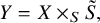 $Y = X\times _S \tilde S,$
where
$Y = X\times _S \tilde S,$
where $\sigma \colon \tilde S\to S$
is finite étale, then
$\sigma \colon \tilde S\to S$
is finite étale, then $Y/{\mathcal {F}}_Y \cong X/{\mathcal {F}} \times _{S^{(1)}} \tilde S^{(1)}$
and the diagram
$Y/{\mathcal {F}}_Y \cong X/{\mathcal {F}} \times _{S^{(1)}} \tilde S^{(1)}$
and the diagram

is commutative, where $S\to S^{(1)}$
and
$S\to S^{(1)}$
and $\tilde S\to \tilde S^{(1)}$
are the relative Frobenius morphisms over k and
$\tilde S\to \tilde S^{(1)}$
are the relative Frobenius morphisms over k and $\sigma '$
is the natural étale morphism induced by
$\sigma '$
is the natural étale morphism induced by $\sigma $
.
$\sigma $
.
2.4. A property of fibered varieties under flat base changes
Lemma 2.4. Let $X,S,T$
be quasi-projective normal varieties over an arbitrary field. Let
$X,S,T$
be quasi-projective normal varieties over an arbitrary field. Let $f\colon X\to S$
be a separable fibration and
$f\colon X\to S$
be a separable fibration and $\sigma \colon T\to S$
a finite flat morphism. Then, the fiber product
$\sigma \colon T\to S$
a finite flat morphism. Then, the fiber product $X\times _S T$
is integral, and it is normal if and only if its conductor divisor is zero.
$X\times _S T$
is integral, and it is normal if and only if its conductor divisor is zero.
Proof. Consider the tensor product of the function fields $R:= K(X) \otimes _{K(S)} K(T)$
. Since f is a fibration,
$R:= K(X) \otimes _{K(S)} K(T)$
. Since f is a fibration, $K(S)$
is algebraically closed in
$K(S)$
is algebraically closed in $K(X)$
, so
$K(X)$
, so $\operatorname {\mathrm {Spec}} R$
is irreducible by [Reference Grothendieck25, Proposition 4.3.2]. Since f is separable,
$\operatorname {\mathrm {Spec}} R$
is irreducible by [Reference Grothendieck25, Proposition 4.3.2]. Since f is separable, $\operatorname {\mathrm {Spec}} R$
is reduced by [Reference Grothendieck25, Proposition 4.3.5]. Therefore,
$\operatorname {\mathrm {Spec}} R$
is reduced by [Reference Grothendieck25, Proposition 4.3.5]. Therefore, $\operatorname {\mathrm {Spec}} R$
is integral, which implies that
$\operatorname {\mathrm {Spec}} R$
is integral, which implies that $Y := X \times _S T$
is generically integral (in the sense that it becomes integral restricting to certain open subsets of
$Y := X \times _S T$
is generically integral (in the sense that it becomes integral restricting to certain open subsets of $X,S,T$
). Since the base change morphism is flat, Y satisfies Serre’s condition
$X,S,T$
). Since the base change morphism is flat, Y satisfies Serre’s condition $(S_2)$
by [Reference Matsumura41, Corollary of Theorem 23.3]. Consequently, Y satisfies
$(S_2)$
by [Reference Matsumura41, Corollary of Theorem 23.3]. Consequently, Y satisfies $(S_1)+(R_0)$
, and thus it is reduced. Furthermore, since Y is
$(S_1)+(R_0)$
, and thus it is reduced. Furthermore, since Y is $(S_2)$
and generically irreducible, it is irreducible overall according to Hartshorne’s connectedness lemma [Reference Tate58, Tag 0FIV]. Therefore, Y is integral. Since Y is (
$(S_2)$
and generically irreducible, it is irreducible overall according to Hartshorne’s connectedness lemma [Reference Tate58, Tag 0FIV]. Therefore, Y is integral. Since Y is ( $S_2$
), it is normal if and only if it satisfies (
$S_2$
), it is normal if and only if it satisfies ( $R_1$
) condition, which is equivalent to the condition that the conductor divisor is zero.
$R_1$
) condition, which is equivalent to the condition that the conductor divisor is zero.
2.5. Behavior of the relative canonical divisor under purely inseparable base changes
We shall frequently encounter the following settings:

where $X,S,T$
are normal quasi-projective varieties over k,
$X,S,T$
are normal quasi-projective varieties over k, $f\colon X \to S$
is a fibration and
$f\colon X \to S$
is a fibration and $\tau \colon T\to S$
is a finite purely inseparable morphism of height one. For simplicity, we assume that S and T are regular so that all divisors on them are Cartier. Let us recall the following formulas from [Reference Chen, Wang and Zhang11].
$\tau \colon T\to S$
is a finite purely inseparable morphism of height one. For simplicity, we assume that S and T are regular so that all divisors on them are Cartier. Let us recall the following formulas from [Reference Chen, Wang and Zhang11].
(a) If $X_{K(T)}$
is integral, then, by [Reference Chen, Wang and Zhang11, Proposition 3.5], there exists an effective Weil divisor E and a g-exceptional
$X_{K(T)}$
is integral, then, by [Reference Chen, Wang and Zhang11, Proposition 3.5], there exists an effective Weil divisor E and a g-exceptional $\mathbb Q$
-divisor V on Y such that
$\mathbb Q$
-divisor V on Y such that
 $$ \begin{align} \pi^*K_{X/S} \sim_{\mathbb Q} K_{Y/T} + (p-1)E +V. \end{align} $$
(b) If $S=A$
is an abelian variety,
$S=A$
is an abelian variety, $T=A_1:=A^{(-1)}$
and
$T=A_1:=A^{(-1)}$
and $\tau \colon A^{(-1)} \to A$
is the relative Frobenius morphism over k, then
$\tau \colon A^{(-1)} \to A$
is the relative Frobenius morphism over k, then $\Omega ^1_{Y/X}$
is generically globally generated since
$\Omega ^1_{Y/X}$
is generically globally generated since $\Omega _{A_1/A}^1=\Omega _{A_1}^1 \to \Omega ^1_{Y/X}$
is generically surjective. As a result,
$\Omega _{A_1/A}^1=\Omega _{A_1}^1 \to \Omega ^1_{Y/X}$
is generically surjective. As a result, $\det (\Omega ^1_{Y/X})$
has global sections (see [Reference Chen, Wang and Zhang11, Proposition 3.4]). By (2.1), we have
$\det (\Omega ^1_{Y/X})$
has global sections (see [Reference Chen, Wang and Zhang11, Proposition 3.4]). By (2.1), we have
 $$ \begin{align} \pi^* K_X \sim K_Y + (p-1) (E + V),\qquad E\ge 0, V\ge 0, \end{align} $$
where E is a g-horizontal divisor and V is a g-vertical divisor on Y. If moreover, f is separable, then $\omega _{X_{A_1}}$
is locally free restricted on the generic fiber of
$\omega _{X_{A_1}}$
is locally free restricted on the generic fiber of $f_1$
, and thus E can be chosen such that, on the generic fiber
$f_1$
, and thus E can be chosen such that, on the generic fiber $Y_\eta $
of g,
$Y_\eta $
of g, $(p-1)E$
coincides with the conductor divisor of the normalization of
$(p-1)E$
coincides with the conductor divisor of the normalization of $Y_\eta $
(see [Reference Patakfalvi and Waldron51, Theorem 1.2]). If f is inseparable, then E contains a nontrivial movable part (see [Reference Ji and Waldron32, Theorem 1.1] and [Reference Chen, Wang and Zhang11, Proposition 3.4]). Thus,
$Y_\eta $
(see [Reference Patakfalvi and Waldron51, Theorem 1.2]). If f is inseparable, then E contains a nontrivial movable part (see [Reference Ji and Waldron32, Theorem 1.1] and [Reference Chen, Wang and Zhang11, Proposition 3.4]). Thus,
 $$ \begin{align} \pi^* K_X \sim K_Y + (p-1) (\mathfrak M + \mathfrak F), \end{align} $$
where $\mathfrak M$
is the movable part, and
$\mathfrak M$
is the movable part, and $\mathfrak F$
is the fixed part.
$\mathfrak F$
is the fixed part.
2.6. Numerical dimension
Let X be a normal projective variety over k and D be an $\mathbb R$
-Cartier
$\mathbb R$
-Cartier $\mathbb R$
-divisor on X. The numerical dimension of D is
$\mathbb R$
-divisor on X. The numerical dimension of D is
 $$\begin{align*}\kappa_\sigma(D)= \max\bigl\{\ell\in\mathbb N\mid \mathrm{lim\;inf}_{m\to\infty} (h^0(X,{\mathcal O}_X(\lfloor mD \rfloor+A))/m^\ell)> 0\bigr\}, \end{align*}$$
where A is an ample divisor on X and $\kappa _\sigma (D)=-\infty $
if no such
$\kappa _\sigma (D)=-\infty $
if no such $\ell $
exists. If D is nef, we use
$\ell $
exists. If D is nef, we use $\nu (D)$
to denote the largest natural number
$\nu (D)$
to denote the largest natural number $j\ge 0$
such that the cycle class
$j\ge 0$
such that the cycle class $D^j$
is not numerically trivial. Equivalently,
$D^j$
is not numerically trivial. Equivalently, $\nu (D)$
is the largest j such that
$\nu (D)$
is the largest j such that $(D^j\cdot H^{\dim X-j}) \ne 0$
for some ample Cartier divisor H by [Reference Fulger and Lehmann24, Corollary 3.17]. Moreover, for any nef divisor D, we have
$(D^j\cdot H^{\dim X-j}) \ne 0$
for some ample Cartier divisor H by [Reference Fulger and Lehmann24, Corollary 3.17]. Moreover, for any nef divisor D, we have $\kappa _\sigma (D)=\nu (D)$
by [Reference Cascini, Hacon, Mustaţă and Schwede10, Remark 4.6].
$\kappa _\sigma (D)=\nu (D)$
by [Reference Cascini, Hacon, Mustaţă and Schwede10, Remark 4.6].
The following lemma is probably well known to experts. In characteristic zero, it is a consequence of [Reference Kawamata33, Proposition 2.1], whose proof needs resolution of singularities. In characteristic p, we use smooth alteration instead.
Lemma 2.5. Let X be a normal projective variety, and let D be a nef $\mathbb Q$
-Cartier
$\mathbb Q$
-Cartier $\mathbb Q$
-divisor with
$\mathbb Q$
-divisor with $\nu (D) = \kappa (D) = 1$
. Then, D is semi-ample.
$\nu (D) = \kappa (D) = 1$
. Then, D is semi-ample.
Proof. First, we consider the case when X is smooth. Since $\kappa (D) =1$
, by replacing D with its multiple, we can assume that the linear system
$\kappa (D) =1$
, by replacing D with its multiple, we can assume that the linear system $|D|$
contains a movable part. Write that
$|D|$
contains a movable part. Write that $|D|= |M| + V,$
where
$|D|= |M| + V,$
where $|M|$
denotes the movable part and V the fixed part. Since X is smooth, intersections of divisors make sense. By restricting on the intersection of
$|M|$
denotes the movable part and V the fixed part. Since X is smooth, intersections of divisors make sense. By restricting on the intersection of $\dim X-2$
general hypersurfaces, since M is movable, from
$\dim X-2$
general hypersurfaces, since M is movable, from $D^2\equiv M(M+V) + V\cdot D\equiv 0,$
we deduce that
$D^2\equiv M(M+V) + V\cdot D\equiv 0,$
we deduce that $M^2 \equiv 0$
and
$M^2 \equiv 0$
and $M\cdot V\equiv 0$
. From this, we conclude that:
$M\cdot V\equiv 0$
. From this, we conclude that:
-
• the linear system
$|M|$
has no base point, hence it induces a fibration
$f\colon X \to B,$
where B is a smooth projective curve; -
• the fixed part V is contained in finitely many closed fibers of f.


Moreover, since D is nef, we see that V is nef, and V must be like $a_1F_1 + \cdots + a_rF_r$
, where
$a_1F_1 + \cdots + a_rF_r$
, where $F_i$
are closed fibers of f and
$F_i$
are closed fibers of f and $a_i \in \mathbb {Q}^+$
. In conclusion, there exists an effective
$a_i \in \mathbb {Q}^+$
. In conclusion, there exists an effective $\mathbb {Q}$
-divisor
$\mathbb {Q}$
-divisor $D_B$
such that
$D_B$
such that $D\sim _{\mathbb {Q}}f^*D_B$
. Thus, D is semi-ample.
$D\sim _{\mathbb {Q}}f^*D_B$
. Thus, D is semi-ample.
In general, we can take a smooth alteration $\pi \colon Y\to X$
[Reference de Jong14, Theorem 4.1], so that Y is smooth, projective, and dominant over X. We see that
$\pi \colon Y\to X$
[Reference de Jong14, Theorem 4.1], so that Y is smooth, projective, and dominant over X. We see that $\pi ^*D$
is nef, and
$\pi ^*D$
is nef, and $\nu (\pi ^*(D)) = \kappa (Y, \pi ^*(D))= \nu (D) =1$
[Reference Cascini, Hacon, Mustaţă and Schwede10, Remark 4.6]. In the previous paragraph, we have proved that
$\nu (\pi ^*(D)) = \kappa (Y, \pi ^*(D))= \nu (D) =1$
[Reference Cascini, Hacon, Mustaţă and Schwede10, Remark 4.6]. In the previous paragraph, we have proved that $\pi ^*D$
is semi-ample on Y, which implies that D is semi-ample.
$\pi ^*D$
is semi-ample on Y, which implies that D is semi-ample.
2.7. Covering theorem
Theorem 2.6 [Reference Iitaka31, Theorem 10.5]
Let $f\colon X \rightarrow Y$
be a proper surjective morphism between complete normal varieties over an algebraically closed field. If D is a Cartier divisor on Y and E an effective f-exceptional divisor on X, then
$f\colon X \rightarrow Y$
be a proper surjective morphism between complete normal varieties over an algebraically closed field. If D is a Cartier divisor on Y and E an effective f-exceptional divisor on X, then
 $$ \begin{align*}\kappa(X, f^*D + E) = \kappa(Y, D).\end{align*} $$
2.8. Adjunction formula and characterization of abelian varieties
Proposition 2.7 [Reference Kollár38, Proposition 4.5] and [Reference Das13, Theorem 4.1]
Let X be a normal variety and S be a prime Weil divisor of X. Let $S^\nu \to S$
be the normalization. Assume that
$S^\nu \to S$
be the normalization. Assume that $K_X + S$
is
$K_X + S$
is $\mathbb {Q}$
-Cartier. Then,
$\mathbb {Q}$
-Cartier. Then,
-
(1) There exists an effective
$\mathbb Q$
-divisor
$\Delta _{S^\nu }$
on
$S^\nu $
such that
$$ \begin{align*}(K_X+ S)|_{S^{\nu}} \sim_{\mathbb Q} K_{S^{\nu}} + \Delta_{S^\nu} .\end{align*} $$
-
(2) Let
$V \subset S^\nu $
be a prime divisor, then
$\mathrm {coeff}_V \Delta _{S^\nu } = 0$
if and only if
$X,S$
are both regular at the generic point of V. -
(3) If the pair
$(S^\nu , \Delta _{S^\nu })$
is strongly F-regular, then S is normal.


Proposition 2.8 [Reference Ejiri and Patakfalvi20, Proposition 3.2], see [Reference Chen, Wang and Zhang11, Proposition 2.9]
Let X be a normal projective variety of maximal Albanese dimension, then:
-
(1)
$K_X \succeq _{\mathbb Q} 0$
, and -
(2) if
$K_X \sim _{\mathbb Q} 0$
, then X is isomorphic to an abelian variety.


We give the following useful lemma, which can be proved by the above two propositions.
Lemma 2.9. Let X be a normal $\mathbb Q$
-factorial projective variety. Let D be a prime divisor of maximal Albanese dimension, and let
$\mathbb Q$
-factorial projective variety. Let D be a prime divisor of maximal Albanese dimension, and let $\Delta \ge 0$
be a
$\Delta \ge 0$
be a $\mathbb Q$
-divisor such that
$\mathbb Q$
-divisor such that $D \not \subseteq \operatorname {\mathrm {Supp}} \Delta $
. Then:
$D \not \subseteq \operatorname {\mathrm {Supp}} \Delta $
. Then:
-
(1)
$(K_X + D + \Delta )|_{D^\nu } \succeq _{\mathbb Q} 0$
; -
(2) if
$(K_X + D+\Delta )|_{D^\nu } \sim _{\mathbb Q} 0$
, then D is isomorphic to an abelian variety,
$\Delta |_{D}\sim _{\mathbb Q} 0$
, and X is regular at codimension-one points of D; -
(3) if
$D|_{D^\nu } \succeq _{\mathbb Q} 0$
, and
$(K_X + D + aD + \Delta )|_{D^\nu } \sim _{\mathbb Q} 0$
for some
$a\in \mathbb Q_{>0}$
, then
$D|_{D^\nu } \sim _{\mathbb Q} 0$
; and as a consequence of (2), D is isomorphic to an abelian variety,
$\Delta |_{D}\sim _{\mathbb Q} 0$
, and X is regular at codimension-one points of D.







Proof. By Proposition 2.8(1), we have $K_{D^\nu } \succeq _{\mathbb Q} 0$
. In turn, applying the adjunction formula (Proposition 2.7), we have
$K_{D^\nu } \succeq _{\mathbb Q} 0$
. In turn, applying the adjunction formula (Proposition 2.7), we have
 $$\begin{align*}(K_X + D + \Delta)|_{D^\nu} \sim_{\mathbb Q} K_{D^\nu} + \Delta_{D^\nu} + \Delta|_{D^\nu}\succeq_{\mathbb Q} 0, \end{align*}$$
which is the assertion (1).
Next, assuming $(K_X + D+\Delta )|_{D^\nu } \sim _{\mathbb Q} 0$
, from the above equation, we see that
$(K_X + D+\Delta )|_{D^\nu } \sim _{\mathbb Q} 0$
, from the above equation, we see that
 $$ \begin{align*}K_{D^\nu} \sim_{\mathbb{Q}} \Delta_{D^\nu} \sim_{\mathbb{Q}} \Delta|_{D^\nu} \sim_{\mathbb{Q}} 0.\end{align*} $$
Then, the assertion (2) follows immediately from Proposition 2.8(2) and Proposition 2.7(2).
Finally, assuming $D|_{D^\nu } \succeq _{\mathbb Q} 0$
, applying the adjunction formula (Proposition 2.7) again, we have
$D|_{D^\nu } \succeq _{\mathbb Q} 0$
, applying the adjunction formula (Proposition 2.7) again, we have
 $$\begin{align*}0\sim_{\mathbb Q} (K_X + D + aD + \Delta)|_{D^\nu} \sim_{\mathbb{Q}} K_{D^\nu} + \Delta_{D^\nu} + aD|_{D^\nu} + \Delta|_{D^\nu}\succeq_{\mathbb Q} 0. \end{align*}$$
It follows that $K_{D^\nu } \sim _{\mathbb {Q}} \Delta _{D^\nu }\sim _{\mathbb {Q}} D|_{D^\nu }\sim _{\mathbb {Q}} \Delta |_{D^\nu } \sim _{\mathbb {Q}} 0$
. Then, the assertion (3) follows by the same argument as above.
$K_{D^\nu } \sim _{\mathbb {Q}} \Delta _{D^\nu }\sim _{\mathbb {Q}} D|_{D^\nu }\sim _{\mathbb {Q}} \Delta |_{D^\nu } \sim _{\mathbb {Q}} 0$
. Then, the assertion (3) follows by the same argument as above.
2.9. Some results of elliptic fibrations
The following result appears as a middle step in the proof of [Reference Chen and Zhang12, Theorem 1.2].
Theorem 2.10 [Reference Chen and Zhang12, Claim 3.2 and Remark 3.3]
Let $f\colon X\to Z$
be an elliptic fibration from a normal variety X onto a smooth variety Z. Then,
$f\colon X\to Z$
be an elliptic fibration from a normal variety X onto a smooth variety Z. Then, $\kappa (X,K_{X/Z})\ge 0$
and
$\kappa (X,K_{X/Z})\ge 0$
and $\kappa (X) \geq \max \{\kappa (Z), \mathrm {Var}(f)\}$
.
$\kappa (X) \geq \max \{\kappa (Z), \mathrm {Var}(f)\}$
.
Remark that in the setting of [Reference Chen and Zhang12], X is assumed to be smooth, but the proof works when X is normal.
Proposition 2.11. Let $f\colon X \to C$
be an elliptic fibration from a normal projective surface to a smooth curve. If
$f\colon X \to C$
be an elliptic fibration from a normal projective surface to a smooth curve. If $K_{X/C} \sim _{\mathbb Q} 0$
, then there exists a finite flat morphism
$K_{X/C} \sim _{\mathbb Q} 0$
, then there exists a finite flat morphism $\sigma \colon C_1\to C$
such that
$\sigma \colon C_1\to C$
such that $X\times _C C_1 \cong C_1 \times F$
, where F is a closed fiber of f.
$X\times _C C_1 \cong C_1 \times F$
, where F is a closed fiber of f.
Proof. By doing a semi-stable reduction (see [Reference Liu40, Proposition 10.2.33]), we obtain the following commutative diagram:

where $C'$
is a smooth curve,
$C'$
is a smooth curve, $\tau $
is a finite morphism,
$\tau $
is a finite morphism, $X_{C'} := X\times _C C'$
is the fiber product,
$X_{C'} := X\times _C C'$
is the fiber product, $\nu $
is the normalization,
$\nu $
is the normalization, $\mu $
is a minimal resolution,
$\mu $
is a minimal resolution, $\pi = \tau '\circ \nu \circ \mu $
is the composition, and g is a semi-stable elliptic fibration. We have
$\pi = \tau '\circ \nu \circ \mu $
is the composition, and g is a semi-stable elliptic fibration. We have $K_{Y/C'} = (\tau '\circ \nu )^* K_{X/C} - \mathfrak C,$
where
$K_{Y/C'} = (\tau '\circ \nu )^* K_{X/C} - \mathfrak C,$
where $\mathfrak C$
is the conductor divisor of
$\mathfrak C$
is the conductor divisor of $\nu $
, and
$\nu $
, and $K_{\widetilde Y} = \mu ^*K_Y - \widetilde E,$
where
$K_{\widetilde Y} = \mu ^*K_Y - \widetilde E,$
where $\widetilde E$
is an effective
$\widetilde E$
is an effective $\mu $
-exceptional divisor. It follows that
$\mu $
-exceptional divisor. It follows that
 $$\begin{align*}K_{\widetilde Y/C'} = \pi^* K_{X/C} - \mu^*\mathfrak C - \widetilde E. \end{align*}$$
We have $K_{\widetilde Y/C'} \succeq _{\mathbb Q} 0$
by Theorem 2.10, in turn, combining with the assumption
$K_{\widetilde Y/C'} \succeq _{\mathbb Q} 0$
by Theorem 2.10, in turn, combining with the assumption $K_{X/C} \sim _{\mathbb Q} 0$
we can show that
$K_{X/C} \sim _{\mathbb Q} 0$
we can show that $K_{\widetilde Y/C'}\sim _{\mathbb Q}0$
and
$K_{\widetilde Y/C'}\sim _{\mathbb Q}0$
and $\mathfrak C = \widetilde E = 0$
. It follows that Y has at most canonical singularities, and that
$\mathfrak C = \widetilde E = 0$
. It follows that Y has at most canonical singularities, and that $X_{C'}$
is normal by Lemma 2.4, that is,
$X_{C'}$
is normal by Lemma 2.4, that is, $Y=X_{C'}$
. Since
$Y=X_{C'}$
. Since $K_{\widetilde Y/C'}\sim _{\mathbb Q}0$
, we can apply [Reference Chen and Zhang12, Theorem 2.14] to obtain a finite morphism
$K_{\widetilde Y/C'}\sim _{\mathbb Q}0$
, we can apply [Reference Chen and Zhang12, Theorem 2.14] to obtain a finite morphism $C_1\to C'$
from a smooth curve
$C_1\to C'$
from a smooth curve $C_1$
such that
$C_1$
such that $\widetilde Y \times _{C'} C_1\cong C_1 \times F$
. In particular, all fibers of g are irreducible, which implies that
$\widetilde Y \times _{C'} C_1\cong C_1 \times F$
. In particular, all fibers of g are irreducible, which implies that $\widetilde Y \to Y$
is an isomorphism. We complete the proof by taking
$\widetilde Y \to Y$
is an isomorphism. We complete the proof by taking $\sigma $
to be the composition
$\sigma $
to be the composition $C_1\to C'\to C$
.
$C_1\to C'\to C$
.
The following result can be derived directly from the proof of [Reference Bombieri and Mumford9, Theorem 4].
Proposition 2.12 (cf. [Reference Bombieri and Mumford9, Theorem 4])
Let X be a quasi-projective normal variety which is equipped with a fibration $g\colon X\to Z$
and a morphism
$g\colon X\to Z$
and a morphism $f\colon X\to E$
to an elliptic curve such that
$f\colon X\to E$
to an elliptic curve such that $K(E)$
is algebraically closed in
$K(E)$
is algebraically closed in $K(X)$
. Assume that all the closed fibers
$K(X)$
. Assume that all the closed fibers $C_z$
of g are elliptic curves and that the induced morphisms
$C_z$
of g are elliptic curves and that the induced morphisms $f|_{C_z}\colon C_z\to E$
are finite. Denote by F a general fiber of f. Then, there is an isogeny
$f|_{C_z}\colon C_z\to E$
are finite. Denote by F a general fiber of f. Then, there is an isogeny $\tau \colon E'\to E$
from an elliptic curve
$\tau \colon E'\to E$
from an elliptic curve $E'$
such that
$E'$
such that $X \times _E E' \cong E' \times F$
. Moreover, we have
$X \times _E E' \cong E' \times F$
. Moreover, we have
 $$\begin{align*}X \cong E'\times F/ G, \end{align*}$$
where $G:=\ker \tau $
acts on
$G:=\ker \tau $
acts on $E' \times F$
diagonally: it acts on
$E' \times F$
diagonally: it acts on $E'$
by translation and on F by some injective homomorphism of group functors
$E'$
by translation and on F by some injective homomorphism of group functors $\alpha \colon G \to \operatorname {\mathrm {Aut}}_F$
.
$\alpha \colon G \to \operatorname {\mathrm {Aut}}_F$
.
2.10. Canonical bundle formula of relative dimension one
Let us recall some canonical bundle formulas for fibrations of relative dimension one.
For a fibration $f\colon X\to S$
from X to a variety of maximal Albanese dimension, we collect some useful results from [Reference Chen, Wang and Zhang11].
$f\colon X\to S$
from X to a variety of maximal Albanese dimension, we collect some useful results from [Reference Chen, Wang and Zhang11].
Theorem 2.13 [Reference Chen, Wang and Zhang11, Theorems 1.3 and 7.3]
Let $(X,\Delta )$
be a normal
$(X,\Delta )$
be a normal $\mathbb Q$
-factorial projective pair. Let
$\mathbb Q$
-factorial projective pair. Let $f\colon X \to S$
be a fibration of relative dimension one, where S is a normal variety of maximal Albanese dimension. Let
$f\colon X \to S$
be a fibration of relative dimension one, where S is a normal variety of maximal Albanese dimension. Let $a_S\colon S \to A$
be the Albanese morphism of S. Assume that the pair
$a_S\colon S \to A$
be the Albanese morphism of S. Assume that the pair $(X_{K(S)},\Delta _{K(S)})$
is klt and that
$(X_{K(S)},\Delta _{K(S)})$
is klt and that $K_X +\Delta \sim _{\mathbb Q} f^*D$
for some
$K_X +\Delta \sim _{\mathbb Q} f^*D$
for some $\mathbb {Q}$
-Cartier divisor D on S. Then,
$\mathbb {Q}$
-Cartier divisor D on S. Then,
-
(1) If f or
$a_S$
is separable, then
$\kappa (X,K_X+\Delta ) \geq \kappa (S)$
. -
(2) If
$a_S$
is inseparable, then
$\kappa (X,K_X+\Delta ) \ge 0$
; furthermore, if
$\dim X = 3$
, then
$\kappa (X,K_X+\Delta ) \geq 1$
.




Corollary 2.14 [Reference Chen, Wang and Zhang11, Theorem 8.1]
Let X be a normal projective $\mathbb Q$
-factorial variety and
$\mathbb Q$
-factorial variety and $\Delta $
an effective
$\Delta $
an effective $\mathbb {Q}$
-divisor on X. Denote by
$\mathbb {Q}$
-divisor on X. Denote by $a_X\colon X\to A_X$
the Albanese morphism of X. Suppose that
$a_X\colon X\to A_X$
the Albanese morphism of X. Suppose that $-(K_X+\Delta )$
is nef,
$-(K_X+\Delta )$
is nef, $X \to a_X(X)$
is of relative dimension one and
$X \to a_X(X)$
is of relative dimension one and $(X_{K(A)},\Delta _{K(A)})$
is klt. Then,
$(X_{K(A)},\Delta _{K(A)})$
is klt. Then, $a_X\colon X \to A_X$
is a fibration.
$a_X\colon X \to A_X$
is a fibration.
2.11. Curves of small arithmetic genus
In this section, let K denote an F-finite field of characteristic p. Let X be a normal integral projective K-curve with $H^0(X, {\mathcal O}_X)=K$
. Let
$H^0(X, {\mathcal O}_X)=K$
. Let $p_a(X) =\dim _K H^1(X, {\mathcal O}_X)$
be the arithmetic genus of X. Let
$p_a(X) =\dim _K H^1(X, {\mathcal O}_X)$
be the arithmetic genus of X. Let $D =\sum _i a_i \mathfrak p_i$
be a Cartier divisor on X. Recall that the degree of D is defined to be the integer
$D =\sum _i a_i \mathfrak p_i$
be a Cartier divisor on X. Recall that the degree of D is defined to be the integer
 $$\begin{align*}\deg_K D= \sum_i a_i [\kappa(\mathfrak p_i):K], \end{align*}$$
where $\kappa (\mathfrak p_i)$
denotes the residue field of
$\kappa (\mathfrak p_i)$
denotes the residue field of $\mathfrak p_i$
.
$\mathfrak p_i$
.
If $K_X \equiv 0$
, applying Riemann–Roch formula [Reference Liu40, Theorem 7.3.17], we see that
$K_X \equiv 0$
, applying Riemann–Roch formula [Reference Liu40, Theorem 7.3.17], we see that $K_X\sim 0$
and
$K_X\sim 0$
and $p_a(X) = 1$
. Remark that when
$p_a(X) = 1$
. Remark that when $p\geq 5$
, such a curve X is smooth over K [Reference Tanaka57]. When
$p\geq 5$
, such a curve X is smooth over K [Reference Tanaka57]. When $p<5$
, X is possibly geometrically singular. We will focus on the singular behavior of such curves under field extensions.
$p<5$
, X is possibly geometrically singular. We will focus on the singular behavior of such curves under field extensions.
First, we recall the classification of curves with $p_a=0$
.
$p_a=0$
.
Proposition 2.15 [59, Theorem 9.10]
Let X be regular projective curve over K with $H^0(X,{\mathcal O}_X) = K$
and
$H^0(X,{\mathcal O}_X) = K$
and $p_a(X) = 0$
. Then,
$p_a(X) = 0$
. Then,
-
(1)
$\deg _K K_X = -2$
. -
(2) X is isomorphic to a conic in
$\mathbb {P}^2_K$
, and
$X \cong \mathbb {P}^1_K$
if and only if it has a K-rational point. -
(3) Either X is a smooth conic or X is geometrically non-reduced. In the latter case, we have
$\mathrm {char} K =2$
, and X is isomorphic to the curve defined by a quadric
$sx^2 + ty^2 + z^2 = 0$
for some
$s,t\in K\setminus K^2$
.





Next, we consider regular curves with $p_a = 1$
. We collect some related results here and refer to [Reference Chen, Wang and Zhang11, Section 4] for details.
$p_a = 1$
. We collect some related results here and refer to [Reference Chen, Wang and Zhang11, Section 4] for details.
Proposition 2.16. Let X be a regular projective curve over K with $H^0(X,{\mathcal O}_X) = K$
and
$H^0(X,{\mathcal O}_X) = K$
and $p_a(X) = 1$
. Assume that X is geometrically reduced and non-smooth. Then, there exists a field extension
$p_a(X) = 1$
. Assume that X is geometrically reduced and non-smooth. Then, there exists a field extension $K \subset L \subseteq K^{1/p}$
such that
$K \subset L \subseteq K^{1/p}$
such that $X _L$
is singular; and for any such L, the normalization
$X _L$
is singular; and for any such L, the normalization $Y:= (X _ L)^\nu $
is a smooth curve of genus zero and the following statements hold:
$Y:= (X _ L)^\nu $
is a smooth curve of genus zero and the following statements hold:
-
(1) The non-smooth locus of X is supported at a closed point
$\mathfrak p$
and
$\kappa (\mathfrak p)/K$
is purely inseparable of height one with
$[\kappa (\mathfrak p):K]\le p^2$
. In particular, there exists a unique point
$\mathfrak q \in Y$
lying over
$\mathfrak p$
. -
(2) If
$p=3$
, then
$Y\cong \mathbb {P}^1_L$
,
$\pi ^*\mathfrak p=3\mathfrak q$
(where
$\pi \colon Y\to X$
is the induced morphism),
$\mathfrak q$
is an L-rational point, and
$[\kappa (\mathfrak p):K]=3$
. -
(3) Assume
$p=2$
.-
(a) If the point
$\mathfrak q$
is L-rational, then
$Y\cong \mathbb {P}^1_L$
,
$\pi ^*\mathfrak p=2\mathfrak q,$
and
$[\kappa (\mathfrak p):K]=2$
. -
(b) If the point
$\mathfrak q$
is not L-rational, then
$\deg _L \mathfrak q=2$
, and
$$\begin{align*}\pi^*\mathfrak p= \begin{cases} \mathfrak q, &\text{ if } \deg_K(\mathfrak p) = 2;\\ 2\mathfrak q, &\text{ if } \deg_K(\mathfrak p) = 4. \end{cases}\end{align*}$$
-





Proposition 2.17. Let X be regular projective curve over K with $H^0(X,{\mathcal O}_X) = K$
and
$H^0(X,{\mathcal O}_X) = K$
and $p_a(X) = 1$
. Assume that X is geometrically non-reduced. Then,
$p_a(X) = 1$
. Assume that X is geometrically non-reduced. Then,
-
(1) There exists a height one field extension
$K\subset L \subseteq K^{1/p}$
such that
$X_L$
is integral but not normal, and for its normalization Y, we have
$L \subsetneq K' := H^0(Y,{\mathcal O}_Y)\subseteq K^{\frac {1}{p}}$
. Note that
$Y \cong (X_{K'})_{\mathrm {red}}^\nu $
over
$K'$
. Denote by
$\pi \colon Y\to X$
the induced morphism. -
(2) We have
$0\sim \pi ^* K_X \sim K_Y + (p-1)C,$
where C is a Weil divisor such that
$\deg _{K'} (p-1)C = 2$
. -
(3) The divisor C is supported on either a single point
$\mathfrak q\in Y$
or two points
$\mathfrak q_1,\mathfrak q_2\in Y$
(this happens only when
$p=2$
). All the possibilities are listed as follows:-
(i)
$p=3$
,
$X_L$
has a unique non-normal point,
$ C= \mathfrak q$
,
$Y\cong \mathbb {P}_{K'}^1$
and either
$\pi ^*\mathfrak p = \mathfrak q$
or
$\pi ^*\mathfrak p = 3\mathfrak q$
. -
(ii)
$p=2$
, and we fall into one of the following cases:-
(a)
$ C= 2\mathfrak q$
,
$\mathfrak q$
is a
$K'$
-rational point of Y and
$Y \cong \mathbb {P}_{K'}^1$
; -
(b)
$ C= \mathfrak q_1+\mathfrak q_2$
, and
$Y \cong \mathbb {P}_{K'}^1$
; -
(c)
$ C= \mathfrak q$
,
$\kappa (\mathfrak q)/K'$
is an extension of degree two, and either-
(c1)
$Y\subset \mathbb {P}^2_{K'}$
is a smooth conic (possibly
$\mathbb P^1_{K'}$
), or -
(c2) Y is isomorphic to the curve defined by
$sx^2 + ty^2 + z^2 = 0$
for some
$s,t\in K'\setminus K^{\prime 2}$
such that
$[K^{\prime 2}(s,t):K^{\prime 2}]=4$
.
-
-
-





Remark 2.18. We note that if $\mathrm {pdeg}\ K := [K^{1/p}:K] = 2$
, then case (c2) in Proposition 2.17 does not occur. This follows from Schröer’s classification of regular genus-one curves [Reference Schröer55]. Indeed, by [Reference Schröer55, Theorem 2.3], the p-degree of K is at least
$\mathrm {pdeg}\ K := [K^{1/p}:K] = 2$
, then case (c2) in Proposition 2.17 does not occur. This follows from Schröer’s classification of regular genus-one curves [Reference Schröer55]. Indeed, by [Reference Schröer55, Theorem 2.3], the p-degree of K is at least $r+1$
, where r is the geometric generic embedding dimension (defined as the embedding dimension of the local Artin ring
$r+1$
, where r is the geometric generic embedding dimension (defined as the embedding dimension of the local Artin ring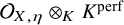 ${\mathcal O}_{X,\eta } \otimes _K K^{\mathrm {perf}}$
, see [Reference Fanelli and Schröer23, Section 1]). If
${\mathcal O}_{X,\eta } \otimes _K K^{\mathrm {perf}}$
, see [Reference Fanelli and Schröer23, Section 1]). If $Y = (X\times _K K^{1/p})^\nu _{\mathrm {red}}$
is not smooth, then, by [Reference Schröer55, Theorem 2.3] the second Frobenius base-change
$Y = (X\times _K K^{1/p})^\nu _{\mathrm {red}}$
is not smooth, then, by [Reference Schröer55, Theorem 2.3] the second Frobenius base-change $X\times _K K^{1/p^2}$
is isomorphic to some standard model
$X\times _K K^{1/p^2}$
is isomorphic to some standard model $C^{(i)}_{r,F,\Lambda }$
with
$C^{(i)}_{r,F,\Lambda }$
with $i = 2$
(see [Reference Schröer55] for the definition of
$i = 2$
(see [Reference Schröer55] for the definition of $C^{(i)}_{r,F,\Lambda }$
). Note that
$C^{(i)}_{r,F,\Lambda }$
). Note that $i\le r$
by Schröer’s construction [Reference Schröer55, p. 8]. Thus, case (c2) occurs only when
$i\le r$
by Schröer’s construction [Reference Schröer55, p. 8]. Thus, case (c2) occurs only when $\mathrm {pdeg}\ K \ge r + 1 \ge 3$
.
$\mathrm {pdeg}\ K \ge r + 1 \ge 3$
.
3. Constructions of semi-ample divisors
This section concerns the construction of semi-ample divisors. Let X be a K-trivial variety and denote by $a_X\colon X\to A$
the Albanese morphism of X. In case
$a_X\colon X\to A$
the Albanese morphism of X. In case $\dim a_X(X) = 1$
, we construct a semi-ample divisor which is relatively ample over A; and in case
$\dim a_X(X) = 1$
, we construct a semi-ample divisor which is relatively ample over A; and in case $a_X$
has relative dimension one, we prove a semi-ampleness criterion for divisors with numerical dimension one. We use these results to derive the second fibration
$a_X$
has relative dimension one, we prove a semi-ampleness criterion for divisors with numerical dimension one. We use these results to derive the second fibration $g\colon X\to Z$
which is transversal to
$g\colon X\to Z$
which is transversal to $a_X$
.
$a_X$
.
3.1. A construction of semi-ample divisors
The construction we present here was recently developed in [Reference Ejiri18], [Reference Ejiri and Patakfalvi20] by use of a powerful positivity engine. Similar approaches were used to treat surfaces [Reference Bădescu1, Theorem 8.10] and threefolds equipped with fibrations to elliptic curves [Reference Zhang61, Section 4.4]. In the settings of [Reference Ejiri18], [Reference Ejiri and Patakfalvi20], a pair $(X,\Delta )$
is assumed to be strongly F-regular and the Cartier index of
$(X,\Delta )$
is assumed to be strongly F-regular and the Cartier index of $K_X+\Delta $
is assumed to be indivisible by p (i.e.,
$K_X+\Delta $
is assumed to be indivisible by p (i.e., $K_X+\Delta $
is a
$K_X+\Delta $
is a $\mathbb {Z}_{(p)}$
-Cartier). By refining their argument, we can slightly relax the F-regularity condition and replace the second condition by that X is
$\mathbb {Z}_{(p)}$
-Cartier). By refining their argument, we can slightly relax the F-regularity condition and replace the second condition by that X is $\mathbb Q$
-factorial. Here, we only explain how to modify the argument.
$\mathbb Q$
-factorial. Here, we only explain how to modify the argument.
First, we recall a positivity result due to Ejiri, which is crucial for proving Theorem 3.3, one of the main results of this section.
Theorem 3.1 [Reference Ejiri19, Corollary 6.5 and Examples 5.7 and 5.8]
Let $f\colon X\to Y$
be a surjective morphism between normal projective varieties and let
$f\colon X\to Y$
be a surjective morphism between normal projective varieties and let $a\colon Y \to A$
be a generically finite morphism to an abelian variety. Let
$a\colon Y \to A$
be a generically finite morphism to an abelian variety. Let $\Delta \geq 0$
be a
$\Delta \geq 0$
be a $\mathbb {Z}_{(p)}$
-divisor on X. Let
$\mathbb {Z}_{(p)}$
-divisor on X. Let $V'\subseteq A$
be an open dense subset,
$V'\subseteq A$
be an open dense subset, $V= a^{-1}V'$
and
$V= a^{-1}V'$
and $U = f^{-1}V$
. Assume that:
$U = f^{-1}V$
. Assume that:
-
•
$(U, \Delta |_U)$
is F-pure; -
•
$K_U + \Delta |_U$
is
$\mathbb {Q}$
-Cartier and f-ample; -
•
$V\to V'$
is a finite morphism.


Let $H'$
be a free ample symmetric divisor on A and
$H'$
be a free ample symmetric divisor on A and $H= a^*H'$
. Let i be a positive integer such that
$H= a^*H'$
. Let i be a positive integer such that $i(K_X + \Delta )$
is integral. Then, there exists an integer
$i(K_X + \Delta )$
is integral. Then, there exists an integer $m_0$
such that for any
$m_0$
such that for any $m\geq m_0$
,
$m\geq m_0$
,
-
(i)
$f_*\mathcal {O}_X(im(K_X + \Delta ))\otimes \mathcal {O}_Y((\dim Y + 1)H)$
is globally generated over V; -
(ii)
$\mathbb {B}_-(f_*\mathcal {O}_X(im(K_X + \Delta ))) \subseteq Y\setminus V$
(see [Reference Ejiri19, Section 4.1] for the definition of
$\mathbb B_-$
).



We adapt [Reference Ejiri and Patakfalvi20, Theorem 7.1] to the following setting, which originally requires that $K_X + \Delta $
is a
$K_X + \Delta $
is a $\mathbb {Z}_{(p)}$
-Cartier divisor and that
$\mathbb {Z}_{(p)}$
-Cartier divisor and that $(X, \Delta )$
is F-pure.
$(X, \Delta )$
is F-pure.
Corollary 3.2. Let X be a normal $\mathbb {Q}$
-factorial projective variety of dimension n and
$\mathbb {Q}$
-factorial projective variety of dimension n and $f\colon X \to Y$
a fibration to a smooth curve Y with
$f\colon X \to Y$
a fibration to a smooth curve Y with $g(Y) \geq 1$
. Let
$g(Y) \geq 1$
. Let $\Delta \geq 0$
be a divisor on X and L be a nef Cartier divisor on X. Assume that
$\Delta \geq 0$
be a divisor on X and L be a nef Cartier divisor on X. Assume that $(X_{\eta }, \Delta _{\eta })$
is strongly F-regular and that
$(X_{\eta }, \Delta _{\eta })$
is strongly F-regular and that $K_X + \Delta + L$
is f-nef. Then,
$K_X + \Delta + L$
is f-nef. Then, $K_X + \Delta + L$
is nef.
$K_X + \Delta + L$
is nef.
Proof. We only need to prove that for every ample $\mathbb {Q}$
-divisor A on X,
$\mathbb {Q}$
-divisor A on X, $K_X + \Delta + L + A$
is nef. Fix an ample divisor A on X. By [Reference Patakfalvi50, Lemma 3.15], we can find an ample
$K_X + \Delta + L + A$
is nef. Fix an ample divisor A on X. By [Reference Patakfalvi50, Lemma 3.15], we can find an ample $\mathbb {Q}$
-divisor
$\mathbb {Q}$
-divisor $A'> 0$
, such that:
$A'> 0$
, such that:
-
(i)
$A-A'$
is ample, -
(ii)
$K_X + \Delta '$
is a
$\mathbb {Z}_{(p)}$
-Cartier divisor, where
$\Delta '= \Delta + A'$
, and -
(iii)
$(X_{\eta }, \Delta ^{\prime }_{\eta })$
is strongly F-regular.




Here, we remark that in order to apply Theorem 3.1, we only require the pair $(X, \Delta )$
to be F-pure over an open subset of Y, which is guaranteed by condition (iii). Therefore, since
$(X, \Delta )$
to be F-pure over an open subset of Y, which is guaranteed by condition (iii). Therefore, since $K_X + \Delta ' + L$
is f-nef, we can apply the same proof of [Reference Ejiri and Patakfalvi20, Theorem 7.1] to the pair
$K_X + \Delta ' + L$
is f-nef, we can apply the same proof of [Reference Ejiri and Patakfalvi20, Theorem 7.1] to the pair $(X,\Delta ')$
and L, which yields that
$(X,\Delta ')$
and L, which yields that $K_X + \Delta ' + L\sim _{\mathbb Q} K_X + \Delta + L + A'$
is nef. From this, we conclude that
$K_X + \Delta ' + L\sim _{\mathbb Q} K_X + \Delta + L + A'$
is nef. From this, we conclude that $K_X + \Delta + L$
is nef.
$K_X + \Delta + L$
is nef.
Theorem 3.3. Let X be a normal $\mathbb {Q}$
-factorial projective variety of dimension n and
$\mathbb {Q}$
-factorial projective variety of dimension n and $f\colon X \to Y$
a fibration to a smooth curve Y with
$f\colon X \to Y$
a fibration to a smooth curve Y with $g(Y) \geq 1$
. Let
$g(Y) \geq 1$
. Let $\Delta \geq 0$
be a divisor on X. Assume that:
$\Delta \geq 0$
be a divisor on X. Assume that:
-
a)
$-(K_{X}+\Delta )$
is nef; -
b) the Cartier index of
$K_{X_{\eta }}+\Delta _{\eta }$
is indivisible by p; -
c)
$(X_{\eta }, \Delta _{\eta })$
is strongly F-regular.


Let A be an ample divisor on X. Choose positive integers $a,b$
such that
$a,b$
such that $(aA - bF)^n = a^nA^n - na^{n-1}bA^{n-1}F = 0$
, where F is a fiber of f.
$(aA - bF)^n = a^nA^n - na^{n-1}bA^{n-1}F = 0$
, where F is a fiber of f.
Then,
-
(i) The divisor
$D=aA - bF$
is nef with
$v(D) = n-1$
. -
(ii)
$g(Y)=1$
. -
(iii) For any sufficiently divisible integer
$m>0$
, the sheaf
$f_*({\mathcal O}_X(mD))$
is a numerically flat vector bundle, that is, both
$f_*({\mathcal O}_X(mD))$
and its dual
$(f_*({\mathcal O}_X(mD)))^\vee $
are nef. By [Reference Oda48], there exists an isogeny
$\pi \colon Z \to Y$
from an elliptic curve Z such that
$\pi ^*f_*\mathcal {O}_X(mD) \cong \bigoplus _i L_i$
, where
$L_i \in \mathrm {Pic}^0(Z)$
. -
(iv) Assume moreover that
-
d)
$(X, \Delta )$
is strongly F-regular, the Cartier index of
$K_{X}+\Delta $
is indivisible by p and
$-(K_X + \Delta )$
is numerically semi-ample.
Then, there exists some
$L \in \mathrm {Pic}^0 (Y )$
such that
$D + f ^* L$
is semi-ample. -





Proof. First, we borrow the argument of [Reference Ejiri and Patakfalvi20, Theorem 7.3] to show that the divisor D is nef as follows. Take an ample $\mathbb {Q}$
-divisor H on Y. Let us show that
$\mathbb {Q}$
-divisor H on Y. Let us show that $D+ f^*H$
is nef. By the construction of D, the divisor
$D+ f^*H$
is nef. By the construction of D, the divisor $D+ f^*H$
is big and f-ample. Take an effective divisor
$D+ f^*H$
is big and f-ample. Take an effective divisor $ \Gamma \sim _{\mathbb Q} D+ f^*H$
and a small rational number
$ \Gamma \sim _{\mathbb Q} D+ f^*H$
and a small rational number $\epsilon>0$
such that
$\epsilon>0$
such that $(X, \Delta '= \Delta + \epsilon \Gamma )$
is strongly F-regular on
$(X, \Delta '= \Delta + \epsilon \Gamma )$
is strongly F-regular on $X_{\eta }$
. Since
$X_{\eta }$
. Since $-(K_X + \Delta )$
is nef, Corollary 3.2 applies and shows that
$-(K_X + \Delta )$
is nef, Corollary 3.2 applies and shows that
 $$ \begin{align*}\epsilon (D+ f^*H) \equiv K_X + \Delta' + (-(K_X + \Delta))\end{align*} $$
is a nef divisor. Therefore, we conclude that D is nef, and hence $\nu (D) = n-1$
by
$\nu (D) = n-1$
by $D^n=0$
. This proves (i).
$D^n=0$
. This proves (i).
Next, we prove (ii): $g(Y) = 1$
. Otherwise,
$g(Y) = 1$
. Otherwise, $H = K_Y$
is big. Since D is nef and f-ample and
$H = K_Y$
is big. Since D is nef and f-ample and $D-(K_{X/Y}+\Delta ) -f^*K_Y = D-(K_{X}+\Delta ) $
is nef, we can apply [Reference Zhang60, Theorem 1.5] to show that D is big, which contradicts
$D-(K_{X/Y}+\Delta ) -f^*K_Y = D-(K_{X}+\Delta ) $
is nef, we can apply [Reference Zhang60, Theorem 1.5] to show that D is big, which contradicts $\nu (D) = n-1$
.
$\nu (D) = n-1$
.
Having proved $\nu (D) = n-1$
and
$\nu (D) = n-1$
and $g(Y)=1$
, by the same argument of [Reference Ejiri and Patakfalvi20, Theorems 7.4 and 7.5], we can show that
$g(Y)=1$
, by the same argument of [Reference Ejiri and Patakfalvi20, Theorems 7.4 and 7.5], we can show that $f_*\mathcal {O}_X(mD)$
is numerically flat. This proves (iii).
$f_*\mathcal {O}_X(mD)$
is numerically flat. This proves (iii).
Finally, we can conclude the assertion (iv) from the proof of [Reference Ejiri18, Theorem 6.1] under these conditions.
Remark 3.4. For the assertion (iv) in the theorem above, it seems not easy to drop the Cartier index condition in the proof of [Reference Ejiri18, Theorem 6.1].
When $\mathrm {char}k\geq 5$
, we may run the minimal model program for three-dimensional klt pairs [Reference Birkar6], [Reference Hacon and Witaszek26], [Reference Hacon and Xu28]. Taking advantage of this, the arguments of [Reference Zhang61, Section 4.4] yield the following theorem.
$\mathrm {char}k\geq 5$
, we may run the minimal model program for three-dimensional klt pairs [Reference Birkar6], [Reference Hacon and Witaszek26], [Reference Hacon and Xu28]. Taking advantage of this, the arguments of [Reference Zhang61, Section 4.4] yield the following theorem.
Theorem 3.5. Assume $p=\mathrm {char}k\geq 5$
. Let
$p=\mathrm {char}k\geq 5$
. Let $(X, \Delta )$
be a normal projective
$(X, \Delta )$
be a normal projective $\mathbb {Q}$
-factorial three-dimensional klt pair with
$\mathbb {Q}$
-factorial three-dimensional klt pair with $K_X + \Delta \equiv 0$
. Let
$K_X + \Delta \equiv 0$
. Let $f\colon X\to Y$
be a fibration to a curve with
$f\colon X\to Y$
be a fibration to a curve with $g(Y) \geq 1$
. Let A be an ample divisor on X and choose positive integers
$g(Y) \geq 1$
. Let A be an ample divisor on X and choose positive integers $a,b$
such that
$a,b$
such that $(aA - bF)^3 = 0$
, where F is a fiber of f. Then, there exists some
$(aA - bF)^3 = 0$
, where F is a fiber of f. Then, there exists some $L \in \mathrm {Pic}^0 (Y )$
such that
$L \in \mathrm {Pic}^0 (Y )$
such that $aA - bF+ f ^* L$
is semi-ample.
$aA - bF+ f ^* L$
is semi-ample.
3.2. A semi-ampleness criterion
If X is a K-trivial variety equipped with a quasi-elliptic fibration $f\colon X\to A$
to an abelian variety, the non-smooth locus of f provides a divisor. To prove this divisor is semi-ample, we abstract a semi-ampleness criterion from the argument of [Reference Zhang61, Section 4.2], which proves a nonvanishing result up to a twist by a numerically trivial line bundle. In [Reference Zhang61, Section 4.2], the author treated only threefolds and used results of minimal model program. But our situation is special, we can avoid running MMP in the argument.
$f\colon X\to A$
to an abelian variety, the non-smooth locus of f provides a divisor. To prove this divisor is semi-ample, we abstract a semi-ampleness criterion from the argument of [Reference Zhang61, Section 4.2], which proves a nonvanishing result up to a twist by a numerically trivial line bundle. In [Reference Zhang61, Section 4.2], the author treated only threefolds and used results of minimal model program. But our situation is special, we can avoid running MMP in the argument.
We first prove the following nonvanishing result by use of [Reference Zhang61, Theorem 3.7] and a similar argument of [Reference Zhang61, Section 4.2].
Theorem 3.6. Let X be a normal projective variety equipped with a surjective morphism $f\colon X\to A$
to an abelian variety A of dimension d. Let
$f\colon X\to A$
to an abelian variety A of dimension d. Let $\Delta \geq 0$
be an effective
$\Delta \geq 0$
be an effective $\mathbb Q$
-divisor on X and D a Cartier divisor on X. Assume that:
$\mathbb Q$
-divisor on X and D a Cartier divisor on X. Assume that:
-
(a)
$K_X+\Delta $
is a
$\mathbb {Q}$
-Cartier
$\mathbb {Q}$
-divisor with the Weil index of
$K_X+\Delta $
being indivisible by p; -
(b) the Cartier index of
$(K_X+\Delta )|_{X_{\eta }}$
is indivisible by p; -
(c) the divisor
$D-(K_X+\Delta )$
is nef and relatively ample over A; -
(d)
$r=\dim _{K(\eta )}S_{\Delta }^0(X_{\eta }, D|_{X_{\eta }})> 0$
(see [Reference Zhang60, p. 10] for the definition of
$S_{\Delta }^0$
).


Then,
-
(1)
$V^0(f_*\mathcal {O}_X(D)) = \{\alpha \in \widehat {A}=\mathrm {Pic}^0(A)\mid h^0(f_*\mathcal {O}_X(D)\otimes \mathcal {P}_{\alpha })> 0\} \neq \emptyset $
, where
$\mathcal {P}$
denotes the Poincaré line bundle over
$A\times \widehat {A}$
; -
(2) if
$\dim V^0(f_*\mathcal {O}_X(D)) =0$
, then there exists a subsheaf
$\mathcal {F} \subseteq f_*\mathcal {O}_X(D)$
of rank r such that
$\mathcal {F}|_{X_{\eta }}=S_{\Delta }^0(X_{\eta }, D|_{X_{\eta }})$
, an isogeny
$\pi \colon A_1\to A$
of abelian varieties, some
$P_1, \ldots , P_r \in \mathrm {Pic}^0(A_1)$
and a generically surjective homomorphism
$$ \begin{align*}\beta\colon \bigoplus_iP_i \to \pi^*\mathcal{F}.\end{align*} $$


Proof. By assumption (a), we may fix an integer $g>0$
such that
$g>0$
such that $(p^g - 1)\Delta $
is integral. For an integer
$(p^g - 1)\Delta $
is integral. For an integer $e>0$
divisible by g, setting
$e>0$
divisible by g, setting $D_e=(1-p^e)(K_X + \Delta )+ p^eD$
, we have the trace map
$D_e=(1-p^e)(K_X + \Delta )+ p^eD$
, we have the trace map
 $$ \begin{align*}\mathrm{Tr}^{e}_D: \mathcal{F}^{e}:=f_*(F_{X*}^{e}{\mathcal O}_X((1-p^e)(K_X + \Delta)) \otimes {\mathcal O}_X(D)) \cong f_*(F_{X*}^{e}{\mathcal O}_X(D_e)) \to f_*{\mathcal O}_X(D),\end{align*} $$
and we denote its image by $\mathcal {F}_0^e$
. Note that for positive integers
$\mathcal {F}_0^e$
. Note that for positive integers $e'>e$
divisible by g, the trace map
$e'>e$
divisible by g, the trace map $\mathrm {Tr}^{e'}_D$
factors through the trace map [Reference Zhang61, Section 2.7]
$\mathrm {Tr}^{e'}_D$
factors through the trace map [Reference Zhang61, Section 2.7]
 $$ \begin{align*}\mathrm{Tr}^{e'-e}_{D_e}: \mathcal{F}^{e'}=f_*(F_{X*}^{e'-e}{\mathcal O}_X((D_{e'}))) \to \mathcal{F}^{e}=f_*{\mathcal O}_X(D_e),\end{align*} $$
which implies that $\mathcal {F}^{e'}_0\subseteq \mathcal {F}^{e}_0$
. Therefore, there exists a positive integer
$\mathcal {F}^{e'}_0\subseteq \mathcal {F}^{e}_0$
. Therefore, there exists a positive integer $e_0$
such that for all
$e_0$
such that for all $e \geq e_0$
divisible by g, the sheaf
$e \geq e_0$
divisible by g, the sheaf $\mathcal {F}_0^e$
has constant rank r, which means that
$\mathcal {F}_0^e$
has constant rank r, which means that
-
(c′) the trace map
$\mathrm {Tr}^{e}_D\colon \mathcal {F}^{e} \to \mathcal {F} :=\mathcal {F}^{e_{0}}_0 $
is generically surjective.

We shall apply [Reference Zhang61, Theorem 3.7], and we need to verify the three conditions required there. We refer to [Reference Zhang61, Section 3] for the related notions of Fourier–Mukai transform.
With the assumption that $D-(K_X+\Delta )$
is nef and relatively ample over A, the proof of the vanishing condition (C2) in [Reference Zhang61, Section 4.2], if substituting the pair
$D-(K_X+\Delta )$
is nef and relatively ample over A, the proof of the vanishing condition (C2) in [Reference Zhang61, Section 4.2], if substituting the pair $(X,B)$
with
$(X,B)$
with $(X,\Delta )$
and the divisor
$(X,\Delta )$
and the divisor $l(K_X+B)$
with D, still works and yields the following.
$l(K_X+B)$
with D, still works and yields the following.
Claim. If H is an ample line bundle on $\widehat {A}$
, then for any
$\widehat {A}$
, then for any $i>0$
and sufficiently divisible integer
$i>0$
and sufficiently divisible integer $e>0$
,
$e>0$
,
 $$ \begin{align*}H^i(A, \mathcal{F}^{e} \otimes \widehat{H}^*) = 0.\end{align*} $$
By induction, we can find integers $e_0< e_1 < e_2 < \cdots <e_{d}$
divisible by g, and ample line bundles
$e_0< e_1 < e_2 < \cdots <e_{d}$
divisible by g, and ample line bundles $H_0, H_1, \ldots , H_{d-1}$
on
$H_0, H_1, \ldots , H_{d-1}$
on $\widehat {A}$
such that, if setting
$\widehat {A}$
such that, if setting
 $$ \begin{align*}\mathcal{F}_0= \mathcal{F},\, \mathcal{F}_1=\mathcal{F}^{e_{1}},\, \mathcal{F}_2=\mathcal{F}^{e_{2}},\ldots,\, \mathcal{F}_d=\mathcal{F}^{e_{d}},\end{align*} $$
we have
-
(a′) for
$0\leq l \leq d-1$
and every i, the sheaf
$R^i\Phi _{\mathcal {P}}D_A(\mathcal {F}_{l}) \otimes H_l$
is globally generated, and if
$j>0,$
then
$H^j(\widehat {A}, R^i\Phi _{\mathcal {P}}D_A(\mathcal {F}_{l}) \otimes H_l) = 0$
; -
(b′) for
$0\leq l < l' \leq d$
, if
$j>0,$
then
$H^j(A, \mathcal {F}_{l'}\otimes \widehat {H}_l^*) = 0$
.







We see that the conditions (a, b, c) of [Reference Zhang61, Theorem 3.7] are guaranteed by the above conditions (a $'$
, b
$'$
, b $'$
, c
$'$
, c $'$
), respectively. Therefore, we can apply [Reference Zhang61, Theorem 3.7]:
$'$
), respectively. Therefore, we can apply [Reference Zhang61, Theorem 3.7]:
-
• by [Reference Zhang61, Theorem 3.7(i)] the homomorphism
$\alpha _{\mathcal {F}}\colon \mathcal {F}^{*} \to (-1)_A^*R^{0}\Psi _{\mathcal {P}}R^{0}\Phi _{\mathcal {P}}D_A(\mathcal {F})$
is injective, and in turn, applying [Reference Zhang61, Proposition 3.4(2)] we can show that
$$ \begin{align*}V^0(f_*\mathcal{O}_X(D)) =\mathrm{Supp}(-1)_{\widehat{A}}^*R^{0}\Phi_{\mathcal{P}}D_A(\mathcal{F}) \neq \emptyset;\end{align*} $$
-
• by [Reference Zhang61, Theorem 3.7(ii)], the second assertion of the theorem follows.


Next, we prove the following semi-ample criterion.
Theorem 3.7. Let X be a normal $\mathbb {Q}$
-factorial projective variety equipped with a fibration
$\mathbb {Q}$
-factorial projective variety equipped with a fibration $f\colon X \to A$
of relative dimension one onto an abelian variety. Assume that:
$f\colon X \to A$
of relative dimension one onto an abelian variety. Assume that:
-
(a)
$K_X \sim _{\mathbb Q} 0$
; -
(b) there exists an irreducible f-horizontal divisor B on X such that
$B|_{B^\nu } \equiv 0$
.


Then, B is semi-ample, and the associated morphism $g\colon X\to C$
is a fibration to a curve.
$g\colon X\to C$
is a fibration to a curve.
Proof. Since $B|_{B^\nu } \equiv 0$
, B is a nef divisor with numerical dimension
$B|_{B^\nu } \equiv 0$
, B is a nef divisor with numerical dimension $\nu (B) =1$
. To show the semi-ampleness of B, it suffices to find an integer
$\nu (B) =1$
. To show the semi-ampleness of B, it suffices to find an integer $l>0$
and a numerically trivial line bundle L such that
$l>0$
and a numerically trivial line bundle L such that $h^0(X, lB +L)>1$
. Indeed, granted this, by Lemma 2.5, the divisor
$h^0(X, lB +L)>1$
. Indeed, granted this, by Lemma 2.5, the divisor $lB +L$
is semi-ample and induces a fibration
$lB +L$
is semi-ample and induces a fibration $g\colon X\to C$
to a curve, then since
$g\colon X\to C$
to a curve, then since $lB\equiv lB+L$
and B is irreducible by assumption, we see that a multiple of B coincides with a fiber of g, and hence B is semi-ample.
$lB\equiv lB+L$
and B is irreducible by assumption, we see that a multiple of B coincides with a fiber of g, and hence B is semi-ample.
Since $(K_X+B)|_{B^\nu } \equiv 0$
, by Lemma 2.9, B is isomorphic to an abelian variety and thus
$(K_X+B)|_{B^\nu } \equiv 0$
, by Lemma 2.9, B is isomorphic to an abelian variety and thus $B\to A$
is a finite morphism. Note that since X has relative dimension one over A, the divisor B is relatively big over A. Let
$B\to A$
is a finite morphism. Note that since X has relative dimension one over A, the divisor B is relatively big over A. Let $\mathbb E(B)$
denote the relatively exceptional locus with respect to B, namely, the union of f-exceptional irreducible varieties on which the restriction of B is not f-big.
$\mathbb E(B)$
denote the relatively exceptional locus with respect to B, namely, the union of f-exceptional irreducible varieties on which the restriction of B is not f-big.
Claim. The intersection $\mathbb E(B) \cap B = \emptyset $
, and B is relatively semi-ample over A.
$\mathbb E(B) \cap B = \emptyset $
, and B is relatively semi-ample over A.
Proof of the claim
Since B is finite over A, if there is an irreducible component Z of $\mathbb E(B)$
intersecting B, then
$\mathbb E(B)$
intersecting B, then $Z\cap B$
is also finite over
$Z\cap B$
is also finite over $f(Z)$
, hence,
$f(Z)$
, hence, $B|_Z$
is big over
$B|_Z$
is big over $f(Z)$
, a contradiction. Therefore, we conclude that
$f(Z)$
, a contradiction. Therefore, we conclude that $\mathbb E(B)$
does not intersect B, and hence B is f-semi-ample by [Reference Keel36, Theorem 0.2].
$\mathbb E(B)$
does not intersect B, and hence B is f-semi-ample by [Reference Keel36, Theorem 0.2].
The f-relative semi-ample divisor B induces a birational contraction $\sigma \colon X\to Y$
, which is isomorphic both near B and on the generic fiber
$\sigma \colon X\to Y$
, which is isomorphic both near B and on the generic fiber $X_{\eta }$
of f, and there exists a
$X_{\eta }$
of f, and there exists a $\mathbb {Q}$
-Cartier divisor
$\mathbb {Q}$
-Cartier divisor $B_Y$
on Y such that
$B_Y$
on Y such that $B=\sigma ^*B_Y$
.
$B=\sigma ^*B_Y$
.
Since $B|_{X_{\eta }}$
is an ample divisor on
$B|_{X_{\eta }}$
is an ample divisor on $X_{\eta }$
, we may take a sufficiently divisible integer
$X_{\eta }$
, we may take a sufficiently divisible integer $l>0$
such that
$l>0$
such that $lB$
is Cartier and
$lB$
is Cartier and $r:=\dim _{K(\eta )}S^0(X_{\eta }, lB)> 1$
. Set
$r:=\dim _{K(\eta )}S^0(X_{\eta }, lB)> 1$
. Set $\mathcal L = \mathcal {O}_X(lB)$
. By construction, we have
$\mathcal L = \mathcal {O}_X(lB)$
. By construction, we have $B_Y$
is relatively ample over A, and
$B_Y$
is relatively ample over A, and $K_Y \sim _{\mathbb Q} 0$
. If setting
$K_Y \sim _{\mathbb Q} 0$
. If setting $D =lB_Y$
, then
$D =lB_Y$
, then $D-K_Y$
is relatively ample over A. Therefore, Theorem 3.6 applies to Y and
$D-K_Y$
is relatively ample over A. Therefore, Theorem 3.6 applies to Y and $D =lB_Y$
and yields that
$D =lB_Y$
and yields that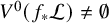 $V^0(f_*\mathcal {L}) \neq \emptyset $
.
$V^0(f_*\mathcal {L}) \neq \emptyset $
.
If $\dim V^0(f_*\mathcal {L})>0$
, then we can apply the argument Step 1 of the proof of [Reference Zhang61, Theorem 4.2] to show that
$\dim V^0(f_*\mathcal {L})>0$
, then we can apply the argument Step 1 of the proof of [Reference Zhang61, Theorem 4.2] to show that $\kappa (X, B+ f^*L)\geq 1$
for some
$\kappa (X, B+ f^*L)\geq 1$
for some $L \in \mathrm {Pic}^0(A)$
, which is sufficient to conclude the proof.
$L \in \mathrm {Pic}^0(A)$
, which is sufficient to conclude the proof.
Now, assume $\dim V^0(f_*\mathcal {L}) =0$
. Then, by Theorem 3.6 (2), there exist a subsheaf
$\dim V^0(f_*\mathcal {L}) =0$
. Then, by Theorem 3.6 (2), there exist a subsheaf $\mathcal {F} \subseteq f_*\mathcal {L}$
of rank r, an isogeny
$\mathcal {F} \subseteq f_*\mathcal {L}$
of rank r, an isogeny $\pi \colon A_1\to A$
of abelian varieties, some
$\pi \colon A_1\to A$
of abelian varieties, some $P_1, \ldots , P_r \in \mathrm {Pic}^0(A_1),$
and a generically surjective homomorphism
$P_1, \ldots , P_r \in \mathrm {Pic}^0(A_1),$
and a generically surjective homomorphism
 $$ \begin{align*}\beta\colon \bigoplus_iP_i \to \pi^*\mathcal{F}.\end{align*} $$
Applying the covering theorem as in Step 2 of the proof of [Reference Zhang61, Theorem 4.2], we show that there exist an integer $m>0$
and some
$m>0$
and some $L_1, \ldots , L_r \in \operatorname {\mathrm {Pic}}^0(A)$
such that:
$L_1, \ldots , L_r \in \operatorname {\mathrm {Pic}}^0(A)$
such that:
-
•
$H^0(X, mB + f^*L_i) \neq 0$
; -
• the sub-linear system of
$|(mB)_{K(\eta )}|$
corresponding to the subspace
$\sum _iH^0(X, mB + L_i)\otimes _k K(\eta ) \subseteq H^0(X_{\eta }, mB|_{X_{\eta }})$
defines a non-trivial map.



We may assume each $h^0(X, mB + f^*L_i)=1$
, thus there exists a unique effective divisor
$h^0(X, mB + f^*L_i)=1$
, thus there exists a unique effective divisor $D_i \sim mB + f^*L_i$
.
$D_i \sim mB + f^*L_i$
.
Write $D_i = aB + D'$
such that
$D_i = aB + D'$
such that $B\not \subseteq \operatorname {\mathrm {Supp}} D'$
. We have
$B\not \subseteq \operatorname {\mathrm {Supp}} D'$
. We have $D_i|_{B}\equiv 0$
. By
$D_i|_{B}\equiv 0$
. By $\nu (B)=1$
, we conclude that
$\nu (B)=1$
, we conclude that $\operatorname {\mathrm {Supp}} B\cap \operatorname {\mathrm {Supp}} D' = \emptyset $
, thus
$\operatorname {\mathrm {Supp}} B\cap \operatorname {\mathrm {Supp}} D' = \emptyset $
, thus $D'|_{B} \sim 0$
. Moreover, by Lemma 2.9,
$D'|_{B} \sim 0$
. Moreover, by Lemma 2.9, $B|_{B} \sim _{\mathbb Q} (K_X + B)|_{B} \succeq _{\mathbb Q} 0$
. Then, it follows that
$B|_{B} \sim _{\mathbb Q} (K_X + B)|_{B} \succeq _{\mathbb Q} 0$
. Then, it follows that $D_i|_{B} \sim _{\mathbb Q} 0$
.
$D_i|_{B} \sim _{\mathbb Q} 0$
.
Take $D_1 \neq D_2$
. By
$D_1 \neq D_2$
. By $D_1 - D_2 \sim f^*(L_1-L_2)$
, we conclude that
$D_1 - D_2 \sim f^*(L_1-L_2)$
, we conclude that $f^*(L_1-L_2) |_{B} \sim _{\mathbb Q} 0$
. Since
$f^*(L_1-L_2) |_{B} \sim _{\mathbb Q} 0$
. Since $B \to A$
is dominant, we have
$B \to A$
is dominant, we have $L_1 \sim _{\mathbb Q} L_2$
, that is, there exists some
$L_1 \sim _{\mathbb Q} L_2$
, that is, there exists some $N>0$
such that
$N>0$
such that $NL_1\sim NL_2$
. But then
$NL_1\sim NL_2$
. But then $ND_1 \sim ND_2$
. This shows
$ND_1 \sim ND_2$
. This shows $h^0(X, NmB+ NL_1) \geq 2$
, which concludes the proof.
$h^0(X, NmB+ NL_1) \geq 2$
, which concludes the proof.
4. Structure theorems of K-trivial irregular varieties with
$\dim a_X(X) = 1$

In this section, we treat K-trivial irregular varieties X with $\dim a_X(X) = 1$
. The main result is the following.
$\dim a_X(X) = 1$
. The main result is the following.
Theorem 4.1. Let X be a normal $\mathbb Q$
-factorial projective variety with
$\mathbb Q$
-factorial projective variety with $K_X\equiv 0$
and
$K_X\equiv 0$
and $\dim a_X(X)=1$
, where
$\dim a_X(X)=1$
, where $a_X\colon X\to A$
is the Albanese morphism of X. Assume moreover that, either:
$a_X\colon X\to A$
is the Albanese morphism of X. Assume moreover that, either:
-
(a) X is strongly F-regular and the Cartier index of
$K_X$
is indivisible by p, or -
(b)
$\dim X = 3$
,
$p\ge 5$
, and X has at worst terminal singularities.


Then,
-
(1)
$q(X) = 1$
, thus
$E:=A$
is an elliptic curve and
$f=a_X\colon X\to E$
is a fibration. -
(2) there exists an isogeny
$\pi \colon \bar E \to E$
of elliptic curves such that
$X\times _E \bar E \cong \bar E\times F$
, where F is a fiber of f. More precisely, there is a faithful action of
$H= \mathrm {ker} (\pi )$
on F, such that where H acts diagonally on
$$\begin{align*}X\cong \bar E\times F/H, \end{align*}$$
$\bar E\times F$
.





Proof. Note that under assumption (b), the generic fiber of f is a regular surface. So in both cases (a) and (b), we can apply Theorem 3.3(i) to show the assertion (1).
Next, we claim that there exists a divisor D such that:
-
(*) for sufficiently divisible
$m>0$
,
$f_*\mathcal {O}_X(mD)$
is a numerically flat vector bundle on E, and there exists an isogeny
$\tau _1\colon E_1 \to E$
such that
$\tau _1^*f_*\mathcal {O}_X(mD) \cong \bigoplus _{i=1}^{r}L_i$
for some
$L_i \in \mathrm {Pic}^0(E_1)$
; -
(**) D is semi-ample and f-ample, and
$\nu (D) = \dim X-1$
.



Such a divisor D satisfying the condition $(*)$
exists by Theorem 3.3, and the condition
$(*)$
exists by Theorem 3.3, and the condition $(**)$
is guaranteed by Theorem 3.3(iv) in case (a) and by Theorem 3.5 in case (b).
$(**)$
is guaranteed by Theorem 3.3(iv) in case (a) and by Theorem 3.5 in case (b).
Now, let $g\colon X\to Z$
be the fibration associated with D, where Z is a normal projective variety with
$g\colon X\to Z$
be the fibration associated with D, where Z is a normal projective variety with $\dim Z=\dim X-1$
. To summarize, we obtain the following “bi-fibration” structure:
$\dim Z=\dim X-1$
. To summarize, we obtain the following “bi-fibration” structure:

Here, for a general closed point $z\in Z$
, the fiber
$z\in Z$
, the fiber $X_z$
of g is a curve which is finite and dominant over E. Since
$X_z$
of g is a curve which is finite and dominant over E. Since $K_{X_z}\equiv 0$
,
$K_{X_z}\equiv 0$
, $X_z$
is in fact an elliptic curve. Moreover, since D is f-ample, we conclude that
$X_z$
is in fact an elliptic curve. Moreover, since D is f-ample, we conclude that $g\colon X\to Z$
is equidimensional and every component of a fiber
$g\colon X\to Z$
is equidimensional and every component of a fiber $X_z$
of g over an arbitrary closed point
$X_z$
of g over an arbitrary closed point $z\in Z$
is dominant over E.
$z\in Z$
is dominant over E.
In the following, we fix a sufficiently large m such that for any $l>0$
, the natural homomorphism
$l>0$
, the natural homomorphism $\eta \colon S^l(f_*\mathcal {O}_X(mD)) \to f_*\mathcal {O}_X(lmD)$
is surjective, where
$\eta \colon S^l(f_*\mathcal {O}_X(mD)) \to f_*\mathcal {O}_X(lmD)$
is surjective, where $S^l$
denotes the lth symmetric power.
$S^l$
denotes the lth symmetric power.
Following the approach of [Reference Ejiri and Patakfalvi20, Proposition 7.6], we can prove the following result.
Lemma. There exists an isogeny $\tau \colon \tilde {E} \to E$
of elliptic curves such that
$\tau \colon \tilde {E} \to E$
of elliptic curves such that $\tilde {X}:=X\times _E\tilde {E} \cong \tilde {E} \times F$
.
$\tilde {X}:=X\times _E\tilde {E} \cong \tilde {E} \times F$
.
Proof of the lemma
First, we prove the following claim.
Claim. There exists an isogeny $\tau \colon \tilde {E} \to E$
of elliptic curves such that
$\tau \colon \tilde {E} \to E$
of elliptic curves such that $\tau ^*f_*\mathcal {O}_X(mD) \cong \bigoplus ^r\mathcal {O}_{\tilde {E}}$
, where
$\tau ^*f_*\mathcal {O}_X(mD) \cong \bigoplus ^r\mathcal {O}_{\tilde {E}}$
, where $r:=\mathrm {rank}\ f_*{\mathcal O}_X(mD)$
.
$r:=\mathrm {rank}\ f_*{\mathcal O}_X(mD)$
.
Proof of the claim
By $(*),$
there exists an isogeny
$(*),$
there exists an isogeny $\tau _1\colon E_1 \to E$
, such that
$\tau _1\colon E_1 \to E$
, such that $\tau _1^*f_*\mathcal {O}_X(mD) \cong \bigoplus _{i=1}^{r}L_i$
for some
$\tau _1^*f_*\mathcal {O}_X(mD) \cong \bigoplus _{i=1}^{r}L_i$
for some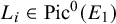 $L_i \in \mathrm {Pic}^0(E_1)$
. Let
$L_i \in \mathrm {Pic}^0(E_1)$
. Let $X_1= (X\times _EE_1)^\nu $
. Denote by
$X_1= (X\times _EE_1)^\nu $
. Denote by $\pi _1\colon X_1 \to X$
and
$\pi _1\colon X_1 \to X$
and $f_1\colon X_1\to E_1$
the natural projections. Then,
$f_1\colon X_1\to E_1$
the natural projections. Then, $|\pi _1^*mD - f_1^*L_i| \neq \emptyset $
. The divisor
$|\pi _1^*mD - f_1^*L_i| \neq \emptyset $
. The divisor $\pi _1^*D$
, being semi-ample with
$\pi _1^*D$
, being semi-ample with $\nu (\pi _1^*D) =n-1$
, induces a fibration
$\nu (\pi _1^*D) =n-1$
, induces a fibration $g_1\colon X_1 \to Z_1$
. Then, for a general fiber
$g_1\colon X_1 \to Z_1$
. Then, for a general fiber $C_1$
of
$C_1$
of $g_1$
, the linear system
$g_1$
, the linear system $|\pi _1^*mD - f_1^*L_i|_{C_1} \neq \emptyset $
. We conclude that
$|\pi _1^*mD - f_1^*L_i|_{C_1} \neq \emptyset $
. We conclude that $f_1^*L_i|_{C_1} \sim 0$
, thus each
$f_1^*L_i|_{C_1} \sim 0$
, thus each $L_i$
is a torsion point in
$L_i$
is a torsion point in $\mathrm {Pic}^0(E_1)$
. There exists a further isogeny of elliptic curves
$\mathrm {Pic}^0(E_1)$
. There exists a further isogeny of elliptic curves $\tau _2\colon E_2 \to E_1$
such that
$\tau _2\colon E_2 \to E_1$
such that $\tau _2^*L_i \cong \mathcal {O}_{E_2}$
. We may take
$\tau _2^*L_i \cong \mathcal {O}_{E_2}$
. We may take $\tau \colon \tilde {E} = E_2 \to E_1 \to E$
to complete the proof of the claim.
$\tau \colon \tilde {E} = E_2 \to E_1 \to E$
to complete the proof of the claim.
Denote by $\tilde {\pi }\colon \tilde {X}:=X\times _E\tilde {E}\to X$
and
$\tilde {\pi }\colon \tilde {X}:=X\times _E\tilde {E}\to X$
and $\tilde {f}\colon \tilde {X}\to \tilde {E}$
the natural projections. Since for each
$\tilde {f}\colon \tilde {X}\to \tilde {E}$
the natural projections. Since for each $l\geq 1$
,
$l\geq 1$
, $\eta \colon S^l(f_*\mathcal {O}_X(mD)) \to f_*\mathcal {O}_X(lmD)$
is surjective, the homomorphism
$\eta \colon S^l(f_*\mathcal {O}_X(mD)) \to f_*\mathcal {O}_X(lmD)$
is surjective, the homomorphism
 $$ \begin{align*}\varphi_l: S^l(\tilde{f}_*\mathcal{O}_{\tilde{X}}(m\tilde{\pi}^*D)) \cong \tau^*S^l(f_*\mathcal{O}_X(mD)) \cong \bigoplus \mathcal{O}_{\tilde{E}} \to \tilde{f}_*\mathcal{O}_{\tilde{X}}(lm\tilde{\pi}^*D) \cong \tau^*f_*\mathcal{O}_X(lmD)\end{align*} $$
is surjective. Combining this with the numerically flatness of $f_*\mathcal {O}_X(lmD)$
,
$f_*\mathcal {O}_X(lmD)$
, $l\ge 1$
, we conclude that
$l\ge 1$
, we conclude that $\tilde {f}_*\mathcal {O}_{\tilde {X}}(lm\tilde {\pi }^*D) \cong \bigoplus \mathcal {O}_{\tilde {E}}$
, and
$\tilde {f}_*\mathcal {O}_{\tilde {X}}(lm\tilde {\pi }^*D) \cong \bigoplus \mathcal {O}_{\tilde {E}}$
, and $\varphi _l$
is determined by the corresponding homomorphism of the global sections. From this, we conclude that
$\varphi _l$
is determined by the corresponding homomorphism of the global sections. From this, we conclude that $\tilde {X}=X\times _E \tilde {E}\cong \tilde {E}\times F$
.
$\tilde {X}=X\times _E \tilde {E}\cong \tilde {E}\times F$
.
We regard the morphism $\tau \colon \tilde {E} \to E$
as a morphism of abelian varieties and write
$\tau \colon \tilde {E} \to E$
as a morphism of abelian varieties and write $\tilde {H} = \mathrm {ker}(\tau )$
. The natural action of
$\tilde {H} = \mathrm {ker}(\tau )$
. The natural action of $\tilde {H}$
on
$\tilde {H}$
on $\tilde {E}$
induces an action of
$\tilde {E}$
induces an action of $\tilde {H}$
on the base change
$\tilde {H}$
on the base change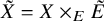 $\tilde {X}=X\times _E \tilde {E}$
. To summarize, we have a commutative diagram:
$\tilde {X}=X\times _E \tilde {E}$
. To summarize, we have a commutative diagram:

Through the isomorphism $\varphi \colon \tilde {X}\buildrel \sim \over \to \tilde {E}\times F$
,
$\varphi \colon \tilde {X}\buildrel \sim \over \to \tilde {E}\times F$
, $\tilde {H}$
acts on
$\tilde {H}$
acts on $\tilde {E}\times F$
. Our next step is to show that this action of
$\tilde {E}\times F$
. Our next step is to show that this action of $\tilde H$
on
$\tilde H$
on $\tilde E\times F$
is diagonal. For this purpose, we consider the second fibration
$\tilde E\times F$
is diagonal. For this purpose, we consider the second fibration $g\colon X\to Z$
. As observed before, for a general closed point
$g\colon X\to Z$
. As observed before, for a general closed point $z\in Z$
, the fiber
$z\in Z$
, the fiber $X_z$
of g is an elliptic curve, so
$X_z$
of g is an elliptic curve, so $X_z\to E$
is an isogenous of a fixed degree. Let
$X_z\to E$
is an isogenous of a fixed degree. Let $Z^\circ \subset Z$
be an open subset such that
$Z^\circ \subset Z$
be an open subset such that $Z^\circ $
is regular and for each closed point
$Z^\circ $
is regular and for each closed point $z\in Z^\circ $
, the fiber
$z\in Z^\circ $
, the fiber $X_z$
of g is an elliptic curve. Set
$X_z$
of g is an elliptic curve. Set $X^\circ := g^{-1}(Z^\circ )$
and
$X^\circ := g^{-1}(Z^\circ )$
and $F^\circ := F\cap X^\circ $
. By Proposition 2.12, we conclude that:
$F^\circ := F\cap X^\circ $
. By Proposition 2.12, we conclude that:
-
(***) There exists an isogeny
$\tau '\colon E'\to E$
from an elliptic curve
$E'$
such that
$X^\circ \times _E E' \cong E' \times F^\circ $
. Moreover, the induced action of
$G:=\ker \sigma $
on
$X^\circ \times _E E'$
is diagonal on
$E' \times F^\circ $
, and the following commutative diagram commutes:


Remark that if we take a further isogeny $\tau "\colon E" \to E'$
of elliptic curves, then the action of
$\tau "\colon E" \to E'$
of elliptic curves, then the action of $\ker \tau "$
on the base change
$\ker \tau "$
on the base change $X^{\circ }_1\times _{E'}E"\cong E"\times F^{\circ }$
induces an action on the product
$X^{\circ }_1\times _{E'}E"\cong E"\times F^{\circ }$
induces an action on the product $E"\times F^{\circ }$
; precisely,
$E"\times F^{\circ }$
; precisely, $\ker \tau "$
acts on
$\ker \tau "$
acts on $E"$
by translation and on
$E"$
by translation and on $F^{\circ }$
trivially. Thus, the base change
$F^{\circ }$
trivially. Thus, the base change $\tau '\circ \tau "\colon E" \to E' \to E$
induced a diagonal action of
$\tau '\circ \tau "\colon E" \to E' \to E$
induced a diagonal action of $\ker \tau '\circ \tau "$
on
$\ker \tau '\circ \tau "$
on $E"\times F^{\circ }$
. Therefore, we may choose an isogeny
$E"\times F^{\circ }$
. Therefore, we may choose an isogeny $\tilde {\tau }'\colon \tilde {E}'\to E$
which factors through both
$\tilde {\tau }'\colon \tilde {E}'\to E$
which factors through both $\tau \colon \tilde E\to E$
and
$\tau \colon \tilde E\to E$
and $\tau '\colon E'\to E$
, and obtain the following commutative diagram:
$\tau '\colon E'\to E$
, and obtain the following commutative diagram:

Thus, the natural action of $\tilde H'=\ker \tilde \tau '$
on the base change
$\tilde H'=\ker \tilde \tau '$
on the base change $X\times _E \tilde E' \cong \tilde E' \times F$
is compatible with its action on
$X\times _E \tilde E' \cong \tilde E' \times F$
is compatible with its action on $X^\circ \times _E E_1$
given by
$X^\circ \times _E E_1$
given by $(*{*}*)$
, which is diagonal. From this, we conclude that
$(*{*}*)$
, which is diagonal. From this, we conclude that $\tilde H'$
acts on
$\tilde H'$
acts on $\tilde E' \times F$
diagonally. Finally, let K be the kernel of the action of
$\tilde E' \times F$
diagonally. Finally, let K be the kernel of the action of $\tilde H'$
on F. Set
$\tilde H'$
on F. Set $H := \tilde H'/K$
and
$H := \tilde H'/K$
and $\bar E := \tilde E'/K$
. Then, H acts on F faithfully and the proof is complete.
$\bar E := \tilde E'/K$
. Then, H acts on F faithfully and the proof is complete.
5. Structure of K-trivial irregular varieties with
$\dim a_X(X) = \dim X-1$

In this section, we treat K-trivial irregular varieties whose Albanese morphism has relative dimension one. We work in the following setting.
Assumptions 5.1. Let X be a normal projective $\mathbb {Q}$
-factorial variety with
$\mathbb {Q}$
-factorial variety with $K_X \equiv 0$
. Let
$K_X \equiv 0$
. Let $a_X\colon X\to A$
be the Albanese morphism of X and assume that
$a_X\colon X\to A$
be the Albanese morphism of X and assume that $a_X\colon X\to a_X(X)$
is of relative dimension one. Then, by Theorem 2.13 and Corollary 2.14, we see that
$a_X\colon X\to a_X(X)$
is of relative dimension one. Then, by Theorem 2.13 and Corollary 2.14, we see that $K_X \sim _{\mathbb Q} 0$
and
$K_X \sim _{\mathbb Q} 0$
and $a_X\colon X\to A$
is a fibration. In the following, we set
$a_X\colon X\to A$
is a fibration. In the following, we set $f=a_X\colon X\to A$
. We fall into one of the following three cases:
$f=a_X\colon X\to A$
. We fall into one of the following three cases:
-
(C1)
$X_{\eta }$
is smooth over
$k(\eta )$
, that is, f is an elliptic fibration; -
(C2)
$X_{\eta }$
is non-smooth but geometrically integral, that is, f is a quasi-elliptic fibration; -
(C3)
$X_{\eta }$
is geometrically non-reduced, that is, f is inseparable.


Note that the latter two cases occur only when the characteristic $p = 2$
or
$p = 2$
or $3$
(see Section 2.11).
$3$
(see Section 2.11).
5.1. Case (C1):
$X_{\eta }$
is smooth

In this case, we give a thorough description of X.
5.1.1. A rough description
We first give a rough description of the structure of X.
Theorem 5.2. Under Assumption 5.1(C1), there exist an abelian variety $A'$
and an isogeny
$A'$
and an isogeny $\tau \colon A'\to A$
such that
$\tau \colon A'\to A$
such that $X \times _A A' \cong A'\times F$
, where F is a general fiber. More precisely, there is a faithful action of
$X \times _A A' \cong A'\times F$
, where F is a general fiber. More precisely, there is a faithful action of $G:=\ker (\tau )$
on F, such that
$G:=\ker (\tau )$
on F, such that $X \cong A'\times F/G$
, where G acts on
$X \cong A'\times F/G$
, where G acts on $ A'\times F$
diagonally.
$ A'\times F$
diagonally.
Proof. We follow the strategy of [Reference Patakfalvi and Zdanowicz52].
Step 1. Let $d=\dim A$
, and let H be a sufficiently ample line bundle on A. For general choices of
$d=\dim A$
, and let H be a sufficiently ample line bundle on A. For general choices of $H_i \in |H|$
, the curve
$H_i \in |H|$
, the curve $C := H_1\cap \cdots \cap H_{d-1}$
is smooth, and
$C := H_1\cap \cdots \cap H_{d-1}$
is smooth, and $f_C\colon X_C= X\times _A C \to C$
is flat and smooth over generic point of C. In this step, we aim to show that there exists a finite flat morphism
$f_C\colon X_C= X\times _A C \to C$
is flat and smooth over generic point of C. In this step, we aim to show that there exists a finite flat morphism $C'\to C$
such that
$C'\to C$
such that $f_{C'}\colon X_{C'}=X\times _A C' \to C'$
is a trivial fibration.
$f_{C'}\colon X_{C'}=X\times _A C' \to C'$
is a trivial fibration.
Set $Z_{i} := H_1 \cap \cdots \cap H_i$
for
$Z_{i} := H_1 \cap \cdots \cap H_i$
for $i=1,\ldots ,d-1$
. As
$i=1,\ldots ,d-1$
. As $H_1 \in |H|$
is general, we may assume that
$H_1 \in |H|$
is general, we may assume that $X_{Z_1}$
is a prime divisor. Then, applying the adjunction formula, we have
$X_{Z_1}$
is a prime divisor. Then, applying the adjunction formula, we have
 $$ \begin{align} \begin{aligned} 0\sim_{\mathbb Q} (K_{X/A}) |_{ X_{Z_1}^\nu } \sim_{\mathbb Q} K_{X_{Z_1}^\nu/Z_1} + \Delta_{X_{Z_1}^\nu}, \end{aligned} \end{align} $$
where $\Delta _{X_{Z_1}^\nu }\ge 0$
. By Theorem 2.10, we have
$\Delta _{X_{Z_1}^\nu }\ge 0$
. By Theorem 2.10, we have $K_{X_{Z_1}^\nu /Z_1} \succeq _{\mathbb Q} 0$
. In turn, we deduce that
$K_{X_{Z_1}^\nu /Z_1} \succeq _{\mathbb Q} 0$
. In turn, we deduce that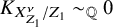 $K_{X_{Z_1}^\nu /Z_1} \sim _{\mathbb Q} 0$
and
$K_{X_{Z_1}^\nu /Z_1} \sim _{\mathbb Q} 0$
and $\Delta _{X_{Z_1}^\nu } = 0$
, which implies that
$\Delta _{X_{Z_1}^\nu } = 0$
, which implies that $X_{Z_1}$
is normal in codimension one. Inductively, we can prove that this holds for each
$X_{Z_1}$
is normal in codimension one. Inductively, we can prove that this holds for each $X_{Z_i}$
. In particular, for
$X_{Z_i}$
. In particular, for $i=d-1$
, the surface
$i=d-1$
, the surface $X_{C}$
is normal in codimension one and
$X_{C}$
is normal in codimension one and $K_{X_{C}^\nu /C} \sim _{\mathbb Q} 0$
. Since X is Cohen–Macaulay in codimension two, we can show that
$K_{X_{C}^\nu /C} \sim _{\mathbb Q} 0$
. Since X is Cohen–Macaulay in codimension two, we can show that $X_{C}$
is Cohen–Macaulay by induction. Together with that
$X_{C}$
is Cohen–Macaulay by induction. Together with that $X_{C}$
is regular in codimension one, we see that
$X_{C}$
is regular in codimension one, we see that $X_C=(X_{C})^\nu $
by Serre’s criterion. Finally, since
$X_C=(X_{C})^\nu $
by Serre’s criterion. Finally, since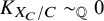 $K_{X_C/C}\sim _{\mathbb Q} 0$
, we conclude Step 1 by Proposition 2.11.
$K_{X_C/C}\sim _{\mathbb Q} 0$
, we conclude Step 1 by Proposition 2.11.
Therefore, there exists a big open subset $A^\circ $
of A covered by such curves C as above. Over
$A^\circ $
of A covered by such curves C as above. Over $A^\circ $
, the fibration
$A^\circ $
, the fibration $f\colon X \to A$
is smooth, and all the closed fibers are isomorphic to a fixed one
$f\colon X \to A$
is smooth, and all the closed fibers are isomorphic to a fixed one $F=f^{-1}(t_0)$
of f for some
$F=f^{-1}(t_0)$
of f for some $t_0 \in A^\circ $
. In the following, we equip F with a fixed abelian variety structure.
$t_0 \in A^\circ $
. In the following, we equip F with a fixed abelian variety structure.
Step 2. In this step, we aim to show that there is a finite group scheme G and a G-torsor $I\to A^\circ $
such that
$I\to A^\circ $
such that $X^\circ \times _{A^\circ } I \to I$
is a trivial fibration, where
$X^\circ \times _{A^\circ } I \to I$
is a trivial fibration, where $X^\circ := f^{-1}(A^\circ )$
.
$X^\circ := f^{-1}(A^\circ )$
.
We follow the proof of [Reference Patakfalvi and Zdanowicz52, Theorem 9.2]. Let L be a very ample line bundle on X, and set $L_0 := L|_{F}$
. We take G to be the automorphism group scheme
$L_0 := L|_{F}$
. We take G to be the automorphism group scheme $\operatorname {\mathrm {Aut}}(F, L_0)$
which is finite by [Reference Patakfalvi and Zdanowicz52, Proposition 10.1], and I to be the quasi-projective scheme over
$\operatorname {\mathrm {Aut}}(F, L_0)$
which is finite by [Reference Patakfalvi and Zdanowicz52, Proposition 10.1], and I to be the quasi-projective scheme over $A^\circ $
representing the Isom functor
$A^\circ $
representing the Isom functor $\operatorname {\mathrm {Isom}}_{A^\circ } \bigl ((X^\circ , L|_{X^\circ }), ( A^\circ \times F, {\mathrm {pr}}_2^* L_0)\bigr )$
as constructed in [Reference Patakfalvi and Zdanowicz52, Construction 7.5]. Following the proof of [Reference Patakfalvi and Zdanowicz52, Theorem 9.2], we only need to show that
$\operatorname {\mathrm {Isom}}_{A^\circ } \bigl ((X^\circ , L|_{X^\circ }), ( A^\circ \times F, {\mathrm {pr}}_2^* L_0)\bigr )$
as constructed in [Reference Patakfalvi and Zdanowicz52, Construction 7.5]. Following the proof of [Reference Patakfalvi and Zdanowicz52, Theorem 9.2], we only need to show that $I\to A^\circ $
is surjective and flat. For each curve
$I\to A^\circ $
is surjective and flat. For each curve $C\subset A^\circ $
as in Step 1, there exists a finite flat morphism
$C\subset A^\circ $
as in Step 1, there exists a finite flat morphism $C'\to C$
such that
$C'\to C$
such that $f_{C'}\colon X_{C'}\to C'$
is a trivial fibration. By the base change property [Reference Patakfalvi and Zdanowicz52, Proposition 7.8] and flattening decomposition [Reference Mumford45, Lecture 8], it suffices to verify that
$f_{C'}\colon X_{C'}\to C'$
is a trivial fibration. By the base change property [Reference Patakfalvi and Zdanowicz52, Proposition 7.8] and flattening decomposition [Reference Mumford45, Lecture 8], it suffices to verify that $I_{C'}:= \operatorname {\mathrm {Isom}}_{C'} \bigl ( ( X_{C'}, L|_{X_{C'}} ), (C' \times F, {\mathrm {pr}}_2^* L_0)\bigr ) \to C'$
is surjective and flat. To verify this, we apply [Reference Patakfalvi and Zdanowicz52, Lemma 8.7], which requires the condition that
$I_{C'}:= \operatorname {\mathrm {Isom}}_{C'} \bigl ( ( X_{C'}, L|_{X_{C'}} ), (C' \times F, {\mathrm {pr}}_2^* L_0)\bigr ) \to C'$
is surjective and flat. To verify this, we apply [Reference Patakfalvi and Zdanowicz52, Lemma 8.7], which requires the condition that $-K_{X_{C'}/C'}$
is nef and semi-ample. This condition is satisfied because
$-K_{X_{C'}/C'}$
is nef and semi-ample. This condition is satisfied because $f_{C'}$
is a trivial fibration. This finished the proof of this step.
$f_{C'}$
is a trivial fibration. This finished the proof of this step.
Step 3. We extend the G-torsor $I\to A^\circ $
over
$I\to A^\circ $
over $A^\circ $
to a G-torsor
$A^\circ $
to a G-torsor $\bar I\to A$
over A as follows.
$\bar I\to A$
over A as follows.
Regard F as an abelian variety with identity $0_F$
. Since
$0_F$
. Since $G=\operatorname {\mathrm {Aut}}(F, L_0)$
is a finite group scheme, G is an extension of an étale group scheme by an infinitesimal group scheme. Thus, by a “Purity” theorem [Reference Ekedahl22, Proposition 1.4], the torsor
$G=\operatorname {\mathrm {Aut}}(F, L_0)$
is a finite group scheme, G is an extension of an étale group scheme by an infinitesimal group scheme. Thus, by a “Purity” theorem [Reference Ekedahl22, Proposition 1.4], the torsor $I\to A^\circ $
can be extended to a torsor
$I\to A^\circ $
can be extended to a torsor $\bar I\to A$
. Furthermore, according to [Reference Nori47, Proposition], there exist an integer n, a homomorphism
$\bar I\to A$
. Furthermore, according to [Reference Nori47, Proposition], there exist an integer n, a homomorphism $\varphi \colon A[n]\to \operatorname {\mathrm {Aut}}(F, L_0)$
, and a morphism
$\varphi \colon A[n]\to \operatorname {\mathrm {Aut}}(F, L_0)$
, and a morphism $\eta \colon A\to \bar I$
, which is
$\eta \colon A\to \bar I$
, which is $A[n]$
-equivariant with the action of
$A[n]$
-equivariant with the action of $A[n]$
on
$A[n]$
on $\bar I$
induced by
$\bar I$
induced by $\varphi $
, leading to the following commutative diagram:
$\varphi $
, leading to the following commutative diagram:

Let $A^{\circ \circ }$
denote the preimage of
$A^{\circ \circ }$
denote the preimage of $A^{\circ }$
under
$A^{\circ }$
under $n_A\colon A\to A$
. By the construction, we obtain an isomorphism
$n_A\colon A\to A$
. By the construction, we obtain an isomorphism $X\times _{A,n_A} A^{\circ \circ }\cong A^{\circ \circ } \times F$
.
$X\times _{A,n_A} A^{\circ \circ }\cong A^{\circ \circ } \times F$
.
Step 4. We show that the birational map $\psi \colon Y :=X\times _{A,n_A}A \dashrightarrow Y':=F\times A$
, which is determined by
$\psi \colon Y :=X\times _{A,n_A}A \dashrightarrow Y':=F\times A$
, which is determined by $X\times _{A,n_A} A^{\circ \circ }\cong A^{\circ \circ } \times F$
, is an isomorphism.
$X\times _{A,n_A} A^{\circ \circ }\cong A^{\circ \circ } \times F$
, is an isomorphism.
Since $f\colon X\to A$
is equidimensional by [Reference Patakfalvi and Zdanowicz52, Theorem 4.1],
$f\colon X\to A$
is equidimensional by [Reference Patakfalvi and Zdanowicz52, Theorem 4.1], $Y\to A$
is equidimensional too. Since
$Y\to A$
is equidimensional too. Since $\psi $
is an isomorphism in codimension one, Y is regular in codimension one, thus Y is normal by Lemma 2.4.
$\psi $
is an isomorphism in codimension one, Y is regular in codimension one, thus Y is normal by Lemma 2.4.
Let $H_Y$
be an ample Cartier divisor on Y, and denote by
$H_Y$
be an ample Cartier divisor on Y, and denote by $H_{Y'}= \psi _*H_Y$
the strict transform of
$H_{Y'}= \psi _*H_Y$
the strict transform of $H_Y$
. Observe that
$H_Y$
. Observe that $H_{Y'}$
is relatively ample over A since each fiber of
$H_{Y'}$
is relatively ample over A since each fiber of $Y' \cong F\times A \to A$
is irreducible. If necessary adding the pullback of an ample divisor on A, we may assume that
$Y' \cong F\times A \to A$
is irreducible. If necessary adding the pullback of an ample divisor on A, we may assume that $H_{Y'}$
is ample. Since
$H_{Y'}$
is ample. Since $\psi \colon Y \dashrightarrow Y'$
is an isomorphism in codimension one, we have a natural ring isomorphism
$\psi \colon Y \dashrightarrow Y'$
is an isomorphism in codimension one, we have a natural ring isomorphism $\bigoplus _{m\geq 0 }H^0(Y, mH_Y) \cong \bigoplus _{m\geq 0 }H^0(Y', mH_{Y'})$
, which implies that
$\bigoplus _{m\geq 0 }H^0(Y, mH_Y) \cong \bigoplus _{m\geq 0 }H^0(Y', mH_{Y'})$
, which implies that $\psi \colon Y \to Y'$
is an isomorphism.
$\psi \colon Y \to Y'$
is an isomorphism.
Step 5. Finally, if the action of $A[n]$
on F is not faithful, we may set
$A[n]$
on F is not faithful, we may set $H=\mathrm {Ker} (A[n] \to \operatorname {\mathrm {Aut}}(F, L_0))$
and
$H=\mathrm {Ker} (A[n] \to \operatorname {\mathrm {Aut}}(F, L_0))$
and $G=A[n]/H$
. In turn, we get a faithful action of G on F and an action on
$G=A[n]/H$
. In turn, we get a faithful action of G on F and an action on $A' = A/H$
such that
$A' = A/H$
such that $X \cong (A\times F)/G \cong (A'\times F)/H$
.
$X \cong (A\times F)/G \cong (A'\times F)/H$
.
5.1.2. Explicit description of Case (C1)
Based on the analysis in [Reference Bombieri and Mumford9, pp. 36–37], we give all the possibilities of X in the context of Theorem 5.2.
Recall that $X \cong (A \times F)/G$
, where A is an abelian variety, F is an elliptic curve, and G is a finite group scheme acting diagonally on
$X \cong (A \times F)/G$
, where A is an abelian variety, F is an elliptic curve, and G is a finite group scheme acting diagonally on $A \times F$
via injections
$A \times F$
via injections $G\hookrightarrow A$
and
$G\hookrightarrow A$
and $\alpha \colon G\hookrightarrow \operatorname {\mathrm {Aut}}(F)\cong F\rtimes \operatorname {\mathrm {Aut}}(F,0_F)$
. In particular, G is commutative. As observed in [Reference Bombieri and Mumford9], the commutativity of G severely constrains its possible structure. In fact, the argument of [Reference Bombieri and Mumford9, p. 36] shows that G must have the form
$\alpha \colon G\hookrightarrow \operatorname {\mathrm {Aut}}(F)\cong F\rtimes \operatorname {\mathrm {Aut}}(F,0_F)$
. In particular, G is commutative. As observed in [Reference Bombieri and Mumford9], the commutativity of G severely constrains its possible structure. In fact, the argument of [Reference Bombieri and Mumford9, p. 36] shows that G must have the form
 $$\begin{align*}\alpha(G)\cong G_0\times \mathbb Z/n\mathbb Z, \end{align*}$$
where $G_0$
is a finite subgroup scheme of F, and
$G_0$
is a finite subgroup scheme of F, and $\mathbb Z/n\mathbb Z\subseteq \operatorname {\mathrm {Aut}}(F,0_F)$
is a cyclic subgroup with order
$\mathbb Z/n\mathbb Z\subseteq \operatorname {\mathrm {Aut}}(F,0_F)$
is a cyclic subgroup with order $n = 2,3,4,$
or
$n = 2,3,4,$
or $6$
. Moreover, if we denote by
$6$
. Moreover, if we denote by $\sigma \in G$
the element corresponding to some generator of
$\sigma \in G$
the element corresponding to some generator of $\mathbb Z/n\mathbb Z$
, then
$\mathbb Z/n\mathbb Z$
, then $G_0 \subseteq \mathfrak F$
, where
$G_0 \subseteq \mathfrak F$
, where $\mathfrak F\subset F$
is the fixed subscheme of
$\mathfrak F\subset F$
is the fixed subscheme of $\sigma $
. There are the following possibilities of the fixed subscheme
$\sigma $
. There are the following possibilities of the fixed subscheme $\mathfrak F$
:
$\mathfrak F$
:
-
(a)
$n=2$
, (so
$\sigma = -1_F$
), then
$\mathfrak F \cong \mathrm {Ker} 2_{F}$
; -
(b)
$n=3$
, then
$\mathrm {ord}\mathfrak F = 3$
, so-
$\mathfrak F \cong \mathbb Z/3\mathbb Z$
, if
$\mathrm {char} \ne 3$
;
-
$\mathfrak F \cong \alpha _3$
, if
$\mathrm {char} = 3$
(
$j(F) = 0$
and thus F is supersingular);
-
-
(c)
$n=4$
, then
$\mathrm {ord}\mathfrak F = 2$
, so -
$\mathfrak F \cong \mathbb Z/2\mathbb Z$
if
$\mathrm {char} \ne 2$
;
-
$\mathfrak F \cong \alpha _2$
if
$\mathrm {char} = 2$
(F is supersingular);
-
-
(d)
$n=6$
, then
$\mathfrak F = (e)$
.


We can now give a complete list of the possible G:

5.2. Case (C2): f is a quasi-elliptic fibration
In this case, we prove the following theorem.
Theorem 5.3. Let notation and assumptions be as in Assumption 5.1 (C2). Then,
-
(i) The characteristic p is
$2$
or
$3$
. -
(ii) X admits another fibration
$g\colon X \to \mathbb {P}^1$
that is transversal to f: Moreover, a fiber of g is either an abelian variety or a multiple of an abelian variety.
-
(iii) Let
$X_1$
be the normalization of
$X \times _{A} A^{(-1)}$
and denote by
$f_1\colon X_1\to A_1 :=A^{(-1)}$
the projection. Then,
$f_1$
is a smooth fibration fibered by rational curves, which falls into one of the following cases:-
(1)
$f_1\colon X_1\to A_1$
is a projective bundle described as one of the following:-
(1.a)
$X_1\cong \mathbb {P}_{A_1}(\mathcal {O}_{A_1}\oplus \mathcal {L})$
, where
$\mathcal {L}^{\otimes p+1}\cong {\mathcal O}_X$
; -
(1.b)
$X_1\cong \mathbb {P}_{A_1}(\mathcal {E})$
, where
$\mathcal {E}$
is a unipotent vector bundle of rank two, and there exists an étale cover
$\mu \colon A_2\to A_1$
of degree
$p^v$
(
$0\le v\le d:=\dim A$
), such that
$\mu ^*F^{(d-v)*}_{A_1}\mathcal {E}$
is trivial.
-
-
(2)
$p=2$
, and there exists a purely inseparable isogeny
$A_2 \to A_1$
of degree two, such that
$X_2 :=X_1\times _{A_1}A_2\to A_2$
is a projective bundle described as one of the following:-
(2.a)
$X_2\cong \mathbb {P}_{A_2}(\mathcal {O}_{A_2}\oplus \mathcal {L})$
, where
$\mathcal {L}^{\otimes 4}\cong \mathcal {O}_{A_2}$
; -
(2.b)
$X_2\cong \mathbb {P}_{A_2}(\mathcal {E})$
, where
$\mathcal {E}$
is a unipotent vector bundle of rank two, and there exists an étale cover
$\mu \colon A_3\to A_2$
of degree
$p^v$
(
$0\le v\le d$
), such that
$\mu ^*F^{(d-v)*}_{A_2}\mathcal {E}$
is trivial.
-
-








Proof. The assertion (i) is well known. Let us prove the remaining ones.
Note that $X \times _A A^{\frac {1}{p}}$
is not normal by Proposition 2.16. Let
$X \times _A A^{\frac {1}{p}}$
is not normal by Proposition 2.16. Let $X_1:=(X \times _A A^{\frac {1}{p}})^{\nu }$
be the normalization, and let
$X_1:=(X \times _A A^{\frac {1}{p}})^{\nu }$
be the normalization, and let $\pi \colon X_1\to X$
,
$\pi \colon X_1\to X$
, $f_1\colon X_1\to A^{\frac 1p}$
be the natural morphisms. We have the following commutative diagram:
$f_1\colon X_1\to A^{\frac 1p}$
be the natural morphisms. We have the following commutative diagram:

By results of Section 2.5, we can write that
 $$ \begin{align} \pi^* K_X \sim K_{X_1} + (p-1)\mathcal C, \quad\text{with } \mathcal C\ge0, \end{align} $$
where $\mathcal C$
can be chosen such that
$\mathcal C$
can be chosen such that $\mathcal C|_{X_{1,\eta }}$
coincides with the conductor of the normalization of the generic fiber of
$\mathcal C|_{X_{1,\eta }}$
coincides with the conductor of the normalization of the generic fiber of $f'$
. Hereafter, we fix such
$f'$
. Hereafter, we fix such $\mathcal C$
. According to Proposition 2.15(1),
$\mathcal C$
. According to Proposition 2.15(1), $\deg _{K(A_1)}(p-1)\mathcal C =2$
. Write
$\deg _{K(A_1)}(p-1)\mathcal C =2$
. Write $(p-1)\mathcal C = H + V$
, where H is the
$(p-1)\mathcal C = H + V$
, where H is the $f_1$
-horizontal part and V the vertical part of
$f_1$
-horizontal part and V the vertical part of $\mathcal C$
. Note that H is irreducible by Proposition 2.16(1), thus
$\mathcal C$
. Note that H is irreducible by Proposition 2.16(1), thus $H=nC$
, where C is reduced and
$H=nC$
, where C is reduced and $n=1$
or
$n=1$
or $2$
. Let D be the reduced divisor supported on
$2$
. Let D be the reduced divisor supported on $\pi (C)$
. We have
$\pi (C)$
. We have $\pi ^*D = C$
or
$\pi ^*D = C$
or $pC$
by Proposition 2.16.
$pC$
by Proposition 2.16.
Step 1. We prove that both C and D are semi-ample with numerical dimension one.
Since $X_1\to X$
is a finite purely inseparable morphism, the semi-ampleness of one of the divisors C or D implies the semi-ampleness of the other. We shall show that D is semi-ample with numerical dimension one. By Theorem 3.7, it suffices to verify that
$X_1\to X$
is a finite purely inseparable morphism, the semi-ampleness of one of the divisors C or D implies the semi-ampleness of the other. We shall show that D is semi-ample with numerical dimension one. By Theorem 3.7, it suffices to verify that $D|_{D^{\nu }}\sim _{\mathbb Q} 0$
, which is equivalent to that
$D|_{D^{\nu }}\sim _{\mathbb Q} 0$
, which is equivalent to that $C|_{C^{\nu }}\sim _{\mathbb Q} 0$
.
$C|_{C^{\nu }}\sim _{\mathbb Q} 0$
.
Claim. Let T be an $f_1$
-horizontal prime divisor of
$f_1$
-horizontal prime divisor of $X_1$
. Then,
$X_1$
. Then, $T|_{T^\nu } \succeq _{\mathbb Q} 0$
.
$T|_{T^\nu } \succeq _{\mathbb Q} 0$
.
To prove this claim, set $\bar {T} := \pi (T)$
. By Lemma 2.9(1),
$\bar {T} := \pi (T)$
. By Lemma 2.9(1), $\bar {T}|_{\bar {T}^{\nu }} \sim _{\mathbb Q} (K_X+ \bar {T})|_{\bar {T}^{\nu }} \succeq _{\mathbb Q} 0$
. Then, since
$\bar {T}|_{\bar {T}^{\nu }} \sim _{\mathbb Q} (K_X+ \bar {T})|_{\bar {T}^{\nu }} \succeq _{\mathbb Q} 0$
. Then, since $X_1 \to X$
is finite and purely inseparable, we have
$X_1 \to X$
is finite and purely inseparable, we have $T|_{T^{\nu }} \succeq _{\mathbb Q} 0$
.
$T|_{T^{\nu }} \succeq _{\mathbb Q} 0$
.
Consequently, since C is $f_1$
-horizontal, we have
$f_1$
-horizontal, we have $C|_{C^{\nu }}\succeq _{\mathbb Q} 0$
. Thus, applying Lemma 2.9 to
$C|_{C^{\nu }}\succeq _{\mathbb Q} 0$
. Thus, applying Lemma 2.9 to
 $$ \begin{align} 0\sim_{\mathbb Q} (K_{X_1} + \mathcal C)|_{C^\nu} \sim_{\mathbb Q} (K_{X_1} + nC+V)|_{C^\nu} \end{align} $$
we see that C is an abelian variety, $V|_{C^\nu }\sim _{\mathbb Q} 0$
, and moreover, in case
$V|_{C^\nu }\sim _{\mathbb Q} 0$
, and moreover, in case $n=2$
, we have
$n=2$
, we have $C|_{C^\nu } =C|_{C}\sim _{\mathbb Q} 0$
. Thus, we only need to show
$C|_{C^\nu } =C|_{C}\sim _{\mathbb Q} 0$
. Thus, we only need to show $C|_{C} \sim _{\mathbb Q} 0$
in case
$C|_{C} \sim _{\mathbb Q} 0$
in case $n=1$
. In this case, we have
$n=1$
. In this case, we have $p=2$
, and
$p=2$
, and $C\to A_1$
is purely inseparable of degree
$C\to A_1$
is purely inseparable of degree $2$
since
$2$
since $C|_{X_{K(A_1)}}$
is a point which is inseparable of degree
$C|_{X_{K(A_1)}}$
is a point which is inseparable of degree $2$
over
$2$
over $\operatorname {\mathrm {Spec}} K(A_1)$
by Proposition 2.16. By doing the base change
$\operatorname {\mathrm {Spec}} K(A_1)$
by Proposition 2.16. By doing the base change $C \to A_1$
and setting
$C \to A_1$
and setting $Z=(X_1\times _{A_1} C)^{\nu }$
, we have the following commutative diagram:
$Z=(X_1\times _{A_1} C)^{\nu }$
, we have the following commutative diagram:

where $\phi , \pi ',f_2$
denote the natural morphisms fitting into the above diagram. Since
$\phi , \pi ',f_2$
denote the natural morphisms fitting into the above diagram. Since $C\times _{A_1} C$
is non-reduced and
$C\times _{A_1} C$
is non-reduced and $f_1\colon X_1\to A_1$
is smooth over the generic point of
$f_1\colon X_1\to A_1$
is smooth over the generic point of $A_1$
, we see that
$A_1$
, we see that $\phi ^*C=2E$
for some
$\phi ^*C=2E$
for some $\mathbb Z$
-divisor E on Z. Then, we have
$\mathbb Z$
-divisor E on Z. Then, we have
 $$ \begin{align} \pi^{\prime*}K_X = K_Z + 2E + V', \end{align} $$
where $V'\ge 0$
is vertical over C. Consequently,
$V'\ge 0$
is vertical over C. Consequently, $(K_Z + 2E + V')|_{E^\nu } \sim _{\mathbb Q} 0$
. Since
$(K_Z + 2E + V')|_{E^\nu } \sim _{\mathbb Q} 0$
. Since $C|_{C}\succeq _{\mathbb Q}0$
, we have
$C|_{C}\succeq _{\mathbb Q}0$
, we have $E|_{E^\nu }\succeq _{\mathbb Q} 0$
. It follows from Lemma 2.9 that
$E|_{E^\nu }\succeq _{\mathbb Q} 0$
. It follows from Lemma 2.9 that $E|_{E^\nu } \sim _{\mathbb Q} 0$
, which is equivalent to that
$E|_{E^\nu } \sim _{\mathbb Q} 0$
, which is equivalent to that $C|_{C} \sim _{\mathbb Q} 0$
.
$C|_{C} \sim _{\mathbb Q} 0$
.
In summary, the semi-ample divisor D (resp., C) induces a fibration $g\colon X\to B$
(resp.,
$g\colon X\to B$
(resp., $g_1\colon X_1\to B_1$
) to a curve. Since general fibers of f and
$g_1\colon X_1\to B_1$
) to a curve. Since general fibers of f and $f_1$
are rational curves, we have
$f_1$
are rational curves, we have $g(B) = g(B_1) =0$
. In summary, there is a commutative diagram:
$g(B) = g(B_1) =0$
. In summary, there is a commutative diagram:

Step 2. We prove the following statements:
-
(a) D is isomorphic to an abelian variety (we have shown this for C in the last step).
-
(b) X (resp.,
$X_1$
) is regular at codimension one points of D (resp., C). -
(c)
$V = 0$
. -
(d) A general fiber of g (resp.,
$g_1$
) is an abelian variety, and a special fiber of g (resp.,
$g_1$
) is a multiple of an abelian variety.


First, since C and D are irreducible and $C|_{C^\nu } \sim _{\mathbb Q} D|_{D^\nu } \sim _{\mathbb Q} 0$
, we have
$C|_{C^\nu } \sim _{\mathbb Q} D|_{D^\nu } \sim _{\mathbb Q} 0$
, we have $(K_X + D)|_{D^\nu } \sim _{\mathbb Q} (K_{X_1} + C)|_{C^\nu } \sim _{\mathbb Q} 0$
, thus the statements (a, b) follow from Lemma 2.9.
$(K_X + D)|_{D^\nu } \sim _{\mathbb Q} (K_{X_1} + C)|_{C^\nu } \sim _{\mathbb Q} 0$
, thus the statements (a, b) follow from Lemma 2.9.
To show the last two statements, we denote by $G_t$
(resp.,
$G_t$
(resp., $G^1_t$
) the fiber of g (resp.,
$G^1_t$
) the fiber of g (resp., $g_1$
) over
$g_1$
) over $t\in \mathbb P^1$
. We first consider the fibration
$t\in \mathbb P^1$
. We first consider the fibration $g_1\colon X_1\to \mathbb P^1$
. Write
$g_1\colon X_1\to \mathbb P^1$
. Write $G^1_t=mT+V'$
, where T is an
$G^1_t=mT+V'$
, where T is an $f_1$
-horizontal component and
$f_1$
-horizontal component and $V'$
is the remaining part with
$V'$
is the remaining part with $T\not \subset \mathrm { Supp}\ V'$
. By the claim in Step 1, we have
$T\not \subset \mathrm { Supp}\ V'$
. By the claim in Step 1, we have $T|_{T^\nu }\succeq _{\mathbb Q} 0$
. Since C is irreducible, we see that
$T|_{T^\nu }\succeq _{\mathbb Q} 0$
. Since C is irreducible, we see that $C\sim _{\mathbb Q} rG^1_t$
for some positive rational number r, and it follows that
$C\sim _{\mathbb Q} rG^1_t$
for some positive rational number r, and it follows that $C|_{T^\nu }\sim _{\mathbb Q} rG^1_t|_{T^\nu }\sim _{\mathbb Q} 0$
. Thus,
$C|_{T^\nu }\sim _{\mathbb Q} rG^1_t|_{T^\nu }\sim _{\mathbb Q} 0$
. Thus,
 $$\begin{align*}0 \sim_{\mathbb Q} (K_{X_1} + nC + V+G^1_t)|_{T^\nu}\sim_{\mathbb Q} (K_{X_1} + mT+V'+ V)|_{T^\nu}.\end{align*}$$
By Lemma 2.9(2), we see that T is an abelian variety, $V|_{T^\nu }=V'|_{T^\nu }=0$
, which implies that
$V|_{T^\nu }=V'|_{T^\nu }=0$
, which implies that $\mathrm { Supp}\ V' \cap \mathrm {Supp}\ T= \mathrm {Supp}\ V \cap \mathrm {Supp}\ T = \emptyset $
. Since the fiber
$\mathrm { Supp}\ V' \cap \mathrm {Supp}\ T= \mathrm {Supp}\ V \cap \mathrm {Supp}\ T = \emptyset $
. Since the fiber $G^1_t$
is connected, we have
$G^1_t$
is connected, we have $V'=0$
, and consequently
$V'=0$
, and consequently $G^1_t=mT$
is (a multiple of) an abelian variety. It follows that
$G^1_t=mT$
is (a multiple of) an abelian variety. It follows that $\mathrm {Supp}\ G^1_t \cap \mathrm {Supp}\ V =\emptyset $
, and thus
$\mathrm {Supp}\ G^1_t \cap \mathrm {Supp}\ V =\emptyset $
, and thus $V=0$
, which is the statement (c). Moreover, since
$V=0$
, which is the statement (c). Moreover, since $g_1$
is a fibration to a curve, by [Reference Bădescu1, Corollary 7.3], a general fiber of g is integral, so we obtain the statement (d) for
$g_1$
is a fibration to a curve, by [Reference Bădescu1, Corollary 7.3], a general fiber of g is integral, so we obtain the statement (d) for $g_1$
.
$g_1$
.
Finally, by writing $G_t = mT + V'$
and using
$G_t = mT + V'$
and using $(K_X + G_t)|_{T^\nu } \sim _{\mathbb Q} (K_X + mT + V')|_{T^\nu } \sim _{\mathbb Q} 0$
, Lemma 2.9 implies that
$(K_X + G_t)|_{T^\nu } \sim _{\mathbb Q} (K_X + mT + V')|_{T^\nu } \sim _{\mathbb Q} 0$
, Lemma 2.9 implies that $G_t$
is also (a multiple of) an abelian variety. Thus, we obtain the statement (d) for g.
$G_t$
is also (a multiple of) an abelian variety. Thus, we obtain the statement (d) for g.
Step 3. We show that there exists an isogeny $\tau \colon B\to A_1$
of abelian varieties such that
$\tau \colon B\to A_1$
of abelian varieties such that $X_1 \times _{A_1} B \cong B \times \mathbb P^1$
. In turn,
$X_1 \times _{A_1} B \cong B \times \mathbb P^1$
. In turn, $f_1\colon X_1 \to A_1$
is a smooth morphism.
$f_1\colon X_1 \to A_1$
is a smooth morphism.
Take a general fiber $G^1_t$
of
$G^1_t$
of $g_1\colon X_1\to \mathbb P^1$
over
$g_1\colon X_1\to \mathbb P^1$
over $t\in \mathbb P^1$
, which is an abelian variety as established in the previous step. We denote by n the degree
$t\in \mathbb P^1$
, which is an abelian variety as established in the previous step. We denote by n the degree $\deg (G^1_t\to A_1)$
, which is independent of
$\deg (G^1_t\to A_1)$
, which is independent of $t\in \mathbb P^1$
. Then, the morphism
$t\in \mathbb P^1$
. Then, the morphism $\times n\colon B:=A_1 \to A_1$
factors through the isogeny
$\times n\colon B:=A_1 \to A_1$
factors through the isogeny $G^1_t\to A_1$
for a general t (see [Reference Mumford46, p. 169, Remark]).
$G^1_t\to A_1$
for a general t (see [Reference Mumford46, p. 169, Remark]).
By Lemma 2.4, the fiber product $X_{1,B} := X_1\times _{A_1}B$
is integral. Let W be the normalization of
$X_{1,B} := X_1\times _{A_1}B$
is integral. Let W be the normalization of $X_{1,B}$
. We have the following commutative diagram:
$X_{1,B}$
. We have the following commutative diagram:

where q is the fibration resulting from the Stein factorization of $W\to X_1 \buildrel g_1\over \to \mathbb P^1$
. By our choice of the base change
$W\to X_1 \buildrel g_1\over \to \mathbb P^1$
. By our choice of the base change $B\to A_1$
, a general fiber
$B\to A_1$
, a general fiber $Q_{t}$
of q is a birational section of p. Since each fiber of
$Q_{t}$
of q is a birational section of p. Since each fiber of $g_1$
contains no vertical components over
$g_1$
contains no vertical components over $A_1$
and
$A_1$
and $\nu $
is finite, each fiber of q contains no vertical components over B. Thus, for each fiber
$\nu $
is finite, each fiber of q contains no vertical components over B. Thus, for each fiber $Q_t$
of q, the morphism
$Q_t$
of q, the morphism $Q_t\to B$
is birational. Denote by
$Q_t\to B$
is birational. Denote by $\mathcal N$
the conductor divisor of
$\mathcal N$
the conductor divisor of $\nu $
. Remark that, since
$\nu $
. Remark that, since $X_1\to A_1$
is generically smooth,
$X_1\to A_1$
is generically smooth, $\mathcal N$
is vertical over B. It follows that
$\mathcal N$
is vertical over B. It follows that $K_W + (p-1)\pi ^*\mathcal C + \mathcal N \sim _{\mathbb Q} \pi ^*(K_{X_1} + (p-1)\mathcal C) \sim _{\mathbb Q} 0$
. Thus,
$K_W + (p-1)\pi ^*\mathcal C + \mathcal N \sim _{\mathbb Q} \pi ^*(K_{X_1} + (p-1)\mathcal C) \sim _{\mathbb Q} 0$
. Thus,
 $$\begin{align*}( K_W + (p-1)\pi^*\mathcal C + \mathcal N + Q_{t}) |_{Q^\nu_t} \sim_{\mathbb Q} 0. \end{align*}$$
Applying Lemma 2.9, we see that $Q_t = Q^\nu _t$
is an abelian variety and
$Q_t = Q^\nu _t$
is an abelian variety and $\mathcal N|_{Q_t} \sim _{\mathbb Q} 0$
. In turn, we conclude that:
$\mathcal N|_{Q_t} \sim _{\mathbb Q} 0$
. In turn, we conclude that:
-
•
$\mathcal N = 0$
, thus
$X_{1,B}$
is normal by Lemma 2.4; -
• for each
$t\in \mathbb P^1$
, the projection
$Q_t\to B$
is an isomorphism, hence the morphism
$X_{1,B}\cong W\to B\times \mathbb P^1$
is an isomorphism by Zariski’s main theorem.


Step 4. We consider the case $(p-1)\mathcal C=2C$
and prove the statement (iii-1).
$(p-1)\mathcal C=2C$
and prove the statement (iii-1).
We first show that $(p+1) C|_{C} \sim 0$
. Denote by
$(p+1) C|_{C} \sim 0$
. Denote by $\tilde \pi \colon C\to D$
the induced finite morphism of abelian varieties and note that
$\tilde \pi \colon C\to D$
the induced finite morphism of abelian varieties and note that $\pi ^*D = pC$
by Proposition 2.16. By Step 2 (c),
$\pi ^*D = pC$
by Proposition 2.16. By Step 2 (c), $K_X+D$
is Cartier at codimension-one points of D. Therefore, the adjunction formula gives
$K_X+D$
is Cartier at codimension-one points of D. Therefore, the adjunction formula gives
 $$ \begin{align} (K_X + D)|^w_{D} \sim K_D \sim 0, \end{align} $$
where $|^w$
is the restriction on D by first considering a big open subset
$|^w$
is the restriction on D by first considering a big open subset $D^\circ \subset D$
over which
$D^\circ \subset D$
over which $K_X + D$
is Cartier and then extending it (see [Reference Kollár37, pp. 173–174]). Thus,
$K_X + D$
is Cartier and then extending it (see [Reference Kollár37, pp. 173–174]). Thus, $\pi ^* (K_X + D) |_{C} = \tilde \pi ^* ( (K_X+D)|^w_{D} )\sim 0$
(here the pullback of
$\pi ^* (K_X + D) |_{C} = \tilde \pi ^* ( (K_X+D)|^w_{D} )\sim 0$
(here the pullback of $\pi $
makes sense since
$\pi $
makes sense since $\pi $
is finite). On the other hand, we have
$\pi $
is finite). On the other hand, we have
 $$ \begin{align*} \pi^* (K_X + D) |_{C} \sim (K_{X_1}+ 2C +\pi^*D)|_{C} \sim (p+1)C|_{C}. \end{align*} $$
It follows that $(p+1) C|_{C} \sim 0$
.
$(p+1) C|_{C} \sim 0$
.
Next, we equip the smooth morphism $f_1\colon X_1\to A_1$
with a projective bundle structure over
$f_1\colon X_1\to A_1$
with a projective bundle structure over $A_1$
. Note that since
$A_1$
. Note that since $C\to A_1$
is birational and C is isomorphic to an abelian variety,
$C\to A_1$
is birational and C is isomorphic to an abelian variety, $C\to A_1$
is an isomorphism; this gives a section
$C\to A_1$
is an isomorphism; this gives a section $s\colon A_1\to C$
of
$s\colon A_1\to C$
of $f_1$
which is
$f_1$
which is $f_1$
-ample. Set
$f_1$
-ample. Set $\mathcal {E}=f_{1*}\mathcal {O}_{X_1}(C)$
. Since each fiber of
$\mathcal {E}=f_{1*}\mathcal {O}_{X_1}(C)$
. Since each fiber of $f_1$
is isomorphic to
$f_1$
is isomorphic to $\mathbb {P}^1$
, by exactly the same proof of [Reference Hartshorne29, Proposition V.2.2], we can show that
$\mathbb {P}^1$
, by exactly the same proof of [Reference Hartshorne29, Proposition V.2.2], we can show that $f_1^*\mathcal E\to {\mathcal O}_{X_1}(C)$
is surjective and induces an isomorphism
$f_1^*\mathcal E\to {\mathcal O}_{X_1}(C)$
is surjective and induces an isomorphism $X_1 \buildrel \sim \over \to \mathbb P(\mathcal {E})$
. Under this isomorphism, the section
$X_1 \buildrel \sim \over \to \mathbb P(\mathcal {E})$
. Under this isomorphism, the section $s\colon A_1\to C$
corresponds to the exact sequence
$s\colon A_1\to C$
corresponds to the exact sequence
 $$ \begin{align} 0\to \mathcal{O}_{A_1}\to \mathcal{E}\to s^*(\mathcal{O}_{X_1}(C)|_C)\to 0. \end{align} $$
Since the divisor $C|_C$
is torsion,
$C|_C$
is torsion, $\mathcal {L}:=s^*(\mathcal {O}_{X_1}(C)|_C)$
is a torsion line bundle with the same order.
$\mathcal {L}:=s^*(\mathcal {O}_{X_1}(C)|_C)$
is a torsion line bundle with the same order.
If the above exact sequence (5.6) splits, then $\mathcal {E}\cong \mathcal {O}_{A_1}\oplus \mathcal {L}$
, and the torsion order of
$\mathcal {E}\cong \mathcal {O}_{A_1}\oplus \mathcal {L}$
, and the torsion order of $\mathcal {L}$
divides
$\mathcal {L}$
divides $p+1$
. If (5.6) does not split, then
$p+1$
. If (5.6) does not split, then $\mathrm {Ext}^1(\mathcal {L},\mathcal {O}_{A_1})\cong H^1({A_1},\mathcal {L}^{-1}) \ne 0$
, which implies that
$\mathrm {Ext}^1(\mathcal {L},\mathcal {O}_{A_1})\cong H^1({A_1},\mathcal {L}^{-1}) \ne 0$
, which implies that $\mathcal {L}\cong \mathcal {O}_{A_1}$
by [Reference Edixhoven, van der Geer and Moonen15, Lemma 7.19]. Thus,
$\mathcal {L}\cong \mathcal {O}_{A_1}$
by [Reference Edixhoven, van der Geer and Moonen15, Lemma 7.19]. Thus, $\mathcal {E}$
is an extension of
$\mathcal {E}$
is an extension of $\mathcal {O}_{A_1}$
by
$\mathcal {O}_{A_1}$
by $\mathcal {O}_{A_1}$
, which corresponds to a nonzero element
$\mathcal {O}_{A_1}$
, which corresponds to a nonzero element $\xi \in H^1(A_1, \mathcal {O}_{A_1}) \cong \mathrm {Ext}^1(\mathcal {O}_{A_1},\mathcal {O}_{A_1})$
. With respect to the Frobenius action
$\xi \in H^1(A_1, \mathcal {O}_{A_1}) \cong \mathrm {Ext}^1(\mathcal {O}_{A_1},\mathcal {O}_{A_1})$
. With respect to the Frobenius action $F^*$
on
$F^*$
on $H^1(A_1, \mathcal {O}_{A_1})$
, we have a decomposition [Reference Mumford46, pp. 143–148])
$H^1(A_1, \mathcal {O}_{A_1})$
, we have a decomposition [Reference Mumford46, pp. 143–148])
 $$ \begin{align*}H^1(A_1, \mathcal{O}_{A_1}) = V_n \oplus V_s,\end{align*} $$
where $V_n$
is the nilpotent part and
$V_n$
is the nilpotent part and $V_s$
is the semisimple part. Moreover, the semisimple part
$V_s$
is the semisimple part. Moreover, the semisimple part $V_s$
admits a basis
$V_s$
admits a basis $\alpha _1,\ldots ,\alpha _r$
, where
$\alpha _1,\ldots ,\alpha _r$
, where $r = \dim V_s$
, such that
$r = \dim V_s$
, such that $F^*(\alpha _i) = \alpha _i$
for
$F^*(\alpha _i) = \alpha _i$
for $i=1,\ldots ,r$
. Write
$i=1,\ldots ,r$
. Write $\xi = \xi _n + \xi _s$
. Since
$\xi = \xi _n + \xi _s$
. Since $\dim V_n = \dim A-r = d-r$
, we see that
$\dim V_n = \dim A-r = d-r$
, we see that $F^{(d-r)*} \xi _n = 0$
. By [Reference Lange and Stuhler39, Satz 1.4], there exist étale covers
$F^{(d-r)*} \xi _n = 0$
. By [Reference Lange and Stuhler39, Satz 1.4], there exist étale covers $\pi _i\colon A_i\to A$
(
$\pi _i\colon A_i\to A$
( $i=1,\ldots ,r$
) of degree p such that
$i=1,\ldots ,r$
) of degree p such that $\pi _i^* \alpha _i = 0$
. Define
$\pi _i^* \alpha _i = 0$
. Define $\mu $
as the fiber products
$\mu $
as the fiber products $(\cdots ((A_1 \times _ A A_2) \times _A A_3) \times _A \cdots )\times _A A_r \to A$
. Then,
$(\cdots ((A_1 \times _ A A_2) \times _A A_3) \times _A \cdots )\times _A A_r \to A$
. Then, $\mu ^* \xi _s = 0$
. Therefore,
$\mu ^* \xi _s = 0$
. Therefore, $\mu ^*(F^{(d-r)*}\xi ) = 0$
, which is equivalent to
$\mu ^*(F^{(d-r)*}\xi ) = 0$
, which is equivalent to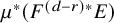 $\mu ^*(F^{(d-r)*}E)$
being a trivial extension.
$\mu ^*(F^{(d-r)*}E)$
being a trivial extension.
Step 5. We consider the case $(p-1)\mathcal C=C$
and prove the statement (iii-2).
$(p-1)\mathcal C=C$
and prove the statement (iii-2).
In this case, $p=2$
, and
$p=2$
, and $C\to A_1$
is purely inseparable of degree 2. We do a further base change
$C\to A_1$
is purely inseparable of degree 2. We do a further base change $A_2:=C \to A_1$
. Let
$A_2:=C \to A_1$
. Let $X_2= X_1\times _{A_1} A_2$
. We obtain the following commutative diagram:
$X_2= X_1\times _{A_1} A_2$
. We obtain the following commutative diagram:

We see that $\pi _2^*C = 2C_2$
, where
$\pi _2^*C = 2C_2$
, where $C_2$
is a section of
$C_2$
is a section of $X_2\to A_2$
. Similar to Step 4, we have
$X_2\to A_2$
. Similar to Step 4, we have $X_2 \cong \mathbb {P}_{A_2}(\mathcal {E}_2)$
, where
$X_2 \cong \mathbb {P}_{A_2}(\mathcal {E}_2)$
, where $\mathcal {E}_2 = f_{2*}\mathcal {O}_{X_2}(C_2)$
.
$\mathcal {E}_2 = f_{2*}\mathcal {O}_{X_2}(C_2)$
.
If $\mathcal {E}_2$
does not split, then it is as described as in Step 4 accordingly. Otherwise,
$\mathcal {E}_2$
does not split, then it is as described as in Step 4 accordingly. Otherwise, $\mathcal {E}_2 \cong \mathcal {O}_{A_1}\oplus \mathcal {L}_2$
and we conclude the proof by determining the torsion order of
$\mathcal {E}_2 \cong \mathcal {O}_{A_1}\oplus \mathcal {L}_2$
and we conclude the proof by determining the torsion order of $C_2|_{C_2}$
. By Proposition 2.16, we have
$C_2|_{C_2}$
. By Proposition 2.16, we have $\pi ^*D = C$
if
$\pi ^*D = C$
if $\deg _{K(A)} D = 2$
and
$\deg _{K(A)} D = 2$
and $\pi ^*D = 2C$
if
$\pi ^*D = 2C$
if $\deg _{K(A)} D = 4$
. It follows that
$\deg _{K(A)} D = 4$
. It follows that
 $$ \begin{align*} \pi^* (K_X + D) |_{C} \sim (K_{X_1}+\mathcal C+\pi^*D)|_{C} \sim \begin{cases} C|_{C} &\text{if } \deg_{K(A)}D = 2\\ 2C|_{C} &\text{if } \deg_{K(A)}D = 4. \end{cases} \end{align*} $$
As in Step 4, we have $\pi ^*(K_X + D)|_{C}\sim 0$
, thus
$\pi ^*(K_X + D)|_{C}\sim 0$
, thus $2 C|_{C} \sim 0$
. Since
$2 C|_{C} \sim 0$
. Since $\pi _2^*C = 2C_2$
, we see that
$\pi _2^*C = 2C_2$
, we see that $4C_2|_{C_2} \sim 0$
.
$4C_2|_{C_2} \sim 0$
.
5.3. Case (C3): f is an inseparable fibration
Theorem 5.4. Let notation and assumptions be as in Assumption 5.1(C3). Then,
-
(i) The characteristic p is
$2$
or
$3$
. -
(ii) X is equipped with another fibration
$g\colon X \to \mathbb {P}^1$
transversal to f, whose fibers are abelian varieties or multiples of abelian varieties: -
(iii) Let
$A_1= A^{(-1)}$
, and denote
$X_1 = (X\times _A A_1)_{\mathrm {red}}^\nu $
. Then, one of the following happens:-
(1)
$X\cong A_1 \times \mathbb P^1/{\mathcal {F}}$
, where
${\mathcal {F}}$
is a foliation on
$A_1\times \mathbb P^1$
of height one and
$\mathrm {rank}\ {\mathcal {F}} < \dim A$
. -
(2)
$p=2$
and
$X \cong X_1/{\mathcal {F}}_1$
for some height one foliation
${\mathcal {F}}_1$
with
$\mathrm {rank}\ {\mathcal {F}}_1 < \dim A$
, where
$X_1$
is one of the following:-
(2.a)
$X_1\to A_1$
is separable and can be trivialized by an étale isogeny
$\tau _2\colon A_2\to A_1$
of degree
$2$
, namely,
$X_1 \times _{A_1} A_2 \cong A_2 \times \mathbb P^1$
. -
(2.b)
$X_1\to A_1$
is separable and can be trivialized by the Frobenius base change
$\tau _2\colon A_2:=(A_1)^{(-1)}\to A_1$
, namely,
$X_1 \times _{A_1} A_2 \cong A_2 \times \mathbb P^1$
. -
(2.c)
$X_1\to A_1$
is inseparable, and
$X_1\cong A_2\times \mathbb P^1/{\mathcal {F}}_2$
, where
$A_2$
is an abelian variety and
${\mathcal {F}}_2$
is a (height-one) foliation with
$\mathrm {rank}\ {\mathcal {F}}_2 <\dim A$
.
-
-





Proof. In this case, $X\times _A A_1$
is non-reduced. Let
$X\times _A A_1$
is non-reduced. Let $X_1=(X\times _A A_1)_{\mathrm {red}}^{\nu }$
. Denote by
$X_1=(X\times _A A_1)_{\mathrm {red}}^{\nu }$
. Denote by $\pi _1\colon X_1\to X$
the induced morphism, which is a purely inseparable morphism of height one with
$\pi _1\colon X_1\to X$
the induced morphism, which is a purely inseparable morphism of height one with $\deg \pi _1 < p^{\dim A}$
. We have
$\deg \pi _1 < p^{\dim A}$
. We have $\pi _1^*K_X \sim K_{X_1} - (p -1)\det \mathcal {F}_{X_1/X}$
, where
$\pi _1^*K_X \sim K_{X_1} - (p -1)\det \mathcal {F}_{X_1/X}$
, where $\lvert -\det \mathcal {F}_{X_1/X}\rvert $
has non-trivial movable part generated by
$\lvert -\det \mathcal {F}_{X_1/X}\rvert $
has non-trivial movable part generated by $f_1^*H^0(\Omega _{A^{(-1)}/A})$
(see Section 2.5). We may write that
$f_1^*H^0(\Omega _{A^{(-1)}/A})$
(see Section 2.5). We may write that
 $$ \begin{align} \lvert -\det {\mathcal{F}}_{X_1/X} \rvert= \mathfrak M + \mathfrak F, \end{align} $$
where $\mathfrak M$
is the movable part and
$\mathfrak M$
is the movable part and $\mathfrak F$
is the fixed part. In turn, we obtain that
$\mathfrak F$
is the fixed part. In turn, we obtain that $\pi _1^*K_X \sim K_{X_1} + (p -1)( \mathfrak M + \mathfrak F),$
where
$\pi _1^*K_X \sim K_{X_1} + (p -1)( \mathfrak M + \mathfrak F),$
where $\deg _{K(A_1)}\mathfrak M>0$
, and
$\deg _{K(A_1)}\mathfrak M>0$
, and $\deg _{K(A_1)} (p-1)(\mathfrak M + \mathfrak F) = 2$
by results of Section 2.11.
$\deg _{K(A_1)} (p-1)(\mathfrak M + \mathfrak F) = 2$
by results of Section 2.11.
By the claim in Step 1 of Theorem 5.3, we have $T|_{T^\nu } \succeq _{\mathbb Q} 0$
for any
$T|_{T^\nu } \succeq _{\mathbb Q} 0$
for any $f_1$
-horizontal prime divisor T of
$f_1$
-horizontal prime divisor T of $X_1$
. Then, since
$X_1$
. Then, since $\deg _{K(A_1)}(p-1)\mathfrak F \leq 1$
, no matter
$\deg _{K(A_1)}(p-1)\mathfrak F \leq 1$
, no matter $p=2$
or
$p=2$
or $p=3$
, we can apply [Reference Chen, Wang and Zhang11, Proposition 5.3] to the pair
$p=3$
, we can apply [Reference Chen, Wang and Zhang11, Proposition 5.3] to the pair $(X_1, (p-1) \mathfrak M + (p-1) \mathfrak F)$
and obtain the following:
$(X_1, (p-1) \mathfrak M + (p-1) \mathfrak F)$
and obtain the following:
-
•
$\mathfrak M$
is semi-ample with
$\nu (\mathfrak M) =1$
; -
• denote by
$g_1\colon X_1\to \mathbb P^1$
the induced fibration by
$\mathfrak M$
. Then, a general fiber of
$g_1$
is an abelian variety and a special fiber is a multiple of an abelian variety.


From this, by a similar argument of Step 2 (c) in Theorem 5.3, we see that there is no $f_1$
-vertical part in
$f_1$
-vertical part in $\mathfrak M+\mathfrak F$
.
$\mathfrak M+\mathfrak F$
.
Moreover, since $X_1 \to X$
is purely inseparable, there exists a fibration
$X_1 \to X$
is purely inseparable, there exists a fibration $g\colon X\to \mathbb P^1$
fitting into the following commutative diagram:
$g\colon X\to \mathbb P^1$
fitting into the following commutative diagram:

Let $G_1$
be a general fiber of
$G_1$
be a general fiber of $g_1$
. Then,
$g_1$
. Then, $\deg _{K(A_1)} G_1 =1$
or
$\deg _{K(A_1)} G_1 =1$
or $2$
since
$2$
since $\deg _{K(A_1)} \mathfrak M \le 2$
. We distinguish between the following two cases:
$\deg _{K(A_1)} \mathfrak M \le 2$
. We distinguish between the following two cases:
-
(1)
$\mathrm {deg}_{K(A_1)} G_1 = 1$
; -
(2)
$\mathrm {deg}_{K(A_1)} G_1 = 2$
, which happens only when
$p=2$
.


In case (1), the general fiber $G_1$
of
$G_1$
of $g_1$
maps to
$g_1$
maps to $A_1$
isomorphically. Thus,
$A_1$
isomorphically. Thus, $g_1$
has no multiple fibers, and it follows that every fiber of
$g_1$
has no multiple fibers, and it follows that every fiber of $g_1$
is isomorphic to
$g_1$
is isomorphic to $A_1$
. Then, the induced morphism
$A_1$
. Then, the induced morphism $X_1 \xrightarrow {(f_1,g_1)} A_1\times \mathbb P^1$
is an isomorphism by Zariski’s main theorem. Therefore,
$X_1 \xrightarrow {(f_1,g_1)} A_1\times \mathbb P^1$
is an isomorphism by Zariski’s main theorem. Therefore, $X\cong A_1\times \mathbb P^1/{\mathcal {F}}$
for some height one foliation
$X\cong A_1\times \mathbb P^1/{\mathcal {F}}$
for some height one foliation ${\mathcal {F}}$
. By
${\mathcal {F}}$
. By $0\sim _{\mathbb Q}\pi _1^*K_{X} \sim K_{A_1\times \mathbb P^1} - (p-1)\det {\mathcal {F}}$
, we have
$0\sim _{\mathbb Q}\pi _1^*K_{X} \sim K_{A_1\times \mathbb P^1} - (p-1)\det {\mathcal {F}}$
, we have
 $$ \begin{align} \det {\mathcal{F}}\sim {\mathrm{pr}}_2^*{\mathcal O}_{\mathbb P^1}(-2/(p-1)).\end{align} $$
Moreover, since $\deg (X_1\to X) < \dim A$
, we have
$\deg (X_1\to X) < \dim A$
, we have $\mathrm {rank}\ {\mathcal {F}} < \dim A$
.
$\mathrm {rank}\ {\mathcal {F}} < \dim A$
.
In case (2), we fall into one of the following three subcases:
-
(2.a)
$f_1$
is separable and
$G_1\to A_1$
is étale. -
(2.b)
$f_1$
is separable and
$G_1\to A_1$
is purely inseparable. -
(2.c)
$f_1$
is inseparable.


In case (2.a), since the general fibers $G_1$
of
$G_1$
of $g_1$
are étale of degree
$g_1$
are étale of degree $2$
over
$2$
over $A_1$
, they are isomorphic to each other. Do the étale base change
$A_1$
, they are isomorphic to each other. Do the étale base change $A_2:= G_1 \to A_1$
. Then,
$A_2:= G_1 \to A_1$
. Then, $X_2=X_1\times _{A_1} A_2$
is normal, and the Stein factorization of
$X_2=X_1\times _{A_1} A_2$
is normal, and the Stein factorization of $X_2 \to X_1\xrightarrow {g_1} \mathbb P^1$
gives a fibration
$X_2 \to X_1\xrightarrow {g_1} \mathbb P^1$
gives a fibration $g_2\colon X_2 \to \mathbb P^1$
. To summarize, we have the following commutative diagram:
$g_2\colon X_2 \to \mathbb P^1$
. To summarize, we have the following commutative diagram:

Note that the scheme $G_1\times _{A_1} A_2$
has two disjoint irreducible components
$G_1\times _{A_1} A_2$
has two disjoint irreducible components $G_2',G_2"$
, that is,
$G_2',G_2"$
, that is, $\pi _2^*G_1 \sim G_2' + G_2"$
. Thus,
$\pi _2^*G_1 \sim G_2' + G_2"$
. Thus, $\delta $
is a separable morphism of degree two. Therefore, each fiber
$\delta $
is a separable morphism of degree two. Therefore, each fiber $G_2$
of
$G_2$
of $g_2$
is mapped birationally to
$g_2$
is mapped birationally to $A_2$
via
$A_2$
via $f_2$
. By
$f_2$
. By $(K_{X_2} + G_2)|_{G_2^\nu } \sim _{\mathbb Q} 0$
, applying Lemma 2.9, we see that
$(K_{X_2} + G_2)|_{G_2^\nu } \sim _{\mathbb Q} 0$
, applying Lemma 2.9, we see that $G_2$
is an abelian variety, hence,
$G_2$
is an abelian variety, hence, $G_2\to A$
is an isomorphism. It follows that the morphism
$G_2\to A$
is an isomorphism. It follows that the morphism $X_2 \xrightarrow {(f_2,g_2)} A_2 \times \mathbb P^1$
is an isomorphism.
$X_2 \xrightarrow {(f_2,g_2)} A_2 \times \mathbb P^1$
is an isomorphism.
We use a similar argument for case (2.b). Take $\tau _2\colon A_2:=A_1 \buildrel F\over \to A_1$
to be the Frobenius morphism, which factors through
$\tau _2\colon A_2:=A_1 \buildrel F\over \to A_1$
to be the Frobenius morphism, which factors through $G_1\to A_1$
for a general fiber
$G_1\to A_1$
for a general fiber $G_1$
of
$G_1$
of $g_1$
[Reference Mumford46, p. 169, Remark]. Let
$g_1$
[Reference Mumford46, p. 169, Remark]. Let $\nu \colon X_2 \to X_1 \times _{A_1} A_2$
be the normalization morphism. Since
$\nu \colon X_2 \to X_1 \times _{A_1} A_2$
be the normalization morphism. Since $f_1$
is generically smooth, the projection
$f_1$
is generically smooth, the projection $f_2\colon X_2 \to A_2$
is in fact a fibration. Notice that
$f_2\colon X_2 \to A_2$
is in fact a fibration. Notice that $G_1\times _{A_1} A_2$
is non-reduced. Then, by
$G_1\times _{A_1} A_2$
is non-reduced. Then, by $\deg _{K(A_2)}G_1\times _{A_1} A_2=2$
, we conclude
$\deg _{K(A_2)}G_1\times _{A_1} A_2=2$
, we conclude $\pi _2 ^* G_1 = 2G_2$
for some integral divisor
$\pi _2 ^* G_1 = 2G_2$
for some integral divisor $G_2$
in
$G_2$
in $X_2$
. Let
$X_2$
. Let $g_2\colon X_2 \to \mathbb P^1$
be the induced fibration from the Stein factorization of
$g_2\colon X_2 \to \mathbb P^1$
be the induced fibration from the Stein factorization of $X_2 \to X_1 \xrightarrow {g_1} \mathbb P^1$
. Then, a general fiber
$X_2 \to X_1 \xrightarrow {g_1} \mathbb P^1$
. Then, a general fiber $G_2$
is mapped to
$G_2$
is mapped to $A_2$
birationally via
$A_2$
birationally via $f_2$
. Let
$f_2$
. Let $\mathcal N$
be the conductor divisor of
$\mathcal N$
be the conductor divisor of $\nu $
, which is vertical over
$\nu $
, which is vertical over $A_2$
since the generic fiber of
$A_2$
since the generic fiber of $f_1$
is smooth over
$f_1$
is smooth over $K(A_1)$
. Now fix a fiber
$K(A_1)$
. Now fix a fiber $G_2^0$
, and take a horizontal irreducible component
$G_2^0$
, and take a horizontal irreducible component $G_2'$
, which is unique since
$G_2'$
, which is unique since $\deg _{K(A_2)}G_2^0 = 1$
and write that
$\deg _{K(A_2)}G_2^0 = 1$
and write that $G_2^0 = G_2' + G_2"$
. Then, by
$G_2^0 = G_2' + G_2"$
. Then, by
 $$ \begin{align*}0\sim_{\mathbb Q} (\pi_2^* K_{X_1} + G_2)|_{(G_2')^\nu} \sim_{\mathbb Q} (K_{X_2} + G_2' + G_2" + \mathcal N)|_{(G_2')^\nu},\end{align*} $$
and applying Lemma 2.9, we see that $G_2\to A_2$
is an isomorphism and
$G_2\to A_2$
is an isomorphism and $G_2"|_{(G_2')^\nu } =\mathcal N|_{(G_2')^\nu } = 0$
. It follows that
$G_2"|_{(G_2')^\nu } =\mathcal N|_{(G_2')^\nu } = 0$
. It follows that $\operatorname {\mathrm {Supp}} \mathcal N \cap \operatorname {\mathrm {Supp}} G_2^0 = \emptyset $
and
$\operatorname {\mathrm {Supp}} \mathcal N \cap \operatorname {\mathrm {Supp}} G_2^0 = \emptyset $
and $G_2"=0$
since
$G_2"=0$
since $G_2^0$
is connected. In turn, we conclude that
$G_2^0$
is connected. In turn, we conclude that $\mathcal N=0$
. As before, we show that the morphism
$\mathcal N=0$
. As before, we show that the morphism $X_2 \xrightarrow {(f_2,g_2)} A_2 \times \mathbb P^1$
is an isomorphism.
$X_2 \xrightarrow {(f_2,g_2)} A_2 \times \mathbb P^1$
is an isomorphism.
Finally, we deal with case (2.c). Take $\tau _2\colon A_2:=A_1 \buildrel F\over \to A_1$
to be the Frobenius morphism, and let
$\tau _2\colon A_2:=A_1 \buildrel F\over \to A_1$
to be the Frobenius morphism, and let $X_2 := (X_1\times _{A_1} A_2)^\nu _{\mathrm {red}}$
. We have the following diagram:
$X_2 := (X_1\times _{A_1} A_2)^\nu _{\mathrm {red}}$
. We have the following diagram:

Since $f_1$
is inseparable, there exists a moving linear system
$f_1$
is inseparable, there exists a moving linear system $\mathfrak N$
and
$\mathfrak N$
and $V_2\geq 0$
on
$V_2\geq 0$
on $X_2$
such that
$X_2$
such that
 $$ \begin{align} K_{X_2} + \mathfrak N + V_2\sim \pi_2^* K_{X_1}. \end{align} $$
We have that $K_{X_2} + \mathfrak N + V_2 +\pi _2^*\mathfrak M \sim _{\mathbb Q} \pi _2^* \pi _1^* K_X \sim _{\mathbb Q} 0$
. By
$K_{X_2} + \mathfrak N + V_2 +\pi _2^*\mathfrak M \sim _{\mathbb Q} \pi _2^* \pi _1^* K_X \sim _{\mathbb Q} 0$
. By $\deg _{K(A_2)} (K_{X_2}) = -2$
, we see that
$\deg _{K(A_2)} (K_{X_2}) = -2$
, we see that $\deg _{K(A_2)} (\mathfrak N) =\deg _{K(A_2)} (\pi _2^*\mathfrak M) =1$
. Fix a divisor
$\deg _{K(A_2)} (\mathfrak N) =\deg _{K(A_2)} (\pi _2^*\mathfrak M) =1$
. Fix a divisor $N_0\in \mathfrak N$
, and take an irreducible
$N_0\in \mathfrak N$
, and take an irreducible $f_2$
-horizontal component
$f_2$
-horizontal component $N'$
and write that
$N'$
and write that $N_0 = N' +N"$
. Arguing as in case (2.b), we can prove that
$N_0 = N' +N"$
. Arguing as in case (2.b), we can prove that $N_0 = N'$
and
$N_0 = N'$
and $V_2=0$
. In turn, we can prove that
$V_2=0$
. In turn, we can prove that $X_2 \cong A_2 \times \mathbb P^1$
.
$X_2 \cong A_2 \times \mathbb P^1$
.
6. Irregular K-trivial threefolds
In this section, we focus on irregular K-trivial threefolds.
6.1. Structure theorem
Theorem 6.1. Let X be a normal $\mathbb Q$
-factorial projective threefold with
$\mathbb Q$
-factorial projective threefold with $K_X\equiv 0$
. Denote the Albanese morphism of X by
$K_X\equiv 0$
. Denote the Albanese morphism of X by $a_X\colon X\to A$
. Assume
$a_X\colon X\to A$
. Assume $\dim a_X(X)> 0$
. Then, X can be described as follows:
$\dim a_X(X)> 0$
. Then, X can be described as follows:
-
(A) If
$\dim a_X(X) =3$
, then X is an abelian variety. -
(B) If
$\dim a_X(X) =1$
, under the condition that:-
• either (i) X is strongly F-regular and
$K_X$
is
$\mathbb Z_{(p)}$
-Cartier; -
• or (ii) X has at most terminal singularities and
$p \geq 5$
,
then the Albanese morphism
$a_X$
is a fibration and there exists an isogeny of elliptic curves
$A'\to A$
, such that
$X\times _A A' \cong A'\times F$
, where F is a general fiber of
$a_X$
. More precisely,
$X\cong A'\times F/H$
, where H is a finite group subscheme of
$A'$
acting diagonally on
$A'\times F$
. -
-
(C) If
$\dim a_X(X) =2$
, then
$a_X$
is a fibration and one of the following holds:-
(C1)
$a_X$
is a smooth fibration and there exists an isogeny of abelian surfaces
$A'\to A$
, such that
$X\times _A A' \cong A'\times E$
, where E is an elliptic curve appearing as a general fiber of
$a_X$
. More precisely,
$X\cong A'\times E/H$
, where H is a finite group subscheme of
$A'$
acting diagonally on
$A'\times E$
, with a full classification as in Section 5.1.2. -
(C2)
$p=2$
or
$3$
, and
$a_X$
is a quasi-elliptic fibration. Set
$X_1$
to be the normalization of
$X \times _{A} A^{(-1)}$
and
$f_1\colon X_1\to A_1 :=A^{(-1)}$
the induced morphism. Then,
$f_1\colon X_1\to A_1$
is a smooth fibration fibered by rational curves, which falls into one of the following two specific cases:-
(2.1) In the first case,
$f_1\colon X_1\to A_1 $
has a section, and-
(2.1a) either
$X_1\cong \mathbb {P}_{A_1}(\mathcal {O}_{A_1}\oplus \mathcal {L})$
, where
$\mathcal {L}^{\otimes p+1}\cong {\mathcal O}_X$
; or -
(2.1b)
$X_1\cong \mathbb {P}_{A_1}(\mathcal {E})$
, where
$\mathcal {E}$
is a unipotent vector bundle of rank two, and there exists an étale cover
$\mu \colon A_2\to A_1$
of degree
$p^v$
for some
$v\le 2$
such that
$\mu ^*F^{(2-v)*}_{A_1/k}\mathcal {E}$
is trivial.
-
-
(2.2) In the second case,
$p=2$
, and there exists a purely inseparable isogeny
$A_2 \to A_1$
of degree two, such that
$X_2 :=X_1\times _{A_1}A_2$
is a projective bundle over
$A_1$
described as follows:-
(2.2a)
$X_2\cong \mathbb {P}_{A_2}(\mathcal {O}_{A_2}\oplus \mathcal {L})$
, where
$\mathcal {L}^{\otimes 4}\cong \mathcal {O}_{A_2}$
; or -
(2.2b)
$X_2\cong \mathbb {P}_{A_2}(\mathcal {E})$
, where
$\mathcal {E}$
is a unipotent vector bundle of rank two, and there exists an étale cover
$\mu \colon A_3\to A_2$
of degree
$p^v$
for some
$v\le 2$
such that
$\mu ^*F^{(2-v)*}_{A_1/k}\mathcal {E}$
is trivial.
-
-
-
(C3)
$p=2$
or
$3$
, and
$a_X$
is inseparable. Set
$X_1=(X \times _{A} A_1(:={A^{(-1)}}))_{\mathrm {red}}^{\nu }$
. Then, the projection
$X_1 \to A_1$
is a smooth morphism, and-
(3.1) either
$X_1=A_1\times \mathbb P^1$
and
$X=A_1\times \mathbb P^1/{\mathcal {F}}$
for some smooth rank one foliation
${\mathcal {F}}$
, which can be described concretely (see Section 6.2.2); or -
(3.2)
$p=2$
, and there exists an isogeny of abelian surfaces
$\tau \colon A_2 \to A_1$
such that
$X_1\times _{A_1}A_2 \cong A_2\times \mathbb P^1$
, where either:-
(3.2a)
$\tau \colon A_2 \to A_1$
is an étale of degree two; or -
(3.2b)
$\tau =F_{A_1/k}\colon A_2 := {A_1^{(-1)}} \to A_1$
is the relative Frobenius.
-
-
-


Proof. When $\dim a_X(X) =3$
, we can apply Proposition 2.8 and show that
$\dim a_X(X) =3$
, we can apply Proposition 2.8 and show that $X \cong A$
. This is Case (A).
$X \cong A$
. This is Case (A).
When $\dim a_X(X) =1$
, we apply Theorem 4.1 and show that
$\dim a_X(X) =1$
, we apply Theorem 4.1 and show that $q(X)=1$
and X is described as in Case (B).
$q(X)=1$
and X is described as in Case (B).
At last, we consider the case $\dim a_X(X) = 2$
. When
$\dim a_X(X) = 2$
. When $a_X\colon X \to A$
is separable, we can apply Theorems 5.2 and 5.3 to obtain cases (C1) and (C2), respectively. When
$a_X\colon X \to A$
is separable, we can apply Theorems 5.2 and 5.3 to obtain cases (C1) and (C2), respectively. When $a_X\colon X \to A$
is inseparable, we can apply Theorem 5.4 to obtain (C3). Note that as
$a_X\colon X \to A$
is inseparable, we can apply Theorem 5.4 to obtain (C3). Note that as $\dim A=2$
, by Remark 2.18, we see that the generic fiber of
$\dim A=2$
, by Remark 2.18, we see that the generic fiber of $X_1\to A_1$
is geometrically normal, and thus Case (2.c) in Theorem 5.4 does not occur here.
$X_1\to A_1$
is geometrically normal, and thus Case (2.c) in Theorem 5.4 does not occur here.
6.2. Concrete description and examples
In this section, we first describe concretely the foliation in case (C3.1), then give examples of cases (C3.2) and (C2).
6.2.1. Notation
(1) On the projective line $\mathbb P^1$
, we fix an affine open cover
$\mathbb P^1$
, we fix an affine open cover $\mathbb P^1 = \mathbb A^1_{(t)} \cup \mathbb A^1_{(s)}$
, with
$\mathbb P^1 = \mathbb A^1_{(t)} \cup \mathbb A^1_{(s)}$
, with $s=1/t$
. We identify the line bundle
$s=1/t$
. We identify the line bundle ${\mathcal O}_{\mathbb P^1}(i)$
as
${\mathcal O}_{\mathbb P^1}(i)$
as
 $$\begin{align*}{\mathcal O}_{\mathbb P^1}(i)|_{\mathbb A^1_{(t)} } = {\mathcal O}_{\mathbb A^1_{(t)}}\cdot 1,\quad {\mathcal O}_{\mathbb P^1}(i)|_{\mathbb A^1_{(s)} } = {\mathcal O}_{\mathbb A^1_{(s)}}\cdot \frac1{s^i}; \end{align*}$$
and the twisted tangent bundle ${\mathcal T}_{\mathbb P^1}(i)$
as
${\mathcal T}_{\mathbb P^1}(i)$
as
 $$\begin{align*}{\mathcal T}_{\mathbb P^1}(i)|_{\mathbb A^1_{(t)} } = {\mathcal O}_{\mathbb A^1_{(t)}}\cdot \partial_t,\quad {\mathcal T}_{\mathbb P^1}(i)|_{\mathbb A^1_{(s)} } = {\mathcal O}_{\mathbb A^1_{(s)}}\cdot \frac{1}{s^{i}}\partial_s,\quad \text{with } \partial_t = s^2\partial_s. \end{align*}$$
(2) Let A be an abelian surface. We can choose a basis $\alpha ,\beta $
of Lie algebra
$\alpha ,\beta $
of Lie algebra $\mathrm {Lie} A$
which falls into one of the following cases:
$\mathrm {Lie} A$
which falls into one of the following cases:
-
(i)
$\alpha ^p= \beta ^p=0$
(superspecial); -
(ii)
$\alpha ^p = \beta $
and
$\beta ^p=0$
(supersingular, not superspecial); -
(iii)
$\alpha ^p = \alpha $
and
$\beta ^p=0$
(p-rank one); -
(iv)
$\alpha ^p = \alpha $
and
$\beta ^p=\beta $
(ordinary).


Then, ${\mathcal T}_A = {\mathcal O}_A \cdot \alpha \oplus {\mathcal O}_A \cdot \beta $
.
${\mathcal T}_A = {\mathcal O}_A \cdot \alpha \oplus {\mathcal O}_A \cdot \beta $
.
6.2.2. A concrete description of foliation in Case (C3.1)
In this case, $X \cong A\times \mathbb P^1/{\mathcal {F}},$
where
$X \cong A\times \mathbb P^1/{\mathcal {F}},$
where ${\mathcal {F}} \subset {\mathcal T}_{A\times \mathbb P^1}$
is a rank one foliation. We shall give a concrete description of
${\mathcal {F}} \subset {\mathcal T}_{A\times \mathbb P^1}$
is a rank one foliation. We shall give a concrete description of ${\mathcal {F}}$
.
${\mathcal {F}}$
.
As ${\mathcal {F}}$
is reflexive and of rank one on a factorial variety, it is locally free [Reference Hartshorne30, Proposition 1.9]. By Equation (5.8), we have
${\mathcal {F}}$
is reflexive and of rank one on a factorial variety, it is locally free [Reference Hartshorne30, Proposition 1.9]. By Equation (5.8), we have ${\mathcal {F}} \cong \det {\mathcal {F}} \cong {\mathrm {pr}}_2^*{\mathcal O}_{\mathbb P^1}(-i)$
, where
${\mathcal {F}} \cong \det {\mathcal {F}} \cong {\mathrm {pr}}_2^*{\mathcal O}_{\mathbb P^1}(-i)$
, where $i=1$
if
$i=1$
if $p=3$
and
$p=3$
and $i=2$
if
$i=2$
if $p=2$
, therefore, the inclusion
$p=2$
, therefore, the inclusion ${\mathcal {F}} \subset {\mathcal T}_{A\times \mathbb P^1}$
is determined by a non-zero element (unique up to scaling)
${\mathcal {F}} \subset {\mathcal T}_{A\times \mathbb P^1}$
is determined by a non-zero element (unique up to scaling)
 $$ \begin{align} \alpha_{\mathcal{F}} \in {\mathrm{Hom}}({\mathrm{pr}}_2^*{\mathcal O}_{\mathbb P^1}(-i), {\mathcal T}_{A\times\mathbb P^1}) \cong H^0( A\times\mathbb P^1, {\mathcal T}_A(i) \oplus {\mathrm{pr}}_2^* {\mathcal T}_{\mathbb P^1}(i) ), \end{align} $$
where ${\mathcal T}_A(i) := {\mathrm {pr}}_1^*{\mathcal T}_A \otimes {\mathrm {pr}}_2^*{\mathcal O}_{\mathbb P^1}(i)$
. Using the basis of
${\mathcal T}_A(i) := {\mathrm {pr}}_1^*{\mathcal T}_A \otimes {\mathrm {pr}}_2^*{\mathcal O}_{\mathbb P^1}(i)$
. Using the basis of ${\mathcal O}_{\mathbb P^1}(i)$
,
${\mathcal O}_{\mathbb P^1}(i)$
, ${\mathcal T}_{\mathbb P^1}(i),$
and
${\mathcal T}_{\mathbb P^1}(i),$
and ${\mathcal T}_A$
given in Section 6.2.1, the element
${\mathcal T}_A$
given in Section 6.2.1, the element $\alpha _{{\mathcal {F}}}$
, over the subset
$\alpha _{{\mathcal {F}}}$
, over the subset $A \times \mathbb A^1_{(t)}$
, can be written as
$A \times \mathbb A^1_{(t)}$
, can be written as
 $$ \begin{align} D = u \alpha + v \beta + w\partial_t, \end{align} $$
where $u,v,w\in k[t]$
with
$u,v,w\in k[t]$
with $\deg u, \deg v\leq i$
,
$\deg u, \deg v\leq i$
, $\deg w \leq i+2$
.
$\deg w \leq i+2$
.
Since ${\mathcal {F}}$
is saturated, we have
${\mathcal {F}}$
is saturated, we have $\gcd (u,v,w) = 1$
, thus the ideal
$\gcd (u,v,w) = 1$
, thus the ideal $(u,v,w) = k[t]$
. From this, we conclude that on
$(u,v,w) = k[t]$
. From this, we conclude that on $A \times \mathbb A^1_{(t)}$
, the quotient
$A \times \mathbb A^1_{(t)}$
, the quotient ${\mathcal T}_{A\times \mathbb P^1}/{\mathcal {F}}$
is also locally free, thus the foliation
${\mathcal T}_{A\times \mathbb P^1}/{\mathcal {F}}$
is also locally free, thus the foliation ${\mathcal {F}}$
is smooth. For the same reason,
${\mathcal {F}}$
is smooth. For the same reason, ${\mathcal {F}}$
is smooth on
${\mathcal {F}}$
is smooth on $A \times \mathbb A^1_{(s)}$
. To summarize, we have the following proposition.
$A \times \mathbb A^1_{(s)}$
. To summarize, we have the following proposition.
Proposition 6.2. The foliation ${\mathcal {F}}$
is smooth, and thus X is a smooth variety.
${\mathcal {F}}$
is smooth, and thus X is a smooth variety.
6.2.2.1. The case
$p=3$

In this case, $\deg u(t)\le 1$
,
$\deg u(t)\le 1$
, $\deg v(t)\le 1$
,
$\deg v(t)\le 1$
, $\deg w(t)\le 3$
, and we can write
$\deg w(t)\le 3$
, and we can write
 $$\begin{align*}D= (a_1t + a_0)\alpha + (b_1t + b_0)\beta + (c_3 t^3 + c_2 t^2 + c_1 t + c_0)\partial_t. \end{align*}$$
The rank one subsheaf ${\mathcal {F}}$
is a foliation if and only if
${\mathcal {F}}$
is a foliation if and only if ${\mathcal {F}}^p \subseteq {\mathcal {F}}$
, which is equivalent to the condition
${\mathcal {F}}^p \subseteq {\mathcal {F}}$
, which is equivalent to the condition $D^p = \lambda D$
for some
$D^p = \lambda D$
for some $\lambda \in k[t]$
. By Proposition 2.1, the Albanese morphism
$\lambda \in k[t]$
. By Proposition 2.1, the Albanese morphism $a_X\colon X\to A_X$
is inseparable if and only if
$a_X\colon X\to A_X$
is inseparable if and only if
 $$\begin{align*}\Delta:= a_1b_0-a_0b_1\ne0. \end{align*}$$
Therefore, we can characterize the foliation ${\mathcal {F}}$
as the following:
${\mathcal {F}}$
as the following:
-
$(\clubsuit)\ \ \Delta \ne 0$
, and
$D^p = \lambda D$
for some
$\lambda \in k[t]$
.


By a direct calculation, we have
 $$ \begin{align*} \begin{aligned} D^3 =\bigl(u(t)\alpha + v(t) \beta + w(t) \partial_t\bigr)^3 = u^3 \alpha^3 + v^3 \beta^3 + ww'u'\alpha + ww'v'\beta+(ww^{\prime2} + w^2w") \partial_t. \end{aligned} \end{align*} $$
Then, we can translate the condition ( $\clubsuit $
) into the following in each of the cases (i)–(iv) of
$\clubsuit $
) into the following in each of the cases (i)–(iv) of $\mathrm {Lie} A$
in Section 6.2.1(2):
$\mathrm {Lie} A$
in Section 6.2.1(2):
-
(i)
$\Delta \ne 0$
and
$w'=0$
. -
(ii) Invalid.
-
(iii)
$\displaystyle \Delta \ne 0,\ c_1 c_3 - c_2^2 = {-b_0 a_1^3 \over \Delta },\ c_2 c_3 = {b_1 a_1^3 \over \Delta },\ c_0 c_2 - c_1^2 = {b_1 a_0^3\over \Delta },\ c_0 c_1 ={-b_0 a_0^3\over \Delta }. $
-
(iv)
$\displaystyle \Delta \ne 0,\ c_1c_3 - c_2^2 = {a_0b_1^3 - b_0a_1^3\over \Delta },\ c_2c_3 = {a_1^3b_1 - a_1b_1^3\over \Delta },\ c_0 c_2 - c_1^2 = {a_0^3b_1 - b_0^3a_1\over \Delta },\ c_0c_1 = {a_0b_0^3 - b_0a_0^3\over \Delta }. $


6.2.2.2. The case
$p=2$

In this case, $\deg u(t)\le 2$
,
$\deg u(t)\le 2$
, $\deg v(t)\le 2$
,
$\deg v(t)\le 2$
, $\deg w(t)\le 4,$
and we can write
$\deg w(t)\le 4,$
and we can write
 $$\begin{align*}D = (a_2 t^2 + a_1 t + a_0) \alpha + (b_2t^2 + b_1t + b_0) \beta + (c_4t^4 + c_3t^3 + c_2t^2 + c_1t + c_0) \partial_t, \end{align*}$$
which satisfies the following conditions:
-
$ (\spadesuit)\ \ \begin {cases} D^p = \lambda D \text { for some } \lambda \in k[t];\\ \text {one of } \Delta _{01}:= a_0b_1 + a_1b_0, \Delta _{12} := a_1b_2 + a_2b_1, \text { and } \Delta _{02} := a_0b_2 + a_2b_0 \text { is nonzero;}\\ \gcd (u,v,w) = 1 \text { and } (a_2,b_2,c_4)\ne 0. \end {cases} $

The conditions ( $\spadesuit $
) can be translated into the following in each of the cases (i)–(iv) of
$\spadesuit $
) can be translated into the following in each of the cases (i)–(iv) of $\mathrm {Lie} A$
in Section 6.2.1(2):
$\mathrm {Lie} A$
in Section 6.2.1(2):
-
(i) either (1)
$w=0$
,
$(\Delta _{01},\Delta _{12},\Delta _{02})\ne 0$
,
$\gcd (u,v) = 1\ne 0,$
and
$(a_2,b_2)\ne 0$
or (2)
$u'=v'=w'=0$
and
$\Delta _{02}\ne 0$
. -
(ii)
$\gcd (u,v,w)=1$
,
$(a_2,b_2)\ne 0$
,
$(\Delta _{01},\Delta _{12})\ne 0,$
and By symmetric reason, we omit the case
$\Delta _{01}=0$
and
$\Delta _{12}\ne 0$
in the following. -
(iii)
$\gcd (u,v,w)=1$
,
$(a_2,b_2)\ne 0$
,
$(\Delta _{01},\Delta _{12})\ne 0,$
and -
(iv)
$\gcd (u,v,w) = 1$
,
$(a_2,b_2)\ne 0$
,
$(\Delta _{01},\Delta _{12})\ne 0$
,
${(a_1b_0^2 + b_1a_0^2)\Delta _{12}^2} + {(a_1b_2^2 + b_1a_2^2)\Delta _{01}^2} + (b_1a_1^2 + a_1b_1^2)\Delta _{01}\Delta _{12} =0$
, and


Remark 6.3. For each valid case, it is easy to give examples. For instance, if $p=2$
,
$p=2$
, $\alpha ^2=\alpha ,$
and
$\alpha ^2=\alpha ,$
and $\beta ^2=\beta $
(so we are in case (iv)), then
$\beta ^2=\beta $
(so we are in case (iv)), then  is a solution of $(\spadesuit )$
which corresponds to the following vector field:
$(\spadesuit )$
which corresponds to the following vector field:
 $$\begin{align*}D = \alpha + (t+t^2)\beta + (t + t^4) \partial_t. \end{align*}$$
Some special cases have appeared in the literature (see [Reference Moret-Bailly43], [Reference Schröer54, Section 3], and [Reference Patakfalvi and Zdanowicz52, Example 14.1]).
6.2.3. Examples of Case (C3.2)
Example 6.4 (of Case (C3.2a))
We aim to find a free action of $G=\mathbb Z/2\mathbb Z$
on
$G=\mathbb Z/2\mathbb Z$
on $A\times \mathbb P^1$
and a foliation
$A\times \mathbb P^1$
and a foliation ${\mathcal {F}}$
on
${\mathcal {F}}$
on $X_0:=A\times \mathbb P^1$
in a compatible way such that
$X_0:=A\times \mathbb P^1$
in a compatible way such that ${\mathcal {F}}$
descents to a foliation
${\mathcal {F}}$
descents to a foliation ${\mathcal {F}}_1$
on
${\mathcal {F}}_1$
on $A\times \mathbb P^1/G$
and the quotient
$A\times \mathbb P^1/G$
and the quotient $X := (A\times \mathbb P^1/G)/{\mathcal {F}}_1$
is an example of Case (C3.2a).
$X := (A\times \mathbb P^1/G)/{\mathcal {F}}_1$
is an example of Case (C3.2a).
Let $p=2$
, and let A be an ordinary abelian surface with
$p=2$
, and let A be an ordinary abelian surface with $\alpha ^p=\alpha $
and
$\alpha ^p=\alpha $
and $\beta ^p = \beta $
for some bases
$\beta ^p = \beta $
for some bases $\alpha ,\beta \in \mathrm {Lie} A$
. Let
$\alpha ,\beta \in \mathrm {Lie} A$
. Let $G = \mathbb Z/2$
be the cyclic group of order
$G = \mathbb Z/2$
be the cyclic group of order $2$
with a generator
$2$
with a generator $\sigma $
. Let
$\sigma $
. Let $P_0\in A$
be a nontrivial 2-torsion point. Then, we can define an action of G on
$P_0\in A$
be a nontrivial 2-torsion point. Then, we can define an action of G on $A\times \mathbb P^1$
diagonally by
$A\times \mathbb P^1$
diagonally by
 $$\begin{align*}\sigma (P) = P+P_0 \text{ for each } P\in A, \text{ and } \sigma(t) = t+1 \text{ for each } [t:1]\in \mathbb P^1. \end{align*}$$
Let $X_1:= A\times \mathbb P^1/G$
. Since the action of G is free,
$X_1:= A\times \mathbb P^1/G$
. Since the action of G is free, $\pi _2\colon A\times \mathbb P^1\to X_1$
is étale. Let
$\pi _2\colon A\times \mathbb P^1\to X_1$
is étale. Let ${\mathcal {F}}$
be the foliation on
${\mathcal {F}}$
be the foliation on $A\times \mathbb P^1$
generated by
$A\times \mathbb P^1$
generated by
 $$\begin{align*}\alpha + (t^2 + t)\beta + (t^4 + t)\partial_t. \end{align*}$$
Let $Y_1=(A\times \mathbb P^1)/{\mathcal {F}}$
. Since
$Y_1=(A\times \mathbb P^1)/{\mathcal {F}}$
. Since $K_{A\times \mathbb P^1} = {\mathrm {pr}}_2^*K_{\mathbb P^1}$
and
$K_{A\times \mathbb P^1} = {\mathrm {pr}}_2^*K_{\mathbb P^1}$
and $\det {\mathcal {F}} \cong {\mathrm {pr}}_2^*{\mathcal O}_{\mathbb P^1}(-2)$
, we have
$\det {\mathcal {F}} \cong {\mathrm {pr}}_2^*{\mathcal O}_{\mathbb P^1}(-2)$
, we have $K_{Y_1}\equiv 0$
.
$K_{Y_1}\equiv 0$
.
The foliation ${\mathcal {F}}$
is invariant under the action of
${\mathcal {F}}$
is invariant under the action of $\sigma $
, thus it descends to a foliation on
$\sigma $
, thus it descends to a foliation on $X_1$
, denoted by
$X_1$
, denoted by ${\mathcal {F}}_1$
. Moreover, the action of
${\mathcal {F}}_1$
. Moreover, the action of $\sigma $
descends to an action
$\sigma $
descends to an action $\sigma _1$
on
$\sigma _1$
on $Y_1=X/{\mathcal {F}}$
(Lemma 2.2). Let
$Y_1=X/{\mathcal {F}}$
(Lemma 2.2). Let
 $$ \begin{align*}X :=X_1/{\mathcal{F}}_1 \cong Y_1/\langle\sigma_1\rangle.\end{align*} $$
By Remark 2.3, we have the following commutative diagram:

where $\tau \colon A \to A_{X_1}=A/\langle \sigma \rangle $
and
$\tau \colon A \to A_{X_1}=A/\langle \sigma \rangle $
and $\tau '$
are the étale morphisms, the left and the right squares are Cartesian and thus
$\tau '$
are the étale morphisms, the left and the right squares are Cartesian and thus $\mu ,\mu '$
are étale. As stated, we have
$\mu ,\mu '$
are étale. As stated, we have $K_{Y_1} \equiv 0$
, thus
$K_{Y_1} \equiv 0$
, thus $K_{X} \equiv 0$
. Moreover,
$K_{X} \equiv 0$
. Moreover, $a_{Y_1}$
is inseparable, so is
$a_{Y_1}$
is inseparable, so is $a_X$
.
$a_X$
.
Example 6.5 (of Case (C3.2b))
In this example, we construct a threefold X by two consecutive quotients of $A\times \mathbb P^1$
by certain foliations:
$A\times \mathbb P^1$
by certain foliations:

where $\tau _0$
is purely inseparable of degree p,
$\tau _0$
is purely inseparable of degree p, $\tau _1$
is the relative Frobenius over k, and
$\tau _1$
is the relative Frobenius over k, and $f_i$
(
$f_i$
( $i=0,1,2$
) are the Albanese morphisms, respectively. We work over a base field k of characteristic
$i=0,1,2$
) are the Albanese morphisms, respectively. We work over a base field k of characteristic $2$
.
$2$
.
Let E and $E'$
be elliptic curves with the following defining equations:
$E'$
be elliptic curves with the following defining equations:
 $$ \begin{align} \begin{aligned} E &: y^2 + y = x^3,\\ E' &: y^{\prime2} + x'y' = x^{\prime3} + 1. \end{aligned} \end{align} $$
Note that E is supersingular which admits a invariant vector field $\alpha \in H^0(E,{\mathcal T}_E)$
such that
$\alpha \in H^0(E,{\mathcal T}_E)$
such that $\alpha ^p = 0$
; and
$\alpha ^p = 0$
; and $E'$
is ordinary which admits an invariant vector field
$E'$
is ordinary which admits an invariant vector field $\beta \in H^0(E',{\mathcal T}_{E'})$
such that
$\beta \in H^0(E',{\mathcal T}_{E'})$
such that $\beta ^p = \beta $
. Concretely, we can take
$\beta ^p = \beta $
. Concretely, we can take $\alpha $
to be the dual of
$\alpha $
to be the dual of $dx \in H^0(E, \Omega _E^1)$
such that
$dx \in H^0(E, \Omega _E^1)$
such that $\alpha (dx) = \alpha (x)=1$
and
$\alpha (dx) = \alpha (x)=1$
and $\alpha (y) = x^2$
; and
$\alpha (y) = x^2$
; and $\beta $
the dual of
$\beta $
the dual of $dx'/x' \in H^0(E, \Omega _E^1)$
, so
$dx'/x' \in H^0(E, \Omega _E^1)$
, so $\beta (x') = x'$
,
$\beta (x') = x'$
, $\beta (y')=y'+x^{\prime 2}$
(see [Reference Silverman56, Section III.1]).
$\beta (y')=y'+x^{\prime 2}$
(see [Reference Silverman56, Section III.1]).
Let $A = E \times E'$
. In the following, we usually describe vector fields on the given affine pieces of E and
$A = E \times E'$
. In the following, we usually describe vector fields on the given affine pieces of E and $E'$
by (6.4). The reader can check that the vector fields involved extend to the whole variety.
$E'$
by (6.4). The reader can check that the vector fields involved extend to the whole variety.
With notation of Section 6.2.1, let $X_0=A\times \mathbb P^1$
and
$X_0=A\times \mathbb P^1$
and $Y_0=E\times \mathbb P^1$
and let
$Y_0=E\times \mathbb P^1$
and let $D_0= \alpha + \partial _t \in H^0(Y_0, {\mathcal T}_{Y_0})$
. We may also regard
$D_0= \alpha + \partial _t \in H^0(Y_0, {\mathcal T}_{Y_0})$
. We may also regard $D_0$
as an element of
$D_0$
as an element of $H^0(X_0, {\mathcal T}_{X_0}) \cong H^0(Y_0, {\mathcal T}_{Y_0}) \oplus H^0(E', {\mathcal T}_{E'})$
. Then,
$H^0(X_0, {\mathcal T}_{X_0}) \cong H^0(Y_0, {\mathcal T}_{Y_0}) \oplus H^0(E', {\mathcal T}_{E'})$
. Then, $D_0^p=0$
, and
$D_0^p=0$
, and $D_0$
extends to a global vector field on
$D_0$
extends to a global vector field on $X_0=A\times \mathbb P^1$
, which is non-zero everywhere. Let
$X_0=A\times \mathbb P^1$
, which is non-zero everywhere. Let ${\mathcal {F}}_0$
and
${\mathcal {F}}_0$
and $\mathcal G_0$
be the foliations generated by
$\mathcal G_0$
be the foliations generated by $D_0$
on
$D_0$
on $X_0$
and
$X_0$
and $Y_0$
, respectively. Let
$Y_0$
, respectively. Let $Y_1=Y_0/\mathcal G_0$
and
$Y_1=Y_0/\mathcal G_0$
and $X_1=X_0/{\mathcal {F}}_0\cong Y_0\times E'$
, which are both nonsingular. By construction,
$X_1=X_0/{\mathcal {F}}_0\cong Y_0\times E'$
, which are both nonsingular. By construction, $X_1$
is equipped with two fibrations
$X_1$
is equipped with two fibrations $f_1\colon X_1 \to A_1= E^{(1)} \times E'$
and
$f_1\colon X_1 \to A_1= E^{(1)} \times E'$
and $g_1\colon X_1 \to B=\mathbb {P}^1$
, which fit into the following commutative diagrams:
$g_1\colon X_1 \to B=\mathbb {P}^1$
, which fit into the following commutative diagrams:

Here, we have an open covering $(\mathbb P^1)^{(1)} = \mathbb A^1_{(t^p) }\cup \mathbb A^1_{(s^p)}$
. Taking the corresponding inverse images of
$(\mathbb P^1)^{(1)} = \mathbb A^1_{(t^p) }\cup \mathbb A^1_{(s^p)}$
. Taking the corresponding inverse images of $g_0, g_1$
, we obtain the coverings
$g_0, g_1$
, we obtain the coverings
 $$ \begin{align*}X_0 = A\times \mathbb P^1 = (X_{0,t}:=A \times \mathbb A^1_{(s)})\cup (X_{0,s}:=A \times \mathbb A^1_{(s)}),~~X_1 = X_{1,t^p} \cup X_{1,s^p}~\mathrm{and}~Y_1 = Y_{1,t^p} \cup Y_{1,s^p}.\end{align*} $$
We may identify
 $$ \begin{align*}\Gamma(Y_{1,t^p}, \mathcal{O}_{Y_{1,t^p}})= R=k[x_1=x^2,y_1=y^2,t_1=t^2, u=x+t]/(y_1^2 + y_1 - x_1^3, u^2-(x_1+t_1)),\end{align*} $$
then $\Omega _{R/k} = R\cdot d t_1 \bigoplus R\cdot du$
. Let
$\Omega _{R/k} = R\cdot d t_1 \bigoplus R\cdot du$
. Let $\alpha _1 \in H^0(Y_{1,t^p}, {\mathcal T}_{Y_{1,t^p}})$
be determined by
$\alpha _1 \in H^0(Y_{1,t^p}, {\mathcal T}_{Y_{1,t^p}})$
be determined by $\alpha _1(dt_1) = \alpha _1(dx_1) =t_1, \alpha _1(du) = 0$
. On the other piece
$\alpha _1(dt_1) = \alpha _1(dx_1) =t_1, \alpha _1(du) = 0$
. On the other piece $Y_{1,s^p}$
, we have
$Y_{1,s^p}$
, we have
 $$ \begin{align*} \Gamma(Y_{1,s^p}, \mathcal{O}_{Y_{1,s^p}}) & \cong k[x_1=x^2,y_1=y^2, s_1=s^2, v=s^2x+s]/(y_1^2 + y_1 - x_1^3, v^2 - (s_1^2x_1 + s_1)),\\ & \Omega_{R'/k} = R' \cdot dx_1 \oplus R' d v,\; \text{and } \alpha_1(x_1)= 1/s_1, \alpha_1(v) = \alpha_1(s_1u) = v. \end{align*} $$
We abuse notation $\alpha _1 \in H^0(X_1, {\mathcal T}_{X_0}) \cong H^0(Y_1, {\mathcal T}_{Y_1}) \oplus H^0(E', {\mathcal T}_{E'})$
for the lifting of
$\alpha _1 \in H^0(X_1, {\mathcal T}_{X_0}) \cong H^0(Y_1, {\mathcal T}_{Y_1}) \oplus H^0(E', {\mathcal T}_{E'})$
for the lifting of $\alpha _1 \in H^0(Y_1, {\mathcal T}_{Y_1})$
and
$\alpha _1 \in H^0(Y_1, {\mathcal T}_{Y_1})$
and $\beta _1$
for the lifting of
$\beta _1$
for the lifting of $\beta \in H^0(E',{\mathcal T}_{E'})$
.
$\beta \in H^0(E',{\mathcal T}_{E'})$
.
Set $D_1 = \alpha _1 + \beta _1 \in H^0(X_1, {\mathcal T}_{X_1})$
. Clearly,
$D_1 = \alpha _1 + \beta _1 \in H^0(X_1, {\mathcal T}_{X_1})$
. Clearly, $D_1^2 = D_1$
, thus
$D_1^2 = D_1$
, thus $D_1$
determines a rank one foliation
$D_1$
determines a rank one foliation ${\mathcal {F}}_1$
on
${\mathcal {F}}_1$
on $X_1$
. More precisely, on
$X_1$
. More precisely, on $X_{1,t}$
, applying Jacobi criterion, we see that
$X_{1,t}$
, applying Jacobi criterion, we see that $(u,t_1,x')$
form a local coordinate for
$(u,t_1,x')$
form a local coordinate for $X_{1,t^p}$
and
$X_{1,t^p}$
and
 $$ \begin{align*}D_1 = t_1 \frac{\partial}{\partial t_1} + x' \frac{\partial}{\partial x'}.\end{align*} $$
Since the vector field $D_1$
has no zeros on
$D_1$
has no zeros on $X_{1,t}$
, we have
$X_{1,t}$
, we have ${\mathcal {F}}_1|_{X_{1,t^p}} = \mathcal {O}_{X_{1,t^p}}\cdot D_1$
. While on
${\mathcal {F}}_1|_{X_{1,t^p}} = \mathcal {O}_{X_{1,t^p}}\cdot D_1$
. While on $X_{1,s}$
, the set of functions
$X_{1,s}$
, the set of functions $\{ v,x_1,x' \}$
forms a local coordinate and correspondingly
$\{ v,x_1,x' \}$
forms a local coordinate and correspondingly
 $$ \begin{align*}D_1 = \frac1{s_1} \biggl(\frac{\partial}{\partial x_1} + s_1 v \frac{\partial}{\partial v} + s_1x' \frac{\partial}{\partial x'}\biggr).\end{align*} $$
We see that ${\mathcal {F}}_1|_{X_{1,s^p}} = \mathcal {O}_{X_{1,s^p}}\cdot s_1D_1$
. Thus,
${\mathcal {F}}_1|_{X_{1,s^p}} = \mathcal {O}_{X_{1,s^p}}\cdot s_1D_1$
. Thus, ${\mathcal {F}}_1 \sim g_1^* \mathcal {O}_{\mathbb {P}^1}(-1)$
.
${\mathcal {F}}_1 \sim g_1^* \mathcal {O}_{\mathbb {P}^1}(-1)$
.
Let $X= X_1/{\mathcal {F}}_1$
. By Proposition 2.1, the Albanese morphism of X is
$X= X_1/{\mathcal {F}}_1$
. By Proposition 2.1, the Albanese morphism of X is $f\colon X \to A_1^{(1)}$
, and therefore the diagram (6.3) holds. Finally, X is as required since
$f\colon X \to A_1^{(1)}$
, and therefore the diagram (6.3) holds. Finally, X is as required since
 $$\begin{align*}\pi_0^*\pi_1^* K_{X}\sim \pi_0^*(K_{X_1} - (p-1)\det {\mathcal{F}}_1 ) \sim K_{X_0} + {\mathrm{pr}}_2^* \mathcal{O}_{\mathbb{P}^1}(-1) \sim 0. \end{align*}$$
6.2.4. Examples of case (C2):
$a_X$
being a quasi-elliptic fibration

Example 6.6 (of (C2.1a))
We give this example to show that, in the structure theorem 5.3, the second fibration $g\colon X\to \mathbb P^1$
is not necessarily isotrivial. Recall that, in this case, the general fiber C of the Albanese fibration
$g\colon X\to \mathbb P^1$
is not necessarily isotrivial. Recall that, in this case, the general fiber C of the Albanese fibration $f\colon X\to A$
is a rational curve with a cusp. Therefore, there does not exist an isogeny
$f\colon X\to A$
is a rational curve with a cusp. Therefore, there does not exist an isogeny $A'\to A$
and a diagonal group action of G on
$A'\to A$
and a diagonal group action of G on $A'\times C$
such that
$A'\times C$
such that $X \cong A'\times C/G$
.
$X \cong A'\times C/G$
.
Assume $p = 2$
. Let E be a supersingular elliptic curve with
$p = 2$
. Let E be a supersingular elliptic curve with $\alpha \in \mathrm {Lie} E$
a nonzero vector field. Let
$\alpha \in \mathrm {Lie} E$
a nonzero vector field. Let $E'$
be a copy of E over which we use
$E'$
be a copy of E over which we use $\beta $
to denote the same vector field
$\beta $
to denote the same vector field $\alpha $
. Let
$\alpha $
. Let $A = E\times E'$
. Then,
$A = E\times E'$
. Then, $\{\alpha ,\beta \}$
form a basis of
$\{\alpha ,\beta \}$
form a basis of $\mathrm {Lie} A$
. Let
$\mathrm {Lie} A$
. Let ${\mathcal {F}}$
be the rank two foliation on
${\mathcal {F}}$
be the rank two foliation on $A\times B(:=\mathbb P^1)$
, which is generated by
$A\times B(:=\mathbb P^1)$
, which is generated by
 $$ \begin{align*}\begin{cases} t^2 \alpha + \beta,\\ \beta + \partial_t, \end{cases} \end{align*} $$
on $A\times \mathbb A^1_{(t)}$
and by
$A\times \mathbb A^1_{(t)}$
and by $\alpha + s^2\beta , \beta + s^2\partial _s$
on
$\alpha + s^2\beta , \beta + s^2\partial _s$
on $A\times \mathbb A^1_{(s)}$
. We see that
$A\times \mathbb A^1_{(s)}$
. We see that $\det {\mathcal {F}}= {\mathrm {pr}}_2^*\mathcal {O}_{\mathbb P^1}(-2)$
on
$\det {\mathcal {F}}= {\mathrm {pr}}_2^*\mathcal {O}_{\mathbb P^1}(-2)$
on $A\times B$
. Let
$A\times B$
. Let $X = A\times B/{\mathcal {F}}$
. Then, we have
$X = A\times B/{\mathcal {F}}$
. Then, we have $K_X \sim _{\mathbb Q} 0$
. Thus, the generic fiber of
$K_X \sim _{\mathbb Q} 0$
. Thus, the generic fiber of $a_X\colon X\to A^{(1)}$
is of arithmetic genus one, so it is geometrically non-normal; and by Proposition 2.1,
$a_X\colon X\to A^{(1)}$
is of arithmetic genus one, so it is geometrically non-normal; and by Proposition 2.1, $a_X$
is separable, thus
$a_X$
is separable, thus $a_X$
forms a quasi-elliptic fibration. Since
$a_X$
forms a quasi-elliptic fibration. Since $t\not \in \mathrm {Ann}({\mathcal {F}})$
, we have a fibration
$t\not \in \mathrm {Ann}({\mathcal {F}})$
, we have a fibration $g\colon X\to B'= B^{(1)}\cong \mathbb P^1$
. For
$g\colon X\to B'= B^{(1)}\cong \mathbb P^1$
. For $b=[t^2:1] \in B'$
, the fiber
$b=[t^2:1] \in B'$
, the fiber $X_b$
of g is isomorphic to
$X_b$
of g is isomorphic to $A/(t^2\alpha + \beta )$
. In particular, two general closed fibers of g are not isomorphic to each other, which implies that
$A/(t^2\alpha + \beta )$
. In particular, two general closed fibers of g are not isomorphic to each other, which implies that $g\colon X\to \mathbb P^1$
is not an isotrivial fibration.
$g\colon X\to \mathbb P^1$
is not an isotrivial fibration.
Example 6.7 (of (C2.1b))
Assume $p = 2$
. Let A be an ordinary abelian surface. We take a basis
$p = 2$
. Let A be an ordinary abelian surface. We take a basis $\alpha ,\beta $
of
$\alpha ,\beta $
of $\mathrm {Lie} A$
such that
$\mathrm {Lie} A$
such that $\alpha ^2 = \alpha $
and
$\alpha ^2 = \alpha $
and $\beta ^2 = \beta $
. Let
$\beta ^2 = \beta $
. Let $G = \langle \sigma \rangle \cong \mathbb Z/2$
be the cyclic group of order
$G = \langle \sigma \rangle \cong \mathbb Z/2$
be the cyclic group of order $2$
which acts on
$2$
which acts on $A \times \mathbb P^1$
as in Example 6.4:
$A \times \mathbb P^1$
as in Example 6.4:
 $$\begin{align*}\sigma (P) = P+P_0 \text{ for each } P\in A, \text{ and } \sigma(t) = t+1 \text{ for each } [t:1]\in \mathbb P^1, \end{align*}$$
where $P_0\in A$
is a nontrivial 2-torsion point. Let
$P_0\in A$
is a nontrivial 2-torsion point. Let ${\mathcal {F}}$
be the saturated subsheaf of
${\mathcal {F}}$
be the saturated subsheaf of ${\mathcal T}_{A\times \mathbb P^1}$
generated by
${\mathcal T}_{A\times \mathbb P^1}$
generated by
 $$\begin{align*}\begin{cases} \alpha + (t^{4} + t) \partial_t,\\ \alpha + \beta. \end{cases} \end{align*}$$
The sheaf ${\mathcal {F}}$
is p-closed so it is a foliation. We have
${\mathcal {F}}$
is p-closed so it is a foliation. We have $\det {\mathcal {F}} \cong {\mathrm {pr}}_2^*\mathcal {O}_{\mathbb P^1}(-2)$
. Also,
$\det {\mathcal {F}} \cong {\mathrm {pr}}_2^*\mathcal {O}_{\mathbb P^1}(-2)$
. Also, ${\mathcal {F}}$
is invariant under the action of
${\mathcal {F}}$
is invariant under the action of $\sigma $
, thus it descends to a foliation
$\sigma $
, thus it descends to a foliation $\mathcal G$
on
$\mathcal G$
on $Y = (A\times \mathbb P^1)/\langle \sigma \rangle $
; or equivalently, the action of
$Y = (A\times \mathbb P^1)/\langle \sigma \rangle $
; or equivalently, the action of $\sigma $
descends to an action on
$\sigma $
descends to an action on $ (A\times \mathbb P^1)/{\mathcal {F}}$
(Lemma 2.2). Let
$ (A\times \mathbb P^1)/{\mathcal {F}}$
(Lemma 2.2). Let $X= Y/ \mathcal G \cong (A\times \mathbb P^1)/{\mathcal {F}}/\langle \sigma \rangle $
. Then,
$X= Y/ \mathcal G \cong (A\times \mathbb P^1)/{\mathcal {F}}/\langle \sigma \rangle $
. Then, $K_X \equiv 0$
. Finally, by Proposition 2.1,
$K_X \equiv 0$
. Finally, by Proposition 2.1, $a_X\colon X\to A^{(1)}$
is separable, thus
$a_X\colon X\to A^{(1)}$
is separable, thus $a_X$
forms a quasi-elliptic fibration; for which the non-smooth locus of
$a_X$
forms a quasi-elliptic fibration; for which the non-smooth locus of $a_X$
is located at
$a_X$
is located at ${t=\infty }$
. This gives an example of Case (C2.1b).
${t=\infty }$
. This gives an example of Case (C2.1b).
6.3. Effectivity of the pluricanonical maps of threefolds in case
$q=2$

Proof of Corollary 1.3. We discuss separately cases (C1)–(C3) according to Theorem 6.1.
(C1) By the classification of Section 5.1.2, the torsion order of $K_X$
is exactly the same as [Reference Bombieri and Mumford9, p. 37]; namely,
$K_X$
is exactly the same as [Reference Bombieri and Mumford9, p. 37]; namely,
 $$ \begin{align*} \text{the torsion order of } K_X & = 2,3,4,6 \text{ in cases a), b), c), d) for } p\ne 2,3\\& = 1,3,1,3 \text{ in cases a), b), c), d) for } p = 2\\& = 2,1,4,2 \text{ in cases a), b), c), d) for } p = 3. \end{align*} $$
(C2) We shall use the following statement.
Lemma 6.8. Let $\pi \colon Y\to X$
be a finite dominant morphism of degree d between normal varieties, and let L be a Weil divisor on X. Assume
$\pi \colon Y\to X$
be a finite dominant morphism of degree d between normal varieties, and let L be a Weil divisor on X. Assume $H^0(Y,\pi ^*L) \neq 0$
. Then,
$H^0(Y,\pi ^*L) \neq 0$
. Then,
-
(1) We have
$H^0(X, dL) \neq 0$
; in particular, if
$\pi ^*L\sim 0$
, then
$dL \sim 0$
. -
(2) If
$\pi $
is purely inseparable of height r, then
$H^0(X, p^rL) \neq 0$
.


Proof. (1) On a normal variety, the global sections of a reflexive sheaf are the same as the sections over a big open subset. Thus, by restricting on the regular locus, we may assume that X and Y are regular. Then, given a section $s\in H^0(Y,\pi ^*L)$
, taking its norm gives a section of
$s\in H^0(Y,\pi ^*L)$
, taking its norm gives a section of $H^0(X, dL)$
.
$H^0(X, dL)$
.
(2) If $\pi $
is purely inseparable of height r, then the rth Frobenius of X factors through
$\pi $
is purely inseparable of height r, then the rth Frobenius of X factors through $\pi $
. So the assertion follows.
$\pi $
. So the assertion follows.
We only show how to treat case (2.2b), because the other cases are similar and easier. We have the following commutative diagram:

where $A_3\to A_1$
is a composition of three morphisms
$A_3\to A_1$
is a composition of three morphisms

Thus, $\pi _3$
is a composition of three morphisms in a similar way. Therefore,
$\pi _3$
is a composition of three morphisms in a similar way. Therefore, $X_3\to X$
is a composition of an étale morphism of degree
$X_3\to X$
is a composition of an étale morphism of degree $p^r$
and a purely inseparable morphism of height
$p^r$
and a purely inseparable morphism of height $4-r$
.
$4-r$
.
Since
 $$\begin{align*}\pi_3^*\pi_1^*K_X = \pi_3^*(K_{X_1} + \mathcal C) = \pi_3^*(K_{X_1/A_1} + \mathcal C) = K_{X_3/A_3} + \pi_3^*\mathcal C \sim 0, \end{align*}$$
we conclude that $2^{4}K_X\sim 0$
by Lemma 6.8.
$2^{4}K_X\sim 0$
by Lemma 6.8.
We list the results as follows, leaving the detailed computation of other cases to the reader:
 $$\begin{align*}\text{the torsion order of } K_X \text{ is a divisor of } \begin{cases} (p+1)p & \text{in case (2.1a) for } p=2 \text{ or } 3, \\ p^3 & \text{in case (2.1b) for } p=2 \text{ or } 3, \\ 4\cdot 2^2 & \text{in case (2.2a) for } p=2, \\ 2^4 & \text{in case (2.2b) for } p=2. \end{cases} \end{align*}$$
(C3) Since only purely inseparable and étale base change are involved in Theorem 5.4, we see that $3K_X \sim 0$
if
$3K_X \sim 0$
if $p=3$
and
$p=3$
and $4K_X \sim 0$
if
$4K_X \sim 0$
if $p=2$
.
$p=2$
.
Acknowledgements
The authors would like to thank the referee for giving many helpful comments to improve the presentation and the proof.
Funding statement
This research is partially supported by the National Key R&D Program of China (Grant No. 2020YFA0713100), CAS Project for Young Scientists in Basic Research (Grant No. YSBR-032), and NSFC (Grant Nos. 12122116 and 12471495). The first author is also supported by Hubei Minzu University (Grant No. XN24040).


 Open access

