

Introduction
During the Last Glacial, the south-west of the Lazio region of Italy was a very hospitable environment. The Pontine Plain (Agro Pontino), protected by the Apennine Mountains and warmed by the Mediterranean Sea, served as an essential passage for both animals and humans between the north and the south of the Italian Peninsula. Frequent evidence of human presence in this region during the Late Pleistocene attests to its importance during prehistory. Nevertheless, an accurate environmental reconstruction is still to be carried out as many relevant sites were investigated prior to the development of modern and advanced laboratory techniques.
The site
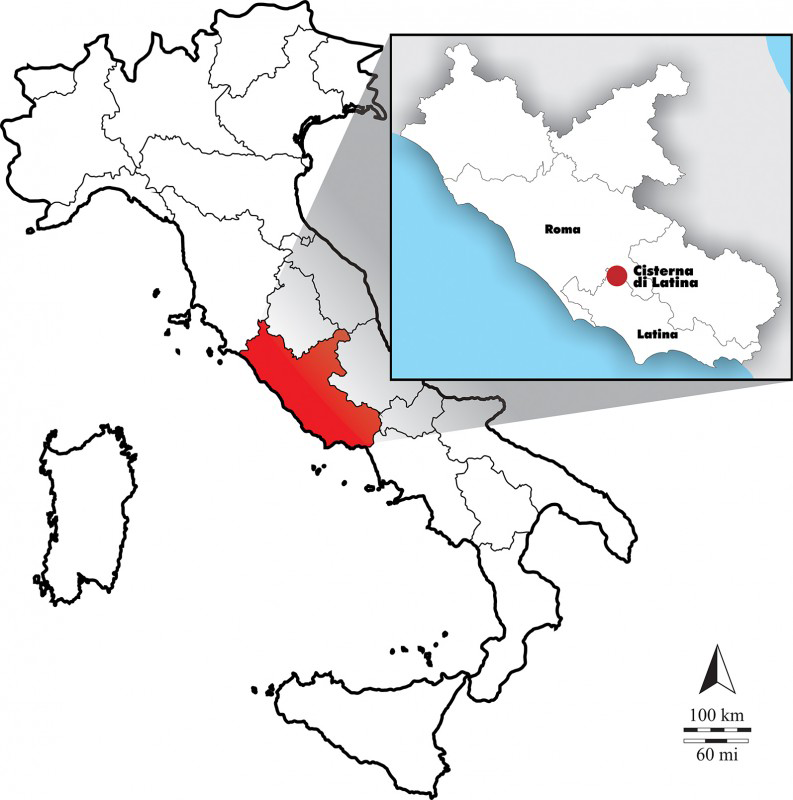
Location of Cisterna di Latina, Latium, Italy.

Cisterna di Latina lies in the north-east corner of the Pontine Plain (Figure 1). East of the town is an extensive bench of quaternary travertine, where several quarries have been opened, abandoned and reused on a number of occasions between the Roman era and modern times. Since the middle of the last century, Pleistocene fauna, lithic industries and prehistoric human remains have been recovered at several of these sites as a result of quarrying (Reference Segre and AscenziSegre & Ascenzi 1956).
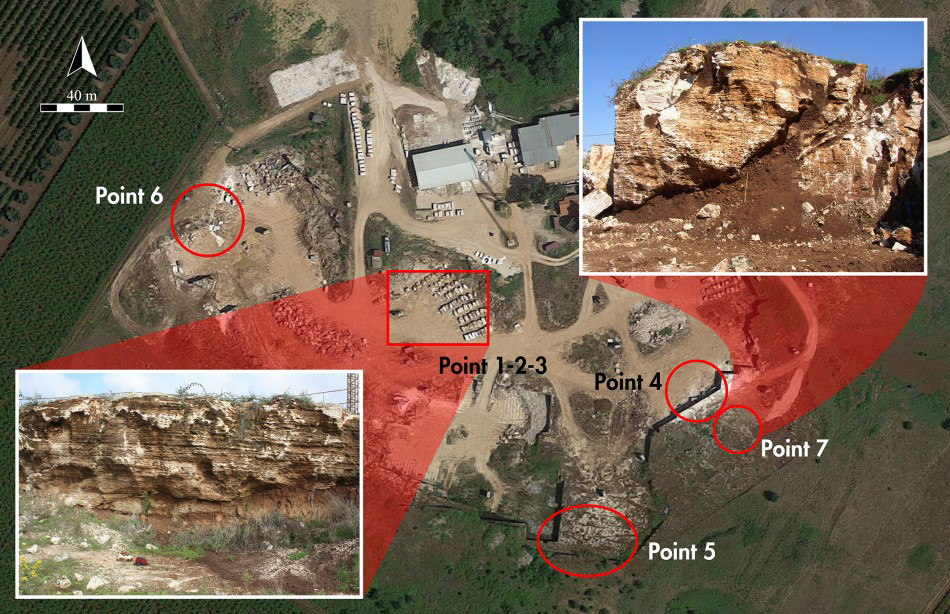
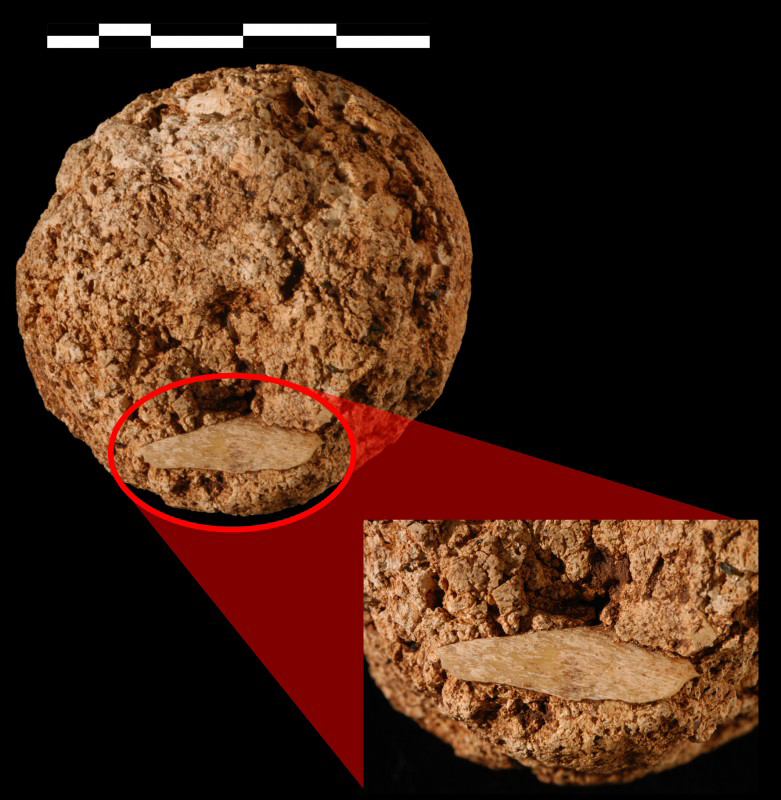
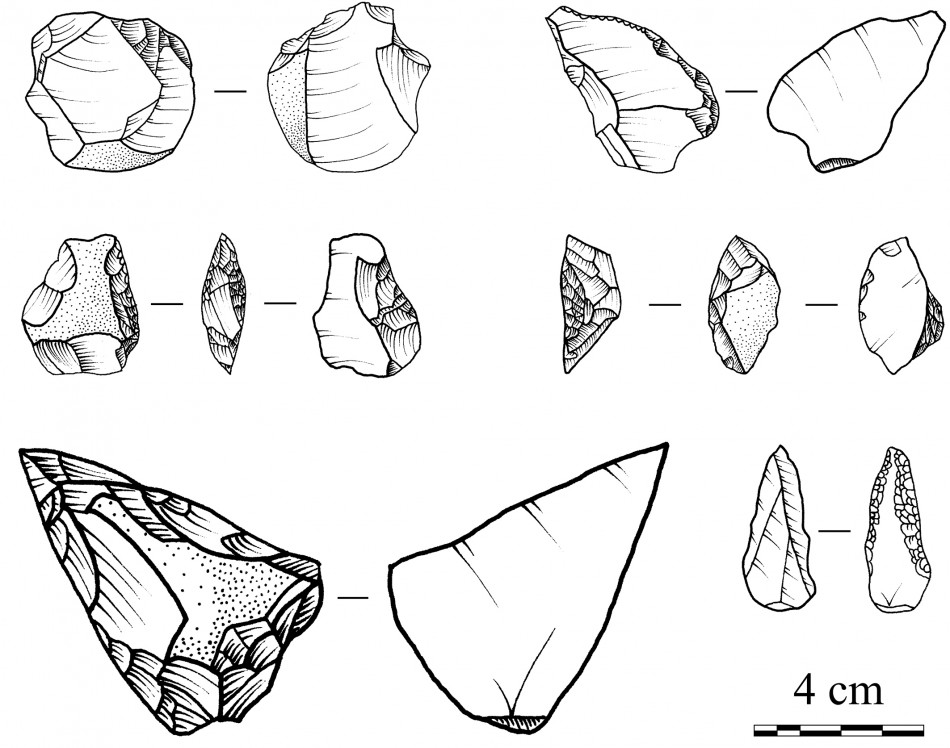
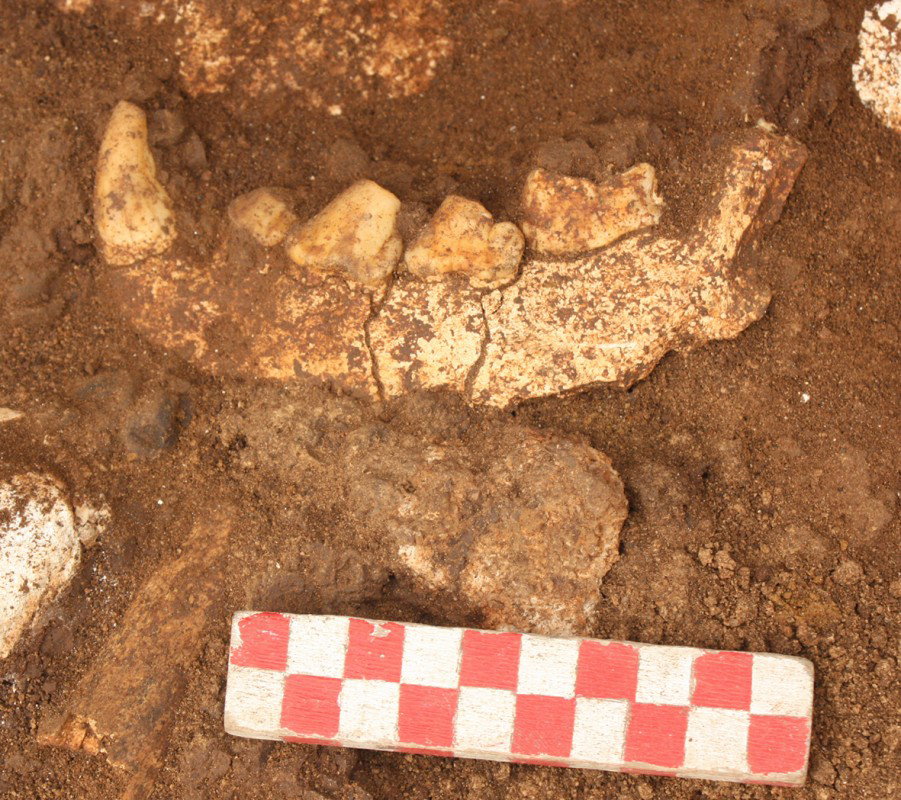
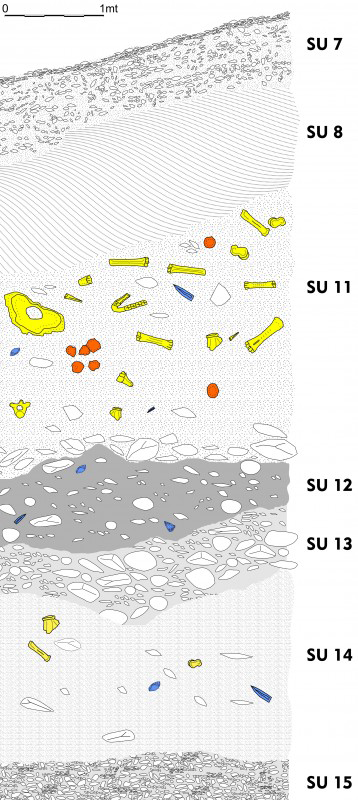
In 2012, commercial stone extraction brought to light various caves containing archaeological material at the quarry at ‘Località Muracci’. Over the following two years, workmen recovered many finds from these caves, and archaeological excavation took place within one particular cave (named Point 3; Figure 2). Unfortunately, the rich deposits at this site had been seriously damaged by modern quarrying and it has only been possible to investigate the remaining portion of the site where the deposit is best preserved, an area of approximately 20m2. From here, however, almost 2000 faunal remains have been collected (half of which have been identified taxonomically), a hundred coprolites all belonging to the cave hyena, Crocuta crocuta spelaea (Figure 3) and a small number of stone artefacts (Figure 4). Overall, the fossils are characterised by a very good state of preservation resulting from the closed context of the cave and the mineral-rich travertine, which has triggered a process of fossilisation by mineralisation. The stratigraphic sequence, the finds and uranium-series measurements have allowed a date estimation of 20 000–30 000 BP. Based on the taphonomic information provided by the fauna, this area of the site has been identified as a Late Pleistocene hyena den (Figure 5). In the current state of knowledge, human presence prior or subsequent to the carnivores cannot be excluded. Given the absence of cut marks on the large faunal sample available, as well as the limited number of stone artefacts, human contribution to the formation of stratigraphic unit 11 is very unlikely (Figure 6); the role of the carnivores seems to have been of primary importance.
Location of collection points and the excavation area within the quarry.

Cave hyena coprolite with digested bone.

Drawings of stone tools recovered from SU 11.

Hyena jaw during excavation.

The project
Stratigraphic sequence of the excavation area named Point 3; SU 7: modern surface composed of soil and gravel; SU 8: upper edge of the cave in travertine; SU 11: brown occupation layer with archaeological remains; SU 12: reddish brown layer with volcanic products and occasional finds of stone artefacts; SU 13: sterile layer composed of volcanic tephra; SU 14: reddish layer with sporadic lithic and faunal remains; SU 15: lower edge of the cave.

In recent years, environmental reconstructions have proved important additions to prehistoric archaeology, providing new ways of looking at various aspects of the past. Knowledge of the surrounding area and of human interactions with the wider landscape is of fundamental importance to the understanding of sites and finds. Although the site under consideration here does not demonstrate any sustained human presence, it can still provide the information needed to reconstruct the landscape within which humans lived during the Last Glacial Maximum.
The aim of this project is to provide a reliable palaeoenvironmental reconstruction of the coastal region of Lazio through the taxonomic study of the fauna and the detailed analysis of pollen and phytoliths from coprolites found during the excavation. A revised spatial analysis of the previously known open-air sites (Reference Rolfo, Aureli, Ghini and MariRolfo et al. 2013) and of the sources of raw materials used in artefact manufacture offers the opportunity to review and reinterpret patterns of human land use and mobility in the territory. The principal aim of the project is to establish whether the Pontine Plain can be considered as a refugium, an area where the presence of animals and plants would remain unaltered during the changes triggered by the continental glaciation, for prehistoric populations in Central Italy.
Preliminary results and future expectations
A first environmental reconstruction is proposed here based on the faunal data and in advance of the analysis of the coprolites. A careful analysis indicates the presence of a mosaic landscape, with a climate ranging from temperate to cold-temperate, and populated by a rich variety of fauna. The assemblage, therefore, suggests a mixed environment with large areas of steppe or grasslands alternating with woodland areas characterised by Mediterranean thicket, especially in the foothills of the region. Along the coastal strip, marshy areas are likely to have prevailed. The climate information is consistent with previous regional studies (Reference Follieri and GiardiniFollieri et al. 1998; Reference Follieri, Magri and PalomboFollieri & Magri 2001), while the faunal species are attested throughout the glacial period (Reference Caloi and PalomboCaloi & Palombo 1992), finding comparisons with the faunae of nearby Monte Circeo (Reference StinerStiner 1994). Even though much has already been accomplished, these findings represent the beginnings of a much larger project. Ongoing palaeoecological analysis will soon complement the emerging picture of the environmental context of this region during the Late Pleistocene.
Acknowledgements
Our special thanks to Geoff Bailey and Penny Spikins. We thank the students of the Chair of Palaeoethnology of the University of Rome who took part in the excavation and field survey. Thanks are also due to Letizia Silvestri for useful suggestions, Martina De Marzi for help in the production of figures and to the Department of Archaeology at the University of York for financial assistance.