
Skip to main content Accessibility help
×
  • Cited by 2
    • Access check Access
      You have digital access to this book
    • Select format
    • Publication date:
      20 December 2023
      16 July 2020
      ISBN:
      9781788212236
      9781788212212
      9781788212229
      Dimensions:
      Weight & Pages:
      Dimensions:
      Weight & Pages:
    Access check Access
    You have digital access to this book
    Selected: Digital
    Add to cart View cart Buy from Cambridge.org

    Book description

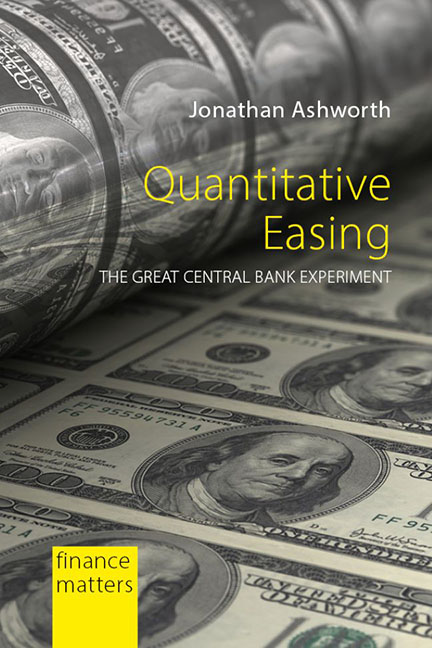
    Before the Great Financial Crisis of 2008-09, significant reductions in official interest rates typically proved sufficient to generate sustainable economic recoveries from downturns. However, with economies and financial markets in freefall during the crisis despite a cut in interest rates to effectively zero, policymakers in some advanced economies launched a major new tool called quantitative easing (QE). This involved central banks purchasing huge amounts of financial assets.

    This book offers a thorough and perspicacious analysis of QE, which has become a recovery method of last resort. Whilst it was successful in averting another Great Depression and stimulating growth, it remains controversial and continues to promote widespread debate in economics, financial, and political-economy circles. This book is essential reading for anyone wishing to understand central banking in the national economy.

    Refine List

    Actions for selected content:

    Select all | Deselect all
    • View selected items
    • Export citations
    • Download PDF (zip)
    • Save to Kindle
    • Save to Dropbox
    • Save to Google Drive

    Save Search

    You can save your searches here and later view and run them again in "My saved searches".

    Please provide a title, maximum of 40 characters.
    ×

    Contents

    • Frontmatter
      pp i-iv
    • Contents
      pp v-vi
    • Preface and acknowledgements
      pp vii-xii
    • Abbreviations
      pp xiii-xiv
    • Foreword
      pp xv-xvi
    • 1 - Monetary policy-making since the end of Bretton Woods
      pp 1-16
    • 2 - Key monetary policy trends and events in the decades before the Great Financial Crisis
      pp 17-30
    • 3 - The Great Financial Crisis and the onset of quantitative easing
      pp 31-54
    • 4 - How quantitative easing works
      pp 55-68
    • 5 - Measuring the effectiveness and impact of quantitative easing
      pp 69-92
    • 6 - International spillovers of quantitative easing
      pp 93-110
    • 7 - Criticisms and negative externalities of quantitative easing
      pp 111-134
    • 8 - Exiting quantitative easing and policies for the next slowdown
      pp 135-146
    • Conclusion
      pp 147-149
    • Notes
      pp 150-158
    • References
      pp 159-172
    • Index
      pp 173-176

    Metrics

    Altmetric attention score

    Full text views

    Total number of HTML views: 0
    Total number of PDF views: 0 *
    Loading metrics...

    Book summary page views

    Total views: 0 *
    Loading metrics...

    * Views captured on Cambridge Core between #date#. This data will be updated every 24 hours.

    Usage data cannot currently be displayed.

    Accessibility standard: Unknown

    Why this information is here

    This section outlines the accessibility features of this content - including support for screen readers, full keyboard navigation and high-contrast display options. This may not be relevant for you.

    Accessibility Information

    Accessibility compliance for the PDF of this book is currently unknown and may be updated in the future.
