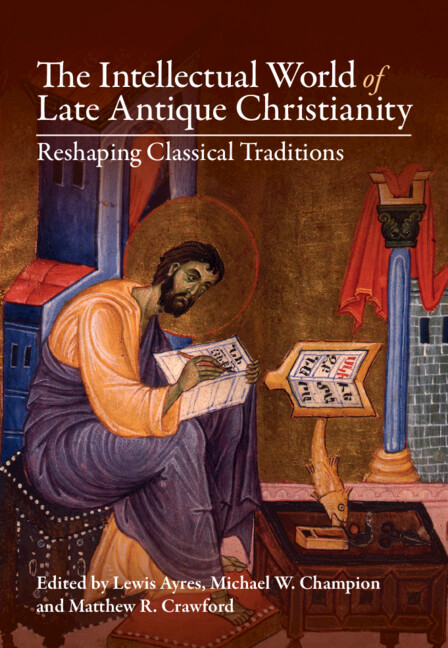

The Intellectual World of Late-Antique Christianity explores new perspectives on early Christian epistemology in relation to the changing discourses, institutions, and material culture of late antiquity. Early Christian modes of knowing and ordering knowledge involved complex processes of appropriation, reproduction, and reconfiguration of Jewish and classical epistemologies. This helped Christians develop cultures of interpretation and argument as textually oriented religious communities within the Roman Empire and beyond. It laid an intellectual foundation that would be built upon and modified in a variety of later contexts. Encompassing Greek, Latin, and Syriac Christianity, and an historical arc that stretches from the New Testament to Bede, this volume traces how diverse theological commitments resulted in distinctive Christian accounts of knowing. It foregrounds the myriad ways in which early Christian epistemology was embedded in earlier intellectual traditions and forms of life, and how they established norms for communal life and powerful ways of acting in the world.
Loading metrics...
* Views captured on Cambridge Core between #date#. This data will be updated every 24 hours.
Usage data cannot currently be displayed.
This section outlines the accessibility features of this content - including support for screen readers, full keyboard navigation and high-contrast display options. This may not be relevant for you.
Accessibility compliance for the HTML of this book is currently unknown and may be updated in the future.
