

1. INTRODUCTION
‘We seek your leadership, but if for some reason you are not willing to lead, leave it to the rest of us. Please get out of the way’.Footnote 1 This statement by Kevin Conrad, the Special Envoy and Ambassador for Environment and Climate Change for Papua New Guinea, was addressed to the United States (US) in the final dramatic moments of the 13th session of the Conference of the Parties (COP) to the United Nations Framework Convention on Climate Change (UNFCCC),Footnote 2 held in Bali (Indonesia), in December 2007. In response to this stinging admonition, the US delegation announced that it would join the consensus within the COP to support the Bali Action Plan,Footnote 3 a framework and timeline for negotiating a new international agreement to address climate change beyond the end of the first commitment period of the Kyoto Protocol to the UNFCCC,Footnote 4 in 2012.
For Papua New Guinea and other rainforest countries, the Bali Action Plan and other decisions adopted during this session of the UNFCCC COP were especially important because they initiated a set of global discussions and preparations for the funding and implementation of a series of initiatives. These initiatives – to reduce carbon emissions from deforestation and forest degradation, to support the conservation and sustainable management of forests, and to enhance forest carbon stocks in developing countries – produced a set of policies that would become known by the acronym REDD+.Footnote 5 The basic idea behind REDD+ is that channelling climate finance from industrialized countries to developing countries can help to shift incentives away from policies and activities that cause deforestation to those that support carbon sequestration, thus tackling the estimated 17% of greenhouse gas (GHG) emissions worldwide that emanate from forest-based sources throughout the developing world.Footnote 6
Since 2007, the global development and implementation of REDD+ has been vigorously supported by a wide coalition of actors from both the global North and the South. Actors have been attracted to REDD+’s ‘triple-win’ potential to contribute to the world’s global climate mitigation efforts, protect forests and their critical ecosystems, and catalyze sustainable development in developing countries.Footnote 7 An extensive array of developing and developed country governments, international organizations, multilateral development banks, conservation and development non-governmental organizations (NGOs), and corporations have notably supported the operationalization of REDD+ by (i) establishing knowledge-sharing, capacity-building, and technical assistance programmes; (ii) mobilizing finance; (iii) carrying out research and analysis; (iv) setting rules and guidance; (v) creating certification programmes, standards, and methodologies; and (vi) organizing policy meetings, networks, and dialogues.Footnote 8 Over 60 developing country governments have initiated multi-year programmes of research, capacity building, and reform to prepare for the implementation of REDD+ (known as jurisdictional REDD+ readiness activities) and have crafted national policies, institutions, and programmes to reduce carbon emissions originating in their forests and manage international funds received for this purpose (known as jurisdictional REDD+).Footnote 9
The abundance of support and engagement from the North and South stand in sharp contrast to broader international efforts to tackle climate change over the last 25 years, which have been hindered by long-standing disagreements over the proper division of responsibilities between developed and developing countries. The disagreements are animated by divergent and changing conceptions of the principle of common but differentiated responsibilities (CBDR) and respective capabilities.Footnote 10 Grounded in the understanding that to require all countries to assume identical commitments would be inequitable and ineffective, the principle of CBDR recognizes the common responsibility of states in pursuing a collective goal, but distinguishes between countries based on their responsibility for GHG emissions and their capacity to act in response.Footnote 11
The literature evinces that CBDR has played a pivotal role in global climate governance by legitimizing the concerns of developing countries regarding the pursuit of economic development, and by facilitating their participation in the UNFCCC regime.Footnote 12 Indeed, the UNFCCC acknowledges the greater historical emissions of developed countries, states that developed countries ‘should take the lead in combatting climate change’, and links developing countries’ implementation of their obligations to the receipt of financial support.Footnote 13 Not only does CBDR guide the parties’ actions in implementing their obligations under the UNFCCC, it also applies separately and in more specified ways to particular areas of activity, including adaptation, technology transfer, finance and capacity building. Additionally, negotiating groups may formulate tailored interpretations of CBDR for specific issues, such as REDD+.Footnote 14
The Kyoto Protocol is considered the ‘high water mark’ of differentiation because it imposed obligations on developed countries alone (the UNFCCC Annex I countries).Footnote 15 However, shifting economic realities among developing countries – some of which are now major emitters – call into question this stark differentiation between North and South.Footnote 16 The contested meaning and application of CBDR is well known to have hindered the adoption of a second commitment period for the Kyoto Protocol and stunted negotiations on a new long-term agreement.Footnote 17 After years of deadlock, many scholars argue that recasting CBDR became critical to reaching the 2015 Paris Agreement,Footnote 18 which now applies to all UNFCCC parties with a remarkably nuanced approach to differentiation.Footnote 19
This article offers a socio-legal analysis of the role played by CBDR in the development, diffusion, and implementation of jurisdictional REDD+ activities pursued throughout the developing world. It is not yet clear whether REDD+ will eventually make meaningful contributions to mitigating climate change. However, its relatively smooth development within the UNFCCC, its widespread diffusion throughout the developing world, and early lessons concerning its implementation provide a valuable opportunity to explore whether, how, and to what extent CBDR may influence the emergence and effectiveness of transnational climate law.Footnote 20
Our approach is informed by three important premises. Firstly, we adopt a ‘new legal realist’ perspective, which seeks to uncover, through empirical research, the complex ways in which law and social, economic, and political considerations mutually inform each other.Footnote 21 Secondly, we conceive of REDD+ as a ‘transnational legal process’, which entails the construction and transmission of legal norms across borders.Footnote 22 This perspective embraces the broad variety of sites and levels of authority in which legal norms for REDD+ have been developed and implemented, and recognizes the key role played by multiple public and private actors (including governments, international organizations, NGOs, and corporations) in their production and migration.Footnote 23 Thirdly, we adopt a rationalist-constructivist approach, which emphasizes the role of both interest-driven and norm-driven behaviour in the construction, diffusion, and application of legal norms. Actors may develop, adopt or implement legal norms based on a rational calculation that it is in their interests to do so.Footnote 24 At the same time, actors may generate and be influenced by social norms, which are understood here as intersubjective understandings that set standards of appropriate behaviour for a particular set of actors and shape the way in which they understand their identities and the world at large.Footnote 25
We argue that actors have used the principle of CBDR in a new way to support the emergence and effectiveness of the transnational legal process for REDD+. During the 1990s, CBDR was interpreted and applied by the UNFCCC COP as implying that emissions reductions should initially and almost exclusively occur in developed countries and that any reductions in the developing world should be tied to the former’s emissions reductions obligations (through a project-based carbon trading mechanism like the Clean Development Mechanism (CDM)). By contrast, the transnational legal process for REDD+ reflects a conception of CBDR in which developing country governments may take on voluntary commitments to reduce their carbon emissions, with the multilateral, bilateral, and private sources of financial support and technical assistance provided by developed countries, international organizations, NGOs, and corporations. We claim that this creative conception and application of CBDR has fostered the construction and diffusion of legal norms for REDD+ because of its impact on the interests, ideas, and identities of public and private actors in the North and South. However, the early challenges associated with the implementation of REDD+ reveal a worrying gap between the financial pledges made by developed countries and the costs associated with the full implementation of REDD+, as well as inherent contradictions in the very definitions of the responsibilities of different countries in the context of REDD+.
In Section 2, we present the analytical framework and research design that underlies this article. Our analytical framework set outs the five causal mechanisms that, we argue, can explain whether and how CBDR may directly and indirectly influence the behaviour of the wide array of public and private actors engaged in the transnational legal process for REDD+. We also justify our adoption of ‘process tracing’ as a research method to study the consequences of differentiation in the transnational legal process for REDD+. In Section 3, we present a detailed narrative account of the development of REDD+ within the UNFCCC, from its emergence as an agenda item in the Bali Action Plan in 2005 to the construction of a core set of legal norms through the adoption of the Cancun Agreements in 2010.Footnote 26 We then explain the causal role played by CBDR in the development of legal norms for jurisdictional REDD+. Section 4 presents a number of propositions that can account for the rapid and extensive diffusion of legal norms for jurisdictional REDD+ throughout the developing world. In Section 5, we discuss two key challenges in relation to the implementation of REDD+ on the ground and their relationship with the principle of CBDR. In conclusion, Section 6 reviews the implications of our findings for the transnational governance of REDD+ as well as for broader scholarly efforts towards understanding and enhancing the role of differentiation in the pursuit of effective and equitable solutions to climate change.
2. ANALYTICAL FRAMEWORK AND RESEARCH DESIGN
2.1. Analytical Framework
Rather than thinking of CBDR in strictly legal positivist terms, we conceive of CBDR as having the potential to play a causal role in the development, diffusion, and implementation of legal norms in transnational climate law. As summarized in Table 1, our analytical framework focuses on the causal mechanisms through which CBDR may directly and indirectly influence the interests, ideas, and identities of the wide array of public and private actors engaged in the transnational legal process for REDD+.Footnote 27
The Causal Mechanisms Underlying the Potential Causal Influence of CBDR in the Transnational Legal Process for REDD+
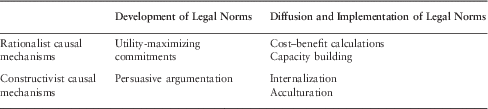
We posit there are two main causal mechanisms through which CBDR may have influenced the development of legal norms for REDD+. In line with a rationalist perspective, we conceive of CBDR as an idea that can contribute to the rational exercise through which actors commit to new legal norms that maximize their utility.Footnote 28 Actors may have employed the concept of CBDR – and, in particular, the notion that effective climate governance can be operationalized in a manner that permits differently situated actors to take on differently defined obligations – to craft legal norms for REDD+ that maximize their utility and provide a new cooperative solution to a collective action problem at the intersections of climate change and deforestation. In line with a constructivist perspective, we posit that CBDR also serves as a shared understanding or normative frame upon which actors may draw in the social interactions through which new legal norms are generated.Footnote 29 Actors may have articulated and framed legal norms for REDD+ in a manner that would resonate with the shared understandings and symbols underlying the principle of CBDR, especially in terms of the different roles and identities of developed and developing countries in the pursuit of global climate mitigation objectives.
We also identify four important causal mechanisms through which CBDR may have affected, directly and indirectly, the diffusion and implementation of legal norms for REDD+. Firstly, rationalist scholars might argue that actors frequently adopt and implement legal norms because the expected benefits (in terms of resources, reciprocity, or reputation) of doing so outweigh the costs of commitment and compliance.Footnote 30 To the extent that CBDR may have spurred the development of transnational obligations, mechanisms, and programmes that provide financial compensation, funding, and technical assistance for the pursuit of REDD+ in developing countries, it may have induced developing country governments to commit to, and seek to implement, legal norms for REDD+. Furthermore and relatedly, we hypothesize that these transnational funding and assistance initiatives for REDD+ readiness may also have provided these same governments with new capabilities, thus facilitating the implementation of REDD+ on the ground.Footnote 31
In line with the constructivist perspective, we recognize the important role that socialization can play in the spread and effectiveness of legal norms.Footnote 32 In its deepest form, social interactions between actors lead them to internalize new legal norms that achieve a ‘taken-for-granted quality’, thus making ‘conformance with the norm almost automatic’.Footnote 33 Here, we posit that the purposeful framing of REDD+ as consistent with the principle of CBDR, coupled with the social interactions inherent in the wide array of multilateral and bilateral initiatives for REDD+ readiness, may have led developing country governments to internalize the adoption and implementation of legal norms for REDD+ as a legitimate course of action. In addition, legal norms may diffuse through acculturation – a form of socialization in which actors commit to legal norms because of their social and cognitive need to adopt the beliefs and practices that are widely accepted within their broader transnational culture.Footnote 34 We hypothesize that developing country governments may have been acculturated into adopting and implementing legal norms for REDD+ as more and more countries in the South have done so, thus reinforcing the notion that the pursuit of REDD+ was a legitimate practice which was central to the changing identities and roles of these countries in global climate governance.
It is important to underscore that we are not interested in arguing for the primacy of one of these causal mechanisms in explaining the contributions of CBDR to the development, diffusion, and implementation of REDD+. Rather, our interest lies in explaining how they can be combined to provide a complex explanation that traces the role played by CBDR in the emergence and effectiveness of the transnational legal process for REDD+. Scholars argue that rationalist and constructivist causal mechanisms tend to interact with one another in symbiotic ways that make the construction and diffusion of legal norms more likely.Footnote 35 In addition, transnational legal processes frequently result in an initial gap between the formal adoption of legal norms in a given site of law and their implementation through actual changes in the practices of actors,Footnote 36 reflecting the classic distinction between law-in-the-books and law-in-action.Footnote 37 The study of any transnational legal process thus requires paying attention to how concurrent and sequential interactions between causal mechanisms may explain how and to what extent legal norms are diffused to, and eventually implemented in, a site of law.Footnote 38
2.2. Research Design
We employ a research method that Derek Beach and Rasmus Pederson call ‘explaining-outcome process-tracing’.Footnote 39 Process tracing is generally used by social scientists to study the role of causal mechanisms in the processes that link causes and outcomes in a particular case.Footnote 40 It generally ‘offers complex causal stories that incorporate different types of mechanisms as defined and used in diverse research traditions’ and ‘seeks to trace the problem-specific interactions among a wide range of mechanisms operating within or across different domains and levels of social reality’.Footnote 41
In the context of this article, we use process tracing to develop a fine-grained narrative case study of the role of differentiation in the construction of legal norms for REDD+ within the UNFCCC. We also formulate a number of hypotheses regarding the influence of differentiation in the diffusion of legal norms for REDD+ around the world. Finally, we examine some of the early challenges that actors have encountered in terms of the full and effective implementation of differentiation. We draw on multiple methods and sources of data to operationalize the explaining-outcome process tracing presented in this article, including interviews with civil servants, negotiators, civil society activists, experts, and private sector representatives working on REDD+,Footnote 42 as well as primary and secondary documents relating to the development and implementation of REDD+ across multiple sites of law. By triangulating across these different sources of dataFootnote 43 and carefully assessing their reliability,Footnote 44 we are able to trace the causal role played by differentiation in the construction and diffusion of legal norms in the transnational legal process for REDD+.
3. THE ROLE OF DIFFERENTIATION IN THE DEVELOPMENT OF LEGAL NORMS FOR REDD+ IN THE UNFCCC
3.1. An Account of the Development of REDD+ in the UNFCCC
Since the late 1980s, a wide array of policy makers, scientists, and activists have identified deforestation in the tropics as a significant source of carbon emissions and have argued that reducing rates of tropical deforestation should form an important part of any comprehensive solution aimed at mitigating climate change.Footnote 45 As a result, the UNFCCC obliges all state parties, including developing countries, to promote the sustainable management, conservation and enhancement of forests, including identified carbon sinks and reservoirs.Footnote 46 Carbon emissions from forestry should be covered in the preparation of national inventories of GHG emissions, taking into account the principle of CBDR.Footnote 47
Despite these initial linkages, international efforts to mitigate climate change and reduce deforestation evolved as largely separate domains throughout the 1990s.Footnote 48 Indeed, the rules subsequently adopted by the UNFCCC COP under the Marrakesh Accords,Footnote 49 to operationalize the Kyoto Protocol’s CDM, significantly hampered its potential for reducing carbon emissions from deforestation in developing countries.Footnote 50 When the rules for the CDM were negotiated, tackling emissions from deforestation in developing countries was perceived by many actors as contrary to the CBDR core objectives as they were understood at the time – namely, reducing GHG emissions from industrialized sources in developed economies.Footnote 51 In addition, in seeking to include deforestation within a project-based mechanism like the CDM, policy makers and experts grappled with a number of important technical challenges relating to the permanence, additionality and leakage of carbon reductions stemming from avoided deforestation.Footnote 52 Although they formed only a marginal share of regulatory and voluntary carbon markets during this period, the first generation of forest carbon projects pursued under the CDM produced new knowledge, built technical expertise, and reduced scientific uncertainties that would, in time, support the further integration of forest carbon interventions in developing countries within the UNFCCC.Footnote 53
The origins of REDD+ in the UNFCCC can be traced back to the concept of ‘compensated reduction’ first introduced by Brazilian scientists in a side-event UNFCCC COP-9 held in Milan (Italy), in December 2003.Footnote 54 Their proposal envisaged that developing countries which voluntarily reduced their carbon emissions from deforestation would be able to issue carbon credits and sell them to other governments as well as to private investors. Most importantly, these scientists suggested a national approach to establish an emissions baseline and monitor reductions, thus avoiding some of the technical challenges identified in earlier discussions around the inclusion of avoided deforestation within the CDM’s project-based scope.Footnote 55 Throughout 2005, numerous high-level policy makers,Footnote 56 as well as the nascent Coalition for Rainforest Nations,Footnote 57 lent their support to the concept of compensated reduction, emphasizing its cost-effectiveness as a solution to climate change and underlining its related benefits in terms of poverty eradication, biodiversity, and sustainable development.
At COP-11, held in Montreal (Canada) in December 2005, the governments of Costa Rica and Papua New Guinea, on behalf of the Coalition of Rainforest Nations, formally proposed that governments consider options to take action to reduce emissions from deforestation (RED) in developing countries under the UNFCCC.Footnote 58 Their submission most notably suggested that channelling new revenue streams – using a national approach and based on the market valuation of forests – could play a critical role in avoiding deforestation in developing countries.Footnote 59 The idea of RED elicited strong support among both developed and developing countries,Footnote 60 as well as numerous large conservation NGOs and firms active in the carbon market.Footnote 61 The UNFCCC COP thus decided to solicit the views of state parties and observers on this issue and requested that its Subsidiary Body for Scientific and Technological Advice (SBSTA) prepare a set of related recommendations.Footnote 62 The two subsequent workshops, organized in October 2006 and April 2007, built consensus among state parties and observers regarding the integration of RED within the broader framework and principles of the UNFCCC. The workshops highlighted the availability of tools and methodologies for its implementation and the need to provide finance and capacity building to support developing country participation. They also identified the key issues to be resolved in future rounds of negotiation.Footnote 63 In addition, the 2006 Stern Review on the economics of climate change argued that curbing deforestation ‘is a highly cost-effective way of reducing greenhouse gas emissions and has the potential to offer significant reductions fairly quickly’.Footnote 64 In the spring of 2007, the fourth assessment report of the Intergovernmental Panel on Climate Change (IPCC) established that forest carbon emissions in developing countries amounted to 17% of global carbon emissions.Footnote 65 These reports played a key role in convincing a range of policy makers and practitioners that RED was a relatively inexpensive, simple, and rapid way of reducing a significant share of global GHG emissions.Footnote 66 In September 2007, 11 tropical rainforest countries accordingly released a joint statement in which they expressed their support for RED and committed to ‘ensuring that a roadmap for relevant forest issues will be addressed in climate change frameworks, in a manner that is fair, equitable and in the common interest of the tropical rainforest countries’.Footnote 67
At COP-13, held in Bali (Indonesia) in December 2007, the UNFCCC parties adopted the Bali Action Plan,Footnote 68 a timetable to negotiate a new international agreement intended to govern how the problem of climate change would be addressed beyond the end of the Kyoto Protocol’s initial commitment period in 2012. As part of this plan, the UNFCCC COP included an agenda item that focused on ‘policy approaches and positive incentives on issues related to reducing emissions from deforestation and forest degradation in developing countries; and the role of conservation, sustainable management of forests and enhancement of forest carbon stocks in developing countries’.Footnote 69 This expanded the potential scope of RED in two directions.Footnote 70 Firstly, in response to a proposal by countries in the Congo Basin, it now included the reduction of emissions resulting from the degradation of forests (thus turning RED into REDD). Secondly, adopting a suggestion made by India and China, it would now aim to reward developing countries for their existing efforts in conserving and enhancing forest carbon stocks and sustainable forest management (thus adding the + sign to REDD+).Footnote 71
In addition to launching a round of international negotiations on REDD+ under the auspices of the UNFCCC, the COP adopted a separate decision in Bali, focusing specifically on ‘approaches to stimulate action’ on REDD+.Footnote 72 The Preamble to this decision affirmed the ‘urgent need to take meaningful action’ to reduce GHG emissions from forest-based sources in developing countries and recognized that doing so could ‘promote co-benefits’ and ‘complement the aims and objectives of other relevant international conventions and agreements’.Footnote 73 Moreover, the UNFCCC COP encouraged states to ‘strengthen and support on-going efforts to reduce emissions from deforestation and forest degradation on a voluntary basis’ as well as ‘to explore a range of actions, identify options and undertake efforts, including demonstration activities, to address the drivers of deforestation relevant to their national circumstances’.Footnote 74 In both respects, the COP called not just on states but on all relevant organizations and stakeholders to provide capacity building, offer technical assistance, and mobilize resources to support efforts undertaken to operationalize REDD+ in developing countries.Footnote 75
In accordance with the timetable set by the Bali Action Plan, COP-15 – held in Copenhagen (Denmark) in December 2009 – was meant to result in the adoption of a new long-term international agreement on climate change that was intended to include REDD+. However, the unresolved stalemate between industrialized and emerging economies over their respective contributions to global climate mitigation thwarted the adoption of such an agreement. Instead, a smaller subset of countries, comprising the major economies and representatives of different regions, concluded a non-binding agreement outside the formal confines of the UNFCCC COP, known as the Copenhagen Accord.Footnote 76 Although this Accord included a pledge from Northern countries to provide new and significant amounts of funding for REDD+,Footnote 77 the collapse of the broader climate negotiations prevented the COP from making substantial progress in the development of REDD+.Footnote 78 The experience in Copenhagen was nonetheless significant for the continued ascendance of REDD+ within the international climate negotiations, because it convinced governments and other stakeholders that a comprehensive agreement on climate change was not necessary to move forward with the development of REDD+.Footnote 79
The Cancun Agreements adopted in December 2010 served as the vehicle for the adoption of the first formal decision on REDD+ within the UNFCCC.Footnote 80 As can be seen in Table 2, the Cancun Agreements provided the core set of legal norms for jurisdictional REDD+, defining its scope of application, its key phases, and its basic elements. In Cancun, the COP also reiterated that the pursuit of REDD+ activities by developing countries is subject to their national capabilities, capacities and circumstances. It is, moreover, contingent on the delivery of adequate and predictable levels of financial and technical support received from developed countries.Footnote 81 While the Cancun Agreements left unresolved many issues relating to the full operationalization of REDD+, they nonetheless provided the essential building blocks for REDD+ and served as the basis for its further development within the UNFCCCFootnote 82 and beyond.Footnote 83
The Core Legal Norms for Jurisdictional REDD+Developed in the Cancun Agreements

3.2. Explaining the Role of Differentiation in the Development of Legal Norms for REDD+ in the UNFCCC
Initial proposals to tackle avoided deforestation in the UNFCCC were largely unsuccessful because of the way in which the principle of CBDR was understood and applied throughout the 1990s. Most governments, especially in developing countries, took the view that industrial sources of GHG emissions in the North should serve as the primary and initial focus of global climate mitigation, and that efforts to tackle forest-based emissions in developing countries risked delay or preventing significant mitigation action in developed countries.Footnote 84 In addition, the prospective imposition of an international solution aimed at reducing deforestation was seen to place an inequitable burden on developing countries, which expressed numerous apprehensions about its negative repercussions for national sovereignty, economic growth, and local communities.Footnote 85 This particular representation of the division of burdens and responsibilities between countries meant that any mechanism for addressing carbon emissions in the developing world had to be tied to the climate mitigation obligations of developed countries and thus required the use of an emissions trading mechanism like the CDM. However, integrating forest-based emissions in the context of the CDM’s project-based approach raised numerous methodological challenges that also hampered the full integration of avoided deforestation within the Kyoto Protocol.Footnote 86
By contrast, we argue that the successful emergence of REDD+ in the UNFCCC from 2005 onwards was facilitated by an innovative interpretation and application of the CBDR principle. This meant that developing country governments could take on voluntary commitments to reduce their carbon emissions, with the multilateral, bilateral, and private sources of financial support and technical assistance provided by developed countries, international organizations, NGOs, and corporations. The way in which actors used the principle of CBDR to develop legal norms for REDD+ can be understood by reference to the causal mechanisms of utility-maximizing commitments and persuasive argumentation.
To begin with, the particular arrangement underlying REDD+ – that is, that developed countries supply results-based finance to fund the voluntary climate mitigation efforts of developing countries from forest-based sources – provided a new cooperative solution to an important collective action problem and maximized the utility of most governments in the UNFCCC. Whereas other domains of global climate governance had been driven by disagreements over the respective roles and contributions of developed and developing countries, a proposed international mechanism for REDD+ appealed to countries in both the North and South.
Indeed, the development of legal norms advanced the interests of multiple actors in the UNFCCC and enabled REDD+ to serve as a rare bright spot in the otherwise faltering climate negotiations for many years.Footnote 87 For developing countries, broadening the scope of REDD+ to include emissions from forest degradation and provide support for the conservation of forests and forest carbon stocks meant that an expanded set of governments might benefit from funds and other forms of support provided for the implementation of REDD+.Footnote 88 At the same time, the advent of REDD+ was largely unthreatening to the economic interests of developed countries or large emerging economies. REDD+ did not affect sensitive issue areas such as energy or industrial development,Footnote 89 nor did it address patterns of consumption and production in the developed world.Footnote 90 Finally, the jurisdictional approach inherent in REDD+ had the virtue of eliminating the most important methodological challenges associated with a project-based mechanism like the CDM.Footnote 91
In addition, the advent of REDD+ facilitated and reflected the construction of a new norm regarding the meaning and implications of CBDR in the UNFCCC. In developing legal norms for REDD+, actors within the UNFCCC reached a shared understanding to the effect that voluntary commitments by developing countries to reduce emissions from forest-based sources and the related provision of financial compensation and technical assistance provided a legitimate way of differentiating between the roles and responsibilities of various countries in global climate governance.Footnote 92 The existing literature suggests that the ability of persuasive argumentation to generate new norms generally depends on three important conditions: (i) the existence of a new situation or a crisis in which actors are especially open to new normative understandings;Footnote 93 (ii) the alignment between emergent or proposed norms and the existing norms internalized by actors;Footnote 94 and (iii) a context in which actors engage in a primarily deliberative or participatory, rather than coercive, form of discourse.Footnote 95
All three conditions were present in the context of the development of legal norms for REDD+. Firstly, the emergence of an innovative interpretation of CBDR was facilitated by the growing recognition of a ‘climate crisis’ that the world had done little to address in the first 15 years of the UNFCCC.Footnote 96 Secondly, the proponents of REDD+ articulated their proposals in a manner that resonated with existing norms regarding the principle of CBDR. They emphasized the importance of national sovereignty, the provision of adequate support from the North, and the achievement of important co-benefits in terms of sustainable development and poverty eradication.Footnote 97 At a symbolic level, the fact that developing countries first proposed REDD+ and widely supported the initiative played an important role in its ability to acquire legitimacy and gain support among state parties and observers within the UNFCCC and beyond.Footnote 98 Thirdly, the development of legal norms for REDD+ took place in a deliberative and iterative manner that took full advantage of the strengths of the UNFCCC as a relatively participatory decision-making forumFootnote 99 and benefited from informal interactions among governments and other actors in other international and transnational sites.Footnote 100
In sum, the development of legal norms for REDD+ within the UNFCCC was driven by the interest-based and norm-based causal mechanisms through which actors interpreted and applied the principle of CBDR. An equally complex mix of factors relating to CBDR explains the relatively rapid and extensive manner in which legal norms for jurisdictional REDD+ have diffused around the world.
4. THE ROLE OF CBDR IN THE DIFFUSION OF LEGAL NORMS FOR JURISDICTIONAL REDD+ ACROSS MULTIPLE SITES OF THE LAW
In the Cancun Agreements, the UNFCCC COP stipulated the core legal norms for jurisdictional REDD+ and encouraged developing countries to take voluntary measures to prepare for its domestic implementation, subject to their national capabilities, capacities, and circumstances, as well as the provision of support by developed countries. In response, over 60 developing country governments have launched jurisdictional REDD+ readiness efforts and have committed to the core legal norms for jurisdictional REDD+ by preparing national strategies or actions, designing baselines of forest-related carbon emissions, creating forest monitoring systems for MRV, and developing safeguard information systems.Footnote 101 A smaller subset of countries has also taken steps towards the adoption of national policies, institutions, and programmes to reduce carbon emissions originating in their forests and to manage multilateral and bilateral sources of finance received for this purpose. It is beyond the scope of this article to trace the different causal processes through which these legal norms for REDD+ have spread around the world. We provide here three propositions that can account for the direct and indirect role of CBDR in spurring such a large array of developing countries to commit to the pursuit of jurisdictional REDD+ activities.
Firstly, many developing countries have committed to the legal norms for jurisdictional REDD+ because its innovative application of CBDR has meant that the benefits of doing so outweigh its costs. They have made a rational calculation that the pursuit of REDD+ provides a flexible and cost-effective approach to address a significant collective action problem at the intersections of forestry, climate change, and development.Footnote 102 Because of their recognition of the importance of national sovereignty, capabilities, and circumstances, the legal norms for REDD+ provide developing countries with an opportunity to craft nationally appropriate strategies and solutions for their implementation.Footnote 103 This has made it possible for a wide range of actors inside and outside government in these countries to conclude that the implementation of REDD+ activities would enable them to achieve existing objectives (whether these reside in improving forest governance, sustaining economic growth, alleviating poverty, or mitigating climate change).Footnote 104
Many developing countries have also initiated REDD+ programmes and activities in order to seize opportunities in terms of gaining access to financial resources and technical assistance. In the wake of the Bali Action Plan, developed countries, international organizations, and NGOs have created new finance and capacity-building programmes to support developing countries in their voluntary efforts to prepare for, and implement, the legal norms of jurisdictional REDD+.Footnote 105 With the notable exception of more developed countries like Brazil and Mexico, the availability of funding for initiatives and projects aimed at improving the governance of forests and land use has played an important role in the decision of developing countries to initiate jurisdictional REDD+ readiness activities.Footnote 106 For example, the availability of funding for REDD+ provided by Norway, as well as its potential alignment with existing objectives in forest governance and poverty alleviation, appears to have been a determining factor in the Tanzanian government’s decision to initiate jurisdictional REDD+ readiness efforts.Footnote 107
Secondly, many developing countries have pursued the enactment and implementation of the legal norms for REDD+ because they have internalized them as an appropriate response in light of emerging norms concerning the differentiated responsibilities of developing countries in global climate governance.Footnote 108 The purposeful framing of REDD+ as being consistent with the principle of CBDR, coupled with the social interactions inherent in the wide array of multilateral and bilateral initiatives for REDD+ readiness, has led numerous developing country governments to internalize that the adoption and implementation of legal norms for REDD+ formed a legitimate and appropriate course of action. In developing countries, the internalization of these norms has been reflected most notably in the leadership and rhetoric of government leaders who have expressed an abiding commitment to the implementation of REDD+ and invoked a moral responsibility for combating climate change and protecting the environment.Footnote 109 This appears to have been a critical factor in the Indonesian government’s decision to launch its national REDD+ readiness efforts, in which Indonesian President Susilo Bambang Yudhoyono took a central role.Footnote 110
Thirdly, the diffusion of legal norms for REDD+ has also been driven by the causal mechanism of acculturation. As more and more developing countries commenced working on REDD+, this reinforced its legitimacy within the international community and confirmed that norms around the appropriate roles and responsibilities of developing countries in climate mitigation had indeed changed since the adoption of the Kyoto Protocol.Footnote 111 At some point, a commitment to the legal norms for REDD+ may have come to be seen by developing country governments as not only appropriate, but central to their identities as parties to the UNFCCC.Footnote 112 In this context, committing to REDD+ becomes a taken-for-granted social practice of CBDR that is not necessarily connected with its rational advantages for combating deforestation or gaining access to resources.
Although they may have done so to different degrees and at different stages in the transnational legal process for REDD+, these three different causal mechanisms – utility-maximizing commitments, internalization, and acculturation – explain the complex ways in which CBDR has directly and indirectly influenced the decision of developing countries to commit to the core legal norms for REDD+.
5. THE ROLE OF CBDR IN THE IMPLEMENTATION OF LEGAL NORMS FOR REDD+
Transnational legal processes frequently result in a gap between the diffusion of legal norms and their actual implementation.Footnote 113 The transnational legal process for REDD+ has been no different: initial and widespread enthusiasm for REDD+ has given way to more sobering assessments of the challenges of catalyzing reforms in laws, institutions, and policies, building technical capacity, addressing the drivers of forest loss, alleviating poverty, and reducing carbon emissions in developing countries.Footnote 114
The transnational legal process for REDD+ has thus far failed to deliver the sort of significant reductions in carbon emissions envisioned a decade ago for two main reasons. Firstly, developed countries have largely shirked their initial commitments to REDD+ finance and have failed to provide an adequate level of finance to support its full and effective implementation in developing countries. Secondly, the gap between the development and implementation of legal norms for REDD+ also results from what Halliday and Carruthers call ‘internal contradictions’ – the unresolved compromises between competing interests and ideas that underlie the very conception of REDD+ as a solution to deforestation and forest degradation.Footnote 115 The contradictions inherent in the legal norms for REDD+ relate to its state-centricity, the limited capacity of many developing countries to actually address the international drivers of forest-based carbon emissions beyond their control, and the failure to engage actors that could govern and manage the supply chains that drive deforestation and forest degradation, including developed countries, emerging economies, and corporations.
5.1. The Inadequacy of Finance to Support REDD+
From the outset, REDD+ finance was premised on significant international transfers from North to South, consistent with a particular understanding of CBDR in which developed countries compensate developing countries for their efforts in reducing carbon emissions from forest-based sources.Footnote 116 The UNFCCC COP has repeatedly acknowledged the need for ‘adequate and predictable’ funding for developing countries, and has provided guidance on what REDD+ finance might entail.Footnote 117 Notably, the 2013 Warsaw Framework for REDD+ affirms that payments must be results-based and enjoins the UNFCCC financial mechanism, the Green Climate Fund, to accept a key role in improving coordination.Footnote 118
However, the multilateral regime still lacks a cohesive mechanism to govern the sources, terms and levels of finance. Early party submissions on the issue evidence a prevalent desire for a graduated approach, beginning with public funding that would lead to long-term payments from carbon markets.Footnote 119 Although the voluntary carbon market is an active site of transnational law, negotiations on market approaches to REDD+ at the UNFCCC have faltered.Footnote 120 Nearly 90% of international finance comes from the public sector, with bilateral agreements representing 51% of funds pledged and multilateral funds managing a further 33%.Footnote 121
There has been substantial disagreement over the architecture of REDD+ finance and its future. Debates surrounding market instruments are ‘unresolved and highly polarized’.Footnote 122 In 2011 in Durban (South Africa), the COP agreed that ‘appropriate market-based approaches could be developed’ and proponents, such as the Coalition of Rainforest Nations, continue to advocate for the same.Footnote 123 Yet, there are countries staunchly opposed to the ‘commoditization’ of natureFootnote 124 and BASIC parties contest the use of credits to offset inaction on the part of developed countries, arguing that offsets permit developed countries to avoid direct mitigation responsibilities and compromise the achievement of global reductions.Footnote 125 However, non-market channels also face challenges. Strong linkages exist between public finance and official development assistance, leading to critiques about the ‘aidification’ of REDD+.Footnote 126 Apart from apprehensions about the effectiveness of aid in achieving policy reforms,Footnote 127 challenges to the aspirations of CBDR in this context include ensuring national sovereignty when donors are involved in steering REDD+ initiatives,Footnote 128 and preventing inequity in the distribution of funding based on donor preferences. Two countries, Brazil and Indonesia, currently receive 35% of all finance.Footnote 129
Still, perhaps the greatest difficulty with REDD+ finance is the level and predictability of support. Aggregate pledges for REDD+ reached US$9.8 billion in 2014.Footnote 130 However, since 2010 ‘new pledges have been smaller and slower to manifest’, averaging US$796 million annuallyFootnote 131 – a figure that hardly approaches cost estimates ranging from US$17 to US$33 billion per year for an abatement of 50% of forest-related emissions by 2020.Footnote 132 Although global cost estimates are admittedly imprecise,Footnote 133 subnational experiences attest to the inadequacy of finance on the ground, which has led to instances of stalled and abandoned projects.Footnote 134 It is important to note the fragility of ongoing efforts in these circumstancesFootnote 135 as well as the true costs borne by forest countries, the domestic funding of which potentially exceeds international transfers.Footnote 136 Recognizing the need for support from international finance, several developed countries pledged increased finance for REDD+ in the run-up to COP-21 in Paris, with the aim of providing US$1 billion per year by 2020 or over US$5 billion in the period 2015 to 2020.Footnote 137 It remains to be seen whether these ambitious new pledges will be borne out in the coming years.
Despite the initial framing of REDD+ as an instrument to enable developing countries’ voluntary contributions to mitigation through international support, developed countries have simply not provided sufficient finance; nor has the COP improved on the Warsaw Framework for REDD+ to agree upon a coherent mechanism that would address this pressing need.Footnote 138
5.2. The Internal Contradictions Inherent in REDD+ Differentiation
The second major challenge to the effectiveness of the legal norms for REDD+ arises from internal contradictions in the conceptualization of REDD+ as a mechanism in which developing countries take on voluntary commitments to reduce carbon emissions from forest-based sources, with the financial and technical support of developed countries. This new way of differentiating between developing and developed countries has facilitated the development and diffusion of REDD+ as a cooperative endeavour in transnational climate law. However, early lessons gained from implementing REDD+ highlight two important internal contradictions in this conception of CBDR: state-centricity and the limited capacity of developing countries to undertake mitigation actions without corresponding actions from others who control and reinforce the drivers of deforestation and forest degradation. Developed countries, emerging economies and the private sector significantly influence deforestation and forest degradation in developing countries in a manner that problematizes the existing, binary view of their respective responsibilities and capabilities.
The first difficulty is the state-centricity of legal norms for jurisdictional REDD+. The case for engaging the private sector in REDD+ relates both to its responsibility to mitigate climate change and its capacity to devote financial resources to REDD+. The private sector contributes significantly to deforestation and forest degradation. During the latter part of the 20th century, governments increasingly withdrew direct control over land use, and private actors now exert considerable influence over forest change as ‘agents of deforestation’.Footnote 139 Insofar as private enterprises are agents of deforestation,Footnote 140 governments are reluctant to compensate them for lost opportunities to exploit natural resources on a business-as-usual model through REDD+ payments.Footnote 141 Moreover, a wide range of actors, including parties to the UNFCCC, are turning to the private sector to scale-up REDD+ finance because of the inadequacy of public finance and the sector’s greater resources in the current economic climate.Footnote 142 The combination of these factors has led scholars to characterize the private sector as a ‘socially just’ source of REDD+ finance.Footnote 143
Little is being done, however, to moderate the state-centric nature of REDD+. In Durban, the UNFCCC COP agreed that finance ‘may come from a wide variety of sources’, and identified the private sector as one such source.Footnote 144 The Warsaw Framework for REDD+ later recognized the need to provide information and recommendations to private entities on effective support for REDD+, and encouraged collaborative practices to coordinate finance.Footnote 145 Nevertheless, private engagement in REDD+ has been limited primarily to companies situated in developed regions which purchase verified emissions reductions through voluntary carbon markets. The total value of such transactions is quite low.Footnote 146
Explanations for this lack of involvement focus on the absence of regulatory intervention to stimulate activity, especially in a compliance-based carbon market.Footnote 147 Negotiations on a global carbon market have stalled, and most regional and subnational regimes do not recognize REDD+ credits.Footnote 148 Without a functioning compliance scheme, corporate social responsibility is the leading motivation for private actors,Footnote 149 but it will certainly not bridge the gap in REDD+ finance.Footnote 150 As a result, commentators routinely call upon governments to undertake interventions that mobilize private engagement such as investment incentives, risk mitigation and knowledge dissemination.Footnote 151 Yet, little evidence demonstrates the feasibility of their recommendations. In actuality, there is a dearth of information on existing types, amounts and sources of private flows, to say nothing of potential reforms.Footnote 152
Mobilizing the private sector could begin with a more robust appreciation of these issues, as well as of less studied opportunities for businesses in developing countries including small- to medium-sized enterprises, which have a critical role to play.Footnote 153 Still, apart from the utility of any findings that may result from new empirical research, the sheer lack of information on private sector engagement highlights the deficits of a traditionally state-centric focus of legal norms for REDD+. Although the global community is thinking about corporate capabilities and responsibilities, and measures to involve the private sector, more should be done to ensure that corporations assume greater responsibility for the effectiveness of REDD+. One step in that direction might include recasting CBDR as it applies to legal norms for REDD+ to bring private actors into discussions on differentiation.
In addition, the abilities of developing countries to fulfil their commitments are limited by developed countries, emerging economies and corporations, which reinforce the drivers of deforestation and forest degradation. Similar to the evolution of forest change from state- to enterprise-driven processes, a further trend in land-use governance for which REDD+ ought to account is the shift from territorial to flow-centred arrangements that follow the exchange of goods through supply chains.Footnote 154 For many years, it was commonly believed that population increases in shifting cultivators and smallholders were the principal drivers of forest change.Footnote 155 However, critical studies show that a major driver of deforestation is the production of commodities for international markets, including cattle, soybeans, timber and palm oil.Footnote 156 Interdependencies across borders resulting from globalization, population growth and consumer preferences, among other factors, have an acute impact on forest loss.Footnote 157 Therefore, international supply chains are important determinants of GHG emissions which, we argue, necessitate supply- and demand-side measures, and a more nuanced interpretation of CBDR.
The frameworks to operationalize REDD+ at the UNFCCC are wanting in this respect. The Cancun Agreements specify that REDD+ national strategies and action plans should address the drivers of deforestation and forest degradation. In 2010, the SBSTA commenced a work programme on associated issues.Footnote 158 Parties’ submissions to the SBSTA indicate an awareness of the impacts of international consumption, and developing countries requested that modalities and guidelines to identify and address the drivers be developed.Footnote 159 In the end, however, the decision adopted in Warsaw (Poland) does not recommend new measures, nor does it refer to international drivers. The decision has instead been critiqued for having ‘reinforce[d] somewhat the view that forest communities are primary agents of deforestation’.Footnote 160 Likewise, many REDD+ national strategies developed for transnational programmes beyond the UNFCCC focus on national or local, rather than international, scale drivers.Footnote 161
Deficiencies in addressing the international drivers of deforestation raise concerns about the success of REDD+ because the tangible value of supply chains vastly outweighs REDD+ incentives.Footnote 162 For example, the net value of oil palm plantations in Indonesia are estimated in the range of US$6,000 to US$9,000 per hectare, compared with US$614 to US$994 per hectare in carbon credits; this difference could double if the value of timber is taken into account.Footnote 163 Transnational sustainable commodity initiatives that have materialized in parallel with REDD+ deal specifically with such challenges by seeking to intervene at key junctures in supply chains.Footnote 164 Certification schemes, such as the Forest Stewardship Council (FSC), are perhaps the best-studied examples.Footnote 165 More recently, commodity roundtables, moratoria and government procurement policies are burgeoning.Footnote 166 Notably, the 2014 New York Declaration on Forests saw hundreds of stakeholders pledge to end forest loss by 2030, in part through ‘zero-deforestation’Footnote 167 commitments made by private enterprises as well as developed country procurement policies.Footnote 168 Unfortunately, while the Declaration does refer to REDD+, connections between REDD+ and transnational sustainable commodity initiatives remain ambiguous. Generally, sustainable commodity initiatives and REDD+ appear to be progressing in isolation.Footnote 169
Many sustainable commodity initiatives are in their infancy and their impacts are unclear. However, reconciling REDD+ with efforts to address the pressures of international demand would be beneficial in minimizing confusion among overlapping stakeholders and simply making REDD+ viable. In turn, the interpretation of CBDR as a territorially bounded principle must adjust to new understandings about the responsibilities and capabilities of consuming countries – whether developed, developing or emerging economies – and of private actors that influence the supply chains that contribute to forest loss in the developing world. While REDD+ does offer a pathway for developing countries to take on voluntary commitments to reduce their carbon emissions, in addition to providing finance, other countries and corporations must address their active roles in driving deforestation and forest degradation.
6. CONCLUSION
This article offered a socio-legal analysis of the role of CBDR in the development, diffusion, and implementation of legal norms for REDD+. Overall, our approach revealed the importance of interest-driven and norm-driven behaviour in the causal processes that underlie the development, diffusion, and implementation of legal norms in transnational climate law.
We have argued that the emergence of REDD+ within the UNFCCC resulted from an innovative conception of differentiation which broke with previous efforts to address carbon emissions in developing countries under the UNFCCC during the 1990s. Governments drew on the principle of CBDR to design REDD+ as a scheme for compensated reductions in carbon emissions with financial, technical and capacity-building support to flow from developed countries to developing countries that are willing to assume commitments on a voluntary basis. In doing so, the proponents of REDD+ generated a shared understanding that developing countries could take on responsibilities to contribute to the mitigation of climate change, subject to their national circumstances and adequate support from developed countries. Seen in this light, the principle of CBDR was no longer a hindrance to taking action on deforestation, nor did it amount to a static principle with a settled meaning. Instead, it served as a dynamic resource that actors used to craft cooperative solutions to a collective action problem. It also provided a normative frame by which actors could legitimize a new division of responsibilities among parties to the UNFCCC.
We also claimed that CBDR played an important role, both directly and indirectly, in the widespread diffusion of legal norms for jurisdictional REDD+ around the world. The particular way in which CBDR has been applied to REDD+ – especially in terms of its flexible nature and promised flows of finance and assistance – incentivized developing countries to commit to the launch of jurisdictional REDD+ readiness activities. The diffusion of legal norms for REDD+ was also driven by developing country governments internalizing a new norm regarding their responsibility to contribute to climate mitigation efforts. Over time, as more and more such countries have committed to REDD+, developing countries have been acculturated into launching jurisdictional REDD+ readiness activities, which have arguably become central to their identities as parties to the UNFCCC.
We noted, however, that the transnational legal process for REDD+ has run into some difficulties at the implementation stage. Firstly, developed countries have largely shirked their initial commitments to REDD+ finance and have failed to provide an adequate level of finance to support its full and effective implementation in developing countries. As a result, developing countries have lacked the capabilities to adopt policies and programmes to shift incentives away from activities that engender deforestation and forest degradation and towards activities that increase carbon sequestration in forests. Secondly, the gap between the development and implementation of legal norms for REDD+ has also resulted from the internal contradictions inherent in REDD+. These include the limited capacity of many developing countries to address the international drivers of forest-based carbon emissions that lie beyond their control, as well as their failure to engage actors – developed countries, emerging economies, and corporations – that could govern and manage the supply chains at the root of deforestation and forest degradation.
Our analysis has important implications for the potential contributions of CBDR in the field of transnational climate law. Parties to the UNFCCC have continued to simultaneously evoke contrasting iterations of CBDR in deeply contentious debates over the future of climate action. For example, the persisting characterization of differentiation as a principle rooted in Annex I and non-Annex I distinctions during the negotiation of a second commitment period for the Kyoto Protocol led to intractable disputes between developed countries and emerging economies, ultimately resulting in a weak arrangement. Recasting CDBR was thus a prerequisite to achieving consensus on an international agreement for the post-2012 period.Footnote 170 The new treaty established under the UNFCCC in 2015, the Paris Agreement, takes into account developing countries’ contributions to climate change in that it applies to all parties. However, it still expressly obliges developed countries to ‘continue taking the lead’,Footnote 171 stipulates that parties’ commitments should reflect CBDR in the light of national circumstances, and mandates that developing countries be provided with support.Footnote 172 In a fashion that resembles the way in which CBDR was first applied to REDD+, the Paris Agreement requires developing countries to elaborate targets that are to be self-determined and bolstered by international transfers.
The challenges with respect to the transnational legal process for REDD+ suggest that further innovations in the application of CBDR may be important for the future of transnational climate law. Although REDD+ was originally premised on international transfers from the North, in fact domestic funding from developing countries possibly exceeds the contributions of developed countries. Confidence in REDD+ finance has been tempered by grave concerns about its sources, its amount – which is distressingly inadequate – its inequitable allocation to a few emerging economies, and the consequences of aid-based funding on national sovereignty. This points to the need for actors in transnational climate governance to develop credible third party mechanisms, whether within the UNFCCC or beyond, that could enhance the transparency and accountability of the financial pledges made by developed countries in support of climate action in developing countries.
In addition, given that pledges from developed countries are not expected to increase appreciably, parties to the UNFCCC, civil society, subnational governments and others have shifted their attention to two novel solutions that would ultimately redistribute accountability for climate change mitigation: private sector engagement, and transnational sustainable commodity initiatives. Engaging private enterprises in REDD+ is said to be justified because of the abundant financial resources at their disposable and their moral obligations to minimize forest loss within their control. Similarly, transnational sustainable commodity initiatives seek to account for underlying drivers of deforestation and forest degradation that can be managed by the agents of international supply chains and by developed countries that import unsustainable commodities.
Lessons derived from our analysis of REDD+ in this article point to the importance of developing broader conceptions of CBDR that can account for the contemporary reality that a spectrum of actors and practices influence GHG emissions. Our observations are also reinforced by recent scholarship which applies a CBDR ‘lens’ to subjects such as major industrial emitters, border adjustment policies on carbon, and the place of consumption in GHG accounting rules.Footnote 173 Future research in this field might examine linkages between updated conceptions of CBDR and the myriad transnational climate initiatives discussed in the scholarly literature in order to achieve a better understanding of the potential of differentiation both to frustrate and to enhance the effectiveness of transnational climate law.



