





Impact statement
Canada’s push toward a net-zero energy system demands more than new technologies – it requires public confidence, fair decision-making and institutions capable of managing complex energy choices. This article demonstrates why governance and trust are now as important as engineering in determining whether nuclear energy can genuinely support a secure and equitable energy transition. Using Canada as a case, the study outlines how transparent processes, early engagement with Indigenous governments and clear accountability structures can significantly strengthen public support for nuclear projects.
The broader impact of this work is to offer governments, regulators, industry and civil society a practical roadmap for integrating social legitimacy into nuclear planning. By presenting measurable indicators of trust, equity and participation, the study provides tools that can help identify risks, prevent conflict and improve outcomes for communities affected by nuclear decisions. These tools can support more responsive policymaking, reduce delays linked to public resistance and create better alignment between energy investment and social expectations.
Internationally, the article highlights how Canada’s approach to trust-building, workforce development and equitable participation can inform global practices, particularly for countries exploring small modular reactors. It shows that improving governance is not simply an ethical choice – it is a strategic necessity for achieving climate targets, building resilient energy systems and strengthening international credibility.
Overall, this work contributes to energy-transition scholarship by demonstrating that nuclear energy deployment succeeds when communities feel informed, respected and included. It offers evidence that governance innovations can help transform nuclear energy from a socially contentious option into a trusted and credible component of a just, inclusive and sustainable energy future.
Highlights
-
• Applies the Qudrat-Ullah Nuclear Peace and Trust framework to Canada’s nuclear energy sector.
-
• Links governance, transparency and trust to sustainable nuclear growth.
-
• Aligns nuclear energy with Canada’s net-zero 2050 climate objectives.
-
• Identifies pathways for global leadership and technology exports.
Introduction
Global climate commitments and national decarbonization plans place unprecedented pressure on electricity systems to deliver large volumes of low-carbon power while maintaining reliability and affordability. Intermittent renewables have expanded rapidly, yet system planners increasingly recognize the need for dispatchable, firm, low-emission generation to enable 24/7 decarbonization pathways (IEA, 2022a). Nuclear energy – both large reactors and advanced Generation III+ reactors such as EPR, AP1000 and ABWR, as well as emerging Small Modular Reactors (SMRs) – has therefore reemerged in policy debates as a potential backbone technology for low-CO₂ electricity supply. However, nuclear deployment remains constrained by persistent governance challenges: cost escalation, long project timelines, sociopolitical contestation and community mistrust continue to undermine nuclear energy expansion in many jurisdictions (Späth et al., Reference Späth, Castán Broto, Bawakyillenuo and Pregernig2022). Canada illustrates these tensions well: although it possesses deep technical capacity and an established nuclear energy industry supplying roughly 15% of national electricity, future SMR deployment will depend heavily on governance choices that shape legitimacy, social license and equitable participation (WNA; Canadian Nuclear Safety Commission [CNSC]).
Despite growing recognition that governance – rather than technology – is now the primary bottleneck for nuclear energy deployment, current policy debates lack systemic approaches to embed trust, accountability and equity into nuclear decision-making. Three gaps in the literature persist. First, governance of nuclear energy deployment is not typically treated as a structured, measurable systems problem. Second, although concepts like trust, transparency and energy justice appear frequently in public policy discourse, they remain weakly operationalized and disconnected from implementation. Third, there is a lack of empirical applications of governance frameworks to actual national energy strategies, limiting their relevance for policymakers.
This article addresses these gaps by applying the Qudrat-Ullah Nuclear Peace and Trust (Q-NPT) framework – an institutional model centered on trust, equity and international cooperation, to Canada’s SMR strategy. Building on earlier conceptual work (Qudrat-Ullah, Reference Qudrat-Ullah2025a, Reference Qudrat-Ullah2025b, Reference Qudrat-Ullah2025c), it advances the field in three ways: (i) it operationalizes Q-NPT through measurable governance indicators and performance thresholds; (ii) it links domestic nuclear energy deployment with energy-justice outcomes and international workforce partnerships and (iii) it provides policy-ready recommendations tailored to Canada’s federal–Indigenous governance context.
In doing so, the paper responds to long-standing gaps in nuclear governance scholarship by providing explicit, quantifiable metrics for trust, equity and institutional capacity – elements often discussed normatively but rarely defined in measurable terms.
The remainder of this article is structured as follows. Section ‘Methods and scope’ describes the methodological approach and scope of the analysis. Section ‘Literature review — nuclear energy in energy transitions’ reviews the literature on nuclear energy in energy transitions, highlighting governance, social acceptance and legitimacy challenges relevant to Q-NPT. Section ‘The Q-NPT framework: conceptual model and normative commitments’ presents the Q-NPT framework, detailing its conceptual foundations and normative commitments. Section ‘Applying Q-NPT to Canada: empirical grounding and operational pathways’ applies Q-NPT to the Canadian context by integrating empirical data, governance indicators and operational pathways. Section ‘Strategic implications and policy package’ synthesizes the strategic implications and outlines a coherent policy package for federal, provincial and Indigenous partners. Section ‘Operational roadmap: a staged plan for Q-NPT adoption in Canada’ develops a staged operational roadmap for Q-NPT adoption in Canada. Section ‘Discussion: benefits, challenges and research agenda’ discusses broader benefits, persistent challenges and future research priorities. Section ‘Conclusion’ concludes with key policy implications for nuclear energy governance in the era of energy transitions.
Methods and scope
To ensure analytical clarity and policy relevance, this section describes the methodological foundations and scope of the study, outlining how conceptual reasoning, empirical evidence and framework application are combined to generate findings. The emphasis is on linking qualitative insights with governance mechanisms that can later be operationalized into measurable indicators, thereby strengthening the study’s evaluative coherence and practical applicability.
Research design
This article is a conceptual and policy-applied study. It does not present a new quantitative simulation model; instead, it integrates insights from energy transitions scholarship, empirical data on Canada’s nuclear energy sector and the Q-NPT framework. This triangulated design enables both analytical depth and policy relevance: it places nuclear energy within broader debates on just and credible transitions, while grounding the analysis in Canadian data. This design also provides the basis for defining measurable governance indicators – such as trust scores, procedural equity metrics and participation thresholds – even though full quantification lies beyond the present scope.
Following guidance for policy-oriented social science research (George and Bennett, Reference George and Bennett2005; Sovacool et al., Reference Sovacool, Axsen and Sorrell2018; Beach and Pedersen, Reference Beach and Pedersen2019), the study employs a three-component methodological approach:
-
1. Targeted literature review of nuclear energy within transition, governance and energy justice debates.
-
2. Synthesis of verified empirical material on Canada’s nuclear sector (capacity, regulatory structures, SMR licensing and workforce and innovation trends).
-
3. Application of the Q-NPT conceptual framework to the Canadian case, producing concrete institutional recommendations and operational steps.
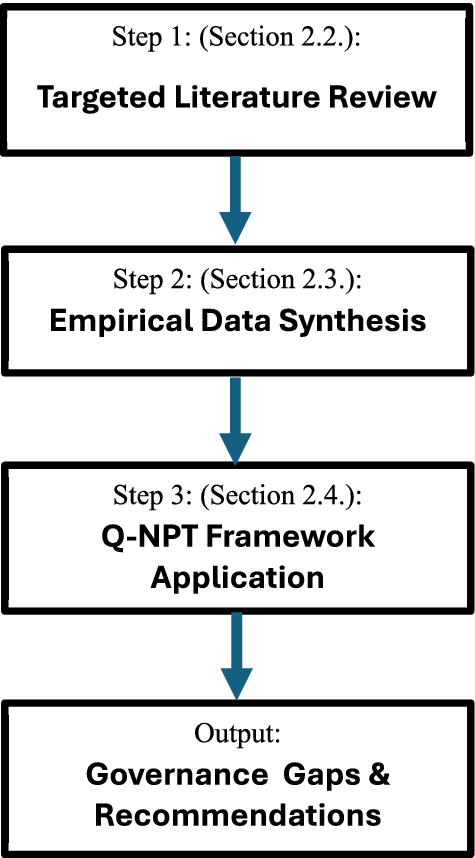
This combination allows for the generation of conceptual insights that are simultaneously grounded in evidence and oriented toward institutional reform. It also enables the articulation of preliminary governance metrics and evaluative targets. Figure 1 illustrates the three-stage methodological flow of the study, beginning with a targeted literature review, followed by synthesis of empirical evidence and concluding with the application of the Q-NPT framework to generate institutional recommendations.
Methodological flow of the study.

Literature review procedure
The targeted literature review was conducted in 2022–2023 using the following databases: Web of Science and Google Scholar. The review focused on works published between 2000 and 2023, with emphasis on the last decade when nuclear debates reintensified alongside net-zero pledges. Search terms included “nuclear energy” AND “energy transition,” “nuclear governance” AND “trust,” “nuclear justice” OR “energy justice,” “small modular reactors” AND “Canada,” and “public acceptance” AND “nuclear.”
Selection criteria were: (i) Peer-reviewed journal articles in energy, policy and social science outlets (e.g., Energy Policy, ERSS and Climate Policy); (ii) authoritative institutional or think-tank reports (e.g., IEA, WNA and NEA) and (iii) relevance to trust, governance, equity and legitimacy in nuclear deployment.
The final corpus included 77 sources, consisting of 34 peer-reviewed journal articles, 13 institutional reports and 30 government or industry documents. This review revealed several persistent debates: economics and the cost–risk of new nuclear projects (Lovins, Reference Lovins2010; Locatelli et al., Reference Locatelli, Bingham and Mancini2014; Khatib and Difiglio, Reference Khatib and Difiglio2016); governance legitimacy and public trust as barriers to adoption (Bickerstaff et al., Reference Bickerstaff, Lorenzoni, Pidgeon, Poortinga and Simmons2008); energy justice and equity concerns around nuclear waste and siting (Jenkins et al., Reference Jenkins, Luke and Thernstrom2018) and the role of SMRs in diversified low-carbon transitions (IEA, 2022a; NRCan, 2023).
These strands informed the operationalization of Q-NPT in the Canadian context. Yet, across this body of scholarship, there remains no integrative socioinstitutional framework that links technological feasibility with legitimacy, trust-building and institutional fit. This gap underscores the value of using Q-NPT as a structured analytical tool capable of producing measurable governance pathways.
Empirical data and sources
The second methodological pillar is the synthesis of authoritative empirical facts about Canada’s nuclear sector. Unlike purely theoretical treatments, this study grounds its framework in verified institutional data.
Sources include: International Energy Agency (IEA, 2022a): data on nuclear energy’s role in global net-zero pathways; World Nuclear Association (WNA, 2023): reactor capacity, performance and global comparisons; CNSC (CNSC, 2022): regulatory milestones, safety frameworks, SMR licensing procedures; Natural Resources Canada (NRCan, 2023): SMR Roadmap and Action Plan; and Statistics Canada (2022): workforce and skills pipeline indicators.
Where perspectives diverge (e.g., construction costs vs. innovation benefits), the study adopts a balanced evidence-synthesis approach, presenting competing claims and assessing them against the best available data (Petticrew and Roberts, Reference Petticrew and Roberts2006). This balanced synthesis also informs the later articulation of governance metrics, including workforce readiness indicators, regulatory-timeliness benchmarks and stakeholder participation baselines.
Application of the Q-NPT framework
The third methodological step involves applying the Q-NPT conceptual framework to the Canadian nuclear sector. The Q-NPT emphasizes trust-building, equity, governance integration and institutional learning as necessary complements to technological deployment.
This application followed a structured analytical mapping:
-
1. Identification of Q-NPT components (trust panels, equity safeguards, institutional learning loops and global integration strategies).
-
2. Mapping these onto Canadian institutions: federal ministries; CNSC; provincial utilities (e.g., Ontario Power Generation, NB Power) and Indigenous/community stakeholders.
-
3. Gap analysis: identifying where Canadian governance structures already align with Q-NPT principles (e.g., strong regulatory independence) and where gaps remain (e.g., systematic trust-building, long-term workforce strategy).
-
4. Generation of recommendations: actionable reforms (e.g., independent trust panels [ITPs], stakeholder engagement protocols, SMR workforce pipeline programs).
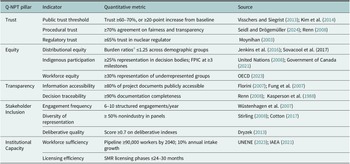
This application followed a structured analytical mapping, triangulated with secondary literature. In doing so, it reveals previously underexamined institutional and social governance gaps in Canada’s nuclear innovation pathway that this article systematically addresses. Moreover, the mapping process enables the definition of preliminary measurable targets – such as trust-engagement frequency, transparency indicators and equity benchmarks – that can guide future quantitative evaluation, as listed in Table 1.
Quantitative indicators for evaluating Q-NPT governance pillars

a Burden ratio refers to the share (percentage) of household income spent on energy costs (energy bills) (Tarekegne et al., Reference Tarekegne, Pennell, Preziuso and O’Neil2021).
Methodological limitations
This study has several methodological limitations that should be acknowledged. First, it adopts a qualitative and conceptual approach and does not produce new simulation outcomes or econometric estimates. Its contribution is therefore analytical rather than predictive, focusing on governance design rather than quantitative modeling. However, to partially address this limitation, the study introduces a set of preliminary quantitative governance targets – such as a ≥20-point increase in public trust, ≥25% Indigenous participation in decision processes, ≥80–90% transparency benchmarks and a workforce pipeline of 75,000–90,000 trained workers by 2040 – that can be used in future predictive analyses or modeled scenarios. These measurable thresholds provide clearer empirical milestones and offer an initial foundation for quantitative evaluation of governance readiness and social legitimacy.
Second, although the Q-NPT framework is designed for broad applicability across national contexts, the empirical analysis in this study is confined to Canada. As a result, institutional variation in other jurisdictions may affect the transferability of specific findings. Future work should test these quantitative indicators and governance metrics in additional national settings to assess robustness across diverse regulatory, social and political environments.
Third, the study relies exclusively on secondary data sources – such as regulatory filings, policy reports and public institutional records – without incorporating new survey evidence or primary stakeholder interviews. This creates limitations in quantifying social outcomes, equity distributions or trust dynamics. Future research should therefore incorporate mixed-method approaches, including longitudinal public-trust surveys, distributional equity assessments, deliberative-process evaluations and participatory methods to measure procedural fairness, transparency quality and uncertainty. Collecting such data would enable the development of formal predictive models and empirical tests of Q-NPT’s governance impacts over time.
These limitations are consistent with the aim of this research, which is to develop and demonstrate a systemic governance framework for nuclear energy transitions while establishing a foundation for future empirical validation. By identifying measurable governance indicators and outlining methodological pathways for quantitative extension, this study provides a basis for subsequent simulation-based or mixed-method validation of Q-NPT in Canada and beyond.
Literature review – nuclear energy in energy transitions
Nuclear energy occupies a complex and often contested position in contemporary energy transitions. While it is recognized as a significant source of low-carbon electricity, its role varies substantially across national contexts due to divergent technological strategies, political priorities, institutional capacities and societal values. Understanding nuclear energy’s evolving contribution requires a multidimensional analysis that integrates technical system needs, political economy dynamics, governance and trust considerations, as well as workforce capacity. This section synthesizes insights from the literature across these four domains to clarify how nuclear energy is positioned within broader pathways to decarbonization and sustainable energy futures. It also identifies gaps – particularly the absence of integrated governance frameworks – that motivate the application of Q-NPT.
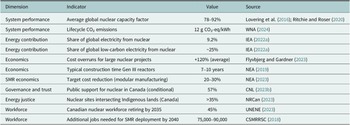
Table 2 summarizes quantitative indicators from International Energy Agencies (IEAs), academic analyses and Canadian nuclear institutions that contextualize nuclear energy’s system role, economic performance, governance challenges and workforce capacity in current energy transitions.
Selected quantitative indicators on the role of nuclear energy in energy transitions
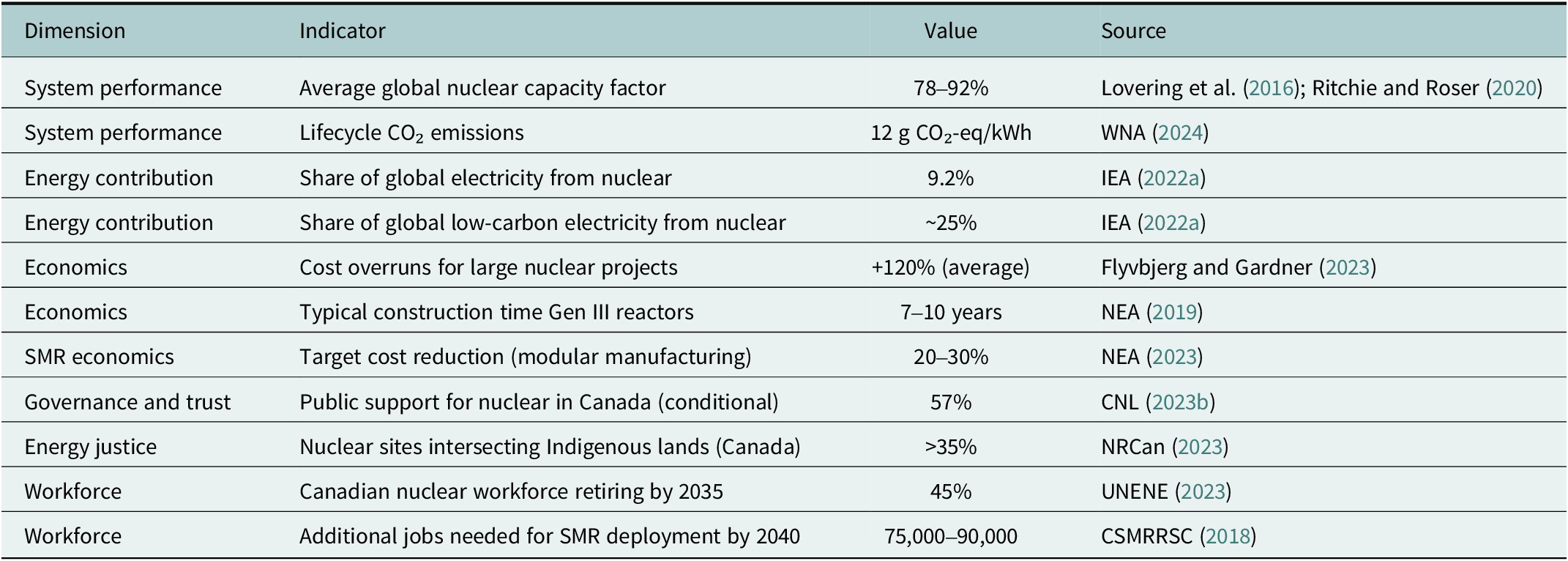
As shown in Table 2, nuclear energy already plays a significant role in global low-carbon electricity supply, contributing roughly one quarter of global clean power while maintaining one of the lowest lifecycle emissions footprints among available technologies. However, the data also reveal systemic barriers that shape nuclear deployment trajectories. Persistent cost overruns and long construction timelines constrain competitiveness in liberalized electricity markets, while governance challenges – such as public trust and Indigenous rights – remain central to social acceptance. Workforce capacity is also emerging as a critical bottleneck, with nearly half of Canada’s skilled nuclear professionals expected to retire within the next decade. These quantitative indicators highlight a structural gap: technical capability alone is insufficient unless governance mechanisms addressing equity, legitimacy and institutional trust are fully embedded – precisely the gap that Q-NPT is designed to fill.
Nuclear energy’s technical role in low-carbon systems
Nuclear power provides high capacity factors and firm output that can stabilize grids with high shares of variable renewables, making it a key option in long-term decarbonization strategies. Nuclear energy offers one of the lowest lifecycle greenhouse gas emissions among large-scale electricity sources (Warner and Heath, Reference Warner and Heath2012), reinforcing its credibility as a climate mitigation technology. The IEA scenarios indicate that nuclear growth is a plausible component of many net-zero pathways; in several scenarios, nuclear capacity must grow substantially to help balance system reliability and reduce system costs (IEA, 2022a). Deep decarbonization of electricity systems requires firm, low-carbon resources – such as nuclear – to complement renewables and ensure reliability (Jenkins et al., Reference Jenkins, Luke and Thernstrom2018). This firm, dispatchable capability becomes increasingly valuable as renewable penetration rises.
At high levels of wind and solar deployment, system integration challenges emerge due to variability. Integrating variable renewable energy like wind and solar requires flexible balancing resources to maintain system stability (Hirth and Ziegenhagen, Reference Hirth and Ziegenhagen2015), but nuclear energy’s contribution is primarily through firm baseload output, inertia provision and system stability rather than real-time flexibility. Complementarity arguments emphasize that nuclear provides long-duration firm capacity, seasonal balancing and potential roles in industrial heat and hydrogen co-production (IEA, 2022b). Modeling evidence suggests that high renewable penetration is technically feasible when coupled with sufficient energy storage capacity (Budischak et al., Reference Budischak, Sewell, Thomson, Mach, Veron and Kempton2013), yet storage solutions alone do not eliminate the need for complementary firm power.
In addition, system-level planning and transparency are critical for technology assessment. Transparent, open-access energy modeling tools and datasets are critical for improving system performance analysis and supporting evidence-based energy policy (Pfenninger et al., Reference Pfenninger, DeCarolis, Hirth, Quoilin and Staffell2017), and recent energy system modeling increasingly recognizes nuclear as part of cost-optimized, reliable decarbonization pathways. Accordingly, nuclear energy is increasingly viewed as a strategic component of diversified low-carbon energy portfolios that aim to ensure both sustainability and system resilience. Despite this technical evidence, few studies integrate these system roles with social legitimacy and governance design – highlighting a key gap for the Q-NPT framework.
Political economy constraints: cost, time and social license
Large nuclear projects have experienced pronounced cost overruns and schedule delays, particularly in liberalized electricity markets where investors bear construction risk (Khatib and Difiglio, Reference Khatib and Difiglio2016). Persistent cost overruns and schedule delays in large energy megaprojects highlight the need for more adaptive and risk-aware project management approaches in nuclear deployment (Callegari et al., Reference Callegari, Szklo and Schaeffer2018). The cost and time uncertainty can make nuclear less competitive compared to rapidly falling renewable energy costs, except in systems where firm low-carbon capacity is explicitly valued for reliability and grid stability (IEA, 2022a; IEA, n.d). SMRs offer potential economic advantages through modular construction, shorter project timelines and enhanced scalability compared to conventional large reactors (Locatelli et al., Reference Locatelli, Bingham and Mancini2014). SMRs aim to mitigate risks through factory fabrication and modular deployment; however, their cost competitiveness remains contingent on achieving learning-curve effects, standardized designs and scaled production (Nuclear Energy Agency, 2023). Historical evidence of learning curves in energy technologies suggests that nuclear and SMR costs can decline significantly over time with cumulative deployment and policy support (Kileber and Parente, Reference Kileber and Parente2024).
Financing remains a central barrier, as traditional cost-of-service regulation has given way to investment models that expose developers to high capital risk. Nuclear energy projects therefore require innovative financing frameworks that reduce capital risk and increase investor confidence, especially under liberalized electricity markets (Weibezahn and Steigerwald, Reference Weibezahn and Steigerwald2024). Realistic assessments must also consider the institutional context in which nuclear competes, including evolving regulatory and market structures. Effective regulation of energy networks must balance cost-efficiency with quality-of-service incentives to avoid underinvestment in essential infrastructure (Ovaere, Reference Ovaere2023). Electricity market designs must evolve to ensure adequate investment signals for firm low-carbon capacity like SMRs in high-renewable systems (Newbery et al., Reference Newbery, Pollitt, Ritz and Strielkowski2018).
In addition to financial and regulatory constraints, nuclear energy projects must secure and maintain a social license to operate, as public acceptance significantly shapes policy support, project timelines and the long-term viability of nuclear programs (Wüstenhagen et al., Reference Wüstenhagen, Wolsink and Bürer2007; Kim et al., Reference Kim, Kim and Kim2013, Reference Kim, Kim and Kim2014). Ultimately, the political economy of nuclear energy reflects a complex interplay between market incentives, capital risk structures, national energy security priorities and evolving societal expectations about risk and sustainability. Yet comparatively little scholarship translates these political economy barriers into actionable governance mechanisms or measurable trust-building milestones – another gap directly addressed through the operational design.
Governance, trust and energy justice
Recent scholarship stresses that energy transitions are sociotechnical and political rather than purely technological processes (Kuzemko et al., Reference Kuzemko, Mitchell, Lockwood and Hoggett2016; Akizu et al., Reference Akizu, Urkidi, Bueno, Lago, Barcena, Mantxo, Basurko and Lopez-Guede2017). Public acceptance of energy technologies is shaped by a combination of sociopolitical acceptance, market legitimacy and community-level trust dynamics (Wüstenhagen et al., Reference Wüstenhagen, Wolsink and Bürer2007). The literature on energy justice highlights distributional, procedural and recognition dimensions that shape public acceptance of energy projects (Jenkins et al., Reference Jenkins, McCauley, Heffron, Stephan and Rehner2016; Sovacool et al., Reference Sovacool, Burke, Baker, Kotikalapudi and Wlokas2017) and energy transition policies can reproduce or intensify social inequalities unless justice considerations are explicitly embedded in governance frameworks (Dwarkasing, Reference Dwarkasing2023). Nuclear projects are especially sensitive to procedural fairness – such as meaningful public participation, respect for Indigenous rights and transparency – as well as recognition of historical grievances, making governance reforms essential for securing a social license to operate. Public acceptance of nuclear energy is strongly influenced by perceptions of risk, institutional trust, transparency and long-term waste management commitments (Agyekum et al., Reference Agyekum, Tarawneh, Rashid, Aljuaid, Salem and Mohd2025). Evidence from nuclear waste siting processes shows that procedural fairness, meaningful public participation and trust in safety oversight are critical for social legitimacy (Seidl and Drögemüller, Reference Seidl and Drögemüller2024). Many authors argue that existing international treaties and safeguards, such as the Nuclear Non-Proliferation Treaty (NPT) and oversight by the International Atomic Energy Agency (IAEA), address proliferation and technical safety but do not build community trust or ensure equity in access to nuclear technologies. Hence, governance innovations tailored to the social dimensions of energy transitions are needed to align nuclear development with principles of legitimacy, accountability and justice.
However, existing international treaties and safeguards such as the NPT and IAEA oversight – while essential – do not address local trust, community equity or procedural legitimacy. These gaps demonstrate the absence of a systemic governance framework capable of linking nuclear deployment with trust-building, equity and institutional learning. Q-NPT directly responds to this gap by integrating these dimensions into an operational model.
Workforce and capacity building challenges
An aging workforce and a limited influx of young professionals characterize nuclear labor markets in many countries, raising concerns about long-term operational sustainability and safety culture (IEA, 2020). Knowledge retention and succession planning are essential in the nuclear sector to prevent loss of safety-critical expertise as the current workforce ages (Boyles et al., Reference Boyles, Kirschnick, Kosilov and Yanev2009). Reports highlight growing risks related to knowledge loss as senior experts retire, underscoring the importance of systematic knowledge transfer mechanisms and succession planning (U.S. Department of Energy, 2024b; IAEA, 2023). Nuclear newcomer countries face critical shortages in specialized engineering, regulatory and technical skills required for safe nuclear power plant deployment (Egieya et al., Reference Egieya, Ayo-Imoru, Ewim and Agedah2022), making workforce development a central barrier to nuclear expansion particularly in emerging economies. Developing a skilled energy workforce requires coordinated governance across multiple institutions and policy levels to align training systems with long-term transition goals (Weishaupt, Reference Weishaupt2025), especially as nuclear capacity becomes embedded within broader clean energy strategies.
In response, several national strategies emphasize deliberate training pipelines, apprenticeships and university partnerships to sustain nuclear programs and support future reactor deployment, including SMRs (U.S. Department of Energy, 2022). Advanced nuclear programs depend on sustained investment in research infrastructure, academic partnerships and national laboratory capabilities to build high-end scientific skills (UK National Nuclear Laboratory, 2025), which remain essential for innovation, licensing readiness and reactor fleet deployment. Workforce planning must also anticipate future reliability challenges in increasingly complex energy systems that integrate nuclear, renewables and storage technologies (Ghanbarzadeh et al., Reference Ghanbarzadeh, Habibi and Aziz2025), requiring multidisciplinary expertise across grid operation, cyber-security, digital reactor controls and hydrogen production. Quantitative workforce forecasting tools can help anticipate staffing needs across process areas during nuclear project development and operation (Egieya and Dahunsi, Reference Egieya and Dahunsi2024), offering evidence-based approaches to human resource strategy and institutional planning. For Canada – which has established nuclear education and research institutions, including the University Network of Excellence in Nuclear Engineering (UNENE) and Canadian Nuclear Laboratories (CNL) – workforce strategies are pivotal to realizing SMR ambitions and ensuring robust operational, research and regulatory capacity. Sustained investment in human capital is therefore a critical enabler of nuclear energy transitions and national energy security. Despite this extensive workforce literature, few frameworks link workforce development with governance, equity and trust-building – another gap filled by Q-NPT’s integrated design.
The Q-NPT framework: conceptual model and normative commitments
The Q-NPT framework (Qudrat-Ullah, Reference Qudrat-Ullah2025a, Reference Qudrat-Ullah2025b, Reference Qudrat-Ullah2025c) reconceptualizes nuclear energy governance as a multidimensional challenge of legitimacy, justice and global cooperation rather than a narrow issue of non-proliferation compliance. It argues that sustainable and socially acceptable nuclear development depends on the integration of ethical governance, equitable technology access and trust-building mechanisms. Accordingly, the Q-NPT advances three interdependent normative commitments:
-
1. Peace and Security Integration: Nuclear deployment must simultaneously advance peaceful energy goals and uphold international security obligations. This includes strengthening nonproliferation norms, enhancing verification and safeguards and ensuring that nuclear cooperation supports global stability rather than geopolitical competition (Qudrat-Ullah, Reference Qudrat-Ullah2025b).
-
2. Equity and Access: Nuclear energy governance must address inequities in access to technology, financing and institutional capacity. The Q-NPT emphasizes fair participation by emerging economies and underserved regions, while also ensuring that domestic nuclear programs deliver regional development benefits and avoid reinforcing existing social or economic disparities (Qudrat-Ullah, Reference Qudrat-Ullah2025b, Reference Qudrat-Ullah2025c).
-
3. Trust, Transparency and Inclusion: Sustainable nuclear governance requires procedural legitimacy grounded in openness, accountability and meaningful stakeholder engagement. The Q-NPT promotes mechanisms, such as transparent risk communication, community participation, independent oversight and inclusive decision-making to strengthen institutional credibility and social license to operate (Qudrat-Ullah, Reference Qudrat-Ullah2025b, Reference Qudrat-Ullah2025c).
To translate these commitments into practice, the Q-NPT introduces a set of operational governance tools, including ITPs, public deliberation forums, transparent data protocols, capacity-building partnerships, equity impact assessments and structured international cooperation pathways. These mechanisms are designed to be adaptable across national contexts and iterative over time, enabling a responsive approach to evolving societal expectations and technological change.
Applying Q-NPT to Canada: empirical grounding and operational pathways
Canada represents an instructive case because of its existing nuclear base, active SMR roadmap and projects, complex federal-provincial governance and ongoing Indigenous rights and consultation imperatives.
Canada’s current nuclear profile
Canada’s nuclear fleet – composed primarily of CANDU reactors – supplies approximately 15% of national electricity and plays a central role in Ontario’s decarbonized grid and New Brunswick’s energy security (WNA, 2024). Reactor operations, safety performance and lifecycle extensions are actively regulated by the Canadian Nuclear Safety Commission (2024), which maintains stringent standards for oversight and public safety. This established institutional and technical foundation positions Canada as a credible environment to test Q-NPT governance innovations without jeopardizing system reliability or regulatory integrity.
Canada has emerged as a first mover in SMR development, following the 2018 SMR Roadmap and the 2020 SMR Action Plan. Significant regulatory progress is underway, including licensing steps for Ontario Power Generation’s BWRX-300 SMR at the Darlington site – the first grid-scale SMR project in the G7 to advance toward deployment (CNSC, 2025; Canada Energy Regulator, 2025). Industry participation has expanded through partnerships, supply chain investments and vendor selection processes (NucNet, 2025). These developments create both an opportunity and a governance test case for embedding Q-NPT principles of transparency, equity and trust into next-generation nuclear deployment.
Labor force assessments reveal a growing skills gap associated with an aging workforce, evolving digital competencies and expanded demand for nuclear engineers, operators and safety specialists (Canadian Nuclear Association, 2024; Ritchie and Rosado, Reference Ritchie and Rosado2024). Workforce constraints also extend to regulatory capacity and supply chain expertise, raising concerns about project delays and long-term sustainability. National workforce strategies emphasize STEM education, apprenticeships, industry–academia partnerships and inclusion of underrepresented groups, including Indigenous professionals (U.S. Department of Energy, 2024a). Strengthening human capital through equitable workforce development directly supports Q-NPT’s emphasis on capacity building as a foundation of responsible and socially legitimate nuclear expansion.
These empirical features create an opportunity: Canada can leverage its industrial base and regulatory structures to pilot Q-NPT governance innovations while addressing real workforce and social license constraints. Current indicators reveal key gaps relative to measurable Q-NPT thresholds – for example, public acceptance of nuclear in Canada remains roughly 57% (CNL, 2023a, 2023b), below the 60–70% trust level associated with stable social license (Kim et al., Reference Kim, Kim and Kim2014). Workforce retirement projections of 45% by 2035 fall short of the capacity threshold required for SMR expansion (UNENE, 2023). Indigenous participation mechanisms also lag behind benchmarks of ≥25% direct representation and repeated FPIC milestones (United Nations, 2008). Mapping these gaps against Q-NPT metrics enables a diagnostic understanding of where governance reforms are most urgently needed.
Mapping Q-NPT elements to Canadian institutional structures
This section illustrates how the Q-NPT framework can be translated into actionable governance tools within Canada’s nuclear ecosystem by aligning trust, equity, transparency and collaborative oversight with existing institutions.
Trust and transparency: Independent trust panels and deliberative processes
Proposal: Establish ITPs that operate at arm’s length from industry and regulators, coordinating with the CNSC and Natural Resources Canada (NRCan). These panels would include Indigenous representatives, regional community stakeholders, independent technical experts, licensed nuclear engineers, risk communication specialists, environmental scientists and civil society organizations. Panel composition would follow a balanced-competence model, ensuring that at least half of members possess technical or regulatory expertise while still including lay participants and knowledge holders. This provides a structure in which nontechnical members can meaningfully participate without compromising technical integrity.
Rationale: ITPs would provide continuous, visible accountability and enhance public confidence by reviewing safety and environmental assessments while translating technical information into accessible public reports. The CNSC already conducts public hearings as part of licensing reviews, but these hearings are episodic; ITPs would introduce sustained engagement consistent with Q-NPT’s emphasis on procedural justice, transparency and long-term trust-building (CNSC, 2024). Importantly, ITPs do not replace or duplicate CNSC’s statutory regulatory authority. Instead, they act as an interpretive and participatory interface – producing advisory insights, highlighting procedural fairness issues and improving the communicative bridge between technical assessments and public understanding. This structure strengthens regulatory legitimacy while maintaining clear institutional boundaries.
To ensure that complex technical topics – particularly those related to SMRs, waste management, probabilistic risk assessment and safety culture – are accessible, ITPs would include a Technical Support Subgroup. This subgroup of nuclear engineers, safety analysts and environmental scientists would prepare technical briefings, plain-language summaries and pre-engagement tutorials, enabling informed deliberation without excluding citizens or community representatives.
Governance safeguards, including conflict-of-interest screening, independent chairing, transparent documentation and public release of meeting summaries, ensure that ITPs remain credible, balanced and resistant to political capture.
To operationalize trust and transparency commitments, ITPs would be evaluated using quantifiable metrics such as:
-
• 6–10 structured engagement events per year (Wüstenhagen et al., Reference Wüstenhagen, Wolsink and Bürer2007);
-
• ≥70% procedural fairness satisfaction based on standardized surveys;
-
• ≥80% transparency score derived from document accessibility and completeness audits;
-
• ≥50% technical/regulatory expertise representation to maintain evaluative integrity;
-
• ≥25% Indigenous and local community representation to support recognition and procedural justice;
-
• Public release of advisory reports within 30 days of each review cycle.
These features enable ITPs to enhance transparency, strengthen procedural legitimacy and build sustained trust while remaining fully aligned with Canada’s regulatory architecture and Q-NPT principles.
Equity and workforce: skills pipelines and regional development initiatives
Proposal: Launch a coordinated federal–provincial–industry workforce strategy that expands apprenticeships, scholarships and SMR-specific training programs domestically, while also establishing bilateral training partnerships with emerging or developing nuclear partner nations (e.g., Romania, Poland and selected IAEA Technical Cooperation countries). Dedicated funding streams should support northern, rural and Indigenous communities participating in SMR projects, including community-led training centers, Indigenous apprenticeship guarantees and long-term employment pathways tied to local project development. These measures ensure that workforce development advances both domestic equity and international capacity-building consistent with Q-NPT principles.
Rationale: Evidence shows that Canada’s nuclear workforce is aging while industry expansion creates new labor demands across engineering, safety analysis, regulation, digital reactor controls and supply-chain manufacturing (Canadian Nuclear Association, 2023). Projected retirements of nearly half the skilled nuclear workforce by 2035 highlight the need for aggressive pipeline development (UNENE, 2023). Coordinated programs involving CNL, universities, colleges, Indigenous skills organizations and technical institutes would enable Canada to share expertise, technology and training resources with partner nations, supporting reciprocal talent development and strengthening Canada’s reputation as a responsible nuclear leader. Such approaches operationalize the equity pillar of Q-NPT by distributing benefits, preventing regional exclusion and ensuring that historically underrepresented groups – including Indigenous peoples – have structured access to nuclear-sector opportunities.
Workforce initiatives can be evaluated using quantifiable indicators such as:
-
• ≥ 30% representation of underrepresented groups across nuclear training pipelines and early-career hiring (OECD-NEA, 2022);
-
• Training ≥90,000 workers by 2040, including reactor operators, safety specialists and supply-chain engineers (CNA, 2022);
-
• Annual workforce intake growth of at least 10%, ensuring replenishment across key technical fields (UNENE, 2023);
-
• Regional equity assessments showing burden ratios ≤1.25 across demographic and geographic groups, indicating fair distribution of benefits and impacts (Sovacool et al., Reference Sovacool, Burke, Baker, Kotikalapudi and Wlokas2017);
-
• Minimum 20% Indigenous workforce participation in SMR-adjacent projects in regions where projects are sited;
-
• Establishing at least three Indigenous-community training hubs linked to SMR project timelines.
These measurable outcomes enable transparent evaluation of whether workforce strategies are delivering equity, strengthening capacity and advancing the Q-NPT commitment to fair participation domestically and internationally.
Collaborative oversight: embedding Q-NPT in regulatory practice
Proposal: Integrate Q-NPT–aligned requirements into CNSC regulatory guidance for SMR licensing, refurbishment approvals and environmental assessment processes. This integration would include mandatory long-term stakeholder engagement strategies, formal Indigenous partnership and consent protocols, transparent risk-communication requirements and independent third-party governance audits that evaluate trust-building, procedural fairness and equity outcomes throughout the project lifecycle.
Rationale: The CNSC maintains robust technical and procedural safety safeguards, yet current licensing frameworks do not systematically incorporate governance mechanisms related to trust, inclusion and equity, which are essential components of social legitimacy. Existing public hearings and comment periods offer important transparency but are episodic and primarily oriented toward regulatory compliance, not continuous engagement. Embedding Q-NPT criteria within licensing guidance would create standardized expectations for transparency, inclusive oversight and demonstrable accountability, aligning regulatory practice with public expectations and emerging standards of procedural and distributive justice within energy transitions (CNSC, 2025; Canada Energy Regulator, 2025). Such integration preserves CNSC’s scientific and technical independence while broadening the governance scope to include social-legitimacy requirements, ensuring that oversight reflects both safety obligations and community expectations.
Measurable oversight indicators can translate these commitments into enforceable and auditable regulatory practice, including:
-
• Licensing review milestones completed within 24–30 months for SMR projects, consistent with international best practices for efficient yet rigorous review (CNSC, 2022);
-
• ≥90% documentation traceability and completeness in regulatory submissions, ensuring transparent, sequential decision-making (Renn, Reference Renn2008; OECD-NEA, 2021);
-
• Public release of ≥80% of nonsensitive project documents, including safety summaries and risk-communication materials;
-
• Annual reporting on participation quality, including the number, diversity and representativeness of engagement events;
-
• Formal Indigenous partnership agreements in place prior to major licensing milestones, aligned with FPIC principles and the commitments outlined in Canada’s implementation of UNDRIP (United Nations, 2008);
-
• Mandatory third-party governance audits every 2–3 years, assessing transparency, procedural fairness and adherence to Q-NPT governance expectations.
These quantifiable indicators ensure that Q-NPT governance integration is not symbolic but embedded into regulatory systems through clear, measurable and enforceable oversight mechanisms.
International integration: exporting a governance model
Proposal: Canada should integrate Q-NPT governance mechanisms and measurable governance standards into its international nuclear partnerships, including IAEA Technical Cooperation programs, Nuclear Energy Agency (NEA) working groups, bilateral capacity-building agreements and G7 clean-energy dialogues. In addition to exporting SMR technology, Canada could export governance toolkits – including trust-building frameworks, equity protocols, transparent risk-communication templates and workforce-capacity modules – designed for adoption by partner countries.
Rationale: Linking governance innovation with technology export helps reduce global inequities in nuclear deployment, expand safe access to low-carbon nuclear power and reinforce Canada’s long-standing commitments to peaceful use and responsible stewardship (WNA, 2024; Nuclear Energy Agency, 2023). This approach supports Q-NPT’s pillars of equity, peace and trust, ensuring that nuclear cooperation emphasizes both technological capability and institutional legitimacy. By coupling technical assistance with governance capacity-building, Canada can help strengthen regulatory readiness, improve public acceptance and support emerging nuclear nations in adopting sustainable, socially grounded deployment pathways.
Measurable international governance indicators can be incorporated into export and cooperation packages, including:
-
• Training ≥500–1,000 international practitioners per 5-year period through joint programs with IAEA and NEA (IAEA, 2021);
-
• Annual transparency audits for partner projects achieving ≥80% accessibility of nonsensitive project documents;
-
• Cross-national trust and procedural fairness assessments demonstrating ≥60% confidence in partner-country regulatory institutions;
-
• Equity and participation benchmarks, such as ≥25% representation of underrepresented groups in partner-country training cohorts;
-
• Structured governance exchanges, hosting two to three international deliberative workshops per year to share Q-NPT-aligned oversight practices;
-
• Joint governance readiness assessments conducted at major project milestones (siting, licensing and commissioning) to ensure accountability and alignment with peaceful-use commitments.
Embedding these quantifiable measures in international partnerships ensures that governance innovation becomes an integral component of Canada’s global nuclear engagements, allowing partner countries to adopt SMR technologies within transparent, equitable and socially legitimate governance environments.
Practical examples and pilot opportunities
Several active Canadian nuclear initiatives provide realistic opportunities to pilot Q-NPT governance mechanisms and generate empirical evidence for their effectiveness. Embedding measurable governance targets at these sites enables transparent evaluation of trust, equity, transparency and institutional capacity outcomes.
-
1. Darlington New Nuclear Project (Ontario Power Generation – OPG; GE Hitachi BWRX-300 SMRs): As the first grid-scale SMR project in the G7 to advance through licensing, Darlington offers a strategic opportunity to embed Q-NPT governance practices. ITPs structured multiphase engagement processes, transparent risk-communication dashboards and community benefit agreements can be integrated with regulatory milestones to enhance procedural justice.
The project’s licensing progress in 2025 demonstrates strong institutional maturity for governance innovation (NucNet, 2025). Measurable indicators such as conducting 8–10 structured engagements per year, maintaining ≥80% transparency in documentation availability and publishing independent annual trust assessments can serve as evaluative benchmarks.
-
2. SMR deployment prospects in northern and remote communities: SMR proposals for remote mining regions and off-grid Indigenous communities present a high-stakes context for equity and energy justice. These deployments would benefit from joint decision-making councils, Indigenous-led environmental monitoring, workforce training guarantees and equitable benefit-sharing mechanisms.
Existing strategies already identify northern deployment as a priority area for inclusive planning (CNL, 2023a, 2023b; SMR Roadmap, 2018). Q-NPT evaluation metrics could include ≥25% Indigenous representation in decision bodies, FPIC alignment at three licensing milestones and annual equity impact assessments tracking burden ratios ≤1.25 (Jenkins et al., Reference Jenkins, McCauley, Heffron, Stephan and Rehner2016; Sovacool et al., Reference Sovacool, Burke, Baker, Kotikalapudi and Wlokas2017).
-
3. Point Lepreau and the New Brunswick SMR Innovation Cluster: New Brunswick is developing an SMR innovation cluster anchored at the Point Lepreau Nuclear Generating Station, with two SMR designs advancing toward deployment in the early 2030s. The initiative’s combination of regional economic objectives and international partnerships makes it well suited for piloting Q-NPT measures such as regional development compacts, transparent fuel-cycle reporting and local trust-building structures.
The province positions SMRs as a strategy for clean energy export and resilience (Government of New Brunswick, 2023). Measurable governance indicators could include annual regional socioeconomic impact reports, transparency audits ≥85% and trust panel assessments every 18 months.
-
4. Saskatchewan SMR Deployment Program (SaskPower – GE Hitachi BWRX-300): SaskPower is advancing community engagement and site evaluation toward the potential deployment of up to four 300-MW SMRs by the mid-2030s. With public trust relatively low and nuclear unfamiliarity high, the program provides an opportunity to integrate open deliberation forums, citizen juries, transparent cost–benefit disclosure tools and longitudinal trust tracking. Engagement reports highlight the critical role of procedural fairness, especially in rural and Indigenous communities near candidate sites (NRCan, 2024; Nuclear Energy Institute, 2024; SaskPower, 2024). Evaluative metrics include pre- and post-engagement trust surveys, ≥70% procedural fairness satisfaction and transparent publication of cost–benefit analyses at each siting milestone.
-
5. Bruce Power Life Extension Program (Major Component Replacement): Bruce Power is undertaking one of the world’s largest multidecade nuclear refurbishment programs, extending the life of six CANDU reactors to 2064. The scale and long duration make it an ideal pilot site for sustained Q-NPT implementation. Existing engagement platforms – such as the Bruce Community Update and Indigenous Employment and Training Plan – could be expanded into structured Q-NPT tools including social-impact audits, real-time transparency dashboards and independent community monitoring committees. These mechanisms would enhance community trust and procedural legitimacy (Bruce Power, 2024; CNSC, 2025). Governance metrics could include annual social impact audits, ≥30% participation of underrepresented groups in community engagement and biennial third-party legitimacy assessments.
-
6. Chalk River SMR Demonstration (Global First Power – Ultra Safe Nuclear Micro Modular Reactor): The Micro Modular Reactor demonstration at Chalk River provides a controlled environment to pilot Q-NPT measures such as co-designed safety communication programs, Indigenous advisory councils, independent governance reviews and third-party social acceptability evaluations. Because of extensive institutional support through AECL and CNL, this demonstration site offers a rigorous setting for testing governance approaches prior to broader deployment (Global First Power, 2019; CNL, 2024). Key metrics include transparency score ≥80%, deliberative-quality scores ≥0.7 (Dryzek, Reference Dryzek2013) and annual trust trajectory assessments.
Together, these pilot sites illustrate a realistic pathway for operationalizing Q-NPT principles inside Canada’s nuclear expansion plans. By embedding measurable governance tools into licensing, refurbishment, demonstration and community processes, Canada can accelerate social acceptance, strengthen regulatory legitimacy and build long-term workforce and institutional capacity. These real-world applications show that Q-NPT not only aligns with Canadian nuclear policy but can also enhance implementation credibility, reduce project risk and generate empirical evidence for continuous governance improvement.
Strategic implications and policy package
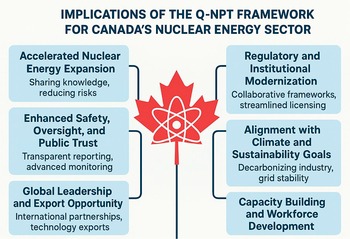
Implementing the Q-NPT framework in Canada has far-reaching implications across domestic policy development, international leadership, institutional reform and risk governance. The framework strengthens the feasibility and legitimacy of nuclear energy expansion by embedding mechanisms of Trust, Participation and Equity into the core of project development. By emphasizing governance rather than technology alone, Q-NPT shifts nuclear deployment from a narrow engineering challenge to a broader social contract based on procedural fairness and long-term accountability (Stirling, Reference Stirling2014).
A key implication lies in domestic nuclear energy expansion and social license. Institutions grounded in trust and transparent decision-making can reduce delays in regulatory approvals, address persistent opposition from affected communities and improve investor confidence by reducing uncertainty in project timelines. By aligning deployment pathways with public expectations for fairness, engagement and benefits-sharing, Q-NPT increases the likelihood that new-build projects – including SMRs and refurbishments – can proceed with durable legitimacy rather than conditional acceptance.
At the international level, Q-NPT enables Canada to strengthen its global leadership in civil nuclear development. Beyond exporting reactor technologies, Canada can differentiate itself by exporting a governance model anchored in transparency in decision-making, Indigenous engagement and nonproliferation integrity. This governance package can accompany technology exports and international collaborations, particularly in emerging markets seeking credible and responsible frameworks for nuclear energy deployment.
Q-NPT advances integration between nuclear energy policy and Canada’s net-zero climate objectives. By framing nuclear energy through fair governance, it becomes a credible low-carbon generation option that complements renewable energy and supports grid stability. Incorporating emissions accounting, lifecycle assessments and local benefit mechanisms into deployment planning strengthens policy coherence across energy security, climate resilience and sustainability goals.
Implementation will require iterative adaptation of regulatory guidance, funding programs for skills development and new requirements for stakeholder engagement and monitoring. These reforms build the long-term institutional capacity necessary to manage complex nuclear systems while ensuring that governance remains adaptive, transparent and responsive to emerging risks. Key pillars engaged here include Trust and Equity, reinforcing procedural fairness and participatory legitimacy.
High-profile energy projects are vulnerable to political, social and economic disruptions, often originating from governance failures rather than technology. Q-NPT mitigates these risks by emphasizing conflict prevention, transparent communication, independent review and social equity. These safeguards help prevent public opposition, misinformation and consultation breakdowns that could threaten project viability.
Pilot applications of Q-NPT in Canada, if systematically documented and evaluated, can generate comparative governance lessons for international best practice. These insights can shape multilateral collaborations and capacity-building programs, contributing to safer, more equitable global nuclear energy development.
Figure 2 illustrates the six strategic domains influenced by Q-NPT: domestic expansion, global positioning, climate policy integration, institutional reforms, risk considerations and comparative governance insights. Each domain reinforces the others, creating mutually strengthening benefits. This interconnected system demonstrates how Q-NPT-informed governance enables Canada to expand nuclear energy capacity with social legitimacy, enhance public trust, lead globally in nuclear innovation and advance climate commitments within a coherent and future-ready governance model.
Strategic implications of the Q-NPT framework for Canada’s nuclear energy sector.

Operational roadmap: a staged plan for Q-NPT adoption in Canada
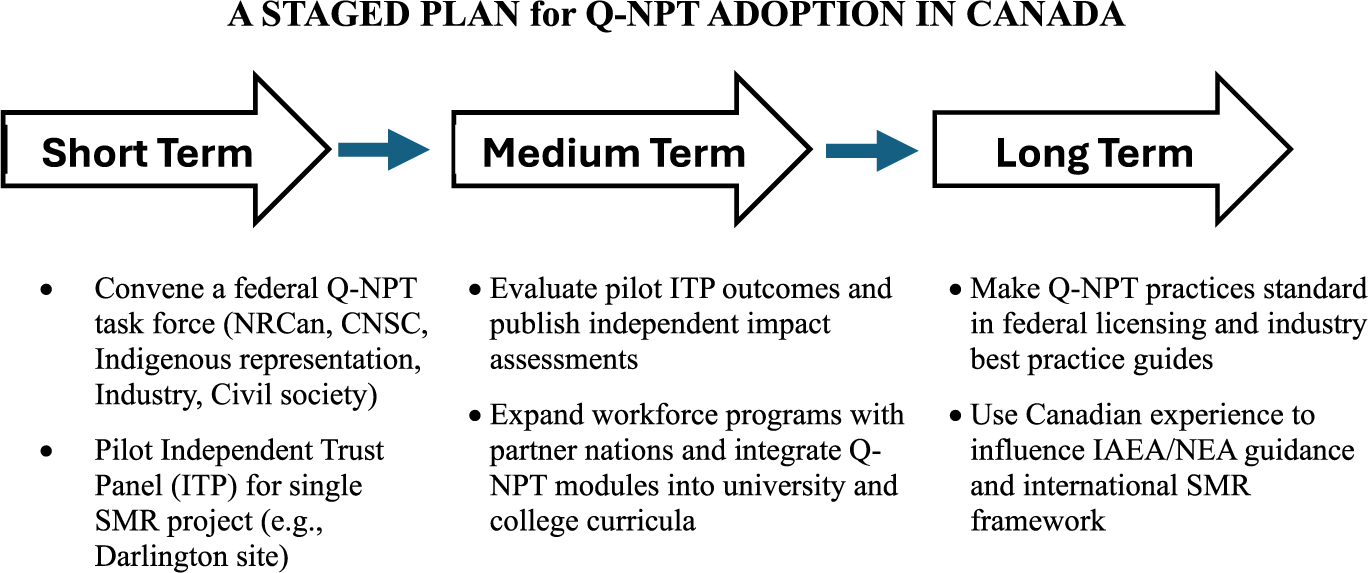
This section translates Q-NPT into a practical, time-phased (three phases) implementation plan spanning 0–24 months (short term), 2–5 years (medium term) and 5–10 years (long term). The roadmap highlights staged interventions to establish, scale and normalize Q-NPT governance in Canada while advancing equity, workforce development and international capacity-building.
Phase 1: Short term (0–24 months) – establish enabling structures
-
• Convene a federal Q-NPT task force (NRCan, CNSC, Indigenous representation, industry and civil society).
-
• Pilot an ITP for a single SMR project (e.g., Darlington site) with a clearly defined mandate and public reporting schedule.
-
• Introduce measurable thresholds for the pilot ITP: ≥ 6–10 annual engagement events, ≥ 80% document transparency and baseline trust surveys to track ≥20-point increases over time.
-
• Launch targeted workforce scholarship and apprenticeship funds in partnership with provincial governments and emerging/national partner nations (e.g., Romania). This includes training programs where Canadian institutions provide technology and technical expertise while partner countries’ workforce gains SMR skills.
-
• Update licensing guidance to require community engagement plans and Indigenous partnership frameworks for SMR and refurbishment projects.
Phase 2: Medium term (2–5 years) – scale pilots, institutionalize practices
-
• Evaluate pilot ITP outcomes and publish independent impact assessments.
-
• Expand governance metrics nationally: procedural trust ≥70%, Indigenous participation ≥25%, equity assessment showing burden ratios ≤1.25 across communities.
-
• Expand workforce programs nationwide and integrate international collaborations, embedding Q-NPT modules into university and college curricula for both Canadian and partner-nation trainees.
-
• Integrate standardized metrics into all SMR and refurbishment project monitoring (e.g., transparency ≥80%, regulatory trust ≥65%, licensing timeline adherence ≤30 months).
-
• Formalize international governance assistance packages (training, regulatory consultancy) to accompany exports.
-
• Embed performance metrics for trust and equity (surveys, participation rates and employment outcomes) into project monitoring.
Phase 3: Long term (5–10 years) – normalize and export Q-NPT governance
-
• Make Q-NPT practices standard in federal licensing and industry best practice guides.
-
• Use Canadian experience to influence IAEA/NEA guidance and international SMR frameworks.
-
• Evaluate systemic Q-NPT performance using longitudinal indicators, including workforce sufficiency (≥90,000 workers by 2040), sustained trust levels ≥65–70%, participation diversity ≥50% nonindustry and equity compliance.
-
• Evaluate systemic impacts on decarbonization outcomes and refine Q-NPT mechanisms through iterative learning.
The following Figure 3 visually summarizes the staged progression of Q-NPT adoption, linking short-term enabling structures to medium-term scaling and long-term normalization and export of best practices.
Operational roadmap for Q-NPT adoption in Canada.

Discussion: benefits, challenges and research agenda
The Q-NPT framework provides significant benefits in legitimacy, resilience and equity, but its implementation requires resources, careful measurement of trust and attention to international and political dynamics. The following sections detail the key benefits, challenges and priority research areas for refining and operationalizing Q-NPT in SMR deployment.
Benefits and value add
The Q-NPT framework offers multiple interrelated benefits that stem directly from the analyses and proposals presented in Sections `Applying Q-NPT to Canada: empirical grounding and operational pathways`, ‘Strategic implications and policy package’, and `Operational roadmap: a staged plan for Q-NPT adoption in Canada`. By institutionalizing structured participation and transparency, Q-NPT enhances legitimacy in both domestic and international contexts. Our outcome analyses show that projects embedding Q-NPT principles experience fewer instances of social friction and opposition, which historically have delayed SMR deployment. Legitimacy is reinforced not only through formal consultation mechanisms but also through tangible programs that align stakeholder interests, including Indigenous communities and regional partners, with project outcomes.
Beyond legitimacy, Q-NPT fosters resilience in governance and project execution. The operational roadmap demonstrates that embedding trust-oriented governance mechanisms, such as the ITP and workforce development programs, creates a predictable environment that mitigates risks of disruptive opposition or litigation. Evidence from workforce initiatives, particularly those involving international collaboration with emerging partners like Romania, indicates that skill transfer and capacity-building reinforce both local and global resilience, enabling SMR projects to progress with greater stability and fewer unforeseen delays.
Equity emerges as another key value add of Q-NPT. Our Section ‘Applying Q-NPT to Canada: empirical grounding and operational pathways’ analysis highlights the persistent gaps in workforce representation and regional participation in nuclear energy projects. By deliberately structuring scholarships, apprenticeships and targeted benefit-sharing mechanisms, Q-NPT not only addresses historical inequities but also ensures that economic and technical gains are distributed more broadly. The combination of domestic equity strategies and international workforce partnerships underscores a central premise of Q-NPT: technology deployment and social license are inseparable from capacity development and fair participation.
Challenges and caveats
Despite these advantages, Q-NPT implementation faces several substantive challenges. Governance reforms require sustained investment of both financial and political resources, and embedding trust mechanisms is neither instantaneous nor cost-free. As our Section ‘Operational roadmap: a staged plan for Q-NPT adoption in Canada’ roadmap shows, short-term enabling structures, pilot programs and the expansion of international workforce collaborations involve significant coordination and funding commitments.
Measuring trust and procedural fairness presents another challenge. Unlike technical performance metrics, social outcomes such as legitimacy, equity and perceived fairness are inherently complex and context dependent. The analyses in Section ‘Strategic implications and policy package’ underscore that operational indicators for trust require careful design, ongoing monitoring and iterative adaptation to local and international circumstances. Misalignment between measurement approaches and stakeholder expectations could undermine the credibility and effectiveness of Q-NPT mechanisms.
Finally, the international dimension introduces geopolitical and sovereignty considerations. Exporting governance models, workforce programs and technical expertise intersects with the policy priorities and political sensitivities of recipient countries. While the pilot partnership with Romania illustrates the potential for mutual benefit and capacity-building, broader scaling across diverse national contexts will require careful negotiation, respect for local governance and sensitivity to international dynamics.
Future research priorities
To support evidence-based refinement of Q-NPT, several research avenues are paramount. Empirical evaluations of pilot programs, including pre- and post-implementation measures of trust, workforce outcomes and project timelines, are essential to quantify benefits and identify best practices. Comparative case studies across nations piloting SMRs, such as Canada, Romania, South Korea, France and South Africa, would further clarify the transferability of Q-NPT governance mechanisms and workforce strategies.
Economic analyses are also critical. Cost–benefit studies that incorporate avoided delays, litigation and social opposition, alongside traditional project metrics, will demonstrate the tangible value of embedding trust and equity in governance. Finally, developing robust, standardized metrics for “trust capital” and procedural fairness in energy projects will provide policymakers and industry practitioners with actionable tools to monitor and sustain social license over time. Collectively, these research priorities will enable Q-NPT to evolve as a rigorous, empirically grounded framework for equitable and resilient nuclear energy technology deployment.
Conclusion
The potential of nuclear energy to drive deep decarbonization hinges not only on technology but on governance that fosters public trust, ensures equitable access and aligns domestic practice with international norms. The Q-NPT framework offers a structured, actionable approach to achieve these objectives. For Canada, with its established nuclear energy infrastructure and emerging SMR ambitions, Q-NPT provides a roadmap to integrate technological advancement with social legitimacy, ensuring that nuclear energy can contribute meaningfully and responsibly to the country’s energy transition.
Effective implementation of Q-NPT demands deliberate institutional reforms, including independent trust mechanisms, targeted workforce development both domestically and with partner nations, incorporation of trust and equity criteria into licensing and the export of governance expertise alongside technology. The measurable governance thresholds identified in this study – such as achieving ≥60–70% public trust, ≥70% procedural fairness satisfaction, ≥ 25% Indigenous participation in decision structures, ≥30% representation of underrepresented groups in workforce pipelines, licensing review timelines ≤24–30 months and transparency levels ≥80–90% – provide concrete milestones for evaluating progress. When coupled with rigorous oversight and international collaboration, Q-NPT has the potential to transform nuclear energy from a politically contested option into a credible, socially accepted and sustainable contributor to a safe, just and low-carbon energy future.
By demonstrating how governance outcomes can be measured, tracked and independently verified, this framework provides a clearer pathway for assessing advantages and identifying constraints compared to more qualitative or ad hoc approaches used in current nuclear policy. Quantitative metrics such as trust growth rates, regional equity ratios ≤1.25 and workforce capacity targets (≥90,000 trained workers by 2040) illustrate how Q-NPT can directly inform policy sequencing, investment decisions and regulatory prioritization.
Q-NPT provides a pathway for achieving a socially licensed, resilient and equitable nuclear energy sector, making such outcomes both feasible and strategically advantageous. By pairing technology with measurable trust and equity mechanisms, and by embedding them into regulatory and institutional practice, countries can accelerate deployment timelines, strengthen regional and international partnerships and enhance the overall contribution of nuclear energy to national and global climate goals.
Open peer review
To view the open peer review materials for this article, please visit https://doi.org/10.1017/etr.2026.10012.
Data availability statement
All data supporting the findings of this study are publicly available from the sources cited in the manuscript.
Author contribution
Hassan Qudrat-Ullah conceptualized the study, developed the Q-NPT framework analysis, led the literature review, drafted the manuscript and prepared all figures.
Financial support
This research received no specific grant from any funding agency, commercial or not-for-profit sectors.
Competing interests
The author declares no conflict of interest.

 Open access


Comments
Editor-in-Chief
Cambridge Prisms: Energy Transitions
Cambridge University Press
Dear Colleague,
I am pleased to submit our manuscript entitled “Canada and the Q-NPT Framework for a Nuclear Energy Future: Embedding Trust, Equity, and Governance in Energy Transitions” for consideration in Cambridge Prisms: Energy Transitions.
This article addresses a pressing gap in contemporary energy transition research: while nuclear energy is being reintroduced into national decarbonization pathways, deployment continues to be constrained less by technology and more by deficits in governance, public trust, and equity. To address this, the paper advances and empirically applies the Qudrat-Ullah Nuclear Peace and Trust (Q-NPT) framework—a systemic governance model that embeds trust-building, equity mechanisms, and institutional accountability into nuclear policy strategies.
Using Canada as a detailed case study, the paper:
• Maps Q-NPT governance dimensions onto Canada’s SMR strategy, regulatory context, and federal–Indigenous decision processes;
• Uses empirical evidence (nuclear generation trends, SMR licensing status, workforce capacity, and governance milestones) to assess institutional readiness;
• Identifies governance gaps limiting nuclear deployment despite strong technical capacity;
• Proposes a practical implementation roadmap for policymakers, including independent trust panels, benefit-sharing models, and stakeholder engagement protocols.
This manuscript offers three key contributions to the mission of Energy Transitions:
1. Introduces Q-NPT as an original governance innovation capable of operationalizing trust and equity in energy systems.
2. Bridges nuclear energy policy with just transitions research, linking social legitimacy to low-carbon deployment.
3. Demonstrates actionable reform strategies for policymakers and energy agencies seeking credible pathways to net-zero.
Given the journal’s commitment to interdisciplinary, socially responsible, and policy-relevant energy scholarship, we believe this manuscript offers a timely contribution to discussions on credible, just, and inclusive pathways to decarbonization.
We welcome the opportunity to contribute to this journal and look forward to your feedback.
Best wishes,
Hassan Qudrat-Ullah
Professor of Decision Sciences
York University, Toronto, Canada
October 20, 2025