


A new form of treatment for bulimia nervosa has emerged that provides cognitive–behavioural therapy (CBT) via internet platforms usually supplemented with email support from trained psychologists or psychotherapists. Guided internet-delivered treatment has been described as an approach that combines structured self-help material presented via the internet with support from a psychotherapist, who can direct therapeutic activities via email. Reference Andersson1,Reference Sanchez-Ortiz, Munro, Startup, Treasure and Schmidt2 Besides being cost-effective, such a therapeutic setting may attract patients reluctant to attend conventional psychotherapy, for reasons including shame, practicability or a shortage of specialised centres. 3–Reference Schmidt, Lee, Beecham, Perkins, Treasure and Yi7 Cognitive–behavioural therapy is the treatment of choice for adults with bulimia nervosa. Guided and un-guided self-help formats of CBT for bulimia nervosa can be as effective as face-to-face therapy Reference Bailer, de Zwaan, Leisch, Strnad, Lennkh-Wolfsberg and El-Giamal8,Reference Mitchell, Agras, Crow, Halmi, Fairburn and Bryson9 in the short and long term. Reference Loeb, Wilson, Gilbert and Labouvie10–Reference Traviss, Heywood-Everett and Hill13 Bibliotherapy is the gold-standard of self-help treatment for bulimia nervosa and binge eating disorder. Reference Fairburn14,Reference Treasure and Schmidt15 Studies delivering self-help by telemedicine, Reference Schmidt, Lee, Beecham, Perkins, Treasure and Yi7,Reference Crow, Mitchell, Crosby, Swanson, Wonderlich and Lancanster16–Reference Schmidt, Andiappan, Grover, Robinson, Perkins and Dugmore18 CD-Rom Reference Schmidt, Lee, Beecham, Perkins, Treasure and Yi7,Reference Schmidt, Andiappan, Grover, Robinson, Perkins and Dugmore18 and via internet-platforms Reference Carrard, Fernandez-Aranda, Lam, Nevonen, Liwowsky and Volkart19–Reference Sanchez-Ortiz, Munro, Stahl, House, Startup and Treasure21 have proven to be efficient in both a representative population of clinical patients, and a student population with bulimia nervosa and eating disorder not otherwise specified (EDNOS) compared with waiting-list controls.
We conducted a randomised controlled trial (RCT) comparing internet-based guided self-help (INT-GSH) with conventional bibliotherapy (BIB-GSH) as an active control in clinical patients with bulimia nervosa. As long-term outcome studies of self-help formats implementing new technologies are scarce for patients with bulimia nervosa, we also addressed long-term outcome, using validated interviews for outcome assessments. Our primary hypothesis was that INT-GSH would lead to a better treatment outcome than BIB-GSH, i.e. a greater reduction in binge eating and purging behaviour, and also to a higher abstinence rate at the end of treatment and at long-term follow-up. Our secondary hypothesis was that associated eating disorder-specific psychopathology would more significantly decrease in the INT-GSH group than in the conventional BIB-GSH group.
Method
Participants
The study was carried out at the Eating Disorders Unit, Department of Child and Adolescent Psychiatry at the Medical University of Vienna, Austria, in collaboration with the eating disorders department at the Parklandklinik, Germany (trial registration number: NCT00461071). We obtained approval from the ethics committee of the Medical University of Vienna. Patients were recruited between December 2006 and June 2008 through advertisements. Participants gave written informed consent, while for minors, additional consent from a parent was obligatory.
First, we attempted to contact patients who had reported interest in participating in the study. These individuals were then assessed to see whether they met the criteria for eligibility. Inclusion criteria were: age 16–35 years, fulfilment of the diagnostic criteria for bulimia nervosa purging type according to DSM-IV-TR, 22 EDNOS with binge eating or purging behaviour between once and twice a week or for less than 3 months and a body mass index (BMI) above 18. Exclusion criteria were acute suicidality, severe depression or other mental disorders affecting cognition, current drug misuse and current participation in CBT.
Interventions
INT-GSH
The INT-GSH was a CBT-based self-help programme (www.netunion.com) provided via an internet platform (see also Carrard et al Reference Carrard, Fernandez-Aranda, Lam, Nevonen, Liwowsky and Volkart19 and Fernandez-Aranda et al Reference Fernandez-Aranda, Nunez, Martinez, Krug, Cappozzo and Carrard20 ). Patients were obliged to use it for a period of 4–7 months and were supported throughout through weekly emails from psychologists or psychotherapists with eating disorder experience. The aim of the email support was to motivate patients, answer technical questions about the computer program, or address other problems that arose. The psychologist had access to the patients' progress on the program. The patient could only continue with the next step when the previous one was completed.
BIB-GSH
The conventional guided bibliotherapy intervention used was Getting Better Bit(e) by Bit(e), Reference Treasure and Schmidt15 which is a self-help manual that is based on CBT and delivers its therapeutic content through the course of 15 chapters. The content of the manual, structure and email support was similar to the INT-GSH intervention but also addresses additional topics such as drug misuse and sexuality. The patient's use of the book is more flexible than the INT-GSH.
Assessment
In a clinical telephone interview, patients' eligibility for the study was assessed. Baseline assessments, and follow-up assessments at month 4 and 7 were performed face to face in each of the participating centres, which included structured interviews and self-rating questionnaires. At month 18, most interviews were conducted by telephone by independent researchers not involved in the treatment, although eight interviews were conducted in person at the clinic (four in each intervention group). Intensive rater training was provided for interviewers in all centres by a researcher experienced in eating disorder assessment (G.W.). In cases of rater disagreement, this was discussed until there were consistent ratings for all items. True randomisation was conducted using the program at www.random.org for two groups.
The intervention programmes and procedures were explained by the psychologists, and email support was provided weekly by psychologists experienced in eating disorders. If there was no email contact for at least 3 weeks, patients were contacted by telephone in order to re-motivate them to continue with the treatment. In cases where patients did not respond or had discontinued the treatment, they were considered to have dropped out from treatment. After the end of treatment, patients were offered contact addresses of psychotherapists or institutions where they could continue psychotherapy in case of continued eating disorder symptomatology, or, when symptom-free, they could contact in case of relapse. Efforts were made to approach all patients at month 18.
A complete medical and psychiatric check-up was performed by an experienced psychiatrist and family doctor masked to group allocation, including blood analysis for standard medical evaluations and assessment of psychiatric comorbidities at baseline and month 4.
Structured interview measures
We used the QATA (Questionnaire Anamnestique pour les Troubles Alimentaire) to obtain sociodemographic and eating disorder history to ascertain DSM-IV eating disorder diagnosis. Reference Carrard, Fernandez-Aranda, Lam, Nevonen, Liwowsky and Volkart19 To assess detailed information on common comorbidity we used the Structured Interview for Anorexia nervosa and Bulimia nervosa (SIAB-EX). Reference Fichter and Quadflieg23 Interrater reliability ranges from 0.81 to 0.85. Convergent and discriminant validity of the SIAB-EX has been demonstrated.
Self-rating questionnaires
The Eating Disorder Inventory (EDI-2) is a widely used, standardised, self-report measure of psychological symptoms and traits commonly associated with eating disorders, Reference Garner and Olmsted24 with excellent validity and reliability data. Reference Rathner and Rumpold25
Statistical analysis
We used the Statistical Package for Social Sciences (SPSS19) on Windows. Primary analyses considered changes in monthly binge eating and compensatory measures (vomiting, laxative misuse, sports and fasting) over the previous month at baseline, month 4, 7 and 18 as assessed by the QATA interview. Secondary analyses involved eating disorder-specific psychopathology as measured by the EDI-2 and psychiatric comorbidity as measured by the SIAB-EX at the same assessment points.
Linear mixed-model analyses were conducted to assess the effectiveness of the two interventions. This involved a 2 (group: INT-GSH and BIB-GSH)×4 (time: baseline, month 4, 7 and 18) mixed design for each of the quantitative variables (binge eating, compensatory behaviours and EDI-2 scores). The intention-to-treat procedure with the last-observation-carried-forward method of imputation for missing values was applied. When necessary, Bonferroni-adjusted post hoc analyses were conducted to value the effect of group or time conditions. When the main effects of time were statistically significant, orthogonal polynomial contrasts were estimated to value the linear, quadratic and cubic trends over phases, using as metric the distance in months between assessments (0, 4, 7, 18).
Eating disorder symptomatology and sociodemographic variables at baseline were compared through t-tests for quantitative measures and chi-squared tests for dichotomous variables. For positive outcome (abstinence or remission) we applied a binary logistic regression, with a step-wise backward procedure and likelihood ratio estimation. Probability for entry and removal were 0.05 and 0.10 respectively. All hypotheses were tested at a significance level of 5%.
Power analysis (chi-squared test, one-tailed, alpha level 5%) is based on the reduction of purging behaviour (operationalised by an eating disorder interview) from the beginning of therapy to follow-up, as measured by Thiels et al. 12 Original power analysis assuming equal sample sizes of n = 70 in each group yielded a power of 87.7%.
Results
Patient flow
Figure 1 shows the participant flow (according to CONSORT 2010) Reference Schulz, Altaian and Moher26 throughout the study. A comparable number of assigned patients took up treatment in both groups (84.3% in the INT-GSH group v. 77.8% in the BIB-GSH group) and were assessed for baseline evaluation.
In both groups, more than two-thirds were assessed at month 4 (71.4% in both groups) and more than 60% were assessed at month 7 (61.4% in the INT-GSH group v. 62.5% in the BIB-GSH group).
For post evaluations at month 18, we approached all patients who have completed or dropped out of the interventions and 78.6% could be contacted in the INT-GSH group v. 57.1% in the BIB-GSH group. Of those reachable at month 18, 68.6% and 51.8% had completed minimum adequate treatment, defined as programme participation for 8 weeks reaching at least module 3 in the INT-GSH intervention and finishing at least 6 chapters in the BIB-GSH intervention. Completers and non-completers did not differ in baseline sociodemographic and clinical characteristics, and percentages of completers did not differ between the two groups (χ2 = 3.688, P = 0.055).
Patient characteristics at baseline
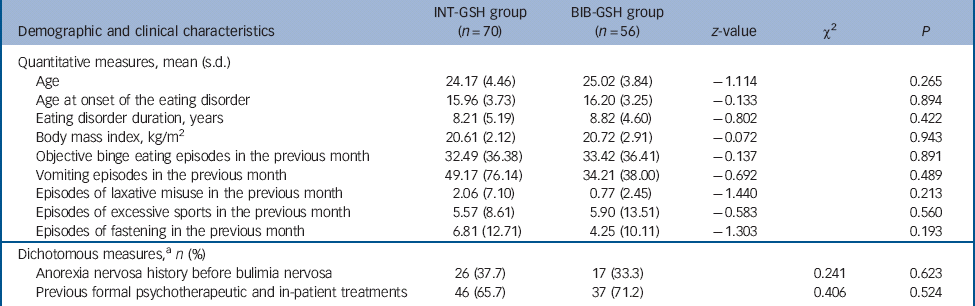
Baseline sociodemographic and clinical characteristics did not differ between the two treatment groups (Table 1). Both groups had long eating disorder histories, a third had a diagnosis of previous anorexia nervosa, and about two-thirds had engaged in previous psychotherapy. Eating disorder diagnosis was bulimia nervosa in 90% of the study population and 10% had EDNOS.
Flow diagram of participants through the phases of randomisation, allocation and follow-up.
EDNOS, eating disorders not otherwise specified; INT-GSH, internet-based guided self-help; BIB-GSH, guided bibliotherapy.

Comparison of baseline demographic and clinical characteristics of patients with bulimia nervosa in a randomised controlled trial of internet-based guided self-help (INT-GSH) and guided bibliotherapy (BIB-GSH)
| Demographic and clinical characteristics | INT-GSH group (n = 70) | BIB-GSH group (n = 56) | z-value | χ2 | P |
|---|---|---|---|---|---|
| Quantitative measures, mean (s.d.) | |||||
| Age | 24.17 (4.46) | 25.02 (3.84) | –1.114 | 0.265 | |
| Age at onset of the eating disorder | 15.96 (3.73) | 16.20 (3.25) | –0.133 | 0.894 | |
| Eating disorder duration, years | 8.21 (5.19) | 8.82 (4.60) | –0.802 | 0.422 | |
| Body mass index, kg/m2 | 20.61 (2.12) | 20.72 (2.91) | –0.072 | 0.943 | |
| Objective binge eating episodes in the previous month | 32.49 (36.38) | 33.42 (36.41) | –0.137 | 0.891 | |
| Vomiting episodes in the previous month | 49.17 (76.14) | 34.21 (38.00) | –0.692 | 0.489 | |
| Episodes of laxative misuse in the previous month | 2.06 (7.10) | 0.77 (2.45) | –1.440 | 0.213 | |
| Episodes of excessive sports in the previous month | 5.57 (8.61) | 5.90 (13.51) | –0.583 | 0.560 | |
| Episodes of fastening in the previous month | 6.81 (12.71) | 4.25 (10.11) | –1.303 | 0.193 | |
| Dichotomous measures, a n (%) | |||||
| Anorexia nervosa history before bulimia nervosa | 26 (37.7) | 17 (33.3) | 0.241 | 0.623 | |
| Previous formal psychotherapeutic and in-patient treatments | 46 (65.7) | 37 (71.2) | 0.406 | 0.524 | |
a Missing data for this variable: INT-GSH group, n = 69; BIB-GSH group, n = 52.
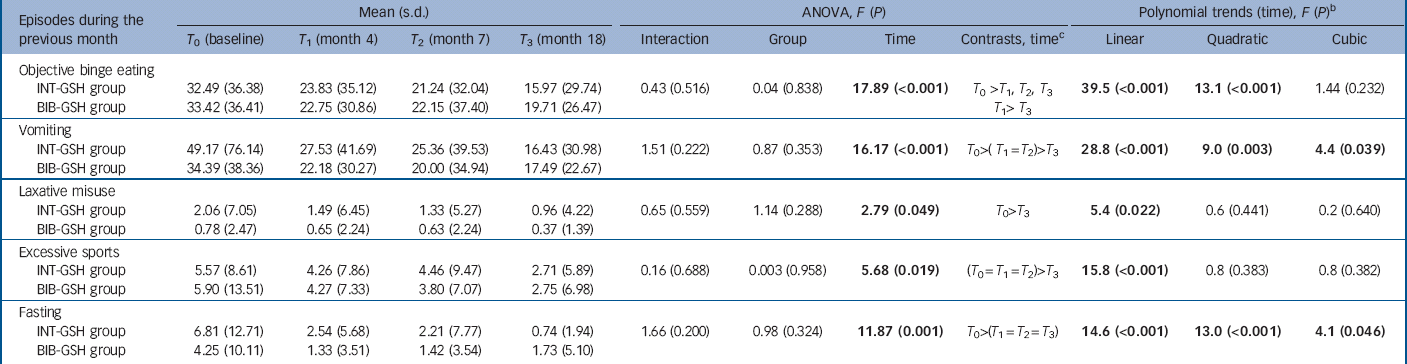
Change in binge eating and compensatory behaviours over time regarding internet-based guided self-help (INT-GSH, n = 70) and guided bibliotherapy (BIB-GSH; n = 52), after last-observation-carried-forward imputation a
| Episodes during the previous month | Mean (s.d.) | ANOVA, F (P) | Polynomial trends (time), F (P) b | ||||||||
|---|---|---|---|---|---|---|---|---|---|---|---|
| T 0 (baseline) | T 1 (month 4) | T 2 (month 7) | T 3 (month 18) | Interaction | Group | Time | Contrasts, time c | Linear | Quadratic | Cubic | |
| Objective binge eating | |||||||||||
| INT-GSH group | 32.49 (36.38) | 23.83 (35.12) | 21.24 (32.04) | 15.97 (29.74) | 0.43 (0.516) | 0.04 (0.838) | 17.89 (<0.001) | T 0 >T 1, T 2, T 3 | 39.5 (<0.001) | 13.1 (<0.001) | 1.44 (0.232) |
| BIB-GSH group | 33.42 (36.41) | 22.75 (30.86) | 22.15 (37.40) | 19.71 (26.47) | T 1> T 3 | ||||||
| Vomiting | |||||||||||
| INT-GSH group | 49.17 (76.14) | 27.53 (41.69) | 25.36 (39.53) | 16.43 (30.98) | 1.51 (0.222) | 0.87 (0.353) | 16.17 (<0.001) | T 0>(T 1 = T 2)>T 3 | 28.8 (<0.001) | 9.0 (0.003) | 4.4 (0.039) |
| BIB-GSH group | 34.39 (38.36) | 22.18 (30.27) | 20.00 (34.94) | 17.49 (22.67) | |||||||
| Laxative misuse | |||||||||||
| INT-GSH group | 2.06 (7.05) | 1.49 (6.45) | 1.33 (5.27) | 0.96 (4.22) | 0.65 (0.559) | 1.14 (0.288) | 2.79 (0.049) | T 0>T 3 | 5.4 (0.022) | 0.6 (0.441) | 0.2 (0.640) |
| BIB-GSH group | 0.78 (2.47) | 0.65 (2.24) | 0.63 (2.24) | 0.37 (1.39) | |||||||
| Excessive sports | |||||||||||
| INT-GSH group | 5.57 (8.61) | 4.26 (7.86) | 4.46 (9.47) | 2.71 (5.89) | 0.16 (0.688) | 0.003 (0.958) | 5.68 (0.019) | (T 0 = T 1 = T 2)>T 3 | 15.8 (<0.001) | 0.8 (0.383) | 0.8 (0.382) |
| BIB-GSH group | 5.90 (13.51) | 4.27 (7.33) | 3.80 (7.07) | 2.75 (6.98) | |||||||
| Fasting | |||||||||||
| INT-GSH group | 6.81 (12.71) | 2.54 (5.68) | 2.21 (7.77) | 0.74 (1.94) | 1.66 (0.200) | 0.98 (0.324) | 11.87 (0.001) | T 0>(T 1 = T 2 = T 3) | 14.6 (<0.001) | 13.0 (<0.001) | 4.1 (0.046) |
| BIB-GSH group | 4.25 (10.11) | 1.33 (3.51) | 1.42 (3.54) | 1.73 (5.10) | |||||||
a Results in bold are significant at 0.05 level.
b Metric for polynomial contrasts taking into account the different interval between phases (0, 4, 7, 18).
c Multiple comparison with Bonferroni's correction.
The importance of email contact was rated by the patients from 0 (not helpful at all) to 6 (very helpful). For the INT-GSH and BIB-GSH group, 54% and 43% rated email contact as very helpful, 43% and 51% as helpful, and 3% and 5% as rather not or not at all helpful respectively.
Primary outcomes
Table 2 shows the evolution of binge eating episodes and compensatory behaviours per month for each treatment arm. No interaction effects (group time) or main effect for group were found, and therefore, the main effect for time was evaluated. A significant reduction between baseline and month 18 could be shown for all measures. Significant changes for binge eating, vomiting and fasting also occurred during the first 4 months of therapy, following a negative linear trend plus a positive quadratic trend (sharper decrease in earlier phases and then flattens out), whereas for laxative misuse and excessive sports only the negative linear trend was statistically significant over time. In addition, lower scores for binge eating, vomiting and excessive sport were observed at month 18 compared with at month 7. Making adjustments for our final sample size of n = 70 and n = 56 in the two treatment groups, we can expect a power of 84.0%.
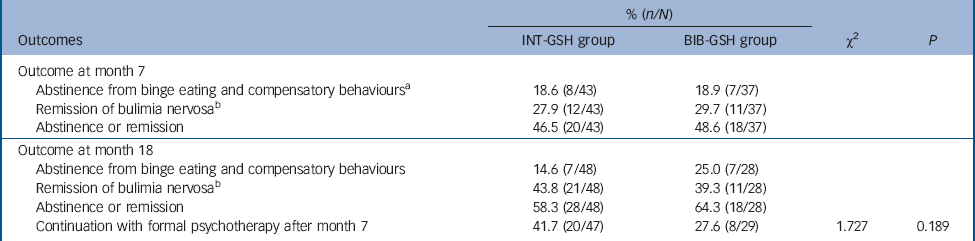
We calculated the proportion of patients who were abstinent from binge eating and compensatory behaviours after treatment taking into account the previous 4 weeks at month 7 and the previous 3 months at 18-month follow-up and assessed remission rates defined by not fulfilling DSM-IV criteria for bulimia nervosa (Table 3). Remission was defined as being below the DSM-IV threshold (i.e. binge eating and compensatory behaviours less than twice a week over the previous 4 weeks or 3 months respectively). There were no differences in abstinence and remission rates between the two groups.
Further psychotherapy
A subgroup of patients continued with formal psychotherapy after the end of treatment (Table 3). Mean duration of post-treatment individual psychotherapy was 11.39 months (s.d. = 7.81) in the INT-GSH group and 7.57 (s.d. = 5.16) in the BIB-GSH group. The subgroup of patients that continued with further psychotherapy had a significantly higher number of weekly episodes of binge eating behaviour (mean 9.15, s.d. = 13.03) than those not continuing with psychotherapy (mean 2.19, s.d. = 2.80) (t = 2.428, P =0.024).
Binge eating and vomiting could be reduced to a greater extent in the group who continued with psychotherapy after month 7 compared with the group who did not (F (1,62) = 6.796, P = 0.011 and F (1,62) = 6.104, P = 0.016 respectively). Weekly binge eating could be reduced to a mean frequency of 4.14 (s.d. = 6.34) and weekly vomiting to a mean of 5.06 (s.d. = 9.07). In the group that did not take up psychotherapy after month 7, weekly binge eating and vomiting behaviour did not change.
Secondary outcomes
For all EDI-2 scale scores, no interaction effect (group time) or main effect for group were found and only the main effect of time was statistically significant (online Table DS1). Scores at baseline were higher than at the three follow-up points, indicating that all EDI-2 scores decreased over time. However, this issue was more pronounced at earlier than later stages (negative linear trend plus positive quadratic trend).
Abstinence and remission rates at the end of treatment and at follow-up for internet-based guided self-help (INT-GSH) v. guided bibliotherapy (BIB-GSH)
| % (n/N) | ||||
|---|---|---|---|---|
| Outcomes | INT-GSH group | BIB-GSH group | χ2 | P |
| Outcome at month 7 | ||||
| Abstinence from binge eating and compensatory behaviours a | 18.6 (8/43) | 18.9 (7/37) | ||
| Remission of bulimia nervosa b | 27.9 (12/43) | 29.7 (11/37) | ||
| Abstinence or remission | 46.5 (20/43) | 48.6 (18/37) | ||
| Outcome at month 18 | ||||
| Abstinence from binge eating and compensatory behaviours | 14.6 (7/48) | 25.0 (7/28) | ||
| Remission of bulimia nervosa b | 43.8 (21/48) | 39.3 (11/28) | ||
| Abstinence or remission | 58.3 (28/48) | 64.3 (18/28) | ||
| Continuation with formal psychotherapy after month 7 | 41.7 (20/47) | 27.6 (8/29) | 1.727 | 0.189 |
a In the time period of the preceding month.
b Remission is defined as not fulfilling DSM-IV criteria for bulimia nervosa.
Binary regression analysis predicting positive outcome at month 18 (0: abstinence of binge–purging behaviour or in remission; 1: remaining full DSM-IV criteria) revealed a statistically significant association of binge eating frequency and the EDI-2 scale ‘drive for thinness’. Lower frequency of binge eating (odds ratio (OR) = 1.07, 95% CI 1.02–1.11, P<0.001) and higher scores of ‘drive for thinness’ (OR = 0.92, 95% CI 0.83–1.01, P = 0.065) at baseline were related to a positive outcome at month 18 (criterion coded as 0). No association with outcome was found for all other putative predictors. Goodness-of-fit of the model was satisfactory (Negelkerke's R = 0.40, Hosmer-Lemeshow's test P = 0.864).
Discussion
Main findings
In this RCT, we compared the long-term outcome of INT-GSH and BIB-GSH in severely ill female patients with bulimia nervosa. The main hypothesis, that INT-GSH would be superior to BIB-GSH, was not confirmed. Intention-to-treat analysis found no superior effect for INT-GSH concerning primary and secondary outcome measures at the end of therapy and at long-term 18-month follow-up. Frequency of binge eating, vomiting and fasting could be significantly reduced by both treatments, with the greatest improvements within the first 4 months, which could be further increased by continued treatment to month 7 and stabilised at 18-month follow-up.
Loss of potential participants
We lost contact with 47 (20%) females who initially reported interest in taking part in the study and 13 who did not show up at the start of the intervention in the INT-GSH group and 16 in the BIB-GSH group. That substantial numbers of potential participants for internet-based therapy studies are lost prior to the start of treatment has been discussed previously, Reference Waller and Gilbody27 but there are few data on why this is the case. Waller & Gilbody have speculated that there are additional costs for hardware and internet access, and people with the lowest level of education will often be excluded. Reference Waller and Gilbody27 Reasons why patients did not take up an intervention via CD-ROM for bulimia nervosa have been explored, Reference Murray, Pombo-Carril, Bara-Carril, Grover, Reid and Langham28 but no differences in views of using self-help, computer literacy, and knowledge about bulimia nervosa compared with participants starting the intervention were found. However, differences were found regarding confidence in the usefulness of self-help, and those who did not start considered that a CD-ROM was inferior to face-to-face interventions. This may also be a consideration for not taking up bibliotherapy. However, in our trial face-to-face therapy was not offered as an alternative.
In our study, in order to participate and receive free treatment, patients had to (a) see a family doctor, who referred them to our clinic and (b) get blood tests as part of our medical assessment. As bulimia nervosa is known as a psychiatric illness with possible shameful connotations, and often kept secret from parents, for potential participants who were co-insured with their parents it might be difficult to officially declare their illness. It is possible that this high level of prerequisite might have impeded some patients from the next step.
Drop out
Drop-out rates during the first 4 months of 28.6% in both groups are comparable with other studies using INT-GSH. A drop-out rate of 25.2% was reported in an international multisite study. Reference Ertelt, Crosby, Marino, Mitchell, Lancaster and Crow17,Reference Carrard, Fernandez-Aranda, Lam, Nevonen, Liwowsky and Volkart19 In general, a high variability of drop-out rates in studies using self-help treatments for eating disorders is known, ranging from 0 to 62%. Reference Sysko and Walsh29 High drop-out rates are common in patients with eating disorders, even in face-to-face therapy. Reference Wilson30
Remission and abstinence rates
In both treatment arms we found a comparable number of patients who were in remission from eating disorder symptoms at the end of treatment (46.5% in the INT-GSH group v. 48.6% in the BIB-GSH group) and abstinence rates of 18.6% v. 18.9% respectively. These rates are comparable with a study of a student population with bulimia nervosa and EDNOS with less severe symptoms at the beginning of treatment: the abstinence rate was 25.8% after an internet-based and email-supported CBT self-help programme Reference Sanchez-Ortiz, Munro, Stahl, House, Startup and Treasure21 and 52.2% no longer met diagnostic criteria for an eating disorder. Other studies using INT-GSH reported abstinence rates of 22.6 to 23%. Reference Carrard, Fernandez-Aranda, Lam, Nevonen, Liwowsky and Volkart19,Reference Fernandez-Aranda, Nunez, Martinez, Krug, Cappozzo and Carrard20 In the long-term 18-month follow-up, our study revealed that these rates are stable and further improvements can be achieved. This is important as many treatments show short-term effects but no longer-term effects.
It has to be noted that 13 participants diagnosed as having EDNOS started the self-help programme. At month 18, three of them were abstinent from bulimic behaviour, five continued to not fulfil DSM-IV diagnoses for bulimia nervosa and one had developed full bulimia nervosa.
Long-term follow-up
Establishing the role of formal psychotherapy after completion of self-help treatment cannot be neglected in the follow-up evaluation because (a) we wanted to assess real-life situations and (b) some patients were motivated to undertake more treatment, which is important and welcome.
More than 40% in the INT-GSH group and more than a quarter in the BIB-GSH group had formal psychotherapy after completing the intervention at month 7; we can therefore assume that the improvements seen at 18-month follow-up are in part the result of this continuation of treatment. Moreover, our findings show that those who continued with psychotherapy reduced their bulimic symptomatology to a greater extent compared with those who did not continue with psychotherapy.
Outcome rates are consistent with the results of prospective long-term outcome studies of bulimia nervosa that showed that at 2-year follow-up, 53.1% of in-patients with bulimia nervosa were classified as either not having a DSM-IV eating disorder or as having fully recovered. Reference Fichter and Quadflieg31,Reference Herzog, Dorer, Keel, Selwyn, Ekeblad and Flores32 Long-term outcome studies over 25 years reveal that 45% show full recovery from bulimia nervosa, 27% improve considerably and for 23% the condition has a chronic course. Reference Steinhausen and Weber33
We found that lower binge-eating frequency and higher drive for thinness at baseline were predictors for a positive long-term outcome. These findings can be interpreted as suggesting that guided self-help, either provided via the internet or bibliotherapy, is more suitable for patients with less severe symptomatology. However, a higher drive for thinness is also associated with positive outcome. Whereas in anorexia nervosa a drive for thinness has been associated with poor prognosis, Reference Bizeul, Sadowsky and Rigaud34 our results suggest the contrary. It might be the case that a higher drive for thinness is a motivational factor for giving up binge eating.
Implications
In existing national health services, a period of waiting for appropriate eating disorder treatment is common and the availability of CBT is limited. Previous work suggests that waiting for treatment leads to poorer treatment engagement and less improvements. Reference Schmidt, Andiappan, Grover, Robinson, Perkins and Dugmore18,Reference Sanchez-Ortiz, Munro, Stahl, House, Startup and Treasure21 Self-help programmes – either internet-based or bibliotherapy combined with email support – seem to be suitable methods for overcoming the limitations in conventional mental healthcare and facilitate immediate treatment uptake.
Our study showed that some patients, who have not recovered after the self-help treatment, have continued with face-to-face therapy. We might conclude, that for those patients for whom these treatments were not sufficient, the self-help programmes may lead to treatment continuation and the motivation to change is not lost.
Considering that a large number of patients involved in our study has received psychotherapy before self-help treatment, our results extend the application of conventional and new technology-assisted self-help formats for patients in the course of treatment, suggesting that guided self-help might not only be used as a first step for bulimia nervosa (as recommended by a stepped-care approach), but also as an equivalent component in the longer treatment course. It might be sufficient for a certain percentage of patients to reach a positive outcome, or for some patients to serve as a step to continued treatment that in the long run leads to the desired remission.
New technology should not automatically be seen as a replacement but rather as a supplement to existing treatment protocols. Given the lack of trained CBT practitioners and of specialised centres for eating disorders in rural areas in the USA and European Union, low uptake of evidence-based treatments and high cost-effectiveness of self-help formats, Reference Schmidt, Lee, Beecham, Perkins, Treasure and Yi7,Reference Crow, Mitchell, Crosby, Swanson, Wonderlich and Lancanster16,Reference Lynch, Striegel-Moore, Dickerson, Perrin, Debar and Wilson35 it would be inappropriate not to use internet-based treatment at least as a complement to other treatments. Reference Andersson1
Evidence on cost-effectiveness is still limited in eating disorders, but interventions involving CBT have been promising. Reference Stuhldreher, Konnopka, Wild, Herzog, Zipfel and Lowe36 Several studies have shown that guided self-help treatments are as effective as traditional face-to-face psychotherapy, Reference Wilson and Zandberg37 however, the former have been found to be more cost-effective. Reference Schmidt, Lee, Beecham, Perkins, Treasure and Yi7,Reference Crow, Mitchell, Crosby, Swanson, Wonderlich and Lancanster16 To assess the exact savings that using self-help formats rather than psychotherapy would make, a different research design, the inclusion of face-to-face therapy and direct and indirect costs involved in the long-term would all have to be considered.
The clinical implication of our findings is that guided self-help – regardless of whether it is provided via the internet or conventional bibliotherapy – can be delivered in non-specialist settings and leads to favourable outcomes in the long term, either by immediate response through guided self-help or a delayed response mediated through psychotherapy after guided self-help. Regarding our finding that more than two-thirds of patients had experienced previous psychotherapy, we might even suggest that guided self-help in either form could be recommended not only as a first step in treatment uptake, but also within different stages of illness. Reference Wagner, Karwautz, Stetina and Kryspin-Exner38 For patients who had relapsed after previous psychotherapy, it is important to reuptake treatment in the form of either internet-delivered CBT or conventional guided self-help in order to overcome the disorder.
Strengths of the study
This is an RCT of young females with bulimia nervosa assessing longitudinal outcome over an extended period of time that compared new technology-assisted guided self-help with conventional bibliotherapy. Patients with high binge–purging frequency and longer eating disorder histories that have experienced previous psychotherapy and in-patient treatment were included, mimicking real-life situations of patients with bulimia nervosa seeking treatment. Email support was provided continuously and regularly and was viewed as helpful by most patients.
Limitations and future studies
One major limitation is the absence of a waiting list control group. However, as guided self-help is considered to be the gold standard in self-help treatment of bulimia nervosa and its efficacy and long-term efficiency has been proven in a sufficient number of RCTs, its superiority over results in an untreated control group does not seem to need further confirmation. Patients were recruited from different sources and represent a self-selected group of patients highly motivated for self-help therapy. Nevertheless, it mimics real-life mental health and psychotherapeutic care where patients mainly approach those institutions that they think can help them. Although there were no differences in the percentage of completers (P = 0.055), this might be due to the moderate sample size.
We made great effort to approach all participants who started the trial for long-term follow-up evaluation; however, we were unable to contact 31.4% of the INT-SHG group and 48.2% of the BIB-SHG group and do not have information about the outcome for these individuals. However, patients who participated at month 18 and those who dropped out from the evaluation did not differ in baseline sociodemographic and clinical characteristics and the intention-to-treat analysis accounts for these missing values.
Further analyses determining predictors of drop-out and good outcome are necessary, including psychiatric comorbidity, family interaction, quality of life, compulsivity and problems with intimacy. Reference Carter, Olmsted, Kaplan, McCabe, Mills and Aime4 Analyses of subgroups of adolescents are necessary in order to know whether this type of treatment is also applicable for younger patients with bulimia nervosa.
Acknowledgements
We thank Tony Lam and Netunion, Switzerland, who provided free access to SALUT-BN for independent evaluation of the programme. The authors thank Professor Dr Christian Wöber and Mag Juanjo Santamaria for their helpful comments on the manuscript, Mag Marion Spitzer, Mag Johanna Dolleschka, Anna Mayerhofer, Gerald Nobis, Claudia Bittner, Dr Orsolya Gal and Dr Martina Dieplinger for providing email support, data gathering and entry, and Professor Dr James Cooper, Pennsylvania State University, USA, for proofreading the text.




eLetters
No eLetters have been published for this article.