





1 Introduction
The majority of deep results in mathematics involve objects with sophisticated structures. Often these structures are a synthesis of ideas from diverse fields such as algebra and topology or analysis. The ‘hybrid’ constructions that result (such as topological groups or (co)homology theories) often possess surprisingly strong properties lacking when either algebraic or topological features are ignored.Footnote 1
A unique type of condition is introduced when one considers (or limits) the general complexity of the objects studied. One of the first and perhaps most comprehensive investigations was started by S. Todorčević and C. Uzcátegui in [Reference Todorčević and Uzcátegui23, Reference Todorčević and Uzcátegui24] into spaces with analytic topologies, dubbed the effective topology.Footnote
2
Recall that a countable space $(X,\tau )$
is called analytic if
$(X,\tau )$
is called analytic if $\tau $
, viewed as a subset of
$\tau $
, viewed as a subset of $2^\omega $
after a natural identification, is analytic.
$2^\omega $
after a natural identification, is analytic.
Several results (see [Reference Shibakov21, Reference Todorčević and Uzcátegui23, Reference Uzcátegui Aylwin25]) by S. Todorčević, C. Uzcátegui, and other authors demonstrated that analytic spaces form a rich class, while their properties are more regular than those of general spaces. Thus, the well known Malykhin problem for countable Fréchet groups gets an affirmative ZFC solution in the realm of analytic groups.
Theorems about analytic spaces often provide insight into a possible consistent solution to a more general problem. As an example, the effective solution of the Malykhin problem for analytic groups has a consistent counterpart (see [Reference Hrušák and Ramos-García8]). Likewise, the topological classification of sequential analytic groups from [Reference Shibakov21] is identical to the classification of general countable sequential groups in the models of the Invariant Ideal Axiom (see [Reference Hrušák and Shibakov10]).
This predictive quality of effective topology is very helpful, although it is not absolute. See [Reference Dow4] for an example of a space in ZFC with no analytic counterpart (as follows from [Reference Shibakov21], see also the remarks after Theorem 14 below).
In this article, motivated by the definability issues surrounding the Invariant Ideal Axiom introduced by the authors in [Reference Hrušák and Shibakov10], we continue the study of the class of countable definable topological spaces. As we use games in our arguments, the term definable can take on different forms ranging from Borel, analytic or co-analytic to projective depending on how much of large cardinal assumptions we are willing to make. Celebrated theorem of Martin shows that games with Borel payoff are determined in ZFC. Analytic and co-analytic games can often be reduced to Borel ones, but in general, the determinacy of the kind of games we play with analytic and co-analytic payoff set follows from the existence of a measurable cardinal (see [Reference Campero, Guzmán, Hrušák and Meza3]). We shall use determinacy arguments applied to infinite games involving natural ideals in simply definable topologies. The complexities of these ideals may grow rather quickly (for instance, the ideal generated by convergent sequences Footnote 3 is often co-analytic even for simple Borel topologies).
We show, assuming various forms of determinacy, that in the class of countable definable groups some rather strong classification results hold (see Theorem 14) that place severe limitations on the behavior of convergent sequences in such structures.
It is unknown at the moment, if a similar result is true for analytic groups in ZFC or whether such a theorem holds consistently for all countable groups. Our main tool, the Definable Ideal Dichotomy (see Theorem 9) is also used to prove various facts about projective spaces that have no analogues in the general case (see Propositions 15 and 17). Another application of DID provides a game theoretic proof of Mathias’ characterization of selective ultrafilters (see Theorem 19).
In the second half of the article, we build several nontrivial examples of definable spaces. We show that our classification of countable groups (Theorem 14) is, in some sense, optimal (see Example 21) and that the main obstacle to obtaining consistent classification may be made definable (see Example 23 and the remarks preceding it).
As mentioned above, our main tool is the study of ideals of subsets of definable spaces that leads to the definable ideal dichotomy or DID, stated in Section 3. The DID is closely related to the Invariant Ideal Axiom (see [Reference Hrušák and Shibakov11] where a number of generalizations of the IIA were proposed).
2 Preliminaries and notation
We use standard set-theoretic and topological terminology and notation (see, e.g., [Reference Arhangel’skii and Tkachenko1, Reference Kunen14]). All spaces are assumed to be Hausdorff unless stated otherwise.
Let X be a topological space, ${\mathcal {U}}$
be a family of open subsets of X. Recall that
${\mathcal {U}}$
be a family of open subsets of X. Recall that ${\mathcal {U}}$
is called a
${\mathcal {U}}$
is called a $\pi $
-base (local
$\pi $
-base (local $\pi $
-base at
$\pi $
-base at $x\in X$
) if for any open
$x\in X$
) if for any open $V\subseteq X$
(such that
$V\subseteq X$
(such that $x\in V$
) there exists a
$x\in V$
) there exists a $U\in {\mathcal {U}}$
such that
$U\in {\mathcal {U}}$
such that $U\subseteq V$
.
$U\subseteq V$
.
If X is a topological group then X has a countable local $\pi $
-base (at any point) if and only if X is first countable (and thus metrizable, see [Reference Arhangel’skii and Tkachenko1] for details).
$\pi $
-base (at any point) if and only if X is first countable (and thus metrizable, see [Reference Arhangel’skii and Tkachenko1] for details).
The following definitions are central to the study of convergence in topological spaces. One of the main themes of the article is the role of convergent sequences these we shall treat both as functions from $\omega $
to the space or group in question, and as subsets of the space resp. group by identifying the sequence with its range.
$\omega $
to the space or group in question, and as subsets of the space resp. group by identifying the sequence with its range.
Definition 1. A space X is called Fréchet if for any $x\in \overline {A}\subseteq X$
there is a sequence
$x\in \overline {A}\subseteq X$
there is a sequence $S\subseteq A$
such that
$S\subseteq A$
such that $S\to x$
.
$S\to x$
.
An important subclass of Fréchet spaces is first-countable spaces, i.e., spaces that have a countable local base of open neighborhoods at every point.
Sequential spaces provide a nontrivial extension of the class of Fréchet spaces.
Definition 2. A space X is called sequential if for every $A\subseteq X$
such that
$A\subseteq X$
such that $\overline {A}\neq A$
there is a
$\overline {A}\neq A$
there is a $C\subseteq A$
such that
$C\subseteq A$
such that $C\to x\not \in A$
.
$C\to x\not \in A$
.
We will also use the following two generalizations of sequentiality. Call a topological space X strongly groomed if it does not contain a dense set that is almost disjoint with every convergent sequence in X.
We now introduce an extension of the class of sequential spaces that is located between the classes of strongly groomed and sequential spaces.
Definition 3. A space X is called remotely sequential if for every $A\subseteq X$
such that
$A\subseteq X$
such that $\overline {A}\neq A$
there is an infinite
$\overline {A}\neq A$
there is an infinite $C\subseteq A$
and an
$C\subseteq A$
and an $x\in X$
such that
$x\in X$
such that $C\to x$
.
$C\to x$
.
Note that the only difference between the definition above and that of a sequential space (Definition 2) is that it is not required that  .
.
The following simple lemma follows immediately from the definition and illuminates the concept of a remotely sequential space.
Lemma 4.
X is not remotely sequential if and only if there exists a $D\subseteq X$
such that
$D\subseteq X$
such that $\overline {D}\not =D$
and
$\overline {D}\not =D$
and $D\cap S$
is finite for every convergent sequence
$D\cap S$
is finite for every convergent sequence $S\subseteq X$
.
$S\subseteq X$
.
The following definition provides a natural way to ‘adjust’ a given topology to make it sequential.
Definition 5. Let $(X,\tau )$
be a topological space. Define the sequential coreflection
$(X,\tau )$
be a topological space. Define the sequential coreflection ${[\tau ]}$
to be the finest topology on X that has the same set of convergent sequences as
${[\tau ]}$
to be the finest topology on X that has the same set of convergent sequences as $\tau $
.
$\tau $
.
The sequential coreflection is similar in spirit to the k-ification (sometimes also called a k-leader) of a topological space, although they are not the same (see [Reference Franklin and Rajagopalan6]). On the other hand, in countable spaces the sequential coreflection and k-ification coincide.
It seems natural to attempt to use this operation as a general tool for constructing examples of sequential spaces, in particular, sequential topological groups. Unfortunately, the sequential coreflection is not well-behaved with respect to separation axioms and is rarely a topological group itself (see the remarks after Theorem 14 and Example 23 below, as well as [Reference Foged5, Reference Franklin and Rajagopalan6]).
Definition 6.
X is called a $k_\omega $
-space if there exists a countable family
$k_\omega $
-space if there exists a countable family ${\mathcal K}$
of compact subspaces of X such that
${\mathcal K}$
of compact subspaces of X such that $A\subseteq X$
is closed if and only if
$A\subseteq X$
is closed if and only if $A\cap K$
is closed for every
$A\cap K$
is closed for every $K\in {\mathcal K}$
.
$K\in {\mathcal K}$
.
Some authors use the notation $k_{\aleph _0}$
in place of
$k_{\aleph _0}$
in place of $k_\omega $
, as well. A few basic properties of
$k_\omega $
, as well. A few basic properties of $k_\omega $
-spaces are listed below. Most of these results are folklore (see [Reference Franklin and Smith Thomas7] for further details).
$k_\omega $
-spaces are listed below. Most of these results are folklore (see [Reference Franklin and Smith Thomas7] for further details).
Lemma 7. Countable $k_\omega $
-spaces are sequential. The class of
$k_\omega $
-spaces are sequential. The class of $k_\omega $
-spaces is finitely productive, i.e., if X and Y are
$k_\omega $
-spaces is finitely productive, i.e., if X and Y are $k_\omega $
then so is
$k_\omega $
then so is $X\times Y$
. Countable
$X\times Y$
. Countable $k_\omega $
-spaces have definable (in fact
$k_\omega $
-spaces have definable (in fact $F_{\sigma \delta }$
) topologies; in particular, all countable
$F_{\sigma \delta }$
) topologies; in particular, all countable $k_\omega $
-spaces are analytic (see below for a definition). Every
$k_\omega $
-spaces are analytic (see below for a definition). Every $k_\omega $
-space is a quotient image of a topological sum of countably many compact spaces.
$k_\omega $
-space is a quotient image of a topological sum of countably many compact spaces.
Recall that an ideal is a family $\mathcal I\subseteq \mathcal P({\mathbb G})$
closed under taking subsets and finite unions. Recall also that
$\mathcal I\subseteq \mathcal P({\mathbb G})$
closed under taking subsets and finite unions. Recall also that  .
.
We now state the most general form of the Ideal Axiom from [Reference Hrušák and Shibakov11]. Let ${\mathcal P}$
be a class of countable topological spaces and
${\mathcal P}$
be a class of countable topological spaces and ${\mathcal Q}$
be a class of ideals on the members of
${\mathcal Q}$
be a class of ideals on the members of ${\mathcal P}$
.
${\mathcal P}$
.
IA $({\mathcal P},{\mathcal Q})$
: For every space
$({\mathcal P},{\mathcal Q})$
: For every space $X\in {\mathcal P}$
and ideal
$X\in {\mathcal P}$
and ideal $\mathcal I\subseteq {\mathcal P}(X)$
in
$\mathcal I\subseteq {\mathcal P}(X)$
in ${\mathcal Q}$
one of the following holds for every
${\mathcal Q}$
one of the following holds for every $x\in X$
:
$x\in X$
:
-
(1) there is a countable $\mathcal S\subseteq \mathcal I$
such that for every infinite sequence C convergent to
$x\in X$
there is an
$I\in \mathcal S$
such that
$C\cap I$
is infinite,
$\mathcal S\subseteq \mathcal I$
such that for every infinite sequence C convergent to
$x\in X$
there is an
$I\in \mathcal S$
such that
$C\cap I$
is infinite, -
(2) there is a countable
$\mathcal H\subseteq \mathcal I^+$
such that for every open
$U\subseteq X$
where
$x\in U$
, there is an
$H\in \mathcal H$
such that .


 .
. We will call the $\mathcal S$
from the first alternative a sequence capturing family, and the set
$\mathcal S$
from the first alternative a sequence capturing family, and the set $\mathcal H$
from the second alternative an almost
$\mathcal H$
from the second alternative an almost $\pi $
-network.
$\pi $
-network.
Notation $\cdot $
is used as a stand-in for ‘an arbitrary ideal’. It is a trivial observation that IA
$\cdot $
is used as a stand-in for ‘an arbitrary ideal’. It is a trivial observation that IA $(\{X\},\cdot )$
holds for any space X without nontrivial convergent sequences. The following simple lemma providing useful examples of spaces rich in convergent sequences that have the same property was proved in [Reference Hrušák and Shibakov11].
$(\{X\},\cdot )$
holds for any space X without nontrivial convergent sequences. The following simple lemma providing useful examples of spaces rich in convergent sequences that have the same property was proved in [Reference Hrušák and Shibakov11].
Lemma 8 [Reference Hrušák and Shibakov11]
Let X be a countable $k_\omega $
or first countable space. Then IA
$k_\omega $
or first countable space. Then IA $(\{X\},\cdot )$
holds.
$(\{X\},\cdot )$
holds.
3 Definable Ideal Dichotomy
It has long been known that many (if not all) of the test spaces in the study of convergence properties in topology are spaces with simple definable Borel topologies: Arens space, the sequential fan $S(\omega )$
, the Arkhangelskii-Franklin space, etc.
$S(\omega )$
, the Arkhangelskii-Franklin space, etc.
An in depth study of definable topologies was initiated by Todorcevic and Uzcategui in a series of papers [Reference Todorčević and Uzcátegui23, Reference Todorčević and Uzcátegui24] where they concentrate on countable spaces with analytic topologies. Among other results they show that every countable Fréchet group with an analytic topology is metrizable. This result was extended by the second author (see [Reference Shibakov21]) who showed that every analytic countable sequential group is either metrizable or $k_\omega $
, and, in particular, has sequential order
$k_\omega $
, and, in particular, has sequential order $\leq 1$
or
$\leq 1$
or $\omega _1$
.
$\omega _1$
.
Here we continue these efforts by using determinacy arguments for simple two-player games with surprisingly ample range of applications the use of which can be summarized by the following.
Theorem 9 (Definable Ideal Dichotomy)
Given a filter $\mathcal F$
and a (definable) ideal
$\mathcal F$
and a (definable) ideal ${\mathcal I}$
on
${\mathcal I}$
on $\omega $
there is either
$\omega $
there is either
-
(1) an
$\mathcal F$
-branching tree with all branches in
${\mathcal I}$
, or -
(2) an
$\mathcal F^+$
-branching tree with all branches in
${\mathcal I}^+$
.


Recall that given a family $\mathcal X$
of subsets of
$\mathcal X$
of subsets of $\omega $
a tree
$\omega $
a tree $T\subseteq \omega ^{<\omega }$
is
$T\subseteq \omega ^{<\omega }$
is $\mathcal X$
-branching if
$\mathcal X$
-branching if $\varnothing \in T$
and
$\varnothing \in T$
and ${\mathrm {succ}}_T(t)=\{n: t^{\smallfrown }n\in T\}\in \mathcal X$
for every
${\mathrm {succ}}_T(t)=\{n: t^{\smallfrown }n\in T\}\in \mathcal X$
for every $t\in T$
. The set of branches of T is denoted by
$t\in T$
. The set of branches of T is denoted by $[T]=\{f\in \omega ^\omega :\ \forall n\ (f\restriction n \in T)\}$
. Finally, we let all branches in
$[T]=\{f\in \omega ^\omega :\ \forall n\ (f\restriction n \in T)\}$
. Finally, we let all branches in $\mathcal X$
to abbreviate that
$\mathcal X$
to abbreviate that $\forall f\in [T]$
(
$\forall f\in [T]$
(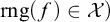 $ \mathrm{rng}(f)\in \mathcal X)$
.
$ \mathrm{rng}(f)\in \mathcal X)$
.
Proof. Consider the following infinite two-player game $G(\mathcal F, {\mathcal I})$
:
$G(\mathcal F, {\mathcal I})$
:

I winning if $\{j_n: n\in \omega \}\in {\mathcal I}$
.
$\{j_n: n\in \omega \}\in {\mathcal I}$
.
It is standard and easy to see that Player I has a winning strategy if and only if (1) holds and Player II has a winning strategy if and only if (2) holds.
For (1) this is an immediate. For (2) it should be clear that any $\mathcal F^+$
-branching tree permits player II to play along a branch of the tree (the branching sets being in
$\mathcal F^+$
-branching tree permits player II to play along a branch of the tree (the branching sets being in $\mathcal F^+$
intersect every potential move of Player I, hence, permit Player II to continue playing along a branch of the tree). If, moreover, all branches of the tree are in the ideal
$\mathcal F^+$
intersect every potential move of Player I, hence, permit Player II to continue playing along a branch of the tree). If, moreover, all branches of the tree are in the ideal $\mathcal I$
then the strategy of playing along a branch of the tree becomes automatically winning.
$\mathcal I$
then the strategy of playing along a branch of the tree becomes automatically winning.
The construction of the tree from a winning strategy has a tiny trick. The natural approach is to collect all the answers of player II to partial plays of the game building in this way an $\mathcal F^+$
-branching tree. The problem, however, is that such a tree may be too wide, i.e., possibly not every branch of such a tree corresponds to (the answers of Player II) a full play of the game according to the (winning) strategy. To overcome the problem, we can prune the tree having Player II fix for every node of the pruned tree a partial play of the game played according to the strategy in a coherent way (that is a longer node corresponds to a longer partial play of the game). In this way we still get an
$\mathcal F^+$
-branching tree. The problem, however, is that such a tree may be too wide, i.e., possibly not every branch of such a tree corresponds to (the answers of Player II) a full play of the game according to the (winning) strategy. To overcome the problem, we can prune the tree having Player II fix for every node of the pruned tree a partial play of the game played according to the strategy in a coherent way (that is a longer node corresponds to a longer partial play of the game). In this way we still get an $\mathcal F^+$
-branching tree, but now, as all branches come from plays of the game played according to the winning strategy, they are all in
$\mathcal F^+$
-branching tree, but now, as all branches come from plays of the game played according to the winning strategy, they are all in $\mathcal I^+$
.
$\mathcal I^+$
.
The determinacy of the game then provides the proof of the dichotomy.
Let us mention that the Definable Ideal Dichotomy is a theorem of ZFC for ${\mathcal I}$
Borel and
${\mathcal I}$
Borel and $\mathcal F$
arbitrary by T. Martin’s celebrated Borel determinacy theorem, while for more complex ideals it requires large cardinals. Though perhaps not optimal, the determinacy of the game for analytic and co-analytic
$\mathcal F$
arbitrary by T. Martin’s celebrated Borel determinacy theorem, while for more complex ideals it requires large cardinals. Though perhaps not optimal, the determinacy of the game for analytic and co-analytic $\mathcal I$
follows from the existence of a measurable cardinal (see [Reference Campero, Guzmán, Hrušák and Meza3]). For projective ideals the large cardinal assumption needed coincides with that for the axiom of Projective determinacy (PD)Footnote
4
by an argument due to Kechris [Reference Kechris12].
$\mathcal I$
follows from the existence of a measurable cardinal (see [Reference Campero, Guzmán, Hrušák and Meza3]). For projective ideals the large cardinal assumption needed coincides with that for the axiom of Projective determinacy (PD)Footnote
4
by an argument due to Kechris [Reference Kechris12].
Combining the game with its “dual game” $G(\mathcal F^+, {\mathcal I})$
:
$G(\mathcal F^+, {\mathcal I})$
:

where Player I wins if $\{j_n: n\in \omega \}\in {\mathcal I}$
one obtains a trichotomy.
$\{j_n: n\in \omega \}\in {\mathcal I}$
one obtains a trichotomy.
Theorem 10. Given a filter $\mathcal F$
and a definable ideal
$\mathcal F$
and a definable ideal ${\mathcal I}$
on
${\mathcal I}$
on $\omega $
then exactly one of the following holds:
$\omega $
then exactly one of the following holds:
-
(1) there is an
$\mathcal F$
-branching tree with all branches in
${\mathcal I}^+$
; -
(2) there is an
$\mathcal F$
-branching tree with all branches in
${\mathcal I}$
; -
(3) there is an
$\mathcal F^+$
-branching tree with all branches in
${\mathcal I}$
and an
$\mathcal F^+$
-branching tree with all branches in
${\mathcal I}^+$
.


The next theorem is a strong form of an Ideal Axiom for definable spaces, and, in particular, answers a question asked by the authors in [Reference Hrušák and Shibakov9]. Note that (2) below states the existence of a $\pi $
-network, which is stronger than the almost
$\pi $
-network, which is stronger than the almost $\pi $
-network property (2) in the statement of IA
$\pi $
-network property (2) in the statement of IA $({\mathcal P},{\mathcal Q})$
.
$({\mathcal P},{\mathcal Q})$
.
Theorem 11 (LC)
Let X be a countable definable space, $x\in X$
and
$x\in X$
and ${\mathcal J}$
an ideal on X. Either
${\mathcal J}$
an ideal on X. Either
-
(1) there is a countable
$\mathcal S\subseteq \mathcal J$
such that every sequence convergent to x is contained in an element of
$\mathcal S$
, or -
(2) there is a countable local
$\pi $
-network at x consisting of
${\mathcal J}$
-positive sets.


In particular $\mathsf {IA}({\mathcal P},\cdot )$
holds where
$\mathsf {IA}({\mathcal P},\cdot )$
holds where ${\mathcal P}$
stands for the class of countable spaces with definable topologies.
${\mathcal P}$
stands for the class of countable spaces with definable topologies.
Proof. Consider the Definable Ideal Dichotomy for $\mathcal F={\mathcal J}^*$
and
$\mathcal F={\mathcal J}^*$
and ${\mathcal I}$
—the ideal dual to the neighborhood filter of x.
${\mathcal I}$
—the ideal dual to the neighborhood filter of x.
If there is an $\mathcal F^+$
-branching tree T with all branches in
$\mathcal F^+$
-branching tree T with all branches in ${\mathcal I}^+$
then
${\mathcal I}^+$
then $\{{\mathrm {succ}}_T(t): t \in T\}$
forms a local
$\{{\mathrm {succ}}_T(t): t \in T\}$
forms a local $\pi $
-network
Footnote
5
at x. To see this, assume toward a contradiction that it is not true, i.e., there is a neighborhood U of x which does not contain
$\pi $
-network
Footnote
5
at x. To see this, assume toward a contradiction that it is not true, i.e., there is a neighborhood U of x which does not contain ${\mathrm {succ}}_T(t)$
for any
${\mathrm {succ}}_T(t)$
for any $ t \in T$
. This means that
$ t \in T$
. This means that  is an element of ${\mathcal I}$
such that
${\mathcal I}$
such that ${\mathrm {succ}}_T(t)\cap I\neq \varnothing $
for any
${\mathrm {succ}}_T(t)\cap I\neq \varnothing $
for any $t\in T$
hence one can recursively construct a branch of T contained in I which is a contradiction.
$t\in T$
hence one can recursively construct a branch of T contained in I which is a contradiction.
If there is an $\mathcal F$
-branching tree with all branches in
$\mathcal F$
-branching tree with all branches in ${\mathcal I}$
then
${\mathcal I}$
then  captures convergent sequences. Again, assume not, i.e., there is a sequence C convergent to x intersecting ${\mathrm {succ}}_T(t)$
for every
${\mathrm {succ}}_T(t)$
for every $t \in T$
, so one can construct a subsequence of C which is a branch of T hence is in
$t \in T$
, so one can construct a subsequence of C which is a branch of T hence is in ${\mathcal I}^\perp $
and, in particular, in
${\mathcal I}^\perp $
and, in particular, in ${\mathcal I}^+$
, contradiction.
${\mathcal I}^+$
, contradiction.
4 Applications
We now proceed to apply Theorems 9 and 11 to problems in topology and set theory. In order to prove our first result we need the following technical lemmas from [Reference Hrušák and Shibakov11].
Lemma 12 [Reference Hrušák and Shibakov11]
Let $({\mathbb G},\tau )$
be a countable strongly groomed group. Suppose
$({\mathbb G},\tau )$
be a countable strongly groomed group. Suppose ${\mathcal P}\subseteq \mathbf{nwd}({[\tau ]})$
is a countable family such that for every
${\mathcal P}\subseteq \mathbf{nwd}({[\tau ]})$
is a countable family such that for every $S\to {1_{{\mathbb G}}} $
there exists a
$S\to {1_{{\mathbb G}}} $
there exists a $P\in {\mathcal P}$
such that
$P\in {\mathcal P}$
such that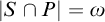 $|S\cap P|=\omega $
. Then
$|S\cap P|=\omega $
. Then ${\mathbb G}$
has no countable
${\mathbb G}$
has no countable $\pi $
-network at
$\pi $
-network at ${1_{{\mathbb G}}}$
that consists of subspaces whose closures are not
${1_{{\mathbb G}}}$
that consists of subspaces whose closures are not ${[\tau ]}$
-locally compact.
${[\tau ]}$
-locally compact.
Lemma 13 [Reference Hrušák and Shibakov11]
Let $({\mathbb G},\tau )$
be a non-metrizable countable topological group such that
$({\mathbb G},\tau )$
be a non-metrizable countable topological group such that $\tau $
has a countable
$\tau $
has a countable $\pi $
-network
$\pi $
-network ${\mathcal {U}}$
at
${\mathcal {U}}$
at ${1_{{\mathbb G}}}$
such that each
${1_{{\mathbb G}}}$
such that each $U\in {\mathcal {U}}$
is
$U\in {\mathcal {U}}$
is ${[\tau ]}$
-dense in some open subset of
${[\tau ]}$
-dense in some open subset of $({\mathbb G},{[\tau ]})$
. Then
$({\mathbb G},{[\tau ]})$
. Then $({\mathbb G},{[\tau ]})$
is a first countable topological group and there exists a subset
$({\mathbb G},{[\tau ]})$
is a first countable topological group and there exists a subset $D\subseteq {\mathbb G}$
, dense in
$D\subseteq {\mathbb G}$
, dense in $\tau $
and almost disjoint from every convergent sequence in
$\tau $
and almost disjoint from every convergent sequence in $({\mathbb G},\tau )$
. In particular,
$({\mathbb G},\tau )$
. In particular, $({\mathbb G},\tau )$
is not strongly groomed.
$({\mathbb G},\tau )$
is not strongly groomed.
Our first and main application is a topological classification of arbitrary countable definable groups with respect to convergent sequences.
Theorem 14 (LC)
Let $({\mathbb G},\tau )$
be a countable topological group with a definable topology. Then one of the following properties holds:
$({\mathbb G},\tau )$
be a countable topological group with a definable topology. Then one of the following properties holds:
-
(1)
${\mathbb G}$
has a dense subset not containing any non-trivial convergent sequence; -
(2)
${\mathbb G}$
is metrizable; -
(3)
$({\mathbb G},{[\tau ]})$
is a
$k_\omega $
-group.


Proof. It is enough to show that whenever $({\mathbb G},\tau )$
is not metrizable and
$({\mathbb G},\tau )$
is not metrizable and $({\mathbb G},{[\tau ]})$
is not
$({\mathbb G},{[\tau ]})$
is not $k_\omega $
,
$k_\omega $
, $({\mathbb G},\tau )$
is not strongly groomed. To that end, consider the ideal
$({\mathbb G},\tau )$
is not strongly groomed. To that end, consider the ideal ${\mathcal I}$
generated by closed locally compact subspaces of
${\mathcal I}$
generated by closed locally compact subspaces of $({\mathbb G},\tau )$
. Apply Theorem 11 and observe that alternative (1) implies that
$({\mathbb G},\tau )$
. Apply Theorem 11 and observe that alternative (1) implies that $({\mathbb G},{[\tau ]})$
is
$({\mathbb G},{[\tau ]})$
is $k_\omega $
contradicting our assumption. Thus alternative (2) holds and
$k_\omega $
contradicting our assumption. Thus alternative (2) holds and ${\mathbb G}$
has a countable local
${\mathbb G}$
has a countable local $\pi $
-network
$\pi $
-network ${\mathcal H}$
at
${\mathcal H}$
at ${1_{{\mathbb G}}}$
that consists of non-locally compact closed subsets: The alternative (2) provides a local
${1_{{\mathbb G}}}$
that consists of non-locally compact closed subsets: The alternative (2) provides a local $\pi $
-network
$\pi $
-network ${\mathcal H}$
at
${\mathcal H}$
at ${1_{{\mathbb G}}}$
consisting of sets whose closures are not locally compact. Regularity of the group topology implies that the closures of elements of
${1_{{\mathbb G}}}$
consisting of sets whose closures are not locally compact. Regularity of the group topology implies that the closures of elements of ${\mathcal H}$
also form a local
${\mathcal H}$
also form a local $\pi $
-network at
$\pi $
-network at ${1_{{\mathbb G}}}$
as every neighborhood U of
${1_{{\mathbb G}}}$
as every neighborhood U of ${1_{{\mathbb G}}}$
contains the closure of a neighborhood V of
${1_{{\mathbb G}}}$
contains the closure of a neighborhood V of ${1_{{\mathbb G}}}$
which in turn contains some
${1_{{\mathbb G}}}$
which in turn contains some $H\in {\mathcal H}$
, hence
$H\in {\mathcal H}$
, hence $\overline {H}\subseteq U$
.
$\overline {H}\subseteq U$
.
Applying Lemma 12 and Theorem 11 to the ideal $ \mathbf{nwd}({[\tau ]})$
we conclude that if
$ \mathbf{nwd}({[\tau ]})$
we conclude that if $({\mathbb G},\tau )$
is strongly groomed, it has a countable local
$({\mathbb G},\tau )$
is strongly groomed, it has a countable local $\pi $
-network at
$\pi $
-network at ${1_{{\mathbb G}}}$
that consists of
${1_{{\mathbb G}}}$
that consists of ${[\tau ]}$
-open subsets. Now Lemma 13 implies that
${[\tau ]}$
-open subsets. Now Lemma 13 implies that $({\mathbb G},\tau )$
is not strongly groomed.
$({\mathbb G},\tau )$
is not strongly groomed.
An easy corollary of the theorem above is that in the class of countable definable groups the sequential coreflection is a topological group only if it is $k_\omega $
or first countable (see also [Reference Hrušák and Shibakov10, Reference Shibakov21])Footnote
6
. In Example 23 we show that the sequential coreflection of a definable group may not even be regular.
$k_\omega $
or first countable (see also [Reference Hrušák and Shibakov10, Reference Shibakov21])Footnote
6
. In Example 23 we show that the sequential coreflection of a definable group may not even be regular.
It is natural to ask whether the theorem above may be strengthened in a couple of obvious ways. One possible improvement would be replacing the dense subset in condition (1) with a dense subgroup that does not contain any nontrivial convergent sequences. An easy argument (see [Reference Hrušák and Shibakov11] for details) shows this is not the case (any subsequential non-sequential group may serve as a counterexample).
Another improvement would be to state that ${\mathbb G}$
in its original topology is a
${\mathbb G}$
in its original topology is a $k_\omega $
group in condition (3) (i.e., omit any mention of a sequential coreflection altogether). Whether this is consistently possible was a question asked by the authors in [Reference Hrušák and Shibakov11]. Below we build an example (Example 21) that shows that even in the analytic (and therefore, definable) case such a strengthening of Theorem 14 is not possible.
$k_\omega $
group in condition (3) (i.e., omit any mention of a sequential coreflection altogether). Whether this is consistently possible was a question asked by the authors in [Reference Hrušák and Shibakov11]. Below we build an example (Example 21) that shows that even in the analytic (and therefore, definable) case such a strengthening of Theorem 14 is not possible.
Thus, one may say that the statement in Theorem 14 is, in some sense, optimal.
Recalling that a sequence capturing family in a Fréchet space may not consist of nowhere dense sets (see [Reference Hrušák and Ramos-García8]) immediately implies the following proposition (compare to ‘every regular analytic countable Fréchet space has a countable $\pi $
-base in ZFC’, see [Reference Shibakov21]).
$\pi $
-base in ZFC’, see [Reference Shibakov21]).
Proposition 15 (LC)
Every definable countable regular Fréchet space has a countable $\pi $
-base.
$\pi $
-base.
It seems to be an interesting question whether regularity be dropped from the assumptions on the space.
Contrast the above proposition with the following result by A. Dow.
Proposition 16 (A. Dow, [Reference Dow4])
There is a countable regular Fréchet space with an uncountable $\pi $
-base.
$\pi $
-base.
For a narrower but important class of Fréchet spaces with a single non-isolated point, we have the following classification in the subclass of definable spaces. We do not know if a similar result is true for the class of analytic spaces in ZFC.
Proposition 17 (LC)
Let X be a definable countable Fréchet space with a unique non-isolated point x then one of the following properties holds:
-
(1) X is homeomorphic to a convergent sequence or to a topological sum of a convergent sequence with an infinite countable discrete space;
-
(2) X is homeomorphic to
$S(\omega )$
; -
(3) x has a countable local
$\pi $
-base consisting of infinite closed discrete sets;


Proof. Consider the ideal ${\mathcal I}$
generated by sequences that converge to x and apply Theorem 11. Alternative (1) would mean there exists a countable family of convergent sequences such that every convergent sequence in X is covered by finitely many members of the family. Standard arguments show that if such a family can be chosen to be finite then (1) holds, otherwise (2) follows.
${\mathcal I}$
generated by sequences that converge to x and apply Theorem 11. Alternative (1) would mean there exists a countable family of convergent sequences such that every convergent sequence in X is covered by finitely many members of the family. Standard arguments show that if such a family can be chosen to be finite then (1) holds, otherwise (2) follows.
Now, alternative (2) of Theorem 11 implies (3).
A natural question arises whether (3) can be strengthened to ‘contains a copy of the convergent sequence of discrete sets $D(\omega )$
’.
$D(\omega )$
’.
As a final application of DID we give a short proof of Mathias’ characterization of selective ultrafilters (see [Reference Meza-Alcántara16]).
Lemma 18. An ultrafilter $\mathcal U$
on
$\mathcal U$
on $\omega $
is selective if and only if for every
$\omega $
is selective if and only if for every $\mathcal U$
-branching tree T there is a
$\mathcal U$
-branching tree T there is a $U\in \mathcal U$
such that every infinite subset of U is a branch of T.
$U\in \mathcal U$
such that every infinite subset of U is a branch of T.
It has been pointed out to us by the referee that Lemma 18 was discovered independently by F. Galvin and R. McKenzie.
Theorem 19 (Mathias [Reference Mathias15])
An ultrafilter $\mathcal U$
on
$\mathcal U$
on $\omega $
is selective if and only if
$\omega $
is selective if and only if $\mathcal U\cap {\mathcal I}\neq \emptyset $
for every tall Borel ideal
$\mathcal U\cap {\mathcal I}\neq \emptyset $
for every tall Borel ideal ${\mathcal I}$
.
${\mathcal I}$
.
Proof. Consider the DID for $\mathcal F=\mathcal F^+=\mathcal U$
and a Borel ideal
$\mathcal F=\mathcal F^+=\mathcal U$
and a Borel ideal ${\mathcal I}$
.
${\mathcal I}$
.
If there is an $\mathcal F^+$
-branching tree T with all branches in
$\mathcal F^+$
-branching tree T with all branches in ${\mathcal I}$
then
${\mathcal I}$
then $\mathcal U\cap {\mathcal I}\neq \emptyset $
. Otherwise there is an
$\mathcal U\cap {\mathcal I}\neq \emptyset $
. Otherwise there is an $\mathcal F$
-branching tree with all branches in
$\mathcal F$
-branching tree with all branches in ${\mathcal I}^+$
which leads to a contradiction.
${\mathcal I}^+$
which leads to a contradiction.
There are, of course, other similar games whose applications could be explored. To mention but one example, a modification of the above game where the second player chooses a finite set rather than a single point was used by J. Zapletal to give a Mathias-style characterization of P-point ultrafilters [Reference Zapletal26]. An earlier game characterization of P-points was considered, for instance, by A. Blass [Reference Blass2] and S. Shelah [Reference Shelah20].
5 Examples
The goal of the examples in this section is twofold. First, most of the examples below illustrate the topological applications of the DID from the preceding sections. For instance, we demonstrate that the statement of Theorem 14 is optimal in Example 21.
Secondly, the examples exhibit a number of interesting phenomena in the class of definable spaces. The authors hope that this may prompt other researchers to take a closer look at definable topology.
Finally, the authors believe that a few classes of spaces (such as strongly groomed, remotely sequential, etc.) that were introduced for technical reasons merit an investigation of their own. In particular, in the realm of countable groups, remote sequentiality may turn out to be a more natural property than sequentiality.
All of the group examples in this section are free Boolean groups over some countable space. Below we build a remotely sequential non-sequential space which will be used in the construction of a group with the same property later.
Example 20. There is a definable remotely sequential non-sequential space.
Proof. The construction will give a topology on the ordinal $\omega ^\omega +1$
where the topology differs from the compact order topology only in the neighborhoods of the last point where the new neighborhoods will come from a filter
$\omega ^\omega +1$
where the topology differs from the compact order topology only in the neighborhoods of the last point where the new neighborhoods will come from a filter $\mathcal F$
of clopen subsets of the ordinal
$\mathcal F$
of clopen subsets of the ordinal $\omega ^\omega $
with the property that for every sequence
$\omega ^\omega $
with the property that for every sequence $C\subseteq \omega ^\omega $
order converging to the point
$C\subseteq \omega ^\omega $
order converging to the point $\omega ^\omega $
there is an
$\omega ^\omega $
there is an $F\in \mathcal F$
disjoint from C.
$F\in \mathcal F$
disjoint from C.
As the filter consists of clopen subsets of $\omega ^\omega $
the topology below
$\omega ^\omega $
the topology below $\omega ^\omega $
does not change, and as no old sequence from
$\omega ^\omega $
does not change, and as no old sequence from $\omega ^\omega $
converges to
$\omega ^\omega $
converges to $\omega ^\omega $
, the space is not sequential. On the other hand, every subset of the space which is not closed discrete will contain a convergent sequence, as the original space was compact.
$\omega ^\omega $
, the space is not sequential. On the other hand, every subset of the space which is not closed discrete will contain a convergent sequence, as the original space was compact.
To construct the filter $\mathcal F$
we shall introduce the following notation. For every ordinal
$\mathcal F$
we shall introduce the following notation. For every ordinal $\alpha <\omega ^\omega $
let
$\alpha <\omega ^\omega $
let $I_\alpha $
be the largest clopen interval with maximum
$I_\alpha $
be the largest clopen interval with maximum $\alpha $
which is order isomorphic to an indecomposable ordinal. Note that:
$\alpha $
which is order isomorphic to an indecomposable ordinal. Note that:
-
(1) for each
$\alpha , \beta <\omega ^\omega I_\alpha \subseteq I_\beta $
,
$I_\beta \subseteq I_\alpha $
, or
$I_\alpha \cap I_\beta =\emptyset $
, -
(2) each
$I_\alpha $
is order isomorphic to
$\omega ^n$
for some
$n\in \omega $
, where
$\omega ^0$
is a singleton, -
(3) minimum of each
$I_\alpha $
is either
$0$
or the successor of an ordinal
$\beta $
such that
$I_\beta $
and
$I_\alpha $
are order isomorphic, and -
(4) each
$I_\alpha $
of order type
$\omega ^{n+1}$
is a disjoint union of an increasing
$\omega $
-sequence of
$I_{\beta _n}$
each of order type
$\omega ^n$
with a last limit point on top.



For each $\alpha <\omega ^\omega $
we shall define a family
$\alpha <\omega ^\omega $
we shall define a family $\mathcal F_\alpha $
of subsets of
$\mathcal F_\alpha $
of subsets of $I_\alpha $
using recursion on the order type of
$I_\alpha $
using recursion on the order type of $I_\alpha $
as follows:
$I_\alpha $
as follows:
-
(1) If
$I_\alpha $
is a singleton
$\{\alpha \}$
then
$\mathcal F_\alpha =\{\emptyset \}$
, otherwise. -
(2)
$I_\alpha $
is of order type
$\omega ^{n+1}$
and is a disjoint union of an increasing
$\omega $
-sequence of
$I_{\beta _k}$
of order type
$\omega ^n$
. Then
$\mathcal F_\alpha =\{ A\subseteq I_\alpha : \ \exists K\in \omega \text { such that } I_{\beta _K}\subseteq A \text { while } $
$ A\cap I_{\beta _k}=\emptyset \text { for } k>K \text { and } A\cap I_{\beta _k}\in \mathcal F_{\beta _k} \text { for } k<K \}.$




Claim 1. The family $\mathcal F_\alpha $
-
(1) is n-linkedFootnote 7 whenever the order type of
$I_\alpha $
is
$\omega ^n$
, and -
(2) has the property that for every finite set
$a\subseteq I_\alpha $
there is an
$A\in mathcal F_\alpha $
disjoint from a.



Proof. (1) is proved by an easy induction on n. For $n=0$
and
$n=0$
and $n=1$
this is trivial, as
$n=1$
this is trivial, as $0$
-linked has no content and
$0$
-linked has no content and $1$
-linked simply says that the elements of
$1$
-linked simply says that the elements of $\mathcal F_\alpha $
are non-empty. For
$\mathcal F_\alpha $
are non-empty. For $n>1$
consider a family
$n>1$
consider a family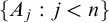 $\{A_j: j<n\}$
of n-many elements of
$\{A_j: j<n\}$
of n-many elements of $\mathcal F_\alpha $
subsets of
$\mathcal F_\alpha $
subsets of $I_\alpha $
which is the increasing union of the corresponding
$I_\alpha $
which is the increasing union of the corresponding $I_{\beta _k}$
(and
$I_{\beta _k}$
(and $\{\alpha \}$
). For each of them there is a
$\{\alpha \}$
). For each of them there is a $K_j\in \omega $
such that
$K_j\in \omega $
such that $I_{\beta _{K_j}}\subseteq A_j$
. Let
$I_{\beta _{K_j}}\subseteq A_j$
. Let $K=\min \{K_j: j <n\}$
, and let J be (one of) the j such that
$K=\min \{K_j: j <n\}$
, and let J be (one of) the j such that $K=K_J$
. Then for each
$K=K_J$
. Then for each $j<n$
,
$j<n$
, $A_j\cap I_{\beta _K}= I_{\beta _K}$
or
$A_j\cap I_{\beta _K}= I_{\beta _K}$
or $A_j\cap I_{\beta _K}\in \mathcal F_{\beta _K}$
, by the definition of
$A_j\cap I_{\beta _K}\in \mathcal F_{\beta _K}$
, by the definition of $\mathcal F_\alpha $
. By the induction hypothesis
$\mathcal F_\alpha $
. By the induction hypothesis $\bigcap \{A_j\cap I_{\beta _K}: j<n, j\neq J\}$
is a non-empty subset of
$\bigcap \{A_j\cap I_{\beta _K}: j<n, j\neq J\}$
is a non-empty subset of $ I_{\beta _K}$
and as
$ I_{\beta _K}$
and as $A_J= I_{\beta _K}$
,
$A_J= I_{\beta _K}$
, $\bigcap \{A_j: j<n\}\neq \emptyset $
.
$\bigcap \{A_j: j<n\}\neq \emptyset $
.
(2) proved by an even easier induction on n. For $n=0$
the family contains only an empty set which is, of course disjoint from any a. For
$n=0$
the family contains only an empty set which is, of course disjoint from any a. For $n>1$
choose
$n>1$
choose $K\in \omega $
such that
$K\in \omega $
such that $\min I_{\beta _K}> \max a$
. Then use the inductive hypothesis for
$\min I_{\beta _K}> \max a$
. Then use the inductive hypothesis for $I_{\beta _k}$
,
$I_{\beta _k}$
, $k<K$
to find
$k<K$
to find $A_k\subseteq I_{\beta _k}$
disjoint from
$A_k\subseteq I_{\beta _k}$
disjoint from $a\cap I_{\beta _k}$
. Then
$a\cap I_{\beta _k}$
. Then $A=I_{\beta _K}\cup \bigcup _{k<K } A_k$
is an element of
$A=I_{\beta _K}\cup \bigcup _{k<K } A_k$
is an element of $\mathcal F_\alpha $
disjoint from a.
$\mathcal F_\alpha $
disjoint from a.
Let
 $$ \begin{align*}\mathcal F=\{ A\subseteq \omega^\omega: \ \forall n\in \omega \ A\cap \omega^n \in \mathcal F_{\omega_n}\}.\end{align*} $$
The family $\mathcal F$
is a centered family of clopen subsets of
$\mathcal F$
is a centered family of clopen subsets of $\omega ^\omega $
such that for all sequences
$\omega ^\omega $
such that for all sequences $C\subseteq \omega ^\omega $
convergent to
$C\subseteq \omega ^\omega $
convergent to $\omega ^\omega $
there is an
$\omega ^\omega $
there is an $A\in \mathcal F$
such that
$A\in \mathcal F$
such that $A\cap C=\emptyset $
. To define the space X let
$A\cap C=\emptyset $
. To define the space X let $\mathcal F$
be the basis of open neighborhoods of
$\mathcal F$
be the basis of open neighborhoods of $\omega ^\omega $
.
$\omega ^\omega $
.
The following question seems natural.
Question 1. Is there a locally compact remotely sequential non-sequential space that does not contain a copy of X?
A group ${\mathbb G}$
is called Boolean if it satisfies the identity
${\mathbb G}$
is called Boolean if it satisfies the identity $x+x=0$
. A well known simple fact is that Boolean groups are always Abelian.
$x+x=0$
. A well known simple fact is that Boolean groups are always Abelian.
Let X be a completely regular space. Then one can show (see [Reference Sipacheva22]) that there exists a unique (up to trivial isomorphisms) topological group ${\mathbb B}(X)$
with the following properties:
${\mathbb B}(X)$
with the following properties:
-
(1)
$X\subseteq {\mathbb B}(X)$
as a closed subset,
$0\not \in X$
; -
(2)
${\mathbb B}(X)$
is a Boolean group algebraically generated by X; -
(3) the topology of
${\mathbb B}(X)$
is the finest group topology such that the properties above hold.


It is well known (see [Reference Sipacheva22]) that if X above is $k_\omega $
then so is
$k_\omega $
then so is ${\mathbb B}(X)$
, moreover, if
${\mathbb B}(X)$
, moreover, if ${\mathcal K}\subseteq {\mathcal P}(X)$
is a countable family of compact subspaces of X that witnesses the
${\mathcal K}\subseteq {\mathcal P}(X)$
is a countable family of compact subspaces of X that witnesses the $k_\omega $
property of X then the family of finite algebraic sums of the elements of
$k_\omega $
property of X then the family of finite algebraic sums of the elements of ${\mathcal K}$
does the same for
${\mathcal K}$
does the same for ${\mathbb B}(X)$
.
${\mathbb B}(X)$
.
Example 21. The free Boolean topological group ${\mathbb B}(X)$
over the space constructed in Example 20 is remotely sequential and not sequential. Moreover, the sequential coreflection of
${\mathbb B}(X)$
over the space constructed in Example 20 is remotely sequential and not sequential. Moreover, the sequential coreflection of ${\mathbb B}(X)$
is
${\mathbb B}(X)$
is $k_\omega $
.
$k_\omega $
.
Proof. We will show that ${\mathbb B}(X)$
and
${\mathbb B}(X)$
and ${\mathbb B}(X,{[\tau ]})$
share the same compact and closed discrete subspaces where
${\mathbb B}(X,{[\tau ]})$
share the same compact and closed discrete subspaces where $\tau $
is the topology on X constructed in Example 20 and
$\tau $
is the topology on X constructed in Example 20 and ${[\tau ]}$
is the sequential coreflection of
${[\tau ]}$
is the sequential coreflection of $\tau $
. Note that
$\tau $
. Note that ${\mathbb B}(X,{[\tau ]})$
is
${\mathbb B}(X,{[\tau ]})$
is $k_\omega $
since
$k_\omega $
since $(X,{[\tau ]})$
is a topological sum of countably many compact subspaces.
$(X,{[\tau ]})$
is a topological sum of countably many compact subspaces.
Let $X=\bigcup _{i\in \omega }B_i\cup \{\infty \}$
be the remotely sequential non-sequential space constructed in Example 20. Here
$X=\bigcup _{i\in \omega }B_i\cup \{\infty \}$
be the remotely sequential non-sequential space constructed in Example 20. Here $B_i$
’s are compact and disjoint with the property that
$B_i$
’s are compact and disjoint with the property that $A\subseteq X$
is closed and discrete in X provided every intersection
$A\subseteq X$
is closed and discrete in X provided every intersection $A\cap B_i$
is finite. Additionally
$A\cap B_i$
is finite. Additionally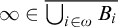 $\infty \in \overline {\bigcup _{i\in \omega }B_i}$
, which makes X a non-sequential space.
$\infty \in \overline {\bigcup _{i\in \omega }B_i}$
, which makes X a non-sequential space.
Consider the free Boolean topological group ${\mathbb B}(X,\tau )$
over X. Given an infinite convergent sequence
${\mathbb B}(X,\tau )$
over X. Given an infinite convergent sequence $S\subseteq {\mathbb B}(X)$
, let
$S\subseteq {\mathbb B}(X)$
, let $\tau _0$
be the coarser compact topology on X in which
$\tau _0$
be the coarser compact topology on X in which $\bigcup _{i\in \omega }B_i\cup \{\infty \}$
is a one-point compactification of the topological sum
$\bigcup _{i\in \omega }B_i\cup \{\infty \}$
is a one-point compactification of the topological sum $\bigcup _{i\in \omega }B_i$
. Then S remains convergent in
$\bigcup _{i\in \omega }B_i$
. Then S remains convergent in ${\mathbb B}(X,\tau _0)$
. Thus there exists an
${\mathbb B}(X,\tau _0)$
. Thus there exists an $n\in \omega $
such that
$n\in \omega $
such that $S\subseteq \sum ^nX$
. Without loss of generality, passing to a subsequence if necessary we may assume that
$S\subseteq \sum ^nX$
. Without loss of generality, passing to a subsequence if necessary we may assume that  for some infinite $S'\subseteq S$
, where
$S'\subseteq S$
, where $a_j^i$
are distinct for any given
$a_j^i$
are distinct for any given $i\in \omega $
. By passing to a subsequence again we may further assume that
$i\in \omega $
. By passing to a subsequence again we may further assume that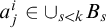 $a_j^i\in \cup _{s<k}B_s$
for all
$a_j^i\in \cup _{s<k}B_s$
for all $j\leq m\leq n$
,
$j\leq m\leq n$
, $i\in \omega $
, and some
$i\in \omega $
, and some $k\in \omega $
, and
$k\in \omega $
, and $a_j^i\in B_{m(i,j)}$
where
$a_j^i\in B_{m(i,j)}$
where ${\langle m(i,j):i\in \omega \rangle }$
is strictly increasing for each
${\langle m(i,j):i\in \omega \rangle }$
is strictly increasing for each $j>m$
(this is only possible if
$j>m$
(this is only possible if $m<n$
).
$m<n$
).
Suppose $m<n$
. Then the set
$m<n$
. Then the set  is closed and discrete in X. Let
  be a clopen subset of X such that $T\subseteq F$
. Let
$T\subseteq F$
. Let $\tau _1$
be the topology on the topological sum
$\tau _1$
be the topology on the topological sum 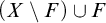 in which F inherits its topology from X, and
  is a one-point compactification of
 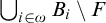 . Now
. Now $S'$
is not convergent in
$S'$
is not convergent in ${\mathbb B}(X,\tau _1)$
, and hence in
${\mathbb B}(X,\tau _1)$
, and hence in ${\mathbb B}(X)$
. Therefore
${\mathbb B}(X)$
. Therefore $m=n$
and
$m=n$
and $S'\subseteq \cup _{s<k}B_s$
for some
$S'\subseteq \cup _{s<k}B_s$
for some $k\in \omega $
and an infinite
$k\in \omega $
and an infinite $S'\subseteq S$
.
$S'\subseteq S$
.
A standard argument using the property that ${\mathbb B}(X,{[\tau ]})$
is
${\mathbb B}(X,{[\tau ]})$
is $k_\omega $
shows that S is a convergent sequence in
$k_\omega $
shows that S is a convergent sequence in ${\mathbb B}(X,{[\tau ]})$
where
${\mathbb B}(X,{[\tau ]})$
where ${[\tau ]}$
is the topology of the topological sum
${[\tau ]}$
is the topology of the topological sum $\bigcup _{i\in \omega }B_i\cup \{\infty \}$
as well as the sequential coreflection of the original topology on X. Hence the sequential coreflection of
$\bigcup _{i\in \omega }B_i\cup \{\infty \}$
as well as the sequential coreflection of the original topology on X. Hence the sequential coreflection of ${\mathbb B}(X)$
is
${\mathbb B}(X)$
is ${\mathbb B}(X,{[\tau ]})$
.
${\mathbb B}(X,{[\tau ]})$
.
Let $L\subseteq {\mathbb B}(X,{[\tau ]})$
be a closed discrete subset. Put
$L\subseteq {\mathbb B}(X,{[\tau ]})$
be a closed discrete subset. Put $L_i=L\cap \sum ^iX$
. Without loss of generality, we may assume that every
$L_i=L\cap \sum ^iX$
. Without loss of generality, we may assume that every $x\in L_k$
has the form
$x\in L_k$
has the form $x=a_1+\cdots +a_k$
where
$x=a_1+\cdots +a_k$
where $a_j\not =\infty $
. Put
$a_j\not =\infty $
. Put  and
and  . Finally, define
  for each $k\in \omega $
. Note that
$k\in \omega $
. Note that $F_k\cap B_i$
is finite for every
$F_k\cap B_i$
is finite for every $k,i\in \omega $
. Indeed, otherwise, for some
$k,i\in \omega $
. Indeed, otherwise, for some $k,r\in \omega $
, there would be infinitely many
$k,r\in \omega $
, there would be infinitely many $x\in L_k$
such that
$x\in L_k$
such that $m(x)=r$
. It then follows from the definition of
$m(x)=r$
. It then follows from the definition of $m(x)$
that
$m(x)$
that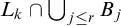 $L_k\cap \bigcup _{j\leq r}B_j$
is infinite, contradicting that
$L_k\cap \bigcup _{j\leq r}B_j$
is infinite, contradicting that $L\supseteq L_k$
is closed and discrete in
$L\supseteq L_k$
is closed and discrete in ${\mathbb B}(X,\tau _2)$
. Note that
${\mathbb B}(X,\tau _2)$
. Note that  .
.
Define $F=\bigcup _{k\in \omega }F_k\cap (\bigcup _{i\geq k}B_i)$
. Observe that each
$F=\bigcup _{k\in \omega }F_k\cap (\bigcup _{i\geq k}B_i)$
. Observe that each $F\cap B_i$
is finite and find a
$F\cap B_i$
is finite and find a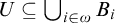 $U\subseteq \bigcup _{i\in \omega }B_i$
, clopen in X such that
$U\subseteq \bigcup _{i\in \omega }B_i$
, clopen in X such that $F\subseteq U$
.
$F\subseteq U$
.
Consider the intersection  . Suppose $L'$
is infinite. Then
$L'$
is infinite. Then $m(x)$
for
$m(x)$
for $x\in L'$
is unbounded so there exists an
$x\in L'$
is unbounded so there exists an $x\in L'$
such that
$x\in L'$
such that $m(x)>\max \{k, m+n\}$
. For such x,
$m(x)>\max \{k, m+n\}$
. For such x,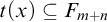 $t(x)\subseteq F_{m+n}$
,
$t(x)\subseteq F_{m+n}$
, $t(x)\cap B_k=\varnothing $
, and, since
$t(x)\cap B_k=\varnothing $
, and, since $m(x)>m+n$
,
$m(x)>m+n$
, $t(x)\subseteq F\subseteq U$
. This implies
$t(x)\subseteq F\subseteq U$
. This implies  . This is a contradiction since $x=\sum x'+\sum t(x)$
where
$x=\sum x'+\sum t(x)$
where $x'\subseteq X$
,
$x'\subseteq X$
, $x'\cap t(x)=\varnothing $
, and this representation is unique.
$x'\cap t(x)=\varnothing $
, and this representation is unique.
Consider the topology $\tau _U$
on X in which X is a topological sum of U and
$\tau _U$
on X in which X is a topological sum of U and  , where U retains its inherited topology while
  is a one-point compactification of
 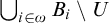 . Note that $\tau _U$
is coarser than the original topology of X and makes X a topological sum of countably many compact subspaces
$\tau _U$
is coarser than the original topology of X and makes X a topological sum of countably many compact subspaces  . The argument in the previous paragraph implies that L is a closed discrete subspace of the $k_\omega $
group
$k_\omega $
group ${\mathbb B}(X,\tau _U)$
and hence of
${\mathbb B}(X,\tau _U)$
and hence of ${\mathbb B}(X)$
.
${\mathbb B}(X)$
.
This shows that ${\mathbb B}(X)$
and
${\mathbb B}(X)$
and ${\mathbb B}(X,{[\tau ]})$
share compact as well as closed discrete subspaces.
${\mathbb B}(X,{[\tau ]})$
share compact as well as closed discrete subspaces.
In [Reference Hrušák and Shibakov11] the authors obtain a classification of countable groups that is similar to that of Theorem 14 above and consistently holds for all countable groups. The method of proof in [Reference Hrušák and Shibakov11] relies on the regularity of (the scattered subsets of) the sequential coreflection of a given group which leads to a question whether such regularity may be assumed in general, or, at least the definable case. Below we show that this is not so, so the main technical lemmas in [Reference Hrušák and Shibakov11] may not be simply recycled to prove Theorem 14 and the extra strength of the DID is, in fact, necessary.
There are a few examples of spaces with pathological sequential coreflections built by different authors. Thus, S. P. Franklin and M. Rajagopalan construct a consistent example of a compact space whose sequential coreflection is non-regular, while in [Reference Foged5] L. Foged built a sequential $\aleph _0$
-space X such that the sequential coreflection of
$\aleph _0$
-space X such that the sequential coreflection of $X^2$
is not regular.
$X^2$
is not regular.
Below we show that even in the class of countable definable groups the result of a sequential coreflection may be non-regular. We first construct a countable definable space with this pathology.
Example 22. A regular countable subsequential space Y such that the sequential coreflection of Y is not regular.
Construction. Let $X=\{\omega \}\cup \omega \cup \omega \times \omega \cup \omega ^\omega $
and let
$X=\{\omega \}\cup \omega \cup \omega \times \omega \cup \omega ^\omega $
and let  be a 1-1 listing of some AD family on $\omega $
.
$\omega $
.
Define the topology on X as follows. All the points in $\omega \times \omega $
are isolated, basic neighborhoods of
$\omega \times \omega $
are isolated, basic neighborhoods of $(m,n)\in \omega \times \omega $
are
$(m,n)\in \omega \times \omega $
are  ,
, $k\in \omega $
. For each
$k\in \omega $
. For each $f\in \omega ^\omega $
let
$f\in \omega ^\omega $
let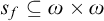 $s_f\subseteq \omega \times \omega $
be defined as
$s_f\subseteq \omega \times \omega $
be defined as  . Let, as a subspace of X, $\{\omega \}\cup \omega ^\omega $
be the one-point compactification of the infinite discrete subspace
$\{\omega \}\cup \omega ^\omega $
be the one-point compactification of the infinite discrete subspace $\omega ^\omega $
. Declare
$\omega ^\omega $
. Declare $c_f\to f$
and
$c_f\to f$
and $s_f\to \omega $
to be convergent sequences for every
$s_f\to \omega $
to be convergent sequences for every $f\in \omega ^\omega $
.
$f\in \omega ^\omega $
.
Let $\tau $
be the finest topology on X for which all of the conditions above hold. Since everything was stated in terms of convergent sequences,
$\tau $
be the finest topology on X for which all of the conditions above hold. Since everything was stated in terms of convergent sequences, $(X,\tau )$
is sequential. Let
$(X,\tau )$
is sequential. Let $U\ni \omega $
be open in
$U\ni \omega $
be open in $\tau $
. Then
$\tau $
. Then 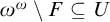 for some finite $F\subseteq \omega ^\omega $
.
$F\subseteq \omega ^\omega $
.
Define $U'=\{\omega \}\cup (((U\cap \omega )\times \omega )\cap U)\cup \bigcup _{f\in F}(s_f\cap U)\cup (U\cap \omega ^\omega )\subseteq U$
. Thus
$U'=\{\omega \}\cup (((U\cap \omega )\times \omega )\cap U)\cup \bigcup _{f\in F}(s_f\cap U)\cup (U\cap \omega ^\omega )\subseteq U$
. Thus $U'$
is U modified above finitely many
$U'$
is U modified above finitely many $c\in {\mathcal A}$
. Let
$c\in {\mathcal A}$
. Let 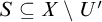 be an infinite sequence. If $S\subseteq \omega \times \omega $
then we may assume that
$S\subseteq \omega \times \omega $
then we may assume that $S\subseteq s_f$
for some
$S\subseteq s_f$
for some $f\in \omega ^\omega $
or that
$f\in \omega ^\omega $
or that $S\subseteq \{n\}\times \omega $
for some
$S\subseteq \{n\}\times \omega $
for some $n\in \omega $
. In the former case, if
$n\in \omega $
. In the former case, if $f\not \in F$
then
$f\not \in F$
then $s_f\subseteq ^*((U\cap \omega )\times \omega )\cap U\subseteq U'$
since U is open and
$s_f\subseteq ^*((U\cap \omega )\times \omega )\cap U\subseteq U'$
since U is open and $\omega \in U$
, contradicting
$\omega \in U$
, contradicting 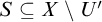 . Thus $f\in F$
and
$f\in F$
and $s_f\subseteq ^* s_f\cap U$
, again, contradicting
$s_f\subseteq ^* s_f\cap U$
, again, contradicting  .
.
If $S\subseteq \{n\}\times \omega $
and
$S\subseteq \{n\}\times \omega $
and $n\in U'\subseteq U$
then
$n\in U'\subseteq U$
then $S\subseteq ^* U'$
by the construction of
$S\subseteq ^* U'$
by the construction of $U'$
, a contradiction.
$U'$
, a contradiction.
Suppose $S\subseteq \omega $
. Then we may assume that
$S\subseteq \omega $
. Then we may assume that $S\cap c_f$
is infinite for some
$S\cap c_f$
is infinite for some $f\in \omega ^\omega $
. If
$f\in \omega ^\omega $
. If $f\in U$
then
$f\in U$
then $f\not \in F$
and
$f\not \in F$
and $S\cap U$
is infinite, a contradiction. Thus
$S\cap U$
is infinite, a contradiction. Thus $f\in F$
so
$f\in F$
so $S\to f\not \in U'$
.
$S\to f\not \in U'$
.
The case when $S\subseteq \omega ^\omega $
is trivial. Since any converging sequence
$S\subseteq \omega ^\omega $
is trivial. Since any converging sequence 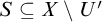 contains an infinite subsequence of one of the kinds treated above, we have shown that $U'$
is open. A similar argument shows that
$U'$
is open. A similar argument shows that $U'$
is closed. Since it is clear that every other point of X has a base of clopen neighborhoods,
$U'$
is closed. Since it is clear that every other point of X has a base of clopen neighborhoods, $(X,\tau )$
is regular. Thus
$(X,\tau )$
is regular. Thus $(Y,\tau )$
is also regular as a subspace of X where
$(Y,\tau )$
is also regular as a subspace of X where $Y=\{\omega \}\cup \omega \times \omega \cup \omega $
. Note that, by the construction of X there are no
$Y=\{\omega \}\cup \omega \times \omega \cup \omega $
. Note that, by the construction of X there are no $S\subseteq \omega $
such that
$S\subseteq \omega $
such that $S\to \omega $
thus making
$S\to \omega $
thus making $\omega \subseteq Y$
closed and discrete in
$\omega \subseteq Y$
closed and discrete in $(Y,{[\tau ]})$
.
$(Y,{[\tau ]})$
.
Let $V\ni \omega $
be open in
$V\ni \omega $
be open in ${[\tau ]}$
. Suppose each
${[\tau ]}$
. Suppose each $\{n\}\times \omega \cap V$
is finite and define
$\{n\}\times \omega \cap V$
is finite and define $g:\omega \to \omega $
as follows: if
$g:\omega \to \omega $
as follows: if $\{n\}\times \omega \cap V\not =\varnothing $
let
$\{n\}\times \omega \cap V\not =\varnothing $
let  ; otherwise let $g(n)=0$
. Now the choice of
$g(n)=0$
. Now the choice of $s_g$
ensures that
$s_g$
ensures that 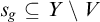 contradicting the assumption that V is open in ${[\tau ]}$
and
${[\tau ]}$
and $\omega \in V$
(recall
$\omega \in V$
(recall $s_g\to \omega $
in
$s_g\to \omega $
in $\tau $
and thus in
$\tau $
and thus in ${[\tau ]}$
).
${[\tau ]}$
).
The argument above shows that there is an $n\in \omega $
such that
$n\in \omega $
such that $n\in \overline {V}^{{[\tau ]}}$
, which means that
$n\in \overline {V}^{{[\tau ]}}$
, which means that $\omega \in Y$
and
$\omega \in Y$
and $\omega \subseteq Y$
cannot be separated by open neighborhoods implying
$\omega \subseteq Y$
cannot be separated by open neighborhoods implying $(Y,{[\tau ]})$
is not regular.
$(Y,{[\tau ]})$
is not regular.
Note that in the argument above, all that is needed for the construction of X is a 1-1 correspondence between $\omega ^\omega $
and some AD family on
$\omega ^\omega $
and some AD family on $\omega $
. Since such correspondence can easily be made analytic we can see that Y can be made analytic as well.
$\omega $
. Since such correspondence can easily be made analytic we can see that Y can be made analytic as well.
Example 23. A countable topological group $({\mathbb G},\tau )$
such that
$({\mathbb G},\tau )$
such that ${[\tau ]}$
is not regular.
${[\tau ]}$
is not regular.
Construction. Let ${\mathbb G}={\mathbb B}(Y)$
be the free Boolean group over the space Y constructed in the example above. Note that Y is a closed subspace of
${\mathbb G}={\mathbb B}(Y)$
be the free Boolean group over the space Y constructed in the example above. Note that Y is a closed subspace of $({\mathbb G},\tau )$
and thus of
$({\mathbb G},\tau )$
and thus of $({\mathbb G},{[\tau ]})$
where
$({\mathbb G},{[\tau ]})$
where $\tau $
is the free Boolean group topology on
$\tau $
is the free Boolean group topology on ${\mathbb G}$
. Thus if
${\mathbb G}$
. Thus if $U\subseteq Y$
is open in
$U\subseteq Y$
is open in $(Y,{[\tau ']})$
where
$(Y,{[\tau ']})$
where $\tau '$
is the original topology on Y (which is also the topology Y inherits from
$\tau '$
is the original topology on Y (which is also the topology Y inherits from ${\mathbb G}$
) then
${\mathbb G}$
) then  is closed in $({\mathbb G},{[\tau ]})$
. This shows that the topology Y inherits from
$({\mathbb G},{[\tau ]})$
. This shows that the topology Y inherits from $({\mathbb G},{[\tau ]})$
is
$({\mathbb G},{[\tau ]})$
is ${[\tau ']}$
implying that
${[\tau ']}$
implying that $({\mathbb G},{[\tau ]})$
is not regular.
$({\mathbb G},{[\tau ]})$
is not regular.
Our final example deals with the question whether any restriction on the topology of X is necessary in the statement of Theorem 11. A group example in [Reference Hrušák and Shibakov10] shows that some restrictions on either the group or the ideal are necessary in general, while Theorem 11 does not impose any conditions on the ideal. Below we show that even the definability of the ideal is not enough if the group topology itself is not definable.
As above, we begin by constructing a space with the desired property. Later, we proceed by using the free Boolean group construction over the constructed space.
Example 24. A definable ideal $\mathcal I$
on a countable space X such that IA(
$\mathcal I$
on a countable space X such that IA( $X,\mathcal I$
) fails.
$X,\mathcal I$
) fails.
Proof. Let $\mathcal I$
be the
$\mathcal I$
be the $F_\sigma $
-ideal generated by branches of the Cantor tree
$F_\sigma $
-ideal generated by branches of the Cantor tree $2^{<\omega }$
and let
$2^{<\omega }$
and let $\mathcal J$
be the ideal orthogonal to the ideal generated by an
$\mathcal J$
be the ideal orthogonal to the ideal generated by an $\aleph _1$
-dense set of branches, and let
$\aleph _1$
-dense set of branches, and let $\mathcal G$
be the filter dual to
$\mathcal G$
be the filter dual to $\mathcal J$
and let
$\mathcal J$
and let $X=\omega \cup \{\mathcal F\}$
be the space with a unique non-isolated point
$X=\omega \cup \{\mathcal F\}$
be the space with a unique non-isolated point $\mathcal F$
. Then
$\mathcal F$
. Then $\mathsf {IA}(X,\mathcal I)$
fails.
$\mathsf {IA}(X,\mathcal I)$
fails.
The fact that (1) fails follows immediately from the definition, the $\aleph _1$
-many branches are convergent sequences, and to see that (2) fails one needs to show that for any countable family of infinite antichains there is an element of
$\aleph _1$
-many branches are convergent sequences, and to see that (2) fails one needs to show that for any countable family of infinite antichains there is an element of $\mathcal J$
intersecting them all in an infinite set. By the disjoint refinement lemma we can assume that the antichains
$\mathcal J$
intersecting them all in an infinite set. By the disjoint refinement lemma we can assume that the antichains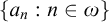 $\{a_n: n \in \omega \}$
are pairwise disjoint as the set of branches is of size
$\{a_n: n \in \omega \}$
are pairwise disjoint as the set of branches is of size $\aleph _1 < \mathfrak b$
there are finite subsets
$\aleph _1 < \mathfrak b$
there are finite subsets $F_n$
of
$F_n$
of $A_n$
such that
$A_n$
such that  is almost disjoint from all the $\aleph _1$
many branches hence is an element of
$\aleph _1$
many branches hence is an element of $\mathcal J$
and intersects all of the
$\mathcal J$
and intersects all of the $A_n$
in an infinite set.
$A_n$
in an infinite set.
Question 2. Can such an example be constructed in ZFC?
Lemma 25. Let X be a countable space with a unique non-isolated point $x_0\in X$
and let
$x_0\in X$
and let ${\mathcal I}$
be an ideal in X that violates
${\mathcal I}$
be an ideal in X that violates $\mathsf {IA}(\{X\},\cdot )$
. Then there exists an ideal in the free Boolean group
$\mathsf {IA}(\{X\},\cdot )$
. Then there exists an ideal in the free Boolean group ${\mathbb B}(X)$
over X that violates
${\mathbb B}(X)$
over X that violates $\mathsf {IA}(\{{\mathbb B}(X)\}, {\mathcal Q})$
where
$\mathsf {IA}(\{{\mathbb B}(X)\}, {\mathcal Q})$
where ${\mathcal Q}$
is the class of translation invariant ideals.
${\mathcal Q}$
is the class of translation invariant ideals.
Proof. Consider the free Boolean group ${\mathbb G}={\mathbb B}(X)$
over X. Let
${\mathbb G}={\mathbb B}(X)$
over X. Let ${\mathcal J}$
be the ideal in
${\mathcal J}$
be the ideal in ${\mathbb G}$
generated by
${\mathbb G}$
generated by  . Note that ${{\mathcal J}}|_{ }X={\mathcal I}$
so
${{\mathcal J}}|_{ }X={\mathcal I}$
so ${\mathcal J}$
does not have the sequence capturing property (at any
${\mathcal J}$
does not have the sequence capturing property (at any $g\in {\mathbb G}$
) by the choice of
$g\in {\mathbb G}$
) by the choice of ${\mathcal I}$
.
${\mathcal I}$
.
Suppose there exists a countable almost $\pi $
-network
$\pi $
-network ${\mathcal {U}}\subseteq {\mathcal J}^+$
at
${\mathcal {U}}\subseteq {\mathcal J}^+$
at $x_0\in X\subseteq G$
. Define
$x_0\in X\subseteq G$
. Define $\pi :{\mathcal P}({\mathbb G})\to {\mathcal P}(X)$
by
$\pi :{\mathcal P}({\mathbb G})\to {\mathcal P}(X)$
by  Note that $\pi $
is well defined since
$\pi $
is well defined since $X\subset {\mathbb G}$
forms a basis of
$X\subset {\mathbb G}$
forms a basis of ${\mathbb G}$
as a vector space over
${\mathbb G}$
as a vector space over ${\mathbb F}_2$
. Put
${\mathbb F}_2$
. Put  . Then ${\mathcal V}\subseteq {\mathcal I}^+$
is countable.
${\mathcal V}\subseteq {\mathcal I}^+$
is countable.
Suppose first that the family

is infinite. Let ${\mathcal {U}}^{\prime }= \langle U_i : i \in \omega \rangle $
where each
${\mathcal {U}}^{\prime }= \langle U_i : i \in \omega \rangle $
where each $U\in {\mathcal {U}}^{\prime }$
is listed infinitely often, and recursively pick
$U\in {\mathcal {U}}^{\prime }$
is listed infinitely often, and recursively pick $\lambda _i\in [X]^{<\omega }$
such that
$\lambda _i\in [X]^{<\omega }$
such that $|\lambda _i|$
is strictly increasing,
$|\lambda _i|$
is strictly increasing, $\sum \lambda _i\in U_i$
. The set
$\sum \lambda _i\in U_i$
. The set  is closed and discrete in ${\mathbb G}$
. We may assume that
${\mathbb G}$
. We may assume that $x_0\not \in D$
so there exists an open
$x_0\not \in D$
so there exists an open $V\subseteq {\mathbb G}$
such that
$V\subseteq {\mathbb G}$
such that $x_0\in V$
and
$x_0\in V$
and $V\cap D=\varnothing $
. Now
$V\cap D=\varnothing $
. Now  where
where $D\cap U$
is infinite. Thus
$D\cap U$
is infinite. Thus  is infinite so
  .
.
The argument above shows that we may assume that $U\subseteq \sum ^nX$
for every
$U\subseteq \sum ^nX$
for every $U\in {\mathcal {U}}$
and some
$U\in {\mathcal {U}}$
and some $n\in \omega $
.
$n\in \omega $
.
Since ${\mathcal I}$
violates
${\mathcal I}$
violates $\mathsf {IA}(\{X\},\cdot )$
at
$\mathsf {IA}(\{X\},\cdot )$
at $x_0$
, there exists an open neighborhood
$x_0$
, there exists an open neighborhood $U\subseteq X$
of
$U\subseteq X$
of $x_0$
such that
$x_0$
such that 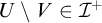 for every $V\in {\mathcal V}$
. Since
$V\in {\mathcal V}$
. Since $x_0$
is a unique non-isolated point of X, the subgroup
$x_0$
is a unique non-isolated point of X, the subgroup ${\mathbb G}'={\langle {U}\rangle }\subseteq {\mathbb G}$
, algebraically generated by U, is open in
${\mathbb G}'={\langle {U}\rangle }\subseteq {\mathbb G}$
, algebraically generated by U, is open in ${\mathbb G}$
. Now
${\mathbb G}$
. Now  for every $O\in {\mathcal {U}}$
thus
$O\in {\mathcal {U}}$
thus ${\mathcal {U}}$
is not an almost
${\mathcal {U}}$
is not an almost $\pi $
-network of
$\pi $
-network of ${\mathcal J}^+$
subsets at
${\mathcal J}^+$
subsets at $x_0$
.
$x_0$
.
6 Open questions
Question 3. If ‘definable’ is dropped from the statement of Theorem 14 is the resulting statement consistent with ZFC? Does it follow from the IIA (see [Reference Hrušák and Shibakov10])?
Recall that a group ${\mathbb G}$
is called sequentially complete if for any group
${\mathbb G}$
is called sequentially complete if for any group $\mathbb H$
such that
$\mathbb H$
such that ${\mathbb G}$
is a dense subgroup of
${\mathbb G}$
is a dense subgroup of $\mathbb H$
, and any
$\mathbb H$
, and any $S\subseteq {\mathbb G}$
, if
$S\subseteq {\mathbb G}$
, if $S\to h$
in
$S\to h$
in $\mathbb H$
then
$\mathbb H$
then $h\in {\mathbb G}$
.
$h\in {\mathbb G}$
.
Question 4. Let ${\mathbb G}$
be a countable (definable) group such that there exists a dense subset, which almost disjoint from every convergent sequence in G but every dense subgroup of
${\mathbb G}$
be a countable (definable) group such that there exists a dense subset, which almost disjoint from every convergent sequence in G but every dense subgroup of ${\mathbb G}$
contains a convergent sequence. Can
${\mathbb G}$
contains a convergent sequence. Can ${\mathbb G}$
be sequentially complete?
${\mathbb G}$
be sequentially complete?
Funding
The authors gratefully acknowledge support from a DGAPA-PAPIIT grant IN101323 and CONACyT grant A1-S-16164.


 Open access

