




Impact statement
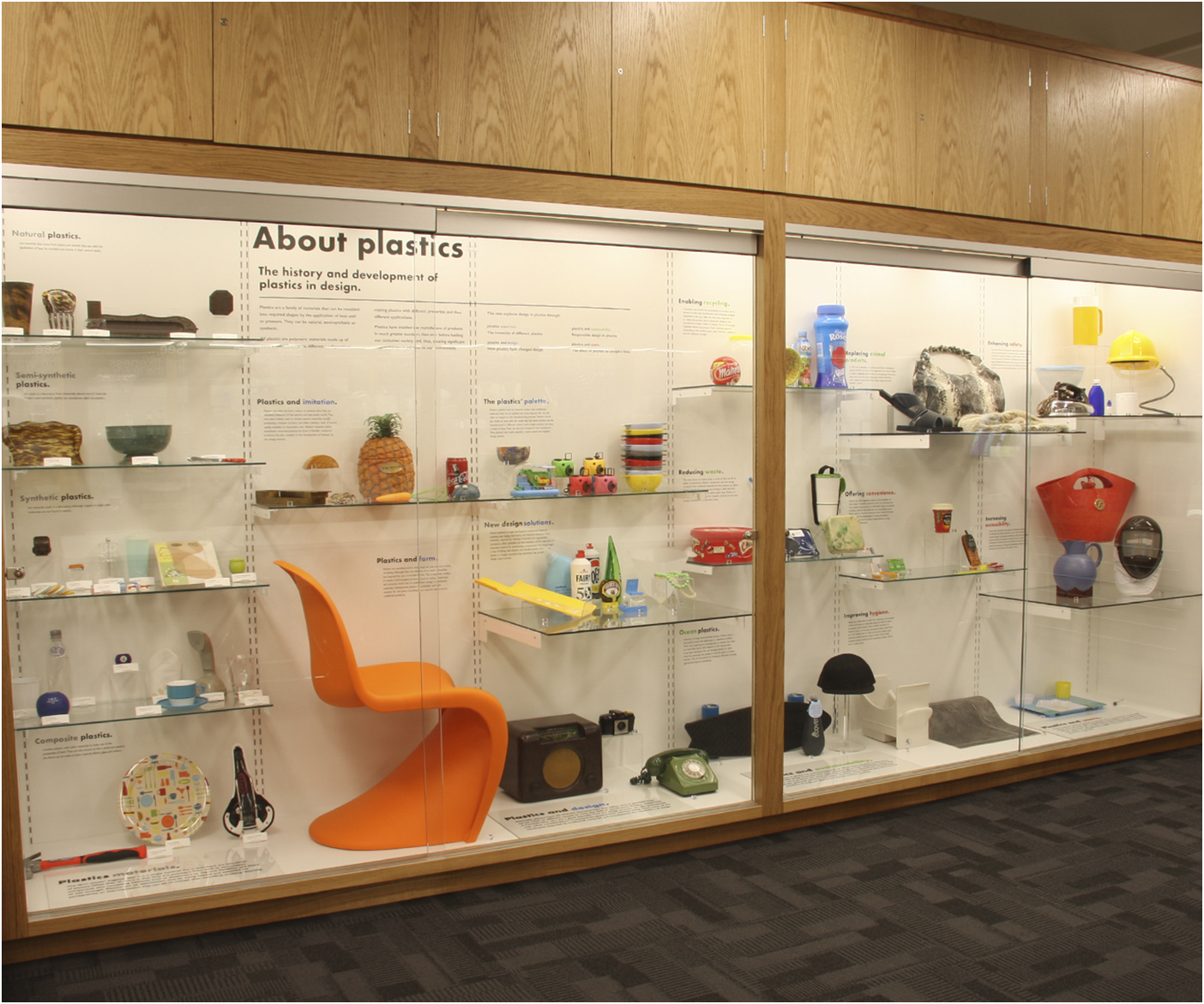
The condemnation of the overuse of plastics, particularly in packaging, and their impact on the environment when they become undermanaged waste has resulted in a growing number of researchers focusing on solutions. Many such researchers will be exploring the materials in a contemporary context. This article aims to place the use of plastics in an historical context to aid the comprehension of the societal reliance on this materials family.
Introduction
The condemnation of the overuse of plastics materials and their impact on the environment when they become waste has, understandably, meant that today the cultural perception of plastics is largely that they are cheap, rubbish and throw away – all bad news. This position of negativity has been reached because we currently see the mismanagement of plastics waste as it blows about in the wind; we see it as rubbish in our streets and as detritus in the oceans. However, our relationships with the material family, over the time they have existed, have had a varied and turbulent history with different perspectives generated by different people at different times. This article will briefly explore ‘a’, rather than ‘the’, history of the use of plastics with the aim of putting the current societal relationship with them into context.
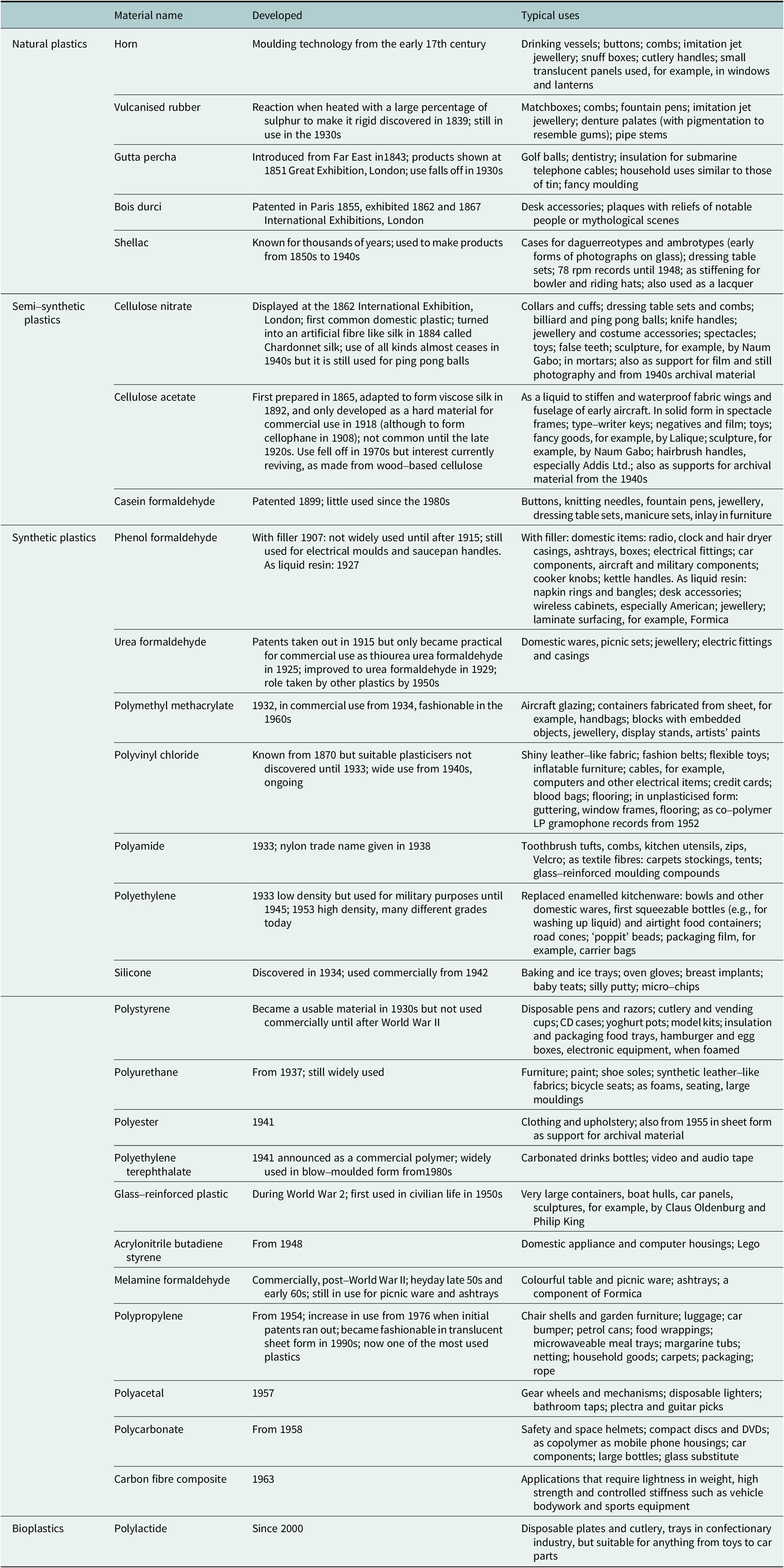
Plastic is thought of as being ‘the very idea of its infinite transformation’ (Barthes, Reference Barthes and Lavers1993, p. 97), but most significant in the comprehension of the material is the understanding that it is not plastic, a single material, but plastics, a family of materials with different origins and properties. They can be created to provide most, but not limitless, texture, colour, shape and a range of flexibility, strengths or stiffnesses. However, no one individual material within the family can provide all such requirements. Plastics are often seen as modern materials with a little history, however, if we consider the three classified types of plastics: natural – a material that can be moulded in its natural form, semi-synthetic – made of a chemically altered natural material, synthetic – a material that is entirely laboratory made, see Table 1, it can be seen that they make up a material family which has been with us for a long time and is being added to as material science works on new formulas, combinations of materials and new feedstocks.
Some of the key highlights in the development of plastics materials. See www.modip.ac.uk/plastics/materials
For the manufacturer, if not the consumer, plastics offered a freedom that had not been seen before. It is the ‘form-giving potential of plastics’ (Lloyd Wright, Reference Lloyd Wright, Lees-Maffei and Houze2010, p. 83) that has meant they have been the go-to family of materials for many designers over the last 100 years or more. It is the array of materials, capabilities, properties and processes that have ‘extended the parameters of product design’ (Fiell and Fiell, Reference Fiell and Fiell2009, p. 9). Without the constraints of process and properties of natural materials, the designer can easily create objects today that were previously impossible, or at least time-consuming and difficult.
The early years
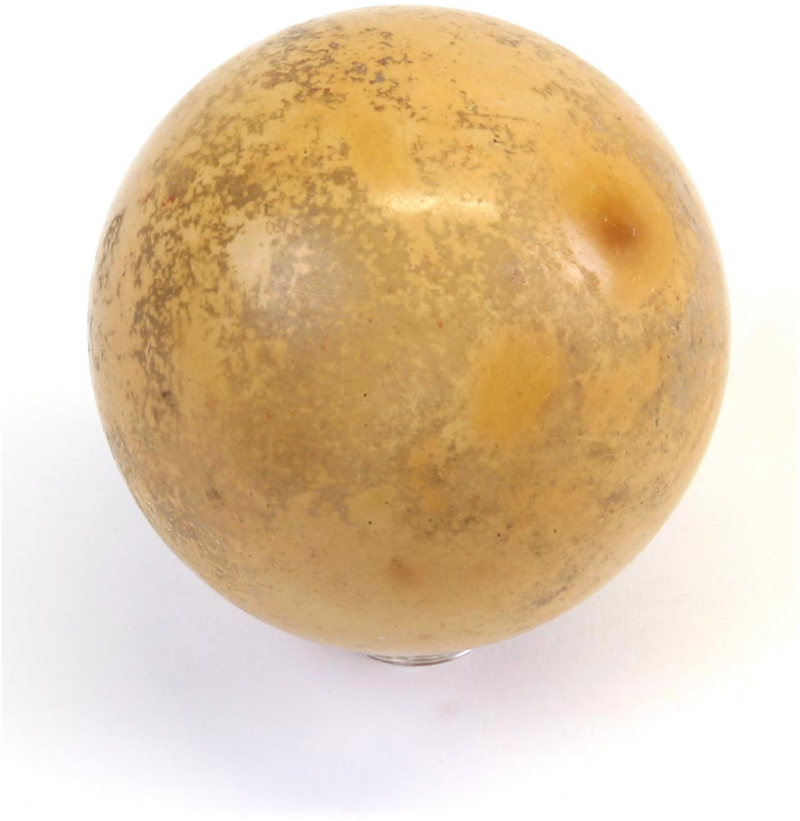
Initially, plastics were used as substitutes for other, usually natural, materials that could be said to have greater value and integrity, such as stone and wood. The development of semi-synthetic plastics was driven by the need to find a replacement for a dwindling natural resource, elephant ivory. In 1863, the American billiards company Phelan & Collender offered a prize to anyone who could create ‘an acceptable substitute for ivory in billiard balls’ (Meikle, Reference Meikle1997, p. 10). John Wesley Hyatt responded to the advert and eventually created a cellulose nitrate material which he called ‘Celluloid’. At a similar time in the UK, Alexander Parkes created a cellulose nitrate material which he called ‘Parkesine’ (see Museum of Design in Plastics, 2007). The ability of plastics to substitute other materials effectively meant that they were used instead of expensive, or luxury materials derived from endangered animals and plants, such as ivory from elephants, tortoiseshell from the Leatherback Turtle, and ebony and mahogany woods from trees. The use of plastics as imitative and substitute materials has given rise to the notion that the group of materials are inauthentic; that they cannot be true to themselves as materials, as they do not have a true identity (Figure 1).
Snooker ball, Parkesine, 1866–1868. PHSL : PAR 119. Plastics Historical Society collection. Museum of Design in Plastics, Arts University Bournemouth.
As new materials were discovered and created, they became the favoured resources for many manufacturers, they took over from other materials at a rapid rate. Companies used them to demonstrate being a state of the art and at the van guard of design. In the early 1920s, a journalist wrote of one particular material, Bakelite or phenol formaldehyde, as ‘invading almost every field of commerce and manufacture, of art and of science’ (Mumford, Reference Mumford1924, p. 8). The notion that less than 20 years after its invention a material could have had an impact on so many aspects of life must have felt like it had invaded, and just like any other invading forces, there would have been a mistrust and defensive reaction.
New materials can be enigmatic for manufacturers as well as consumers. Mumford recalls a time when manufacturers of products made of rubber, shellac and cellulosics found it hard to convert successfully to phenol formaldehyde. The former being softened with heat and then solidifying on cooling, whilst the latter became solid in the heat of the mould. It became apparent that manufacturers who had not worked with these older materials made the most successful moulders of phenol formaldehyde. However, the lack of significant training for producers led to occasional ‘disappointment and regret’ (Mumford, Reference Mumford1924, pp. 45–46) and to the death of a product’s reputation from the start.
At the outbreak of the Second World War, plastics were seen as essential to the war effort and were used in ground-breaking technologies such as radar systems in aircrafts and bubble cockpit canopies of fighter planes. All sides focused their development of plastics into their use in conflict. New synthetics were developed to fill the gaps created by a shortage of natural materials. Individuals had access to products that would have ordinarily been out of their reach as plastics provided nations a break from the restrictions of natural resources. In 1941, chemists Victor Emmanuel Yarsley and Edward Gordon Couzens wrote about the ‘Plastic Age’, an era that they acknowledged as already being inhabited, and they described the creature living in it as a ‘Plastic Man’. They told the story of a child born into ‘a world of colour and bright shining surfaces, where childish hands find nothing to break, no sharp edges or corners to cut or graze, no crevices to harbour dirt or germs’, and living a life surrounded by plastics ‘until he sinks into his grave hygienically enclosed in a plastic coffin’ (Yarsley and Couzens, Reference Yarsley and Couzens1941, p. 152).
Mid-20th century
The production of new materials before and during the Second World War created a surplus of materials that did not necessarily have a natural place to settle in peace time. These materials gave designers the opportunity to experiment with new forms of old products, such as Charles and Ray Eames using glass-reinforced polyester in the production of their chairs for Herman Miller (Fiell and Fiell, Reference Fiell and Fiell2009, pp. 18–19).
The rise of plastics has been dramatic, particularly in the first half of the twentieth century. An advertisement in Fortune Magazine, October 1940, for Reynolds Moulded Plastics celebrates the ability of the company to ‘accelerate its tremendous growth and spectacular achievements as one of plastics older moulders’ under the heading ‘Firmly entrenched in plastics, Reynolds continues to grow!’ (Reynolds Advertisement, 1940). The rise was significant during a time of depression when ‘merchandisers hungrily sought colour and novelty’ (Plastics in 1940, 1940, p. 89). The dramatic and passionate relationship between manufacturers and plastics was publicly experimental, sometimes seeing the wrong materials being used in the incorrect setting, examples being toys that broke after just a few interactions, and raincoats that fell apart when they got wet (Freinkel, Reference Freinkel2011, p. 33).
European companies placed significant investment into the production of quality objects, made of materials that were fit for purpose. The ‘good design’ concept of the Council of Industrial Design (CoID) was adopted by the British plastics industry not through adventurous design but through simplicity (Catterall, Reference Catterall and Sparke1990, pp. 72–73). The CoID concept of ‘good design’ aimed to teach younger people to consume ‘more aesthetically’ (Conekin, Reference Conekin, Lees-Maffei and Houze2010, p. 146). Critically acclaimed design helped to counteract products that were either technically ill-conceived or chemically unstable. During the late 1940s, plastics firms set up their own design studios, this included British Industrial Plastics Ltd. (BIP), who established a Design Advisory Service as well as a Product Design Unit for use both by designers within the company and beyond. Although British designs during this period purposefully ‘(avoided) the more confident, American-inspired influences in shape and colour’, therefore not exploiting the full potential of the materials, they showed a technical improvement on previously produced items (Catterall, Reference Catterall and Sparke1990, pp. 72–73).
After the restrictions of the Second World War, when rationing touched many aspects of consumption, societies across the world were encouraged to consume products to aid economic growth, to maintain jobs, and improve lifestyles for those further down the economic chain by creating a second-hand market (Hine, Reference Hine, Lees-Maffei and Houze2010, p. 155). The disposability of ephemeral items, and less ephemeral objects with designed-in obsolescence, was encouraged. Disposability and the notion of using something once and then throwing it away grew to become a sign of wealth and cleanliness. Consumers were encouraged to use disposable products for efficiency and to avoid contamination. The ideas of purification and convenience encouraged the development of ethical justifications for the use of disposable items (Hawkins, Reference Hawkins2006, pp. 25–26).
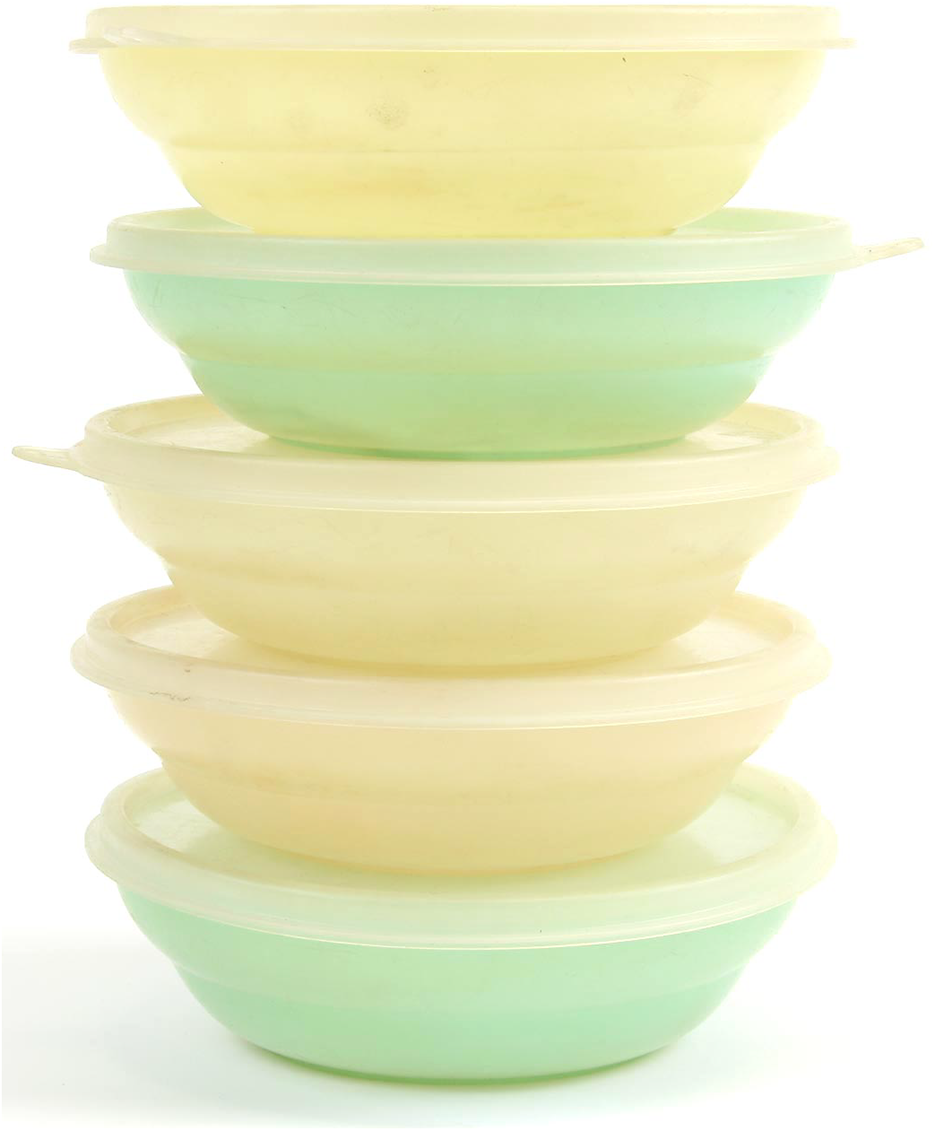
Plastics’ most significant impact came during a time when life had been dark and serious as they brought colour and fun to design. A review of the ‘Counterspace: Design and the Modern Kitchen’ exhibition held at MOMA in 2010–2011 tells how the exhibition illustrated this by making a comparison of colourful Tupperware containers against Wilhelm Wagenfeld’s rigid glass Kubus Stacking Storage Containers and describes how the products were symbols of their time (Scanlan, Reference Scanlan2011, p. 343). The post-war polyethylene Tupperware containers contrasting with their pre-war counterparts. While the Kubus containers were rigid and colourless, the Tupperware containers were flexible, light and colourful, with a variety of shapes (Figure 2).
Millionaire Line lidded bowl, Tupperware, circa 1960s. AIBDC : 000008.1. Museum of Design in Plastics, Arts University Bournemouth.
The 1950s saw a rise in the number of objects made from plastics by a manufacturing community that was swamping the market with objects made from misapplied materials. This led to objects failing to fulfil the tasks they were designed to do. It was this swamping of ‘shoddily made and poorly designed’ goods that eroded the status of plastics many, such as BIP, had worked so hard to achieve. Plastics were therefore commonly seen as ‘tacky, inferior and expendable’ (Fiell and Fiell, Reference Fiell and Fiell2009, p. 20) and are often used in kitsch products (Lessa, Reference Lessa and Lambert2020, p261). Kitsch is popularly aligned with bad taste and is seen as standing for ‘artistic endeavour gone sour’, being artificial, obvious and repetitive (Olalquiaga, Reference Olalquiaga, Candlin and Guins2009, p. 394). Despite plastics being synonymous with kitsch, it is a notion that pre-dates the proliferation of the material. The concept of kitsch, to mean ‘trash, vulgar and cheap art’, hails from the nineteenth century (Londos, Reference Londos2006, p. 295) yet it seems to have a strong hold in the 1950s and beyond, coinciding with the significant use of plastics in the production of consumer goods.
The 1960s saw another significant era for plastics, they offered a way of conveying some of the most fundamental values embraced by Pop Culture. Pop culture had two focuses: an ‘aesthetic of expendability’ or an ‘expendable aesthetic’ (Sparke, Reference Sparke and Sparke1990a, pp. 93–94), the former offering the idea of disposability, whilst the latter could be easily disposable, for example, an inflatable PVC chair versus a paper chair. In contrast to the celebrated disposability of the 1960s, plastics went through the ‘ecological outcry of the 1970s’ (Sparke, Reference Sparke1990b, p. 11) and were considered to be inferior to natural materials.
The last 40 years
The developments in plastics saw more increases in the late 1980s than in the previous two decades, and as such the image of the material family was constantly re-focusing. By this time the brightly coloured fun of the 1960s had been replaced by a more ‘high-tech’ image (Katz, Reference Katz and Sparke1990, p. 145). The key elements of Pop culture re-emerged in the 1980s under the umbrella of Post-Modernism, which embraced plastics for their almost infinite range of possibilities, with the ability to carry different connotations. This almost limitless metamorphosis made the materials perfect for a ‘culture which thrives upon pluralism’ (Sparke, Reference Sparke and Sparke1990a, p. 103).
Sustainability in design was a focus again in the late twentieth century with the ‘rapidly rising greenhouse gases’ (Penty, Reference Penty2020, p. 22) drawing a focus on the environmental impact made by material choices. The Cradle-to-Cradle Strategy developed out the C2C term from 1982 and the concept of Regenerative Design from 1994. This strategy encouraged designers and manufacturers to make improvements in five areas: ‘material health, material reutilisation, renewable energy and carbon management, water stewardship and social fairness’ (Penty, Reference Penty2020, p. 37).
In the UK Government’s ‘25 Year Plan’ published in 2018 one of the areas of focus was the reduction of waste (HM Government, 2018). They pledged to ‘minimise waste, reuse materials as much as we can and manage materials at the end of their life to minimise the impact on the environment’, this will occur with the elimination of ‘unavoidable’ plastic waste by 2042. The use of the word ‘unavoidable’ is particularly interesting as it is an acknowledgement that some of the uses of plastics, which eventually become waste, are ‘technically, environmentally and economically’ (HM Government, 2018, p. 29) inescapable. Part of this aim is to work with the waste management and reprocessing industries to improve the percentage of plastic packaging that is gathered and recycled and to improve the standard of biodegradable bags (HM Government, 2018, pp. 896–89). Despite being seen as having great potential in the 1980s, by the early 1990s biodegradability was assessed as not as green as initially anticipated. Environmentalists had established that ‘so-called biodegradable plastics’ (Whiteley, Reference Whiteley1993, p. 73) did not completely disappear from the environment leaving behind them microscopic fragments that caused issues for wildlife and the landscape. The conditions needed for the process to be a success were not readily available and as such, a boycott was started in 1989 in the USA against all biodegradable plastics as they were seen as a barrier to reuse and recycling. Today, there is a distinction between biodegradable plastics that are biodegradable in an industrial setting and those that can be composted at home. This distinction is not always made clear to the consumer and worryingly there has been evidence that littering behaviour had been influenced by the product being labelled biodegradable (UNEP, 2015, p. 31).
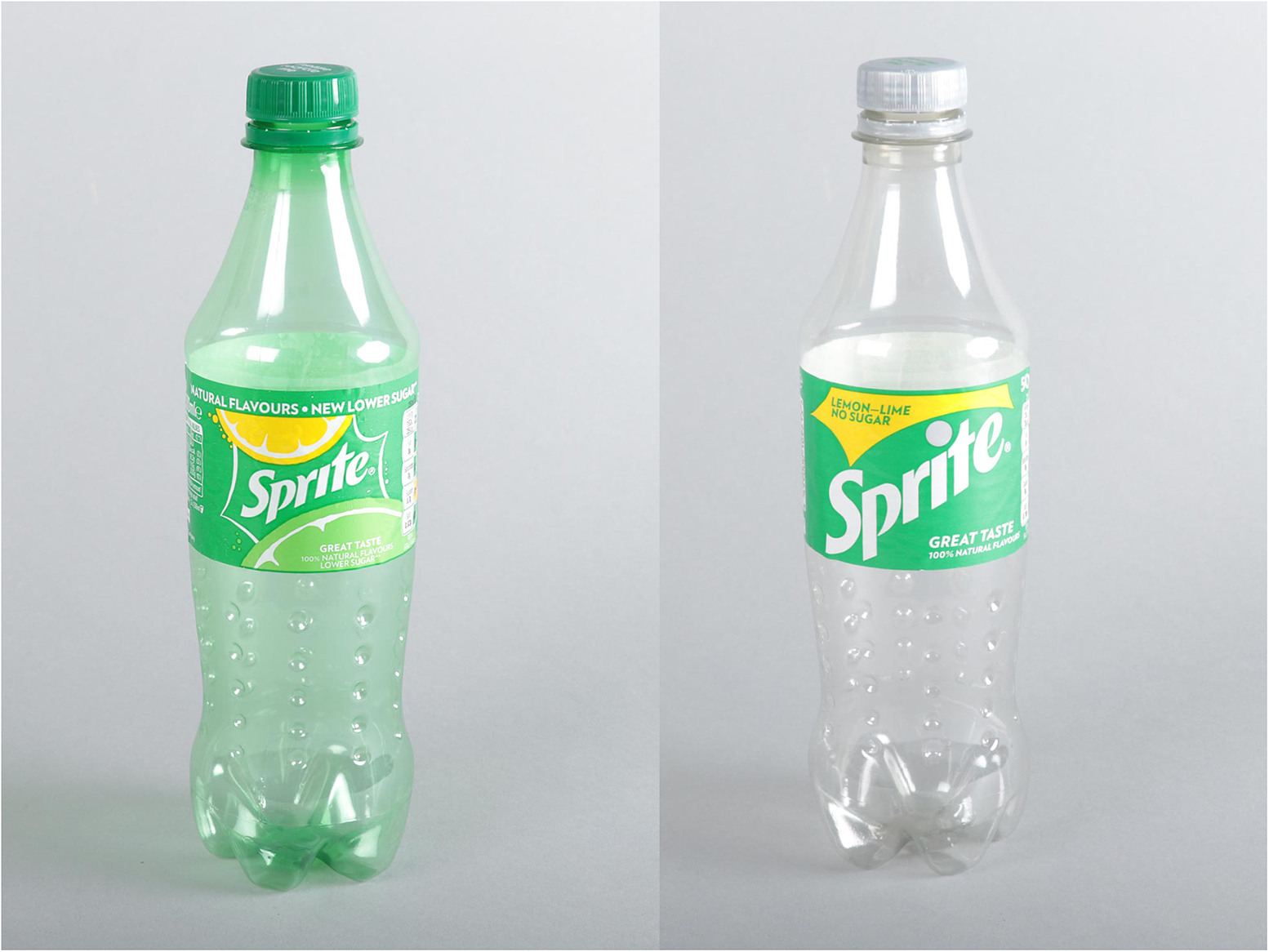
Recycling plays an important role in the reuse of materials and the reclamation of value as part of a circular economy. There are two groups of plastics: thermosets and thermoplastics. Most plastics today are thermoplastic materials, which means they can be reprocessed by heating them to a molten state and reforming them. Thermosets on the other hand have ‘crosslinked chains’ (Voet et al., Reference Voet, Jager and Folkersma2021, p. 11) which make them harder to recycle as they cannot be remelted. There are a number of ways to recycle thermoplastic materials, and it can be a relatively straightforward process if the product being recycled is made of a single material, however, it becomes more problematic and more expensive when the product is multilayered and has multiple components (Hopewell et al., Reference Hopewell, Dvorak and Kosior2009, p. 2119), for example, crisp packets and Tetra Pak drinks containers. For recycled materials to be useful, they need to have a market value. The lack of diversity in products made of recycled materials in the mid-1990s made them less desirable, as suggested at the time there ‘must be an upper limit to the number of dark grey, rough-textured counter-tops that can be usefully employed’ (Papanek, Reference Papanek1995, p. 39). This was still the case even in 2009 as it was not always technically practicable to add recycled plastics to virgin materials without reducing the quality of the colour, clarity or mechanical properties of the new material (Hopewell et al., Reference Hopewell, Dvorak and Kosior2009, p. 2119). However, innovation in the types of objects made out of recycled materials has improved in the last few years. The colour of the new product is dependent on the colour of the recyclate, if the recyclate comes from multi-coloured sources the new material will be dark in colour. To have a freedom of colours the recyclate needs to be paler than the end colour required was a catalyst for the classic green Sprite bottle being replaced by a clear bottle; ‘to enable bottle-to-bottle recycling’ (Maile, Reference Maile2019; Figure 3).
Sprite bottles, Coca-Cola European Partners, 2020. AIBDC : 008416.1. Museum of Design in Plastics, Arts University Bournemouth.
Conclusion
The appreciation or reception of materials can create a positive or a negative reaction in the user and an individual’s understanding of materials comes from their own experiential knowledge, influence of others and cultural perception. Material understanding of plastics is generated through the production, application and reception of them and empirically individuals tend to be either nonchalant or have very strong views about the material group. Culturally speaking, until recently, many people have had an ambivalent relationship with plastics as the materials are appreciated both ‘as high-tech miracle and as cheap substitute simultaneously’ (Meikle, Reference Meikle1997, p. xiii). There are those who love plastics because of what they can become, and those who hate them for the very same reason. The proliferation and the length of time that plastics have been part of our lives indicates a ‘deep and enduring relationship’ (Freinkel, Reference Freinkel2011, p. 8).
Through legislation, and ethical/moral obligations manufacturers and designers are encouraged to think about what happens to their products at the end of their useful life this will have an influence on the materials they choose to use whether those materials are plastics or otherwise. There have been many uses that plastics materials have been put to, some of these uses have been ill-conceived, others have been naïve, and other cases have been positive and appropriate. This paper has been an overview of just some of those uses, applications and perceptions of plastics there are many more to be discovered and explored but what of the future of the use of plastics? Is there one? I believe there is, but the future needs to learn from what has been before. The future use of plastics needs to be a time when the true value of the materials is considered. Not just the perceived financial value, but the use value and the reuse value, where the raw materials have come from and what they can become.
The immediate future will be shaped by the outcome of the Global Plastics Treaty (UNEP, n.d.) which aims to end plastics pollution. This will need an international effort to ensure the current pollution in the world is cleaned up, and that more pollution is not created. It will not just take international government agreements, it will also need material scientists, recyclers, waste handlers, manufacturers, designers and consumers to play their part. Material scientists will continue to make concerted efforts to develop new materials to replace those derived from fossil fuels. However, it is my hope that we do not see a repeat of the early days of plastic when each new material invention or discovery was seen as the new best thing that was then used in all situations regardless of suitability but just because it has a perception of being better. In future, materials should be selected because they are better for the intended application. Long-lived plastics will be reserved for long-lived applications and biodegradable materials will be used for short-term needs. Longer term, there will be fewer plastics used in design, but their use will be considered and appropriate. Objects will not need to be labelled as ‘recycled’ because it will be a given that they are made of recycled material, and the confusion about whether a material is recyclable or not will not be an issue for consumers because it will be a given that if they are not biodegradable, they will be recycled. This is not just a vision of the future of the use of plastics, but one that will be appropriate for the use of all materials in design.
Open peer review
To view the open peer review materials for this article, please visit http://doi.org/10.1017/plc.2024.17.
Data availability statement
Data are available on request from the author.
Author contribution
L.D. wrote the whole paper.
Financial support
This research received no specific grant from any funding agency, commercial or not-for-profit sectors.
Competing interest
There are no conflicts of interest. The author is the Curator of the Museum of Design in Plastics, Arts University Bournemouth.


 Open access


Comments
No accompanying comment.