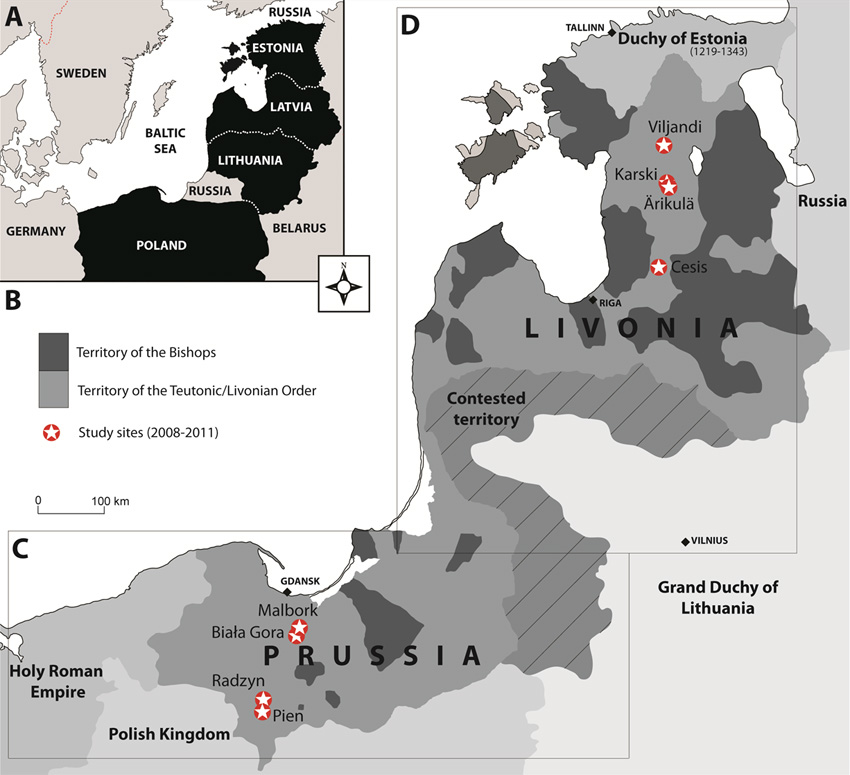


Map of modern and medieval regions in the eastern Baltic showing case study sites.

Introduction
The Ecology of Crusading project is a new programme of research investigating the environmental impact of the Baltic Crusades. In the thirteenth century, crusading armies unleashed a relentless holy war against the last indigenous pagan societies of Europe in the eastern Baltic region. Tribal territories were replaced with new Christian states, run by the Teutonic Order and individual bishops. They constructed castles, encouraged colonists, developed towns and introduced Christianity. Recent pilot studies have suggested that the period of crusading and colonisation coincides with a marked intensification in the exploitation of plant and animal resources, and associated landscape changes in the eastern Baltic. Since many aspects of the natural world were sacred to the Baltic tribes, this impact would be synonymous with the cultural changes that created a new, European world at this frontier of Christendom.
Research targets
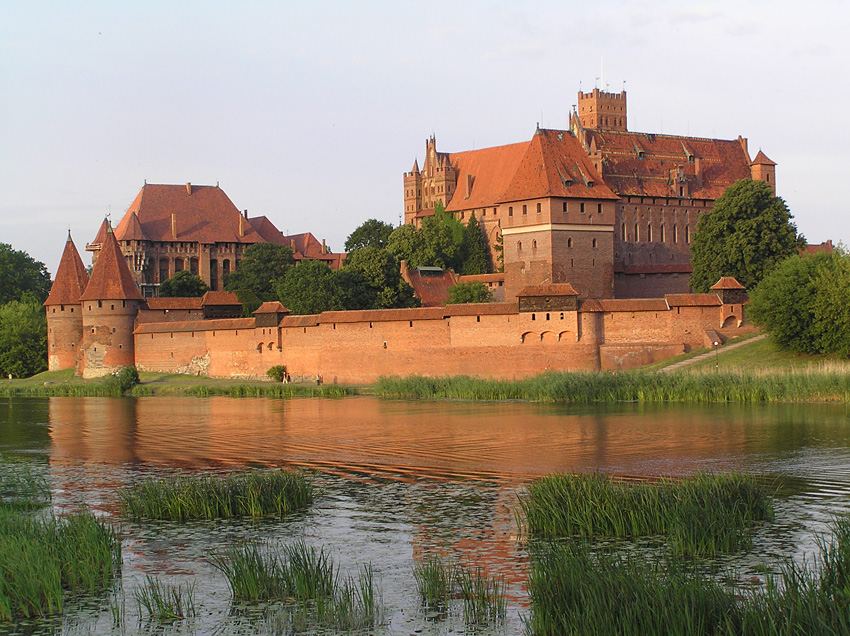
This research focuses on how castles and associated settlements constructed by the Teutonic Order re-organised and transformed local environments in north-eastern Poland, western Lithuania, northern Latvia and southern Estonia (medieval Prussia and Livonia; Figure 1). The research team is examining a diverse range of archaeological and palaeo-environmental material, alongside written and cartographic sources. The research strategy is sub-divided into on- and off-site sampling within the commanderies and administrative hinterlands of each castle. Initial fieldwork in Poland has concentrated particularly on Malbork castle (Figure 2): cores were extracted from the high castle courtyard, moats and fish pond and an assemblage of animal bones recovered from excavations in the outer bailey (Site 1) was analysed. This has provided a solid foundation for modelling the ecological profile of the castle community (Maltby et al. 2009; Brown & Pluskowski forthcoming). Future targeted excavations of castle and related settlement sites will be informed by geophysical surveys designed to identify undisturbed cultural layers, as already conducted at Biała Góra (see below) and Karksi in Estonia (Valk et al. 2009), whilst evaluation of on-site palaeoenvironmental material has been carried out at two sites in the Kulmerland (Pień and Grudziądz).
The castle at Malbork (Marienburg) overlooking the Nogat tributary of the Vistula, constructed by the Teutonic Order from the latter decades of the thirteenth century into the fifteenth century.

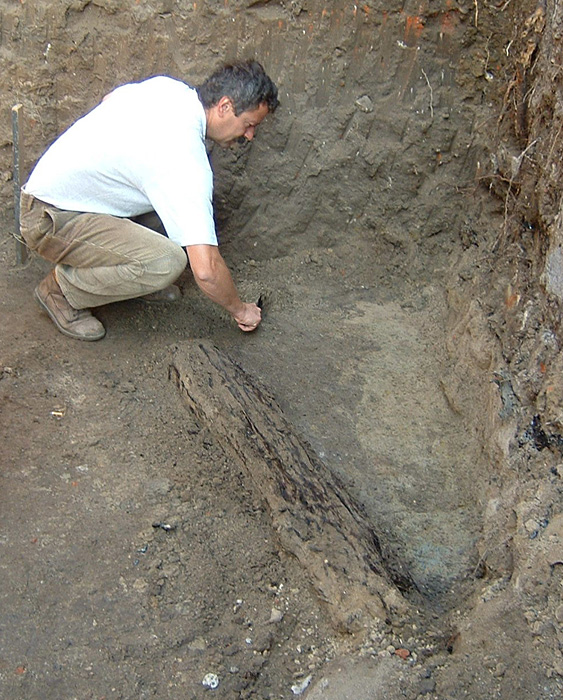
Excavating pine posts from the north-western corner of the moat of the middle castle at Malbork.

Impact and regional variation
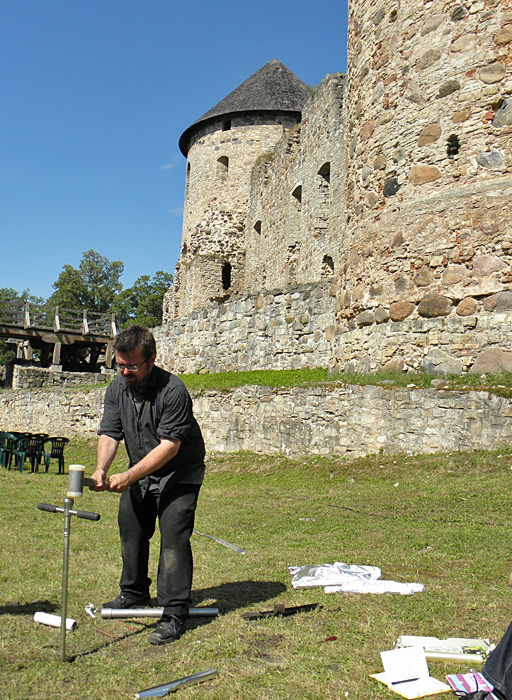
Coring the moat at Cēsis castle, Latvia.

The construction of detailed, local vegetation histories from cores taken in the commanderies or administrative hinterlands of these castles, supported by a robust 14C chronology, has already highlighted regional variation in the intensification of environmental exploitation. An off-site core from a peat deposit 3km south of Malbork indicates that human activity intensified in the landscape around the castle during the thirteenthfourteenth century. Deciduous woodland, dominated by hornbeam, oak, hazel and birch, was cleared and replaced with arable, pasture and heathland. Pine woodland expanded, reflecting its ability to colonise areas disturbed by human activity. Along with oak, pine trees were exploited, as shown by posts sunk into the waterlogged soil to serve as foundations for parts of Malbork castle (Figure 3). In other parts of the Malbork landscape, written and cartographic sources indicate that remnant managed oak woodland survived clearance, such as the still largely intact Forest of Sztum. Such areas were maintained as an important resource, exploited for timber and exported across north-west Europe from the thirteenth century onwards (Haneca et al. 2005).
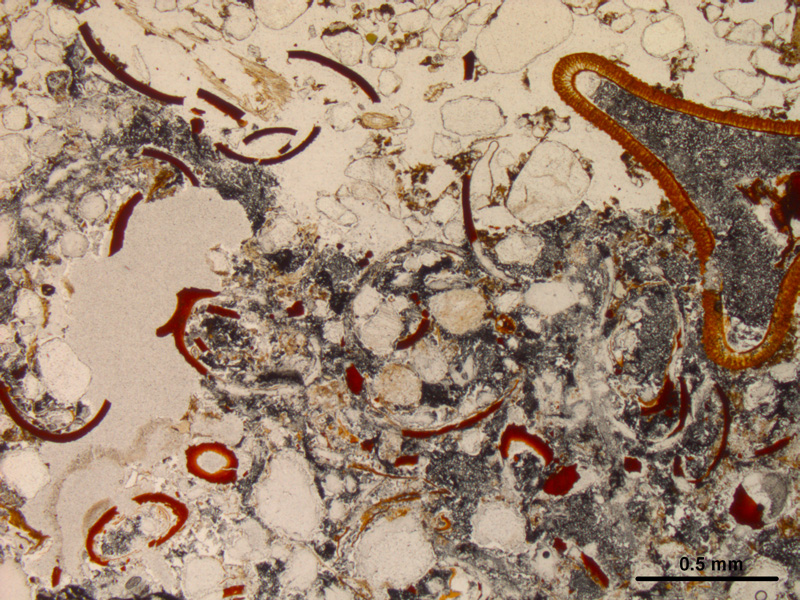
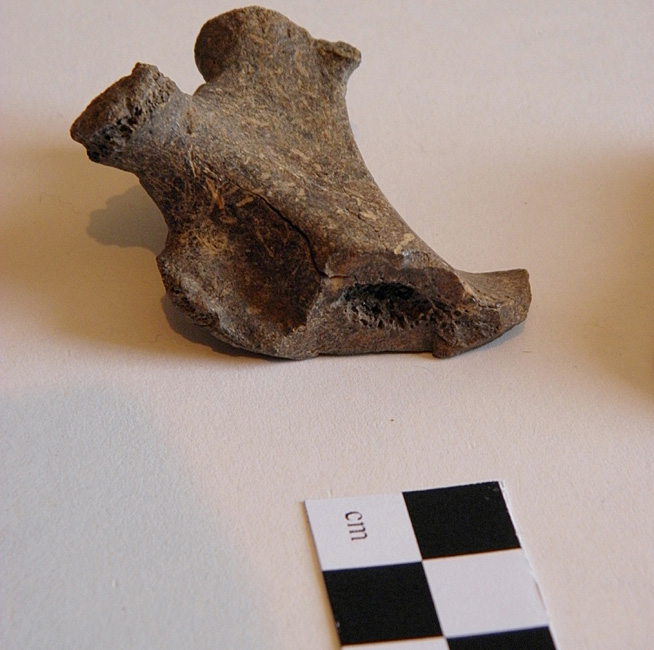
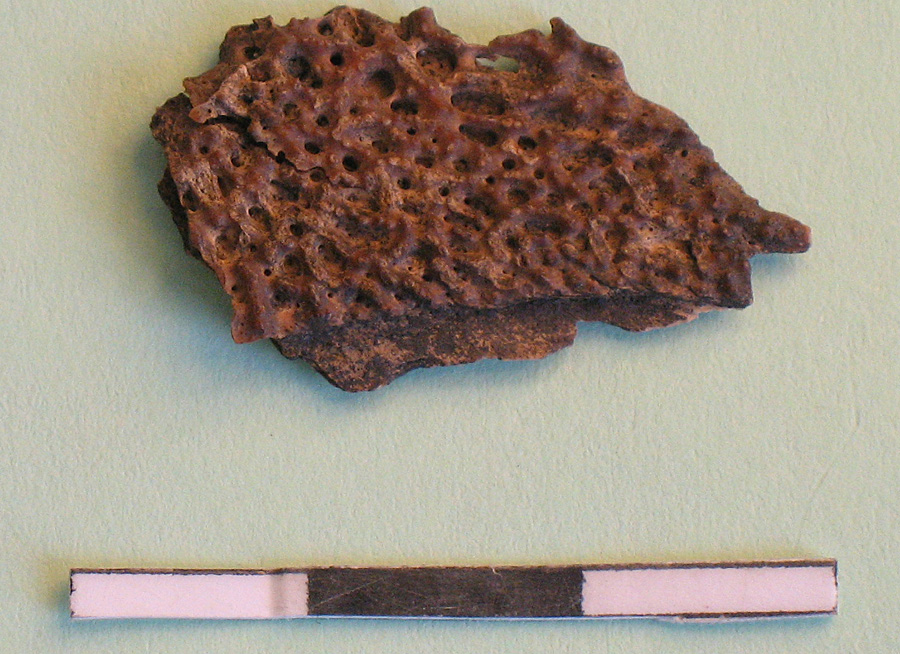
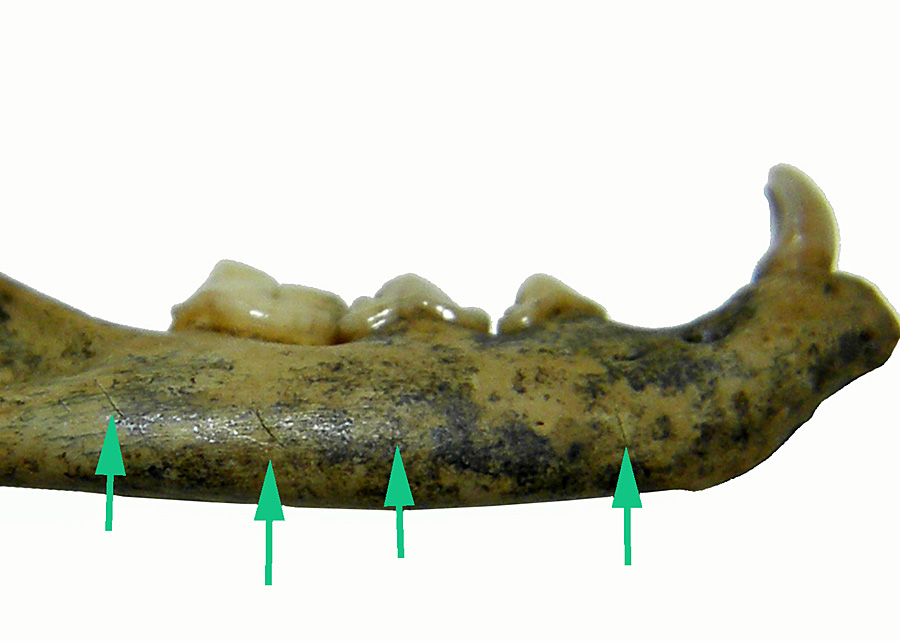
On- and off-site cores have also been obtained from Cēsis castle in Latvia (Figure 4) and from Radzyń Chełmiński castle and lake in Poland; an off-site core was also taken from peat deposits at Ärikulä, 5km south-west of Karksi castle in Estonia. While castles are the primary foci of analysis, excavations at Biała Góra, south of Malbork castle, and at the hillfort next to Cēsis castle have provided opportunities to integrate the ecological profiles of smaller, contemporary sites: samples were taken from their cultural layers for analysis at microscopic level (Figure 5). Analysis of the mammal, bird and fish bone assemblage from Biała Góra, points to diverse exploitation of the local woodland and aquatic resources (Figures 6 & 7), as well as the presence of species associated with colonisation and urbanisation (Figure 8). Further zooarchaeological research will seek to characterise a crucial element of the Teutonic Order's food culture by focusing on butchery technology, and isotopic studies will track the provenance of species featuring prominently in the culture of the Baltic crusader states, particularly horses and fish.
Part of a thin section of 'dark earth' from Biała Góra showing microscopic organic inclusions.

Butchered femur fragment of a juvenile beaver from Biała Góra.

Fragment of sturgeon bone from Biała Góra. Sturgeon was consumed at high-status and urban sites within the Teutonic Order's state and its cranial bones were used in the construction of crossbows.

Cat mandible from Biała Góra showing fine cut marks from skinning. The representation of cats in the Baltic region noticeably increases from the thirteenth century, paralleling the intensification of human settlement.

The findings reported here bode well for the project's overall research aims: by comparing long term trends in environmental transformation across the Eastern Baltic, it will be possible to assess both the impact of the crusades on the pre-Christian landscape and the relationship between environmental adaptation and the cultural uniformity of the developing crusader states.
Further details of the project are available at: http://www.ecologyofcrusading.com.
Acknowledgements
The authors would like to thank the European Research Council for funding the Ecology of Crusading research programme 20102014; and The British Academy, The Society for Medieval Archaeology and The Society of Antiquaries of London for funding pilot studies. We would also like to thank Zbigniew Sawicki, Waldemar Jaszczyński, Janusz Trupinda, Maria Dąbrowska, Dariusz Poliński, Marcin Wiewióra, Heiki Valk, Gundars Kalniņš, Zigrīda Apala, Oskars Uspelis, Mark Maltby, Mirosława Zabilska and Dave Thornley.