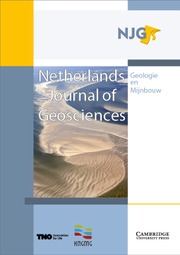


The Wadden Sea region spans a distance of nearly 500km along the North Sea coast from the Netherlands to Denmark. It consists of a chain of barrier islands which shelter an area of extensive intertidal flats and salt marshes that are dissected by tidal channels and creeks. Moreover, several estuaries are part of this area which is known for its intriguing morphodynamics. The natural process of continuous erosion, transport and deposition of sediment shapes the morphology of the area, which has a high ecological value, especially the intertidal morphology that supports a wide range of wildlife.
It is that intertidal morphology that is maintained by the balance of sediment supply on the one hand and the need for sediment accumulation that is caused by sea-level rise, seabed subsidence and the impact of interventions in the natural system on the other hand. The discussion on the impact of an acceleration of sea-level rise caused by global warming and the consequences of mining activities in the Wadden area itself raises concern about the future development of the sediment budget of the Wadden Sea and the possible impact on the intertidal flats.
This special issue of Netherlands Journal of Geosciences / Geologie en Mijnbouw (NJG) is the result of a study into this topic that was commissioned by the Wadden Academy (Waddenacademie) and the Programme towards a Rich Wadden Sea (Programma naar een Rijke Waddenzee). Both organisations are very much aware that many stakeholders in the Wadden Sea region of the Netherlands are considering future scenarios for rising sea levels, subsidence and sedimentation in this area. Therefore, they have taken the initiative to produce a state-of-the-art report on the future rise in sea levels, subsidence induced by production of gas and salt, sedimentation in the tidal basins and their interactions. The study presents scenarios including interpretations of the uncertainties and their underlying causes that are based on knowledge developed in recent years by various initiatives and research groups, both in the Netherlands and surrounding North Sea countries.
For each of the processes – sea-level rise, subsidence and sedimentation – an independent and renowned scholar was invited to assemble a group of experts from various universities and institutions in order to arrive at the best possible understanding and broadly supported overview of the current knowledge relating to future developments. Each group produced a comprehensive overview of its subject that can be considered the state of the art. Moreover, the essential information is combined in a synthesis that sketches the interaction of sea-level rise, subsidence and sediment transport processes and predicts their outcomes and, hence, the future development of the intertidal flats in the Dutch Wadden Sea for the coming century.
The Netherlands Organization of Scientific Research (NWO) organised an independent peer review of the different components of the study. The three components of the processes were each reviewed by three renowned international experts on the respective subjects and all nine reviewers also provided feedback on the synthesis. The anonymised reports and the implementation of the reviewers’ comments by the authors were shared with the organisations that commissioned the study and with NJG editors of this special issue.
The initiators of this work, viz. the Wadden Academy and the Programme towards a Rich Wadden Sea, decided not to publish the study as a report but as a special issue of the Netherlands Journal of Geosciences / Geologie en Mijnbouw. This special issue therefore consists of four contributions.
The first paper, by Van der Spek, is a synthesis of the information in the three subsequent papers on sea-level change, subsidence and the sediment budget of the Dutch part of the Wadden Sea. This paper summarises the sea-level projections for the 21st century, the subsidence expected to be caused by gas and salt extraction and the consequences for the sediment budgets of the individual tidal basins.
The paper by Vermeersen et al. is the collaborative effort of a group of over 20 experts from both the Netherlands and surrounding countries. The group comprises researchers from disciplines as diverse as geology, oceanography, glaciology, geophysics and engineering working on reconstruction of mean palaeo-sea levels, water-level observations from tide gauges and satellites and modelling. They describe the causes of both global and regional changes in sea level, discuss the observations on global sea level and local levels in the North Sea and Wadden Sea and combine the information in sea-level budgets. Moreover, they produce projections of sea-level change in the Dutch Wadden Sea for the 21st century for different climate scenarios as defined in the Fifth Assessment Report of the Intergovernmental Panel on Climate Change (IPCC AR5).
Fokker and his co-authors from TNO-Applied Geosciences and Delft University of Technology (Fokker et al.) summarise natural and anthropogenic causes of land subsidence and explain the use of models in forecasting the vertical land movement that is associated with the extraction of fluids (oil, gas) or mass (rock salt) from the subsurface. Moreover, they explain the physical processes involved, describe mechanisms of compaction and show how the response of the subsurface to these processes and mechanisms propagates to the surface, causing subsidence. They present an overview of the data from the Wadden Sea region and discuss how to combine models and measurements. Finally, they compile an overview of producing gas and rock salt concessions, the related current (2018) subsidence rates and expected total subsidence in 2030 and 2050. They do not give information for the year 2100 since it is unknown whether there will be any extraction of fluids or salt from underneath the Wadden Sea after 2050.
Wang and his colleagues from Deltares and Rijkswaterstaat (Wang et al.) present the sediment budget of the Dutch part of the Wadden Sea over the last century and show that over that period the impact of large-scale engineering (damming of the Zuiderzee and Lauwerszee) predominates over the consequences of relative sea-level rise. The evolution of coastal systems is determined by the state of their sediment budget and the latter can be described in terms of ‘supply and demand’. The combined effects of sea-level rise and subsidence of the seabed make extra room for sedimentation (‘demand’) that has to be filled by sediment imported from the North Sea coastal zone. The authors give an overview of physical processes driving the net sediment transport and present a new conceptual model for sediment exchange between tidal channels and flats. After an explanation of the basics of morphodynamic modelling, they calculate maximum rates of relative sea-level rise that can be compensated by sediment import from the North Sea coast. The values for the western and eastern parts of the Dutch Wadden Sea differ considerably. By combining the projections for sea-level rise and subsidence and comparing them with these maximum rates, the future development of the sediment budgets per tidal basin can be determined. Finally, Wang et al. discuss the effect of an insufficient sediment supply on intertidal flats.
Each paper ends with an overview of knowledge gaps and recommendations for further research that can and will be used as input for research planning such as, e.g., the Trilateral Research Agenda for the Wadden Sea Region and its World Heritage Site (May 2018, downloadable at www.waddenacademie.nl).
A video recording titled The Future of the Wadden Sea was produced by Sciencemedia.nl to give an introduction to this study. The video shows, amongst other shots, interviews with the lead authors of the study. It can be watched via a link at www.waddenacademie.nl (see also https://youtu.be/Ts3hOEHxBkY).
Acknowledgements
We would like to thank Hessel Speelman and Klaas Deen of the Wadden Academy, and Hendrikus Venema, Hein Sas and Ernst Lofvers of the Programme towards a Rich Wadden Sea, for their support during this study. Bert Vermeersen, Aimée Slangen, Peter Fokker and Zheng Bing Wang, the lead authors of the process studies, are acknowledged for the pleasant co-operation. Dan Brinkhuis and his crew of Sciencemedia.nl are thanked for their enthusiastic way of making complex subjects accessible. Josef Stuefer of the Netherlands Organization of Scientific Research (NWO) assisted in the review process, and the editors Hanneke Verweij and Johan ten Veen of the Netherlands Journal of Geosciences assisted in the realisation of this special issue. Many thanks for that.


