


Stigma is the negative evaluation of a person as tainted or discredited on the basis of attributes such as mental disorder, ethnicity, drug misuse or physical disability (Reference GoffmanGoffman, 1963). There is no doubt that such prejudice has substantial negative social, political, economic and psychological consequences for stigmatised people (Reference Dovidio, Major, Crocker, Heatherton, Kleck and HeblDovidio et al, 2000). They may feel unsure of how ‘normal’ people will identify or receive them (Reference GoffmanGoffman, 1963) and become constantly self-conscious and calculating about what impression they are making (Reference RushRush, 1998).
A number of attempts have been made to measure attitudes to mental illness and stigma, most of which have focused on attitudes towards mental illness held by people in the community (Reference BhugraBhugra, 1989; Reference Link, Miritznik and CullemLink et al, 1991; Reference Ritchie, Dick and LinghamRitchie et al, 1994; Reference Wolff, Pathare and CraigWolff et al, 1996; Reference ByrneByrne, 1997; Corrigan et al, Reference Corrigan, River and Lundin2000, Reference Corrigan, Edwards and Green2001). Far fewer attempts have been made to measure stigma directly with service users themselves. One instrument developed in the USA focused on stigma associated with seeking psychotherapy (Reference JudgeJudge, 1998), and a second concerned the shame and withdrawal felt by people with mental illness (Reference Link, Struening and Neese-ToddLink et al, 2001). After our study was completed, a fourth measure has been published in which a more comprehensive attempt was made to evaluate stigma using thoughts and opinions from focus groups of mental health users in the USA (Reference Ritsher, Otilingham and GrajalesRitsher et al, 2003). Corrigan and colleagues (Corrigan, Reference Corrigan2000, Reference Corrigan2004; Reference Corrigan and WatsonCorrigan & Watson, 2002) have extended their research on public attitudes to mental illness to include conceptual and methodological work on what they called self-stigma (i.e. the reactions of stigmatised individuals towards themselves) and on the perception of discrimination by people with mental illness (Reference Corrigan, Thompson and LambertCorrigan et al, 2003; Reference Rusch, Angermeyer and CorriganRusch et al, 2005).
We aimed to design a standardised measure of the stigma of mental illness that is firmly anchored in the experiences and views of mental health service users, and then to test its relationship to a measure of self-esteem. We predicted that stigma and self-esteem would be negatively correlated.
METHOD
Participants and procedure
The study was approved by the local research ethics committee. We recruited 193 people with a range of psychiatric diagnoses and of varying age, gender and ethnicity from mental health user groups, day centres, crisis centres, out-patient departments and hospitals in north London. Service users were approached either by the researchers or by members of staff and were informed about the study and its aims, and then asked to participate. No exclusion criteria were used. Our aim was to recruit as many participants as possible from diverse psychiatric and demographic backgrounds. The requirements of ethical approval constrained any collection of data about potential participants who refused. Two service users (J.S. and R.W.) who had already received training in research methods in earlier work on this theme (Reference Dinos, Stevens and SerfatyDinos et al, 2004) underwent further training to contribute to the questionnaire content, and to conduct further data collection. A proportion of participants completed the questionnaire on two occasions approximately 2 weeks apart.
Measures
We asked participants standard demographic questions, followed by questions about when they first experienced mental health problems, whether or not they had received a diagnosis from a mental health professional, the nature of any diagnosis, the time that the diagnosis was given and whether they agreed with it, treatment received and whether they had ever been admitted to hospital compulsorily. Participants then completed the following two questionnaires.
Stigma Scale
Forty-two questions on the stigma of mental illness were developed from the detailed, qualitative accounts of 46 mental health service users recruited in an earlier study (Reference Dinos, Stevens and SerfatyDinos et al, 2004). Stigma was a pervasive concern for almost all of these 46 participants. People with psychosis or drug dependence were most likely to report feelings and experiences of stigma and were most affected by them. Participants with depression, anxiety or personality disorders were more concerned about patronising attitudes and often perceived stigma even if they had not experienced any overt discrimination. However, experiences were not universally negative, and people employed various strategies to protect their self-esteem and maintain a positive self-concept. The content of statements used in this study arose directly from these findings. Themes that were more salient than others because they appeared in most of the qualitative interviews – such as how to manage telling others about the illness – were given priority. Thus, items that were based on each of several different disclosure types were included in the scale. The 42 items covered all of the themes and sub-themes from these interviews. The wording of each item was based on participants' phrases in the qualitative interviews, adapted with minor modifications to fit most people's experiences. Participants indicated whether they agreed or disagreed with each of these 42 statements on a five-point Likert scale ranging from ‘Strongly agree’ to ‘Strongly disagree’. Response set bias was addressed by alternating between negative and positive wording. We chose a five-point Likert scale as a straightforward, widely used response style that avoided more difficult formats such as visual analogue scales and yet accurately reflected participants' experiences.
Self-Esteem Scale
The Self-Esteem Scale (Rosenberg, Reference Rosenberg1965, Reference Rosenberg1979) has been shown to have high test–retest reliability and concurrent validity with a number of measures of psychological well-being and self-efficacy. Participants indicate whether they agree or disagree with ten statements on a five-point Likert scale ranging from ‘Strongly agree’ to ‘Strongly disagree’. Examples of statements are ‘On the whole I am satisfied with myself’ and ‘I feel that I have a number of good qualities’. The aim of including this questionnaire was to explore the relationship between perceived stigma and self-esteem. Although we expected scores on the two scales to be negatively correlated, we did not regard this as a validation of our stigma scale.
Analysis
We first examined the pattern and distribution of responses in order to detect items that had little variation in response and would therefore not distinguish between people with differing experiences of stigma. We examined the test–retest reliability of responses to the statements using the weighted κ statistic and items with a weighted κ coefficient below 0.4 were removed. Remaining items were subjected to a common factor analysis and subsequent oblique (promax) rotation as we assumed at least two factor scores would be correlated. We found, however, that the factor scores derived were not correlated and thus, as a sensitivity check, we also performed an orthogonal rotation which assumes no correlation between any two factors. We chose common factor analysis (in contrast to principal components analysis) because our primary purpose was to understand the factor structure of the instrument, rather than summarise or reduce the data. Common factor analysis enables an examination of simple patterns in the relationships among the statements. The scree plot of successive eigenvalues was inspected to identify the point where the plot abruptly levelled out, indicating that adding further factors would not help describe the overall relationship between the statements. Internal consistency of the final scale (and sub-scales) was estimated using Cronbach's α. We also explored the correlation of each item with the total score (item excluded), the average correlation with other items and Cronbach's α with that item removed. Concurrent validity with the Self-Esteem Scale was assessed by comparing mean scores using Pearson's correlation coefficient. Data were analysed using Stata version 7 for Windows.
RESULTS
Participants
Altogether 193 service users took part. The first 93 were asked to complete the stigma questionnaire on two occasions; 60 (65%) of them complied and 33 completed it only once. The 60 patients who completed the questionnaire twice did not differ from the 33 who refused, in terms of their diagnoses, mean number of years since diagnosis or whether they had ever been compulsorily admitted to hospital. A further 100 participants agreed to complete the questionnaire once in order to boost the sample size for factor analysis. A total of 109 men and 82 women (2 respondents did not state their gender), whose mean age was 42.9 years (s.d.=12.4, range 19–76), took part; 159 (76.5%) were White, 11 (5.5%) were Black, 7 (3.5%) were of Indian or Bangladeshi origin, 18 (9%) were of other origin and 11 did not state their ethnic background. Regarding occupation, 34 (17%) were employed, 68 (34%) were on sick leave from work, 40 (20%) were unemployed seeking work, 12 (6%) were students, 24 (12%) were retired, two (1%) were home managers and 20 were unable to answer the question. Most participants had received a diagnosis of schizophrenia, bipolar affective disorder, depression and/or mixed anxiety and depression (Table 1) and most had received more than one diagnosis; 135 patients (67.5%) agreed with their diagnoses, 36 did not, 1 was unsure and 21 did not answer the question. A third of participants (n=63) reported that they had been admitted to a psychiatric unit compulsorily (8 did not answer the question) and 26 (16%) reported having received electroconvulsive therapy.
Diagnoses and treatments reported by the 193 participants. More than one diagnosis or form of treatment could be reported

| n | |
|---|---|
| Diagnosis | |
| Schizophrenia/ schizoaffective disorder | 52 |
| Bipolar affective disorder | 37 |
| Mixed anxiety and depression | 77 |
| Anxiety disorder | 54 |
| Drug problems | 27 |
| Alcohol problems | 29 |
| Personality disorder | 23 |
| Depression | 94 |
| OCD | 12 |
| Eating disorder | 24 |
| PTSD | 13 |
| Treatment | |
| ECT | 26 |
| Antidepressants | 146 |
| Sleeping tablets | 101 |
| Tranquillisers | 78 |
| Counselling/CBT | 111 |
| Antipsychotics | 86 |
| Mood stabilisers | 47 |
| None | 2 |
CBT, cognitive–behavioural therapy; ECT, electroconvulsive therapy; OCD, obsessive–compulsive disorder; PTSD, post-traumatic stress disorder
Distribution of responses
Responses to all items were reasonably evenly distributed, in that each response choice received at least 20% affirmation, so none was removed on this criterion.
Test–retest reliability
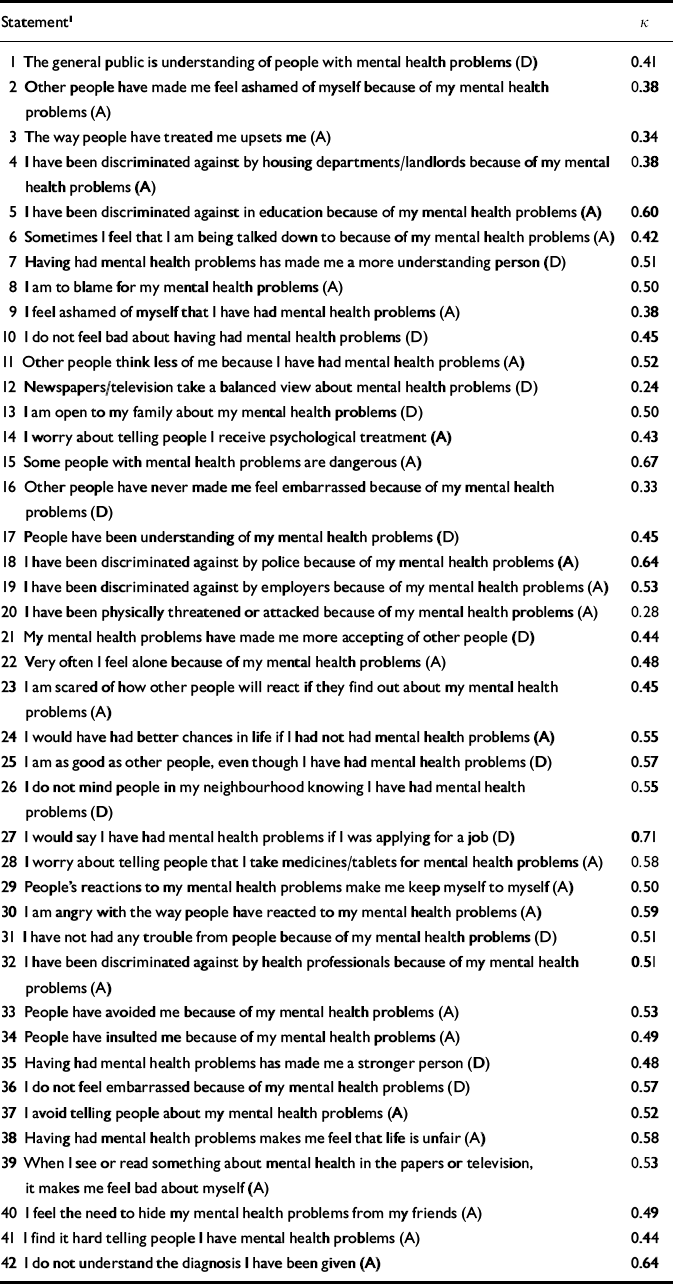
Seven of the 42 items had κ coefficients below 0.4 and were removed. The remainder of the κ statistics ranged up to 0.71 (Table 2).
Test–retest reliability of all 42 statements
| Statement 1 | κ |
|---|---|
| 1 The general public is understanding of people with mental health problems (D) | 0.41 |
| 2 Other people have made me feel ashamed of myself because of my mental health problems (A) | 0.38 |
| 3 The way people have treated me upsets me (A) | 0.34 |
| 4 I have been discriminated against by housing departments/landlords because of my mental health problems (A) | 0.38 |
| 5 I have been discriminated against in education because of my mental health problems (A) | 0.60 |
| 6 Sometimes I feel that I am being talked down to because of my mental health problems (A) | 0.42 |
| 7 Having had mental health problems has made me a more understanding person (D) | 0.51 |
| 8 I am to blame for my mental health problems (A) | 0.50 |
| 9 I feel ashamed of myself that I have had mental health problems (A) | 0.38 |
| 10 I do not feel bad about having had mental health problems (D) | 0.45 |
| 11 Other people think less of me because I have had mental health problems (A) | 0.52 |
| 12 Newspapers/television take a balanced view about mental health problems (D) | 0.24 |
| 13 I am open to my family about my mental health problems (D) | 0.50 |
| 14 I worry about telling people I receive psychological treatment (A) | 0.43 |
| 15 Some people with mental health problems are dangerous (A) | 0.67 |
| 16 Other people have never made me feel embarrassed because of my mental health problems (D) | 0.33 |
| 17 People have been understanding of my mental health problems (D) | 0.45 |
| 18 I have been discriminated against by police because of my mental health problems (A) | 0.64 |
| 19 I have been discriminated against by employers because of my mental health problems (A) | 0.53 |
| 20 I have been physically threatened or attacked because of my mental health problems (A) | 0.28 |
| 21 My mental health problems have made me more accepting of other people (D) | 0.44 |
| 22 Very often I feel alone because of my mental health problems (A) | 0.48 |
| 23 I am scared of how other people will react if they find out about my mental health problems (A) | 0.45 |
| 24 I would have had better chances in life if I had not had mental health problems (A) | 0.55 |
| 25 I am as good as other people, even though I have had mental health problems (D) | 0.57 |
| 26 I do not mind people in my neighbourhood knowing I have had mental health problems (D) | 0.55 |
| 27 I would say I have had mental health problems if I was applying for a job (D) | 0.71 |
| 28 I worry about telling people that I take medicines/tablets for mental health problems (A) | 0.58 |
| 29 People's reactions to my mental health problems make me keep myself to myself (A) | 0.50 |
| 30 I am angry with the way people have reacted to my mental health problems (A) | 0.59 |
| 31 I have not had any trouble from people because of my mental health problems (D) | 0.51 |
| 32 I have been discriminated against by health professionals because of my mental health problems (A) | 0.51 |
| 33 People have avoided me because of my mental health problems (A) | 0.53 |
| 34 People have insulted me because of my mental health problems (A) | 0.49 |
| 35 Having had mental health problems has made me a stronger person (D) | 0.48 |
| 36 I do not feel embarrassed because of my mental health problems (D) | 0.57 |
| 37 I avoid telling people about my mental health problems (A) | 0.52 |
| 38 Having had mental health problems makes me feel that life is unfair (A) | 0.58 |
| 39 When I see or read something about mental health in the papers or television, it makes me feel bad about myself (A) | 0.53 |
| 40 I feel the need to hide my mental health problems from my friends (A) | 0.49 |
| 41 I find it hard telling people I have mental health problems (A) | 0.44 |
| 42 I do not understand the diagnosis I have been given (A) | 0.64 |
1. Each question scored 0–4 in the direction of greater stigma: A, scored 0–4 in direction of agreement; D, scored 0–4 in direction of disagreement
Factor analysis
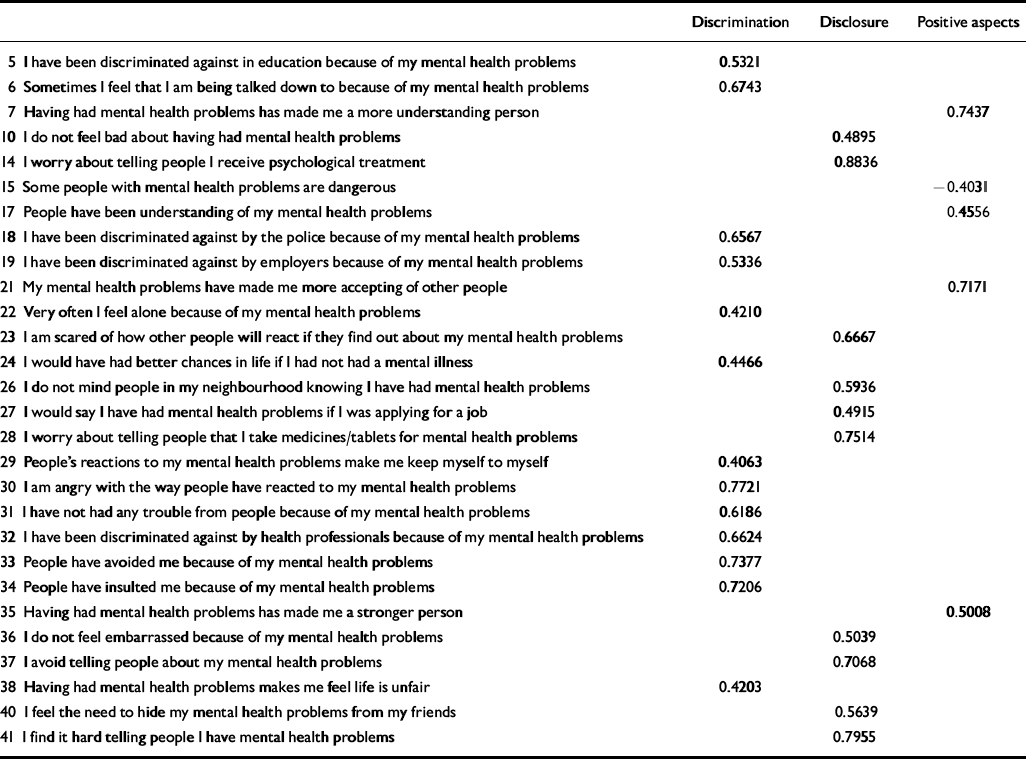
Using participants' first questionnaire responses (163 observations), we conducted a factor analysis to examine the factor structure of the remaining 35 items of the scale. This yielded three factors, based on observation of the scree plot of eigenvalues; values were 7.7, 2.8 and 2.1 for factors 1 to 3; the fourth factor had an eigenvalue of 1.1 and thus this and subsequent factors were not considered further. After rotation, items with loadings less than 0.4 on any of the first three factors were not retained (items 1, 8, 11, 13, 25, 39 and 42).
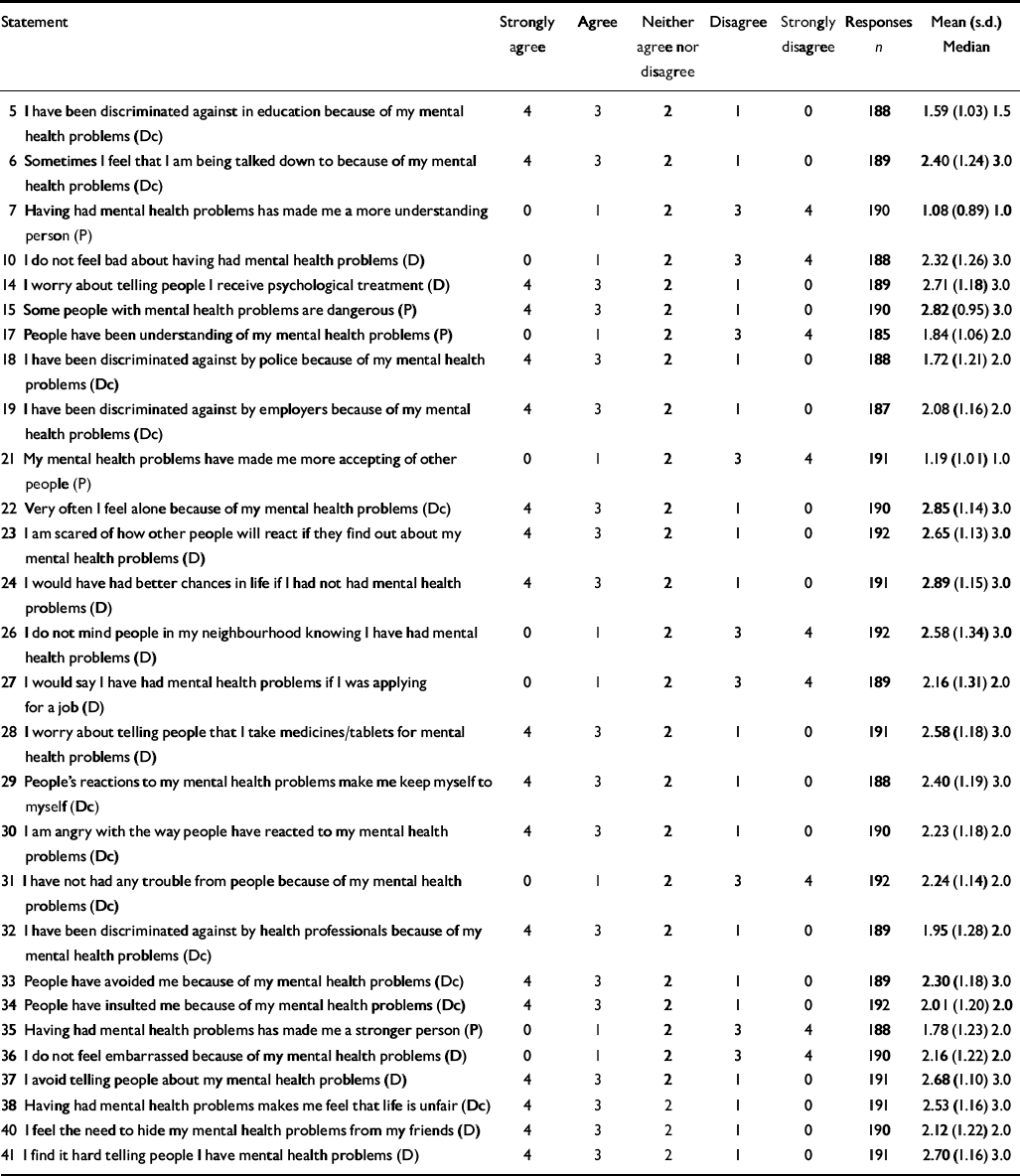
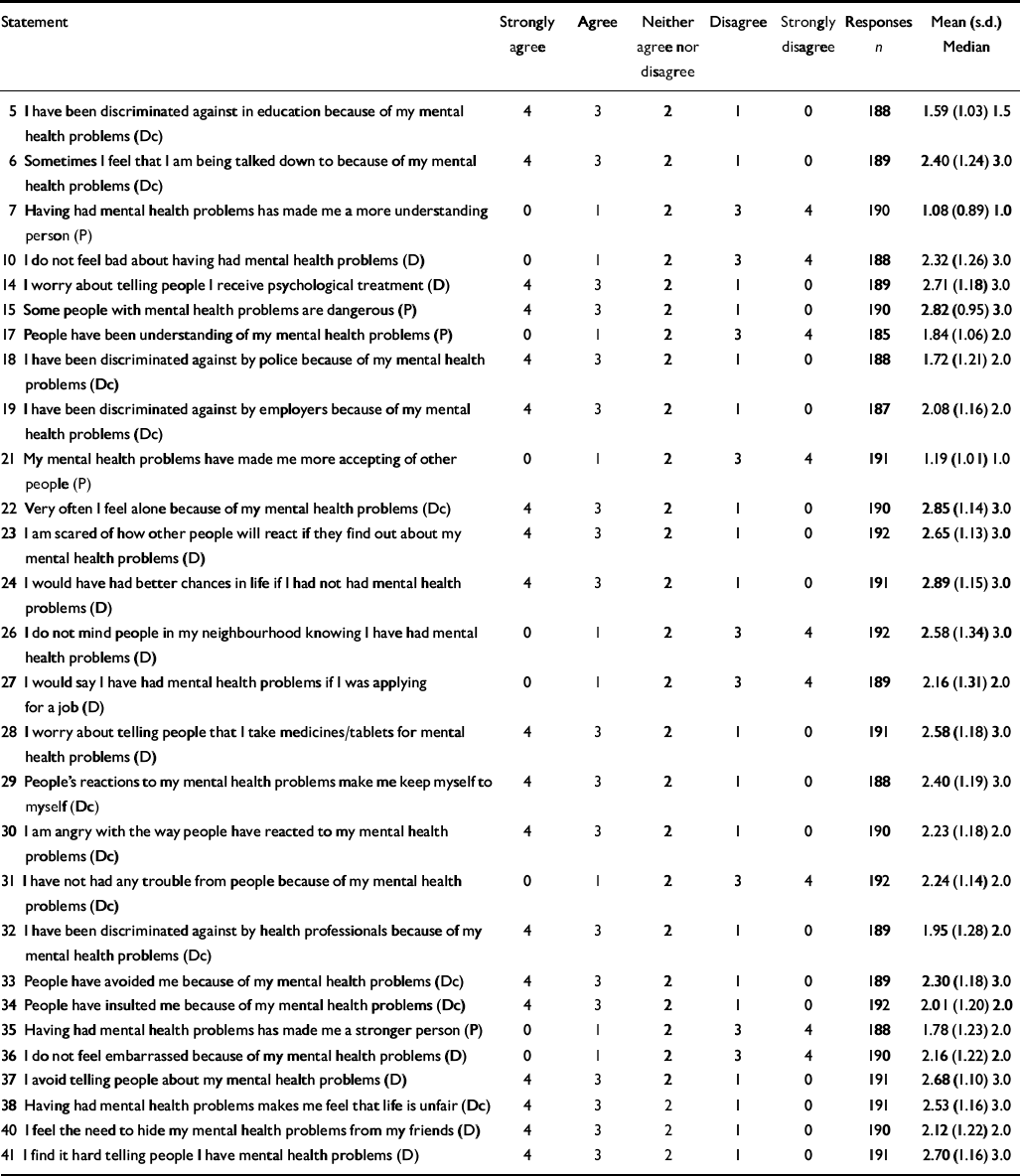
The first factor (44% of the variance) contained 13 statements with factor loadings above 0.4 (Table 3). These 13 statements focused on perceived hostility by others or lost opportunities because of prejudiced attitudes. Thus this factor was labelled discrimination. The second factor (16% of the variance) involved 10 statements that loaded at the 0.4 level or above and that mainly concerned disclosure about mental illness. The third factor (12% of the variance) contained five statements that concerned positive aspects of mental illness, such as becoming a more understanding or accepting person. The descriptive statistics of the final 28 items are presented in Table 4. Note that because scoring of the questionnaire was reversed for items that explored positive aspects of mental illness (to maintain consistency that a higher score means greater stigma), most factor loadings on this sub-scale are positive. This was also the case for question 31 in the discrimination sub-scale.
Rotated factor matrix for 28 items arising from the factor analysis
| Discrimination | Disclosure | Positive aspects | |
|---|---|---|---|
| 5 I have been discriminated against in education because of my mental health problems | 0.5321 | ||
| 6 Sometimes I feel that I am being talked down to because of my mental health problems | 0.6743 | ||
| 7 Having had mental health problems has made me a more understanding person | 0.7437 | ||
| 10 I do not feel bad about having had mental health problems | 0.4895 | ||
| 14 I worry about telling people I receive psychological treatment | 0.8836 | ||
| 15 Some people with mental health problems are dangerous | –0.4031 | ||
| 17 People have been understanding of my mental health problems | 0.4556 | ||
| 18 I have been discriminated against by the police because of my mental health problems | 0.6567 | ||
| 19 I have been discriminated against by employers because of my mental health problems | 0.5336 | ||
| 21 My mental health problems have made me more accepting of other people | 0.7171 | ||
| 22 Very often I feel alone because of my mental health problems | 0.4210 | ||
| 23 I am scared of how other people will react if they find out about my mental health problems | 0.6667 | ||
| 24 I would have had better chances in life if I had not had a mental illness | 0.4466 | ||
| 26 I do not mind people in my neighbourhood knowing I have had mental health problems | 0.5936 | ||
| 27 I would say I have had mental health problems if I was applying for a job | 0.4915 | ||
| 28 I worry about telling people that I take medicines/tablets for mental health problems | 0.7514 | ||
| 29 People's reactions to my mental health problems make me keep myself to myself | 0.4063 | ||
| 30 I am angry with the way people have reacted to my mental health problems | 0.7721 | ||
| 31 I have not had any trouble from people because of my mental health problems | 0.6186 | ||
| 32 I have been discriminated against by health professionals because of my mental health problems | 0.6624 | ||
| 33 People have avoided me because of my mental health problems | 0.7377 | ||
| 34 People have insulted me because of my mental health problems | 0.7206 | ||
| 35 Having had mental health problems has made me a stronger person | 0.5008 | ||
| 36 I do not feel embarrassed because of my mental health problems | 0.5039 | ||
| 37 I avoid telling people about my mental health problems | 0.7068 | ||
| 38 Having had mental health problems makes me feel life is unfair | 0.4203 | ||
| 40 I feel the need to hide my mental health problems from my friends | 0.5639 | ||
| 41 I find it hard telling people I have mental health problems | 0.7955 |
Descriptive statistics of final 28 item stigma scale
| Statement | Strongly agree | Agree | Neither agree nor disagree | Disagree | Strongly disagree | Responses n | Mean (s.d.) Median |
|---|---|---|---|---|---|---|---|
| 5 I have been discriminated against in education because of my mental health problems (Dc) | 4 | 3 | 2 | 1 | 0 | 188 | 1.59 (1.03) 1.5 |
| 6 Sometimes I feel that I am being talked down to because of my mental health problems (Dc) | 4 | 3 | 2 | 1 | 0 | 189 | 2.40 (1.24) 3.0 |
| 7 Having had mental health problems has made me a more understanding person (P) | 0 | 1 | 2 | 3 | 4 | 190 | 1.08 (0.89) 1.0 |
| 10 I do not feel bad about having had mental health problems (D) | 0 | 1 | 2 | 3 | 4 | 188 | 2.32 (1.26) 3.0 |
| 14 I worry about telling people I receive psychological treatment (D) | 4 | 3 | 2 | 1 | 0 | 189 | 2.71 (1.18) 3.0 |
| 15 Some people with mental health problems are dangerous (P) | 4 | 3 | 2 | 1 | 0 | 190 | 2.82 (0.95) 3.0 |
| 17 People have been understanding of my mental health problems (P) | 0 | 1 | 2 | 3 | 4 | 185 | 1.84 (1.06) 2.0 |
| 18 I have been discriminated against by police because of my mental health problems (Dc) | 4 | 3 | 2 | 1 | 0 | 188 | 1.72 (1.21) 2.0 |
| 19 I have been discriminated against by employers because of my mental health problems (Dc) | 4 | 3 | 2 | 1 | 0 | 187 | 2.08 (1.16) 2.0 |
| 21 My mental health problems have made me more accepting of other people (P) | 0 | 1 | 2 | 3 | 4 | 191 | 1.19 (1.01) 1.0 |
| 22 Very often I feel alone because of my mental health problems (Dc) | 4 | 3 | 2 | 1 | 0 | 190 | 2.85 (1.14) 3.0 |
| 23 I am scared of how other people will react if they find out about my mental health problems (D) | 4 | 3 | 2 | 1 | 0 | 192 | 2.65 (1.13) 3.0 |
| 24 I would have had better chances in life if I had not had mental health problems (D) | 4 | 3 | 2 | 1 | 0 | 191 | 2.89 (1.15) 3.0 |
| 26 I do not mind people in my neighbourhood knowing I have had mental health problems (D) | 0 | 1 | 2 | 3 | 4 | 192 | 2.58 (1.34) 3.0 |
| 27 I would say I have had mental health problems if I was applying for a job (D) | 0 | 1 | 2 | 3 | 4 | 189 | 2.16 (1.31) 2.0 |
| 28 I worry about telling people that I take medicines/tablets for mental health problems (D) | 4 | 3 | 2 | 1 | 0 | 191 | 2.58 (1.18) 3.0 |
| 29 People's reactions to my mental health problems make me keep myself to myself (Dc) | 4 | 3 | 2 | 1 | 0 | 188 | 2.40 (1.19) 3.0 |
| 30 I am angry with the way people have reacted to my mental health problems (Dc) | 4 | 3 | 2 | 1 | 0 | 190 | 2.23 (1.18) 2.0 |
| 31 I have not had any trouble from people because of my mental health problems (Dc) | 0 | 1 | 2 | 3 | 4 | 192 | 2.24 (1.14) 2.0 |
| 32 I have been discriminated against by health professionals because of my mental health problems (Dc) | 4 | 3 | 2 | 1 | 0 | 189 | 1.95 (1.28) 2.0 |
| 33 People have avoided me because of my mental health problems (Dc) | 4 | 3 | 2 | 1 | 0 | 189 | 2.30 (1.18) 3.0 |
| 34 People have insulted me because of my mental health problems (Dc) | 4 | 3 | 2 | 1 | 0 | 192 | 2.01 (1.20) 2.0 |
| 35 Having had mental health problems has made me a stronger person (P) | 0 | 1 | 2 | 3 | 4 | 188 | 1.78 (1.23) 2.0 |
| 36 I do not feel embarrassed because of my mental health problems (D) | 0 | 1 | 2 | 3 | 4 | 190 | 2.16 (1.22) 2.0 |
| 37 I avoid telling people about my mental health problems (D) | 4 | 3 | 2 | 1 | 0 | 191 | 2.68 (1.10) 3.0 |
| 38 Having had mental health problems makes me feel that life is unfair (Dc) | 4 | 3 | 2 | 1 | 0 | 191 | 2.53 (1.16) 3.0 |
| 40 I feel the need to hide my mental health problems from my friends (D) | 4 | 3 | 2 | 1 | 0 | 190 | 2.12 (1.22) 2.0 |
| 41 I find it hard telling people I have mental health problems (D) | 4 | 3 | 2 | 1 | 0 | 191 | 2.70 (1.16) 3.0 |
D, disclosure; Dc, discrimination; P, positive aspects
Factor scores were not correlated and so we also conducted a sensitivity check on the factor structure by conducting an orthogonal rotation which assumes no correlation between the factor scores. This produced an almost identical factor structure, except this time statement 11 was also included in factor 1.
Internal consistency of the Stigma Scale and sub-scales
Cronbach's α for responses to the 28 items of the final version was 0.87. No single item deletion improved the internal reliability above 0.88. Cronbach's α for the first sub-scale (discrimination) was 0.87; for the second (disclosure) 0.85 and for the third (positive aspects) 0.64.
Sub-scale scores
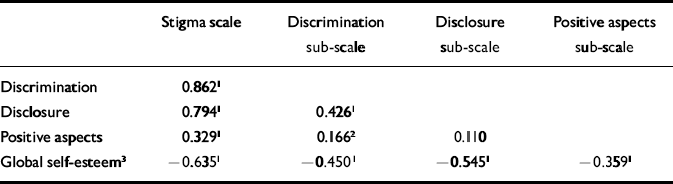
Mean scores were as follows: Stigma Scale 62.6 (s.d.=15.4), discrimination sub-scale 29.1 (s.d.=9.5), disclosure sub-scale 24.7 (s.d.=8.0) and positive aspects sub-scale 8.8 (s.d.=2.8). As expected, mean sub-scale scores had higher correlations with the overall stigma score than with each other, supporting the notion that they were capturing separate aspects of stigma (Table 5). A sensitivity analysis using factor scores generated in the analysis (rather than subscale scores based on the 0–4 scoring of the questionnaire) produced similar results.
Correlation between full-scale score, sub-scale scores and global self-esteem score
| Stigma scale | Discrimination sub-scale | Disclosure sub-scale | Positive aspects sub-scale | |
|---|---|---|---|---|
| Discrimination | 0.862 1 | |||
| Disclosure | 0.794 1 | 0.426 1 | ||
| Positive aspects | 0.329 1 | 0.166 2 | 0.110 | |
| Global self-esteem 3 | –0.635 1 | –0.450 1 | –0.545 1 | –0.359 1 |
1. Pearson correlation coefficient significant at P<0.001
2. Pearson correlation coefficient significant at P<0.05
3. Rosenberg Self-Esteem Scale
Concurrent validity
Scores on the Self-Esteem Scale (high score indicates high self-esteem) were negatively correlated with the overall Stigma Scale core and sub-scale scores (Table 5).
DISCUSSION
We have developed a brief self-report scale to measure the stigma of mental illness based directly on service users' detailed accounts of their feelings and experiences of prejudice and discrimination (Reference Dinos, Stevens and SerfatyDinos et al, 2004). We constructed more items than we thought would be needed in a final version and used assessments of reliability and consistency, as well as common factor analysis, to examine its underlying dimensions. The first factor or sub-scale explained much more of the variance (44%) than the other two factors and it could be argued that this might form the full scale. However, the principal aim of the factor analysis was to understand the latent dimensions of the instrument rather than reduce it further and we believe the dimensions found in the other two sub-scales are important in our understanding the complexity of stigma. The questionnaire takes 5–10 min to complete. Our scale is similar in content to that the Internalised Stigma of Mental Illness scale developed by Ritsher et al (Reference Ritsher, Otilingham and Grajales2003). However, test–retest reliability of this latter scale remains uncertain as it was based on only 16 respondents.
Strengths and limitations
A major strength of our study is that the content of this stigma scale arose directly from earlier qualitative research into patients' experiences of mental illness (Reference Dinos, Stevens and SerfatyDinos et al, 2004). We do not suggest that this approach is superior to, or distinct from, one based on theoretical conceptions of perceived stigma; the items derived resonate with current theory about stigma. However, our instrument directly reflects the lived experience of stigma and may help us to extend our current theoretical concepts. Furthermore, data collection in this study was carried out by mental health service users, an approach which we hoped would allow respondents to express their feelings frankly. Patients recruited were unselected and came from a variety of clinical and community settings. We did not examine how stigma varied with the demographic and clinical characteristics of participants, as they might not have been representative of all people with mental health problems. Thus, the instrument needs further evaluation in larger groups of patients in distinct diagnostic groups or in particular settings (such as in-patients) to understand its applicability. Furthermore, diagnoses and treatments were ascertained exclusively by self-report. Although the range of age, gender and diagnoses included indicates that we recruited a broad spectrum of mental health service users, the majority were White and hence the instrument needs further evaluation in a larger population of people from Black and minority ethnic populations. Three factors and 35 items mean that our sample size of 193 was adequate for the factor analysis. There is an inevitable element of subjectivity in the interpretation of the results of factor analysis and there may be other ways of describing the three factors arising. Whether the factor structure is consistent awaits confirmatory factor analysis in other populations. We confirmed our hypothesis that perceived stigma and self-esteem are negatively correlated. However, we stress that this analysis is exploratory and does not validate the stigma scale.
Forms of stigma
The distinction between stigma in the form of actual and feared discrimination is not new. Jacoby (Reference Jacoby1994) drew a distinction between ‘felt’ and ‘enacted’ stigma. Both may occur, regardless of whether or not the person feels any sense of personal shame or inferiority. Enacted stigma can be described as episodes of discrimination against people with mental illness. It can involve loss of job opportunities and negative reactions of family or friends, and it can also take the form of subtle, patronising attitudes and behaviours towards people with mental illness. The discrimination sub-scale contains items that refer to the negative reactions of other people, including acts of discrimination by health professionals, employers and police. As Jacoby (Reference Jacoby1994) emphasised, stigma may be also felt in the absence of any direct discrimination and may critically affect disclosure. It may not be possible for some people to conceal that they have a mental illness, but the key issue for the many who can is how to manage information about their condition (disclosure). Although ‘felt stigma’ is often used to refer to an internalised negative view of being mentally ill that leads to behaviours to hide it, reluctance to disclose is common without any attendant feelings of shame or embarrassment. Lack of disclosure may simply be the result of fear of what others will think, avoidance of unpleasant situations and a reluctance to invoke prejudice. Similar caution about disclosure in the absence of any personal shame is seen in other contexts, for example sexual orientation (Reference Day and ShoenradeDay & Shoenrade, 2000). Thus, we would take issue with an assumption (e.g. Reference Corrigan, Thompson and LambertCorrigan et al, 2003; Reference Ritsher, Otilingham and GrajalesRitsher et al, 2003, Reference Rusch, Angermeyer and CorriganRusch et al, 2005) that fear of disclosure is always the result of internalised stigma. As can be seen from the statements in our disclosure subscale, only two questions refer to embarrassment or feeling bad about the illness (items 10 and 36, Table 3) whereas the remainder refer to managing disclosure to avoid discrimination. Although the third factor, positive aspects of mental illness, contributed to less of the overall variance of the questionnaire items, it taps into how people accept their illness, become more open and make positive changes as a result, and lifts the mainly negative tone of the instrument. It is important to note that (given the direction of scoring shown in Table 4) high scores on this sub-scale indicate that the respondent perceives few positive outcomes from the illness. Its lower correlation with other parts of the scale suggests that people who do believe they are more empathetic human beings because of their illness may be less affected by stigma.
Association with self-esteem
The relationship between stigma and self-esteem has been the focus of theoretical and empirical debates for decades: see Crocker & Major (Reference Crocker and Major1989) and Crocker & Wolfe (Reference Crocker and Wolfe2001) for reviews. Unfortunately, the concept of stigma of mental illness has tended to rule out potential positive constructions of identity (e.g. Reference Finlay, Dinos and LyonsFinlay et al, 2001; Reference Camp, Finlay and LyonsCamp et al, 2002; Reference Dinos, Lyons and FinlayDinos et al, 2005; Rusch et al, Reference Rusch, Angermeyer and Corrigan2005, Reference Rusch, Lieb and Bohus2006). However, the majority of past studies were speculative in nature because there has not been a straightforward way to test the relationship between the two constructs (mainly because of lack of robust stigma scales). Scores on the Stigma Scale and its sub-scales were negatively correlated with global self-esteem, confirming our hypothesis that a negative relationship would be found between high self-esteem and high levels of perceived stigma. Ritsher et al (Reference Ritsher, Otilingham and Grajales2003) also reported that their new stigma scale and the Rosenberg Self-Esteem Scale were measuring distinct constructs. However, they did not report any direct correlation between their new scale and self-esteem. Our study is the only one, to our knowledge, that has developed a stigma scale and subsequently explored the relationship between self-esteem and stigma.
Use of the Stigma Scale in clinical care and research
Stigma about mental illness may determine how and even whether people seek help for mental health problems, their level of engagement with treatment and the outcome of their problems (Reference Hayward and BrightHayward & Bright, 1997). This instrument now requires further assessment in clinical and research populations. We believe that it may contribute usefully to our understanding of processes that affect help-seeking, treatment uptake and outcome of mental illness.
Acknowledgements
We thank all the participants, staff in the services where the study was conducted and Mr Bob Blizard for his statistical advice. We also thank the reviewers for their helpful insights into the results and their meaning. This study was carried out with the support and collaboration of the Camden and Islington Mental Health and Social Care Trust.






eLetters
No eLetters have been published for this article.