








1 Introduction
All topological spaces are assumed to be regular and with no isolated points. Recall that a topological space $(X,\tau )$
is resolvable if it has a dense co-dense subset; otherwise, the space
$(X,\tau )$
is resolvable if it has a dense co-dense subset; otherwise, the space $(X,\tau )$
is said to be irresolvable. The rationals are the typical example of a resolvable space, as it is easy to construct a dense co-dense subset of
$(X,\tau )$
is said to be irresolvable. The rationals are the typical example of a resolvable space, as it is easy to construct a dense co-dense subset of $\mathbb {Q}$
. However, the construction of a countable irresolvable space needs some strength of the Axiom of Choice: in [Reference Garcia-Ferreira and Hrušák6], it has been proved that in the Solovay model there is no countable irresolvable space. The argument goes roughly as follows: the existence of a countable irresolvable space implies the existence of a countable irresolvable space such that any open subset is irresolvable with the subspace topology (such spaces are called strongly irresolvable). On the one hand, the ideal of nowhere dense subsets of a countable strongly irresolvable space is saturated, and therefore, it does not have the Baire property. On the other hand, in the Solovay model every subset of the reals has the Baire property.
$\mathbb {Q}$
. However, the construction of a countable irresolvable space needs some strength of the Axiom of Choice: in [Reference Garcia-Ferreira and Hrušák6], it has been proved that in the Solovay model there is no countable irresolvable space. The argument goes roughly as follows: the existence of a countable irresolvable space implies the existence of a countable irresolvable space such that any open subset is irresolvable with the subspace topology (such spaces are called strongly irresolvable). On the one hand, the ideal of nowhere dense subsets of a countable strongly irresolvable space is saturated, and therefore, it does not have the Baire property. On the other hand, in the Solovay model every subset of the reals has the Baire property.
The irresolvability number was introduced by M. Scheepers in [Reference Scheepers and Pearl9], and it is defined as
 $$ \begin{align*} \mathfrak{irr}=\min\{\pi w((\omega,\tau)):(\omega,\tau)\text{ is an irresolvable } T_3 \text{ topological space}\}, \end{align*} $$
where $\pi w$
denotes the
$\pi w$
denotes the $\pi $
-weight of the space. It is well known that
$\pi $
-weight of the space. It is well known that $\mathfrak {r}\leq \mathfrak {irr}\leq \mathfrak {i}$
(see [Reference Scheepers and Pearl9]). Recall that given a Boolean algebra
$\mathfrak {r}\leq \mathfrak {irr}\leq \mathfrak {i}$
(see [Reference Scheepers and Pearl9]). Recall that given a Boolean algebra $\mathbb {B}$
, a reaping family on
$\mathbb {B}$
, a reaping family on $\mathbb {B}$
is a family
$\mathbb {B}$
is a family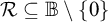 ${\mathcal {R}\subseteq \mathbb {B}\setminus \{0\}}$
such that for any
${\mathcal {R}\subseteq \mathbb {B}\setminus \{0\}}$
such that for any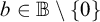 $b\in \mathbb {B}\setminus \{0\}$
, there is
$b\in \mathbb {B}\setminus \{0\}$
, there is $r\in \mathcal {R}$
such that either,
$r\in \mathcal {R}$
such that either, $r\leq b$
or
$r\leq b$
or $r\leq b^c$
, and the reaping number of
$r\leq b^c$
, and the reaping number of $\mathbb {B}$
, denoted by
$\mathbb {B}$
, denoted by $\mathfrak {r}(\mathbb {B})$
, is the minimal cardinality of a reaping family on
$\mathfrak {r}(\mathbb {B})$
, is the minimal cardinality of a reaping family on $\mathbb {B}$
. Under this terminology, let us define
$\mathbb {B}$
. Under this terminology, let us define $\mathfrak {r}_{\mathsf {scattered}}=\mathfrak {r}(\mathcal {P}(\mathbb {Q})/\mathsf {scattered})$
, where
$\mathfrak {r}_{\mathsf {scattered}}=\mathfrak {r}(\mathcal {P}(\mathbb {Q})/\mathsf {scattered})$
, where $\mathsf {scattered}$
is the ideal of scattered subsets of
$\mathsf {scattered}$
is the ideal of scattered subsets of $\mathbb {Q}$
. In [Reference Cancino-Manríquez, Hrušák and Meza-Alcántara2] it has been proved that
$\mathbb {Q}$
. In [Reference Cancino-Manríquez, Hrušák and Meza-Alcántara2] it has been proved that $\mathfrak {d}\leq \mathfrak {r}_{\mathsf {scattered}}\leq \mathfrak {irr}$
follows from
$\mathfrak {d}\leq \mathfrak {r}_{\mathsf {scattered}}\leq \mathfrak {irr}$
follows from $\mathsf {ZFC}$
. Also, the parametrized diamond principle
$\mathsf {ZFC}$
. Also, the parametrized diamond principle $\diamondsuit (\mathfrak {r}_{\mathsf {scattered}})$
implies the existence of a countable irresolvable space of weight
$\diamondsuit (\mathfrak {r}_{\mathsf {scattered}})$
implies the existence of a countable irresolvable space of weight $\omega _1$
. Among other questions asked in the article, we find the following.
$\omega _1$
. Among other questions asked in the article, we find the following.
Question 1 (Question (3) from [Reference Cancino-Manríquez, Hrušák and Meza-Alcántara2]).
Is there a model where $\mathfrak {r}_{\mathsf {scattered}}<\mathfrak {irr}$
?
$\mathfrak {r}_{\mathsf {scattered}}<\mathfrak {irr}$
?
Interestingly, there is a parallelism with results from [Reference Balcar, Hernández and Hrušák1]. Let us denote by $Dense(\mathbb {Q})$
the family of all dense subsets of
$Dense(\mathbb {Q})$
the family of all dense subsets of $\mathbb {Q}$
. A rational dense reaping family is a family
$\mathbb {Q}$
. A rational dense reaping family is a family $\mathcal {R}\subseteq Dense(\mathbb {Q})$
such that for any dense
$\mathcal {R}\subseteq Dense(\mathbb {Q})$
such that for any dense $A\subseteq \mathbb {Q}$
, there is
$A\subseteq \mathbb {Q}$
, there is $B\in \mathcal {R}$
such that either
$B\in \mathcal {R}$
such that either $B\setminus A$
is not dense or
$B\setminus A$
is not dense or $A\cap B$
is not dense. Define
$A\cap B$
is not dense. Define $\mathfrak {r}_{\mathbb {Q}}$
as the minimal cardinality of a rational dense reaping family. In [Reference Balcar, Hernández and Hrušák1], the authors proved that
$\mathfrak {r}_{\mathbb {Q}}$
as the minimal cardinality of a rational dense reaping family. In [Reference Balcar, Hernández and Hrušák1], the authors proved that $\mathsf {cof}(\mathcal {M})\leq \mathfrak {r}_{\mathbb {Q}}\leq \mathfrak {i}$
, and
$\mathsf {cof}(\mathcal {M})\leq \mathfrak {r}_{\mathbb {Q}}\leq \mathfrak {i}$
, and $\diamondsuit (\mathfrak {r}_{\mathbb {Q}})$
implies
$\diamondsuit (\mathfrak {r}_{\mathbb {Q}})$
implies $\mathfrak {i}=\omega _1$
. It was also proved that
$\mathfrak {i}=\omega _1$
. It was also proved that $\mathfrak {r}_{\mathbb {Q}}=\mathfrak {r}_{\mathsf {nwd}}$
, where
$\mathfrak {r}_{\mathbb {Q}}=\mathfrak {r}_{\mathsf {nwd}}$
, where $\mathfrak {r}_{\mathsf {nwd}}=\mathfrak {r}(\mathcal {P}(\mathbb {Q})/\mathsf {nwd})$
. The following question was left open.
$\mathfrak {r}_{\mathsf {nwd}}=\mathfrak {r}(\mathcal {P}(\mathbb {Q})/\mathsf {nwd})$
. The following question was left open.
Question 2 (Question 3.11(5) from [Reference Balcar, Hernández and Hrušák1]).
Is it relatively consistent with $\mathsf {ZFC}$
that
$\mathsf {ZFC}$
that $\mathfrak {r}_{\mathbb {Q}}<\mathfrak {i}$
?
$\mathfrak {r}_{\mathbb {Q}}<\mathfrak {i}$
?
In this article we give answer to both questions. The main theorem of this article is the following.
Theorem 1. It is relatively consistent with $\mathsf {ZFC}$
that
$\mathsf {ZFC}$
that $\mathfrak {r}_{\mathsf {scattered}}=\mathfrak {r}_{\mathbb {Q}}=\omega _1<\omega _2=\mathfrak {irr}=\mathfrak {i}=2^{\omega }$
.
$\mathfrak {r}_{\mathsf {scattered}}=\mathfrak {r}_{\mathbb {Q}}=\omega _1<\omega _2=\mathfrak {irr}=\mathfrak {i}=2^{\omega }$
.
Closely related to this theorem we find the cardinal invariant $\mathfrak {u}_{\mathbb {Q}}$
. A maximal filter
$\mathfrak {u}_{\mathbb {Q}}$
. A maximal filter $\mathcal {F}\subseteq Dense(\mathbb {Q})$
is a maximal filter relative to the set inclusion relation. It is not difficult to see that the maximality of a filter
$\mathcal {F}\subseteq Dense(\mathbb {Q})$
is a maximal filter relative to the set inclusion relation. It is not difficult to see that the maximality of a filter $\mathcal {F}\subseteq Dense(\mathbb {Q})$
is equivalent to the filter
$\mathcal {F}\subseteq Dense(\mathbb {Q})$
is equivalent to the filter $\mathcal {F}$
being a rational dense reaping family. A base for a filter
$\mathcal {F}$
being a rational dense reaping family. A base for a filter $\mathcal {F}\subseteq Dense(\mathbb {Q})$
is a family
$\mathcal {F}\subseteq Dense(\mathbb {Q})$
is a family $\mathcal {B}\subseteq \mathcal {F}$
such that any element of
$\mathcal {B}\subseteq \mathcal {F}$
such that any element of $\mathcal {F}$
has a subset in
$\mathcal {F}$
has a subset in $\mathcal {B}$
, and the cardinal invariant
$\mathcal {B}$
, and the cardinal invariant $\mathfrak {u}_{\mathbb {Q}}$
is defined as the minimal cardinality of a base for a maximal filter on
$\mathfrak {u}_{\mathbb {Q}}$
is defined as the minimal cardinality of a base for a maximal filter on $Dense(\mathbb {Q})$
. The previous result can be easily adapted to prove that
$Dense(\mathbb {Q})$
. The previous result can be easily adapted to prove that $\mathfrak {r}_{\mathbb {Q}}<\mathfrak {u}_{\mathbb {Q}}$
is consistent.
$\mathfrak {r}_{\mathbb {Q}}<\mathfrak {u}_{\mathbb {Q}}$
is consistent.
Theorem 2. The inequality $\mathfrak {r}_{\mathbb {Q}}<\mathfrak {u}_{\mathbb {Q}}$
is relatively consistent with
$\mathfrak {r}_{\mathbb {Q}}<\mathfrak {u}_{\mathbb {Q}}$
is relatively consistent with $\mathsf {ZFC}$
.
$\mathsf {ZFC}$
.
The strategy in proving Theorem 1 is a mixture of the consistency proofs of the inequalities $\mathfrak {r}<\mathfrak {u}$
and
$\mathfrak {r}<\mathfrak {u}$
and $\mathfrak {i}<\mathfrak {u}$
. The forcing we use is that of [Reference Shelah10] used to prove the consistency of
$\mathfrak {i}<\mathfrak {u}$
. The forcing we use is that of [Reference Shelah10] used to prove the consistency of $\mathfrak {i}<\mathfrak {u}$
. We perform a countable support iteration of length
$\mathfrak {i}<\mathfrak {u}$
. We perform a countable support iteration of length $\omega _2$
, and in each step of the iteration, we destroy a countable irresolvable space by adding a dense co-dense subset of
$\omega _2$
, and in each step of the iteration, we destroy a countable irresolvable space by adding a dense co-dense subset of $\omega $
. Then we take care that any countable irresolvable space that appears along the iteration is destroyed at some step of the iteration. Since once a dense co-dense subset of
$\omega $
. Then we take care that any countable irresolvable space that appears along the iteration is destroyed at some step of the iteration. Since once a dense co-dense subset of $\omega $
has been added to a topological space it cannot be taken away, when we destroy the irresolvability of a topological space it cannot be restored as an irresolvable space unless we modify the base of the topology. In this way, if we destroy the irresolvability of a topological space, it will remain as a resolvable space after the full iteration, making sure that all countable topological spaces of small
$\omega $
has been added to a topological space it cannot be taken away, when we destroy the irresolvability of a topological space it cannot be restored as an irresolvable space unless we modify the base of the topology. In this way, if we destroy the irresolvability of a topological space, it will remain as a resolvable space after the full iteration, making sure that all countable topological spaces of small $\pi $
-weight are resolvable. On the other hand, we make sure that at any step of the iteration we destroy a small quantity of maximal filters on
$\pi $
-weight are resolvable. On the other hand, we make sure that at any step of the iteration we destroy a small quantity of maximal filters on $Dense(\mathbb {Q})$
, thus preserving the dense subsets of the ground model as a rational dense reaping family after the iteration. Then we show how to modify the argument to prove Theorem 2. The article ends with a section discussing the existence of rational p-filters and rational q-filters.
$Dense(\mathbb {Q})$
, thus preserving the dense subsets of the ground model as a rational dense reaping family after the iteration. Then we show how to modify the argument to prove Theorem 2. The article ends with a section discussing the existence of rational p-filters and rational q-filters.
2 Filters of dense subsets of the rationals
Recall that a filter $\mathcal {F}$
on
$\mathcal {F}$
on $\omega $
is a q-filter if for any partition
$\omega $
is a q-filter if for any partition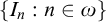 $\{I_n:n\in \omega \}$
into finite sets there is a set
$\{I_n:n\in \omega \}$
into finite sets there is a set $X\in \mathcal {F}$
which is a partial selector, that is,
$X\in \mathcal {F}$
which is a partial selector, that is,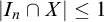 $\vert I_n\cap X\vert \leq 1$
for all
$\vert I_n\cap X\vert \leq 1$
for all $n\in \omega $
. The filter
$n\in \omega $
. The filter $\mathcal {F}$
is a p-filter if given family
$\mathcal {F}$
is a p-filter if given family $\{A_n:n\in \omega \}\subseteq \mathcal {F}$
, there is a set
$\{A_n:n\in \omega \}\subseteq \mathcal {F}$
, there is a set $B\in \mathcal {F}$
which is a pseudointersection of
$B\in \mathcal {F}$
which is a pseudointersection of $\{A_n:n\in \omega \}$
, that is, for any
$\{A_n:n\in \omega \}$
, that is, for any $n\in \omega $
, there is
$n\in \omega $
, there is $k_n\in \omega $
such that
$k_n\in \omega $
such that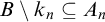 $B\setminus k_n\subseteq A_n$
.
$B\setminus k_n\subseteq A_n$
.
Definition 1. Let $(Dense(\mathbb {Q}),\subseteq ^*)$
denote the partial order of dense subsets of the rationals with the order given by set inclusion modulo finite sets (
$(Dense(\mathbb {Q}),\subseteq ^*)$
denote the partial order of dense subsets of the rationals with the order given by set inclusion modulo finite sets ( $\subseteq ^*$
). We define the following:
$\subseteq ^*$
). We define the following:
-
(1) A maximal filter $\mathcal {F}\subseteq Dense(\mathbb {Q})$
will be called a rational filter.
$\mathcal {F}\subseteq Dense(\mathbb {Q})$
will be called a rational filter. -
(2) A rational filter which is a q-filter will be called a rational q-filter.
-
(3) A rational filter which is a p-filter will be called a rational p-filter.
-
(4) A selective filter is a filter which is a p-filter and a q-filter at the same time.
-
(5) A selective rational filter is a rational filter which is selective.

Usually we will identify $\mathbb {Q}$
with
$\mathbb {Q}$
with $\omega $
having a topology homeomorphic to the usual topology on
$\omega $
having a topology homeomorphic to the usual topology on $\mathbb {Q}$
. In what follows, and for the rest of the article, we denote by
$\mathbb {Q}$
. In what follows, and for the rest of the article, we denote by $\mathcal {B}$
a countable base for such topology, which will remain fixed. We also convey that whenever
$\mathcal {B}$
a countable base for such topology, which will remain fixed. We also convey that whenever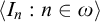 $\langle I_n:n\in \omega \rangle $
is a partition of
$\langle I_n:n\in \omega \rangle $
is a partition of $\omega $
into intervals, the enumeration is such that
$\omega $
into intervals, the enumeration is such that $\max (I_n)<\min (I_{n+1})$
for all
$\max (I_n)<\min (I_{n+1})$
for all $n\in \omega $
.
$n\in \omega $
.
We begin recalling the following well-known facts.
Lemma 1. Let $\mathcal {F}$
be a rational filter. Then:
$\mathcal {F}$
be a rational filter. Then:
-
(1)
$\mathcal {F}$
is non-meager. -
(2) If
$\mathcal {F}$
is a p-filter, then for any decreasing
$\langle B_n:n\in \omega \rangle \subseteq \mathcal {F}$
, there is
$X\in \mathcal {F}$
such that for infinitely many
$n\in \omega $
,
$X\setminus n\subseteq B_n$
. -
(3) If
$\mathcal {F}$
is a q-filter, then for any interval partition
$\mathcal {I}=\langle I_n:n\in \omega \rangle $
of
$\omega $
such that for all
$n\in \omega $
,
$\max (I_n)<\min (I_{n+1})$
, and for any
$l\in \omega $
, there is a partial selector
$X\in \mathcal {F}$
of
$\mathcal {I}$
such that for any
$n,m\in \{k\in \omega :X\cap I_k\neq \emptyset \}$
,
$\vert n-m\vert \ge l$
.













Proof.
-
(1) We prove that
$\mathcal {F}$
is the intersection of
$\omega $
many ultrafilters. Indeed, for any
$B\in \mathcal {B}$
, let
$\mathcal {U}_B$
be an ultrafilter on
$\mathbb {Q}$
extending
$\mathcal {F}\cup \{B\}$
. Then
${\mathcal {F}=\bigcap _{B\in \mathcal {B}}\mathcal {U}_B}$
: it is clear that
$\mathcal {F}\subseteq \bigcap _{B\in \mathcal {B}}\mathcal { U}_B$
. Pick
$X\in \bigcap _{B\in \mathcal {B}}\mathcal {U}_B$
. Then for all
$B\in \mathcal {B}$
,
$X\cap B$
is not empty, so X is a dense subset of
$\mathbb {Q}$
. If
$X\notin \mathcal {F}$
, then there are
$A\in \mathcal {F}$
and
$B\in \mathcal {B}$
such that
$X\cap B\cap A=\emptyset $
. This implies that
$X\notin \mathcal {U}_B$
, which is a contradiction. Since the intersection of less than continuum many ultrafilters is a non-meager filter, then
$\mathcal {F}$
is non-meager. -
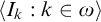
(2) Recall that by the Talagrand–Jalaili–Naini theorem, a filter is non-meager if and only if for any interval partition
$\langle I_k:k\in \omega \rangle $
of
$\omega $
, there is
$X\in \mathcal {F}$
which has empty intersection with infinitely many intervals
$I_k$
. Fix a
$\subseteq $
-decreasing
$\langle B_n:n\in \omega \rangle \subseteq \mathcal {F}$
and let
$X\in \mathcal {F}$
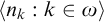
be a pseudointersection of such sequence. Define an increasing sequence of natural numbers
$\langle n_k:k\in \omega \rangle $
as
$n_0=0$
, and for all
$k\in \omega $
,
$X\setminus n_{k+1}\subseteq B_{n_k}$
. Let
$Y\in \mathcal {F}$
such that
$Y\cap [n_k,n_{k+1})$
is empty for infinitely many
$k\in \omega $
. Define
$Z=X\cap Y$
. Let
$k\in \omega $
be such that
$Y\cap [n_k,n_{k+1})=\emptyset $
. Then
$Z\setminus n_{k}=Z\setminus n_{k+1}\subseteq B_{n_k}$
. -
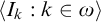
(3) Let
$\langle I_k:k\in \omega \rangle $
be an interval partition of
$\omega $
and
$l\in \omega $
a positive natural number. For
$k\in \omega $
, define
$J_k=\bigcup \{I_j:lk\leq j<lk+l\}$
,
$J^0_k=J_{2k}\cup J_{2k+1}$
, and
$J_k^1=J_{2k+1}\cup J_{2k+2}$
. By hypothesis, we can find
$X_0,X_1\in \mathcal {F}$
such that for all
$k\in \omega $
,
$\vert J_k^0\cap X_0\vert ,\vert J_k^1\cap X_1\vert \leq 1$
. Let
$Y=X_0\cap X_1$
. Then Y is as required.

































The following construction was first presented in [Reference Goldstern and Shelah7] in the context of the cardinal invariants $\mathfrak {r}$
and
$\mathfrak {r}$
and $\mathfrak {u}$
. Here we need the analogous version for
$\mathfrak {u}$
. Here we need the analogous version for $Dense(\mathbb {Q})$
.
$Dense(\mathbb {Q})$
.
Lemma 2 (
$\mathsf {GCH}$
).

There is a family $\mathscr {F}$
of selective rational filters such that
$\mathscr {F}$
of selective rational filters such that $\vert \mathscr {F}\vert =\omega _2$
and for any forcing extension
$\vert \mathscr {F}\vert =\omega _2$
and for any forcing extension $W\supseteq V$
with the same cardinals, if
$W\supseteq V$
with the same cardinals, if $W\vDash \mathcal {D}\in [\mathscr {F}]^{\omega _1}$
, then, in W, there are
$W\vDash \mathcal {D}\in [\mathscr {F}]^{\omega _1}$
, then, in W, there are $\mathcal {D}'\in [\mathcal {D}]^{\omega _1}$
and an
$\mathcal {D}'\in [\mathcal {D}]^{\omega _1}$
and an $AD$
family
$AD$
family $\{A_{\mathcal {U}}:\mathcal {U}\in \mathcal {D}'\}$
such that
$\{A_{\mathcal {U}}:\mathcal {U}\in \mathcal {D}'\}$
such that $A_{\mathcal {U}}\in \mathcal {U}$
for any
$A_{\mathcal {U}}\in \mathcal {U}$
for any $\mathcal {U}\in \mathcal {D}'$
.
$\mathcal {U}\in \mathcal {D}'$
.
Proof. By recursion construct a family $\{A_\eta :\eta \in \omega _1^{<\omega _1}\}$
such that:
$\{A_\eta :\eta \in \omega _1^{<\omega _1}\}$
such that:
-
(1)
$A_\emptyset =\mathbb {Q}$
. -
(2) For all
$\alpha \in \omega _1$
,
$\{A_f:f\in \omega _1^{\alpha }\}\subseteq Dense(\mathbb {Q})$
is an almost disjoint family. -
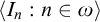
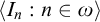
(3) For any interval partition of
$\omega $
,
$\langle I_n:n\in \omega \rangle $
, there is
$\alpha \in \omega _1$
such that for all
$f\in \omega _1^\alpha $
,
$A_f$
is a partial selector of
$\langle I_n:n\in \omega \rangle $
. -
(4) For all
$X\in Dense(\mathbb {Q})$
, there is
$\alpha \in \omega _1$
such that for all
$f\in \omega _1^\alpha $
, either
${A_f\subseteq ^*X}$
or
$A_f\cap X\notin Dense(\mathbb {Q})$
. -
(5) For
$\beta <\alpha $
,
$f\in \omega _1^\beta $
, and
$g\in \omega _1^\alpha $
such that
$f\subseteq g$
, we have
$A_{g}\subseteq ^* A_f$
.












For $f\in \omega _1^{\omega _1}$
, define
$f\in \omega _1^{\omega _1}$
, define $\mathcal {U}_f$
to be the filter generated by the family
$\mathcal {U}_f$
to be the filter generated by the family $\{A_{f\upharpoonright \alpha }:\alpha \in \omega _1\}$
, and then
$\{A_{f\upharpoonright \alpha }:\alpha \in \omega _1\}$
, and then $\mathscr {F}=\{\mathcal {U}_f:f\in \omega _1^{\omega _1}\}$
. It is easy to see that
$\mathscr {F}=\{\mathcal {U}_f:f\in \omega _1^{\omega _1}\}$
. It is easy to see that $\mathcal {U}_f$
is a selective rational filter for all
$\mathcal {U}_f$
is a selective rational filter for all $f\in \omega _1^{\omega _1}$
.
$f\in \omega _1^{\omega _1}$
.
Now assume W is a forcing extension of V having the same cardinals. Let $\{f_\alpha :\alpha \in \omega _1\}\subseteq \omega _1^{\omega _1}\cap V$
be a set of cardinality
$\{f_\alpha :\alpha \in \omega _1\}\subseteq \omega _1^{\omega _1}\cap V$
be a set of cardinality $\omega _1$
. For
$\omega _1$
. For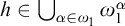 $h\in \bigcup _{\alpha \in \omega _1}\omega _1^\alpha $
, define
$h\in \bigcup _{\alpha \in \omega _1}\omega _1^\alpha $
, define $\langle h\rangle =\{g\in \omega _1^{\omega _1}:h\subseteq g\}$
. There are two cases:
$\langle h\rangle =\{g\in \omega _1^{\omega _1}:h\subseteq g\}$
. There are two cases:
Case 1. There is $h\in \omega _1^{\omega _1}$
such that for all
$h\in \omega _1^{\omega _1}$
such that for all $\alpha \in \omega _1$
,
$\alpha \in \omega _1$
, $\langle h\upharpoonright \alpha \rangle \cap \{ f_\beta :\beta \in \omega _1\}$
has cardinality
$\langle h\upharpoonright \alpha \rangle \cap \{ f_\beta :\beta \in \omega _1\}$
has cardinality $\omega _1$
. Then by recursion construct
$\omega _1$
. Then by recursion construct $L\in [\omega _1]^{\omega _1}$
and two strictly increasing sequences
$L\in [\omega _1]^{\omega _1}$
and two strictly increasing sequences $\{\beta _\alpha ,\gamma _\alpha \in \omega _1:\alpha \in L\}$
such that
$\{\beta _\alpha ,\gamma _\alpha \in \omega _1:\alpha \in L\}$
such that $f_{\beta _\alpha }\upharpoonright \gamma _\alpha =h\upharpoonright \gamma _\alpha $
and
$f_{\beta _\alpha }\upharpoonright \gamma _\alpha =h\upharpoonright \gamma _\alpha $
and $f_{\beta _\alpha }(\gamma _\alpha )\neq h(\gamma _\alpha )$
. Now for
$f_{\beta _\alpha }(\gamma _\alpha )\neq h(\gamma _\alpha )$
. Now for $\alpha \in L$
define
$\alpha \in L$
define $A_\alpha =A_{f_{\beta _\alpha }\upharpoonright (\alpha +1)}$
. The families
$A_\alpha =A_{f_{\beta _\alpha }\upharpoonright (\alpha +1)}$
. The families $\mathcal {A}=\{A_\alpha :\alpha \in L\}$
and
$\mathcal {A}=\{A_\alpha :\alpha \in L\}$
and $\{\mathcal {U}_{f_{\beta _\alpha }}:\alpha \in L\}$
are as required.
$\{\mathcal {U}_{f_{\beta _\alpha }}:\alpha \in L\}$
are as required.
Case 2. For all $h\in \omega _1^{\omega _1}$
there is
$h\in \omega _1^{\omega _1}$
there is $\alpha \in \omega _1$
such that
$\alpha \in \omega _1$
such that $\langle h\upharpoonright \alpha \rangle \cap \{f_\beta :\beta \in \omega \}$
is at most countable. Note that in this case, given
$\langle h\upharpoonright \alpha \rangle \cap \{f_\beta :\beta \in \omega \}$
is at most countable. Note that in this case, given $h\in \omega _1^{\omega _1}$
, we can find
$h\in \omega _1^{\omega _1}$
, we can find $\alpha \in \omega _1$
such that
$\alpha \in \omega _1$
such that $\langle h\upharpoonright \alpha \rangle \cap \{f_\beta :\beta \in \omega _1\}$
has cardinality at most
$\langle h\upharpoonright \alpha \rangle \cap \{f_\beta :\beta \in \omega _1\}$
has cardinality at most $1$
. Thus, for each
$1$
. Thus, for each $\beta \in \omega _1$
, we can find
$\beta \in \omega _1$
, we can find $\alpha _\beta \in \omega _1$
such that
$\alpha _\beta \in \omega _1$
such that $\langle f_\beta \upharpoonright \alpha _\beta \rangle \cap \{f_\gamma :\gamma \in \omega _1\}$
has exactly one element. Let
$\langle f_\beta \upharpoonright \alpha _\beta \rangle \cap \{f_\gamma :\gamma \in \omega _1\}$
has exactly one element. Let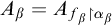 $A_\beta =A_{f_\beta \upharpoonright \alpha _\beta }$
. Then
$A_\beta =A_{f_\beta \upharpoonright \alpha _\beta }$
. Then $\{f_\beta :\beta \in \omega _1\}$
and
$\{f_\beta :\beta \in \omega _1\}$
and $\{A_\beta :\beta \in \omega _1\}$
work.
$\{A_\beta :\beta \in \omega _1\}$
work.
3 Preserving selective rational filters
In this section we study the forcing we are using and develop its main properties. This forcing was introduced in [Reference Shelah10], and was extensively developed in [Reference Guzmán8] for the ultrafilter version. A close relative of this forcing was worked on [Reference Chodounský, Fischer and Grebík3]. Here we work with saturated ideals. Theorem 3 can be proved using the same argument of Shelah from [Reference Shelah10]. However, we present a different proof in the framework of games and strategies, which allows for a simpler construction in such proof. This requires to prove Proposition 3 and Corollary 1. Although this is an additional technical work, we believe the resulting proof of Theorem 3 is easier to visualize with these techniques. The proof of the Sacks property is the same from [Reference Shelah10], which we include for completeness.
Given an ideal $\mathscr {I}$
on
$\mathscr {I}$
on $\omega $
,
$\omega $
, $\mathscr {I}^*=\{\omega \setminus X:X\in \mathscr {I}\}$
denotes the dual filter of
$\mathscr {I}^*=\{\omega \setminus X:X\in \mathscr {I}\}$
denotes the dual filter of $\mathscr {I}$
, while
$\mathscr {I}$
, while $\mathscr {I}^+=\mathcal {P}(\omega )\setminus \mathscr {I}$
denotes the family of
$\mathscr {I}^+=\mathcal {P}(\omega )\setminus \mathscr {I}$
denotes the family of $\mathscr {I}$
-positive sets.
$\mathscr {I}$
-positive sets.
Definition 2. Let $\mathscr {I}$
be an ideal on
$\mathscr {I}$
be an ideal on $\omega $
. An
$\omega $
. An $\mathscr {I}$
-partition is a family
$\mathscr {I}$
-partition is a family $\vec {E}\subseteq \mathscr {I}$
of non-empty subsets such that:
$\vec {E}\subseteq \mathscr {I}$
of non-empty subsets such that:
-
(1)
$\omega \setminus \bigcup \vec {E}\in \mathscr {I}$
. -
(2) Every two elements from
$\vec {E}$
are disjoint.
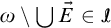

Given an $\mathscr {I}$
-partition
$\mathscr {I}$
-partition $\vec {E}=\langle E_n:n\in \omega \rangle $
, we assume that it is enumerated in the canonical way, that is,
$\vec {E}=\langle E_n:n\in \omega \rangle $
, we assume that it is enumerated in the canonical way, that is, $\min (E_n)<\min (E_{n+1})$
for all
$\min (E_n)<\min (E_{n+1})$
for all $n\in \omega $
. For
$n\in \omega $
. For $n\in \omega $
, let
$n\in \omega $
, let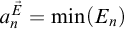 $a_n^{\vec {E}}=\min (E_n)$
, and let
$a_n^{\vec {E}}=\min (E_n)$
, and let $A(\vec {E})=\{a_n^{\vec {E}}:n\in \omega \}$
; we call
$A(\vec {E})=\{a_n^{\vec {E}}:n\in \omega \}$
; we call $A(\vec {E})$
the set of canonical representatives of
$A(\vec {E})$
the set of canonical representatives of $\vec {E}$
. Let us also define
$\vec {E}$
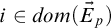
. Let us also define $dom(\vec {E})=\bigcup _{n\in \omega }{E_n}$
. For every
$dom(\vec {E})=\bigcup _{n\in \omega }{E_n}$
. For every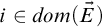 $i\in dom(\vec {E})$
, we denote by
$i\in dom(\vec {E})$
, we denote by $i/\vec {E}$
the element
$i/\vec {E}$
the element $E_n$
of
$E_n$
of $\vec {E}$
such that
$\vec {E}$
such that $i\in E_n$
.
$i\in E_n$
.
Given an $\mathscr {I}$
-partition
$\mathscr {I}$
-partition $\vec {E}$
and
$\vec {E}$
and $n\in \omega $
, let
$n\in \omega $
, let $\vec {E}*n$
be the
$\vec {E}*n$
be the $\mathscr {I}$
-partition defined as
$\mathscr {I}$
-partition defined as $\vec {E}*n=\{E_k:k\ge n\}$
, with its natural order.
$\vec {E}*n=\{E_k:k\ge n\}$
, with its natural order.
Definition 3. Given $\vec {E}_0,\vec {E}_1 \mathscr {I}$
-partitions, we define
$\vec {E}_0,\vec {E}_1 \mathscr {I}$
-partitions, we define $\vec {E}_1\leq \vec {E}_0$
if and only if the following holds:
$\vec {E}_1\leq \vec {E}_0$
if and only if the following holds:
-
(1)
$dom(\vec {E}_1)\subseteq dom(\vec {E}_0)$
. -
(2)
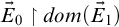
$\vec {E}_0\upharpoonright dom(\vec {E}_1)$
is a finer partition than
$\vec {E}_1$
, that is, elements of
$\vec {E}_1$
are unions of elements of
$\vec {E}_0$
.



Definition 4. Let $\mathscr {I}$
be an ideal on
$\mathscr {I}$
be an ideal on $\omega $
. Define the forcing
$\omega $
. Define the forcing $\mathbb {Q}(\mathscr {I})$
as the set of all ordered pairs
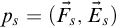
$\mathbb {Q}(\mathscr {I})$
as the set of all ordered pairs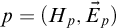 $p=(H_p,\vec {E}_p)$
such that:
$p=(H_p,\vec {E}_p)$
such that:
-
i)
$\vec {E}_p$
is an
$\mathscr {I}$
-partition. We denote by
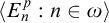
$\langle E_n^p:n\in \omega \rangle $
the natural enumeration of
$\vec {E}_p$
. The increasing enumeration of
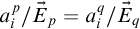
$A(\vec {E}_p)$
will be denoted by
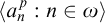
$\langle a_n^p:n\in \omega \rangle $
. -
ii)
$H_p$
is a sequence of functions
$H_p(n):2^{A(\vec {E}_p)\cap (n+1)}\to 2$
. -
iii) For any
$n\in A(\vec {E}_p)$
,
$H(n)=e_n$
, where
$e_n$
is the evaluation in the
$n^{th}$
-coordinate:
$e_n(x)=x(n)$
. -
iv) If
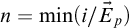
$n=\min (i/E_p)$
, then
$H_p(i)=e_n$
or
$H_p(i)=1-e_n$
.












The order is defined as $q\leq p$
if and only if:
$q\leq p$
if and only if:
-
(1)
$\vec {E}_q\leq \vec {E}_p$
. -
(2) For all
$i\in dom(\vec {E}_p)$
, if
$n=\min (i/\vec {E}_p)$
and
$H_p(i)=H_p(n)$
, then
$H_q(i)=H_q(n)$
; if
$H_p(i)=1-H_p(n)$
, then
$H_q(i)=1-H_q(n)$
. -
(3) For all
$n\in \omega \setminus dom(\vec {E}_p)$
, if
$x\in 2^{A(\vec {E}_q)\cap (n+1)}$
, define
$$ \begin{align*}x_{n,q\to p}=x\cup \langle (j,H_q(j)(x\upharpoonright(j+1))):j\in (A(\vec{E}_p)\cap (n+1))\setminus A(\vec{E}_q)\rangle.\end{align*} $$
Then:
$$ \begin{align*} H_q(n)(x)=H_p(n)(x_{n,q\to p}). \end{align*} $$









Definition 5. Let $\mathscr {I}$
be an ideal on
$\mathscr {I}$
be an ideal on $\omega $
and
$\omega $
and $G\subseteq \mathbb {Q}(\mathscr {I})$
a generic filter over V. Define a
$G\subseteq \mathbb {Q}(\mathscr {I})$
a generic filter over V. Define a $\mathbb {Q}(\mathscr {I})$
-name
$\mathbb {Q}(\mathscr {I})$
-name $\dot {x}_{gen}$
for a subset of
$\dot {x}_{gen}$
for a subset of $\omega $
as follows:
$\omega $
as follows:
 $$ \begin{align*} n\in\dot{x}_{gen}\iff (\exists p\in G)(H_p(n)\equiv 1). \end{align*} $$
Here $H_{p}(n)\equiv i$
means
$H_{p}(n)\equiv i$
means $H_{p}(n)$
is the constant function with value i.
$H_{p}(n)$
is the constant function with value i.
Recall that an ideal $\mathscr {I}$
on
$\mathscr {I}$
on $\omega $
is saturated if the quotient
$\omega $
is saturated if the quotient $\mathcal {P}(\omega )/\mathscr {I}$
is
$\mathcal {P}(\omega )/\mathscr {I}$
is $c.c.c.$
Definition 6. Let $\mathscr {I}$
be a saturated ideal on
$\mathscr {I}$
be a saturated ideal on $\omega $
. The game
$\omega $
. The game $\mathscr {G}(\mathscr {I})$
between Player I and Player II, play
$\mathscr {G}(\mathscr {I})$
between Player I and Player II, play $\mathscr {I}$
-partitions, is defined as follows:
$\mathscr {I}$
-partitions, is defined as follows:

Player II wins if and only if $\bigcup _{n\in \omega }dom(\vec {E}^1_n)\setminus dom(\vec {E}^2_n)\in \mathscr {I}^*$
.
$\bigcup _{n\in \omega }dom(\vec {E}^1_n)\setminus dom(\vec {E}^2_n)\in \mathscr {I}^*$
.
Lemma 3. Let $\mathscr {I}$
be a saturated ideal. Then Player I has no winning strategy in the game
$\mathscr {I}$
be a saturated ideal. Then Player I has no winning strategy in the game $\mathscr {G(I)}$
.
$\mathscr {G(I)}$
.
Proof. Assume otherwise $\Sigma $
is a winning strategy for Player I. We will produce an uncountable family of
$\Sigma $
is a winning strategy for Player I. We will produce an uncountable family of $\mathscr {I}$
-positive sets, each two of which are incompatible in
$\mathscr {I}$
-positive sets, each two of which are incompatible in $\mathcal {P}(\omega )/\mathscr {I}$
. Let
$\mathcal {P}(\omega )/\mathscr {I}$
. Let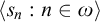 $\langle s_n:n\in \omega \rangle $
be the enumeration of
$\langle s_n:n\in \omega \rangle $
be the enumeration of $2^{<\omega }$
defined by the ordering
$2^{<\omega }$
defined by the ordering $s\sqsubset t$
if and only if, either
$s\sqsubset t$
if and only if, either $\vert s\vert <\vert t\vert $
or
$\vert s\vert <\vert t\vert $
or $\vert s\vert =\vert t\vert $
and
$\vert s\vert =\vert t\vert $
and $s<_{lex}t$
, where
$s<_{lex}t$
, where $<_{lex}$
is the lexicographical order (
$<_{lex}$
is the lexicographical order ( $\sqsubset $
has order type
$\sqsubset $
has order type $\omega $
). We construct a sequence
$\omega $
). We construct a sequence $\langle p_s:s\in 2^{<\omega }\rangle $
such that:
$\langle p_s:s\in 2^{<\omega }\rangle $
such that:
-
(1)
$p_{\emptyset }=(\Sigma (\emptyset ))=(\vec {E}_\emptyset )$
. -
(2) For
$s\in 2^{<\omega }\setminus \{ \emptyset \}$
,
$p_s=(\vec {F}_s,\vec {E}_s)$
. -
(3)
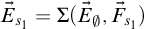
$\vec {F}_{s_1}=\vec {E}_\emptyset $
and
$\vec {E}_{s_1}=\Sigma (\vec {E}_{\emptyset },\vec {F}_{s_1})$
. -
(4) For
$n>1$
:-
(a) If
$\vec {E}_{s_n}$
is defined, then define
$\vec {F}_{s_{n+1}}=\vec {E}_{s_n}$
. -
(b) Now, let
$$ \begin{align*} P(s_{n+1})=(\vec{E}_\emptyset,\vec{F}_{s_{n+1}\upharpoonright 1},\vec{E}_{s_{n+1}\upharpoonright 1},\ldots,\vec{F}_{s_{n+1}\upharpoonright l},\vec{E}_{s_{n+1}\upharpoonright l},\ldots,\vec{E}_{s_{n+1}\upharpoonright(\vert s_{n+1}\vert-1)}, \vec{F}_{s_{n+1}}). \end{align*} $$
Then make
$\vec {E}_{s_{n+1}}=\Sigma (P(s_{n+1}))$
.
-






Now, for $f\in 2^\omega $
, define
$f\in 2^\omega $
, define $br(f)$
as
$br(f)$
as
 $$ \begin{align*} br(f)=(\vec{E}_\emptyset,\vec{F}_{f\upharpoonright 1},\vec{E}_{f\upharpoonright 1},\ldots,\vec{F}_{f\upharpoonright l},\vec{E}_{f\upharpoonright l},\ldots)_{l\in\omega.} \end{align*} $$
By the construction, $br(f)$
is a run of the game
$br(f)$
is a run of the game $\mathscr {G}(\mathscr {I})$
on which Player I followed the strategy
$\mathscr {G}(\mathscr {I})$
on which Player I followed the strategy $\Sigma $
, so we have that
$\Sigma $
, so we have that $D(f)=\bigcup _{n\ge 1}dom(\vec {F}_{f\upharpoonright n})\setminus dom(\vec {E}_{f\upharpoonright n})\in \mathscr {I}^+$
. However, for different
$D(f)=\bigcup _{n\ge 1}dom(\vec {F}_{f\upharpoonright n})\setminus dom(\vec {E}_{f\upharpoonright n})\in \mathscr {I}^+$
. However, for different $f,g\in 2^{\omega }$
we have that
$f,g\in 2^{\omega }$
we have that $D(f)\cap D(g)\in \mathscr {I}$
: first note that the construction of the family
$D(f)\cap D(g)\in \mathscr {I}$
: first note that the construction of the family $\{p_s:s\in 2^{<\omega }\}$
implies that for all
$\{p_s:s\in 2^{<\omega }\}$
implies that for all $n\in \omega $
, the relations
$n\in \omega $
, the relations $dom(\vec {F}_{s_{n+1}})\subseteq dom(\vec {E}_{s_n})\subseteq dom(\vec {F}_{s_n})$
hold, and this last property implies that for any pair of distinct functions
$dom(\vec {F}_{s_{n+1}})\subseteq dom(\vec {E}_{s_n})\subseteq dom(\vec {F}_{s_n})$
hold, and this last property implies that for any pair of distinct functions $f,g\in 2^\omega $
and
$f,g\in 2^\omega $
and $l,k>\vert f\cap g\vert $
,
$l,k>\vert f\cap g\vert $
,
 $$ \begin{align*}(dom(\vec{F}_{f\upharpoonright k})\setminus dom(\vec{E}_{f\upharpoonright k}))\cap(dom(\vec{F}_{g\upharpoonright l})\setminus dom(\vec{E}_{g\upharpoonright l}))=\emptyset,\end{align*} $$
which in turn implies that $D(f)\cap D(g)\subseteq \bigcup _{i\leq \vert f\cap g\vert }dom(\vec {F}_{f\upharpoonright n})\setminus dom(\vec {E}_{f\upharpoonright n})$
, and this last union of sets is in the ideal
$D(f)\cap D(g)\subseteq \bigcup _{i\leq \vert f\cap g\vert }dom(\vec {F}_{f\upharpoonright n})\setminus dom(\vec {E}_{f\upharpoonright n})$
, and this last union of sets is in the ideal $\mathscr {I}$
. Therefore, we have that
$\mathscr {I}$
. Therefore, we have that $\{D(f):f\in 2^{\omega }\}$
is an uncountable antichain in
$\{D(f):f\in 2^{\omega }\}$
is an uncountable antichain in $\mathscr {I}^+$
, which is a contradiction.
$\mathscr {I}^+$
, which is a contradiction.
Notation. Given a condition $p\in \mathbb {Q}(\mathscr {I})$
, and
$p\in \mathbb {Q}(\mathscr {I})$
, and $s\in 2^n$
, define
$s\in 2^n$
, define $p^s$
as follows:
$p^s$
as follows:
-
(1)
$dom(\vec {E}_{p^s})=\vec {E}_p*\vert s\vert $
. -
(2)
$\vec {E}_{p^s}=\vec {E}_p\upharpoonright dom(\vec {E}_{p^s})$
. -
(3) For
$k<\vert s\vert $
,
$H_{p^s}(a_k^p)\equiv s(k)$
. -
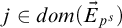
(4) If
$j\in a_i^p/\vec {E}_p$
for some
$i<\vert s\vert $
, we have that:-
(a) If
$H_{p}(j)=H_p(a_i^p)$
, then
$H_{p^s}(j)\equiv s(i)$
. -
(b) If
$H_{p}(j)=1-H_p(a_i^p)$
, then
$H_{p^s}(j)= 1-s(i)$
.
-
-
(5) For
$j\in dom(\vec {E}_{p^s})$
and
$x\in 2^{A(\vec {E}_{p^s})\cap (j+1)}$
, note that and define
$$ \begin{align*}x_{j,p^s\to p}=\langle(a_i^p,s(i)):i<n\rangle\cup x\end{align*} $$
$$ \begin{align*}H_{p^s}(j)(x)=H_p(j)(x_{j,p^s\to p}).\end{align*} $$
-
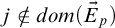
(6) If
$j\notin dom(\vec {E}_p)$
, then for all
$x\in 2^{A(\vec {E}_{p^s})\cap (j+1)}$
we have
$H_{p^s}(j)(x)=H_{p}(j)(x_{j,p^s\to p})$
.















Definition 7. Let $\mathscr {I}$
be an ideal on
$\mathscr {I}$
be an ideal on $\omega $
,
$\omega $
,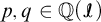 $p,q\in \mathbb {Q}(\mathscr {I})$
and
$p,q\in \mathbb {Q}(\mathscr {I})$
and $n\in \omega $
. We define
$n\in \omega $
. We define $q\leq _n p$
if and only if the following happens:
$q\leq _n p$
if and only if the following happens:
-
(1)
$q\leq p$
. -
(2) For all
$i\leq n$
,
$a_i^p=a_i^q$
. -
(3) For all
$i\leq n$
,
$a_i^p/\vec {E}_p=a_i^q/\vec {E}_q$
.


The following fact is easy to prove.
Lemma 4. Let $\mathscr {I}$
be a saturated ideal. Then:
$\mathscr {I}$
be a saturated ideal. Then: $\mathbb {Q}(\mathscr {I})\Vdash \dot {x}_{gen},\omega \setminus \dot {x}_{gen}\in \mathscr {I}^+$
.
$\mathbb {Q}(\mathscr {I})\Vdash \dot {x}_{gen},\omega \setminus \dot {x}_{gen}\in \mathscr {I}^+$
.
Lemma 5. Let $\mathscr {I}$
be an ideal,
$\mathscr {I}$
be an ideal, $p\in \mathbb {Q}(\mathscr {I})$
a condition,
$p\in \mathbb {Q}(\mathscr {I})$
a condition, $\dot {x}$
a
$\dot {x}$
a $\mathbb {Q}(\mathscr {I})$
-name for an element in
$\mathbb {Q}(\mathscr {I})$
-name for an element in $V,$
and
$V,$
and $n\in \omega $
. Then there is
$n\in \omega $
. Then there is $q\leq _{n-1} p$
such that for all
$q\leq _{n-1} p$
such that for all $s\in 2^n$
,
$s\in 2^n$
, $q^s$
decides the value of
$q^s$
decides the value of $\dot {x}$
. Moreover, the set of conditions
$\dot {x}$
. Moreover, the set of conditions $\{q^{s}:s\in 2^n\}$
is a maximal antichain below q.
$\{q^{s}:s\in 2^n\}$
is a maximal antichain below q.
Proof. Let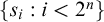 $\{s_i:i< 2^n\}$
be an enumeration of all the sequences
$\{s_i:i< 2^n\}$
be an enumeration of all the sequences $s:n\to 2$
. Define a decreasing sequence of conditions
$s:n\to 2$
. Define a decreasing sequence of conditions $\langle q_i:i\in \{-1\}\cup 2^n\rangle $
such that:
$\langle q_i:i\in \{-1\}\cup 2^n\rangle $
such that:
-
(1)
$q_{-1}=p$
. -
(2)
$q_{i+1}\leq _{n-1} q_i$
. -
(3)
$q_{i}^{s_i}$
decides the value of
$\dot {x}$
.




The construction is done as follows:
-
(1) Assume
$q_i$
has been defined. Find
$r_{i+1}\leq q_i^{s_{i+1}}$
which decides the value of
$\dot {x}$
. Then define
$q_{i+1}$
as:-
(a)
$dom(q_{i+1})=\bigcup _{j<n}a_{j}^{p}/\vec {E}_p\cup dom(\vec {E}_{r_{i+1}})$
. -
(b)
$\vec {E}_{q_{i+1}}=\{a_j^p/\vec {E}_p:j<n\}\cup \vec {E}_{r_{i+1}}$
. -
(c) If
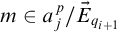
$m\in a_{j}^p/\vec {E}_{q_{i+1}}$
for some
$j<n$
, then
$H_{q_{i+1}}(j)=H_{p}(j)$
. -
(d) For all
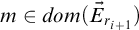
$m\in dom(\vec {E}_{r_{i+1}})$
and
$x\in 2^{A(\vec {E}_{q_{i+1}})\cap (m+1)}$
,
$$ \begin{align*}H_{q_{i+1}}(m)(x)=H_{r_{i+1}}(m)(x\upharpoonright A(\vec{E}_{r_{i+1}})).\end{align*} $$
-
(e) For
$m\notin dom(\vec {E}_{q_i})$
and
$x\in 2^{A(\vec {E}_{q_{i+1}})\cap (m+1)}$
,
$$ \begin{align*}H_{q_{i+1}}(m)(x)=H_{q_i}(m)(x_{m,q_{i+1}\to q_i}).\end{align*} $$
It follows directly from the definitions that
$q_{i+1}\leq _{n-1} q_i$
. -











Finally, note that by construction, for all $i<2^n$
we have
$i<2^n$
we have $q_{2^n-1}^{s_i}\leq q_{i}^{s_i}=r_{i}$
, and
$q_{2^n-1}^{s_i}\leq q_{i}^{s_i}=r_{i}$
, and $r_{i}$
decides the value of
$r_{i}$
decides the value of $\dot {x}$
, so
$\dot {x}$
, so $q_{2^n-1}^{s_i}$
decides the value of
$q_{2^n-1}^{s_i}$
decides the value of $\dot {x}$
.
$\dot {x}$
.
Definition 8. Let ${p}\in \mathbb {Q}(\mathscr {I})$
be a condition,
${p}\in \mathbb {Q}(\mathscr {I})$
be a condition, $n\in \omega ,$
and
$n\in \omega ,$
and $\vec {F}$
an
$\vec {F}$
an $\mathscr {I}$
-partition such that
$\mathscr {I}$
-partition such that $\vec {F}\leq \vec {E}_p*n$
and
$\vec {F}\leq \vec {E}_p*n$
and $dom(\vec {F})=dom(\vec {E}_p*n)$
. Define the condition
$dom(\vec {F})=dom(\vec {E}_p*n)$
. Define the condition $p*\vec {F}$
as follows:
$p*\vec {F}$
as follows:
-
(1)
$\vec {E}_{p*\vec {F}}=\{E_i^p:i<n\}\cup \vec {F}$
. Note that
$dom(\vec {E}_{p*\vec {F}})=dom(\vec {E})$
. -
(2) If
$a\in A(\vec {E}_p)\setminus A(\vec {E}_{p*\vec {E}})$
, define
$H_{p*\vec {E}}(a)=H_{p*\vec {E}}(\min (a/\vec {E}_{p*\vec {F}}))$
. -
(3) For
$i\in dom(\vec {E}_{p*\vec {F}})$
:-
(a) If
$H_p(i)=H_p(\min (i/\vec {E}_p))$
, then
$H_{p*\vec {F}}(i)=H_{p*\vec {F}}(\min (i/\vec {E}_p))$
. -
(b) If
$H_p(i)=1-H_p(\min (i/\vec {E}_p))$
, then
$H_{p*\vec {F}}(i)=1-H_{p*\vec {F}}(\min (i/\vec {E}_p))$
.
-
-
(4) For
$i\notin dom(\vec {E}_p)$
and
$x\in 2^{A(p*\vec {F})\cap (i+1)}$
, define
$$ \begin{align*}H_{p*\vec{E}}(i)(x)=H_p(i)(x_{i,p*\vec{E}\to p}).\end{align*} $$




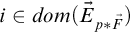




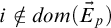


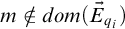
Note that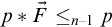 $p*\vec {F}\leq _{n-1} p$
.
$p*\vec {F}\leq _{n-1} p$
.
Proposition 1. If $\mathscr {I}$
is an saturated ideal, then
$\mathscr {I}$
is an saturated ideal, then $\mathbb {Q}(\mathscr {I})$
has the Sacks property.
$\mathbb {Q}(\mathscr {I})$
has the Sacks property.
Proof. Let $\dot {f}$
be a
$\dot {f}$
be a $\mathbb {Q}(\mathscr {I})$
-name for a real and
$\mathbb {Q}(\mathscr {I})$
-name for a real and $p\in \mathbb {Q}(\mathscr {I})$
a condition. We construct a decreasing sequence
$p\in \mathbb {Q}(\mathscr {I})$
a condition. We construct a decreasing sequence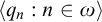 $\langle q_n:n\in \omega \rangle $
, and on the side give a strategy to Player I in the game
$\langle q_n:n\in \omega \rangle $
, and on the side give a strategy to Player I in the game $\mathscr {G(I)}$
. Since this is not a winning strategy, there is a run of the game in which Player II wins. The existence of such a run of the game will give us the desired condition.
$\mathscr {G(I)}$
. Since this is not a winning strategy, there is a run of the game in which Player II wins. The existence of such a run of the game will give us the desired condition.
The construction of the sequence is done as follows:
-
(1) Start by choosing
$q_0\leq p$
which decides
$\dot {f}(0)$
; then Player I plays the
$\mathscr {I}$
-partition
$\vec {E}_{q_0}*1$
-
(2) Suppose
$q_n$
is constructed such that for each
$s\in 2^n$
,
$q_n^s$
decides
$\dot {f}(n)$
, and Player I has played
$\vec {E}^1_n=\vec {E}_{q_n}*(n+1)$
. Then Player II has answered with
$\vec {E}^2_n$
. Define
$\vec {G}_n=\{dom(\vec {E}_n^1)\setminus dom(\vec {E}_n^2)\}\cup \vec {E}_n^2$
. Clearly
$\vec {G}_n$
is an
$\mathscr {I}$
-partition. Then find
$q_{n+1}\leq _{n} q_n*\vec {G}_n$
and such that for all
$s:n+1\to 2$
,
$q_{n+1}^s$
decides the value of
$\dot {f}(n+1)$
. Then Player I plays
$\vec {E}^1_{n+1}=\vec {E}_{q_{n+1}}*(n+2)$
.












Since this is not a winning strategy for Player I, there is a run of the game in which $\bigcup _{n\in \omega }dom(\vec {E}_n^1)\setminus dom(\vec {E}_n^2)\in \mathscr {I}^*$
. Suppose
$\bigcup _{n\in \omega }dom(\vec {E}_n^1)\setminus dom(\vec {E}_n^2)\in \mathscr {I}^*$
. Suppose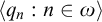 $\langle q_n:n\in \omega \rangle $
is the sequence constructed along such run of the game. Let
$\langle q_n:n\in \omega \rangle $
is the sequence constructed along such run of the game. Let $F_n=dom(E_n^1)\setminus dom(E_n^2)$
and define
$F_n=dom(E_n^1)\setminus dom(E_n^2)$
and define $\vec {F}=\langle F_n:n\in \omega \rangle $
. Clearly,
$\vec {F}=\langle F_n:n\in \omega \rangle $
. Clearly, $\vec {F}$
is an
$\vec {F}$
is an $\mathscr {I}$
-partition. Note that for any
$\mathscr {I}$
-partition. Note that for any $n\in \omega $
,
$n\in \omega $
, $F_n=E_{n}^{q_{n+1}}$
, and actually, for any
$F_n=E_{n}^{q_{n+1}}$
, and actually, for any $k\ge n+1$
we have that
$k\ge n+1$
we have that $F_n=E_{n}^{q_{k+1}}$
. Also note that for any
$F_n=E_{n}^{q_{k+1}}$
. Also note that for any $n\in \omega $
and
$n\in \omega $
and $x\in 2^{A(\vec {F})\cap (n+1)}$
, the sequence
$x\in 2^{A(\vec {F})\cap (n+1)}$
, the sequence $\langle H_{q_k}(n)(x):k\in \omega \rangle $
is eventually constant (it may be not defined on an initial segment, but at some point it gets well defined, and even eventually constant).
$\langle H_{q_k}(n)(x):k\in \omega \rangle $
is eventually constant (it may be not defined on an initial segment, but at some point it gets well defined, and even eventually constant).
Define a condition $q_\omega $
as follows:
$q_\omega $
as follows:
-
(I)
$\vec {E}_{q_\omega }=\vec {F}$
. -
(II) For all
$n\in \omega $
and
$x\in 2^{A(E_{q_\omega })\cap (n+1)}$
,
$H_{q_\omega }(n)(x)=\lim _{k\in \omega } H_{q_k}(n)(x)$
.




We need to prove that $q_\omega $
is a condition in
$q_\omega $
is a condition in $\mathbb {Q}(\mathscr {I})$
and a lower bound of the sequence
$\mathbb {Q}(\mathscr {I})$
and a lower bound of the sequence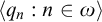 $\langle q_n:n\in \omega \rangle $
. This clearly is sufficient to finish the proof.
$\langle q_n:n\in \omega \rangle $
. This clearly is sufficient to finish the proof.
Clauses i) and ii) from Definition 4 are immediate (clause ii) holds because the limit of clause (II) above is well defined). For clause iii), pick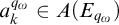 $a_k^{q_\omega }\in A(E_{q_\omega })$
, note that
$a_k^{q_\omega }\in A(E_{q_\omega })$
, note that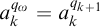 $a_k^{q_\omega }=a_{k}^{q_{k+1}}$
. Moreover, for all
$a_k^{q_\omega }=a_{k}^{q_{k+1}}$
. Moreover, for all $l\ge k+1$
, and any
$l\ge k+1$
, and any $j\leq k+1 a_j^{q_\omega }/E_{q_\omega }=a_{j}^{q_{\omega }}/E_{q_{l}}$
. This in turn implies that for
$j\leq k+1 a_j^{q_\omega }/E_{q_\omega }=a_{j}^{q_{\omega }}/E_{q_{l}}$
. This in turn implies that for $l\ge k+1$
,
$l\ge k+1$
, $dom(H_{q_l}(a_k^{q_\omega }))=dom(H_{q_{k+1}}(a_k^{q_\omega }))=2^{A(E_{q_\omega })\cap (a_{k}^{q_\omega }+1)}$
. From this it follows that for
$dom(H_{q_l}(a_k^{q_\omega }))=dom(H_{q_{k+1}}(a_k^{q_\omega }))=2^{A(E_{q_\omega })\cap (a_{k}^{q_\omega }+1)}$
. From this it follows that for $l\ge k+1$
,
$l\ge k+1$
,
 $$ \begin{align*} H_{q_l}(a_{k}^{q_\omega})(x)=e_{{a_k^{q_{k+1}}}}(x)=x(a_{k}^{q_{k+1}}). \end{align*} $$
By definition (II) of $H_{q_\omega }(a_k^{q_\omega })$
, we have
$H_{q_\omega }(a_k^{q_\omega })$
, we have $H_{q_\omega }(a_k^{q_\omega })=x(a_k^{q_{\omega }})=e_{a_k}^{q_\omega }(x)$
. It is also easy to see that this implies that clause iv) from Definition 4 is also satisfied.
$H_{q_\omega }(a_k^{q_\omega })=x(a_k^{q_{\omega }})=e_{a_k}^{q_\omega }(x)$
. It is also easy to see that this implies that clause iv) from Definition 4 is also satisfied.
Fix a condition $q_n$
, we want to prove that
$q_n$
, we want to prove that $q_\omega \leq q_n$
. Note that
$q_\omega \leq q_n$
. Note that $\vec {E}_{q_\omega }\leq \vec {E}_{q_n}$
follows the definition of
$\vec {E}_{q_\omega }\leq \vec {E}_{q_n}$
follows the definition of $\vec {E}_{q_\omega }$
. To check clause (2) from Definition 4, pick
$\vec {E}_{q_\omega }$
. To check clause (2) from Definition 4, pick $l\in dom(E_{q_\omega })$
and note that for big enough
$l\in dom(E_{q_\omega })$
and note that for big enough $k\ge \max (n+1,l+1)$
,
$k\ge \max (n+1,l+1)$
, $A(E_{q_\omega })\cap (l+1)=A(E_{q_k})\cap (l+1)$
, which implies that for big enough
$A(E_{q_\omega })\cap (l+1)=A(E_{q_k})\cap (l+1)$
, which implies that for big enough $k\ge \max (n+1,l+1),$
 $$ \begin{align*} H_{q_\omega}(l)(x)=H_{q_k}(l)(x). \end{align*} $$
It is not hard to see that this implies that the complete requirement of clause (2) holds. To check that clause (3) from Definition 4 holds, pick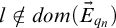 $l\notin dom(\vec {E}_{q_n})$
, and note in addition that for big enough
$l\notin dom(\vec {E}_{q_n})$
, and note in addition that for big enough $k\ge \max (n+1,l+1)$
, it holds that
$k\ge \max (n+1,l+1)$
, it holds that
 $$ \begin{align*} H_{q_\omega}(l)(x)=H_{q_k}(l)(x)=H_{q_n}(l)(x_{l,q_k\to q_n}), \end{align*} $$
where the last inequality follows from $q_l\leq q_n$
. Therefore,
$q_l\leq q_n$
. Therefore,
 $$ \begin{align*}H_{q_\omega}(l)(x)=H_{q_n}(l)(x_{l,q_{\omega}\to q_n})\end{align*} $$
since $x_{l,q_{\omega }\to q_n}=x_{l,q_{k}\to q_n}$
for big enough
$x_{l,q_{\omega }\to q_n}=x_{l,q_{k}\to q_n}$
for big enough $k\in \omega $
.
$k\in \omega $
.
Finally, note that for each $s\in 2^n$
,
$s\in 2^n$
, $q_\omega ^s\leq q_n^s$
decides a value for
$q_\omega ^s\leq q_n^s$
decides a value for $\dot {f}(n)$
, so
$\dot {f}(n)$
, so $q_\omega $
bounds the possible values of
$q_\omega $
bounds the possible values of $\dot {f}(n)$
to a set of size at most
$\dot {f}(n)$
to a set of size at most $2^n$
.
$2^n$
.
Proposition 2. If $\mathscr {I}$
is a saturated ideal on
$\mathscr {I}$
is a saturated ideal on $\omega $
, then
$\omega $
, then $\mathbb {Q}(\mathscr {I})$
is proper.
$\mathbb {Q}(\mathscr {I})$
is proper.
Proof. The argument completely follows similar lines to the proof of Proposition 1, with small modifications. Let $\mathcal {M}\prec H(\theta )$
be a countable elementary submodel such that
$\mathcal {M}\prec H(\theta )$
be a countable elementary submodel such that $\mathbb {Q}(\mathscr {I})\in \mathcal {M}$
, and pick a condition
$\mathbb {Q}(\mathscr {I})\in \mathcal {M}$
, and pick a condition $p\in \mathcal {M}\cap \mathbb {Q}(\mathscr {I})$
. Let
$p\in \mathcal {M}\cap \mathbb {Q}(\mathscr {I})$
. Let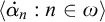 $\langle \dot {\alpha }_n:n\in \omega \rangle $
be an enumeration of all the
$\langle \dot {\alpha }_n:n\in \omega \rangle $
be an enumeration of all the $\mathbb {Q}(\mathscr {I})$
-names in
$\mathbb {Q}(\mathscr {I})$
-names in $\mathcal {M}$
for ordinals. Then apply the construction of Lemma 1, with the modification that instead of guessing
$\mathcal {M}$
for ordinals. Then apply the construction of Lemma 1, with the modification that instead of guessing $\dot {f}(n)$
at step n, we decide the possible values of the name
$\dot {f}(n)$
at step n, we decide the possible values of the name $\dot {\alpha }_n$
, plus the fact that all the steps of the recursion can be done inside
$\dot {\alpha }_n$
, plus the fact that all the steps of the recursion can be done inside $\mathcal {M}$
, that is, the
$\mathcal {M}$
, that is, the $\mathscr {I}$
-partitions played by both players are in
$\mathscr {I}$
-partitions played by both players are in $\mathcal {M}$
; the same proof of Lemma 3 shows that in this variation of the game
$\mathcal {M}$
; the same proof of Lemma 3 shows that in this variation of the game $\mathscr {G}(\mathscr {I})$
Player I has no winning strategy (the only modification is that now the strategy
$\mathscr {G}(\mathscr {I})$
Player I has no winning strategy (the only modification is that now the strategy $\sigma $
shoots
$\sigma $
shoots $\mathscr {I}$
-partitions living in
$\mathscr {I}$
-partitions living in $\mathcal {M}$
), so we can get the condition
$\mathcal {M}$
), so we can get the condition $q_\omega $
of Proposition 1. Then the condition
$q_\omega $
of Proposition 1. Then the condition $q_\omega $
is an
$q_\omega $
is an $(\mathcal {M},\mathbb {Q}(\mathscr {I}))$
-generic condition.
$(\mathcal {M},\mathbb {Q}(\mathscr {I}))$
-generic condition.
Definition 9. Let $\mathcal {F}$
and
$\mathcal {F}$
and $\mathcal {G}$
be filters on
$\mathcal {G}$
be filters on $\omega $
. We say that
$\omega $
. We say that $\mathcal {F}$
and
$\mathcal {F}$
and $\mathcal {G}$
are nearly coherent if there is a finite to one function
$\mathcal {G}$
are nearly coherent if there is a finite to one function $f:\omega \to \omega $
such that
$f:\omega \to \omega $
such that $f(\mathcal {F})\cup f(\mathcal {G})$
generates a filter.
$f(\mathcal {F})\cup f(\mathcal {G})$
generates a filter.
Note that if we have that $\mathcal {F}$
and
$\mathcal {F}$
and $\mathcal {G}$
are not nearly coherent, then both filters are non-meager.
$\mathcal {G}$
are not nearly coherent, then both filters are non-meager.
Definition 10. Let $\mathcal {F}$
and
$\mathcal {F}$
and $\mathcal {G}$
be filters on
$\mathcal {G}$
be filters on $\omega $
. The game
$\omega $
. The game $\mathscr {G}(\mathcal {F},\mathcal {G})$
between Player I and Player II is defined as follows: a complete round of the game consist of four movements, defined as: at round number n, both players follow the next pattern:
$\mathscr {G}(\mathcal {F},\mathcal {G})$
between Player I and Player II is defined as follows: a complete round of the game consist of four movements, defined as: at round number n, both players follow the next pattern:
-
(1) After Player II has answered with a natural number
$k_{n-1}$
(if
$n=0$
, we make
$k_{-1}\,{=}\,{-}1$
), Player I plays a natural number
$m^0_n>m^0_{n-1}$
. -
(2) Then Player II answers with a natural number
$m_n^1>m^0_{n}$
. -
(3) Then Player I answers with a set
$A_n\in \mathcal {G}$
. -
(4) Finally, Player II answers with a natural number
$k_n\in A_n$
.


Player II wins if and only if
 $$ \begin{align*}\bigcup_{n\in\omega}[m_n^0,m_n^1)\in\mathcal{F}\text{ and }\{k_n:n\in\omega\}\in\mathcal{G.}\end{align*} $$
We need the following lemma from [Reference Eisworth4].
Lemma 6 (Eisworth, see [Reference Eisworth4]).
Let $\mathcal {F},\mathcal {G}$
be filters which are not nearly coherent. Let
$\mathcal {F},\mathcal {G}$
be filters which are not nearly coherent. Let $\mathcal {I}=\{I_n\colon n\in \omega \}$
be an interval partition of
$\mathcal {I}=\{I_n\colon n\in \omega \}$
be an interval partition of $\omega $
. Then there is an interval partition
$\omega $
. Then there is an interval partition $\mathcal {J}=\{J_n\colon n\in \omega \}$
such that each
$\mathcal {J}=\{J_n\colon n\in \omega \}$
such that each $J_n$
is a union of elements of
$J_n$
is a union of elements of $\mathcal {I}$
, and
$\mathcal {I}$
, and
 $$ \begin{align*} \bigcup_{k\in\omega} J_{4k}\in\mathcal{F}\text{ and } \bigcup_{k\in\omega} J_{4k+2}\in\mathcal{G.} \end{align*} $$
Proposition 3. Let $\mathcal {F}$
and
$\mathcal {F}$
and $\mathcal {G}$
be two filters which are not nearly coherent. Further, assume that
$\mathcal {G}$
be two filters which are not nearly coherent. Further, assume that $\mathcal {G}$
is a selective filter. Then Player I has no winning strategy in the game
$\mathcal {G}$
is a selective filter. Then Player I has no winning strategy in the game $\mathscr {G}(\mathcal {F},\mathcal {G})$
.
$\mathscr {G}(\mathcal {F},\mathcal {G})$
.
Proof. Let $\Sigma $
be a strategy for Player I, we need to produce a run of the game in which Player I follows
$\Sigma $
be a strategy for Player I, we need to produce a run of the game in which Player I follows $\Sigma $
but Player II wins. We think of
$\Sigma $
but Player II wins. We think of $\Sigma $
as the family sequences of possible and allowed moves of both players, so we identify
$\Sigma $
as the family sequences of possible and allowed moves of both players, so we identify $\Sigma $
with a tree with the following properties: for
$\Sigma $
with a tree with the following properties: for $s\in \Sigma $
and
$s\in \Sigma $
and $i<\vert s\vert :$
-
(1) It has a root node
$\langle m_0^0\rangle $
, which is the starting move of Player I. -
(2) If
$i=4N$
for some N, then
$s(i)\in \omega $
is the movement of Player I determined by
$\Sigma $
. The successors of
$s\upharpoonright (i+1)$
are the set of all the possibilities that Player II is allowed to play, which is the set of all natural numbers bigger than
$s(i)$
. -
(3) If
$i=4N+2$
for some N, then
$s(i)\in \mathcal {G}$
is the movement of Player I determined by
$\Sigma $
. The successors of
$s\upharpoonright (i+1)$
are the set of all the possibilities that Player II is allowed to play, which is the set of all natural numbers which are elements of
$s(i)$
.


For $n\in \omega $
, define
$n\in \omega $
, define $\Sigma ^{n}=\{s\in \Sigma :\vert s\vert =n+1\}$
. For
$\Sigma ^{n}=\{s\in \Sigma :\vert s\vert =n+1\}$
. For $j\in 4$
, let
$j\in 4$
, let $\Sigma ^{[j]}=\bigcup _{k\in \omega }\Sigma ^{4k+j}$
Also, if
$\Sigma ^{[j]}=\bigcup _{k\in \omega }\Sigma ^{4k+j}$
Also, if $s\in \Sigma $
is a state of the game in which last movement was given by Player II,
$s\in \Sigma $
is a state of the game in which last movement was given by Player II, $\Sigma (s)$
denotes the answer of Player I to the last movement of Player II in s, according to
$\Sigma (s)$
denotes the answer of Player I to the last movement of Player II in s, according to $\Sigma $
.
$\Sigma $
.
For $n\in \omega $
, define the following sets:
$n\in \omega $
, define the following sets:
 $$ \begin{align*}\mathcal{E}_n=\{s\in\Sigma^{[2]}:(\forall i<\vert s\vert)(\text{if } 4i+1<\vert s\vert\Longrightarrow s(4i+1)\leq n)\}.\end{align*} $$
Each one of these sets is finite. Now, since $\Sigma $
is a countable set, we have that the family of sets
$\Sigma $
is a countable set, we have that the family of sets $A\in \mathcal {G}$
which appear in some
$A\in \mathcal {G}$
which appear in some $s\in \Sigma $
is countable, so we can find
$s\in \Sigma $
is countable, so we can find $A_\omega \in \mathcal {G}$
which is a pseudointersection of all of them. We construct two sequences of natural numbers
$A_\omega \in \mathcal {G}$
which is a pseudointersection of all of them. We construct two sequences of natural numbers $\langle l_n:n\in \omega \rangle $
and
$\langle l_n:n\in \omega \rangle $
and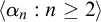 $\langle \alpha _n:n\ge 2\rangle $
as follows:
$\langle \alpha _n:n\ge 2\rangle $
as follows:
-
(1)
$l_0=\Sigma (\emptyset )=m_0^0$
and
$l_1>l_0$
is such that
$A_\omega \cap [l_0,l_1)\neq \emptyset $
. -
(2) For each
$j\in (l_0,l_1]$
,
$\langle l_0,j\rangle $
is an allowed state of the game in which last movement was given by Player II, so
$\Sigma (\langle l_0,j\rangle )=A_j$
is well defined. Choose
$\alpha _2>l_1$
such that for each
$j\in (l_0,l_1]$
,
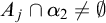
$A_j\cap \alpha _2\neq \emptyset $
. Now pick
$l_2>\alpha _2$
such that for each
$j\in (l_0,l_1]$
and
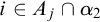
$i\in A_j\cap \alpha _2$
,
$\Sigma (l_0,j,A_j,i)\leq l_2$
. -
(3) If
$l_n\ge l_2$
has been defined, define
$l_{n+1}>\alpha _{n+1}>l_n$
such that the following holds:-
(a)
$\alpha _{n+1}>l_n$
is such that for each
$s\in \mathcal {E}_{l_n}$
and
$i<\vert s\vert $
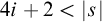
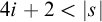
such that
$4i+2<\vert s\vert $
, there is
$j\in s(4i+2)\cap [\alpha _n,\alpha _{n+1})$
. -
(b) We require
$l_{n+1}>\alpha _{n+1}$
to satisfy that for each
$s\in \mathcal {E}_{l_{n}}$
and
$i<\vert s\vert $
such that
$4i+2<\vert s\vert $
, and
$j\in s(4i+2)\cap \alpha _{n+1}$
,
$\Sigma (s\upharpoonright (4i+3)^\frown j)<l_{n+1}$
. -
(c) Define
$H_{n+1}=\{s(4i+2):s\in \mathcal {E}_{l_{n}}\land 4i+2<\vert s\vert \}$
. Then, for all
$A\in H_{n+1}$
,
$A_\omega \setminus l_{n+1}\subseteq A$
. -
(d)
$A_\omega \cap [l_n,l_{n+1})\neq \emptyset $
.
-
























Then we get an interval partition $\langle I_n=[l_n,l_{n+1}):n\in \omega \rangle $
and by Lemma 6, we can find an interval partition
$\langle I_n=[l_n,l_{n+1}):n\in \omega \rangle $
and by Lemma 6, we can find an interval partition $\mathcal {J}$
such that each element of
$\mathcal {J}$
such that each element of $\mathcal {J}$
is union of intervals
$\mathcal {J}$
is union of intervals $I_n$
, and,
$I_n$
, and,
 $$ \begin{align*}\bigcup_{k\in\omega}J_{4k}\in\mathcal{F}\text{ and }\bigcup_{k\in\omega}J_{4k+2}\in\mathcal{G.}\end{align*} $$
Let $B\in \mathcal {G}$
be a selector for
$B\in \mathcal {G}$
be a selector for $\mathcal {J}$
and define
$\mathcal {J}$
and define $B_\omega =B\cap A_\omega \cap \bigcup _{k\in \omega }J_{4k+2}$
and let
$B_\omega =B\cap A_\omega \cap \bigcup _{k\in \omega }J_{4k+2}$
and let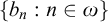 $\{b_n:n\in \omega \}$
be its increasing enumeration. Note that since we assume
$\{b_n:n\in \omega \}$
be its increasing enumeration. Note that since we assume $A_\omega \cap [l_n,l_{n+1})\neq \emptyset $
for all
$A_\omega \cap [l_n,l_{n+1})\neq \emptyset $
for all $n\in \omega $
, we can assume that
$n\in \omega $
, we can assume that $B_\omega \cap J_{4n+2}\neq \emptyset $
for all
$B_\omega \cap J_{4n+2}\neq \emptyset $
for all $n\in \omega $
. Let also
$n\in \omega $
. Let also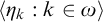 $\langle \eta _k:k\in \omega \rangle $
be the increasing sequence such that
$\langle \eta _k:k\in \omega \rangle $
be the increasing sequence such that $J_k=[\eta _k,\eta _{k+1})$
, and
$J_k=[\eta _k,\eta _{k+1})$
, and $\langle \epsilon _k:k\in \omega \rangle $
be such that
$\langle \epsilon _k:k\in \omega \rangle $
be such that $\eta _k=l_{\epsilon _k}$
. Now we defined the following run of the game:
$\eta _k=l_{\epsilon _k}$
. Now we defined the following run of the game:
-
(1) Player I starts by playing
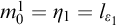
$m_0^0=l_0$
and let Player II play
$m_0^1=\eta _1=l_{\epsilon _1}$
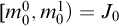
. Note that
$[m_0^0,m_0^1)=J_0$
. Define
$A_0=\Sigma (m_0^0,m_0^1)$
, so
$A_0\in H_{{\epsilon _1}+1}$
(since
${m_0^0}^\frown {m_1^0}^\frown A_0\in \mathcal {E}_{l_{\epsilon _1}}$
), which implies that
$A_\omega \setminus l_{\epsilon _1+1}\subseteq A_0$
. Note that
$b_0\ge \min (J_2)=l_{\epsilon _2}\ge l_{\epsilon _1+1}$
, so Player II can play
$b_0$
. This finishes the first round of the game. -
(2) Assume we have constructed a partial run of the game s such that
$\vert s\vert =4n$
for some positive
$n\in \omega $
. Then the last movement was given by Player II and corresponds to Player II playing
$b_{n-1}\in J_{4(n-1)+2}$
. Then we have
$b_{n-1}\in [l_{j},l_{j+1})$
for some
$j+1\leq \epsilon _{4(n-1)+3}$
, which implies that
$b_{n-1}<l_{j+1}<\alpha _{j+2}$
, which means that
$\Sigma (s)=m_{n}^0<l_{j+2}\leq l_{\epsilon _{4(n-1)+4}}=l_{\epsilon _{4n}}=\eta _{4n}<\eta _{4n+1}$
, and Player II can play
$m_n^1=\eta _{4n+1}$
. Define
$A_n=\Sigma (s^\frown {m_n^0}^\frown m_n^1)$
, and note that
$A_n\in H_{\epsilon _{4n+1}+1}$
(since
$s^\frown {m_n^0}^\frown {m_n^1}^\frown A_n\in \mathcal {E}_{l_{\epsilon _{4n+1}}}$
), which implies that
$A_\omega \setminus l_{\epsilon _{4n+1}+1}\subseteq A_n$
. Since
$b_n\in J_{4n+2}\cap B_\omega $
and
$\min (J_{4n+2})=\eta _{4n+2}=l_{\epsilon _{4n+2}}\ge l_{\epsilon _{4n+1}+1}$
, we have that
${b_n\in A_n}$
, so Player II can play
$b_n\in A_n$
. This finishes the definition of the current round, which results in
$s^\frown {m_n^0}^\frown {m_n^1}^\frown {A_n}^\frown b_n$
. Note that
$J_{4n}\subseteq [m_n^0,m_n^1)$
.
























Note that after this run of the game, $\bigcup _{k\in \omega }J_{4k}\subseteq \bigcup _{k\in \omega }[m_k^0,m_k^1)$
and the second set constructed by Player II is exactly
$\bigcup _{k\in \omega }J_{4k}\subseteq \bigcup _{k\in \omega }[m_k^0,m_k^1)$
and the second set constructed by Player II is exactly $B_\omega $
. Thus, Player II wins.
$B_\omega $
. Thus, Player II wins.
Definition 11. Let $\mathcal {F}$
and
$\mathcal {F}$
and $\mathcal {G}$
be two filters on
$\mathcal {G}$
be two filters on $\omega $
. Let
$\omega $
. Let $\vec {E}$
be an
$\vec {E}$
be an $\mathcal {F}^*$
-partition. Define the game
$\mathcal {F}^*$
-partition. Define the game $\mathscr {G}_{\vec {E}}(\mathcal {F},\mathcal {G})$
as the game
$\mathscr {G}_{\vec {E}}(\mathcal {F},\mathcal {G})$
as the game $\mathscr {G}(\mathcal {F},\mathcal {G})$
, with the exception that Player II wins if and only if
$\mathscr {G}(\mathcal {F},\mathcal {G})$
, with the exception that Player II wins if and only if
 $$ \begin{align*}\bigcup_{n\in\omega}\bigcup_{j\in[m_n^0,m_n^1)}E_j\in\mathcal{F}\text{ and }\{k_j:j\in\omega\}\in\mathcal{G.}\end{align*} $$
Corollary 1. Assume $\mathcal {F}$
and
$\mathcal {F}$
and $\mathcal {G}$
filters. Further, assume
$\mathcal {G}$
filters. Further, assume $\mathcal {G}$
is a selective filter, and let
$\mathcal {G}$
is a selective filter, and let $\vec {E}$
be an
$\vec {E}$
be an $\mathcal {F}^*$
-partition. Define a function
$\mathcal {F}^*$
-partition. Define a function ${h}: dom(\vec {E})\to \omega $
as
${h}: dom(\vec {E})\to \omega $
as $h(k)=n$
if and only if
$h(k)=n$
if and only if $k\in E_n$
. Assume
$k\in E_n$
. Assume $h(\mathcal {F})$
and
$h(\mathcal {F})$
and $\mathcal {G}$
are not nearly coherent. Then Player I has no winning strategy in the game
$\mathcal {G}$
are not nearly coherent. Then Player I has no winning strategy in the game $\mathscr {G}_{\vec {E}}(\mathcal {F},\mathcal {G})$
.
$\mathscr {G}_{\vec {E}}(\mathcal {F},\mathcal {G})$
.
Proof. If $\Sigma $
is a winning strategy for Player I in the game
$\Sigma $
is a winning strategy for Player I in the game $\mathscr {G}_{\vec {E}}(\mathcal {F},\mathcal {G})$
, then
$\mathscr {G}_{\vec {E}}(\mathcal {F},\mathcal {G})$
, then $\Sigma $
is a winning strategy in the game
$\Sigma $
is a winning strategy in the game $\mathscr {G}(h(\mathcal {F}),\mathcal {G})$
. However,
$\mathscr {G}(h(\mathcal {F}),\mathcal {G})$
. However, $h(\mathcal {F})$
and
$h(\mathcal {F})$
and $\mathcal {G}$
are not nearly coherent.
$\mathcal {G}$
are not nearly coherent.
Definition 12. Let $\mathscr {I}$
be an ideal on
$\mathscr {I}$
be an ideal on $\omega $
. We say that a function
$\omega $
. We say that a function $f:\omega \to \omega $
is
$f:\omega \to \omega $
is $\mathscr {I}$
-to-one if and only if for any
$\mathscr {I}$
-to-one if and only if for any $n\in \omega $
,
$n\in \omega $
,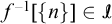 $f^{-1}[\{n\}]\in \mathscr {I}$
.
$f^{-1}[\{n\}]\in \mathscr {I}$
.
Theorem 3 below is the main theorem of this section.
Theorem 3. Let $\mathscr {I}$
be a saturated ideal on
$\mathscr {I}$
be a saturated ideal on $\omega $
and let
$\omega $
and let $\mathcal {F}$
be a selective rational filter such that for no
$\mathcal {F}$
be a selective rational filter such that for no $\mathscr {I}$
-to-one function f,
$\mathscr {I}$
-to-one function f, $\mathcal {F}\cup f(\mathscr {I}^*)$
generates a filter. Then
$\mathcal {F}\cup f(\mathscr {I}^*)$
generates a filter. Then $\mathbb {Q}(\mathscr {I})$
forces that
$\mathbb {Q}(\mathscr {I})$
forces that $\mathcal {F}$
generates a selective rational filter in the generic extension.
$\mathcal {F}$
generates a selective rational filter in the generic extension.
Proof. Let $\dot {X}$
be a name for a dense subset of the rational numbers and
$\dot {X}$
be a name for a dense subset of the rational numbers and $p\in \mathbb {Q}(\mathscr {I})$
a condition. We have to find a condition
$p\in \mathbb {Q}(\mathscr {I})$
a condition. We have to find a condition $q\leq p$
such that either, there is
$q\leq p$
such that either, there is $Z\in \mathcal {F}$
such that
$Z\in \mathcal {F}$
such that $q\Vdash Z\cap \dot {X}\notin Dense(\mathbb {Q})$
, or
$q\Vdash Z\cap \dot {X}\notin Dense(\mathbb {Q})$
, or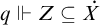 $q\Vdash Z\subseteq \dot {X}$
. By Proposition 1 we can assume that for all
$q\Vdash Z\subseteq \dot {X}$
. By Proposition 1 we can assume that for all $n\in \omega $
and
$n\in \omega $
and $s\in 2^n$
,
$s\in 2^n$
, $p^s$
decides the truth value of
$p^s$
decides the truth value of $n\in \dot {X}$
.
$n\in \dot {X}$
.
For each $s\in 2^{<\omega }$
, let
$s\in 2^{<\omega }$
, let $X_s$
be the set
$X_s$
be the set $X_s=\{n\in \omega :\exists q\leq p^{s}\ q\Vdash n\in \dot {X}\}$
. If there is
$X_s=\{n\in \omega :\exists q\leq p^{s}\ q\Vdash n\in \dot {X}\}$
. If there is $s\in 2^{<\omega }$
such that
$s\in 2^{<\omega }$
such that $X_s\notin \mathcal {F}$
, then there is
$X_s\notin \mathcal {F}$
, then there is $Z\in \mathcal {F}$
such that
$Z\in \mathcal {F}$
such that $X_s\cap Z\notin Dense(\mathbb {Q})$
. Since
$X_s\cap Z\notin Dense(\mathbb {Q})$
. Since $p^{s}$
forces
$p^{s}$
forces $\dot {X}$
to be a subset of
$\dot {X}$
to be a subset of $X_s$
, then
$X_s$
, then $\dot {X}\cap Z$
is forced by
$\dot {X}\cap Z$
is forced by $p^s$
to be a not dense subset of the rational numbers, so we are done with this case and we can assume that
$p^s$
to be a not dense subset of the rational numbers, so we are done with this case and we can assume that $X_s\in \mathcal {F}$
for all
$X_s\in \mathcal {F}$
for all $s\in 2^{<\omega }$
.
$s\in 2^{<\omega }$
.
Define a function $f:dom(\vec {E}_p)\to \omega $
as
$f:dom(\vec {E}_p)\to \omega $
as $f(k)=n$
if and only if
$f(k)=n$
if and only if $k\in E_n$
. Then
$k\in E_n$
. Then $\mathcal {F}\cup f(\mathscr {I}^*)$
does not generate a filter. Moreover, our assumptions on
$\mathcal {F}\cup f(\mathscr {I}^*)$
does not generate a filter. Moreover, our assumptions on $\mathscr {I}^*$
and
$\mathscr {I}^*$
and $\mathcal {F}$
imply that
$\mathcal {F}$
imply that $\mathcal {F}$
and
$\mathcal {F}$
and $f(\mathscr {I}^*)$
are not nearly coherent, so Player I has no winning strategy in the game
$f(\mathscr {I}^*)$
are not nearly coherent, so Player I has no winning strategy in the game $\mathscr {G}_{\vec {E}_p}(\mathscr {I}^*,\mathcal {F})$
. We define a strategy for Player I in the game
$\mathscr {G}_{\vec {E}_p}(\mathscr {I}^*,\mathcal {F})$
. We define a strategy for Player I in the game $\mathscr {G}_{\vec {E}_p}(\mathscr {I}^*,\mathcal {F})$
, in which Player I constructs along the game a decreasing sequence of conditions. This is done as follows:
$\mathscr {G}_{\vec {E}_p}(\mathscr {I}^*,\mathcal {F})$
, in which Player I constructs along the game a decreasing sequence of conditions. This is done as follows:
-
(1) Player I starts by playing
$m_0^0=0$
. Define
$q_{-1}=p$
. -
(2) After Player II answers with
$m^1_0>m_0^0$
, define
$A_0=\bigcap _{s\in 2^{m_0^1}}X_s$
, and let Player I play the set
$A_0$
. Then Player II answers with
$k_0\in A_0$
. This finishes the first round of the game. -
(3) Assume round number n has finished and Player II has played
$k_n\in A_n$
. Then, for each
$s\in 2^{m_n^1}$
, pick
$r_s\in 2^{<\omega }$
extending s and such that
$p^{r_s}\Vdash k_n\in A_n$
. Let
$m_{n+1}^0\ge \max \{\vert r_s\vert :s\in 2^{m_n^1}\}$
and let Player I play
$m_{n+1}^0$
. Then Player II answers with
$m_{n+1}^1>m_{n+1}^0$
. Let Player I play the set
$A_{n+1}=\bigcap _{s\in 2^{m_{n+1}^1}}X_s$
. Then Player II answers with
$k_{n+1}\in A_{n+1}$
, and the round is finished.Now we define condition
$q_n$
. For
$s\in 2^{m_n^1}$
, pick
$\circ s\in 2^{m_{n+1}^0}$
such that
$r_s\subseteq \circ s$
. Define
$q_{n}$
as follows:-
(a)
$dom(\vec {E}_{q_n})=\bigcup _{l\leq n}\bigcup _{j\in [m_l^0,m_l^1)}E^{q_{n-1}}_j\cup \bigcup _{j\ge m_{n+1}^0}E_j^{q_{n-1}}$
. -
(b)
$\vec {E}_{q_n}=\vec {E}_{q_{n-1}}\upharpoonright dom(\vec {E}_{q_n})=\vec {E}_p\upharpoonright dom(\vec {E}_{q_n})$
. -
(c) For
$j\in [m_{n}^1,m_{n+1}^0)$
and
$x\in 2^{A(E_{q_n})\cap (a_{j}^{q_{n-1}}+1)}$
, let
$s_x=x\upharpoonright a_{m_n^1}^{q_n}$
and define
$H_{q_n}(a_{j}^{q_{n-1}})(x)=\circ s_x(j)$
. This implicitly defines
$H_{q_\omega }(j)$
for
$j\in \bigcup _{l\in [m_{n}^1,m_{n+1}^0)}E_l^{q_{n-1}}$
(which should satisfy clause (2) from Definition 4). -
(d) For
$j\in dom(\vec {E}_{q_n})$
, define
$H_{q_n}(j)$
in the natural way to satisfy clauses ii)–iv) and (2) from Definition 4. -
(e) For
$j\notin dom(\vec {E}_{q_{n-1}})$
,
$H_{q_n}(j)$
is defined accordingly to clause (3) from Definition 4.
Note that for each
$s\in 2^{m_n^1}$
,
$q_n^s\leq p^{\circ s}\leq p^{r_s}$
, so
$q_n^s\Vdash k_n\in \dot {X}$
. Thus,
$q_n\Vdash k_n\in \dot {X}$
. -


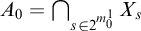





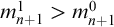

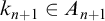




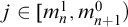

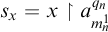



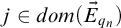

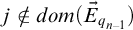



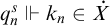
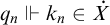
This is not a winning strategy for Player I, so there is a run of the game in which Player II wins, so, for such run, we have $\bigcup _{n\in \omega }\bigcup _{j\in [m_n^0,m_n^1)}E^p_j\in \mathscr {I}^*$
and
$\bigcup _{n\in \omega }\bigcup _{j\in [m_n^0,m_n^1)}E^p_j\in \mathscr {I}^*$
and $\{k_n:n\in \omega \}\in \mathcal {F}$
. Let
$\{k_n:n\in \omega \}\in \mathcal {F}$
. Let $\langle m_n^0,m_n^1,k_n, q_n:n\in \omega \rangle $
be the sequences constructed along such run of the game. Define a condition
$\langle m_n^0,m_n^1,k_n, q_n:n\in \omega \rangle $
be the sequences constructed along such run of the game. Define a condition $q_\omega $
as follows:
$q_\omega $
as follows:
-
(1)
$dom(\vec {E}_{q_\omega })=\bigcup _{n\in \omega }\bigcup _{j\in [m_n^0,m_n^1)}E^p_{j}\in \mathscr {I}^*$
. -
(2)
$\vec {E}_{q_\omega }=\vec {E}_p\upharpoonright dom(\vec {E}_{q_\omega })$
. -
(3) For any
$j\in \omega $
and
$x\in 2^{A(\vec {E}_{q_\omega })\cap (j+1)}$
, let
$H_{q_\omega }(j)=\lim _{n\to \omega } H_{q_n}(j)(x)$
.





Checking that $q_\omega $
is a condition and a lower bound of
$q_\omega $
is a condition and a lower bound of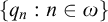 $\{q_n:n\in \omega \}$
is quite similar to the case of Proposition 1, so we omit the details. Finally, note that since
$\{q_n:n\in \omega \}$
is quite similar to the case of Proposition 1, so we omit the details. Finally, note that since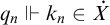 $q_n\Vdash k_n\in \dot {X}$
and
$q_n\Vdash k_n\in \dot {X}$
and $q_\omega \leq q_n$
for all
$q_\omega \leq q_n$
for all $n\in \omega $
, we also have that
$n\in \omega $
, we also have that $q_\omega \Vdash \{k_n:n\in \omega \}\subseteq \dot {X}$
.
$q_\omega \Vdash \{k_n:n\in \omega \}\subseteq \dot {X}$
.
4 Killing irresolvable spaces
Before proving the main theorem of the article, we need to state a few lemmas, for which we include the proofs for self-contained purposes. Recall from the Introduction that a topological space is strongly irresolvable if any open subset is irresolvable with the subspace topology.
Theorem 4. It is relatively consistent with $\mathsf {ZFC}$
that
$\mathsf {ZFC}$
that $\omega _1=\mathfrak {r}_{\mathsf {scattered}}=\mathfrak {r}_{\mathsf {nwd}}<\mathfrak {irr}=\mathfrak {i}=\omega _2$
.
$\omega _1=\mathfrak {r}_{\mathsf {scattered}}=\mathfrak {r}_{\mathsf {nwd}}<\mathfrak {irr}=\mathfrak {i}=\omega _2$
.
Lemma 7. Let $(\omega ,\tau )$
be an irresolvable space. Then there is an open
$(\omega ,\tau )$
be an irresolvable space. Then there is an open $X\subseteq \omega $
such that
$X\subseteq \omega $
such that $(X,\tau \upharpoonright X)$
is strongly irresolvable, that is, every
$(X,\tau \upharpoonright X)$
is strongly irresolvable, that is, every $\tau \upharpoonright X$
-open subset of X is irresolvable.
$\tau \upharpoonright X$
-open subset of X is irresolvable.
Proof. Let R be the collection of all open subsets of $\omega $
which are resolvable. Note that if
$\omega $
which are resolvable. Note that if $U\in R$
and
$U\in R$
and $V\subseteq U$
is open, then
$V\subseteq U$
is open, then $V\in R$
. Let
$V\in R$
. Let $\mathcal {A}\subseteq R$
be a maximal subset of disjoint open sets. Note that
$\mathcal {A}\subseteq R$
be a maximal subset of disjoint open sets. Note that $W=\bigcup \mathcal {A}$
is resolvable, and
$W=\bigcup \mathcal {A}$
is resolvable, and $\omega \setminus W$
has non-empty interior (otherwise
$\omega \setminus W$
has non-empty interior (otherwise $(\omega ,\tau )$
would be resolvable). Define
$(\omega ,\tau )$
would be resolvable). Define $X=int_{\tau }(\omega \setminus W)$
. Clearly
$X=int_{\tau }(\omega \setminus W)$
. Clearly $(X,\tau \upharpoonright X)$
is strongly irresolvable: otherwise, there would be an open set
$(X,\tau \upharpoonright X)$
is strongly irresolvable: otherwise, there would be an open set $U\subseteq X$
which is resolvable, and since X is open in
$U\subseteq X$
which is resolvable, and since X is open in $\tau $
, U is open in
$\tau $
, U is open in $\tau $
, so we get
$\tau $
, so we get $U\in R$
, which implies
$U\in R$
, which implies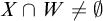 $X\cap W\neq \emptyset $
, which is a contradiction.
$X\cap W\neq \emptyset $
, which is a contradiction.
Corollary 2.
 $$ \begin{align*} \mathfrak{irr}=\min\{\pi w((\omega,\tau)):(\omega,\tau)\text{ is a strongly irresolvable } T_3 \text{ topological space}\}. \end{align*} $$
Proof. Clearly the inequality $\leq $
is true. The other inequality follows from the previous lemma and the fact that the
$\leq $
is true. The other inequality follows from the previous lemma and the fact that the $\pi $
-weight of
$\pi $
-weight of $(X,\tau \upharpoonright X)$
is at most the
$(X,\tau \upharpoonright X)$
is at most the $\pi $
-weight of
$\pi $
-weight of $(\omega ,\tau )$
.
$(\omega ,\tau )$
.
Definition 13. Let $(\omega ,\tau )$
be a topological space. The ideal of
$(\omega ,\tau )$
be a topological space. The ideal of $\tau $
-nowhere dense subsets is denoted by
$\tau $
-nowhere dense subsets is denoted by $\mathsf {nwd}(\tau )$
.
$\mathsf {nwd}(\tau )$
.
Lemma 8. Let $(\omega ,\tau )$
be a strongly irresolvable space. Then
$(\omega ,\tau )$
be a strongly irresolvable space. Then $\mathsf {nwd}(\tau )$
is saturated.
$\mathsf {nwd}(\tau )$
is saturated.
Proof. First note that for any $A\in \mathsf {nwd}(\tau )^+$
, A has non-empty interior: assume otherwise and pick some
$A\in \mathsf {nwd}(\tau )^+$
, A has non-empty interior: assume otherwise and pick some $A\in \mathsf {nwd}(\tau )^+$
with empty interior, and let
$A\in \mathsf {nwd}(\tau )^+$
with empty interior, and let $U\in \tau $
be such that
$U\in \tau $
be such that $U\subseteq \bar {A}$
. Note that
$U\subseteq \bar {A}$
. Note that $U\setminus A$
and
$U\setminus A$
and $U\cap A$
are both dense in U, which means that U is resolvable, which is a contradiction. Now, let
$U\cap A$
are both dense in U, which means that U is resolvable, which is a contradiction. Now, let $\mathcal {A}\subseteq \mathcal {P}(\omega )/\mathsf {nwd}(\tau )$
be a maximal antichain. Then
$\mathcal {A}\subseteq \mathcal {P}(\omega )/\mathsf {nwd}(\tau )$
be a maximal antichain. Then $\{int(A):A\in \mathcal {A}\}$
is also an antichain, and moreover, for any two
$\{int(A):A\in \mathcal {A}\}$
is also an antichain, and moreover, for any two $A,B\in \mathcal {A}$
,
$A,B\in \mathcal {A}$
, $int(A)\cap int(B)=\emptyset $
, which implies that
$int(A)\cap int(B)=\emptyset $
, which implies that $\{int(A):A\in \mathcal {A}\}$
is countable (since
$\{int(A):A\in \mathcal {A}\}$
is countable (since $\omega $
is countable), which in turn implies that
$\omega $
is countable), which in turn implies that $\mathcal {A}$
is countable.
$\mathcal {A}$
is countable.
Lemma 9. Let $(\omega ,\tau )$
be a strongly irresolvable space. Then
$(\omega ,\tau )$
be a strongly irresolvable space. Then $\mathbb {Q}(\mathsf {nwd}(\tau ))$
forces that
$\mathbb {Q}(\mathsf {nwd}(\tau ))$
forces that $\dot {x}_{gen}$
and
$\dot {x}_{gen}$
and $\omega \setminus \dot {x}_{gen}$
are dense in the topology generated by
$\omega \setminus \dot {x}_{gen}$
are dense in the topology generated by $\tau $
.
$\tau $
.
Proof. Let $p=(H_p,E_p)\in \mathbb {Q}(\mathsf {nwd}(\tau ))$
be a condition. Note that for each
$p=(H_p,E_p)\in \mathbb {Q}(\mathsf {nwd}(\tau ))$
be a condition. Note that for each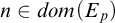 $n\in dom(E_p)$
, we can find extensions
$n\in dom(E_p)$
, we can find extensions $q_0,q_1\leq p$
such that for each
$q_0,q_1\leq p$
such that for each $i\in 2$
,
$i\in 2$
, $H_{q_i}(n)$
has value constant i, and
$H_{q_i}(n)$
has value constant i, and $\min (dom(q_i))>n$
. Thus, if
$\min (dom(q_i))>n$
. Thus, if $V\in \tau $
is a basic open set, we can pick distinct
$V\in \tau $
is a basic open set, we can pick distinct $n_0,n_1\in V\cap dom(E_p)$
and find a condition
$n_0,n_1\in V\cap dom(E_p)$
and find a condition $q\leq p$
such that for each
$q\leq p$
such that for each $i\in 2$
,
$i\in 2$
, $H_q(n_i)$
has constant value i, and
$H_q(n_i)$
has constant value i, and $\min (dom(E_q))>\max \{n_0,n_1\}$
. This means that
$\min (dom(E_q))>\max \{n_0,n_1\}$
. This means that $q\Vdash n_0\notin \dot {x}_{gen}\cap V,n_1\in \dot {x}_{gen}\cap V$
.
$q\Vdash n_0\notin \dot {x}_{gen}\cap V,n_1\in \dot {x}_{gen}\cap V$
.
Remark. Note that in the generic extension by $\mathbb {Q}(\mathsf {nwd}(\tau ))$
, if
$\mathbb {Q}(\mathsf {nwd}(\tau ))$
, if $\tilde {\tau }$
is the topology generated by
$\tilde {\tau }$
is the topology generated by $\tau $
, then the
$\tau $
, then the $\pi $
-weight of
$\pi $
-weight of $(\omega ,\tilde {\tau })$
is the same as the
$(\omega ,\tilde {\tau })$
is the same as the $\pi $
-weight of
$\pi $
-weight of $(\omega ,\tau )$
in the ground model.
$(\omega ,\tau )$
in the ground model.
We need the following preservation theorem from [Reference Shelah10].
Theorem 5. Let $\mathcal {F}$
be a filter and
$\mathcal {F}$
be a filter and $\mathcal {D}$
a family of subsets of
$\mathcal {D}$
a family of subsets of $\omega $
, and let
$\omega $
, and let $\mathbb {P}=\langle \mathbb {P}_\beta ,\dot {\mathbb {Q}}_\beta :\beta <\alpha \rangle $
a countable support iteration of proper
$\mathbb {P}=\langle \mathbb {P}_\beta ,\dot {\mathbb {Q}}_\beta :\beta <\alpha \rangle $
a countable support iteration of proper $\omega ^\omega $
-bounding forcings. Assume the following holds:
$\omega ^\omega $
-bounding forcings. Assume the following holds:
-
(1)
$\mathcal {F}$
is a selective filter. -
(2) For any
$X\subseteq \omega $
such that
$X\notin \mathcal {F}$
, there is
$D\in \mathcal {D}$
such that
$X\subseteq D$
. -
(3) For all
$\beta <\alpha $
,
$\mathbb {P}_\beta $
forces the statement:
$$ \begin{align*} (*)\ \ \ \ \ \ \ \ (\forall X\subseteq\omega)( X\notin\langle\mathcal{F}\rangle\Longrightarrow(\exists D\in\mathcal{D})(X\subseteq^* D)). \end{align*} $$


Then $\mathbb {P}$
forces
$\mathbb {P}$
forces $(*)$
as well.
$(*)$
as well.
Note that if $\mathcal {F}$
is a selective rational filter, then clauses (1) and (2) of the previous theorem are satisfied with
$\mathcal {F}$
is a selective rational filter, then clauses (1) and (2) of the previous theorem are satisfied with $\mathcal {D}=\{\omega \setminus (B\cap X):B\in \mathcal {B}\land X\in \mathcal {F}\}$
. Thus, the previous theorem implies that if we have a countable support iteration of proper forcings such that all its initial segments preserve a selective rational filter
$\mathcal {D}=\{\omega \setminus (B\cap X):B\in \mathcal {B}\land X\in \mathcal {F}\}$
. Thus, the previous theorem implies that if we have a countable support iteration of proper forcings such that all its initial segments preserve a selective rational filter $\mathcal {F}$
in the sense of
$\mathcal {F}$
in the sense of $(*)$
above, then the full iteration also preserves
$(*)$
above, then the full iteration also preserves $\mathcal {F}$
as a selective rational filter in the sense of
$\mathcal {F}$
as a selective rational filter in the sense of $(*)$
. Note that this implies that
$(*)$
. Note that this implies that $\mathcal {F}$
is preserved as a maximal selective filter. This will be used in the next proof.
$\mathcal {F}$
is preserved as a maximal selective filter. This will be used in the next proof.
Proof of Theorem 4. Let V be a model of $\mathsf {ZFC+GCH}$
, and let
$\mathsf {ZFC+GCH}$
, and let $\mathscr {F}=\{\mathcal {U}_\alpha :\alpha \in \omega _2\}$
be the family of filters given by Lemma 2. The forcing is a countable support iteration via a bookkeeping of forcings of the form
$\mathscr {F}=\{\mathcal {U}_\alpha :\alpha \in \omega _2\}$
be the family of filters given by Lemma 2. The forcing is a countable support iteration via a bookkeeping of forcings of the form $\mathbb {Q}(\mathsf {nwd}(\tau ))$
, where
$\mathbb {Q}(\mathsf {nwd}(\tau ))$
, where $(\omega ,\tau )$
is a strongly irresolvable space, taking care that at each successor step of the iteration we destroy the next strongly irresolvable space available in the bookkeeping. The property of the family
$(\omega ,\tau )$
is a strongly irresolvable space, taking care that at each successor step of the iteration we destroy the next strongly irresolvable space available in the bookkeeping. The property of the family $\mathscr {F}$
makes sure that at any
$\mathscr {F}$
makes sure that at any $\alpha \in \omega _2$
, in
$\alpha \in \omega _2$
, in $V[G_\alpha ]$
, for any saturated ideal
$V[G_\alpha ]$
, for any saturated ideal $\mathscr {I}$
, there are at most countably many filters
$\mathscr {I}$
, there are at most countably many filters $\mathcal {U}\in \mathscr {F}$
such that
$\mathcal {U}\in \mathscr {F}$
such that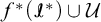 $f^*(\mathscr {I}^*)\cup \mathcal {U}$
generates a filter, where f is an
$f^*(\mathscr {I}^*)\cup \mathcal {U}$
generates a filter, where f is an $\mathscr {I}$
to one function. This implies that at any step of the iteration we have destroyed the maximality of at most
$\mathscr {I}$
to one function. This implies that at any step of the iteration we have destroyed the maximality of at most $\omega _1$
selective rational filters in the family
$\omega _1$
selective rational filters in the family $\mathscr {F}$
, and we preserve the maximality of the other
$\mathscr {F}$
, and we preserve the maximality of the other $\omega _2$
remaining selective rational filters in the family
$\omega _2$
remaining selective rational filters in the family $\mathscr {F}$
. By Theorem 5, we have that any rational filter
$\mathscr {F}$
. By Theorem 5, we have that any rational filter $\mathcal{U}\in\mathcal{F}$
which is not destroyed at successor steps of the iteration, is not destroyed at limit steps as well. This in turn implies that the family
$\mathcal{U}\in\mathcal{F}$
which is not destroyed at successor steps of the iteration, is not destroyed at limit steps as well. This in turn implies that the family $\bigcup \mathscr {F}$
remains as a rational dense reaping family in all stages of the iteration. Since every dense subset of
$\bigcup \mathscr {F}$
remains as a rational dense reaping family in all stages of the iteration. Since every dense subset of $\mathbb {Q}$
appears in an intermediate extension, every dense subset of
$\mathbb {Q}$
appears in an intermediate extension, every dense subset of $\mathbb {Q}$
is
$\mathbb {Q}$
is $Dense(\mathbb {Q})$
-reaped by some set in
$Dense(\mathbb {Q})$
-reaped by some set in $\bigcup \mathscr {F}$
, so
$\bigcup \mathscr {F}$
, so $\mathfrak {r}_{\mathsf {nwd}}=\omega _1$
holds in the generic extension. Note that we actually have
$\mathfrak {r}_{\mathsf {nwd}}=\omega _1$
holds in the generic extension. Note that we actually have $\mathfrak {r}_{\mathbb {Q}}^+=\omega _1$
. On the other hand, we have that Lemma 9 and the bookkeeping make sure that we destroy the irresolvability of any strongly irresolvable space that appears in the intermediate extension, so
$\mathfrak {r}_{\mathbb {Q}}^+=\omega _1$
. On the other hand, we have that Lemma 9 and the bookkeeping make sure that we destroy the irresolvability of any strongly irresolvable space that appears in the intermediate extension, so $\mathfrak {irr}>\omega _1$
is true in the generic extension.
$\mathfrak {irr}>\omega _1$
is true in the generic extension.
5
$\mathfrak {r}_{\mathbb {Q}}$
and
$\mathfrak {u}_{\mathbb {Q}}$


Let $\mathcal {F}\subseteq Dense(\mathbb {Q})$
be a rational filter. A base for
$\mathcal {F}\subseteq Dense(\mathbb {Q})$
be a rational filter. A base for $\mathcal {F}$
is a family
$\mathcal {F}$
is a family $\mathcal {V}\subseteq \mathcal {F}$
such that any element in
$\mathcal {V}\subseteq \mathcal {F}$
such that any element in $\mathcal {F}$
contains one element from
$\mathcal {F}$
contains one element from $\mathcal {V}$
. The cardinal invariant
$\mathcal {V}$
. The cardinal invariant $\mathfrak {u}_{\mathbb {Q}}$
is defined as the minimal cardinality of base of a rational filter:
$\mathfrak {u}_{\mathbb {Q}}$
is defined as the minimal cardinality of base of a rational filter:
 $$ \begin{align*} \mathfrak{u}_{\mathbb{Q}}=\min\{\vert\mathcal{V}\vert:(\exists\mathcal{F}\subseteq Dense(\mathbb{Q})(\mathcal{F}\text{ is a rational filter}\land\mathcal{V} \text{ is a base for } \mathcal{F})\}. \end{align*} $$
Clearly $\mathfrak {r}_{\mathbb {Q}}\leq \mathfrak {u}_{\mathbb {Q}}$
follows from
$\mathfrak {r}_{\mathbb {Q}}\leq \mathfrak {u}_{\mathbb {Q}}$
follows from $\mathsf {ZFC}$
. The results from the previous sections can be easily modified to prove the consistency of
$\mathsf {ZFC}$
. The results from the previous sections can be easily modified to prove the consistency of $\mathfrak {r}_{\mathbb {Q}}<\mathfrak {u}_{\mathbb {Q}}$
.
$\mathfrak {r}_{\mathbb {Q}}<\mathfrak {u}_{\mathbb {Q}}$
.
For the next definition, let us say that topology $\tau $
on
$\tau $
on $\omega $
is
$\omega $
is $\mathbb {Q}$
-compatible if there is
$\mathbb {Q}$
-compatible if there is $\tau '\subseteq \tau $
such that
$\tau '\subseteq \tau $
such that $(\omega ,\tau ')$
is homeomorphic to the rational numbers with their usual topology.
$(\omega ,\tau ')$
is homeomorphic to the rational numbers with their usual topology.
Definition 14. The cardinal invariant $\mathfrak {irr}_2$
is defined as the minimal possible
$\mathfrak {irr}_2$
is defined as the minimal possible $\pi $
-weight of a
$\pi $
-weight of a $T_2$
countable irresolvable space whose topology is
$T_2$
countable irresolvable space whose topology is $\mathbb {Q}$
-compatible, that is,
$\mathbb {Q}$
-compatible, that is,
 $$ \begin{align*} \mathfrak{irr}_2=\min\{\pi w((\omega,\tau)):(\omega,\tau)\text{ is a } T_2 \text{ irresolvable space and } \tau \text{ is } \mathbb{Q}\text{-compatible}\}. \end{align*} $$
It is clear that Lemmas 7–9 apply to $T_2$
irresolvable spaces, so we can destroy irresolvable
$T_2$
irresolvable spaces, so we can destroy irresolvable $T_2$
spaces in the same fashion as we did for regular irresolvable spaces. These remarks are motivated by the following proposition and the corollary below.
$T_2$
spaces in the same fashion as we did for regular irresolvable spaces. These remarks are motivated by the following proposition and the corollary below.
Proposition 4. $\mathfrak {irr}_2\leq \min \{\mathfrak {u}_{\mathbb {Q}},\mathfrak {irr}\}.$
Proof. Let $\mathcal {B}$
be our fixed base for
$\mathcal {B}$
be our fixed base for $\mathbb {Q}$
. Let
$\mathbb {Q}$
. Let $\mathcal {U}\subseteq Dense(\mathbb {Q})$
be a rational filter. Define a base for a topology as
$\mathcal {U}\subseteq Dense(\mathbb {Q})$
be a rational filter. Define a base for a topology as $\mathcal {B}_{\mathcal {U}}=\{B\cap A:B\in \mathcal {B}\land A\in \mathcal {U}\}$
and let
$\mathcal {B}_{\mathcal {U}}=\{B\cap A:B\in \mathcal {B}\land A\in \mathcal {U}\}$
and let $\tau (\mathcal {U})$
be the topology generated by
$\tau (\mathcal {U})$
be the topology generated by $\mathcal {B}_{\mathcal {U}}$
. Then,
$\mathcal {B}_{\mathcal {U}}$
. Then, $(\mathbb {Q},\tau (\mathcal {U}))$
is a
$(\mathbb {Q},\tau (\mathcal {U}))$
is a $T_2$
irresolvable space: let
$T_2$
irresolvable space: let $X\subseteq \mathbb {Q}$
be an arbitrary
$X\subseteq \mathbb {Q}$
be an arbitrary $\tau (\mathcal {U})$
-dense set, which in particular implies that
$\tau (\mathcal {U})$
-dense set, which in particular implies that $X\in Dense(\mathbb {Q})$
, and the definition of
$X\in Dense(\mathbb {Q})$
, and the definition of $\mathcal {B}_{\mathcal {U}}$
implies that the intersection of X with any element of
$\mathcal {B}_{\mathcal {U}}$
implies that the intersection of X with any element of $\mathcal {U}$
is a dense set in
$\mathcal {U}$
is a dense set in $\mathbb {Q}$
, so the maximality of
$\mathbb {Q}$
, so the maximality of $\mathcal {U}$
implies that
$\mathcal {U}$
implies that $X\in \mathcal {U}$
holds; this clearly implies that the intersection of any two dense sets is not empty. The space
$X\in \mathcal {U}$
holds; this clearly implies that the intersection of any two dense sets is not empty. The space $(\mathbb {Q},\tau (\mathcal {U}))$
is
$(\mathbb {Q},\tau (\mathcal {U}))$
is $T_2$
because the base
$T_2$
because the base $\mathcal {B}$
separates points. It is also clear that the
$\mathcal {B}$
separates points. It is also clear that the $\pi $
-weight of
$\pi $
-weight of $(\mathbb {Q},\tau (\mathcal {U}))$
is at most
$(\mathbb {Q},\tau (\mathcal {U}))$
is at most $\chi (\mathcal {U})$
. Thus,
$\chi (\mathcal {U})$
. Thus, $\mathfrak {irr}_2\leq \mathfrak {u}_{\mathbb {Q}}$
follows.
$\mathfrak {irr}_2\leq \mathfrak {u}_{\mathbb {Q}}$
follows.
To prove the inequality $\mathfrak {irr}_2\leq \mathfrak {irr}$
, since any
$\mathfrak {irr}_2\leq \mathfrak {irr}$
, since any $T_3$
irresolvable space is
$T_3$
irresolvable space is $T_2$
, it suffices to prove that any
$T_2$
, it suffices to prove that any $T_3$
irresolvable topology on
$T_3$
irresolvable topology on $\omega $
is
$\omega $
is $\mathbb {Q}$
-compatible. To prove this, let
$\mathbb {Q}$
-compatible. To prove this, let $\mathcal {M}\prec H(\theta )$
be countable such that
$\mathcal {M}\prec H(\theta )$
be countable such that $(\omega ,\tau )\in \mathcal {M}$
and consider the topology generated by the family
$(\omega ,\tau )\in \mathcal {M}$
and consider the topology generated by the family $\tau \cap \mathcal {M}$
. Since
$\tau \cap \mathcal {M}$
. Since $\mathcal {M}$
models that
$\mathcal {M}$
models that $(\omega ,\tau )$
is a
$(\omega ,\tau )$
is a $T_3$
space, the topology
$T_3$
space, the topology $\tau '$
generated by
$\tau '$
generated by $\tau \cap \mathcal {M}$
is
$\tau \cap \mathcal {M}$
is $T_3$
: for any
$T_3$
: for any $n\in \omega $
and any basic set
$n\in \omega $
and any basic set $U\in \tau \cap \mathcal {M}$
such that
$U\in \tau \cap \mathcal {M}$
such that $n\in U$
, by elementarity, there is
$n\in U$
, by elementarity, there is $V\in \tau \cap \mathcal {M}$
such that
$V\in \tau \cap \mathcal {M}$
such that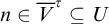 $n\in \overline {V}^{\tau }\subseteq U$
; moreover, by elementarity we also have
$n\in \overline {V}^{\tau }\subseteq U$
; moreover, by elementarity we also have $\overline {V}^\tau =\overline {V}^{\tau '}$
for any set
$\overline {V}^\tau =\overline {V}^{\tau '}$
for any set $V\in \tau \cap \mathcal {M}$
. Clearly
$V\in \tau \cap \mathcal {M}$
. Clearly $(\omega ,\tau ')$
has no isolated points. Therefore, by Sierpiński’s theorem, we have that
$(\omega ,\tau ')$
has no isolated points. Therefore, by Sierpiński’s theorem, we have that $(\omega ,\tau ')$
is homeomorphic to the rational numbers with their usual topology.
$(\omega ,\tau ')$
is homeomorphic to the rational numbers with their usual topology.
Note that in the previous proposition we cannot argue that the topological space $(\mathbb {Q},\tau (\mathcal {U}))$
is a
$(\mathbb {Q},\tau (\mathcal {U}))$
is a $T_3$
space, since for any clopen subset B of the rationals and any
$T_3$
space, since for any clopen subset B of the rationals and any $A\in \mathcal {U}$
we have that
$A\in \mathcal {U}$
we have that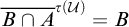 $\overline {B\cap A}^{\tau (\mathcal {U})}=B$
.
$\overline {B\cap A}^{\tau (\mathcal {U})}=B$
.
Corollary 3. It is relatively consistent with $\mathsf {ZFC}$
that
$\mathsf {ZFC}$
that $\omega _1=\mathfrak {r}_{\mathbb {Q}}<\mathfrak {u}_{\mathbb {Q}}=\omega _2$
.
$\omega _1=\mathfrak {r}_{\mathbb {Q}}<\mathfrak {u}_{\mathbb {Q}}=\omega _2$
.
6 On the existence of rational p- and q-filters
Let us recall that given $f,g\in \omega ^\omega $
, the relation
$f,g\in \omega ^\omega $
, the relation $f\leq ^*g$
holds if there are only finitely many natural numbers
$f\leq ^*g$
holds if there are only finitely many natural numbers $k\in \omega $
such that
$k\in \omega $
such that $g(k)< f(k)$
. A family
$g(k)< f(k)$
. A family $\mathcal {D}\subseteq \omega ^\omega $
is
$\mathcal {D}\subseteq \omega ^\omega $
is $\leq ^*$
-dominating family if for any
$\leq ^*$
-dominating family if for any $f\in \omega ^\omega $
there is
$f\in \omega ^\omega $
there is $g\in \mathcal {D}$
such that
$g\in \mathcal {D}$
such that $f\leq ^*g$
and the dominating number, denoted by
$f\leq ^*g$
and the dominating number, denoted by $\mathfrak {d}$
, is defined as the minimal cardinality of a dominating family.
$\mathfrak {d}$
, is defined as the minimal cardinality of a dominating family.
Theorem 6. $\mathfrak {d}=\mathfrak {c}$
implies the generic existence of rational p-filters.
$\mathfrak {d}=\mathfrak {c}$
implies the generic existence of rational p-filters.
Proof. The argument is essentially the same as for the generic existence of p-points. For a given filter $\mathcal {F}\subseteq Dense(\mathbb {Q})$
and
$\mathcal {F}\subseteq Dense(\mathbb {Q})$
and $X\in Dense(\mathbb {Q})$
, let us say that X is
$X\in Dense(\mathbb {Q})$
, let us say that X is $(\mathcal {F},\mathsf {nwd})$
-positive if for all
$(\mathcal {F},\mathsf {nwd})$
-positive if for all $A\in \mathcal {F}$
,
$A\in \mathcal {F}$
, $A\cap X\in Dense(\mathbb {Q})$
. Let
$A\cap X\in Dense(\mathbb {Q})$
. Let $\mathcal {F}\subseteq Dense(\mathbb {Q})$
be a filter of character less than
$\mathcal {F}\subseteq Dense(\mathbb {Q})$
be a filter of character less than $\mathfrak {c}$
and let
$\mathfrak {c}$
and let $\mathcal {H}\subseteq \mathcal {F}$
a base for
$\mathcal {H}\subseteq \mathcal {F}$
a base for $\mathcal {F}$
of minimal cardinality, fix
$\mathcal {F}$
of minimal cardinality, fix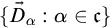 $\{\vec {D}_\alpha :\alpha \in \mathfrak {c}\}$
an enumeration of all
$\{\vec {D}_\alpha :\alpha \in \mathfrak {c}\}$
an enumeration of all $\subseteq $
-decreasing sequences of dense subsets of the rationals. Construct a
$\subseteq $
-decreasing sequences of dense subsets of the rationals. Construct a $\subseteq $
-increasing sequence of families
$\subseteq $
-increasing sequence of families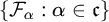 $\{\mathcal {F}_\alpha :\alpha \in \mathfrak {c}\}$
such that:
$\{\mathcal {F}_\alpha :\alpha \in \mathfrak {c}\}$
such that:
-
(1)
$\mathcal {F}_0=\mathcal {H}$
. -
(2) For each
$\alpha \in \mathfrak {c}$
, if each set in the sequence
$\vec {D}_\alpha $
is
$(\mathcal {F}_\alpha ,\mathsf {nwd})$
-positive, then there is
$X_\alpha \in \mathcal {F}_{\alpha +1}$
which is almost contained in each term of the sequence
$\vec {D}_\alpha $
. -
(3) For all
$\alpha \in \mathfrak {c}$
,
$\vert \mathcal {F}_\alpha \vert <\mathfrak {c}$
.


Assume $\mathcal {F}_\alpha $
has been constructed and each term of
$\mathcal {F}_\alpha $
has been constructed and each term of $\vec {D}_\alpha =\langle D_n^\alpha :n\in \omega \rangle $
is
$\vec {D}_\alpha =\langle D_n^\alpha :n\in \omega \rangle $
is $(\mathcal {F}_\alpha ,\mathsf {nwd})$
-positive (in other case define
$(\mathcal {F}_\alpha ,\mathsf {nwd})$
-positive (in other case define $\mathcal {F}_{\alpha +1}=\mathcal {F}_\alpha $
). Let
$\mathcal {F}_{\alpha +1}=\mathcal {F}_\alpha $
). Let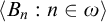 $\langle B_n:n\in \omega \rangle $
be an enumeration of a base for the rationals. For each
$\langle B_n:n\in \omega \rangle $
be an enumeration of a base for the rationals. For each $X\in \mathcal {F}_\alpha $
, define the function
$X\in \mathcal {F}_\alpha $
, define the function
 $$ \begin{align*}\varphi_X(n)=\min\{k\in\omega:(\forall i\leq n)(D^\alpha_n\cap B_i\cap X\cap k\neq\emptyset)\}.\end{align*} $$
The family $\{\varphi _X:X\in \mathcal {F}_\alpha \}$
has cardinality less than
$\{\varphi _X:X\in \mathcal {F}_\alpha \}$
has cardinality less than $\mathfrak {d}$
, so there is a function
$\mathfrak {d}$
, so there is a function $f_\alpha $
which is not
$f_\alpha $
which is not $\leq ^*$
-dominated by each one of the functions
$\leq ^*$
-dominated by each one of the functions $\varphi _X$
. Let
$\varphi _X$
. Let $Z_\alpha =\bigcup _{n\in \omega } D_n^\alpha \cap f(n)$
. It is easy to see that
$Z_\alpha =\bigcup _{n\in \omega } D_n^\alpha \cap f(n)$
. It is easy to see that $Z_\alpha $
is a pseudointersection of
$Z_\alpha $
is a pseudointersection of $\vec {D}_\alpha $
and
$\vec {D}_\alpha $
and $(\mathcal {F}_\alpha ,\mathsf {nwd})$
-positive, so we can define
$(\mathcal {F}_\alpha ,\mathsf {nwd})$
-positive, so we can define $\mathcal {F}_{\alpha +1}=\mathcal {F}_\alpha \cup \{Z_\alpha \}$
. At limit steps just take the union of all the previously constructed families. Now let
$\mathcal {F}_{\alpha +1}=\mathcal {F}_\alpha \cup \{Z_\alpha \}$
. At limit steps just take the union of all the previously constructed families. Now let $\mathcal {G}$
be the filter generated by
$\mathcal {G}$
be the filter generated by $\bigcup _{\alpha \in \mathfrak {c}}\mathcal {F}_\alpha $
. Clause (2) makes sure
$\bigcup _{\alpha \in \mathfrak {c}}\mathcal {F}_\alpha $
. Clause (2) makes sure $\mathcal {G}$
is a p-filter. To see that
$\mathcal {G}$
is a p-filter. To see that $\mathcal {G}$
is maximal, pick
$\mathcal {G}$
is maximal, pick $D\in Dense(\mathbb {Q})$
, and let
$D\in Dense(\mathbb {Q})$
, and let $\alpha $
be such that
$\alpha $
be such that $\vec {D}_\alpha $
is the constant sequence with values equal to D, then either, D is not
$\vec {D}_\alpha $
is the constant sequence with values equal to D, then either, D is not $(\mathcal {F}_\alpha ,\mathsf {nwd})$
-positive, or
$(\mathcal {F}_\alpha ,\mathsf {nwd})$
-positive, or $Z_\alpha \subseteq ^* D$
.
$Z_\alpha \subseteq ^* D$
.
For the next theorem we introduce the following strengthening of a rational dense reaping family.
Definition 15. A family $\mathcal {R}\subseteq Dense(\mathbb {Q})$
is
$\mathcal {R}\subseteq Dense(\mathbb {Q})$
is $Dense(\mathbb {Q})^+$
-reaping if for any
$Dense(\mathbb {Q})^+$
-reaping if for any $X\in Dense(\mathbb {Q})$
, there is
$X\in Dense(\mathbb {Q})$
, there is $Y\in \mathcal {R}$
such that either:
$Y\in \mathcal {R}$
such that either:
-
(1)
$Y\subseteq ^*X$
, or -
(2)
$X\cap Y\notin Dense(\mathbb {Q})$
.


We say that a set $Y Dense(\mathbb {Q})^+$
-reaps a set X if (1) or (2) above holds. The cardinal invariant
$Y Dense(\mathbb {Q})^+$
-reaps a set X if (1) or (2) above holds. The cardinal invariant $\mathfrak {r}_{\mathbb {Q}}^+$
is defined as the minimal cardinality of a
$\mathfrak {r}_{\mathbb {Q}}^+$
is defined as the minimal cardinality of a $Dense(\mathbb {Q})^+$
-reaping family.
$Dense(\mathbb {Q})^+$
-reaping family.
Obviously, $\mathfrak {r}_{\mathbb {Q}}\leq \mathfrak {r}_{\mathbb {Q}}^+$
holds. Note that there exist
$\mathfrak {r}_{\mathbb {Q}}\leq \mathfrak {r}_{\mathbb {Q}}^+$
holds. Note that there exist $Dense(\mathbb {Q})^+$
-reaping families which are not trivial: let
$Dense(\mathbb {Q})^+$
-reaping families which are not trivial: let $\mathcal {F}\subseteq Dense(\mathbb {Q})$
be a maximal filter, that is, for a dense set
$\mathcal {F}\subseteq Dense(\mathbb {Q})$
be a maximal filter, that is, for a dense set $X\subseteq \mathbb {Q}$
,
$X\subseteq \mathbb {Q}$
, $X\in \mathcal {F}$
if and only if for all
$X\in \mathcal {F}$
if and only if for all $Y\in \mathcal {F}$
,
$Y\in \mathcal {F}$
, $X\cap Y\in Dense(\mathbb {Q})$
. Clearly, any such filter is a
$X\cap Y\in Dense(\mathbb {Q})$
. Clearly, any such filter is a $Dense(\mathbb {Q})^+$
-reaping family (or any base for such a filter). Note that it follows from the proof of Theorem 4 that the inequality
$Dense(\mathbb {Q})^+$
-reaping family (or any base for such a filter). Note that it follows from the proof of Theorem 4 that the inequality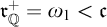 $\mathfrak {r}_{\mathbb {Q}}^+=\omega _1<\mathfrak {c}$
is consistent. We don’t know if
$\mathfrak {r}_{\mathbb {Q}}^+=\omega _1<\mathfrak {c}$
is consistent. We don’t know if $\mathfrak {r}_{\mathbb {Q}}=\mathfrak {r}_{\mathbb {Q}}^+$
holds.
$\mathfrak {r}_{\mathbb {Q}}=\mathfrak {r}_{\mathbb {Q}}^+$
holds.
Let us recall that a function $f:2^{<\omega _1}\to X$
, where X is a Polish space, is Borel, if for all
$f:2^{<\omega _1}\to X$
, where X is a Polish space, is Borel, if for all $\alpha \in \omega _1$
, the restriction
$\alpha \in \omega _1$
, the restriction $f\upharpoonright 2^\alpha $
is a Borel function. The use of parametrized diamond principles has shown to be useful when establishing the existence of some specific mathematical objects, such as p-points, Souslin trees, independent families, ideal independent families, etc. In [Reference Balcar, Hernández and Hrušák1], it was proved that
$f\upharpoonright 2^\alpha $
is a Borel function. The use of parametrized diamond principles has shown to be useful when establishing the existence of some specific mathematical objects, such as p-points, Souslin trees, independent families, ideal independent families, etc. In [Reference Balcar, Hernández and Hrušák1], it was proved that $\diamondsuit (\mathfrak {r}_{\mathbb {Q}})$
implies the existence of a maximal independent family. Here we prove that the diamond principle
$\diamondsuit (\mathfrak {r}_{\mathbb {Q}})$
implies the existence of a maximal independent family. Here we prove that the diamond principle $\diamondsuit (\mathfrak {r}_{\mathbb {Q}}^+)$
implies the existence of selective rational filters. Let us briefly recall the diamond principle
$\diamondsuit (\mathfrak {r}_{\mathbb {Q}}^+)$
implies the existence of selective rational filters. Let us briefly recall the diamond principle $\diamondsuit (\mathfrak {r}_{\mathbb {Q}}^+)$
:
$\diamondsuit (\mathfrak {r}_{\mathbb {Q}}^+)$
:
-
♢(𝔯 ℚ +): For any Borel function
$F:2^{<\omega _1}\to Dense(\mathbb {Q})$
, there is a function
$g:\omega _1\to Dense(\mathbb {Q})$
such that for any
$f\in 2^{\omega _1}$
, the set is stationary.
$$ \begin{align*}\{\alpha\in\omega_1: g(\alpha)\ Dense(\mathbb{Q})^+\text{-reaps }F(f\upharpoonright\alpha)\}\end{align*} $$




Theorem 7. $\diamondsuit (\mathfrak {r}_{\mathbb {Q}}^+)$
implies the existence of a selective rational filter
$\diamondsuit (\mathfrak {r}_{\mathbb {Q}}^+)$
implies the existence of a selective rational filter $\omega _1$
-generated.
$\omega _1$
-generated.
Proof. It is not hard to see that the functions described below can be chosen to be Borel, so we omit the details of this. First let us recall that if $\diamondsuit (\mathfrak {r}_{\mathbb {Q}}^+)$
holds, then
$\diamondsuit (\mathfrak {r}_{\mathbb {Q}}^+)$
holds, then $\mathfrak {r}_{\mathbb {Q}}^+=\omega _1$
, and since
$\mathfrak {r}_{\mathbb {Q}}^+=\omega _1$
, and since $\mathfrak {d}\leq \mathfrak {r}_{\mathbb {Q}}^+$
holds, we get
$\mathfrak {d}\leq \mathfrak {r}_{\mathbb {Q}}^+$
holds, we get $\mathfrak {d}=\omega _1$
as well. Let
$\mathfrak {d}=\omega _1$
as well. Let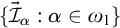 $\{\vec {\mathcal {I}}_\alpha :\alpha \in \omega _1\}$
be a dominating family of interval partitions, that is, for any interval partition
$\{\vec {\mathcal {I}}_\alpha :\alpha \in \omega _1\}$
be a dominating family of interval partitions, that is, for any interval partition $\vec {\mathcal {J}}$
, there is
$\vec {\mathcal {J}}$
, there is $\alpha \in \omega _1$
such that any
$\alpha \in \omega _1$
such that any $I\in \vec {\mathcal {I}}_\alpha $
contains one element from
$I\in \vec {\mathcal {I}}_\alpha $
contains one element from $\vec {\mathcal {J}}$
. For each limit ordinal
$\vec {\mathcal {J}}$
. For each limit ordinal $\alpha \in \omega _1$
, fix a bijection
$\alpha \in \omega _1$
, fix a bijection $e_\alpha :\omega \to \alpha $
. Now, by a suitable coding, we can assume that the domain of the function F is
$e_\alpha :\omega \to \alpha $
. Now, by a suitable coding, we can assume that the domain of the function F is $dom(F)=\bigcup _{\alpha \in \lim (\omega _1)}[\omega ]^{\omega }\times ([\omega ]^\omega )^\alpha $
. Given a sequence
$dom(F)=\bigcup _{\alpha \in \lim (\omega _1)}[\omega ]^{\omega }\times ([\omega ]^\omega )^\alpha $
. Given a sequence $\vec {X}=\langle X_\beta :\beta \in \alpha \rangle $
, let us say that
$\vec {X}=\langle X_\beta :\beta \in \alpha \rangle $
, let us say that $\vec {X}$
is
$\vec {X}$
is $\mathbb {Q}$
-centered if the intersection of finitely many terms of the sequence is a dense set. Given a
$\mathbb {Q}$
-centered if the intersection of finitely many terms of the sequence is a dense set. Given a $\mathbb {Q}$
-centered sequence
$\mathbb {Q}$
-centered sequence $\vec {X}=\langle X_\beta :\beta <\alpha \rangle $
, let
$\vec {X}=\langle X_\beta :\beta <\alpha \rangle $
, let $\varphi _\alpha (\langle X_\beta :\beta <\alpha \rangle )$
be the set
$\varphi _\alpha (\langle X_\beta :\beta <\alpha \rangle )$
be the set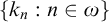 $\{k_n:n\in \omega \}$
defined by
$\{k_n:n\in \omega \}$
defined by
 $$ \begin{align*} k_n=\min\left(\bigcap_{j\leq n}X_{e_\alpha(j)}\cap B_n\right). \end{align*} $$
Note that the set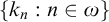 $\{k_n:n\in \omega \}$
is a dense set and a pseudointersection of
$\{k_n:n\in \omega \}$
is a dense set and a pseudointersection of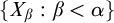 $\{X_\beta :\beta <\alpha \}$
. Now define the function F as follows:
$\{X_\beta :\beta <\alpha \}$
. Now define the function F as follows:
-
a) If
$(C,\langle X_\beta :\beta <\alpha \rangle )$
is such that
$\langle X_\beta :\beta <\alpha \rangle $
is not a
$\mathbb {Q}$
-centered sequence, let
$F(C,\langle X_\beta :\beta <\alpha \rangle )=\omega $
. -
b) If
$\langle X_\beta :\beta <\alpha \rangle $
is a
$\mathbb {Q}$
-centered sequence, but
$C\cap \varphi _\alpha (\langle X_\beta :\beta <\alpha \rangle )$
is not a dense set, define
$F(C,\langle X_\beta :\beta <\alpha \rangle )=\omega $
. -
c) In the remaining case, let
$\psi _{\varphi _\alpha (\langle X_\beta :\beta \in \alpha \rangle )}:\omega \to \varphi _\alpha (\langle X_\beta :\beta <\alpha \rangle )$
be a homeomorphism between
$\omega $
and
$\varphi _\alpha (\langle X_\beta :\beta <\alpha \rangle )$
, which is constructed in a recursive way. Then define
$F(C,\langle X_\beta :\beta <\alpha \rangle )=\psi _\alpha ^{-1}[C\cap \varphi _\alpha (\langle X_\beta :\beta <\alpha \rangle )]$
.

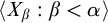


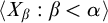







Let now g be a guessing function for F. Define an increasing sequence of families $\{\mathcal {F}_\alpha :\alpha \in \lim (\omega _1)\}$
as follows:
$\{\mathcal {F}_\alpha :\alpha \in \lim (\omega _1)\}$
as follows:
-
(1) Start with
$\mathcal {F}_\omega =\{\omega \setminus k:k\in \omega \}$
. -
(2) Suppose
$\mathcal {F}_\alpha =\{D_\beta :\beta <\alpha \}$
has been defined. Let
$D_\alpha \subseteq \psi _{\varphi _\alpha (\langle D_\beta :\beta \in \alpha \rangle )}[g(\alpha )]$
be such that it is a dense set and a partial selector of
$\vec {\mathcal {I}}_\alpha $
, and put
$\mathcal {F}_{\alpha +1}=\mathcal {F}_\alpha \cup \{D_\alpha \}$
.





It is clear from the construction that $\mathcal {F}_\alpha $
is a family of dense sets generating a filter. Also note that
$\mathcal {F}_\alpha $
is a family of dense sets generating a filter. Also note that $\mathcal {H}=\{D_\alpha :\alpha \in \omega _1\}$
is a
$\mathcal {H}=\{D_\alpha :\alpha \in \omega _1\}$
is a $\subseteq ^*$
-decreasing sequence of dense subsets, so it is enough to prove that the filter generated by
$\subseteq ^*$
-decreasing sequence of dense subsets, so it is enough to prove that the filter generated by $\mathcal {H}$
is maximal and a q-filter. Let
$\mathcal {H}$
is maximal and a q-filter. Let $X\in Dense(\mathbb {Q})$
be arbitrary and consider
$X\in Dense(\mathbb {Q})$
be arbitrary and consider $(X,\langle D_\alpha :\alpha \in \omega _1\rangle )$
. By the guessing property of g, there is
$(X,\langle D_\alpha :\alpha \in \omega _1\rangle )$
. By the guessing property of g, there is $\alpha \in \omega _1$
such that
$\alpha \in \omega _1$
such that $g(\alpha ) Dense(\mathbb {Q})$
-reaps
$g(\alpha ) Dense(\mathbb {Q})$
-reaps $F(X,\langle D_\beta :\beta <\alpha \rangle )$
, that is,
$F(X,\langle D_\beta :\beta <\alpha \rangle )$
, that is, $g(\alpha ) Dense(\mathbb {Q})^+$
-reaps the set
$g(\alpha ) Dense(\mathbb {Q})^+$
-reaps the set $\psi _{\varphi _\alpha (\langle D_\beta :\beta <\alpha \rangle )}^{-1}[X\cap \varphi _\alpha (\langle D_{\beta }:\beta <\alpha \rangle )]$
, so we have that, either
$\psi _{\varphi _\alpha (\langle D_\beta :\beta <\alpha \rangle )}^{-1}[X\cap \varphi _\alpha (\langle D_{\beta }:\beta <\alpha \rangle )]$
, so we have that, either $D_\alpha \subseteq ^*X$
or
$D_\alpha \subseteq ^*X$
or $D_\alpha \cap X$
is not dense. This shows that the filter generated by
$D_\alpha \cap X$
is not dense. This shows that the filter generated by $\mathcal {H}$
maximal. Since it is generated by a
$\mathcal {H}$
maximal. Since it is generated by a $\subseteq ^*$
-decreasing sequence, it is also a p-filter. To see that this filter is a q-filter, note that by clause (2) above,
$\subseteq ^*$
-decreasing sequence, it is also a p-filter. To see that this filter is a q-filter, note that by clause (2) above, $D_\alpha $
is a partial selector of
$D_\alpha $
is a partial selector of $\vec {\mathcal {I}}_\alpha $
; this clearly implies that the filter generated by
$\vec {\mathcal {I}}_\alpha $
; this clearly implies that the filter generated by $\mathcal {H}$
has partial selector for all interval partitions.
$\mathcal {H}$
has partial selector for all interval partitions.
Now we are aiming to prove that consistently there is no rational p-filter. It may be expected that the proof should be quite similar to the one for p-points. However, after trying to adapt the proof one finds some difficulties which arise from the fact that we don’t have the property “ $x\in \mathcal {F}$
or
$x\in \mathcal {F}$
or $\omega \setminus x\in \mathcal {F}$
.” Typically, if
$\omega \setminus x\in \mathcal {F}$
.” Typically, if $\mathcal{F}$
is a non-meager
$\mathcal{F}$
is a non-meager $p$
-filter and
$p$
-filter and $\mathbb{P}$
is a partial order, forcing that
$\mathbb{P}$
is a partial order, forcing that $\mathcal{F}$
can not be extended to a
$\mathcal{F}$
can not be extended to a $p$
-point, the partial order
$p$
-point, the partial order $\mathbb{P}$
adds a sequence
$\mathbb{P}$
adds a sequence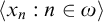 $\langle x_n:n\in\omega\rangle$
of
$\langle x_n:n\in\omega\rangle$
of $\mathcal{F}$
-positive sets, and any ultrafilter extending
$\mathcal{F}$
-positive sets, and any ultrafilter extending $\mathcal{F}$
in the forcing extension, chooses between
$\mathcal{F}$
in the forcing extension, chooses between $x_n$
and
$x_n$
and $\omega\setminus x_n$
, for each
$\omega\setminus x_n$
, for each $n\in\omega$
, and any pseudointersection of such selection is an element of the ideal
$n\in\omega$
, and any pseudointersection of such selection is an element of the ideal $\mathcal{F}^*$
. In the present context we can have actually that if
$\mathcal{F}^*$
. In the present context we can have actually that if $\mathcal {G}$
is a rational filter extending
$\mathcal {G}$
is a rational filter extending $\mathcal {F}$
, then
$\mathcal {F}$
, then $\{\dot {x}_n,\omega \setminus \dot {x}_n:n\in \omega \}\cap \mathcal {G}=\emptyset $
, that is, neither
$\{\dot {x}_n,\omega \setminus \dot {x}_n:n\in \omega \}\cap \mathcal {G}=\emptyset $
, that is, neither $\dot {x}_n$
and
$\dot {x}_n$
and $\omega \setminus \dot {x}_n$
are in
$\omega \setminus \dot {x}_n$
are in $\mathcal {G}$
, for all
$\mathcal {G}$
, for all $n\in \omega $
. Indeed, assume
$n\in \omega $
. Indeed, assume $\{B_n:n\in \omega \}$
is a maximal antichain of basic open sets, and let us take, for example, the set
$\{B_n:n\in \omega \}$
is a maximal antichain of basic open sets, and let us take, for example, the set
 $$ \begin{align*}X=\bigcup_{n\in\omega}\dot{x}_n\cap\dot{x}_{n-1}^{0}\cap\dots\cap\dot{x}_0^0\cap B_n,\end{align*} $$
where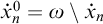 $\dot {x}_n^0=\omega \setminus \dot {x}_n$
, and
$\dot {x}_n^0=\omega \setminus \dot {x}_n$
, and $\dot {x}_n$
are the generic sets added by any of the typical forcings used to destroy non-meager p-filters. If
$\dot {x}_n$
are the generic sets added by any of the typical forcings used to destroy non-meager p-filters. If $\mathcal {G}$
is a filter extending
$\mathcal {G}$
is a filter extending $\mathcal {F}\cup \{X\}$
, then
$\mathcal {F}\cup \{X\}$
, then $\mathcal {G}$
is one of the stated filters. After thinking a little bit more, one finds that infinite sequences of sets similar to X above can make things more complicated. Thus, this path, although not completely proved to be unprofitable, seems hard to take over.
$\mathcal {G}$
is one of the stated filters. After thinking a little bit more, one finds that infinite sequences of sets similar to X above can make things more complicated. Thus, this path, although not completely proved to be unprofitable, seems hard to take over.
The answer to the problem comes from a theorem proved in [Reference Frankiewicz, Shelah and Zbierski5]: it is consistent that there is no saturated p-filter. Recall from Proposition 4 that from a rational filter $\mathcal {F}$
we constructed an irresolvable space
$\mathcal {F}$
we constructed an irresolvable space $(\omega ,\tau (\mathcal {F}))$
. Now, Lemma 7 implies that there is a
$(\omega ,\tau (\mathcal {F}))$
. Now, Lemma 7 implies that there is a $\tau (\mathcal {F})$
-open set V such that
$\tau (\mathcal {F})$
-open set V such that $(V,\tau (\mathcal {F})\upharpoonright V)$
is strongly irresolvable. We claim that
$(V,\tau (\mathcal {F})\upharpoonright V)$
is strongly irresolvable. We claim that $\mathcal {F}\upharpoonright V=\{X\cap V:X\in \mathcal {F}\}$
is a saturated p-filter.
$\mathcal {F}\upharpoonright V=\{X\cap V:X\in \mathcal {F}\}$
is a saturated p-filter.
Proposition 5. If $\mathcal {F}$
is a rational p-filter, then there is a basic open set
$\mathcal {F}$
is a rational p-filter, then there is a basic open set $B\in \mathcal {B}$
and some
$B\in \mathcal {B}$
and some $X\in \mathcal {F}$
such that
$X\in \mathcal {F}$
such that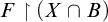 $F\upharpoonright (X\cap B)$
is a saturated p-filter.
$F\upharpoonright (X\cap B)$
is a saturated p-filter.
Proof. We have seen in the paragraph preceding this proposition the existence of a $\tau (\mathcal {F})$
-open set V such that
$\tau (\mathcal {F})$
-open set V such that $\mathcal {F}\upharpoonright V$
is strongly irresolvable. A base for the topology
$\mathcal {F}\upharpoonright V$
is strongly irresolvable. A base for the topology $\tau (\mathcal {F})$
was defined as
$\tau (\mathcal {F})$
was defined as $\mathcal {B}_{\mathcal {F}}=\{B\cap X:B\in \mathcal {B}\land X\in \mathcal {F}\}$
, so we can find
$\mathcal {B}_{\mathcal {F}}=\{B\cap X:B\in \mathcal {B}\land X\in \mathcal {F}\}$
, so we can find $B\in \mathcal {B}$
and
$B\in \mathcal {B}$
and $X\in \mathcal {F}$
such that
$X\in \mathcal {F}$
such that $X\cap B\subseteq V$
. It is clear that
$X\cap B\subseteq V$
. It is clear that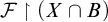 $\mathcal {F}\upharpoonright (X\cap B)$
is a p-filter. To prove that it is also a saturated filter, by Lemma 8, it is enough to prove that
$\mathcal {F}\upharpoonright (X\cap B)$
is a p-filter. To prove that it is also a saturated filter, by Lemma 8, it is enough to prove that $\mathsf {nwd}(\tau (\mathcal {F}))\upharpoonright (X\cap B)^*\subseteq \mathcal {F}\upharpoonright (X\cap B)$
. Note that a base for the topology
$\mathsf {nwd}(\tau (\mathcal {F}))\upharpoonright (X\cap B)^*\subseteq \mathcal {F}\upharpoonright (X\cap B)$
. Note that a base for the topology $\tau (\mathcal {F})\upharpoonright (X\cap B)$
is given by
$\tau (\mathcal {F})\upharpoonright (X\cap B)$
is given by $\mathcal {B}_{\mathcal {F}}'=\{W\in \mathcal {B}_{\mathcal {F}}:W\subseteq X\cap B\}$
. For simplicity, let us write
$\mathcal {B}_{\mathcal {F}}'=\{W\in \mathcal {B}_{\mathcal {F}}:W\subseteq X\cap B\}$
. For simplicity, let us write $\tilde {\tau }$
instead of
$\tilde {\tau }$
instead of $\tau (\mathcal {F})\upharpoonright (X\cap B)$
. Note that since
$\tau (\mathcal {F})\upharpoonright (X\cap B)$
. Note that since $X\cap B$
is
$X\cap B$
is $\tau (\mathcal {F})$
-open, we have that
$\tau (\mathcal {F})$
-open, we have that $N\subseteq X\cap B$
is
$N\subseteq X\cap B$
is $\tilde {\tau }$
-nowhere dense if and only if it is
$\tilde {\tau }$
-nowhere dense if and only if it is $\tau (\mathcal {F})$
-nowhere dense, so
$\tau (\mathcal {F})$
-nowhere dense, so $\mathsf {nwd}(\tilde {\tau })=\mathsf {nwd}(\tau (\mathcal {F}))\upharpoonright (X\cap B)$
.
$\mathsf {nwd}(\tilde {\tau })=\mathsf {nwd}(\tau (\mathcal {F}))\upharpoonright (X\cap B)$
.
Pick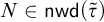 $N\in \mathsf {nwd}(\tilde {\tau })$
, we want to show that
$N\in \mathsf {nwd}(\tilde {\tau })$
, we want to show that $(X\cap B)\setminus N\in \mathcal {F}\upharpoonright (X\cap B)$
. Since N is nowhere dense, any open set
$(X\cap B)\setminus N\in \mathcal {F}\upharpoonright (X\cap B)$
. Since N is nowhere dense, any open set $W\in \tau (\mathcal {F})\upharpoonright (X\cap V)$
can be shrunk to a basic open set having empty intersection with N. Thus, we can find a maximal antichain of basic open sets
$W\in \tau (\mathcal {F})\upharpoonright (X\cap V)$
can be shrunk to a basic open set having empty intersection with N. Thus, we can find a maximal antichain of basic open sets $\{B_n\cap X_n:n\in \omega \}\subseteq \mathcal {B}_{\mathcal {F}}'$
, each one of whose elements has empty intersection with N. Note that by the definition of the basis
$\{B_n\cap X_n:n\in \omega \}\subseteq \mathcal {B}_{\mathcal {F}}'$
, each one of whose elements has empty intersection with N. Note that by the definition of the basis $\mathcal {B}_{\mathcal {F}}$
and
$\mathcal {B}_{\mathcal {F}}$
and $\mathcal {B}_{\mathcal {F}}'$
, we should have
$\mathcal {B}_{\mathcal {F}}'$
, we should have $B_n\cap B_m=\emptyset $
whenever
$B_n\cap B_m=\emptyset $
whenever $n\neq m$
. Note also that
$n\neq m$
. Note also that $\bigcup _{n\in \omega }B_n$
is an open dense subset of B (in the usual topology of the rationals). Since
$\bigcup _{n\in \omega }B_n$
is an open dense subset of B (in the usual topology of the rationals). Since $\mathcal {F}$
is a p-filter, there is
$\mathcal {F}$
is a p-filter, there is $X_\omega $
which is almost contained in each one of the sets
$X_\omega $
which is almost contained in each one of the sets $X_n$
. Then
$X_n$
. Then $F_n=X_\omega \cap B_n\setminus X_n\cap B_n$
is a finite subset of
$F_n=X_\omega \cap B_n\setminus X_n\cap B_n$
is a finite subset of $B_n$
; this implies that
$B_n$
; this implies that $\bigcup _{n\in \omega }F_n$
is a discrete set in
$\bigcup _{n\in \omega }F_n$
is a discrete set in $\bigcup _{n\in \omega }B_n$
, so
$\bigcup _{n\in \omega }B_n$
, so $Z=X_\omega \setminus \bigcup _{n\in \omega }F_n\in \mathcal {F}$
. Then we have that
$Z=X_\omega \setminus \bigcup _{n\in \omega }F_n\in \mathcal {F}$
. Then we have that $Z\cap B_n$
is a basic open set and is contained in
$Z\cap B_n$
is a basic open set and is contained in $X_n\cap B_n$
, so it has empty intersection with N. On the other hand,
$X_n\cap B_n$
, so it has empty intersection with N. On the other hand, $W=\bigcup _{n\in \omega }Z\cap B_n$
is an open
$W=\bigcup _{n\in \omega }Z\cap B_n$
is an open $\tilde {\tau }$
-dense set, and it is an element of the filter
$\tilde {\tau }$
-dense set, and it is an element of the filter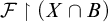 $\mathcal {F}\upharpoonright (X\cap B)$
: note that
$\mathcal {F}\upharpoonright (X\cap B)$
: note that $U=(\omega \setminus \overline {B})\cup \bigcup _{n\in \omega }B_n$
is an open dense set of
$U=(\omega \setminus \overline {B})\cup \bigcup _{n\in \omega }B_n$
is an open dense set of $\mathbb {Q}$
, so we have
$\mathbb {Q}$
, so we have $U\in \mathcal {F}$
, which implies
$U\in \mathcal {F}$
, which implies $Z\cap U\in \mathcal {F}$
, and it is easy to see that
$Z\cap U\in \mathcal {F}$
, and it is easy to see that $B\cap Z\cap U=W$
. Thus, we conclude that
$B\cap Z\cap U=W$
. Thus, we conclude that $W\in \mathcal {F}\upharpoonright (X\cap B)$
, which in turn implies
$W\in \mathcal {F}\upharpoonright (X\cap B)$
, which in turn implies $\omega \setminus N\in \mathcal {F}\upharpoonright (X\cap B)$
(because W and N are disjoint). We have proved that
$\omega \setminus N\in \mathcal {F}\upharpoonright (X\cap B)$
(because W and N are disjoint). We have proved that $\mathsf {nwd}(\tilde {\tau })^*\subseteq \mathcal {F}\upharpoonright (X\cap B)$
.
$\mathsf {nwd}(\tilde {\tau })^*\subseteq \mathcal {F}\upharpoonright (X\cap B)$
.
Corollary 4. The existence of a rational p-filter implies the existence of a saturated p-filter.
Corollary 5. It is relatively consistent that there are no rational p-filters.
Proof. In the model constructed in [Reference Frankiewicz, Shelah and Zbierski5] there are no saturated p-filters, so the previous corollary implies that in such model there is no rational p-filter as well.
Finally, note that since in the Laver model there is no q-point, there are also neither rational q-filters: if it were the case that there is a rational q-filter, just extend it to an ultrafilter on $\mathbb {Q}$
, which results in a q-point.
$\mathbb {Q}$
, which results in a q-point.
Theorem 8. In the Laver model there are no rational q-filters.
Acknowledgments
The author is thankful to Osvaldo Guzmán for listening earlier versions of these results, as well as to the referee for the careful reading and suggestions helping to improve the reading of the article.
Funding
The author thanks support from the Universidad Nacional Autónoma de México Postdoctoral Program (POSDOC) and UNAM-PAPIIT IN118425 grant. This research was completed during a postdoctoral stay of the author at the Department of Mathematics of the Faculty of Sciences, UNAM.


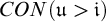

 Open access

