


1.1 Scene-Setting
Since its adoption in 2024, EU Regulation 2024/1083 has been thrust into a central position in European media regulation. The short title of the Regulation – European Media Freedom Act (EMFA) – is bold and ambitious; it is full of promise and potential. It seems to suggest the aim or possibility of creating a regulatory panacea for all sorts of threats to media freedom in Europe. But as always, the devil is in the detail, and in this case the devil is also in the more prosaic, longer title of the Regulation: ‘establishing a common framework for media services in the internal market and amending Directive 2010/13/EU [the Audiovisual Media Services Directive]’.Footnote 1 A reference to media freedom is thus absent from the longer, official version of the title. Instead, the emphasis is expressly on realizing the (objectives of the) internal market. The term ‘media freedom’ is also peripheral in the text of the Regulation proper: it appears only eight timesFootnote 2 (seven preambular referencesFootnote 3 and one solitary mention in the substantive part of the RegulationFootnote 4).
Is this simply a case of inadvertent misalignment between a title and an accompanying text, without any real consequences? Or is there something more at issue here? Could it be, say, a misfired attempt by the European Union (EU) legislator to infuse a new flagship regulation with a clarity and singularity of purpose that the text doesn’t actually have?
With such scant and mainly passing preambular references to media freedom, the question quickly arises whether the EMFA is substantively up to the primary task foisted upon it by its short title. Will it be able to hold the centre and become a centrifugal regulatory force for securing media freedom in Europe?
These questions beg further questions. Who or what are the media – the would-be beneficiaries of this strived-for freedom? With the blistering pace of technological change, the contemporary information and communications space is very much a multimedia or multiactor environment, or ecosystem. The media are in a shape-shifting phase, harnessing technological opportunities while working their way around a gamut of challenges. They are surrounded by a vast range of other actors, from individuals and small grassroots organizations to multinational tech companies with billions of worldwide users. This makes for a very crowded, noisy and converged online information and communications space. It is very difficult to delineate ‘media’ with the kind of precision needed for regulatory purposes.
And what does the EU mean by ‘media freedom’: what does the envisaged version of freedom entail? Is it a negative freedom – freedom of the media from interference and obstruction? Or is it a positive freedom – freedom of the media to carry out their activities and pursue and realize their own goals?
In this chapter, I set out to address these questions. The central argument that I will craft is quite straightforward. Put provocatively: the EMFA, despite its neon-light billing, is not the main act for the regulation of media (freedom) in Europe. It is one important act among other important acts, which together regulate the media and other actors in a multimedia ecosystem.
I will trace how contemporary media pass through different regulatory zones and examine the different rules that govern each zone and how the zones relate to each other. I will also situate these zones in a broader matrix of human or fundamental rights. But first of all, some conceptual scoping is in order, to clarify our understanding of changing notions of the media; media freedom; and media regulation. I will briefly chart the recent and ongoing evolution of the media, from analogue roots to generative AI futures, and note the fundamental rights and regulatory ramifications of technology-driven innovations. I will draw an analytical line from these conceptualizations through to the contemporary threats to media freedom that regulation urgently needs to address.
After pulling my central argument through this expansive terrain, I will arrive at the conclusion that we need much more than the EMFA, as currently calibrated, to ensure effective media freedom in Europe. A deeper understanding and enhanced operationalization of the existing human rights framework is a logical and necessary starting point.
1.2 Conceptualizing Media
For most of the twentieth century, the media were commonly understood as mass media, with the press (or print media), radio and television (or broadcast media), and film as their main constituent parts. Etymologically, ‘medium’ originates in a notion that is physical or technical: a means or channel or agency for communicating or diffusing information, news or other content to the public.Footnote 5 But as the mass media emerged, the term, in plural form or as a collective noun, acquired or had ascribed to it an additional layer of meaning. The meaning infused in the term ‘media’ came to include the editorial content as well as the technical aspect. The media were not just carriers of content, but creators and carriers of content. Television was not just a bunch of ‘wires and lights in a box’.Footnote 6 It was a medium that could broadcast consequential messages into the intimacy of the home, up and down countries, all around the globe. This made it a force to be reckoned with.
If there was ever a time when the media could be accurately described as a unified, homogeneous entity, it is long gone. Today, heterogeneity in the media is the order of the day. The unitary appearance and all-encompassing nature of the term ‘media’ masks a more complex range of different media types. Further rough-hewn categories could also be identified, in particular within broadcast media, such as public broadcasting/media, commercial media, ‘community’ media, local and regional media, transnational and international media. This brief, brushstroke typology already indicates that there are different media types with different objectives, target groups and levels of geographical reach. For many people, the term ‘media’ conjures up associations with news and journalism, but entertainment media, sports media and other themed media are also important scions. The tabloid media have also proved their staying power over the centuries.
And then, in the twilight of the last century, the internet (or online media) emerged alongside print and broadcast media and film. But were the new online media really media? Or were we simply reflexively projecting familiar frames on to novel actors?
The early years of the internet were characterized by excitement and enthusiasm – if not euphoria – at the apparent potential of this groundbreaking new medium. Nicholas Negroponte developed the idea of ‘The Daily Me’ – a curated newspaper, personalized according to individual preferences, and a clear break from the Fordist model of one-size-for-all that characterized the mass mainstream media.Footnote 7 Scholars such as Cass R. Sunstein joined in, with influential works such as Republic.com, which later tracked internet developments and evolved into Republic.com 2.0 and #Republic.Footnote 8 The internet developed in phased and accelerated ways.
The internet and social media have enabled users to participate in public debate and have helped to shift the traditional broadcasting pattern of one-to-many communication towards many-to-many communication.Footnote 9 This has led to a blurring of previously distinct boundaries between production and consumption of media; professionalism and amateurism; and the huge variety in types of media, media services and media content. Websites, blogs and social media allow the users ‘formerly known as the audience’Footnote 10 to publish content at low cost and with few barriers to market entry. Growing broadband access and affordable technical equipment enable individuals, organizations and (small) companies to produce and distribute types of content in ways that predominantly belonged to the domain of professional media enterprises.
These developments, sometimes informally referred to as ‘Web 2.0’ (a phase of development of the internet in which the technical architecture became more interactive), have led to an exponential growth of internet-based services, networks and applications offered by various platforms and other online actors. The internet quickly became the ‘archetypal “new medium”’, being ‘at the same time a mass medium and a medium of interpersonal communication’.Footnote 11 This prompted Manuel Castells to identify in 2009 an ‘historically new form of communication’: ‘mass self-communication’.Footnote 12 It is mass communication insofar as it has potential global reach; it is self-communication insofar as it entails self-generated and self-directed content, which users (recipients) can retrieve by self-selection.Footnote 13 The upshot of all this has been a proliferation of expressive and communicative opportunities for an increasing range of actors, which in turn benefits public debate and democratic deliberation.Footnote 14
These profound changes inevitably led to much soul-searching about the nature of media, media freedom and media regulation; a revisiting of time-honoured understandings and premises for media regulation.
The media, as traditionally understood, are typically media organizations with institutional structures and editorial policies, processes and responsibilities; they produce and disseminate content to the public on a regular basis. A definition forged by Karol Jakubowicz in 2011 has, in this author’s view, never been surpassed in terms of clarity and nuance. His definition ‘reflects this new notion of media and can be applied, for policy and regulatory purposes, both to traditional and new forms of media’:
Mass media are media organisations (regardless of their size, professional and economic status) that conduct regular communication activity, in a potentially interactive relationship with the users, by producing and/or assembling, in an editorial process and with respect for legal and ethical norms, content serving to inform, educate and/or entertain (and – especially in the case of the news media – to influence public opinion), assume full editorial responsibility for it and arrange for its periodic dissemination to the general public via appropriate delivery and distribution platforms.Footnote 15
Jakubowicz homes in on particular functions and features of mass media organizations which, taken together, give those organizations a distinctive character. He succeeds in creating and holding a regulatory space for mass media, as the winds of technological change swirl around public debate. Jakubowicz also had his finger on the pulse of media and internet developments and was ahead of the curve in his pioneering thinking on these matters. He charted, in 2009, three ongoing macro-level trends in the multimedia ecosystem, which he encapsulated under a ‘new notion of media’: (1) all media are new-media-to-be; (2) forms of media created by new actors; and (3) media or media-like activities performed by nonmedia actors.Footnote 16 These patterns/prognoses were subsequently borne out in practice, but what Jakubowicz did not account for – and could not have accounted for – was the speed with which the power dynamics in the multimedia ecosystem would change.
In the online environment, a new generation of gatekeepers has emerged and has a determinative influence over the (free) flow of information online. These new gatekeepers include various types of intermediaries and platforms, some of which have achieved positions of considerable dominance in one or more markets: for example search, social networking, micro-blogging, and so on.Footnote 17 Some authors have accordingly documented the platformization of society, a process by which online platforms have become an integral part of society. This has enabled platforms to ‘shape every sphere of life, whether markets or commons, private or public spheres’.Footnote 18 Specifically in the context of public debate, platformization has led to the dislodging of the mass media as the central institutional actors.Footnote 19 Platforms have become the new gatekeepers of freedom of expression online, controlling the flow of information and ideas that irrigate public debate.
Platforms’ gatekeeping role stems from their control of the range of services and networks they provide to users. Although platforms are typically private corporate actors, the fora they control are often used for informational and communicative purposes that characterize public debate. This gives them clear ‘discursive significance’ in society.Footnote 20 Platforms’ operative control of quasi-public discursive fora means that their actions and omissions can affect individuals’ right to freedom of expression and information in different ways. They set the rules for access to and use of their fora and they moreover enforce those rules, making them both ‘governors’Footnote 21 and ‘police’Footnote 22 of speech.
This has given rise to a paradoxical situation: much public debate nowadays takes place in networks, services and forums that are privately owned by ‘Big Tech’ companies which increasingly influence and control information flows and opinion-making processes. The media are no longer the primary powerbrokers. These new power paradigms in the multimedia ecosystem give rise to numerous new challenges for media freedom, which will be examined in Section 1.3.
1.3 Conceptualizing Media Freedom
Every generation has to reimagine and redesign its own freedom. This is also true of media freedom. Academic examinations of media freedom often start with an overview of where we have come from, where we are at and where we are heading. Such examinations, regardless of when they are written, tend to describe the historical moment in which they find themselves, on the cusp of a new regulatory era due to the advent and uptake of whatever the newest technology of the day is. The imminent future always seems to promise new opportunities, new challenges and new technological and regulatory complexities. We have seen this pattern of anticipation repeat itself in respect of the printing press, the telegraph, radio, television, cable and satellite television, digital broadcasting, the internet and all the services and applications it has progressively engendered. Now it is the turn of generative AI. Ithiel de Sola Pool captures this anticipation, awe and apprehension very well:
The characteristics of media shape what is done with them, so one might anticipate that these technologies of freedom will overwhelm all attempts to control them. Technology, however, shapes the structure of the battle, but not every outcome. While the printing press was without doubt the foundation of modern democracy, the response to the flood of publishing that it brought forth has been censorship as often as press freedom. In some times and places the even more capacious new media will open wider the floodgates for discourse, but in other times and places, in fear of that flood, attempts will be made to shut the gates.Footnote 23
History, including recent history, teems with examples of new technologies powering (democratic) revolutions, by opening up new possibilities for free expression and association. Information can prove incendiary; ideas can be experienced as incitement; and truth can topple tyrants. The media, by disseminating truthful information and ideas, often serve as the vectors of revolution and the course-changers of conflicts. From ‘the Crimean War to the fate of Crimea’ today,Footnote 24 the media have been reporting on war and conflict, using the newest technologies of the age – from the telegraph to Telegram. The media’s power to inform and mobilize the masses can elicit repressive responses from authoritarian regimes. The Arab Spring is a case in point. When Facebook and Twitter proved instrumental in coordinating the protests, the Tunisian government blocked access to certain channels, while the Egyptian government cut off all internet access nationwide.Footnote 25
The nexus between the media, technology and political and military power is just one example of a space where the media can exert far-reaching influence. But the media’s influence does not derive solely from their ability to reach and engage mass publics; their power is of a more complex constitution. The power of the media stems from their ability to set and destroy agendas; to influence political processes; to inform and misinform the public; to create and shape collective narratives, images and memories; to ensure the inclusion and participation of different groups in debates, or to exclude them.Footnote 26 This power of the media is alternately called information power, communicative power and opinion-making power. The media exercise their power in a variety of ways, such as by informing, defining, framing, emphasizing, persuading and stimulating to action.Footnote 27
On the strength of his unravelling of the different strands of media power, Roger Silverstone is well-poised to conclude that ultimately, ‘it’s all about power, of course, in the end’.Footnote 28 This holds true in media regulation, where there is a constant preoccupation with curbing the power of the media, or at least channelling their power to serve the public interest – as we will see in Section 1.4.
1.4 Conceptualizing Media Regulation
1.4.1 Evolving Trends in Media Regulation
Media and media regulation have traditionally been conceptualized as roughly bifurcating between print media and broadcasting. The latter branches out into radio and television (audiovisual) regulation. Until the turn of the century, much of the academic and policy attention for media regulation tended to focus on broadcast and audiovisual media. There are several explanations for this. First, broadcasting has traditionally been subject to more detailed regulation than the printed press and it is still subject to more specific regulation than online information and communication activities. Second, broadcasting has long been the dominant form of mass media and existing theoretical and regulatory approaches have remained stable, even if they have undergone considerable adaptation in keeping with technological and societal developments. Since the turn of the century, as internet use has become inexorably pervasive around the world, the focuses of academic and policy attention have evolved and are now better described as media-relevant rather than media-specific. Recent and current scholarship repositions media regulation in the context of the multimedia ecosystem,Footnote 29 and/or emphasizes the growing importance of new forms of media.Footnote 30
1.4.2 Selected Rationales for Media Regulation
There is a broad congruence in the leading academic works on broadcasting law, at least in respect of the rationales for regulating the (broadcast) media.Footnote 31 This allows us to distill a number of recurrent rationales. In light of the analysis in the previous section, it is somewhat surprising that the rationales we will discuss here are more concerned with the regulation of media freedom than regulation for media freedom.
1.4.2.1 Historical Rationales
To begin with, there are obvious historical reasons for media regulation. Ever since the invention of the printing press, successive waves of new media technologies have been accompanied by euphoria at the democratic potential of communicating with, and influencing, the masses, as well as despair at the disruptive potential for established orders and orthodoxies. Rulers and governments have consistently deemed it necessary to regulate the ability of the media to spread information and ideas widely and thus limit or control their power to influence public opinion. Once rulers lost their monopoly on the creation and dissemination of information, they also started to lose their censorial grip on public opinion.Footnote 32 A less cynical and more democratic or public-interest version of this ‘controlling’ rationale for media regulation is that the power of the media to influence public opinion should be regulated in order to ensure the free flow of information and ideas and the promotion of pluralistic public debate.
1.4.2.2 Technological Rationales
Another rationale fuses historical and technological reasons. In the past, scarcity of broadcast frequencies created a need to allocate the limited spectrum fairly and equitably. A variant on this rationale casts the ether as a public resource or public good, which should be used in a way that is of optimal benefit for the public, or in the public interest. Viewed through such an optic, ‘[w]hat is essential is not that everyone shall speak, but that everything worth saying shall be said’.Footnote 33 Structural regulation – including the allocation of broadcasting licences according to specified, objective criteria, must-carry and must-offer rules, prominence rules, and so on – is commonly used to advance or achieve these goals.
1.4.2.3 The Impact/Influence of the Media
The impact/influence of the media on public opinion-making processes is one of the most commonly heard rationales for media regulation. The hypodermic model of media effects has long been discredited, having been superseded by a more sophisticated understanding of media effects and audience reception. By way of brief overview, Denis McQuail identifies four models within media effects theory: direct effects; conditional effects (varying according to social and psychological factors); cumulative effects (gradual and long-term); cognitive-transactional effects (with particular reference to schemata and framing).Footnote 34 He notes that media effects can be measured in different terms: attitudinal; affectional/emotional; behavioural; cognitive; and sociocultural. The media can thus cause intended or unintended change; cause minor change (in form or intensity); facilitate change (whether intended or not); prevent change; or reinforce the status quo.Footnote 35 ‘Any of these changes may occur at the level of the individual, society, institution or culture’, according to McQuail.Footnote 36 These changes can moreover be realized in the short, medium or long term, or on a once-off or ongoing basis.Footnote 37
In light of these sophisticated insights into the impact and influence of the media, it is striking that the European Court of Human Rights uses much more limited insights and laconic explanations in its espousal of this argument. It tends to distinguish the audiovisual media from the print media due to the greater reach and impact of the former. The Court has often repeated that the programmes of audiovisual media ‘are often broadcast very widely’Footnote 38 and that ‘the audiovisual media have often a much more immediate and powerful effect than the print media’ because they ‘have means of conveying through images meanings which the print media are not able to impart’.Footnote 39 The Court repeats this assertion regularly, but without explaining its basis. This is problematic because the observation seems to rest, first, on a clear distinction between print and audiovisual media, which hardly exists in the context of highly converged media that seamlessly combine text, video and other types of content. This assertion also seems to rest on the ‘one-to-many’ mass media model that was dominant before the advent of the internet.
1.4.2.4 Legitimate Governmental Interests
The regulatory rationales canvassed so far involve governments restricting or facilitating the dissemination of different types of expression, information and content via the media. Governments also have a legitimate (but carefully circumscribed) interest to participate directly in public communication via the media. Public interest information from national authorities and public bodies (which necessarily excludes governmental self-interest) should, in specific circumstances, be disseminated via the media. Factual information about forthcoming elections or referenda, environmental issues, public emergencies involving national security or public health, are all examples of official information that needs to reach the public as widely as possible. The particular societal importance of such information was brought into sharp relief during the COVID-19 pandemic.
1.4.2.5 Economic and Market Interests
Media regulation may also aim to protect various economic and market-related interests, such as fair competition between different market players; the prevention of (abuse of) dominant market positions; consumer protection; and the freedom to establish and operate a media enterprise. Moreover, the basis of EU media regulation is to promote the objectives of the internal market; in other words to secure the free movement of media services within the EU.
1.4.2.6 Human Rights
It is possible to make a strong argument for media regulation from human rights, but this argument is under-theorized in existing literature even though it is easily extrapolated from international human rights instruments and relevant jurisprudence. This argument sees media freedom as a corollary of the right to freedom of expression. The media have an instrumental role in realizing the right to freedom of expression in practice and they also play a vital role in public debate. The public has the right to be informed on matters of public interest and the media have the corresponding task of informing them. This argument has been developed in piecemeal fashion by the European Court of Human Rights in its case-law on Article 10 of the European Convention on Human Rights and it will be explored in greater detail in Section 1.5. For now, it should also be noted in passing that notwithstanding the importance that the Court attaches to this argument, some authors are sceptical or critical about its merits.Footnote 40 Among their main objections is the argument that international human rights law was designed as a system of rights essentially intended to protect individuals against states’ interferences with their rights. The system is about protecting individuals (and groups) against abuses or misuses of (state) power. To extend these rights, including and in particular the right to freedom of expression, to media organizations – which are themselves often very powerful institutional actors – is to extend those rights beyond their individualistic purpose.
1.4.2.7 An Overarching Rationale: The Public Interest
All these rationales (and others) co-exist, complement each other and overlap in places. There is accordingly no need to choose between the various theories or to seek to ground media regulation in any single or ‘unitary principle’.Footnote 41 In fact, there are synergies between the different rationales and the totality of rationales is ‘stronger than the sum of its parts’.Footnote 42
Having said that, we can discern at least one central and recurrent theme across these rationales for media regulation: the need to regulate the power of the media in the public interest. As the media wield so much power, it stands to reason that they should have the higher normative goal of serving the public interest.Footnote 43 That the media should serve the public interest is a staple value or goal of media regulation and policy.Footnote 44 But it is difficult to define and operationalize the public interest: ‘the public’ is not a neat and unitary whole. Every public – or society – is made up of constituent groups, with shared and divergent characteristics, needs and interests.Footnote 45 The challenge for media regulation and policy is to create the space for media to cater to those different, sometimes competing, interests in a coherent way and in a way that serves the overall public interest.Footnote 46
In practice, this has led to the media being regulated from different perspectives: structural (access); behavioural (content and quality); and distributive (dissemination and reception). These regulatory perspectives are informed by considerations of pluralism and diversity and of market-oriented goals.
1.4.3 Revisiting Rationales for Media Regulation
It is necessary to revisit these rationales for media regulation in light of the changed realities of the contemporary multimedia ecosystem. It is pertinent to enquire whether and/or to what extent these rationales for media regulation are still relevant today and will continue to be relevant in the future. The age-old fear of the media’s power and their ability to influence public opinion and political moods is evergreen;Footnote 47 illiberal and autocratic regimes are quick and arrant in their attempts to muzzle public watchdogs.
The historical/technological argument derived from spectrum scarcity has waned steadily. Digital broadcasting is still very important in the present communications cornucopia. The internet may well be home to a plethora of information sources and communications opportunities, but (commercial, community and other types of) broadcasting licences are still much sought-after as they facilitate privileged access to the public.
The rationale based on the impact/influence of the media has also been affected by the availability of abundant content from other (online) actors and sources. The public’s ability to find and access media content is increasingly determined not only by the distribution strategies of the media themselves, but also by the amplification, selection and recommendation systems of non-media actors, the various and often very powerful online gatekeepers.
Governmental information and communication interests concerning the media have arguably remained constant; governments need the mainstream mass media to reach the public, but public communication strategies have been modernized and diversified. Public communication is now also pursued through a wide range of non-media actors and channels.
But if we look beyond the individual rationales for media regulation and focus, as we have done here, on how these rationales together are more than the sum of their parts and how they coalesce around the need to serve the public interest, we can see familiar concerns in less familiar technological circumstances. We can see major shifts in communication power and opinion power in the online environment, particularly from traditional media to (large) online platforms.
These tectonic shifts call for further reflection on the distinctive functions and features of the new non-media actors and consideration of whether and how they should be regulated. In the multimedia ecosystem we have already seen a shift in regulatory emphasis from structural and behavioural regulation of the media to distributive regulation. In other words, there is increased emphasis on how media content is disseminated and amplified, and the impact of new modes of dissemination and (de-)amplification on how users, individually and collectively, access, select and receive media content. This also entails a shift of emphasis from the media to other actors, in particular platforms, which play the role of online gatekeepers.
Given the prevalence of personalized and AI-generated or -promoted content in the multimedia ecosystem, there is in any case a greater need for transparency and accountability for content. Individuals, whether as citizens or consumers or users of online services, should be able to easily identify the origin and nature of content so that they can make informed decisions about whether and how to use it. This is likely to lead to a new regulatory emphasis on modalities for the verification and validation of content. In Section 1.5, we will examine how media regulation is operationalized at the European level; how structural, behavioural and distributive types of regulation are shaped by fundamental rights frameworks; and what room there is for a new generation of regulation to allow for greater verification and validation of content.
1.5 Operationalizing Media Freedom and Regulation
1.5.1 Regulatory Mapping and ZoningFootnote 48
The multimedia ecosystem is formally governed by a range of treaties, regulatory and policy instruments and self- and/or co-regulatory mechanisms. In addition, the influence of private ordering measures or governance actions by private actors, such as the media and especially online platforms and other actors, is also significant. It is important to differentiate between these instruments, mechanisms and measures. Some carry greater legal weight than others, and some are more media-centric than others. The interplay between them is often complex and always dynamic.
This set of formal rules and informal norms is known as media and communication governance. According to the Council of Europe’s Committee of Ministers,
‘media and communication governance’ refers to all types of formal rules such as statutory regulation, co-regulation, industry self-regulation and private ordering initiatives by individual media and platform providers, informal norms and technological solutions (for example, the design of algorithmic systems) at the national, supranational, transnational and international level that shape the production, dissemination and use of content in the public sphere.Footnote 49
The approach taken here endorses this expansive and nuanced understanding of media and communication governance, and building on it, proposes a multizonal model. The diagram in Figure 1.1 seeks to capture the different zones of media regulation, policy, self- and co-regulation and governance. The lines demarcating the different zones are deliberately porous, denoting the possibility to move from one zone to another and to combine instruments and mechanisms located in different zones. For instance, binding regulation that focuses on principles and goals may leave room for actors in a given sector to collectively develop detailed self-regulatory measures to operationalize those principles and achieve those goals. Similarly, media policy recommendations may encourage states to go beyond their legal obligations set out in international treaties.
Zones of media and communication governance in the matrix of human rights.
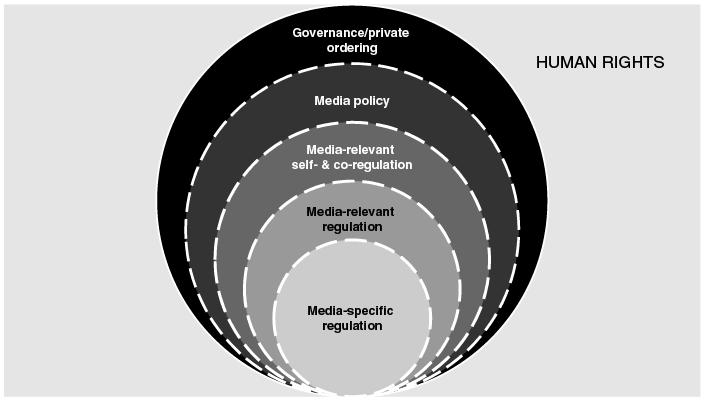
Figure 1.1 Long description
Diagram captures the different zones of media regulation, policy, self-regulation, and co-regulation, as well as governance. The lines demarcating the different zones are deliberately porous, denoting the possibility to move from one zone to another; to combine instruments and mechanisms located in different zones. For instance, binding regulation that focuses on principles and goals may leave room for actors in a given sector to collectively develop detailed self-regulatory measures to operationalize those principles and achieve those goals. Similarly, media policy recommendations may encourage states to go beyond their legal obligations set out in international treaties.
All zones of media and communication governance, both media-specific and media-relevant, are subject to European and international legal frameworks for the protection of human rights.
The following overview provides illustrative examples of the different types of regulation, policy and other measures.
Human/fundamental rights: European Convention on Human Rights, EU Charter of Fundamental Rights, International Covenant on Civil and Political Rights, Convention on the Rights of the Child, Convention on the Rights of Persons with Disabilities
Media-specific regulation: European Convention on Transfrontier Television, Audiovisual Media Services Directive, European Media Freedom Act, Treaty on the Functioning of the European Union Protocol (no. 29) on the system of public broadcasting in the Member States
Media-relevant regulation: Digital Services Act, Digital Markets Act, General Data Protection Regulation, Unfair Commercial Practices Directive, Platform to Business Relations Regulation, AI Act, Regulation on the transparency and targeting of political advertising, Satellite and Cable II Directive, Directive on copyright and related rights in the Digital Single Market, Council of Europe Framework Convention on the Protection of National Minorities, European Charter of Regional or Minority Languages
Media-relevant self- and co-regulation: Code of Conduct on Disinformation, Code of Conduct on countering illegal hate speech online +, International Federation of Journalists’ Global Charter of Ethics for Journalists, European Advertising Standards Alliance Charter
Media policy: declarations and recommendations of the Council of Europe’s Committee of Ministers, recommendations by the European Commission
Governance/private ordering: Private law terms of use/service, content moderation, technical measures, educational initiatives, and so on.
These instruments vary in terms of how specific their focus on the media is and in how much detail they regulate the media. The also vary in terms of their status; they include legally binding instruments, political recommendations, self- and co-regulatory codes and private ordering measures. This means that from a legal perspective, their importance varies.
International and European conventions and treaties set out obligations that are legally binding on all contracting State parties. Designated judicial or supervisory bodies oversee treaty implementation through case-law and/or a system of reporting by state parties.
Within the European Union, we can distinguish between different types of regulatory instruments: primary legislation such as treaties and secondary legislation. The latter takes different forms, as set out in Article 288 of the Treaty on the Functioning of the European Union:Footnote 50 regulations,Footnote 51 directives,Footnote 52 decisions,Footnote 53 recommendations and opinions.Footnote 54
In the Council of Europe system, declarations and recommendations adopted by the Committee of Ministers are political standard-setting instruments that address given themes. Recommendations are addressed to the forty-six Member States of the Council of Europe and offer detailed guidance on how to develop national approaches to the given themes. They are not legally binding, but they are politically influential.
Self-regulatory instruments are not typically legally binding; they are usually a set of professional rules governing a given sector that signatories are expected to abide by. Co-regulatory instruments are likely to have superior legal status to self-regulatory instruments, but that will depend on how they have been designed and the broader context in which they apply. Governance/private ordering relies on private law terms of use/service that are contractually binding on users and to which they have agreed.
A final observation in relation to the multizonal model concerns the processes and practices that inform regulation and policy governing the media. In recent years we have witnessed a growth in (specialized) monitoring and reporting that contribute to evidence-based law- and policy-making in the multimedia ecosystem. Leading examples at the European level include the Platform to promote the protection of journalism and safety of journalists, the Media Pluralism Monitor, the European Commission’s Rule of Law reporting, the Media Freedom Rapid Response Monitor, the Euromedia Ownership Monitor, Digital News Reporting and the World Press Freedom Index.
These initiatives cannot easily be situated in any of the identified zones of regulation and policy. As they gain increased recognition as reliable sources of information and analysis, they are being increasingly used to shape regulation and policy at European and national levels. This is a valuable contribution to the quality of media-specific and media-relevant regulation and policy. Before examining each of these regulatory and policy areas in turn, we will first turn our attention to the broader regulatory matrix of European and international human rights.
1.5.2 The Matrix of European and International Human Rights Law
1.5.2.1 Institutional and Normative Scene-Setting
A fundamental conceptual feature of international human rights law is that ‘[a]ll human rights are universal, indivisible and interdependent and interrelated’.Footnote 55 International and European human rights instruments should therefore be seen as mutually reinforcing and continuously pushing for higher levels of attainment. Even the seminal Universal Declaration of Human Rights was initially conceived of as a set of minimum standards for the protection of human rights worldwide: a political stepping stone towards later, more full-bodied legal protection. There is thus broad congruence at the core of general human rights treaties, with theme-specific treaties often developing additional protective and promotional measures.
In Europe, the Council of Europe has long been the primary guardian of human rights. Its raison d’être is to protect and promote the holy trinity of human rights, democracy and the rule of law. The European Union’s engagement with human rights is more recent and has been developed in fits and starts, but we can still speak of a shared regulatory space for human rights in Europe. Whereas the Council of Europe and the EU have been described as twins separated at birth,Footnote 56 others have made a very forceful case for the EU to develop its own human rights ethos and agenda.Footnote 57
Fundamental rights are present in EU media law, but not centrally. There are historical, institutional and legal reasons for this. Historically and institutionally, the European Economic Community was primarily concerned with enhancing economic cooperation between Member States, and the consolidation of peace through trade. Increasingly over the years, the promotion of the goals of the single/internal market became central. Human rights have not been a main driver of EU law: despite advances and a certain amount of mainstreaming, ‘the EU’s dominant focus today remains economic’.Footnote 58 However, the Court of Justice of the European Union (CJEU) has significantly developed the protection of fundamental rights (to use the preferred terminology of the EU) in incremental fashion over the years.Footnote 59 The Court’s progressive development of fundamental rights jurisprudence was catalyzed by the EU Charter’s enhanced legal status post-2009: with the entry into force of the Treaty of Lisbon in 2009, it acquired the same legal status as the EU treaties.Footnote 60
The Charter of Fundamental Rights of the European Union is the EU’s primary legally binding instrument for the protection of human rights.Footnote 61 It is at the centre of judicial dialogue between the CJEU and national courts and it ‘stands at the apex of the hierarchy of EU norms’.Footnote 62 The Charter binds the EU’s institutions and EU Member States when applying EU law.Footnote 63 Insofar as the rights enshrined in the Charter correspond to those enshrined in the ECHR and which have been further developed by the ECtHR in its case-law,Footnote 64 the latter are in effect ‘carried over’ into the Charter regime.Footnote 65 It would make little sense, after all, to have divergent regimes for the protection of human or fundamental rights within Europe. Although the CJEU often does follow the ECtHR’s case-law, it also tends to be protective of the autonomy of EU law and its own autonomy in that regard.Footnote 66
The Charter also includes a number of relevant rights that are not (explicitly) enshrined in the ECHR and that are relevant for media freedom/regulation. They include the right to protection of personal data (Article 8), the right to conduct a business (Article 16), the right to intellectual property (Article 17(2)) and the right of access to services of general economic interest (Article 36). These newly recognized rights and explicit emphases must be factored into the balancing of human/fundamental rights, as relevant. As such, they serve to adjust and expand the parameters of the balancing exercise that has traditionally taken place in the context of the ECHR.
1.5.2.2 The Centrifugal Influence of Article 10 ECHR
Legally speaking, the conceptualization of the right to freedom of expression under Article 10 ECHR is the touchstone for all European (and national) regulation of media, platforms and other actors in the multimedia ecosystem. It is not only the central legal standard for the Council of Europe; its referential value extends to the EU. Article 11 of the Charter focuses on freedom of expression, making it the equivalent provision to Article 10 ECHR. Article 11 of the Charter should be interpreted consistently with Article 10 ECHR and relevant ECtHR case-law.Footnote 67 It is a more modern and succinct articulation of the freedoms set out in Article 10 ECHR. However, Article 11 of the Charter, unlike Article 10 ECHR, makes explicit reference to media freedom and pluralism, albeit in a weakly worded way (it uses ‘shall respect’ as opposed to, for example, ‘shall ensure’).Footnote 68 The ECtHR’s case-law interpreting Article 10 ECHR does, however, include focuses and principles on media pluralism.
The right to freedom of expression enjoys strong protection under Article 10 ECHR, but it is not unconditional or unlimited.Footnote 69 Article 10(1) sets out the broad scope of the right, comprising the freedom to hold opinions and to seek and impart information and ideas without interference by public authority and regardless of frontiers. It also countenances the possibility for states to regulate licensing for broadcast media and cinema: a precautionary clause informed by the abuse of mass media preceding and during the Second World War.
Article 10(2) clarifies that the exercise of the right is accompanied by duties and responsibilities. The nature and scope of those duties and responsibilities vary, depending on the role or position of the speaker in society and on the technical means used to disseminate their message. Thus a journalist will have heightened duties and responsibilities to provide accurate, fact-based reporting than ordinary individuals.Footnote 70 This is a logical consequence of the role of journalists as public watchdogs and purveyors of information and ideas to the public.Footnote 71 Similarly, flowing from their capacity as public representatives, politicians have a duty not to inflame public feelings in the context of electoral discussions on sensitive societal topics, such as immigration and integration.Footnote 72 The particular duties and responsibilities accompanying the use of different media or communications technologies will vary, depending on factors such as reach, amplification, dissemination and impact.Footnote 73 The greater the expected or actual impact, the more exacting the duties and responsibilities will be.
The exercise of the right to freedom of expression can moreover be limited in certain circumstances. A limitation on the right must always be prescribed by law and be necessary in a democratic society to achieve one or more of the purposes enumerated in Article 10(2) ECHR. A limitation should thus be necessary: ‘in the interests of national security, territorial integrity or public safety, for the prevention of disorder or crime, for the protection of health or morals, for the protection of the reputation or rights of others, for preventing the disclosure of information received in confidence, or for maintaining the authority and impartiality of the judiciary’. This list is intended as exhaustive, but some of the named grounds are open-ended, such as the ‘rights of others’. Any other ground for limiting the right to freedom of expression must be brought under one or more of the listed purposes.
In its case-law interpreting Article 10 ECHR, the ECtHR has elaborated a body of principles on media freedom and pluralism. A core principle is that the public has the right to be informed on matters of general interest and the media have the corresponding task to inform them.Footnote 74 The media, journalists and other public watchdogs benefit from various freedoms and privileges in order to effectively fulfil the roles ascribed to them in democratic society. Those roles are to disseminate information and opinions on matters of general interest widely, thereby contributing to opinion-forming processes; to act as public watchdogs, holding governmental and other powerful actors to account; and to provide shared fora for public debate.Footnote 75 The functional freedoms include editorial and presentational freedom;Footnote 76 protection of confidential sources;Footnote 77 and recourse to a degree of exaggeration and provocation.Footnote 78 The enjoyment of those freedoms is subject to the proviso that journalists, the media and other public watchdogs fulfil their duties and responsibilities: that is, that they abide by the (criminal) law;Footnote 79 adhere to professional ethics;Footnote 80 strive to provide information that is accurate and reliable;Footnote 81 and engage with different sides to a story.Footnote 82
Another core principle is that states are the ultimate guarantors of pluralism, especially in the audiovisual media sector.Footnote 83 The emphasis on that sector reflects the Court’s long-standing position that the audiovisual media are more powerful than the printed press, due to their reach and impactFootnote 84 (even if this rough distinction feels increasingly dated in an internet-dominated worldFootnote 85). This implies that states should put in place legislative frameworks to ensure true and effective pluralism in respect of the audiovisual media.Footnote 86 Public service media (PSM) can play an important role in this context and where states opt for PSM systems (this is not mandatory), they must ensure that the PSM have the remit to provide pluralistic content to the public.Footnote 87 As mentioned in the previous section, states furthermore have the positive obligation to foster a safe and favourable environment for everyone to participate in public debate without fear,Footnote 88 which means that not only mainstream media but also individual and minority voices should be heard.Footnote 89
These principles primarily concern the right to freedom of expression and media freedom, and they reflect the instrumental role of the media as actors in, and facilitators of, public debate. These principles formed the ‘acquis’ or backdrop to the Court’s later engagement with freedom of expression in an online context. Some of the principles remain relevant in the online multimedia ecosystem, whereas others have been adapted to make them relevant in a process that has been called ‘adaptive replication’.Footnote 90 The Court has also had to develop new principles to reflect technical features of the internet and societal use of internet-based services and applications. For instance: the internet is an indispensable source of information and forum for communication;Footnote 91 internet intermediaries are the ‘protagonists’ of online expression;Footnote 92 hyperlinks are essential for navigating the vast quantities of information online;Footnote 93 engagement with online content (for example, liking or commenting on the posts of others) is accompanied by duties and responsibilities and can give rise to liability;Footnote 94 the creation and control of online fora, in which others can participate, creates duties of care, in particular for online news mediaFootnote 95 and for politicians and especially regarding (manifestly) illegal content.Footnote 96
This extensive array of principles governs how media and platforms should conduct their activities in accordance with the right to freedom of expression. The principles offer high-level guidance about the obligations of states authorities, but they often lack prescriptive details. The principles are usually not self-executing; they require operationalization in national law and policy.
1.5.3 Media-Specific Regulation
While their freedom is shaped in the first place by fundamental rights frameworks, the media and platforms are also subject to comprehensive and detailed specific regulation at the EU level. Within EU regulatory frameworks, human rights values and objectives are an important thematic focus, but they are by no means the only thematic focus. Two key pieces of EU media-specific regulation are the Audiovisual Media Services Directive and the European Media Freedom Act, each of which will now be considered, in turn, from the perspective of its contribution to freedom of expression and/or media freedom, including in the online context.
1.5.3.1 The Audiovisual Media Services Directive
The Audiovisual Media Services Directive (AVMSD)Footnote 97 evolved from the former Television without Frontiers Directive (1989).Footnote 98 It covers traditional television broadcasting (linear audiovisual media services), on-demand (or non-linear) audiovisual media services and audiovisual commercial communication (i.e., television advertising, sponsorship, teleshopping and product placement).Footnote 99 It takes a graduated approach: different rules apply to the different types of service. Since the last major revision of the Directive in 2018, the providers of video-sharing platform services also fall under the scope of the Directive, insofar as they are covered by the definition of such services. The convoluted definition focuses on services
where the principal purpose of the service or of a dissociable section thereof or an essential functionality of the service is devoted to providing programmes, user-generated videos, or both, to the general public, for which the video-sharing platform provider does not have editorial responsibility, in order to inform, entertain or educate, by means of electronic communications networks … and the organization of which is determined by the video-sharing platform provider, including by automatic means or algorithms in particular by displaying, tagging and sequencing.Footnote 100
The AVMSD seeks to ensure a minimum level of harmonization across the EU of national legislation governing audiovisual media services, with a view to removing obstacles to the free movement of such services within the EU’s single or internal market.Footnote 101 The Directive’s central principles – the country of origin principle (Article 2) and the freedom of reception principle (Article 3) – help to obviate the need for double regulation and double supervision of cross-border audiovisual media services within the EU. To achieve its main aims, the Directive coordinates a number of areas: general principles; jurisdiction; incitement to hatred; accessibility for persons with disabilities; major events; the promotion and distribution of European works; commercial communications; and protection of minors.
The AVMSD is heavily conditioned by the goals and logic of the internal market. That the Directive has been framed primarily in economic or market terms has been the source of widespread criticism, due to the cultural component of audiovisual productions and the fundamental rights dimension. While the Directive does contain a number of provisions that support or contribute to freedom of expression and/or media freedom, those provisions are incidental to its overall purpose. As Vasiliki Kosta explains, internal market freedom of movement of services in the specific context of television broadcasting coincides with the more general principle of, and human right to, freedom of expression.Footnote 102 Given the EU’s competence to regulate the internal market and its lack of competence to regulate human rights, the trade-/market-centric legal conceptualization of the Directive prevailed.Footnote 103
Across its coordinated areas, the AVMSD seeks to ensure access for the general public to certain public-interest content – for example, events of major importance for society (Article 14) and short news reports on events of high interest to the public otherwise broadcast on an exclusive basis (Article 15) – and to ensure that programmes and services are accessible to persons with disabilities (Article 7). It seeks to ensure protection for minors and consumers. It creates transparency obligations to ensure that providers of audiovisual media services make certain (contact) data ‘directly and permanently available’ to users of the services (Article 5(1)). This strengthens the possibility to contact the providers of audiovisual media services and also to control the media, which are important safeguards for freedom of information. Member States may also require providers of audiovisual media services to make available information on their ‘ownership structure, including beneficial owners’ (Article 5(2); see also Recitals 15 and 16). Under Article 30, Member States are obliged to ensure the independence and operational capacity of national regulatory authorities. Member States must promote and take measures to develop media literacy skills (Article 33a). Even though the Directive is not prescriptive about the nature of the promotional and other measures, this is an important obligation as media literacy skills are widely viewed as a way of empowering individuals to navigate and use online media safely and with discernment.
These provisions in the AVMSD are best summarized as provisions that can contribute to freedom of expression and media freedom, insofar as they strengthen access to certain types of information and offer protection against harmful content, but that are not expressly concerned with ensuring freedom of expression and media freedom. However, seeing as the protection of freedom of expression and media freedom are not the aim of the Directive, we should temper our expectations and criticisms accordingly. We can hardly fault the Directive for not doing something it was never intended to do and which moreover does not fall squarely within its material scope. This is where a broader positional awareness is needed: an ability to relate to frameworks for fundamental rights protection and platform regulation.
1.5.3.2 The European Media Freedom Act
The EMFA was born into a media regulatory environment that had already been largely shaped at the centre by the AVMSD and at the edges by the Digital Services Act (discussed in detail in what follows). Even though the short title of the Regulation frames it as such, the Regulation is not in point of fact a full-fledged ‘European Media Freedom Act’. The EMFA does not actually have the ambition to provide a comprehensive approach to, or to be a ‘one-stop-regulatory-shop’ for, media freedom in Europe. Rather, the EMFA ‘lays down common rules for the proper functioning of the internal market for media services and establishes the European Board for Media Services, while safeguarding the independence and pluralism of media services’ (Article 1(1)). Its legal basis is – like the AVMSD and also not uncontroversially – Article 114 of the Treaty on the Functioning of the European Union, the so-called internal market clause.Footnote 104
The EMFA provides a regulatory response to various challenges and problems for media freedom within the EU, such as concentrations of media ownership threatening media pluralism and media capture and regulatory capture. More specifically, the EMFA was designed to address divergent national rules and procedures governing media pluralism; insufficient cooperation between national media regulatory authorities; patterns of interference with editorial decision-making; and a lack of transparency and fairness in the allocation of financial resources to the media.Footnote 105 The findings of the Media Pluralism Monitor and the European Commission’s Rule of Law Reports were relevant for identifying and analysing these challenges and problems.
The EMFA’s definitional point of departure is that ‘media service’ means ‘a service as defined by Articles 56 and 57 TFEU, where the principal purpose of the service or a dissociable section thereof consists in providing programmes or press publications, under the editorial responsibility of a media service provider, to the general public, by any means, in order to inform, entertain or educate’ (Article 2(1)). This definition is modelled on, but also broader than, the definition of audiovisual media services in the AVMSD.
The EMFA’s specific focuses include the right of recipients of media services to a plurality of independent media content (Article 3); editorial freedom and independence (Article 4), and the independence of public service media providers (Article 5); transparency and other duties of media service providers (Article 6); the independence and operational capacity (and modalities of cooperation) of national media regulators (Articles 7 et seq.); and the transparent and fair allocation of public funds for state advertising and procurement (Article 25). There are also specific provisions on the protection of journalistic sources and confidential communications, including a prohibition (with derogations) on using intrusive surveillance software (e.g. spyware) (Article 4).
Article 18 is noteworthy for the privileged position it instates for self-declared media service providers which use the services of very large online platforms (VLOPs). The provision allows media to declare that they, inter alia, are media service providers; comply with the transparency duties under Article 6(1); are editorially independent of Member States, political parties, third countries and entities controlled or financed by third countries; are subject to regulatory requirements for the exercise of editorial responsibility in (at least) one EU Member State; and do not provide AI-generated content without human or editorial review. When media service providers meet these cumulative requirements, they are entitled to somewhat preferential treatment whenever VLOPs intend to or actually do suspend services for, or restrict visibility of content from, a media service provider. When a VLOP intends to take a decision to suspend services or restrict the visibility of content on the grounds of incompatibility with its terms and conditions, the VLOP must communicate its intention, with a statement of reasons, to the media service provider, giving a general window of twenty-four hours to reply to the communication. If the VLOP then proceeds to take such a decision, it must inform the media service provider without undue delay. In short, the procedural ‘privilege’ instated under Article 18 is one of privileged advance and timely notifications of its consequential decisions for media service providers. It creates a narrow window of opportunity to argue the case for non-interference with public interest content and to try to prevent VLOP decisions to suspend services or restrict the visibility of content.
Like the AVMSD, the EMFA protects specific parts of a more comprehensive vision of media freedom. Its most salient focuses are, however, more readily identifiable as relating to media freedom than the relevant focuses in the AVMSD. A safe and favourable environment for freedom of expression and media freedom may well be part of the backdrop to the EMFA, but it does not feature centre stage.
1.5.4 Media-Relevant Regulation
Moving beyond media-specific regulation, other regulation can also be relevant for the media, for example if it provides for access to the media for specific groups in society; prescribes or promotes particular types of (public interest) content; or influences the dissemination of media content. Media-relevant regulation can thus be relevant in structural, behavioural or distributive terms. In this section, three regulatory instruments will be used to develop this point. The first focus will be a brace of Council of Europe treaties dealing with minority/linguistic rights, with relevant provisions for the media. The second focus will be on the EU’s Digital Services Act (DSA),Footnote 106 the primary regulation for online platforms. The interplay between the DSA and the EMFA is important inter alia due to the media’s growing reliance on VLOPs to ensure the widest possible dissemination of their content.
In addition to the ECHR, the Council of Europe has a number of treaties whose core focus is not media-specific but which nevertheless contain important media-specific provisions, in particular the Framework Convention for the Protection of National Minorities and the European Charter for Regional or Minority Languages. The most important provisions in both treaties as well as their implementation are often wrongly overlooked in law and policy discussions on the media.
1.5.4.1 Framework Convention for the Protection of National Minorities (FCNM)
The FCNM guarantees a range of rights for persons belonging to national minorities.Footnote 107 Article 9 is the most important provision for ensuring the production, accessibility and findability of public interest content for persons belonging to national minorities. But Article 6 creates space for public interest content about minorities that is of wider benefit to society.
Article 9 FCNM could be seen as an adapted version of Article 10 ECHR that incorporates some minority-specific emphases. Its main provisions can be essentialized as follows.
Article 9.1 – Linguistic freedom and non-discriminatory access to media.
Article 9.2 – Licensing of radio, television or cinema must be non-discriminatory and based on objective criteria.
Article 9.3 – Freedom to create and use print media without hindrance; possibility to create and use own broadcast media outlets.
Article 9.4 – States must adopt adequate measures to facilitate minorities’ access to media and to promote tolerance and permit cultural pluralism.
Article 9.3 provides for content made by minorities for minorities, whereas Article 9.4 caters for content that is relevant for the broader relationship between minorities and other groups in society.
Article 6 FCNM also addresses the broader societal dynamics. Under Article 6.1, States Parties ‘shall encourage a spirit of tolerance and intercultural dialogue and take effective measures to promote mutual respect and understanding and co-operation among all persons living on their territory, irrespective of those persons’ ethnic, cultural, linguistic or religious identity, in particular in the fields of education, culture and the media’.
1.5.4.2 European Charter for Regional or Minority Languages (ECRML)
The driving aim of the ECRML is to protect and promote regional or minority languages in Europe and to ensure their continued vitality.Footnote 108 The rights of users of those languages are an important corollary to this central aim. As regional or minority languages are a ‘threatened aspect of Europe’s cultural heritage’, they merit protection and promotion.Footnote 109 The Charter thus focuses on non-discrimination in the use of regional or minority languages and developing measures to actively support regional or minority languages.Footnote 110 One focus area for such measures is the media (Article 11).
Article 11, in keeping with the overall approach of the Charter, sets out a cascading list of commitments for states to undertake, including public service radio and television; radio and television generally; the production and distribution of audio and audiovisual works; newspapers; funding for the media/audiovisual production; support for training of journalists and media professionals; and structured representation of regional or minority language speakers in bodies with responsibility for freedom and pluralism of the media.
1.5.4.3 The Digital Services Act
The Digital Services Act (DSA) and its sister regulation, the Digital Markets Act (DMA),Footnote 111 together form the centrepiece of the EU’s digital strategy.
The main aim of the DSA is to contribute to the proper functioning of the internal market for intermediary services. It sets out harmonized EU-wide ‘rules for a safe, predictable and trusted online environment that facilitates innovation and in which fundamental rights enshrined in the Charter, including the principle of consumer protection, are effectively protected’ (Article 1(1)). The DMA regulates the actions of large online platforms that act as gatekeepers with a view to creating a fairer online business environment for users and consumers. The regulation does not specifically address the media.
The DSA essentially incorporates the framework for the conditional exemption from liability of providers of intermediary services, previously developed in the E-Commerce Directive. This framework (Chapter II, Articles 4–10), also known as the ‘safe harbour’ regime, is built on the premise that the providers of intermediary services should not, in principle, be held liable for illegal content of third parties on their services, provided they lack knowledge of the illegal nature of such content, and upon obtaining such knowledge act expeditiously to block access to it. The DSA introduces a ‘Good Samaritan’ clause (Article 7), under which service providers will not be deemed ineligible for the liability exemptions when they voluntarily, diligently and in good faith take investigations and/or action to tackle illegal content in compliance with EU and national law. Member States are not allowed to impose general monitoring or active fact-finding obligations on service providers for the purpose of ascertaining illegality (Article 8). The thinking behind this approach is that such general monitoring obligations would likely increase the risk of over-removal of content, and thus private censorship, in order to avoid liability for not having acted to block access to illegal content.
The overall systématique and some specific focuses of the DSA contribute to the overall regulatory shaping of freedom of expression online in Europe. The explicit reference to the EU Charter in relation to the aims of the DSA is a useful starting point. A string of other references, sometimes underscoring freedom of expression and media freedom and pluralism among other rights and freedoms, form a recurrent focus.
Chapter 3 of the DSA, entitled ‘Due Diligence Obligations for a Transparent and Safe Online Environment’, is a mainstay of the Regulation. The obligations apply cumulatively to all providers of intermediary services (Section 1.1), and there are additional obligations for providers of hosting services, including online platforms (Section 1.2); additional obligations for providers of online platforms (Section 1.3) and for providers of online platforms allowing consumers to conclude distance contracts with traders (Section 1.4); and additional obligations for providers of VLOPs and of very large online search engines (VLOSEs) to manage systemic risks (Section 1.5).
All providers of intermediary services are required to provide points of contact for (i) national and EU authorities (Article 11) and (ii) recipients of their service (Article 12); indicate in their terms and conditions any restrictions to the use of their service and information on policies, procedures, measures and tools for content moderation, as well as information on their internal complaint-handling system (Article 14); and conduct (annual) transparency reporting (Article 15). Of significance is the requirement for all providers of intermediary services, when applying or enforcing their terms and conditions, to have ‘due regard to the rights and legitimate interests of all parties involved, including the fundamental rights of the recipients of the service, such as the freedom of expression, freedom and pluralism of the media’ and the other rights and freedoms enshrined in the Charter (Article 14).Footnote 112
Hosting providers, including online platforms, have an additional obligation to put in place ‘notice-and-action’ mechanisms: easy-to-access, user-friendly electronic mechanisms ‘to allow any individual or entity to notify them of the presence on their service of specific items of information that the individual or entity considers to be illegal content’ (Article 16(1)). Notifications via such mechanisms are deemed to give rise to actual knowledge or awareness where they ‘allow a diligent provider of hosting services to identify the illegality of the relevant activity or information without a detailed legal examination’ (Article 16(3)). This would render the hosting provider ineligible for the exemption from liability under the safe harbour regime. Hosting providers must process notices received via these mechanisms and take decisions on the information to which the notices relate ‘in a timely, diligent, non-arbitrary and objective manner’ (Article 16(6)). Hosting service providers must communicate a clear and specific statement of reasons to any affected recipients of the service if its decision entails restrictions due to a finding that the reported content is either illegal or incompatible with their terms and conditions. Such restrictions are:
(a) any restrictions of the visibility of specific items of information provided by the recipient of the service, including removal of content, disabling access to content, or demoting content; (b) suspension, termination or other restriction of monetary payments; (c) suspension or termination of the provision of the service in whole or in part; (d) suspension or termination of the recipient of the service’s account (Article 17(1)).
VLOPs and VLOSEs (i.e., the largest digital services, which have an average of more than 45 million monthly active users in the EU) must comply with the most detailed and far-reaching due diligence obligations.Footnote 113 This is because of the sheer scale of their operations and the systemic nature of their influence on the online environment. VLOPs and VLOSEs are required to ‘diligently identify, analyse and assess any systemic risks’ in the EU arising from ‘the design or functioning of their service and its related systems, including algorithmic systems, or from the use made of their services’ (Article 34(1)). They must conduct such risk assessments at least once a year. The envisaged systemic risks include, first, the dissemination of illegal content via their services (Article 34(1)(a)). Second is ‘any actual or foreseeable negative effects for the exercise of fundamental rights’ (Article 34(1)(b)). Several fundamental rights are highlighted: for example, freedom of expression and information, including the freedom and pluralism of the media. The third systemic risk is ‘any actual or foreseeable negative effects on civic discourse and electoral processes, and public security’ (Article 34(1)(c)). The fourth and final listed example concerns ‘any actual or foreseeable negative effects in relation to gender-based violence, the protection of public health and minors and serious negative consequences to the person’s physical and mental well-being’ (Article 34(1)(d)).
An integral part of the risk assessment is to determine how specific factors influence any of the envisaged systemic risks: ‘(a) the design of their recommender systems and any other relevant algorithmic system; (b) their content moderation systems; (c) the applicable terms and conditions and their enforcement; (d) systems for selecting and presenting advertisements; (e) data related practices of the provider’ (Article 34(2)). VLOPs and VLOSEs must use their risk assessments to devise ‘reasonable, proportionate and effective mitigation measures, tailored to’ the identified systemic risks, while having particular regard for the impact of strategies on fundamental rights (Article 35). To enable public/academic scrutiny of how VLOPs and VLOSEs conduct their risk assessments, Article 40 provides for important mechanisms to access that they hold. It is possible under Article 40(12) for researchers meeting stipulated criteria to apply directly to a VLOP or VLOSE for access to public data. Article 40(4)–(11) sets out a process that enables researchers who have been vetted by a Digital Services Coordinator, and deemed to meet the stipulated criteria, to request access to non-public data held by a VLOP or VLOSE.
The risk-centric approach (risk assessment and risk mitigation) is one of the major legal innovations of the DSA. It is more circumspect than the expansive ‘safe and favourable environment’ approach embraced by the European Court of Human Rights and the Council of Europe.
1.5.5 Self- and Co-regulatory Codes
Various self- and co-regulatory instruments and mechanisms operate in the penumbra of legally binding frameworks. Increased reliance on such instruments and mechanisms can be seen as one of the main ongoing shifts in the geometry of European regulation.Footnote 114
Self-regulation is a system of governance within a given sector in which the actors in the sector collectively draw up and oversee the implementation of professional or ethical rules for the sector. The state is not involved in any capacity. Self-regulatory rules often take the form of codes of ethics, conduct or practice and they are typically not legally binding. They are specific to the sector but subject to general law. Sectors that have extensive experience with self-regulation and that are also relevant to the media include journalismFootnote 115 and the advertising industry.Footnote 116
In the early 2000s, various forms of co-regulation (or regulated self-regulation) began to emerge. This was part of a wider trend towards so-called lighter touch regulation, which meant that states would be less hands-on in their approach to regulation. In practice, this means that states exercise their regulatory responsibilities jointly with actors from the sector. The collaboration between the state and sectoral actors is the distinctive feature of co-regulation.
Self- and co-regulation, with the flexibility they offer, are seen as suitable means of regulating certain aspects of media, internet and mobile technologies, for instance in Article 4(7) AVMSD. In the context of the DSA, voluntary codes of conduct at EU level are seen as a way of contributing to the application of the Regulation, particularly when it comes to ‘the specific challenges of tackling different types of illegal content and systemic risks’ (Article 45(1)). Such codes of conduct can provide detailed guidance on the rather open-ended provisions on limiting systemic risks by providers of VLOPs and VLOSEs. ‘In the case of systematic failure to comply with the codes of conduct, the Commission and the Board may invite the signatories to the codes of conduct to take the necessary action’, as stipulated in Article 45(4). These explicit and formal references to codes of conduct – such as the codes on hate speech and disinformation, which are also mentioned in Recital 106 – reinforce or, rather, enhance their (legal) status.Footnote 117
The Code of Conduct on Countering Illegal Hate Speech Online + and the Code of Conduct on Disinformation are most relevant; both reference and follow European human rights law.Footnote 118 The Code on hate speech was initially developed in 2016 under the auspices of the European Commission and signed by leading tech companies. It was revamped as the Code + in January 2025. The Code on disinformation was developed in a similar fashion in 2018 as the Code of Practice on Disinformation and was revamped as the Strengthened Code of Practice in 2022. Both Codes comprise extensive lists of commitments for signatories, designed to effectively counter illegal online hate speech and disinformation, respectively. The Code on hate speech was integrated into the DSA regulatory framework in January 2025; the Strengthened Code on disinformation in February 2025 (at which point it became the Code of Conduct on Disinformation). This means that, among other things, adherence to the codes may be considered as an appropriate risk mitigation measure for signatories that have been designated as VLOPs or VLOSEs under the DSA.
The aim of these self- and/or co-regulatory codes is to close the sectoral responsibility gap that was opened by the erstwhile prioritization of market growth over fundamental rights protection in the early years of the internet. They contain detailed provisions that address pressing aspects of illegal and harmful content online. One of the advantages of these codes is that they reflect good insights from signatories. They also have nominal buy-in from Big Tech, which is crucial to the success of the venture, even if participation appears to have been due to political pressure rather than intrinsic motivation and altruism. Without uptake by leading industry players, the codes would be dead letters.
Nevertheless, critical questions need to be asked about the effectiveness of the monitoring mechanisms and their actual impact. The codes are surely contributing to detailed engagement by online platforms with recognized problems, but voluntary commitments are usually much more palatable to multinational corporations than hard legal obligations with (hefty) financial sanctions for non-compliance. As long as the commitments are voluntary, the nature and extent of Big Tech’s engagement remain largely on their own terms. While it is important to make these critical remarks, it is also important to acknowledge the function that these codes fulfil in the broader regulatory and policy system.
1.5.6 Media Policy
1.5.6.1 Council of Europe: Committee of Ministers
Over the years, the Committee of Ministers of the Council of Europe has addressed numerous media-specific and media-relevant recommendations to the (now forty-six) Member States of the organization. While these recommendations are not legally binding, they are politically influential. They often respond to topical issues at the intersection between technology and society and provide detailed advice to Member States on how to strengthen national legislation, policies and practices from a human rights perspective. Table 1.1 presents an overview of the most relevant recommendations since 2016. The most recent media-specific recommendations form a coherent whole, clearly inspired by the positive obligation of states to create and seek to achieve a safe and enabling environment for public debate.Footnote 119
| Media-specific recommendations | Media-relevant recommendations |
|---|---|
| Recommendation CM/Rec(2016)4 of the Committee of Ministers to Member States on the protection of journalism and safety of journalists and other media actors | Recommendation CM/Rec(2016)5 of the Committee of Ministers to Member States on Internet freedom |
| Recommendation CM/Rec(2018)1 of the Committee of Ministers to Member States on media pluralism and transparency of media ownership | Recommendation CM/Rec(2018)2 of the Committee of Ministers to Member States on the roles and responsibilities of internet intermediaries |
| Recommendation CM/Rec(2022)4 of the Committee of Ministers to Member States on promoting a favourable environment for quality journalism in the digital age | Recommendation CM/Rec(2018)7 of the Committee of Ministers to Member States on Guidelines to respect, protect and fulfil the rights of the child in the digital environment |
| Recommendation CM/Rec(2022)11 of the Committee of Ministers to Member States on principles for media and communication governance | Recommendation CM/Rec(2020)1 of the Committee of Ministers to Member States on the human rights impacts of algorithmic systems |
| Recommendation CM/Rec(2022)12 of the Committee of Ministers to Member States on electoral communication and media coverage of election campaigns | Recommendation CM/Rec(2022)13 of the Committee of Ministers to Member States on the impacts of digital technologies on freedom of expression |
Recommendation CM/Rec(2016)4 focuses on the protection of journalism and the safety of journalists and other media actors.Footnote 120 It aims to secure the outer ramparts of public debate and emphasizes the very important gender and digital dimensions of security issues. It is structured around four pillars: prevention, protection, prosecution and promotion of information, education and awareness-raising. Different measures are recommended for each pillar and together they form a comprehensive range of legal and practical lines of action to effectively protect journalists and other media actors.
Recommendation CM/Rec(2018)1 focuses on media pluralism and transparency of media ownership.Footnote 121 It aims to strengthen the structural aspects of public debate. The Recommendation sets out various ways in which states can fulfil their positive obligation to ensure pluralism in the audiovisual media sector, for example by ensuring that different media types contribute to overall media pluralism, with a special role for public broadcasting/media and community media. The Recommendation also explores various ways to improve the production and dissemination of diverse content through media and online platforms and how to support initiatives aimed at strengthening media pluralism. Moreover, it makes detailed, concrete recommendations on how to regulate media ownership, control and concentration, and on how to enhance the transparency of media ownership, organization and financing. It suggests various ways in which media literacy and education can play an important role in operationalizing transparency.
Recommendation CM/Rec(2022)4 aims to promote a favourable environment for quality journalism in the digital age.Footnote 122 It focuses on the qualitative aspects of public debate, with an emphasis on funding, ethics and quality, and education and training. The Recommendation’s commitment to quality journalism can also be seen as a commitment to the epistemic and democratic values that underpin public debate. The Recommendation is complemented by the more specifically focused Committee of Ministers’ Declaration on the financial sustainability of quality journalism in the digital age.Footnote 123
Recommendation CM/Rec(2022)11 aims to improve policy and governance aspects of media and communications.Footnote 124 It does so by setting out two sets of principles, namely (i) procedural and (ii) substantive principles for media and communications governance. The procedural principles concern 1. Transparency and accountability; 2. Openness and inclusiveness; 3. Independence and impartiality; 4. Evidence-based and impact-oriented governance choice; and 5. Agility and flexibility. The substantive principles concern free communication in the public sphere, production, dissemination and use.
Recommendation CM/Rec(2022)12 deals with a specific issue, the role of the media in election time.Footnote 125 The public watchdog role of the media is an important safeguard for the transparency and fairness of elections.
These recent recommendations build on a large number of earlier recommendations on the role and independence of public service broadcasting, freedom of expression and political debate, and the rights and freedoms of journalists.
The media-relevant recommendations, for their part, are a cluster of texts focusing on different aspects of internet freedom, the roles and responsibilities of internet intermediaries and the human rights impacts of algorithmic systems and digital technologies. The two last-named recommendations take their place on a longer list of recommendations that examine the impact of different online technologies on human rights: that is, search enginesFootnote 126 and social networking services.Footnote 127 The recent batch of recommendations also includes a focus on the rights of the child in the digital environment, covering the right to freedom of expression and to access information, as well as the right to be protected from harmful online content.Footnote 128 In an increasingly converged digital environment, all of these recommendations are of relevance for the media, in particular for the interplay between the media and other online actors.
1.5.6.2 EU: European Commission
For its part, the EU – or more specifically, the European Commission – has adopted a trinity of recommendations that have similar focuses to, and travel largely in the same direction as, three of the Council of Europe Committee of Ministers’ recommendations. They concern: protection and safety of journalists (2021),Footnote 129 protection of editorial independence and transparency of media ownership (2022)Footnote 130 and protection against strategic lawsuits against public participation (SLAPPs) (2022).Footnote 131 While thematically congruent with the Committee of Ministers’ recommendations, they also put forward their own emphases and angles.
Each of these recommendations positions itself in the broader instrumental and institutional architecture of the EU, but they also demonstrate an awareness of, and make (a few) references to, relevant ECtHR case-law and relevant recommendations by the Committee of Ministers, notably CM/Rec(2016)4 and CM/Rec(2018)1.Footnote 132 Unlike the Committee of Ministers’ recommendations, the European Commission’s recommendations contain specific reporting requirements and timelines for states. This provides firmer reporting structures and possibilities for monitoring and follow-up by the Commission than the Committee of Ministers’ moral appeals to the goodwill of states to implement their recommendations effectively and to report on measures taken. CM/Rec(2016)4 does envisage a far-reaching review process, but it lacks oversight and enforcement machinery.
1.5.6.3 Synthesis
As we have seen in this overview, the focuses of the Committee of Ministers’ recommendations span various aspects of media freedom and a favourable environment for public debate in an evolving multimedia ecosystem. In the Section 1.6 we will see that those same focuses can meet the various levels of threats to media freedom and robust public debate head-on.
1.5.7 Governance and Private Ordering
As discussed in Section 1.2, platforms and other online actors are typically private or commercial entities with their own business models. They are, in principle, free to establish their own terms of use and implement their own content moderation practices (private ordering). These practices include blocking, removing, promoting, recommending, downranking and shadow-banning content.Footnote 133 Platforms and other online actors can also determine in their terms of use what may and may not be said and what content may or may not be distributed within their services. Users must consent to such conditions in order to access the platform or services. Indeed, users have little choice in this matter: acquiescence with terms of use is required if they wish to effectively participate in public debate, which is increasingly conducted via the quasi-public forums controlled by dominant online platforms. Platforms must, however, always respect human rights and fulfill their corporate social responsibility with due diligence.Footnote 134
Content moderation, shaped by platforms’ terms of use, is an increasingly important form of governance in the multimedia ecosystem.Footnote 135 A useful distinction can be made between ‘governance by platforms’ (e.g. through content moderation) and ‘governance of platforms’ (e.g. in the sense of formal regulation such as the DSA).Footnote 136
1.6 Threats to Media Freedom
The previous sections have explored changing notions of media, media freedom and regulation of media (freedom). We have seen that this is very expansive and uneven terrain. It is at times difficult to see the proverbial wood for the trees. But we have also seen how various reporting and monitoring mechanisms help to shed light on what is happening on the ground: the barrage of threats to media freedom. The big-picture view of threats to freedom of expression and media freedom is overwhelming. This is due to the sheer number and volume of the threats: their relentless nature and their intensity.Footnote 137
The Platform to promote the protection of journalism and safety of journalists, the alert-based monitoring system of longest vintage in Europe, has developed a categorization of threats that is quite useful for analytical purposes. It groups threats as follows: attacks on the physical safety and integrity of journalists; detention and imprisonment of journalists; harassment and intimidation of journalists; impunity (for crimes against journalists); and other acts having chilling effects on media freedom. Whereas most of the categories focus on journalists, the final category opens up space for a wider documentation of threats to media freedom. Examples include restrictive legislation; censorship and interference with editorial freedom; threats to the confidentiality of journalists’ sources; breaches of digital security; and illegal surveillance or interception of journalists’ communications (data). Other monitoring mechanisms are more overtly concerned with threats to media freedom, such as media capture and threats to media pluralism.Footnote 138
The overall picture painted by the various monitoring mechanisms is consistent: freedom of expression, journalistic independence and media freedom and pluralism all face a range of threats, which pound them at different levels and with different levels of intensity. The media are not alone in bearing the brunt of these threats; the wider target is public debate. The threats target participants in public debate; the underlying epistemic values of public debate; the structures and modalities of public debate; the scope and content of public debate; and the ecosystemic health of public debate. If media freedom is to be meaningful, then it must be protected against this onslaught of threats to public debate.
If we cast a critical gaze on the capacity of the different zones of regulation, policy and governance to effectively protect the media and journalists and other media actors against this gamut of threats, we will reach some uncomfortable conclusions. Media-specific and media-relevant regulation, self- and co-regulation and private ordering all offer precious little physical or psychological protection to journalists and other media actors facing threats or attacks. These same zones offer only piecemeal protection against threats to the structures, content, quality and epistemic underpinnings of public debate. A more holistic or systemic approach is needed to effectively counter the different types of threats to media freedom. Such an approach is provided in the fundamental rights matrix and in the policy zone, neither of which imposes enforceable legal obligations directly on platforms and other powerbrokers in the multimedia ecosystem.
1.7 Conclusions
The EMFA will likely now become the default or go-to reference point for the regulation of media freedom in Europe. If this scenario becomes reality, the European Commission will have been successful in its attempts to manifest its new Regulation as the Protector of Media Freedom in Europe. Such a scenario would be misleading and regrettable, as the EMFA’s capacity to provide effective protection to the media is rather circumscribed. It does little to secure media freedom against the barrage of threats and attacks pummelling the media, as organizations and as a collectivity, and the journalists and media actors who contribute to media activities. By mandating states to ensure that journalistic sources and confidential communications are effectively protected, the EMFA mirrors relevant state obligations under Articles 8 and 10 ECHR. The weakened prohibition on the use of spyware against journalists does not push the needle. The EMFA’s provisions on editorial independence and autonomy, including for public service media, do contribute to the media’s freedom to carry out their editorial missions and fulfil their public watchdog role in democratic society. But that contribution, too, is modest – it does not, substantively, go beyond existing protections in other zones of regulation.
In practice, the EMFA will likely be blown over by the sheer volume, variety and severity of threats and attacks against the media and against journalists and other media actors. Securing media freedom in Europe cannot be just (about) an act; it demands a systemic approach. This means not simply reaching for the much-heralded new regulation, faute de mieux. It requires casting the analytical net wider and deeper; it requires making concerted use of the possibilities offered by the different zones of media regulation, policy and governance.
Across the different zones, we have seen that the most detailed protection for media freedom takes the form of high-level principles in the fundamental rights matrix, and the form of recommended operationalizing measures in the media policy zone. Together these two zones are the scene of the main media freedom ‘act’ in Europe. It is essential that the principles and practices developed there also inform how the EMFA is implemented and used in practice: that there is more movement between the regulatory zones, so that the main ‘act’ can inform the supporting ‘act’.
A key premise of fundamental rights principles, in particular freedom of expression, is that rights and principles endure through, and are responsive to, technological and societal change. Media freedom principles, developed on the back of the right to freedom of expression, can also be enjoyed mutatis mutandis by other actors who perform similar functions in public debate. This inevitably leads to questions about the continued need for specific regulation of the media. A basic premise for (media) regulation is that there needs to be maximum clarity about the objectives of the regulation; the object(s) of the regulation; and the manner and kinds of regulation. In other words, there needs to be maximum clarity around the why, the what and the how of media regulation. Such clarity can be very elusive in a dynamic and diffuse multimedia ecosystem, where the media have to continuously assert and guard their own freedom among many other actors, large and small, all vying for space, attention and influence.
2.1 Introduction
The process of digital transformation, the accompanying problems of online disinformation and hate speech, and the decline in media freedom, all of which are widely seen as threatening democracy, have triggered responses from both main European policy-makers: the European Union (EU) and the Council of Europe (CoE).Footnote 1 Both organisations have decades-long history in media policy and regulation. However, they have until recently followed different logics of regulatory intervention. The CoE standards are grounded in a fundamental rights-based approach, with the right to freedom of expression enshrined in the European Convention on Human Rights (ECHR) as its centrepiece. The EU has relied on its competence to regulate the internal market, focusing on the economic rather than the political and cultural dimension of the media. Recent EU initiatives, most saliently the European Media Freedom Act (EMFA), have shifted towards a more fundamental rights-oriented approach. The increasingly convergent approaches of the EU and the CoE raise questions about the interplay between the two systems and the importance of their consistency. This chapter analyses the relationship between the two frameworks and how it could benefit from strengthening. To that end, it describes how CoE and EU media rules governing (online) expression have grown to overlap; analyses why a closer relationship between the two frameworks may be required; and explores how such a relationship may be operationalised.
2.2 The Emerging Overlap between Council of Europe and European Union Rules on (Online) Expression
European media regulation and governance is marked by its complex, multileveled, multi-stakeholder, and interjurisdictional environment and a number of different, ‘formally independent but functionally interdependent actors and institutions’,Footnote 2 including the EU, the CoE their respective Member States, media regulators and self-regulatory bodies, media organisations and their associations, platforms, civil society organisations, and other interest groups. It is recognised that the challenges brought about by the structural transformation of the public sphere cannot and should not be addressed by states alone.Footnote 3
In this transnational environment characterised by market disruption and democratic backsliding, two things emerge with some clarity. Firstly, the complex media architecture can benefit from international co-operation, as the scale of globalisation combined with digitisation poses regulatory challenges that cannot be successfully tackled in isolation.Footnote 4 Secondly, despite the CoE’s and EU’s different starting points, the dual economic and cultural/political nature of the media has proven difficult to separate from the beginning, since the regulation of one aspect often entails regulation of the second.Footnote 5 The 1980s development of cross-border television policy showed that while the EU Television without Frontiers (TVwF) Directive and the CoE European Convention on Transfrontier Television (ECTT) were prepared in parallel, they converged on the topics covered and, to a certain extent, on the wording.Footnote 6 This happened although EU policy started from common market objectives and made media services the focus of its attention, while the CoE’s approach was underpinned by the parties’ commitment to the free flow of information and the promotion of the cultural and opinion-making role of broadcasting.Footnote 7
The example of the TVwF Directive and the ECTT also illustrates how the relationship between two systems is influenced by the – at times diverging – political will of the respective organisations, even when their membership significantly overlaps (twenty-seven of the forty-six CoE Member States are also members of the EU). The instruments were, as mentioned, similar in substance, and the need for their modernisation was recognised around the same time. Following the substantial revision of the TVwF Directive in 2007, it was renamed the Audiovisual Media Services Directive (AVMSD)Footnote 8 and later codified in 2010.Footnote 9 This revision necessitated aligning the ECTT with the AVMSD to ensure coherence between the two instruments and provide legal certainty for both states and transfrontier broadcasters. The ECTT underwent a revision process in 2009,Footnote 10 but negotiations were discontinued after the European Commission asserted the exclusive competence of the EU in most matters covered by the ECTT and reminded EU Members States that they could not independently become parties to a revised ECTT. However, the Commission did not take a position on negotiating a revision of the ECTT on behalf of its Member States. In practice, this meant that the negotiations on the ECTT revision stalled. Subsequent discussions with CoE Member States and media regulatory authorities indicated that the ECTT continues to offer added value but would require updating to remain relevant. Despite this, a consensus has yet to emerge to undertake concrete steps towards another revision process.Footnote 11
This experience underlines the important role of political will, a factor to bear in mind as overlapping efforts by the EU and the CoE in the area of media policy and regulation have intensified in recent years. EU activity in this area has increased to address changes to the media system due to democratic backsliding, platformisation, and digitisation. However, we will not focus on political considerations involved in international media regulation, but rather examine why closer relationship between CoE and EU media law might be necessary and how such an alignment could be operationalised in the future. We will start by highlighting a few of the more important recommendations and regulations to show how the hitherto separate regulatory rationales of the two organisations are converging.
2.2.1 Council of Europe
The CoE’s decision-making body, the Committee of Ministers (CM), has responded to the last decade’s developments in the media ecosystem by applying its fundamental rights approach to these new developments. It has done so by adopting a package of recommendations establishing or updating principles for combating hate speech, promoting media pluralism and quality journalism, conducting electoral campaigning online, and enacting media governance in the platformised world.Footnote 12 Recommendation CM/Rec(2022)16 on combating hate speech, building on the European Court of Human Rights (ECtHR) case law, maps out a comprehensive legal and policy framework for dealing with different categories of hate speech, depending on their severity. It focuses on the online dimension of hate speech and, among other things, provides guidance to states for putting in place proportionate obligations on online platforms. It also provides guidance to platforms for implementing human rights-compliant content moderation policies. Recommendation CM/Rec(2022)12 on electoral communication and media coverage of election campaigns addresses concerns about the fairness and legitimacy of electoral processes related to the new formats and digital techniques of online campaigning, including disinformation campaigns and abuse of microtargeting. Finally, Recommendation CM/Rec(2022)11 on principles for media and communication governance establishes a comprehensive checklist detailing how to develop and enforce governance instruments and which contemporary challenges should be addressed by them. Its aim is to prevent states and other powerful actors from abusing their powers to restrict freedom of expression and media independence.
These recommendations provide guidance to Member States and other stakeholders, regulatory authorities, platforms and media, and offer a broad framework with a range of implementation options to accommodate different legal systems. However, in the current context of democratic backsliding – where politicians increasingly come to power through democratic means only to undermine democratic institutions and dismantle channels of accountability – freedom of expression is increasingly under threat from political authorities, including in some European countries.Footnote 13 Successive annual reports by the CoE Secretary General on the State of Democracy, Human Rights and the Rule of Law, based on a number of sources but primarily ECtHR case law, and alerts on serious threats to media freedom posted on the CoE Platform for the Safety of Journalists,Footnote 14 highlight a rise in harassment, online hate speech, violence targeting media professionals, restrictive legislation, large-scale website blocking, and the misuse of laws, such as strategic lawsuits against public participation (SLAPPs), to stifle critical voices.Footnote 15 While the CoE does not carry out systematic monitoring of the state of freedom of expression, making a reliable assessment of the implementation of each standard challenging, it is reasonable to assume that soft-law standards are poorly implemented in countries where democratic norms and institutions are under strain. Nevertheless, there are also positive developments. A qualitative analysis of the implementation of Recommendation CM/Rec(2022)16 on combating hate speech (2024) shows that Member States have made progress in aligning national legislation with the recommendation, inter alia by introducing remedies for both offline and online hate speech that ‘offer proportionate redress while upholding freedom of expression through nuanced approaches and effective safeguards’.Footnote 16
2.2.2 European Union
The EU, which has traditionally focused on the economic aspects of the media, has in recent years explicitly aimed to address threats to freedom of expression and to the media’s democratic function that have traditionally been the CoE’s domain. The European Media Freedom Act (EMFA) and the anti-SLAPP Directive address threats to media freedom by introducing measures aimed at protecting the media and journalists from interference by political and other powerful actors.Footnote 17 The EMFA Explanatory Memorandum evokes the role of information as a public good, acknowledges that media companies cannot be treated in the same way as other businesses, and emphasises that their independence must be protected at the EU level.Footnote 18 The Regulation on the Targeting and Transparency of Political Advertising additionally aims to strengthen the role that journalists and other societal watchdogs play in the media system by increasing their access to information on the way political advertisements are prepared and distributed.Footnote 19 Finally, although the Digital Services Act (DSA) is a horizontal piece of legislation (and as such arguably does treat the media like any other business), it too requires very large online platforms to assess and mitigate risks that their services pose to ‘freedom of expression and information, including the freedom and pluralism of the media’.Footnote 20
The EU continues to emphasise the economic nature of the media as well. In part this is because it is legally required to do so. The EU lacks a legal basis for regulating the media to safeguard freedom of expression, and most of its new laws are therefore based on its competence to regulate the internal market.Footnote 21 This requires the EU to argue that it regulates media freedom, platforms, and political advertising at least in part to facilitate the provision of cross-border services.Footnote 22 Establishing a minimum level of responsibility is also necessary to prevent the fragmentation of the internal market that would occur if Member States individually addressed the challenges posed by platformisation and digitisation. The increased responsibilities that have been (mainly) imposed on platforms require EU law to engage with new freedom of expression issues where access to legal content is restricted.Footnote 23 For example, the Copyright Directive in effect requires platforms to filter the content their users upload to prevent the unauthorised distribution of copyrighted material.Footnote 24 The regulations on both terrorist content and political advertising impose obligations to remove content within a certain time after a notification has been received.Footnote 25 Finally, the revised AVMSD and DSA impose open-ended obligations on platforms to address both illegal and harmful content.Footnote 26 The DSA in particular requires very large online platforms to assess and mitigate a wide range of systemic risks. These risks cover, in brief, the dissemination of illegal content as well as (foreseeable) effects on fundamental rights, the democratic system, and health. The DSA lists eleven examples of how platforms may mitigate these risks, including by adapting their moderation, recommender, and advertising systems.Footnote 27
2.3 The Case for a Closer Relationship between the CoE and the EU in Media Law
The significant expansion of EU media law and policy, combined with the EU’s focus on safeguarding fundamental rights, creates a potential tension with the CoE standards that have traditionally governed the fundamental rights aspects of media policy on the European level. In this section we explore the need for a closer relationship between the two legal frameworks, focusing on the need for consistency, normative guidance for the new EU rules, and the practical effect of CoE standards.
2.3.1 Consistency
The 1990s saw the geographic enlargement of both the CoE and the EU, as well as treaty reforms that extended EU competences to the area of human rights protection, resulting in a dual system of rights, actors, and legal instruments. Subsequently, particularly in the light of the Charter of Fundamental Rights of the European Union (CFREU or Charter), calls were made for ensuring maximum consistency of fundamental rights standards across EuropeFootnote 28 to prevent fragmentation and conflicts between the two systems that might weaken overall protection and undermine legal certainty in this field.Footnote 29
An initial period of uneasy relations and competition between the organisations following the EU’s venture into the area of fundamental rights was overcome with the conclusion of a Memorandum of Understanding (MoU) in 2007,Footnote 30 acknowledging and also furthering the strategic partnership between the organisations. Although the MoU is not a legally binding agreement, it constitutes a framework for political dialogue and cooperation including in the area of freedom of expression and information, which has since been consistently identified as a priority area of cooperation between the two organisations.Footnote 31 The MoU recognises the CoE as the Europe-wide reference point for human rights and specifies that its norms would be cited as a reference in EU documents.Footnote 32 It further states that coherence between EU law and the relevant CoE conventions will be ensured, specifying that accession of the EU to the ECHR ‘would greatly contribute to coherence in the field of human rights in Europe’. The MoU does not, however, provide any details on accession such as deadlines or procedures.Footnote 33
The Court of Justice of the European Union (CJEU) has twice blocked EU accession to the ECHR.Footnote 34 Moreover, despite strengthening their relationship through the MoU, the EU is not a party to the CoE. This being the case, CoE standards do not (in general)Footnote 35 require that EU law is consistent with these standards, as they do not apply to the EU.Footnote 36 That does not mean, however, that the EU is free to disregard the standards set by the CoE. After all, CoE standards do apply to the member states that co-legislate and apply EU law. EU law that conflicts with CoE standards would therefore force Member States to choose between their obligations under EU and CoE law.Footnote 37 This tension, scholars argue, is one of the reasons the CJEU first introduced fundamental rights into the EU legal order.Footnote 38 By recognising fundamental rights that result from international agreements and national constitutional traditions as general principles of EU law, the CJEU could avoid putting Member States in a situation in which they might disregard EU law to comply with their other human rights obligations. Note that this logic holds only for CoE standards that are binding on Member States, most importantly the ECHR. Recommendations of the Committee of Ministers (unless made legally binding by having been incorporated in ECtHR case law) do not trigger the legal conflict described here.
EU legislators have since formalised the link between EU law and the ECHR in treaties.Footnote 39 Article 52(3) of the Charter establishes that Charter rights that correspond to rights under the ECHR (which the articles governing freedom of expression do) shall have the same meaning and scope. Crucially, the CJEU has held that the right to freedom of expression in the Charter has the same meaning and scope as article 10 as interpreted by the ECtHR.Footnote 40 This is key, as much of the value of Article 10 ECHR lies in the extensive body of case law that concretises what its broad principles mean in practice. Moreover, any other interpretation would leave unresolved the underlying danger that EU law and the ECHR impose diverging obligations on Member States, as EU law could still conflict with binding ECtHR judgements.
Secondary EU law can strengthen links to CoE standards, for example by noting in the recitals that the directive or regulation at issue is based on CoE standards (in which case these standards arguably carry stronger interpretative value).Footnote 41 The EU laws discussed in this chapter do not establish such direct links, with an exception for the Political Advertising Regulation.Footnote 42 As a result, the obligation to ensure consistency between EU secondary law and CoE standards results only from the general requirement that EU secondary law is interpreted in conformity with the Charter and, by extension, Article 10 ECHR, ECtHR case law, and any CoE recommendations that the ECtHR has incorporated into its case law.Footnote 43 This case law is especially relevant for the many open norms that impact fundamental rights and that courts and regulatory authorities will have to concretise. Examples are the obligation that the DSA imposes on platforms to assess and mitigate systemic risks to fundamental rights, and the conditions under which spyware may be used against the media under the EMFA.Footnote 44
2.3.2 Normative Guidance
A closer relationship between the EU and the CoE can also provide the EU with important normative guidance on the freedom of expression issues raised by its increasing regulation of (online) speech. The EU has historically been a primarily economic organisation.Footnote 45 The economic power that the EU has accumulated over the decades is arguably what now positions it to tackle the challenges to the democratic system posed by large US tech companies, cross-border technology, and Member States dependent on EU subsidies.Footnote 46 But the EU’s economic focus has also meant its institutions and policy framework have not been developed to engage with the freedom of expression implications involved in regulating online speech. By contrast, ECtHR case law provides extensive guidance on this issue. It is moreover complemented by reports and recommendations of the Committee of Ministers that analyse how freedom of expression principles can be safeguarded in relation to contemporary topics such as the roles of platforms and algorithms. To be able to provide this guidance, the CoE has built up both strong internal expertise on freedom of expression and a wide network of academic, governmental, and civil society experts.Footnote 47
Drawing on the CoE’s long-standing work on freedom of expression offers the EU ready-made, expert, and relatively detailed guidance about what the most important technological challenges to freedom of expression are and how they should be navigated. The new EU legal framework is in sore need of such guidance.Footnote 48 Although the basic rules about how freedom of expression should be safeguarded have now been laid down, these rules contain many open norms that courts and public authorities will have to operationalise. One example is the obligation the DSA imposes on large platforms to assess and mitigate the effects of their services on media pluralism. For example, the CoE’s recommendations on media pluralism and the financial sustainability of quality journalism address the ways in which platforms’ recommender systems potentially limit users’ access to diverse and high-quality information, and suggest a number of ways in which this impact could be addressed.Footnote 49
CoE standards can also offer increased legitimacy to the operationalizing of EU law that impacts freedom of expression. Many of the EU laws at issue offer considerable space for public authorities and courts to determine how freedom of expression is safeguarded in practice. Drawing on the framework established by the CoE can ensure that EU law is operationalised in a way that fits with long-standing freedom of expression principles. Furthermore, the recommendations of the Committee of Ministers have been drafted by experts on the specific freedom of expression topics that they cover and reflect a consensus among the Member States of the CoE on how contemporary challenges in this field should be addressed.
The way the CoE’s normative guidance can be incorporated into EU standards depends on the availability and flexibility of EU law and CoE standards on a specific issue. In some cases, EU law contains (very) open norms that CoE guidelines can be used to concretise. For example, the DSA requires platforms to assess and mitigate a wide variety of systemic risks without specifying what measures are appropriate in any given case. CoE recommendations provide such guidance with regard to a number of issues either explicitly or implicitly covered by the DSA’s systemic risk provisions, such as media pluralism, hate speech, and children’s rights.Footnote 50 Similarly, ECtHR case law and CoE recommendations could provide guidance about what the concept of ‘editorial independence’, in Article 17 of the EMFA proposal, requires in practice.Footnote 51 In other cases, the extent to which the CoE’s normative guidance can be incorporated into EU law is limited. For example, the CoE has provided extensive guidance on the way media should be defined, emphasising the contribution to the public interest over profit motives or association with a professional news organisation. Providing a professional and commercial service is however a key part of the way the EMFA defines media.Footnote 52
CoE recommendations can also perform an agenda-setting function. The CoE can indicate which freedom of expression issues are particularly pressing and what measures are needed by highlighting them as (sub-)themes of its recommendations and reports. In doing so, the CoE is moreover able to take a broader view than the institutions applying or designing EU law. In contrast to those institutions, the CoE is not restricted by the EU’s limited competences in the area of freedom of expression or by the lack of a specific legal provision to apply. This allows the CoE to indicate where other measures than the ones provided by the EU legal framework might be more appropriate, or what responsibilities other actors such as Member States bear. This in turn enables the EU to assess how its actions fit into the broader human rights framework, or alternatively when EU action may be particularly important because other actors fail to exercise responsibility.
For example, one of the main ways in which the EMFA and the Digital Markets Act strengthen media organisations’ position vis-à-vis platforms is by giving them increased access to data on the way advertising and audience measurement systems perform.Footnote 53 This is expected to strengthen the media’s financial position by allowing them to evaluate the performance of their content and the share of advertising revenue they are paid.Footnote 54 The CoE has similarly called for such transparency as part of a broader analysis of the financial sustainability of quality journalism that also covers other aspects of the platform–press relationship (such as prioritisation of media content, non-discrimination, and the money that platforms voluntarily provide to media organisations) as well as the responsibilities of Member States.Footnote 55 This makes it clear how the increased transparency of audience measurement systems can fit into a broader strategy to strengthen the financial sustainability of the media. It also raises questions about the limits of an approach that provides the media with more information but that does not fundamentally alter the balance of power between the media and platforms. One consequence may be that media simply become more attuned to platforms’ recommender and advertising systems, as they have better insight into the ways they can create content that succeeds on these systems but lack the power to change or reject them.
2.3.3 Implementation
Where CoE standards can offer normative guidance to the EU, this raises an interesting possibility of their incidental implementation through EU instruments. The CoE’s comprehensive soft-law framework for the protection of freedom of expression and media is of particular interest in this regard. On the one hand, more than a hundred recommendations and declarations have been produced over five decades, making a significant contribution to European media policy. On the other hand, the implementation of those texts depends on the positive disposition of states.Footnote 56
Opting for soft law in the area of media regulation has its advantages; timely responses to quick-paced changes can be better achieved through more expedient and inclusive yet less formal procedures than those used in treaty negotiations. Soft-law norms can result in more ambitious texts, providing significant levels of detail or guidance on emerging issues not yet addressed by the ECtHR. However, ensuring compliance with these standards is a thornier issue, even though their adoption by consensus shows a willingness to be bound by them, and their wording, calling for effective implementation, leaves no doubt about their intended impact. At present, the influence of soft-law instruments is primarily enhanced through the ECtHR, which regularly refers to them in its case law and has also clarified their status as interpretative tools in a case pertaining to states’ obligations vis-à-vis public service media (PSM).Footnote 57 However, as already stated, there is no systematic monitoring of the state of freedom of expression at the CoE level, which limits ‘soft enforcement’ to self-assessment questionnaires, thematic discussions, and exchanges of experience within the Committee of Ministers and sectoral intergovernmental committees.
The notable increase of EU regulatory activity in the area of freedom of expression invites a brief comment on how CoE standards might be reflected in the EU legal order. In this connection, international courts are regularly confronted with cases involving the relationship between their own and other legal regimes, requiring that they interpret and apply norms generated by other regimes as well as engage in an incidental review of those norms.Footnote 58 The CJEU often relies on the ECtHR’s case law in interpreting the scope and content of fundamental rights.Footnote 59 Though it has started to rely relatively more on the Charter since its entry into force, ECtHR case law is still quite prominent when it comes to new issues with no precedent, such as the relationship between academic freedom and freedom of expression.Footnote 60
The CJEU has long dealt with the role and impact of EU soft law on the legal framework, to the point of recognising legally binding effects of several such standards.Footnote 61 This is not the case for CoE recommendations and other soft instruments, which instead appear as occasional references to define individual concepts,Footnote 62 clarify the scope of a right,Footnote 63 or provide guidance on relevant standards in a particular field,Footnote 64 more or less clearly intended to fill the gaps in hard law. CoE soft-law instruments are more often cited by advocates general, and one opinion in particular provides some insight into the role of CoE soft law in the EU legal order, indicating that the Committee of Ministers’ ‘Twenty Guidelines on Forced Return’ are considered of relevance in interpreting Directive 2008/115, along with the ECtHR case law on the right to liberty, because they are referred to in a recital to the Directive.Footnote 65
It would be difficult to draw any general conclusions from this one opinion. Nevertheless, together with the references in the CJEU judgements, it shows that CoE soft-law instruments can be, and are, used as interpretive tools for further development of individual EU law provisions. The scarcity of such references suggests that the CoE instruments are likely cited because they represent the most practical or appropriate source available, rather than as the result of a deliberate focus on CoE standards. Nevertheless, these references contribute to the consistent implementation of law in areas of institutional overlap and, even if not by design, strengthen the impact of CoE soft law. In that sense, the benefits that a closer relationship in the area of media policy offers the CoE and the EU are arguably intertwined: by incorporating the normative guidance offered by CoE standards, the EU ensures that its policy is grounded in established fundamental rights principles and in turn strengthens the practical relevance of those standards.
The EMFA serves as a concrete example of how EU law can facilitate compliance with some of the CoE’s soft-law instruments. It refers in its Explanatory Memorandum to CoE recommendations on media pluralism and PSM governance,Footnote 66 stating that the proposal ‘builds on’ them. Indeed, the EMFA includes several provisions that are similar or equivalent to those included in CoE recommendations, for example Article 5 on PSM, which was previously only subject to EU state aid rules, and the provisions on public funding in the Protocol to the Amsterdam Treaty on the system of public broadcasting in the Member States. This provision acknowledges the special public service mission of PSM characterised by plurality of content, independent governance and oversight, stable financing, and so on, which in substance corresponds to CoE standards on the guarantee of PSM independence, remit and governance, and media pluralism.Footnote 67 The EMFA therefore promises not only to reverse the trend of deteriorating media freedom in the EU but also to transform CoE soft-law standards into binding provisions of law, applicable to EU Member States but also to candidate countries, all of which are also CoE members.
2.4 Operationalising a Closer Relationship
2.4.1 Legal Ties
The previous sections show that the increasing overlap between EU and CoE policy-making in the field of freedom of expression and media freedom creates opportunities, if not requirements, for the organisations to strengthen their relationship and ensure the consistency of their respective standards relating to the protection of freedom of expression. The current EU legal framework already includes several safeguards to prevent conflict between the two systems of human rights protection. Notably, ECHR rights are connected to Charter rights and given effect as general principles of EU law, in an effort to limit the risks that might arise from two largely overlapping, and potentially conflicting, catalogues of fundamental rights. Indeed, the double protection through distinct, if related, systems that are enforced by two supreme jurisdictions may lead to diverging standards,Footnote 68 underlining the importance of the EU’s accession to the ECHR,Footnote 69 which is seen as leading to a coherent framework of fundamental rights protection throughout Europe.Footnote 70
Regarding the protection of freedom of expression, the Explanatory Memorandum to the EMFA proposal reiterates that Article 11 of the CFREU corresponds to Article 10 of the ECHR, meaning that its scope of protection should at a minimum be the same. However, the same proposal has been criticised for not meeting ECHR standards on the prohibition of surveillance of journalists and the protection of their sources.Footnote 71 That said, divergent approaches on individual questions are by no means indicative of an overall lack of coherence between the CoE and EU systems, nor are they necessarily a matter of principle or political choice; they can also result from differing interpretations of standards or the omission of certain nuances. In general, the process of rapprochement between the two systems, though consistent, could benefit from a commitment to more concrete forms of cooperation, which we will discuss in what follows. We argue that the closer the legal and organisational ties between organisations, the more likely they are to lead to consistent protection of fundamental rights across Europe.
Legal ties, as mentioned, have been strengthened with the 2007 MoU, which led to ‘an unprecedented qualitative change in mutual relations’Footnote 72 resulting in a strategic partnership in the areas of political dialogue, legal cooperation, and joint cooperation activities supporting legal reform and capacity-building mainly in the countries of EU neighbourhood and enlargement. Aside from the EU’s accession to the ECHR, the MoU has been impactfulFootnote 73 but has become somewhat outdated as it does not take account of the EU competences gained on the basis of the Lisbon Treaty, in particular the legally binding status given to the Charter, or indeed the EU’s recent shift to fundamental-rights-oriented media policy. Recently, the European Parliament (EP) called on the European Commission to initiate a revision of the 2007 MoU to take account of these new competences and formalise the strategic partnership of cooperation between the organisations.Footnote 74 The EP has also proposed complementing a MoU with additional agreements for joint action on specific issues, and indicated media freedom, countering hate speech, disinformation, and electoral interference as areas where continued cooperation between the organisations is desirable.
In this connection, the EU, represented by the Commission, enjoys the status of a participant in the CoE’s intergovernmental committee that develops standards on media and digital governance,Footnote 75 meaning it can take part in its meetings and the meetings of its subordinate bodies and also make drafting proposals. It is even conceivable, especially if the EU accedes to the ECHR, that the rules governing the work of intergovernmental committees might be amended to grant the EU the right to vote in areas of its internal competences and thus directly influence the development of CoE standards.Footnote 76 This would be of particular relevance in developing soft-law instruments mostly for use in regulating freedom of expression since, in contrast to many CoE treaties open to EU accession, they cannot acquire legitimacy for the EU system through the process of signature and ratification. As for the EU’s own regulation in this area, where, as already mentioned, CoE standards can serve to operationalise EU law or even be incorporated in it, a new MoU or another sectoral arrangement could provide for concrete guidance on how this is to be reflected in the EU acts. For example, relevant CoE standards could be cited as references in recitals to the EU legislation, thereby indicating their relevance in the interpretation of individual EU acts.Footnote 77 Alternatively, specific provisions of relevant CoE standards could also be mentioned in the normative parts of EU acts, although this would likely require a clear legal basis and, therefore, a legally binding instrument between the two organisations to underpin such an arrangement.
2.4.2 Organisational Ties
A complementary relationship between the CoE and the EU in media regulation is not only a matter of linking the two legal frameworks. The practical effect of this relationship also depends on organisational ties between the two institutions as they develop, apply, and give guidance on media regulation and governance.Footnote 78 Consider, for example, the challenge faced by the Commission’s enforcement team at DG Connect if they analyse whether TikTok has sufficiently mitigated systemic risks to freedom of expression on its platform to comply with the DSA. Carrying out this analysis in line with the CoE’s freedom of expression standards requires considerable knowledge of the existence, rationale, and substance of these standards.
Knowledge of the CoE’s standards is not a given for the actors that will be applying EU law that impacts freedom of expression. While such knowledge is likely developed most strongly among national media authorities, even these authorities are confronted with a significant Europeanisation and accompanying increase in European standards that makes it difficult to maintain a comprehensive overview.Footnote 79 Furthermore, the new EU legal framework will be applied not only by media authorities but also by the Commission and by national data protection, consumer, and competition authorities.Footnote 80 These actors have generally not had to build the internal institutional capacity or the external network of freedom of expression experts that are necessary to address the freedom of expression issues raised by the application of the new EU legal framework. Stronger organisational ties to the CoE institutions that have navigated freedom of expression issues for decades can alleviate these issues.
Much has already been written about this relationship at the highest levels at which EU and CoE law is applied, namely the interaction between the CJEU and the ECtHR.Footnote 81 Despite the CJEU blocking EU accession to the ECHR, informal dialogue has so far successfully prevented major inconsistencies between the two fundamental rights frameworks. Where freedom of expression is concerned, the CJEU has additionally drawn significant inspiration from the ECtHR’s relatively extensive case law on this topic.Footnote 82 Our analysis does not provide fundamental new insights into this relationship. However, two points are worth mentioning. First, interpreting the new EU legal framework may require the CJEU to address a wide range of digital freedom of expression issues that have not yet come before the ECtHR (given the comparatively long time required to obtain such judgements).Footnote 83 In these cases, it may become more important for the CJEU also to draw on CoE recommendations. And second, it becomes important to ensure a similarly strong relationship between the ECtHR and the General Court, as the latter will initially review Commission decisions that enforce the DSA for large platforms.
Many of the concrete decisions about the way freedom of expression is safeguarded in the online environment in practice will not be taken by the CJEU and the ECtHR but rather by those applying EU law. In particular, we argue, organisational links should be established in three places where EU law governing online expression is operationalised.
The first is the regulatory authorities that apply EU law. It may be particularly important to establish closer organisational ties between the CoE and the Commission’s DG Connect, which enforces the DSA with regard to very large online platforms. Relevant provisions of the DSA are, due to their broad scope and the scale of the platforms involved, potentially some of the most impactful parts of the new EU legal framework for freedom of expression.Footnote 84 Yet because the DSA is a horizontal regulation, freedom of expression is only one of the many issues for which DG Connect build capacity. Indeed, the DSA itself emphasises the need for the Commission to build up capacity and expertise and suggests that it may collaborate with a wide group of actors to do so.Footnote 85 In the area of freedom of expression, organisational ties between the CoE and DG Connect could allow the latter to draw on the deep expertise and network that the CoE has built, ensuring that the enforcement of EU law is grounded in freedom of expression principles and gives practical effect to the guidance of the CoE. Such ties could, for example, involve the secondment of CoE employees or inviting the CoE’s input on guidelines adopted under the EMFA or DSA. Organisational ties between the CoE and national authorities that enforce EU law could fulfil a similar function. However, the number of authorities involved in the application of EU law may make such organisational ties difficult to operationalise in practice. Organisational ties may be more efficiently fostered in the bodies in which national regulators convene to coordinate and provide overarching regulatory guidance.
Secondly, therefore, organisational ties can be established between the CoE and the regulatory bodies established in the new legal framework, such as the European Board for Digital Services (for the DSA), the European Board for Media Services (for the EMFA), and the European Regulators Group for Audiovisual Media Services (for the AVMSD). In some cases the Commission is also empowered to provide its own regulatory guidance or to draft binding delegated acts specifying EU legal norms.Footnote 86 If grounded in the CoE’s freedom of expression principles, the guidance created by these actors could fulfil an important signalling function to national authorities and provide guidance to actors on which freedom of expression issues should be prioritised and on how freedom of expression principles should be operationalised in specific contexts. They could also provide a forum in which the CoE and EU actors involved in freedom of expression governance can convene and establish closer connections that allow them to collaborate on a case-by-case basis. To that end, regulatory bodies could for example grant the CoE observer status in its meetings, provide the CoE access to its internal documents, and commission CoE studies into specific issues.Footnote 87
Finally, private actors such as platforms and standardisation bodies play an important role in determining how the new body of EU law is to be applied. For example, the EMFA proposes to require platforms to assess the editorial independence of media organisations; similarly, the DSA requires that the Commission supports standardisation bodies in setting standards on, among other things, the way platforms are audited and the way individuals can exercise control over recommender systems.Footnote 88 These decisions involve highly nuanced normative considerations regarding the freedom of expression principles at stake.Footnote 89 There is significant concern in the legal literature regarding the role these actors assume in fundamental rights governance by taking such decisions.Footnote 90 However, if freedom of expression principles are to be given practical effect in the digital economy, the role of private actors in setting standards to outline how the norms in the EU legal framework should be complied with cannot be ignored.
It is unrealistic to expect CoE involvement in this process to fundamentally change the underlying issues involved in privatised fundamental rights governance. In large part, the concerns are with the legitimacy of private companies making fundamental rights decisions and the misaligned profit incentives that prevent them from doing so in line with freedom of expression principles. However, the CoE can play a role in providing expertise on the way freedom of expression is impacted by private companies’ practices and on what considerations should guide their decision-making and voluntary codes of conduct. If done publicly, this may also create accountability by setting a more concrete standard against which private actors’ performance can be judged. However, for private actors to be open to CoE input, it is important that failing to respond to their collaboration will raise the threat of EU regulatory action when companies fail to comply with EU law that incorporates CoE standards.
2.5 Conclusion
In this chapter we have explored the relationship between the CoE and the EU in media policy as the EU increasingly emphasises the need to protect fundamental rights that have traditionally been the CoE’s purview. We have argued that a closer relationship between the two is important to ensure consistency between the two legal frameworks that apply to an overlapping group of Member States. But perhaps more importantly, a closer relationship can ensure that new EU media policy is grounded in the freedom of expression principles carefully developed by the CoE over the past decades, while at the same time giving more practical effect to those principles. Achieving this, however, is no simple task. It requires that the existing legal ties between EU law and CoE standards through the Charter are recognised and expanded. It also requires the EU in particular to ensure that CoE institutions are included in the bodies that will give guidance on and concretise EU media policy in the coming decade.
3.1 Introduction
There is no doubt that copyright law plays an important role for media activities. It is therefore surprising that European media law and policy tend to largely ignore copyright issues, relegating crucial questions of media freedom to sectoral copyright legislation. For example, the explanatory memorandum of the draft European Media Freedom Act (EMFA), published in September 2022 and eventually adopted by the European Parliament in its final version on 13 March 2024, underlined that ‘[t]he media sector is part of the cultural and creative industries ecosystem’ and is an important factor for the EU’s ‘inclusive and sustainable recovery’ and a key element in its twin transition towards a green and digital economy.Footnote 1 While the act deals mainly with cross-border aspects of the activities of media services, regulatory supervision and financial viability of public and private media services, it fails to address the importance of copyright law for a healthy, independent and competitive media landscape. More generally, by not tackling relevant aspects of copyright law the EMFA ignores de facto barriers to freedom of expression and information, which are cornerstones of a democratic society and the European constitutional culture.Footnote 2
This chapter makes the argument that the absence of a clear place for copyright within the broader context of European media law and policy is a serious omission and a missed opportunity to resolve the tensions between copyright law and media freedom. Therefore, it is posited that beyond sectoral legislative interventions, copyright law must internalise the tensions between the exclusive rights it grants to control protected subject-matter and the necessity for a diversity of actors that are collectively referred to as ‘the media’Footnote 3 to use and work with information. An examination and critical analysis of some of the copyright rules that are most relevant for a robust and diverse media sector will provide the groundwork for a forward-looking proposal that is based on imperatives derived from the EU’s constitutional framework. These constitutional imperatives, examined through the lens of digital constitutionalism, are formulated into programmatic goals with direct implications for copyright law and policy. In particular, this chapter will argue that copyright exceptions and limitations effectively constitute a regulatory framework for media freedom and the right to information online and therefore would have deserved attention in the context of the EMFA, and as an integral part of a balanced and sustainable European copyright law.
3.2 The Relevance of Copyright for Evolving Media Practices
Copyright is not designed to control information. For example, one of its basic principles, the idea/expression dichotomy, leaves little doubt that copyright should not be a censorship tool.Footnote 4 But the development of copyright since the 1990s has effectively led to an increase of control for rightholders through the strengthening and increase of exclusive rights and tougher enforcement mechanisms.Footnote 5 This has created problems for the media since this enhanced protection for rightholders can be used as a tool to prevent publication and re-use of information contained in protected works. Controlling information through copyright therefore touches upon various dimensions of the right to freedom of expression: the right to receive and impart information, but also the right to seek and request access to (state-held) information and the right to re-use information. In the EU, the freedom of information enjoyed by the media, and the press in particular, has been underlined by the Court of Justice of the European Union (CJEU) in Spiegel Online and Funke Medien.Footnote 6 The Court stressed that there are limits to the ways information can be used under copyright law but that, in principle, available information can be reproduced to inform the public and to contribute to democratic debates. However, the relevant copyright exceptions invoked in these two cases to ensure dissemination of crucial information would be subject to specific conditions.Footnote 7
Copyright laws that are not fully reflective of the needs and requirements of a free and pluralistic media particularly affect new forms of media that rely on digital technology to discover, gather and analyse information from online sources and to inform the public via digital channels. In this context, central elements of copyright law such as exceptions and limitations are essential regulatory tools to ensure a proper functioning of the media as one of the main actors and institutions to guarantee freedom of expression and the right to information.Footnote 8 Transactional solutions, such as licensing agreements, are not adapted to enable efficient information gathering and processing by the media since they carry prohibitive transaction costs. Moreover, the nature of copyright as an exclusive right puts rightholders into a position to prevent – or censor – the use of protected works and therefore gives them de facto control over information.Footnote 9 Especially in cases where the controllers of information are reluctant to agree to the use of information by the media, copyright exceptions and limitations may be indispensable for offering an enabling legal framework that provides actors engaging in journalistic activities with the information resources necessary to fulfil their public interest mission.Footnote 10
The existing ‘media’ exceptions under Article 5(3)(c) of the Information Society Directive (ISD)Footnote 11 reflect traditional uses of protected works by the media, mainly to illustrate news stories with images and short extracts of written works.Footnote 12 In principle, this permitted use underlines the importance of news reporting as one type of journalistic activity by privileging it with an exception to the exclusive rights of reproduction, communication to the public and distribution. However, modern journalistic techniques use protected subject-matter in completely different ways that are difficult to bring within the scope of Article 5(3)(c). For example, investigative data journalism requires the performance of acts of text and data mining (TDM) that are more akin to those exempted under Articles 3 and 4 of the Directive on Copyright in the Digital Single Market (CDSMD).Footnote 13 The collection and computational analysis of data, which requires the automated collection and processing of data in digital form, does not fulfil an ‘illustrating’ function as addressed in Article 5(3)(c) ISD. Instead, these processes are employed to create new insights, information and news. Nonetheless, as discussed in what follows, the normative choices made by the EU legislator overlook this important difference and disadvantage journalistic research and, more generally, news- and information-gathering activities.Footnote 14
Therefore, copyright law, if not properly designed, can hamper one of the most essential functions of the media, namely that of a ‘public watchdog’.Footnote 15 Especially in a digital context, the absence of expressly formulated permissions in the form of an appropriate purpose-bound set of exceptions and limitations is crucial to enable media freedom and related and dependent fundamental rights. Conversely, copyright is central to shaping an online constitutional framework for access to information, science and culture, and therefore must be taken into account as a central element of any policy initiative with regard to media freedom.Footnote 16 Moreover, in the light of the importance of the media in a constitutional context, digital constitutionalism and basic constitutional principles of EU law create convincing imperatives to inform the interpretation of copyright flexibilities and future reform agendas.Footnote 17
3.3 Digital Constitutionalism and Its Imperatives for Media in a Democratic Society
Respect for and protection of fundamental rights – guaranteed by, among others, the EU Charter of Fundamental Rights (EU Charter) and other general principles (of EU law) – in a digital context must also consider the importance of the media as information gatherers and processors in the rules that are European copyright law. In relation to protected subject-matter, copyright law determines under which circumstances media can access and use information to generate news and to make information better accessible and understandable. To serve the media’s function, copyright’s role must be one that supports and enables journalistic activities and the media at large. Hence copyright law should not create chilling effects through overly restrictive norms or legal uncertainty.
3.3.1 Digital Constitutionalism as a Context-Specific Framework
The theoretical framework that allows the construction of arguments to support a media-friendly copyright framework can be found in the emerging field of digital constitutionalism. Important contributions have been made to defining this emerging field theoretically.Footnote 18 In addition, concrete contributions have been made to explore the effects of digital constitutionalism on areas such as online copyright enforcementFootnote 19 and the conceptualisation of a right to research.Footnote 20 In particular, the latter exploration provides a methodological blueprint to argue for an inclusion of copyright aspects into the EMFA or into a more systematic approach within existing copyright codifications.Footnote 21 It also allows the development of a conceptual framework for rethinking existing copyright rules to enable and encourage journalistic activity in digital contexts and with enhanced digital tools.
Digital constitutionalism is a reaction to the liberal approach of early regulation of the internal market and of the digital spaces of the internal market in particular.Footnote 22 The concept can be seen as an act of defiance against the excesses of private actors, which have filled a constitutional vacuum with private norms that govern private relationships in asymmetrical digital marketplaces.Footnote 23 Less ideologically phrased, digital constitutionalism ‘shares the foundational values and the overall aims of contemporary constitutionalism, but focuses on the specific context affected by the advent of digital technology’.Footnote 24 The application of fundamental rights in these contexts is specific, since they are held as constitutional shields against the acts of private service providers (online platforms and other information society service providers) and not as defensive rights against incursions of the state into the rights and freedoms of individuals. Larger online platforms and digital service providers have been the subject of what has been referred to as a ‘new phase of European constitutionalism’.Footnote 25 Their trans-border nature and their enormous economic power, which penetrates many spheres of human activity, have exposed weaknesses of constitutional protection for the rights of individuals. In these spheres, these service providers have de facto assumed public tasks, in particular in relation to rights enforcement.Footnote 26
Copyright has been a battleground on which constitutional arguments have been employed for mainly two purposes. First, the rules on copyright enforcement, particularly in a digital environment, have been shaped significantly through fundamental rights. In a line of case law in relation to online copyright enforcement through privately operated service providers, the CJEU, in a dialogue with national courts, has laid the foundation for a sectoral development of digital constitutionalism. But what is referred to as the ‘constitutionalisation of copyright’ (or intellectual property more generallyFootnote 27) has also radiated into copyright’s substantive norms. As a result, and second, the scope of exclusive rights and the scope of exceptions and limitations have been considered through the lens of fundamental rights.Footnote 28 Constitutional considerations have, for example, led to crucial distinctions in the application of the right of communication to the public to enable users to set hyperlinks without incurring liability.Footnote 29 Specific uses permitted by exceptions have been shaped with arguments based on fundamental rights.Footnote 30
The arguments developed in this process will be useful and necessary in reassessing copyright’s impact on the media. The same can be said about the methodological approach of examining specific aspects of copyright against a fundamental rights background, taking into consideration the specific threats to individual rights posed by digital technologies. The concept of digital constitutionalism therefore serves to better expose those threats and argue for a constitutionally sound design of copyright as a sectoral regulator of journalistic activities.
3.3.2 Constitutional Imperatives for the Media
The media are of pivotal importance for the working of European democracies. In their function of imparting information and ideas to inform the public, they play the role of a public watchdog.Footnote 31 Moreover, any reflection on copyright and the media must consider their crucial and essential role for constitutional democracies. In particular, the European Court of Human Rights (ECtHR) has consistently stressed the privileged position of the media and journalists in its case law on the right to freedom of expression under Article 10 of the European Convention on Human Rights (ECHR). However, on the interplay between the media and copyright, only the CJEU has, so far, had the opportunity to explore in depth this complicated relationship in the context of copyright exceptions and limitations,Footnote 32 even though important guidelines had already been set out by the ECtHR when approaching copyright issues.Footnote 33
In addition to the importance of the media in a pluralistic democracy, it is crucial to consider the role of the media in a cross-border digital single market, where they face unique challenges.Footnote 34 These two roles – in European democracies and in the EU’s digital single market – have become intrinsically linked. The economic viability of media in the broader sense is essential for its role as a public watchdog.Footnote 35 And while the economic viability of the media sector can provide powerful arguments, it is the watchdog function that helps to develop the constitutional imperatives necessary to shape a copyright law fit for the media.
The ability of the media to fulfil this function is highly dependent on its ability to collect, scour for and use information. The effects of copyright law on the functioning of the media are manifold. For the purpose of the argument developed here, it is sufficient to highlight the restrictive effects copyright laws can have on the proper function of the media. First, the exclusive rights granted in copyright law allow rightholders to prevent the use of information that is contained in works or other subject-matter protected by copyright. Second, copyright exceptions and limitations, while designed to enable users to perform certain socially desirable acts in relation to protected subject-matter, must be available and formulated in a clear and understandable way. Using constitutional arguments to remedy specific shortcomings in existing copyright rules should therefore enable the media to seek information, analyse it and inform the public by communicating the results of its research.Footnote 36
To fortify this argument, it is necessary to note that the media are a subject that enjoys fundamental rights protection while simultaneously serving an important intermediary function to enable other subjects to enjoy their rights. For example, the media creates and provides the information that others seek in order to participate in informed democratic discourses.Footnote 37 The constitutional imperatives grow out of the fundamental rights that govern this triangular relationship between rightholders, the public and the media. The role of media actors as active enablers and passive recipients of fundamental rights protection is unique and deserves special protection, which must also be reflected in copyright law.
Of course, other fundamental rights must be considered as well. In particular, the right to privacy and data protection gives rise to concerns when raising arguments on access to, and dissemination of, information. The role of the media has, to this effect, been moderated in particular by the ECtHR. The Strasbourg Court has frequently underlined that certain types of reporting, namely reporting that contributes to debates in a democratic society, enjoy a higher level of protection as opposed to reporting that fails to perform this function.Footnote 38 Fortunately, even these distinctions can be internalised into copyright law through careful drafting of relevant exceptions and limitations.
The CJEU has subjected the balance between copyright and freedom of expression to a case-specific examination. However, in none of the relevant cases did the Court find that protected works could not be used or published for journalistic purposes. It was rather the concrete way or form in which the works were made available in the course of journalistic reporting that the Court assessed within the scope of existing exceptions. While in Spiegel Online online copyright exceptions permitted the use of a book chapter only in the way (with a disclaimer) that the author had consented to the publication, in Funke Medien the CJEU suggested allowing the publication of unpublished leaked military reports under Article 5(3)(c) ISD.
Exceptions for journalistic purposes can also be found in other specific legal frameworks. The European General Data Protection RegulationFootnote 39 obliges EU Member States in Article 85 to foresee in their national laws an exception for ‘processing carried out for journalistic purposes or the purpose of academic artistic or literary expression’. This exception is designed to reconcile the right to the protection of personal data with the right to freedom of expression. The CJEU has, for this purpose, interpreted journalistic purposes broadly,Footnote 40 and also prima facie non-journalistic activities, to potentially contribute to the purpose supported by Article 85.Footnote 41 However, it tends to determine the concrete balance between the competing rights on a case-by-case basis. This is certainly appropriate for a personal and individual right such as the right to privacy. This approach would not seem appropriate in a copyright context, however, given the different nature of the more economic rights granted under copyright law as expressions of the fundamental right to property.Footnote 42
Albeit with a limited scope, EU law provides protection for individuals who disclose secret information by establishing a regime for whistleblowers who report certain breaches of EU law. This special regime, established by the Whistleblower Directive, expressly recognises the chilling effects potentially created by using proceedings ‘related to defamation, breach of copyright, trade secrets, confidentiality and personal data protection’ to deter whistleblowers.Footnote 43 Furthermore, the Directive highlights the importance of whistleblowers as ‘important sources for investigative journalists’ who are ‘crucial for safeguarding the “watchdog” role of investigative journalism in democratic societies’.Footnote 44 A similar exception is contained in Article 5(a) of the Trade Secrets Directive,Footnote 45 which permits exceptions to the protective regime pertaining to information qualifying as a trade secret for ‘exercising the right to freedom of expression and information as set out in the Charter, including respect for the freedom and pluralism of the media’.
Punishing the relevant actors through copyright law, for example for the unauthorised processing (by means of reproduction) of protected subject-matter, would hamper the media in fulfilling its essential constitutional function. For collisions with other fundamental rights, as we have briefly described, other regimes are in place, but even those legal frameworks provide for generous exceptions for journalists.
Given the crucial role of the media as an enabler of the exercise of the right to freedom of expression in democratic systems, copyright should not work to the effect that it creates chilling effects on journalistic activities. Therefore, as a constitutional imperative, the relevant copyright rules must pe permissive in the sense that they enable journalistic research and investigation and the publication of the results of these activities. Most importantly, these rules cannot have a preventive character that would deter journalists from engaging with data and information that is directly or incidentally protected by copyright. An express exception to the general rule of preventive control under copyright law would also have a signal function for journalistic actors and would therefore have to be formulated broadly and in an unambiguous manner.
These imperatives are rooted directly in the right to freedom of expression, including the right to receive and impart information. Especially for institutionalised media, other fundamental rights, such as the freedom to conduct a business (Article 16 EU Charter), also support a broader framing of journalistic exceptions to copyright’s exclusive rights. Especially considering the privileges afforded to journalists under EU rules on data protection and whistleblowing, copyright should not be instrumentalised to neutralise the privileges afforded to journalists and the media because of their crucial role within a democratic society.
In brief, a right to access information and to use this information to gain new insights, or to illustrate arguments in the context of a public debate, lie at the heart of Europe’s constitutional traditions. These imperatives for access to, and use of, information for purposes that lie at the core of the right to freedom of expression – in all its dimensions – are not unique to copyright or the media.Footnote 46 But digital technology and online environments have changed the way media is produced and used or consumed. This digital transformation creates unique opportunities for journalistic work while, at the same time, posing context-specific challenges to the use and dissemination of information. Digital constitutionalism, as a conceptual framework, helps to identify and, to a certain extent, shape the rules of copyright law that are essential to enable the media to fulfil their constitutional function.
3.4 Digital Copyright for Digital Media
The barriers erected by copyright for journalists and the media are manifold. The effective censorship function that exclusive rights and their related enforcement measures can unfold constitutes a severe limitation of the right to obtain and disseminate information. Many aspects of copyright deserve closer scrutiny. For the purpose of this chapter, however, three specific areas are examined that illustrate the conflict between copyright and freedom of expression and information, as the bedrock of media freedom. These areas relate to the creation and dissemination of information as well as the sustainability of the media sector at large. Section 3.4.1 examines the restrictions created by the new TDM rules in Articles 3 and 4 CDSMD against the backdrop of TDM as an essential tool for data journalism. In Section 3.4.2, the new legal framework for copyright enforcement on online platforms is assessed through the lens of journalistic and media activities. Finally, Section 3.4.3 will look at the economic sustainability of journalist and media institutions.
3.4.1 Access and Processing of Information through Copyright Limitations and Exceptions: User Rights Are Media Rights
As already discussed, copyright impacts access to, and use of, information in two ways. First, it erects barriers in the form of exclusive rights, which by their extent and nature prevent the use of works (and other subject-matter) that contain information. Access to this information, especially large quantities of documents and other forms of collated information, requires the ability to perform automated analysis or at least computational searches. Changing the scope of protection for copyright subject-matter would be one starting point.
A rather radical but efficient method would be to work on exclusions from copyright protection, which could be envisaged for works containing essential public information,Footnote 47 in analogy to categories such as official documents and official texts that are explicitly excluded from copyright protection in certain countries. The Berne Convention expressly provides for this possibility.Footnote 48 For example, a military report, weather reports or documents including important environmental data could be excluded from copyright protection. For documents produced by certain public bodies, copyright could be excluded ab initio, or enforcement could be generally excluded. In this spirit, the CJEU in Funke Medien openly questioned the protectability of military status reports and underlined potential problematic consequences for the freedom of the press,Footnote 49 but eventually deferred the issue to national courts for a case-by-case assessment. To ensure legal certainty, it would thus be worth considering excluding certain categories of works containing information in the public interest from the scope of copyright protection.Footnote 50
However, this approach is arguably not easy to implement and might face strong opposition from rightholders. It could also be challenging to draw the line on what work to protect and what to exclude.Footnote 51 Therefore, from a policy perspective, it might be easier to work on copyright limitations and exceptions as the second impact factor on access to information. In fact, the absence of clearly applicable exceptions leaves the media and journalists in particular with legal uncertainty as their activities make them potential infringers. While in the US, the sharing and use of information for media-related purposes are likely to be covered by the fair use defence,Footnote 52 the legal situation in the EU is less clear and does not live up to the challenges of a true information society.Footnote 53 Not only does a restrictive and uncertain legal framework create potential chilling effects on the media, it also puts European media at a competitive disadvantage compared to its counterparts in other regions of the world that operate under more favourable and flexible legal frameworks.
More concretely, it seems particularly important to discuss an extension of the scope of existing TDM exceptions to journalists as personal beneficiaries, as well as a general revision of applicable exceptions for the press such as the exceptions for quotation, news reporting and to a certain extent parody (when caricatures are the vehicle of criticism and reflect current debates).Footnote 54 These exceptions are currently not tailored to uses made by the media. For example, the exception for the reporting of current events is limited to illustrative uses, although unpublished (and potentially unlawfully obtained) works are covered by this specific exception.Footnote 55 The TDM exceptions in Articles 3 and 4 CDSMD are either limited in scope to ‘research organisations and cultural heritage institutions’Footnote 56 or available without institutional restrictions but potentially subject to a reservation by the relevant rightholder.Footnote 57 Both exceptions are subject to the condition that the user has lawful access to the works or other subject-matter in relation to which TDM is performed.
Addressing these shortcomings to enable journalistic activities is essential to ensure the functioning of the media as a public watchdog in pluralistic democracies. And these shortcomings could be easily addressed. Ideally, a broad exception for journalistic purposes would include, by means of an open formulation, a variety of acts that journalists can perform in relation to protected works and other subject-matter. Modelled on the existing exception for the reporting of current events, an exception de lege ferenda would apply to acts of reproduction for journalistic purposes including a qualified right to communicate to the public or make available works or other subject-matter ‘in accordance with fair practice, and to the extent required by the specific purpose’. Such a broad approach would not necessitate any further intervention in relation to the more specific TDM exceptions and would potentially also cover other expressive uses such as parody with a specific media-related balancing approach.Footnote 58
A broader approach that is phrased in technology-neutral terms would reflect the important role of the media and give it broader freedoms in relation to other privileged actors (such as research organisations and cultural heritage institutions). This seems appropriate considering the essential role the media play in sustaining freedom of expression and information in liberal democracies.
3.4.2 Dissemination via Platforms
A report commissioned by the Reuters Institute for the Study of Journalism at Oxford University demonstrated that younger people tend not to access news directly via traditional media.Footnote 59 Instead, they experience news through other channels used for enjoyment end entertainment, largely through social media.Footnote 60 In copyright terms, the sources from which young people consume news can be classified as platforms or, more specifically, online content-sharing service providers (OCSSPs).Footnote 61
When online platforms become the vehicle for accessing media for large parts of the population, it is essential that these platforms are regulated to allow for unhindered access to journalistic content. Copyright’s enforcement regime was recently updated by the CDSMDFootnote 62 and the Digital Services Act (DSA).Footnote 63 Safeguarding essential user freedoms (of access to information) is not ingrained into the current enforcement regime, partly because that regime was designed to first ensure ample protection for rightholders by strengthening the rules on enforcement. While safeguards to ensure the exercise of freedom of expression are contained in the new rules, certainly in a more pronounced way in the DSA,Footnote 64 there is no particular regard to access to news or other journalistic productions. One glaring example is the omission of an exception for news reporting or, as we have suggested, a broad journalistic exception, in Article 17(7) CDSMD.
The new regime for copyright enforcement on certain online platforms, many of which will be those that younger generations use to access news content, therefore requires careful calibration – also in its interplay with the supplementary rules of the DSA. The inherent conflict between online copyright enforcement through automated, algorithm-driven monitoring and filtering tools and the right to freedom of expression and information must be resolved with regard for the role of the media in democratic societies. Especially in a digital context, which is doubtless the context in which significant numbers of Europeans access news content, the specific vulnerabilities of online content imposed by private enforcement frameworks must be considered through the lens of digital constitutionalism.
Therefore, an appropriate mechanism will have to be implemented to safeguard journalistic user rights and ensure that content moderation processes will be monitored independently in order to guarantee media freedom and the right to impart information. Oversight by public authorities and related questions of institutional design should therefore be an essential part of the discussion on media freedom and platform responsibility and liability.Footnote 65 Moreover, discussions on the impact of copyright on the media should not be restricted to copyright exceptions as a reaction to the broad scope of exclusive rights; rather, proactive steps should be taken to improve the position of journalists in terms of access to information as well as the financial stability of media companies and individual journalists. This will also require addressing remuneration issues, in particular the potential creation of new statutory remuneration rights for journalists. Ironically, proper remuneration for certain rightholders, or the closing of the value gap, has played a pivotal role in the design of Article 17 CDSMD. It is conceivable that this coincidence – the fact that both user rights and value gaps formed the background to Article 17 – provides a good opportunity to address both problems, unfettered access to information and an economically sustainable media landscape, together when revisiting the Article 17 regime in the light of these insights from digital constitutionalism.
3.4.3 Combining Access to Information with the Remuneration Interest of Journalists: Towards New Limitation-Based Remuneration Rights?
An additional aspect not directly related to the generation of quality news and journalism, which however relates to the viability and sustainability of journalistic activities, is the remuneration due to journalists and creators in general.Footnote 66 This can only be indirectly addressed through copyright law. Remuneration – in other words a reliable and stable income for journalists – is vital for the provision of quality reporting and analysis. For that purpose, journalistic actors must benefit from the exploitation of their works. One way to address this would be through remunerated exceptions that provide journalists directly with remuneration for uses that are made of their works on the basis of statutory use permissions (through a so-called limitation-based remuneration right).Footnote 67 Of particular importance here could be an exception for the use of journalistic material in commercial online contexts, for example when journalists’ works are used by news aggregators, by professional commercial TDM brokers or for training AI systems to generate automated outputs.Footnote 68 The construction would be different depending on what regulatory mechanism is chosen. For example, the opt-out option of Article 4(3) CDSMD allows rightholders to reserve the rights relating to the use of their works for TDM purposes. This opt-out mechanism could be replaced by a remuneration right to the benefit of journalists in the case of commercial uses of their works (e.g. in the context of TDM activities for commercial purposes).Footnote 69 A specific remuneration right linked to an exception to allow TDM for machine learning could also be created given the potential competition and thus lack of income that journalists could face from generative AI systems trained on their articles.Footnote 70 An important discussion is ongoing about whether such activities can fall under the existing exceptions framework. In the US, this discussion focuses on the fair use doctrine. In the EU, Article 4 CDSMD occupies centre stage.Footnote 71 In order not to inhibit the development of AI systems that need to be trained with complete sets of data to ensure adequate information standards but at the same time to secure the remuneration interests of individual creators (in this case journalists), it would be worth exploring the creation of a limitation-based remuneration right replacing the opt-out option of Article 4(3) CDSMD.Footnote 72
3.5 Conclusions
The media landscape has evolved significantly with the potential offered by digital technologies, online platforms and enhanced possibilities to access and analyse information.
In this chapter, we have demonstrated that copyright issues are crucial in securing media freedom and the right to information online and that without the introduction of robust exceptions and limitations to the benefit of the media, it will be impossible to safeguard the constitutional role of media as the Fourth Estate of democracy. Furthermore, we have shown that in the context of the content moderation exercised by platforms as a result of legislative interventions such as the CDSMD and the DSA, some independent oversight at EU level will be necessary in order to prevent overblocking and overfiltering of important information for the public and to protect fundamental rights.Footnote 73 Finally, we have seen that ‘access to information’ does not necessarily mean that the access should always be for free, but that the information can be accessed without undue hurdles. Therefore, it seems particularly important to develop regulatory solutions that consider both the interest of journalists in accessing protected works and their legitimate interest in receiving a fair return from the exploitation of their journalistic work. This combined perspective could lead, in certain circumstances when there is commercial use, to the implementation of new limitation-based remuneration rights in the future. This route should be seriously explored in the context of TDM activities for machine-learning processes, as AI-generated output – evolving from the training of AI systems on copyrighted-protected works by journalists – could lead to severe competition for journalists and decrease their income from media activities.
Copyright serves a purpose, which creates strong arguments for an enabling framework that secures the use of information for specific purposes such as research and artistic creativity.Footnote 74 Freedom of expression serves, according to the ECtHR, to enable a public debate that sustains and scrutinises our democratic institutions and preserves the liberal constitutional space that guarantees free thought – preconditions for research and creativity. The media are, in their role as the Fourth Estate, the public watchdog that observes and scrutinises changes in the constitutional frameworks in Europe. Accordingly, they should bark when things go awry. These dogs must be fed, to keep up the canine imagery, with information and their diet should not be unnecessarily restricted by legal externalities. Copyright can be such an externality that directly or indirectly restricts access to, and use of, information by the media. Therefore, constructing copyright in a way that permits the media to fulfil their constitutional watchdog function is an imperative that finds its roots in European constitutional traditions as reflected in the fundamental rights traditions of the Council of Europe and the European Union. As we have argued the emerging theory of digital constitutionalism can provide a theoretical framework for revising copyright law in a media-friendly manner.
4.1 Introduction
The Russian invasion of Ukraine was preceded and accompanied by the Kremlin-driven portrayal of its neighbour as a non-sovereign state, run by a ‘junta’, a nation that had to be ‘de-nazified’ and ‘de-militarized’.Footnote 1 Starting as the central point of the daily current affairs agenda of the Russian media at the end of 2013, it became Putin’s main narrative for legitimising, at first, the annexation of Crimea and covert encroachment in the east of Ukraine, and since 24 February 2022 the full-scale invasion, in clear violation of international law.Footnote 2
The unequivocal condemnation of the full-scale invasion by states around the globe triggered a multiplicity of reactions, including the rapid adoption and implementation of extensive sanctions by, inter alia, the European Union (EU), the United States, Australia, Canada, Japan, Norway, South Korea, and the United Kingdom. In the absence of actions from the United Nations, paralyzed by the position of the aggressor as a permanent member of the Security Council with veto power, the protection of global security fell upon states and intergovernmental organisations such as the EU.Footnote 3 The latter played the key role in the process of enacting the sanctions, described as that of the ‘militant defender of democracy’ against military aggression and ‘foreign information manipulations and interference’.Footnote 4
A particularly significant tier of the EU sanctions was born out of the Decision and Regulation of the Council of the EU of 1 March 2022. It was aimed at certain Russian state-run audiovisual media and key media actors that were using manipulative propaganda narratives related to the war in Ukraine and directed by the Kremlin.Footnote 5 The regulation by the Council of the European Union on media sanctions prohibited ‘operators to broadcast or to enable, facilitate or otherwise contribute to broadcast, any content by [the targeted media], including through transmission or distribution by any means such as cable, satellite, IP-TV, internet service providers, internet video-sharing platforms or applications, whether new or pre-installed’.Footnote 6
Later during 2022–2025, the regulation was expanded and extended.Footnote 7 The additional sanctions were separately introduced to target Russian individuals with prominent positions within broadcasting, online, and/or print media who were considered ‘responsible for supporting actions and policies which undermine the territorial integrity, sovereignty and independence of Ukraine’.Footnote 8
These ‘propaganda sanctions’ and subsequent judgements by the Court of Justice of the European Union (CJEU) challenge the infallible status of an almost absolute media freedom in the Western regulatory debate on harmful media content. Arguments on the impermissibility of censorship and on the limited power of the state to interfere with editorial independence were tabled by entrenched critics. On one hand the sanctions have been sceptically received and scrutinised, while others have called for a more expansive use of sanctions to counter foreign influence operations.Footnote 9 Adverse reactions highlight the measures’ chilling effect on freedom of expression, freedom of information, and media freedom and the potentially dangerous precedent that this case forms. Outright sanctions have suddenly become a ‘new normal’ in international and national media regulation,Footnote 10 blessed by a number of top court decisions.Footnote 11
In the authors’ view, there is no doubt of a pressing social need to find ways and means to address the proliferation of harmful disinformation and propaganda, especially online, including through reinterpretation of the international paradigm of freedom and pluralism of the media while preserving democratic principles. Acknowledging different views, this chapter centres on the question of whether sanctions on media outlets are capable, sustainable, and appropriate to fit the future free-speech rights-based regulatory and policy paradigm and, if so, which parameters should be taken into consideration to prevent endangerment of fundamental freedoms.
The argument stands that the present pattern of sanctions by the EU is something of a novelty and raises a number of questions, problems, and opportunities. The divergence of the EU’s restrictive measures’ objective from the traditional economic sanctions paradigm and the centralisation of propagandistic content and disinformation as the earmark for banning the outlets raise conceptual questions and expose the problem with content-based regulatory approaches. Comparable sanctions against Russian media on the national level show that there are alternatives to be considered that are less content-focused. Building on these considerations, to answer the outlined question we propose a different, tripartite framework, focusing on self-regulation and ‘aggressor state’ features rather than on the notion of war propaganda.
In addressing these points of contention, this chapter works towards proposing an alternative approach to media sanctions focusing on three key elements: 1) behaviour and content; 2) the essence of independent media and quality journalism; and 3) the country of origin. After positioning the EU’s restrictive measures (Section 4.2) amidst the broader landscape of sanctions on Russian media (Section 4.3), the core issues with the ‘propaganda model’ of the EU are highlighted, with a focus on the lack of conceptual clarity and inconsistent interpretation (Section 4.4). The framework presented does not aspire to overcome all these hurdles but aims to present an alternative to achieve a similar outcome through more befitting means.
4.2 The EU’s Restrictive Measures
Traditionally, the basic objective of national or international economic sanctions has been defined as ‘applying political and economic pressure upon the governing élite of the country to persuade them to conform to international law’.Footnote 12 These inherently political tools have long formed part of international discourse as the instrument of choice to respond to international threats to peace and security, and they have increasingly become the go-to tool to address such behaviour.Footnote 13 The nature of the recent EU sanctions, or ‘restrictive measures’, towards alien Russian media actors, however, seems to be far from putting economic or political pressure on the governing élite, although they clearly are part of the broader condemnation of Russia’s behaviour and of efforts to end the aggression in Ukraine.
The recitals of both the decision and the regulation outline the direct cause of the measures: that the Russian Federation ‘has engaged in a systematic, international campaign of media manipulation and distortion of facts in order to enhance its strategy of destabilisation of its neighbouring countries and of the Union and its Member States’ (Recital 6), whereby it is of particular importance that ‘[t]hese propaganda actions have been channelled through a number of media outlets under the permanent direct or indirect control of the leadership of the Russian Federation’. The legitimising factor is attributed to the observation that ‘[s]uch actions constitute a significant and direct threat to the Union’s public order and security’ (Recital 8) and ‘are essential and instrumental in bringing forward and supporting the aggression against Ukraine, and for the destabilisation of its neighbouring countries’ (Recital 9). The restrictive measures will be kept in place ‘until the aggression against Ukraine is put to an end, and until the Russian Federation, and its associated media outlets, cease to conduct propaganda actions against the Union and its Member States’ (Recital 10).Footnote 14
In short, the apparent aim is to protect the population of the state(s) responsible for the imposition, maintenance, and implementation of the sanctions from ‘manipulation and distortion of facts’ as part of the strategy of destabilisation.Footnote 15 The measure is seemingly considered among ‘possible new tools’ ‘to counter hybrid threats, including disinformation’, both as ‘preventive measures’ and ‘possible responses’.Footnote 16 ‘Destabilisation’, by being included as a threat in the EU regulation, appears, through its positioning alongside concerns for national security and public order, to receive the status of a threat to protected public interests in international law.
The choice of prohibitive sanctions against media – in comparison with less intrusive measures – was explained by the CJEU: ‘other measures would not have achieved the same outcome, since some of them – such as the prohibition on the broadcasting of certain content, in the case of a rolling news channel – would have been practically impossible to implement, while others – such as the obligation to display a banner or indeed a warning – would have been of limited effectiveness’.Footnote 17
Notwithstanding these considerations, the expeditious use of the sanctions to target media without legally defined safeguards to protect fundamental rights, alongside the questionable application of freedom of expression principles by the CJEU, appear somewhat antithetical to the aim of media pluralism in Europe.Footnote 18 The way the CJEU made the restrictive measures not targeted to narrowly understood propaganda for war,Footnote 19 but general in nature,Footnote 20 opens the door for sanction regimes affecting a variety of journalistic activities in other fields that are not war-related.Footnote 21 The argument that the EU, not being a direct party to the military conflict from a legal standpoint, considers the maintenance of peace and international security to outweigh the negative effects on the freedom of Russian media outlets in Europe has been considered ‘a dangerous Rubicon crossed’.Footnote 22 In addition, the effectiveness of these actions has already been questioned.Footnote 23 Circumvention of the broadcasting measures through the use of different domains, proxy services, more covert platforms such as Telegram, and even Russian diplomatic missions’ online channels, illustrates the need for more consideration of enforcement tout court and a sharper focus on what exactly it is the measures aim to achieve and whether alternatives should be considered.
4.3 Sanctions on Russian Media
These sanctions may appear unprecedented, but in fact certain Eastern European and Baltic states have relied for many years on existing national regulations of media authority and media legislation on, inter alia, countering foreign media market influence, addressing foreign commercial advertising, prohibiting disinformation and propaganda through specific broadcasting rules, journalistic principles and codes, and/or recognised forms of illegal speech (incitement to violence, glorification of terrorism, hate speech, etc.) to reduce the presence of the Kremlin’s narratives in their media landscape.Footnote 24 As part of the response to the hysteria in Moscow’s state-run media following Crimean annexation, Ukraine, the Baltic states, and Moldova imposed seemingly unpreceded restrictive national measures in the form of broadcasting suspensions and bans on Russian audiovisual media channels, companies, and actors.Footnote 25 In 2014, the EU, as well, introduced personal economic sanctions against those responsible for the aggression; these included one media actor, Dmitry Kiselyov, described as a ‘[c]entral figure of the government propaganda supporting the deployment of Russian forces in Ukraine’.Footnote 26
Many of the national sanctions did not take a propaganda-based approach like that of the 2022 EU restrictive measures. Ukraine, for example, after the 2014 annexation of Crimea, developed a workable legislative model against foreign and then domestic alien propaganda and disinformation though a system of sanctions, which was challenged by Russians broadcasting outlets but upheld by the highest national courts.Footnote 27 Rather than focusing on the content of the messages, leading to nearly unprovable standards of malicious intent and harmful consequences, the Ukrainian model bans all messages from an adversarial source through legislation and the subsequent rulings of national media regulators.Footnote 28
In a similar vein, Latvia and Lithuania have since 2015 systematically suspended rebroadcasting of Russian media on the grounds of inciting hatred with reference to Articles 3(4)(a)(i) and 6 of the Audiovisual Media Services Directive.Footnote 29 Additionally, the EU’s personal sanctions against Dmitry Kiselyov started a chain reaction in Estonia and Latvia, where governments used them as a basis to sanction ‘non-designated entities’: national media affiliates of the news agency that Kiselyov managed in those countries, as economic resources controlled by the ‘designated’ sanctioned person. Likewise, the restrictive measures against the ‘designated’ Rossiya Bank, its chair and key shareholders were also applied to the bank’s media assets in the Baltics.Footnote 30 The Baltic model of long-term suspensions and related sanctions was known to, and even approved by, the European Commission.Footnote 31
4.4 The ‘Propaganda’ Model
These sanctions strongly rely on the implied illegitimacy of propaganda and disinformation, specifically propaganda for war. Both notions, however, suffer from significant conceptual uncertainty and lack legal delineation. Exposing this conceptual vagueness reveals the tension between the EU model and requirement of legal certainty, and the risks of censorship and chilling effects on other, legitimate journalistic activities.
4.4.1 Propaganda or Propaganda for War?
The definition of ‘propaganda’ is ambiguous:Footnote 32 propaganda might be false or true, and it may pursue a variety of purposes and be driven by different motives. Despite the lack of conceptual consensus, some characteristics have been identified over the past century. The aim of influencing people’s opinion is essential to an understanding of propaganda.Footnote 33 In one of its recent opinions, the Venice Commission of the Council of Europe stated that the notion ‘propaganda’ usually ‘makes reference to an activity aimed at proselytising people to certain ideas and opinions’.Footnote 34 Sinha, in a legal article aimed at defining propaganda, points to a general consensus that the notion includes an element of manipulation or distortion of the rational will of a person, and that it must also have both persuasive power and persuasive effect.Footnote 35 In this context it is important to recall that in the early days of the UN, the General Assembly pointed out that propagandistic activity goes hand in hand with the media being controlled and/or deprived of its freedom to report on relevant events and dissenting opinions.Footnote 36 Likewise, Lumley – one of the first scholars to comprehensively address the phenomenon of propaganda – described the set of propaganda techniques as a combination of ‘suppression, distortion, diversion and fabrication’.Footnote 37
Emphasising its versatile character, McGonagle notes that ‘propaganda’ covers ‘a range of different types of expression which vary in terms of the harmfulness of their content, the sophistication of their presentation and strategies of dissemination and the gravity of their effects’.Footnote 38 Indeed, there is a need to distinguish – at the level of law and policy – two sorts of propaganda. The first covers illegal forms of speech, including propaganda for war, as well as expressions of national, racial, or religious hatred that constitute incitement to discrimination or violence, as defined in international and national law. It demands judicial action with the appropriate measures in line with international human rights law (IHRL) standards. The second type of propaganda includes all the rest, popularly characterised as ‘awful but lawful’; it may be inappropriate and contemptible activity, it may damage the profession of journalism, but it does not necessarily call for legal action.
Unlike ‘propaganda’ in general, ‘war propaganda’ has more solid features,Footnote 39 even though the UN Special Rapporteur on Freedom of Expression recently observed a ‘confusion among some States and companies about [the] scope [of propaganda for war]’ and underlined the need for its further clarification.Footnote 40 This was an unsurprising conclusion since the notion (re)entered international debate only after it was brought back from near-oblivion following the start of the military conflict in Ukraine in 2014.
Historically, in 1947, the UN General Assembly (UNGA) gave a rather distinct definition of war propaganda by saying that it may represent any form of propaganda ‘which is either designed or likely to provoke or encourage any threat to the peace, breach of the peace, or act of aggression’.Footnote 41 It thus gave an intent or a threat of hostilities as the criterion for the illegal act. At about the same time, the UNGA further elaborated on the definition of propaganda for war by stating that it also includes ‘propaganda against peace’: that is, ‘measures tending to isolate the peoples from any contact with the outside world, by preventing the Press, radio and other media of communication from reporting international events, and thus hindering mutual comprehension and understanding between peoples’.Footnote 42 Thus an intrinsic element of such propaganda became activities by governments ‘tending to silence or distort the activities of United Nations in favour of peace or to prevent their peoples from knowing the views of other States Members’.Footnote 43
Following the entry into force of the obligation to prohibit propaganda for war by national law in Article 20(1) of the International Covenant on Civil and Political Rights (ICCPR),Footnote 44 any distinct formula of such propaganda will also take into account its scope as suggested by the UN Human Rights Committee (UNHRC). This entails that such prohibitions would need to extend to all forms of propaganda threatening or resulting in an act of aggression or breach of the peace contrary to the Charter of the United Nations and aimed at both the internal and the external public to the state concerned.Footnote 45
While the UNHRC refers to all forms of propaganda for war, it makes an important exclusion from the scope of the crime by saying that ‘[t]he provisions of article 20, paragraph 1, do not prohibit advocacy of the sovereign right of self-defence or the right of peoples to self-determination and independence in accordance with the Charter of the United Nations’.Footnote 46 By self-defence, the Charter means exclusively measures taken by a member of the United Nations ‘if an armed attack occurs against’ it.Footnote 47 Other forms of propaganda inciting to such manifestations of violence as civil war or rebellion against the government are treated under either Article 20(2) or Article 19(3) of the ICCPR in the context of the Preamble of the Universal Declaration of Human Rights.Footnote 48 In the current situation in Europe, it is important to watch attempts to include, within the meaning of ‘propaganda for war’, propaganda for and conduct of an ‘ideological war’, ‘information warfare’, or a ‘hybrid war’.Footnote 49
In upholding the 2022 EU sanctions, the CJEU referred to Article 20(1) of the ICCPR and interpreted it by saying that propaganda for war includes:
(1) propaganda ‘in favour of the military aggression against Ukraine targeted at civil society in the [European] Union and neighbouring countries’,
(2) broadly understood propaganda at war, described as propaganda being ‘part of the context of an ongoing war’, started by an aggressor state, ‘in breach of the prohibition on the use of force’, and
(3) ‘not only incitement to a future war, but also continuous, repeated and concerted statements in support of an ongoing war’, unleashed contrary to international law, ‘especially where those statements come from a media outlet under the direct or indirect control of the aggressor State’.
Importantly, this statement observed that ‘maintaining peace and international security’ outweighs ‘significantly’ the negative effect on/for the freedom of the sanctioned Russian media outlet in Europe.Footnote 50
Some experts criticise the court’s argumentation for the fact that, although Article 20(1) ICCPR indeed imposes an obligation upon states to prohibit propaganda for war, it has been a dormant provision for decades and continues to suffer from considerable conceptual ambiguity. In addition, critics argue that by no means does its norm indicate that a ban on media outlets for broadcasting propaganda for or at war by an executive authority, without an order from a court, would comply with international law.Footnote 51 In addition, the legal distinction between propaganda for war and other forms of propaganda or disinformation is blurred.
Recently, doubts have also been voiced as to whether a prohibition of propaganda for war can be applied during an armed conflict or whether it is appropriate only in times of peace.Footnote 52 Perhaps the latter understanding is rooted in the misconception that during war the rules of international humanitarian law (IHL) prevail,Footnote 53 while IHRL goes into the shadows. On the other hand, it is broadly recognised today that both IHL and IHRL apply during armed conflicts and that they provide complementary and mutually reinforcing protection.Footnote 54 This means that while the emergence of an armed conflict triggers the applicability of IHL, it does not suspend the applicability of IHRL.Footnote 55 Such a position was also confirmed by the CJEU, which noted that propaganda for war should be stopped even after a war has started.Footnote 56
4.4.2 Information or Disinformation?
The notion of disinformation possibly faces even more controversy, in part due to its conceptual overlap with other, similar terms. We acknowledge the existence and use of such terminology by, inter alia, Wardle and Derakhshan, who draw a distinction between disinformation, misinformation, and malinformation based on the harm, the intent, and the level of facticity.Footnote 57 We suggest, though, sticking to ‘disinformation’ as exactly this tactic is used in propaganda; it is also a less politicised term; and it reflects both the 2021 EU regulations and some national laws in Europe.Footnote 58
The ordinary meaning of ‘disinformation’ ranges from ‘false information deliberately and often covertly spread (as by the planting of rumours) in order to influence public opinion or obscure the truth’ (Merriam-Webster), and ‘false information spread in order to deceive people’ (Cambridge Dictionary), to ‘false information which is intended to mislead, especially propaganda issued by a government organization to a rival power or the media’ (Oxford English Dictionary). Spreading outright false content is, however, only one technique used in disinformation; others include distortion of information, as well as misleading the audience and manipulative tactics such as fake profiles and false engagement to artificially amplify narratives on, inter alia, specific political issues and to exploit existing divisions in society.Footnote 59
The European Commission (EC) provides a relevant practical definition of disinformation as ‘verifiably false or misleading information that, cumulatively, is created, presented and disseminated for economic gain or to intentionally deceive the public and that may cause public harm’.Footnote 60 Public harm includes threats to democratic processes as well as to public goods such as EU citizens’ health, environment, or security. The EC concludes that disinformation does not include misleading advertising, reporting errors, satire and parody, or clearly identified partisan news and commentary.Footnote 61
A further analysis of international documents and commentaries has brought us towards a differentiation between the following three types of political lies: (1) illegal disinformation, (2) legal disinformation that ‘may cause public harm’, and (3) legal and harmless disinformation.Footnote 62
Under international law, (dis)information is illegal if it serves propaganda for war or aggression or the advocacy of national, racial, or religious hatred that constitutes incitement to discrimination or violence (Article 20 ICCPR). It may also be subject to certain restrictions if it violates the rights of others or national security, public order, public health, or morals (Article 19 ICCPR). But with certain exceptions, it remains generally irrelevant, whether such illegal information is false or truthful. In fact, the European Court of Human Rights (ECtHR) and other intergovernmental institutions underline that disinformation should not be prohibited merely on the grounds of falsity.Footnote 63 Moreover, scholars agree that ‘[l]imiting news output to “true” – essentially state-sanctioned – information could pose an even greater threat to democracy than disinformation itself’.Footnote 64
Harmful but legal disinformation consists of threats to democratic processes as well as to public goods, which include health, the environment, and security.Footnote 65 Again, such threats typically come from the propaganda campaigns rather than disinformation for the sake of lying, although we admit that falsities may be used just to spread panic and test the integrity of public order or national security. At least on the EU level, they are countered with
(1) improving the capabilities of EU institutions to detect, analyse, and expose disinformation;
(2) strengthening coordinated and joint responses of the states to disinformation;
(3) mobilising the private sector to tackle disinformation through co-regulation and self-regulation; and
(4) raising awareness and improving societal resilience.Footnote 66
All other falsities should remain legal and exist without governmental or intergovernmental interference; this category may include, in particular, satire and parody, as well as clearly identifiable partisan news and voices.
Within our categorisation, disinformation is a subset, a means of propaganda, while the ends or goals are generally determined by the broader propagandist’s aims. Unfortunately, certain intergovernmental institutions and scholars use the two terms interchangeably or exclusively focus on disinformation as the public evil in itself.Footnote 67 The terminological debate remains far from settled and is becoming increasingly polarised. Legal prohibition or restriction of any disinformation or all propaganda, including through sanctions, should therefore be approached with restraint and great caution. With this in mind and to more effectively achieve the objectives of the EU’s restrictive measures, we propose a model that limits the qualification as ‘propaganda’ or ‘disinformation’ to when the content of the messages falls within the internationally recognised scope of forms of illegal speech.
4.5 Looking Forward: Cornering Alien Propaganda Media
For future regulation, through sanctions or otherwise, the alternative lies in the promotion of quality journalism, editorial independence, and independent media. The balance between under- and over-inclusion of sanctions against media outlets – leading to undue restriction or the risk of ineffectiveness – should be found by looking at three elements (see Figure 4.1):
(1) the content of the messages and how these are disseminated by the respective outlet (behaviour and content);
(2) to what extent the targeted outlets align with the essence of independent media and quality journalism (media essence); and
(3) the level of involvement of an aggressor state with the outlets (control by an ‘aggressor state’).
A nuanced reflection, rather than exclusive reliance, on these three pillars would provide for a more structured and consistent assessment of whether (due) restrictions on media are capable of falling within the legitimate limits of the media entities’ freedom of expression, thus minimising unwanted interference with media freedom and media pluralism.
Limits of media freedom.
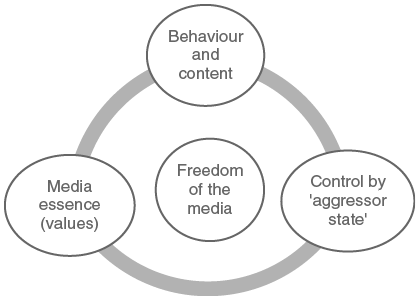
Figure 4.1 Long description
The balance between under- and overinclusion of sanctions of media outlets leading to undue restriction or the risk of ineffectiveness should be found by looking at: (I) The content of the messages and how these are disseminated by the respective outlet (‘Behaviour and content’); (II) to what extent the targeted outlets align with the essence of independent media and quality journalism (‘Media essence’); and (III) The level of involvement of an aggressor State with the outlets (‘Control by ‘aggressor State’).
4.5.1 Behaviour and Content
Disseminating illegal content or engaging in non-authentic behaviour, through, inter alia, the use of fake accounts, automated bots, or algorithmic amplification of content, is irreconcilable with any standard for quality journalism and independent media. Nevertheless, as explained in Section 4.4, it is only where messages or statements characterised as ‘propaganda’ or ‘disinformation’ effectively, substantially, and systematically overlap with illegal forms of speech (such as incitement to terrorism, ‘hate speech’, propaganda for war, etc.) that there is a convincing legal justification for restricting free speech, including through sanctions. The only content-based restriction in European jurisprudence without regard to the context and the effect is the public denial of the Holocaust.Footnote 68 Many occurrences of disinformation or propaganda, including those named in the EU’s restrictive measures, do not fall into this category. This does not make their content irrelevant, but it makes it insufficient to uphold such interference with fundamental rights. In light of the present confusion about the precise meaning and scope of ‘propaganda for war’, a modern UNHRC General Comment on that matter, taking on board the views and practice that have emerged over the last forty years, would be a very welcome and much-needed development.
When the illegality of content is disputed, the behaviour surrounding the dissemination of the messages could justify a legal response. The authenticity of the actors active on or within media outlets is directly connected to a democratic understanding of media freedom; automated content and the use of artificial personas and bots indicates a lack of transparency and lack of dedication by the media actors to contributing to democratic public debate.
4.5.2 Media Essence
Centralising the characterisation of the media entity as such, different indicators could be taken into consideration to differentiate independent news media from (state) propagandists, including by focusing on indicators that reflect the core of independent media and quality journalism.Footnote 69 Such indicators include the adherence to and actual use of editorial guidelines, journalistic professional standards, self-regulation mechanisms, and broad public control and/or transparency of media’s business side. These indicators are by no means exhaustive but help to gauge the level of opaqueness that is irreconcilable with the parameters of said standards.Footnote 70
4.5.2.1 Editorial Guidelines and Media Self-Regulation
Omnipresent propaganda and disinformation challenge public trust in the media are alien to the spirit of free media. They hit at the core of the prestige and respect that independent media can enjoy in a democratic society. This practice also makes bona fide journalists victims of intentionally false, manufactured, and biased news.
A feature of the media targeted by the sanctions, which was largely missing from the research and discussion of the issue, is that unlike their Western counterparts that target foreign audiences, none of the Russian international channels make publicly available their editorial guidelines (and we doubt that they exist at all) or programming principles, the editorial statutes (charters) of their media outlets, their professional and ethical codes for their journalists, or any other professional standards. Dmitri Kiselyov once made the illustrative remark that ‘[i]f we speak about the editorial policy, of course, I would certainly want it to be associated with love for Russia’.Footnote 71 The only identified standards in the national Russian media are the style guides, which, though they generally focus on how to structure and implement content rather than on substance, may still play an important role in terms of political editorial directives.Footnote 72 Research, however, shows that although the style guides exist, they are hardly used for editorial checks.Footnote 73
Forms of self-regulation may assist in finding the balance between independence and keeping political censorship at a distance, while imposing the necessary professional standards. The presence of self-regulation initiatives, through establishing independent press councils, (digital) ombudspersons, or organised peer review, has already been considered essential in realising free media as a pillar of democratic society. In addition to independence and ensuring professionalism, self-regulation also serves as a tool for media accountability.Footnote 74 Decisions of self-regulation bodies can also lay grounds for the courts and national regulatory authorities to distinguish bona fide journalists from propagandists who perform under the guise of media actors. The media councils of the countries of the EU Eastern PartnershipFootnote 75 (as well as their Russian equivalent) even conveniently approved, in 2016, specific and practical criteria to distinguish propaganda from journalism in mass media.Footnote 76
For a number of years, the ECtHR has reiterated that ‘[i]n a world in which the individual is confronted with vast quantities of information circulated via traditional and electronic media and involving an ever-growing number of players, monitoring compliance with journalistic ethics takes on added importance’.Footnote 77 As can be seen from a number of its judgements, the level of protection for journalists and other media actors under Article 10 (‘Freedom of Expression’) of the European Convention on Human Rights (ECHR)Footnote 78 often depends on whether they act in line with their professional standards as defined by domestic codes of practice and the assessments of domestic self-regulation bodies.Footnote 79 The ECtHR is very sensitive to the evaluations made by journalists’ self-regulation mechanisms in cases related to freedom of the media. When deciding whether or not the applicant mass media entity or journalist has additional privileges under Article 10 of the ECHR, the court has reasoned that violations of professional codes or rulings by press councils were sufficient indications for depriving the applicants of additional privileges under the right to freedom of expression.Footnote 80
To draw on the case of Russian ‘designated’ media, both RT and Sputnik have consistently refused to engage in available complaints procedures or self-regulation mechanisms.Footnote 81 Nor have they recognised the Russian Union of Journalists’ Code of Professional Ethics or the Ethical Standards of the MediaFootnote 82 – the only two practically applicable national codes – as professional standards.Footnote 83 Repeated violation of these standards by Russian state propagandists is also noted in the statements of international civil society organisations that advocate media freedom.Footnote 84 Although the Russian media are largely funded by the state, the conditions of their broadcast licences also do not refer to any editorial standards or accountability to the public. The CJEU, when adjudicating on the applicability of sanctions against Dmitry Kiselyov, referred in its judgement also to the resolution made by the Russian self-regulation body wherein it found that Kiselyov’s presentation of a TV programme on the coverage of events in Ukraine contained propaganda contrary to journalistic principles and aimed to manipulate Russian public opinion through disinformation techniques. It was then that Kiselyov refused to stand before the self-regulation body.Footnote 85
While the courts generally do not assess adherence to professional or ethical norms by the media and media professionals, such peer assessment may play a role in a court judgement as to the intent, approach, or (systematic) practice of media actors in disseminating lies and manipulating audiences.
4.5.2.2 Control Structures and Financial Transparency
The European media model comprises public service media involving the coexistence of public service, commercial, and community media.Footnote 86 This model does not envision, and can actually be threatened by, state-run media, a phenomenon that is in itself alien to freedom of expression in a democracy.
The role of the financial and organisational structures of media outlets within this sanction paradigm is twofold. In Russia, many large media companies are owned either by the state or by state-controlled oil/gas and financial companies.Footnote 87 Sectoral sanctions, such as those imposed in 2014 targeting the ‘parent’ companies, had already had an indirect effect on the Russian media landscape.Footnote 88 From the perspective of targeted sanctions, the extent to which media outlets are under (permanent) direct or indirect control of a state could be considered as having implications for their qualification as bona fide ‘independent media’ within a European model or as detrimental to media freedom ‘propaganda channels’,Footnote 89 thus facilitating an assessment of the appropriateness and proportionality of sanctions. In the case of Russian state-run media, several indicators show that these outlets again differ significantly from publicly owned Western media. They lack transparent organisational and financial structures; the degree of government involvement in their activities is significant, reflecting a lack of editorial independence;Footnote 90 and, remarkably, representatives of such outlets have even acknowledged their role in disseminating and amplifying Kremlin-driven narratives.Footnote 91 Detailed research has illustrated that their managerial structure, leadership hierarchy, and general staffing are near inscrutable. The same applies to their financial transparency: the outlets provide unverifiable and contradictory budgetary information and do not provide public budget sheets or detailed annual financial reports, even in violation of national reporting obligations.Footnote 92
Though a lack of transparency in these financial and organisational structures does not automatically mean that they are de facto agents of the state, the degree of affiliation provides a valuable indicator for standard setting: if these media outlets are under effective control of a state, they are less eligible to invoke freedom of expression rights.Footnote 93 Conversely, if this is not the case, the focal point of enquiry shifts towards determining whether the content’s nature allows for reasonably warranted limitations. Incorporating these indicators in future standard-setting would allow for a more objective determination based on the status of the actor.
4.5.3 Control by an ‘Aggressor State’
A more general indicator of the threefold approach to restrictive measures includes the state of origin rather than the media outlet itself. Intrinsically linked to the previously discussed indicators, it is the overt or covert involvement and influence of an aggressor state that ultimately makes the problem for the international community.
An example can be found in part of Ukraine’s sanction model. Following the Ukrainian Parliament’s declaration of Russia as an ‘aggressor state’ in 2015, a blanket ban on ownership or participation in television or radio entities that are registered in countries formally recognised as aggressor states was introduced, along with other restrictions.Footnote 94 Similarly, in the United States, there have been calls to impose the same label upon Russia, enabling maximum ‘diplomatic and economic tools’ and aiming to ‘create a blueprint for coordination with partners’.Footnote 95
Several neighbouring countries and the European Parliament have declared Russia a ‘state sponsor of terrorism’, another label instrumental in the country-of-origin considerations of media restrictions.Footnote 96 Outlets that are under the permanent direct or indirect control of such a state lose their claim of qualifying as independent media and cannot present their output as quality journalism. How and under whose authority such declarations or labels come into being, and which procedural safeguards are in place to prevent their arbitrary and abusive application, remain points of contention that warrant close scrutiny.
4.6 Conclusion
There is no doubt that current propaganda campaigns in favour of Russia’s armed invasion in Ukraine are full of disinformation and Kremlin narratives, and present risks to security in the EU and beyond. Security concerns should not, however, overtake the discussion on propaganda and disinformation today; the issue should rather be tackled jointly within both the human rights framework and that of national security and other public interests.
The right to freedom of expression is not absolute, and its exercise may indeed be subject to restrictions when necessary for the protection of internationally recognised interests. Such limitations may be relevant for both truthful and untrue information; however, they should always be proportionate and entail the least intrusive measures.
International law narrowly prohibits only some sorts of speech, such as propaganda for war and incitement to hatred, but does not prohibit speech on the grounds of its falsity. In the authors’ view, the modern national experience of introducing sanctions targeting Kremlin’s media actors – and having them approved by the national courts – served as a model for the EU’s post-2021 sanctions. Broadly formulated objectives that fall outside the paradigm of traditional economic sanctions, however, raise questions on effectiveness and undue reliance on equivocal legal doctrine that are cause for concern.
In the authors’ opinion, the same end can, however, be achieved through different, more fitting, means. For sanctions and other regulatory endeavours to be justified and to fit the liberal understanding of media freedom, there should be clearly defined criteria in international law. These should enable the distinguishing of alien propaganda channels from bona fide independent news media. The crucial indicators we have singled out, beyond actual content and behaviour, include those reflecting the nature of independent media and quality journalism (in the eyes of the professional community), as well as the absence of administrative and financial ties of media outlets with the state, especially when the state is formally recognised as an aggressor.
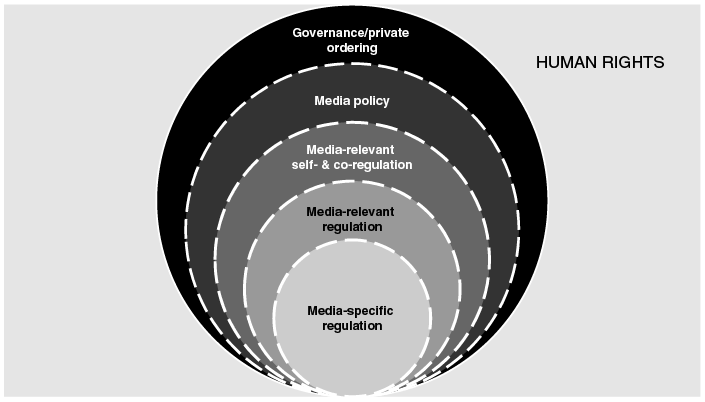
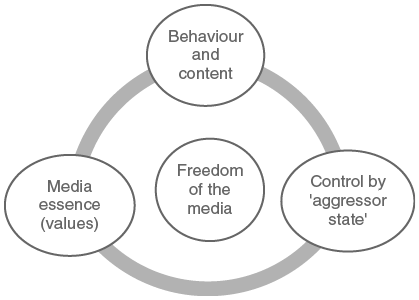

 Open access