




1. Introduction
Can cooperation arise in a one-shot social dilemma with self-interested individuals? Researchers have long found this question to be both intriguing and challenging. The general consensus is that cooperation cannot be supported in equilibrium unless there is an infinite repetition of the stage game. In an important theoretical contribution, Gallice and Monzón Reference Gallice and Monzón(2019) consider a setting where players sequentially decide whether to contribute to a public good and show that sustaining full cooperation as an equilibrium in a one-shot interaction is possible.
In such a sequential game, the classic backward induction argument renders any amount of cooperation impossible, let alone full contributions. However, if players do not know their position in the sequence and can observe the decisions of some of their predecessors (number of agents sampled), cooperation becomes feasible in theory. This is because, now, an agent who does not know her position bases her decision on the average payoffs from all possible positions and contributes to inducing her potential successors to do the same. Gallice and Monzón Reference Gallice and Monzón(2019) characterize a sequential equilibrium in a game with imperfect information in which all players contribute provided the return to contribution is higher than a threshold (lower bound), which is a function of the number of agents sampled and the total number of players in the game. Furthermore, this lower bound for full contribution is strictly increasing in the number of agents sampled.
The primary objective of our study is to explore the efficacy of this novel mechanism based on position uncertainty in fostering cooperation in a situation in which it would otherwise be impossible to observe such cooperation and to understand how this mechanism works in practice.Footnote 1 Does introducing position uncertainty affect contributions vis-à-vis an environment with complete certainty regarding the position of players in the sequence? How do contributions depend on the interaction between the returns from contributions and the number of agents sampled? To address these questions, we design a public goods game experiment based on position uncertainty. By implementing large groups through an eight-player game, we are able to execute the comparative statics exercise of varying the number of agents sampled for a large set of values.
We find that whether or not position uncertainty is beneficial as a mechanism in the provision of the public good depends on the benchmark for comparison. Contributions are indeed significantly higher when players make sequential decisions to contribute or not, are uncertain about their position in the sequence, and observe a sample of their predecessors’ choices when compared to the simultaneous-move game. At the same time, contrary to the theoretical prediction, contributions don’t unravel when players know their position in the sequence with certainty. As a result, there is no additional gain from introducing position uncertainty.
In our experiments, we find that a sequential-move structure is always preferred to a simultaneous-move game, irrespective of position uncertainty. Several studies have contrasted the sequential-move game with the simultaneous-move game. In an important theoretical contribution, Varian Reference Varian(1994) shows that the total amount of public goods provided in a sequential game is never larger than that provided in a simultaneous-move game. However, experimental studies have found that, under certain parameterizations, sequential mechanisms may raise more funds than simultaneous ones in public good games with two-person settings (Andreoni et al., Reference Andreoni, Brown and Vesterlund2002; Potters et al., Reference Potters, Sefton and Vesterlund2005; Gächter et al., Reference Gächter, Nosenzo, Renner and Sefton2010).Footnote 2 $^,$Footnote 3 In contrast to these studies, we employ a large group of individuals, and we are interested in the efficacy of the new theoretical mechanism of position uncertainty introduced in Gallice and Monzón Reference Gallice and Monzón(2019).
Our results strongly suggest that observing a sample of predecessors’ actions is pivotal in supporting high contributions, apart from the returns to the contribution parameter. At the same time, however, we find that the specific sample size is unimportant in predicting contribution levels. This sample size irrelevance result is in contradiction to the theoretical arguments. If the return to contribution is neither too low nor too high, theory predicts that increasing the number of agents sampled results in the equilibrium changing from supporting full contributions to the unique zero contribution equilibrium. However, we do not find any difference in the average contribution rates as we vary the number of agents sampled.
We also observe that the player in the first position has the highest contribution. Furthermore, contributions are weakly monotonic in a player’s position: controlling for the number of contributions seen within the sample, individuals late in the sequence contribute (weakly) less than those making their decisions earlier. This behavior is consistent with the notion that players deciding early in the sequence contribute more in the expectation of inducing their successors to contribute. Moreover, it is reminiscent of the leading-by-example behavior reported in several experiments on public goods provision (Güth et al., Reference Güth, Levati, Sutter and van der Heijden2007; Levati et al., Reference Levati, Sutter and van der Heijden2007; Potters et al., Reference Potters, Sefton and Vesterlund2007, among others).Footnote 4
Given a value for return to contributions and the number of agents sampled, individuals’ contribution rates are strikingly similar at extremely high levels when the sample contains full contributions, irrespective of their position. This feature is consistent with the main reasoning in Gallice and Monzón Reference Gallice and Monzón(2019), viz., contributions at the beginning of the sequence induce potential successors to do the same. However, a drastic decline in contributions is noted with being late in the sequence when a full defection sample is observed. Furthermore, contributions monotonically increase with an increase in the observed contribution in the sample containing defection. In theory, an individual who receives a sample that contains either full or partial defection cannot prevent further defection by contributing. Since she cannot affect her successors’ decisions, she is better off responding to defection with defection. However, for a sample containing defection, such an extreme prediction of zero contributions is not observed in our data.
In concurrent work, Anwar and Georgalos Reference Anwar and Georgalos(2024) study a four-player sequential public goods game when individuals are presented with partial information about past contributions and face uncertainty regarding their position in the sequence. They report that only about a quarter of participants behave according to theory, while a vast majority of subjects can be classified as conditional cooperators or altruists.Footnote 5 They also find that their results are consistent with the prediction that full contribution unravels when subjects are aware of their position in the sequence and that the public good provision is maximized when there is position uncertainty and subjects observe only the immediate predecessor’s action.
Our larger group size of eight further allows us to test a richer set of predictions borne out by the interaction of the two main factors that determine whether or not full contribution can be supported in an equilibrium, viz., the returns to contributions and the number of agents sampled. In contrast to Anwar and Georgalos Reference Anwar and Georgalos(2024), contributions do not unravel with position certainty in our data, and the incremental benefit of introducing position uncertainty is minimal. The large group size prevents the drastic drop in contributions for those in the second half of the sequence when individuals know their position and are aware of the decisions of their predecessors. Relative to Anwar and Georgalos Reference Anwar and Georgalos(2024), we provide a sharper characterization of the drivers of cooperation. It is the observability of past actions, and not the presence of position uncertainty, that fosters cooperation. The larger group size in our study makes it easier to tell apart the effect of past observability of actions from the effect of position uncertainty.
Our paper can also be related to the literature on irreversibility and cooperation. Theoretical studies have shown that cooperation is feasible in social dilemma situations having a dynamic structure when actions are continuous and irreversible, as individuals can “start small” and build cooperation over the time horizon (Marx and Matthews, Reference Marx and Matthews2000; Lockwood and Thomas, Reference Lockwood and Thomas2002; Guéron, 2015). Several experimental papers have confirmed that such incremental mechanisms where players can only revise their contributions upward help a group achieve a higher provision of the public good (Dorsey, Reference Dorsey1992; Kurzban et al., Reference Kurzban, McCabe, Smith and Wilson2001; Goren et al., Reference Goren, Kurzban and Rapoport2003; Goren et al., Reference Goren, Kurzban and Rapoport2004; Duffy et al., Reference Duffy, Ochs and Vesterlund2007).Footnote 6 In contrast, in our sequential-move game, each player can move only once and must either contribute or keep her entire endowment, so that the action space is binary. Therefore, the mechanism at play in our setting is arguably different from the idea of building cooperation gradually.
The remainder of the paper is organized as follows. Section 2 presents the theoretical model, and section 3 lists the central hypotheses we test using our data. The experimental design is specified in section 4. Section 5 presents the experimental results and analysis. The last section concludes.
2. Theoretical model
The model is based on Gallice and Monzón Reference Gallice and Monzón(2019), who consider a set of risk-neutral agents,  $\mathcal{I}=\{1, . . . , n\}$ involved in a game of public good provision. These players are exogenously placed in a sequence that determines the order of play. All permutations of assignment of an agent to a position in the sequence are ex-ante equally likely so that players have symmetric position beliefs.
When it is her turn to play, agent  $i \in \mathcal{I}$ first observes a sample of her predecessors’ actions, then chooses one of the two actions $a_i \in \{C, D\}$.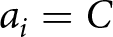 $a_i=C$ denotes contributing a fixed amount of 1 to a common pool (synonymous with cooperation), while $a_i=D$ means investing nothing and stands for defection. After all players choose an action, the total amount invested gets multiplied by the return from contributions parameter r and is equally shared among all agents. Let $G_{-i} = \sum_{j\neq i}^{}\mathbb{1}\{a_j=C \}$ denote the number of other players who contribute, so $G_{-i}\in\{0, . . . , n-1\}$. The payoffs for player i can thus be expressed as:
 \begin{equation*}u_i(C, G_{-i}) = \frac{r}{n} (G_{-i} + 1) - 1\end{equation*}
 \begin{equation*}u_i(D, G_{-i}) = \frac{r}{n}G_{-i}\end{equation*}
 It is assumed that  $1 \lt r \lt n$, so although contribution by all agents is socially optimal, each agent strictly prefers to defect for any given G −i. Otherwise, a unique full contribution equilibrium will exist, eliminating the social dilemma.
Before an agent decides to contribute, she observes how many of her k immediate predecessors contributed. Agents in positions 1 to k observe fewer than k actions as they have fewer than k predecessors.  $\xi=(\xi^{'},\xi^{''})$ denotes a sample, where the first component shows the number of agents sampled, and the second component gives the number of agents in the sample who contributed. The first agent in the sequence receives a sample $(0,0)$, while the ones in positions 2 to k observe the actions of all their predecessors. Thus, the first k agents can infer their exact position from the sample size they receive. However, the other agents do not know their exact position in the sequence and must form beliefs about their position and the play of their predecessors.
In their main theoretical result, Gallice and Monzón Reference Gallice and Monzón(2019) show that an equilibrium exists in which all agents contribute if r is greater than a threshold that is a function of k and n.Footnote 7 $^,$Footnote 8 The equilibrium profile of play prescribes that an agent contributes if he observes a sample without defection and does not contribute otherwise.Footnote 9 Position uncertainty can make every agent who observes only contributors willing to contribute. To see this, consider an agent who observes k agents contributing. Then, she knows she is not in the first k positions and has an equal probability of being in any position $\{k+1,...,n\}$. Thus, her expected position is $(n+k+1)/2$, and she expects $(n+k-1)/2$ agents to have already contributed. Therefore, her expected payoff from defecting is $(r/n)(n+k-1)/2$, and the expected payoff from contributing is r − 1Footnote 10. Contribution then requires:Footnote 11
 \begin{equation*} r \geq 2\Bigg(1 + \frac{k-1}{n-k+1}\Bigg) \end{equation*}
However, when an agent observes a sample with defection, the equilibrium profile of play requires that she defects. This is optimal because she cannot prevent her successors from defecting, regardless of the value of r.
3. Hypotheses
We test several hypotheses regarding (a) the effect of introducing position uncertainty on contributions and (b) comparative statics of changing the return from contributions and the number of agents sampled in the presence of position uncertainty. The following hypotheses are derived by comparing the best equilibrium achievable under the different mechanisms based on the theoretical model discussed in the previous section.
3.1. Position certainty: unravelling of contributions
When agents get no information about their predecessors’ actions, i.e., k = 0, the setting becomes strategically equivalent to a simultaneous-move game. The unique equilibrium involves zero contribution from each player, which serves as the simultaneous-move benchmark.Footnote 12 When agents know their position and each agent can observe the actions of her predecessors, the standard backward induction argument applies.Footnote 13 The agent at the last move has a dominant action to defect, and assuming sequential rationality, contributions would unravel. The unique subgame-perfect equilibrium predicts no contribution from each player. This leads to our first hypothesis.
Hypothesis 1. With  $1 \lt r \lt n$, when players know their position and can observe their predecessors’ actions (position certainty), contribution rates are the same as in the simultaneous-move setting.
3.2. Introducing position uncertainty
With position uncertainty, if  $r\geq 2\big(1 + \frac{k-1}{n-k+1}\big)$, then an equilibrium exists in which all agents contribute. Therefore, we have the following hypothesis using either k = 0 or the position certainty as the benchmark.
Hypothesis 2. With  $2\big(1 + \frac{k-1}{n-k+1}\big)\leq r \lt n$, compared to either the simultaneous-move game or the setting with position certainty, contribution rates are higher when players do not know their position and can observe k immediate predecessors’ actions.
3.3. Position uncertainty: comparative statics
Within the setting of position uncertainty, the lower bound on r for full contribution  $\Big(2\big(1 + \frac{k-1}{n-k+1}\big)\Big)$ strictly increases in k. Consequently, keeping r fixed, the effect of changing k depends on the exact value of r. If r is either too high or too low, increasing k will not affect the equilibrium prediction.Footnote 14 However, a range of values of r exists for which the equilibrium changes from supporting full contributions to the unique zero contribution one as k is increased.Footnote 15 The third hypothesis is thus:
Hypothesis 3. In the presence of position uncertainty, given a value for the return from contributions, an increase in the number of agents sampled (weakly) lowers contributions.
Similarly, fixing k at a suitable value, increasing r changes the equilibrium prediction from a unique zero contribution to supporting full contributions.Footnote 16 For example, if k = 5 and r = 3, there is a unique zero contribution equilibrium, but as r is increased to 5, a full contribution profile can also be supported as an equilibrium. Our final hypothesis thus is as follows.
Hypothesis 4. In the presence of position uncertainty, given a value for the number of agents sampled, an increase in the return from contributions (weakly) increases contributions.
4. Experimental design, procedures and treatments
4.1. Design and procedures
The data for this study were gathered from 17 experimental sessions conducted at the Nanyang Technological University (NTU), Singapore, using 288 subjects. They were recruited from the population of students at NTU from various majors. No subject participated in more than one session of this experiment. The sessions lasted approximately one hour, and participants earned, on average,  $S\$11$ in addition to a show-up fee of $S\$2$. The experiment was designed using the oTree platform (Chen et al., Reference Chen, Schonger and Wickens2016).
Upon arrival, subjects were seated at visually isolated computer workstations. We ensured anonymity by assigning each participant a random numerical ID as their identifier throughout the experiment. The instructions, which the experimenter read aloud, were also displayed on the participants’ computer screen, and the participants had access to these instructions throughout the experiment.Footnote 17 In addition, to ensure that participants clearly understood the experiment, they were presented with a comprehension quiz before making any decisions. They were required to answer all questions in the quiz correctly. The public goods games were described as “tasks” for participants to mitigate framing effects.
Each experimental session was divided into a “Game Phase” and a “Questionnaire Phase”. In the “Game Phase”, participants were allocated to groups and played 40 rounds of the sequential public goods game. In each round, participants were exogenously placed in a sequence and were assigned positions between one and eight in each sequence in a pre-fixed manner.Footnote 18 Subsequently, they were given a token that could be contributed to a common pool or kept by the subject.
Thereafter, the subjects were presented with every scenario that could arise depending on their position and the number of agents sampled. Then, their contribution decision was elicited for each of these scenarios. For example, if k = 2, the person in the first position was presented with a single scenario of (0, 0), and she had to decide whether or not to contribute her token. However, the participant in the second position was presented with two scenarios, (1, 0) and (1, 1), and she needed to decide whether to contribute in each scenario. Participants in positions 3 to 8 were presented with (2, 0), (2, 1), and (2, 2), and they had to make contribution decisions for each scenario. We implement a strategy method instead of letting the sequential-move game play out in the usual fashion in the laboratory. This is because, in the latter case, participants beyond the first k positions could have predicted their exact positions more precisely—they would infer that the more they had to wait for others to make a decision, the later in the sequence they were. This high correlation between the wait time and lateness in the sequence would result in players’ beliefs about their position being different from what is assumed in the theory. A strategy method alleviates this problem.
When a round ended, participants’ payoffs were calculated based on the realized subset of decisions they had made. For example, suppose the participant in the first position decided to contribute at (0, 0). Thus, the relevant decision for the participant in the second position would be the decision made by the subject for the (1, 1) scenario, and her decision for (1, 0) would not be considered when calculating the payoff for that round. If the participant in the second position decided to contribute in the (1, 1) scenario, then the relevant decision for the third person in the sequence would be her choice given the (2, 2) scenario; otherwise, the realized decision for the third person would be her contribution decision following the (2, 1) scenario. This series of realized decisions would determine the individual contribution, total contributions, and, thus, the individual payoff for each person in every round. Eight of the forty rounds were randomly selected for payment purposes.
To what extent does our experiment approximate the one-shot environment considered in Gallice and Monzón Reference Gallice and Monzón(2019)? Although participants played forty rounds within the same group, they were not provided with any information regarding their group composition. It was also not possible to identify or track the behavior of specific group members across rounds. Participants only observed the aggregate contributions from sampled predecessors, with no persistent identifiers or histories. This makes the use of reputational strategies highly unlikely in our data. Furthermore, given that the experimental setup involves several repetitions, some participants may attempt to influence the future behavior in the population by “teaching” others through their own actions across multiple rounds. These incentives, however, are likely to be weak, given that not all, but only a random subset of rounds, are paid.
Upon concluding the “Game Phase”, individuals proceeded to the “Questionnaire Phase”, which consisted of three decision-making tasks measuring each participant’s level of altruism, backward induction thinking capability, and risk aversion. The first task was the “Dictator Game”, where participants were given an amount and asked what portion (up to 100%) they wanted to keep for themselves and what portion they wanted to distribute to others.Footnote 19 The second task was “Hit 15”, where participants took turns adding 1 or 2 points to a pot against a computer player who started first and had to add 1 or 2 points to a pot too. The last player who manages to add the points that cause the pot to hit 15 points would be the winner, and they would earn a payoff. In the final task, subjects participated in the standard risk-elicitation task (Holt and Laury, Reference Holt and Laury2002).Footnote 20
4.2. Treatments
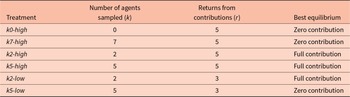
In our experiments, n = 8, and we implemented a total of six treatments. The first two treatments had k = 0 and k = 7, corresponding to the simultaneous-move setting (k0-high) and sequential-move with complete position certainty (k7-high), respectively. The returns from contribution were fixed at r = 5. Given the parameters, the unique equilibrium entails zero contribution in both treatments.
The other four treatments had the setting of position uncertainty with k > 0. We varied r (5 or 3) and k (2 or 5) in a  $2\times 2$ design. When the return from contributions is low (r = 3), and the number of agents sampled is high (k = 5), the condition for supporting full contribution in equilibrium is not satisfied, and the unique equilibrium entails zero contributions. A comparison of contribution rates across k0-high, k2-high, k5-high, and k7-high allowed us to test the first three hypotheses. The treatments with position uncertainty with positive k were designed to test the hypotheses on comparative statics. Table 1 provides a summary of the treatments.
Summary of treatments
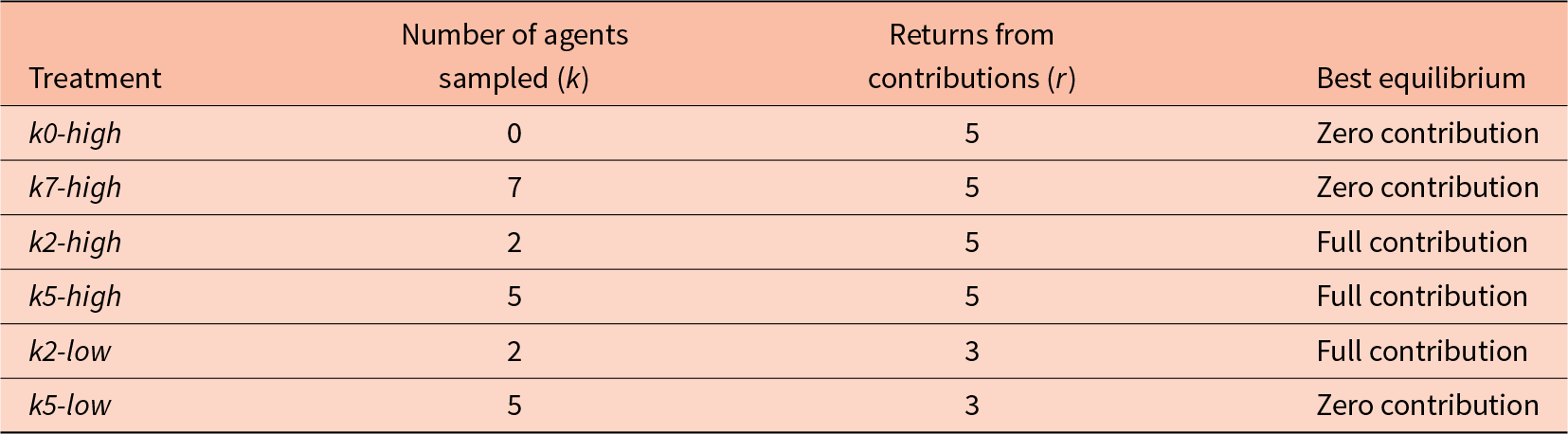
Notes: Best equilibrium refers to equilibrium with the highest payoffs achievable, given the number of agents sampled (k) and returns from contributions (r).
5. Results
We first present the results from testing the specific hypotheses using realized contributions. Section 5.2 provides a discussion on the effect of position uncertainty on decay in contributions over time. An analysis of contribution decisions based on observed samples of full, partial, and no contributions is presented in subsection 5.3. The final subsection discusses contribution behavior as a function of a player’s position.
5.1. Realized contributions and test of hypotheses
Using realized decisions, Figure 1 plots the average values of the sum of contributions in a group for each treatment. Contributions are well above the unique prediction of zero, with k7-high resulting in substantially higher contributions than its simultaneous-move counterpart (k0-high). At the same time, the sum of contributions in a group remains around the level of five out of eight, irrespective of the value of k when the return to contributions is high. Moreover, the returns from contributions have a sizeable effect. Keeping the number of agents sampled constant at either k = 2 or k = 5, the sum of contributions in a group gets reduced by two when the returns are lowered.
Sum of contributions in a group, using realized decisions

In order to test our hypotheses, we conduct an OLS regression analysis with the sum of contributions in a group in a round as the dependent variable. We use the realized decisions, and the independent variables are the treatment dummies based on the specific hypothesis being tested. The standard errors are clustered at the group level. Table 2 summarizes the regression results. We observe that moving from the simultaneous-move to the sequential-move structure increases contributions significantly, even when there is position certainty. Therefore, rejecting our first hypothesis, we have the following result.
Result 1 (Position certainty versus simultaneous-move)
Contribution rates are higher when players know their position and can observe their predecessors’ actions compared to the simultaneous-move setting.
OLS Regression analysis of the sum of contributions in a group

Notes: The dependent variable is the sum of contributions in a group in a round, using realized decisions. The independent variables are the treatment dummies. Standard errors clustered at the group level are in parentheses.
** p < 0.05, *** p < 0.01.
When players are uncertain about their position, as in k2-high and k5-high, Table 2 shows that contribution rates are significantly higher against the benchmark of k0-high, but there is no difference in contributions compared to k7-high. There is no incremental positive effect of introducing position uncertainty over and above the benefit obtained by moving from the simultaneous move to the sequential move with position certainty. Thus, partially supporting our second hypothesis, we have the following two results.
Result 2 (Position uncertainty versus simultaneous-move)
Contribution rates are higher when players do not know their position and can observe k immediate predecessors’ actions compared to the simultaneous-move setting.
Result 3 (Position certainty versus uncertainty)
Contribution rates are similar when players do not know their position and can observe k immediate predecessors’ actions compared to the setting with position certainty.
Table 2 further shows that, in contradiction to theoretical arguments, contributions are invariant to the change in the number of agents sampled. This is true for each level of r. Table 2, therefore, suggests that while observability of predecessors’ actions is important, the specific number of predecessors sampled is not pivotal for contributions. Contrary to hypothesis 3, our next result is thus:
Result 4 (Sample size irrelevance)
In the presence of position uncertainty, ceteris paribus, an increase in the number of agents sampled does not lower contributions.
Finally, it can be observed that keeping the value of k constant, changing r strongly affects contributions. Supporting hypothesis 4, we have the following result.
Result 5 (Returns to contributions salience)
In the presence of position uncertainty, ceteris paribus, an increase in the returns from contributions increases contributions.
5.2. Decay in contributions
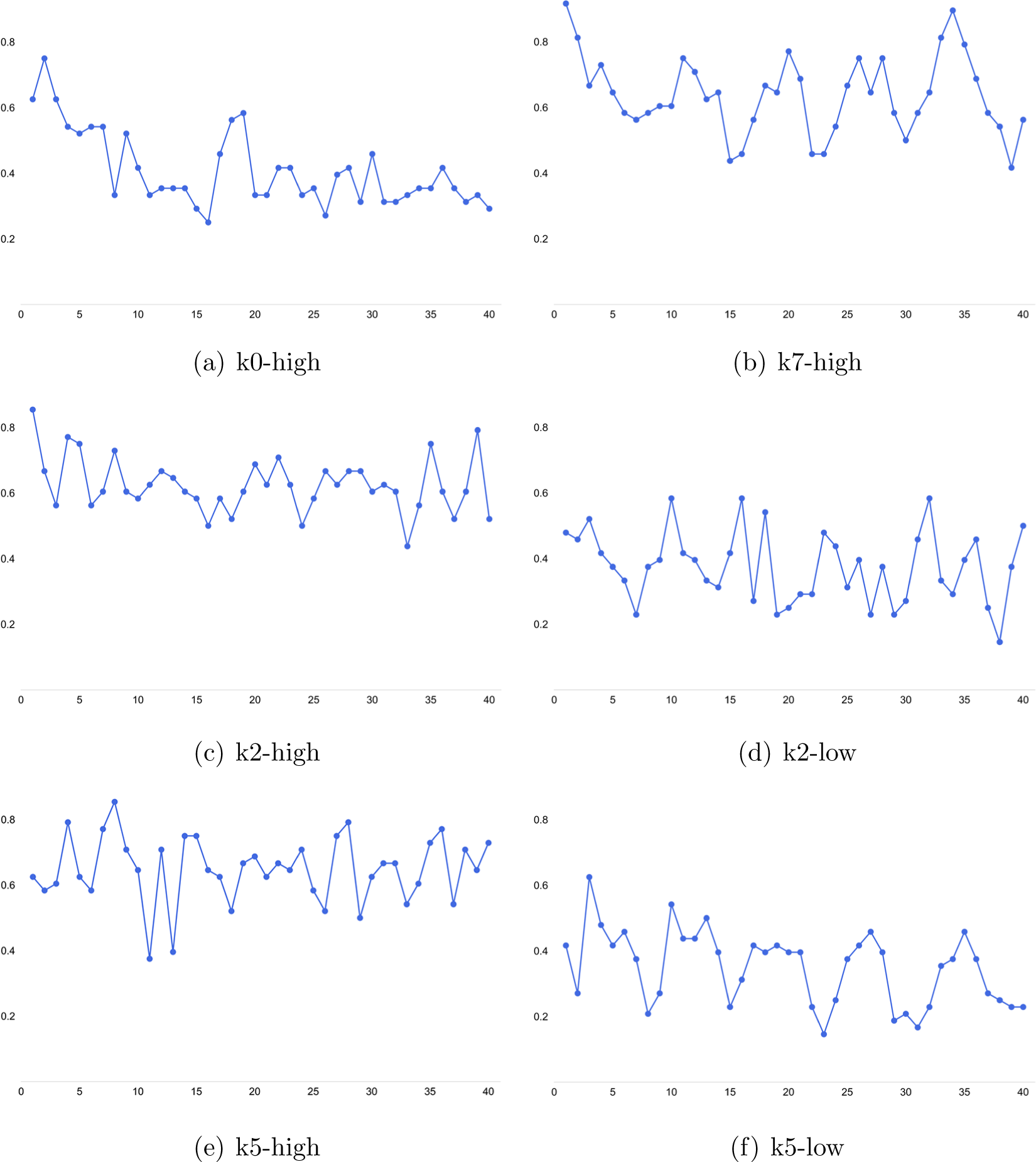
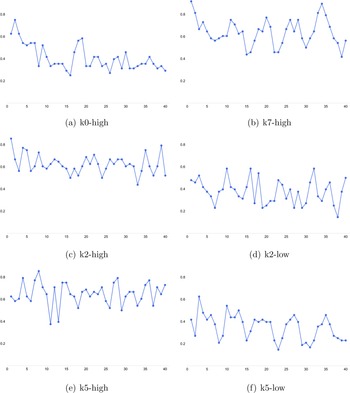
Figure 2 further displays the evolution of contributions over forty rounds in each treatment, using realized individual decisions. In the simultaneous-move game (k0-high), there is a steep and sustained decay in contributions until round 15 before stabilizing in the second half of the experiment. k7-high also displays an initial decline in contributions, but the duration of such decay is less sustained when compared to k0-high. With position uncertainty, however, the trend in contributions seems to be either constant or decline only slightly over rounds, suggesting that position uncertainty might be playing a positive role in preventing the decay in contributions (comparing treatments with r = 5). Figure 2 also shows that contributions are more volatile with position certainty than without (comparing k7-high to k5-high/k2-high). Moreover, with position uncertainty, contribution levels are more varied when returns are lower.
Contribution over rounds, using realized individual decisions
Result 6 (Decay of contributions)
There is minimal decay in contributions over time in the presence of position uncertainty.
Decay in contributions has been observed consistently in linear public goods experiments (Andreoni, Reference Andreoni1988; Ledyard, Reference Ledyard, Kagel and Roth1995). The literature on punishment in public goods games has further shown that contributions decline over time without punishment opportunities (Fehr and Gächter, Reference Fehr and Gächter2000). Our above result suggests that it is possible to prevent this decay without the availability of punishments or rewards by changing the game into a sequential-move setting and introducing position uncertainty.
5.3. Contribution decisions based on observed samples
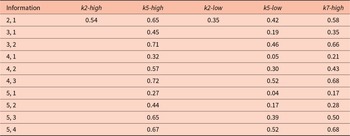
Recall that  $\xi=(\xi^{'},\xi^{''})$ denotes a sample, where the first component shows the number of agents sampled, and the second component gives the number of agents in the sample who contributed. We now analyze the average contribution rates given different subsets of information (or samples) observed by the participants. Table 3 presents the average contribution rate across all treatments, given that participants observe a sample of full contribution. In theory, zero contribution is always predicted for the columns with greyed-out text. For the other columns, the full contribution is predicted in this particular table since a sample of full contribution is observed.
Average contribution by information for each treatment given that full contribution is observed

Note: The decisions corresponding to the observed sample of full contribution are used, including both realized and unrealized decisions. Theory predicts zero contribution for the treatments with greyed-out text. For the other treatments, full contribution is predicted as a sample of full contribution is observed.
It can be readily observed from Table 3 that the theoretical prediction does not hold in data. Given a sample of full contributions, contribution rates are around  $80\%$ with or without position uncertainty, as long as r = 5. Similarly, when a sample of full contribution is observed, subjects contribute, on average, about $60\%$ with r = 3, irrespective of the value of k. The sample size irrelevance and salience of returns to contributions continue to hold when a history of full contribution is observed.
Table 4 gives the average contribution rates when participants observe a sample of zero contribution. Given the same information sample, with k ≠ 0, the return from contributions, rather than the magnitude of k, continues to be the key determinant of contribution rates. Furthermore, there is no difference in contribution rates between the various positions within each treatment when a full contribution sample is observed. However, this is no longer the case with a zero contribution sample. Unlike the decisions given a full contribution sample, when a zero contribution sample is observed, there is a drastic decline in contribution between the first and second positions, which tapers off as the position in the sequence increases.
Average contribution by information for each treatment given that zero contribution is observed
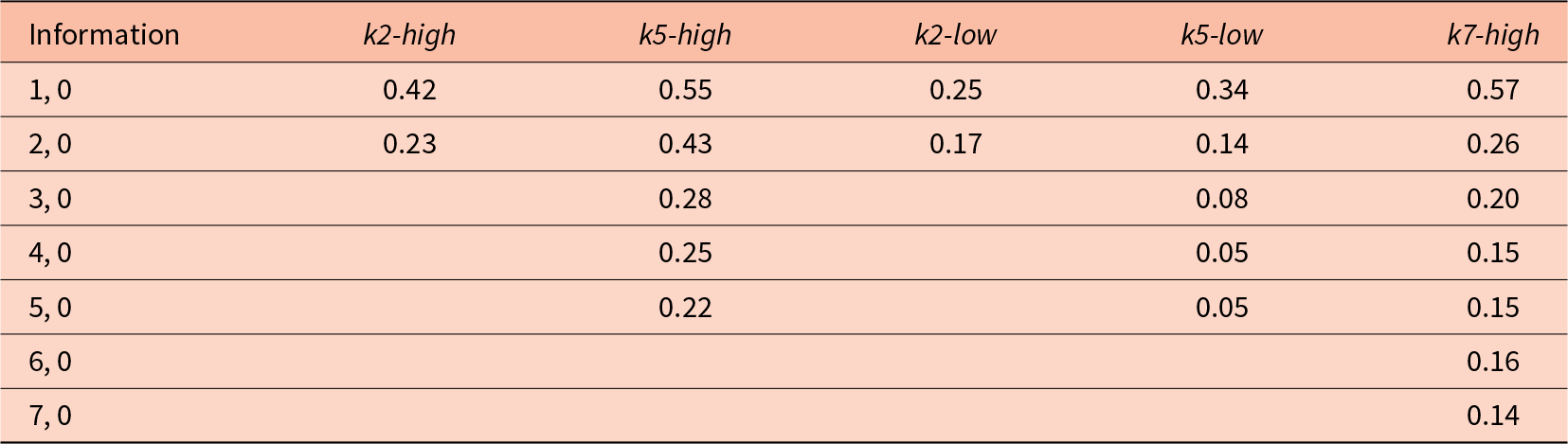
Note: The decisions corresponding to the observed sample of zero contribution are used, including both realized and unrealized decisions. Theory predicts zero contribution for all treatments.
The average contribution rates when participants observe partial contribution in the sample are presented in Table 5. The entries for treatments with k = 5 and k = 7 clearly show that contribution monotonically increases with an increase in the observed contribution in the sample. Participants behave differently from what the theory predicts. The contribution decision follows more of a smooth curve relative to the observed contribution in the sample rather than a steep cutoff to zero after not witnessing a full contribution sample. Additionally, if the contribution in the observed sample is very high but not at the maximum, the majority of individuals still would choose to contribute.
Average contribution by information for each treatment given that partial contribution is observed
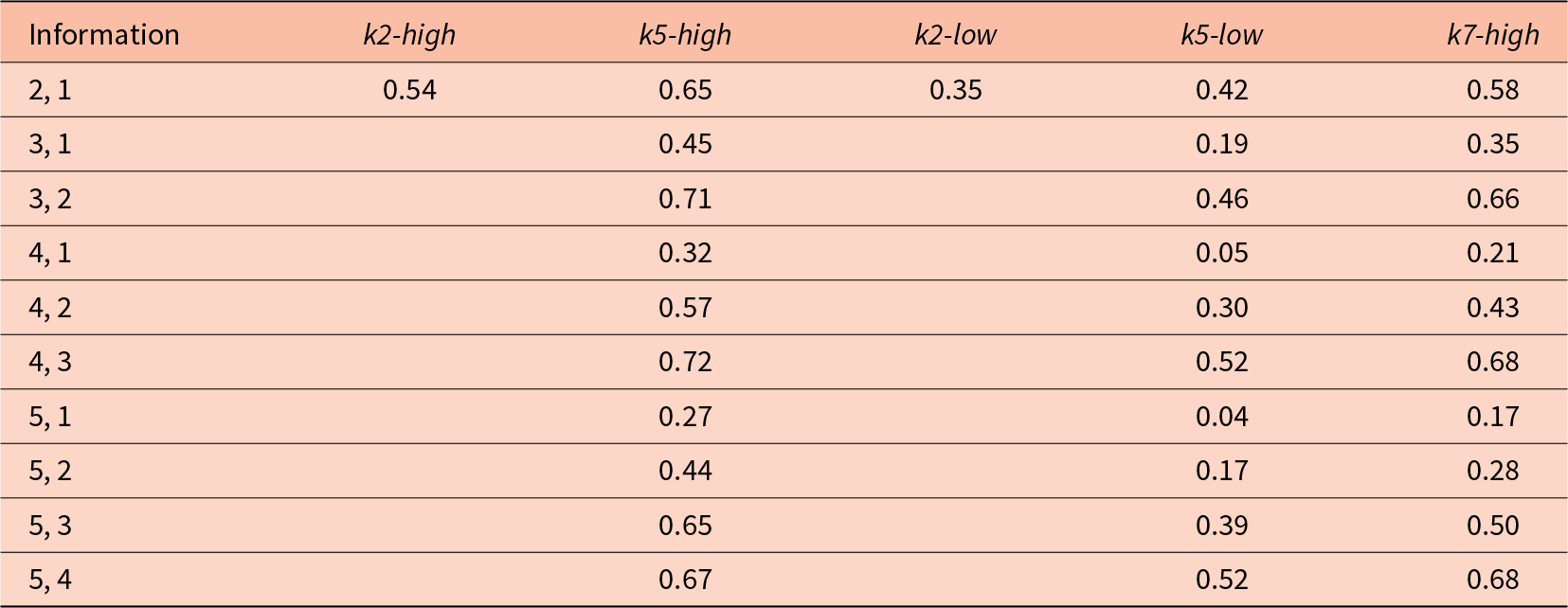
Note: The decisions corresponding to the observed sample of partial contribution are used, including both realized and unrealized decisions. Theory predicts zero contribution for all treatments.
5.4. Contributions as function of position
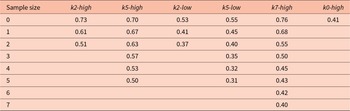
Table 6 provides each treatment’s average contribution values by sample size. We see that, within a treatment, the earlier the position, the higher the level of contribution. However, the decline in contribution due to the lateness in sequence is not too drastic. Even when there is position certainty, the drop in average contributions is quite gradual for the last four positions, and the values do not fall below 0.40 for any position.
Average contribution by sample size for each treatment
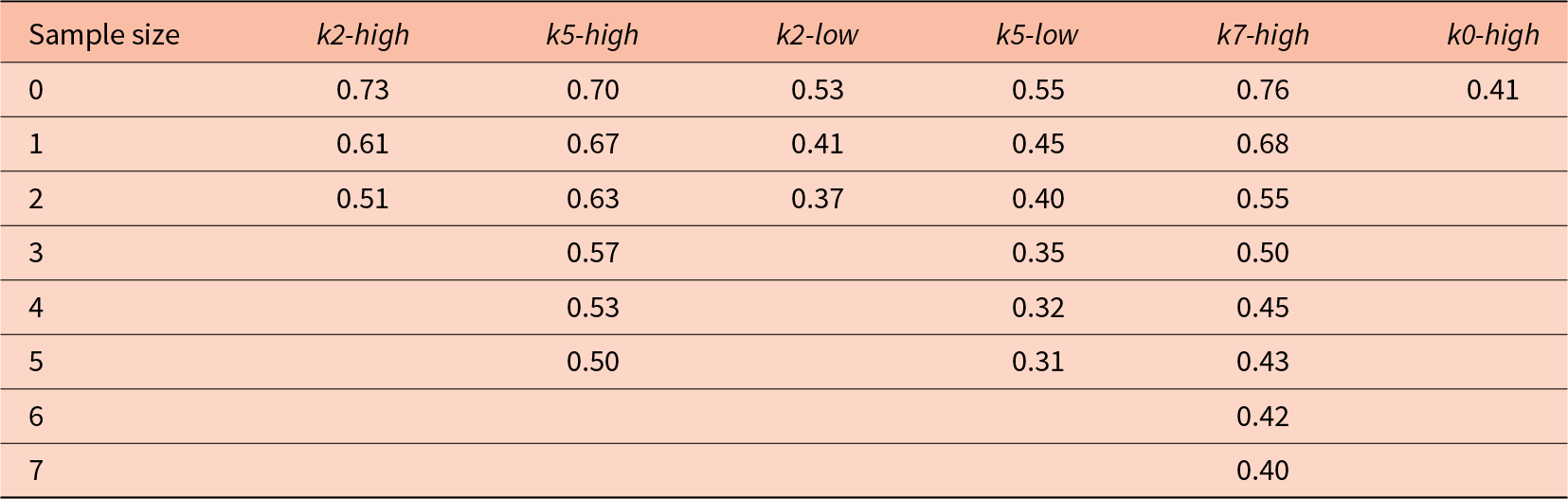
Note: Sample size refers to the number of predecessors observed by a participant when making the contribution decision. All decisions, both realized and unrealized, are included in the calculations. Taking the k2-high treatment as an example, the average of all contribution decisions observed for the information (2, 0), (2, 1), and (2, 2) is 0.51. Theory predicts zero contribution for the treatments with greyed-out text. For the other treatments, full contribution is predicted as long as a sample of full contribution is observed.
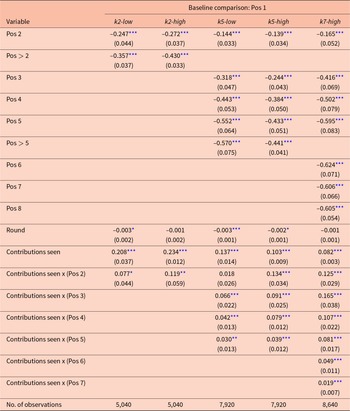
In order to better understand the quantitative effect of the position in the sequence on contributions, we conduct logistic regressions for each treatment with the participant’s contribution decision as the dependent variable. We use all decisions made by a subject when inputting their strategy profile for each round. That is, both realized and unrealized decisions are utilized. The explanatory variables include the position dummies, the round number, contributions seen (defined as the sum of contributions in the observed sample), and interaction variables between contributions seen and position dummies. The marginal effects from the regressions are provided in Table 7 with the subject in the first position as the reference/baseline category.
Marginal Effects from Logit regressions of “Contribute” at the decision level: k2-low, k2-high, k5-low, k5-high, and k7-high
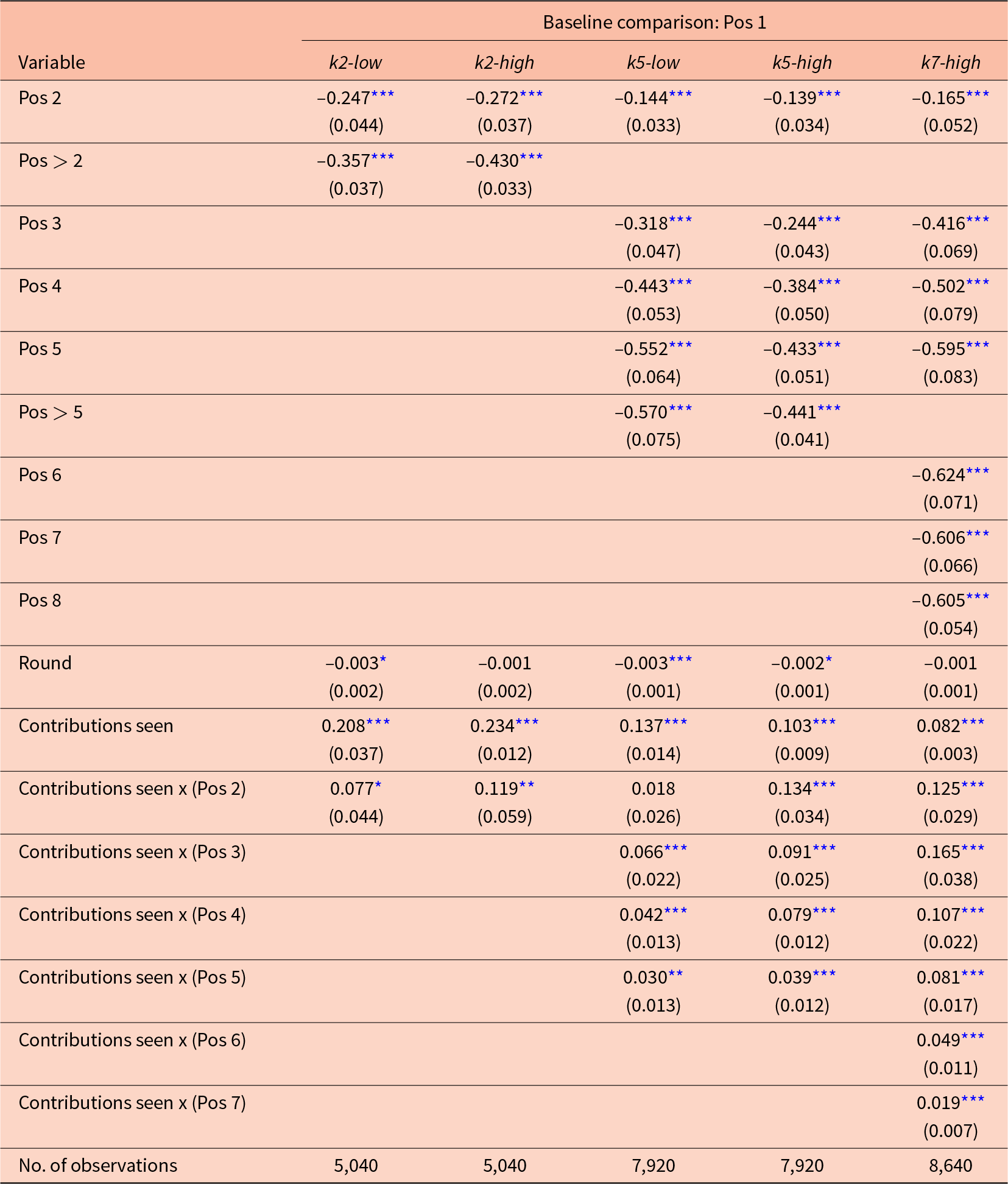
* Note: p < 0.1, ** p < 0.05, *** p < 0.01. Marginal effects from Logit regressions of “Contribute” using decision-level data. Each observation is a decision made by a subject, irrespective of whether it was realized, where “Contribute” = 1 if the subject’s decision is to contribute. “Contribute” is equal to 0 otherwise. Standard errors clustered at the group level are in parentheses.
The results show that contributions monotonically decrease with lateness in the sequence. On average, the difference in contribution rates between positions is highly significant in the first few positions. The likely reason is that players deciding early in the sequence contribute more in the expectation that their contribution behavior induces the successors to contribute.
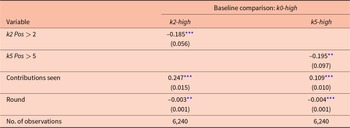
Table 8 provides the marginal effects from regressions using data for participants unaware of their exact position. We compare the contribution rates of such individuals in k2-high and k5-high against the benchmark of k0-high. k2 Pos > 2 (k5 Pos > 5) equals 1 if the participant is not located in the first two (five) positions. As can be observed, the contribution rate is significantly lower for the participants in k2-high and k5-high as these individuals are aware of their lateness in the sequence, although they do not know their exact position. They have a larger incentive to defect as they are less able to influence the decisions of others due to their late position.
Marginal Effects from Logit regressions of “Contribute” at the decision-level: unknown position
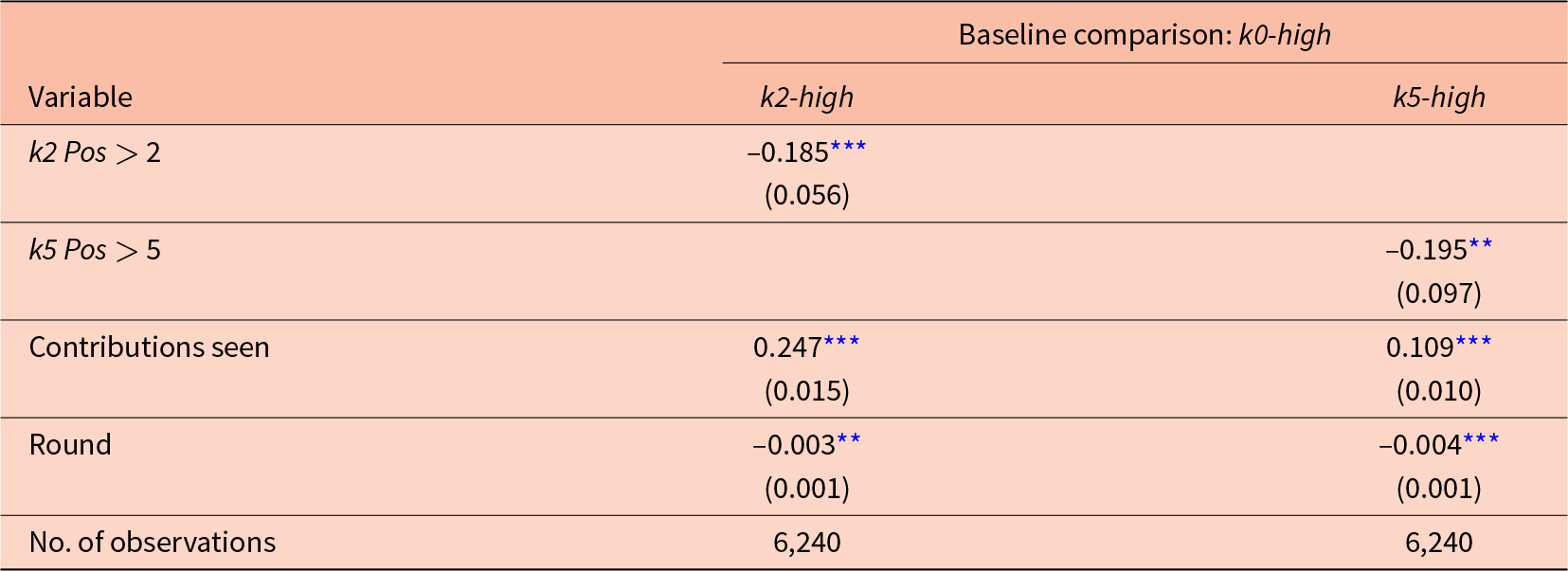
** Note: p < 0.05, *** p < 0.01. Marginal effects of Logit regressions of “Contribute” using decision-level data for participants who do not know their position. Each observation is a decision made by a subject, irrespective of whether it was realized, where “Contribute” = 1 if the subject’s decision is to contribute. “Contribute” is equal to 0 otherwise. Standard errors clustered at the group level are in parentheses. k2 Pos > 2 (k5 Pos > 5) equals 1 if the participant is not located in the first two (five) positions.
The discussion in this subsection can be summarized as follows:
Result 7 (Contributions as function of position)
Contributions weakly decline with lateness in the sequence.
6. Conclusion
This study reported results from a laboratory experiment designed to test the efficacy of a novel mechanism featuring position uncertainty and direct observation of immediate predecessors’ actions, theoretically proposed by Gallice and Monzón Reference Gallice and Monzón(2019), in promoting cooperation in a one-shot sequential public goods game. We find that contributions are higher when players choose sequentially whether to contribute or defect, are uncertain about their position in the sequence, and observe a sample of their predecessors’ choices compared to the simultaneous-move game. Yet, the additional gain from introducing position uncertainty is limited as contributions are high even when players know their exact location in the sequence. Therefore, our results demonstrate that position uncertainty is not a key determinant of cooperation.
The theoretical argument that supports the strategy prescribing contribution unless observing a defection as an equilibrium in the game with position uncertainty relies on two main insights. First, if not for position uncertainty, then those placed early in the sequence would contribute if they could induce their successors to contribute as well. However, contributions would unravel as late players would rather free-ride on the contributions of those moving early. Second, if a player does not know her position, she bases her decision on the average payoffs from all possible positions. Then, she contributes in order to induce her potential successors to do the same.
The first insight is not supported by data, as contributions do not unravel with position certainty. Then, what is the pivotal factor determining whether we observe high contribution levels or not? Apart from the return from contributions parameter, observing a sample of predecessors’ actions is instrumental in increasing contributions. However, contrary to the theoretical prediction, contribution rates do not change as the number of agents sampled increases. The sample size is secondary as long as individuals can observe some of the actions of their immediate predecessors.
We interpret our experimental findings as positive for the position uncertainty mechanism in the context of public good provision. Even though individuals interact only once and have access to a partial sample of the history of play, high levels of cooperation can be observed. This result is not readily observed in the literature unless the one-shot social dilemma is augmented with a pre-play communication phase or if the stage game is repeated infinitely.Footnote 21 $^{,}$Footnote 22 Our data strongly suggests that a sequential-move structure is always preferred to a simultaneous-move mechanism for a social planner. Moreover, with a large number of players, having access to the complete history of decisions made by all predecessors might be challenging within the sequential-move environment. In such cases, while deciding to contribute or not, providing incomplete information in the form of the recent contribution decisions of predecessors is enough to induce high contributions as long as the returns from contributions are not too low.
Supplementary material
The supplementary material for this article can be found at https://doi.org/10.1017/esa.2025.10020.
Statements and declarations
The authors have no competing interests to declare that are relevant to the content of this article.
Acknowledgements
We are grateful to Lionel Page (Editor) and two anonymous reviewers whose comments substantially improved the paper. We acknowledge the financial support from the City University of Hong Kong and the Nanyang Technological University, Singapore.








 Open access

