

Introduction
The Mental Health Act (MHA) 2001 (Office of the Attorney General, 2001), implemented on 1 November 2006, updated the legislative framework in Ireland within which a person with a diagnosis of ‘mental disorder’ could be admitted, detained and treated involuntarily in an approved centre. The MHA 2001 replaced the previous legislation in the Republic of Ireland, the Mental Treatment Act 1945, which was incompatible with human rights standards as outlined by the European Convention on Human Rights. The MHA 2001 removed such practices as detention orders of indefinite duration (Person of Unsound Mind) and included automatic formal review of the detention at regular intervals via mental health tribunals (MHTs), with the provision of free legal representation and an independent opinion by a consultant psychiatrist for consideration at such tribunals. All service users who are admitted involuntarily will automatically undergo a review by a MHT within 21 days of their involuntary detention, unless it is revoked before the tribunal, and this automatic triggering of a MHT review is repeated for each renewal period of the involuntary admission, which can initially be for up to 3 months, then for up to 6 months and then for up to 12 months. Should an Admission Order be revoked prior to the MHT being held, the service user can still request that an MHT takes place to review their involuntary admission, even though the tribunal has no powers of revocation at that point. At the time of admission, service users are notified verbally and in writing of their entitlement to a tribunal within 21 days, and information is also given to them in the form of a booklet [‘Your guide to the Mental Health Act’; Mental Health Commission (MHC), 2009]. Approximately 1 week prior to the scheduled tribunal, service users are informed in writing by the MHC of the tribunal date and time, contacted by their appointed solicitor to discuss their tribunal and seen by an independent consultant psychiatrist for an assessment, who provides a report for the tribunal.
Each tribunal board at a MHT consists of three members (a barrister/solicitor of at least 7 years’ experience, an independent consultant psychiatrist and a lay person), all of whom have received training from the MHC. An independent consultant psychiatrist provides a structured report (Section 17 report) for the MHT in relation to the service user after examination of their clinical mental health records, interviewing the service user and discussion with the treating consultant psychiatrist. The service user and their legal representative (appointed and trained by the MHC) are entitled to attend the MHT. The MHT board after reviewing the legal documentation and considering evidence from the service user’s consultant psychiatrist, appointed solicitor and service user themselves make a decision to affirm or revoke the Admission Order. This decision may be a majority rather than a unanimous decision. In 2015, 1,944 MHTs were held in Ireland with 9% of Admission Orders revoked at the MHT (MHC, 2015).
A number of recent international studies have explored service users’ experiences and perspectives in relation to MHTs with both positive and negative experiences described. In relation to positive experiences, some service users report feeling listened to and being treated with dignity, irrespective of the outcome decided by the MHT (Thom & Nakarada-Kordic, Reference Thom and Nakarada-Kordic2014). Constructive and positive comments to service users in written communication about the tribunal decision (Diesfeld & McKenna, Reference Diesfeld and McKenna2006) and in verbal communication during the MHT have been reported (Richardson & Machin, 2000; Perkins, Reference Perkins2003a). In Ireland, a previous study of involuntary admission, that included 39 individuals who had experienced tribunals, reported that 53% believed that their review by MHT was fair and 46% believed that they were better able to accept their hospitalisation after MHT review (O’Donoghue et al. Reference O’Donoghue, Lyne, Hill, Larkin, Feeney and O’Callaghan2010). Additionally, 54% of service users were able to identify the roles of the MHT board members and 57% believed that their legal representative appropriately represented them (O’Donoghue et al. Reference O’Donoghue, Lyne, Hill, Larkin, Feeney and O’Callaghan2010). However, these rates represent just half of the interviewed cohort, which suggests that the remaining 50% of the participants were not satisfied with the MHT tribunal process.
Similarly, several negative experiences have also been reported in the literature to date. Negative experiences include feeling ill-informed regarding the purpose, procedural process, and potential implications of the MHT, with only 9% of service users displaying an accurate knowledge of the powers of the tribunal in one study (Dolan et al. Reference Dolan, Gibb and Coorey1999). Various international studies have described a range of negative emotions and cognitions experienced by service users during the MHT process including anxiety, dissatisfaction, distress, confusion and powerlessness (Ferencz, Reference Ferencz and McGuire2003; Carney, Reference Carney and Tait2010; Carney & Tait, 2011; Thom & Nakarada-Kordic, Reference Thom and Nakarada-Kordic2014). Additionally, service users have expressed concerns in relation to the adversarial nature of MHTs, and in particular have reported feeling intimidated and disempowered by the legalistic debate style employed and by the use of medical and legal terminology (Dolan et al. Reference Dolan, Gibb and Coorey1999; Ferencz & McGuire, Reference Ferencz2000; Swain, Reference Thom and Nakarada-Kordic2000; Ferencz, Reference Ferencz and McGuire2003; Perkins, Reference Perkins2003a; Topp et al. Reference Yip2008; Carney, Reference Carney and Tait2010; O’Donoghue et al. Reference O’Donoghue, Lyne, Hill, Larkin, Feeney and O’Callaghan2010; Carney & Tait, 2011; Thom & Nakarada-Kordic, Reference Thom and Nakarada-Kordic2014). The physical environment where MHTs have been conducted have been likened to ‘court rooms’, further exacerbating these negative aspects (Ferencz & McGuire, Reference Ferencz2000). Service users have also questioned the procedural fairness of hearings, citing concerns of not attaining adequate legal representation and/or that their opinions were not adequately respected, listened to, or taken into account by the MHT board, thus resulting in their perceiving that the Admission Order was inappropriately affirmed (Dolan et al. Reference Dolan, Gibb and Coorey1999; Ferencz & McGuire, Reference Ferencz2000; Swain, Reference Thom and Nakarada-Kordic2000; Ferencz, Reference Ferencz and McGuire2003; Perkins, Reference Perkins2003a; Topp et al. Reference Yip2008; Carney, Reference Carney and Tait2010; O’Donoghue et al. Reference O’Donoghue, Lyne, Hill, Larkin, Feeney and O’Callaghan2010; Carney & Tait, 2011; Thom & Nakarada-Kordic, Reference Thom and Nakarada-Kordic2014). Research with consultant psychiatrists highlighted difficulties with the potentially adversarial nature of tribunals and the negative impact on therapeutic relationships (Jabbar et al. Reference Katsakou, Bowers, Amos, Morriss, Rose, Wykes and Priebe2010).
The aim of the present study was to elicit service users’ perspectives on: the information they received about the MHT; the availability of support including emotional support before, during and after the MHT; and the inclusivity of tribunal processes and practices.
Methods
A qualitative descriptive study design was chosen for its exploratory strengths and its capacity to ascertain a rich and holistic understanding of the subjective experience of the participant, including their interpretation and meaning of events (Sandelowski, Reference Smith, Roche, O’Loughlin, Brennan, Madigan, Lyne, Feeney and O’Donoghue2010). Furthermore, qualitative research can illuminate the diversity and complexities of the human experience and as such is uniquely suited for uncovering how human experiences connect with broader social structures and processes which, for the purposes of this study, include MHT processes and practices.
Service users who had been detained under the MHA 2001 between May 2011 and January 2014, and who had previously participated in a study that incorporated quantitative interviews of attitudes towards their involuntary admission were invited to participate (Bainbridge et al. Reference Bainbridge, Hallahan, McGuinness, Higgins, Murphy, Gunning, Newell and McDonald2016). Service users had been admitted to one of three acute inpatient psychiatric units reflecting typical services in Ireland, encompassing urban and rural settings and attached to a tertiary referral academic hospital, a county hospital and a standalone psychiatric unit.
All participants were over 18 years of age and able to give informed consent. Individuals who were still an inpatient in an approved centre were excluded in order to avoid any potential disruption to their treatment and/or recovery plan, and minimise the risk of any coercion associated with being in the hospital. Individuals were also excluded if they expressed significant psychological distress and/or had an intellectual disability as they were deemed unlikely to be able to give informed consent or engage in the data collection process as designed for the study. Ethical approval for the study was attained from Research Ethics Committees of National University of Ireland Galway, Galway University Hospitals Clinical Research Ethics Committee and Roscommon Hospital Ethics Committee. All participants provided written informed consent.
Prospective participants received verbal and written information about the study from a researcher during their involuntary admission and were contacted again around 3 months following revocation of their Admission Order, when information was reiterated and they were invited to participate. This point was chosen for assessment as one where participants were likely to have recovered symptomatically from the episode of illness that had led to the involuntary admission (e.g. discharged from any period of voluntary admission after revocation of their order) but were still able to recall the details of their recent involuntary admission experience. At the point of recruitment, maximum variation sampling was employed to select participants for this qualitative component of the research. The aim of this sampling strategy was not to achieve an epidemiologically representative sample but to explore the breadth of service user experience and develop a heterogeneous sample based on a number of characteristics including age, gender, diagnosis, previous experience of involuntary admissions, outcome of MHT, and type of applicant. Sampling continued until theoretical saturation of data was achieved.
In total, 50 participants provided consent and were interviewed about their involuntary admission experiences (Murphy et al. in press). Of this cohort, 23 participants (12 male and 11 female) attended a MHT (n=20) and/or had the experience of the preparatory process for a MHT (n=3), and are the subject of the present analysis. Two of the participants had had their involuntary admission orders revoked by the MHT. Six of the participants’ experienced two tribunals; the first in relation to the admission order and a second in relation to an extension of the admission order. In depth face-to-face interviews were conducted, utilising a semi-structured interview guide developed by the research team that was informed by the study objectives and pertinent existing literature. Directive questions were included in the interview guide to ensure the satisfaction of the study aims and objectives. Additionally, exploratory questions were also asked to enable the emergence of potentially surprising and unanticipated findings and allow the elicitation of commonalities and differences across participants. Whilst the topic guide encompassed the entire trajectory of their involuntary admission, specific questions on participants’ MHT experiences aimed to elicit their perspectives on: (1) the information they received about the MHT; (2) the availability of support including emotional support before, during and after the MHT; and (3) the inclusivity of tribunal processes and practices. The mean duration of the entire interview was 47 minutes (range 8–95 minutes), which were audio-recorded and subsequently transcribed with any potentially identifying material removed. Three of the interviews lasted between 8 and 15 minutes and although these participants’ narratives were comparatively absent of rich, descriptive text, their short, focussed answers affirmed the positive and negative experiences recounted by others.
Data from the interviews were analysed using thematic analysis (Braun et al. Reference Braun, Clarke and Terry2014). Initially, written transcripts were examined systematically and coded line by line. Once all transcripts were initially coded (Author D.McG.), codes relating to tribunal experience were examined in greater depth. Overarching parent codes were deductively selected to correspond with the interview guide’s three principal areas of interest (i.e. the information they received about the MHT; the availability of support including emotional support before, during and after the MHT; and the inclusivity of tribunal process and practices). An inductive analytical approach was subsequently implemented to identify sub-codes and the relationships and connections between codes (Author R.M.). Any overlapping codes were collapsed to form larger, more inclusive themes. These themes were then cross-checked against the raw data by two members of the research team (Author R.M. and Author A.H.) and consensus reached regarding interpretation, relationships and titles.
Results
The demographic and clinical characteristics of the 23 included participants are presented in Table 1. The most common diagnosis was a non-affective psychotic disorder and one-third of the participants had experienced their first involuntary admission.
Demographic and clinical data of participants

MHA, Mental Health Act; MHT, mental health tribunal.
a Includes schizophrenia, schizo-affective disorder, brief psychotic disorder and schizophreniform disorder.
b Includes bipolar affective disorder and major depressive disorder.
Data analysis identified that the vast majority of participants reported mixed experiences, which comprised of both positive and challenging aspects, over the course of the MHT process. Both positive and negative experiences of MHTs were expressed with three sub-themes identified relating to these experiences: (1) information provision; (2) emotional support; and (3) inclusive practice.
Positive experiences
Information provision
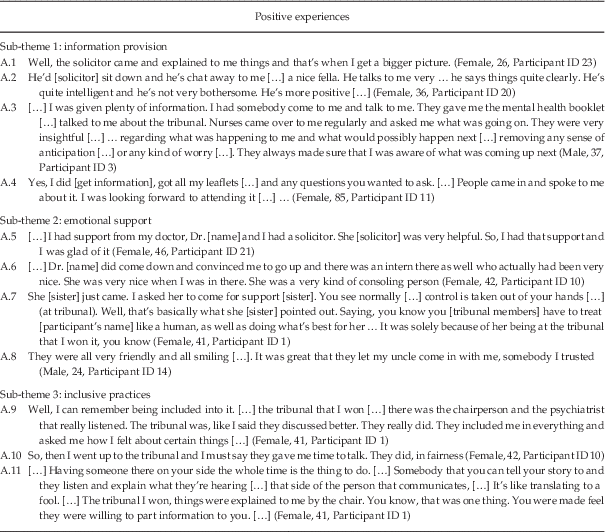
A small number of participants reported receiving clear information in preparation for their upcoming tribunal, with the majority of these participants identifying their solicitor as the individual who imparted this information (A.1). These participants valued receiving clear, verbal explanations regarding the purpose and processes of the MHT in an informal conversational style. This provided participants the opportunity to talk through the information in a language they felt comfortable with, as well as affording them time to ask questions (A.2). This dialogical approach towards the exchange of information helped participants gain an understanding of what to expect from and how to prepare for the upcoming MHT (A.3, A.4) (Table 2).
Quotes relating to the theme ‘positive experiences’ of mental health tribunals
Emotional support
A small number of participants described attaining emotional support before and/or during the MHT. Such support was noted from a range of sources including the service user’s treating consultant psychiatrist (A.5, A.6) or non-consultant hospital doctor (A.6), their solicitor (A.5) and family members (A.7, A.8). Two participants stated that having a chosen family member in attendance with them was particularly supportive, and viewed them as trusted confidantes acting in the role of their advocate, ensuring their perspectives were given adequate consideration by MHT board members (A.7, A.8).
Inclusive practices
A small minority of participants reported that they felt included in all discussions and proceedings for the duration of their MHT. They stated that their opinions were genuinely listened to by all in attendance (A.9), that they were given adequate time to articulate their opinions and that they were regularly provided with opportunities to ask additional questions and convey their perspective on all issues discussed (A.10). Such active facilitation helped participants feel included in the MHT with their perspective being respected and valued.
Negative experiences
Information provision
In their narratives, many of the participants described feeling unprepared for the tribunal as a whole, consequently they were unsure about the purpose, process, and outcome of their tribunal. For example, one participant stated they received no advance warning of upcoming appointments with their appointed legal representative or the independent consultant psychiatrist (B.1). Others recalled that, although they received the mental health booklet explaining the MHA 2001 and the MHT process (‘Your guide to the Mental Health Act 2001’, MHC), neither the written information conveyed in the booklet nor the verbal information provided by a member of staff prior to the MHT conveyed the depth of explanation that they desired (B.2, B.3). Participants’ persistent sense of confusion in relation to the MHT was further illustrated by the lack of commentary about the MHT board members. Participants demonstrated a lack of awareness on the make-up and role of the MHT board members. In addition, only two participants mentioned the lay person, but remained unsure about their role (Table 3).
Quotes relating to the theme ‘negative experiences’ of mental health tribunals
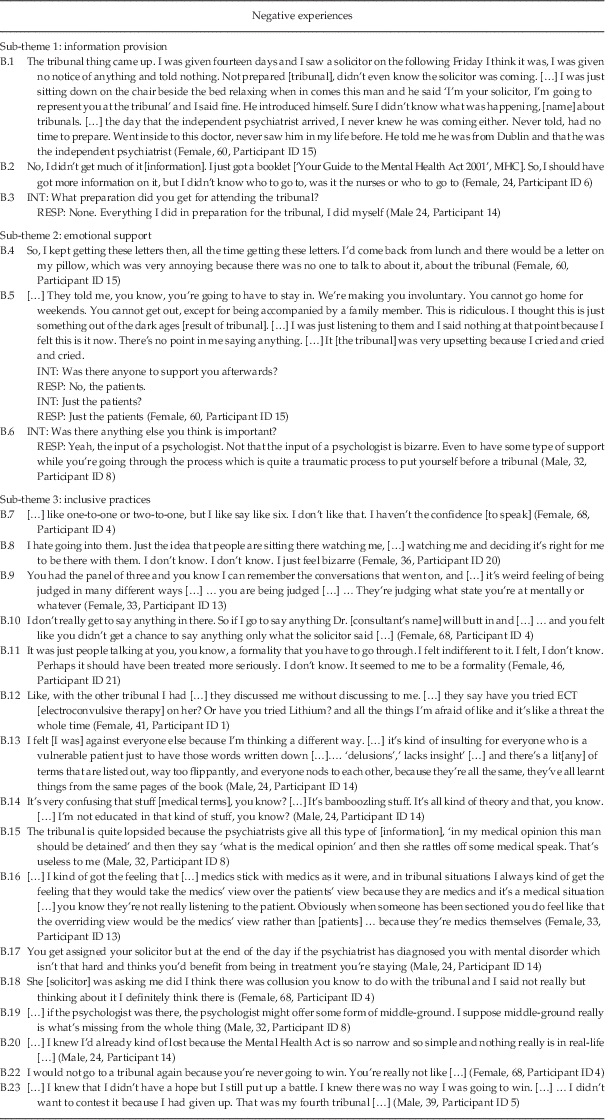
INT, interviewer; RESP, response.
Emotional support
A small number of participants identified that at critical times, such as receiving letters in relation to the MHT or directly after receiving the outcome of the MHT, they experienced inadequate emotional support from staff members (B.4, B.5). While one participant stated that their peers met this deficit (B.5), the remaining participants were of the opinion that the provision of adequate emotional support throughout the MHT process was critical; not least because the MHT acted as an additional stressor on top of their existing mental distress (B.6).
Inclusive practices
In their narratives, several factors were identified as contributing to a non-inclusive atmosphere during MHT proceedings, which subsequently hindered participants’ ability to engage and convey their perspective. Two participants described feeling intimidated by the number of people present, many of whom were strangers to them (B.7), with an additional two participants describing feeling ‘judged’ and ‘watched’ by the MHT board members and others in attendance, rather than feeling part of a co-operative process (B.8, B.9). Many of the participants perceived the MHT discussions to be one-sided and reported not being given adequate opportunities to share their perspective (B.10, B.11). A small number of these participants described feeling confused and ‘bamboozled’ by the medicalised discourse utilised in the MHT (B.14). They subsequently described being unable to engage optimally in discussions resulting in ‘lopsided’ MHTs (B.15), with concerns expressed by some of the participants that the medical opinion of their treating psychiatrist was given primacy over and above their contribution (B.16, B.17). Some participants (n=7, 30.4%) questioned the independent nature of MHTs and felt that MHT board members were siding with each other (B.18). One participant was of the view that the attendance of an additional member of the multi-disciplinary team (e.g. psychologist) might help ensure a more balanced discussion in relation to the need for ongoing involuntary admission (B.19). Discussions in relation to participants’ diagnosis and treatments were reported by a small minority of participants to be disrespectful and lacking in sensitivity (B.12, B.13).
Further indications that the MHT was perceived by participants as non-inclusive were found in the style of language used to recount MHT experiences. Competitive style terminology, such as ‘winning’, ‘losing’ or ‘battling’ permeated the narratives, particularly when participants spoke of the MHTs eventual decision (B.20, B.21, B.22).
Discussion
The findings of this qualitative study provide valuable insight into service users’ perspectives on the MHT system in Ireland, which previously were relatively unexplored. The experiences of participants were mixed and help identify aspects of the MHT process which could potentially be modified to enhance the experience of the MHT process for service users. The themes identified by the qualitative research indicate that participants’ perception of their MHT experience appeared to be dependent on whether they experienced the presence or absence of three critical factors: (1) accessible information provision; (2) emotional support; and (3) a sense of inclusivity.
Consistent with previous studies in other jurisdictions (Dolan et al. Reference Dolan, Gibb and Coorey1999; Carney, Reference Carney and Tait2010; Carney & Tait, 2011; Thom & Nakarada-Kordic, Reference Topp, Thomas and Ingvarson2014), approximately half of the participants reported feeling ill-informed about and unprepared for the MHT process, procedures and decision. Information attained was reported as not sufficiently accessible for many participants. The narratives of participants who reported receiving adequate information and preparation suggest that increasing the number of opportunities afforded to service users to receive information and delivering such information in an informal, conversational and continuous format are optimal. Such information is preferably supplied at least in part by a familiar staff member, such as their primary nurse.
Some of the participants described experiencing inadequate emotional support. Although possible, and sometimes encouraged by MHT chairs, there is no legislative provision in the MHA 2001 for a support person such as family member, carer, advocate or friend to accompany a service user to a MHT. However, this was identified as an important source of potentially significant emotional support in this study, when it occurred. Service user representative groups have strongly advocated that such an amendment to the MHA 2001 would help mitigate service users’ apprehension about attendance at the MHT. The MHC has indicated support for such an amendment but argue that cognisance should be given to ensuring that any such person would uphold the confidentiality of matters discussed at the tribunal hearing (MHC, 2011). This study highlights the benefit from the service user point of view of having a support person present during MHTs. Triggering such an option, and who that person ought to be, should be the choice of the service user.
Emotional support was also noted to be important at other times in the MHT process including when letters pertaining to the MHT were received and after receiving the MHT decision. In these cases, members of the multi-disciplinary treating team, particularly their primary nurse are well placed to offer support in a proactive manner and discuss any distress or apprehension the service user may be experiencing. Further education and awareness sessions for clinical staff to ensure that key members of the multi-disciplinary team are cognisant of service users’ requirements for emotional support during such critical time points may be beneficial.
Several participants reported distress due to what they perceived as non-inclusive practices, including at the MHT. The potential for MHTs to be experienced as adversarial is a repeated finding amongst previous studies (Dolan et al. Reference Dolan, Gibb and Coorey1999; Ferencz & McGuire, Reference Ferencz2000; Swain, Reference Thom and Nakarada-Kordic2000; Ferencz, Reference Ferencz and McGuire2003; Perkins, Reference Perkins2003b; Topp et al. Reference Yip2008; Carney, Reference Carney and Tait2010; O’Donoghue et al. Reference O’Donoghue, Lyne, Hill, Larkin, Feeney and O’Callaghan2010; Carney & Tait, 2011). However, as the narratives of some participants attest to, an adversarial environment is not inevitable. Participants who appraised their MHT as positive noted that they were spoken to with respect, were afforded many opportunities to verbally convey their perspective and received clear explanations about the MHTs decision. Such narratives support evidence from studies of MHTs in Canada and New Zealand which suggest that inclusive and therapeutic practices can be achieved if MHT members pay attention to the way they address service users, ask questions and discuss the person’s mental distress (Yip, Reference Richardson and Machin2004; Diesfeld & McKenna, Reference Diesfeld and McKenna2006, Reference Diesfeld and McKenna2007; Carney, Reference Carney and Tait2010). The adversarial nature may also be alleviated by rectifying the ‘mini court case’ feel of many MHTs. Potential mechanisms to achieve a more inquisitorial and informal environment, whilst still respecting the legal process and human rights of the service user, will require more exploration and research. Tribunal chairs are likely to be key here in setting the tone of the MHT, minimising legalistic jargon, reconfiguration of the physical space (e.g. round table seating) and welcoming additional clinical and non-clinical support persons to the hearing.
Additional information relating to psychosocial recovery from nonmedical clinicians within the multi-disciplinary team may help to reduce the focus on medical aspects of their care, as noted by participants in this study. The provision of a psychosocial report has previously been supported by the MHC (2014).
An exploration of potential factors that may have influenced service users’ appraisals of the MHT process was beyond the scope of this paper. However, there are some factors evident in the study sample that have been shown to influence service users’ attitudes towards their care in other studies. For example, a large proportion of the participants had more than one admission (65.2%) and were assigned a diagnosis of non-affective psychotic disorder (69.6%); both of which have been reported to inform persistently negative attitudes towards involuntary admission and care (Katsakou et al. 2010; O’Donoghue et al. Reference O’Donoghue, Lyne, Hill, Larkin, Feeney and O’Callaghan2010, Reference O’Donoghue, Lyne, Hill, O’Rourke, Daly, Larkin, Feeney and O’Callaghan2011a, Reference O’Donoghue, Roche, Lyne, Madigan and Feeney2011b, 2016; Priebe et al. Reference Priebe, Katsakou, Glockner, Dembinskas, Fiorillo, Karastergiou, Kiejna, Kjellin, Nawka, Onchev, Raboch, Schuetzwohl, Solomon, Torres-Gonzalez, Wang and Kallert2010; Smith et al. Reference Swain2014). Previous evidence also suggests that service users who are subject to coercive measures tend to hold negative attitudes about the care they received (Katsakou et al. 2010; O’Donoghue et al. Reference O’Donoghue, Lyne, Hill, Larkin, Feeney and O’Callaghan2010, Reference O’Donoghue, Lyne, Hill, O’Rourke, Daly, Larkin, Feeney and O’Callaghan2011a, Reference O’Donoghue, Roche, Lyne, Madigan and Feeney2011b, 2016; Priebe et al. Reference Priebe, Katsakou, Glockner, Dembinskas, Fiorillo, Karastergiou, Kiejna, Kjellin, Nawka, Onchev, Raboch, Schuetzwohl, Solomon, Torres-Gonzalez, Wang and Kallert2010; Smith et al. Reference Swain2014). Participants in this study also reported feeling coerced in other aspects of their admission, described elsewhere (Murphy et al. in press), and this may have impacted on their appraisals of the MHT. The use of terminology such as ‘winning’ or ‘losing’ may indicate that their perception of procedural fairness and/or the outcome of their tribunal may also be a factor influencing their overall evaluation of the MHT process. This is particularly significant as only two of the service users involved in our study had their admission order revoked by the tribunal. To date, research investigating the factors influencing service users’ attitudes towards the MHT process is sparse, hence future research is needed to identify the relevant demographic and clinical variables, such as those found to influence service users’ attitudes towards involuntary admission in other studies (Katsakou et al. 2010; O’Donoghue et al. Reference O’Donoghue, Lyne, Hill, Larkin, Feeney and O’Callaghan2010, Reference O’Donoghue, Lyne, Hill, O’Rourke, Daly, Larkin, Feeney and O’Callaghan2011a, Reference O’Donoghue, Roche, Lyne, Madigan and Feeney2011b, 2016; Priebe et al. Reference Priebe, Katsakou, Glockner, Dembinskas, Fiorillo, Karastergiou, Kiejna, Kjellin, Nawka, Onchev, Raboch, Schuetzwohl, Solomon, Torres-Gonzalez, Wang and Kallert2010; Smith et al. Reference Swain2014).
While the study sample was selected to reflect the range of service user experiences, rather than represent an epidemiological sample, and the proportions of positive and negative viewpoints may not be generalisable, the strengths of the study include the in-depth qualitative design and the relatively large number of participants. Further, the time-point chosen for data collection assisted in minimising any potential bias, coercion and power differentials between the interviewers and interviewees which may have occurred had the interviews been conducted in the hospital and also facilitated participants more time to digest and reflect on their experiences. The study focussed solely on the service users’ viewpoint. However, recently conducted focus group assessments with other stakeholder groups and this study also highlighted the adversarial nature of MHTs, how this can impact negatively on the relationship between service user and clinicians, and supported including family members and other multi-disciplinary team members in attending tribunals (Georgieva et al. in press).
Conclusion
This study provides valuable insight into service users’ experiences of MHTs in Ireland, which to date had only been explored using quantitative methods. The tribunal experience can be very stressful for service users and several negative, potentially modifiable, experiences were highlighted. Findings indicate a need for appropriate imparting of information to service users relating to the entire process of the MHT on a regular basis and in an informal, accessible fashion. Emotional support is required at several time points in relation to the MHT, including on receipt of information regarding the MHT, on imparting the MHT decision, and during attendance at the MHT where the presence of a nominated support person would be welcomed. Ongoing efforts to maximise inclusivity of the service user in the MHT and to minimise the adversarial nature of hearings should be undertaken and could significantly ameliorate the experience of the MHT for the service user. As previously described, participants’ appraisals of the MHT may have been informed by factors such as the outcome of their tribunal, the diagnosis assigned to them, and/or their experiences of coercive measures in other aspects of their care. Further research is therefore required to provide additional clarity regarding the impact of demographic and clinical variables on attitudes towards tribunals.
Acknowledgement
The authors would like to extend their sincere appreciation to participants who generously gave their time to share their experiences. We would also like to thank the clinical and administrative staff in the three inpatient psychiatric units in Galway and Roscommon, who assisted with recruitment for the studies, and our other research colleagues in NUI Galway, who assisted with data analysis and manuscript preparation. We are grateful to the Mental Health Commission for funding this research.
Conflicts of Interest
The authors have no conflicts of interest.
Ethical Standards
The authors assert that all procedures contributing to this work comply with the ethical standards of the relevant national and institutional committees on human experimentation with the Helsinki Declaration of 1975, as revised in 2008. The study protocol was approved by the ethics committee of each participating institution.
Financial Support
This work was supported by a research grant received from the Mental Health Commission Research Programme Grants in Mental Health Services Research.


 Open access

