

A relatively large body of research has examined the role of input factors in the acquisition of language by monolinguals (Gathercole, Sebastián, & Soto, Reference Gathercole, Sebastián and Soto2002; Maratsos, Reference Maratsos2000) and bilinguals (e.g., Blom, Reference Blom2010; Hoff, Welsh, Place, & Ribot, Reference Hoff, Welsh, Place, Ribot, Grüter and Paradis2014; Nicoladis & Marchak, Reference Nicoladis and Marchak2011; Paradis, Tremblay, & Crago, Reference Paradis, Tremblay, Crago, Gruter and Paradis2014; Sorace, Reference Sorace2011; Thordardottir, Reference Thordardottir, Grüter and Paradis2014; Unsworth, Reference Unsworth, Grüter and Paradis2014), with a growing body of research focused more specifically on the relationship between input and output within the context of minority language bilingualism (Fhlannchadha & Hickey, Reference Fhlannchadha and Hickey2017; Gathercole & Thomas, Reference Gathercole and Thomas2009; Thomas, Williams, Jones, Davies, & Binks, Reference Thomas, Williams, Jones, Davies and Binks2014). Most studies suggest a strong, almost obvious, link between the frequency of exposure to a given language and an individual’s linguistic performance in that language, particularly during the early foundation years of learning (Hart & Risley, Reference Hart and Risley1995; Hoff, Reference Hoff2003). As the pattern goes, the greater the exposure, the more developed the linguistic output (Paradis & Genesee, Reference Paradis and Genesee1996). Monolinguals are, on average, more likely to receive greater amounts of exposure to a single language than bilinguals (although not inevitably so; see, e.g., De Houwer, Reference De Houwer, Grüter and Paradis2014). This rationale has been used to explain the noticeable differences between monolinguals and bilinguals on various measures of vocabulary and morphosyntactic knowledge, such as English verb morphology (Paradis, Reference Paradis2010), finiteness (Blom, Reference Blom2010), mass/count distinction (Gathercole, Reference Gathercole, Oller and Eilers2002a), wh-questions, passives, and definite/indefinite articles (Chondrogianni & Marinis, Reference Chondrogianni and Marinis2011). More recently, this same rationale has been used to explain differences between various types of bilinguals receiving different levels of exposure to each language (Gathercole et al., Reference Gathercole, Thomas, Kennedy, Prys, Young, Viñas-Guasch and Jones2014; Rhys & Thomas, Reference Rhys and Thomas2013; Thomas et al., Reference Thomas, Williams, Jones, Davies and Binks2014). However, measures of input frequency differ across studies, from self-reported measures of language(s) received at home (e.g., Gathercole & Thomas, Reference Gathercole and Thomas2009; Thomas et al., Reference Thomas, Williams, Jones, Davies and Binks2014; see also Gathercole, Thomas & Hughes, Reference Gathercole, Mon Thomas and Hughes2008, for an in-depth discussion of home language coding) to those attempting a more comprehensive report of speakers’ hourly/daily use of each language (see, e.g., Thordardottir, Reference Thordardottir, Grüter and Paradis2014; Unsworth, Reference Unsworth2013). Nevertheless, the pattern of results remain largely similar across the field: bilinguals, at least early on in their linguistic development, typically have less developed vocabularies in any one language as compared to a monolingual (Bialystok, Luk, Peets, & Yang, Reference Bialystok, Luk, Peets and Yang2010) and lag behind their monolingual peers on certain aspects of morphosyntax (Blom, Reference Blom2010; Nicoladis & Marchak, Reference Nicoladis and Marchak2011; Paradis et al., Reference Paradis, Tremblay, Crago, Gruter and Paradis2014; but see Schwartz, Geva, Share, & Leikin, Reference Schwartz, Geva, Share and Leikin2007, for an example of studies of positive transfer where bilinguals demonstrate accelerated performance when the linguistic properties of one language supports the development of similar properties in another). However, under favorable language learning conditions, bilinguals should “catch up’” to some degree with their monolingual peers, most notably in the dominant community language (Bahrick, Hall, Goggin, Bahrick, & Berger, Reference Bahrick, Hall, Goggin, Bahrick and Berger1994; Oller & Eilers, Reference Oller and Eilers2002; Paradis, Reference Paradis2010; Thomas & Mayr, Reference Thomas, Mayr and Morris2010). That is, over time, bilinguals should be able to draw out any regularities from within the language they are receiving in order to develop implicit knowledge of its structures once a critical mass of exposure to those forms has been achieved (Gathercole, Reference Gathercole2007; Marchman & Bates, Reference Marchman and Bates1994).
Yet, increasing exposure to a language does not, by itself, guarantee full acquisition of all structures. Linguistic factors, such as the frequency of co-occurrences of form, and the complexity of the structures being learned (e.g., regular vs. irregular forms; overt vs. nonovert cues; and opacity of form–function mappings) can affect the rate at which structures are acquired (Blom, Reference Blom2010; Gathercole & Thomas, Reference Gathercole and Thomas2009; Nicoladis, Palmer, & Marentette, Reference Nicoladis, Palmer and Marentette2007; Thomas & Gathercole, Reference Thomas and Gathercole2007; Unsworth, Reference Unsworth2008, Reference Unsworth, Grüter and Paradis2014) as well as a whole host of other psycho- and sociolinguistic factors (Carroll, Reference Carroll2017; Thomas, Gathercole, & Hughes, Reference Thomas, Gathercole, Hughes and Gathercole2013). When the grammatical properties of the target language are transparent, results have shown bilinguals to reach ceiling levels in a similar period to children who learned the language as a first language (L1; Unsworth et al., Reference Unsworth, Argyri, Cornips, Hulk, Sorace and Tsimpli2011, Reference Unsworth, Argyri, Cornips, Hulk, Sorace and Tsimpli2014). However, in the case of low token frequency items that are irregular or have inconsistent form–function mappings, receiving enough input in order to abstract out a “rule” in a productive manner is more difficult (Gathercole, Reference Gathercole, Oller and Eilers2002c), if not unnecessary if there is no “rule” per se to figure out. Acquisition of these forms would therefore likely be learned in a piecemeal, item-by-item fashion (see Roberts & Gathercole, Reference Roberts and Gathercole2006). Research on the Dutch grammatical gender system, a complex and opaque system, is illustrative of this point. Simultaneous bilinguals and children who learned Dutch as a second language (L2) continued to overgeneralize gender agreements over time. Blom, Polišenská, and Weerman (Reference Blom, Polišenská and Weerman2008) concluded that this was due to the children not having yet acquired the rule, speculating that only “a lengthy period of substantial exposure could compensate for weak statistical properties of the input” (p. 323). That is, the amount of input the children had been exposed to fell short of the “critical mass” needed to deduce the gender-marked rules, and the system was therefore proving difficult (if not impossible) to acquire (Unsworth, Reference Unsworth2013).
Longitudinal research by Paradis and Jia (Reference Paradis and Jia2017) and Paradis, Tulpar, and Arppe (Reference Paradis, Tulpar and Arppe2016) looked at L1 Chinese-speaking children learning English as an L2, assessing their long-term outcomes in English. They found that for some aspects, such as their receptive knowledge of word classes, the bilinguals performed comparably to the monolinguals; however, the same bilinguals struggled to converge with the monolinguals on more complex and infrequent aspects such as irregular verbs, where their developmental trajectories showed more of a plateau effect. Similarly, more recent research by Hoff and Ribot (Reference Hoff and Ribot2017) revealed that Spanish–English bilingual children aged between 2.6 and 5 years lagged between 6 months and a year behind their English monolingual peers on measures of expressive vocabulary. The children with shorter lags typically received more exposure to English and more exposure from native English speakers. With regard to Spanish vocabulary, early exposure did not guarantee acquisition of those words.
However, most of the aforementioned studies have assessed children acquiring the dominant community language where accessing that critical mass of exemplars is more probable, rendering the abstraction of form–function mappings a relatively swift task, particularly for those items that have clear form–function mappings. In contexts where the language is a minority language in the community, the timing and nature of its acquisition can be heavily influenced by its reduced frequency within the community (Meisel, Reference Meisel2007; Schlyter & Håkansson, Reference Schlyter and Håkansson1994), particularly when children are developing the language alongside another. As a result, not all bilinguals will become nativelike in that language, particularly in relation to structures that have weak form–function mappings (Gathercole & Thomas, Reference Gathercole and Thomas2009). This issue is particularly relevant in the case of Welsh.
The context of Welsh
Approximately 19% (562,000) of the population of Wales over the age of 3 years (totaling around 3.1 million) speaks Welsh (Welsh Government, 2012).Footnote 1 In some cases, children become Welsh speakers because Welsh is the language transmitted in the home; English is an additional language that is acquired as they enter school and/or become more engaged with English speakers in the community and the media. In other cases, children become Welsh speakers because they attend Welsh-medium schools and, in some cases, hear Welsh being spoken in the wider community. For these children, Welsh is an addition to their native language and is acquired largely within the formal school setting. Another common context is where one parent speaks Welsh and the other does not, and where children are therefore exposed to both languages simultaneously from birth. Regardless of how Welsh is acquired, all Welsh speakers are at least bilingual (or developing bilinguals) with English as their other language.
How much exposure a given speaker receives to Welsh does vary, however, according to which language(s) is spoken in the home, the linguistic medium of the school attended, and the number and proportion of speakers who use the language in the wider society. While there are regions of northwest Wales where Welsh is the natural spoken language in the home, at school and in the wider community, in various areas of Gwynedd (65% speakers across the region) and Ynys Môn (57.2% speakers across the region), for example (Welsh Government, 2012), the status of Welsh, alongside English within many regions of Wales, remains as a minority spoken language. Within the Welsh “heartland” regions, where Welsh holds more of a dominant status within the community, primary schools deliver immersion education, with all subjects taught through the medium of Welsh and with exposure to English as a subject increasing over time, but not until after age 7. Secondary school subjects are then also available, in most cases, through the medium of Welsh. In more Anglicized regions, schools may provide options to study partly through the medium of Welsh, often as a result of the high demand for Welsh-medium education among non-Welsh-speaking families (Hodges, Reference Hodges2009). However, the majority of children in Wales (77%; Welsh Government, Reference Hoff and Ribot2017) attend English-medium schools and are taught Welsh as a subject and not as a medium of instruction. Even so, the legal status of Welsh and English as official languages (with the legal status of Welsh as an official language confirmed as recently as 2011) provides a natural bilingual platform within Wales that increases the visibility and credence of Welsh as a living language outside school. The creation of Iaith Pawb—A National Action Plan for a Bilingual Wales in 2003 provided a vision that helped guide the work of initiatives such as Mentrau Iaith (Language Ventures) and TWF (Transmission Within Families), focused on developing the use of Welsh in the wider community and within families. The subsequent A Living Language: A Language for Living—Welsh Language Strategy 2012 to 2017, along with the Welsh-medium education strategy (Welsh Government, 2010), provided a range of measures aimed at promoting increased language acquisition and language use. Regardless of how they come to learn Welsh and English and how much they engage with the language outside school, all pupils in Wales are exposed to some Welsh and some English (in various amounts) at school and should all, therefore, be considered to be somewhere on the Welsh–English bilingual continuum. However, regardless of all efforts, English continues to dominate as the de facto language in many domains (Davies, Reference Davies2014), rendering exposure to the Welsh language limited for many speakers. This variation in exposure is particularly relevant in contexts where children are acquiring complex structures, such as grammatical gender and plural morphology in Welsh.
Grammatical gender
Welsh exhibits a two-gender system, which generally encodes animate and inanimate nouns as masculine or feminine. However, unlike most other Indo-European languages, Welsh has no gender-marked determiners, and although gender contrast can be inherent in some head words through the presence of gender-marked suffixes or phonological endings (such as the feminine singular suffix –en highly common among nouns for feminine animals, and the masculine ending –wr used, for example, to distinguish between males and females in particular roles; see Surridge, Reference Surridge1989), this is for the most part not explicitly so (Watkins, Reference Watkins, Ball and Fife1993). Instead, the gender of a particular noun in Welsh is encoded through mutation (Gathercole & Thomas, Reference Gathercole and Thomas2005). Mutations are a set of morphophonological changes that affect certain word-initial consonants and are conditioned by the environment in which the target word appears (Thomas & Gatherocle, Reference Thomas and Gathercole2007). There are three types of mutation processes: soft mutation (SM), aspirate mutation (AM), and nasal mutation, with grammatical gender primarily encoded through SM and AM (Gathercole & Thomas, Reference Gathercole and Thomas2005). Mutation can be “triggered” by a lexical item or by the syntactic context within which the target word appears, as is the case of gender marking in Welsh.
When gender is marked locally, initial consonant sounds of feminine nouns undergo SM following the definite article y(r) “the” or after the numeral un “one” (e.g., “cath” > y (SM) gath fem.“the cat”). Second, the initial consonant sound of adjectives undergoes SM if modifying a feminine singular noun (e.g., y gath ddu adj. “the black cat”), where certain stops, liquids, and the nasal /m/ undergo a process of lenition (see Ball & Muller, Reference Ball and Muller2012; Thomas & Gathercole, Reference Thomas and Gathercole2007, for a review). In addition to local marking, grammatical gender is marked by distant lexical agreement, which is evidenced by the use of the pronouns hi/fo “her/him” or by the mutation triggered after the third-person possessive adjective ei “his/her” (Gathercole, Thomas, & Laporte, Reference Gathercole, Thomas and Laporte2001; Thomas & Gathercole, Reference Thomas and Gathercole2007). Distant marking within a sentence must be in agreement with the gender of the antecedent noun. If the antecedent noun is feminine, ei triggers AM (where voiceless stops become fricativized; e.g., torodd Martha ei (AM) choes < coes “Martha broke her leg”). If the antecedent noun is masculine, ei triggers SM (e.g., under SM torodd Dafydd ei (SM) goes < coes “Dafydd broke his leg”). In addition to the involvement of the mutation system in the marking of noun gender in Welsh, the absence of a clear form–function mapping between noun form and the gender it encodes, and the association of SM with the marking of the feminine form in local-marked constructs but with the masculine form in more distant elements, among other things, render the system in Welsh more complex than that of many other gender-marked languages (see Thomas & Gathercole, Reference Thomas and Gathercole2007; Thomas & Mayr, Reference Thomas, Mayr and Morris2010, for further discussions on its complexity).
Studies looking at children’s acquisition of grammatical gender in Welsh have consistently found that (a) children who are exposed to Welsh at home are continuing to acquire the system, well beyond the age of 11; (b) children raised in a one-parent one-language context lag somewhat behind those who receive exclusive exposure to Welsh in the home, but their progression remains on an increasing trajectory; (c) children who are not exposed to Welsh in the home but are attending Welsh-medium schools seem to make less progress than the other two groups over time; (d) all speakers tend to perform well in relation to animate (human) nouns, but only the L1 Welsh and to some degree the simultaneous Welsh–English bilinguals show a developing knowledge of gender marking among animate (animal) nouns; (e) performance on animate nouns, particularly among the L1Welsh and simultaneous speakers, continues to develop, whereas performance on inanimate forms seems static across the board; and (f) adult speakers vary in their receptive and expressive knowledge of gender according to the language of their home environment when growing up, leading to a lack of uniformity of gender marking in the input (Binks & Thomas, Reference Binks and Thomas2016; Gathercole, Thomas, & Laporte, Reference Gathercole, Thomas and Laporte2001; Gathercole & Thomas, Reference Gathercole and Thomas2005; Reference Thomas and Gathercole2007; Thomas & Mayr, Reference Thomas, Mayr and Morris2010). While some of these studies have elicited speaker productions of gendered items in gender-marked contexts, the tendency for speakers to adopt the masculine form as default (i.e., not to mutate feminine inanimate nouns in local-marked constructs or to overuse the SM to incorrectly mark feminine nouns in distant constructs), particularly in natural spoken language may mask their underlying knowledge of the system. For this reason, we decided to explore teenagers’ knowledge of the system in a receptive task.
Welsh plural morphology
Welsh plural morphology involves a complex mechanism for modifying noun number based around two basic principles: (a) element addition or deletion (addition of a plural or singular suffix, or deletion of a singular suffix to denote the plural), and (b) element substitution (alternating plural and singular suffixes, and/or alternating sound elements within the root). If one takes into account both systems together, there are eight different ways of forming a plural in Welsh:
1. A plural suffix is attached to a singular stem (+Suff) [sg. cath [kaːθ] > pl. cathod [kaθɔd] “cats”].
2. A plural suffix is attached to a singular stem, but the noun also undergoes a vowel change (+Suff+V) [sg. cadair [kadaɪr] > pl. cadeiriau [kadɛɪriaɪ] “chairs”].
3. A singular suffix is deleted to denote the plural (–Suff) [sg. mochyn [mɔχɨn]> pl. moch [mɔːχ] “pigs”].
4. A singular suffix is deleted, but the noun also undergoes a vowel change (–Suff+V) [sg. plentyn [plɛntən] > pl. plant [plant] “children”].
5. A singular suffix (of which there are 12; Thorne, Reference Thorne1993) is alternated with a plural suffix (∼Suff) [sg. blodyn [blɔdən] > pl. blodau [blɔdaɪ] “flowers”].
6. A singular suffix is alternated with a plural suffix with a vowel change (∼Suff + V) [sg. deigryn [dɛɪgrən] > pl. dagrau [dagraɪ] “leaves”].
7. A vowel, or the first and penultimate vowel undergoes change to denote the plural (V) [sg. gafr [gavr] > pl. geifr [gɛɪvr]; sg. castell [kastɛɬ] > pl. cestyll [kɛstəɬ] “castles”].
8. A plural is not related to the singular form (Suppletive) [sg. ci [ki] > pl. cⓦn [kuːn] “dogs”].
The most common suffix is –(i)au and is usually the suffix of choice for the plural form of new words and words borrowed from the English language (King, Reference King2003). The suffixes –o, –oedd, –(i)on, –ydd, and –i are common also (King, Reference King2003; Thomas, Reference Thomas1996). Less common suffixes include –edd, -ed, -aint, and –iaid (King, Reference King2003; see also Binks, Reference Binks2017, for a detailed overview).
Of the few studies that have been conducted on the Welsh noun plural system, L1 Welsh bilinguals children, aged between 7 and 11 years old, seem to acquire the system at a faster pace than their simultaneous and L2 Welsh peers, with differences between the three bilingual groups found (Thomas et al., Reference Thomas, Williams, Jones, Davies and Binks2014). For more transparent plural forms, such as the addition of a plural suffix, the L1 children, across both the 7–8 and 9–11 age ranges, averaged scores of 86.11%. For the more opaque forms, such as those including a vowel change, performance ranged between 57.85% and 85.39% for these children. Performance of the simultaneous and L2 Welsh children was significantly lower, with scores on the transparent items at 58.41% for the simultaneous and 45.61% for the L2 children, suggesting that they were far behind the L1 Welsh children in their acquisition of the more transparent plural forms. This performance was also found for adults, with the L2 Welsh adults performing significantly lower (performance range 64.6%–100%) than the L1 Welsh adults (performance range 95%–100%) on some forms (Binks & Thomas, Reference Binks and Thomas2016; Thomas et al. Reference Thomas, Williams, Jones, Davies and Binks2014). Given the relative opaqueness of form–function mapping, the breadth of processes and suffixes that mark the plural function, coupled with the lack of studies in this area among Welsh–English bilinguals, the study presented in this paper explored teenagers’ productive command of plural morphology in order to allow for the further exploration of error patterns.
The data thus far from studies of gender and plural morphology in Welsh suggest that children and adults do not approach its learning in a systematic, rule-based manner (Thomas & Gathercole, Reference Thomas and Gathercole2007; Thomas et al., Reference Thomas, Williams, Jones, Davies and Binks2014). The extent to which these patterns are linked to the amount of exposure children may have to the language and therefore to the structures within the language is an important question, but so is the nature of the input itself. An analysis of corpus data of fluent adult L1 Welsh speakers found that adults rarely (and only 0.49% of the time) produce nontarget plural forms when pluralizing in Welsh, particularly among those concrete nouns that feature prominently in child-directed speech, thus providing high uniformity of marking in the input, despite the plural system’s complexity. This suggests that children are rarely exposed to nontarget plural forms when in receipt of adult input (Thomas et al., Reference Thomas, Williams, Jones, Davies and Binks2014), although target forms may remain unstable in child speech when engaged in speech with peers or other children. However, given the patterns of performance across bilingual types, uniformity in the input is also not enough to counteract the effects of limited exposure, or accelerate the accumulation of a “critical mass” of exposure necessary to abstract out the regularities within the system. Gender, in contrast, is often variably marked, with the masculine often appearing as the default among adults and to a greater extent among children (Thomas, Reference Thomas2001; Gathercole & Thomas, Reference Gathercole and Thomas2005).
Ultimately, the complexities of the target grammar, coupled with insufficient amounts of input, may lead to incomplete acquisition of these structures (Montrul, Reference Montrul2008). Children’s acquisition trajectory in the minority language (Welsh) contrasts with their mastery of the dominant language (English) where differences between bilinguals from various home language backgrounds seem to disappear by middle school age. This has been found for reading (Rhys & Thomas, Reference Rhys and Thomas2013) and for vocabulary, with differences neutralizing by 7 years of age, according to some studies (e.g., Gathercole & Thomas, Reference Gathercole and Thomas2009), or a little later, by 13 years of age, according to others (Thomas et al., Reference Thomas, Gathercole, Hughes and Gathercole2013). However, studies assessing Welsh–English bilinguals’ acquisition of English have tended to focus on their acquisition of vocabulary. Whether or not the same patterns would be found when looking at their knowledge of English syntax and morphology is yet to be determined.
Furthermore, studies addressing the acquisition of Welsh by Welsh–English bilingual children framed within an input-driven account of bilingual acquisition have traditionally focused on children up to age 11 years (i.e., during the primary school years, predicting an eventual “catch-up,” after primary school, as they receive increasing amounts of exposure to Welsh through immersion education; Gathercole & Thomas, Reference Gathercole and Thomas2009). However, the minority language status of Welsh suggests that “catch-up” is only likely to be achieved with continuous exposure to, and immersion in, the language, normally achieved through continued Welsh-medium education. Nevertheless, education by itself cannot offer protection against language shift and/or language loss (Fillmore, Reference Fillmore1991), and studies suggest that providing instruction through the medium of a given language does not prevent incomplete acquisition of that language (Gathercole, Reference Gathercole, Oller and Eilers2002b; Montrul & Potowski, Reference Montrul and Potowski2007). Numerous factors (internal and external to the child) influence linguistic progression. Relying on a single domain, such as immersion education, to provide this support is not always sufficient. It is unclear, at present, how the linguistic trajectories of second language Welsh speakers (L2 Welsh), whose Welsh input comes predominantly from the school sector, and those from one-parent one-language backgrounds progress beyond the primary school setting, even with continued Welsh-medium education.
In order to expand on the findings of previous studies, this paper assesses the language of participants aged between 12 and 13 years, and between 16 and 17 years, who receive their education through the medium of Welsh. In order to examine the role of input quantity (patterns of exposure to Welsh in the home) as factors influencing a bilingual catch-up, this paper presents data from two studies that examined L1 Welsh bilinguals teenagers’, Welsh–English simultaneous bilinguals teenagers’, and L2 Welsh bilinguals teenagers’ performance on two grammatical systems in Welsh: receptive grammatical gender (highly opaque; low uniformity of marking in the input) and productive plural morphology (moderately opaque; high uniformity of marking in the input).
Predictions
In relation to children’s knowledge of grammatical gender and plural morphology, comparing performances of children hearing Welsh at home and at school (L1 Welsh), English at home and Welsh at school (L2 Welsh), and both Welsh and English at home and Welsh at school (simultaneous), across two age ranges we made the following predictions:
1. Performances across all three bilingual groups would increase with age, with simultaneous bilinguals’ and L2 Welsh bilinguals’ performance approaching that of the L1 Welsh bilinguals as they accumulated more exposure to the language over time.
2. In line with previous findings, L1 Welsh bilinguals would progress toward ceiling level knowledge at a faster rate than the simultaneous and L2 Welsh bilinguals, with 16–17-year-old L1 Welsh bilinguals performing comparably to the L1 Welsh adults.
3. In line with previous results on grammatical gender, all bilinguals would be stronger at identifying co-referential pronouns denoting masculine than feminine nouns, and performance on nouns for humans would outweigh performance on nouns for inanimate objects, with performance on nouns for animals somewhere in between.
4. In line with previous results on plural morphology, performance would be strongest on more transparent plural forms in comparison to more opaque plural forms, yet stronger overall than performance on grammatical gender due to the greater uniformity of marking within the input and less opaque features.
Study 1: Receptive knowledge of grammatical gender
Children
One hundred and sixty-eight children took part in the study. In order to measure age differences, they were divided into two age categories: 12–13 years (age range 12 years, 4 months [12;4]–13;6; N = 65; Male = 26, Female = 29) and 16–17 (age range 16;5–17;8; N = 103; Male = 31, Female = 73). Within each age category, the children were subdivided further into three bilingual groups (based on responses to a language background questionnaire on the participants’ language use; see Gathercole & Thomas, Reference Gathercole and Thomas2009; Thomas et al., Reference Thomas, Williams, Jones, Davies and Binks2014, for coding practices). Those categorized as “L1 Welsh bilinguals” were raised in homes where both parents spoke Welsh to the child, and had therefore acquired Welsh from birth, with English acquired later. Those categorized as “simultaneous Welsh–English bilinguals” were raised in mixed-language households, where one parent spoke Welsh and the other spoke English and had therefore acquired both languages simultaneously from birth. Those categorized as “L2 Welsh bilinguals” were raised in homes where both parents spoke English to the child and who had therefore acquired English from birth and Welsh later onFootnote 2 when they entered school at age 4 (see Table 1 for the number of participants per age and per bilingual group).
Participant numbers across age and bilingual groups

Participants were recruited from Welsh-medium schools, located either in a region of the northwest of Wales, where 65.4% of the population speaks Welsh, or in a region of southwest Wales, where 43.9% of the population speaks Welsh (Office of National Statistics, 2011). Recruitment happened within the 2014–15 academic year. All schools taught all subjects except English through the medium of Welsh. While it is impossible to quantify the exact amount of exposure each child received daily in either language, for the purpose of this present study, the major differences between each groups lie in the age at which they were initially exposed to the second language, and if that language was Welsh or English. The same participants took part in both Study 1 and Study 2.
Adults
Sixty-six Welsh–English adult bilinguals (Male = 16, Female = 49) were also included in the study. Forty-five were L1 Welsh bilinguals (age range = 19–63; M = 31); 9 were simultaneous Welsh–English bilinguals (age range 19–40; M = 26); and 12 were L2 Welsh bilinguals (age range 19–59; M = 41). The adults were included in the study in order to provide a measure of the ultimate attainment one might expect of children receiving different levels of exposure to Welsh. The adults were also given a language-use questionnaire. The adults came from different areas of Wales; however, all had to have attended Welsh-medium schools, both at primary level and secondary level, to be included in the studies.
Linguistic materials
The items in the grammatical gender task were adapted from Gathercole et al. (Reference Gathercole, Thomas and Laporte2001) (also presented in Gathercole & Thomas, Reference Gathercole and Thomas2009). Participants were given pairs of sentences, followed by sets of pictures. In the first sentence, the participants were presented with two nouns that were marked for their gender. If both the noun (after the definite article) and its modifying adjective (after the noun) underwent SM, that signified that the noun was feminine. If neither the noun (after the definite article) nor the adjective modifying the noun underwent SM, that signified the noun was masculine. Examples 1a and 2a provide two examples from the task:
1a. Dyma’r fwyellfem [< bwyell] frown [<brown]a dyma’r gwelymasc. coch.
Here is- the – axe- brown- and –here is- the – bed - red.
“Here’s the brown axe and here’s the red bed.”
2a. Roedd y drwmmasc. tenau a’r bêlfem. [< pêl] frown [< brown] mewn bocs.
Was-the-drum -thin -and -the -ball –brown-in[a]- box.
“The thin drum and the brown ball were in a box.”
In each of the above examples, there are two nouns (in bold), one masculine (gwely “bed” in example 1a, and drwm “drum” in example 2a) and one feminine (bwyell “axe” in example 1a, and pêl “ball” in example 2a). The feminine nouns are marked by mutation on the noun itself (fwyell< bwyell and bêl<pêl) and on the modifying adjective (frown > brown). The masculine nouns are not mutated and are presented with a nonmutated adjective (coch “red” in example 1a and tenau “thin” in example 2a).
A second sentence (see examples 1b and 2b below) related in meaning to the first included distance references to one of the nouns (bwyell or gwely in example 1a or drwm or pêl in example 2a). This distance reference in the second sentence contained either the possessive form ei (see example 1b), or the anaphoric pronoun o (third-person singular masculine) or hi (third-person singular feminine; see example 2b). The child’s task was to indicate whether the anaphoric reference in the second sentence referred to the feminine or masculine noun in the first. When the possessive ei occurred with an AM, then this indicated that the antecedent was feminine (see example 1b); if it occurred with SM, then this indicated that the antecedent was masculine.
1b. Ond mae ei goes/ei choes wedi plygu
But isposs leg SM/AM has bent.
“But his/her leg’s bent.”
i.e., ei goes (coes +SM = masc.ANTEC)
ei choes (coes + AM = fem.ANTEC)
2b. Ond mi ddisgynodd o/hi drwy’r gwaelod.
But did fellpast it(masc/fem.) through the bottom.
“But it fell through the bottom.”
There were 30 pairs of sentences in all. Eighteen involved animate nouns (3 feminine nouns with human referents; 3 masculine nouns with human referents; 6 feminine nouns with animal referents; and 6 masculine nouns with animal referents), and 12 involved inanimate nouns (6 masculine nouns with object referents and 6 feminine nouns with object referents). For the animate nouns (nouns with animal or inanimate referents), 6 pairs of sentences included the possessive form ei as the target gender marker in the second sentence of the pair, and the remaining 6 included the anaphoric pronoun (hi/o) as the target gender marker in the second sentence of the pair. In relation to nouns for human referents, only the anaphoric possessive form ei was used (hence why only 6 pairs of sentences were included) because human nouns possess natural gender, and children across the three age groups in Gathercole and Thomas’s (Reference Gathercole and Thomas2009) study were hitting ceiling on those items.
Each sentence was shown in conjunction with two pictures: one depicting the referent of the masculine noun (human, animal, or inanimate object), the other depicting the referent of the feminine noun (human, animal, or inanimate object). In conjunction with the first sentence, these pictorial depictions of the referents were presented as typical pictures of those referents. In conjunction with the second sentence, these pictures were altered to convey the meaning of the sentence (e.g., in relation to example 1b above, the axe handle and the one leg of the bed was depicted as having been broken.
Procedure
Participants completed the task as a part of a battery of tasks completed in two sessions. They were given sets of sentence pairs, with one practice example. Each sentence was presented alongside two pictures that corresponded with the nouns in the associated sentences. One picture depicted the masculine antecedent and the other depicted the feminine antecedent. The participants were instructed to circle which picture (the picture depicting the masculine antecedent or the picture depicting the feminine antecedent) the distant-marked element in the second sentence referred to according to the overt gender marking on the possessive adjective or according to the gender-marked anaphoric pronoun presented. The order of the items did not vary, and there was no time limit for the test; however, the test itself did not take longer than 15 min to complete.
Scoring
For each correct selection, participants were given a score of 1; for each incorrect selection, they were given a score of 0.
Results
Two sets of analyses were performed on the data, the first involving noun animacy and the second involving noun gender. In both sets, performance on these variables were analyzed in accordance with the age of the participants and their bilingual language backgrounds in order to identify patterns of progression across age (“catch-up”) and the influence of bilingual background on those patterns (language input).
A 3 × 3 × 3 repeated-measures analysis of variance (ANOVA) was conducted on the data, with animacy (human, animal, or object) as the within-subjects variable and bilingual group (L1 Welsh, simultaneous, or L2 Welsh) and age (12–13, 16–17, or adults) as the between-subjects variables.
As predicted, the analysis revealed a main effect of age, F (2, 210) = 14.012; p < .001. Post hoc analysis revealed this effect was due to the adult participants across all three language groups outperforming the 12–13 and 16–17-year-olds (all p < .001). Given that there were no significant differences between the 12–13 (M = 68.5) and 16–17-year-olds (M = 69.9; p = .822) and that both ages were far from reaching adult levels, these data suggest that performance may have stalled, in general, at ages 12–13.
Analysis also revealed a main effect of bilingual group, F (2, 210) = 6.417, p = .002, with the L1 Welsh bilinguals outperforming the simultaneous (p = .001) and L2 Welsh bilinguals (p < .001). There was no difference between the simultaneous and L2 Welsh bilinguals (p = .946), suggestive of a “catch-up” whereby the L2s are performing on par with the simultaneous bilinguals. There was no significant interaction of Bilingual Group × Age (p = .217; see Figure 1).
Performance of teenagers versus adults from each bilingual group on measures of grammatical gender.

Results also revealed a significant main effect of noun animacy, F (2, 420) = 44.378, p < .001), which was due to participants achieving higher performance on nouns for humans in comparison to both nouns for animals (p < .000) and nouns for inanimate objects (p < .005), and performance in relation to nouns for animals was significantly higher than for nouns for inanimate objects (p < .001). These results are as predicted and follow the same pattern that was found in the performance of younger children in Gathercole and Thomas (Reference Gathercole and Thomas2009) and Gathercole et al. (Reference Gathercole, Thomas and Laporte2001). A significant interaction of Animacy × Bilingual Group was found, F (4, 420) = 3.070, p = .016. In order to establish the location of the interaction, a series of one-way ANOVAs revealed a significant main effect of bilingual group per animacy type: humans, F (2, 218) = 15.082, p < .01; animals, F (2, 218) = 10.611, p < .01; objects, F (2, 218) = 3.951, p = .021. Bonferroni post hoc analyses revealed that for nouns for humans and nouns for animals, this was due to the L1 Welsh participants outperforming both the simultaneous bilinguals and the L2 Welsh bilinguals (all p < .01). For the objects, the only significance lay between the L1 Welsh and simultaneous bilinguals (p = .31). Unlike the nouns for humans and nouns for animals, there were no significant differences between the L1 Welsh and L2 Welsh bilinguals (p = .145; see Figure 2). There were no further significant interactions between Animacy × Age, F (8, 420) = 0.644, p = .741, or between Animacy × Age × Bilingual Group, F (4, 420) = 0.311, p = .871.
Performance of each bilingual group depending on noun animacy.

Noun gender
In order to examine performance in relation to gender and type of distant marker, a 3×3×4 repeated-measures ANOVA was conducted with bilingual group (L1 Welsh, simultaneous, or L2 Welsh) and age (12–13, 16–17, or adult) as between-subjects variables and gender agreement type (fo + masc, hi + fem, ei + masc, or ei + fem) as within-subjects variables. Results revealed significant main effects of bilingual group, F (2, 210) = 5.984, p < .01, age, F (2, 210) = 13.344, p < .01, and gender agreement type, F (3, 630) = 14.859, p < .001. The main effect of bilingual group was due to the L1 Welsh bilinguals outperforming the simultaneous and L2 Welsh bilinguals (both p < .01). There was no significant difference between the simultaneous and L2 Welsh bilinguals (p = .711). The main effect of age was due to adult bilinguals outperforming both the 16–17 and 12–13 age groups (both p < .001). The 16–17 and 12–13 age groups performed comparably on the task (p = .447). In terms of the effect of gender agreement type, participants correctly chose ei + AM as associated with a feminine possessor more often than they chose ei + SM as associated with masculine items (p = .002). Likewise, performance on feminine-marked pronouns was significantly stronger in comparison to masculine-marked pronouns (p < .001). Overall, the participants were stronger on feminine items (M = 76.18) in comparison to masculine items (M = 70.52) on this task. This result is interesting in light of previous findings that children’s knowledge of masculine gender precedes their knowledge of feminine noun gender in Welsh. There were no significant interactions of Gender Agreement Type × Age, F(6, 630) = 1.071, p = .378, Gender Agreement Type × Bilingual Group, F(6, 630) = 1.570, p = .153), or Gender Agreement Type × Age × Bilingual Group, F(12, 630) = 0.608, p = .836.
Study 2: Productive knowledge of plural morphology
Participants
The same participants (children and adults) who took part in Study 1 also took part in Study 2.
Linguistic materials
The test presented to the children was composed of a list of singular words that they were required to pluralize. These items were adapted from Thomas et al.’s (Reference Thomas, Williams, Jones, Davies and Binks2014) study on plural morphology in Welsh, which comprised the 8 different types of plural forms available in the Welsh language and were deemed appropriate for school-aged children, covering a range of different frequency counts as measured by the Cronfa Electroneg o’r Gymraeg, which is a corpus of 1 million words of written Welsh (Ellis, O’Dochartaigh, Hicks, Morgan, & Laporte, Reference Ellis, O’Dochartaigh, Hicks, Morgan and Laporte2001). Smaller sets of nouns were selected from the pool of nouns used in Thomas et al.’s study in order that the number of items in each category was equal (24 items in all) and in order that the nouns chosen were those that were the lowest scoring items among the 11-year-olds in Thomas et al.’s study.
The 24 nouns were presented in their singular form on a single page with space for the answer to be written. The 8 different plural forms in the study included three examples each of the following:
1. The addition of plural affix (+Suff; e.g., sg. cath / kaːθ/ “cat”; pl. cathod /kaːθɔd/ “cats”);
2. The addition of a plural affix + an internal vowel change (+Suff+V; e.g., sg. bwrdd /buːrð/ “table”; pl. byrddau /bərðaɪ/ “tables”);
3. Affix changes from singular to plural (∼Suff; e.g., sg. blodyn /blɔːdən/ “flower”; pl. blodau /blɔːdaɨ/ “flowers”);
4. Affix changes from singular to plural + an internal vowel change (∼Suff+V; e.g., sg. deigryn /dɛɪgrən/ “tear”; pl. dagrau /dagraɪ/ “tears”);
5. Mass noun forms (–Suff; e.g., sg. pluen /plɨːɛn/ “feather”; pl. plu /plɨː/ “feathers”);
6. Mas noun form + internal vowel change (–Suff+V; e.g., sg. aderyn /adɛrɨn/ “bird”; pl. adar /adar/ “birds”);
7. Internal vowel/diphthong change only (V; e.g., sg. dafad /davad/ “sheep”; pl. defaid /dɛvaɨd/ “sheep”);
8. Irregular plural forms (Suppletive; e.g., sg. llaw /ɬau/ “hand”; pl. dwylo /duɨlɔ/ “hands”).
Procedure
Participants were given a list of singular nouns and asked Beth yw mwy nag un … “what is more than one …” and asked to write down what they believed the plural from of that word to be. The items were presented in the same order for each participant.
Scoring
For an answer to be deemed correct, the prescriptive “correct” plural form had to be produced. For example, for the singular cath /kaːθ/ “cat,” only cathod /kaːθɔd/ would be accepted (incorrect examples could include: *cathau /kaːθaɨ/, *cathods /kaːθɔds/). For each correct answer, a score of 1 was given; for each incorrect answer, a score of 0 was given. Consideration was given to dialectal differences in the forms produced (e.g., defed /dɛvɛd/ instead of defaid /dɛvaɨd/ “sheep”).
Results
An 3 × 3 × 8 repeated-measures ANOVA was conducted on the data involving bilingual group (L1 Welsh, simultaneous, or L2 Welsh) and age (12–13, 16–17, or adult) as the between-group variable and plural type (1–8) as the within-group variable.
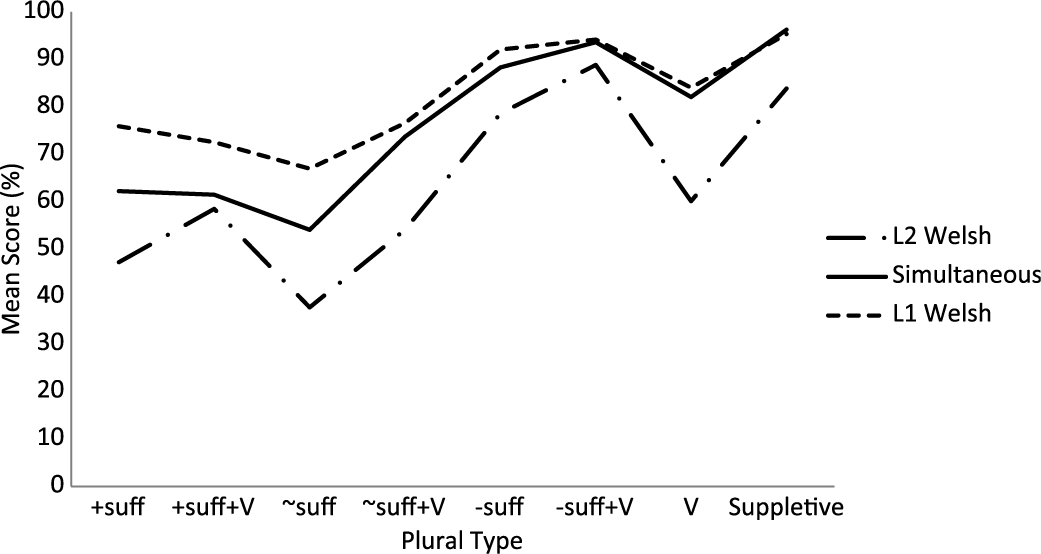
Results revealed significant main effects for age, F(2, 225) = 33.423, p < .001, bilingual group, F(2, 225) = 25.996, p < .001, and plural type, F(7, 1565) = 86.458, p < .000. The effect of age was due to the 16–17 age group displaying more advanced knowledge in comparison to the 12–13 age group (p = .002), as predicted, and the adults outperforming both the 16–17 (p < .001) and 12–13 age group (p < .001). The effect of bilingual group was due to the L1 Welsh bilinguals outperforming the simultaneous bilinguals (p = .042) and the L2 Welsh bilinguals (p<.001), and the simultaneous bilinguals outperforming the L2 Welsh bilinguals (p < .001; see Figure 2 for mean responses). The effect of plural type was due to the performance on certain plurals being significantly higher in comparison to others (mean percentage responses are shown in Table 2). Pairwise mean comparisons revealed that, overall, most plural types were significantly different from each other (p < .05). However, there were some nonsignificant performances among some of the items; for example, +Suff versus +Suff+V (p = .341); +Suff versus ∼Suff+V (p = .124); +Suff+V versus ∼Suff+V (p = .124); –Suff+V versus suppletive (p = .768).
Average mean scores per cent across all plural types

The analysis also revealed a series of significant interaction effects. First, there was a significant interaction between Bilingual Group × Age, F (4, 225) = 6.474, p < .001. Post hoc tests revealed within the 12–13-year-olds there was a weak significant difference between the L1 Welsh and L2 Welsh bilinguals (p = .044). This difference was more notable within the 16–17-year-olds, with the L1 Welsh bilinguals significantly outperforming the simultaneous (p = .003), and L2 Welsh bilinguals being outperformed by the L1 Welsh and simultaneous bilinguals (both p < .001). There were no significant differences across the adult bilingual groups.
Second, an interaction was found for Age × Plural Type, F (14, 1575) = 9.284, p < .000, and for Plural Type × Bilingual Group, F(14, 1575) = 3.994, p < .000 (see Figures 3 and 4), and there was no further three-way interaction between Plural Type × Age × and Bilingual Group, F(28, 1575) = 1.378, p = .107. In terms of the Age × Plural Type, while there were negligible differences across the 12–13-year-olds and the 16–17-year-olds on most plural types (all p > .05), the 16–17-year-olds significantly outperformed the 12–13-year-olds on +Suff+V (p = .001) and V (p = .001) forms. Adults, unsurprisingly, outperformed the 12–13-year-olds for all plural types (all p < .01), bar suppletive, which was nonsignificant (p = .308). Adults also outperformed the 16–17-year-olds on all plural types (p < .05), apart from the –Suff+V (p = .176) and suppletive (p = .269) forms, suggesting that even 16–17-year-olds are well behind adults in their acquisition of most plural forms (see Figure 5).
Performance of teenagers versus adults from each bilingual group on measures of plural morphology.

Performance of each bilingual group across all plural types.
Performance of each age group across all plural types.

Performances across Bilingual Group × Plural Type revealed that L1 Welsh bilinguals significantly outperformed L2 Welsh bilingual on all plural types (all p < .001) bar –Suff+V (p = .075), suggesting that the L2 bilinguals were still lagging in their knowledge of the majority of plural types in comparison to L1 Welsh bilinguals. L1 Welsh bilinguals were also significantly outperforming the simultaneous bilinguals on +Suff (p = .007), +Suff+V (p = .014), and ∼Suff (p = .018); however, there were no significant differences on the remaining forms, suggesting that simultaneous bilinguals were able to perform comparably to the L1 Welsh bilinguals on some forms. In comparison to the simultaneous bilinguals, L2 Welsh bilinguals were performing comparably on some forms, such as +Suff+V (p = .563), Suff+V (p = .207), but continued to lag on the remaining forms (all p < .05).
These data, added to the gender data, show quantitative differences across various types of bilinguals, with some types of bilinguals achieving different levels of performance at different stages. In order to explore whether bilinguals’ performance differed qualitatively, further analyses were carried out into the nature of the errors made on the plural forms.
Error analysis
Given the age of acquisition of the participants involved in this study, one could expect that children from all three home language types should display some advanced knowledge of the Welsh plural system, that is, the use of different plural types and suffixes. In this regard, it is less likely that 16–17-year-old bilinguals, particularly the simultaneous and L2 Welsh bilinguals, would overgeneralize from English into Welsh, using the English suffix –(i)(e)s as a default. This is what was found. The English –(i)(e)s form represented only 2.48% of all errors produced by the L2 Welsh bilinguals. Simultaneous bilinguals produced 5.23% of –(i)(e)s errors, while L1 Welsh produced 3.94%. The higher use of –(i)(e)s among the simultaneous children may be due to patterns of code switching. However, it is not possible to address this question further with the present data. The remainder of the error analysis results are presented below (see also Table 3) according to the types of errors made.
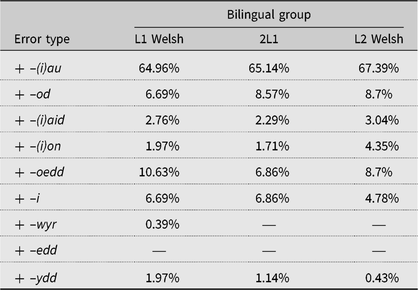
Number of overgeneralizations per home language group
Zero plural marking
The production of forms that included no attempt to produce a plausible plural form was not high for either group, with these errors accounting for 2.99% of overall L1 Welsh errors, 4.78% for simultaneous, and 5.68% for the L2 Welsh bilinguals. This suggests that the majority of errors were produced by some form of overgeneralization from within the system.
Overgeneralization
The addition of a singular suffix. By far, the most common error seen in forming a plural across all participants was the wrongful addition of a (wrong) plural suffix to the singular stem (L1 Welsh: 65.57%; simultaneous: 60.43%; L2 Welsh: 69.31%; e.g., cathau /kaːθaɨ/ instead of cathod /kaːθɔd/). This was possibly due to (a) the participants’ knowledge that adding a plural suffix is the most common way of forming a plural; (b) its relative transparency in comparison to types that include an internal vowel change; and (c) its similarity to the English plural system (singular stem+(i)(e)s). It may well be that eventually, given the overall complexity of the Welsh plural system, a simplified process of forming the plural may evolve; however, the nature of the current study is too limited to explore whether such a process is already in place.
Vowel alternations
Given that plural forms requiring vowel alternations, with or without a suffix change, are opaque forms (+Suff+V; ∼Suff+V; –Suff+V; V), it was likely that those would be the hardest to acquire. However, analysis showed that, while plurals that included a vowel change did cause problems, they were on par with +Suff and ∼Suff in terms of the lowest scoring items. While performance on the +Suff and ∼Suff items could be linked to the overgeneralization of –(i)au, the errors that were performed on items requiring a vowel change were either (a) a failure to alternate the vowel—for example, nant /nant/ would be changed to *nantydd /nantəð/ omitting the internal vowel change required (i.e., nentydd); (b) a failure to combine vowel alternations with a suffix (e.g., blaidd /blaɨð/ changed to *bleidd /bleɪð/ omitting the plural suffix required (bleiddiaid ); or (c) participants would correctly alternate the vowel but include the incorrect suffix (e.g., bleiddod). However, +Suff+V forms generated the second highest proportion of errors in each group, accounting for 12.61% of the overall errors.
Plurals that are formed through an internal vowel change only were not problematic for the L1 Welsh or simultaneous bilinguals. However, the L2 Welsh made many errors on these forms. This was most likely due to their tendency to add a plural suffix, which resulted in over pluralisation (e.g., instead of geifr /geɪvr/, which is the correct plural form of gafr “goat,” they would produce *geifrod /geɪvrod/). Thus, these patterns suggest that L2 Welsh participants were aware that vowel change is a way of marking a plural in the same way as adding a suffix is a way or marking the plural and were able to extract that information from the input they received. However, they had yet to acquire the nuances around how certain types of plurals are formed. Because the vowel change only and suppletive forms represent a small, closed set of what could almost be seen as exceptions, generating the plural in a productive manner would lead to incorrect overgeneralizations, and therefore such items need to be acquired in a piecemeal, item-by-item fashion.
Overgeneralisation: –(i)au
The most common overgeneralized suffix produced by all participants was of the –(i)au suffix, predominantly added onto a singular stem. This averaged at 64.96% for L1 Welsh, 67.39% for L2 Welsh, and 65.14% for the simultaneous bilinguals. Following Thomas et al. (Reference Thomas, Williams, Jones, Davies and Binks2014), and because of its prevalence in the plural form of words for animals, it was expected that –od would account for a large proportion of the errors made; however, in the current sample, the number of overgeneralization of –od was less than 9% for all language groups. Thus, it is probable that at this age, the participants are aware that –(i)au is the most common suffix form found in the input. Thus, explains why it is likely for the suffix –(i)au to be the default strategy for unknown plurals, with 35% of L1 Welsh participants overgeneralising –(i)au over 80% of the time.
Other overgeneralization errors included the –i, –(i)aid, –oedd, and, particularly in the case of L2 Welsh bilinguals, –(i)on, with the prevalence of these errors ranging from 1.97% to 10.63%. Only L1 Welsh bilinguals produced errors involving the wrong use of –wyr, which only occurred in 0.39% of errors; however, while it could be due to limited knowledge of that suffix by the simultaneous and L2 Welsh bilinguals, it could also be due to the known association of –wyr with human nouns, which were not prevalent in the items chosen in the test. While all suffix forms included in the error analysis are common to varying degrees in the input, these patterns suggest that all language groups have developed various degree of knowledge of how to form a plural in Welsh.
Discussion
The main aim of this research was to explore the role of continued exposure to Welsh in developing bilingual teenagers’ acquisition and knowledge of grammatical gender and plural morphology in Welsh beyond the primary school age. In doing so, we aimed to explore the potential for convergence in ability across bilingual groups across time (i.e., whether simultaneous and L2 Welsh bilinguals “catch up” to L1 Welsh bilinguals in their knowledge of gender and plural morphology by age 17. The results revealed some interesting patterns that warrant further discussion in relation to each of the predictions made.
The first prediction, namely, that performance across all three bilingual groups would increase with age, was partially upheld. In the case of gender, adult participants outperformed the younger groups. However, no significant differences were found between both younger groups suggesting that the 12–13-year-olds in general were performing at the same level as the 16–17-year-olds, with neither group performing as the adults.
There was also a clear age effect for plural morphology with adults continuing to outperform the younger groups. However, similar to the patterns seen with gender, the 16–17-year-olds were not significantly outperforming their younger counterparts. This suggests that a more consistent grammatical structure than gender does not guarantee faster progression at an earlier age.
This lack of progression within the bilinguals for gender is for the most part, in line with previous studies of gender (e.g., Gathercole & Thomas, Reference Gathercole and Thomas2009; Thomas & Gathercole, Reference Thomas and Gathercole2007; Thomas et al. Reference Thomas, Williams, Jones, Davies and Binks2014), which suggest that acquisition of the structure is a long, drawn-out process, partially due to the complexity of the structure and partially due to its status as a structure that is undergoing change. Under those conditions, it is not surprising to see that children, even at 16 to 17 years of age, are continuing to acquire the structure.
Similar to the findings of Thomas et al. (Reference Thomas, Gathercole, Hughes and Gathercole2013) for Welsh vocabulary, it could be inferred that L2 Welsh children may have reached a plateau in their performance on these tasks at around age 12 and are no longer likely to acquire the system any further (cf. incomplete acquisition; Montrul, Reference Montrul2008) lending strong support to Gathercole and Thomas, (Reference Gathercole and Thomas2009)’s suggestion that some aspects of morphology are likely to be “timed off the map” for acquisition for some speakers. Alternatively, this performance may simply reflect the fluidity of the process of language acquisition, with performance stagnating at certain times but may continue to develop beyond those stages. Recent research by Hartshorne, Tenenbaum, and Pinker (Reference Hartshorne, Tenenbaum and Pinker2018) revealed that even for native speakers, it takes approximately 30 years for grammatical performance to plateau, suggesting that linguistic knowledge does take a long time to stabilize, even for native speakers. Under such an account, it would be very plausible that the bilinguals in this sample need more time for their knowledge of Welsh to continue to develop. Welsh–English bilinguals may well continue to learn through adulthood or may never acquire the language to the same levels as the adults, perhaps due to their greater exposure to and dominance in English. Longitudinal studies are now needed to help tease apart these possibilities.
In terms of the second prediction, namely, that we would see similar performance across the bilingual groups as they accumulated more exposure to the language over time, the main findings provide some support for the hypotheses that, under favorable input conditions, “catch-up” can occur; however, this was not always the case. For both grammatical structures, L1 Welsh bilinguals continued to outperform their counterparts.
Within the younger age group on plural morphology, while the L2 Welsh bilinguals had converged to that of their simultaneous peers, they lagged behind the L1 Welsh bilinguals, with only the simultaneous bilinguals converging with their L1 Welsh peers. However, within the 16–17-year-old teenagers L1 Welsh bilinguals continued to outperform their simultaneous and L2 Welsh counterparts, on plural morphology. While it is always difficult to infer progression across time within a cross-sectional study design, the convergence in performance among the younger age group and the differences in performance among the 16–17-year-old age group is interesting and could be representative of a number of things. For example, this pattern may be down to a general cohort effect whereby the differences in Welsh language abilities between L1 and L2 speakers are less pronounced among the 12–13-year-olds than among the 16–17-year-olds.
Alternatively, this pattern could be down to a tendency for younger children to perform equally well on the more transparent aspects of complex systems while struggling to similar degrees on those aspects that are more opaque, while at the older ages, the L1 (and to some extent the simultaneous) bilinguals move ahead with the more complex aspects while the L2 bilinguals continue to make little or no progress, which may influence their overall performance patterns at that age. Again, longitudinal studies may help provide answers to these patterns. What is clear, however, is that the differential performance identified across home language groups within the 16–17-year-olds for plurals is reflective of similar patterns in other studies and that this pattern transcends opacity. In discussing teenage L2 Welsh bilinguals’ lack of progression with receptive knowledge of vocabulary in Welsh, Thomas et al. (Reference Thomas, Gathercole, Hughes and Gathercole2013) turned to the role of external, sociolinguistic factors in shaping teenagers’ linguistic performance to explain their findings (see Carroll, Reference Carroll2017). L2 Welsh bilingual teenagers are more likely than L1 and simultaneous bilinguals to revert to the use of their dominant L1 (English) as a default communicative strategy, particularly in addressing their peers on a daily basis. Consequently, they may well fall short of the critical mass of exposure that is necessary to acquire some of the more opaque forms within their less dominant language, which may lead to incomplete (cf. Montrul, Reference Montrul2008, Reference Montrul, Nicoladis and Montanari2016), or protracted acquisition of those structures.
However, convergence can eventually occur during adulthood. Results of the adult on the plural task revealed that L2 Welsh bilinguals performed comparably (M = 85%) to the L1 Welsh bilinguals (M = 90%). While performance around 85% may not be regarded as “ceiling,” it does suggest that under favorable conditions convergence between groups is achievable. However, it is unclear how the adults in the current samples achieved their level of performance, and past research has found the contrary (e.g., Binks & Thomas, Reference Binks and Thomas2016; Gathercole & Thomas, Reference Gathercole and Thomas2009; Thomas & Gathercole, Reference Thomas and Gathercole2007; Thomas et al., Reference Thomas, Williams, Jones, Davies and Binks2014). Within the current study, however, it is important to acknowledge the imbalance in sample sizes across groups (there were more L1 bilingual adults than simultaneous or L2) and the relatively small number of participants in the simultaneous and L2 samples. In addition, adults who chose to take part in the study may have had a special interest in the Welsh language, and other socioeconomic factors that were not controlled for in this study may have influenced the pattern of results. Further research is required to investigate how Welsh–English bilingual adults’ lives influence their language proficiency across their life span in more detail in order to establish what factors predict and influence higher attainment on measures of morphology.
Ultimate attainment of Welsh
In general, L1 Welsh bilinguals displayed the “fullest” or “most complete” systems at age 16, with performance reaching adult norms on some aspects of plural morphology and approaching adult norms on gender. However, if we apply a stringent criterion of 90% correct as a marker of acquisition (cf. Brown, Reference Brown1973) it would seem that neither structure is fully acquired at age 16–17, even by L1 Welsh speakers. The only teenage group who could claim to have fully acquired grammatical gender under this criterion would be the 16–17-year-old L1 Welsh, but only for nouns for humans. Even within the adult group, the only performance over 90% was the L1 Welsh and simultaneous bilinguals on human referents. With a less stringent threshold of 80% (cf. Jia & Fuse, Reference Jia and Fuse2007), the only teenagers who could claim successful acquisition would be the 16–17-year-old simultaneous bilinguals, and both the 12–13 and 16–17 L1 Welsh, but here again, only for human referents. For the plural, the L1 Welsh and simultaneous adults could claim successful acquisition on all plural types, the L2 Welsh adults on five out of the eight plural types, the L1 Welsh teenagers on five out of eight, the 16–17 simultaneous bilinguals on three out of eight, the 12–13 simultaneous bilinguals on two out of eight, and the L2 Welsh bilinguals on two out of eight of the plural types.
However, if we look at progression with age (bearing in mind due to time constraints, this was a cross-sectional rather than a longitudinal study), there is a clear progression in age on the more complex items among the L1 Welsh and simultaneous bilinguals, whereas performance across age tends to decrease on the more complex structures among the L2 Welsh bilinguals. L2 Welsh bilinguals, therefore, fail to progress at a relatively low level in their performance around age 12 on the opaquer items, which mirrors the findings of Paradis and Jia (Reference Paradis and Jia2017) and Paradis et al. (Reference Paradis, Tulpar and Arppe2016). These findings suggest that even with continued educational support for the language, some aspects of Welsh morphology may be vulnerable to incomplete acquisition, echoing findings of Gathercole (Reference Gathercole, Oller and Eilers2002b) and Montrul and Potowski (Reference Montrul and Potowski2007), who suggested that education did not prevent aspects of Spanish morphology from being vulnerable to incomplete acquisition.
The findings of this study are in stark contrast to studies looking at the acquisition of English morphology by monolinguals, where linguistic growth had been shown to plateau around age 6, with accuracy hitting ceiling at that point and little variation between individuals (Rice & Wexler, Reference Rice and Wexler1996; Rice, Wexler, & Hershberger, Reference Rice, Wexler and Hershberger1998; however, see Hartshorne et al., Reference Hartshorne, Tenenbaum and Pinker2018, for a contradictory account). Another interpretation ultimately compatible with these findings is that Welsh–English bilinguals may simply need more time to acquire these structures. However, to disentangle these two scenarios may require a closer investigation of adults’ experience and use of Welsh, after school-based education. Given the opaqueness of grammatical gender and plural morphology in Welsh, it might be expected that L2 Welsh bilinguals might plateau on opaque structures but might not on more transparent structures. Others have concluded that acquisition of L2 morphology may be accelerated at first, and then reaches a plateau before continuing toward ceiling at a later time (Jia & Fuse, Reference Jia and Fuse2007). It may well be that L2 Welsh bilinguals continue on an upward trajectory with respect to the more transparent items beyond age 17, but only under facilitative environmental conditions.
Onset of exposure
The data from the current studies suggest that an early age of onset (AoO) does not necessarily guarantee full acquisition of complex morphology by age 17. The L1 Welsh and simultaneous bilinguals in our studies would have had exposure to Welsh from birth, albeit in different quantities. AoO for L2 Welsh bilinguals would have been later, around 4 years old when they began Welsh medium schooling, which is considered by many to be within the critical period window (Birdsong & Vanhove, Reference Birdsong, Vahove, Nicoladis and Montanari2016). Thus, L1 Welsh and simultaneous bilinguals’ exposure to Welsh in the 16–17 age group spanned 16 to 17 years, 12 to 13 years for L2 Welsh bilinguals. Yet, while they did for gender, the simultaneous bilinguals failed to converge with L1 Welsh bilinguals on measures of plural morphology, and L2 Welsh bilinguals failed to converge with L1 Welsh bilinguals on any morphological measures, even with 12 to 13 years of exposure to Welsh. Establishing a figure for the actual length of exposure needed for convergence to occur is not easy, particularly in light of the heterogeneity of bilinguals and the diversity of their bilingual experiences. However, Flores, Santos, Jesus, and Marques (Reference Flores, Santos, Jesus and Marques2017) suggested that for those with less parental exposure, it would take 12 to 13 years to converge to monolingual attainment levels, whereas for those who received more exposure, it would take 8 to 9 years to converge with monolingual attainment levels. Other studies have suggested that it takes between 4 and 6 years for “catch-up” to occur (Hakuta, Butler, & Witt, Reference Hakuta, Butler and Witt2000; Saunders & O’Brien, Reference Saunders, O’Brien, Genesee, Saunders and Christian2006). Unsworth (Reference Unsworth2016), in contrast, found no significant differences across bilinguals with varying AoO on measures of Dutch morphology and morphosyntax, suggesting that AoO does not always predict outcomes. In terms of the current studies, L1 Welsh bilinguals tended to outperform simultaneous bilinguals in general, all of whom would have the same AoO (i.e., at birth). Rodina and Westergaard (Reference Rodina and Westergaard2017), who compared children with two Russian-speaking parents to those with only one and found no morphological attainment convergence in Norwegian–Russian bilingual children aged 4 to 11 learning Russian as a heritage language. Such findings suggest that an early AoO and length of exposure may be a poor marker for attainment success in minority language contexts and may not make up for differences in linguistic input quantity. However, given that the frequency of exposure to Welsh, albeit received from the same starting point, likely differed across L1 and simultaneous bilingual groups, the accumulation of the critical mass of exemplars that is necessary to build the structures would differ across the groups, resulting in different rates of performance.
Opaqueness of structure and animacy
The third and fourth predictions were based on the nature of the gender and plural systems in Welsh. The third prediction was that all bilinguals would be stronger at identifying coreferential pronouns denoting masculine than feminine nouns and performance on human referents would outweigh performance on inanimate objects and animal referents. Results revealed all L1 Welsh, simultaneous, and L2 Welsh bilingual participants across all age groups were stronger at identifying nouns for humans in comparison to nouns for inanimate objects, with performance on nouns for animals in the middle. These results were unsurprising, and supported findings by Gathercole et al. (Reference Gathercole, Thomas and Laporte2001) and Gathercole and Thomas (Reference Gathercole and Thomas2009), suggesting that the real-world sex of the referents of nouns for humans are more noticeable to children when acquiring grammatical gender. Furthermore, 16–17-year-old L1 Welsh bilinguals showed projection toward ceiling on nouns for humans, with participants averaging over 90%. However, the prediction that performance would be more consistent on masculine than feminine nouns in the present study was not upheld. Performance was higher on forms marked with hi “her/it” and ei + AM, marking the possessor as feminine. This pattern is interesting and may be accounted for by the following reasons. First, because there are fewer feminine than masculine nouns in Welsh, it may be that children pay more attention to agreement patterns relating to feminine items. Second, AM is associated almost exclusively with feminine ei and applies to fewer antecedent nouns than ei + SM does. The ei + AM form may therefore be more salient to children, and to hold greater “functional load” (Jones, Reference Jones1998) leading to more accurate responses. Third, because ei + SM is more frequent in the input and is often overextended to the feminine context, particularly for inanimate nouns, it may be the case that children were happy to select ei + SM as a marker for feminine nouns when the correct response should have been as a marker for the masculine noun.
With regard to the fourth prediction that performance on plural morphology would be more stable across the board than performance on grammatical gender, the prediction was not upheld: performance was not higher overall for plurals in comparison to gender. This is particularly surprising as (a) plural forms are marked more consistently across and within speakers than grammatical gender (Thomas & Gathercole, Reference Thomas and Gathercole2007; Thomas et al., Reference Thomas, Williams, Jones, Davies and Binks2014), and (b) it has been suggested that mutation, and its role in gender marking in Welsh, is undergoing structural change (Jones, Reference Jones1998; Gathercole & Thomas, Reference Gathercole and Thomas2005). However, the fact that the data seem contrary to prediction may be due to the types of tasks used. The gender task was a receptive task that offered two choice responses; the plural task, however, was a productive task, which required the participants to generate a plural form from a large number of possibilities. Performance could therefore be enhanced somewhat on the gender task as compared to the plural task, which may account for the differences in scores, particularly among the simultaneous and L2 Welsh bilinguals, who may find production more difficult than comprehension (e.g., Montrul, Reference Montrul, Nicoladis and Montanari2016). To mitigate this limitation in the future, both receptive and productive tasks should be used.
Concerning the performances across plural types, overall, participants did not struggle more with the opaquer plurals that include an internal vowel change. Contrary to our initial prediction and to previous findings with younger children (Thomas et al., Reference Thomas, Williams, Jones, Davies and Binks2014), it appears that performance was higher for certain opaque forms in comparison to those that only required a more overt structural change, such as forms that include a suffix alternation. That said, this was not universal. The performance of the L2 Welsh bilinguals was low on those items that required only vowel changes or vowel change and suffix addition/alternation, which supported our prediction. Performance on forms that included suffix deletion, with or without an internal vowel change, was universally high, with all three bilingual groups performing over 80% on these forms. This was also true for suppletive items, with even the L2 Welsh bilinguals performing at 84.14%. It can be concluded that participants are aware of and are able to form plurals that constitute closed classes of items such as the suppletive, and those including vowel changes. Given that certain types of plural forms are smaller in number, such as the suppletive and mass-count nouns (–Suff, –Suff+V), the performance is in line with what was predicted. Given that the mass-count nouns and suppletives constitute closed classes of items, it may be that children learn these forms item-by-item, drawing on other sources of information, such as semantic class in the case of mass nouns (see Roberts & Gathercole, Reference Roberts and Gathercole2006), in line with constructivist approaches to acquisition (e.g., Ambridge & Lieven, Reference Ambridge and Lieven2001; Tomasello, Reference Tomasello2003). For the other, more “regular,” aspects of the system, bilinguals still require a certain critical mass of exposure to the forms in order to extract out the regularities of form from the input. The results of the present study seem to suggest that acquisition of the more transparent forms comes first, such as the +Suff, which also seems to be used as the main default strategy. Opaque forms that require subtle sound changes take longer to be mapped onto the system. This lends support to previous research, (e.g., Bybee & Hopper, Reference Bybee and Hopper2001), which assessed the role of frequency patterns on children’s acquisition.
Conclusions and implication for pedagogical practices
The results of these studies provide further evidence that different types of bilinguals perform differently from one another on various measures of morphosyntax, and that these differences persist throughout secondary education. Continued school-based exposure by itself may not be enough to bridge the differences in knowledge of complex morphosyntactic structures that exist across bilingual types, and knowledge of the ultimate attainments that are possible for different types of bilinguals are critical to effective education planning. Under conditions of minority language bilingualism, grammatical differences can continue well into early adulthood. With the likelihood of convergence dependent on the opacity of the structures being learned, the probability of achieving a critical mass of exposure, particularly to more opaque structures, may be reliant on external factors. Within minority language contexts, it may be these external, social, factors that influence the speakers’ linguistic behavior and eventually their ultimate attainment of language.
These findings have clear implications for education, particularly in relation to the assessment of linguistic abilities, where simultaneous and L2 Welsh bilinguals attending Welsh-medium or bilingual schools are often expected to perform as L1 speakers of both languages. While there are motions in place toward creating a Welsh language continuum to replace the L1/L2 distinction at school (e.g., Welsh Government, Reference Hoff and Ribot2017), our findings do raise the question of what educators should expect of simultaneous and L2 minority language children, particularly in relation to their use and knowledge of complex structures in Welsh, and highlight the need for the development of detailed linguistic profiles and knowledge of the development trajectories for the different bilingual types. This is all the more important in light of known effects of peer comparisons and the effect of language ability on pupils’ self-esteem (Thomas & Roberts, Reference Thomas and Roberts2011), and is a crucial step in supporting the Welsh government’s goal of reaching 1 million speakers by 2050 (Welsh Government, Reference Hoff and Ribot2017).
Acknowledgments
We wish to express our sincere gratitude to all participants and participating schools for their kindness and time, and to all children who took part in the research. This work was funded by ESRC and Coleg Cymraeg Cenedlaethol doctoral funding. We also wish to thank the anonymous reviewers for their very helpful comments on earlier drafts of this paper.
Funding
Coleg Cymraeg Cenedlaethol, (Grant / Award Number: ‘Research Scholarship’) Economic and Social Research Council, (Grant / Award Number: 1374022 ‘ESRC DTC Studentship’)


 Open access

