

A. Introduction
The meaning and role of (national) borders have always been subject to constant change; and even in the current age of globality, which is characterized by a spirit of rapprochement and understanding, of dissolution of borders, the dynamics of borders—contrary to expectations—are becoming apparent anew: While shortly after the fall of the Berlin Wall in 1989 there were only about a dozen borders fortified by walls or similar structures, today there are already more than seventy,Footnote 1 and “build that wall” chants are resoundingly loud. Despite these developments, from a cosmopolitan-liberal perspective borders are irritating relics of anachronistic nationalism.
Borders serve various purposes. On the one hand, they ensure orderly human coexistence and serve to protect people—as has been shown not least in view of the Russian war against Ukraine: the external border of the European Union became a safe haven for many Ukrainians. On the other hand, legally sanctioned, robust border security also serves to defend resources and prosperity and is therefore a sign of globally unequally distributed prosperity, marking and perpetuating fundamental injustice in the world. In a society of free and equal citizens, borders can be interpreted and legitimized as legal instruments of order, but their isolating function cannot be justified when measured against historically established concepts of justice. To counteract injustice, states should consider softening borders and strive towards more liberal border control and migration policies.
Similar issues can be observed regarding the concept of citizenship. Although this concept serves to constitute states and to ensure order in the world, serious injustices are manifested in the color of the passport. Whether burgundy red, azure blue, green, or black, the holder of a specific citizenship is either granted valuable rights on a global level or inevitably subjected to rigorous restrictions all over the world. Just as border regimes, the concept of citizenship must therefore be viewed particularly critically when assessed against fundamental ideas of justice. A liberalization of the concept of citizenship could compensate for possible injustice.
B. Terminology
I. Origin and Meaning of the Term “Border”
Borders are not an invention of modern times. Long before our era, people began to build ramparts to protect their settlements from invaders, thereby separating themselves from the outside world.Footnote 2 The word “border” was inherited from the Middle English term bordure, which was already in use during the 14th century.Footnote 3 It originates from the Old French term, bordeure, and the Frankish-Germanic term, bord. In earlier times the term was not supposed to describe a clear dividing line but more a vague contact zone of two areas extending over a larger region—much closer in its meaning to today’s words “edge”, “side”, or “margin”.Footnote 4 Thus, during the medieval period the word could refer to either side of the “borderline”.
With the emergence of territorial states and the simultaneous shift of protection efforts away from the center of a territory to its outskirts, the meaning of the term border shifted to its more common political aspect from the mid-18th century onward. At the same time, understanding the border as a larger region lost popularity—from then on, it was rather a conceptual proximity to the word “end” that could be observed. Since then, borders have been understood as imaginary geographical lines that serve to separate various areas of the earth’s surface. On the one hand, they mark off different political, cultural, or linguistic areas from one another, but on the other hand, they separate such areas in an arbitrary way.Footnote 5 To this day, the term “border” is inherently dynamic: In times of increasing migration and political conflict, the continuous hardening and shifting of borders is likely to result in a renewed semantic meaning at any given time. On top of that, as yet to be shown, the “border” is a fundamental term in international law today.
II. Development and Meaning of the Concept of Citizenship
Closely related to borders is the concept of citizenship. Its basic features already existed in ancient Greece: Within the sovereign Greek city-states, all political participation rights were restricted to free men whose parents have already been citizens of the respective city-state.Footnote 6 Everyone else—women, foreigners, slaves, and craftsmen—were excluded from citizen status.Footnote 7 During the Middle Ages, the concept of citizenship mostly disappeared and was replaced by a system of feudal rights and duties.Footnote 8 It was not until the French Revolution, widely regarded as the moment that gave birth of modern citizenship, that this feudal system was suppressed: In the course of the abolition of the estate-based society, the ascendence of republican thinking and the gradual emergence of modern states with a national identity, by the early 19th century, the “state” was understood not merely as a territorial entity organized in an absolutist way but rather as a personal association of citizens.Footnote 9
As a result of these developments, the contemporary state is constituted not only by its territory and governmental authority but also by its people.Footnote 10 Whether an individual belongs to the people of a certain state is determined by their specific citizenship. Citizenship, not to be confused with nationality, serves as an allocating and formal link between the citizens of a state and the organized national community of the state.Footnote 11 While nationality is understood as merely the legal connection between an individual and a state, citizenship encompasses the rights and duties associated with the citizen status.Footnote 12 Accordingly, it is through only citizenship that an individual is able to exercise the rights and obliged to fulfill the duties tied to belonging to a national community. This leads to the ultimate realization that “every citizen is a national, but not every national is necessarily a citizen of the state concerned.”Footnote 13 National laws determine if someone is considered merely a national or in fact a citizen endowed with comprehensive rights and duties.Footnote 14 The forthcoming analysis will take a detailed and critical look at the concept of citizenship in its entirety. Consequently, from here on, the emphasis must be directed toward the term “citizenship”.
C. Borders in (Legal) Reality
I. Borders in the Course of Time
1. Historical Development of the Border
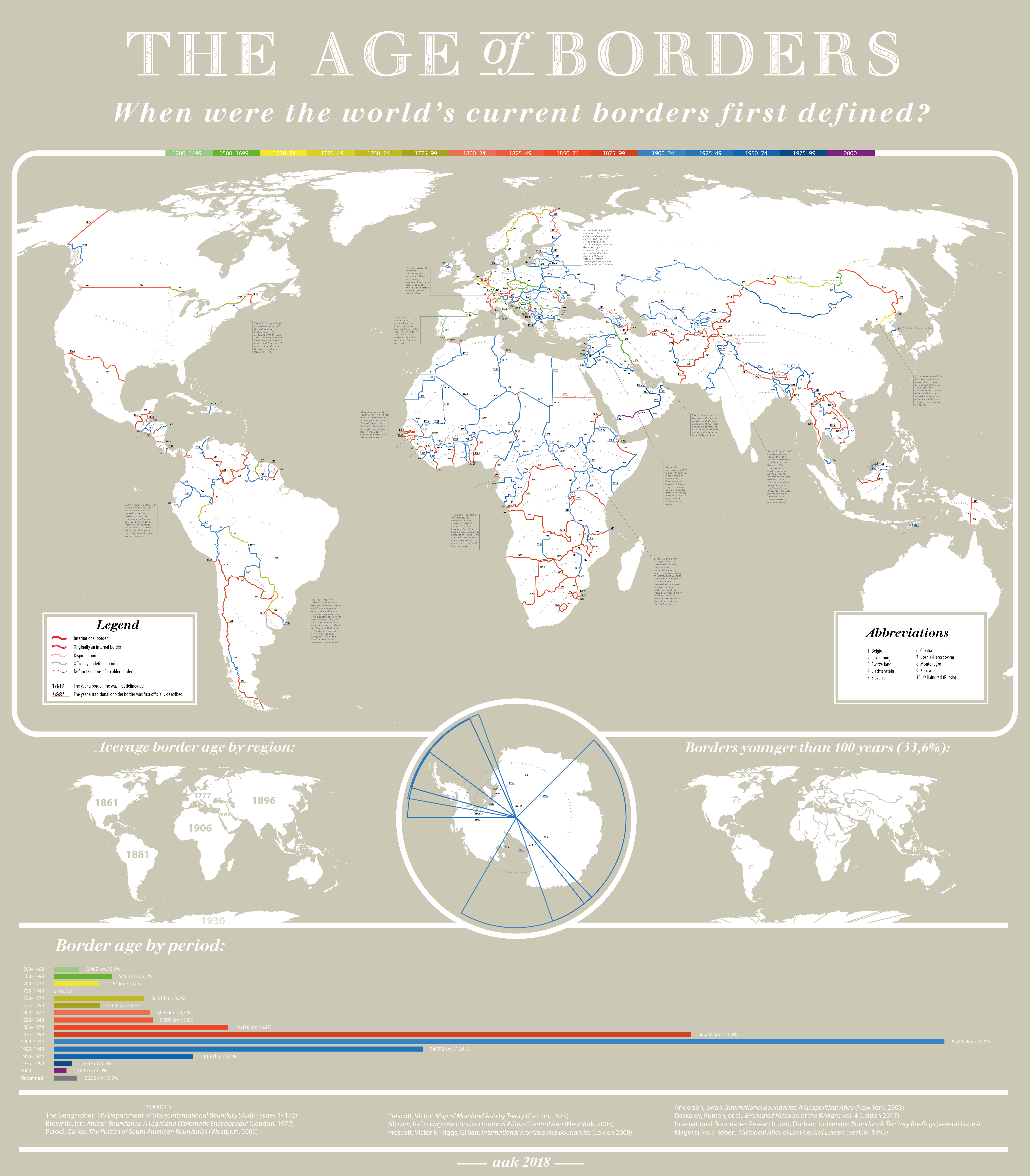
Since the dawn of time, borders have existed in the form of lines, zones, or stretches of land serving as sites of interaction, transit, obstruction, or contention.Footnote 15 While borders in their original form spatially separated plots of land, the first political borders—such as Hadrian’s Wall, built during the Roman Empire, or the Great Wall of China, parts of which were constructed as early as the seventh century A.D., those are probably the most prominent examples—served primarily as visual markers of the respective realm and for defending one’s territory.Footnote 16 Borders as we know them today are a modern phenomenon: It was not until the end of the 18th century that European central powers began to separate themselves from one another for nationalistic reasons.Footnote 17 Using natural barriers such as mountain ranges or rivers, territories were assigned to specific states. Roughly half of the border kilometers that exist today were not even delineated until the 20th century.Footnote 18 Thus, previous border courses have little in common with the present ones.Footnote 19 Today’s map is the result of a multitude of historical and political conflicts:Footnote 20 For example, during the process of decolonization, which began in the 20th century, the Principle of Uti possidetis juris, commonly used in international law, led to existing colonial borders becoming state borders, regardless of the will of the local population and without taking regional circumstances into account.Footnote 21 To this day, this border demarcation, which is often based solely on latitude and longitude, is the cause of numerous territorial conflicts.Footnote 22 And in Europe, too, the fronts between the victorious powers hardened in the aftermath of the world wars. Borders continued proliferating, and their significance continued growing.
2. Transcendence of the Border at the End of the 20th Century
The global political structure changed toward the end of the 20th century. The collapse of the Eastern Bloc heralded an era of rapprochement and the softening of previously rigid fronts. In addition to the expansion of the European Union, the ratification of the Schengen Agreement, the reunification of Germany, and the end of the Cold War fueled hopes that the global community was coalescing. The starting point of these developments was the desire of the economically powerful nations to dismantle political as well as economic borders. The goal pursued by these same nations, to achieve welfare and security gains for all regions of the world through economic cooperation and trade on a global scale, prompted the international community to significantly reduce trade barriers.Footnote 23 In the course of the European integration process, the debate about softening borders also reached the field of constitutional law.Footnote 24 Not least, the increasing number of problems of global scope—especially environmental problems such as the ozone hole in the past or climate change now—underlined the need to transcend existing borders and to solve such problems by means of inter-national, cross-state cooperation. Advancing globalization trends raised expectations of a gradual transcendence of borders.
3. Renaissance of the Border in the New Millennium
These developments encountered setbacks in the new millennium: In the aftermath of the terrorist attacks on September 11, 2001, another turning point was becoming apparent, with repercussions reverberating well beyond North America.Footnote 25 Terrorist attacks were no longer a phenomenon of regional conflicts in distant territories; instead, they increasingly and unpredictably disrupted the fabric of the “Western world”. Attacks in Madrid, London, Paris, Brussels, and Berlin globalized political conflicts, and the permeability of borders obviously encouraged the import of terrorism operating on a global scale, mirroring the dynamics of global trade. A prolonged period of intra-European peace, which had lasted since the peaceful fall of the “Iron Curtain,” was coming to an end.Footnote 26 While “9/11” is a visible marker and cipher for new isolation, the strengthening of borders and the resurgence of nationalisms, the actual causes for the “renaissance” of the border are more diverse: The globally increasing migration—stemming from global political upheavals and growing economic inequality—was viewed with more and more apprehension in the societies of industrialized nations regarding their own prosperity. Fear of so-called “economic refugees,” “fleeing from poverty”—whether they were trying to get from Africa to Europe or from South America to the United States—grew.Footnote 27
The states of the “Global North” reacted: The establishment of more stringent national security laws was the initial indication of an advancing tendency towards isolation. In this process, the curtailment of basic human rights and civil liberties was gradually tolerated. Border closures became more prevalent, the Schengen rules were partially suspended;Footnote 28 countries were declared pariah states, part of the “Axis of Evil,” and, in general, purely national interests were increasingly prioritized.Footnote 29
A resurgence of populism was an almost inevitable consequence: Political slogans such as “America First!” symbolize the increased desire for separation from others, for economic self-sufficiency, for security through a return to the familiar and the exclusion of the foreign. Unequally distributed gains in prosperity and the pronounced weaknesses of capitalism fueled protectionist and nationalist populism, which, contrary to expectations, did not lead to the hoped-for taming of the global economy and a more just world order, but rather to a return to the status quo ante. Footnote 30
The neo-nationalisms and increased protectionist measures conjured up a new battle of systems, and especially world trade—once a symbol of openness—was drawn into this battle: Trade wars and punitive tariffs are increasingly used to economically weaken political opponents.Footnote 31 The rapprochement that could be observed towards the end of the 20th century is nowadays being reversed, bogeymen are being revived, and alliances that had been carefully built up over decades are being terminated with the intention of protecting national interests (e.g. the United Kingdom leaving the European Union).Footnote 32 The resurgence of national borders, which is driven by economic nationalism, threatens international efforts to jointly protect natural resources. The need for individual protection against a nebulous threat and for separation in order to maintain prosperity ultimately led to the renaissance of the border.
II. Purpose of Borders
Borders are not laws of nature, but legally sanctioned, human-made fictions—and thus legal instruments for behavioral control. Every human organization is structured in some way, for example, into regions, departments, or areas, and thus requires borders. Political-geographical borders empower states to decide not only who and under which conditions can enter or leave their national territory, but also who is admitted and who is rejected. Borders, and in particular the policies and control mechanisms enforcing them, can have severe consequences—in extreme cases, they may even result in the deaths of migrants drowning in the Mediterranean Sea. As is required for all measures conducted by a state, borders and the policies and mechanisms enforcing them require justification by law: if borders evidently serve legitimate purposes, such justification would initially appear possible. The underlying standard, which is commonly accepted in the German legal system, helps to assess the proportionality of measures conducted by a state. According to this standard, if a measure pursues a legitimate purpose, there is a good chance that the measure is also proportionate. In this case proportionality can only be undermined by a lack of suitability, necessity, or appropriateness.Footnote 33
1. Cultural and Geographical Function and Relevance in International Law
Often, an alleged “cultural homogeneity” is invoked to justify borders. In this respect, factors such as language or religion, frequently coupled with an idea of a (national) identity, play a prominent role. Because people in today’s largely transculturally globalized and pluralistic society cannot generally be reduced to certain cultural identities, borders drawn upon the idea of homogeneity are not justifiable in a rational way. As borders adhere to such patterns of justification, they are an expression of the once-thought-overcome division of the world into different ethnic groups and cultures.Footnote 34
Beyond these archaic ideas, borders initially serve a geographical separating function. They divide the earth into different political, economic, or legal systems. As “lines on the map,” they are the abstract manifestation of an international legal order that involves the territorial allocation of areas to specific states. Borders thus delineate the extent of each state’s territory and define the scope of territorial sovereignty: Within its own territory, each state is free to exercise its sovereign power.Footnote 35
In addition, borders are one of the key criteria for the application of central regulations of international law: For example, the general prohibition on violence expressed in Article 2(4) of the United Nations Charter, which forbids member states from threatening or using violence against the territorial integrity or political independence of another state, is linked to the national territory which is defined by its borders. The great importance of borders for the international state structure is also made clear by the fact that a large proportion of international law disputes brought before the International Court of Justice involve the definition of borders.Footnote 36
2. Ensuring Security and Order
By defining nation-states in this way, an inter-national order of peace is intended to be created and safeguarded: Border shifts forced by violence are sanctioned as a war of aggression under international law.Footnote 37 The definition, clarification and sanctioning of borders create this order of peace, which must be maintained, for example, with the help of the prohibition of violence under international law, the United Nations definition of aggression and its Friendly-Relations-Declaration.Footnote 38 Thus, an additional purpose of borders is to be seen in ensuring security and order. On the one hand, the ordering function is reflected in the fact that (“internal”) political decisions can be made at the national level so that the interests of the people living within the respective borders can be taken into account in the best possible way. On the other hand, they fulfill their organizational function by dividing the world into different jurisdictions within which states may exclusively set and enforce law.
The idea of the power monopoly of the government is therefore closely linked to the idea of the border: By contributing to the preservation of a country’s territorial integrity borders serve a protective function.Footnote 39 They are—as emphasized by Jellinek’s “Three-Element Doctrine”—the foundation of any state’s monopoly on the use of force, and, depending on the circumstances, they might even indicate political territory which guarantees freedom and security.Footnote 40 For people trying to escape autocratic and despotic regimes borders—as soon as they are surpassed—can be the first harbinger of the freedom and security that prevail in the entered political territory. For instance, since the beginning of the war in Ukraine, more than ten million Ukrainian citizens have crossed the external borders of the European Union to leave their war-torn homeland in order to protect their lives.Footnote 41 The Geneva Refugee Convention, international human rights, as well as European and national Residence Acts—for example the just recently adopted EU-Regulation on establishing a Union Resettlement and Humanitarian Admission FrameworkFootnote 42 and also Sections 22–26 of the German Residence Act—provides these people with legally justified shelter, giving them an opportunity to escape the acute danger of a Russian invasion. Besides that, the COVID-19 pandemic has shown that borders can also fulfill a major order and protective function in the containment of diseases.Footnote 43
Borders also convey a sense of internal security to the people living on the right side: As sites of control and manifestation of state authority, they are intended to deter malicious intrusion into one’s own territory at an early stage. Walls, fences, and barriers carry symbolic significance.Footnote 44
3. Defense of Resources and Prosperity
Another justification for borders is seen in their function of contributing to the defense of resources and prosperity.Footnote 45 While individuals from affluent industrialized nations can live in peace, freedom, and prosperity, those from economically weak and politically unstable countries may not experience such good fortune.Footnote 46 On a global scale, the gap between the rich and the poor is exceptionally wide.Footnote 47 In this context, colonialism, a period of excessive exploitation of colonies by colonial states, represents one—and probably the—decisive driving force, its impact is increasingly recognized today.Footnote 48 Persistent xenophobia, systematic racism, modern forms of slavery, and, as just mentioned, the extreme disparity in wealth—colonization continues to have a tangible impact on the international structure of states, making its thorough reappraisal an urgent matter;Footnote 49 without justice, there can be no peace.
In addition to the motives outlined in II.1. and II.2., the countries of the “Global North” also protect their borders exceptionally robustly in order to preserve their prosperity: Whether by the construction of a border wall between the United States and Mexico for “protection” against refugees or through the deployment of military force by the European Border and Coast Agency (Frontex) to secure the EU’s external border: So-called “economic refugees,” seeking a better life by fleeing to a more prosperous country are to be prevented from crossing the border at all costs.Footnote 50 Through such isolation, not only are resources located within a country to be preserved for the domestic population, but more importantly the wealth accumulated over centuries is intended to be secured for the future.
Undeniably, this function of the borders carries a significant injustice: It depends on the purely accidental circumstances of birth (“birthright lottery”) on which side of a border a person grows up, which, in turn, is a crucial determinant for its overall life chances.Footnote 51
III. Borders as a Symbol of Injustice
The justification of the border requires—according to the principle of proportionality which was outlined above—not only the mere existence of a purpose but also its legitimacy. Against this backdrop, it must not be ignored that borders are an expression of serious injustices. Especially because they mark and perpetuate existing inequalities even to this day, borders embody an ethical dilemma.
1. Borders as an Arbitrary Exclusion Mechanism
One of the most central principles of the constitutional order of values and law in Germany is that of the equality of all human beings. The (formal) Aristotelian idea of equality, according to which equal things are to be treated equally and unequal things unequally, shapes German legal discourse until today.
By serving as “sorting machines”Footnote 52 —borders effectively distinguish between wanted and unwanted crossings—and by consequently creating insurmountable strongholds for those who were born on the “wrong” side, borders symbolize inequality in the world.Footnote 53 This fundamental injustice becomes particularly evident in the context of global migration and refugee movements: According to the United Nations High Commissioner for Refugees (UNHCR), at the end of 2022 there were almost 100 million people worldwide fleeing war or political persecution—and as long as people are exposed to such influences, there will also be migration and refugee movements.Footnote 54
For displaced people and refugeesFootnote 55 , crossing the borders of industrialized nations is comparable to winning a lottery; for people originating from such nations, it is relatively easy to cross almost all of the world’s borders.Footnote 56 This opposition illustrates the precarious semi-permeability of borders: For some, they are barely noticeable—except for the need to show their passports to border control officers—while others risk their lives in the attempt to cross.Footnote 57 By making an individual’s origin the “border opener,” borders combined with the policies and control mechanisms enforcing them act as an exclusion mechanism that arbitrarily divides people into “wanted” and “unwanted.”Footnote 58
2. Injustice of the Border from a Philosophical Perspective
Consequently, borders entail an ethical dilemma: Whether a person grows up in peace and prosperity or in war and poverty is neither the subject of a decision that can be influenced in any way or even consciously made, nor is it based on personal merit. The living conditions in which and individual ultimately grows up depend primarily on the accidental circumstance of birth and descent.Footnote 59
2.1. Veil of Ignorance
To illustrate this dilemma on a legal philosophy level, albeit in a simplified manner, the Harsanyi/Rawlsian “veil of ignorance” can be used in combination with the categorical imperative of Kant: What agreement of ends, what validity of norms, and what use of means would any human being reasonably agree to if they did not know what situation, what position, and what role they would be born into on earth, that is, if they were not guided by their own interests?Footnote 60 To put it differently: What do people consider appropriate for themselves—and what can therefore claim validity as generalizable for all people?
In the context of borders, these philosophical standards can be presented as follows: In the “original position,” an individual does not know on which side of the border it will be born, in which political system it will grow up, and what difficulties its life will entail.Footnote 61 Without such prior knowledge, it will typically wish for a life in security, freedom, prosperity, and peace for itself and those closest to it. This initially purely individual desire, which, according to Rawls’s “ideal theory,” an individual would also uphold even in the case of “lifting the veil,” may be generalized as being a desire of all those people guided by reason.Footnote 62
The objection remains that Rawls’s “theory of justice,” which underlies the veil of ignorance, applies primarily at the level of individual states or closed societies: Although Rawls himself rejected a transfer of his theory to a global level due to the absence of a global framework, numerous contemporary philosophers accept the validity of his theory also on a global level, arguing that a limitation to closed societies is no longer up to date in times of a globalized world.Footnote 63
Following this idea of a universal applicability of the thought experiment of the “veil of ignorance,” it must be noted that borders, in their current appearance, do not exclusively contribute to satisfying the human aspiration for security, freedom, prosperity, and peace. Instead, they force the vast majority of the global population to live in conditions far from this ideal. Based on the understanding of justice outlined above, justifying borders by the purpose of effectively securing prosperity faces substantial challenges. It may, therefore, be necessary to improve the opportunities for people to leave their country of origin and enter another country with more promising life chances.
2.2 Utilitarianism
The ethical dilemma described above can also be illuminated from a utilitarian perspective. The main objective of utilitarianism is the maximization of overall utility. Among several conceivable courses of action, which one generates more benefit for all people, or at least for as many people as possible?Footnote 64 Jeremy Bentham refined this main utilitarian objective within his “greatest-happiness-principle” by developing the maxim of “the greatest happiness for the greatest number.”Footnote 65
When transferring these thoughts to borders, an unclear picture emerges at first sight: For European society, (external European) borders are associated with a high level of utility based on utilitarian standards—through them prosperity is secured for those living within the borders and they guarantee a high level of security to European citizens. When broadening the view and looking at the global community, this picture changes: The few wealthy people for whom borders are associated with added utility are facing a huge number of poor people for whom borders deny access to a life in security and prosperity. Without borders, these people would have the opportunity to move to the place with the greatest life chances.Footnote 66 Wealth could be more evenly distributed in the long run if properly managed, the basic needs of all people could be better met, and the overall societal benefit, which is decisive in utilitarianism, would increase. Because the evenly distributed happiness of many people outweighs the only selectively increased happiness of a few privileged people, borders and the accompanying restriction of migrants should be evaluated as questionable from a global moral perspective.Footnote 67 From a utilitarian perspective, therefore, borders are—again—difficult to justify.Footnote 68
Regardless of the applied philosophical standard, one thing is certain: Many people would leave their motherland for their own survival, but possibly also for a more promising life for themselves and their children and seek refuge in other countries and on other continents—which, from a philosophical perspective, undermines the basis of the border as being a mechanism for securing prosperity. In this context, the derogatory talk of “economic refugees” or of “immigration into the welfare systems” seems particularly cynical.Footnote 69
IV. Borders as a Global Social Problem
In an era dominated by the resurgence of national interest, borders have become an expression of the fear in society. On the political horizon of “Western” nations, statements frequently emerge that categorically doubt the ability of refugees to integrate or wrongly blame them for a high crime rateFootnote 70 , as a review of criminology textbooks shows.Footnote 71 Those statements lead to increased xenophobia in society. To prevent this diffuse “danger” from the unknown, people try to separate themselves from the outside world by strengthening borders. In addition, the preservation of prosperity is a decisive motive for the establishment of borders. The fear that more permeable borders will lead to increased immigration and serious economic losses reinforces the desire for separation. In response to this fear, politicians often react by promising an intensification of border controls. The fact that industrialized nations are thus depriving themselves of the opportunity to counteract demographic change and eliminate existing injustices is being ignored.Footnote 72
It must not be forgotten that in liberal-democratic legal systems it is legitimate to establish border regimes in order to set up and maintain a necessary order, but nevertheless, measured by philosophical-ethical standards, it is not justifiable to strictly seal off borders in order to defend prosperity. Global justice asymmetries that become visible through and at borders can only be eliminated by creating the foundations for security and prosperity globally; the impulse to secure one’s own prosperity by strengthening and securing borders must be resisted by any society that is seriously committed to the idea of the (equal) dignity of human beings—borders can only be legitimized as a principle of order, but not as an exclusion mechanism.
D. (Legal) Legitimacy of the Concept of Citizenship
I. Purpose of the Concept of Citizenship
Like borders, the concept of citizenship is not to be regarded to as law of nature, but as a legally sanctioned, human-made fiction, which, too, serves as a legal instrument for behavioral control. The concept of citizenship empowers states to decide who may reside within a state’s territory, who may exercise political participation rights, and who can be considered a holder of fundamental rights. By regulating political inclusivity (and also exclusivity) in a democracy, the concept can have severe consequences for the individual. Therefore, as a measure conducted by a state, the concept of citizenship requires justification by law; it must, like borders, serve a legitimate purpose.Footnote 73
1. Assignment and Distinguishing Function
Firstly, the concept of citizenship can be justified, on the one hand, by its function of clearly assigning people to a specific state and, on the other hand, by its function of distinguishing them from people belonging to other states. Citizenship not only determines who belongs to a certain state, it also draws the line between citizens and foreigners. The assignment function stems from the idea of uniting people within homogeneous nation-states, which emerged at the time of the rise of nationalism. In particular, an individual’s citizenship aims at establishing a legal bond between the individual and the state by granting certain rights and imposing certain obligations.Footnote 74 This enduring legal bond is characterized as being highly exclusive: Only citizens are the subjects of those rights and obligations—everyone else is excluded.Footnote 75
The assignment and distinguishing function that is inherited in the concept of citizenship is currently being challenged by the growing popularity of the concept (and in today’s world even social reality) of “multiple citizenship”: If an individual holds the citizenship of several states, it is no longer possible to clearly assign them to just one single state. A person holding multiple citizenships could consequently make use of the rights of multiple states, potentially leading to an unintended preferential treatment of this very person compared to someone holding only a single citizenship. Nevertheless, “multiple citizenship” is based on the intention that an individual who is born to “bi-national” parents and thus rooted in several countries can participate equally in the political decision-making process and be part of society in all these countries. This suggests that the assignment and distinguishing function of the concept of citizenship has lost some of its relevance today and could, to a certain extent, require a softening.Footnote 76
2. Granting of Rights and Imposition of Obligations
As mentioned above, the concept of citizenship is also justified by the fact that it provides individuals with comprehensive rights, but at the same time imposes duties on them to ensure the functioning of the state, such as the obligation to pay taxes or to perform military service. Since the granting of rights is particularly important for the justification of the concept of citizenship, a selection of the most important of those rights shall be examined in greater detail:
Above all, citizenship—at least in states with democratic structures—grants political participation rights.Footnote 77 The right to participate in political decision-making processes is in most cases—only a few exceptions applyFootnote 78 —reserved to citizens: They can take part in elections, run for political offices, or form political parties.Footnote 79 The German Basic Law, for example, grants such “membership rights” in Article 38 Paragraph 2 (active and passive right to vote) and in Article 33 Paragraph 2 (access to public office). To exercise these rights holding German citizenship is mandatory.Footnote 80 The criterion of citizenship aims at ensuring that the right to political participation is exclusively available to those who actually belong and want to belong to a “polity,” and who have at least some knowledge of domestic processes and topics. Those to whom these characteristics do not apply, either because they only stay in the respective country for a short time (e.g., tourists) or because they belong to another political community, are excluded from the opportunity for political participation through the instrument of citizenship.Footnote 81 Nonetheless, in some cases, citizens of foreign states may still have a legitimate interest in political participation even if they are not part of the national community. For example, the outcome of the 2013 German parliamentary elections was expected to have a major impact on the Greek economy, as measures of austerity and financial aid for Greece were a hotly debated topic.Footnote 82 Therefore, it is likely that many Greek citizens had a significant interest in political participation in these parliamentary elections. In such situations citizenship excludes people from the right to vote although they do have legitimate interest in political participation. Similar arguments could be made with view to the significance of US presidential elections for many non-US citizens throughout the world.
Furthermore, citizenship establishes rights of protection and defense against the state. The state is responsible for its citizens. By granting fundamental rights such as freedom of speech, freedom of religion, or freedom of property the state must fulfill this responsibility.Footnote 83 Still, the level of protection varies from state to state: While in liberal democracies a comprehensive catalog of rights is usually granted, citizens of non-liberal states are, at best, granted a significantly reduced level of protection.Footnote 84 To a certain extent, these differences arise because “states routinely provide citizens fewer rights than they are owed.”Footnote 85 Nevertheless, there is no specific level of protection that states are obliged to grant their citizens because, after all, the legal and factual circumstances in each state differ.Footnote 86 Although the international community is constantly trying to work towards a more harmonized granting of fundamental rights for all people, to this day an individual’s citizenship is still determining the scope of legal protection: A good example of this is the differentiation made by the German Basic Law between civil rights, which only apply to German citizens, and human rights, which apply to all people regardless of their citizenship.Footnote 87
One very important right that is conveyed through and still closely linked to citizenship is the (global) freedom of movement. Apart from the fact that citizens can generally move freely within their own country, the passport—manifestation of a person’s citizenship—is the key criterion for entering another country.Footnote 88 While on the one hand, citizenship is associated with strict entry regulations or even entry restrictions for the majority of the global population, on the other hand, passports from certain states allow visa-free entry to numerous countries. For example, according to the “Henley Passport Index,” German citizens can enter as many as 194 countries without requiring a visa, whereas the lowest-ranked Afghan passport only grants visa-free entry to 28 countries.Footnote 89 This shows that as far as freedom of movement across borders is concerned, there are serious inequalities at a global level: While some privileged people can effortlessly move from state to state, other people are effectively unable to legally leave their own country. This inequality becomes particularly apparent in the context of migration: Usually, any migration efforts are preceded by a prior legal stay in the respective destination country. Freedom of movement across borders, therefore, is a precursor to subsequent legal migration. Nevertheless, if this freedom is limited by entry restrictions, legal migration is almost impossible.Footnote 90
3. Citizenship as an Element of the Identification Process
At border crossings and airports, customs officials typically check the passports of people seeking to enter a country and make the final decision on whether an individual can actually exercise their freedom of movement. As part of this identification process, the officials compare a person’s characteristics with the data listed in the passport. Characteristics such as eye color, gender, height, age, and physical appearance are particularly important in the context of this proof of identity. If all these characteristics match the elements of identity listed in the passport, there is a reasonable chance for entry. Still, there is one much more important element that significantly influences the official’s decision whether entry is granted or not: Citizenship.Footnote 91 If a person holds the “right” citizenship, there are no obstacles to its entry. But no matter if a person’s characteristics exactly match the elements of identity listed in the passport, chances of entering a country with the “wrong” citizenship are slim. Thus, citizenship, like the other characteristics mentioned above, becomes part of the identification process and plays a crucial role in the final admission decision.
To sum up, citizenship often is a decisive determinant of inclusion or exclusion. While society is continuously trying to eliminate existing inequalities based on elements of identity such as gender or age, discrimination based on citizenship is still commonly tolerated. In view of this, the question arises as to whether it is fair that citizenship has become a central element of identity which determines an individual’s life chances based (once again) on the arbitrary circumstance of birth.Footnote 92
II. Citizenship as an Instrument of Division and Discrimination
Although the concept of citizenship serves the above-mentioned purposes, according to the principle of proportionality, the justification of the concept also requires the legitimacy of these purposes. As the inequality that stems from passports, the granting of rights based primarily on citizenship, and the exclusionary effects of citizenship have shown, the concept is accompanied by serious injustices, querying the ethical validity of the concept of citizenship.
1. Citizenship Divides the Global Community
Like borders, citizenship has become a tool of segregation, violence, and discrimination that impairs equality.Footnote 93 Citizenship draws a significant distinction between equal people by assigning them to specific countries in which dramatically uneven sets of life opportunities prevail.Footnote 94 This is problematic because these opportunities depend on an individual’s citizenship which is entirely unmerited.Footnote 95 From an equality perspective, however, this grievance only becomes relevant considering that individuals cannot simply choose their citizenship and the associated, either favorable or unfavorable, life chances.Footnote 96 In contrast, the acquisition of citizenship is based on completely arbitrary circumstances that are beyond an individual’s control, such as the place of birth or the descent: The most common ways of acquiring citizenship are ius sanguinis (right by blood) and ius soli (right by soil). The former acquisition principle, which used to be the sole common principle in the countries of the European Union, means that a child acquires the citizenship of its parents at birth, regardless of the country in which it is born.Footnote 97 With the latter, which to this day is the common acquisition principle in the United States, any child born on the territory of a state automatically acquires the citizenship of that state.Footnote 98 In most cases, an individual that has acquired its citizenship according to one of those principles is almost fatefully bound to that citizenship for a lifetime. Genuine equality cannot be achieved as long as an individual acquires citizenship in a way comparable to a lottery and is from then on fatefully bound to it.Footnote 99 If citizenship could be acquired as desired, the concept of citizenship as a whole would be less controversial from an equality perspective. In this context, the process of naturalization, which makes it possible to acquire citizenship based on individually controllable criteria such as the place of residence and the “nexus”Footnote 100 to the society of a state, would ensure greater fairness.Footnote 101 Nonetheless, the formal requirements for naturalization are exceptionally strict, and ius sanguinis and ius soli are still the most common grounds for acquisition.
This is why the concept of citizenship poses a serious ethical problem to this day: Some people enjoy the benefits of a “high-value” citizenship that grants its holders valuable rights all over the world, others are condemned to poor living conditions by their “low-value” citizenship.Footnote 102 While the former can spend their entire lives without even thinking about their own citizenship, the latter are constantly confronted with the fact that their citizenship makes their lives significantly more difficult.Footnote 103 Of course, this does not mean that everyone possessing a “low-value” citizenship suffers from or laments that status. Although their citizenship may be “inferior” compared to others, many people, including the very poor, may still take some pride in their national identity (as expressed through their citizenship) and would not want to live in another polity, even if that would guarantee them better living conditions. Those people may actually enjoy living in the community they were born into and prefer to contribute to the well-being of that community rather than leaving it.Footnote 104 However, even if some people prefer to stay in their home countries despite any hardships, citizenship should still not (pre-)determine the difficulties one might face in life. The global community, whose members should all have the same opportunities according to an understanding of free and equal human dignity, is arbitrarily divided by the concept of citizenship along the lines of “superior” and “inferior” people. The problem is that people holding a “high-value” citizenship tend to do everything they can to maintain this division in order to preserve the benefits that come with their citizenship: Education, prosperity, political participation, and increased life expectancy—people with privileging citizenships are generally unwilling to give up these benefits for the sake of the disadvantaged. By upholding the concept of citizenship, which is deeply rooted in the thinking of society, this “elite” is progressively isolating itself from the rest of the world.Footnote 105
Therefore, the concept of citizenship—similarly to borders—must be viewed critically against the Aristotelian idea of the equality of all human beings, which must be applied to assess such legal instruments in free and democratic states. This is due to the fact that citizenship, as an instrument of isolation and division, effectively differentiates between fundamentally equal people, resulting in serious legal and factual inequalities and an obvious unequal distribution of goods and opportunities.Footnote 106
2. Discriminatory Effect of the Concept of Citizenship
This highly questionable degradation of people holding a certain citizenship to “second-class people” becomes even more controversial considering that citizenship is often linked, at least indirectly, to a particular ethnic group.
The denial of access to the territory of the industrialized countries on the grounds of “non-compliance with entry requirements” generally affects the people of the “Global South” who tend to hold “inferior” citizenships. This is underlined by the visa regulations of the Schengen area: Citizens of African, Middle Eastern, or Asian countries need a visa to enter the European Union because there is suspicion that these people will not leave the Union once they have entered; thus, a Schengen visa can only be obtained if strict entry requirements are met.Footnote 107 Since migration is often preceded by a previous legal stay, which is rarely an option due to the restrictive visa regulations of industrialized countries, the immigration hopes of people from these parts of the world are minimized as a result of their original citizenship.Footnote 108
Therefore, the decision of whether one may enter or migrate depends largely on an individual’s citizenship.Footnote 109 Still, since citizenship is usually closely linked to a specific ethnic group—for example, the citizens disadvantaged under the European Union’s visa policy primarily belong to the “non-white” population—this decision is eventually based on the ethnicity of those seeking to enter or migrate.Footnote 110 For this reason, the entry decision reveals origin-based discrimination, disguised by the criterion of citizenship. Certain ethnic groups are wanted, others are not.Footnote 111 Although the citizenship-based differentiation does not appear to be a “racist categorization” at first glance, it can in fact manifest itself as “hidden” racism: For example, the citizens of African countries, who are often being discriminated against in the context of entry decisions, are mostly Black, whereas the privileged citizens of industrialized countries are predominantly White.Footnote 112 This observation uncovers that the concept of citizenship is not only discriminatory but also inheres a racist element.Footnote 113
While these days persistent efforts are made to eliminate discrimination and racism based on personal characteristics such as skin color, age, gender, or religion, discrimination and racism based on citizenship continue to be tolerated. In this respect, it is possible to refer to the above-mentioned finding that citizenship serves as an identity-creating feature that defines people and thus exerts a decisive influence on the possibility of entry or migration. As long as such “veiled” discrimination and racism can occur, efforts to eliminate other obvious discrimination and racism are only half the battle.Footnote 114 Resolute action must be taken against all forms of discrimination and all forms of racism, regardless of where they originate.
The origin-based discrimination and racism emanating from the concept of citizenship illustrate the inherent injustice of the concept from an even more concrete perspective. Although the concept of citizenship is legitimate for assigning people to particular states and for granting rights and imposing obligations to citizens, it cannot be justified as a discriminatory instrument of isolation and division. In view of its “double-edged” nature, the concept of citizenship must be seen as an intermediate step necessary to maintain order in the world, which has so far made many things possible, but still makes some things impossible and thus leaves room for improvement.Footnote 115
E. Alternative Border and Citizenship Models
I. Open Borders
In the past, numerous orders of privilege have already been discarded in favor of the equality of all people: The estate-based society was overcome, slavery was abolished, and equal rights for men and women were achieved.Footnote 116 Why should (state) borders, which suffer similarly serious injustices, not also meet such a fate?Footnote 117
A straightforward approach to eliminate this injustice would be the complete abolition of all (state) borders. The most prominent proponent of this idea is Joseph H. Carens, who considers open borders and free migration essential for a just social order.Footnote 118 Although he does not consider this idea (which he justifies on the basis of the equality of all human beings and tries to prove by means of various philosophical theories) to be immediately realizable, he describes it as a long-term goal towards which society as a whole should work.Footnote 119 From an individual’s perspective, the scenario of open borders not only makes cross-border movement much easier but also facilitates immigration to other countries.Footnote 120 As a consequence of this possibility of free migration, every person is at least theoretically free to move to a place that offers better opportunities in life.Footnote 121 This would align with the idea of universalism, stating that all people are born equal and therefore entitled to equal rights, while simultaneously resolving the ethical dilemma presented above.Footnote 122 From a societal and economic perspective, the opening of borders holds potential as well. For one thing, the prosperity acquired by the countries of the “Global North” in a historically questionable manner (keyword: colonialism) could be used in a way that benefits as many people as possible.Footnote 123 For another, facilitating international trade and increasing the efficiency of global supply chains could lead to an increase in the global gross domestic product.Footnote 124
Regardless of these potentially positive effects, one should not lose sight of the fact that more permeable borders are not the sole solution for a modern world order. The call for the complete abolition of borders fails to recognize that borders also serve other purposes in addition to securing prosperity and isolating from the outside world: They fulfill the ordering and protective function described above, which is essential for human coexistence. Moreover, opening all borders could exacerbate the problem of global poverty, as those who seek new opportunities in more affluent regions would primarily be those who can “afford” it, because they possess a certain (human or financial) capital (selection effect). This, in turn, could lead to a “brain drain,” meaning an alarming emigration of qualified workers away from developing countries. The result would not be more justice for all people, but rather a further segregation of the world’s population. On top of that, the destination countries could be negatively affected by a large-scale movement of people aspiring for economic advancement:Footnote 125 Massive population shifts would not only pose a huge logistical and financial challenge to the host countries, but it would also threaten their governmental structures.Footnote 126
Although fixed borders violate the principle of openness in a democratic society, it is, nevertheless, important to note that a democratic society can hardly endure if all borders were torn down in the pursuit of universalism.
II. Global Citizenship
The idea of global citizenship stands in line with the approach of open borders and seeks to eliminate the injustices inherent in the concept of citizenship. The ideology that underlies this idea, also referred to as cosmopolitanism, views the entire earth as the common home of humanity.Footnote 127 The “global citizen” does not identify with a single state, but transcends national allegiance to become part of a supranational society.
The citizenship acquired arbitrarily by birth binds individuals fatefully to specific living conditions.Footnote 128 If these living conditions do not align with a person’s expectations, citizenship often deprives the person of the opportunity to move freely (across state borders), which is necessary to escape those conditions. That very freedom of movement is a central element of the idea of global citizenship. Its establishment would ensure that borders do not represent a barrier for the individual, rather it would create the opportunity to seek individual happiness anywhere in the world. In this scenario, all people would have the same rights and freedoms regardless of their place of birth. The essentialization often denounced in anti-discrimination law, that citizenship has become an essential characteristic that defines a person, could be overcome by the idea of global citizenship.Footnote 129
Nevertheless, this idea fails to recognize that the concept of citizenship allows orderly coexistence in the first place: Sovereign states legitimize themselves (among their territory and their governmental authority) through their citizens.Footnote 130 Without the existence of legitimized sovereign states, which significantly contribute to the order of society, the world could not be governable. And just like the opening of borders, global citizenship would as well entail the risk of massive population shifts, as the newfound freedom of movement could prompt many people to move to a place with better life opportunities. As a result, this could lead to an overload of infrastructure and to political unrest in the destination regions.Footnote 131
Although the idea of global citizenship would pave the way toward a unification of the global community, it is associated with significant implementation difficulties and unpredictable risks. Given those difficulties and risks, pursuing a less radical approach—such as the progressive liberalization of citizenship lawFootnote 132 and the strengthening of the global sense of community by creating a “One World” mentalityFootnote 133 —might be more promising in the medium-term. Nevertheless, global citizenship itself could serve not only as a kind of litmus test to assess whether the world is becoming a more just place but also as a long-term goal for society to strive toward.
F. Borders and Citizenship as Indicators of the Need for Gradual Change
Borders, as well as the concept of citizenship, continue to serve significant purposes even in today’s world. In particular, borders are important for ensuring security and contributing to order in the world; they also serve to assign territories to certain states, thus helping to transform the world into a more governable framework (C.II.). The concept of citizenship is the key determinant when it comes to granting rights to citizens and imposing obligations on them; besides that, an individual is assigned to a specific state by its designated citizenship (D.I.). These vital purposes clearly underline the fact that borders and the concept of citizenship cannot be completely abolished, even if they suffer from serious deficits and injustices (C.III. and D.II.). If—as suggested by some (E.)—borders and the concept of citizenship were completely abolished, these purposes could no longer prevail. The consequence of such an abolition would be chaos at the places of refuge: A large number of people from less developed countries would no longer be prevented from migrating to the industrialized countries in search of a better life, possibly overburdening the structures of these countries. The resulting loss of prosperity and destabilization, and even more so the loss of the ability to provide protection and security would benefit no one. Therefore, an immediate and complete opening of borders as well as an immediate shift away from the concept of citizenship towards new models of citizenship cannot be a panacea, because such drastic measures at this present time appear to be utterly utopian, given the numerous purposes that borders and the concept of citizenship undeniably serve and the disadvantages that could result from their abolition.
Yet the previously developed critique of the border and the concept of citizenship shall not be in vain. Rather, this critique is meant to highlight the need for gradual change. Because the analysis has shown that borders and the concept of citizenship entail both positive and negative aspects, a compromise between the complete abolition of borders and the concept of citizenship, on the one hand, and the adherence to the current system, on the other, should be pursued. The existence of borders and the concept of citizenship must be understood as an appeal to the global community to more resolutely reduce existing deficits and injustices. More permeable borders and more liberal citizenship and immigration laws could not only be economically desirable but could also pave the way for the creation of equal living conditions for all people.Footnote 134 A truly open society is not characterized by isolation and segregation, but by fundamental values such as openness, integration, and social cohesion. The traditional understanding of borders and the concept of citizenship does not fully do justice to these values.
Thus, although the idea of opening all borders or establishing a global citizenship may appear utopian today, it still helps to sharpen the vision: Because even if it ultimately does not seem to be fully feasible, the call for free migration that underlies the aforementioned idea can provide an incentive for the wealthy states to contribute more seriously than before to a more equal, global distribution of wealth, for example through fairer world trade and compensation for colonial injustice.
People do not flee of their own free will but because living conditions in their home countries have become unbearable. By fleeing, they hope for a life in peace and security; the fear of the dangers at borders is ignored. The concept of citizenship should not bind people fatefully to a particular territory, and the legal idea of the border should not become an insurmountable barrier where hopeful people drown or freeze to death.
Acknowledgement
We gratefully acknowledge helpful comments from Prof. Dr. Mehrdad Payandeh and Dr. Katharina Towfigh and three anonymous referees; remaining errors are, as always, solely the responsibilities of the authors. We also gratefully acknowledge the helpful work of the student editors Connor Runyan, Sabrina Callender-Clewett, Yardley Borten, and Domenic Aulisi. The article is a significantly expanded version of a blogpost by the first co-author on Verfassungsblog: Emanuel V. Towfigh, Borders of Equality: or: What Barriers and Pushbacks Reveal about our Understanding of the Equality of all Human Beings, VerfBlog (Mar. 15, 2022), https://verfassungsblog.de/os5-borders-of-equality/, DOI: 10.17176/20220330-011155-0 and of a short scholarly piece by both authors: Grenzen der Gleichheit – Was Schlagbäume und Pushbacks über unser Verständnis der Gleichheit aller Menschen offenbaren, 43 Zeitschrift für Ausländerrecht und Ausländerpolitik 94 (2023).
Funding statement
The authors declare none.
Competing Interests
No specific funding has been declared for this article.

 Open access