




Introduction
Optimal health and production performance in piglets are crucial for their subsequent growth and finishing phases (Wooten et al. Reference Wooten, Kim and Rakhshandeh2020). In the modern pig industry, early weaning is widely adopted to improve sow productivity; however, it also contributes to weaning stress and intestinal injury in piglets (Campbell et al. Reference Campbell, Crenshaw and Polo2013). As the primary nutrient-processing and immune organ in piglets, the intestine is critically affected by weaning. Weaning-induced intestinal injury can impair immunity and nutrient utilization, leading to decreased feed intake, reduced growth performance, and increased susceptibility to gastrointestinal infections (Han et al. Reference Han, Hu and Jin2024; Upadhaya and Kim Reference Upadhaya and Kim2021). Recent studies have demonstrated that weaning-induced intestinal injury in piglets is specifically characterized by impairments in intestinal barrier function, immune homeostasis, gut microbiota, and redox balance (Cao et al. Reference Cao, Hou and Sun2022; Qiao et al. Reference Qiao, Dou and Song2023; Quan et al. Reference Quan, Xu and Ruan2023). Intestinal barrier dysfunction and immune dysregulation in early-weaned piglets may persist into adulthood, compromising subsequent growth and finishing performance (Pohl et al. Reference Pohl, Medland and Moeser2015). Therefore, a deeper investigation into the mechanisms underlying weaning-induced intestinal injury in piglets is essential for identifying potential therapeutic targets and developing novel nutritional regulation strategies to mitigate postweaning diarrhea (PWD). Concurrently, gastrointestinal infections are among the leading causes of morbidity and mortality in swine production, causing substantial economic losses in the global pig industry (Huting et al. Reference Huting, Middelkoop and Guan2021). In current swine production, antibiotics and pharmacological levels of zinc and/or copper are routinely used to prevent or manage gastrointestinal infections and reduce the incidence of diarrhea in piglets (Su et al. Reference Su, Gong and Jiang2022). However, the use of these antibiotics poses significant risks to human health, leading many countries and regions to prohibit their use as feed additives in livestock production (Azizi et al. Reference Azizi, Uemura and Omori2022). This has created a demand for alternative dietary interventions aimed at enhancing gastrointestinal health in piglets. Consequently, exploring effective nutritional regulation strategies is crucial for improving piglet health and overall production performance. In response to these developments, this review, based on the latest advances in practical swine nutrition, focuses on the mechanisms of weaning-induced intestinal injury and summarizes recent nutritional regulation strategies designed to alleviate such injury in weaned piglets. It aims to provide a theoretical foundation and practical guidance for mitigating and treating intestinal injury in weaned piglets.
Weaning induces intestinal injury in piglets
Impairment of intestinal barrier
The intestinal barrier, generally comprising the physical, chemical, microbial, and immune barriers, constitutes a key component of piglet intestinal health (Jiang et al. Reference Jiang, Yang and Su2024). The physical, chemical, microbial, and immune barriers are closely interconnected, and impairment of one barrier often leads to the disruption of the others. Weaning disrupts the function of the intestinal physical barrier in piglets, primarily manifested by damage to and detachment of intestinal epithelial cells (IECs), redistribution of tight junction (TJ) proteins, and increased intestinal permeability (Jha and Kim Reference Jha and Kim2021) (Fig. 1). These pathological changes facilitate the translocation of pathogens, endotoxins, and other antigenic substances across the intestinal barrier, thereby precipitating intestinal infections (Tang et al. Reference Tang, Xiong and Fang2022b). Previous studies have demonstrated that weaning disrupts various TJ proteins in piglets, including claudin-1, claudin-2, occludin, zonula occludens-1 (ZO-1), ZO-2, and ZO-3 (Chen et al. Reference Chen, Zhang and Zhang2024; Wang and Ji Reference Wang and Ji2019; Wang et al. Reference Wang, Zhang and Wu2015; Xu et al. Reference Xu, Zhang and Meng2025). Weaning may suppress the expression of intestinal TJ proteins, and the myosin light-chain kinase/phosphorylated myosin light chain, Toll-like receptor (TLR), nuclear factor kappa-B (NF-κB), and mitogen-activated protein kinase (MAPK) signaling pathways may be activated to compromise barrier function (Feng et al. Reference Feng, Wu and Wang2025; Liu and Guo Reference Liu and Guo2024; Tang et al. Reference Tang, Xiong and Fang2022b; Wu et al. Reference Wu, Zhu and Chen2016). The chemical barrier overlies the physical barrier, and functions as a protective coating (Fig. 1). The chemical barrier consists of the intestinal mucus layer, which is primarily composed of secretions such as mucins, antimicrobial peptides (AMPs), and immunoglobulins (Ge et al. Reference Ge, Luo and Okoye2020). Weaning not only reduces intestinal mucin secretion by decreasing goblet cell populations and downregulating mucin gene expression but also alters mucin glycosylation patterns, thereby disrupting the intestinal chemical barrier and possibly causing diarrhea in piglets (Hedemann et al. Reference Hedemann, Højsgaard and Jensen2007; Wang et al. Reference Wang, Jin and Zhang2025). Commensal bacteria colonizing the piglet intestine establish the microbial barrier by producing AMPs and competing with pathogenic bacteria for adhesion sites and nutrients (Aziz et al. Reference Aziz, Doré and Emmanuel2013) (Fig. 1). Commensal bacteria often adhere to the chemical barrier. Disruption of the chemical barrier induced by weaning can lead to an increase in pathogenic bacteria passing through the mucus layer, impairing the competitiveness of commensal bacteria for adhesion sites, promoting gut microbial dysbiosis, and compromising microbial barrier function (Panah et al. Reference Panah, Lauridsen and Højberg2023). Furthermore, weaning induces aberrant colonization of commensal bacteria. A previous study revealed that the loss of maternal secretory immunoglobulin A (sIgA) triggers translocation of Bacteroides uniformis (B. uniformis) from its natural gut niche, resulting in exacerbated gut inflammation in weaned piglets (Tang et al. Reference Tang, Wei and Ni2024c). This also revealed the close relationship between the microbial barrier and the immune barrier in piglets. The immune barrier is primarily composed of IECs, the mucus layer, and innate immune cells. Weaning-induced damage to IECs, thinning of the mucus layer, and microbial dysbiosis collectively compromise this barrier, leading to intestinal inflammation (Tang et al. Reference Tang, Xiong and Fang2022b) (Fig. 1).
Weaning stress induces IECs damage, disruption of TJ proteins, and thinning of the mucus layer in piglets. This is accompanied by a reduction in beneficial bacteria, abnormal colonization of commensal bacteria, and an increase in pathogenic bacteria. Weaning activates the TLR/NF-κB signaling pathway in IECs, thereby triggering excessive release of pro-inflammatory cytokines (IL-1β, IL-6, TNF-α) and increasing the proportion of CD8+ T cells in the intestine. The SCFA – Treg cell axis is disrupted, suppressing the proliferation and differentiation of Treg cells and thereby promoting intestinal inflammation. TJ, tight junction; TLR, Toll-like receptors; MUC, mucins; IG, immunoglobulin; IL, interleukin; TNF-α, tumor necrosis factor-α; SCFA, short-chain fatty acids; NF-κB, nuclear factor κB; Treg, regulatory T.

Intestinal immune system dysregulation
The intestine serves as the largest immune organ in animals, with 70% of immune cells located in the intestinal mucosa and submucosa (Han et al. Reference Han, Hu and Jin2024). Piglets possess immature immune systems and rely on maternal milk for protective immunoglobulins; however, weaning terminates this passive immunity, triggering intestinal immune dysregulation that culminates in the occurrence of intestinal injury (Levast et al. Reference Levast, Berri and Wilson2014). First, weaning induces hyperactivation of intestinal immune responses in piglets, driving proinflammatory cytokine storms (Fig. 1). Specifically, weaning activates the TLR4/myeloid differentiation primary response 88 (MyD88)/NF-κB and STAT-3 signaling pathways while suppressing STAT-1 and STAT-6 pathways in IECs. This activation leads to excessive release of proinflammatory cytokines, including interleukin-1β (IL-1β), IL-6, and tumor necrosis factor-α (TNF-α) (Yi et al. Reference Yi, Jiang and Zhang2016; Zhao et al. Reference Zhao, Li and Sun2020). Furthermore, it is found that weaning induced the recruitment of T cells to the intestinal villi and significantly increased the proportion of cytotoxic T lymphocytes releasing proinflammatory cytokines within the gut, thereby driving intestinal inflammation (Tang et al. Reference Tang, Zhong and Wei2022a). Concurrently, a study revealed that B. uniformis, exhibiting dysbiosis induced by weaning, recruited and polarized intestinal macrophages toward a proinflammatory phenotype via releasing bacterial extracellular vesicles, thereby exacerbating the production of proinflammatory cytokines and intestinal inflammation in weaned piglets (Tang et al. Reference Tang, Ni and Wei2024b). Second, weaning disrupts the intestinal immune tolerance system in piglets (Fig. 1). The intestinal immune system has the capacity to suppress autoimmunity and tolerate food antigens and commensal bacteria to maintain tissue integrity, primarily relying on regulatory T (Treg) cells (He and Feng Reference He and Feng2024). However, recent research has revealed that weaning leads to a decline in intestinal Treg cell numbers and compromises their immunosuppressive function, thereby failing to effectively control inflammation (Tang et al. Reference Tang, Zhong and Wei2022a). In addition, dysbiosis of the intestinal microbiota in weaned piglets disrupts immunoregulatory signaling pathways, such as the SCFAs-Treg axis, suppressing the proliferation and differentiation of Treg cells (Crabtree et al. Reference Crabtree, Seidler and Barrow2025). Concurrently, pathogenic bacteria can induce apoptosis of tolerogenic dendritic cells via TLR signaling, ultimately impairing normal immune tolerance function (Marzhoseyni et al. Reference Marzhoseyni, Mousavi and Ghotloo2024).
Gut microbiota dysbiosis
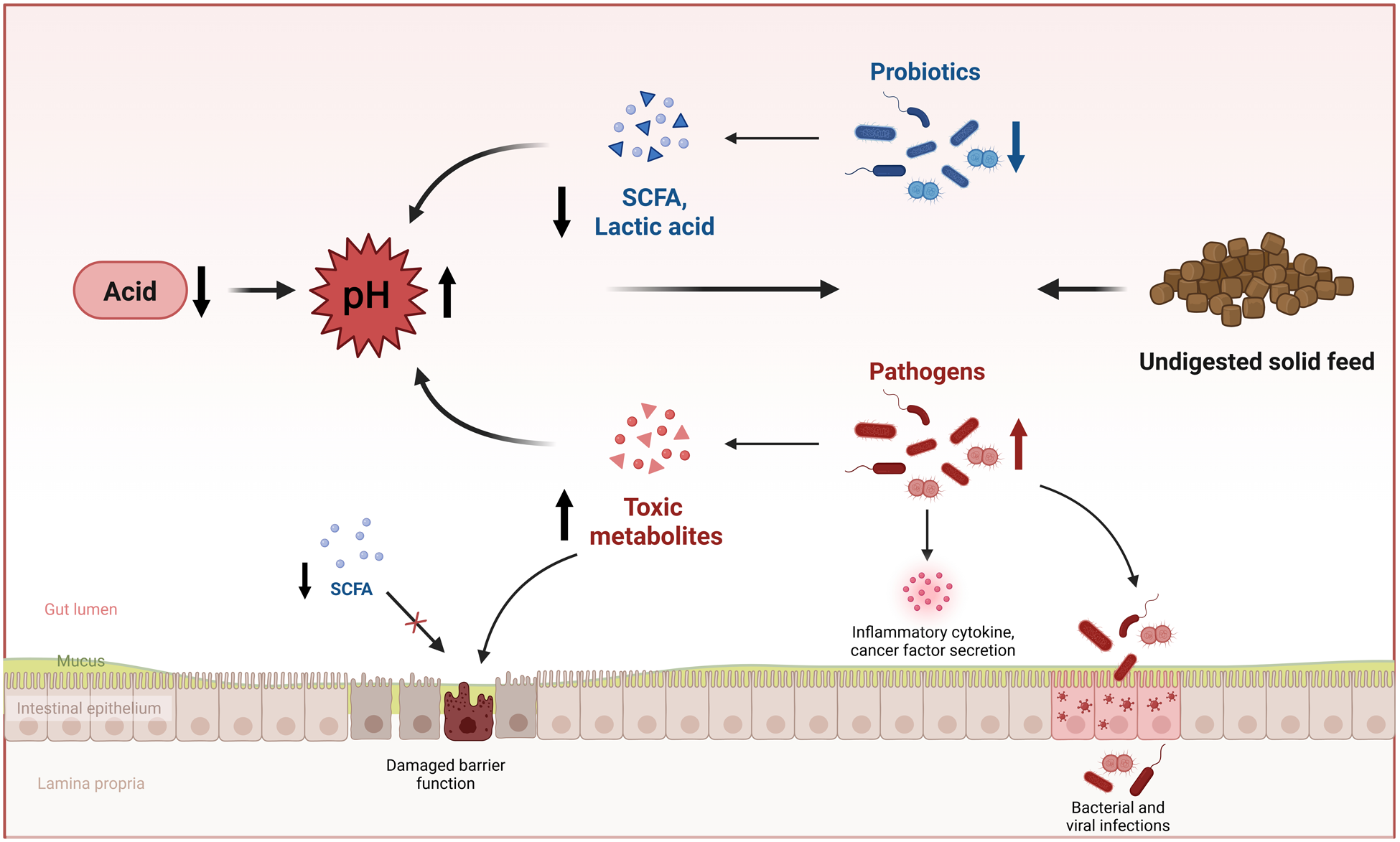
In early-weaned piglets, the loss of lactose derived from maternal milk due to weaning reduces lactic acid production from gastrointestinal lactose fermentation (Pierce et al. Reference Pierce, Sweeney and Brophy2007). Concurrently, their immature gastrointestinal tract exhibits insufficient secretion of gastric acid and digestive enzymes, leading to elevated gastrointestinal pH and inadequate digestion of solid feed, which allows substantial amounts of undigested nutrients to reach the hindgut. These nutrients promote the proliferation of harmful bacteria, thereby disrupting the homeostasis of the intestinal microbiota (Bhandari et al. Reference Bhandari, Opapeju and Krause2010). Studies have reported a decrease in bacteria of the Lactobacillus group and an increase in potentially pathogenic bacteria, such as Clostridium spp., Prevotella spp., and Escherichia coli, within the intestines of piglets following weaning (Chen et al. Reference Chen, Xu and Chen2017; Quan et al. Reference Quan, Xu and Ruan2023). This shift is accompanied by the reduced production of beneficial metabolites, including lactic acid and SCFAs, primarily generated by lactic acid bacteria. SCFAs play a crucial role in modulating gastrointestinal pH and promoting the proliferation of IECs (Yoon et al. Reference Yoon, Choi and Keum2024). Meanwhile, there is an elevation in toxic metabolites, such as ammonia, polyamines, and phenols, produced by harmful bacteria. Elevated ammonia levels and decreased SCFA concentrations can damage the IECs and further exacerbate the increase in intestinal pH, fostering a microenvironment conducive to the growth and proliferation of pathogenic bacteria while being unfavorable for beneficial bacteria, which accentuates the disruption of the intestinal microbial barrier (Tang et al. Reference Tang, Lan and Zhou2024a). Moreover, these toxic metabolites can impair the structure of intestinal villi and increase intestinal permeability, thereby inducing intestinal inflammation and diarrhea (Connolly et al. Reference Connolly, Sweeney and O’Doherty2024). sIgA present in maternal milk reaching the intestinal mucus layer facilitates the colonization of beneficial gut microbiota and inhibits pathogen adhesion in piglets (Gustafsson and Johansson Reference Gustafsson and Johansson2022; Huus et al. Reference Huus, Bauer and Brown2020). However, a previous study revealed that weaning compromises these protective mechanisms, triggering intestinal microbial dysbiosis and increasing bacterial translocation. This induces immune dysregulation and activates inflammatory responses, which may induce diarrhea (Tang et al. Reference Tang, Wei and Ni2024c). Subsequently, the immune dysregulation-associated elevation of pro-inflammatory cytokines, such as IL-1β and TNF-α, activates the NF-κB signaling pathway, impairing mucosal barrier integrity and function (Al-Sadi et al. Reference Al-Sadi, Guo and Ye2016; Kaminsky et al. Reference Kaminsky, Al-Sadi and Ma2021). This further exacerbates intestinal dysbiosis and inflammation, ultimately causing intestinal injury in piglets (Fig. 2).
The weaned piglets experience an increase in intestinal pH, which allows a significant amount of undigested nutrients to enter the hindgut. This change promotes the proliferation of pathogenic bacteria and a reduction in probiotics. Pathogens cause intestinal infections and trigger the release of pro-inflammatory cytokines, while also producing toxic metabolites that further raise intestinal pH and impair gut barrier function. At the same time, decreased production of SCFAs and lactic acid by probiotics contributes to the elevated luminal pH and inhibits the proliferation of IECs.
Oxidative stress and apoptosis
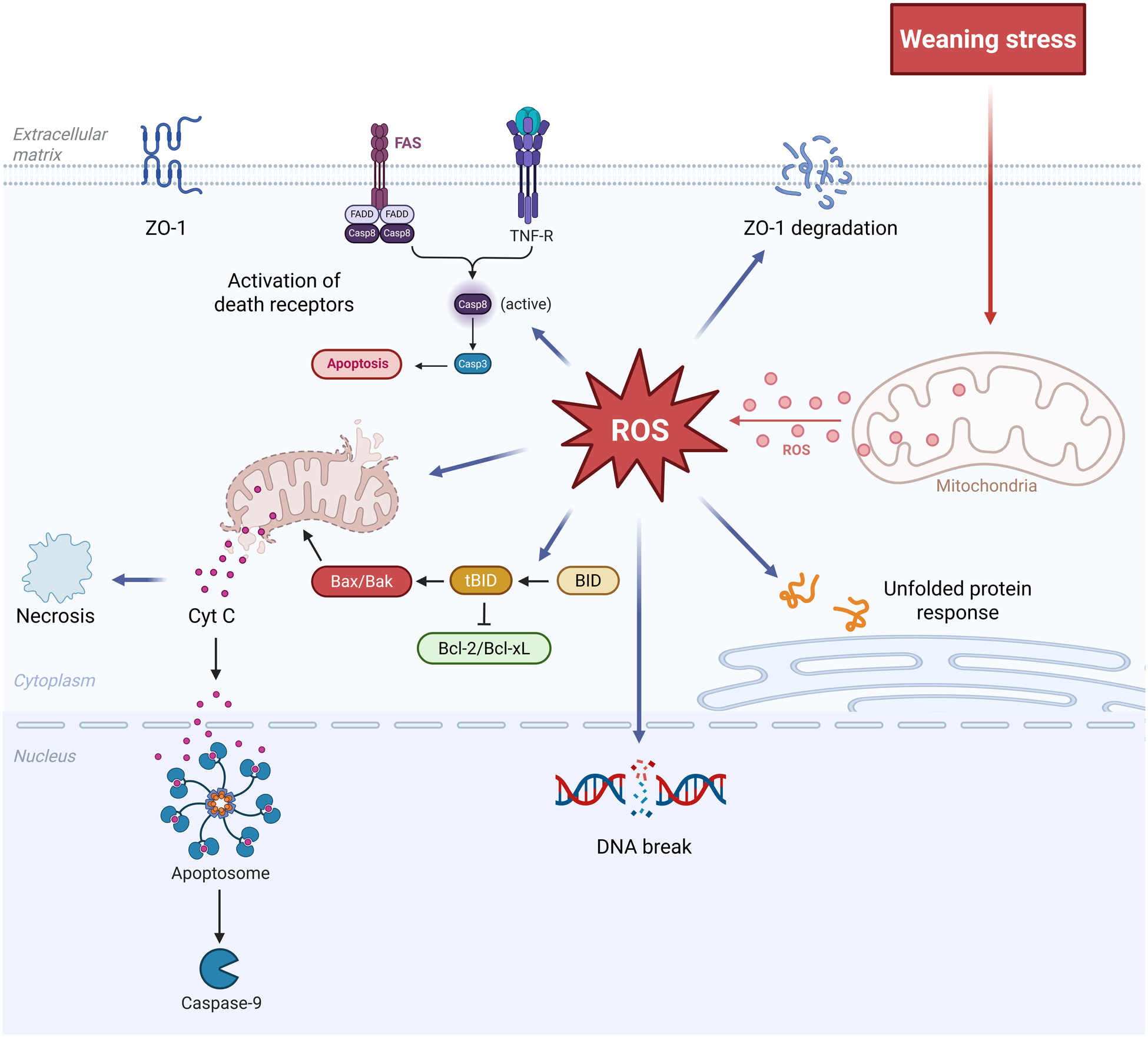
It is found that early-weaned piglets exhibit impaired mitochondria in IECs and diminished intestinal antioxidant capacity, resulting in intestinal oxidative stress. This stress was primarily manifested by an aberrant increase in intestinal reactive oxygen species (ROS) and disruption of redox homeostasis, leading to intestinal inflammation and increased apoptosis of IECs (Tang et al. Reference Tang, Zhong and Wei2022a). Similar findings were reported by Qiao et al. (Reference Qiao, Dou and Song2023). The elevated ROS primarily induce apoptosis of IECs through the following mechanisms (Fig. 3): (1) ROS directly damage cellular components of IECs. Previous research demonstrated that ROS phosphorylates ZO-1, leading to its degradation and compromising intestinal epithelial barrier integrity (Kawauchiya et al. Reference Kawauchiya, Takumi and Kudo2011). Furthermore, ROS induces DNA damage within IECs, disrupts protein expression, impairs mitochondrial and endoplasmic reticulum (ER) function, and ultimately triggers cellular apoptosis (de Almeida et al. Reference de Almeida, de Oliveira and da Silva Pontes2022). (2) ROS induces the opening of essential mitochondrial channels, activating the mitochondrial-dependent apoptotic pathway and resulting in cell death (Zorov et al. Reference Zorov, Juhaszova and Sollott2006). (3) ROS upregulates the expression of pro-apoptotic proteins (Bax, Bak) and suppresses the expression of anti-apoptotic proteins (Bcl-2, Bcl-xL), thereby triggering the caspase cascade reaction and ultimately leading to apoptosis (de Almeida et al. Reference de Almeida, de Oliveira and da Silva Pontes2022). (4) ROS activates death receptors on the cell membrane, including the Fas receptor, TNF-related apoptosis-inducing ligand receptor 1 (TRAIL-R1), and TRAIL-R2 (Redza-Dutordoir and Averill-Bates Reference Redza-Dutordoir and Averill-Bates2016). (5) ROS disrupts redox homeostasis within the ER, resulting in the unfolded protein response, a condition termed ER stress. Severe or persistent ER stress can activate apoptotic signaling pathways and inflammatory responses (Zhang et al. Reference Zhang, Chen and Liu2023a). A study demonstrated that ROS-induced ER stress in porcine IECs may exacerbate cellular oxidative stress and induce apoptosis through the pro-apoptotic activating transcription factor 4 (ATF4)/CEBP-homologous protein/glutathione-specific gamma-glutamylcyclotransferase1 (CHAC1) signaling pathway (Cui et al. Reference Cui, Zhou and Chen2021).
Weaning induces an abnormal accumulation of ROS in the IECs of piglets. ROS can directly damage DNA and disrupt TJ proteins. Additionally, ROS activates transmembrane death receptors, such as Fas and TNF-R, leading to the activation of caspase-8, which subsequently cleaves and activates caspase-3, thereby triggering apoptosis. ROS can also directly induce the opening of mitochondrial permeability transition pores, resulting in the release of cytochrome c, which may lead to necroptosis even in the absence of caspase activity. Furthermore, ROS mediates the cleavage of Bid to tBid, which antagonizes the anti-apoptotic effects of Bcl-2 and Bcl-XL while promoting the activation of the pro-apoptotic proteins Bax and Bak. This leads to the formation of the apoptosome and subsequent activation of caspase-9, initiating and amplifying the caspase cascade to execute apoptosis. Moreover, ROS disrupts redox homeostasis in the ER, triggering the UPR and ultimately inducing apoptosis. Cyt C, cytochrome C; Casp, caspase, cysteinyl aspartate-specific proteinase; ROS, reactive oxygen species; TNF-R, tumor necrosis factor receptor; ZO-1, zonula occludens-1; BID, BH3-interacting domain death agonist; tBID, truncated Bid; Bcl, B-cell lymphoma-2; Bax/Bak, BCL2 associated X/K Protein; Fas, factor-related apoptosis; FADD, Fas-associating protein with a novel death domain.
Nutritional strategies for alleviating intestinal injury in weaning piglets
Given the limitations of pharmaceutical interventions in preventing or treating intestinal injury in weaned piglets, there is a pressing need to consolidate and explore effective nutritional strategies to enhance gastrointestinal health. The primary nutritional strategies currently employed include the use of functional feed additives, modulation of crude protein (CP) and dietary fiber (DF) levels, and feed preprocessing. These distinct nutritional strategies differ somewhat in their overall efficacy in mitigating intestinal injury in piglets (Table 1).
Effects of different nutritional strategies on intestinal injury in weaned piglets
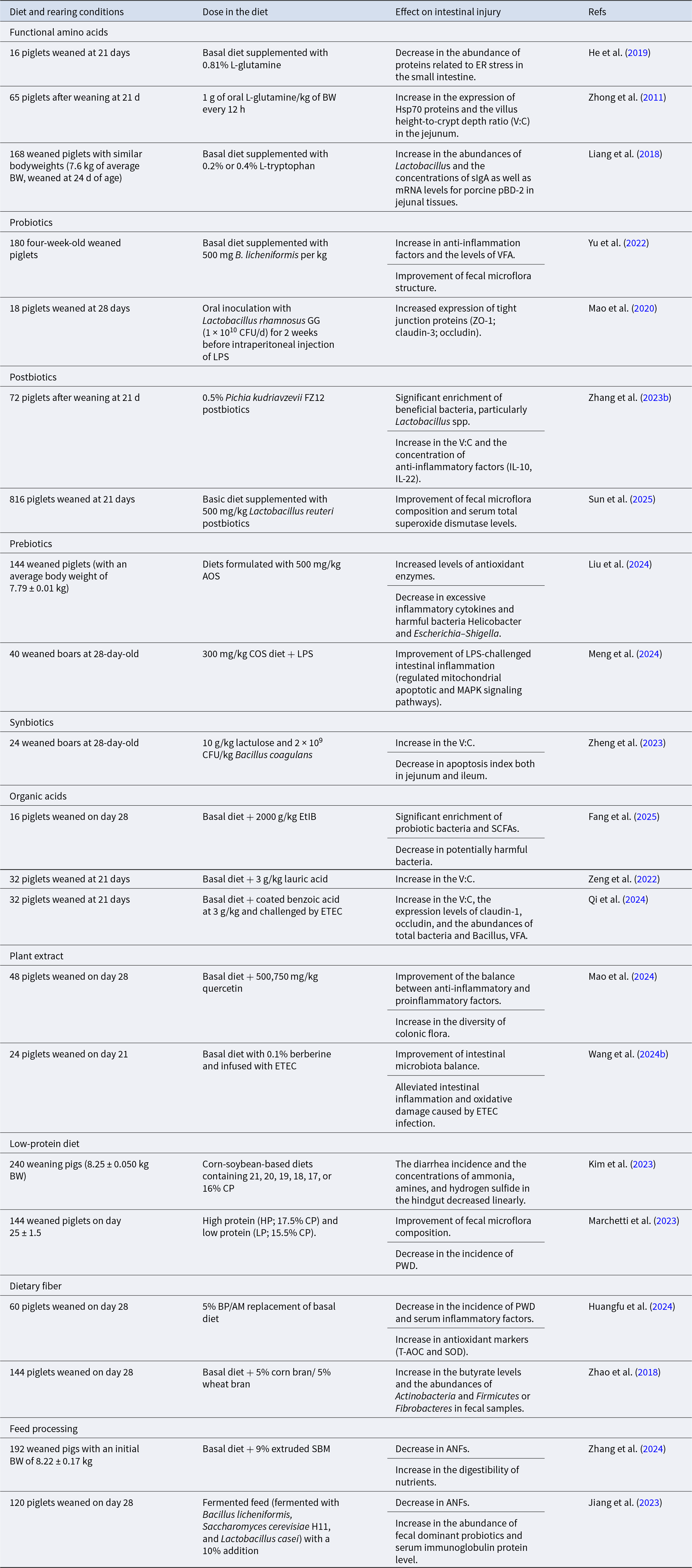
BW, body weight; AOS, alginate oligosaccharides; COS, chito-oligosaccharide; EtIB, ethyl isobutyrate; VFA, volatile fatty acids; CP, crude protein; PWD, postweaning diarrhea; BP, beet pulp; AM, alfalfa meal; SBM, soybean meal; ANFs, antinutritional factors.
Functional amino acids
Beyond serving as substrates for protein synthesis, amino acids (AAs) exert multiple beneficial effects on gut function in piglets. AAs that regulate key metabolic pathways to improve intestinal health are defined as functional AAs, such as glutamine, arginine, and tryptophan (Luise et al. Reference Luise, Chalvon-Demersay and Correa2023). Some functional AAs have been shown to enhance intestinal health by balancing secretion and absorption, maintaining intestinal integrity and permeability, promoting epithelial renewal, and alleviating intestinal morphological alterations, damage, and inflammation, thereby reducing the occurrence of diarrhea in piglets (Zhou et al. Reference Zhou, Liang and Xiong2024). Studies have shown that L-glutamine can enhance mitochondrial functional integrity and modulate immune cell function and cytokine production by activating heat shock proteins (HSPs), particularly HSP72 expressed in enterocytes, thereby improving intestinal morphology and alleviating intestinal injury in piglets after weaning (Luise et al. Reference Luise, Chalvon-Demersay and Correa2023). Dietary supplementation with L-tryptophan alleviates weaning-induced gut dysbiosis in piglets and activates the expression of porcine β-defensin-2 (pBD-2), which possesses antibacterial and immunomodulatory properties, thereby reducing the incidence of PWD (Liang et al. Reference Liang, Dai and Kou2018). Furthermore, mixtures of different functional AAs may exert superior effects compared to supplementation with single AAs. A previous research demonstrated that supplementing a mixture of L-glutamate (Glu) and L-glutamine (Gln) (6 g/kg of feed, at ratios of 25% Glu + 75% Gln or 50% Glu + 50% Gln) improved intestinal barrier function in postweaning piglets, mainly by increasing the number of intestinal goblet cells and reducing the infiltration of intraepithelial lymphocytes, resulting in greater improvements than supplementation with either AA alone (Luise et al. Reference Luise, Correa and Chalvon-Demersay2022), suggesting that there may be synergistic effects between different functional AAs.
Probiotics, postbiotics, prebiotics, and synbiotics
Probiotics are defined as viable microorganisms that confer health benefits to the host when administered in adequate amounts, characterized by safety, tolerance, and the absence of antibiotic resistance genes (Jiang et al. Reference Jiang, Yang and Su2024). Lactobacillus, Bacillus, and yeast are commonly used probiotics for alleviating intestinal injury and preventing piglets from diarrhea (Saha et al. Reference Saha, Namai and Nishiyama2024). A previous study demonstrated that dietary supplementation with Bacillus licheniformis (500 mg/kg) improved diarrhea symptoms, enhanced intestinal antioxidant capacity, increased the abundance of SCFA-producing bacteria, and improved gut microbiota composition in weaned piglets (Yu et al. Reference Yu, Cui and Qin2022). A previous study revealed that supplementation with either Lactobacillus reuteri (L. reuteri) ZJ617 or Lactobacillus rhamnosus GG (LGG) enhanced the expression of TJ proteins, suppressed activation of the MAPK and NF-κB inflammatory signaling pathways, modulated intestinal metabolism, and alleviated intestinal inflammation and barrier dysfunction in weaned piglets challenged with lipopolysaccharide (LPS) (Mao et al. Reference Mao, Qi and Cui2020; Zhu et al. Reference Zhu, Mao and Zhong2021).
However, probiotics face challenges such as inconsistent quality, short shelf life, storage difficulties, and antibiotic resistance (Ma et al. Reference Ma, Tu and Chen2023). To overcome these limitations, postbiotics have emerged as a current research focus. Postbiotics are defined as preparations of inactivated microorganisms and/or their components that confer health benefits to the host (Ma et al. Reference Ma, Tu and Chen2023). Studies have shown that postbiotics exert significant immunomodulatory effects: treatment with LGG components – specifically surface-layer protein (SLP), genomic DNA, and unmethylated cytosine-phosphate-guanine oligodeoxynucleotides (CpG-ODN) – either individually or in combination, suppressed the activation of TLR, MAPK, and NF-κB signaling pathways in LPS-stimulated macrophages, leading to attenuated production of TNF-α and IL-6 (Qi et al. Reference Qi, Cui and Liu2020). Furthermore, LGG-derived SLP, exopolysaccharides, and CpG-ODN significantly reduced the release of inflammatory cytokines from LPS-challenged porcine IECs, exhibiting potent anti-inflammatory activity (Gao et al. Reference Gao, Wang and Liu2017). Additionally, it is found that the culture supernatant of L. reuteri ZJ617 can maintain intestinal integrity, reduce the translocation of gut-derived endotoxin to the liver, and improve LPS-induced liver injury in mice (Cui et al. Reference Cui, Qi and Zhang2019).
Prebiotics are defined as non-digestible organic substances that are selectively utilized by host microorganisms and confer health benefits to the host (Canibe et al. Reference Canibe, Højberg and Kongsted2022). Common prebiotics used in swine production include fructose, mannose, and chito-oligosaccharides. Supplementing the diet with alginate oligosaccharides appeared to enhance intestinal barrier function and antioxidant status in weaned piglets (Liu et al. Reference Liu, Deng and Zhao2024). This improvement was associated with increased expression of TJ proteins, elevated levels of antioxidant enzymes, and reduced concentrations of inflammatory cytokines. The combination of probiotics and prebiotics may exert synergistic effects. Synbiotics refer to mixtures comprising live microorganisms and substrates selectively utilized by host microorganisms, which confer health benefits to the host (Luo et al. Reference Luo, Gu and Pu2024). It is found that dietary supplementation with a synbiotic containing lactulose and Bacillus coagulans improved production performance and mitigated acute immune stress in weaned piglets (Zheng et al. Reference Zheng, Zhao and Yang2023). However, a previous report also showed that feeding weaned piglets a synbiotic composed of Bacillus licheniformis, Bacillus subtilis, mannan oligosaccharides, and yeast cell wall-derived β-glucan did not reduce the incidence of PWD (Satessa et al. Reference Satessa, Kjeldsen and Mansouryar2020). This may be due to the different synergistic effects of different probiotics and prebiotics. Therefore, further research is needed to identify synbiotics that effectively alleviate intestinal injury in weaned piglets.
Organic acids
Organic acids are naturally occurring cellular metabolites characterized by low toxicity and favorable tolerance in animals (Connolly et al. Reference Connolly, Sweeney and O’Doherty2024). They are primarily classified into three categories: short-chain fatty acids (SCFAs), medium-chain fatty acids (MCFAs), and tricarboxylic acids (TCAs). Supplementing the diets of weaned piglets with organic acids – either in free or salt forms, individually or in mixtures – has been widely reported to improve growth performance, stimulate feed intake, enhance intestinal health, and boost postweaning immunity (Tugnoli et al. Reference Tugnoli, Giovagnoni and Piva2020). SCFAs, such as acetate, propionate, and butyric acid (≤5 carbons), primarily function to maintain intestinal barrier integrity and modulate the gut immune system (Xiong et al. Reference Xiong, Tan and Song2019). Isobutyrate could enhance intestinal barrier function by optimizing the gut microbiota of weaned piglets, activating G protein-coupled receptors (GPR43/109A), and suppressing the TLR4/MyD88 signaling pathway, thereby alleviating diarrhea and improving growth performance (Fang et al. Reference Fang, Wang and Chen2025). MCFAs (7–12 carbons) serve as a crucial energy source for porcine IECs (Schönfeld and Wojtczak Reference Schönfeld and Wojtczak2016). Dietary supplementation with lauric acid promotes the proliferation of ileal crypt cells by increasing the expression of phosphorylated mammalian target of rapamycin in the intestine of weaned piglets, thereby improving ileal morphology and growth performance (Zeng et al. Reference Zeng, Yang and Wang2022). TCAs, such as succinic acid and citric acid, are metabolic intermediates of the TCA cycle. They also participate in cellular energy metabolism and help alleviate intestinal injury in piglets (Lu et al. Reference Lu, Liu and Sun2024). Dietary supplementation with 1% sodium succinate significantly improved intestinal morphology and barrier function while modulating inflammatory responses in the gut of pigs (Li et al. Reference Li, Mao and Zhang2019). Furthermore, other organic acids, including lactic acid, formic acid, and benzoic acid, have been shown to alleviate intestinal injury in weaned piglets (Liu et al. Reference Liu, Espinosa and Abelilla2018). Dietary benzoic acid mitigated intestinal injury caused by Escherichia coli in weaned piglets by enhancing immunity and intestinal epithelial function, as well as improving gut microbiota composition (Qi et al. Reference Qi, Yu and Hu2024). In summary, SCFAs appear to primarily function by modulating the gut microbiota and immune system, whereas MCFA and TCA seem to exert their effects by enhancing intestinal cell proliferation and improving gut morphology.
Plant extract
Plant extracts contain diverse natural bioactive compounds that enhance feed palatability, stimulate digestive enzyme secretion, modulate the gut microbiota, and exhibit antibacterial, anti-inflammatory, and antioxidant activities (Wu et al. Reference Wu, Qiu and Tian2025; Xiong et al. Reference Xiong, Tan and Song2019). They show potential in improving disease resistance and growth performance in animals. Moreover, the use of plant extracts may mitigate environmental pollution, as they are considered common alternatives to antibiotics and zinc oxide for preventing intestinal injury in weaned piglets (Zheng et al. Reference Zheng, Duarte and Sevarolli Loftus2021). A previous study demonstrated that diets containing 400 mg/kg of an essential oil mixture – composed of cinnamaldehyde, thymol, carvacrol, and eugenol – reduced the incidence of diarrhea, improved growth performance, and positively influenced the fecal microbial community structure in weaned piglets, with potential to replace pharmacological doses of zinc oxide (Li et al. Reference Li, Cao and Zhang2023). It is found that olive cake extract enhances intestinal antioxidant and anti-inflammatory capacity in weaned piglets, alleviates LPS-induced intestinal injury, increases the relative abundance of beneficial gut bacteria, and consequently promotes intestinal health (Zhang et al. Reference Zhang, Deng and He2021). Furthermore, oregano oil combined with tributyrin effectively improved intestinal morphology and microbiota composition while modulating gut metabolism in weaned piglets (Zhang et al. Reference Zhang, Zhang and Zhang2020). Supplementation with an encapsulated mixture of methyl salicylate and tributyrin enhanced growth performance, boosted systemic antioxidant capacity, and improved intestinal metabolism and microflora in weaning piglets (Wei et al. Reference Wei, Mao and Liu2021). Notably, essential oils and organic acids exhibit a synergistic effect; their combined administration significantly improves intestinal integrity and microbial composition, enhances nutrient absorption and energy metabolism, and alleviates weaning stress in piglets (Zheng et al. Reference Zheng, Wang and Zhou2024). These findings provide novel insights for the more efficient utilization of essential oils and organic acids in swine production.
Low-protein diet
To meet the high protein demands for piglet growth and maximize feed efficiency, diets for weaned piglets are typically formulated with high CP levels. Modern commercial piglet production lines theoretically require CP levels ranging from 21.5% to 24% (Marchetti et al. Reference Marchetti, Faeti and Gallo2023). However, piglets are physiologically immature at weaning, and the stress associated with weaning compromises their digestive and immune functions. Consequently, piglets cannot effectively digest and absorb dietary protein, resulting in substantial amounts of undigested protein reaching the hindgut to be fermented by bacteria to produce lots of ammonia and amine substances. This leads to gut dysbiosis and intestinal dysfunction, ultimately causing intestinal inflammation and PWD (Connolly et al. Reference Connolly, Sweeney and O’Doherty2024). It is found that as dietary CP levels decreased (21%, 20%, 19%, 18%, 17%, and 16%), the concentrations of ammonia, amines, and hydrogen sulfide in the hindgut of weaned piglets decreased linearly, accompanied by a significant reduction in diarrhea incidence (Kim et al. Reference Kim, Shin and Kim2023). Studies have shown that the growth parameters of weaned piglets fed diets with 15.5% CP exhibited minimal differences compared to those fed 17.5% CP; however, piglets on the lower CP diet demonstrated higher abundances of anti-inflammatory bacteria (Succinivibrionaceae), fiber-degrading bacteria (Fibrobacteraceae), and Lactobacillus (Marchetti et al. Reference Marchetti, Faeti and Gallo2023). These findings suggest that reducing dietary CP levels improves intestinal microbial composition and alleviates intestinal injury in weaned piglets. However, excessively reducing CP levels can readily restrict growth and diminish production profitability. Dietary CP levels at 19% and 16% (compared to 22% in the control group) significantly decreased average daily gain, increased the feed conversion ratio (FCR), and reduced final body weight in weaned piglets (Limbach et al. Reference Limbach, Espinosa and Perez-Calvo2021). Conversely, it has been proposed that lowering dietary CP levels for weaned piglets, while supplementing with crystalline lysine, threonine, tryptophan, methionine, and valine, can mitigate the negative effects of low-protein diets on piglet performance and nitrogen retention (Wang et al. Reference Wang, Zhou and Wang2018). Thus, utilizing low-protein diets with appropriate supplementation of crystalline AAs may represent a promising strategy for alleviating postweaning intestinal injury in piglets.
Dietary fiber
DF refers to carbohydrate polymers in the diet composed of three or more monomeric units that cannot be hydrolyzed by the animal’s endogenous digestive enzymes (Li et al. Reference Li, Yin and Tan2021). Total DF in feed or feed ingredients is typically categorized into soluble fiber (e.g., glucan, pectin) and insoluble fiber (e.g., lignin, cellulose, resistant starch), based on its ability to fully disperse in water (Canibe et al. Reference Canibe, Højberg and Kongsted2022). Primary sources of soluble fiber in feed include sugar beet pulp, soybean hulls, and inulin, while major insoluble fiber sources comprise wheat bran, oat hulls, alfalfa meal, and wheat straw (Canibe et al. Reference Canibe, Højberg and Kongsted2022; Huting et al. Reference Huting, Middelkoop and Guan2021). Although DF may reduce feed intake and nutrient digestibility in pigs, potentially leading to diminished growth performance, multiple studies have found that DF helps to reduce the incidence of PWD and improves intestinal function in piglets (Huting et al. Reference Huting, Middelkoop and Guan2021). Feeding weaned piglets diets containing 5% sugar beet pulp or alfalfa meal significantly decreased diarrhea incidence and ameliorated intestinal inflammation and oxidative damage (Huangfu et al. Reference Huangfu, Ma and Zhang2024). Furthermore, studies have indicated that dietary supplementation with 5% corn bran or wheat bran improves gut microbiota composition, enhances intestinal butyrate production, and increases growth performance in weaned piglets (Zhao et al. Reference Zhao, Liu and Wu2018). However, the effects of DF from different sources on intestinal health in weaned piglets are inconsistent. Insoluble fiber primarily improves gut health by reducing the proliferation of intestinal pathogens through mechanisms involving increased gastrointestinal transit rate, modulation of microbial composition, and enhanced SCFA production (Han et al. Reference Han, Ma and Ding2023). In contrast, soluble fiber may increase digesta viscosity, potentially leading to reduced nutrient utilization and promoting the growth of intestinal pathogens (Canibe et al. Reference Canibe, Højberg and Kongsted2022; Han et al. Reference Han, Ma and Ding2023). Alfalfa meal significantly increased growth performance, enhanced the expression of intestinal TJ proteins, and elevated immunoglobulin production in weaned piglets (Huangfu et al. Reference Huangfu, Ma and Zhang2024). Conversely, sugar beet pulp had no significant effect on these parameters and induced intestinal villus atrophy and crypt deepening. In summary, appropriate dietary supplementation with DF can alleviate intestinal injury in weaned piglets, but careful selection of the DF source is crucial.
Feed processing
Weaned piglets primarily rely on plant-based solid feed as their nutritional source (Tang et al. Reference Tang, Xiong and Zeng2024d). However, due to the immaturity of their digestive systems, components such as cereal starch, plant protein, and antinutritional factors (ANFs) in the feed can readily impair intestinal barrier function and induce PWD (Wang et al. Reference Wang, Qin and Sun2014). Therefore, beyond regulating the types and proportions of feed ingredients, feed processing techniques can be employed to reduce ANF content and enhance the digestibility and utilization of nutrients (Yao et al. Reference Yao, Yu and Zhou2023). Feed processing technologies are categorized into physical techniques and biochemical techniques. Primary physical techniques include puffing, granulation, and crushing, while key biochemical techniques include enzymatic hydrolysis and microbial fermentation (Wu et al. Reference Wu, Zhao and Xu2020). As a novel feed processing technology developed in recent decades, puffing comprises two main types: extrusion and explosion puffing (Wu et al. Reference Wu, Zhao and Xu2020). Puffing can disrupt the structure of starch within the feed, increase the degree of starch gelatinization, and thereby improve the enzymatic hydrolysis efficiency of α-amylase in the small intestine of piglets, enhancing starch digestibility in weaned piglets (Zhu et al. Reference Zhu, Che and Yu2022). Puffing can also reduce the crude fiber content of feed and improve the digestibility and absorption rates of protein, fat, and other nutrients (Wang et al. Reference Wang, Li and Ning2023). A previous research demonstrated that extrusion significantly reduced the ANF content in soybean meal, and dietary supplementation with 9% extruded soybean meal improved the growth performance of weaned piglets by enhancing nutrient digestibility (Zhang et al. Reference Zhang, Sun and Wang2024). Enzymatic hydrolysis refers to the process whereby exogenous enzymes degrade large biomolecules in feed into smaller molecules, effectively extending the animal’s endogenous digestive processes (Wu et al. Reference Wu, Zhao and Xu2020). Fermentation utilizes microorganisms to decompose large biomolecules and antinutritional substances within feed. Simultaneously, these microorganisms synthesize various bioactive compounds, thereby increasing the nutritional value of the feed and contributing to the improvement of intestinal injury and enhancement of growth performance in weaned piglets (Czech et al. Reference Czech, Grela and Kiesz2021). A three-stage fermented feed, prepared using Bacillus licheniformis, Saccharomyces cerevisiae H11, and Lactobacillus casei, significantly promoted production performance, elevated immunity, and enriched beneficial gut microbiota in weaned piglets (Jiang et al. Reference Jiang, Yang and Xu2023). In short, physical techniques primarily modify the nutrient structure of feed to improve digestibility and absorption rates, whereas biochemical techniques not only optimize the intrinsic composition of the feed but also supply additional beneficial components, such as probiotics and SCFAs, to piglets.
Comparative evaluation and future perspectives of different nutritional strategies
The aforementioned nutritional strategies can all mitigate intestinal injury to varying degrees by modulating the mechanisms underlying weaning-induced intestinal injury in piglets. However, each strategy exhibits distinct effects on intestinal barrier function, the immune system, microbial homeostasis, and oxidative stress (Table 1). Functional AAs primarily alleviate intestinal oxidative stress and modulate the immune system (He et al. Reference He, Fan and Liu2019; Liang et al. Reference Liang, Dai and Kou2018; Zhong et al. Reference Zhong, Zhang and Li2011). The impact of a low-protein diet on the gut microbiota of piglets is particularly pronounced (Connolly et al. Reference Connolly, Sweeney and O’Doherty2024; Marchetti et al. Reference Marchetti, Faeti and Gallo2023). Recent research has focused on the synergistic application of these two strategies. One study found that feeding weaned piglets a low-protein diet (CP level 17%) supplemented with 1% L-glutamine enhanced growth performance, improved intestinal antioxidant capacity, and optimized gut microbiota composition (Li et al. Reference Li, Bai and Yang2024a). However, another study indicated that higher levels of L-glutamine (2% and 3%) in a low-protein diet impaired intestinal AA utilization efficiency and inhibited protein synthesis via the GCN2/eIF2α/ATF4 signaling pathway in weaned piglets (Li et al. Reference Li, Chen and Yang2024b). Furthermore, supplementing a low-protein diet (16.9% CP) with 0.23% valine increased feed intake and improved FCR by modulating AA metabolism and the neural system in weaned piglets (Zhang et al. Reference Zhang, Liu and Jia2018). These studies suggest that a combined strategy of a low-protein diet with functional AAs may be more effective in alleviating weaning-induced intestinal injury than either approach alone; however, it requires careful selection of appropriate AA types and inclusion levels. Prebiotics, which serve as nutrients for commensal gut bacteria, primarily function by modulating the gut microbiota of weaned piglets. One study found that supplementing an 18% CP diet with 0.2% isomalto-oligosaccharide promoted the expression of the intestinal ZO-1 gene, increased the abundance of beneficial bacteria (Bifidobacterium), reduced the production of harmful metabolites, thereby improving the intestinal barrier and microbiota, and lowering the incidence of diarrhea in weaned piglets (Ma et al. Reference Ma, Li and Su2025). This suggests a potential synergistic effect between prebiotics and a low-protein diet. Furthermore, since both plant essential oils and organic acids can modulate gut microbiota and intestinal integrity in weaned piglets (Qi et al. Reference Qi, Yu and Hu2024; Wang et al. Reference Wang, Zhang and Du2024b), the potential mechanism underlying their synergistic effects may involve these factors. Studies have demonstrated that dietary supplementation with benzoic acid and essential oil complexes can significantly improve gut microbiota composition and intestinal barrier integrity in weaned piglets, prevent the translocation of gut-derived LPS into the circulation, and thereby mitigate LPS-induced oxidative stress and inflammation (Cui et al. Reference Cui, Wei and Wang2024; Wang et al. Reference Wang, Deng and Zhou2024a). As previously mentioned, the high viscosity of soluble fiber may reduce nutrient digestibility, impair its intestinal regulatory functions, and limit the practical application of feed ingredients (Canibe et al. Reference Canibe, Højberg and Kongsted2022; Han et al. Reference Han, Ma and Ding2023). Feed processing techniques, such as fermentation, can effectively modify the content and composition of DF. A study by Luo et al. (Reference Luo, He and Li2021) demonstrated that, compared to unfermented wheat bran, wheat bran fermented by mixed fungal strains more effectively increased the number of jejunal goblet cells and the expression of MUC-1 and pBD-1 in weaned piglets, while also enhancing the content of main nutrients and DF composition. In conclusion, various nutritional strategies have distinct primary effects on alleviating intestinal injury in weaned piglets. The combined application of multiple strategies may prove more effective than a single approach; however, more specific strategies and their effects still require further study.
Conclusions
In summary, weaning induces intestinal injury in piglets through mechanisms such as disruption of intestinal barrier function, imbalance of gut microbiota, intestinal immune dysregulation, and oxidative stress. To effectively alleviate and treat weaning-associated intestinal injury, current primary strategies include the use of feed additives – such as functional AAs, probiotics, organic acids, and plant extracts – along with the adjustment of CP and DF levels in weaner diets and the application of appropriate feed processing techniques. By synthesizing these underlying mechanisms, we realize that intestinal injury induced by weaning in piglets involves complex interactions among distinct pathological pathways. This injury does not result from a simple summation of individual factors such as microbial dysbiosis, immune dysregulation, or oxidative stress, but rather from a complex, multidimensional network of disturbances. However, the interaction network involving intestinal microbiota, immunity, metabolism, oxidative stress, endocrine function, and other systemic disorders in weaned piglets remains unclear. Therefore, future research should focus on elucidating the multi-system interactive mechanisms underlying weaning-induced intestinal injury in piglets. Furthermore, although the aforementioned nutritional interventions demonstrate positive effects in alleviating weaning-associated intestinal injury, however, the interactive effects among various nutritional intervention strategies and their practical, effective combination regimens remain unclear. It is still necessary to further elucidate the interactions among different nutritional strategies and their collective impact on piglets. Studies investigating the use of combined nutritional interventions to mitigate intestinal injury in weaned piglets are warranted to optimize their diets and the corresponding feeding programs.
Author contributions
H.W. planned and provided the writing ideas for the article. X.S., Y.M., and W.T. collected literature and data and wrote the article draft. X.S. and H.W. were responsible for writing the review and editing. Funding acquisition was the responsibility of H.W.
Funding statement
This study was supported by grants from the National Natural Science Foundation of China (32372891).
Conflict(s) of interest
The authors declare no competing interests.


 Open access

