

INTRODUCTION
Irish dairy production systems tend to be relatively intensively managed compared with other Irish grassland agricultural production systems, and are pasture-based, with the objective of producing milk in a low-cost system through maximizing the proportion of grazed grass in the cows’ diet. Increasing the proportion of grazed grass reduces milk production costs and can increase the profitability of grass-based milk production systems in Ireland and other temperate climates (Dillon et al. Reference Dillon, Roche, Shalloo, Horan and Murphy2005; Dillon Reference Dillon2011). Nitrogen (N) inputs, in the form of fertilizer and concentrate feeds, are key drivers of increased herbage yields and milk saleable output on most dairy farms (Treacy et al. Reference Treacy, Humphreys, Mc Namara, Browne and Watson2008; Ryan et al. Reference Ryan, Hennessy, Murphy, Boland and Shalloo2011; Gourley et al. Reference Gourley, Aarons and Powell2012). However, N inputs typically exceed N outputs in milk and livestock exported off the farms (Jarvis Reference Jarvis1993; Van Keulen et al. Reference Van Keulen, Aarts, Habekotte, Van Der Meer and Spiertz2000; Aarts Reference Aarts2003; Goodlass et al. Reference Goodlass, Halberg and Verschuur2003; Humphreys et al. Reference Humphreys, O'Connell and Casey2008). This imbalance results in surplus N that is either accumulated on, or lost from, the dairy farm (Gourley et al. Reference Gourley, Dougherty, Aarons and Hannah2010; Cherry et al. Reference Cherry, Mooney, Ramsden and Shepherd2012).
As N surplus is commonly associated with excessive, inefficient N use on farms, as well as harmful environmental impacts (Leach & Roberts Reference Leach and Roberts2002; Eckard et al. Reference Eckard, White, Edis, Smith and Chapman2004; Powell et al. Reference Powell, Gourley, Rotz and Weaver2010), it is considered as an indicator of potential N losses and environmental performance (Schröder et al. Reference Schröder, Aarts, Ten Berge, Van Keulen and Neeteson2003; Carpani et al. Reference Carpani, Giupponi and Trevisiol2008). Nitrogen surplus potentially accumulates in soil organic matter (SOM) (Jarvis Reference Jarvis1993) or is lost through denitrification, nitrate (NO3) leaching, ammonia (NH3) volatilization (Jarvis & Aarts Reference Jarvis and Aarts2000; Pain Reference Pain and Hopkins2000; Del Prado et al. Reference Del Prado, Cardenas and Scholefield2006) or through runoff to surface waters (De Vries et al. Reference De Vries, Kros and Oenema2001). Denitrification is naturally facilitated in Ireland, due to common anaerobic soil conditions and the generally high content of organic carbon (C) in soils (between 2 and 7%; Dillon & Delaby Reference Dillon and Delaby2009) enabling development of denitrifying bacteria. These N losses can have negative environmental impacts such as eutrophication of surface waters, pollution of groundwater aquifers, ozone depletion and anthropogenic climate change (in the case of N2O emissions) (Leach & Roberts Reference Leach and Roberts2002; Eckard et al. Reference Eckard, White, Edis, Smith and Chapman2004; O'Connell et al. Reference O'Connell, Humphreys and Watson2004). It has been emphasized that dairy production should ideally be achieved in a sustainable manner, without impairing natural capital (soils, water and biodiversity) (Goodland Reference Goodland1997). Improved nutrient use efficiency has a significant role to play in the development of more sustainable dairy production systems (Goulding et al. Reference Goulding, Jarvis and Whitmore2008). Among the nutrient imports in dairy production systems, N is particularly important as it is used in large quantities, between 172 and 301 kg N/ha (Groot et al. Reference Groot, Rossing and Lantinga2006; Nevens et al. Reference Nevens, Verbruggen, Reheul and Hofman2006; Roberts et al. Reference Roberts, Leach and Goldie2007; Ryan et al. Reference Ryan, Hennessy, Murphy, Boland and Shalloo2011; Cherry et al. Reference Cherry, Mooney, Ramsden and Shepherd2012) but with generally low efficiency (Goulding et al. Reference Goulding, Jarvis and Whitmore2008). In Europe, N use efficiency (NUE; proportion of N imports recovered in agricultural products; Ryan et al. Reference Ryan, Hennessy, Boland and Shalloo2012) values between 0·17 and 0·38 have been recorded (Mounsey et al. Reference Mounsey, Sheehy, Carton and O'Toole1998; Groot et al. Reference Groot, Rossing and Lantinga2006; Nevens et al. Reference Nevens, Verbruggen, Reheul and Hofman2006; Raison et al. Reference Raison, Pflimlin, Le Gall, Jarvis and Pfimlin2006; Roberts et al. Reference Roberts, Leach and Goldie2007; Treacy et al. Reference Treacy, Humphreys, Mc Namara, Browne and Watson2008; Cherry et al. Reference Cherry, Mooney, Ramsden and Shepherd2012; Oenema et al. Reference Oenema, Van Ittersum and Van Keulen2012).
In grass-based dairy production systems, there are a number of factors limiting NUE, such as N losses from manure and slurry, chemical fertilizer management and application to land (Webb et al. Reference Webb, Menzi, Pain, Misselbrook, Dämmgen, Hendriks and Döhler2005), losses from dung and urine deposited by grazing animals, the ability of grass plants to convert N from applied chemical fertilizer and manure into biomass in herbage, utilization by animals of grass herbage grown and the biological potential of cows to convert N from concentrate feeds and herbage into milk (Powell et al. Reference Powell, Gourley, Rotz and Weaver2010). More effective use of N imports in fertilizer N and concentrate feeds can potentially contribute to decreased imports and increased rates of NUE (Groot et al. Reference Groot, Rossing and Lantinga2006). Irish dairy production systems benefit from mild winters (5·1 °C in January) and annual rainfall between 800 and 1200 mm, allowing grass growth all year around and an extended grazing season that can be as long as February to November (Humphreys et al. Reference Humphreys, Aarts, Watson, Wachendorf, Le Gall, Taube and Pfimlin2009a), varying with location and soil type. Irish dairy farms are unique in Europe in that the majority operate a seasonal milk production system with compact spring calving (from January to April), so that milk production matches grass growth. The proportion of grazed grass in the diet of dairy stock is hence maximized (Humphreys et al. Reference Humphreys, Aarts, Watson, Wachendorf, Le Gall, Taube and Pfimlin2009a), allowing for the maximum amount of milk to be produced from grazed grass and reducing requirements for feeding concentrate feeds post-calving (Dillon et al. Reference Dillon, Crosse, Stakelum and Flynn1995). For these reasons, the potential for more effective use of N on-farm and management strategies to achieve improved NUE may be expected to differ from those of the year-round feed-based dairy production systems more typical of continental Europe and Britain.
In this context, farm-gate N balances, as the difference between total N input and total N output passing the farm-gate (Aarts Reference Aarts2003), are a useful tool for farmers, scientists and policy-makers to: (i) understand N flows and identify potential N losses (Watson & Atkinson Reference Watson and Atkinson1999); (ii) understand factors affecting, and develop strategies to control, potential N losses (Gourley et al. Reference Gourley, Powell, Dougherty and Weaver2007; Beukes et al. Reference Beukes, Scarsbrook, Gregorini, Romera, Clark and Catto2012); and (iii) increase farmers’ awareness of environmental regulations on farms and implementation of these regulations to control N losses to the environment (Oenema et al. Reference Oenema, Kros and De Vries2003; Carpani et al. Reference Carpani, Giupponi and Trevisiol2008).
In the European Union (EU), the Nitrates Directive (91/676/EEC) (European Council 1991) has established guidelines in relation to farming practices to reduce NO3 leaching that are implemented in each member state through a National Action Programme (NAP). In Ireland, these are legislated as the good agricultural practice (GAP) Regulations (European Communities 2010), first passed in 2006. Under the Regulations, farms are limited to a stocking rate (SR) of 170 kg organic N/ha, equivalent to 2 livestock units (LU)/ha or 2 dairy cows/ha. The Regulations also establish the quantity of available N that can be applied to grass and other crops (depending on factors such as SR or crop type), the volume of slurry and slurry storage required (depending on factors such as rainfall and stock type and number) and closed periods in winter months during which spreading of organic and inorganic fertilizers is restricted (depending on location in the country), as well as other measures on farm yard and field management aimed at minimizing N losses to water. Farmers can apply for a derogation to stock at up to 250 kg organic N/ha [2·9 livestock units (LU)/ha], subject to more stringent requirements, and this derogation is principally taken up by the more intensive dairy farms.
Although explicitly aimed at decreasing N losses to water, these Regulations might be expected to have improved NUE on farms, as most of the measures aim to decrease losses by increasing retention of N within the production systems. However, most of the existing data on dairy farm N balances in Ireland date from the period before the implementation of the Regulations in 2006 (Mounsey et al. Reference Mounsey, Sheehy, Carton and O'Toole1998; Treacy et al. Reference Treacy, Humphreys, Mc Namara, Browne and Watson2008). Ryan et al. (Reference Ryan, Hennessy, Murphy, Boland and Shalloo2011, Reference Ryan, Hennessy, Boland and Shalloo2012) examined N balances and use efficiencies in Irish dairy production systems but these were based on modelling and experimental studies. In the European context also, there are very few farm-gate N balances on grassland-based dairy farms post the implementation of the Nitrates Directive (e.g. Groot et al. Reference Groot, Rossing and Lantinga2006; Nevens et al. Reference Nevens, Verbruggen, Reheul and Hofman2006; Raison et al. Reference Raison, Pflimlin, Le Gall, Jarvis and Pfimlin2006; Roberts et al. Reference Roberts, Leach and Goldie2007; Cherry et al. Reference Cherry, Mooney, Ramsden and Shepherd2012; Oenema et al. Reference Oenema, Van Ittersum and Van Keulen2012).
Therefore, the objectives of the present study were: (i) to assess farm-gate N balances and use efficiencies on 21 commercial intensive dairy farms operating under the Nitrate Regulations in Ireland and compare these with pre-Regulations studies to investigate the impact of the Regulations; (ii) to identify the factors influencing NUE on these farms; and (iii) to explore potential approaches to increase NUE and decrease N surpluses on these farms. For this purpose, data on N imports and exports were recorded on 21 dairy farms participating in the INTERREG-funded DAIRYMAN project over 3 years, from 2009 to 2011.
MATERIALS AND METHODS
Farm selection and data collection
Twenty-one commercial intensive dairy farms were selected, located in the South of Ireland, in counties Cork, Limerick, Waterford, Tipperary, Kilkenny and Wicklow. These farms were pilot farms involved in the INTERREG-funded DAIRYMAN project (www.interregdairyman.eu) focusing on improving resource use efficiency on dairy farms in Northwest Europe. Farm selection was based on the likely accuracy of data recording, eight of the farms in the present study having been involved in a previous similar study (GREENDAIRY; Treacy et al. Reference Treacy, Humphreys, Mc Namara, Browne and Watson2008), and all the farmers being willing to provide data. The selected farms were known as being progressive in their approach to farm management and, therefore, may not be fully representative for the Irish dairy industry as a whole. However, comparing farm area, SR and milk yield per cow showed that the farms were close to, but slightly above, the national average for dairy farms. Grass-based milk production from spring calving cows was the main enterprise on all the selected farms.
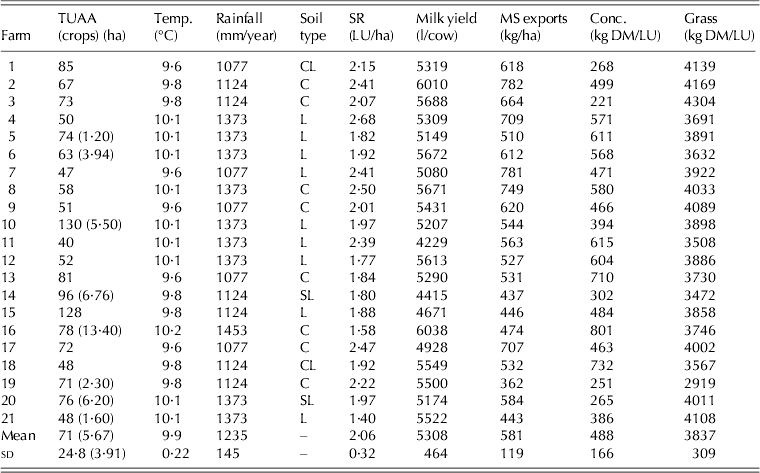
Key farm characteristics are given in Table 1. Mean total utilized agricultural area (TUAA) was 71 ha (sd=24·8), mean SR was 2·06 LU/ha (sd=0·32), and mean milk yield was 5308 litres (l)/cow (sd=464) between 2009 and 2011, whereas national mean values for dairy farms were 52 ha for TUAA, 1·90 LU/ha for SR and 4956 litres/cow for milk yield in 2009–2011 (Connolly et al. Reference Connolly, Kinsella, Quinlan and Moran2010; Hennessy et al. Reference Hennessy, Moran, Kinsella and Quinlan2010, Reference Hennessy, Kinsella, Moran and Quinlan2011). Seventeen of the farms in the present study participated in the Rural Environment Protection Scheme (REPS). This is a programme co-funded by the EU and the Irish government whereby farmers are rewarded financially for operating to a set of guidelines consistent with an agri-environmental plan drawn up by an approved planning agency. Important conditions for receiving REPS financial support were to limit SR to 2 LU/ha and to apply N fertilizers to the farming area according to fertilizer plans drawn for their farms (DAFM 2013a). Eight of the 21 farms had an SR higher than 170 kg organic N/ha or 2 LU/ha. According to GAP regulations and REPS conditions (for the participating farms), these farms had to apply for a derogation allowing a maximum SR of 250 kg organic N/ha or 2·9 LU/ha.
Mean values (and standard deviation) for total utilized agricultural area (and crop area), annual temperature, annual rainfall, stocking rate, milk yields, milk solids exports, concentrate feeds, and estimated harvested grass through grazing and silage; soil type for 21 Irish dairy farms between 2009 and 2011

TUAA, total utilized agricultural area; temp., temperature; CL, clay-loam; L, loam; C, clay; SL, sandy-loam; SR, stocking rate; LU, livestock units; l, litres; MS, milk solids; conc., concentrate feeds; DM, dry matter; s.d., standard deviation.
Data were collected on a monthly basis between 2010 and 2011 on the selected farms. The information collected included grassland area, area under crops, type of crops and percentage of crops fed to livestock, livestock numbers and type of livestock, and number of days spent grazing; imports of manure, concentrate feeds, bedding material, silage, chemical N fertilizers and other agro-chemicals; and exports of milk, crops, manure and silage. For chemical N fertilizers, amounts imported onto farms as well as amounts applied to land were recorded on a monthly basis. For 2009, similar data were obtained from farm records and farm advisors. Data collected for the 3 years were cross-checked with secondary data sources such as Single Farm Payment forms and Nitrates’ Declaration forms (data forms required from farmers for participation in state schemes) (DAFF 2013; DAFM 2013b). Data on livestock imports and exports were extracted from the Dairy Management Information System (DAIRYMIS) (Crosse Reference Crosse1991). Values for amounts of milk sold off the farms were extracted from the reports on milk deliveries coming from the cooperatives supplied by the farmers. Data on soil types were extracted from REPS forms for the participating farms and from the National Soil Survey (Finch & Gardiner Reference Finch and Gardiner1993) for the remainder. Data on mean annual rainfall and temperature were extracted from an Irish Meteorological Service database for different weather stations located in, or close to, the area of study, at Cork airport, Roche's point, Gurteen, Johnstown Castle and Oak Park (Irish Meteorological Service 2013).
The annual amount of pasture harvested through grazing and silage on each farm was modelled using the Grass Calculator (Teagasc 2011) based on the difference between the net energy (NE) provided by imported feeds (concentrates and forages) and the NE requirements of animals for maintenance, milk production and body weight change (Jarrige Reference Jarrige1989). It was assumed that 1 kg dry matter (DM) of grass equals 1 feed unit for lactation (UFL).
Stocking rate was expressed as LU/ha for TUAA. One dairy cow was considered equivalent to 1 LU and 1 bovine less than 1 year old equivalent to 0·3 LU (Connolly et al. Reference Connolly, Kinsella, Quinlan and Moran2010).
Farm-gate nitrogen imports, exports, balances and use efficiencies
Nitrogen inputs and outputs were calculated both on a monthly and an annual basis. Nitrogen in fertilizer N was calculated by taking into account the N content of fertilizers applied to land. Monthly imported amounts of concentrate feeds and forages were assumed to be exhausted by the end of each month. Nitrogen imports in concentrate feeds, forages and bedding material onto farms were calculated by multiplying the total quantity by its crude protein (CP) concentration divided by 6·25 (McDonald et al. Reference McDonald, Edwards, Greenhalgh and Morgan1995). Nitrogen fixed by clover was not included as an input due to the low prevalence of clover on the farms and resultant small contribution to the N budget (Gourley et al. Reference Gourley, Powell, Dougherty and Weaver2007). Nitrogen in livestock imported onto, or leaving, the farms was calculated by using standard values for live weight (M. Treacy, personal communication) and multiplying it by 0·029 for calves and by 0·024 for older animals (ARC 1994). Nitrogen in exported milk was calculated by dividing the milk protein concentration by 6·38 (ARC 1994).
The farm-gate N balance was calculated as the difference between total N input and total N output and was expressed both on the basis of area (kg N/ha) and unit product (kg N/kg milk solids (MS)) (Ryan et al. Reference Ryan, Hennessy, Boland and Shalloo2012). Nitrogen use efficiency was calculated as the ratio between total N output and total N input, expressed as a proportion (Swensson Reference Swensson2003).
Statistical analysis
Descriptive statistics were applied using SPSS Inc. 17.0 to calculate means and standard errors (George & Mallery Reference George and Mallery2008). Normal distribution of residuals was tested using Shapiro-Wilk, with values lower than 0·05 indicating abnormal distribution. The log transformation was required to ensure homogeneity of variance (Tunney et al. Reference Tunney, Kirwan, Fu, Culleton and Black2010) for some of the variables. Therefore, TUAA, milk fat and protein concentration, N inputs per ha from fertilizer N, concentrate feeds, forages, bedding material and livestock, NUE, N inputs per kg MS from fertilizer N and concentrate feeds, MS exports per cow, comparative N inputs from concentrate, N exports in sold milk and NUE between the present study and two previous similar studies were transformed using a log10 base (y=log10(x)).
Differences in mean TUAA, SR, milk yields, milk protein and fat concentration, concentrate feed imports, N inputs, N outputs, N surplus, NUE and surplus N per kg MS between years and farms were analysed using one-way analysis of variance (ANOVA). The statistical models included farm and year effects on each of the tested variables. The 21 farms were considered as replicates. The models used were:
1. Y i=μ+a i+e i, where Y i=tested variable, a i=the effect of ith farm (i=1,…,21) and e i=the residual error term;
2. Y i=μ+b j+e i, where Y i=tested variable, b j=the effect of jth year (j=2009, 2010, 2011) and e i=the residual error term.
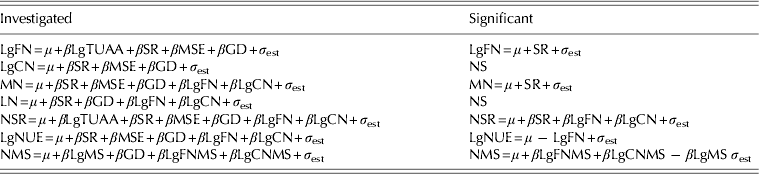
Multiple stepwise linear regression was undertaken to investigate relationships between key dependent and independent variables presented in Table 2. The choice of the statistical models was dependent on the potential significance of independent variables and their potential impact on the dependent variables. Non-significant independent variables were automatically removed from the models (Table 2). The probability for acceptance of new terms (F) was 0·10 (Groot et al. Reference Groot, Rossing and Lantinga2006) and the confidence interval was 0·95. All relationships between variables were assessed for outliers, normality and colinearity.
Investigated and significant multiple stepwise linear regression models
LgFN, mean log-transformed fertilizer N input; LgCN, log-transformed concentrate N input; MN, milk N output; LN, livestock N output; NSR, N surplus per ha; LgNUE, log-transformed N use efficiency; NMS, surplus N per kg milk solids; LgTUAA, mean log-transformed total utilized agricultural area; SR, stocking rate; MSE, milk solids exports per ha; GD, number of days spent grazing; LgMS, log-transformed milk solids exports per cow; LgFNMS, log-transformed fertilizer N input per kg milk solids; LgCNMS, log-transformed concentrate N input per kg milk solids; β, standardized coefficient of regression; σ est, standard error of the estimate; NS, not significant.
Uncertainty analysis was carried out by calculating the coefficient of variation as the ratio between standard deviation and mean value (Gourley et al. Reference Gourley, Dougherty, Aarons and Hannah2010) for each N input, N output, N balance and NUE on the 21 farms between 2009 and 2011, expressed as a proportion.
RESULTS
Nitrogen inputs
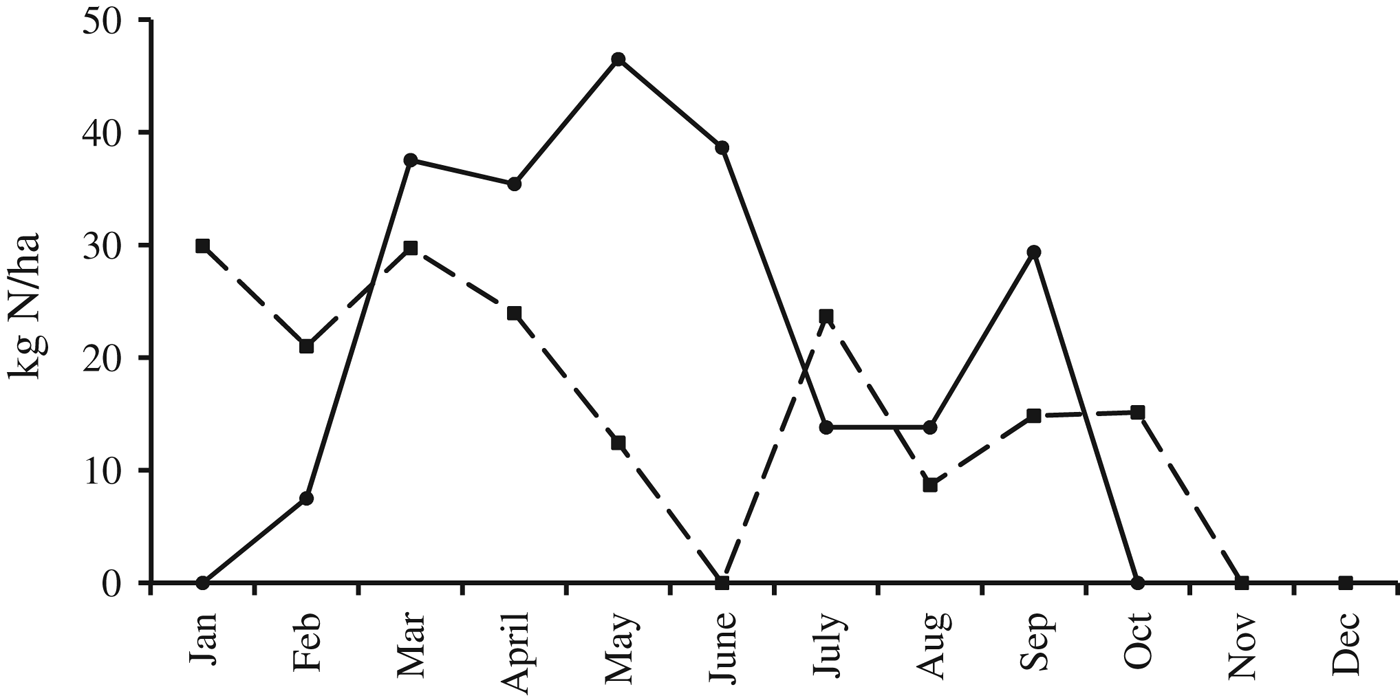
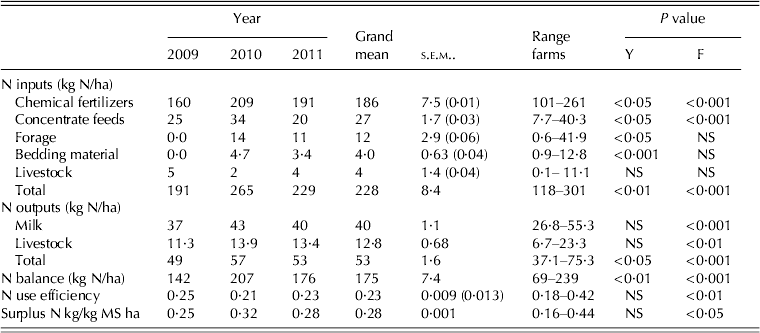
There was a high degree of variation in mean N inputs, between years and farms (Table 3). Mean total N input was 228 kg N/ha (Table 3). There were significant differences (P<0·001) in mean total N input between farms, ranging from 118 to 301 kg N/ha over the 3 years (Table 3). The coefficient of variation (mean value divided by standard deviation) for mean total N input between farms was 0·25 over the 3 years. There were also significant differences (P<0·01) in mean total N input between years, ranging from 191 to 265 kg N/ha (Table 3). The main sources of N input onto farms were chemical N fertilizers and concentrate feeds, accounting for 0·81 and 0·11, respectively, of total N input. Mean fertilizer N input was 186 kg N/ha (Table 3). There were significant differences (P<0·001) in mean fertilizer N input between farms, ranging from 101 to 261 kg N/ha over the 3 years (Table 3). The coefficient of variation for mean fertilizer N input between farms was 0·27 over the 3 years. There were also significant differences (P<0·05) in mean fertilizer N input between years, ranging from 160 to 209 kg N/ha (Table 3). On a monthly basis, mean fertilizer N input was highest between March and June, at 40 kg N/ha (s.d.=4·84) (Fig. 1). Mean concentrate N input was 26·6 kg N/ha (Table 3). There were significant differences (P<0·001) in mean concentrate N input between farms, ranging from 7·7 to 40·3 kg N/ha over the 3 years (Table 3). The coefficient of variation for mean concentrate N input between farms was 0·39 over the 3 years. There were also significant differences (P<0·05) in mean concentrate N input between years, varying between 25·3 and 34·4 kg N/ha (Table 3).
Monthly application rates of chemical (__●__) and organic (- -■- -) N fertilizers (kg N/ha) on 21 Irish dairy farms between 2009 and 2011.
Mean values (and standard errors), grand means between years and ranges between farms for N inputs in chemical fertilizers, concentrate feeds, forages, bedding material and livestock, N outputs in sold milk and livestock, farm-gate N balances, N use efficiencies and surplus N per kg milk solids for 21 Irish dairy farms between 2009 and 2011; standard error of the means for transformed data in brackets; P values from ANOVA are included
N, nitrogen; MS, milk solids; S.E.M., standard error of the means; Y, year; F, farm; NS, not significant.
There was a significant positive relationship (R 2=0·49; P<0·001) between mean log-transformed fertilizer N input and mean SR. An increase of 0·07 LU/ha in mean SR was associated with an increase of 0·01 (9, not transformed) kg N/ha in mean log-transformed fertilizer N input. There was no significant relationship between mean log-transformed concentrate N input and mean SR, MS export and number of days spent grazing (Table 2).
Nitrogen outputs
Mean total N output was 54·3 kg N/ha (Table 3). There were significant differences (P<0·001) in mean total N output between farms, ranging from 37·1 to 75·3 kg N/ha over the 3 years (Table 3). The coefficient of variation for mean total N output between farms was 0·19 over the 3 years. There were also significant differences (P<0·05) in mean N output between years, ranging from 48·7 to 57·2 kg N/ha (Table 3). The main sources of N output were sold milk and livestock, accounting for 0·76 and 0·24, respectively, of total N output. Mean milk N output was 40·2 kg N/ha, ranging from 37·4 to 43·3 kg N/ha (Table 3). There were significant differences (P<0·001) in mean milk N output between farms, ranging from 26·8 to 55·3 kg N/ha over the 3 years (Table 3). The coefficient of variation for mean milk N output between farms was 0·19 over the 3 years. Mean livestock N output was 12·8 kg N/ha, ranging from 11·3 to 13·9 kg N/ha (Table 3). There were significant differences (P<0·01) in mean livestock N output between farms, ranging from 6·7 to 23·3 kg N/ha over the 3 years (Table 3). The coefficient of variation for mean livestock N output between farms was 0·31 over the 3 years.
There was a significant positive relationship (R 2=0·49; P<0·001) between mean milk N output and mean SR. An increase of 0·07 LU/ha in mean SR was associated with an increase of 1·43 kg N/ha in mean milk N output. There was no significant relationship between mean livestock N output and mean SR, number of days spent grazing, log-transformed fertilizer N input and log-transformed concentrate N input (Table 2).
Nitrogen balance and nitrogen use efficiency
The N balance on all farms was in surplus. Mean N surplus (N inputs less N outputs) was 175 kg N/ha (Table 3). There were significant differences (P<0·001) in mean N surplus between farms, ranging from 69 to 239 kg N/ha over the 3 years (Table 3). The coefficient of variation for mean N surplus between farms was 0·29 over the 3 years. There were also significant differences (P<0·01) in mean N surplus between years, ranging from 142 to 207 kg N/ha (Table 3). Mean NUE (N outputs divided by N inputs) was 0·23, varying from 0·21 to 0·25 (Table 3). There were significant differences (P<0·01) in mean NUE between farms, ranging from 0·18 to 0·42 over the 3 years (Table 3). The coefficient of variation for mean NUE between farms was 0·20 over the 3 years. Mean surplus N per kg MS was 0·28 kg N/kg MS, ranging from 0·25 to 0·32 kg N/kg MS (Table 3). There were significant differences (P<0·05) in mean annual surplus N per kg MS between farms, ranging from 0·16 to 0·44 kg N/kg MS over the 3 years (Table 3). The coefficient of variation for mean surplus N/kg MS between farms was 0·24 over the 3 years.
There was a significant positive relationship (R 2=0·91; P<0·001) between mean N surplus and mean log-transformed fertilizer N input (β=0·91), mean log-transformed concentrate N input (β=0·14), and mean SR (β=0·02). An increase of 0·01 (9, not transformed) kg N/ha in mean log-transformed fertilizer N input, 0·02 (1·63, not transformed) kg N/ha in mean log-transformed concentrate N input and 0·07 LU/ha in mean SR was associated with an increase of 8 kg N/ha in N surplus.
There was a significant negative relationship (R 2=0·42; P<0·001) between mean log-transformed NUE and mean log-transformed fertilizer N input (β=−0·42). An increase of 0·01 (9, not transformed) kg N/ha in mean log-transformed fertilizer N input was associated with a decrease of 0·019 (0·012, not transformed) in NUE.
There was a significant relationship (R 2=0·88; P<0·001) between mean surplus N per kg MS and mean log-transformed fertilizer N input per kg MS (β=0·90), mean log-transformed concentrate N input per kg MS (β=0·17) and mean log-transformed MS export per cow (β=−0·15). An increase of 0·018 (0·012, not transformed) kg N/kg MS in mean log-transformed fertilizer N input and 0·02 (0·003, not transformed) kg N/kg MS in mean log-transformed concentrate N input was associated with an increase of 0·01 in surplus N per kg MS. An increase of 0·01 (13, not transformed) kg MS/cow in log-transformed MS exports per cow was associated with a decrease of 0·01 in surplus N per kg MS.
DISCUSSION
Nitrogen inputs, outputs, balances and use efficiencies
Total N input, output and surplus in the present study were close to, but slightly above, the national average for dairy systems and NUE was close to the national average found by Buckley et al. (Reference Buckley, Murphy and Wall2013) (mean total N input of 178 kg N/ha, mean total N output of 41 kg N/ha, mean N surplus of 139 kg N/ha and mean NUE of 0·24) for a nationally representative sample of 195 specialist dairy farms for 2009–2010. This would suggest that results from the present study can be taken as indicative of the national situation.
The overall coefficient of variation for N inputs, outputs, balances and NUE, of 0·27, was above the generally accepted limit of 0·10 (Mulier et al. Reference Mulier, Hofman, Baecke, Carlier, De Brabander, De Groote, De Wilde, Fiems, Janssens, Van Cleemput, Van Herck, Van Huylen-Broeck and Verbruggen2003) but within the limit of 0·30 reported in other studies on farm-gate nutrient balances (Swensson Reference Swensson2003; Nevens et al. Reference Nevens, Verbruggen, Reheul and Hofman2006; Fangueiro et al. Reference Fangueiro, Pereira, Coutinho, Moreira and Trindade2008).
Factors affecting N balance and use efficiencies across farms
Differences in fertilizer N input between farms were principally associated with differences in SR, with a significant positive relationship between fertilizer N and SR. In a grazed-grass-based dairy production system, increased SR requires increased grass DM intake by the herd (Stakelum & Dillon Reference Stakelum and Dillon2007; Coleman et al. Reference Coleman, Berry, Pierce, Brennan and Horan2010) and therefore, assuming maximum grass utilization by the herd and all other factors being equal, increased DM yields of grass and, in turn, increased requirement for fertilizer N input (Hennessy et al. Reference Hennessy, O'Donovan, French and Laidlaw2008). However, overall available N input can potentially exceed pasture N requirement and factors such as application rates, forms and timings can lead to inefficient use of N. Stocking rate explained only 0·49 of the variation in mean fertilizer N input. The remaining variation may be explained by factors such as advisory impact and understanding and planning on the part of the farmer, economic considerations and weather and grass growth conditions, for example.
Concentrate N input was closely associated with imported concentrate feeds, ranging from 221 to 801 kg DM/LU between farms. Feed imports were probably determined by harvested grass, ranging between an estimated 2919 and 4304 kg DM/LU and targeted milk yields per cow, ranging from 4229 to 6038 litres/cow. Targeted milk yields per cow were included in development plans introduced in 2009 for each farm by farm advisors. One of the goals in the development plans was increased milk yield per cow by amounts ranging from 100 to 400 litres/cow between 2009 and 2011.
Differences in milk N output were associated with differences in SR between farms. The significant positive relationship between milk N output and SR implies that increasing SR is an effective strategy to increase milk N output. Furthermore, this could positively affect N surplus and NUE, because N in sold milk was the main form of exporting N inputs off the farms. However, from 228 kg N/ha of mean total N input, only 40·2 kg N/ha or 0·17, on average, was exported in sold milk, meaning that the impact of milk N output on N surplus and NUE was rather low. The N content of sold milk is very unlikely to increase and, therefore, there is a need to optimize the use of N inputs relative to N outputs in milk, especially fertilizer N, to decrease N surplus and increase NUE.
The fact that N surplus increased principally with fertilizer N input, but also with concentrate N input and, to a much lesser extent, with SR, suggests that decreasing fertilizer N and concentrate N inputs may be the most effective strategy to decrease N surplus. The weak impact of SR on N surplus would suggest that SR can be increased without considerably affecting N surplus. This has important implications in the context of achieving increased dairy production as is envisaged in the Food Harvest 2020 targets for Ireland (DAFF 2010), in that it suggests that, with good management, the SR increases that may be necessary on some farms to achieve these targets, may be achieved without increasing N surplus. While NUE decreased with increasing fertilizer N input, fertilizer N input explained only 0·42 of variation in NUE. The remainder could be attributed to farm-specific efficiency of N recycling and N losses between soil, pasture, animals, and milk and livestock for export (Nielsen & Kristensen Reference Nielsen and Kristensen2005). Therefore, a decrease in fertilizer N input combined with improved on-farm N recycling can increase NUE. Improved nutrient recycling on farms is one of the targets in the Food Harvest 2020 national strategy for sustainable growth of the agricultural sector (DAFF 2010).
Results suggest that a combination of decreased fertilizer N and concentrate N inputs and increased MS exports per cow can contribute to reduced surplus N per kg MS. However, this situation is difficult to achieve in a grazed grass-based production system because, all other factors being equal, increased feed intake is required to increase MS production per cow (Horan Reference Horan and Lalor2009) and this is typically achieved through increased fertilizer N (to increase grass yields) and concentrate N inputs (Coleman et al. Reference Coleman, Berry, Pierce, Brennan and Horan2010). However, increased MS production per cow may be achievable while minimizing fertilizer and concentrate N use by optimizing other management aspects such as grazing management, grass utilization (O'Donovan et al. Reference O'Donovan, Dillon, Reid, Rath and Stakelum2002; Kennedy et al. Reference Kennedy, O'Donovan, Murphy, Delaby and O'Mara2005), management of all on-farm nutrient sources (Peyraud & Delaby Reference Peyraud, Delaby, Elgersma, Dijkstra and Tamminga2006) and management of herd genetic potential (Berry et al. Reference Berry, Horan, O'donovan, Buckley, Kennedy, Mcevoy and Dillon2007). However, an increase in MS production per cow can lead to increased N surplus per ha and potentially higher N losses.
Factors affecting nitrogen balance and use efficiencies across years
Nitrogen inputs and N surplus were greater and NUE was lower in 2010 compared with 2009 and 2011. The increased inputs were probably to support a SR that was 0·18 LU/ha greater than 2009 and 0·19 LU/ha greater than 2011 and were mainly in fertilizer N (mean of 0·81 of N input), being 49 kg N/ha greater than 2009 and 18 kg N/ha greater than 2011. The higher fertilizer N input in 2010 might also be partially due to lower mean temperatures between March and May in 2010 (8·5 °C) compared with 2009 (9·1 °C) and 2011 (9·6 °C) (Irish Meteorological Service 2013), associated with poorer grass growth rates between March and May in 2010 (52·1 kg DM/ha/day) compared with 2009 (57·5 kg DM/ha/day) and 2011 (63·3 kg DM/ha/day) (Teagasc 2013), so that additional N fertilizer may have been applied later in the year to compensate. These results highlight the necessity of assessing balances and use efficiencies in aggregate over a number of years, as results from a single year can reflect variability in weather and other factors.
The higher SR in 2010 was also associated with higher feed imports, both in kg per ha and in kg per LU, and with higher milk yields per cow, of 5411 litres/cow in 2010 compared with 5120 litres/cow in 2009 and 5291 litres/cow in 2011. This equates to a response of 2·40 litres milk/kg DM of additional concentrate feed compared with 2009 and 0·69 litres milk/kg DM compared with 2011. A similar response in milk production, of 1·06 kg/cow per additional kg of imported concentrate feeds, was reported by Shalloo et al. (Reference Shalloo, Kennedy, Wallace, Rath and Dillon2004).
Despite increased output in milk and livestock in 2010, the increase in fertilizer N and concentrate N inputs resulted in an increase in N surplus (207 kg N/ha) of 32% compared with 2009, and 15% compared with 2011, a decrease in NUE, and also an increase in surplus N per kg MS. Others have found similar results (Humphreys et al. Reference Humphreys, O'Connell and Casey2008; Treacy et al. Reference Treacy, Humphreys, Mc Namara, Browne and Watson2008). The principal reason would appear to be reductions in the efficiency of N use associated with the increase in fertilizer N input.
Nitrogen balance and use efficiency before and after the good agricultural practice regulations
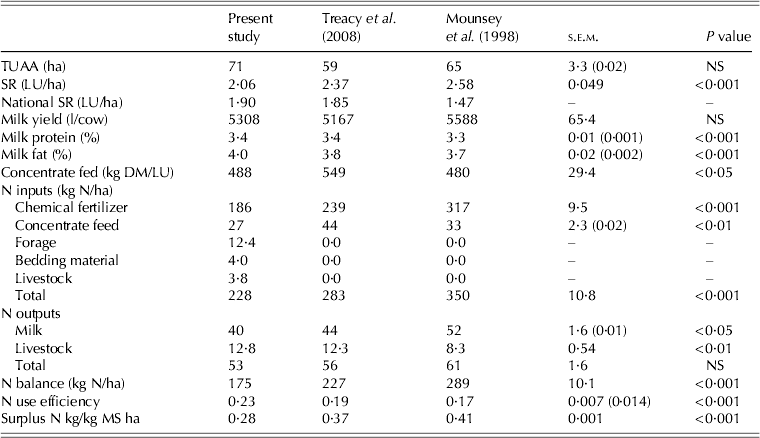
The results of the present study were compared with similar studies, completed between 2003 and 2006 (Treacy et al. Reference Treacy, Humphreys, Mc Namara, Browne and Watson2008) and in 1997 (Mounsey et al. Reference Mounsey, Sheehy, Carton and O'Toole1998) (Table 4), before the introduction of the GAP regulations, to investigate possible impacts of these Regulations on N balances and NUE on Irish dairy farms. The study of Treacy et al. (Reference Treacy, Humphreys, Mc Namara, Browne and Watson2008) was carried out on 21 intensive dairy farms, of which eight were also involved in the present study, whereas the study of Mounsey et al. (Reference Mounsey, Sheehy, Carton and O'Toole1998) was on 12 intensive dairy farms. These intensive farms had SRs of 2·37 LU/ha (Treacy et al. Reference Treacy, Humphreys, Mc Namara, Browne and Watson2008) and 2·58 LU/ha (Mounsey et al. Reference Mounsey, Sheehy, Carton and O'Toole1998), respectively, compared with the national average SR of 1·85 LU/ha in 2005–2006 (Connolly et al. Reference Connolly, Kinsella, Quinlan and Moran2006, Reference Connolly, Kinsella, Quinlan and Moran2007) and 1·47 LU/ha in 1997 (Fingleton Reference Fingleton1997). Mean N surplus was significantly lower (P<0·001) in the present study, at 175 kg N/ha, than Treacy et al. (Reference Treacy, Humphreys, Mc Namara, Browne and Watson2008) (227 kg N/ha) and Mounsey et al. (Reference Mounsey, Sheehy, Carton and O'Toole1998) (289 kg N/ha), whereas NUE was significantly higher (P<0·001), at 0·23, compared with Treacy et al. (Reference Treacy, Humphreys, Mc Namara, Browne and Watson2008) (0·19) and Mounsey et al. (Reference Mounsey, Sheehy, Carton and O'Toole1998) (0·17) (Table 4). Similarly, mean surplus N per kg MS was significantly lower (P<0·001), at 0·28 kg N/kg MS, compared with Treacy et al. (Reference Treacy, Humphreys, Mc Namara, Browne and Watson2008) (0·37 kg N/kg MS) and Mounsey et al. (Reference Mounsey, Sheehy, Carton and O'Toole1998) (0·41 kg N/kg MS) (Table 4). Results suggest a trend for decreased N surplus per ha and per kg MS and improved NUE on Irish dairy farms over the period covered by these studies (1997–2011) and following the introduction of the GAP regulations in 2006. This trend would have both agronomic and environmental benefits, indicating a move towards improved sustainability of dairy production, at least with regard to N. This demonstrates that it is possible to improve both environmental and economic sustainability of dairy production through improved resource use efficiencies.
Comparative mean values (and standard errors) for total utilized agricultural area (TUAA), stocking rate (SR), national average stocking rate, milk yield, milk protein and fat concentration, concentrate feed, imports of N in chemical fertilizers, concentrate feeds, forages, bedding material, and livestock, exports of N in milk and livestock, farm-gate N balances, N use efficiencies, and surplus N per kg milk solids on dairy farms before and after the implementation of good agricultural practice regulations in Ireland; standard error of the means for transformed data in brackets; P values from ANOVA are included
LU, livestock units; l, litres; DM, dry matter; N, nitrogen; MS, milk solids; s.e.m., standard error of the means; NS, not significant.
There are a number of factors determining these differences between the three studies. The first factor was a significantly lower (P<0·001) mean SR in the present study, of 2·06 LU/ha, in comparison with 2·37 LU/ha in Treacy et al. (Reference Treacy, Humphreys, Mc Namara, Browne and Watson2008) and 2·58 LU/ha in Mounsey et al. (Reference Mounsey, Sheehy, Carton and O'Toole1998). The lower SR in the present study had further impacts on fertilizer N, concentrate N inputs and milk N output.
The second factor was a significantly lower (P<0·001) mean fertilizer N input, of 186 kg N/ha, in the present study, compared with 239 kg N/ha in Treacy et al. (Reference Treacy, Humphreys, Mc Namara, Browne and Watson2008) and 317 kg N/ha in Mounsey et al. (Reference Mounsey, Sheehy, Carton and O'Toole1998) (Table 4). While some of this decrease in fertilizer N input was undoubtedly associated with lower SRs, SR was 21% lower in this study than in Mounsey et al. (Reference Mounsey, Sheehy, Carton and O'Toole1998), while fertilizer N input was 42% lower, indicating that the decrease in fertilizer N input was not only associated with changes in SR. It would also seem likely that fertilizer N input decreased due to improved N management such as more appropriate rates and timing of application and better use of on-farm organic N fertilizers.
The third factor differing between the studies suggests that this was indeed the case, as 0·57 of annual chemical N fertilizer was applied from February to May in the present study, compared with 0·59 in Treacy et al. (Reference Treacy, Humphreys, Mc Namara, Browne and Watson2008) and 0·45 applied mid-January in Mounsey et al. (Reference Mounsey, Sheehy, Carton and O'Toole1998). There was no application of chemical N fertilizer after September in the present study and in Treacy et al. (Reference Treacy, Humphreys, Mc Namara, Browne and Watson2008) while in Mounsey et al. (Reference Mounsey, Sheehy, Carton and O'Toole1998) chemical N fertilizers were applied up until the end of October. Also, 0·58 of annual organic fertilizer N (farm yard manure and slurry) was applied between mid-January and April in the present study, compared with 0·55 in Treacy et al. (Reference Treacy, Humphreys, Mc Namara, Browne and Watson2008) and 0·14 in Mounsey et al. (Reference Mounsey, Sheehy, Carton and O'Toole1998). There was no application of organic fertilizers after October in the present study and in Treacy et al. (Reference Treacy, Humphreys, Mc Namara, Browne and Watson2008), whereas in Mounsey et al. (Reference Mounsey, Sheehy, Carton and O'Toole1998), 0·31 was applied between November and January. This significant shift in the timing of organic N fertilizer application is consistent with advice on best practice indicating better fertilizer replacement value for spring application (Alexander et al. Reference Alexander, Black, Boland, Burke, Carton, Coulter, Culleton, Dillon, Hackett, Humphreys, Keady, Lalor, Mchoul, Merfield, Murphy, O'kiely, O'riordan, Orlovius, Plunkett, Schulte and Tunney2008) and with the GAP regulations (European Communities 2010), introduced in 2006, that prohibit application of organic fertilizers during the ‘closed period’, from mid-October to mid/end January. The concurrent decrease in chemical fertilizer N use and shift towards later application of this chemical fertilizer N both indicate an improved awareness of the fertilizer value of organic manures and accounting for them in nutrient management planning.
The fourth factor was the significantly lower (P<0·01) concentrate N input per ha in the present study (26·6 kg N/ha) compared with Treacy et al. (Reference Treacy, Humphreys, Mc Namara, Browne and Watson2008) (43·6 kg N/ha) and Mounsey et al. (Reference Mounsey, Sheehy, Carton and O'Toole1998) (32·8 kg N/ha) (Table 4). While some of this decrease in concentrate N input was undoubtedly associated with lower SRs, SR was only 14% lower in the present study than in Treacy et al. (Reference Treacy, Humphreys, Mc Namara, Browne and Watson2008), while concentrate N input was 39% lower. It would seem likely that concentrate N input also decreased due to improved feed management with increased grass and decreased concentrate feed per LU. Best practice in the seasonal grazed-grass-based production model, as would be advised by Teagasc (Irish state Agriculture and Food Development Authority), would be to minimize such feed inputs and maximize the proportion of grass in the diet (Dillon et al. Reference Dillon, Crosse, Stakelum and Flynn1995; Horan Reference Horan and Lalor2009).
Despite the decreases in fertilizer N and concentrate N inputs per ha, milk N output in the present study was only 3·4 kg N/ha lower than in Treacy et al. (Reference Treacy, Humphreys, Mc Namara, Browne and Watson2008) and 12 kg N/ha lower than in Mounsey et al. (Reference Mounsey, Sheehy, Carton and O'Toole1998). The 21% lower SR compared with Mounsey et al. (Reference Mounsey, Sheehy, Carton and O'Toole1998) was matched by a 23% lower milk N output per ha.
Nitrogen balance and use efficiency of Irish dairy farms in an international context
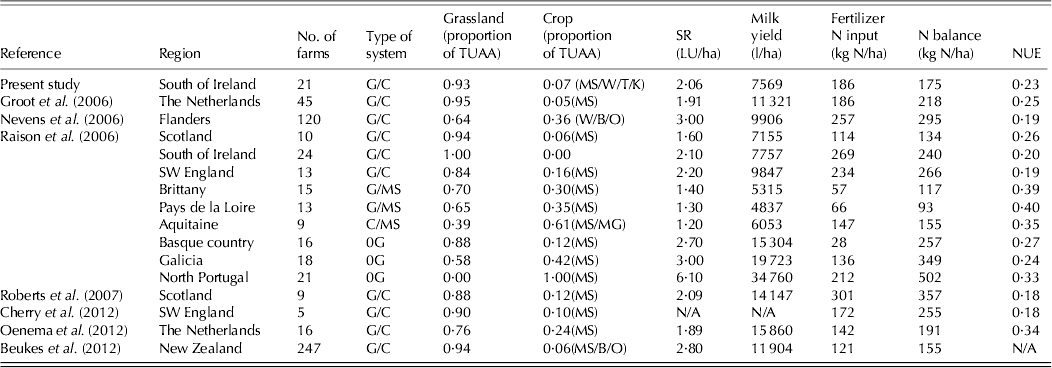
The results of the present study were compared with similar international studies, as outlined in Table 5. In this comparison, the term ‘continental European farms’ refers to the Dutch farms in Groot et al. (Reference Groot, Rossing and Lantinga2006) and Oenema et al. (Reference Oenema, Van Ittersum and Van Keulen2012), the Flemish farms in Nevens et al. (Reference Nevens, Verbruggen, Reheul and Hofman2006), and the French farms in Raison et al. (Reference Raison, Pflimlin, Le Gall, Jarvis and Pfimlin2006), while ‘northern European farms’ refers to the English and Irish farms in Raison et al. (Reference Raison, Pflimlin, Le Gall, Jarvis and Pfimlin2006), the Scottish farms in Roberts et al. (Reference Roberts, Leach and Goldie2007) and the English farms in Cherry et al. (Reference Cherry, Mooney, Ramsden and Shepherd2012).
Comparative number of farms, type of system, grassland area, crop area and type of crop, stocking rate (SR), milk yield, N input from chemical fertilizers, N balances and N use efficiency (NUE) in different regions
No., number; G/C, grazing-cutting; G/MS, grazing-maize for silage; C/MS, cutting-maize for silage; 0G, zero grazing; TUAA, total utilized agricultural area; MS, maize silage; W, wheat; B, barley; O, oat; K, kale; T, typhoon; MG, maize for grain; LU, livestock units; l, litres; N, nitrogen.
Fertilizer N input in the present study (186 kg N/ha) was similar to the Dutch farms in Groot et al. (Reference Groot, Rossing and Lantinga2006) (186 kg N/ha), lower than the English and Irish farms in Raison et al. (Reference Raison, Pflimlin, Le Gall, Jarvis and Pfimlin2006) (205 kg N/ha), the Flemish farms in Nevens et al. (Reference Nevens, Verbruggen, Reheul and Hofman2006) (257 kg N/ha) and the Scottish farms in Roberts et al. (Reference Roberts, Leach and Goldie2007) (301 kg N/ha), but higher than the French farms in Raison et al. (Reference Raison, Pflimlin, Le Gall, Jarvis and Pfimlin2006) (90 kg N/ha), the Dutch farms in Oenema et al. (Reference Oenema, Van Ittersum and Van Keulen2012) (142 kg N/ha), the English farms in Cherry et al. (Reference Cherry, Mooney, Ramsden and Shepherd2012) (172 kg N/ha) and the New Zealand farms in Beukes et al. (Reference Beukes, Scarsbrook, Gregorini, Romera, Clark and Catto2012) (121 kg N/ha).
Concentrate N input in the present study (26·6 kg N/ha) was much lower compared with Nevens et al. (Reference Nevens, Verbruggen, Reheul and Hofman2006) (90 kg N/ha), Groot et al. (Reference Groot, Rossing and Lantinga2006) (100 kg N/ha) and Raison et al. (Reference Raison, Pflimlin, Le Gall, Jarvis and Pfimlin2006) for French farms (59 kg N/ha). The main reason for higher concentrate N inputs in these studies was the high input/output system of dairy production that is more typical of dairy production in continental Europe, characterized by year-round milk production, high use of concentrates, imported feeds and forages, lower use of grazed grass and high milk yields per ha. In contrast, a low input/output system is more typical in Ireland, with seasonal milk production (compact spring calving), low use of concentrates, imported feeds and forages, high use of grazed grass and lower milk yields per ha. The continental European studies had much higher milk yields per ha (11 321 litres/ha, Groot et al. Reference Groot, Rossing and Lantinga2006; 9906 litres/ha, Nevens et al. Reference Nevens, Verbruggen, Reheul and Hofman2006), compared with the current Irish study (7569 litres/ha). The French farms in Raison et al. (Reference Raison, Pflimlin, Le Gall, Jarvis and Pfimlin2006) had lower mean milk yields per ha (5401 litres/ha) due to mixed agricultural production (milk, maize for export) on some of the farms. The higher milk yields per ha were also associated with higher mean milk N outputs per ha (73·6 kg N/ha, Groot et al. Reference Groot, Rossing and Lantinga2006; 48·0 kg N/ha, Nevens et al. Reference Nevens, Verbruggen, Reheul and Hofman2006) compared with the present study (40 kg N/ha). On the French farms in Raison et al. (Reference Raison, Pflimlin, Le Gall, Jarvis and Pfimlin2006), the mean milk N output, of 29·0 kg N/ha, was lower than in the present study, likely due to their lower milk yields, SR and fertilizer N input.
In the study of Beukes et al. (Reference Beukes, Scarsbrook, Gregorini, Romera, Clark and Catto2012), in New Zealand, the farms were considered to rely on home-grown low-protein supplements (maize, barley and oat), with low imports of concentrate feeds. These farms had a mean concentrate feed import of 474 kg DM/cow and higher milk yields, of 11 904 litres/ha. These values were considered representative for the Waikato region in New Zealand. This indicates that dairy farmers in New Zealand operate milk production systems similar to the Irish, albeit with higher output per ha due to much higher SRs.
Despite the relatively low milk N output per ha, mean N surplus (175 kg N/ha) in the present study was lower than the mean N surplus reported by Groot et al. (Reference Groot, Rossing and Lantinga2006) (218 kg N/ha), Raison et al. (Reference Raison, Pflimlin, Le Gall, Jarvis and Pfimlin2006) for English and Irish farms (213 kg N/ha), Nevens et al. (Reference Nevens, Verbruggen, Reheul and Hofman2006) (295 kg N/ha), Roberts et al. (Reference Roberts, Leach and Goldie2007) (357 kg N/ha), Cherry et al. (Reference Cherry, Mooney, Ramsden and Shepherd2012) (255 kg N/ha) and Oenema et al. (Reference Oenema, Van Ittersum and Van Keulen2012) (191 kg N/ha). This reflects the low input/output model of dairy production in Ireland. Mean N surplus in the present study was higher than Raison et al. (Reference Raison, Pflimlin, Le Gall, Jarvis and Pfimlin2006) for French farms (122 kg N/ha) and the New Zealand farms in Beukes et al. (Reference Beukes, Scarsbrook, Gregorini, Romera, Clark and Catto2012) (155 kg N/ha). Mean NUE in the present study (0·23) was higher than that reported by Nevens et al. (Reference Nevens, Verbruggen, Reheul and Hofman2006) (0·19), Raison et al. (Reference Raison, Pflimlin, Le Gall, Jarvis and Pfimlin2006) for English and Irish farms (0·21), Roberts et al. (Reference Roberts, Leach and Goldie2007) (0·18), and Cherry et al. (Reference Cherry, Mooney, Ramsden and Shepherd2012) (0·18), but lower than the mean NUE showed by Groot et al. (Reference Groot, Rossing and Lantinga2006) (0·25), Raison et al. (Reference Raison, Pflimlin, Le Gall, Jarvis and Pfimlin2006) for French farms (0·38) and Oenema et al. (Reference Oenema, Van Ittersum and Van Keulen2012) (0·34). However, the overall mean NUE (0·24) for the continental and northern European farms was similar to mean NUE in the current Irish study (0·23).
The above values for N surplus and NUE in the continental and northern European studies represent the means for the period of study. However, deliberate efforts were made in the above studies to improve N surplus and NUE and, as a result, N surplus decreased and NUE increased over time. It is notable that the Irish dairy farms in the present study had an average fertilizer N input, N surplus and NUE, without intensive additional advisory and practice change efforts (beyond the usual advisory services and GAP regulations), that was within the range of the improved figures from the European studies following such advisory intervention. It is also worth noting that the dominance of fertilizer N on the input side of the Irish low input/output system means that efficient use of fertilizer N, and on-farm organic N sources, will play an even more important role in improving N balances and NUE.
It can be concluded that Irish dairy farms tend to operate with lower concentrate N inputs, relatively low fertilizer N inputs and lower N surpluses per ha than most other European dairy farms at lower output (litres milk/ha) and that this is largely due to the low input/output system that is more typical in Ireland with seasonal milk production (compact spring calving) (Buckley et al. Reference Buckley, Dillon, Crosse, Flynn and Rath2000), low use of concentrates, imported feeds and forages (Dillon et al. Reference Dillon, Crosse, Stakelum and Flynn1995), high use of grazed grass (Horan Reference Horan and Lalor2009), and relatively low milk yields per cow (Humphreys et al. Reference Humphreys, Aarts, Watson, Wachendorf, Le Gall, Taube and Pfimlin2009a). All other factors being equal, one might expect less N losses to the environment under conditions of lower N surplus.
The dairy farms in New Zealand, which operate a grazed grass-based production system similar to Ireland, tend to operate with lower fertilizer N and concentrate N inputs and lower N surpluses than continental and northern European and Irish farms. On commercial dairy farms from eight different locations in New Zealand, the mean N fertilization rate was 137 kg N/ha, at a much higher mean SR (2·71 cows per ha) (Dalley & Gardner Reference Dalley and Gardner2012; Dalley & Geddes Reference Dalley and Geddes2012) than the continental and northern European studies, and the Irish farms in the present study. This may be due to the typically high white clover content in New Zealand pastures. Fixation by white clover is the main source of N input on New Zealand dairy farms (Ledgard et al. Reference Ledgard, Sprosen, Penno and Rajendram2001), fixing up to 300 kg N/ha (Ledgard et al. Reference Ledgard, Schils, Eriksen and Luo2009) and resulting in relatively low recommended N fertilization rates of between 50 and 150 kg N/ha (Roberts & Morton Reference Roberts and Morton2009). For comparison, the recommended N fertilization rates for grazed pasture in Ireland range from 75 to 306 kg N/ha, with increasing SR from 1 to 2·4 LU/ha (Alexander et al. Reference Alexander, Black, Boland, Burke, Carton, Coulter, Culleton, Dillon, Hackett, Humphreys, Keady, Lalor, Mchoul, Merfield, Murphy, O'kiely, O'riordan, Orlovius, Plunkett, Schulte and Tunney2008).
However, under experimental conditions, N fertilization rates as low as 90 kg N/ha have been maintained with grass/clover grazed pastures stocked at 2 LU/ha (Humphreys et al. Reference Humphreys, O'Connell and Casey2008, Reference Humphreys, Casey and Laidlaw2009b; Keogh et al. Reference Keogh, Humphreys, Phelan, Necpalova, Casey and Fitzgerald2010). This compares very favourably with the 252 kg N/ha on fertilized grazed pastures stocked at 2·13 LU/ha in the same studies and indicates the potential for Irish dairy farms to reduce fertilizer N use and improve NUE through incorporation of clover in swards, while also increasing farm profitability through reduced fertilizer costs (Humphreys et al. Reference Humphreys, Mihailescu and Casey2012). Moreover, the high protein content of grass–clover pastures can allow the greater use of low-protein home-grown supplements to dilute N intake without impairing milk production (Beukes et al. Reference Beukes, Scarsbrook, Gregorini, Romera, Clark and Catto2012).
CONCLUSIONS
A survey of 21 Irish dairy farms from 2009 to 2011 found a mean N surplus of 175 kg/ha, or 0·28 kg N/kg MS and a mean NUE of 0·23. Farm-gate N inputs were dominated by inorganic fertilizer (186 kg N/ha) and concentrates (26·6 kg N/ha), while outputs were dominated by milk (40·2 kg N/ha) and livestock (12·8 kg N/ha). Comparison with similar studies carried out before the introduction of the GAP regulations in 2006 would suggest that N surplus, both per ha and per kg MS, have significantly decreased (by 40 and 32%, respectively) and NUE increased (by 27%) following the introduction of the GAP regulations. These improvements have mostly been achieved through decreased inorganic fertilizer N input and improvements in N management, with a notable shift towards spring application of organic manures, consistent with advice on best practice that indicate better fertilizer replacement value for spring application, and with the GAP regulations that prohibit application of organic fertilizers during the ‘closed period’ from mid-October to mid/end January. A concurrent decrease in chemical fertilizer N use and shift towards later application of this chemical fertilizer N both indicate an improved awareness of the fertilizer value of organic manures and accounting for them in nutrient management planning. These results would suggest a positive impact of the GAP regulations on dairy farm N surplus and NUE.
Taking surplus N per ha as an indicator of local environmental pressure, this indicates that the environmental sustainability of milk production has improved. The improvement in NUE also indicates that agronomic performance has improved concurrently. This demonstrates that it is possible to improve both environmental and economic sustainability of dairy production through improved resource use efficiencies. Such improvements will be necessary to achieve national targets of improved water quality under the EU Water Framework Directive, and increased dairy production, as set out in the Food Harvest 2020 Report. The weak impact of SR on N surplus found in the present study would suggest that, with good management, the increases in SR and milk output per ha that may be necessary on some farms to achieve these production targets, may be achieved while decreasing N surplus per ha. The dominance of fertilizer N on the input side of the Irish low input/output dairy production system means that efficient use of fertilizer N, and other on-farm N sources, plays an even more important role in determining N balances and NUE and will, therefore, play a central role in improving N balances and NUE. These improvements may be achieved through optimizing management aspects such as nutrient management planning, grazing management and grass utilization, and use of clover in swards, for example.
Mean N surplus (175 kg N/ha) was lower than the overall mean surplus (224 kg N/ha) from six studies of northern and continental European dairy farms, while mean NUE was similar. It can be concluded that Irish dairy production systems, on average, tend to operate with lower concentrate N inputs, relatively low fertilizer N and lower N surpluses than other European dairy production systems and that this is largely due to the low input/output system that is more typical in Ireland, with seasonal milk production (compact spring calving), low use of concentrates, imported feed and forages, high use of grazed grass and lower milk yields per ha. All other factors being equal, one might expect less N losses to the environment under these conditions of lower N surplus.
The authors acknowledge financial support from the ERDF Interreg IVB Dairyman Project and the Teagasc Walsh Fellowship Scheme.

 Open access

