




1. Introduction
Food systems are at the core of the world’s most pressing sustainability challenges, both as a cause and as a source of solutions. Food systems encompass a vast network of activities involved in the production, processing, distribution, consumption, and disposal of food (Food and Agriculture Organization, 2018). As such, food systems directly impact global issues, including food insecurity, environmental degradation, and social inequalities. The challenges facing food systems today threaten progress towards equitable and resilient societies (Araujo et al., Reference Araujo, Chavez-santoscoy, Parra-saldívar, Melchor-martínez and Iqbal Hafiz2023). Climate change, biodiversity loss, and unsustainable agricultural practices are straining ecosystems and endangering food security for millions (Muluneh, Reference Muluneh2021). In 2023, around 733 million people globally experienced hunger, with rising food and energy prices exacerbating this crisis (World Health Organisation, 2024). These challenges highlight the urgent need for transformative actions to build sustainable food systems capable of supporting global well-being.
Food systems refer to the interconnected processes involved in the production, processing, distribution, consumption, and disposal of food (UNSD, 2017). Food system transformation is understood as a fundamental shift in these processes towards more sustainable, equitable, and resilient outcomes (Manzoor et al., Reference Manzoor, Fayaz, Dar, Dash, Shams, Bashir, Pandey and Abdi2024; Martin & Vos, Reference Martin and Vos2024). In this study, sustainability encompasses environmental integrity, social equity, and economic viability. Food security refers to consistent access to sufficient, safe, and nutritious food, while nutrition security emphasizes the quality and diversity of diets required for healthy living (Doustmohammadian et al., Reference Doustmohammadian, Mohammadi-nasrabadi, Keshavarz-mohammadi, Hajjar, Alibeyk and Hajigholam-saryazdi2022). These concepts are related but distinct and are used consistently throughout this study.
The adoption of the United Nations (UN) 2030 Agenda for Sustainable Development (2030 Agenda) in 2015 marked a global milestone in addressing the interconnected challenges of sustainable development (10). The Sustainable Development Goals (SDGs) provide a globally recognized framework for assessing progress across multiple dimensions of sustainability, including food security, health, environmental protection, and economic development. In the context of food systems, the SDGs capture the interconnected nature of challenges spanning production, nutrition, livelihoods, and ecosystems. In this study, the SDGs are used as an analytical framework to assess how local seeds contribute to different dimensions of sustainability and how these contributions interact across goals (11). By focusing on these goals, food systems can act as powerful levers for achieving broader sustainability outcomes. However, with less than a decade remaining to meet the 2030 targets, progress towards the SDGs has been uneven, particularly in the Global South, where challenges such as food insecurity, environmental vulnerability, and social inequality are most pronounced (12). Addressing these challenges requires urgent and transformative actions that go beyond conventional, top-down approaches to include localized, community-driven solutions (13).
In 2021, the International Panel of Experts on Sustainable Food Systems proposed a unifying framework for food system transformation. The framework recommended a bold paradigm shift to redesign food systems. In particular, governments, private companies, and civil society were tasked with adopting 13 principles to facilitate food system transformation. Some of these principles include recycling, input reduction, soil health, biodiversity promotion, economic diversification, and natural resource governance.
Ghana exemplifies the complexities of food systems in the Global South. The country faces a dual burden of undernutrition and rising rates of diet-related, non-communicable diseases (NCDs), reflecting a food environment that struggles to meet diverse nutritional needs (Kushitor et al., Reference Kushitor, Owusu and Kushitor2020; Quarm & Begho, Reference Quarm and Begho2024). The 2022 Ghana Demographic and Health Survey estimates that approximately 17% of Ghanaian children under age 5 were stunted, while 6% of children under age 5 were wasted. Simultaneously, climate change has adversely affected agricultural productivity, with projections indicating a 12% decline in arable lands for staple crops like maize and sorghum (Chemura et al., Reference Chemura, Schauberger and Gornott2020). These challenges are compounded by rapid urbanization, environmental degradation, and the increasing vulnerability of rural and coastal communities to climate-induced disasters (Awuni et al., Reference Awuni, Adarkwah, Ofori, Purwestri, Huertas Bernal and Hajek2023).
In this study, ‘seeds’ are defined as locally embedded, early-stage seeds that signal potential pathways towards food system transformation (Frantzeskaki et al., Reference Frantzeskaki, Borgström, Gorissen, Egermann and Ehnert2017). Unlike conventional projects, which are typically evaluated based on predefined outputs and outcomes, seeds are examined for their potential to address interconnected challenges and contribute to broader sustainability outcomes (Bennett et al., Reference Bennett, Solan, Biggs, Timon Mcphearson, Olsson, Pereira, Peterson, Ciara Raudsepp-hearne, Carpenter, Hichert, Galaz, Lahsen, Milkoreit and Xu2016). These seeds are small-scale, bottom-up interventions that, given the right conditions, could catalyse more radical transitions towards a sustainable future (Jiménez-Aceituno et al., Reference Jiménez-Aceituno, Peterson, Norström, Wong and Downing2020). Many of these seeds aim to contribute to various targets of the SDGs (Pereira et al., Reference Pereira, Bennett, Biggs, Peterson, McPhearson, Norström, Olsson, Preiser, Raudsepp-Hearne, Vervoort, Elmqvist, Bai, Frantzeskaki, Griffith, Maddox, McPhearson, Parnell, Romero-lankao, Simone and Watkins2018). The Seeds of Good Anthropocene Project has identified and mapped over 500 transformative seeds globally, showcasing their potential to inspire sustainable change (Hearne et al., Reference Hearne, Bennett and Vervoort2020; Seeds of Good Anthropocenes, 2023). These seeds may complement broader SDG efforts by addressing locally specific challenges and generating context-relevant solutions, although their contributions are often not explicitly framed in SDG terms. Another example of such initiatives includes sustainable land management best practices documented by the UNCCD Secretariat through the World Overview of Conservation Approaches and Technologies, as well as climate change adaptation in Bahraich, India (Nekesa et al., Reference Nekesa, Golli, Jaquet, Katsir, Vollmann Tinoco, Helbig and Teferi2024; Tiwari & Dubey, Reference Tiwari and Dubey2026).
Existing research has emphasized the role of food systems in achieving the SDGs, often focusing on national policies and large-scale interventions (Caron et al., Reference Caron, Ferrero Y de Loma-osorio, Nabarro, Hainzelin, Guillou, Andersen, Arnold, Astralaga, Beukeboom, Bickersteth, Bwalya, Caballero, Campbell, Divine, Fan, Frick, Friis, Gallagher, Halkin and Verburg2018). At the same time, emerging literature on sustainability transformations highlights the importance of localized, bottom-up seeds as potential drivers of systemic change (Fears & Canales, Reference Fears and Canales2023; Ferraboschi et al., Reference Ferraboschi, Monroy-gomez, Gavin-smith, Beesabathuni, Tshering, Lingala, Bainsla, Amanquah, Kumari, van Zutphen and Kraemer2022; Herrero et al., Reference Herrero, Thornton, Mason-d'croz, Palmer, Bodirsky, Pradhan, Barrett, Benton, Hall, Pikaar, Bogard, Bonnett, Bryan, Campbell, Christensen, Clark, Fanzo, Godde, Jarvis and Rockström2021). However, there is limited empirical work systematically examining how such seeds contribute to multiple SDGs or how their impacts intersect across goals, particularly in low- and middle-income country contexts such as Ghana. This study addresses this gap by mapping food system seeds in Ghana and analysing their alignment with SDG targets, including patterns of co-occurrence and socioecological dimensions. Specifically, the study asks: How do food system seeds in Ghana map onto SDG targets, and what patterns of interaction emerge across these goals? The findings of this study contribute to strengthening the evidence base of locally led sustainability initiatives, which are often overlooked despite their importance.
2. Methods
2.1. Study setting and design
Ghana, a lower-middle-income country in West Africa with a population of over 30 million, is characterized by diverse agro-ecological zones and a food system shaped by both formal and informal market structures. Ghana has been committed to transforming its food system since the 2021 UN Food Systems Summit. Following the 2022 Summit, the National Development Planning Commission (NDPC) has actively tracked the government's commitments to this transformation (Republic of Ghana, 2022). As the Scaling Up Nutrition focal point, the NDPC integrates food systems transformation and nutrition security into national development plans. In collaboration with local ministries, international organizations, and academia, the NDPC is working to enhance nutrition security by reducing the dominance of highly processed foods and promoting nutrient-dense alternatives. These efforts reflect a cross-sectoral approach to building a sustainable and resilient food system in Ghana.
This study used data from the Seeds of Good Anthropocene: Transforming Food Systems in Africa Project (Kushitor et al., Reference Kushitor, Bour, Benessaiah and Bennett2025; Seeds of Good Anthropocenes, 2023). This transdisciplinary project consisted of a desk review, community visits, in-depth interviews, and scenario workshops. This paper analyses data from the desk review and community visits.
2.2. Data collection
The data collection began in July 2022 and ended in July 2023. Data collection focused on gathering information about identified food system seeds. Food system seeds were defined as seeds by local stakeholders to improve local food systems to enhance environmental sustainability, economic viability, and equitable access to nutritious food (Pereira et al., Reference Pereira, Bennett, Biggs, Peterson, McPhearson, Norström, Olsson, Preiser, Raudsepp-Hearne, Vervoort, Elmqvist, Bai, Frantzeskaki, Griffith, Maddox, McPhearson, Parnell, Romero-lankao, Simone and Watkins2018). We designed a Google Form to collect details on seeds, including their goals, objectives, strategies, and context (Supplementary Table S1). Information on leverage points (key areas where seeds can influence system change; Abson et al., Reference Abson, Fischer, Leventon, Newig, Schomerus, Vilsmaier, von Wehrden, Abernethy, Ives, Jager and Lang2017), amplification processes (mechanisms through which outcomes can be scaled or expanded; Lam et al., Reference Lam, Martín-lópez, Wiek, Bennett, Frantzeskaki, Horcea-milcu and Lang2020), and transformation spheres (domains of systemic change across social, economic, and ecological dimensions; O'brien, Reference O'brien2013) was collected to better understand how seeds could contribute to broader food system transformation (Doherty et al., Reference Doherty, Bryant, Denby, Fazey, Bridle, Hawkes, Cain, Banwart, Collins, Pickett, Allen, Ball, Gardner, Carmen, Sinclair, Kluczkovski, Ehgartner, Morris, James and Connolly2022; UN, 2024). These elements were extracted from seed descriptions and supporting documentation based on how seeds articulated their activities and intended impacts.
We identified seeds via online searches, community visits, and snowball sampling conducted in 2023. This was essential due to the linkages among food system actors. Specific keywords and phrases aided online searches on Google, Facebook, Twitter, and Instagram. Online newspaper sites were also searched for publications concerning seeds. Keywords were used associated with the entire food chain from production to processing, distribution, and consumption along with innovation/sustainability (e.g., sustainable ways of processing fish in Ghana, innovative ways of fish distribution, sustainable food system seeds). Especially with Google and Twitter, measures were employed to filter irrelevant information: using quotes to search for exact word phrases (e.g., innovative fisheries, food system sustainability, food security projects) or using asterisks to search for multiple words at once (sustainable and innovative ways of food processing). A callout was made on Twitter to search for seeds. The tweet made 3471 impressions with 153 engagements.
The project aimed to gather seeds from landing ports for smaller-scale fisheries or towns 250 km from Accra. Community visits were conducted in Botianor, Chorko, Cape Coast, James Town, Ussher Town, Teshie Landing Harbour, Tema Harbor, Dansoman, Dodowa, Takoradi, and Aburi. The community visit included participant observation and informal conversations about seed actors’ activities. Information was obtained on how the seeds were started, the food system challenges they addressed, how their work linked to the SDGs, and their impact. A snowball sampling approach was used to gather information about other seeds from the identified seeds. Data were first obtained from the seeds’ websites and social media pages, followed by virtual and in-person interviews conducted by two trained research assistants. The in-depth interviews were conducted in English and transcribed by two trained research assistants.
2.3. Data analysis
A hybrid inductive–deductive coding approach was used to link seeds to the SDGs. SDG targets provided an initial deductive framework, while themes emerging from seed descriptions informed iterative refinement. Four researchers conducted the coding. An initial subset of seeds was coded jointly to establish shared criteria, after which seeds were coded independently. Each seed was assigned one primary SDG and additional related SDGs. Direct linkages were defined where seed objectives explicitly aligned with SDG targets, while indirect linkages captured broader contributions. Coding decisions were reviewed collectively to ensure consistency.
For example, the mission of Guzakuza, one of the seeds, ‘is to provide comprehensive support and resources to women entrepreneurs in agribusiness’s thriving industry, enabling them to achieve their fullest potential’. The mission was coded as addressing SDG 5 and specifically Target 5.A, which focuses on increasing equal rights to economic resources and access for women.
To enhance validity, coding decisions were iteratively reviewed among the research team. The initial joint coding phase established shared criteria, while subsequent cross-checking ensured consistency. Although interpretive judgement was involved, these steps aimed to reduce subjectivity. Discrepancies in coding were discussed among the researchers and resolved through consensus, ensuring consistency in the assignment of primary and related SDGs.
3. Results
3.1. Characteristics of seeds identified
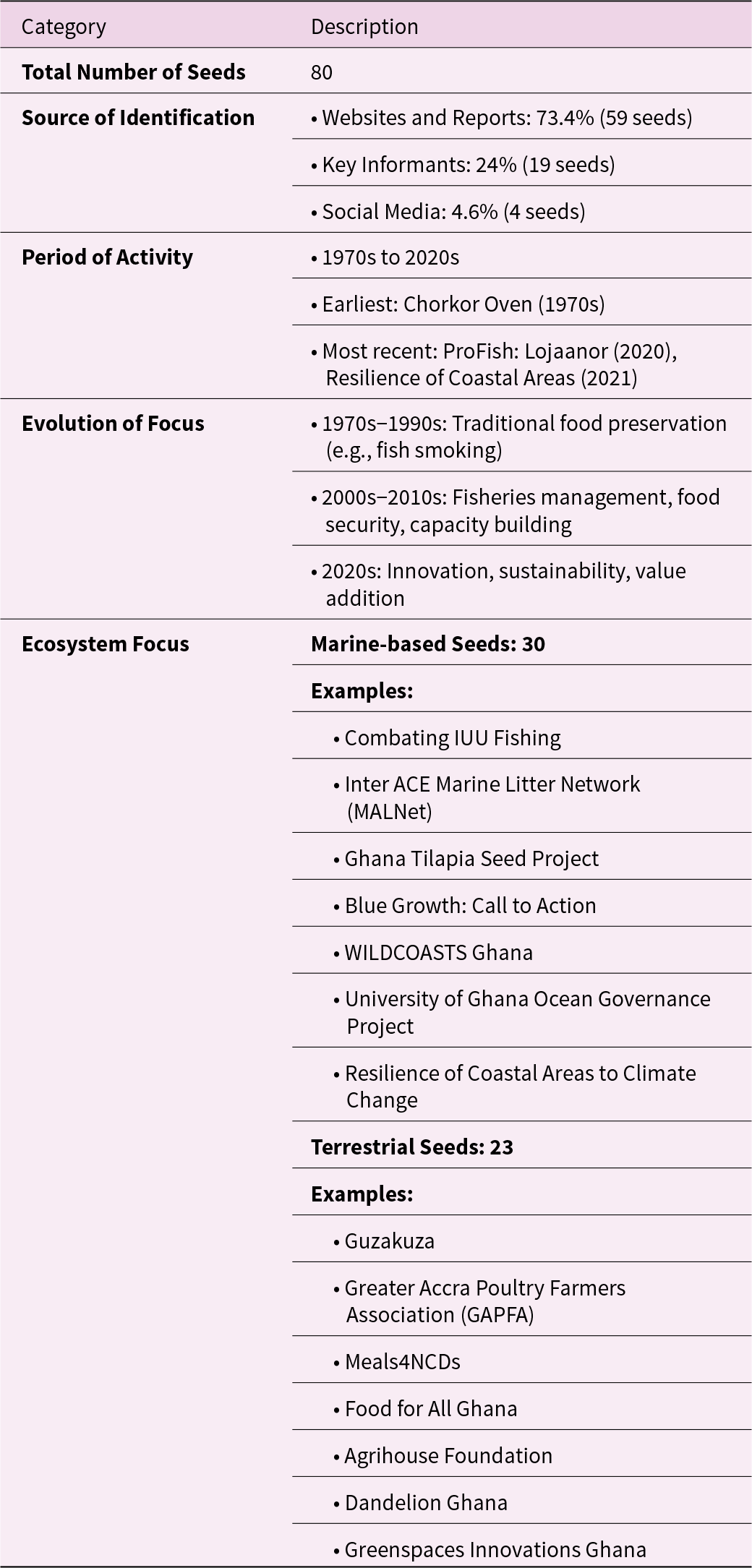
A total of 80 seeds were identified (Table 1). Seeds identified from websites and reports constituted the majority of what we collected (73.4%). Some seeds (22%) were sourced through key informants, and (4.6%) were identified through social media. Some seeds were also identified via a combination of two or more sources.
Classification of food system seeds based on activity period, thematic evolution, and ecosystem focus

Table 1 Long description
The table summarizes eighty identified food-system “seeds” by how they were found, when they were active, how their themes changed over time, and whether they focus on marine or terrestrial ecosystems. Most seeds were identified through websites and reports at 73.4 percent, followed by key informants at 24 percent and social media at 4.6 percent. Activity spans from the 1970s through the 2020s, with Chorkor Oven listed as the earliest example and ProFish: Lojaanor and Resilience of Coastal Areas as recent examples in the 2020s and 2021. The thematic focus evolves from traditional food preservation in the 1970s to 1990s, to fisheries management, food security, and capacity building in the 2000s to 2010s, and then to innovation, sustainability, and value addition in the 2020s. Ecosystem focus includes thirty marine-based seeds and twenty-three terrestrial seeds, with marine examples such as combating illegal, unreported, and unregulated fishing and marine litter networks, and terrestrial examples such as poultry farmer associations and food access initiatives. The ecosystem counts may not represent all seeds, since only marine and terrestrial totals are provided and other categories, if any, are not listed.
The identified seeds spanned several decades, with seeds starting as early as the 1970s and continuing into the current decade (2020s). Seeds such as Chorkor Oven, which was operational in the 1970s, focused on improving traditional food preservation practices such as fish smoking. Subsequent seeds began to address broader food system issues, such as fisheries management, capacity building and development in the fisheries and agriculture sectors, overfishing, food insecurity, and climate resilience. In the recent decade, studies such as ProFish: Lojaanor (2020) and Resilience of Coastal Areas to Climate Change (2021) focus on technology, innovation, value addition, and sustainability in food systems.
Ghana’s food systems’ seeds focus on marine ecosystems (30 seeds) and terrestrial activities (23 seeds). Marine seed initiatives, such as the Inter ACE Marine Litter Network (MALNet) and Combating IUU Fishing, primarily address challenges in fisheries, marine conservation, and coastal resource management. These seeds aim to combat illegal fishing, reduce marine pollution, and promote sustainable fisheries practices. Terrestrial seeds, such as Guzakuza and Greater Accra Poultry Farmers Association, focus on land-based activities, including agriculture, agro-processing, and urban farming. These seeds aim to improve food security, promote sustainable farming practices, and empower rural communities.
3.2. Sustainability challenges the seeds were addressing
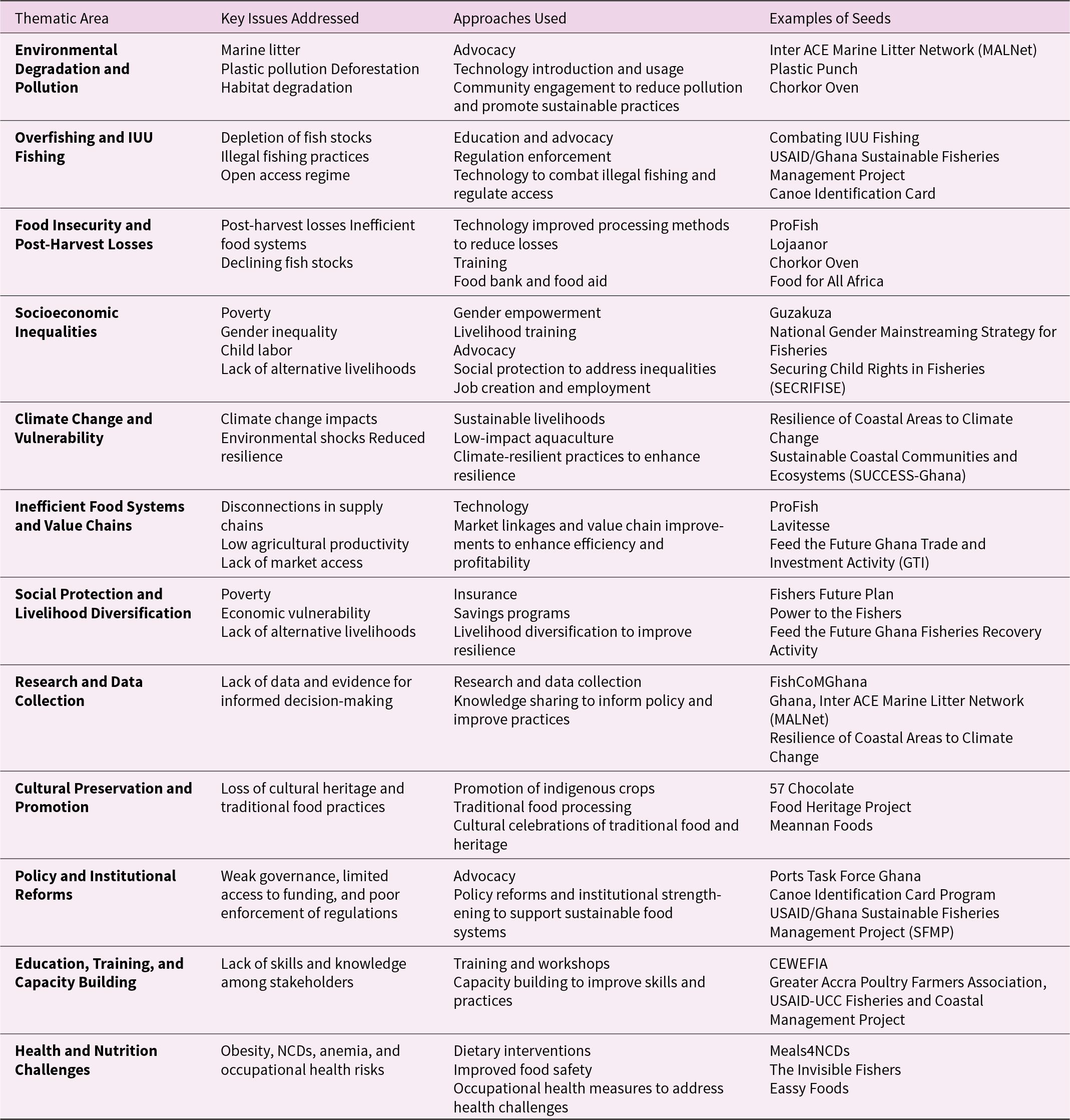
The seeds in Ghana’s food systems address a wide range of interconnected challenges that threaten the sustainability and resilience of the country’s food systems (Table 2). These include environmental degradation and pollution, such as marine litter, plastic pollution, and deforestation, which harm ecosystems and livelihoods. As well as overfishing and illegal, unreported, and unregulated (IUU) fishing, depleting fish stocks, food insecurity, and livelihood strengthening of coastal communities.
Synthesis table for seed activities
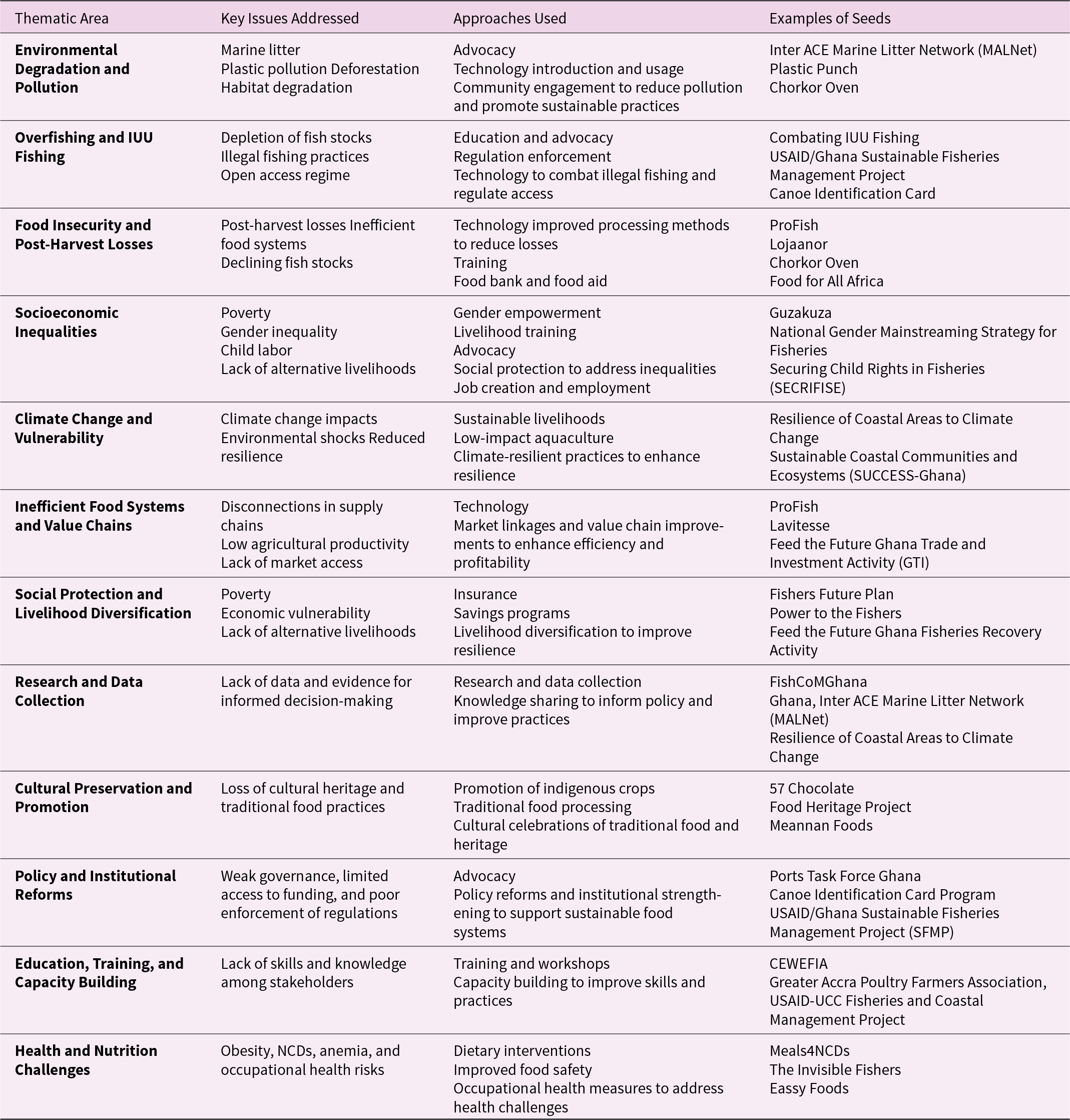
Table 2 Long description
The table organizes seed initiatives by thematic area, listing the key issues each addresses, the approaches used, and named examples. Environmental degradation focuses on marine litter, plastic pollution, deforestation, and habitat degradation, using advocacy, technology, and community engagement, with examples such as MALNet, Plastic Punch, and the Chorkor Oven. Overfishing and illegal, unreported, and unregulated fishing are addressed through education, advocacy, enforcement, and access control tools, including Combating IUU Fishing, the USAID/Ghana Sustainable Fisheries Management Project, and the Canoe Identification Card. Food insecurity and post-harvest losses emphasize improved processing and training, with examples including ProFish, Lojaanor, and the Chorkor Oven, while declining fish stocks also link to food aid through Food for All Africa. Socioeconomic inequalities highlight poverty, gender inequality, child labor, and limited livelihoods, using gender empowerment, training, advocacy, and social protection, with examples such as Guzakuza, the National Gender Mainstreaming Strategy for Fisheries, and SECRIFISE. Climate change and vulnerability emphasize sustainable livelihoods, low-impact aquaculture, and climate-resilient practices, including Resilience of Coastal Areas to Climate Change and SUCCESS-Ghana. Inefficient food systems and value chains focus on technology and market linkages, with examples such as ProFish, Lavitesse, and Feed the Future Ghana Trade and Investment Activity. Additional themes include insurance and savings for livelihood diversification, research and knowledge sharing for evidence-based decisions, cultural preservation through indigenous crops and traditional processing, governance reforms through advocacy and institutional strengthening, capacity building via training organizations, and health and nutrition interventions addressing diet, food safety, and occupational risks. Some initiatives appear in multiple thematic areas, indicating cross-cutting roles, and several cells list multiple issues or examples, so the table is best read as a mapping of themes to representative activities rather than a complete inventory.
The seeds are addressing food insecurity and reducing post-harvest losses through efforts to strengthen food systems, improve storage and processing practices, and promote sustainable fisheries and aquaculture in response to declining fish stocks. They are also tackling socioeconomic inequalities by creating livelihood opportunities, supporting women’s economic participation, and promoting interventions aimed at reducing poverty and child labour among vulnerable populations. The seeds also tackle weak governance and institutional frameworks, which limit access to funding and enforcement of regulations.
Some seeds address the loss of cultural heritage by promoting indigenous crops and traditional food practices. For example, 57 Chocolate, a luxury chocolate brand owned by African women, addressed youth unemployment by creating chocolates from Ghana’s cocoa. Through diverse approaches, these seeds aim to build a more equitable, resilient, and sustainable food system in Ghana.
3.3. Distribution and thematic alignment of SDGs among seeds
Of the 17 SDGs, 15 were addressed by the 80 identified seeds. While the frequency of individual goals varied, the initiatives predominantly focused on improving food production, enhancing food security, and promoting sustainable agricultural and fisheries practices.
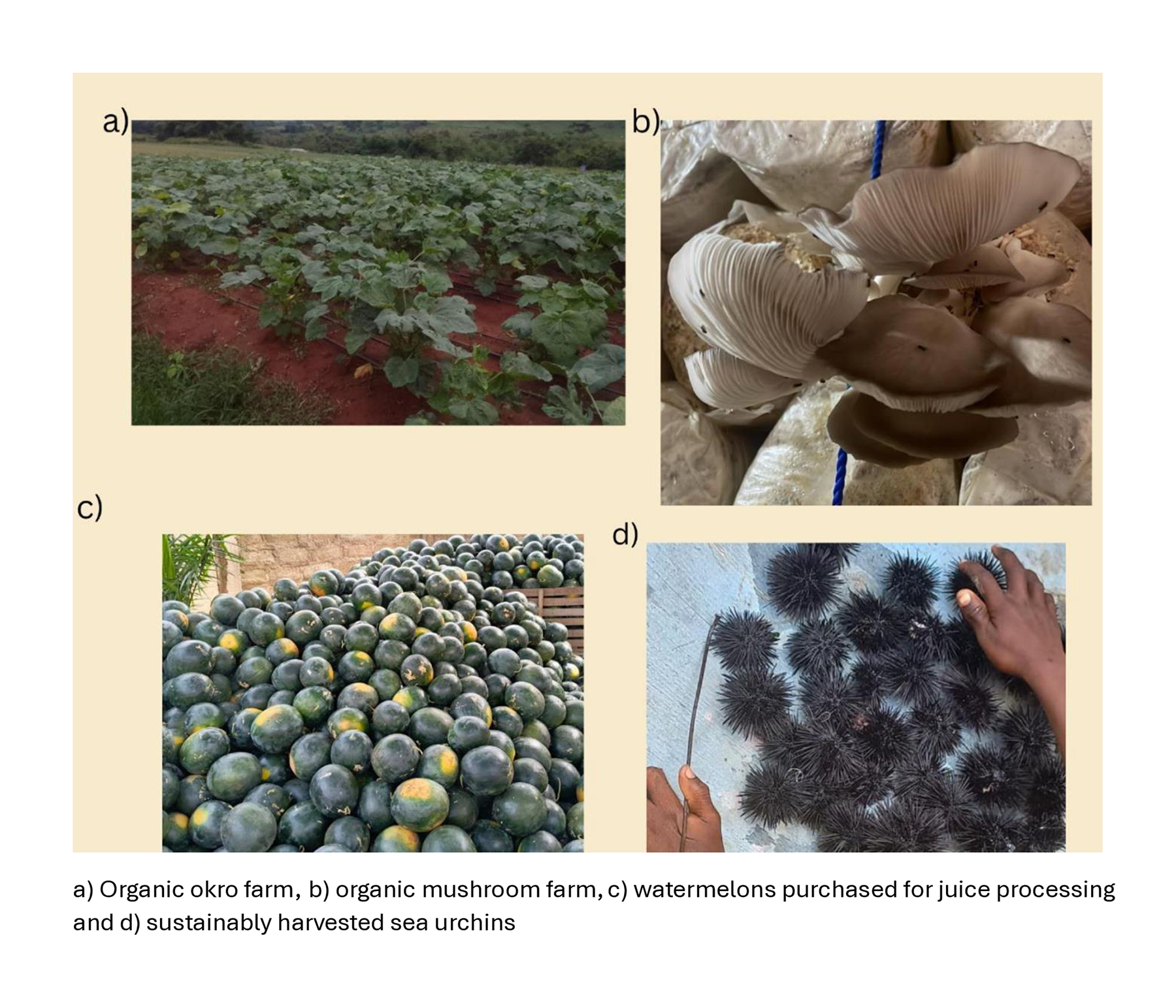
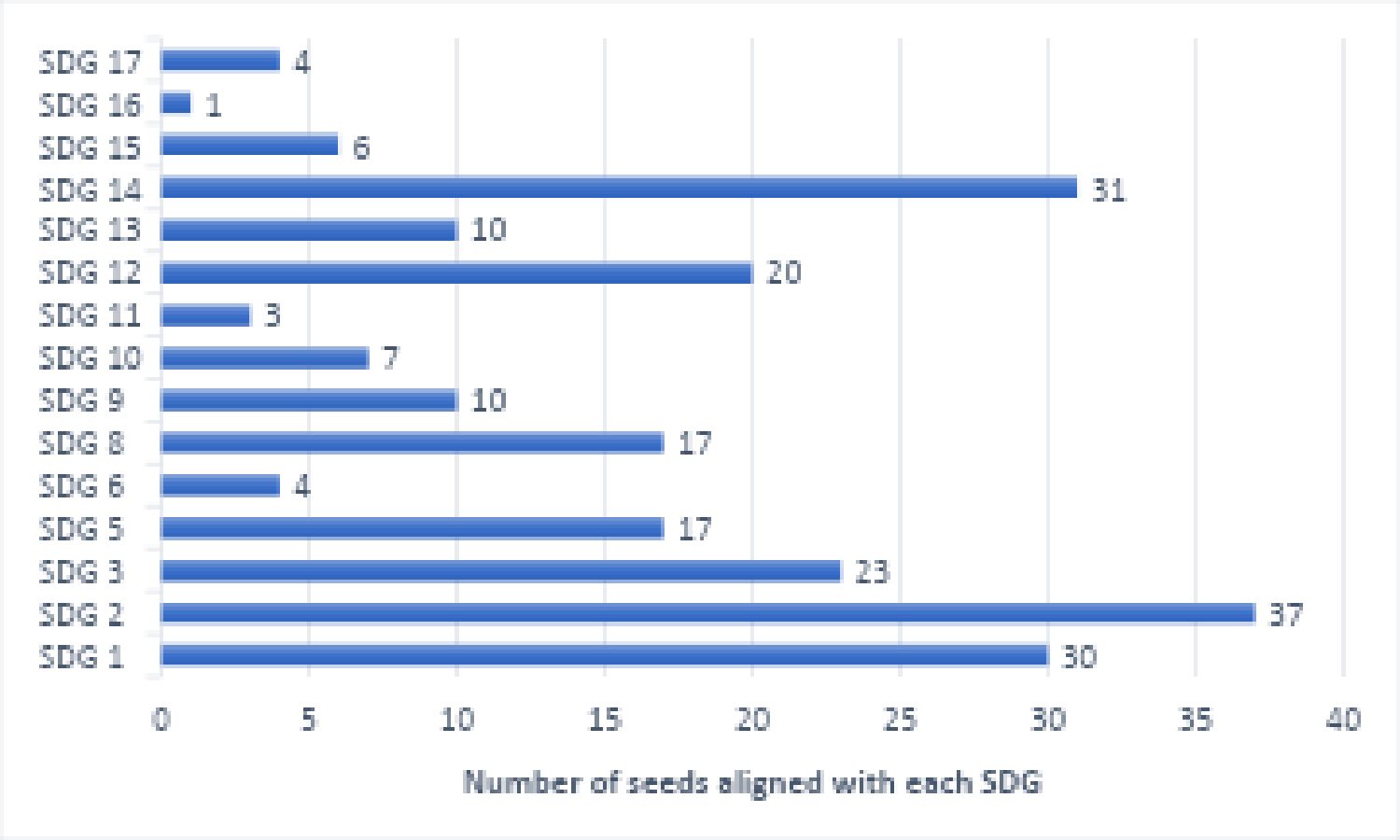
SDG 2 (Zero Hunger) emerged as the most frequently addressed goal, identified in 37 instances (Figure 1). These initiatives primarily aim to improve food security through enhanced food availability, access, and utilization (Target 2.1), agricultural productivity (Target 2.4), and farmer well-being (Target 2.3). Notable examples include the Ghana Tilapia Seed Project, which focuses on increasing fish production, and the Chorkor Oven initiative, which aims to improve fish-smoking efficiency and reduce post-harvest losses. In terms of market access, Lavitesse promotes Ghana-made rice to increase market availability and improve farmers’ incomes.
Food availability activities of the identified seeds.

Figure 1 Long description
Photographs of food production activities by the seed actors. (a) An organic okra farm; (b) mushroom farm; (c) watermelons ready to be processed into juice; and (d) seafood harvest.
SDG 14 (Life Below Water) was reported by 31 initiatives (Figure 2). SDG 14: Initiatives such as Blue Growth: Call to Action and Reporting of Illegal, Unreported, and Unregulated (IUU) Fishing focus on conserving marine biodiversity (Target 14.2) and promoting sustainable fishing practices (Target 14.4). Approximately 10 initiatives were dedicated specifically to ecological recovery to mitigate the near collapse of Ghana's small pelagic fisheries.
Distribution of seeds alignment across the SDGs.

Figure 2 Long description
This is a graph showing the distribution of seed activities and the SDGs they are addressing.
SDG 1 (No Poverty) also featured prominently, appearing in 30 initiatives. These efforts emphasize poverty reduction through economic empowerment and community-based solutions, primarily targeting Target 1.4 by improving equity and rights to economic resources. For instance, the Greater Accra Poultry Farmers Association enhances its members’ economic stability by reducing input costs and providing technical training.
SDG 3 (Good Health and Well-being) was represented in 23 initiatives, highlighting the critical link between health and food systems. Most of these initiatives aim to achieve Target 3.4 by reducing deaths from chronic NCDs. A primary example is the Meals4NCDs initiative, which addresses the double burden of malnutrition and NCDs through dietary interventions.
Other significant contributions were noted for SDG 12 (Responsible Consumption and Production), addressed by 20 initiatives such as Food for All, which redistributes surplus food to minimize waste, and SDG 5 (Gender Equality), targeted by 17 initiatives. Initiatives like The Invisible Fishers focus specifically on safeguarding women's roles within the fisheries sector and reducing gender disparities. In contrast, SDG 16 (Peace, Justice, and Strong Institutions) was the least represented, appearing only once in the sample. Partnerships for the Goals (SDG 17) was treated as a cross-cutting objective spanning all identified dimensions.
3.4. Co-occurrence of SDGs across the seeds
The analysis of SDG co-occurrence across the 80 food system seeds in Ghana showed that some goals were frequently co-contributed to. SDG 1 (No Poverty), SDG 2 (Zero Hunger), and SDG 14 (Life Below Water) appeared most often in combination with other goals. These were commonly linked to SDG 13 (Climate Action) and SDG 12 (Responsible Consumption and Production), indicating a shared focus on poverty reduction, food security, and environmental sustainability (Supplementary File 1). SDG 2 often appeared alongside SDG 8 (Decent Work and Economic Growth), highlighting how food system seeds create employment and income-generation opportunities.
On the other hand, SDG 4 (Quality Education), SDG 6 (Clean Water and Sanitation), and SDG 7 (Affordable and Clean Energy) were among the least frequently co-addressed. This shows that while these goals are important, they are not yet strongly integrated into how food system transformations are being approached. In general, the seeds tended to focus more on goals related to poverty, hunger, and the environment, with fewer connections to sectors like education, water, and energy.
3.5. The social, ecological, and economic dimensions of the goals and targets addressed by the seeds
Following Folke et al. (Reference Folke, Biggs, Norström, Reyers and Rockström2016)’s social–ecological classification, the SDGs addressed by the seeds were categorized into ecological, social, economic, and partnership dimensions. The analysis revealed that 55% of the seeds belonged to the social dimension, 25% to the ecological dimension, and 19% to the economic dimension, with the remaining 1% corresponding to Goal 17 (partnership).
4. Discussion
4.1. Summary of key findings
This study mapped how localized ‘seeds’ in Ghana align with the SDG framework to identify their potential as drivers of systemic food transformation. The seeds mapped addressed different aspects of the SDGs, it was observed that many of the seeds addressed SDG 2 (Zero Hunger) by enhancing food availability, improving agricultural practices, and fostering sustainable fisheries. The seeds play a crucial role in supporting the broader SDG agenda. For example, seeds targeting Zero Hunger (Goal 2) inherently contribute to Good Health and Well-being (Goal 3) by addressing nutritional outcomes. Similarly, interventions in Life Below Water (Goal 14) often have cascading effects on Sustainable Cities and Communities (Goal 11) through enhanced coastal resilience.
4.2. Interpretation of findings
These findings can be interpreted considering broader discussions on transformative change, which emphasize the need for systemic shifts across social, ecological, and economic domains to achieve sustainability outcomes, as highlighted by IPBES (Reference Díaz, Settele, Brondízio, Ngo, Guèze, Agard, Arneth, Balvanera, Brauman, Butchart, Chan, Garibaldi, Ichii, Liu, Subramanian, MiS, Díaz, Settele, Brondízio and Ngo2019). The diversity of seeds identified in this study reflects multiple entry points for transformation, particularly through localized interventions that engage with specific constraints within food systems. However, their concentration around certain domains, such as food security, also shows uneven engagement with the broader spectrum of sustainability challenges.
The prominence of seeds addressing SDG 2 (Zero Hunger) can be explained by examining the central role of food security in achieving broader sustainability and development goals, particularly in regions like Ghana, where food systems are both critical to livelihoods and vulnerable to environmental and socio-economic pressures (Sporchia et al., Reference Sporchia, Antonelli, Aguilar-martínez, Bach-faig, Caro, Davis, Sonnino and Galli2024). Food security is central to human health, productivity, and economic development, serving as a prerequisite for progress on other goals, such as SDG 3 (Good Health and Well-being) and SDG 8 (Decent Work and Economic Growth) (Sturesson et al., Reference Sturesson, Weitz and Persson2018). In Ghana, where agriculture employs nearly half the population and contributes significantly to GDP (Ecker, Reference Ecker2018), addressing food insecurity through seeds like the Ghana Tilapia Seed Project and the Feed the Future Ghana Fisheries Recovery Activity is crucial for bolstering resilience against environmental and economic shocks. Climate change and environmental degradation further underscore the need for such seeds, as they address systemic vulnerabilities through climate-resilient practices and resource-efficient technologies such as the FAO-Thiaroye Technique (FTT), ensuring sustainable food production (Awuni et al., Reference Awuni, Adarkwah, Ofori, Purwestri, Huertas Bernal and Hajek2023).
Additionally, these efforts contribute to economic growth by creating jobs, enhancing incomes, and reducing poverty, particularly in vulnerable communities. They also address inefficiencies within food systems, such as post-harvest losses and unequal access, through innovative practices like zero-waste approaches and responsible production, which align with SDG 12 (Responsible Consumption and Production). By targeting SDG 2, these seeds also support Ghana’s alignment with global and regional food security priorities, ensuring transformative progress across interconnected SDGs. This shows that seeds not only respond to food system challenges but also shape how such challenges are defined and prioritized by local actors. In this sense, seeds function as both interventions and signals, revealing how food system transformation is conceptualized in practice.
It was observed that neither SDG 4 (Quality Education) nor SDG 7 (Affordable and Clean Energy) was addressed by any of the 80 seeds identified. This observation may be attributed to several factors. First and foremost, the Seeds for a Good Anthropocene framework primarily focuses on food systems and environmental sustainability, leading to a prioritization of seeds addressing immediate challenges like food security and climate resilience over education and clean energy. Additionally, education and clean energy are often integrated into other goals, such as SDG 2 (Zero Hunger) and SDG 13 (Climate Action), where their contributions may be indirect and less explicitly framed. Gaps in policy prioritization and funding may also result in fewer dedicated innovations targeting these areas. Furthermore, measurement and categorization challenges could obscure seeds with educational or energy-related components, leading to their exclusion from these SDGs. These factors suggest that the absence of SDG 4 and SDG 7 reflects systemic prioritization and framing rather than a lack of relevance or importance.
5. Strengths and limitations
This research contributes to the growing body of literature on sustainable food systems by demonstrating how localized, community-driven seeds can drive transformative change. It underscores the interconnectedness of global sustainability challenges and the importance of tailored, context-specific solutions to achieve the SDGs. As the 2030 deadline approaches, this study highlights the urgency of leveraging the transformative potential of seeds to create a more equitable, resilient, and sustainable food future for Ghana and beyond.
Some limitations of this study include reporting bias. This was because, due to the small-scale nature of most of the seeds, their impact and the level of work they were doing were obtained during key informant interviews. Thus, there was the possibility that seeds could provide socially desirable responses. This bias was addressed by reviewing seed reports and conducting in-person visits to operational sites to confirm the types of work being done by the seeds.
6. Conclusion
This study highlights the extensive alignment of seeds within Ghana’s food and fisheries sectors with the SDGs, reflecting the multifaceted efforts to address critical challenges in food security, livelihoods, environmental sustainability, and gender equity. Among the SDGs, SDG 2 (Zero hunger) emerged as the most frequently addressed, highlighting the emphasis on improving food security. The notable focus on SDG 2 (Zero Hunger) further reflects the prioritization of food security, agricultural innovation, and sustainable food systems.
While the interconnectedness of the SDGs is evident, the analysis also emphasizes areas requiring greater attention, such as SDG 16 (Peace, Justice, and Strong Institutions) and SDG 17 (Partnerships for the Goals), which appeared less frequently. This highlights potential opportunities to strengthen collaborations and institutional frameworks that are critical for achieving sustainable development.
The findings of this paper provide a foundation for understanding how bottom-up seeds contribute to the SDGs and offer insights for policymakers, development practitioners, and researchers. By identifying trends and gaps in SDG alignment, this analysis emphasizes the need for integrated, cross-sectoral approaches that leverage synergies among goals to drive transformative change.
Supplementary material
The supplementary material for this article can be found at https://doi.org/10.1017/sus.2026.10068
Acknowledgements
The authors are grateful to all the study participants.
Author contributions
S.B.K., E.M.B., and K.B. contributed to the study design. S.B.K., E.M.B., and K.B. designed data collection tools. D.E.L.-S., J.W., and S.B.K. conducted initial analysis and coding. D.E.L.-S. and J.W. wrote the first draft of the manuscript with routine critical reviews by S.B.K., E.M.B., and K.B. All authors then critically reviewed the following versions. All authors have read and approved the final version of the paper and its submission.
Funding statement
This study was fully funded by the IDRC (Grant number – 1099834) as part of the Seeds of Good Anthropocene: Fostering food transformation in Africa.
Competing interests
All authors in this manuscript declare none.
Data availability
All data generated or analysed during this study are included in this published article.


 Open access

