

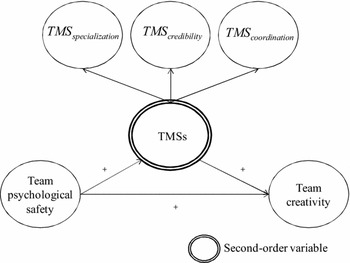
Creativity and innovation represent crucial means by which organisations can respond to change and proactively shape their business environments (Kaplan, Brooks-Shesler, King, & Zaccaro, Reference Kaplan, Brooks-Shesler, King, Zaccaro, Mannix, Goncalo and Neale2009). Creativity is often defined as the development of novel and useful ideas (Amabile, Reference Amabile1996; Kasof, Reference Kasof1995). Novel ideas can associate with products, services, work procedures or practices, and can differentiate the degree to which the ideas reflect radical or incremental deviations from the status quo (Shalley, Zhou, & Oldham, Reference Shalley, Zhou and Oldham2004; Somech & Drach-Zahavy, Reference Somech and Drach-Zahavy2013). In this study, novel ideas are regarded as a new and adequate contribution in the development of research and development (R&D). Existing streams of creativity research indicate that cognitive process, personality, and contextual variables are important factors that influence team creativity (e.g., Amabile, Reference Amabile1996; Kurtzberg & Amabile, Reference Kurtzberg and Amabile2001). In this regard, this study adopts the suggestions of Kurtzberg and Amabile (Reference Kurtzberg and Amabile2001) to explore and elaborate the interdependent relationships of contextual variable (team psychological safety), cognitive process (transactive memory systems [TMSs]), and team creativity, and thereby proposes hypothesised relationships derived from Ren and Argote (Reference Ren and Argote2011), described as: contextual factor → cognitive process → team creativity. Additionally, this study also suggests that contextual factor may have a direct effect on team creativity. Figure 1 describes our research model.
Research model.
The Role of Team Psychological Safety on Creativity
Despite the apparent importance of climate in shaping creativity, a number of questions remain unanswered (Mathisen & Einarson, Reference Edmondson2004). It is unclear what the limitations are on the generalisability of the predictive relationships between climate and creativity (Hunter, Bedell, & Mumford, Reference Hunter, Bedell and Mumford2007). For example, the relationship between non-threatening psychological climate and team creativity remains inconsistent in the literature. The meta-analyses of Hülsheger, Anderson, and Salgado (Reference Hülsheger, Anderson and Salgado2009) reported that team psychological safety exhibits only a weak, positive but non-significant relationship with team creativity. In contrast, some studies supported a significantly positive relationship between team psychological safety and team creativity (e.g., Baer & Frese, Reference Baer and Frese2003; Gilson & Shalley, Reference Gilson and Shalley2004; Leonard & Swap, Reference Leonard and Swap1999; Mueller & Cronin, Reference Mueller, Cronin, Mannix, Goncalo and Neale2009; Wilkens & London, Reference Wilkens and London2006). Because there is an inconsistent relationship between team psychological safety and team creativity, this study tries to resolve the lack of clarity surrounding this relationship by considering a mediating effect that is contingent upon TMSs.
The Roles of TMSs on Creativity
As mentioned in our previous discussion, the relationship between psychological safety and team creativity is inconsistent and needs to be further examined. R&D is knowledge intensive and requires team members to contribute their individual knowledge and expertise. In this regard, developing TMSs (Wegner, Reference Wegner, Mullen and Goethals1987) to effectively manage team members’ knowledge may be helpful for enhancing team creativity. The concept of TMSs was initially introduced by Wegner (Reference Wegner, Mullen and Goethals1987) as a mechanism to illustrate how team members can rely on others for memory aids. TMS describes the specialised division of cognitive labour for learning, remembering, and communicating knowledge from different domains (Lewis, Reference Lewis2004; Wegner, Reference Wegner, Mullen and Goethals1987). Through TMSs, team members can construct a shared awareness of knowing who knows what. When team members need information but cannot recall it themselves or mistrust their own memories, they can turn to each other for help (Moreland & Myaskovsky, Reference Moreland and Myaskovsky2000). From this perspective, this study argues that whereas team psychological safety affects team creativity, simply perceiving psychological safety may not suffice if R&D team members are unable to develop TMSs. This argument is explained below. Psychological safety supports a sense of openness to broad ideas, and thereby new suggestions and divergent perspectives are not only permitted but also encouraged in this climate (Bradley, Postlethwaite, Klotz, Hamdani, & Brown, Reference Bradley, Postlethwaite, Klotz, Hamdani and Brown2012). From this perspective, R&D team members who perceive psychological safety are likely to freely exchange and communicate with each other regarding their knowledge and perspectives. Hollingshead (Reference Hollingshead2001) indicated that TMSs begin to develop as soon as members understand something about one another's expertise. Peltokorpi (Reference Peltokorpi2008) also suggested that efficient TMSs depend on interaction with each other and the process of knowledge exchange. Thus, psychological safety-induced interactions and knowledge exchange may enable team members to develop a collective awareness of who knows what, as in Wegner's (Reference Wegner, Mullen and Goethals1987) TMSs. Thus, the relationship between team psychological safety and TMSs may be expected to be positive. As TMSs are developed, team members may get access to a greater amount of task-relevant expertise, and such expertise can be efficiently brought to bear on group tasks (Lewis, Belliveau, Herndon, & Keller, Reference Lewis, Belliveau, Herndon and Keller2007) and thereby increase the opportunity to new idea generation. Gino, Argote, Miron-Spektor, and Todorova (Reference Gino, Argote, Miron-Spektor and Todorova2010) and Ren and Argote (Reference Ren and Argote2011) also found that when TMSs are well developed, more novel and useful ideas and solutions may be generated, thereby enhancing team creativity. Thus, the relationship between TMSs and team creativity may be expected to be positive. Given the two expected relationships, considering the concept of TMSs in explaining the relationship between team psychological safety and team creativity may allow one to explore why team psychological safety may be insufficient to facilitate team creativity.
Although team psychological safety has been shown to improve team performance through team learning (e.g., Carmeli, Brueller, & Dutton, Reference Carmeli, Brueller and Dutton2009; Higgins, Ishimaru, Holcombe, & Fowler, Reference Higgins, Ishimaru, Holcombe and Fowler2012; Hirak, Peng, Carmeli, & Schaubroeck, Reference Hirak, Peng, Carmeli and Schaubroeck2012; Kostopoulos & Bozionelos, Reference Kostopoulos and Bozionelos2011; Wong, Tjosvold, & Lu, Reference Wong, Tjosvold and Lu2010), few studies have examined whether team psychological safety is applicable to the improvement of team creativity through TMSs. Thus, our study may bridge the gap by developing a model to explore the links between team psychological safety, TMSs, and team creativity. This exploration may also help to expand the theories of team psychological safety and TMSs on creativity research.
Literature Review
Effect of Team Psychological Safety on Team Creativity
A team is considered safe for interpersonal risk taking when the environment provides a sense of confidence such that no member perceives that he/she will be rejected, embarrassed, or punished for speaking up (Edmondson, Reference Edmondson2004). Teams lacking psychological safety are less likely to engage in the behavioural hallmarks of creativity (Edmondson & Mogelof, Reference Edmondson, Mogelof and Leigh2008). Team members may be unwilling to speak up for their perspectives because they are afraid of comments or criticism by others (Klein & Dologite, Reference Klein and Dologite2000; Nunamaker, Dennis, Valacich, Vogel, & George, Reference Nunamaker, Dennis, Valacich, Vogel and George1991). Kurtzberg and Amabile (Reference Kurtzberg and Amabile2001) suggested that creativity can be encouraged within work groups through work autonomy, mutual openness to the expression of ideas, constructive challenges to new ideas, and shared goals and commitments. When psychological safety exists in teams, team members may show a mutual openness to ideas and do not criticise and attack these ideas. The willingness to think of new ideas, explore novel directions, and behave creatively may require the safety net provided by a climate of psychological safety because the process of exploration can be risky (Kark & Carmeli, Reference Kark and Carmeli2009). Previous studies (i.e., Gilson & Shalley, Reference Gilson and Shalley2004; Mueller & Cronin, Reference Mueller, Cronin, Mannix, Goncalo and Neale2009; Wilkens & London, Reference Wilkens and London2006) have supported a positive relationship between team psychological safety and team creativity. Therefore, this study proposes the following hypothesis:
H1: Team psychological safety is positively associated with team creativity.
Team Psychological Safety and TMSs
The structure of a TMS
The theory of TMSs, as a theory of group cognition, describes the specialised division of cognitive labour for learning, remembering, and communicating knowledge from different domains (Wegner, Reference Wegner, Mullen and Goethals1987). Thus, TMSs are considered a type of socially shared cognition (Lewis & Herndon, Reference Lewis and Herndon2011; Moreland, Argote, & Krishnan, Reference Moreland, Argote, Krishnan, Nye and Brower1996). Specialisation (TMSspecialisation), credibility (TMScredibility), and coordination (TMScoordination) reflect the distributed, cooperative memory characteristics of TMSs (Liang, Moreland, & Argote, Reference Liang, Moreland and Argote1995; Moreland & Myaskovsky, Reference Moreland and Myaskovsky2000; Moreland et al., Reference Moreland, Argote, Krishnan, Nye and Brower1996). TMSspecialisation refers to the tendency of team members to develop deep knowledge in their individual domains. TMScredibility refers to the degree to which team members trust each other's knowledge. TMScoordination refers to the ability of team members to coordinate their knowledge and efforts effectively. Team members are likely to engage with three characteristics of TMSs as below. Team members initially learn something about other members’ expertise based on expert indication (e.g., diplomas, roles, or stereotypes) and subsequently refine their understanding of who knows what from repeat interactions (Lewis et al., Reference Lewis, Belliveau, Herndon and Keller2007; Peltokorpi, Reference Peltokorpi2008). When common understanding regarding member-expertise associations is well developed over time, team members divide up knowledge responsibilities for knowing and remembering knowledge related to their domain of expertise (Lewis, Reference Lewis2004; Peltokorpi, Reference Peltokorpi2008). After team members accept knowledge responsibilities, their responsibilities enable team members to further develop deep, specialised expertise in their domains and thereby enact TMSspecialisation (Lewis, Reference Lewis2003, Reference Lewis2004). When team members understand who is responsible for knowing and remembering what expertise, they mutually rely on each other's expertise so that they can have all of the knowledge required to accomplish tasks and thereby enact TMScredibility (Lewis, Reference Lewis2003, Reference Lewis2004). A common understanding regarding member-expertise associations allows team members to quickly access specialised knowledge and helps them to better anticipate how other members will act and thereby improve task coordination and enact TMScoordination (Cannon-Bowers, Salas, & Converse, Reference Cannon-Bowers, Salas, Converse and Castellan1993; Lewis, Reference Lewis2004).
TMSs can work because team members consider each other to be external memory aids (Akgün, Byrne, Keskin, Lynn, & Imamoglu, Reference Akgün, Byrne, Keskin and Lynn2006). When TMSs are developed, team members can construct a shared awareness of who knows what as external memory (Akgün et al., Reference Akgün, Byrne, Keskin and Lynn2006; Peltokorpi, Reference Peltokorpi2008). When team members need information but cannot recall it themselves or mistrust their own memories, they can utilise the external memory of each other for help (Moreland & Myaskovsky, Reference Moreland and Myaskovsky2000). For example, a R&D member does not need to specialise in the marketing area when the R&D team has developed TMSs. Through the shared awareness of who knows what, the R&D member can know who has the deep, specialised marketing knowledge that he or she needs and retrieves the knowledge needed from that member. Furthermore, to jointly solve R&D problems, the R&D member and the member who specialises in the marketing area can collectively retrieve and coordinate needed knowledge involving R&D and the market stored in their individual memories.
The Relationship Between Team Psychological Safety and TMSs
When a team has a psychologically safe climate, team members not only feel safe in proposing new ideas or useful approaches (Edmondson, Reference Edmondson1999, Reference Edmondson2002), but are also willing to provide and share resources to help in the application of new ideas (Burke et al., Reference Burke, Stagl, Klein, Goodwin, Salas and Halpin2006; Edmondson, Kramer, & Cook, Reference Edmondson, Kramer and Cook2004). West (Reference West2002) indicated that employees who work in non-threatening and supportive environments can take more risks in proposing their ideas than those who work in an environment where proposing their ideas will be attacked or penalised. Because psychological safety supports open and trustful interactions within a work environment (Baer & Frese, Reference Baer and Frese2003; Edmondson, Reference Edmondson1999), Bradley et al. (Reference Bradley, Postlethwaite, Klotz, Hamdani and Brown2012) and Edmondson et al. (Reference Edmondson, Kramer and Cook2004) revealed that team members are likely to contribute more ideas, discussions should be richer, and the team should have more time to spend on problem solving and the achievement of shared goals. Similarly, Zhang, Hempel, Han, and Tjosvold (Reference Zhang, Hempel, Han and Tjosvold2007) indicated that employees who work in a supportive climate for innovation (e.g., psychological safety) are likely to freely exchange and communicate with each other's task assignments, expertise, and solutions. In a psychologically safe environment, team members may be more willing to propose their perspectives, knowledge or skills, and feel comfortable in expressing and discussing these propositions with one another freely. Accordingly, psychological safety may provide more opportunities for team members to learn about each other's expertise through psychological safety-induced discussions, thereby facilitating TMSspecialisation.
In addition, Edmondson (Reference Edmondson1999) indicated that a psychologically safe team climate is characterised by the absence or presence of a blend of trust or respect for each other's competence and of caring about each other as people. Schein (Reference Schein1985) and Edmondson et al. (Reference Edmondson, Kramer and Cook2004) argued that psychological safety helps people overcome the defensiveness that arises when people are presented with perspectives that disconfirm their expectations or hopes. As a result, people are likely to open their mind to trust and accept diverse perspectives from others. In addition, Carmeli et al. (Reference Carmeli, Brueller and Dutton2009) pointed out that when employees engage with one another respectfully, they reflect an image that is positive and valued. As a consequence, employees can create a sense of social dignity that confirms each other's worth and sense of competence (Dutton, Reference Dutton2003). From these perspectives, team members may become more receptive to others’ ideas and knowledge when experiencing psychological safety and thereby increase their willingness to trust and rely on each other's expertise in teams, thereby facilitating TMScredibility.
Furthermore, team members have different knowledge and perspectives that may lead to task conflict. Task conflict is task oriented and is emphasised in judgmental differences regarding the best solutions to achieve objectives (Amason, Reference Amason1996; Jehn, Reference Jehn1995). Team psychological safety is a sense of openness that the team will not embarrass or reject someone for speaking up (Edmondson, Reference Edmondson1999, 2003). Bradley et al. (Reference Bradley, Postlethwaite, Klotz, Hamdani and Brown2012) indicated that psychological safety should allow task conflict to occur in an environment where it would not be perceived as threatening and not lead to frustration or hurt feelings. In this regard, team members may be willing to communicate each other's task-relevant knowledge without endangering the harmony of the team. Accordingly, team members may amplify mutual understanding and increase the likelihood of coordinating each other's diverse knowledge. Kostopoulos and Bozionelos (Reference Kostopoulos and Bozionelos2011) and De Dreu (Reference De Dreu2006) also argued that task conflict may enable team members to integrate information and generate new insights for developing task-related capabilities through psychological safety-induced communication without the fear of negative criticism. From these perspectives, a non-threatening psychological climate, where team members comfortably communicate and reflect on each other's knowledge, is thus expected to be conducive to TMScoordination.
Integrating these findings regarding the relationships between team psychological safety and three dimensions of TMSs (TMSspecialization, TMScredibility, TMScoordination), this study proposes the following hypothesis:
H2: Team psychological safety is positively associated with TMSs.
TMSs and Team Creativity
Teams with well-developed TMSs exhibit differentiation (TMSspecialisation); different members specialise in learning, remembering, and sharing different knowledge (Ren & Argote, Reference Ren and Argote2011). Such differentiation reduces the cognitive load of each individual while providing the team with access to a larger pool of information across domains (Brandon & Hollingshead, Reference Brandon and Hollingshead2004; Farr, Sin, & Tesluk, Reference Farr, Sin, Tesluk and Shavinina2003; Hollingshead, Reference Hollingshead, Neale, Mannix and Gruenfeld1998). The greater the number of pockets of novel, potentially diverse information that can be accessed, the greater is the probability of creativity occurring (Baer, Reference Baer2010). In addition, Ren and Argote (Reference Ren and Argote2011) indicated that the product creativity within teams is improved when team members mutually trust their teammates’ expertise (TMScredibility). Mostert (Reference Mostert2007) investigated team creativity sessions and found that if there is openness between the session participants, they will appreciate each other's expertise, the most daring, new and creative ideas can be expressed, and the group will produce a flow of these ideas. Furthermore, TMScoordination may lead to creativity in teams because team members may integrate task-relevant knowledge more smoothly and effectively and thereby generate more novel ideas or approaches regarding task performance. Bolinger, Bonner, and Okhuysen (Reference Bolinger, Bonner, Okhuysen, Mannix, Goncalo and Neale2009) and Tiwana and McLean (Reference Tiwana and McLean2005) indicated that the willingness of individuals to integrate and coordinate the diverse contributions and perspectives of other group members is equally valuable in facilitating creativity in groups.
According to these findings regarding the relationships between the three subdimensions of TMSs (TMSspecialisation, TMScredibility, TMScoordination) and team creativity, this study proposes the following hypothesis:
H3: TMSs are positively associated with team creativity.
According to the theory of team psychological safety, Edmondson (Reference Edmondson1999, Reference Edmondson2004) found that team psychological safety can affect team performance (team outcome) indirectly through team learning (team cognition). This finding may be labelled as a causal link: team psychological safety → team cognition → team outcome. Inspired by this causal link, this study will state that team psychological safety may influence TMSs (team cognition) and, in turn, facilitate team creativity (team outcome) by integrating hypothesis H2 and hypothesis H3. Therefore, this study proposes the following hypothesis:
H4: TMSs mediate the relationship between team psychological safety and team creativity.
Research Methodology
Participants
This study collected data from a leading Taiwanese semiconductor engineering company that has expertise in product and process technology for semiconductor manufacturing. It provides technical analysis and consulting services to improve the developing process on IC packaging. The company has 40 R&D teams that comprise 200 team members. A total number of 110 R&D members from 40 teams returned completed questionnaires. Thus, the response rate was 55% in this study. The average number of participants per team was 2.75 people, and the range of the number of participants per team was between two and five. Most of the respondents were male (66%), between the ages of 30 and 40 (52%), and they had been with the company for between 1 and 5 years (45%). In terms of their educational level, 51% of the respondents graduated from college and 40% graduated from graduate school.
Design and Procedures
The studyFootnote 1 used a questionnaire survey to collect data from a leading Taiwanese semiconductor engineering company, as mentioned previously. The company has 40 R&D teams comprising 200 team members. To reduce anxiety regarding participants’ anonymity, the study attached a statement to each questionnaire indicating that: (1) the research was academic and responses would be treated anonymously; (2) the results of the study would not be reported to the company; (3) the results of the study may be valuable to others interested in the theory and practice of team creativity, and their participation was very important. We contacted five senior R&D members to ask for help. After describing the importance of the study, the senior R&D members were willing to help us. For the sake of convenience, the senior R&D members suggested that we let them distribute the questionnaire to each of the R&D members, and we asked each R&D member to return the questionnaire in one week. When the senior R&D members distributed the questionnaires, they also assigned one member per team to help them collect and put completed questionnaires into one envelope. To ensure the team members could be linked to each team, 40 envelopes with different colours were used to represent different teams when collecting questionnaires in order to confirm how many team members in each of the 40 teams expressed their opinions. After one week, the senior R&D members collected 40 envelopes from assigned members.
Measures
The study examined the relationships between team psychological safety, TMSs, and team creativity in R&D teams. All variables in our research model were measured using multi-item, 5-point Likert scales and were operationalised at the team level. Team psychological safety was measured using Edmondson's (Reference Edmondson1999) seven-item scale, which assesses the extent of the shared belief that the team is safe for interpersonal risking taking. TMSs were operationalised as a second-order construct measured reflectively by three first-order constructs for TMSspecialisation, TMScredibility, and TMScoordination from Lewis (Reference Lewis2003), which assess the extent of members’ perceptions of team-level specialisation, credibility, and coordination. Team creativity was measured using the three-item scale of Tiwana and McLean (Reference Tiwana and McLean2005), which assesses the creativity of the team's processes. According to the recommendations of Chin and Gopal (Reference Chin and Gopal1995), this study used the repeated indicators approach, which assigns to TMSs all of the indicators of TMSspecialisation, TMScredibility, and TMScoordination. The repeated indicators approach (or labelled hierarchical component model) is becoming an increasingly popular approach when estimating higher-order constructs with PLS (Hair, Hult, Ringle, & Sarstedt, Reference Hair, Hult, Ringle and Sarstedt2014; Wetzels, Odekerken-Schröder, & van Oppen, Reference Wetzels, Odekerken-Schröder and van Oppen2009). A higher-order construct contains several layers of constructs and involves a higher level of abstraction (Hair et al., Reference Hair, Hult, Ringle and Sarstedt2014). The procedure of estimation is that a higher-order construct is directly measured by indicators of all its underlying lower-order constructs (Becker, Klein, & Wetzels, Reference Becker, Klein and Wetzels2012; Wetzels et al., Reference Wetzels, Odekerken-Schröder and van Oppen2009). In this study, the second-order construct (TMSs) consists of three first-order constructs (TMSspecialisation, TMScredibility, and TMScoordination), each with four, three, and three indicators respectively. Thus, TMSs can be specified using all (10) indicators of TMSspecialisation, TMScredibility, and TMScoordination. As a consequence, the indicators are used twice: (1) for TMSs and (2) for TMSspecialisation, TMScredibility, and TMScoordination. All measures were translated into Chinese by the author; this Chinese version was then translated back into English by an independent native English speaker who understands Chinese. The author and a native English speaker compared the back-translated English version and the original English version to examine whether discrepancies existed between the two versions, and no discrepancy was found between the two versions. Thus, this study used the Chinese version to collect data. The questionnaire was reviewed by a panel of technology experts in a meeting to ensure clarity and content validity, and the questionnaire was then revised based on the review opinions of these experts. Table 1 shows the final version of measurement items.
Measurement Items

The Method of Analyses
Our research model was estimated using partial least squares (PLS). PLS can be used for theory confirmation, indicating where relationships may or may not exist and suggesting ideas for subsequent testing (Chin, Reference Chin and Marcoulides1998). PLS offers the advantage of more flexibility in processing typical practical data where the number of cases is limited (Sosik, Kahai, & Piovoso, Reference Sosik, Kahai and Piovoso2009). Due to the small sample size (40 teams) used in this study, we decided to use PLS to evaluate the relationship described in our research model. To reduce concerns about a small sample size, Ringle, Sarstedt, and Straub (Reference Ringle, Sarstedt and Straub2012) suggested that researchers use power tables from regression (e.g., Cohen, Reference Cohen1992) to determine minimum sample size requirements. In this study, the effect size (ES) for R 2 teamcreativity was calculated based on Cohen's (Reference Cohen1992) formula of the ES index with respect to squared multiple correlations. Using Cohen's ES index, the effect size (ES) for R 2 teamcreativity was .25 and is labelled medium to large ES. Given power = 0.8 for α = 0.05 and two independent variables (team psychological safety and TMSs), the required sample size is 30 for a medium ES and 67 for a large ES. Thus, our sample size of 40 teams is acceptable for a medium to large ES. This study assessed the measurement model and structural model in a PLS analysis and used smartPLS software (Ringle, Wende, & Will, Reference Ringle, Wende and Will2005) to estimate the hypothesised relationships in our research model.
Results
Measurement Model Assessment
Data aggregation
This study collected data from multiple respondents for each R&D team, and the data for each R&D team were aggregated after assessing the within-team agreement. To assess the within-team agreement, intraclass correlation coefficients (ICCs) and the rwg(j) index were used to test whether membership in the same team leads to answers that are more similar (Faraj & Sproull, Reference Faraj and Sproull2000). The ICC values reported in Table 2 range from 0.30 to 0.53, and all were significant at the p < .001 level, as suggested by Edmondson (Reference Edmondson1999). The rwg(j) values in Table 2 range from 0.92 to 0.98, and all were above the 0.7 threshold suggested by George (Reference George1990). Thus, ICCs and rwg(j) indicate sufficient within-team agreement to justify the creation of a team-level data set merging team means to create team-level variables.
ICCs and rwg(j)
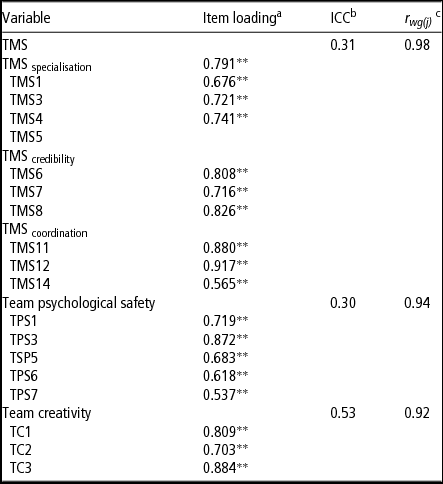
Note: a**p < .01 level; bAll ICCs are significant at the p < .001 level; cAll rwg(j) exceed the criterion of 0.7.
Common method bias analysis
Obtaining all variables from a single source of data may raise concerns about potential common method bias. This study conducted the Harman's one-factor test recommended by Podsakoff, MacKenzie, Jeong-Yeon, and Podsakoff (Reference Podsakoff, MacKenzie, Jeong-Yeon and Podsakoff2003) to evaluate the magnitude of common method bias. The results from this test showed that five factors are extracted that accounted for 70% of the total variance, with the first factor explaining 29%. That is, no single factor emerged, nor did one factor account for the bulk of the covariance. The results of the Harman's one-factor test suggest little threat of common method bias for our data. In addition, the results of our model, reported below, indicate different levels of significance for path coefficients. If a self-report survey itself is a method that introduces shared bias into the measurement of variables, we should find a significant level of correlation among all variables (Podsakoff et al., Reference Podsakoff, MacKenzie, Jeong-Yeon and Podsakoff2003; Spector, Reference Spector2006). However, our results show that one path is significant at the .01 level; another path is significant at the .05 level; and the other path is non-significant. These findings may not support the statement that common method bias is a universal inflator that threatens all relationships among the variables in our model. Thus, based on the suggestions of Patnayakuni, Rai, and Seth (Reference Patnayakuni, Rai and Seth2006), the fact that these different levels of significance are observed further reduces concerns regarding common method bias.
Measurement model quality
In the measurement model, item reliability and convergent and discriminant validity were assessed for all variables. The item loadings should be greater than .5 and demonstrate significance (Djamasbi, Strong, & Dishaw, Reference Djamasbi, Strong and Dishaw2010). This study first performed a PLS analysis and found that some items were inappropriateFootnote 2 because the item loadings were small and non-significant. After dropping these items, this study performed a PLS analysis and again found that each item was loaded highly on its respective variable and that all were significant at the p < .01 level (see Table 2). The values of Cronbach's alpha range from 0.74 to 0.82 (see Table 3). Thus, this study confirmed that the measurement items exhibit good item reliability. In addition, composite reliability (CR) and average variance extracted (AVE) were used to examine the convergent validity. The CR and AVE values should exceed the 0.6 and 0.5 threshold recommended by Bagozzi and Yi (Reference Bagozzi and Yi1988). Although the AVE of TMSs is smaller than 0.5, the CR of TMSs exceeds 0.6 (see Table 3). Thus, we concluded that the measurement model demonstrates acceptable convergent validity. Furthermore, this study assessed discriminant validity by comparing the square root of the AVE of each construct and its correlation with other constructs (Bock, Zmud, Kim, & Lee, Reference Bock, Zmud, Kim and Lee2005). The square root of the AVE for each construct is greater than the levels of correlations involving the construct (see Table 3). Thus, this study confirmed that the measurement model demonstrates good discriminant validity.
Means, Standard Deviations, Convergent Validity, and Discriminant Validity
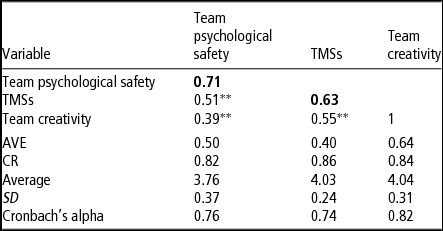
Note: a The numbers shown in bold type in the diagonal row are the square roots of the average variance extracted values; b **Correlation is significant at the .01 level. AVE = average variance extracted; CR = composite reliability.
In addition, Figure 2 shows that the second-order construct (TMSs) has a strong relationship with its first-order constructs, including TMSspecialisation (0.848), TMScredibility (0.876), and TMScoordination (0.747). Hence, TMSspecialisation, TMScredibility, and TMScoordination are sufficiently highly correlated with TMSs, and TMSs explain more than 50% of the variance in TMSspecialisation, TMScredibility, and TMScoordination. These findings also suggest that establishing TMSs as a second-order construct should be feasible in reflecting the three characteristics of the TMSs.
Results of overall effects in research model.

Structural Model Assessment
Structural model quality
The quality of a structural model can be assessed by a global criterion of goodness-of-fit (GoF). GoF is defined as the geometric mean of the average communality and the average R 2 and can be meant as an index for validating the PLS model globally (Tenenhaus, Vinzi, Chatelin, & Lauro, Reference Tenenhaus, Vinzi, Chatelin and Lauro2005). Wetzels et al. (Reference Wetzels, Odekerken-Schröder and van Oppen2009) integrated GoF and effect sizes for R 2 to propose relative GoF values including GoFsmall = 0.1, GoFmedium = 0.25, GoFlarge = 0.36. These may be considered baseline values for validating the PLS model. For our model, we calculated a GoF value of 0.43, which exceeds the cut-off value of 0.36 for large effect sizes of R 2. This allows us to confirm that the structural model exhibits a good prediction quality.
The hypothesised relationships
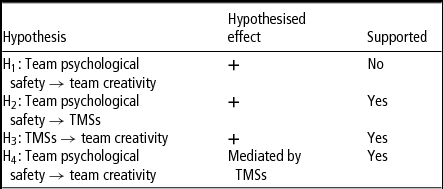
Following the suggestions of Hair, Ringle, and Sarstedt, (Reference Hair, Ringle and Sarstedt2011), this study performed a bootstrapping procedure (with 5,000 subsamples) to test the statistical significance of each path coefficient using t tests. As indicated in Figure 2, team psychological safety did not exert a significant positive effect on team creativity (β = 0.235, p > .05). Thus, H1 was not supported. In addition, team psychological safety had a significant positive effect on TMSs (β = 0.595, p < 0.01), and TMSs (β = 0.455, p < 0.01) had a significant positive effect on team creativity. Thus, H2 and H3 are supported. Although TMSs are regarded as a higher-order construct, further understandings regarding what characteristics of TMSs are affected by team psychological safety and what characteristics of TMSs affect team creativity may provide more implications for theory on TMSs. To understand what characteristics of TMSs are affected by team psychological safety and what characteristics of TMSs affect team creativity, we performed a PLS analysis. Our results show that team psychological safety significantly exerts the largest effect on TMScoordination (0.654), followed by TMSspecialisation (0.559) and TMScredibility (0.425). In addition, TMSspecialisation (0.563) exhibits the largest effect on team creativity, followed by TMScoordination (0.115) and TMScredibility (0.106).
To examine the mediating effect of TMSs, this study performed additional PLS analyses, in line with the suggestions of Baron and Kenny (Reference Baron and Kenny1986). We found that: (1) the direct effect of team psychological safety on team creativity is positively significant (see Figure 3); (2) team psychological safety exerts a positively significant effect on TMSs, and TMSs exert a positively significant on team creativity (see Figure 4); and (3) the path coefficient of team psychological safety is reduced from 0.588 (Figure 3) to 0.235 (Figure 2) and has a non-significant effect on team creativity when TMSs are considered. Furthermore, the mediating effect of TMSs was also tested using the method suggested by Hayes (Reference Hayes2009, Reference Hayes2013, model 4). The indirect effect of team psychological safety on team creativity via TMSs is positive and significant (indirect effect = 0.198, LCI = 0.010, UCI = 0.424) because the interval between LCI and UCI does not include zero. The direct effect of team psychological safety on team creativity is non-significant (direct effect = 0.131, LCI = -0.159, UCI = 0.421). The methods of Baron and Kenny (Reference Baron and Kenny1986) and Hayes (Reference Hayes2009, Reference Hayes2013) show that TMSs fully mediate the relationship between team psychological safety and team creativity. Thus, H4 is supported. Table 4 summarises the results of our hypothesis testing.
Results of direct effect.
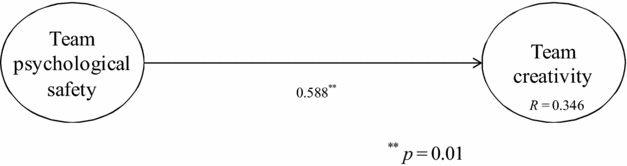
Results of indirect effects.

Summary of the Hypothesis Tests
Discussion
This study examined the relationships between team psychological safety, TMSs, and team creativity. According to our empirical findings in the context of R&D teams, the link of team psychological safety → TMSs → team creativity was supported. Although there are inconsistent findings between team psychological safety and team creativity (e.g., Baer & Frese, Reference Baer and Frese2003; Gilson & Shalley, Reference Gilson and Shalley2004; Hülsheger et al., Reference Hülsheger, Anderson and Salgado2009; Leonard & Swap, Reference Leonard and Swap1999; Mueller & Cronin, Reference Mueller, Cronin, Mannix, Goncalo and Neale2009; Wilkens & London, Reference Wilkens and London2006), we resolved the lack of clarity surrounding this relationship by considering a mediating effect of TMSs. Thus, our results may help to expand the theory of team psychological safety and TMSs on creativity research. Our study also provides implications for discussion.
Relationship Between Team Psychological Safety and Team Creativity
According to the results of this study, this study initially confirmed that team psychological safety could facilitate team creativity when TMSs are developed in the teams. However, the relationship between team psychological safety and team creativity was fully mediated by TMSs. Accordingly, this study may conclude that team psychological safety can facilitate TMSs and, in turn, improve team creativity. Our results indicated that TMSs should not be ignored with respect to explaining the effect of team psychological safety on team creativity. According to the perspectives of Edmondson and colleagues (e.g., Edmondson, Reference Edmondson1999, Reference Edmondson2004; Edmondson, Dillon, & Roloff, Reference Edmondson, Dillon and Roloff2007; Nembhard & Edmondson, Reference Nembhard and Edmondson2006) and our findings, team psychological safety seems to be a critical factor to foster team cognition (e.g., team learning or TMSs), which leads to team outcomes (e.g., team performance or team creativity). In addition, our results may provide explanations with respect to the inconsistent relationship between team psychological safety and team creativity in the literature that this study previously mentioned. Perhaps those studies in the literature that reported significant positive relationships between team psychological safety and team creativity did not integrate variables capturing team cognition (e.g., TMSs), which resulted in them having incorporated the indirect effect via TMSs in the observed direct effect. This study suggests that future research on the relationship between team psychological safety and team creativity should consider the impact of team cognition deliberately; otherwise, they may derive plausible conclusions for the relationship between team psychological safety and team creativity.
Team Psychological Safety is Helpful for TMSs
To date, the direction of influence between team psychological safety and TMSs has not been explored. In reviewing literature regarding team psychological safety and TMSs, our study found that Edmondson and Lei (Reference Edmondson and Lei2014) and Ren and Argote (Reference Ren and Argote2011) proposed suggestions for studying team psychological safety and TMSs. However, the relationship between team psychological safety and TMSs may be bidirectional. On the one hand, researchers (e.g., Ren & Argote, Reference Ren and Argote2011; Zhang et al., Reference Zhang, Hempel, Han and Tjosvold2007) have suggested that a safe, non-threatening work environment or climate (e.g., team psychological safety) may help the development of TMSs. Without a safe and non-threatening climate, team members may have little willingness to communicate about each other's expertise and can thereby weaken knowledge activities and damage the development of TMSs. On the other hand, researchers (e.g., Edmondson & Lei, Reference Edmondson and Lei2014; Edmondson & Mogelof, Reference Edmondson and Mogelof2006) have suggested that team characteristics or a shared mental model (e.g., TMSs) may serve as antecedents of psychological safety. Team members are likely to perceive a team atmosphere while constructing knowledge activities to strengthen TMSs. Such a bidirectional relationship may be clarified from a longitudinal viewpoint. For example, team psychological safety at Time 1 may facilitate TMSs at Time 1, and TMSs at Time 1 may influence team psychological safety at Time 2; and team psychological safety at Time 2 may facilitate TMSs at Time 2. According to Table 3, the means of team psychological safety and TMSs score 3.76 and 4.03 respectively. These scores imply that team psychological safety and TMSs may be formed for a period of time. Because we measured the two constructs simultaneously at a specific time (i.e., cross-sectional survey), we could not identify when team psychological safety and TMSs are formed. Thus, we can hardly explain the direction of influence between team psychological safety and TMSs from a longitudinal viewpoint. The idea of TMSs was originally derived from Wegner's (Reference Wegner, Mullen and Goethals1987) observation that dating couples in good relationships consider each other as memory aids. From this perspective, empirical studies using a cross-sectional survey (e.g., Akgün et al., Reference Akgün, Byrne, Keskin, Lynn and Imamoglu2005; Chung, Lee, & Han, Reference Chung, Lee and Han2015; Peltokorpi & Manka, Reference Peltokorpi and Manka2008; Riedl, Gallenkamp, Picot, & Welpe, Reference Riedl, Gallenkamp, Picot and Welpe2012; Yuan, Monge, & Fulk, Reference Yuan, Monge and Fulk2005) have provided evidence to support the effect of interaction and communication on TMSs. In a psychologically safe environment, team members may be willing to interact and communicate their knowledge without fear of being criticised or embarrassed and thereby help TMS formation. Thus, in this study, it seems to be reasonable to hypothesise that team psychological safety may facilitate TMSs.
Because R&D members have different educational backgrounds, they may have diverse knowledge and perspectives and thereby show different ‘thought worlds’ (Dougherty, Reference Dougherty1992). Dahlin, Weingart, and Hinds (Reference Dahlin, Weingart and Hinds2005) indicated that the nature of a team's diversity makes it difficult for team members to communicate, coordinate their work, and perform. From this perspective, R&D members are not always easy to collaborate with. What enables R&D team members to feel comfortable and contribute themselves to the R&D process is an important issue for improving team outcomes. Our results showed that the mean of the team psychological safety score is 3.76, which implies that team members have perceived a safe climate for influencing the development of TMSs. The antecedents of TMSs have been extensively examined in the literature, such as communication (e.g., Hollingshead, Reference Hollingshead, Neale, Mannix and Gruenfeld1998; Kanawattanachai & Yoo, Reference Kanawattanachai and Yoo2007), group training (Moreland & Myaskovsky Reference Moreland and Myaskovsky2000), digital concept maps (e.g., Engelmann & Hesse, Reference Engelmann and Hesse2011; Engelmann, Tergan, & Hesse, Reference Engelmann, Tergan and Hesse2010), knowledge boundaries (Kotlarsky, van den Hooff, & Houtman, Reference Kotlarsky, van den Hooff and Houtman2012), IT support (e.g., Alavi & Tiwana, Reference Alavi and Tiwana2002; Choi, Lee, & Yoo, Reference Choi, Lee and Yoo2010), and so on. Until now, no study has examined the effect of team psychological safety on TMSs empirically. Our results contribute to the theory on TMSs by identifying an antecedent of TMSs and may supplement the integrative model of Ren and Argote (Reference Ren and Argote2011). In addition, our results show that team psychological safety significantly exerts the largest effect on TMScoordination (0.654), followed by TMSspecialisation (0.559) and TMScredibility (0.425). Compared with specialist knowledge or trusting other members’ knowledge, team members may engage more in coordinating one another's efforts when they perceive a higher level of a psychologically safe climate. In psychologically safe environments, interactive discussion may allow R&D members to have more opportunities to blend each other's expertise and then improve the ability to adjust each other's behaviours accordingly (TMScoordination), followed by learning from who has specific expertise in specific domains (TMSspecialisation), and embracing each other's expertise to articulate task relevant information (TMScredibility).
TMSs Are Necessary for Heightening Team Creativity
This study considered TMSs as a higher-order construct and examined the effect of TMSs on team creativity in R&D teams. Table 3 reports that the mean of TMSs scores as 4.03. In addition, we further examined the means of three characteristics of TMSs. We found that the means of the TMSspecialisation, TMScredibility, and TMScoordination scores were 4.10, 4.07, and 3.88 respectively. Thus, we confirmed that TMSs are well developed and that TMSspecialisation is more deeply constructed in R&D teams than TMScredibility and TMScoordination. This finding is consistent with Wegner's (Reference Wegner1995) perspective that knowledge specialisation is greater in groups with well-developed TMSs. The reason may be that R&D team members have diverse knowledge to enable them to develop knowledge specialisation more effectively, and thus they may be assigned as experts in their domains. Our findings indicate that TMSspecialisation (0.563) exerts the largest effect on team creativity, followed by TMScoordination (0.115) and TMScredibility (0.106). In particular, TMSspecialisation, rather than TMScredibility and TMScoordination, has a significantly positive effect on team creativity. In other words, our study confirmed that knowledge specialisation is the only factor that influences team creativity in R&D teams. If R&D team members can develop knowledge specialisation, they will spend less time searching for necessary information. In this way, they can reduce their cognitive load and increase their idea generation. In addition, knowledge specialisation enables team members to quickly access a larger pool of knowledge across domains, allowing the coordinated, effective application of team members’ knowledge and thereby facilitating experimentation and enhancing the R&D team's creativity. Moreover, our study might also provide an explanation for the inconsistent relationship between heterogeneity and team creativity in the literature. Hoffman and Maier (1961) and other researchers (e.g., Hülsheger et al., Reference Hülsheger, Anderson and Salgado2009; Mostert, Reference Mostert2007) have indicated that heterogeneity in a team may enhance the breadth of perspectives and stimulate creativity-related cognitive processes; however, some researchers (e.g., Jehn, Northcraft, & Neale, Reference Jehn, Northcraft and Neale1999; Mannix & Neale, Reference Mannix and Neale2005; Pelled, Eisenhardt, & Xin, Reference Pelled, Eisenhardt and Xin1999) have indicated that heterogeneity may cause disagreements among team members about how to perform tasks and thereby lead to negative reactions and damage creativity (Shin & Zhou, Reference Shin and Zhou2007). R&D teams may be regarded as heterogeneous teams with regard to diverse knowledge among team members. Although R&D members are likely to encounter disagreements about how to perform tasks, TMSs may help to solve these disagreements. TMSs are developed when R&D members communicate regarding collective tasks and when each member accepts the responsibility for specialising in a specific domain. Accordingly, team members can assign tasks to people and agree on who performs them. Under this circumstance, R&D members will avoid disagreements on task execution and maintain positive reactions, which in turn facilitates an increase in motivation to interact and discuss information among team members. This may be helpful in increasing the creativity of R&D teams.
Limitations
As with all research, this study has some limitations. First, team psychological safety and TMSs relate to team cognition and may evolve over time. Longitudinal analysis may be needed to examine the effects of team psychological safety and TMSs on team creativity. Second, our research model was based on R&D teams. To generalise our findings, our research model may be further examined using different teams — for example, cross-functional teams or software development teams. Third, the measurement of TMSs has not been agreed upon. This study adopted Lewis's (Reference Lewis2003) measure to assess TMSs. Future studies may use other measures to assess TMSs, such as those of Austin (Reference Austin2003) or Faraj and Sproull (Reference Faraj and Sproull2000). Fourth, team creativity was evaluated using team members’ ratings. All variables from a single source of data may raise concerns about common method bias. Although our results regarding common method bias reduce concerns for such bias in our data, future research is suggested to evaluate team creativity from the viewpoints of team members and leaders simultaneously. Moreover, future research could examine non-perceptual measures of team creativity, such as the number of new ideas.
Conclusions
Although team creativity has been examined in the literature, it is valuable to extend team psychological safety and TMSs in a creativity setting. Given our findings, this study makes several contributions to the literature. First, the relationship between team psychological safety and team creativity is fully mediated by TMSs. Most research regarding team psychological safety has focused on team learning behaviour. This study examined the effect of team psychological safety on team creativity. Our study extends the application of team psychological safety and contributes to theoretical and practical applications of psychological safety in team settings. Second, previous studies (e.g., Hollingshead, Reference Hollingshead, Neale, Mannix and Gruenfeld1998; Kanawattanachai & Yoo, Reference Kanawattanachai and Yoo2007; Moreland & Myaskovsky, Reference Moreland and Myaskovsky2000) have examined the antecedents of TMSs (i.e., communication) in team settings. Our study explored the effect of climate on TMSs. This may provide further implications regarding the relationship of a specific climate (team psychological safety) and TMSs. Third, this study analysed the link between TMSs and team creativity. Although the studies on TMSs have contributed to the team performance literature, additional research is needed to refine and extend the implication of TMSs related to team process and behaviour — for example, team creativity. Our findings show that TMSs may be helpful for team creativity.


 Open access

