

Introduction
The Inka elite celebrated the distinctive diversity of their subject peoples, but not in ways that could challenge their rule. For example, according to ethnohistorical sources, the Inka stipulated that their subject populations maintain distinctiveness by wearing clothing—especially headdresses—that communicated their ethnic origins. The enforcement of the dress code helped the Inka mitigate interethnic cooperation among their subject populations (Rowe Reference Rowe, Collier, Rosaldo and Wirth1982, 111). In Inka settlements, people from different ethnic groups were spatially separate and marginalized (Acuto Reference Acuto2012; Acuto et al. Reference Acuto, Troncoso and Ferrari2012). The restriction of traffic on Inka roads helped minimize interregional exchange not sponsored by the Inka (Murra Reference Murra1980; Yacobaccio et al. Reference Yacobaccio, Escola, Lazzari, Pereyra and Glascock2002). According to Guaman Poma ([1615] Reference Guaman Poma2004, 546), the Inka made travellers wear special badges to show that they had permission on the roads. Cieza de León ([1553] 1959, 127) mentioned that troops patrolled these roads, and that the storehouses of Vilcashuamán supplied maize and other provisions for these troops. Inka road construction focused on prestige and state actor mobility rather than enhancing inter-provincial trade: each new emperor built entirely new, wider roads instead of simply widening existing ones (Cieza de León [1553] Reference Cieza de León and de Onis1959, 44). Horizontal social linkages among local polities were discouraged as part of the Inka imperial agenda for control (Bray Reference Bray1992).
Inka imperial-era resettlement policies, in which groups referred to as mitmaq were migrated to serve in labour roles away from their home provinces, are an example of how the Inka remixed social landscapes for their own ends. The Inkas sponsored migration, often coerced, of up to a third of the total population in the Inka empire (D'Altroy Reference D'Altroy and Stein2005, 269; Rowe Reference Rowe, Collier, Rosaldo and Wirth1982, 111). Early colonial Spanish–Quechua dictionaries defined mitmaq, transcribed as ‘mithma’, ‘mithima’, or ‘mitmac’, as referring to people who resided away from their places of birth or ancestry (González Holguín [1608] Reference González Holguín1952, 244; Santo Tomás Reference Santo Tomás1560, 152). Those who perform mit'a corvée labour were referred to with different terms, such as ‘mitacuni’ (Santo Tomás Reference Santo Tomás1560, 152), meaning to alternate in work, or ‘mittayoc’ (González Holguín Reference González Holguín1952 [1608], 243), meaning one who takes turns. Unlike the mit'a, which involved non-resettled corvée labourers, mitmaqkuna (the plural for mitmaq) were permanently or semi-permanently resettled communities in part or in whole. By bringing together diverse peoples and resources to work for the state, the Inka were ‘cosmopolitan’ in a sense, but this cosmopolitanism was imposed from above (Alconini Reference Alconini, Boozer, Düring and Parker2020). Previous archaeological investigations of mitmaqkuna have not often directly addressed the impact of Inka imperialism on the food landscapes of confirmed mitmaqkuna settlements (Alconini Reference Alconini2013; Bongers et al. Reference Bongers, Nakatsuka, O'Shea, Harper, Tantaleán, Stanish and Fehren-Schmitz2020; Garrido & Morales Reference Garrido and Morales2020; Haun & Cock Carrasco Reference Haun, Cock Carrasco, Malpass and Alconini2010; Lara et al. Reference Lara, Ramón and Bray2023; Rossen et al. Reference Rossen, Planella, Stehberg, Malpass and Alconini2010; Spurling Reference Spurling1992; Turner Reference Turner2021; Van Buren & Presta Reference Van Buren, Presta, Malpass and Alconini2010), with the exception of Hunter and Huamán Mesía (Reference Hunter and Huamán Mesía2023). These labourers were transplanted from afar, and understanding how they remade their social landscapes in their new surroundings—through the lens of the plants they consumed—is crucial to understanding the effects and limits of Inka imperial social policy.
We examine Yanawilka, a settlement of transplanted labourers (mitmaqkuna) (73°59'21.27"W, 13°37'35.13"S), near the Inka provincial capital of Vilcashuamán. The mitmaqkuna at Yanawilka probably saw all three Inka emperors in processions along the royal Inka road: Pachakuti, Thupa Inka and Wayna Qhapaq, as all three spent considerable time in Intihuatana-Pomacocha and the provincial capital of Vilcashuamán, major Inka centres only 1–2 hours’ walk from Yanawilka (e.g. Betanzos Reference Betanzos1996, 170; Cieza de León [1553] Reference Cieza de León and de Onis1959, 126–7; Pachacuti Yamqui Salcamayhua [1613] Reference Pachacuti Yamqui Salcamayhua1879, 276). Radiocarbon dates from a Lucanas site, Pulapuco (Abraham Reference Abraham2010, 182), show that the Late Horizon began no later than 1470 ce in the Ayacucho region, and the earliest radiocarbon date at Yanawilka was in the 1430–1440s (485±15 bp) (Hu Reference Hu2022; Hu & Shackley Reference Hu and Shackley2018). Both date ranges are consistent with Pachakuti being alive during Vilcashuaman's conquest and consolidation. Although Pachakuti was emperor during the conquest of Vilcashuamán, his sons Qhapaq Yupanki and Thupa Inka were in charge of the military operations. Qhapaq Yupanki died shortly after the conquest of Vilcashuamán, and Vilcashuamán became Thupa Inka's project of consolidation (Carabajal [1586] Reference Carabajal, Jiménez de la Espada and Martínez Carreras1965; Toledo [1570] Reference Toledo1920, 118–22).
Once conquered, the Inkas transformed the town of Vilcashuamán into an important provincial centre and considered it the geographical centre of their empire (Calancha [1638] Reference Calancha1974, book 1, 224; Cieza de León Reference Cieza de León1984, first part, 252; Julien Reference Julien and Malpass1993, 225; Rowe Reference Rowe and Steward1946, 188; Sarmiento de Gamboa Reference Sarmiento de Gamboa2010, 175). This assessment is supported by a network analysis of Inka roads, which showed that Cuzco and Vilcashuamán enjoyed the highest relative centrality, and that Vilcashuamán had an even higher ‘degree centrality’ than Cuzco (Jenkins Reference Jenkins2001, 665, 668). Because the original ethnic groups of Vilcashuamán put up fierce resistance against the Inka, the Inka depopulated all groups as punishment and for better consolidation of control; the exception was an ethnic group called the Tanquihua (Carabajal [1586] Reference Carabajal, Jiménez de la Espada and Martínez Carreras1965, 219). The mitmaqkuna of Vilcashuamán came from nearly a dozen different ethnic groups from all over the empire, and Vilcashuamán province was among those most affected by resettlement in the Inka empire (Salas Reference Salas2002). According to early colonial land titles, Yanawilka belonged to the Condes ethnic group, who were resettled from elsewhere, probably from further south in the Condesuyo region (Hu & Shackley Reference Hu and Shackley2018).
The Andean region is known for its diversity of flora, organized vertically in ecological zones (Pulgar Vidal Reference Pulgar Vidal1946). The range of plants consumed by the labourers, therefore, could indicate whether they could potentially grow all the foods themselves or if they had exchange relationships with other groups further afield. Through the identification of macrobotanical remains and starch grains on stone tools, we ask whether there were primarily local or distant plant foods processed at the site, which could indicate whether the residents were forging long-distance exchange relationships.
Previous research demonstrates that the Inka excluded transplanted labourers of Yanawilka from the Inka-style displays of cosmopolitan prestige (Hu & Quave Reference Hu and Quave2020). The presence of plants originating from distant locales would indicate that they were nevertheless able to trade food items with other ethnic groups outside the purview of the Inka state. The Inka possibly provided the agricultural mitmaqkuna of Yanawilka with plant foods, so care must be taken when distinguishing between Inka-provided foods and foods that arrived by other means. If the plant foods were not foods that the Inka are known to have stored and redistributed, such as quinoa, potatoes, maize and beans, then the probability that the foods arrived by exchange with other groups increases. Furthermore, given the agricultural base of Yanawilka's economy, the mitmaqkuna there likely supplied the Inka with plant foods, and not the other way round.
Inka cosmopolitanism
Yanawilka and other sites of resettlement were ethnically and culturally pluralistic communities. Scholars have long debated the normative goals of Inka social policies regarding cultural diversity (Kolata Reference Kolata2013, 236–8). Did the Inka aim to unify the cultural diversity in their empire or were they keen on preserving or creating cultural difference? The answer to this question raises important implications for the nature of Inka statecraft and cosmopolitanism. In this study, cosmopolitanism is understood in the broadest terms as openness to incorporating elements from other cultures into one's own culture (Webb Reference Webb2015). The Inka brought together and remixed elements of their empire to project universal state power, in what could be called ‘the cosmopolitanism of empire’ (Douzinas Reference Douzinas2007, 159). We propose that Inka cosmopolitanism, in contrast to modern connotations of ‘cosmopolitanism’, did not emphasize the cultural agency of the empire's subjects. Inka policies both encouraged cosmopolitanism and maintained cultural distinctions (Rowe Reference Rowe, Collier, Rosaldo and Wirth1982). The consensus among scholars is that Inka policies that had the effect of cultural unification or of maintaining/creating diversity were not part of a coherent political vision regarding cultural diversity. Rather, the policies were a reflection of the state's desire to maintain control in often precarious political contexts (Alconini Reference Alconini, Boozer, Düring and Parker2020; Covey 2015; Garrido & Salazar Reference Garrido and Salazar2017; Julien Reference Julien, Collier, Rosaldo and Wirth1982; Morris Reference Morris, Collier, Rosaldo and Wirth1982; Patterson Reference Patterson and Kicza1993). Some take this line of reasoning further and argue that the Inka Empire was not as consolidated as we would expect, but rather functioned as a scaled-up version of the same kind of patron–client reciprocity present at the village or ethnic group scale (Morris Reference Morris, Collier, Rosaldo and Wirth1982; Pease Reference Pease, Collier, Rosaldo and Wirth1982; Rostworowski de Diez Canseco Reference Rostworowski de Diez Canseco1999). Following this line of reasoning, Inka cosmopolitanism was a manifestation of the same kind of political theatre evident at the village level, but on a much larger and more formalized scale. By throwing the biggest feasts, collecting people and objects from the furthest realms, and redistributing luxury goods produced by specialists from exotic locales, for example, the Inka were able to project their power and discourage challenges to their rule. Such a strategy complemented the coercive methods of deploying threats and acts of violence (Ogburn Reference Ogburn, Chacon and Mendoza2012).
We conceptualize Inka cosmopolitanism as the manipulation and collection of pre-existing or state-sponsored cultural and ecological distinctiveness. The larger and more diverse ‘collection’ implies greater power needed to achieve it. A few examples illustrate how the Inka engineered such cosmopolitanism. Aucaypata, the principal plaza of the Inka capital of Qosqo (Cusco), for example, was covered with a half-metre of coastal sand from hundreds of kilometres away. The victory triumphs that occurred in Aucaypata projected the Inka's power over conquered peoples through the spectacle of the Inka walking over war booty, sacred deities of the conquered, and captured enemy leaders (Rostworowski de Diez Canseco Reference Rostworowski de Diez Canseco1999, 50). To illustrate our conceptualization of Inka-crafted cosmopolitanism, we briefly review three examples: (1) the institution of aqllakuna, chosen women who wove cloth and brewed chicha corn beer; (2) the sacrificial ceremony known as the qhapaq ucha; and (3) the mitmaq programme of transplanting subjects from one area to another.
According to ethnohistorical documents, the aqllakuna were ‘chosen women’ taken as children from diverse subject communities by the Inka to weave textiles and brew chicha corn beer (Chacaltana-Cortez et al. Reference Chacaltana-Cortez, Mogrovejo and Moralejo2024; Morris & Thompson Reference Morris and Thompson1985, 70; Morris et al. Reference Morris, Covey and Stein2011). Guaman Poma ([1615] 2001, 298–300) and Bernabé Cobo ([1653] Reference Cobo1990, 172–4) said the aqllawasi [house of the chosen women] was where the aqllakuna were taught by the priestesses of the Sun, the mamakuna, to weave for the Sun and the Inka. These compounds were recorded by the earliest Spanish eyewitnesses (Chacaltana-Cortez et al. Reference Chacaltana-Cortez, Mogrovejo and Moralejo2024, 7). The aqllawasi compound at the provincial centre of Huánuco Pampa was enclosed and access was highly controlled (Morris & Thompson Reference Morris and Thompson1985). The Inka gave aqllakuna to subject lords as wives, which demonstrated Inka generosity and created relationships of indebtedness to the Inka (Kolata Reference Kolata2013, 95). By collecting, maintaining the cultural distinctiveness of and then redistributing the aqllakuna, the Inka demonstrated how they manipulated cosmopolitanism for their own ends; the aqllakuna themselves had little contact with the outside world and no choice in whom they married. Although an estimate of their proportion of the subject population is lacking, Gose (Reference Gose2000) argued that their demographic makeup in the empire was significant given that both major and minor settlements had structures that held women who prepared food and drink for state functions such as mit'a labour. A recent detailed historiographic analysis of how the aqllakuna were conceptualized from the early chroniclers to contemporary researchers can be found in Covey (Reference Covey2023).
The qhapaq ucha, translated as ‘royal obligation’, was a ritual of child sacrifice associated with the ascension of a new Inka emperor (Andrushko et al. Reference Andrushko, Buzon, Gibaja, McEwan, Simonetti and Creaser2011, 3; Besom Reference Besom2009; Lau Reference Lau2012, 87–8; Molina Reference Molina2011, 77–82). According to Molina (Reference Molina2011), every village was required to send one or two children to the Inka. The children would then be dressed in finery, and boys and girls were paired up as if married. Starting from the main plaza of Cuzco, the children were paraded and then sent along straight paths to sacred places (wakas) and ultimately sacrificed when they reached those places, usually mountaintops on the outer limits of the empire. Archaeological examples are consistent with the ethnohistorical descriptions (e.g. Andrushko et al. Reference Andrushko, Buzon, Gibaja, McEwan, Simonetti and Creaser2011; Ceruti Reference Ceruti2004; Cockrell Reference Cockrell2017; Reinhard Reference Reinhard2005). Through the qhapaq ucha, the Inka demonstrated their power through the collection and manipulation of the diversity of their empire (Lau Reference Lau2012).
The mitmaq resettlement practice of the Inka affected the Andean social landscape more than any other state policy (D'Altroy Reference D'Altroy2014, 373). The Inka coercively transplanted people—called mitmaqkuna—from their original homelands to bolster state security and economy (D'Altroy Reference D'Altroy1992; Garrido & Salazar Reference Garrido and Salazar2017; Hu & Quave Reference Hu and Quave2020; Rowe Reference Rowe and Steward1946, 269–70). According to ethnohistorical records, hardly a province or valley was without mitmaqkuna settlements (Cieza de León [1553] Reference Cieza de León and de Onis1959, 59; Cobo Reference Cobo1979, 191). The true proportion of the mitmaqkuna population remains uncertain and requires further research. The Inka populated key political and ritual centers with diverse mitmaqkuna groups to represent their dominion's diversity. For example, the Titicaca shrine had about 2000 mitmaqkuna from 42 ethnic groups (Rowe Reference Rowe, Collier, Rosaldo and Wirth1982, 109), and Vilcashuamán province was almost entirely populated by mitmaqkuna from around a dozen groups (Salas Reference Salas2002).
Although the Inka demonstrated power through assembling and manipulating the diverse elements of their empire, their hierarchical political system prevented their subjects from doing the same. Inka cosmopolitanism did not imply freedom of cultural exchange among their subjects; all political interaction among different groups was purportedly managed by the Inka (Hu & Quave Reference Hu and Quave2020; Reference Hu, Quave, Panich and Gonzalez2021). Whether the hierarchical political structure imposed by the Inka also implied restricted autonomous economic exchange among groups, however, is unclear. By looking at the food landscapes of a mitmaqkuna settlement near the Inka provincial capital of Vilcashuamán, we can evaluate whether economic exchange with distant communities occurred.
Distant ecological zone foods are often assumed to be luxury, elite haute cuisine due to their rarity compared to local produce (Hastorf Reference Hastorf2003). On the other hand, elite, prestigious cuisines in some contexts have a lower diversity than commoners’ (Gumerman Reference Gumerman1997) and imperial power can be associated with the agricultural intensification of just a few plant foods while relying less on wild species, such as with the Chimú (Cutright Reference Cutright2015; Masur et al. Reference Masur, Millaire and Blake2018). The Inka, for example, encouraged the agricultural intensification of maize and quinoa (Hastorf Reference Hastorf1990; Reference Hastorf1993; Hastorf & Johannessen Reference Hastorf and Johannessen1993; Rossen et al. Reference Rossen, Planella, Stehberg, Malpass and Alconini2010). Rather than comparing elite and commoner cuisines, we examine the social implications of procuring non-local foods, focusing on horizontal economic linkages opposing top-down Inka control strategies. While commoners’ diets could also diversify, such as with the procurement of local wild species to supplement lost agricultural surplus to the state or due to meagre rations (e.g. Franklin Reference Franklin and Orser2001), the procurement of non-local species, as in the case of Yanawilka, needs alternative explanations.
Landscape and settlement location of Yanawilka
Yanawilka is located approximately 3050–3090 metres above sea level on the boundary of the quechua and suni ecological zones (Cama Salazar & Paucarima Cerón Reference Salazar, & J and Cerón2005, 26–8; Pulgar Vidal Reference Pulgar Vidal1946). Originally developed by Pulgar Vidal, the ecological zones’ elevation ranges can vary from place to place in the Andes. Located in the fertile and warm Pomacocha/Vischongo valley, Yanawilka was situated within an hour's journey by foot to three major ecological zones: quechua (2400–3200 masl), suni (3200–3600 masl) and puna (3600–4300 masl) (Cama Salazar & Paucarima Cerón Reference Salazar, & J and Cerón2005). In the quechua zone, a wide variety of foods can be grown: maize (Zea mays L.), common bean (Phaseolus vulgaris L.), quinoa (Chenopodium quinoa Willd.), cañihua (Chenopodium pallidicaule Aellen), potato (Solanum tuberosum L.), olluco (Ullucus tuberosus Loz), oca (Oxalis tuberosa Molina), mashwa (Tropaeolum tuberosum Ruíz & Pavón) and tarwi (Lupinus mutabilis Sweet) (Hastorf Reference Hastorf1993). Sixteenth-century ethnohistorical documents described Vilcashuamán province, where Yanawilka was located, as fertile and mountainous with plentiful ‘pasture, fruits and food’ (Carabajal [1586] Reference Carabajal, Jiménez de la Espada and Martínez Carreras1965).
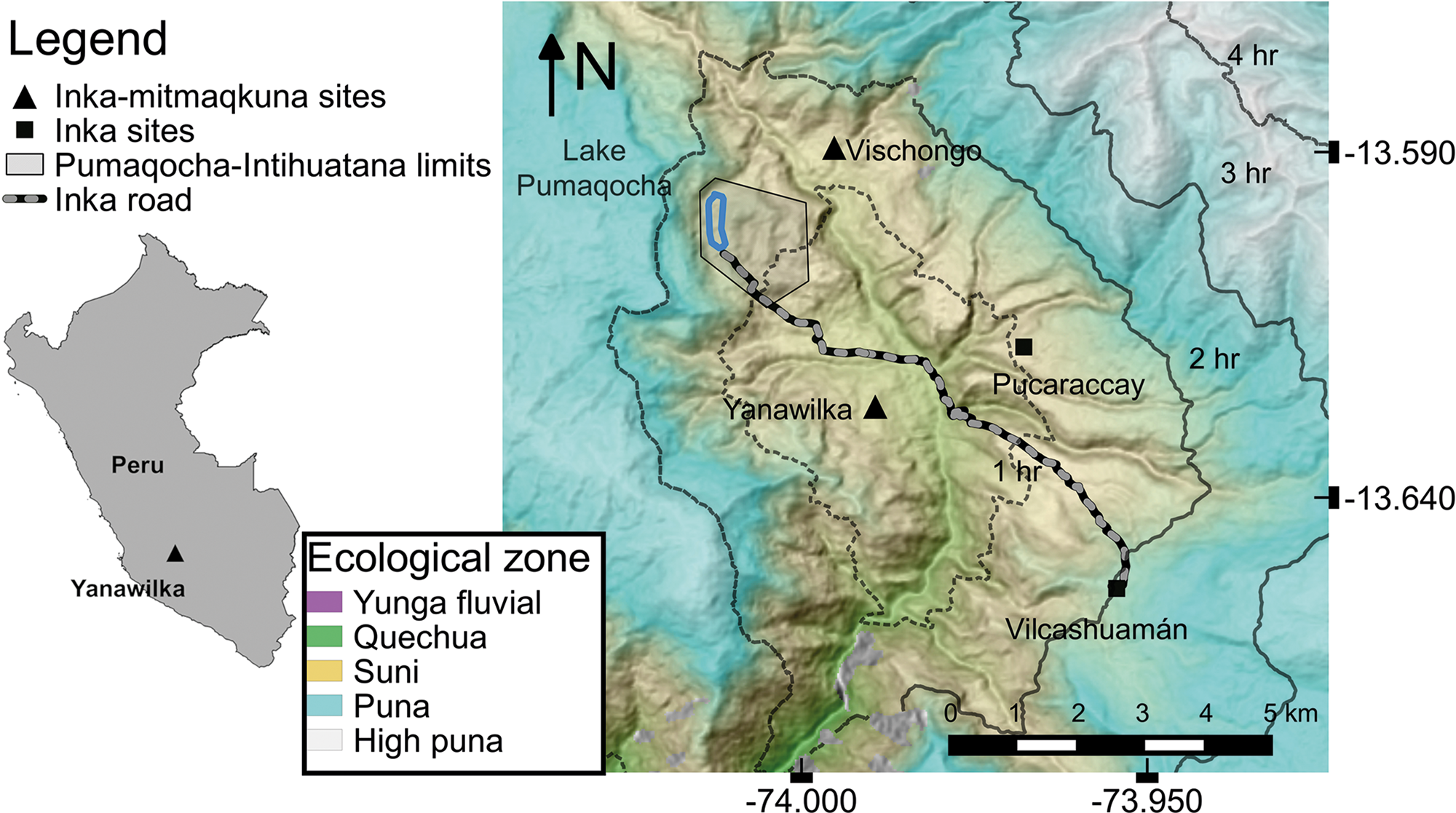
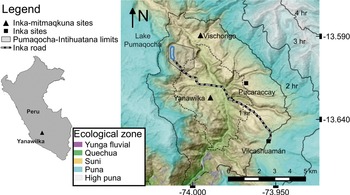
Yanawilka was well integrated with other Inka and mitmaqkuna settlements due to its proximity to the royal Inka Road (Fig. 1). Yanawilka sat between two major Inka sites of Pumaqocha-Intihuatana (2.6 km to the periphery and 4.5 km to the palace on foot) and the provincial capital of Vilcashuamán (5.2 km on foot). Extensive storage structures called qolqas at Pumaqocha-Intihuatana and Vilcashuamán held food and other supplies (Santillana Reference Santillana2012).
Major Inka sites in Yanawilka's local landscape. Vischongo was a large mitmaqkuna settlement inhabited by the same ethnic group that inhabited Yanawilka. Pumaqocha-Intihuatana boundaries based on Huamaní Taboada (Reference Huamaní Taboada2005) and Santillana (Reference Santillana2012). (Available at https://doi.org/10.6084/m9.figshare.24496642 under a CC-BY4.0 license.)
Methods
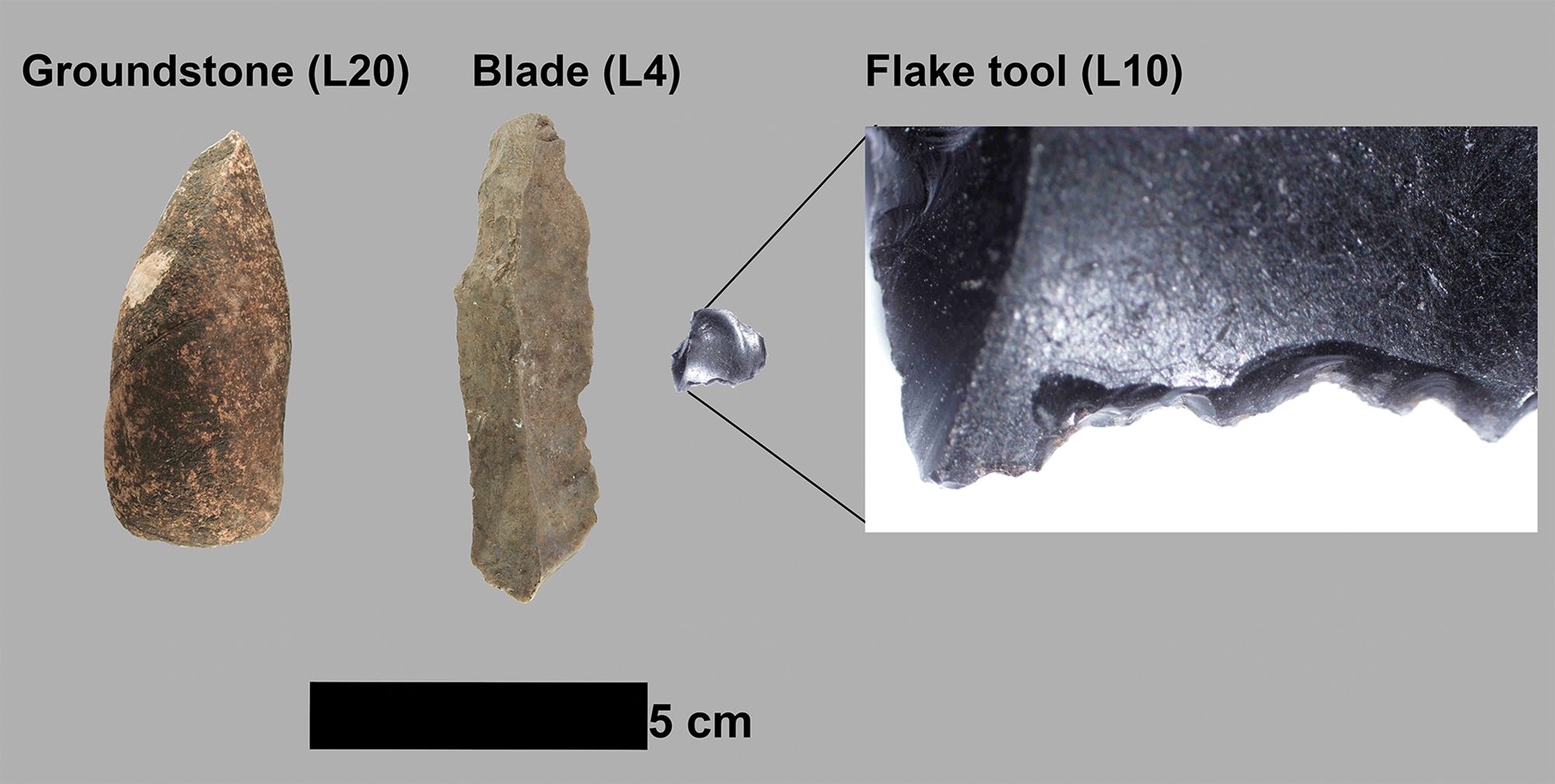
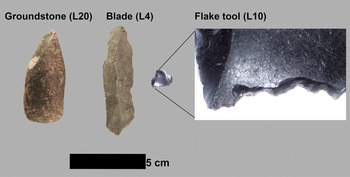
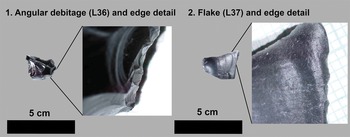
To assess whether the inhabitants of Yanawilka enjoyed plant foods from a variety of ecological zones or were restricted to the local quechua and suni zones, we utilized two complementary strategies aimed at the recovery of plant remains. The first was water flotation for the recovery of macrobotanical remains and the second was the recovery and identification of microbotanical remains (starch grains) from stone tools. Unfortunately, flotation yielded negligible identifiable macrobotanical remains (just one carbonized Chenopodium seed and a desiccated Prosopis pod), probably due to the highly alkaline conditions of the soil leading to carbon fragmentation (Braadbaart et al. Reference Braadbaart, Poole and van Brussel2009). Therefore, we focus on the microbotanical remains for this study. Four domestic structures at Yanawilka were excavated and all ground stone tools (n=9), flake tools (n=24) and blades (n=3) recovered were sampled for starch grains. Some flakes (n=8), angular debitage (n=4) and projectile points (n=5) were also sampled. We tested projectile points for starch grains because obsidian was scarce at Yanawilka, suggesting even broken points might have been used to process plant foods. All ground stone, flake tools and blades exhibited visible usewear (Fig. 2). Some flakes and angular debitage also exhibited visible usewear (Fig. 3). The analysed stone tools represent different aspects of food acquisition and preparation: hunting, cutting, grinding and possibly as eating implements. Agricultural implements such as hoes were also found at Yanawilka but were not analysed for starch grains.
Examples of ground stone, blade and flake tools with visible signs of usewear. (Available at https://doi.org/10.6084/m9.figshare.24522136.v1 under a CC-BY4.0 license.)
Examples of angular debitage and flakes with visible signs of usewear. (Available at https://doi.org/10.6084/m9.figshare.24529990.v1 under a CC-BY4.0 license.)

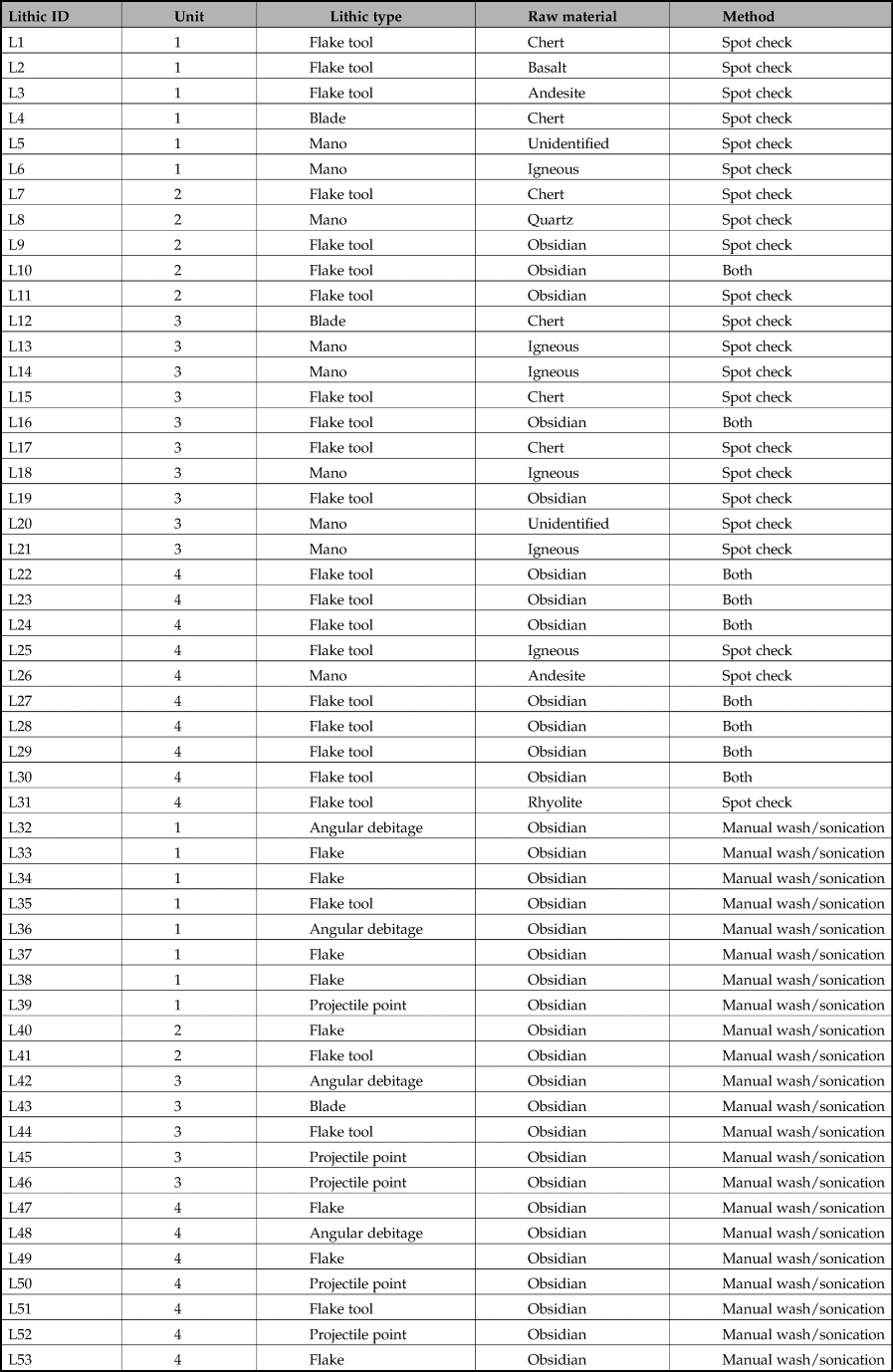
We used two methods of starch grain recovery. In 2012, 31 stone tools from Yanawilka, especially ground stone and flake tools, were analysed for the presence of phytoliths and starch grains using a spot-check method. In 2014, we manually washed and sonicated 9 of the 31 stone tools analysed in 2012 and an additional 22 stone tools to recover starch grains. In total, 53 stone tools were analysed, and nine of those were analysed twice (Table 1). All starch grains were analysed by Victor Vásquez for identification.
Summary of the lithics analysed and method(s) used for each lithic. Photos are available at the Open Science Framework repository https://osf.io/c49xh/
For the spot-check method, compressed air was used to clean the stone tools to eliminate any loose surface particulates that may be contaminates. A sterile pick was used to sample areas on the stone tools with sediments that could contain starch grains, especially the interstices. The resulting residues were then directly transferred onto a microscope slide that previously had a few drops of saline solution added to it. A solution of distilled water and glycerin was used to suspend the residues to slow drying and permit the easy manipulation of the position of the starch grains for identification purposes.
For the manual wash and sonication method, two samples (‘A’ from manual wash and ‘B’ from deflocculation/sonication) were collected from each tool. Obsidian tool samples were removed from packaging and rinsed with purified water (pH2O) to remove any loosely adhering dust from the exterior of the tool. Material washed away in this way was not retained. Obsidian tools were then placed in a 250 ml glass beaker, rinsed with pH2O and gently washed using a section of pipe cleaner. The purpose of using pipe cleaner was to avoid cross-contamination from re-use of non-disposable brushes. Material removed during the manual wash was retained in the 250 ml beaker. When the wash was complete, material removed during wash was transferred into a labelled 50 ml polypropylene centrifuge tube. Material removed through manual washing comprises the ‘A’ set samples.
‘A’ sample tubes were filled to 50 ml with pH2O and centrifuged at 3000 rpm for 3 minutes (Centra CL3 centrifuge, rotor #243) to concentrate the pellet. The supernatant was manually poured off, leaving c. 10 ml of supernatant in the bottom of each tube. Supernatant was not completely poured off to avoid disturbing the pellet. ‘A’ sample tubes were once again centrifuged at 3000 rpm for 3 minutes to re-concentrate the pellet, and a pipette was used to carefully remove supernatant, leaving approximately 1 ml of supernatant and the pellet in each tube. This material was mixed thoroughly with the pipette by impelling and expelling material repeatedly until a homogenous mixture was created. The pipette was then used to transfer this material into a 2 ml polypropylene microcentrifuge tube. About 1 ml of pH2O was added to the 50 ml ‘A’ sample tube and the pipette was used to rinse the remainder of extract from the tube by once again impelling and expelling material from the tube bottom and sides. This material was then transferred to the associated 2 ml centrifuge tube as well.
Two ml ‘A’ sample centrifuge tubes were centrifuged at 3000 rpm for 3 minutes in a swinging bucket rotor and a pipette was used to remove supernatant, leaving c. 0.1 ml of pH2O and the pellet in the bottom of each tube. Eight drops of glycerol were added to each 2 ml tube to create a mounting medium. A pipette was used to mix the glycerol and pH2O with the pellet by impelling and expelling material and scraping the sides and bottom of the tube. Two drops of extract were transferred to a microscope slide, covered with a 24×30 mm cover slip, and sealed with acrylic.
After manual washing, obsidian tools were transferred into empty 50 ml centrifuge tubes (‘B’ sample tubes). A 2 per cent solution of sodium hexametaphosphate in pH2O was added to each tube until tubes were filled to the 30 ml line. Tools were exposed to the deflocculant solution for 24 hours. Fifty ml tubes containing tools and deflocculant solution were placed in an ultrasonic bath (Baxter Model #C6450-11, 11-litre, 200 watt) and sonicated for one hour. Tools were then removed from 50 ml tubes, rinsed with pH2O and transferred onto aluminium foil to dry.
‘B’ sample tubes were filled to 50 ml with pH2O and centrifuged at 3000 rpm for 3 minutes to concentrate microbotanical extract into a pellet at the bottom of the tube. Supernatant was manually poured off leaving c. 10 ml of supernatant above the pellet in each tube. To rinse the remainder of sodium hexametaphosphate solution from ‘B’ sample tubes, pH2O was added to each tube to the 50 ml mark. Tubes were once again centrifuged at 3000 rpm for 3 minutes and supernatant manually poured off leaving c. 10 ml of supernatant in the bottom of the tube.
‘B’ sample tubes were centrifuged again at 3000 rpm for 3 minutes to concentrate the pellet. Using a pipette, supernatant was carefully removed leaving c. 1 ml of supernatant and the pellet in the bottom of each ‘B’ sample tube. This material was mixed thoroughly with the pipette by impelling and expelling material repeatedly until a homogenous mixture was created. The pipette was then used to transfer this material into a 2 ml microcentrifuge tube. About 1 ml of pH2O was added to the 50 ml ‘B’ sample tube and the pipette was used to rinse the remainder of extract from the tube by once again impelling and expelling material from the tube bottom and sides. This material was then transferred to the associated 2 ml centrifuge tube as well. At this point in the procedure, the 2 ml polypropylene tubes contained all microbotanical extract recovered from obsidian tools during sonication.
Two ml centrifuge tubes were centrifuged at 3000 rpm for 3 minutes in a swinging bucket rotor and a pipette was used to remove supernatant, leaving c. 0.1 ml of pH2O and the pellet in the bottom of each tube. Eight drops of glycerol were added to each 2 ml tube to create a mounting medium. A pipette was used to mix the glycerol and pH2O with the pellet by impelling and expelling material and scraping the sides and bottom of the tube. Two drops of extract were transferred to a microscope slide, covered with a 24×30 mm cover slip, and sealed with acrylic.
Control samples, consisting of empty beakers and tubes, were processed like other samples to assess laboratory contamination levels. Pipe cleaners were used to wash the interior of the empty 250 ml beakers. For sonication, pipe cleaners were placed in 50 ml tubes and sonicated to release any adhering microbotanical remains.
To identify the starch grains, the ARQUEOBIOS reference collection of modern edible plants, such as tubers, roots, cereals, beans and native fruits was used for comparison. The starch grains were identifiable because they conserved their form and superficial characteristics, and some still clearly exhibited the typical cross visible under polarized light. Once identified, the starch grains were measured with a measuring micron-level grid that was inserted inside the eyepiece. The starch grains were then photographed with a 12-megapixel SONY Cybershot digital camera for posterior analysis. (Starch grain photos are available at https://osf.io/c49xh.) Finally, the works of Guevara (Reference Guevara1973), Reichert (Reference Reichert1913), Loy (Reference Loy, Wagner and Pernicka1990), Piperno (Reference Piperno, Zeder, Bradley, Emshwiller and Smith2006) and Torrence and Barton (Reference Torrence and Barton2006) were used to confirm the identifications and give respective comments for each sample.
Results
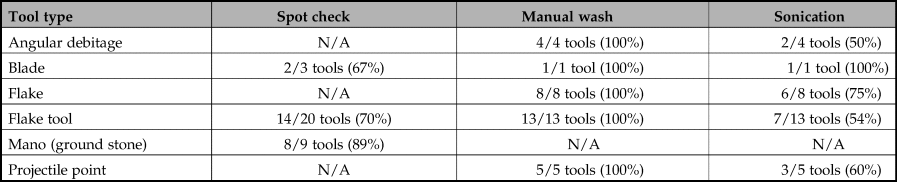
Edible plant remains from four Yanawilka structures showed unexpected diversity. Some starch grains might have arrived on the stone tools through ancient or modern contamination (via handling) rather than direct plant contact. Possibilities for the starch grains being present due to indirect contact with the plant are noted in the database (Column P, https://doi.org/10.6084/m9.figshare.24530401). Nevertheless, the possibility of modern contamination is minimal because no starch grains from Eurasian or African origin plants were recovered and care was made in the field to excavate with clean hands and handle in situ stone tools with plastic bags or gloves. The manual wash and sonication method also ensured that any loose accretions from possible modern contamination were washed away. The general concordance between the spot-check method and the manual wash/sonication method in the kinds of starch grains recovered bolster the confidence of the ancient nature of the starch grains analysed (Table 2). The manual wash/sonication method was better at recovering starch grains that were less numerous.
Presence/absence of starch grains by method of recovery.
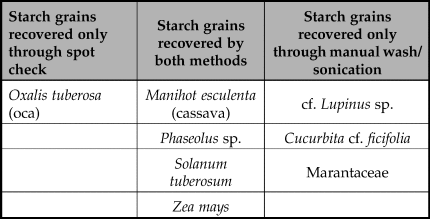
Starch grains recovered from 53 stone tools
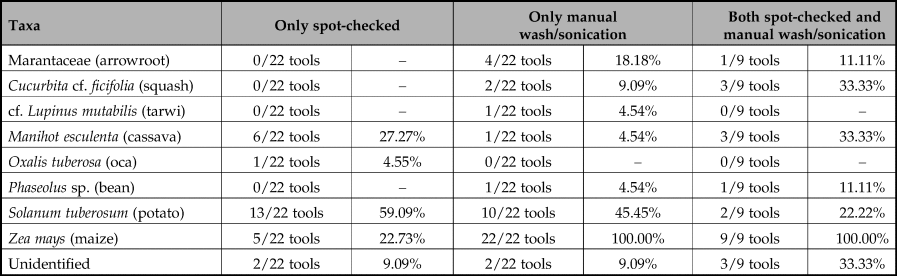
The most common taxa were Zea mays (maize), Solanum tuberosum (potato) and Manihot esculenta (cassava). Both starch-grain recovery methods (spot-checking and manual wash/sonication) detected these taxa. Eight different taxa were identified (Fig. 4; Table 3). The manual wash yielded the most starch grains. The comparable presence of starch grains on projectile points, from the sonication method, showed that the obsidian projectile points (both broken and intact) were probably used to process plant foods. The presence of starch grains on angular debitage and projectile points, even in the sonicated samples, demonstrates that all tool types should be sampled, not just the obvious flake tools and ground stone.
Examples of the different starch grains recovered and the tools they were recovered from. (Available at https://doi.org/10.6084/m9.figshare.24530305.v1 under a CC-BY4.0 license.)
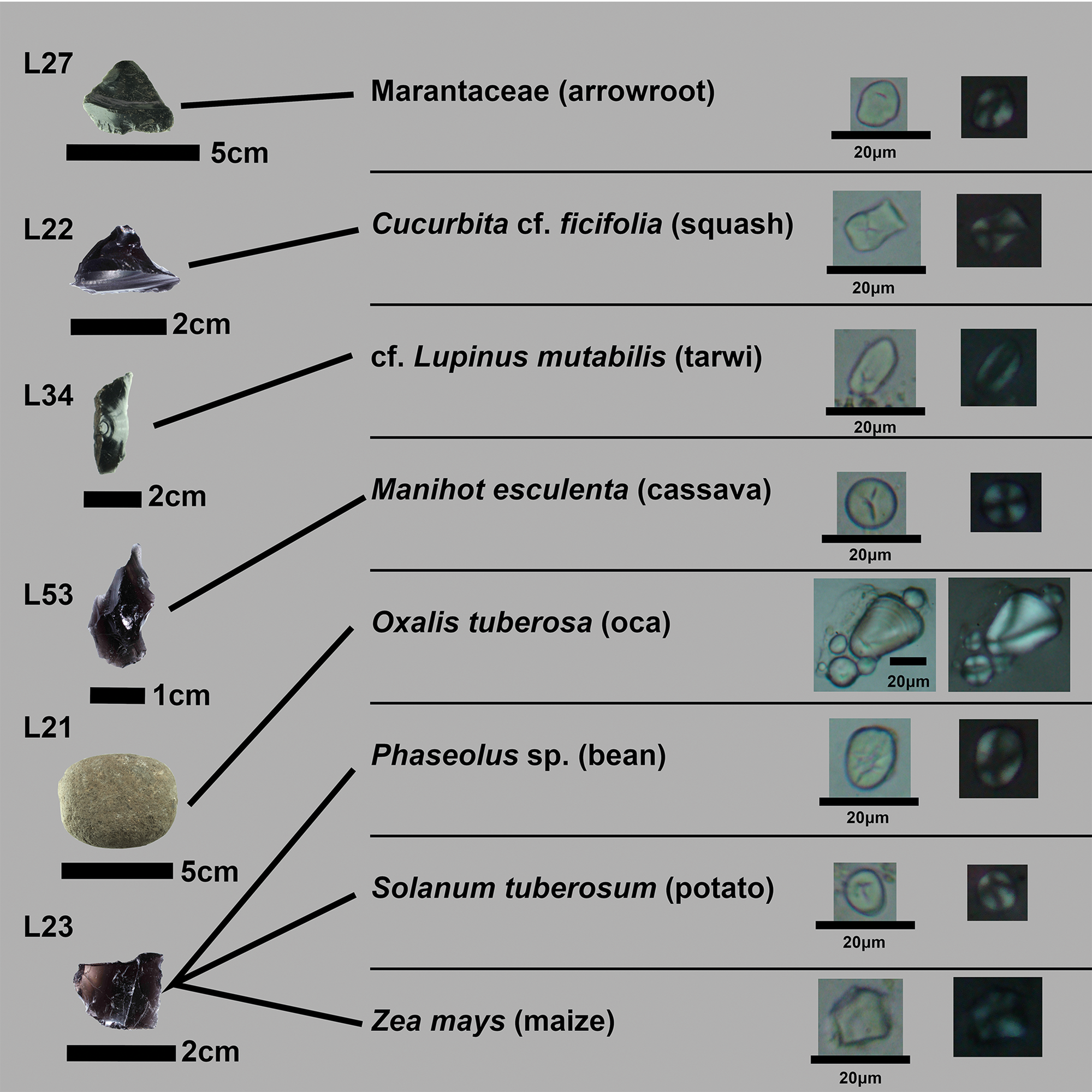
Ubiquity or percentage presence of starch grains from stone tools by method of recovery.
Morphometric analysis of Zea mays (maize) starch grains
Morphometric analysis of the Zea mays starch grains was conducted to find evidence of (1) grinding and milling, (2) whether the maize came from homogeneous or heterogeneous populations and (3) which modern varieties of maize share the most affinity with the maize of Yanawilka. The maize starch grains were mainly polyhedral (295) and spherical (46), which accounted for 98.6 per cent of all maize starch-grain shapes (341/346). The majority of the polyhedral starch grains exhibit ‘Y’-shaped fissures in the hilum consistent with milling and grinding (Zarrillo et al. Reference Zarrillo, Pearsall, Raymond, Tisdale and Quon2008, 5008). This suggests that milling and grinding maize were common practices at Yanawilka. The production of maize flour must have been very important in the daily life of the inhabitants of Yanawilka, and the flour may have been used in soups, stews, bread or possibly sanco. Sanco was maize dough about the size of an apple, generally reserved for special holidays (Garcilaso de la Vega Reference Garcilaso de la Vega1989, 357).
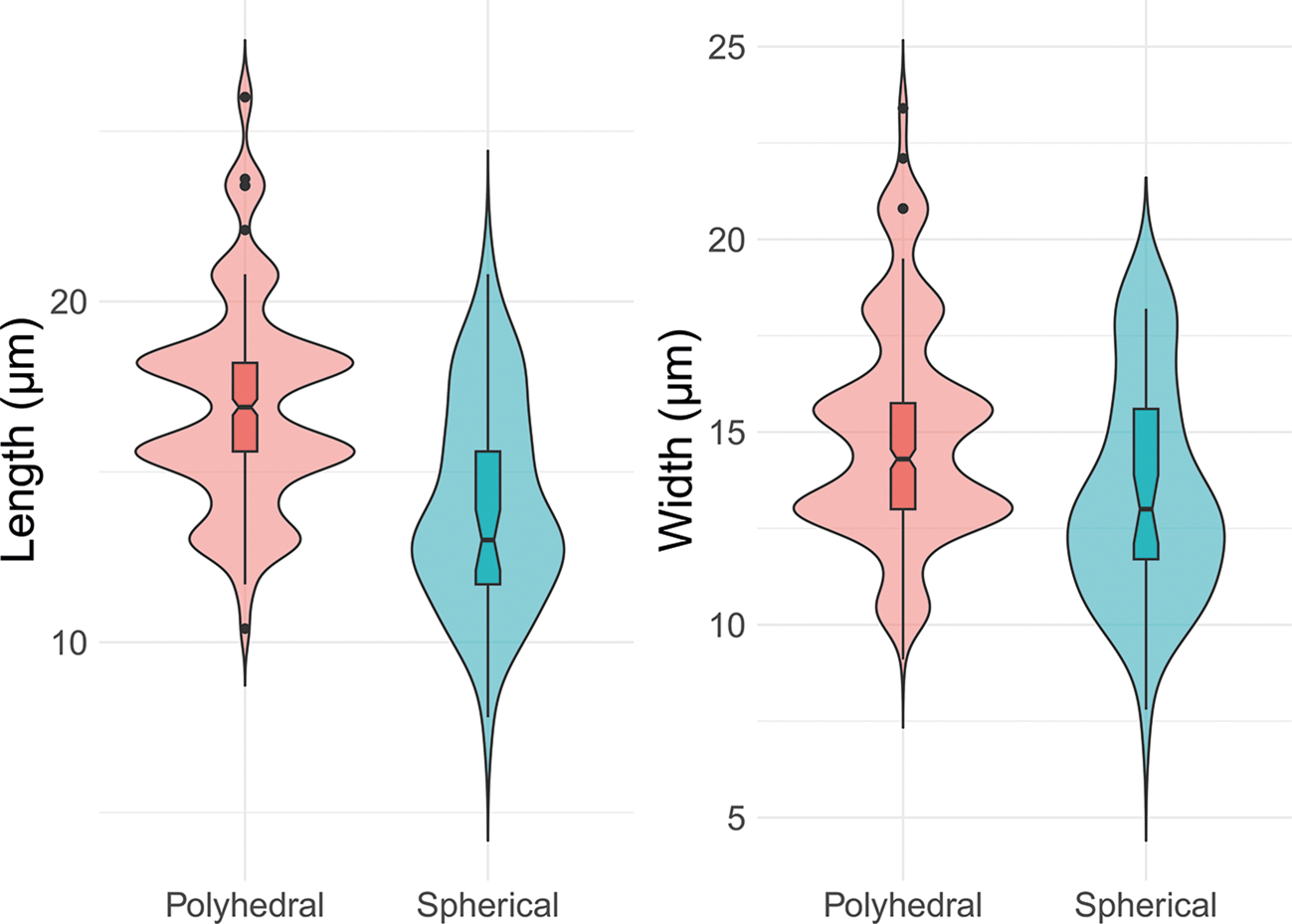
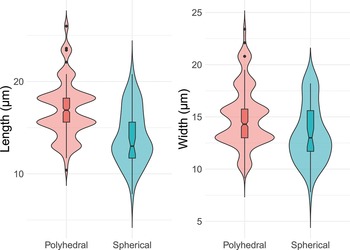
Analysis of the dimensions (length and width) of the starch grains suggests that the maize came from a homogenous population (Fig. 5). Coefficients of variation of less than 20 per cent suggest a more homogenous population (Shennan Reference Shennan1988). The coefficients of variation for the polyhedral grains were 17.87 per cent for the length and 19.13 per cent for the width. For the spherical grains, they were 20.04 per cent for the length and 19.52 per cent for the width. The homogeneity of maize harvests suggests Yanawilka's inhabitants grew their own maize rather than trading. Located in a maize-growing zone, they could easily cultivate it locally. This homogeneity aligns with Yanawilka's residents being agricultural mitmaqkuna, producing food for themselves and nearby Inka settlements.
Combined box and violin plots of the lengths and widths of polyhedral and spherical starch grains; figure and R code. (Available at https://doi.org/10.6084/m9.figshare.13726138 under a CC-BY4.0 license. Measurements available at https://doi.org/10.6084/m9.figshare.13726153 under a CC-BY4.0 license.)
The existence of at least two varieties of maize, corresponding to polyhedral and spherical starch grains, at Yanawilka, may be related to the varieties described in early colonial chronicles and Quechua dictionaries: culli sara (dark maize), missa sara (maize of two colours), miski sara (sweet maize), murucchu sara (hard maize variety), paraqay sara (large-eared high yield variety, ‘white, tender maize’), and paru sara (yellow maize) (Covey Reference Covey2006; González Holguín [1608] 1952, 578, 273, 279, 252, 279, 279). The different varieties may have been associated with different preparation/storage practices, such as brewing chicha corn beer, long-term storage and transport, or eating fresh (Covey Reference Covey2006, 224). Of the four primary varieties of maize that currently exist in the region of Ayacucho (Confite Morocho, Confite Puntiagudo, Kulli, Chullpi), only the Kulli variety has smooth endosperms and spherical starch grains. Kulli maize is sweet and dark-purple-coloured, and is used today to make the sweet non-alcoholic beverage chicha morada. At a minimum, culli sara (Kulli) and murucchu sara (Confite Morocho) were probably grown and consumed at Yanawilka.
Ecological zones exploited
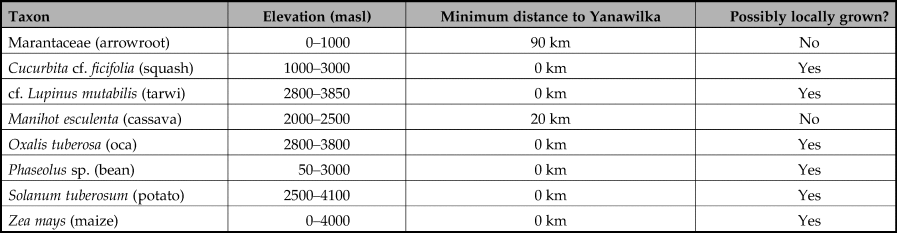
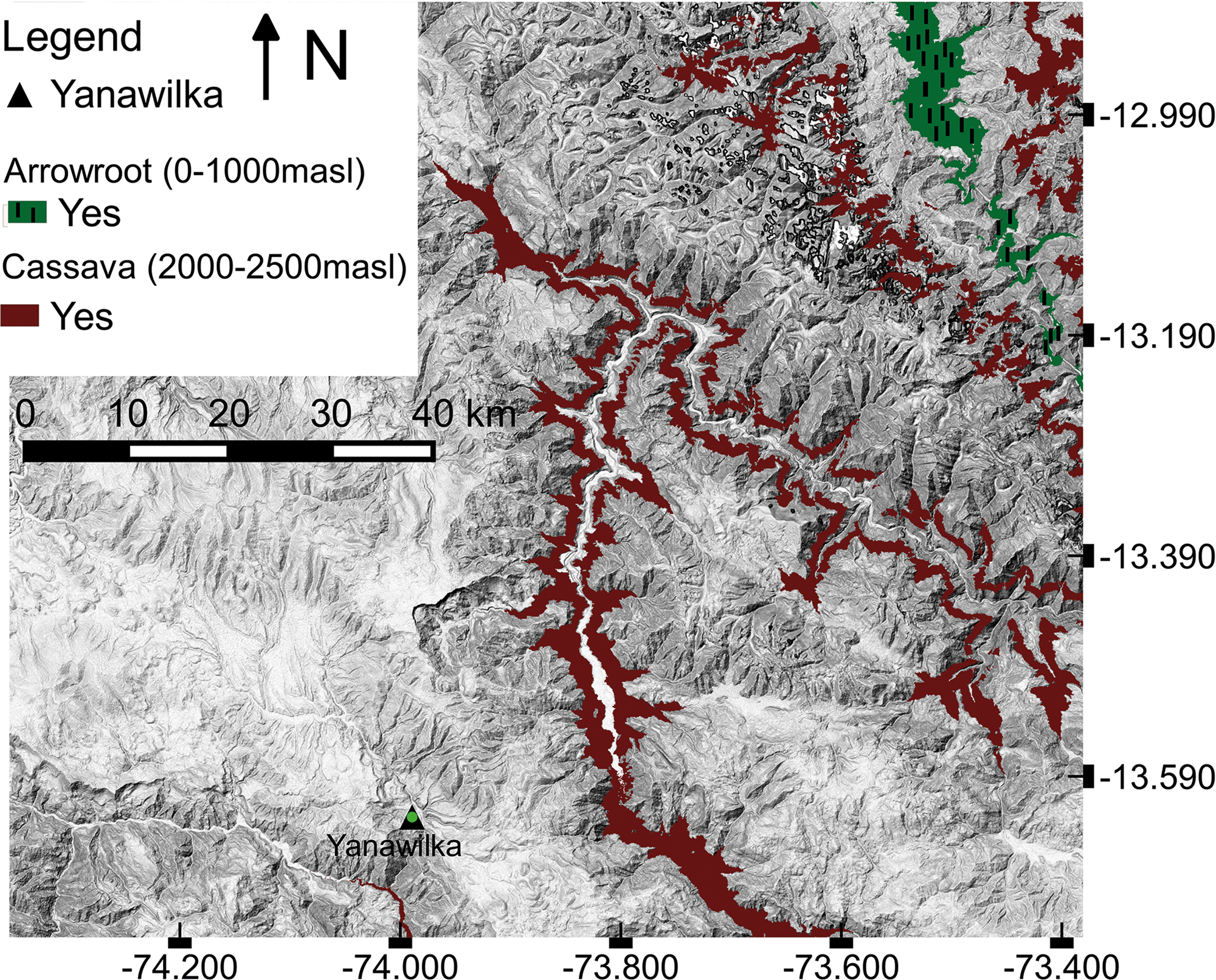
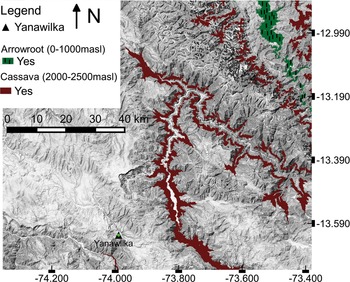
Most of the foods could have been grown in the immediate vicinity of Yanawilka, with two important exceptions: cassava and arrowroot (Table 5). Although there are small patches of land at the upper limit of the cassava growing range 7.4 km away, these areas are not suitable because they are on the rocky riverbanks inside a steep canyon. A better candidate for the closest cassava-friendly area was 20 km to the east on foot. Using the r.walk function in QGIS/GRASS GIS, we calculated that a minimum of 5.9 hours was required to travel there. While it is possible to make a round trip from Yanawilka in less than a day, the rough terrain and the need to harvest and carry the tubers would be energetically inefficient. Arrowroot can only grow below 1000 m in elevation in tropical conditions (Perry Reference Perry, Denham, José and Vrydaghs2007), and the nearest suitable area was about 90 km on foot to the northeast, with a calculated minimum travel time of about 26 hours (Fig. 6). The rough terrain and multiple river crossings likely extended the actual travel time. Arrowroot, transported as rhizomes or flour, had to come from a tropical area at least three days away. While Yanawilka's inhabitants grew most of their food, access to non-local foodstuffs indicates economic ties with other communities.
Presence/absence of starch grains recovered by tool type and method of recovery.
Ecological zones exploited. Minimum distance from Yanawilka expressed in Euclidean (as the crow flies) distances. Elevation data of plants from Hastorf (Reference Hastorf1993); Perry (Reference Perry, Denham, José and Vrydaghs2007); Piperno & Pearsall (Reference Piperno and Pearsall1998).
Map of closest potential locations of arrowroot and cassava cultivation. (Available at https://doi.org/10.6084/m9.figshare.13726141 under a CC-BY4.0 license.)
Discussion and conclusions
The inhabitants at Yanawilka had access to a diverse plant food diet. The most abundant starch grains indicate that maize, potatoes and cassava were important staples at Yanawilka. Morphometric analysis of maize starch grains also confirms that the inhabitants of Yanawilka most likely grew the bulk of their maize themselves. Of the staple foods at Yanawilka, only cassava was not grown locally and had to be transported from elsewhere. The other plant that was certainly transported to Yanawilka was arrowroot, which grows at much lower and more humid elevations, but its occasional presence on stone tools may indicate that it was not a staple, unlike the common appearance of cassava starch grains on tools. In the macrobotanical remains recovered from Yanawilka, algarrobo (Prosopis sp.) was present and also may have been non-local, because it generally grows in climates drier than at Yanawilka and at lower elevations (Capparelli Reference Capparelli2007). The contemporary climate (warm and wet) is similar to the climate during Yanawilka's occupation (Thompson & Davis Reference Thompson, Davis, Meddens, Willis, McEwan and Branch2014). Whether the mitmaqkuna at Yanawilka had direct trading relationships with those areas, however, is unclear, and the foods could have come by way of controlled Inka traffic on the royal Inka road. What is clear, however, is that plant-food networks did not become as restricted as obsidian exchange under Inka imperialism (Hu & Shackley Reference Hu and Shackley2018).
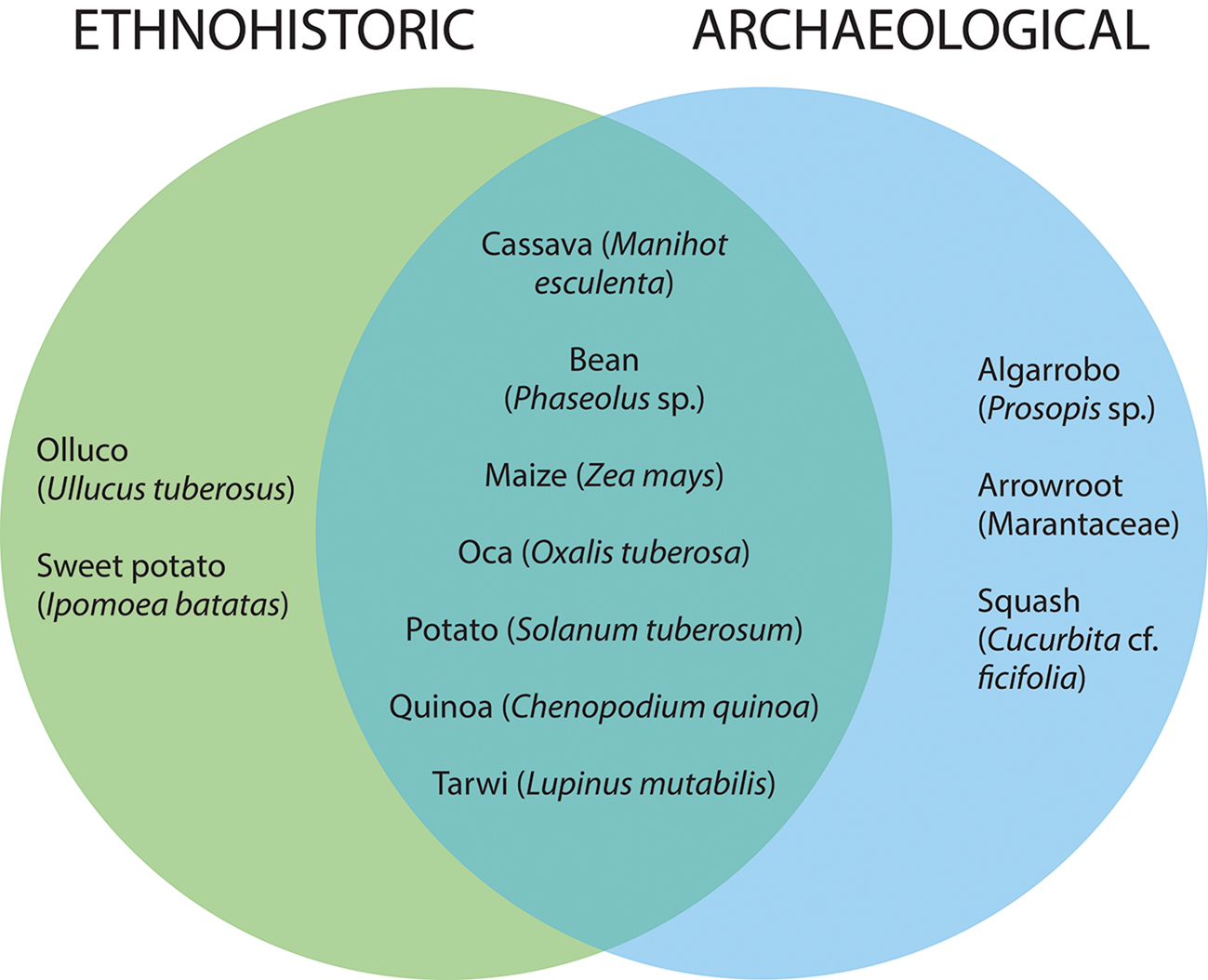
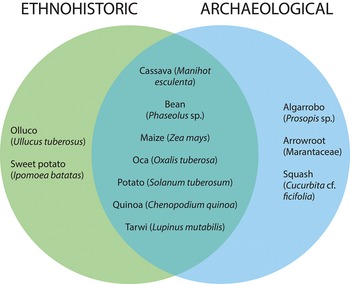
The diversity of plant foods at Yanawilka complicates ethnohistoric documents that stress imperial restriction of interregional traffic. First, the ethnohistoric record and the archaeological record were consistent with each other regarding plant foods consumed in the area shortly after Spanish conquest (Fig. 7). Because the foods were comparable before, during and after Inka rule (Abraham Reference Abraham2010; Handley et al. Reference Handley, Branch, Meddens, Simmonds and Iriarte2023), one cannot attribute the diversity to Inka imperial policies of control. Second, the existence and prevalence of foods that were not grown locally shows that the inhabitants of Yanawilka had trading relationships with other communities. This means that despite being uprooted from their homeland and moved to an area of high state control, the mitmaqkuna of Yanawilka were able to establish food exchange with non-local communities. Arrowroot was also found in Late Intermediate Period (LIP) contexts in nearby sites to Yanawilka, showing that long-distance food-trade networks involving arrowroot were hard to disrupt even when political conflict and regional warfare were rife in the LIP (Handley et al. Reference Handley, Branch, Meddens, Simmonds and Iriarte2023).
Venn diagram of plant foods represented in the ethnohistorical record (Carabajal [1586] Reference Carabajal, Jiménez de la Espada and Martínez Carreras1965) and the archaeological record, showing significant overlap between the two. (Available at https://doi.org/10.6084/m9.figshare.13726147 under a CC-BY4.0 license.)
Notably, the non-local foods, cassava and arrowroot, were not important staples of Inka imperialism (maize, potatoes and quinoa), as they were never listed in the chronicles as staples stored in Inka storehouses, nor did excavations of Inka storehouses reveal the presence of arrowroot and cassava (Chacaltana Cortez et al. Reference Cortez, C, Cutright, López-Hurtado and Martín2010; Covey et al. Reference Covey, Quave, Covey, Manzanilla and Rothman2016; D'Altroy & Hastorf Reference D'Altroy and Hastorf1984; Eeckhout Reference Eeckhout2012; Franco Jordán Reference Franco Jordán1993; Morris Reference Morris1967; Reference Morris, Revel, Murra and Wachtel1986; Morris & Thompson Reference Morris and Thompson1985). The apparent lack of arrowroot and cassava in storehouses supports local procurement of these foods rather than redistribution from Inka storehouses. Flake tools were used to process both tubers, and because these two plants were not part of the tribute tax foods and foods stored in Inka qollqas [storehouses], they were probably foods grown to supplement the daily diet. The Inka storehouses of Vilcashuamán held coca, charqui (dried meat), wool, ají (chili), maize, fine clothing, arms, and probably potatoes (Cieza de León [1553] Reference Cieza de León and de Onis1959, 127; Santillana Reference Santillana2012, 315). Although Eurasian plants and animals had already made their appearance in the tribute lists (tasas) by the 1540s, indicating significant changes to agropastoral practices (Covey Reference Covey and Staller2021), the complete absence of arrowroot and cassava from these lists further support the non-state staple status of these two plant foods (Block Reference Block, Lorandi, Salazar-Soler and Wachtel2003).
Cassava, in particular, is known as an anti-state food, as it is not easily taxable because it can grow in remote, forested areas without the need of constant tending (Scott Reference Scott2009, 190, 195, 206). The chronicler Betanzos noted that cassava, along with maize and squash, were the staples of the people of Antisuyu (eastern lowland jungles) (1996, 125), which is also where arrowroot could be grown. The consumption of cassava and arrowroot suggests that the inhabitants of Yanawilka were not isolated from distant communities. At Pulapulco, another Late Horizon site under Inka rule, there were also many plants that were not grown locally, such as gourd (e.g. Lagenaria siceraria [Molina] Standl., Cucurbita spp. L), guava (Psidium guajava L.), cotton (Gossypium barbadense L.), Haageocereus sp. Backeb., and the medicinal plant Equisetum sp. L. (Abraham Reference Abraham2010, 272). Likewise, at a Late Horizon settlement of agricultural labourers near Ollantaytambo, starch-grain evidence of non-local cassava was found (Hunter & Huamán Mésia Reference Hunter and Huamán Mesía2023). The prevalence of non-local foods at Yanawilka, therefore, was more likely the norm for non-Inka domestic settlements than the exception. The exchange networks implied by the non-local foods demonstrate that the total control of interregional traffic and inter-community isolation emphasized by ethnohistoric documents was overstated. As such, food landscapes of the Inka Empire's subjects had the potential to be loci of resistance against Inka control.
Foodways can be both conservative and fluid, depending on political conditions (Cutright Reference Cutright2015). The mitmaqkuna of Yanawilka called themselves Condes, which suggests they were from Condesuyo, one of the four quarters of the Inka empire. One small obsidian artifact was from the Alca-3 source, in the Inka province of Condes (Julien Reference Julien1991), and may have been carried by the mitmaqkuna during their initial resettlement, because all other obsidian artifacts were from more local sources (Hu & Shackley Reference Hu and Shackley2018). The Inka province of Condes occupied the same range of ecological zones as the Inka province of Vilcashuamán, where Yanawilka is located. Thus, if the mitmaqkuna of Yanawilka were indeed from the Inka province of Condes, that means their homeland was also far from the ecological zones conducive to arrowroot. Uncertainty remains over whether they were recreating their homeland's food exchange networks or plugging into new ones after resettlement. In either case, they had to recreate food networks that were undoubtedly disrupted by the mass resettlements in and out of the Inka province of Vilcashuamán.
When studying local community resilience under imperial control, the case of Yanawilka demonstrates that imperialism affects social landscapes (e.g. food, kinship, wealth commodities like obsidian) in different ways. Instead of assuming people make economic choices for efficiency, like supplementing caloric deficits, we should explore other reasons they form economic relationships with distant communities. Although we lack pre-resettlement data to frame foodways continuity as resistance, resistance can also be seen in the reality that food landscapes tend to be incompatible with imperial control. Food landscapes were generally harder to regulate in ancient empires than geographically circumscribed resources like obsidian. Because of the dispersed nature of food landscapes across and between ecozones of great expanse, the Inka would have struggled to control inter-community plant-food exchange. Such landscapes also functioned to undermine imperial goals of minimizing cross-group interaction and potential horizontal alliances. Thus, resilient food networks could serve as a locus of resistance against the dark side of imperial ‘cosmopolitanism’ that manufactured diversity to control the subject population better. Instead, the people of Yanawilka may have forged their own cosmopolitan foodways through their connections to distant neighbours.
Acknowledgements
The first author received funding from the Institute of International Studies-UC Berkeley (John L. Simpson Memorial Research Fellowship), the Fulbright-Hays Doctoral Dissertation Research Abroad Fellowship, the Wenner-Gren Foundation (Dissertation Fieldwork Grant #8265), the Archaeological Research Facility-Berkeley (Stahl Fund), and the Ford Foundation (Dissertation Fellowship).
We would like to thank the Wenner-Gren Foundation, the Ford Foundation, Fulbright-Hays, and UC Berkeley for funding of the excavations and analyses. The Berkeley Archaeological Research Facility and the McCown Archaeobotany Laboratory provided space and specialized equipment. Yanawilka excavations were permitted by the Ministry of Culture-Peru (Resolución Directoral No 085-DGPC-VMPCIC/MC). The first author thanks Lic. Alicia Miranda A. and the communities of Pomacocha, Vischongo, and Vilcas Huamán for assistance in excavations. We are also greatly indebted to the anonymous reviewers who have greatly improved the quality of this manuscript.
Availability of data and material
Open Science Framework: https://osf.io/c49xh/





 Open access

