





Introduction
Prior studies have shown that the natural acquisition of vocabulary, often through reading, significantly impacts the expansion of learners’ vocabulary knowledge. This type of vocabulary acquisition is referred to as incidental vocabulary acquisition, incidental vocabulary learning, or contextual word learning (Anderson & Milson, Reference Anderson and Milson1989). Among various factors influencing word learning (see, e.g., Adelman et al., Reference Adelman, Brown and Quesada2006; Jones et al., Reference Jones, Johns and Recchia2012), contextual diversity (CD) has emerged as a significant predictor over the past two decades (Caldwell-Harris, Reference Caldwell-Harris2021). CD refers to the number of contexts in which words are experienced (Adelman et al., Reference Adelman, Brown and Quesada2006). Under the framework of the lexical quality hypothesis (LQH) (Perfetti, Reference Perfetti2007; Perfetti & Hart, Reference Perfetti, Hart, Verhoeven, Elbro and Reitsma2002), encountering a word in various contexts aids learners in constructing a robust lexical representation. These diverse contexts enable learners to retrieve lexical items multiple times, thereby enhancing the quality of the stored lexical information. Despite its prevalence in word learning research and the growing interest it has garnered among scholars, studies examining CD reveal significant inconsistencies in its definitions, methodologies, and conceptual frameworks. Unlike well-established predictors such as word frequency, CD has received comparatively less attention, leaving gaps in our understanding of its definition, theoretical underpinnings, effects on word learning, and methodological approaches. While numerous studies have explored CD, a comprehensive synthesis of its role in vocabulary acquisition remains lacking.
This paper reports on a systematic review of research on CD in vocabulary acquisition, with the aim of evaluating the heterogeneity in its definitions and operationalizations. Through a meta-analysis, we seek to clarify CD’s role as a predictor of word learning. Notably, given the inherent methodological diversity in this body of research, the meta-analysis deviates from traditional approaches that aggregate findings from studies using similar operationalizations and methods. Instead, this study adopts a more exploratory approach, aiming to provide a more robust foundation for understanding the significance of CD in word learning, thereby offering valuable insights for future research.
Specifically, the study has three primary objectives: first, to present an overview of the existing research on CD by examining methodologies and comparing theoretical frameworks; second, to assess the correlation between CD and word learning based on various measurement approaches; and third, to analyze the moderating effects of methodological variables. The study seeks to enhance our understanding of how CD influences vocabulary learning, guide future studies by offering a comprehensive analysis of existing methodologies, and provide evidence-based suggestions to facilitate incidental vocabulary learning design.
Literature review
Theoretical frameworks and models in contextual diversity research
CD refers to the number of different contexts in which a word is encountered (Johns et al., Reference Johns, Dye and Jones2016a). High-CD words appear in varied linguistic and situational contexts with diverse co-occurring words and concepts, while low-CD words appear primarily in similar contexts. For example, the appearance of the word “bank” in finance-related contexts, river-related contexts, and idiomatic expressions demonstrates high CD, whereas the appearance of a technical medical term such as “asthma” primarily in clinical literature shows low CD. Empirical studies have operationalized CD in various ways, including: (1) corpus-based measures such as number of distinct word co-occurrences or semantic distinctiveness of contexts, (2) human-judgment measures of semantic richness or context distinctiveness, or (3) computational semantic vector space diversity measures. Despite these differences in operationalization, all approaches aim to quantify the semantic and linguistic heterogeneity of contexts in which a word appears.
The strength of CD as a predictor of word learning lies in the mechanisms through which individuals learn words from multiple encounters. Several models—The Episodic Model, the Semantic Distinctiveness Model (SDM), the Instance-Based Model (IBM), and the LQH—offer theoretical explanations for how CD influences word learning.
The Episodic Model (Pagán & Nation, Reference Pagán and Nation2019; Reichle & Perfetti, Reference Reichle and Perfetti2003) explains how vocabulary is acquired and consolidated through reading by proposing that each encounter with a word creates a unique “episode” in memory, encoding contextual, semantic, and orthographic details. These episodic traces accumulate with repeated and varied exposures, integrating to strengthen lexical representations and support long-term retention. The model highlights that both the number and diversity of these episodes enhance vocabulary learning, as richer and more varied contexts lead to more robust word knowledge. CD is integral to this process, as each novel context in which a word is encountered produces a unique episodic trace. The integration and interaction of these diverse traces serve to enrich and elaborate the learner’s mental representation of the word, thereby enhancing its accessibility and facilitating flexible application across a range of communicative situations.
The SDM, proposed by Jones et al. (Reference Jones, Johns and Recchia2012), builds on Adelman et al.’s (Reference Adelman, Brown and Quesada2006) definition of CD as the number of distinct documents in which a word appears. The SDM refines this by emphasizing semantic diversity, arguing that the semantic similarity between contexts must be accounted for. For instance, a word appearing in two highly similar documents may not contribute meaningfully to its CD. The SDM uses a word-by-context matrix to represent a text corpus, where each encounter with a word updates its memory representation based on the distinctiveness of the new context. Greater semantic differences between contexts result in stronger memory encoding. While the SDM effectively highlights the role of semantic variation in word learning, it presents several limitations. First, most of the supporting evidence for the SDM comes from computational simulations rather than direct experimental studies with human participants. This reliance on artificial corpora and algorithmic modeling raises questions about how well the model’s mechanisms reflect actual cognitive processes in human learners. Second, although the SDM focuses on semantic diversity—the variation in meaning across different contexts—it does not fully address the role of semantic richness, which refers to the amount and variety of semantic information associated with a word. Semantic richness can enhance word learning even when contexts are similar but information-rich, something the SDM does not adequately explain.
The IBM, introduced by Bolger et al. (Reference Bolger, Balass, Landen and Perfetti2008), emphasizes incremental learning through repeated encounters with words in diverse contexts. Each encounter generates a unique memory trace, incorporating the specific context of the experience. Over time, these traces accumulate to form a word’s core meaning, enabling learners to generalize their understanding to new contexts. The IBM predicts that varied contexts enhance word learning more effectively than repeated exposure in a single context. Although the IBM provides valuable insights into how contextual variability supports incremental learning, it primarily focuses on isolated word learning rather than the integration of words into broader linguistic systems.
The LQH, proposed by Perfetti and Hart (Reference Perfetti, Hart, Verhoeven, Elbro and Reitsma2002), posits that the quality of a lexical representation—how a word is stored and accessed in the mind—depends on the robustness of its orthographic (spelling), phonological (sound), and semantic (meaning) components. According to this hypothesis, high-quality lexical representations are those that are precise, well-specified, stable, and easily retrievable, regardless of context. In contrast, low-quality representations are less complete, more ambiguous, and more dependent on contextual support for understanding and use (Nation, Reference Nation2017; Perfetti, Reference Perfetti2007). Building on the LQH, the lexical legacy hypothesis (LLH) (Nation, Reference Nation2017) further suggests that the quality of an individual’s word knowledge is shaped by their cumulative experiences with that word across different contexts and episodes. The LLH argues that each encounter with a word leaves a “trace” in memory, and that the diversity and richness of these encounters—such as seeing the word in various texts, hearing it in conversation, or using it in writing—contribute to a more nuanced and flexible lexical representation. Over time, this accumulation of experiences forms a “lexical legacy,” which enhances the efficiency and accuracy of word recognition and retrieval, and reduces ambiguity.
Taken together, these four models provide a cohesive theoretical foundation for the present research. The SDM underscores the value of semantic variation across contexts, while the IBM and the Episodic Model both highlight the cumulative impact of repeated, contextually diverse encounters on word learning—emphasizing how unique episodic traces from each context are integrated to enrich lexical representations. The LQH and LLH, in turn, situate these processes within a broader framework of lexical development, emphasizing the importance of robust and fully specified word knowledge. By integrating these perspectives, this study adopts a multidimensional approach to understanding the role of CD in vocabulary acquisition, recognizing that both the nature of contextual experiences and the quality of the resulting lexical representations are essential for explaining how individuals learn and retain new words.
The role of contextual diversity (CD) in word learning
The predictive role of CD in word learning can be explained by considering how the mind works. Our memory system functions based on the principle of likely need. This means the human mind does not store information that is not likely to be needed in the future (Pagán & Nation, Reference Pagán and Nation2019). How such an assessment is conducted depends on the spaced encounters of information. Simply put, if certain information, such as a word, is only encountered in one situation many times (i.e., a massed situation), the mind chooses not to store it because that one-time information is predicted not to be useful in the future. For information acquired through spaced situations, the mind believes it will most likely be useful again in the future. In the context of vocabulary acquisition, words that have high distinctiveness, such as “onomatopoeia” and “flabbergasted,” are considered to be very unlikely to occur in the future since the context of acquiring them is single and repetitive.
The challenge for researchers is that “frequency and diversity measures are often correlated” (Caldwell-Harris, Reference Caldwell-Harris2021). Whereas word frequency (WF) pertains to the sheer number of times a word occurs in a given corpus (highlighting its prevalence in language use) (Brysbaert et al., Reference Brysbaert, Mandera and Keuleers2018), CD refers to the number of distinct contexts in which a word appears (emphasizing the variability and richness of its semantic associations) (Adelman et al., Reference Adelman, Brown and Quesada2006). However, a report by Hollis (Reference Hollis2020) found that CD and WF were so highly correlated across multiple corpora that they are nearly identical measures. To address this issue, in subsequent research, researchers held one variable constant to test the other’s effect (e.g., Frances et al., Reference Frances, Martin and Duñabeitia2020; Plummer et al., Reference Plummer, Perea and Rayner2014). This approach helps to disentangle the individual contributions of WF and CD to vocabulary learning. The correlation between CD and WF was tested by McDonald and Shillcock (Reference McDonald and Shillcock2001) using statistical models, and they turned out to be highly correlated (r = −0.82). This negative correlation reflects the underlying relationship between the two measures: high-frequency words (such as “the,” “and,” “of ”) occur in a wide variety of contexts, making them less informative about any specific context and resulting in low CD values. In contrast, low-frequency words are encountered less often and typically appear in more specific or restricted contexts, which makes their occurrence more distinctive and thus leads to higher CD values. Although the relationship is not perfect because some frequent words can still be contextually distinctive (like specific numbers), and some rare words can be used in a wide variety of contexts (like certain proper names or adverbs), leading to exceptions in the overall trend.
Still, other researchers have employed online procedural methods, including event-related potential and eye-tracking methods, to examine the effect of CD (Elgort et al., Reference Elgort, Brysbaert, Stevens and Van Assche2018; Mu, Reference Mu2024; Plummer et al., Reference Plummer, Perea and Rayner2014; Vergara-Martínez et al., Reference Vergara-Martínez, Comesaña and Perea2017). Plummer et al. (Reference Plummer, Perea and Rayner2014) were the first to investigate the impact of CD on word learning through sentence reading using an eye-tracking method. They compared the effects of WF and CD in a typical sentence reading scenario. Participants read sentences containing target words that varied in both WF and CD. The eye-tracking experiment revealed that WF had minimal or no impact on word recognition speed when CD was considered in isolated word-processing tasks. They confirmed that within a typical reading task, CD was a better predictor of word processing speed than WF (Plummer et al., Reference Plummer, Perea and Rayner2014).
Vergara-Martínez et al. (Reference Vergara-Martínez, Comesaña and Perea2017) found distinct ERP patterns when comparing high-CD words to high-frequency words. Specifically, high-CD words exhibited a larger ERP negative component between 225 and 325 ms after stimulus onset compared to low-CD words. This finding suggests that high-CD words elicit greater neural processing demands during early lexical access, as reflected by the enhanced negativity in the ERP signal. The increased ERP negativity indicates that the brain may engage more resources or encounter greater difficulty when processing words that are more contextually distinctive, potentially due to their relative novelty or reduced predictability in typical language contexts. It contrasts with the typical N400 effects associated with word frequency, which show lower negative amplitudes. The scalp distribution of the CD effect was similar to ERP effects linked to semantic richness, aligning with the notion that high-CD words tend to be semantically rich due to their diverse meanings across different contexts. Overall, the study demonstrated that high CD words elicit distinct ERP patterns, suggesting their semantic richness influences neural processing differently than WF effects.
Learner-based and assessment factors
Previous studies have investigated learner-based factors, such as age and proficiency, as moderators of the effect of CD on word learning (e.g., Johns et al., Reference Johns, Dye and Jones2016a). In contrast, outcome assessment factors such as language status (L1 vs. L2) and task type have received comparatively less attention (e.g., Norman et al., Reference Norman, Hulme, Sarantopoulos, Chandran, Shen, Rodd, Joseph and Taylor2023). The decision to include these two underexplored factors in the present study is motivated by the considerable methodological variability and inconsistent findings that characterize research on CD in word learning. The presence of such inconsistencies suggests that important moderating variables may have been overlooked or insufficiently controlled, and investigating factors like language status and task type may help account for some of the observed variability in outcomes. By examining these moderators, the present study aims to provide statistical evidence that can inform future research design. A brief review of each moderator and its relevance to CD and word learning is provided below.
Age
Ramscar et al. (Reference Ramscar, Hendrix, Shaoul, Milin and Baayen2014) propose that the slowdown observed in many psychometric tests across aging is due to the accumulation of linguistic knowledge over time instead of a systematic decline in the cognitive system. As individuals age, they naturally gain more experience, leading to an increase in linguistic knowledge. This accumulation results in a greater amount of information that must be processed, thereby requiring more time to complete tasks due to increased memory search demands. In essence, the age-related slowing observed in many psychometric tasks is simply a reflection of the increased volume of information possessed by the individual.
In a related study, Johns et al. (Reference Johns, Sheppard, Jones and Taler2016b) investigated the role of CD in word learning and examined age-related differences among participants, dividing them into two groups: younger participants aged 18 to 30 years and older participants over 30 years. They hypothesized that older participants would show a greater effect of CD on word learning, as older individuals have accumulated greater linguistic experience and have been exposed to a wider variety of contexts over time. This greater experience was believed to enhance their ability to learn words from diverse contexts. Moreover, the explanatory power of these results was found to be more pronounced in older participants compared to younger ones.
This pattern suggests that the diverse linguistic experiences of these age groups influence how they utilize CD as an organizational cue in the lexicon.
Language status
Word learning initially occurs in one’s L1, typically supported by extensive input from parents and educational settings. In contrast, an L2 is often acquired later, once the L1 is well established. This distinction may have significant implications for the functional separability of L1 and L2, as noted by Lindsay and Gaskell (Reference Lindsay and Gaskell2010). Learning a new word within the context of one’s L1 tends to be less challenging because there is sufficient familiarity with the language and the requisite linguistic knowledge to comprehend the context, making it more likely for one to infer the meaning of the new word. Conversely, for L2 learners, acquiring new vocabulary is generally more difficult. This difficulty arises because they may lack familiarity with the concepts of words in another language (lexicalization), may not have mastered enough vocabulary or the key vocabulary necessary to understand the context, or may not have the reading proficiency to efficiently comprehend the context. Consequently, this can hinder their ability to accurately grasp the meaning of target words.
In studies specifically examining the effect of CD on word learning, the majority focus on L1 learning. Johns et al. (Reference Johns, Sheppard, Jones and Taler2016b), as mentioned above, included both monolinguals and bilinguals. Their findings indicated that bilinguals may be more sensitive to semantic diversity across multiple corpora compared to monolinguals. However, there is a paucity of research directly comparing L1 and L2 word learning, highlighting the need for further exploration in this area.
L2 proficiency
Elgort et al. (Reference Elgort, Perfetti, Rickles and Stafura2015) investigated the impact of L2 proficiency on contextual vocabulary acquisition and found that word learning was more robust in individuals with higher proficiency. The higher proficiency group demonstrated a larger semantic relatedness effect in unfamiliar contexts. These findings suggest that the ability to learn new word meanings from context is contingent upon the reader’s L2 lexical semantic knowledge. However, much of the research on contextual word learning does not assess language proficiency beforehand, which can undermine the validity of the results. In studies specifically examining the effect of CD on word learning, few have focused on the potential moderating influence of language proficiency, leaving its impact unclear.
Task
The performance of participants in reading and word learning research is influenced by task characteristics (e.g., complexity and urgency), task performer characteristics (e.g., knowledge and skill), and environmental characteristics (e.g., noise and temperature) (Liu & Li, Reference Liu and Li2012). Task characteristics, in particular, are expected to significantly influence both individual and group behaviors. Weir and Khalifa’s (Reference Weir and Khalifa2008) cognitive processing model for reading comprehension identifies three sources of knowledge: metacognitive activity, the central core, and the knowledge base. Different types of reading tasks draw on these sources to varying degrees; for instance, tasks that require detailed understanding may place greater demands on metacognitive strategies and background knowledge, while simpler tasks may rely more on basic comprehension processes within the central core. Thus, the cognitive demands of second language (L2) reading tasks can be manipulated by varying the extent to which each source of knowledge is required for successful task completion.
Several tasks have been employed in studies examining the role of CD, including lexical decision tasks, serial recall tasks, and meaning-focused reading activities. In reading tasks, participants are required to focus solely on the comprehension of the text rather than on word learning, which lowers the cognitive effort required. Lexical decision tasks and serial recall tasks are considered moderately complex due to their relatively low cognitive demands but greater physical involvement, such as response execution (Donovan & Radosevich, Reference Donovan and Radosevich1999). Further exploration is warranted to understand how the distinct characteristics of these tasks influence the effects of CD on word learning.
To sum up, despite its significance, the concept of CD lacks a consistent definition across studies, leading to discrepancies in how it is understood and operationalized. Furthermore, the research methods used to investigate CD vary widely, contributing to methodological inconsistencies and making it difficult to compare findings across studies. Addressing these gaps is essential to establishing a clearer conceptualization, identifying the most relevant theoretical perspectives, and promoting methodological rigor in future research.
A recent narrative review by Caldwell-Harris (Reference Caldwell-Harris2021) offers an in-depth examination of CD research. This review synthesizes a broad range of studies, tracing the historical evolution of the CD construct, outlining the major theoretical frameworks that have been proposed, and discussing the methodological approaches used to investigate CD effects on word learning. Caldwell-Harris (Reference Caldwell-Harris2021) also identifies key trends in the literature, such as the increasing focus on learner-based and contextual factors, and highlights unresolved debates regarding the mechanisms through which CD facilitates vocabulary acquisition. By drawing connections across disparate studies and conceptual perspectives, the narrative review provides a valuable roadmap for researchers new to this area. However, the narrative review does not employ systematic or quantitative methods to assess the strength or consistency of empirical findings. Without a quantitative synthesis, it remains difficult to evaluate the overall impact of CD on word learning or to identify potential moderators that could explain inconsistencies in the literature.
This research
Although there has been a narrative review of CD research (Caldwell-Harris, Reference Caldwell-Harris2021) and the number of empirical studies on CD is increasing, the findings in this area have not yet been quantitatively meta-analyzed. This gap is likely due to significant variability in study designs, reflecting the emerging nature of this research topic. Nevertheless, a meta-analytic synthesis is crucial for advancing the field: it would provide a systematic evaluation of the evidence, clarify the overall impact of CD on word learning, and help identify patterns and moderators that may account for inconsistencies in the literature. Furthermore, such an analysis could inform the development of more unified research paradigms and methodologies, ultimately guiding future studies and promoting a deeper understanding of how CD facilitates word learning.
The current study aims to achieve three main objectives: first, to conduct a research synthesis that examines how CD is defined, the theoretical frameworks employed, and the research methods used in existing studies; second, to assess the extent to which CD affects word learning; and third, to analyze the effect of factors potentially moderating the relationship between CD and word learning.
To guide this investigation, the study adopts the LQH and poses three key research questions:
-
1. How has CD been defined across different studies? What research methods have been used to study CD
-
2. To what extent does CD affect word learning?
-
3. What are the effects of the identified potentially moderating factors on the relationship between CD and word learning?
By addressing these questions, the study seeks to provide a comprehensive overview of the field and to facilitate future research efforts.
Method
Literature search
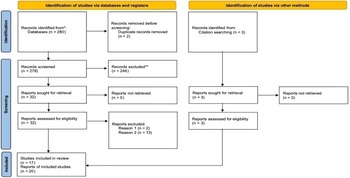
In conducting a research synthesis on the impact of CD on vocabulary acquisition and related processes, this paper employed a systematic search strategy using specific keywords and reputable academic databases (see Figure 1). The keywords used in the search included terms such as “vocabulary acquisition,” “contextualized word learning,” “word learning,” “lexical decision,” “word recognition,” “vocabulary learning,” and “word acquisition,” combined with “contextual diversity” using the AND operator. These keywords were chosen to capture a comprehensive range of studies that explore various aspects of vocabulary learning and recognition within diverse contexts. To ensure a thorough and high-quality literature search, the paper utilized two major academic search engines: Web of Science and ProQuest.
Literature search and study screening.
Note. Reason 1 indicates that insufficient data are reported. Reason 2 refers to studies that do not examine vocabulary acquisition, word learning, lexical decision, word recognition, or other directly related outcomes.

Figure 1. Long description
PRISMA-style flowchart of the literature search and screening process. From databases and registers, 280 records were identified. Two duplicate records were removed before screening, leaving 278 records screened. Of these, 246 were excluded. Thirty-two reports were sought for retrieval, none were not retrieved, and 32 reports were assessed for eligibility. Fifteen reports were excluded: 2 for insufficient data and 13 for not examining vocabulary acquisition, word learning, lexical decision, word recognition, or other directly related outcomes. Citation searching identified 3 additional records. Three reports were sought for retrieval, none were not retrieved, and 3 reports were assessed for eligibility. In total, 20 studies were included in the review.
The inclusion criteria for this study were as follows:
-
Participant characteristics: Participants must be typical readers without any neurological or psychological conditions that could affect language processing or acquisition.
-
Research focus: The study must focus on word learning. Both second-language and first-language reading are included to understand the mechanisms of word learning comprehensively.
-
Empirical data: The study must present original empirical data that quantitatively examines the effect of CD on vocabulary acquisition or related outcomes. The sufficient statistical information (e.g., means, standard deviations, effect sizes, test statistics, or correlation coefficients) must be reported to enable the extraction or calculation of the effect of CD.
-
Modality and task type (reading-based): Following previous meta-analytic research (e.g., Zhang et al., Reference Zhang, Ke, Anglin-Jaffe and Yang2023), this study coded vocabulary acquisition or lexical processing through visual, reading-related input, including: incidental or intentional learning from reading texts/sentences, and/or reading-based lexical processing tasks such as lexical decision, word recognition, eye-tracking during reading, or word naming/reading aloud (pronouncing printed words).
-
CD: The study should consider the role of CD in vocabulary acquisition, examining how different contexts influence learning outcomes.
-
Study accessibility and quality: The studies must be fully accessible, written in English, and published in peer-reviewed academic journals.
-
Study accessibility and quality: The studies must be fully accessible and written in English. They must be published in peer-reviewed academic journals and completed doctoral dissertations.
The exclusion criteria were:
-
Non-Empirical Studies: Theoretical papers, opinion pieces, book chapters, or reviews that do not report original empirical data (e.g., Caldwell-Harris, Reference Caldwell-Harris2021).
-
Research focus: Studies that do not specifically investigate CD as a variable (e.g., Hao et al., Reference Hao, Liang, Wang, Liu and Chen2021).
-
Irrelevant Outcomes: Studies that do not examine vocabulary acquisition, word learning, lexical decision, word recognition, or other directly related outcomes (e.g., Smejkalova & Chetail, Reference Smejkalova and Chetail2023).
-
Insufficient Data for Analysis: Studies lacking necessary statistical information (e.g., effect sizes, means, standard deviations, and sample sizes) required for meta-analysis (e.g., Johns et al., Reference Johns, Dye and Jones2016a).
The search returned 207 results from Web of Science and 73 results from ProQuest. After applying the exclusion criteria, only 19 studies were eligible for further analysis. Among them, two were further excluded due to the lack of necessary statistical information for coding (Hamrick & Pandža, Reference Hamrick and Pandža2020; Johns et al., Reference Johns, Dye and Jones2016a). Additionally, three studies were identified and included through a manual search of the references in relevant studies. Therefore, a total of 20 studies were synthesized and meta-analyzed. These 20 studies included 35 independent samples and involved 1,540 subjects. The reference list of the 20 selected studies is available in Appendix A (open access at https://osf.io/e3xy8).
Calculation of effect sizes
Dependent variables
All dependent variables included in this meta-analysis were selected specifically as indices of word learning or lexical processing, ensuring that each effect size reflected participants’ acquisition or processing of novel words under varying CD conditions. Due to the limited research in this area and the variability in methodologies, effect sizes were categorized into online studies (eye-tracking) (N = 5) and behavioral studies (N = 15).
For the eye-tracking studies, effect sizes were calculated using four specific indices: First fixation duration, gaze duration, go-past time, and total time (TTime).
In the behavioral studies, the paradigms included comprehension-based learning tasks, lexical decision tasks, and serial recall tasks. For comprehension-based learning tasks, the primary outcome was post-test accuracy. For lexical decision and serial recall tasks, both accuracy and reaction time (RT) were typically reported. In this meta-analysis, when both outcomes were available, we extracted RT as the primary behavioral outcome, because it is sensitive to graded differences in real-time lexical processing and is consistent with the LQH.
According to LQH, high-quality lexical representations enable faster word recognition in different contexts, and RT effectively reflects the speed and efficiency of form-meaning integration. RT also offers practical advantages: it provides nuanced insights into lexical access, serves as a reliable proxy for cognitive effort, and is widely used in psycholinguistic research, enabling cross-study comparisons. While accuracy is an important metric, it was not prioritized here because most studies in this meta-analysis reported near-ceiling accuracy levels, limiting their ability to differentiate performance across conditions. Additionally, while other metrics, like gaze duration or ERP components, could provide complementary data, their limited availability across studies made RT the most suitable choice for this analysis.
In studies incorporating both a learning phase and a testing phase, effect sizes were calculated using immediate post-test results. For example, research by Guitard et al. (Reference Guitard, Miller, Neath and Roodenrys2019) applied various statistical models to analyze parameters such as response time and accuracy, including the use of Bayes factor analysis. In this context, we specifically use the output time metric to calculate Cohen’s d, facilitating the interpretation of the effects of CD on word learning. When participants encounter words in a variety of contexts, they tend to develop stronger lexical representations compared to encountering the same words repeatedly in a single context. This enhanced lexical representation is most clearly demonstrated by faster response times during word processing tasks.
Moderators
Notably, the moderator analysis was conducted only for the behavioral studies because the small number of eye-tracking studies (only five) did not provide sufficient data to support a robust and reliable analysis.
Age
Following the categories used by Johns et al. (Reference Johns, Sheppard, Jones and Taler2016b), participants were categorized into three age groups: older adults (above 38 years old), younger adults (18–38 years old), and youths (under 18 years old). This classification was based on developmental and cognitive distinctions observed in prior research. Specifically, the age of 18 marks a critical transition from adolescence to adulthood, characterized by significant cognitive and linguistic maturation (Steinberg, Reference Steinberg2014). Similarly, the cutoff at 38 years reflects the point at which age-related cognitive changes, such as a decline in processing speed and working memory, begin to emerge (Salthouse, Reference Salthouse2009), as documented in studies on adult cognitive development. These distinctions align with existing literature and provide a meaningful basis for understanding potential differences in word learning and CD effects across the lifespan.
Language status
Studies were coded as targeting L1 or L2 word learning based on the population under investigation.
L2 proficiency (L2 studies only)
For L2 studies, proficiency was coded based on each primary study’s operationalization (self-ratings, placement/course level, or standardized tests when available). Given heterogeneous measures, we did not standardize L2 proficiency using percentage cutoffs; coding decisions are documented in the Supplementary Materials.
Bilingual background (L1 studies only)
For studies with native-speaker samples, we initially wanted to code whether participants were reported as monolingual or bilingual/multilingual (or not reported), based on explicit information in the primary studies. However, only one study in the pool reported bilingual background; the rest of studies only stated that the participants were native speakers but did not mention whether they had a bilingual background. Thus, this factor was removed from further analysis.
Task
Tasks were coded into four categories based on their primary objectives and cognitive demands: (1) Comprehension activities, which involve meaning-based tasks designed to encourage participants to read for understanding; (2) cross-situational word learning tasks, which require participants to infer word meanings by tracking co-occurrence patterns across multiple contexts, emphasizing statistical learning; (3) lexical decision tasks, which measure participants’ ability to distinguish between words and non-words; and (4) serial recall tasks, which assess memory performance by requiring participants to recall items in the correct order.
Outcome measurements
In studies employing tasks such as lexical decision and serial recall, outcomes were primarily indexed by RT. In contrast, comprehension-based studies typically assessed learning using post-test accuracy measures. Accordingly, we coded outcomes into two categories: RT and accuracy.
Publication bias
Publication bias was evaluated using a funnel plot of the standard error against Fisher’s Z. As shown in Figure 2, the x-axis represents Fisher’s Z, a transformed correlation coefficient, while the y-axis represents the standard error of the effect size. Studies with higher precision (smaller standard errors) are plotted near the top, and those with lower precision are spread out at the bottom, forming a funnel shape. A symmetrical funnel indicates no significant publication bias, while asymmetry suggests potential bias or heterogeneity. For this analysis, one outlier with a Z value above 3 was removed, as it was deemed an extreme value that could distort the plot. The funnel plot was constructed using a Z range of −0.5 to 1.5. Thus, after excluding one sample from Frances et al. (Reference Frances, Martin and Duñabeitia2020), 20 studies comprising 34 independent samples remained for analysis.
Funnel plot of standard error by Fisher’s Z.

Figure 2. Long description
Scatter-based funnel plot with standard error on the vertical axis and standardized difference in means on the horizontal axis. Most points fall to the right of zero, indicating mainly positive effect sizes. Several studies cluster near the center with relatively small standard errors, while a few points lie farther from the center, including one negative point and one large positive outlier. The distribution is right-skewed.
Risk of bias check
Given substantial methodological heterogeneity across CD studies (e.g., within- vs. between-subject designs; behavioral vs. eye-tracking outcomes), an evaluation of potential risk of bias using a checklist covering important aspects to ensure methodological rigor was conducted (Gass et al., Reference Gass, Loewen and Plonsky2021; Sterne et al., Reference Sterne, Savović, Page, Elbers, Blencowe, Boutron, Cates, Cheng, Corbett, Eldridge, Emberson, Hernán, Hopewell, Hróbjartsson, Junqueira, Jüni, Kirkham, Lasserson, Li and Higgins2019). Studies were rated (low risk, some concerns, high risk, or NA) across five aspects: allocation/comparability, within-subject order effects, missing data/exclusions, outcome measurement, and selective reporting. Overall, study-level risk was classified as high risk if ≥1 item (i.e., any of the above five assessed aspects) was high risk; as some concerns if no critical high-risk items were present but ≥2 items raised some concerns; and as low risk if no high-risk items and ≤1 item raised some concerns, with final ratings reported. None of the studies were rated as high risk. The full rating table can be accessed through the OSF link (https://osf.io/e3xy8/overview?view_only=a433e55e34bc4ca0a43184fbbe670a32).
Coding and analysis procedures
Intra-coder reliability
The first author coded all the independent study samples twice. The intra-coder reliability for effect size coding was 0.92 (Cronbach’s alpha), indicating excellent consistency. For categorical variable coding, Cohen’s kappa was 0.87, reflecting strong agreement. The overall agreement rate across all coding categories was 95%. The discrepancies between the first and second codings were reviewed a third time, and the results were consistent with the second coding.
Effect size calculation
During the coding process, the data for calculating effect size were extracted in the following preferred order: first, the reported Cohen’s d values; second, the original standard deviations (SDs) and means; third, ηp2 values; fourth, any other relevant data such as the t-test results and the ANOVA results if the above three were not reported.
The meta-analyses were conducted using Comprehensive Meta-Analysis software, developed by Biostat (Borenstein et al., Reference Borenstein, Hedges, Higgins and Rothstein2005). Effect sizes were reported using Cohen’s d along with 95% confidence intervals. As the present meta-analysis includes both L1 and L2 studies, Cohen’s (Reference Cohen1988) conventional benchmarks for effect sizes (0.2 = small, 0.5 = medium, and 0.8 = large) were used to interpret Cohen’s d values. The alpha level was set at 0.05. The I 2 statistic quantified the degree of heterogeneity, while the Q-statistic indicated the significance of the variability in effect sizes across studies. Random effects modeling was chosen over fixed-effect modeling because the latter assumes no variation in effects across studies beyond sampling error. Random effects modeling offers a more conservative estimate of the pooled effect size, reducing the likelihood of inflating the true effect.
Findings
An overview of the selected studies
To provide a comprehensive overview of the field, the reviewed studies have employed a range of methodological approaches to examine the effects of CD on word learning. The operationalization of CD varies across studies: in some cases, it is quantified as the number of documents in which a word appears, while in others, it refers to the presence of a word in sentences or texts that differ in semantic context (see more details below). The research has been conducted in diverse geographical locations, including Canada (N = 2), China (N = 2), Portugal (N = 1), Spain (N = 4), the United Kingdom (N = 8), and the United States (N = 3). Participant age groups also differed, with 21 groups (60%) consisting of young participants, predominantly students, and only three groups (5%) comprising older adults. Notably, only three studies specifically targeted L2 acquisition, indicating a relative paucity of research in this area. While there is a growing interest in the role of CD in word learning, the current literature suggests that further research is needed, particularly in the context of L2 acquisition and among older populations.
RQ1: How has CD been defined across different studies? What research methods have been used to study CD?
By reviewing all the included studies, it was found that 70% of the studies (k = 14) cited the definition of CD from Adelman et al. (Reference Adelman, Brown and Quesada2006, p. 814), “the number of different documents in which a word appears within a corpus.” Among the remaining six studies, four do not provide a clear definition at all, while the other two offer further explanations. In the study by Bolger et al. (Reference Bolger, Balass, Landen and Perfetti2008), it was interpreted as CD: the diversity of other pairs with which each pair appears over time. In the study by Hulme et al. (Reference Hulme, Begum, Nation and Rodd2023), situational (contextual) diversity was defined as the variability in the environmental conditions under which a given set of training exemplars is learned.
Regarding the methods that have been employed, as shown in Figure 2, five out of the 20 studies utilized eye-tracking to gain deeper insights into word learning by monitoring reading behavior. The reviewed studies exhibited notable variation in their operationalization of word learning, reflected in the specific indices employed. Plummer et al. (Reference Plummer, Perea and Rayner2014) utilized the most comprehensive array of eye-tracking measures, including first fixation duration, single-fixation duration, gaze duration, go-past time, skipping rate, regression rate, and total time. Chen et al. (Reference Chen, Huang, Bai, Xu, Yang and Tanenhaus2017) and Mu (Reference Mu2024) incorporated all of these indices with the exception of single-fixation duration. Pagán and Nation (Reference Pagán and Nation2019) adopted a more focused approach, employing first fixation duration, gaze duration, go-past time, and total time, while Joseph and Nation (Reference Joseph and Nation2018) selected gaze duration, go-past time, regression rate, and total time.
The remaining behavioral studies (k = 15) employed either post-reading vocabulary tests following a learning session or lexical decision tasks/serial recall tasks measuring response time and accuracy (described in more detail later). The use of reading materials and the design of research also varied across studies. Regarding the materials, studies used word reading (N = 5), sentence reading (N = 10), and text reading (N = 5) (see Figure 3). In terms of text length, the longest had a mean length of 212 words, while the shortest was 88 words. It is important to note that the topics of texts have not been strictly controlled across the studies. For the studies that reported the genre of the texts (N = 4), two utilized narrative texts, while the other two employed genres, including fables, expository texts, and mathematical exercises. Additionally, the target words used in studies included nouns (N = 13), adjectives (N = 7), and verbs (N = 2). Three studies did not report the types of words used.
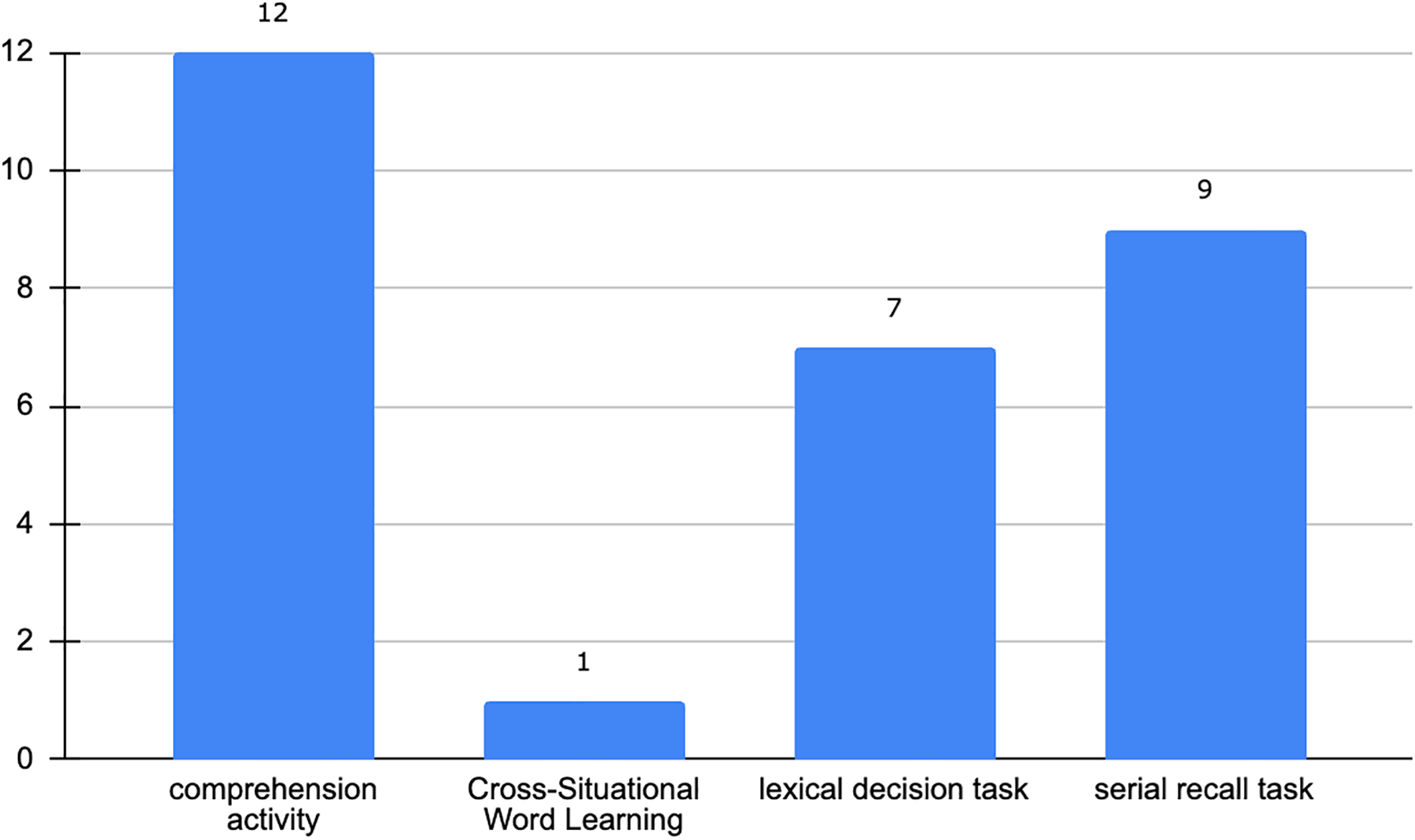
Frequency of activity types across studies.

Figure 3. Long description
Bar chart comparing the number of studies across four activity types. Comprehension activity is most frequent with 12 studies, followed by serial recall task with 9 and lexical decision task with 7. Cross-situational word learning appears only once.
Upon a detailed examination of the research designs, a diverse array of activity types was employed. As illustrated in Figure 3, comprehension activities were the most prevalent, appearing 12 times, irrespective of material variations such as word-level, sentence-level, or discourse-level tasks. In contrast, a cross-situational word learning task was the least frequent, appearing in only one study. Lexical decision tasks and serial recall tasks were employed in 7 and 9 studies, respectively. Lexical decision tasks require participants to decide as quickly and accurately as possible whether a presented string of letters is a real word or a non-word, primarily measuring word recognition and lexical access, with accuracy and response time serving as the key outcome measures. Similarly, serial recall tasks assess short-term or working memory by requiring participants to recall a series of items in the exact order of their presentation, with accuracy and sequential recall performance as the primary measures.
During the assessment phase, a wide range of vocabulary outcome measures were used, encompassing both recall-based and recognition-based approaches to evaluate vocabulary knowledge. Notably, when lexical decision and serial recall tasks were utilized as assessment tools, their focus on accuracy and response time as outcome measures often precluded the use of immediate post-tests, as they emphasized real-time cognitive performance. In contrast, studies using other types of learning activities during the initial phase frequently incorporated diverse post-test formats to assess vocabulary acquisition more comprehensively.
Recall-based tasks, designed to evaluate the ability to retrieve learned vocabulary without external prompts, included free recall tests, word-form recall, word-meaning recall, and general recall assessments. Recognition-based tasks, by contrast, were more diverse, encompassing orthographic choice tasks, meaning generation tasks, forced-choice sentence completion tasks, and 18-alternative forced-choice (18AFC) tests. Additional recognition-based measures included old-new decision tasks, cloze tasks, multiple-choice tests, matching exercises, and speed recognition tasks. Furthermore, specialized tasks such as semantic relatedness judgments, pseudoword inferiority tasks, and mapping tasks have been utilized to probe deeper semantic processing and associative learning.
In total, 18 distinct task types have been implemented to measure vocabulary acquisition outcomes. Among these, recognition-based tasks were the most frequently employed, appearing in 18 instances, while recall-based tasks were utilized in 12 instances. The substantial variability in these vocabulary outcome measures underscores the evolving and exploratory nature of this research domain.
RQ2: To what extent does CD affect word learning?
Synthesizing existing research to address this question involves both straightforward and complex considerations. To provide a more precise evaluation, a meta-analysis was conducted to estimate the effect size of CD on vocabulary acquisition. Because the included studies used both behavioral methods (such as pre/post-test assessments and real-time tasks) and eye-tracking techniques, two separate meta-analyses were performed.
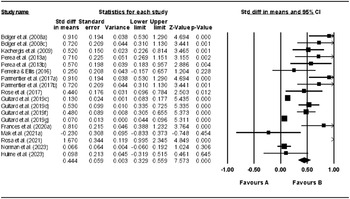
Figure 4 shows the distribution of effect sizes across 12 studies (18 samples after 9 samples were removed by the CMA software automatically because of insufficient data to calculate Cohen’s d) utilizing pre/post-test assessments and real-time tasks. The meta-analysis found a combined effect size of Cohen’s d = 0.44 (p < .001). This suggests that CD has a modest yet statistically significant influence on word learning.
Forest plot of effect sizes and 95% confidence intervals across behavioral studies.

Figure 4. Long description
Forest plot summarizing 18 behavioral effect sizes with standardized mean differences and 95 percent confidence intervals. Most studies show positive effects favoring the contextual diversity condition, although a few effects are small, non-significant, or negative. The pooled effect is positive and statistically significant, with a standardized mean difference of 0.444 and a 95 percent confidence interval from 0.329 to 0.559.
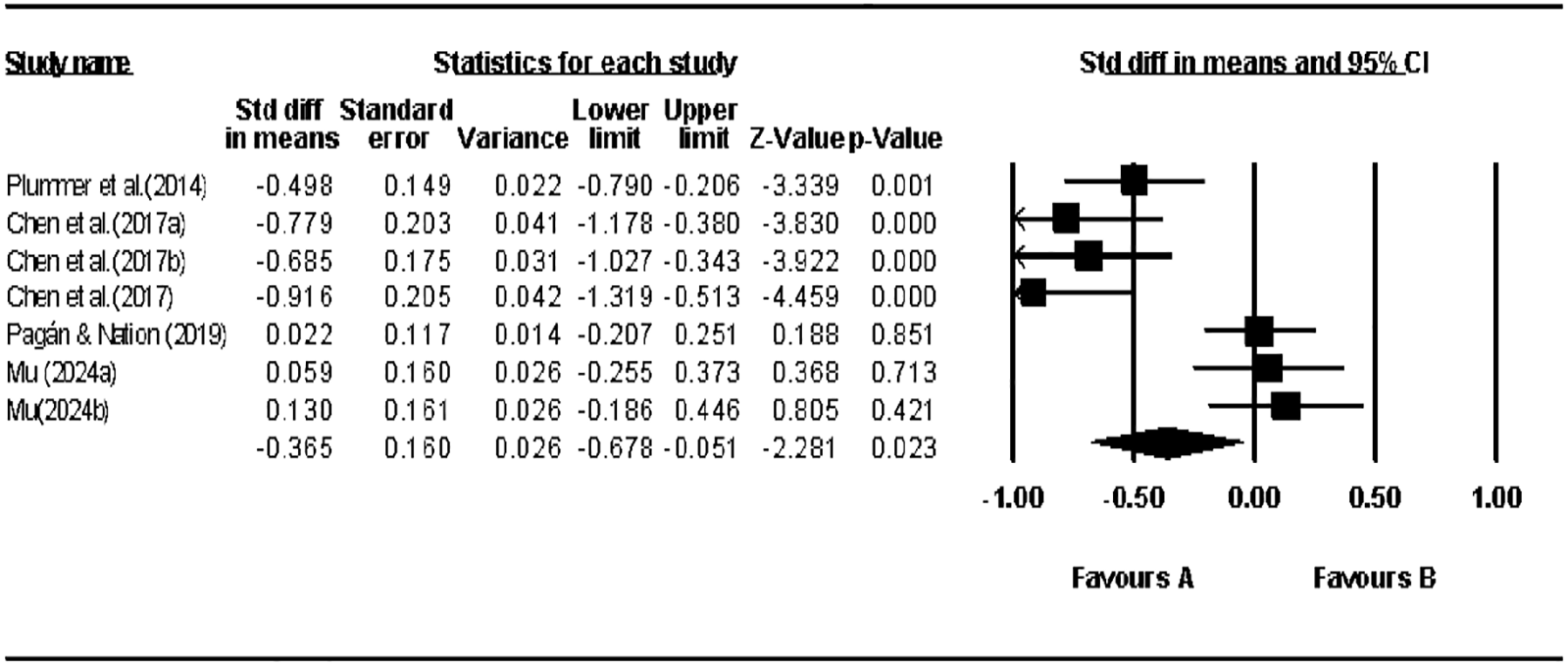
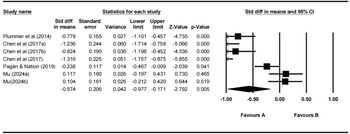
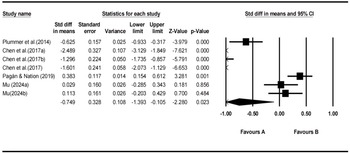
The meta-analysis encompassing the five eye-tracking studies (7 samples after one was removed by the CMA software for the same reason as above) offers a detailed examination of cognitive processes. Effect sizes were calculated for four key metrics reflecting distinct processing features: First fixation duration (d = −0.365, p = .023), gaze duration (d = −0.574, p = .005), go-past time (d = −0.749, p = .023), and total time (d = −0.691, p = .009) (see Figures 5–8).
Forest plot of effect sizes for first fixation duration.

Figure 5. Long description
Forest plot of 7 effect sizes for first fixation duration. Most studies show negative effects, with four clearly below zero and three close to zero and non-significant. The pooled effect is negative and statistically significant, with a standardized mean difference of -0.365 and a 95 percent confidence interval from -0.678 to -0.051.
Forest plot of effect sizes for gaze duration.

Figure 6. Long description
Forest plot of 7 effect sizes for gaze duration. Most studies show negative effects, and the majority of individual estimates fall below zero. Two studies are close to zero and non-significant. The pooled effect is negative and statistically significant, with a standardized mean difference of -0.574 and a 95 percent confidence interval from -0.977 to -0.171.
Forest plot of effect sizes for go-past time.

Figure 7. Long description
Forest plot of 7 effect sizes for go-past time. Most studies show negative effects, including several large negative estimates, although one study shows a significant positive effect and two are close to zero. The pooled effect is negative and statistically significant, with a standardized mean difference of -0.749 and a 95 percent confidence interval from -1.393 to -0.105.
Forest plot of effect sizes for total time.

Figure 8. Long description
Forest plot of 7 effect sizes for total time. Most studies show negative effects, with four clearly below zero and three close to zero and non-significant. The pooled effect is negative and statistically significant, with a standardized mean difference of -0.691 and a 95 percent confidence interval from -1.205 to -0.176.
Specifically, for first fixation duration, the analysis showed a small-to-medium negative effect size (d = −0.365, p = .023), suggesting that CD reduces the time spent on the initial fixation of a word. This statistically significant finding indicates that learners may recognize or process words more quickly during their first encounter, likely due to prior exposure to the word in diverse contexts.
A significant reduction in gaze duration (d = −0.574, p = .005) suggested a medium negative effect size. This reflects that the total time spent on a word during its first encounter was substantially shorter for words learned in diverse contexts.
A substantial negative effect on go-past time (d = −0.749, p = .023) indicates that CD markedly reduces rereading, reflecting heightened reading efficiency.
Finally, the analysis found a significant reduction in total time (d = −0.691, p = .009), with a large negative effect size, indicating that CD markedly decreases overall reading duration.
A comparison of the effect sizes across the four metrics reveals that those associated with later processing stages exhibit larger effects. This suggests that CD has its strongest impact on integrative and higher-order stages of word processing, such as resolving ambiguities and semantic integration. In contrast, its influence on earlier, more automatic stages, such as initial visual recognition and lexical access, is comparatively modest.
RQ3: What are the effects of the identified potentially moderating factors on the relationship between CD and word learning?
We examined the effect of four moderators on the relationship between CD and word learning, including age, language proficiency, language status, and task type.
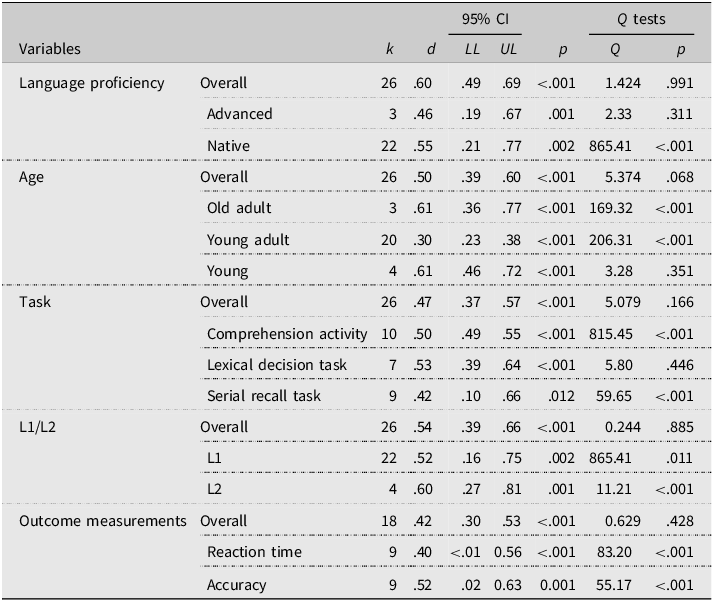
For sensitivity analysis, we systematically removed individual studies associated with each moderator variable and re-ran the analyses to assess the robustness of the results. For moderator subcategories with only one study (k = 1), that study was removed; for subcategories with k > 1, a single study was randomly excluded to evaluate its influence on effect sizes (d), confidence intervals (95% CI), significance levels (p), and heterogeneity (Q). Significant changes in these metrics indicate that the excluded study may have a disproportionate impact on the results. Specifically, for language proficiency, the single study in the Intermediate category (k = 1) was removed, and the analysis was repeated. Similarly, for task type, the study using a cross-situational task (k = 1) was excluded. For other subcategories, such as advanced or younger adult, one study was randomly removed to ensure comprehensive sensitivity testing. The updated results, reflecting these analyses, are presented in Table 1, while the original version is included in the supplementary materials for reference.
Moderator analyses for categorical variables after leave-one-out sensitivity analysis

Table 1. Long description
Table summarizing moderator analyses for categorical variables after leave-one-out sensitivity analysis. Columns report the number of effect sizes, effect size d, 95 percent confidence intervals, p values, and Q tests. Positive and statistically significant overall effects are reported for language proficiency, age, task, L1/L2, and outcome measurements, with overall effect sizes ranging from .42 to .60. Subgroup effects are also positive across advanced and native learners, old adults, young adults, young participants, comprehension activity, lexical decision task, serial recall task, L1, L2, reaction time, and accuracy, although magnitudes vary.
Note: LL = lower limit; UL = upper limit. Regarding language proficiency, the intermediate learner group was excluded because it was a leave-one-out sensitivity analysis, and there was only one study in this category.
According to the moderator analyses, before the leave-one-out sensitivity analysis, the intermediate group, represented by a single study, showed an effect size of d = 0.81 with no heterogeneity (Q = 0.00, p = 1.000). In Table 1, which presents the leave-one-out results, only the advanced and native groups are retained. The advanced level, with three studies, had an effect size of d = 0.46 and nonsignificant heterogeneity (Q = 2.33, p = .311). In contrast, the native level displayed an effect size of (d = 0.55) with significant heterogeneity (Q = 865.4, p < .001).
Regarding age, both the older adult (d = 0.61) and younger adult (d = 0.30) categories showed significant heterogeneity (Q = 169.32, p < .001; Q = 206.31, p < .001). The youth category showed an effect size of d = 0.61 with nonsignificant heterogeneity (Q = 3.28, p = .351).
In terms of tasks, comprehension activities, with ten studies, showed an effect size of d = 0.50 and significant heterogeneity (Q = 815.45, p < .001). Serial recall tasks, covered by nine studies, showed an effect size of d = 0.42 with significant heterogeneity (Q = 59.65, p < .001). Before the leave-one-out sensitivity analysis, the cross-situational task, represented by a single study, showed an effect size of d = .67. This category is not displayed in Table 1 because it was excluded from the leave-one-out analysis. Lexical decision tasks, with seven studies, had an effect size of d = 0.53 and nonsignificant heterogeneity (Q = 5.80, p = .446).
For language status, L1, with 22 samples, presented an effect size of d = 0.52 and significant heterogeneity (Q = 865.41, p = .011). L2, with four studies, showed an effect size of d = 0.60 and significant heterogeneity (Q = 11.21, p < .001).
RT (9 studies) showed d = 0.40, and accuracy (9 studies) showed d = 0.52; both exhibited significant heterogeneity, whereas the overall outcome measure (18 samples) showed d = 0.42 with nonsignificant heterogeneity (Q = 0.63, p = .428).
Discussion
To recapitulate, this research analyzed 20 studies to examine how CD has been defined and investigated, aiming to identify areas for improvement via a systematic review. More importantly, it conducted a meta-analysis and moderator analysis of the effect of CD on word learning. There were three major findings: (1) CD has been primarily defined as a statistical index reflecting the number of distinct contexts in which a word appears, supported by the LLH (Nation, Reference Nation2017). Comprehension activities have been the most frequently used tasks, with sentence-level reading materials being the most common type. (2) Behavioral studies indicated that the effect of CD is substantial, with moderate statistical significance (Cohen’s d = 0.44, p < .001). Eye-tracking studies revealed that CD has influence on both early (i.e., first fixation duration, gaze duration) and late processing of words (go-past time, total time). (3) Among four factors investigated, age was shown to be a significant moderator influencing the relationship between CD and word learning.
Compared to Caldwell-Harris (Reference Caldwell-Harris2021), this research takes a more systematic approach by not only examining studies on the role of CD in word learning but also providing statistical evidence through a comprehensive meta-analysis. These findings provide stronger empirical validation for the LQH (Perfetti, Reference Perfetti2007; Perfetti & Hart, Reference Perfetti, Hart, Verhoeven, Elbro and Reitsma2002) and expand our understanding of how CD impacts word learning.
To bridge these findings with broader implications, it is crucial to address the ambiguity surrounding how CD is defined and operationalized across studies. This lack of clarity stems from inconsistencies in methods and the limited scope of current measures, which may hinder a comprehensive understanding of CD’s role in word learning. For example, computational models often calculate CD scores using document counts or co-occurrence statistics, but these methods may not fully capture the nuanced ways in which words are encountered and learned in real-world language use. Most experiments investigating CD rely on tasks like lexical decision or serial recall, which are effective for isolating its effects but may lack ecological validity. These tasks often omit a training or learning phase, limiting their ability to reflect how CD functions in natural language acquisition. While such controlled designs provide valuable insights into word processing mechanisms, they fail to account for the dynamic and incremental nature of word learning in real-life contexts.
This lack of clarity in defining and measuring CD is mirrored in the theoretical frameworks used in CD research. Nearly half of the studies (N = 9) lacked a clear theoretical foundation, particularly early research. Among those that did, LQH (Perfetti & Hart, Reference Perfetti, Hart, Verhoeven, Elbro and Reitsma2002) was the most frequently cited (N = 5), emphasizing high-quality word representations for efficient processing and generalization. Other models, such as the SDM (Jones et al., Reference Jones, Johns and Recchia2012), critique the reliance on document counts as proxies for CD, arguing that such measures often fail to capture genuine semantic variety. The Episodic Model (Pagán & Nation, Reference Pagán and Nation2019; Reichle & Perfetti, Reference Reichle and Perfetti2003) and the IBM (Bolger et al., Reference Bolger, Balass, Landen and Perfetti2008) further highlight the role of memory traces and repeated exposure in varied contexts for robust word learning. LLH (Nation, Reference Nation2017) is particularly relevant to future studies along this line of research for several reasons. First, the LLH is built upon the LQH, which highlights the integration of form and meaning in lexical development. It accounts for the role of CD in strengthening the mapping between word forms and their meanings, as well as enhancing the retrieval of lexical information. Second, the LLH explicitly links CD to the development of high-quality lexical representations, which are critical for reading comprehension and lexical acquisition. By emphasizing the importance of these representations, the hypothesis provides a strong theoretical foundation for understanding how CD influences word learning. Third, the hypothesis is supported by substantial empirical evidence. Numerous studies (e.g., Joseph & Nation, Reference Joseph and Nation2018; Mak et al., Reference Mak, Hsiao and Nation2021; Pagán & Nation, Reference Pagán and Nation2019) have demonstrated that words encountered in diverse contexts are more readily accessible and generalizable. These findings lend strong support to the predictions of the LLH and reinforce its relevance to the current research. Finally, the LLH extends beyond isolated word learning to explain how CD enhances vocabulary acquisition in naturalistic settings. This makes it particularly well-suited for analyzing the relationship between CD and word learning outcomes. By providing a comprehensive framework that integrates theoretical and empirical insights, the LLH offers valuable guidance for interpreting the results of this study. Collectively, the frameworks mentioned above underscore the need for more nuanced measures that account for the qualitative differences between contexts and the dynamic nature of language acquisition.
As shown above, the corpus-based measures employed in the included studies (document count, semantic distinctiveness, and word-pair overlap) and the human-judgment measures (semantic richness and semantic distinctiveness ratings) represent theoretically grounded approaches to quantifying the diversity of contexts in which a word appears. The field of word learning research currently lacks consensus on the optimal operationalization of CD, reflecting the relative youth of this as a research construct. However, while operationally distinct, these measures are united by their shared theoretical foundation: all operationalize the core construct that words encountered in more diverse contexts develop richer, more integrated lexical representations. The consistent finding of moderate positive effects across these diverse operationalizations (Cohen’s d = 0.44) suggests that the underlying construct of CD has robust predictive validity, regardless of the specific measurement approach employed. In this nascent phase, demonstrating that an effect emerges consistently across multiple plausible operationalizations provides perhaps even more compelling evidence of a true phenomenon.
Building on these theoretical insights, it is also important to consider how CD interacts with other variables, such as word frequency, in shaping word learning and processing. Historically, CD has often been treated as a confounding factor of word frequency, leading to debates about which variable accounts for more variance (Hsiao & Nation, Reference Hsiao and Nation2018). Jones et al. (Reference Jones, Johns and Recchia2012) argue that this debate depends heavily on the underlying mechanisms being studied. For instance, WF may dominate in tasks requiring rote memorization, whereas CD may play a larger role in implicit learning through exposure. Norman et al. (Reference Norman, Hulme, Sarantopoulos, Chandran, Shen, Rodd, Joseph and Taylor2023) expanded on the LQH, emphasizing the importance of context-independent word representations and their generalization to new contexts. These findings highlight the need to move beyond treating CD as a mere statistical artefact and instead consider it as a meaningful construct within the broader framework of language acquisition.
Regarding the second question—the relationship between CD and word learning—evidence from both behavioral and eye-tracking methods underscores its critical role in language acquisition. A meta-analysis of online studies offers partial support for the LQH (Perfetti, Reference Perfetti2007; Perfetti & Hart, Reference Perfetti, Hart, Verhoeven, Elbro and Reitsma2002), which suggests that exposure to words in diverse contexts enhances learning by refining lexical representations. The substantial and significant effect sizes observed in later processing metrics suggest that learners become increasingly adept at integrating words into the comprehension process during advanced stages. This highlights the pivotal role of CD in strengthening higher-order cognitive mechanisms that underpin effective word learning and comprehension. The transition from enhanced processing to improved learning outcomes remains unclear. A key limitation is that none of the included eye-tracking studies incorporated post-tests to evaluate retention, relying solely on immediate online measures. While metrics like word-to-integration and word-into-integration offer valuable insights into processing effort, they fail to directly capture long-term learning outcomes. These measures primarily reflect immediate cognitive processing during exposure, which may not reliably predict retention over time. This highlights the need for future research to incorporate post-tests, such as delayed recall or recognition tasks, to assess retention comprehensively. Furthermore, extending learning periods could provide a more accurate understanding of how CD influences word retention over time.
For the third question, significant heterogeneity was observed across several categories, including native language proficiency, age group (older and younger adults), comprehension activities, serial recall tasks, and both L1 and L2 language types. This variability spans multiple dimensions, including participant characteristics (e.g., age, language proficiency, L1 vs. L2 learners), task types (e.g., lexical decision tasks, eye-tracking measures, and serial recall tasks), and the operationalization of CD itself (e.g., document-based counts vs. semantic distinctiveness measures). For instance, while some studies define CD as the number of documents in which a word appears (Adelman et al., Reference Adelman, Brown and Quesada2006, p. 814), others incorporate semantic measures to capture the distinctiveness of contexts (Jones et al., Reference Jones, Johns and Recchia2012). Similarly, task complexity varies widely, with lexical decision tasks requiring relatively low cognitive effort compared to meaning-focused reading tasks, which demand deeper processing and comprehension. These methodological differences have important implications for the observed effect sizes. For example, studies using eye-tracking methodologies often report different indices (e.g., first fixation duration, gaze duration) that reflect distinct cognitive processes, making it difficult to directly compare results with measures such as response time or accuracy.
Additionally, the inclusion of participants with varying language proficiency, particularly in L2 studies, introduces further variability, as proficiency levels influence the ability to infer word meanings from context. To address these inconsistencies, future research should prioritize standardizing task designs, clearly defining CD, and systematically accounting for participant characteristics. By doing so, researchers can improve the comparability of findings and provide more robust evidence for the effects of CD on word learning.
Limitations and future directions
This study highlights several limitations that should be addressed in future research. First, the reliance on statistical indices of CD, such as document counts, may oversimplify the concept. Current measures fail to account for the semantic distinctiveness of contexts, which could provide a more accurate representation of CD. Future research should integrate semantic analysis tools, such as latent semantic analysis or word embeddings, to capture both the quantity and quality of CD (Johns et al., Reference Johns, Sheppard, Jones and Taler2016b).
Second, while this meta-analysis provides valuable insights, it is limited by the heterogeneity of the included studies. Differences in participant characteristics (e.g., age, and language proficiency), task designs, and experimental methodologies make it difficult to draw definitive conclusions. Future studies should systematically assess and report individual differences, such as cognitive abilities, reading comprehension skills, and prior linguistic knowledge, to better understand their moderating effects (Perfetti & Hart, Reference Perfetti, Hart, Verhoeven, Elbro and Reitsma2002).
Third, the lack of focus on L2 learners is a significant gap in the literature. Only three out of 20 studies recruited bilingual participants, and none systematically compared L1 and L2 learners. Future research should prioritize L2 populations and explore how CD interacts with second language acquisition processes, particularly in multilingual settings.
Fourth, many studies fail to assess long-term retention of vocabulary learned through CD. The inclusion of delayed post-tests and longitudinal designs would provide a clearer picture of how CD impacts word retention over time. Additionally, future studies should move beyond controlled tasks and incorporate more ecologically valid methods, such as naturalistic reading or interactive learning environments, to better simulate real-world language acquisition.
Fifth, the potential role of reading comprehension ability as a moderator remains underexplored. Given its importance in incidental vocabulary acquisition, future research should include standardized measures of reading ability and investigate its interaction with CD. This would provide deeper insights into how individual differences influence the effectiveness of CD in word learning.
Finally, while this study provides robust evidence for the role of CD in word learning, its practical applications remain underexplored. CD offers valuable insights for educators, curriculum designers, and language learning practitioners, particularly in the design of vocabulary instruction methods and materials. By incorporating words into diverse and meaningful contexts, learners are more likely to develop high-quality lexical representations that enhance retention and retrieval.
By addressing these limitations, future research can refine theoretical models, improve methodological designs, and provide more practical insights into the role of CD in language acquisition.
Replication package
All study materials, data, and analysis code associated with this study are publicly and freely available at https://osf.io/e3xy8 for replication purposes.
Competing interests
None.
Declaration of AI use
This paper acknowledges the use of artificial intelligence (AI) in its development. Specifically, ChatGPT-4o, accessed through the third-party agent Monica, was utilized to proofread the first author’s written texts while preserving their original ideas and identifying inappropriate or inaccurate word usage. The tool was used during the preparation of this paper between February 1 and March 1, 2026. Efforts were made to critically evaluate and verify all AI-generated editing to ensure accuracy and alignment with the paper’s objectives. The authors retain full responsibility for the final content of the paper.



 Open access

