





Cardiovascular diseases, over time, become more prevalent in childhood cancer survivors than in the general population due to latent adverse effects related to radio and chemotherapy on the heart and the vascular system. Reference Armenian, Armstrong and Aune1,Reference Crocco, d’Annunzio and La Valle2 Despite the recent introduction of more effective treatments with as low as possible doses of cardiotoxic anti-cancer drugs, the risk for cardiovascular disease-related morbidity and mortality remains high among childhood cancer survivors, with current hazard rates of almost 7 and standardized mortality rates at 10, respectively, for childhood cancer survivors compared with the general population. Reference Merzenich, Baaken and Schneider3,Reference Armstrong, Kawashima and Leisenring4
Currently, more than 80% of childhood cancer survivors reach adulthood. As a result, the number of adult childhood cancer survivors has been increasing over the last few decades, and more patients reach an age where latent cardiovascular disease progresses into overt cardiovascular disease. Thus, preventive measures and early diagnosis of cardiovascular diseases in the childhood cancer survivor population are becoming increasingly important. Reference Armenian, Armstrong and Aune1,Reference Leerink, de Baat and Feijen5 Traditional cardiovascular risk factors, such as obesity, hypertension, insulin resistance and dyslipidemia, are also highly prevalent in childhood cancer survivors. Reference Romano, Del Vescovo and Rivetti6 Childhood cancer survivor-specific models for cardiovascular disease risk prediction that consider cardio- and vasculotoxic treatments as well as traditional cardiovascular risk factors have shown that the relative risk for cardiovascular disease may exceed 30 times the risk for siblings of the same age. Reference Chen, Chow and Oeffinger7 Therefore, identifying childhood cancer survivors at risk for cardiovascular disease is of high importance to facilitate prevention strategies. Reference Dixon, Liu and Chow8
Echocardiography is the main modality used to screen for cardiovascular disease in childhood cancer survivors in current guidelines for cardiovascular disease follow up but is hampered by low sensitivity and positive tests reflect later stages of disease. Reference Leerink, de Baat and Feijen5,Reference Camilli, Skinner and Iannaccone9,Reference Sitte, Burkhardt and Weber10 Advanced echocardiography and other non-invasive tools for cardiac and vascular assessment used in research can detect early signs of cardiovascular dysfunction in childhood cancer survivors. Reference Camilli, Skinner and Iannaccone9 These methods, however, require an experienced operator and can be expensive. Reference Leerink, de Baat and Feijen5 Circulating biomarkers in childhood cancer survivors can be used as surrogate markers for cardiac and vascular dysfunction. The use of circulating biomarkers is therefore warranted due to possible predictive abilities, the ease of use, and cost-effectiveness. Reference Romano, Del Vescovo and Rivetti6,Reference Sitte, Burkhardt and Weber10 Traditional circulating cardiac biomarkers such as cardiac troponins and N-terminal pro-B-type natriuretic peptide are well studied in childhood cancer survivors and have been shown to correlate with subclinical cardiac changes during treatment. However, measurements of these markers in the long-term follow up have low diagnostic capabilities. Reference Tonry, Russell-Hallinan and McCune11 Nonetheless, knowledge is sparse regarding biomarkers other than troponin and N-terminal pro-B-type natriuretic peptide in childhood cancer survivors. Reference Ananthan and Lyon12 Untargeted analysis of a large number of proteins, proteomics, has been put forward both as a mean to identify novel cardiovascular biomarkers in childhood cancer survivors and to unveil novel mechanisms for developing cardiovascular disease. Reference Leerink, Feijen and Moerland13
Therefore, we aimed to study possible new cardiovascular biomarkers with a proteomic approach, by assessing a panel of 92 circulating cardiovascular plasma proteins and comparing the levels of these biomarkers in young adult childhood cancer survivors with a healthy control group. For those proteins whose levels were different between childhood cancer survivors and controls, we investigated correlations between protein levels and measures of peripheral arterial stiffness and endothelial function.
Methods
We conducted a single-centre cross-sectional cohort study of circulating cardiovascular proteins in young adults who had undergone treatment for childhood cancer at the Pediatric Oncology Department at Skåne University Hospital in Lund, Sweden. The measures of vascular stiffness and endothelial function have previously been reported in this cohort. Reference Broberg, Øra, Wiebe, Weismann and Liuba14 All childhood cancer survivors were identified in the registry for childhood malignancies in southern Sweden. Reference Wiebe, Hjorth, Marotta Kelly, Linge and Garwicz15 Inclusion criteria were cancer diagnosis under the age of 18, survival more than 5 years after the disease remission, and age between 20 and 30 years. Exclusion criteria were a brain tumour diagnosis, previous cardiovascular disease or any cardiovascular complication during cancer treatment, any chronic disease or syndrome, and pregnancy.
One hundred and fifty-eight childhood cancer survivors met the initial eligibility criteria and received a written invitation to participate. One hundred were excluded because they either reported a chronic health condition, were using medication, or did not respond to the invitation. The final cohort therefore consisted of 58 patients. In one survivor, the biomarker assay was not analysed, leaving 57 childhood cancer survivors eligible for analysis. Also, a group of 52 healthy controls with age between 20 and 30 years old and without any chronic disease, syndrome or medication was recruited via written announcements at the Skåne University Hospital area in Lund, Sweden. Informed written consent was obtained from all study participants. The study protocol was approved by Lund University’s Ethics Committee for Human Research (DNR 2013/205).
Clinical data
Right arm systolic and diastolic brachial blood pressure were measured in the supine position after 15 minutes of rest. Weight and height were measured. Body mass index was calculated, and overweight was defined as body mass index > 25 kg/m2. In childhood cancer survivors, information about different oncologic chemotherapeutics and radiotherapy was collected from the registry for childhood malignancies in southern Sweden. Reference Wiebe, Hjorth, Marotta Kelly, Linge and Garwicz15
Biomarkers analysis
Morning fasting blood samples were collected and were frozen at −80°C. These samples were later sent as a whole batch to Olink Proteomics, Uppsala, Sweden. A commercially available panel of 92 putative cardiovascular proteins was analysed using antibodies linked to complementary deoxyribonucleic acid and quantified by a polymerase chain reaction (https://olink.com/products-services/target/cardiometabolic-panel/). Results of the individual proteins of the analysis were given as Normalized Protein eXpression, an arbitrary unit which is in Log2 scale. This means a one-unit difference corresponds to a doubling of protein concentration.
A quality control was made in which proteins with > 25% missing values were excluded. Missing values for biomarkers between 0 and 25% missingness were imputed by the lower limit of detection threshold divided by the square root of two. After carrying out the quality control, one protein was excluded (B-type natriuretic protein), leaving 91 proteins included in the analysis.
Blood samples for lipid and apolipoprotein biomarkers, renal function (creatinine, cystatin C and glomerular filtration rate), high-sensitivity C-reactive protein, and cardiac biomarkers (NT-pro-BNP and troponin-T) were also analysed as previously described. Reference Broberg, Øra, Wiebe, Weismann and Liuba14 Reference values were provided by the Department of Clinical Chemistry at Skåne University Hospital. Dyslipidemia was defined as low-density lipoprotein > 4.1 mM (160 mg/dl) or triglycerides > 1.7 mM (150mg/dl).
Arterial stiffness and endothelial function
Carotid ultrasound was performed according to current guidelines. Reference Stein, Korcarz and Hurst16 Carotid artery distensibility- and stiffness index were calculated from blood pressure measurements and common carotid artery systolic and diastolic dimensions as previously reported. Reference Broberg, Øra, Wiebe, Weismann and Liuba14 Stiffness index is the log-transformed ratio of systolic/diastolic blood pressure to the relative change in the arterial diameter during the cardiac cycle and the distensibility index is the relative change in the arterial lumen area during systole in per cent (%) for every 10 mmHg of pressure change.
Endothelial function was assessed with Peripheral Artery Tonometry (EndoPAT-2000, Itamar Medical, Caesarea, Israel). This method utilises fingertip biosensors that record pulsatile changes at the right and left index fingers before and after blood flow occlusion with a cuff on the non-dominant arm. Once the cuff is released, blood flow is restored causing the release of dilating compounds by the endothelium. The pulsatile changes are analysed using a specific algorithm, and the reactive hyperaemia index is calculated. The EndoPat-2000 also calculates augmentation index, a measure of arterial stiffness. Because this measure is inversely correlated to heart rate, the value is normalised to 75 beats per minute. Lower values indicate better arterial elasticity. Reference McCrea, Skulas-Ray, Chow and West17
Statistical analysis
Normally distributed variables are presented as mean and standard deviations. Categorical variables are presented as number (n) and frequency (%). Differences in clinical characteristics were analysed using Student’s t-test for continuous variables and chi-square test for categorical variables. The alpha threshold for significance was determined to be < 0.05.
In the primary analysis, we assessed using linear regression the differences between childhood cancer survivors and controls for the 91 cardiovascular proteins adjusted for age and sex. We used a false discovery rate corrected alpha threshold for significance at 0.00054. Associations that were nominally statistically significant (p < 0.05) were also addressed but because of the large number of proteins in a relatively small dataset, these results should be interpreted with caution as they are subject to an inflated risk of type 1 error.
In the second analysis, we assessed among cancer survivors potential associations of proteins different in the primary analysis with cardiotoxic treatments. The associations were adjusted for age, sex, and body mass index. The cardiotoxic treatments included in the analysis were cumulative anthracycline dose and radiotherapy (mediastinal, cranial, and other). Further, in this analysis, we analysed with simple linear regression associations between cardiovascular proteins different in the primary analysis and anthracyclines, radiotherapy, age, sex, and body mass index.
In the third analysis, among childhood cancer survivors, we investigated correlations of proteins different in the first analysis with cancer diagnosis lipid and apolipoprotein biomarkers, renal biomarkers, and vascular measures (carotid distensibility and stiffness index, augmentation index and reactive hyperaemia index). This was performed using partial correlations adjusted for (A) sex, age, and body mass index, and (B) cumulative anthracycline dose and radiotherapy.
Statistical analyses were performed using SPSS (version 28.0.0.0, IBM) and STATA 18.0 (StataCorp, College Station, TX).
Results
Clinical characteristics of patients and controls
The main clinical and cardiovascular characteristics of the childhood cancer survivors and the control group are shown in Table 1. Childhood cancer survivors were slightly older (mean (standard deviation), 25.4 (2.5) versus 24.4 (2.4) years, p = 0.04). There was no difference between these two groups regarding hours of exercise per week or tobacco use.
Clinical and cardiovascular characteristics of childhood cancer survivors and controls

Ai75 = Augmentation index normalised to a heartrate of 75 beats per minute; Apo = apolipoprotein; BMI = body mass index; BP = blood pressure; CCA = common carotid artery; DI –distensibility index; GFR = glomerular filtration rate calculated from cystatin C; HDL = high density lipoprotein; LDL = low-density lipoprotein; TG = triglycerides; TC = total cholesterol; CRP = C-reactive protein; NT-pro-BNP = N-terminal-pro-brain natriuretic peptide; hsTnT = highly sensitive troponin-T; RHI = reactive hyperaemia index; SI = stiffness index.
Overweight was defined as BMI>25 kg/m2. The conversion factor for HDL and LDL from mM to mg/dl is 38.67 and for TG 88.57. To convert Apo-B and Apo-A1 from g/L to mg/dl multiply by 100. Dyslipidemia was defined as LDL > 4.13 mM (160 mg/dl) or TG > 1.69 mM (150mg/dl).
Low-density lipoprotein, triglycerides, and apolipoprotein B were higher in childhood cancer survivors compared to controls (p < 0.002). Dyslipidemia was present in 27% of childhood cancer survivors and 9% of controls (p = 0.011).
Cystatin C was higher in childhood cancer survivors than controls (mg/L, mean (standard deviation): 0.88 (0.14) versus 0.83 (0.10), p = 0.03) and estimated glomerular filtration rate calculated from cystatin C was lower in childhood cancer survivors compared to controls (ml/min/1.73m2, mean (standard deviation): 99.2 (17.5) versus 104.1 (13.1), p = 0.05).
NT-pro-brain natriuretic peptide was over the normal limit of 125 ng/L in 6 childhood cancer survivors and in 1 control (not significant, p = 0.1). Augmentation index normalised to 75 beats per minute, and common carotid distensibility and stiffness index were significantly worse in childhood cancer survivors than controls (p < 0.023 for all). Endothelial function measured with reactive hyperaemia index was lower in childhood cancer survivors compared to controls (mean (standard deviation): 1.9 (0.6) versus 2.2 (0.6), p = 0.004). Detailed descriptions of the childhood cancer survivor cohort regarding diagnosis and treatments (also in relation to cardiovascular risk grouping) are shown in Supplement 1 (S1).
Differences in cardiovascular proteins between childhood cancer survivors and controls
In the cardiovascular protein panel, one protein was excluded from the analysis due to a low level of detection. In the primary analysis of the remaining 91 proteins after adjusting for sex and age, leptin was significantly higher in childhood cancer survivors compared to controls (p < 0.00001) (Fig. 1a). Because of leptin’s known association with adiposity, we also adjusted the difference of leptin between childhood cancer survivors and controls for body mass index in addition to age and sex. With this analysis, leptin was higher in childhood cancer survivors compared to controls (p < 0.0000001).
(a–g). The primary analysis of a panel of 91 cardiovascular proteins in CCS showed that levels of seven of these proteins (a–g) were different compared to controls. Only leptin was significantly different using correction for multiple testing (p = 8.2*10–6). The other six proteins were nominally significant (p < 0.05). Y-axis shows normalized protein expression units for each protein. AMBP = alpha-1-microglobulin/bikunin precursor; CCS = childhood cancer survivors; DCN = decorin; KIM1 = kidney injury molecule-1; MERTK = MER proto-oncogene tyrosine kinase; PSGL1 = selectin P ligand; PTX3 = pentraxin 3.

Six other proteins, kidney injury molecule-1, MER proto-oncogene tyrosine kinase, selectin P ligand, decorin, alpha-1-microglobulin/bikunin precursor protein, and pentraxin 3, were nominally significantly different in childhood cancer survivors compared to controls (p < 0.05) (Fig. 1b–g). The results of all included 91 biomarkers are shown in Supplement 2.
Associations of cardiovascular proteins with cancer treatment
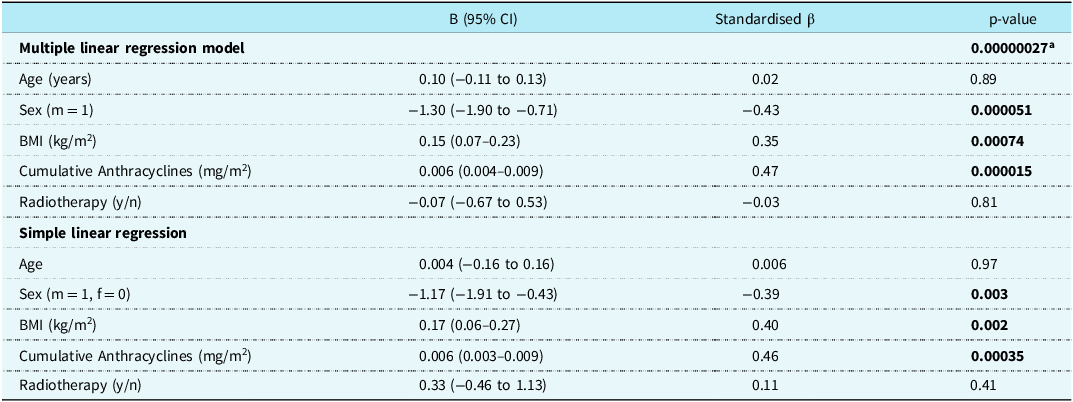
Leptin was associated with female sex and body mass index (p < 0.0001). With multiple linear regression controlling for age, sex, and body mass index (Table 2), leptin was significantly associated with cumulative anthracycline dose (p < 0.0001) but not with exposure to radiotherapy. None of the other cardiovascular proteins different between childhood cancer survivors and controls were associated with anthracyclines or radiotherapy in multiple linear regression model.
Associations of leptin with body mass index and exposure to anthracyclines and radiotherapy in childhood cancer survivors (n = 57)
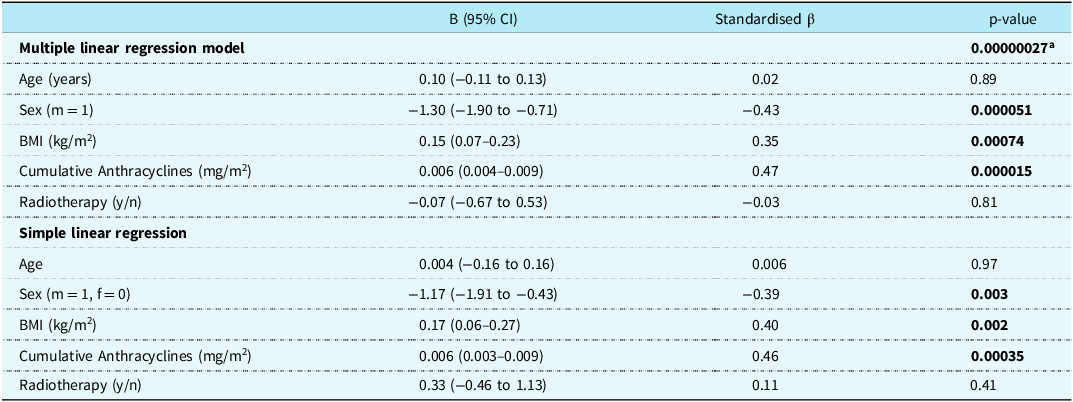
AC = anthracycline; BMI = body mass index; RT = radiotherapy.
Multiple linear regression model of leptin in childhood cancer survivors.
a p-value of multiple regression model.
We also investigated if leptin was associated with the cumulative steroid dose (prednisone and dexamethasone) and asparaginase in both simple and multiple regression (controlling for sex, age, and body mass index) analysis without significant associations (p > 0.15).
Also, decorin and pentraxin 3 were associated with body mass index (B(95% CI) = −0.022 (−0.042 to −0.002) β = 0.30, p = 0.030 and B(95% CI) = −0.07 (−0.12 to −0.03) β=0.42, p = 0.002) with simple linear regression analysis. None of the other cardiovascular proteins (kidney injury marker 1, selectin P ligand, alpha-1-microglobulin/bikunin precursor protein, and MER proto-oncogene tyrosine kinase) showed any significant associations.
Associations of cardiovascular proteins with other clinical and vascular measures among childhood cancer survivors
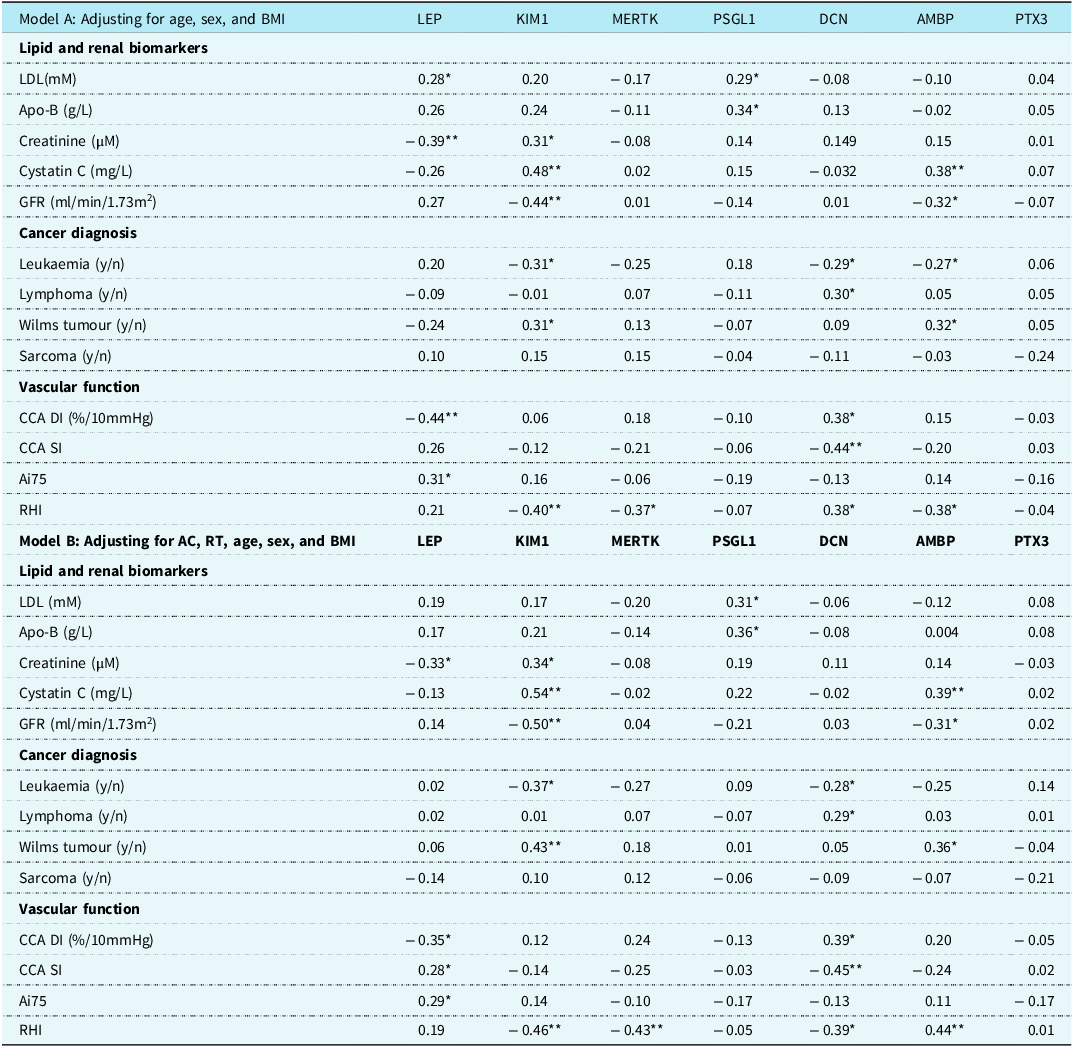
Partial correlation analyses of the seven cardiovascular proteins different between childhood cancer survivors and controls were performed among childhood cancer survivors (Table 3). We controlled for age, sex, and body mass index (A) and for anthracyclines and radiotherapy (B). Correlations were generally weak (0.2–0.4) and in some cases moderate (r > 0.4–0.5).
Correlations of cardiovascular proteins with clinical characteristics among childhood cancer survivors

AMBP = alpha − 1−microglobulin/bikunin precursor; Ai75 = Augmentation index normalised to a heartrate of 75 beats per minute; LEP = leptin; KIM1 = kidney injury molecule-1; MERTK = MER proto−oncogene tyrosine kinase; PSGL1 = selectin P ligand; DCN = decorin; PTX3 = pentraxin 3; BMI = body mass index; BP = blood pressure; HDL = high density lipoprotein; LDL = low-density lipoprotein; TG = triglycerides; TC = total cholesterol; Apo = apolipoprotein; GFR = glomerular filtration rate; DI = common carotid artery distensibility index; SI = common carotid artery stiffness index; CCA = common carotid artery; RHI = reactive hyperaemia index; AC = anthracycline; RT = radiotherapy.
Partial correlations of cardiovascular proteins different between childhood cancer survivors and healthy controls with baseline measures, including measures for arterial stiffness and endothelial function, adjusted for sex and age. ccSI, Ai75, and RHI are unitless. Correlation coefficients, r, are given.
* Denote a p-value of < 0.05.
** Denote a p-value of < 0.005, respectively.
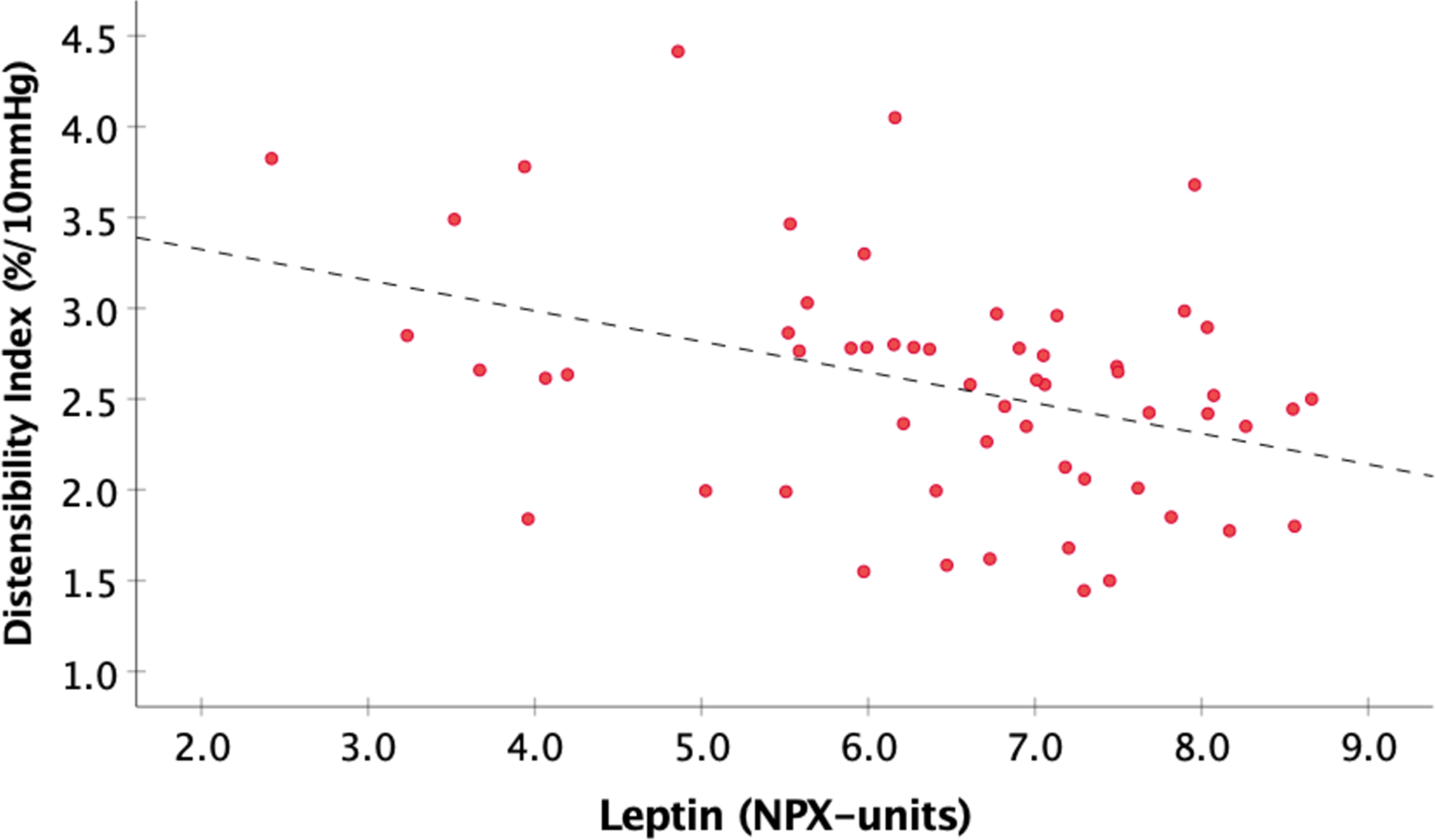
Leptin correlated with lower arterial distensibility (model A: r = −0.43, p = 0.001; model B: r = −0.35, p = 0.011) (Fig. 2). In model B, leptin correlated with higher carotid stiffness index and with augmentation index (r ≤ 0.28, p ≤ 0.044). Leptin also correlated with low-density lipoprotein in model A (r = 0.28, p = 0.042). There was no correlation of leptin with cancer diagnosis.
Correlation of leptin with carotid distensibility index; r = −0.38, p = 0.004. After adjustment for sex, age, and body mass index, in childhood cancer survivors; r, −0.43 and p = 0.001. With further adjustment for anthracycline treatment and radiotherapy; r = −0.35, p = 0.005. NPX = normalised protein expression.

Kidney injury molecule-1 correlated with the circulating markers for renal function cystatin C (model A: r = 0.48, p < 0.001; model B: r = 0.54, p < 0.001) and glomerular filtration rate (model A: r = −0.44, p < 0.001; model B: r = −0.50, p < 0.001). Alpha-1-microglobulin/bikunin precursor protein correlated with both cystatin C and glomerular filtration rate in both models (r ≤ −0.31, p ≤ 0.04). In model B, both of these renal biomarkers correlated with reactive hyperaemia index (r ≤ −0.44, p ≤ 0.001) and with Wilms disease (compared to other diagnoses, r ≤ 0.36, p ≤ 0.009).
Of the other circulating cardiovascular proteins that were different between childhood cancer survivors and controls, decorin correlated with carotid distensibility (r < 0.38, p < 0.007), stiffness index (r = −0.44, p < 0.001) and reactive hyperaemia index (r = 0.38, p = 0.005).
Discussion
In this cross-sectional proteomic study of different circulating cardiovascular proteins in young adult survivors of childhood cancer, we observed significantly higher levels of leptin in childhood cancer survivors than in healthy controls after taking the multiple tests into account. Higher exposure to cardiotoxic treatment, herein defined by the cumulative anthracycline dose, was associated with higher leptin. Further, higher leptin was associated with lower arterial distensibility, an important measure of early cardiovascular disease.
We also found nominally significantly higher levels of the proteins kidney injury molecule-1, selectin P ligand, MER proto-oncogene tyrosine kinase and alpha-1-microglobulin/bikunin precursor protein and nominally significantly lower levels of decorin and pentraxin 3 in childhood cancer survivors compared to controls.
In the current study, childhood cancer survivors had significantly higher leptin levels compared to controls. This finding is in concordance with previous metabolic studies of other childhood cancer survivor cohorts. Reference Konończuk, Muszyńska-Rosłan, Konstantynowicz-Nowicka, Krawczuk-Rybak, Chabowski and Latoch18,Reference Follin, Gabery and Petersén19 In childhood cancer survivors, leptin has been linked to obesity and central fat mass as well as to other components of the metabolic syndrome. Reference Morel, Léveillé and Samoilenko20,Reference Latoch, Muszynska-Roslan and Panas21 In the current study, leptin was positively correlated with low-density lipoprotein suggesting that leptin might reflect increased adiposity. Reference Latoch, Muszynska-Roslan and Panas21,Reference Jahnukainen, Heikkinen and Henriksson22
Pluimakers et al. (2021) in a systematic literature review and meta-analysis of different biomarkers in childhood cancer survivors proposed leptin as a new marker for the metabolic syndrome in childhood cancer survivors. They suggested that leptin could replace the waist-to-hip ratio to better identify childhood cancer survivors at risk of the metabolic syndrome due to abnormal fat deposition in childhood cancer survivors. Reference Pluimakers, van Santen and Fiocco23 Longstanding hyperleptinemia is linked to the development of leptin resistance and insulin resistance, diabetes type 2, and obesity as well as an increase in cardiovascular risk by its adverse effects on the cardiovascular system and inflammation. Reference Kang, Ok and Lee24,Reference Ghadge and Khaire25
In the current study, the cumulative anthracycline dose was associated with higher leptin. Our findings preclude us from speculating about the causes of this association. Previous research has demonstrated that childhood cancer survivors exposed to higher doses of anthracyclines likely are less physically fit and more prone to unhealthy diet, Reference Smith, Li and Nottage26 which could in turn promote increased adiposity and leptin levels. This may highlight the importance of preventive lifestyle measures in this population.
To the best of our knowledge, the association of leptin with vascular dysfunction in the current study has not previously been reported in childhood cancer survivors, but it is well documented in healthy young people, in the elderly and in obesity. Reference Kang, Ok and Lee24,Reference Singhal, Farooqi and Cole27,Reference Fantin, Disegna and Manzato28 Hyperleptinemia has been suggested to promote arterial stiffness indirectly via immune and inflammatory mechanisms. Reference Kang, Ok and Lee24 The high arterial stiffness in the current childhood cancer survivor cohort is likely to be multifactorial involving dyslipidemia and chemotherapy- and radiotherapy-related mechanisms. Reference Arnold, Merzenich and Wingerter29 In summary, based on previously published data Reference Morel, Léveillé and Samoilenko20,Reference Pluimakers, van Santen and Fiocco23 and the data in the current study, the high leptin levels in childhood cancer survivors indicate that components of the metabolic syndrome, such as obesity, in childhood cancer survivors need to be evaluated differently and screened for at a younger age than in the general population.
In the current study, endothelial dysfunction was correlated with kidney injury molecule-1 and alpha-1-microglobulin/bikunin precursor protein. They have both been suggested as prognostic markers for chronic kidney disease. Reference Robles, Lopez Gomez, Garcia Pino, Valladares, Hernandez Gallego and Cerezo30,Reference Liu, Debnath and Mosoyan31 The observed correlation between kidney injury molecule-1 and alpha-1-microglobulin/bikunin precursor protein and vascular endothelial dysfunction, which is one of the key mechanisms in the development of cardiovascular disease, is very interesting since subclinical chronic kidney disease is an independent risk factor for cardiovascular disease. Reference Sarnak, Amann and Bangalore32 This finding warrants further studies of the interplay between cardiovascular disease and endothelial and renal dysfunction in childhood cancer survivors.
In the current study, kidney injury molecule-1 and alpha-1-microglobulin/bikunin precursor protein were correlated with cystatin C and glomerular filtration rate. Also, Wilms disease was associated with higher levels of these proteins suggesting that kidney injury molecule-1 and alpha-1-microglobulin/bikunin precursor protein might be useful markers in the follow up of Wilms patients. Reference Chu, Ehlayel and Ginsberg33
In the current study decorin, a proteoglycan found in the extracellular matrix Reference Berezin, Berezin, Lichtenauer and Pichler34 was lower in childhood cancer survivors than in controls. In a study of hepatocellular carcinoma patients, decorin was correlated with better cardiopulmonary function (as measured by 6-minute walk test) and overall survival. Reference Kawaguchi, Yoshio and Sakamoto35 Transforming growth factor-β is counteracted by decorin, and decorin has been suggested to protect against cardiac disease by inhibiting cardiac fibrosis. Reference Berezin, Berezin, Lichtenauer and Pichler34 The mechanism of the observed decreased decorin levels in our childhood cancer survivor cohort is unclear, and whether downregulation of decorin is important for cardiovascular disease in childhood cancer survivors should be investigated further.
It would be reasonable to suggest that the observed dyslipidemia in the current study would contribute to a pro-inflammatory milieu and that this would also explain the observed vascular and endothelial dysfunction. Reference Hong, Lin and Ye36
Pentraxin 3, an anti-inflammatory protein suggested to be protective in cardiovascular disease, Reference Doni, Mantovani, Bottazzi and Russo37 was lower in childhood cancer survivors than in controls, suggesting some dysregulation of inflammation. Also, selectin P ligand, a cellular adhesion molecule responsible for the leukocyte-endothelial cell interplay and implicated in inflammation and atherosclerosis formation, was higher in childhood cancer survivors than in controls in the current study. Reference Ye, Guo and Wang38 Of note, we did not find any difference in C-reactive protein between the childhood cancer survivors cohort studied herein and controls. This might explain that inflammatory markers in the protein analysis such as interleukin 6 were not different.
Interestingly, most of the analysed circulating cardiovascular proteins did not differ significantly between childhood cancer survivors and controls even though childhood cancer survivors exhibit both dyslipidemia and increased arterial stiffness and endothelial dysfunction. These proteomic panels have previously been shown to be related to cardiac remodelling. Reference Weismann, Hlebowicz, Åkesson, Liuba and Hanseus39,Reference Pettersson-Pablo, Nilsson, Breimer and Hurtig-Wennlöf40 Our lack of difference between the groups could be due to their relatively young age and the absence of concomitant chronic diseases. Further research is warranted to identify sensitive biomarkers for the detection of early cardiovascular disease in childhood cancer survivors. Reference Tonry, Russell-Hallinan and McCune11
Limitations
Limitations in the current study include the relatively small number of participants and the possibility of enrolment bias. Of the 7 proteins different in the childhood cancer survivors group, only one was statistically significantly different in the primary analysis taking multiple tests into account. A type I error cannot be excluded from the other proteins. In addition, we performed a large number of post-hoc statistical tests in our secondary analyses of associations between proteins and cardiovascular risk factors and vascular properties without taking the multiple tests into account. Therefore, these associations should be interpreted with caution. Yet, several of the included proteins were inter-correlated and a stricter approach could have excluded important observations.
Conclusions
With a proteomic approach, we found in a panel of 92 cardiovascular proteins that leptin was increased in childhood cancer survivors compared to controls. Higher exposure to cardiotoxic treatment, herein defined by the cumulative anthracycline dose, was associated with higher leptin. Leptin was also correlated with lower carotid distensibility adjusted for anthracyclines suggesting that leptin levels might be a contributing factor to vascular dysfunction in childhood cancer survivors. These findings indicate a role for leptin in driving the cardiovascular disease burden in this population. Leptin might thus be a promising marker in the cardiometabolic follow up in childhood cancer survivors.
Also, the correlation of the two markers of renal damage, kidney injury molecule-1 and alpha-1-microglobulin/bikunin precursor protein, with renal and endothelial dysfunction is interesting but merits additional confirmatory studies before firm conclusions can be drawn.
Supplementary material
The supplementary material for this article can be found at https://doi.org/10.1017/S1047951124000076.
Author contribution
OB; Conceptualisation; Methodology; Formal analysis; Investigation; Writing—original draft; Writing—review & editing; Visualisation.
TF; Data curation; Methodology; Formal analysis; Investigation; Writing—review & editing.
JÄ; Methodology; Writing—review & editing.
CW; Methodology; Writing—review & editing.
IØ; Methodology; Writing—review & editing.
TW; Methodology; Writing—review & editing.
PL; Conceptualisation; Methodology; Investigation; Writing—review & editing; Project administration; Funding acquisition; Supervision.
Financial support
This study was funded by the Swedish Childhood Cancer Foundation and the Swedish Heart-Lung Foundation (grant sp2017-0003/P.L.) and by Lund University (P.L.). The study is an original work by the authors and has not been published previously.
Data sharing statement
The data analysed in this study are available upon request from the corresponding author (Olof Broberg, olof.broberg@med.lu.se).




 Open access

