





Introduction
Transmission of pathogenic and multidrug-resistant microorganisms is relevant for patients because it can result in difficult-to-treat healthcare-associated infections (HAIs). The inanimate hospital environment is increasingly considered to contribute to in-hospital transmission. Reference Otter, Yezli and French1 Textiles, including clothing, bedding, and curtains, are known to carry bacteria, viruses, and fungal organisms, and thus, can act as reservoirs and fomites. Reference Mitchell, Spencer and Edmiston2–Reference Sattar, Springthorpe, Mani, Gallant, Nair and Scott5 A recent report judged possible textile-associated outbreaks of microorganisms in healthcare settings to be relevant, Reference Kampf6 but others considered the infection risk from textiles being low. Reference Owen and Laird7
The degree to which textiles act as fomites is still unclear. However, the potential role of textiles in healthcare-associated microbial transmission has sparked interest on fabrics with antimicrobial properties. Such textiles come with the promise of lowering the risk of healthcare-acquired infections by limiting textile-related transmission of microorganisms. Detailed knowledge on pathogen transfer by textiles can help infection prevention and control (IPC) to identify high-risk situations and to develop protocols for transfer mitigation, including the use of antimicrobial fabrics. The aim of this systematic review was to summarize the evidence on dimension and risk factors of pathogen transfer by textiles in healthcare.
Methods
Search strategy
We followed the guidelines of Preferred Reporting Items for Systematic Reviews and Meta-Analysis (PRISMA). The review was registered at the International Prospective Register of Systematic Reviews (PROSPERO) (No. CRD42021290377). Cochrane, Medline/Ovid, EMBASE, and Web of Science were searched for relevant papers (see Appendix: Search strategy). Studies meeting the inclusion criteria outlined below were analyzed, abstracted, and cross-referenced. Reference lists were screened for additional relevant studies. Studies in English, French, Italian, Spanish, and German, published before 24 August 2021 were included if an abstract in English was available.
Selection criteria
The following criteria were applied for study inclusion:
Measurement of the transfer of microorganisms (bacteria, fungi, viruses, or parasites) from an origin material to a destination material, with either origin or destination material being a textile.
Textiles were made of fibers from either natural or synthetic sources and were produced by weaving, knitting, crocheting, knotting, tatting, felting, bonding, or braiding (including e.g. scrubs, isolation gowns, excluding e.g. toilet paper, plastic aprons).
The transfer mechanism was clearly described (including e.g. duration of contact, friction, pressure).
The microbial methods to contaminate, detect, and quantify microorganisms and to assess transmission probabilities were described in detail.
The transfer of microorganisms was quantified, allowing mathematical and statistical analysis.
The tested textiles can be used in healthcare.
We excluded studies investigating textiles treated with antimicrobial agents.
Data extraction, data synthesis, and quality assessment
Two investigators (N.G. and A.W.) independently screened titles and abstracts, assessed full texts for eligibility, and extracted data. Discrepancies were resolved through discussion and joint review of the full text; studies were included if both investigators agreed that the inclusion criteria were met. Extracted data were compared to ensure consistency.
A total of 18 variables were extracted (see Appendix Table 1: Author; Year; Microorganism; Carrier Material of Microorganism; Origin Site; Inoculum at Origin Site; Destination Site; Environmental Conditions; Action Executed for Transfer; Number of Experiment Repetitions; Microbiological Sampling Method; Culturing Method; Controls to Assess Inoculum; Controls/Recovery Testing (efficiency of method in retrieving microorganisms from a surface); Transfer Proportion in %; Own Calculations to Assess % of Transfer; Results Extrapolated from Figure in %; and Significant Results Comparison).
Calculations (Equation 1) on transfer proportions were conducted if not reported by the study.
 $${{\rm{Transfer}}\;{\rm{percentage}}\;\left( \% \right)\; = \;{{\left( {{{CFU\;on\;destination\;surface} \over {recovery\;rate\;of\;destination\;sampling\;method}}} \right)} \over {\left( {{{CFU\;on\;origin\;surface} \over {recovery\;rate\;of\;origin\;sampling\;method}}} \right)}}\;x\;100\;}$$
The level of analysis was the transfer experiment. In publications reporting different transfer mechanisms, data of all mechanisms were extracted. Last, statistically significant results of comparative tests assessing differences in transfer percentage between e.g. textile types, bacterial strains, transfer mechanism, or moisture were extracted.
Due to the heterogeneity of studies, with large variability of tested microorganisms, textiles, origin and destination materials, and sampling methods, we were not able to perform a meta-analysis. For descriptive analysis, studies were grouped based on shared origin and destination materials. Within each group, key findings were summarized, patterns identified, and discrepancies highlighted.
We applied a modified Downs and Black Reference Downs and Black8 checklist for quality assessment (Appendix Table 2).
Results
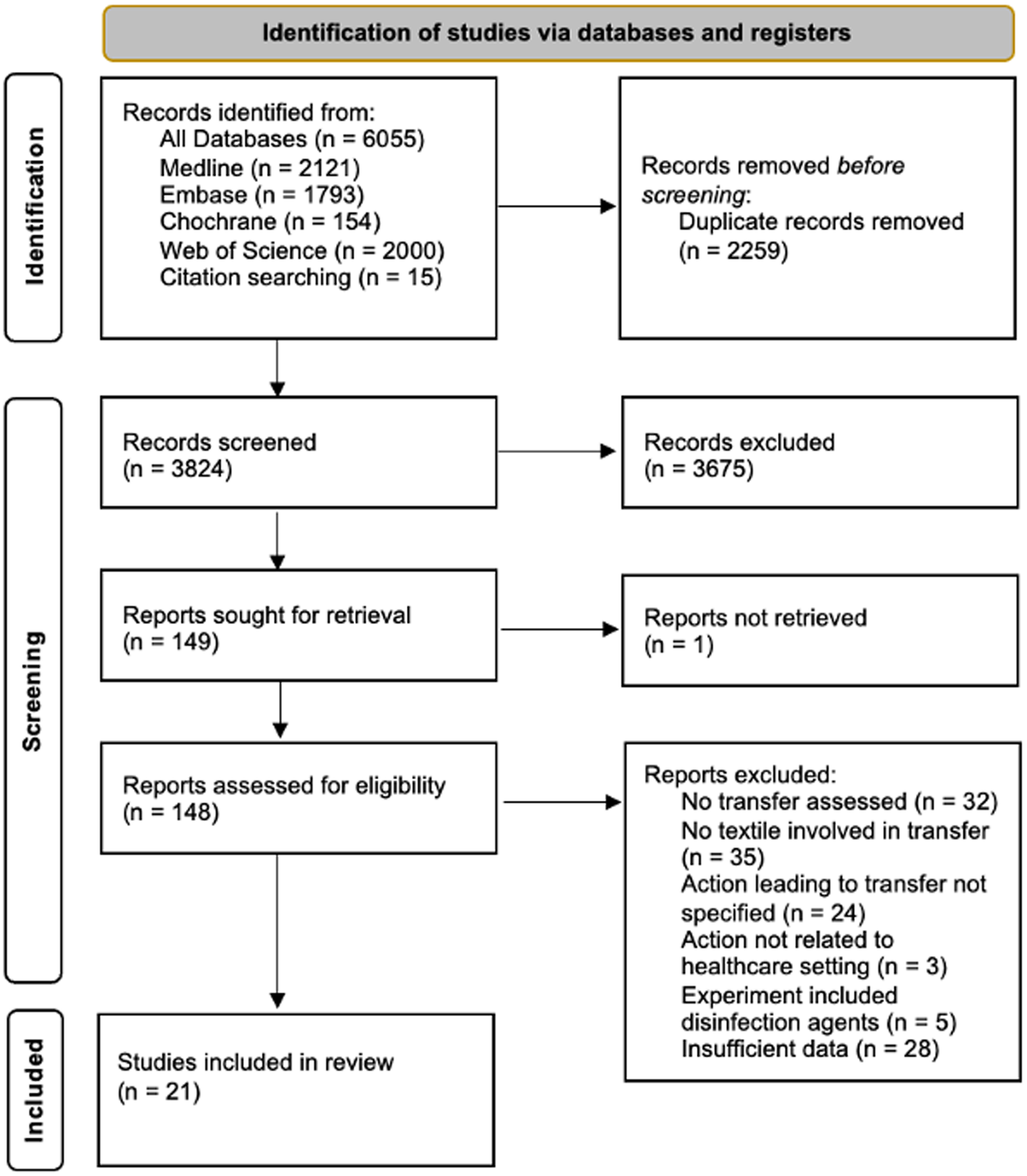
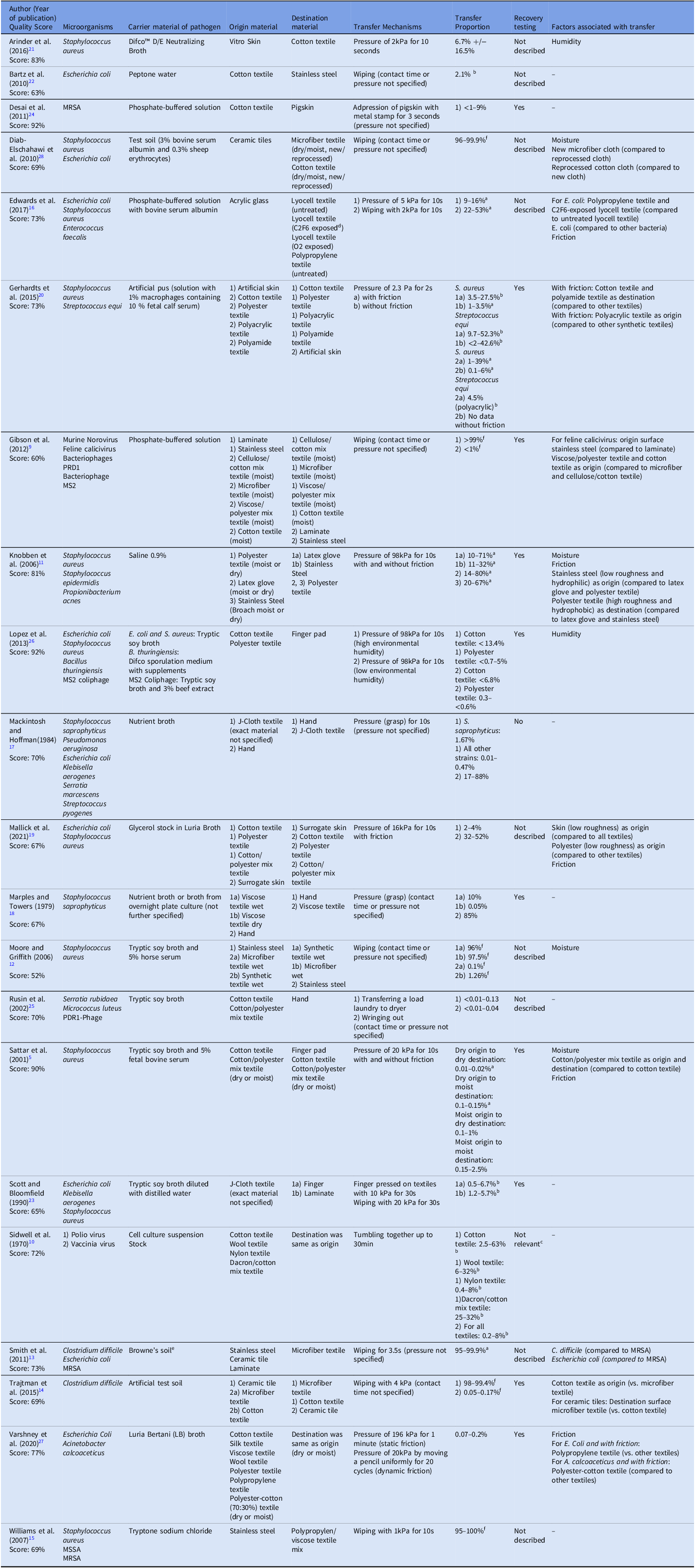
After deduplication, 3824 titles and abstracts were screened. Of these, 148 studies were reviewed in full text (Figure 1). Finally, a total of 21 experimental studies met the eligibility criteria and were included for data analysis. They were published between 1970 and 2021 and reported 490 different transfer experiments. Table 1 summarizes the results of the 490 different experiments; Appendix Table 1 describes all variables and the results of each transfer experiment in detail.
Study inclusion flow diagram. This diagram outlines the selection process of studies, from initial identification through final inclusion. It displays the number of records at each stage. Reasons for exclusions are noted for full-text screened studies. This diagram follows the standard PRISMA format.

Summary overview of the included studies

Note. MSSA, methicillin-susceptible Staphylococcus aureus; MRSA, methicillin-resistant Staphylococcus aureus; kPa, kilopascal.
a Results were extrapolated from Figures.
b Transfer percentage obtained via own calculations.
c Same origin and destination, same sampling technique on both origin and destination surface.
d Exposed to hexafluoroethane (C2F6) gas plasma.
e Defined artificial test soil used by National Health Service UK to validate equipment cleaning.
f Numerical values were extrapolated from Figures and transfer percentage was obtained via own calculations.
Twelve (57%) studies reported transfer proportions in the result section, with 5 (24%) studies only displaying transfer proportions in graphs and figures without reporting exact numbers. Calculations of transfer proportions from the authors of the present review were necessary in 9 (43%) studies. The most frequently investigated textile was cotton (13 studies and 103 experiments). Staphylococcus aureus was the most commonly investigated microorganism (13 studies and 109 experiments), followed by Escherichia coli (9 studies and 124 experiments). Two studies conducted transfer experiments with viruses. Reference Gibson, Crandall and Ricke9,Reference Sidwell, Dixon, Westbrook and Forziati10 No experiments were published testing parasites or fungi. A wide variety of carrier materials for the microorganisms were used, with tryptone soy broth being the most frequent (6 studies and 103 experiments). Sampling methods were heterogeneous, with swabbing being the most frequently used (6 studies and 59 experiments). Only 10 studies reported on the recovery rate of the sampling method.
Transfer proportions stratified by origin and destination materials
Origin materials were textiles, solid surfaces, and skin or “skin surrogates” such as artificial or pigskin, in sixteen, seven, and five studies, respectively. Destination materials were textiles, solid surfaces, and skin or skin surrogates in sixteen, five, and nine studies, respectively. One study used latex gloves as origin and destination material in textile transfer experiments. 11
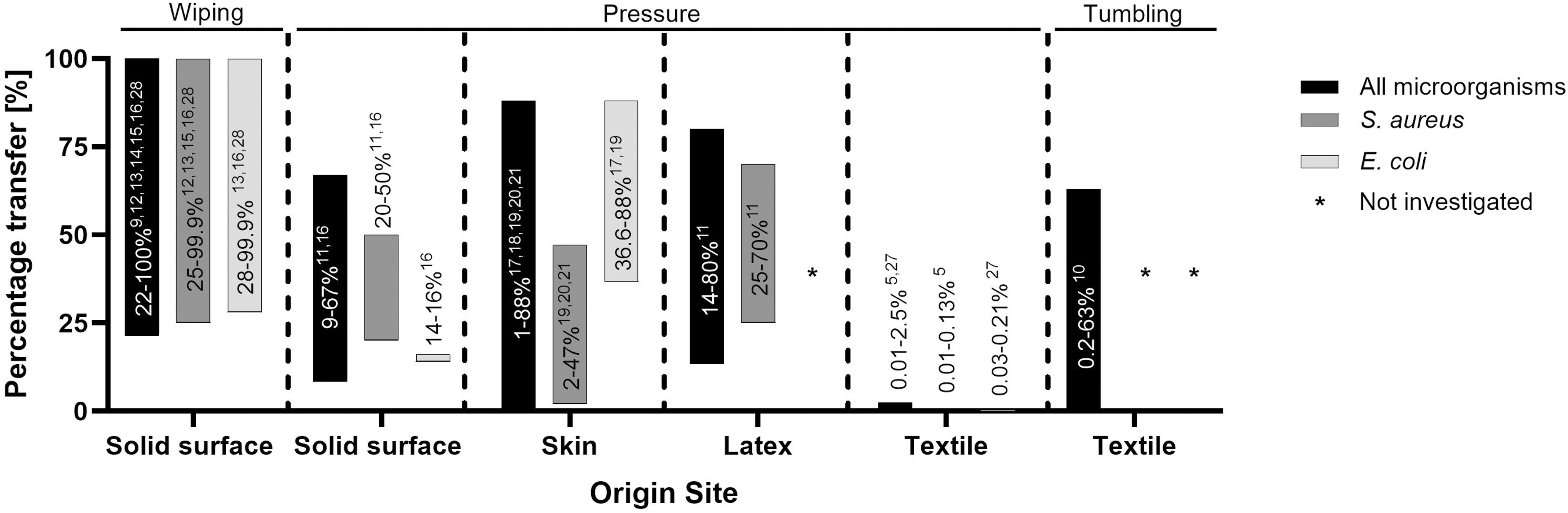
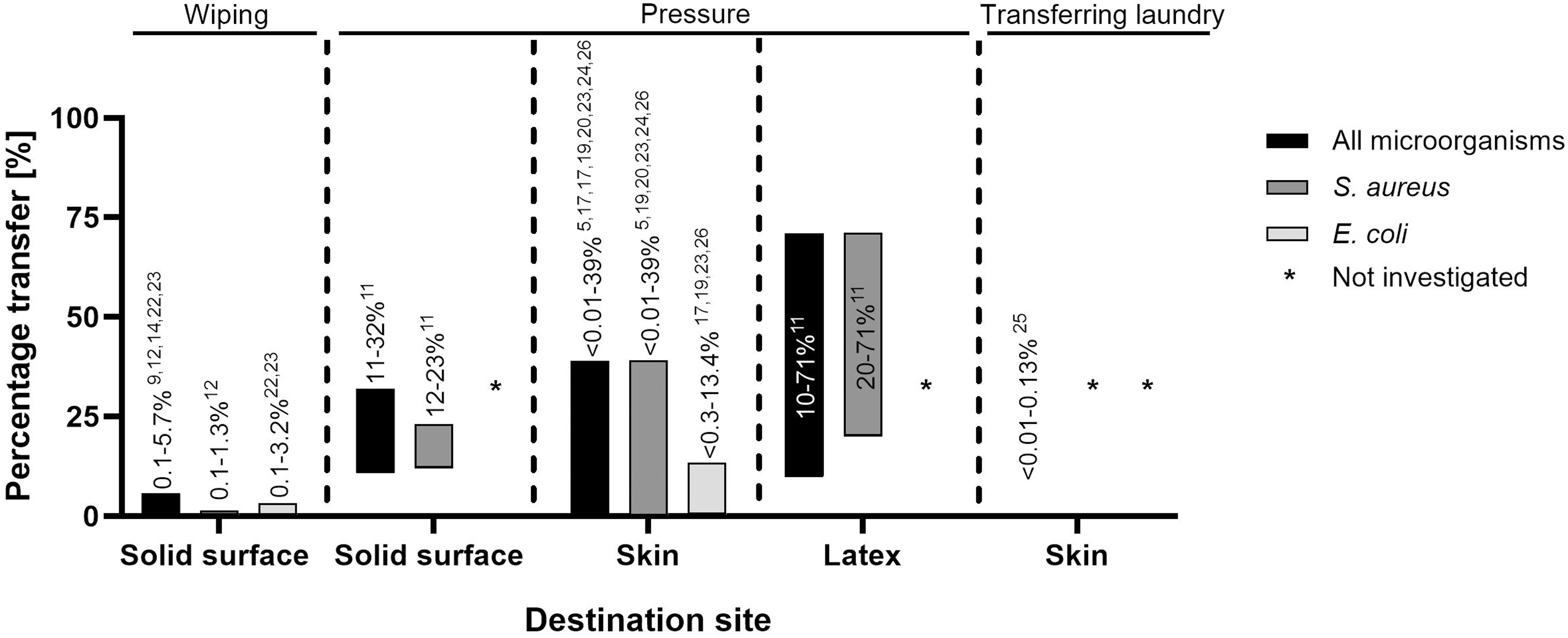
Figure 2 illustrates experiments from other materials to textiles; Figure 3 illustrates experiments from textiles to other materials. Both figures include information on all microorganisms investigated, and for S. aureus and E. coli specifically.
Transfer proportions from other materials to textiles. This figure shows the proportion of transfer from various tested materials to textiles. The y-axis represents the percentage of transfer, while the x-axis lists the material-to-textile combinations. The three bars indicate the transfer proportion for all microorganism, S. aureus and E. coli, with references to the studies that investigated each case. On top of each bar section the transfer mechanism is specified.

Transfer proportions from textiles to other materials. This figure shows the proportion of transfer from various tested textiles to other materials and textiles. The y-axis represents the percentage of transfer, while the x-axis lists the textile-to-material combinations. The three bars indicate the transfer proportion for all microorganism, S. aureus and E. coli, with references to the studies that investigated each case. On top of each bar section the transfer mechanism is specified.

Transfers from solid materials to textiles
Eight studies reported transfer from solid materials to textiles with transfer proportions from 9% to 100%. Transfer proportions of 85% to 100% were reported in experiments with transfer from an inoculated smooth solid material (ceramic tile, stainless steel, and laminate) to a textile cleaning cloth by wiping. Reference Gibson, Crandall and Ricke9,Reference Moore and Griffith12–Reference Diab-Elschahawi, Assadian, Blacky, Stadler, Pernicka and Berger28 Acrylic glass was the origin in one study, with lower transfer proportions of 22–53% by wiping. Reference Edwards, Best, Connell, Goswami, Carr and Wilcox16 The transfer from solid materials to textiles by simple contact (pressure) was investigated by two studies, with transfer proportions between 9% and 16% for E. coli, S. aureus, and E. faecalis after pressure for 10 seconds, Reference Edwards, Best, Connell, Goswami, Carr and Wilcox16 and between 20 and 67% for S. epidermidis, S. aureus, and P. acnes after pressure for 10 seconds with and without friction. 11
Transfers from skin to textiles
Five studies investigated the transfer from skin or skin surrogates to textiles and reported highly variable transfer proportions from 1% to 88%. Proportions of 17–88% were reported in studies applying a grasping (pressure) action. Reference Mackintosh and Hoffman17,Reference Marples and Towers18 In experiments applying pressure with friction, the transfer proportions ranged from 1% to 52%. Reference Mallick, Gupta and Sharma19,Reference Gerhardts, Henze, Bockmuhl and Hofer20 In experiments with pressure only, proportions were mostly below 10%. Reference Gerhardts, Henze, Bockmuhl and Hofer20,Reference Arinder, Johannesson, Karlsson and Borch21
Transfer from textiles to solid materials
Five of six studies that investigated the transfer from textiles to solid materials applied wiping. All five of these reported transfer proportions below 6%. Reference Gibson, Crandall and Ricke9,Reference Moore and Griffith12,Reference Trajtman, Manickam and Alfa14,Reference Bartz, Ritter and Tondo22,Reference Scott and Bloomfield23 The remaining study, which investigated transfer via pressure between polyester textile and stainless steel for 10 seconds with and without friction, reported a transfer proportion of 11–32% for gram-positive organisms. 11
Transfer from textiles to skin
In the nine studies that investigated the transfer from textiles to skin or skin surrogates, transfer proportions ranged from <1% to 39%, with seven studies reporting transfer proportions of less than 10%. Reference Sattar, Springthorpe, Mani, Gallant, Nair and Scott5,Reference Mackintosh and Hoffman17–Reference Mallick, Gupta and Sharma19,Reference Scott and Bloomfield23–Reference Rusin, Maxwell and Gerba25 However, one study reported a transfer proportion of up to 39% for S. aureus and S. equi to artificial skin by pressure, and one study reported a transfer proportion of <13.4% when a finger pad contacted textile in high environmental humidity. Reference Gerhardts, Henze, Bockmuhl and Hofer20,Reference Lopez, Gerba, Tamimi, Kitajima, Maxwell and Rose26
Transfer between textiles
Three studies examined textile-to-textile transfers for S. aureus, Polio and Vaccinia viruses, and Acinetobacter calcoaceticus and E. coli, respectively. Reference Sattar, Springthorpe, Mani, Gallant, Nair and Scott5,Reference Sidwell, Dixon, Westbrook and Forziati10,Reference Varshney, Pandey, Gupta and Sharma27 Pressure transfer was up to 2.5% for S. aureus, and up to 0.2% for E. coli and A. calcoaceticus. Polio and vaccinia virus transfer varied from <1% to 63% when textiles were tumbled together.
Factors influencing transfer proportion
Thirteen studies examined how factors such as material, moisture, transfer mechanism, and type of microorganism influence the transfer of microorganisms.
Origin and destination material
Several studies reported variations in microorganism transfer depending on the textile. Three studies reported that synthetic cloths such as polyester, polyacrylic, and polyamide cloths had higher transfer proportions than pure cotton cloth. Reference Sattar, Springthorpe, Mani, Gallant, Nair and Scott5,Reference Mallick, Gupta and Sharma19,Reference Varshney, Pandey, Gupta and Sharma27 Microfiber cloths undergoing several washing cycles were reported to remove microorganisms better than new microfiber cloths. Reference Smith, Gillanders, Holah and Gush13 One study reported conflicting results with better removal of microorganisms from reprocessed cotton cloths compared to reprocessed microfiber cloths. Reference Diab-Elschahawi, Assadian, Blacky, Stadler, Pernicka and Berger28
The transfer from surrogate skin to textile was reported to be almost 10 times higher than reciprocally. Reference Mallick, Gupta and Sharma19 Cotton/polyester blend textile were described to be both better donor and recipient material than pure cotton textile. Reference Sattar, Springthorpe, Mani, Gallant, Nair and Scott5 Contrary to these findings, another study observed a greater transfer proportion to cotton textiles than to polyester textiles. Reference Gerhardts, Henze, Bockmuhl and Hofer20 In a separate study, which investigated a different microorganism and compared polypropylene and lyocell textile, higher transfer proportions were reported to polypropylene and hexafluoroethane-treated lyocell textile than to untreated lyocell textile. Reference Edwards, Best, Connell, Goswami, Carr and Wilcox16
Moisture and humidity
All four studies investigating the effect of moisture reported increased transfer proportions with increasing moisture. Reference Sattar, Springthorpe, Mani, Gallant, Nair and Scott5,11,Reference Moore and Griffith12,Reference Diab-Elschahawi, Assadian, Blacky, Stadler, Pernicka and Berger28 This was true for both textiles and other materials and whether materials were origin Reference Sattar, Springthorpe, Mani, Gallant, Nair and Scott5,11 or destination. Reference Moore and Griffith12,Reference Diab-Elschahawi, Assadian, Blacky, Stadler, Pernicka and Berger28 One study reported two to threefold higher transfer proportions when the original material was moistened, compared to experiments in dry conditions. 11 Moistening both origin and destination materials resulted in the highest transfer proportions compared to experiments where materials were dry. Reference Sattar, Springthorpe, Mani, Gallant, Nair and Scott5
Similarly, transfer proportions increased when transfer was performed in high relative environmental humidity, without moistening. Reference Arinder, Johannesson, Karlsson and Borch21,Reference Lopez, Gerba, Tamimi, Kitajima, Maxwell and Rose26
Action leading to transfer
Six studies reporting differences of transfer mechanisms found that the application of friction, or dynamic wiping, in comparison to static wiping, resulted in higher transfer proportions, Reference Sattar, Springthorpe, Mani, Gallant, Nair and Scott5,11,Reference Edwards, Best, Connell, Goswami, Carr and Wilcox16,Reference Mallick, Gupta and Sharma19,Reference Gerhardts, Henze, Bockmuhl and Hofer20,Reference Varshney, Pandey, Gupta and Sharma27 quantified as increase of 5–61% Reference Varshney, Pandey, Gupta and Sharma27 or by a factor of five. Reference Sattar, Springthorpe, Mani, Gallant, Nair and Scott5
Microorganism
One study described that E. coli was transferred more easily compared to Gram-positive bacteria such as S. aureus and E. faecalis from skin to synthetic fibers. Reference Edwards, Best, Connell, Goswami, Carr and Wilcox16 Similar results were reported by others, where E. coli was more easily transferred compared to methicillin-resistant Staphylococcus aureus (MRSA). Reference Smith, Gillanders, Holah and Gush13 Others found no statistically significant difference between E. coli and S. aureus, whether transferred from skin to textile or reciprocally. Reference Mallick, Gupta and Sharma19 Appendix Tables 3 and 4 provide detailed data on specific textiles and the transfer proportions of S. aureus and E. coli.
Wiping of solid material with textiles, independently from the textile, resulted in lower removal of Murine norovirus compared to other viruses (Feline calicivirus and Bacteriophages). Reference Gibson, Crandall and Ricke9
Quality of the included studies
The mean study quality score of the modified Downs and Black Checklist was 73% and ranged from 52 to 92% (Appendix Table 5). The most common reasons for lower scores included failing to report estimates of random variability in transfer proportions (n = 18, 86%), environmental conditions (n = 16, 76%), and results of transfer proportions as percentages (n = 9, 43%).
Discussion
This systematic review summarizes the existing literature on the transfer of microorganisms from and to textiles. We found considerable heterogeneity for all relevant study variables such as the origin and destination material, investigated pathogens, carrier materials, the origin and destination surface, and transfer mechanisms. This heterogeneity resulted in a broad range of reported transfer proportions from less than 1% to up to 100%. A few key factors associated with transfer of microorganisms were identified such as moisture, application of friction, and specific types of textiles.
In the hospital context, two types of textiles can be distinguished: materials to absorb microorganisms such as cleaning cloths, and materials to resist contamination with microorganisms such as bedding or clothing. Weaving patterns, density as well as materials roughness affect bacterial binding and disposal. Reference Varshney, Pandey, Gupta and Sharma27,Reference Bakterij29 Our review found that synthetic textiles, particularly polyester and similar compounds, transfer bacteria more easily than cotton. Reference Sattar, Springthorpe, Mani, Gallant, Nair and Scott5,Reference Mallick, Gupta and Sharma19,Reference Varshney, Pandey, Gupta and Sharma27 Roughness plays a key role here, with smooth materials facilitating transfer. Polyester is a particularly smooth material, followed by polyester compounds, while cotton, or polypropylene (commonly used in isolation gowns) is rougher. Reference Mallick, Gupta and Sharma19,Reference Varshney, Pandey, Gupta and Sharma27 Synthetic textiles, such as polyester, may have enhanced transfer proportions owing to their elevated coefficient of friction (i.e. representing the force needed to move one surface over another) and hydrophobic characteristics, both of which are associated with improved transfer efficiency to and from materials. Reference Mallick, Gupta and Sharma19,Reference Møllebjerg, Palmén, Gori and Meyer30 This aligns with research indicating that bacteria preferentially attach to surfaces that resemble their own surface energy, structure, and hydrophobic characteristics. Reference Edwards, Best, Connell, Goswami, Carr and Wilcox16 Type and physical properties of the textile material play an important role and can either prevent or facilitate the transfer of microorganisms. When comparing the results on the proportion of microorganisms transferred to textiles, our literature review found contradicting results. While one study reported higher transfer to a cotton/polyester blend than to cotton, another found greater transfer to cotton than to polyester. Reference Sattar, Springthorpe, Mani, Gallant, Nair and Scott5,Reference Gerhardts, Henze, Bockmuhl and Hofer20
Humidity and moistening of surfaces are important determinants. Transfer of microorganisms from and to textiles increases with the presence of moisture on either the origin or destination material. Low humidity affects microbial growth, metabolism, and survival, causing shrinkage and suppressing replication, which all may reduce microbial transfer. Reference Qiu, Zhou, Chang, Liang, Zhang and Lin31 In daily practice, transfer is thus more likely to occur from or to moist textiles such as towels or shower curtains. Also, material contaminated with body fluids are more likely to facilitate the transmission of microorganisms. While handling of body fluids is perceived a risk by most healthcare workers and appropriate hand hygiene measures are recommended, 32 the risk from wet towels, cloths, or shower drains likely often is underestimated.
The application of friction was another factor that increased the transfer of microorganisms. Friction promotes transfer by mechanically breaking hydrophobic bonds, van der Waals forces, and hydrogen bonds. Reference Mallick, Gupta and Sharma19 Friction is used intentionally in cleaning or hand drying with towels but also unintentionally in touching patients for mobilization or repositioning or firmly grasping textiles, e.g. privacy curtains. Based on our findings, all these actions are associated with increased transfer risk. Brief, dry, non-frictional contacts such as lightly touching a patient’s bedding, may have a lower transfer potential. Awareness of such specific risks can help guide infection control practices.
Our systematic literature review had several limitations. First, we could not conduct a meta-analysis due to heterogeneity of the included studies. Differences concerned experimental setups, sampling methods, and the reporting of outcomes. We still summarized the existing evidence by grouping studies with similar features to allow data synthesis to be structured, transparent, and focused. Second, the fact that only about half of the included studies investigated the recovery rate of their sampling methods introduces potential bias to the reported transfer proportions. This highlights the need for standardized protocols in future research for reliable and comparable data. Finally, several studies only displayed transfer proportions in figures without reporting numerical data or did not report transfer proportions at all. Transfer proportions were then calculated by the systematic review team based on the reported raw data. However, this introduced a potential source of error. We therefore clearly indicated studies in which results were extrapolated or self-calculated.
In conclusion, this review highlights the complexity of microbial transfer between textiles and other materials, influenced by a multitude of factors including textile material, transfer mechanism, and environmental conditions. While the risk of microbial transfer by a short non-frictional contact of textile with other material is low, the presence of humidity and friction increases the likelihood of transmission considerably. The result of this review informs future guidelines on the use of personal protective equipment such as gowns or aprons, on hospital laundry policies, and on the selection of textiles in healthcare.
Supplementary material
To view supplementary material for this article, please visit https://doi.org/10.1017/ice.2025.10299.
Acknowledgments
We would like to thank Sabine Klein, Liaison Librarian at the University Library Zurich, for her valuable assistance with the literature search strategy and execution.
Author contribution
NG and AW designed the study. Title and abstract screening, as well as full-text review of all potentially eligible articles, were done independently by NG and AW; disagreements were resolved by consensus. NG and AW extracted, analyzed, and interpreted the data. NG and VV drafted the manuscript, and AW and WZ provided a critical review. All authors agree with the content and conclusions of this manuscript.
Financial support
Funding for this review was received from Innosuisse under grant number 40076.1 IP-LS.
Competing interests
All authors report no conflicts of interest relevant to this article.


 Open access

