


Stigma can be understood as consisting of three key elements: a problem of knowledge (ignorance/misinformation), a problem of attitudes (prejudice) and a problem of behaviour (discrimination).Reference Thornicroft, Rose, Kassam and Sartorius1 Two key reviews have identified interpersonal contact and educational materials (especially for adolescents) as effective intervention strategies to address stigma.Reference Thornicroft, Mehta, Clement, Evans-Lacko, Doherty and Rose2, Reference Corrigan and Watson3 Stigma is a major cause for non-utilisation or under-utilisation of mental health services globally,4 and this is an even greater issue in low- and middle-income countries (LMICs) where there is little evidence from research on which interventions are effective.Reference Semrau, Evans-Lacko, Koschorke, Ashenafi and Thornicroft5 Earlier research from the current study population showed that – following an anti-stigma campaign – there were definite improvements in the attitude and behaviour scores, with lesser effects on knowledge scores;Reference Maulik, Tewari, Devarapalli, Kallakuri and Patel6 a finding that has also been previously reported.Reference Thornicroft, Mehta, Clement, Evans-Lacko, Doherty and Rose2 Perceptions about help seeking also improved significantly. Qualitative data showed that social contact (in the form of a video of a person with a mental disorder speaking about their experience) and a drama depicting domestic violence, its effect on mental health and benefits of help seeking were the two most effective intervention strategies identified by the population. Those results were based on a mixed-methods, pre–post assessment conducted immediately following a 3-month anti-stigma campaign which covered a rural adult population of about 2000 people in two villages in the south Indian state of Andhra Pradesh.
The aim of this article is to report the longitudinal assessment of this cohort whom we re-interviewed about 2 years after the baseline evaluation. We wanted to assess the sustained impact of the initial 3-month intensive anti-stigma campaign, specifically in the absence of any further interventions. The campaign was part of a larger study called Systematic Medical Appraisal, Referral and Treatment (SMART) Mental Health.Reference Maulik, Devarapalli, Kallakuri, Praveen, Jha and Patel7
Method
SMART Mental Health was conducted in the West Godavari district in the south Indian state of Andhra Pradesh. The aims were to assess the feasibility, acceptability and preliminary effectiveness of a mobile technology-enabled model used by primary healthcare workers for the delivery of mental health services. The key components of this complex intervention focused on the delivery of mental health services for common mental disorders (CMDs) (stress, depression and suicide risk) and involved: conducting an anti-stigma campaign prior to the delivery of health services across the villages; training of primary healthcare workers, i.e. lay village health workers known as Accredited Social Health Activists (ASHAs), and doctors on evidence-based tools; developing a mobile technology-based, electronic decision-support system based on those tools to facilitate the work of the health workers and doctors; and developing a system that provided a mechanism to follow-up with people with identifiable CMD using cloud computing and voice messages delivered through an algorithm-based, interactive voice-response system that provided reminders to patients, health workers and doctors.Reference Maulik, Devarapalli, Kallakuri, Praveen, Jha and Patel7, Reference Maulik, Devarapalli, Kallakuri, Tewari, Chilappagari and Koschorke8
SMART Mental Health was conducted across 42 villages, but this formal evaluation of the anti-stigma campaign was limited to only two villagesReference Maulik, Devarapalli, Kallakuri, Tewari, Chilappagari and Koschorke8 that were selected based on the following parameters: distance of each village is <40 kilometres from the field office, eligible population in each village is of average size (~1500), each village has at least two village health workers (ASHAs) and each village is under a different primary health centre. The decision to select only two villages was driven by the availability of funds.
Eligibility
The evaluation involved all eligible adults ≥18 years old, who provided informed written consent and were available for interview. Those unable to comprehend the study questions due to severe physical or mental illness were excluded.
Study design
The initial evaluation of the anti-stigma campaign used a pre–post design and the post-intervention data collection was conducted immediately after the 3-month anti-stigma campaign. The anti-stigma campaign was delivered by the research team across the community. Following the campaign, the other components of the intervention were rolled out for 12 months. At the end of that period, the post-intervention data were collected. No control group was used due to financial constraints. Data prior to the anti-stigma campaign (pre-stigma) were collected in March 2015 (Visit 1). The anti-stigma campaign was delivered from the middle of March until the end of June 2015. Visit-2 data (post-stigma) were collected immediately after the stigma campaign ended in June–July 2015. Next, the interventions using mobile technology-enabled mental health services were delivered by primary healthcare workers and doctors over 12 months. Post-intervention data, including only those participants with an identifiable CMD, were then collected from all of the participating villages. In addition, we collected stigma-related information primarily between March and April 2017 from all adults in the two villages in which the pre-stigma data collection had been done, and this constituted the Visit-3 data (post-intervention). Thus, the time between Visit 1 and Visit 3 was about 24 months. Between Visit 2 and Visit 3 the anti-stigma campaign was not implemented as such, but mental health services were delivered by primary healthcare workers and doctors using mobile technology and this provided exposure to mental health in the community in the form of screening, diagnosis and follow-up.
Ethical approval for the study was obtained from the Independent Ethics Committee of the Centre for Chronic Disease Control, New Delhi (CCDC_IEC_03_2014). Written informed consent was obtained from all participants. The study was conducted as per the Declaration of Helsinki of 1975, as revised in 2008. Data were reported as per the Strengthening the Reporting of Observational Studies in Epidemiology (STROBE) guidelines for reporting observational studies.Reference von Elm, Altman, Egger, Pocock, Gotzsche and Vandenbroucke9
Components of the anti-stigma campaign
An initial literature search was conducted to identify high quality anti-stigma interventions related to mental health and HIV which had been conducted in India or other LMICs. An initial set of strategies was conceived which primarily included printed materials and brochures. These were tested through formative research and additional methods of delivering the campaign were identified, such as using drama and tailoring terms to the locally understandable language (Telugu) to describe stress and depression.Reference Maulik, Tewari, Devarapalli, Kallakuri and Patel6
The final strategies implemented in Telugu were:
(a) printed information, education and communication materials. This involved developing brochures, pamphlets and posters on signs and symptoms of CMD such as depression, suicidal risk, stress and how they differed from severe mental disorders; the need for seeking treatment and how it could affect health; and issues of stigma related to mental health which are prevalent in the community. Vignettes on CMD were included in the brochures as examples and discussed. These were shown and discussed via door-to-door campaigns three to four times during the 3-month period. Posters on CMDs, treatment and general awareness about mental disorders were also made available at public places such as schools, administrative buildings and primary health centres.
(b) a video of a person with CMD talking about their experience. An individual and his caretaker were filmed talking about their experience with CMD. This video was shown to everyone during the door-to-door campaign as an example of social contact.
(c) a promotional video on mental health, stigma and the SMART Mental Health project. A local film actor helped promote the SMART Mental Health project and the need to get treated for CMDs in a short video.
(d) drama by a local theatre group on CMD and help seeking. A local theatre group staged a drama on domestic violence, its impact on mental health and the need to seek treatment. This was staged live or shown as a video recording across all villages.
Instruments used for the quantitative evaluation
Quantitative data were collected at all three time points by trained interviewers using 7-inch Android tablets. At the outset, the interviewers clarified the context and stressed that the anti-stigma campaign was specifically related to CMD and so was the assessment. The key instruments used for measuring stigma and mental health awareness were:
(a) Barriers to Access to Care Evaluation: Treatment Stigma subscale (BACE-TS version 3).10 This is a 12-item questionnaire with a four-point Likert scale (‘not at all’, ‘a little’, ‘quite a lot’ or ‘a lot’ which were scored 0, 1, 2 or 3, respectively) which asks questions on the stigma associated with seeking help for mental illnesses. Higher scores suggest higher stigma. BACE has moderate to good reliability and good construct validity.Reference Clement, Brohan, Jeffery, Henderson, Hatch and Thornicroft11 The questionnaire was translated to Telugu and back translated by independent experts, and no differences were identified. The test-retest reliability using a standardised Cronbach's α-test was 0.85 (N = 1348), indicating good internal consistency.Reference Maulik, Devarapalli, Kallakuri, Tewari, Chilappagari and Koschorke8
(b) Mental Health Knowledge, Attitude and Behaviour (KAB).Reference Lund, Tomlinson, De Silva, Fekadu, Shidhaye and Jordans12 This is a 16-item questionnaireReference Lund, Tomlinson, De Silva, Fekadu, Shidhaye and Jordans12 based on other tools, and 12 of those items ascertain mental health knowledge, attitude and behaviours as per the framework for understanding stigma.Reference Thornicroft, Rose, Kassam and Sartorius1 The behaviour subgroup was based on the Reported and Intended Behaviour ScaleReference Evans-Lacko, Rose, Little, Flach, Rhydderch and Henderson13 and summary scores for that subgroup could be generated. This instrument uses a five-point Likert scale (ranging from ‘agree strongly’ which scored 1, to ‘disagree strongly’ which scored 5). Higher scores suggest increased stigma, except for those questions which had a negative connotation (‘mentally ill people tend to be violent’, ‘people with mental illness cannot live a good, rewarding life’, ‘mentally ill people shouldn't get married’ and ‘people with mental health problems should not be given any responsibility’). The instrument was translated to Telugu and back translated into English, by independent experts. The knowledge and attitude subgroups were identified based on discussion with experts (G.T. and M.K.) rather than by any psychometric analyses and hence did not have the properties of a scale.
Data management and analysis
This was an exploratory pilot study to establish appropriate sample sizes for future studies, so no a priori sample-size estimates were computed for these outcomes. Every available consenting adult in the two villages, at each time point, were interviewed. However, only data pertaining to those who were interviewed at all three time points are included for analyses in this article. The primary objective was to understand how the outcomes varied in the same cohort over time. All data were captured electronically and stored on secure servers based in the George Institute for Global Health, India. A statistical plan was developed prior to analysing the data. The mean scores on each item of KAB and BACE-TS were computed. Paired t-tests were used to estimate statistical significance between differences in mean scores between Visit 2 and Visit 1, between Visit 3 and Visit 2 and between Visit 3 and Visit 1. A similar analytical plan was executed for the BACE-TS items. We also conducted post hoc analyses to check if there were any overall differences by gender (male/female) and education (educated until primary level/educated above primary level).
Results
The total number of people who were interviewed at Visits 1, 2 and 3 were 1576, 2100 and 1864, respectively. However, 1417 of these people were interviewed at all three visits, and all subsequent longitudinal analyses has focused on those participants. About 10% of those interviewed at Visit 1 were lost to follow-up at one subsequent visit. The sociodemographic profile of the population in the two villages included in the evaluation was similar to the larger set of 12 villages which were part of the SMART Mental Health project. The sociodemographic characteristics of the two villages at baseline were also similar (Supplementary Table 1, available at https://doi.org/10.1192/bjp.2018.190). The mean age (~40 years), gender distribution (~60% female), education (~30% with no schooling), marital status (~80% married) and occupation (~35% being housewife/retired) were similar (data not shown).Reference Maulik, Devarapalli, Kallakuri, Tewari, Chilappagari and Koschorke8 The sociodemographic characteristics of the participants at all three visits were also similar (Table 1), as were the sociodemographic characteristics of those who were interviewed at all three visits and those lost to follow-up (Supplementary Table 2).
Sociodemographic characteristics of the study participants
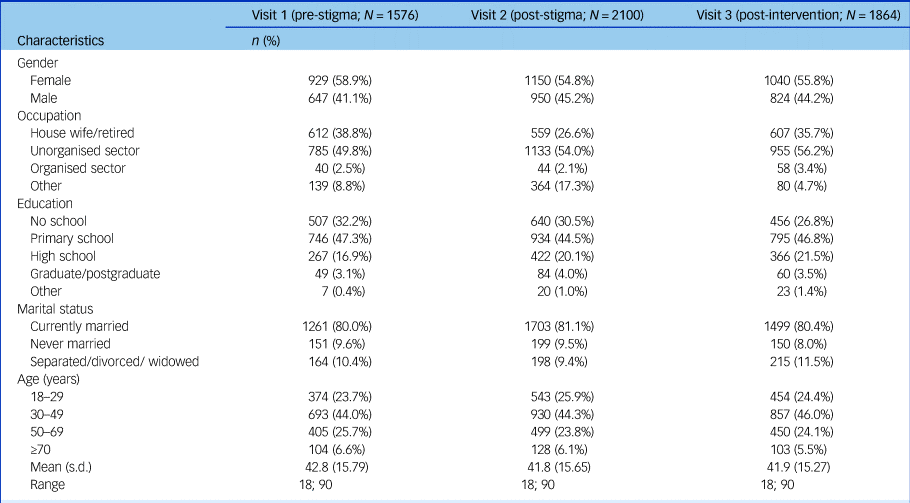
N, total number of participants in each visit; n, number of participants with particular characteristic.
KAB
Most of the items on this questionnaire showed improvement across all visits. Within the knowledge domain, the item related to ‘mentally ill people tend to be violent’ worsened slightly but the change was not statistically significant. Additionally, the item ‘people with mental illness cannot live a good, rewarding life’ was worse at Visit 3 when compared with Visit 1, but had shown significant improvement between Visit 2 and Visit 3 (P < 0.001). The attitude-related item ‘people with mental health problems should not be given any responsibility’ worsened at Visit 2 but showed improvement later at Visit 3; although when compared with Visit 1, the scores at Visit 3 were significantly worse (P < 0.001) (Table 2). The overall trends for the knowledge, attitude and behaviour components when stratified by gender or education were similar (Supplementary Figures 1–3).
Changes in mean scores of Knowledge Attitude and Behaviour questions (N = 1417)
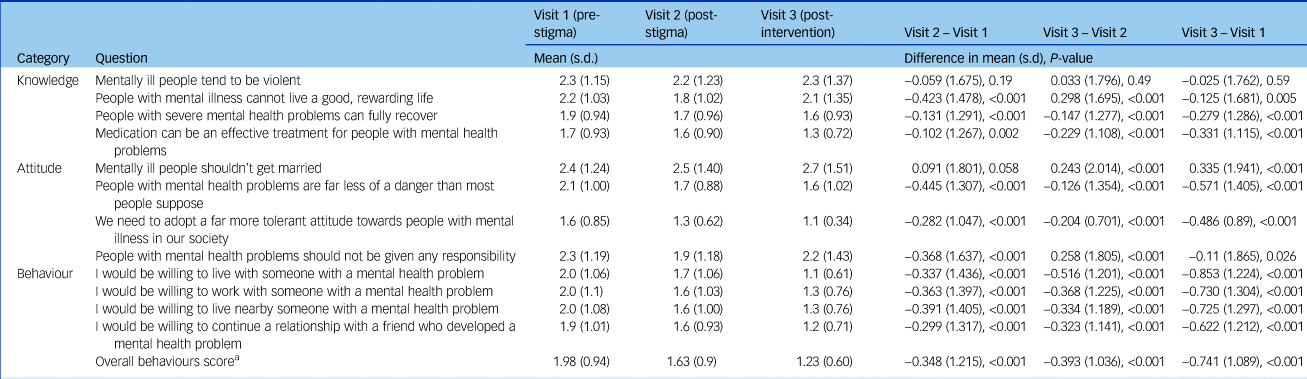
P-values are calculated using paired t-tests and will only include participants who had responses for the mentioned questions at both visits.
a This is the average of average individual behaviour scores. The average individual behaviour score was calculated by the sum of all behaviour scores divided by the number of behavioural questions to which that individual responded.
The changes in summary behaviour scores between Visit 3 and Visit 1 were compared by gender and education level. For 569 males and 848 females who were interviewed at both visits, the difference was −0.7 and −0.8, respectively, and both differences were significant (P < 0.001). For the 957 individuals with education until primary level and 460 individuals with above primary education level who were interviewed at both visits, the difference was −0.8 and −0.7, respectively, and both differences were significant (P < 0.001) (Supplementary Table 3).
BACE-TS
All items on the BACE-TS showed significant improvement over each time point (Table 3). The overall trend by gender or education level was similar (Supplementary Figure 4).
Change in mean scores of Barriers to Access to Care Evaluation questions
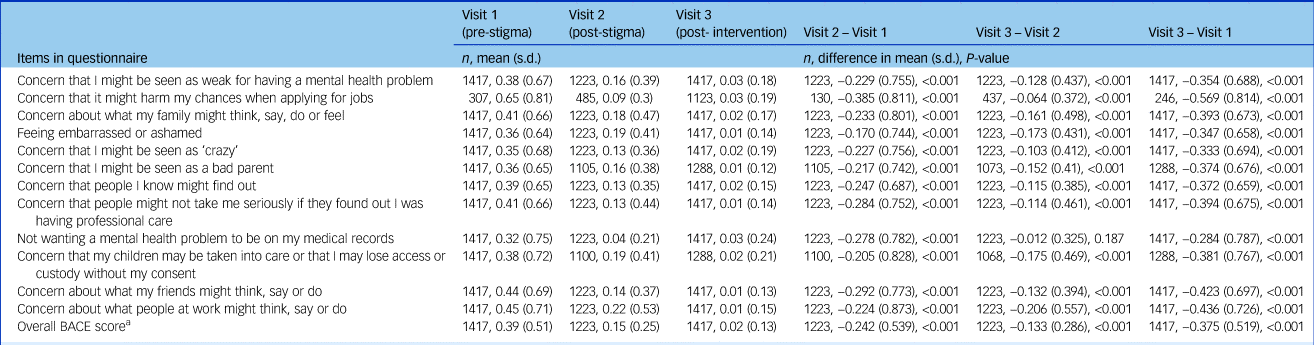
P-values are calculated using paired t-tests and will only include participants who had responses for the mentioned questions at both visits.
a This is the average of average individual BACE scores. The average individual BACE score was calculated by the sum of all scores divided by the number of questions to which that individual responded.
The changes in total BACE scores between Visit 3 and Visit 1 were compared by gender and education level. Overall mean scores on stigma perceptions improved by −0.375 (minimum/maximum of −2.7/2.4, s.d. 0.519, P < 0.001). For the 569 males and 848 females who were interviewed at both visits, the difference was −0.3 and −0.4, respectively, and both differences were significant (P < 0.001). For the 957 individuals with primary level education and 460 individuals with above primary level education who were interviewed at both visits, the difference was −0.4 and −0.3, respectively, and both differences were significant (P < 0.001) (Supplementary Table 4).
Discussion
This study reports on the longitudinal changes in knowledge, attitude and behaviour related to mental health and perceptions on seeking help for mental illness following a rural community-based study. To the best of our knowledge, this is the first study from an LMIC that reports on the longitudinal impact of an anti-stigma campaign in a large community-based population. Earlier research from India which delivered a mental health awareness intervention for CMDs in the community have only reported on cross-sectional outcomes, and have also used strategies that are different from those we have implemented.Reference Shields-Zeeman, Pathare, Walters, Kapadia-Kundu and Joag14, Reference Shidhaye, Murhar, Gangale, Aldridge, Shastri and Parikh15 Although SMART Mental Health and both of the earlier two projectsReference Shields-Zeeman, Pathare, Walters, Kapadia-Kundu and Joag14, Reference Shidhaye, Murhar, Gangale, Aldridge, Shastri and Parikh15 used broadly similar intervention strategies (brochures, home visits, drama and movie), they differed in their implementation. First, our use of a ‘social contact’ (in the form of a video of a person with mental illness narrating their experience) did not seem to have been used explicitly by the other two projects. Social contact is perceived as the most effective intervention for an anti-stigma campaign,Reference Thornicroft, Mehta, Clement, Evans-Lacko, Doherty and Rose2 in agreement with our observations.Reference Maulik, Devarapalli, Kallakuri, Tewari, Chilappagari and Koschorke8 Second, in this article we are reporting the longitudinal outcomes of the intervention, whereas the other two studies only provide cross-sectional data.
The results suggest that over the 2-year follow-up period the study participants had generally shown sustained improvement in knowledge, attitude and behaviour towards mental health (barring three items), and perceptions of stigma related to seeking help were reduced. This benefit was apparent despite the fact that the intensive anti-stigma campaign was conducted only in the first 3 months, after which the intervention involving the delivery of mental health services was implemented for 12 months. Our previous report, based on data collected soon after the intensive campaign was delivered, showed improvements in attitudes, behaviours and perceptions related to seeking help and we found that these have continued to improve even further, and knowledge about mental health has also improved. This underlines the sustained impact of the intervention over a long period of time.
Availability of data from LMICs is limited and availability of longitudinal data (apart from this study) from LMICs is absent.Reference Gronholm, Henderson, Deb and Thornicroft16 Even for the three items that scored worse at follow-up, the trends suggest that the scores were improving after an initial drop immediately following the anti-stigma campaign. It could be that, over time, these negative attitudes reversed due to a better understanding of mental health issues. However, it is not possible to infer if the model used for the delivery of mental health services had an impact on stigma and mental health knowledge, attitude and behaviour per se; it is possible that availability of community-based mental health services over the 12-month period may have led to positive changes due to increased awareness in the community. This could explain the almost tenfold drop in stigma perceptions related to service use as against a more modest change in knowledge, attitude and behaviour. As opined earlier,Reference Maulik, Devarapalli, Kallakuri, Tewari, Chilappagari and Koschorke8 the slightly negative perception that people with mental illness cannot lead a good, rewarding life could be due to how people interpreted the question in light of overall quality of life rather than a situation where you live a ‘good, rewarding life’ with some residual disability. The negative perception that ‘people with mental health problems should not be given any responsibility’ could be the general belief that people with any illness (including mental illness) need rest and should not be burdened with responsibility. Both of these perceptions need further clarification in future research.
When the differences in total behaviour score and total BACE scores were stratified by gender and education level, significant differences towards improved scores were observed at 2 years, irrespective of gender or education level. When total behaviour scores were compared by gender at Visit 1 and Visit 3, it was seen that women had a slightly higher score at both time points (poorer behaviour scores) compared with men, and the difference was significant at Visit 1 but not at Visit 3. However, the perceptions to seeking help (total BACE scores) were not significantly different across genders at either time points (Supplementary Tables 3 and 4).
Those with education up to primary level had worse scores on both the behaviour scale and help-seeking (BACE) scale at both time points compared with those with higher level education, and the difference was significant (P < 0.001) at Visit 1 but not at Visit 3. Corrigan and WatsonReference Corrigan, Morris, Michaels, Rafacz and Rüsch17 had reported differences in stigma perception based on gender and education (with less perception of stigma among women and those with increased education); our study suggested the opposite results for gender, but similar results for education level. However, at follow-up at Visit 3, the differences were non-significant for both gender and education, making it difficult to draw any firm conclusion. More research is needed on populations from LMICs to understand the effect of gender and education on perceptions of stigma related to seeking help and behaviour related to mental health.
The study design is limited by not having a control group, hence the results need to be interpreted with caution. We are thus unable to comment on effectiveness of the intervention or its definitive impact over the 2-year period. However, the results in this article are derived from the repeated-measures design, where the participants were followed for a 2-year period and outcome was assessed at the end of it. This provides an understanding of the long-term impact of the campaign and provides data showing beneficial sustained effect, which should be replicated in future using controlled studies. Although the KAB and BACE had not undergone any psychometric testing for this population, both tools had undergone translation and back translations and the test-retest reliability of the BACE was good. Because of this, and as this was an exploratory pilot study, we have reported only unadjusted changes in scores. There was no a priori hypothesis to adjust for confounders or conduct any sophisticated analyses. Finally, although the interviewers always asked respondents to refer to CMD while answering the questions, both KAB and BACE were not specific to severe mental disorders or CMDs and it may thus be possible that some participants still responded in terms of severe mental disorders, leading to information bias.
The clinical and public health implications of these results are not based on the absolute changes in score as they are minimal. However, the importance of this study lies in the sustained improvement in the scores, even after a long period has elapsed following the anti-stigma campaign, and results in some public health implications for policy makers: First, a mental health awareness campaign needs to be integrated into the delivery of routine mental health services. Second, an intensive campaign may be needed for shorter periods of time followed by subsequent booster sessions, and this could also be integrated within the delivery of existing services. Third, a service delivery model that follows a mental health awareness campaign may help to reduce stigma. Some of these implications need to be replicated in other studies as well as tested separately using factorial study designs.
The treatment gap in providing care for people with CMDs in LMICs and the role stigma plays in accessing care are well documented.Reference Thornicroft18–20 Thus, identifying culturally relevant methods to deliver effective anti-stigma campaigns is particularly relevant in the context of countries like India, where stigma is high. The long-term outcome evident from this project suggests that the method used to deliver the anti-stigma campaign was apparently effective and sustainable. Some implications of the campaign were evident in the increased uptake of mental health services and reduction in depression and anxiety scores in 30 of the 42 villages involved in the anti-stigma campaign,Reference Maulik, Devarapalli, Kallakuri, Vadlamani, Jha and Patel21 and are also apparent in preliminary results from the remaining set of 12 villages which includes the two villages involved in this study (details available from the author P.K.M. on request). The process evaluation from the set of 30 villages indicates that the intervention is acceptable, feasible and can be scaled up. It has identified a set of barriers and facilitators which need to be addressed.Reference Tewari, Kallakuri, Devarapalli, Jha, Patel and Maulik22 Future randomised controlled studies can address these issues, add to the evidence and provide data on cost effectiveness so that this methodology could then be applied across similar settings after suitable adaptations.
Supplementary material
Supplementary material is available online at https://doi.org/10.1192/bjp.2018.190.
Funding
This project was supported by the Wellcome Trust/Department of Biotechnology (DBT) India Alliance Fellowship (grant number IA/I/13/1/500879) awarded to P.K.M. and by a Grand Challenges Canada grant (number 0524-01-10) on which P.K.M. is the principal investigator. P.K.M. is an intermediate career fellow of the Wellcome Trust/DBT India Alliance. G.T. is supported by the National Institute for Health Research (NIHR) Collaboration for Leadership in Applied Health Research and Care South London at King's College London Foundation Trust. G.T. acknowledges financial support from the Department of Health via the NIHR Biomedical Research Centre and Dementia Unit awarded to South London and Maudsley National Health Service (NHS) Foundation Trust in partnership with King's College London and King's College Hospital NHS Foundation Trust. G.T. is supported by the European Union Seventh Framework Programme (FP7/2007-2013) Emerald project. M.K. was supported by a NIHR-funded clinical lectureship. The views expressed are those of the author(s) and not necessarily those of the NHS, the NIHR or the Department of Health and the funders had no role in this article.


 Open access


eLetters
No eLetters have been published for this article.