


1 Introduction
Absence is deeply embedded in the official records of all nations, but it is a specific problem for contested, war-torn, and colonial pasts. Lost, missing, destroyed, repressed, or restricted access archives have obvious ramifications for historical scholarship, and as feminist and legal history scholars argue, they present even greater threats to fundamental human rights.Footnote 1 This volume seeks to explore reasons why and how official records that were listed, indexed, or known to have existed as physical objects or digital assets have been absented post-production. Silence in the archive is a widely acknowledged epistemological challenge, but absence, its faithful companion is so well accepted and established that it has received far less scholarly attention. Past studies use absence and silence interchangeably, but as a scholar of Ireland, who routinely deals with enormous gaps in the historical record, I believe that for conceptual, theoretical, and methodological reasons, it is more helpful to separate them.Footnote 2
Throughout this Element, archive is used in the broadest sense to encompass all record types that are subject to current national and supranational archives and records legislation. Each nation-state has its own definition of what constitutes an official record or an archive, and a designated list or schedule of government departments and agencies that are subject to mandatory preservation orders. Archival praxis differs accordingly, but there are some common denominators. Functioning democracies use national, regional, and local archives, staffed by professional archivists to conserve, preserve, and make accessible the official records of state, most of which are unique and irreplaceable. Such repositories act under legislation to keep central and local governments accountable to their citizens. The fundamental reason why absences occur is rooted not only in the extent or robustness of legislation but also in its proper enforcement. Provisions for access maintain a balance between the protection of national interests and individual privacy concerns. Depending on the nature of the record, access is generally granted after 20, 30, 50, 70, or 100 years; the latter three timeframes pertain to more sensitive government or citizen life event information, such as census returns or civil registration data. Official records can range in format from unique manuscripts to typed and restricted circulation printed items, audio and audiovisual recordings, digital materials, and physical objects. In contrast with official records, personal or business archives are under no legal obligation to be conserved, preserved, or made publicly accessible in the reading rooms of a national or state archive, but many repositories hold such private collections as legacy acquisitions.Footnote 3
Official records that have been intentionally destroyed, purged, or repressed through what I am terming ‘constructed’ absence form a particular focus of this study. This kind of absenting can be permanent through deliberate means or temporarily achieved through the use of legal instruments to repress records outside of what would be considered normal legal access timeframes. Silence, as we know, will have undoubtedly permeated these records too, but their absence prevents any opportunity to ever read against or ‘along the grain’ of archival biases to recover hidden histories.Footnote 4 By making a case for a separation of concerns, this Element builds on the significant epistemological advances that historians of New World imperial contexts have developed on silence, more specifically on the work of Haitian scholar and anthropologist, Michel-Rolph Trouillot. For students of history (at all stages) his groundbreaking book, Silencing the Past: Power and the Production of History, is essential reading as it was one of the first major and internationally accepted works to successfully challenge the orthodoxies of the history of great white men, ‘written by the victors’ as it proved to be in most instances. Using the denial of the successful Haitian Slave Revolt (1791–1804) against French imperialism in the existing historiography, and the mythology surrounding the public history of Columbus’ ‘discovery’ of America as case studies, Trouillot exposed how power operates in history to orchestrate silences. In both examples he traced how denial fomented in contemporary accounts was cast in stone by revisionist histories that quietly elided chapters that made for unsettling reading for fragile white, Eurocentric, and Western World sensibilities. More importantly, in his skilful retelling of Black Haitian history he created a very useful paradigm to identify four critical moments at which silence is introduced to what he conceptualised as a typical process for history makers: initially at source or ‘fact creation’, later in archival curation ‘fact assembly’ and historical research processes of ‘fact retrieval’, and finally in the making of history, which he termed ‘the moment of retrospective significance’.Footnote 5
Figure 1 shows Trouillot’s silence framework in tabular format. Four discernible types of agents with overlapping responsibilities and roles can be assigned to each: sources or records are generated to document official government business, they are created by a designated scribe, clerk, or civil servant depending on the era involved. The source creator usually acts as a temporary custodian who decides which of the records produced are of sufficient value to be kept and handed over to professional archivists. Stage 2 is the domain of archivists, who in the appraisal process must select what becomes ‘the archive’. Both stages 1 and 2 are closed to the public; in the past they were entirely separate until the handover process at the end of designated timeframes, but there is a growing level of early interaction between government departments and respective national and local archives to ensure compliance with legal and metadata standards. It is important to note that repositories are confined spaces with finite resources, which makes absence inherent to archival praxis. Retention and disposal schedules are used to identify materials worth preserving.
Trouillot’s silence framework.
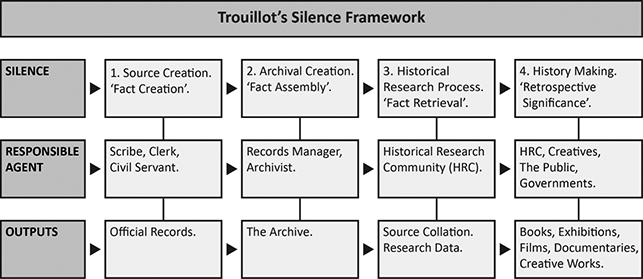
Stage 3, the research process, is the first of two shared but more open public spaces. This occurs in the archive, where the historical research community, which includes, but is not limited to, archivists, historians, genealogists, directors and curators of galleries, libraries, archives and museums, journalists, and legal scholars, work in the process of ‘retrieving facts’ to underpin their research agendas and collate a body of sources. Usually the historical research community cannot access the record if the archive has not been listed or made available for consultation, but it is not uncommon to have unlisted items within boxes (described at group level) in under-resourced institutions. Unfortunately, this can lead to undocumented theft. The last phase, which is the process of history making, occurs within and beyond the archive; it includes all who act as narrators of the past and extends to creative writers, artists, musicians, and documentary and filmmakers. Outputs from stage 4 include books, exhibitions, and creative works that are consumed by various publics. Government power permeates all four stages; at any point records can be recalled from the archive and removed from stage 3. National commemoration projects that help to shape collective memory, centenaries for example, can also be government directed.
Citizens, as active consumers of the past, have a vested interest in knowing how official records are created and preserved, what the archive contains, and how modern archival praxis operates.Footnote 6 Official records are maintained to keep administrations accountable to the people, but, as we shall learn, policymakers can choose to keep them out of the public domain using reasons that range from national security to individual privacy. Most of what I am calling ‘constructed absence’ in the modern context arises mainly from weaknesses in legislative and physical protection for archives, and therefore occurs in stage 1 (see Figure 1). It is enabled by the authorities charged with custodianship through either wilful neglect (leading to physical degradation) or deliberate acts of destruction until such a time that official records are passed to expert archival hands. Historians of workplace risk management refute the idea of happenstance – instead they argue that proper preventive measures were not put in place to safeguard workers and the same hypothesis can apply to archives lost in stage 1.Footnote 7 Legislative weaknesses owe a debt to the lack of care exercised in previous centuries, which in turn can be traced to the fears of governing elites concerning the power the historical record can wield in the fullness of time. As such, substantial loss predates the archive by design, within a structured architecture of absence. Official records are politically powerful, which makes them very vulnerable to deliberate destruction in stage 1 and aggressive weeding in stage 2. Absence in the archive results in partial representations of the past and exclusion in stages 3 and 4.
With so many hands involved in the production of history, there are obvious points of risk; therefore, I expand on Trouillot’s paradigm by proposing an additional or parallel framework in Figure 2 to locate absence and identify its various guises. Part of the aim here is to draw attention to the deficits that arise within historiographies from archival absences, and I do so by juxtaposing countries with imperial legacies and their post-colonial experiences of history making in the wake of massive archival losses. Through a series of British imperial and predominantly Irish case studies, I show why absence and silence should be differentiated. This Element proposes a framework of absence to provide historians with a lexicon and an additional schematic tool with which to develop research methodologies in an ethical way, and insofar as possible, research data that is compliant with Free Accessible Interoperable and Reuseable (FAIR) principles.Footnote 8 The purpose of this additional framework, which I thread throughout the rest of the volume, is to make clearer lines of distinction between silence and absence for those interpreting the archives in the research process, to deepen understandings of how and when it occurs, and in some cases, how it can be recognised, prevented, or reversed. In so doing it joins several advocacy works that aim to increase levels of public awareness and mobilise the historical research community as readers, ‘end users’, and activists.Footnote 9 Access rights should never be taken for granted; governments can, and do, regularly use specialised instruments to hide, repress, recall, or deny access to records that it deems to be controversial or problematic. Our past is precious and we are all responsible for its preservation.
Silence and absence framework for official records.
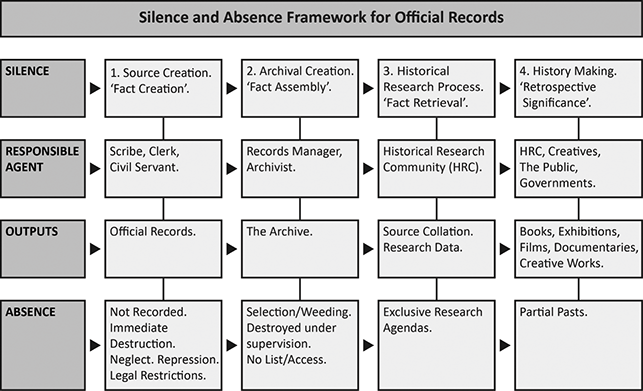
Structure
This Element has five further sections. Section 2 provides a discussion on the function of official records and the various types of absences that can occur in the archives. Using the British Empire as an example, Section 3 situates absence in its legal context to show how it gradually became embedded in record keeping and, in turn, in history making. Reasons for constructed absence will differ from country to country, but the formation of the Public Record Office (PRO) in London provides a useful example of the archival creation stage and how destruction became a critical component of domestic and colonial records management. By tracing how English record keeping transitioned into the PRO, a predecessor of The National Archives (TNA), and how practices percolated into Ireland and India, it exemplifies the archival dependency that Jordanna Bailkin argues characterised ‘colonialism … from its earliest manifestations’.Footnote 10 Section 4 turns its attention to Ireland to explore the impact of violent destruction on the archives and on history making. It concludes with a discussion on how aspects of the oral tradition (supplanted by the legal charters, property deeds, and other documents proving ownership) were reinstated to lend weight to post-independence and nationalist historiographies. I suggest that this is where the markers of pre- and post-independence should be used in tandem with traditional periodisation of medieval, early modern, and modern periods, for both archival and historiographical purposes. Section 5 returns to archival access and emphasises the importance of remaining alert to the potential for absence in this era of mass digitisation and the born-digital archive, where in ‘digital abundance’ there are heightened risks of further constructed absences and gross exploitation.Footnote 11 Few countries have come to grips with the data deluge that will soon overwhelm archives and scholarly praxis. This section points to the sharpened digital divide between the Global North and South, and between well- and under-resourced institutions within these geopolitical regions.Footnote 12 Section 6 discusses the importance of collective action and argues that historians must become more proactively involved in creating new pathways of democratising access to official records and in preventing further absences. In the conclusion I argue that the adoption of interdisciplinary, feminist, human rights, comparative, and transnational research approaches can offer ways of reconciling absence. Furthermore, I contend that there are universalities in how scholars can address archival loss, and restrictions or embargoes on current and future access to official records.
2 Situating Absence
Many ancient civilizations maintained their own forms of archives to document important people and events, but the emergence of official record keeping is strongly associated with revolution in the case of the French tradition, and colonial ambitions in the British Empire.Footnote 13 Over time colonial record-keeping practices gradually supplanted native memory institutions, which placed what Pierre Nora terms ‘duty-memory’ – an obligation – on ethnic groups to remember their past.Footnote 14 In his summation of the ‘memory-evidence tension’, Terry Cook divided the development of the field of archives into four distinct stages (see Figure 3). To his mind, it has progressed ‘from juridical legacy to cultural memory to societal engagement to community archiving’ and encompassed evidence (post-French Revolution to the 1930s) where records were juridical and the archivist acted as a custodian; memory (1930–70) marked a phase which saw the incorporation of private papers and the emergence of the historian-archivist; an identity phase (from the 1970s onwards), which established international standards and the more recent development of community-based archiving (1960s).Footnote 15
Trouillot’s framework and Cook’s development of archives.
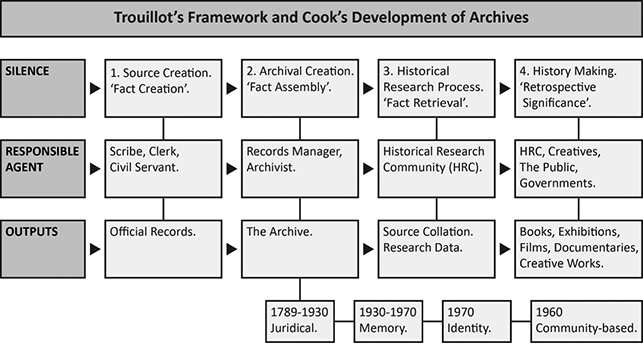
Scholars of archivistics, which Ketelaar defines as the combination of ‘theory, practice, and methodology’, have reiterated the fact that all aspects of the archive, and the subsequent histories that emerge from it, are shaped by archivists and their decision-making processes.Footnote 16 However, they are not the sole decision-makers: if we take a formal committee meeting construct as a simple example, secretaries as source creators make conscious decisions about the shorthand of what is recorded in the minutes, members may specifically ask that certain matters are not documented both during and after their creation (thereby introducing silences by omission). Once they are agreed and stored, record managers will act under the instruction of legislative instruments or use a policy mechanism to decide on what should be retained or disposed of after the record has served its official purpose. It can be several years before they face archivists’ appraisal in preparation for regulated access timeframes. Absence enters the fray post-production, that is at stages 1 and 2 of the paradigm, which in turn permeates the later stages of research project design and outputs. With constraints of space, priorities, and time, archivists must make conscious decisions about what is retained, what is destroyed, and what is listed. Records must meet the criteria of sufficient value for longer-term care in an archive and the investment of the professional rigour that follows to preserve, conserve, and make them accessible. Documents selected for preservation are accorded what Derrida termed ‘a privileged topology’, committing to a form of ‘house arrest’ in the archive. In his Freudian reading, the archive was the locus of privilege, power, and violence, and categorisation was central to the concept itself.Footnote 17 In the main, and as Rodney Carter has argued, ‘by the very act of defining their scope, be it the nation, the province or state, or the subject area’ archives, especially ‘national ones’, are sites ‘of inequity and exclusion’.Footnote 18 Archives offered little space, prior to the 1960s, for the preservation of ‘duty-memory’ or oral histories, and much has been lost.
Stages 1 and 2 are co-dependent: national archives are state-funded public bodies that should maintain a non-partisan but healthy relationship with the elected administration of the day, but that is not always possible, even in democratic states. Owing primarily to limited resourcing, absence is a core principle of modern archival praxis, and destruction occurs following an assessment of historical worth. Archivists in stage 2 of ‘archive creation’ must make pragmatic decisions in the appraisal process and select which records become the basis for future ‘societal memory’.Footnote 19 They operate in the present to speculate on how the past might be used in the future. Schwartz and Cook argue that the idea of the archivist as some neutral honest broker in that process is nothing other than ‘the central professional myth of the past century’.Footnote 20 They do not cite the work of Trouillot, but they use similar terminology and point to the prevailing values of the precise temporal context of stage 1 as being a critical factor in understanding and theorising power within collections. Historians are complicit in maintaining this apolitical façade, and they carry it into stage 3 when they do not question or acknowledge the archive as a contested site of power over knowledge: for one set of facts to survive the appraisal process, others must be destroyed. Only a fraction of the extant record can be indexed and made accessible, which renders further problems of temporary absence. Discoveries of records temporarily absented through administration changes are always possible and are very meaningful for the survivors, victims, and descendants of state-sanctioned violence. Records of racial censuses undertaken by the Italian Fascist regime between 1938 and 1943, which resurfaced in the Royal Carabinieri and various Italian city archives in the last few decades, have allowed the full extent of the persecution of the minority Jewish populations of the Dodecanese Islands at the end of the Second World War (WWII) to come to public attention.Footnote 21
Insidious forms of archival record suppression have occurred in countries where church/state relations have been deeply intertwined, which has consequences for transitional and restorative justice. It is internationally recognised that violence and abuses were widespread in Christian church-run reform institutions, education, and healthcare systems, and while the records of various congregations are central to justice, they are invariably placed beyond the reach of victims/survivors and bona fide researchers in many jurisdictions.Footnote 22 Furthermore, it is a cruel irony that it is to the administrative records of captors that the descendants of slaves or to religious archives that children unjustly taken from their parents must turn for evidence of past injustices to receive redress, vindication, acknowledgement of wrongdoing, and reconciliation. In Canada and Australia, public inquiries into historical abuse and reconciliation efforts have yielded more positive outcomes, where religious orders have passed their records over to independent repositories to facilitate transitional justice and redress, but these exemplars of accountability and atonement are exceptions.Footnote 23
Constructed and insidious archival absences have long lineages, and they are exacerbated in formerly colonised countries where scholars also contend with problems associated with geographical dispersal. During colonial times, records of state were in the charge of the coloniser, and whether they remained as ‘working records’ of state post-independence is a highly sensitive and precarious matter. Countries partitioned in the wake of colonialism must deal with further fragmentations of the historical record as each new geopolitical entity took its share. Imperial records that legitimised colonial practices were further politicised at the end of empire with retention, migration, dispersal, and destruction schedules. In the first instance, distinctions should be made between records that are ‘taken back’ by colonial powers and those ‘left’ to the new independent administration as working records of state. It is widely accepted that bodies of contentious records that survived the violence surrounding independence and civil rights movements were later designated ‘restricted access’ for political stability reasons.Footnote 24 For scholars of pre-independence Ireland and India, it is a regrettable fact that it is still necessary and often easier to conduct research at The National Archives, Kew, or the British Library in London rather than in Belfast, Dublin, Islamabad, or New Delhi. Several former colonies do not have the luxury of such quibbles. Through legal discovery in a controversial London High Court case taken by Kenyan elders about colonial violence and torture (heard in 2011), it was revealed that British crown forces in thirty-seven former colonies and protectorates conducted large-scale and indiscriminate destruction of official records.Footnote 25 Later dubbed ‘Operation Legacy’ and carried out from 1950 to 1970, its aim was to purge the written record of incriminating evidence of atrocities committed.Footnote 26 For such reasons, in several former colonies, historians have very little to work with, and the gallant efforts of scholars who have called for a reAfricanisation of archives merit mention: they advocate for the use of indigenous voices, the oral tradition and ‘ways of knowing’ to reconcile all that was destroyed, lost, and taken.Footnote 27 Whether or not ‘pre-colonial history’ (itself a fraught term) can be recovered depends on the passage of time between colonisation and independence, as well as the resilience of ‘duty-memory’ in that timeframe.Footnote 28
Taking post-colonial to mean the immediate aftermath of independence, new countries, despite their nationalist manifestos, invariably did not have the resources to reinvent systems of education, health, or policing, and selective record keeping continued under new regimes.Footnote 29 Absences embedded in the taxonomies of empire were invariably perpetuated by new nation-states, much to the detriment of the history of indigenous peoples and oral traditions, which remain underrepresented in national historiographies.Footnote 30 Ethnic subpopulation groups, for instance, remained invisible, and in many cases, the situation for nomadic peoples deteriorated in new nation-states. For example, Irish to now read Mincéirí/Travellers were not officially recognised as an ethnic minority in Ireland until 2017.Footnote 31 Deliberate destruction of official records is yet another imperial legacy, and it was in grey legislative areas that regimes like late Apartheid South Africa operated an immediate disposal schedule in anticipation of future political embarrassment or redress liabilities.Footnote 32
Permanent absence in controversial archives cannot be considered anything other than intentional and that intent should be further acknowledged, questioned, and conceptualised alongside silence. Extreme tactics to occasion constructed absences have been employed by despotic regimes. For example, Rosie Bsheer’s work uncovers the practice of damnatio memoriae (condemnation of memory) in Saudi Arabia where records are filleted for dangerous or unflattering content, and histories are ‘state sanctioned’, but efforts to keep records out of the public domain are not always so overt.Footnote 33 Further to concerns about access being limited to scholars with the correct political loyalties, Chakravorty observes other worrying trends in India: the tardiness of some government departments in handing over their records, once open archives being subsequently closed in recent years, and the perennial problem of high-ranking officials who consider public records to be their private property.Footnote 34 Such trends are replicated across the world, both in whole and in part.
Absence and the Digital Archive
Several scholars have called attention to the enormous challenge digital content poses to archives and the profound changes in theory, standards, methods, and professional praxis it has caused. The digital turn has increased access to historical sources, but it has contributed heavily to new forms of absence, which historians at all career stages must become more aware of, and better skilled in dealing with it. Distinction should be made between the extant physical or ‘analogue’ archive and its ‘made digital’ copies, as the latter is increasingly overtaking the former for a range of sensible reasons, from climate footprints to conservation and preservation matters. The digital turn has created new occasions for absence to become more pronounced, especially in a rapidly evolving but uneven digital research landscape. There is a broad division in record types: the ‘made’ and the ‘born digital’. According to the International Organization for Standardization (ISO), the latter is a ‘document that has been created originally in digital form’ and the former is a digital copy of an original paper document.Footnote 35 We are at a critical phase in the slow and delayed transition process from analogue to born-digital official records of state and need to remain ever vigilant of the slippage points. Further to absences occasioned by the made digital, risk points of absence in a progressively born-digital archival world have grown exponentially. What Milligan terms ‘super-abundance’ was less of a consideration when Trouillot was problematising silences, but it is now a great threat to the archive underprepared for its acquisition and ingestion.Footnote 36 Abundance has fortified the case for absence, and as David Thomas et al. point out, ‘sheer volume’ and ‘digital openness’ have paradoxically ‘resulted in the mass destruction of digital records’.Footnote 37 The recognition of absence in born-digital records is a clarion call to scholars living in more technologically enabled and politically stable countries to lend solidarity, practical supports, and their voices to colleagues living through warfare and/or under corrupt regimes. Such gestures and actions should strive to support, and not overstep, boundaries that could harm local efforts of oppressed or under-resourced colleagues or indeed create neocolonial forms of archival extraction.Footnote 38
Absence and History Making
Written documents as primary sources have always held more evidential weight than other media, and accordingly, political and military history arising from official records still dominate history making (stage 4). The main movements in the development of history as a profession and an academic discipline are rooted in nineteenth-century Rankean empiricism that grew alongside the juridical stage of archivistics.Footnote 39 Equally, the shift to more inclusive ‘new’ schools of history, like the establishment of the Annales School in 1929 and the cultural turn of the 1960s, is in alignment with Cook’s timeline and the phases of memory and identity. Each school reflected the political, socio-economic, and cultural values of its generation of makers, and the constraints or freedoms of their time. From these movements, sub-disciplinary strands such as social, labour, and gender history emerged and have been gradually accepted by the academy. As general literacy and educational opportunities expanded among lower socio-economic groups, these new fields of inquiry provided the space for working-class, women, and minority historians to begin to challenge past scholarship. But the reach and success of these new fields have been unequal and they have struggled to gain status both within and between countries. Almost forty years after Joan Scott’s domain-defining ‘Gender as a useful category of analysis’, historical works by women about women are still considered a sub-genre.Footnote 40 Yet it is within histories from below that the problem of absence was more emphatically exposed.
Archives are vested with the capacity to determine national memory and histories. Furthermore, they are gendered spaces regulated by access criteria and an unspoken code of behaviour that must be learned and negotiated. Notable by absence in the development of history making in the juridical stage was the presence of women and minorities.Footnote 41 By nature, archives have historically prioritised male-dominated voices of governments and the elite, who were more likely to be documented in official records. Consequently, early history making was populated by men who had the privileges of education, social status and time. Quite apart from university admission policies that prohibited women from holding degrees until relatively recently, there have been other physical, political, and socio-economic barriers to prevent their participation in the historical profession. Archives have always been physically foreboding; readers are invariably asked to present their bona fides in the admissions process as well as official identification or a student card. Reader ticket policies have relaxed considerably over the past two decades, but the reputation for exclusivity endures. In India, not only do the strict admission criteria that once kept non-official users out of British Raj archives still prevail, they have been fortified in certain regards. Aparna Balachandran describes how foreign scholars affiliated to universities have to apply for a Ministry of Home Affairs ‘research visa’ and provide evidence that their work is ‘unobjectionable’. Independent researchers or those without a university affiliation face additional obstacles. Balachandran notes how research topics deemed to be politically sensitive for the prevailing Hindu right government are ‘screened out’.Footnote 42
Absent archives beget new silences in history making, which is an inherent part of what Trouillot terms a ‘formula’ in the history of revolt, and what Jennifer Morgan describes as a ‘politics’ of erasure in the historiography and records of slavery.Footnote 43 Early historiographical waves made little to no reference to the enslavement of African Americans in the history of the United States of America or the violence perpetrated against Indigenous and First Nation peoples in America, Australia, New Zealand, and Canada. These ethnocentric histories were distilled into received wisdom and popular understandings of the past, and continue to bolster the ongoing denial of human rights to ethnic groups globally. The lineage of exclusion can be traced directly back to the archive, especially in the juridical phase, and the forms of history making that developed from its uncritical replication.
Resistance from feminist and minority historians has shifted the professional mindset towards more critical and inclusive histories, which has paved the way for women’s, black, and queer histories. Despite access restrictions, and using a wider spread of primary sources from visual to oral history artefacts, historians of women, labour, the enslaved, the poor, and minorities have done much to recover what has been written out of official records from an epistemological perspective. This is painstaking work that requires sophisticated and creative approaches to address the inherent absence and silences in the archives and exclusion in respective historiographies. In a transformative but particularly hostile time in the American academy for Black women historians, Deborah Gray White bravely addressed the injustice of slavery.Footnote 44 Her book was followed by Kimberlé Crenshaw’s intersectionality hypothesis, which was published as an extended journal article and called for the fusing of feminist theory and praxis in American legal and political spheres, that in turn had an impact on later historical works.Footnote 45 Since then scholars like Sara E. Johnson have done much with very little by way of an archive to recalibrate the sanitised histories of slavery in the Caribbean. Taking a ‘communal biographical’ approach, Johnson reinterpreted the gold-gilded records of colonial lawyer and enlightenment intellectual Moreau de Saint-Méry to unambiguously state that the records contain extensive evidence of children conducting ‘stolen labour’.Footnote 46 Similarly courageous scholarly lineages can be traced elsewhere.
Conclusion
Using Trouillot’s paradigm of silence as a structural basis for a parallel framework for absence, it is possible to see how it is a constructed and dynamic entity. By layering Cook’s development of archivistics onto stage 2 and how it developed alongside the various movements within history, a clearer impression emerges of how professional separations have contributed to the creation of absences. I contend that all responsible agents must confront and limit damage to official records both in analogue and digital formats. This is particularly true in stages 2–4, presided over by separate professions who need to further recognise the depth of their common cause and become a stronger interdisciplinary coalition, or indeed an historical research community (discussed further in Section 6). Archives, particularly those pertaining to life courses, are fundamental to the history of human rights’ abuses, and for such reasons, collective action is essential to ensuring transparency in the maintenance of public records and access policies.Footnote 47 What the broader public and some policy-makers are unaware of is that by the time we get to stage 3 of research and 4 of history making, the cumulative impact of selectivity in official records management and archival practice will have taken its toll, and historians introduce a new range of selectivity in their research agenda. It reinforces the meaning of Verne Harris’s adage in the case of apartheid South Africa: if archives are a ‘sliver of a sliver of a sliver’ then historical scholarship is but an interpretation of an abstraction of those slivers.Footnote 48 Bearing these considerations in mind, it is clear that it is the duty of history makers to problematise absence in innovative ways to unseat prevailing ‘grand narratives’ particularly those that are grounded in older historiographical waves.
3 Tracing Silence and Absence
Introduction
With a focus on stages 1 and 2 of Trouillot’s paradigm, this section discusses sources and the proliferation of official records over the past four centuries that led to the creation of archives in the juridical phase that Cook identified (1789–1930). I use Britain, Ireland and, to a lesser extent, India as case studies to trace how absence became embedded in the evolution of State Paper Offices and PROs, the forebears of current national archives, from the mid nineteenth century. To that end, I outline the legal instruments that provided physical protection to some records over others in the juridical phase, and why they were necessary.
Source Creation and Early Preservation Efforts
Nicholas Popper identifies ‘inscription’, or the documentation of governance, as critical to political practice in the early modern period, but it is also the first point at which the discretion of the scribe allows silence to enter the fray.Footnote 49 When paper replaced parchment and became even more infused with power as British imperial ambition grew, the value of what was documented did not diminish; it simply changed in accordance with the commodity described. Popper points to the sixteenth-century paper revolution as a turning point not only in the mass production of manuscript materials but also in records management. As many early texts concerned legal records, governments had to attend to the creation of systems for information management and retrieval purposes.
Not only were official papers amassing at home, as the British Empire expanded, so too did the administrative trail of paper necessary to exert power, provide proof of ownership, or document trade. Bhavani Raman observes how, in the transformation of East India Company (1600–1858) trading outposts into British India, ‘papereality’ was vested with increasing levels of power. Noting how the administrative office (cutcherry) together with the courts (Adalat) as sites of knowledge production became the most important units of control, she goes so far as to describe them as ‘the lynchpin of empire’.Footnote 50 Raman reminds us that it is important to remember who wielded the pen, and how in India the cooperation of the ‘cutcherry Brahman’ not only helped the British to achieve legitimacy, it bestowed considerable power to develop knowledge hierarchies within the ‘scribal habitus’ of educated men.Footnote 51 Local cooperation proved instrumental in Ireland too, which served from the seventeenth century as a ‘colonial laboratory’ to experiment with new policies, and where agents both of and for the British Empire received training.Footnote 52 Record-keeping mechanisms were duplicated and refined within imperial contexts and, in diplomatic relations, old European rival monarchies learned from and replicated one another’s practices. Of course there were subtle differences then as there are now, but the overarching idea of documenting incoming and outgoing correspondence was widely adopted as best practice.
Scholarly opinion of when precisely a discernible antecedent of TNA (UK) was established is slightly divided: Nicholas Popper identifies 1578 but Micheal Riordan identifies 1610 as an important milestone in the evolution of the State Paper Office in England, and particularly to the appointment of Sir Thomas Wilson as keeper, as the beginning of ‘an attempt to put them (official records) into order’.Footnote 53 Despite progress made by early officer holders such as Joseph Williamson, Keeper of the State Papers from 1661 until his implication in the Popish Plot and removal from office in 1679, without proper resourcing in place to manage the growing volume of state papers, haphazard dispersal and storage across numerous sites was inevitable.Footnote 54 Unique and irreplaceable documents of great importance were stored at the Palace of Westminster and the Tower of London, sometimes in rooms that were originally designed as domestic spaces and were neither secure nor free from risks of vermin, fire, and damp. Many collections were noted as being ‘in imminent hazard’ and others neglected.Footnote 55 It was in such chaos that other serious problems of misplacement and ‘embezzlement’, simple theft, or in more polite terms, the retention of records by government officials or staff, could continue unabated. This kind of slow bleed of unique documents had been ongoing for centuries, but Isabel Taylor points to embezzlement as a serious problem in early modern times. Effectively, it was a battle of wills between high-ranking officials, who retained materials without warrant, and lower socio-economic status keepers, who were powerless to prevent or challenge it.Footnote 56
What served as archival repositories by the time the Royal Commission on Public Records made its inquiries in the 1830s were not purpose-built. Its remit followed the work of a Select Committee that reported on the state of affairs in 1800 but led to no concrete actions. A fire at the Houses of Parliament on 16 October 1834 refocused attention on fireproofing; furthermore, the Commission was concerned about the loss of unique legal documentation held in dark and damp vaults, especially in the case of Somerset House where, among others, the Exchequer Offices and its historical records were domiciled. Identified as the two most important repository sites, the vaults at the Chapter House at Westminster Abbey and the White Tower at the Tower of London were located beside a kitchen and the fortress’s magazine respectively.Footnote 57 Remuneration for officers was another minefield, and the prevailing mixture of salary and fees across the record-keeping sector gave rise to many irregularities. At the Chancery Tower, the Rolls Chapel and the Treasury, which were described as ‘mixed records offices’, the clerks were paid from the profits of searches.Footnote 58 Furthermore, the matter of search fees carried the potential for bribery and bias against those who could not afford to pay for access to documents as evidence for legal purposes.
The Commission’s findings were unequivocal: a central purpose-built repository was necessary to house the exponential increase in paperwork that bore evidence of ownership at home and across the empire. It recommended the removal of the records to ‘new depositories well adapted to receive and secure them … where they may be properly arranged … more easily accessible’ and to rectify the matter of fees or what it perceived as ‘the evils of the present system’.Footnote 59 The radical plan included the identification of a site at the Chancery Lane Rolls Estate for a bespoke building, the PRO, to be erected. It also proposed a process of ‘methodizing, arranging, repairing, cleaning, binding, calendaring, indexing, transcribing and transferring’, which offered the possibility of discarding ‘worthless documents’.Footnote 60 Under the centralised system, a schedule of fixed salaries paid by annual parliamentary vote for civil services was introduced, and this went some way towards establishing equal access to records and ending irregular practices.Footnote 61 To implement these recommendations, a Public Record Act received royal assent in August 1838. Its primary purpose was to create a central repository for dispersed records.Footnote 62 The provision of buildings was to be funded by the Treasury; the new office was under the superintendence of the Master of the Rolls with a Deputy Keeper at the helm. These were prestigious positions and the latter was well remunerated. In the first instance, legal and exchequer records were prioritised for removal, and records of the Welsh Court of Great Sessions (abolished 1830) were singled out for careful attention. The process of listing contents began in advance of a cataloguing system. With an eye to older materials, the Deputy Keeper encouraged the production of calendars to aid the process of imposing some kind of order. Conscious of the sheer volume of modern materials, he stopped short of recommending a ‘complete calendar’ and proceeded cautiously on the matter of selection and ‘rejection’, recognising that it required more attention.Footnote 63
The PRO acted initially as custodian for Treasury and legal records, but state papers and departmental reports were gradually included under later pieces of legislation. It was tasked with the authentication of legal documents and included clauses about the falsification of official documents. By 1840 the duties of assistant keepers included the provision of authenticated copies of folios for researchers at a one-shilling fee. The Deputy Keeper’s reports to parliament warned of the extensive work involved in calendaring all the records and how there was ‘no probability whatever of its [sic] being accomplished previously to the erection of a general repository’.Footnote 64 It took until May 1851 before the first brick was laid, but careful planning had gone into the work at hand. Planners went to various repositories – for example, the British Museum, India House, the Custom Office, Somerset House, Whitehall, and the Bank of England – to assess the current standards of best and worst practice. Estimated to take several years to complete, the project was divided into five phases and a maximum budget of £200,000 was set to construct a state-of-the-art stone, steel, galvanised iron, slate, and glass building. The first phase of the purpose-built repository was opened in 1854.Footnote 65 The Deputy Keeper boasted how under the new system:
Each floor- each room-each process-each division of press-each shelf-and each document –has its letter or number, and the arrangement is so complete that, if furnished with the particulars any document can be found at once by the searcher.Footnote 66
The first major deposit was of Chancery records from the Tower of London; Common Law records from The Carlton Ride (former stables, at Carlton House, London); Records of the Common Pleas and the Exchequer of Pleas held in a house at Whitehall Yard; Augmentation Office records from New Palace Yard, Westminster (which also contained miscellaneous Queen’s Remembrancer records); records of the abolished Palace Court at Scotland Yard; and War Office records. Taken together, these formed the ‘primary records’ of state and their removal took place over three years.Footnote 67 In 1852 the remit of the PRO was extended by Order in Council to include the modern departmental records. On 1 January 1852, after a petition from historians and literary societies to the Master of the Rolls, historical and literary writers were exempted from consultation fees.Footnote 68 This was an important turning point for the historical research community, as it increased contact between researchers and archival staff. Although it marked a move towards more transparency and widened participation in stages 3–4 of the Trouillot framework, the Rankean ‘archival turn’ was limited mainly to men from the upper echelons of British society.Footnote 69
Within a shorter timeframe than anticipated, the first block of the new repository was filled to its maximum capacity. Records of primary importance were being stored in the basement, which was initially designated to hold secondary materials. Against pressure from the Board of Ordnance and the army to decant the White Tower and No 6 Whitehall Yard respectively (owing to the ongoing Crimean War), the PRO began using temporary accommodation. Given that British imperial expansion was the main order of government business the PRO officials had no choice but to capitulate to demands for relatively more important offices and their needs. Comprising 112 cartloads and weighing 160 tons, the War Office records were transferred in 1855 to the PRO and there was simply nowhere to put them. For such reasons by 1858, ordinary houses on Chancery Lane were again used as a temporary storage for additional Treasury, War Office, Admiralty, and ‘other Government Office’ records that had not been entered into the original equation of space requirements.Footnote 70 Plans for the new blocks were approved in 1856, and in December 1861, the Master of the Rolls John Romilly appealed to the Lord Commissioner of the Treasury to sanction spending. Describing the houses on Chancery Lane as ‘old, dark, ill ventilated, rickety, and unprotected from fire from intervening dwelling houses’, they had to undergo extensive renovation to house the records. He argued that their upkeep and rental was a false economy and that the money would be better spent on the east wing of the PRO. The request was met with defiance, and the Treasury cited the overrun from an initial estimate of £44,320 to an actual cost of £88,490 as a reason for refusal. What it did not acknowledge was that initial estimates were based on certain standards and a vastly underestimated but fixed volume of records. During the project enhanced security and more advanced fireproofing fittings were introduced, which inflated costs, but it was the endless volume of records that was the real crux.Footnote 71
Over a ten-year period, the Master of the Rolls wrote several letters pleading for the additional blocks to be constructed, but apart from more pressing matters for the public purse, the Treasury was not prepared to apply funds unless the Lords Commissioners of the Treasury had received assurances that the records were worth preserving. It encouraged the preservation of high-level materials such as ledgers as opposed to the more voluminous materials that underpinned them. Furthermore, it proposed the setting up of a committee to sift through material to ascertain what might be immediately disposed of and a schedule of materials that might be destroyed ‘after a definite lapse of time’.Footnote 72 With proper archival space fixed to a certain degree, the only other solution was to address the volume of records through a systematic destruction schedule. A three-member Committee on Government Documents was established in January 1859 to examine transfers. With representation from the Treasury, the PRO, and a person from the respective government department under review, decisions were taken about which records were to be retained or destroyed. The committee had to draft and submit a report to the Master of the Rolls and the Treasury. The War Office was the first to undergo the process and the resulting report was approved for pulping by the Comptroller of the Stationery Office. It was estimated that because of the ‘partial weeding’ that over 60 tons of ‘useless War Office Papers’ were destroyed in 1859.Footnote 73
The matter was viewed from an administrative perspective and longer-term historical value played a much smaller part in this ‘juridical’ phase’ where stages 1 and 2 of the absence framework became more sharply defined. In August 1876 the Master of the Rolls approved a memorandum permitting the destruction of ‘large masses of legal and Governmental documents … of no possible interest to anyone’, on the grounds of space. Arising from this, a new committee was proposed comprising two barristers, one with knowledge of chancery and parliamentary records and the other with proficiency in the Courts of Queen’s Bench, Common Pleas, Exchequer and lower courts, and a PRO officer. Their remit was to decide what among legal and departmental records was ‘useless rubbish’ and could be safely destroyed ‘without detriment to the public’.Footnote 74 The committee had a secretary at its disposal as the process required some documentation and subsequently an Act of Parliament to obtain permission for destruction. Documents were pulped under the supervision of a person appointed by the committee to observe. Among the condemned were prisoner papers (1757–1842) and Slave Compensation Papers that included 520 volumes of Slave Registration books (1813–32), which would now be regarded as key primary sources for historical research.Footnote 75 Crucially an 1877 Act permitted the Master of the Rolls to submit a schedule of records to Parliament that he deemed to fail the test of ‘sufficient public value to justify their preservation’ and to order their destruction.Footnote 76 From 1885 a schedule of destruction was applied to departmental records. An amendment to the Act in 1898 allowed for these powers to extend back to 1660 from the original 1715.Footnote 77 When a further commission reported in 1914, it was found that between 1885 and 1910, ninety public department disposal schedules received parliamentary approval, and some included considerable quantities.Footnote 78
Colonial Records: Ireland
After the twelfth century Anglo-Norman invasion and the subsequent establishment of English lordship, Ireland was subjected to various levels of indirect and direct colonial rule until partition commenced in 1921. Under the Act of Union, direct rule applied from 1801 to 1922, but with respect to official papers, Ireland operated under a separate legislative framework. However, it was the same problem of record dispersal and risk that the Public Records (Ireland) Act, 1867, aimed to address. Much like the experience elsewhere, the retention of documents by high-ranking officials was a major problem. The Irish State Paper Office was established in response to a 1697 petition from Under Secretary Joshua Dawson to the Crown outlining the operational difficulties associated with the absence of important papers.Footnote 79 Not without its detractors, bills brought before the Irish House of Commons in 1697–8 failed to pass and the office was eventually established by Royal Warrant to the Lord Lieutenant of Ireland in January 1703. In a wide-ranging introduction to his Guide to the Records Deposited in the Public Records Office of Ireland, published in 1919, Assistant Deputy Keeper, Herbert Wood, identified Patent Roll, 2 Anne, Part 3 (1702) as the warrant for the Dublin Castle Paper Office, but it perished in the fire of 1922.Footnote 80 Extracts from the Queen’s letter in 1702 granting permission to establish the office were published in an Irish Record Commission report in 1819: ‘We do hereby direct, authorize [sic] and command you … to cause effectual Letters Patent to be passed under the Great Seal of our said Kingdom of Ireland, thereby appointing, creating and erecting … the Paper Office’.Footnote 81 From 1703 (taking the foundation of the State Paper office to be the date of the Royal Warrant, 26 January 1703, and not the date of Queen Anne’s letter, the precise date of which is unclear) the records of the Lord Lieutenant and the Chief Secretary (the highest-ranking political offices in Ireland) were to be held by the State Paper Office at the Record or Bermingham Tower in Dublin Castle.Footnote 82 Despite this imprimatur and the understanding that senior officials should no longer treat state papers as personal correspondence (a form of embezzlement), it did not halt the practice entirely.
Absence had always permeated the Irish historical record and when the Irish Record Commission (Reference Greene and Meissner1810–30) began listing and categorizing official papers it documented not just gaps but ‘numerous chasms … to exist in most of the Records’.Footnote 83 Wood traced this destruction and pointed firstly to the old foe of inadequate storage. Until some of the operational records of state were transferred to the Treasury Tower firstly outside the city walls and later within the Dublin Castle complex, churches and cathedrals were used to store legal, property, and probate records, which provided limited safeguards against theft or destruction. Citing a fire in 1304 in St Mary’s Abbey, which housed the chancery records, instances of theft of dispersed records in the sixteenth century, and fires in 1711 and 1758, which destroyed Privy Council and plea rolls at the Custom House and the Record Tower in Dublin Castle respectively, Wood regularly remarked that he was ‘surprised that anything had survived’.Footnote 84 In his assessment of the pillaging that occurred throughout the centuries, he described ‘the chaotic conditions which prevailed in this country’, and how the many attempts to force action on the part of the government to preserve the records of the state were simply ignored.Footnote 85
On 12 August 1867 an Act to provide for ‘keeping safely the public records of Ireland’ was passed to permit the construction of ‘a large and commodious building’ or a purpose-built repository at the Four Courts complex on the north side of the river Liffey.Footnote 86 It was amended once in August 1875 to make provisions for the records of 650 parishes following the disestablishment of the Church of Ireland.Footnote 87 The 1867 Act made provision for the centralisation of public records, and permitted the deposit and access to legal records older than twenty years.Footnote 88 In addition to the Record Tower at Dublin Castle, the Custom House held significant bodies of operational records ranging from land revenue, local government, agricultural statistics, and census returns to mention but a few.Footnote 89 Some collections held at the Custom House, such as the Landed Estates Record Office (established 1832), had to be listed prior to transfer. A crude general inventory was compiled to assist with searches and the provision of certified copies, but the upkeep of Crown Rentals formerly conducted by the Landed Estates Record Office was not properly accounted for in the 1867 Act.Footnote 90
Within the first year the scale of the operation of moving all the legal and state papers from Dublin Castle to the Public Records Office of Ireland (PROI) became clear and the necessity for making economies became apparent. Occupying half the basement at the new ‘Record Treasury’, the census (1821 and 1831) and the Agricultural Statistical Returns to 1859 previously held at the Custom House were described as ‘very bulky’ and the Deputy Keeper advised that the future reception of such records would be ‘a misapplication of the costly fittings of the Upper Treasury to occupy them with such matter’.Footnote 91 The PROI operated under separate legislation and the official powers of destruction granted under the 1877 English Act were not formally extended to Ireland. With the threat of further Agricultural Statistical Returns overwhelming the PROI, the Deputy Keeper sought the Solicitor-General’s opinion on their long-term value. The legal view was that they constituted ‘privileged communications’, which under Irish law was inadmissible as evidence in court proceedings. Meaning that after they served their purpose they could be destroyed.Footnote 92 The 1821 census was transcribed into registers under the auspices of the Clerks of the Peace before being deposited with the PROI in 1869.Footnote 93 Although the 1841 and 1851 household returns later became an invaluable source of official identification for the old age pension introduced in 1909, in 1870 the Deputy Keeper deemed the census ‘least likely to be inquired after’.Footnote 94 Attitudes towards this ‘secondary content’ changed within a short timeframe: the Deputy Keeper report of 1896 noted the extensive genealogical use of the census returns and recommended that future censuses should be made available after twenty years. It also documented how at that point the household returns for the 1861 and 1871 census had been destroyed.Footnote 95 According to Margaret Griffith, the first woman to hold the office of Deputy Keeper (1956–71),Footnote 96 in 1922 the PROI held the household returns for the 1813, 1821, 1831, 1841, and 1851 censuses of which ‘there are only a few scattered survivals’.Footnote 97 For non-propertied Irish people (Roman Catholics in particular) whose lives made few other imprints on the public record until the establishment of civil registration of deaths, births, and marriages in 1864, the census was the only documentation of their interaction with the state. When the British welfare state emerged at the beginning of the twentieth century, several additional accommodations had to be made for archival absences. As I have discussed elsewhere, household census returns were, like their agricultural counterparts, considered inadmissible as court evidence but they were reclassified to provide official evidence of age for pension applicants in 1908. The relevant returns survived by chance.Footnote 98
Within a short timeframe the records of the Clerks of the Crown and of the Peace (courts and policing) were also identified as a problem. Being ‘generally imperfect’ and of ‘large bulk’ weighing over 100 tons, it was argued that their accommodation ‘would unduly encroach on space available for future deposits’.Footnote 99 Prior to the PROI Act, they were located usually in the courthouses of each county town and had suffered extensive destruction over the years. For example, fires during the 1798 rebellion caused the Drogheda and Wexford collections to perish, while a fire in Cork on 27 March 1891 claimed all the records. By 1900 coronial court records for most counties were transferred including those for Dublin City from 1736 to 1878.Footnote 100
The blurred lines between the public and private records of senior officials meant that the practice of embezzlement continued unabated. In 1919 Wood noted the ‘vast collection of Irish official documents’ in the British PRO and other repositories such as the Bodleian Library and the British Museum.Footnote 101 Many more important Irish state papers were held in private hands; for example the papers of Philip Yorke, Third Earl of Hardwicke and Lord Lieutenant of Ireland from 1801 to 1806, were offered for sale by auction in 1899. Although the PROI was granted permission to bid for eighty-six Irish lots, the entire collection was privately secured by the British Museum, and the auction did not proceed.Footnote 102 The manuscript collection is currently held by the British Library. Woods’ observations about official Irish papers displaced owing to assumptions as opposed to right of ownership can be equally applied to several other colonies and especially Indian records, as the next section shows.
India
Following the Indian rebellion of 1857, governance was transferred from the East India Company (EIC) to the Crown.Footnote 103 With direct rule came a new wave of record keeping under a Registrar and Superintendent of Records in London. The new office became responsible for the past papers comprising a significant collection dating back to the late eighteenth century from the EIC offices and its predecessors, and included the records of the Board of Control (1784–1858). While various chopping and changing occurred up until 1858, at least there had been designated custodians in the past, some of whom were tasked with listing and preserving the records. With the volume of paper coming from India growing at an exponential rate, in 1771 the Committee of Correspondence established a Record Department under the remit of the Register [sic] and Keeper of Indian Records at East India House in London, the office was divided into two separate posts in 1788. A short-lived historiographer post (1769–1817) yielded two major publications, and that post, together with the Register position, was absorbed into the Librarian’s duties after the library was established in 1801.Footnote 104 The Indian Board of Control (1784–1858) produced another discrete body of records, and owing to similar pressures of record quantity, it too employed a ‘Librarian and Keeper of the Papers’.Footnote 105
An 1887 report accounted for what had been preserved and lost since the EIC received Royal Charter in 1600. It detailed how in 1860 the Secretary of State for India Sir Charles Wood sanctioned the largescale destruction of ‘useless records’, when the holdings of two previous sites were consolidated and moved temporarily to Victoria Street, London. In 1867 another extensive cull of ‘books and papers’ occurred. To justify the scale of the destruction, it was argued that most of the records were likely to have been duplicates and triplicates, but unique materials were almost certainly in its midst. While an impressive volume of records was still extant, the 1887 report documented how the Board of Commissioners for the Affairs of India had a ‘“destruction committee” of unenviable notoriety’.Footnote 106 It was acknowledged that much of the material was not ‘sufficiently examined before being condemned, and that thus documents of historical interest shared the fate of others which had ceased to possess any sufficient value to justify their preservation’.Footnote 107 As the only criteria for retention was ‘official use’, ruthless destruction of some 300 tons ensued in the service of its wastepaper value. In 1884 the Registry and Records Department was established with Frederick Charles Danvers as the Registrar and Superintendent of Records, and it continued to manage affairs until 1923. Danvers’ fifteen-year term of office was marked by great energy: the records were sorted and bound into volumes, manuscripts and proceedings were published, and the operation entered a more professional footing.Footnote 108
In 1914 the Royal Commission on Public Records documented the fact that large-scale and indiscriminate weeding of registered papers had been conducted in the India Office from 1900:
without the safeguard of any schedule and without even laying down any definite rules for the guidance of the officer entrusted with the task. Generally the officer responsible is an assistant in the department or a senior clerk. … The record department of the India office is excellently organised and we are not aware that any ill consequences have resulted from the method of weeding described; but a very large proportion of the registered papers are destroyed, and we think it desirable that the principles of selection should be formulated in the shape of definite regulations by the Office or conducted under the safeguards of a Schedule.Footnote 109
With regard to the EIC and the Board of Control, it accounted for the loss of a huge number of old records in 1817 and noted that a large quantity of historical records were uncalendared.Footnote 110 The matter of dispersal was even more pronounced with the India Office as it had offices in Calcutta (Kolkata), Bombay (Mumbai), and Madras (Chennai), which held the primary copies. It was difficult to keep track of whether documents dispatched to London were copies or the only record. After a series of lists and calendars were published, efforts were made to fill gaps through an ‘exchange of transcripts’.Footnote 111 William Foster, Registrar and Superintendent of Records, contended in 1919 that the EIC did not take great care of its records and much of the survival hinged on immediate utility. He lamented that ‘some series of real importance for historical purposes were discarded’.Footnote 112
To safeguard records in the colony, the Imperial Records Department was established in Kolkata in 1891 and its records were transferred to a purpose-built repository in New Delhi in 1926, which was renamed the National Archives of India in 1946.Footnote 113 The destruction of ‘useless’ courts and revenue documents was permitted under an 1879 act, which was amended in 1917.Footnote 114 In many respects the difficulties (and mistakes) associated with the centralisation of records that happened in London in the early, and Ireland in the late nineteenth century, were replicated in India. As the records were not properly catalogued in the first instance, it took almost a decade to complete the transfer between the old and new capitals. Indian independence and partition were marked by exceptional levels of sectarian violence, and despite the pathway to self-determination set out under the Government of India Act, 1935, the eventual British departure in 1947 was abrupt. Reflecting the complexities of the withdrawal and the vastness of the continent, the Act stretched to 343 pages but mentioned nothing by way of a plan to hand over working records to the successor administrations or how they would be divided between Britain, India and Pakistan.Footnote 115 Geographic proximity meant that ‘sensitive’ Irish records could be discharged to London at short notice, perhaps the removal of cognate materials from the further reaches of empire was deemed impractical.Footnote 116 We can only speculate about indiscriminate destruction because evidence of orders to destroy records likely perished too. Caroline Elkins cites a memorandum from 1957 recalling how the scale of destruction yielded a ‘pall of smoke’ in New Delhi as many files were burnt in ‘document pyres’ rather than incur the expense of transporting them.Footnote 117 They were almost certainly too controversial to be left behind as working papers lest they cause ‘embarrassment’ to the Crown or compromise the personal safety of local officials or prior colonial enablers under the new administration. There was much to conceal. Imperial lessons learned in Ireland, often by the same personnel, were applied at scale in other British colonies and protectorates. Records of the imposition of martial law surrounding the horrific attacks on civilians in Amritsar, notably the Jallianwala Bagh Massacre in April 1919, were particularly incriminating and it is little wonder that such evidence was either suppressed or destroyed.Footnote 118
Laws that established systems of records management and archival practice were unclear on the matter of ownership in colonial settings. In May 1955 the shortcomings of the PRO acts (1838–98) came into sharp relief when the Governments of India and Pakistan joined forces and tried to lay claim to what was then known as the India Office Library (IOL). Rakesh Ankit provides an expert and detailed discussion of the debate, but it merits summary here.Footnote 119 Audacious as it may have seemed for fledgling independent governments and in a rare moment of solidarity, their claim pointed to significant weaknesses in past legislation that made no specific mention of records and archives. In 1924 the IOL Record Department was placed under the ‘Services and General Department’ until Reference Ankit1947 when it was transferred to the Commonwealth Relations Office. Further to the EIC offices and its predecessors, and the records of the Board of Control, by then it included the Secretary of State for India and Council (1858–1937), the Viceroy’s Office in India, the records of various Indian states, and ecclesiastical records of baptisms, marriages, and deaths, particularly those under the EIC. The office also held records of the administration of Kuwait from 1900 to 1919.Footnote 120 The matter was transferred to the Law Officers’ Department, which returned the opinion that in the first instance the India Act 1858 brought the records of the EIC under the auspices of the Government of India, and that under the provisions of that Act, all property became vested in the crown. It also conceded that there were problems with the 1935 Act as it made no provisions for property. With the separation of Burma from India in 1937, a new act came into force where ‘Property in the United Kingdom is mentioned expressly or by implication in the Burma act’. When the Burmese government tried to stake its partial claim to the IOL, it was strongly disputed by India and Pakistan, and the Commonwealth Relations Office agreed that it had none stating that ‘when Burma was separated from India she acquired no title or interest in the India office building or any of its contents’. The wider debate concentrated on whether IOL contents had been purchased using revenue generated in India. The legal opinion was returned in a 45-page document in January 1956, and concluded that India only had ‘a moral claim to the property’.Footnote 121 The Commonwealth Relations Office was also of the opinion that the archives themselves were never vested in the crown and did not fall under section 172 of the 1935 Act.Footnote 122 The matter simply rumbled on until the 1970s, but the British held firm on ownership. In an effort to steer historiographical outputs, a selection of this vast collection was published in twelve volumes the 1970s and 1980s, and as Rakesh Ankit cogently argues everything from the intent behind the project to the methods used are problematic.Footnote 123 In 1982 the collection was transferred to the British Library. When Moir published his guide to the India Office Records in 1988, he estimated that the collection extended to ‘nearly nine miles of shelving’.Footnote 124 Since then part of the collection has been digitised by a for-profit commercial company, in what can only be described as a digital ‘reconfiguration of imperial power’.Footnote 125
Conclusion
Terry Cook identified the period 1789 to 1930 as the ‘juridical’ phase of the establishment of archives and this section has traced how ad hoc storage transitioned into a PRO in nineteenth-century Britain and how, in the service of empire, a more professional system was established in Ireland and India.Footnote 126 To protect records against theft or removal without warrant and other physical threats of fire, vermin, and flooding, each system was rooted in legislation. In many respects this was to counteract abuses of power and corruption inherent to the hierarchy of social class and the weak positioning of lower-ranking officials tasked with the safeguarding of official records against the politically powerful. While separate, the foundation of all three systems shared the same attributes of an underestimation of the enormous volume of records, chronic underfunding, and a failure to provide an adequate amount of repository space or qualified personnel to oversee operations. It was under such conditions that destruction became a critical component of records management, and while it was legally scheduled in Britain for government departments it became an informal practice elsewhere. This informal extension is evidenced in Ireland with the poorly-documented destruction of several decennial household census returns. The latter comprised the only official records of millions of sparsely documented people, which, as we shall learn in the next section, was compounded by losses in the Custom House fire of 1921 and the obliteration of the PROI in 1922. Informal policies of destruction and displacement that had their origin in the withdrawal from Ireland at the beginning of the end of empire were refined and applied at scale elsewhere. The IOL legal opinion set a further precedent for protecting rights to retain records that might cause embarrassment to ‘Her Majesty’s Government or other governments’, or to Crown forces. The safety of local informants and the potential for unethical use of official records by post-colonial administrations lent considerable weight to the case for removal or destruction on departure.Footnote 127
4 The Island of Ireland: A Case Study of Archival Absence and Its Legacy
‘ … the ultimate Silence of the Archive is the silence of destruction’.Footnote 128
Official records form the backbone of most state-driven historiographies, and their destruction, dispersal, and loss introduce profound levels of absence which wreaks further havoc for all stages of the Trouillot framework. Absent records curtail capacity to develop research agendas, inhibit most forms of history making, and in post-colonial contexts, can facilitate mythmaking, both on the part of the oppressed and the oppressor.Footnote 129 Over several centuries, Irish records suffered major damage, but self-determination and political partition added further destruction, dispersal, and repression to the equation. The Island of Ireland offers an important and early case study of the fate of archives at the end of empire, and of how the power vested in official records and the public buildings that housed them can be weaponised both during revolutionary periods and in post-independence contexts. Like many other postcolonial countries, Ireland was born out of an intense period of violence and political unrest, which had consequences for the working records of state. Not only were records destroyed during the most violent phase of the revolutionary period (1916–22) but the British authorities also removed large swathes of official papers and used the designation of confidential to keep records of surveillance and heavy-handed tactics sealed for prolonged periods. In this section I trace this tragic history to discuss the treatment of archives during conflict and argue that lessons learned about record removal and repression in Ireland were applied elsewhere.
Ireland and the Weaponisation of Official Records 1921–2
Of the large building, nothing but the four walls, roofless and windowless, containing a mass of distorted and tangled ironwork and debris, met the gaze when it was possible to get near enough to survey the scene. The rest of the contents had either been consumed by the intense heat, or, as happened with some of the records on the top story [sic], scattered by the winds of heaven over the city and suburbs, some being found on the Hill of Howth, seven miles distant from the city.Footnote 130
Accounting for cultural heritage loss amid chaos is a devastating task: this arresting image (Figure 4), coupled with Herbert Wood’s emotive account of the aftermath of the violent destruction of the PROI, goes some way towards establishing the realities that Ireland and several other post-conflict nations have faced since the advent of modern archives. The full impact of the PROI fire on Irish cultural heritage and historical studies has yet to be fully understood, and it is sadly a common experience in other war-torn polities. The impact of library and archive destruction during twentieth century warfare was liked by UNESCO in metaphorical terms as being’ as serious as the loss of memory in a human being; societies simply cannot function properly without the collective memory of their archives’.Footnote 131
The ruins of the PROI, Dublin 1922.
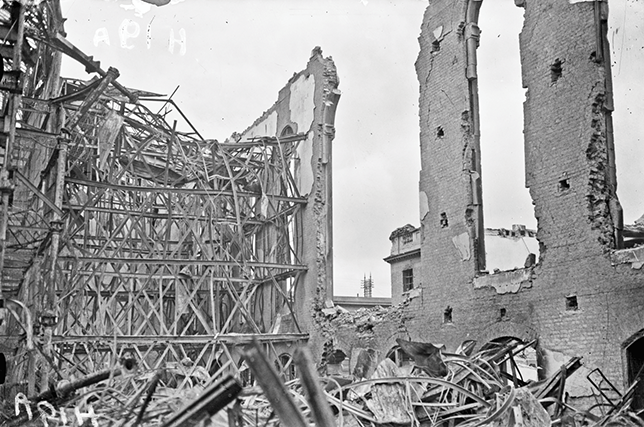
The destruction of the PROI was a pivotal point at the beginning of the Irish Civil War (Figure 4), but to understand its context and the ramifications for all stages of the paradigm, it is necessary to outline the key events that led to partition. The Act of Union, enacted 1801–1922, placed Ireland under direct British rule from Westminster. In that timeframe, the political and sectarian divisions that existed between the predominantly Roman Catholic provinces of Leinster, Connaught, and Munster and the largely Protestant population in the northern province of Ulster deepened. Confessional differences were crude signifiers of Irish political identity: Catholics who did not have voting rights until 1829 were largely nationalist, and Protestants were unionist or loyalist in persuasion by the early twentieth century. A ‘Home Rule’ movement emerged in 1885 whereby Irish Nationalist MPs pursued constitutional means to create a devolved parliament in Dublin, which, to Ulster unionists, was akin to ‘Rome Rule’. A major milestone in confessional and ideological differences came in 1912 when almost half a million Ulster unionists signed the Solemn League and Covenant declaring loyalty to the British Crown and voicing opposition to the prospect of a Dublin parliament. This opposition could not halt what had become a legal question, but as Alvin Jackson succinctly puts it, ‘Home rule was promised, enacted, postponed, and then subverted’.Footnote 132 What should have become a reality in 1914 fell victim to the more pressing issue of the Great War and the pathway towards constitutional nationalism gave way to radicalism, militancy, and the failed Easter Rising of 1916. To suppress warfare on two fronts, the British responded rashly by executing the 1916 leaders and imposing martial law, which fanned the flames of the Irish republican movement at home and abroad.Footnote 133 During periods of martial law record keeping passed from civilian to military hands.
Seventy-three Sinn Féin (Irish for Ourselves Alone, a republican party established in 1905) MPs were returned in the 1918 general election but members refused to take their seats in Westminster.Footnote 134 Instead they set up a shadow national parliament or Dáil (Assembly) in Dublin which met on 21 January 1919. That same day, two Royal Irish Constabulary (RIC) officers were killed by the Irish Republican Army (IRA) in Tipperary. These killings sparked the War of Independence (1919–21), which, from a relatively poorly armed IRA perspective, was characterised by guerilla warfare, strategic assassinations, and attacks on remote police barracks. The British responded by providing reinforcements to support the RIC and the Dublin Metropolitan Police in January 1920 to supress unrest.Footnote 135 O’Halpin and Ó Corráin estimate that 2,850 conflict-related deaths occurred between April 1916 and December 1921 nationally.Footnote 136 While there is some overlap in the fatalities, in a separate and clearly sectarian conflict, the ‘Belfast Pogrom’ 1920–22 claimed the lives of what Kieran Glennon has recently estimated as 498 civilians, the majority of whom were Catholic.Footnote 137 The Government of Ireland Act, passed in 1920, created two separate and devolved administrations on the Island of Ireland, Southern Ireland and Northern Ireland, thus partitioning the country.Footnote 138
Despite the very disturbed conditions, the new Northern Irish Parliament was established on 3 May 1921. As crowds lined the streets of Belfast to greet King George V for the official opening on 22 June 1921, in the south, martial law prevailed for the entire province of Munster and in two other Leinster counties (Kilkenny and Wexford).Footnote 139 Tactical record destruction was a central part of the IRA campaign, which included the burning of court houses and revenue offices responsible for local record storage (in stage 1 of the Trouillot paradigm) around the country. An attack on the Custom House in Dublin on 25 May 1921 yielded little but a fire that claimed large volumes of secondary, and particularly of local government and taxation records.Footnote 140 A truce was called on 11 July and the Articles of Agreement for a Treaty between Great Britain and Ireland, known colloquially as ‘the Treaty’, was signed under duress on 6 December 1921 by an Irish delegation holding a much weaker hand than its British counterpart. The Provisional Government was established on 11 January 1922 to manage the transfer of power from London to Dublin until 6 December 1922, when it became the Government of the Irish Free State (1922–37).Footnote 141 With all the hallmarks of the hurry in which it was devised, the Treaty was a flawed document. It retained elements of formal subordination to the British crown, granted Britain certain defence rights, and left unresolved the final delineation of territory between the new state and Northern Ireland. Bill Kissane argues that it exacerbated divisions within the Irish republican movement that had existed since 1916.Footnote 142 A vociferous anti-Treaty faction emerged under the political leadership of Éamon de Valera, the president of the self-declared Irish Republic.Footnote 143 A civil war broke out on 28 June 1922, which continued for almost a year.
As outlined in Section 3, the storage of the bulk of the primary records of state had been centralised under the 1867 Act. The documents were housed in the PROI in the Four Courts complex, which by then held great significance in the nationalist imagination. In times of peace, purpose-built repositories provide several protections for records that in warfare become sites of vulnerability and a significant bargaining chip. On 13 April 1922, well-armed anti-Treaty IRA troops under the command of Rory O’Connor took up occupancy of several buildings in Dublin City, including the Four Courts. This disrupted legal business, and the PROI was unable to operate. Fearful for the safety of the PROI collection, on 29 May the Royal Society of Antiquities in Ireland (RSAI) made written submissions to the garrison and the Provisional Government detailing its national cultural value.Footnote 144 The RSAI received three written assurances from the occupiers of the Four Courts, the last of which pledged that ‘this Office and the Archives therein shall not in any way suffer. They are being properly protected, and no interference is being made with them’.Footnote 145 In fact the PROI building was being used to store explosives and ammunition, and mines had also secretly been laid in it in anticipation of an attack. The Provisional Government’s own response to the RSAI’s warning was oblique: on 6 June, ‘the matter is receiving attention’.Footnote 146 On 22 June 1922, Field Marshal Henry Wilson, an elected Ulster Unionist MP who from 1918 to 1922 had been chief of the imperial general staff, was assassinated by the IRA in London.Footnote 147 Intense pressure was brought to bear by the British Cabinet: unless the Provisional Government took action to clear the IRA from the Four Courts complex, British troops still based in Dublin would do so. With the Treaty itself in jeopardy, the National Army began a bombardment on 28 June. Two days into the conflict, the PROI was destroyed in a massive explosion, caused either by a misplaced shell or by a deliberate detonation of the mines laid inside the building (see Figure 4). The blast and fire which followed ravaged over 700 years of the Irish historical record.Footnote 148 Writing about the extent of the disruption to ordinary citizens during the fighting, Elizabeth Yeats wrote to a customer how ‘half of Dublin [was] out of work’. As a member of the Dublin literati, she was very conscious of the consequences:
… we have lost our beautiful Four Courts and all the records some going back to the 13th century that fanatic Rory O’ Connor would not let them be saved … Mr Woods the Keeper and the Recorder and also a prominent Catholic barrister went and saw him there and tried to get the papers … So I hope the dear Republicans are pleased with their work!Footnote 149
The Trail of Destruction
Being the site of the highest law courts in the land, the Four Courts was naturally home to a large body of legal records, but it was also the primary repository for public records aged over twenty years. As with the experience of the PRO in London, the constraint of space was a primary problem from the outset. Consequently, the PROI did not consolidate all the records held in four separate repositories, which, as it transpired, was a small mercy. To Wood the catastrophic loss in 1922 was a culminating point of despair. He lamented:
A malignant destiny seems to have followed the preservation of the Irish Public Records for centuries. Fire and flame, carelessness and pilfering have been the contributory causes of the loss and destruction of the national archives in every land, and Irishmen have had but too frequent occasions to regret the devastation which these forces have accomplished among their own national archives.Footnote 150
Following the explosion, some records were blown across the city and locals simply picked them up, as Figure 5 shows. To encourage people to return documents or fragments of manuscripts, the Provisional Government issued a public notice on behalf of the RSAI and set up an office at 53 Merrion Square to receive them. Although it warned that to keep such documents out of ‘public custody’ would be a ‘grievous wrong’, very few items were returned.Footnote 151 The sum of whatever scraps were picked up off the streets by war-weary civilians paled into insignificance when compared with what was lost in the Four Courts. Many other Irish state records had been taken by their creators and ended up in British libraries and archives. Among the worst offenders under the Act of Union were the Lord Lieutenants and Chief Secretaries for Ireland, who were allowed to treat papers generated in the course of their duties as personal property. Herbert Wood commented in 1919 that the PRO in London and other repositories such as the Bodleian Library and the British Museum contained ‘a vast collection of Irish official documents’.Footnote 152 These remain in individual collections in London and Oxford.
People picking up scraps of documents from Sackville Street.
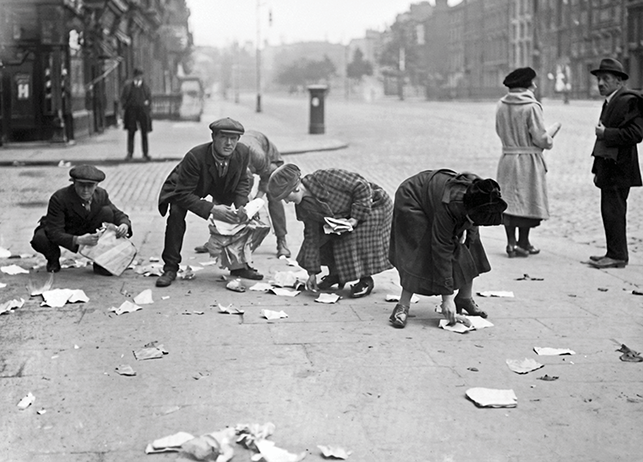
When the Government of Ireland Act 1920 came into effect, it contained clauses with respect to the PROI (section 45). By contrast, the Treaty left the fate of public records to chance. Efforts by the new Northern Irish government departments to get working and historical records from Dublin in May 1922 were frustrated by political factors.Footnote 153 They had become, in a sense, pawns in the wider struggle over the extent and possible duration of partition. Dublin officials argued that until such a time that the boundary between both polities was delineated, it made no sense to partition the extant records, and Belfast did not have a purpose-built repository. While most records perished in the PROI siege the following month, the losses were not as they first seemed. The fire in the Custom House in May 1921 concentrated minds on the question of sensitive records.Footnote 154 In January 1922, Geoffrey Granville Whiskard, a high-ranking British official temporarily assigned to the Chief Secretary’s Office (CSO) in Dublin, secretly recalled a substantial body of records from the PROI to the heavily guarded State Apartments in Dublin Castle.Footnote 155 The recall included records pertaining to the surveillance of the Irish republican movement, as well as the previous twenty years of probate records. The umbrella term ‘Fenian Papers’ was used to describe records associated with nationalist insurgency movements from the poorly organised Young Irelanders, an ideologically driven movement inspired by European revolutionary fervour, to the Irish Republican Brotherhood (IRB) established in 1858.Footnote 156 Each had orchestrated failed rebellions, in 1848 and 1867 respectively. While the Young Ireland movement petered out, the IRB, as an international, oath-bound, and secular organisation had longevity, gained momentum, and saw members of its secret Military Council organise the Easter Rising in 1916.Footnote 157
British officials in Dublin Castle made little distinction between the Young Irelanders and the Fenians, and also saw the agrarian agitators of the 1880s as potential revolutionaries. The first tranche of historical records recalled to Dublin Castle pertained to the 1848 and 1867 rebellions, and further material dating from 1866 to 1876, including Peace Preservation and Proclamations (1857–76), the Parnell ‘Times’ Commission Papers 1888–91, and the Protection of Life and Property cases (1871–5). These were undoubtedly sensitive when they were created, although the decision to take them out of stage 2 of the Trouillot paradigm and reclassify them as controversial some fifty years later made little sense. Police surveillance reports on the Irish National League established in 1882 to campaign for land reform and Home Rule, and on Fenianism (in Ireland, Great Britain, Canada, America, and Australia), along with records of agrarian outrages, suppression of newspapers, and secret societies in Belfast were also removed.Footnote 158 Gerard O’Brien notes how, when Dublin Castle was symbolically handed over to Irish troops on 16 January 1922, ‘the new custodians were greeted by empty cupboards and bare shelves’.Footnote 159 While it was suspected that many sensitive records of the identity of informants and state intelligence were burnt, it also transpired that large quantities had been secretly shipped to London. We know this because the costs of £880 associated with their transport and its Special Branch security escort were later disputed by the Treasury. The related file reveals that the initial plan was to destroy the records in London, but that did not happen (for reasons unknown).Footnote 160
Histories of Independent Ireland and Northern Ireland were stymied by the destruction of the PROI, but it was through inquiries by historians in the 1930s and again in the 1950s that evidence of archival dispersal and further destruction through neglect emerged. The urgency with which the records were recalled from the PROI and relocated was not matched with a duty of care in London. Arrangements were chaotic, and correspondence between senior Treasury officials in London in the decade that followed provides evidence of indiscriminate archival destruction and general carelessness in unqualified hands. For instance, the papers of Sir Ernest Clark, joint under-secretary for Ireland (1920–2), at a critical time for the formation of Northern Ireland were filleted by C. M. Martin-Jones, a senior official in the Ministry of Finance and formerly of Dublin Castle, who wrote: ‘I have destroyed a few letters relating to affairs in Dublin Castle of a personal or confidential character which Sir Ernest Clark would probably have destroyed if he had gone through the papers before he gave them to me’.Footnote 161 In his response to Martin-Jones, it was noted that some of the records listed were lost on the way to the Home Office; G. C. Duggan replied casually: ‘I don’t imagine they are of any very great importance.’Footnote 162 Among the other records listed were police reports on the state of order in Belfast and lists of individuals involved in the ‘Ulster Labour Association, the Unionist Council and representatives of Derry city’.Footnote 163 A letter dated 1 November 1935 detailed how Fenian Papers had been placed ‘in a cellar somewhere in Whitehall’, which suffered flood damage.Footnote 164 What was not destroyed through negligence was returned in batches to Dublin in 1936, 1940, and 1942. The personal research agenda of Dr Richard Hayes (Film Censor) reignited interest in the matter in the 1950s: responses to his queries reconfirmed the destruction.Footnote 165
Some key material survived by administrative chance. Meticulously maintained registers of British administration in Ireland from 1818 to 1922, namely of the Chief Secretary’s Office Registered Papers (CSORP, 1818–1921), are currently held at the National Archives of Ireland (NAI). These offer extensive lists and tantalising annotations of incoming correspondence, but reference call numbers regularly return a disappointing ‘not found’ for researchers in the Dublin reading room, and an updated accessions list of which files have survived has yet to be completed, over a century after the collection was secured. The equivalent ‘running joke’ among researchers in the National Archives of India, as noted by Balachandran, is ‘not transferred’.Footnote 166 A series of letters in early 1931 revealed that several CSO files pertaining to Belfast were missing following transfer to London. Duggan was particularly concerned with records associated with the Special Constabulary, which he argued was a transferred service, and that therefore the records rightfully belonged in Belfast.Footnote 167 Early tranches of the CSORP collection (1818–33) have been digitised by the NAI and placed online, but the full extent of the 1922 damage to this collection has yet to be ascertained.Footnote 168 According to archivist Mandy Banton, a further 232 boxes and files of Irish Office materials are available at TNA (CO 904, 1795–1926), while the original registers remain at the NAI. This series was microfilmed to provide surrogate copies to the NAI some decades ago and has been digitised as part of a Gale commercial endeavour. Banton mentions other series (CO 762, 903, 906) but the relationship between the ‘not founds’ in Dublin and the potential for surrogates in the extant archive in London is still frustratingly unclear.Footnote 169
A confluence of issues delayed transfers between London, Dublin, and Belfast and, in the interim, many more records were lost. After the Public Records Office Northern Ireland (PRONI) was established in March 1924, the work of transfers began in earnest.Footnote 170 That same year, the newly established Department of the President of the Executive Council (1922–37) became responsible for all records, public archives, and official publications in the Free State.Footnote 171 By then, North/South relations had deteriorated so much that Belfast petitioned the British to represent its interests and exert pressure on the Free State Government. Initially, government departments tried to resolve matters one on one, and the respective Departments of Agriculture and Education generally enjoyed good relations, but when others reached a ‘complete deadlock’ in 1926 it was necessary to bring the matter to cabinet level in Belfast. The Northern Ireland government made several efforts to gain access to testamentary and ordnance records but to no avail. It had to appeal to the Home Office to intercede with Dublin. The Free State Government held that it would need to change the law to transfer testamentary papers (held by the PROI). Furthermore, some of the General Register Office (GRO) civil registration records of births, deaths, and marriages (technically records of the public not public records) were interspersed throughout tightly bound registers.Footnote 172 A draft memorandum noted the extraction difficulties: 451 bound volumes held records exclusive to Northern Ireland, but many others were interspersed across another 2,618 volumes. It provided an example: ‘one volume covering the counties of Antrim (including the city of Belfast), Down, part of Londonderry, part of County Armagh also included two small parishes in southern Ireland.’Footnote 173 Northern Ireland made a counterclaim for custody and assured the Free State that it would act as an agent for search purposes, but to no avail.Footnote 174 The Dominion Office contended that the Free State Government was under obligation to offer the civil registration records in exchange for copies of crown lands’ deeds lost in the PROI fire. It considered the prospect of asserting a ‘moral right to some say’ in how the testamentary records were managed given how British actions had spared them from the 1922 fire.Footnote 175 Ultimately it was of the view that the Free State had ‘acted improperly in retaining the certified copies of registration of births etc. and the ordnance maps in Dublin’ but it simultaneously permitted ‘certain records relating to Northern Ireland to be removed to Dublin without obtaining the consent of the Northern Ireland Government’.Footnote 176
North/South relations deteriorated so much that by 1931, Northern Ireland contemplated seeking compensation for the records destroyed in 1921–2.Footnote 177 An exchange of letters between C. H. Blackmore Secretary to the Cabinet in Belfast and Diarmuid Ó hÉigeartuigh, the most senior civil servant in Dublin, had some friendly touches: for example, Ó hÉigeartuigh wrote in typescript to ‘My dear Blackmore’ but added a handwritten ‘I hope you are keeping very well’. However, there were subtle ideological differences, for example Ó hÉigeartuigh’s intentional use of the Irish version of his name and Blackmore’s refusal to legitimise this, replying instead to ‘O’Hegarty’.Footnote 178 Wills, probate (calendars from 1858 to 1922), and letters of administration pertaining to Northern Ireland remained in Dublin, and the matter of civil registration records rumbled on for another decade. The costs of making copies of birth, death, and marriage records were estimated to be £20,000, and the transfer costs were much higher. Certificates of births, deaths, and marriages issued by the GRO in Dublin cost 1s 6d each. The volume of requests amounted to fees of only £20 per year. These certificates were stamped with ‘Irish Free State’, which was an affront to unionist sensibilities.Footnote 179 By 1937 the matter was still unresolved and as natural attrition took hold, the business use of ‘working records’ declined, interest waned, and Belfast relented: ‘I do not think it is worthwhile using up any of the good will of the British Government on such an unimportant matter.’Footnote 180
The pre-1922 Northern Irish records of births, deaths, and marriages remain in the custody of the GRO of Ireland but have been available to search and access without charge on irishgenealogy.ie since 2016. Previously, each search (in an index) carried a fee of €2 and each uncertified copy cost €4 per entry, and researchers were restricted in the number of copies per day. These Victorian-era restrictions and fees had serious implications for the study of historical demography. Similarly, what survives of the pre-1922 census returns is domiciled in Dublin and is also available to search for free on the NAI website.
Further to the losses described, Northern Ireland is about to enter another period of significant archival absences, as the individual household returns of its 1926 census are lost and presumed destroyed. It is unclear if they were transferred to PRONI by the Ministry of Finance after the statutory 20 years, and in the 1930s some government departments availed of the opportunity to cull records under section 8 of the act. During WWII PRONI sent its records from Murray Street to ‘safe quarters’ outside the city to protect them from ‘enemy air raids’. The process of sending and retrieval both presented opportunities for undocumented loss. There is no evidence to suggest that they were destroyed in the service of waste paper during the war, but with post-war reports abridged to conserve paper, their return is not documented either.Footnote 181 A ‘limited scope’ survey was conducted in 1937 and the 1941 census was cancelled owing to WWII. With 1951 being the next available Northern Ireland census, it will fall to surviving records in Dublin and London to fill some of the gaps. While digital surrogates will be critical to the development of social history, legislative barriers, fee implications and limits to the number of orders per day have limited major research on General Records Office Northern Ireland records.
History Making and Partitioned Pasts
History making in the immediate aftermath of large-scale archival destruction and dispersal is a very difficult task. In the Irish context both polities used absence strategically to shape collective memory along political and ideological lines. In 1924 one of the first histories of independent Ireland emerged. Penned by Daniel Corkery, who later became Professor of English at University College Cork, it aimed to fill the glaring gaps in the historiography, where Ireland was usually confined to a few chapters of larger British histories. He admitted in the introduction that he was apprehensive about the exercise, ‘fearing that I was not the man to write it’, but he took the opportunity to address the shortcomings of Anglo-centric representations of Irish history from a literary perspective. For example, he used William E. Lecky’s eight-volume History of Ireland in the Eighteenth Century, which focused primarily on the Anglo-Irish ascendancy and gave no consideration to the Gael (native Irish) as one of the primary texts to provide the basis of his argument. In his inexperience, Corkery was slow to criticise the esteemed scholar and instead he situated his work as a ‘supplement’ that should not ‘replace’, rather it should be read alongside Lecky’s. With a focus on eighteenth-century Munster Gaelic poets, who were a highly regarded professional class, he wove native Irish voices into existing historical narratives. His premise was that ‘of this literature, of these poets’, Lecky, an Anglo-Irishman, ‘knew nothing’.Footnote 182
Read in isolation Corkery’s Hidden Ireland seems like a plausible rebuke of settler colonialism but its ‘cultural protectionism’ standpoint was divisive.Footnote 183 On the one hand, it formed part of the zeitgeist of cultural nationalism, which had gained momentum in the south since the establishment of the Gaelic Athletic Association in 1884 and the Gaelic League in 1893 to revive native games and the Irish language respectively. On the other hand, it was published in the aftermath of the Civil War and coincided with the ongoing Boundary Commission that aimed to resolve ‘the Border’ with Northern Ireland.Footnote 184 Corkery was criticised by his contemporaries for his nativist tendencies, most notably by his protégés Sean O’Faolain and Frank O’Connor, two since celebrated writers whose work was heavily censored by the Irish Censorship of Publications Board (founded in 1929 on some of the same nationalist principles and ideologies that Corkery’s work legitimised).Footnote 185 In his provincial study of Munster, not only did Corkery reject Northern Ireland’s claim to a Gaelic past, he also ignored the prospects of an Anglo-Irish, Gaelic identity across the Island of Ireland.Footnote 186 Louis Cullen summarised the Hidden Ireland’s primary weaknesses in 1969 as an unoriginal hypothesis hinging on poorly translated and misinterpreted poetry.Footnote 187 Furthermore, his focus on one province imposed a regional limitation to the range of sources that could have been employed. Owing to the large settlement of Scottish Presbyterians in the seventeenth century, Ulster was the first successful plantation of Ireland but it was the last province to succumb to British rule. It remained a stronghold of Gaelic lordships under their patronage the bardic tradition survived. To Cullen the binary representation of oppressor and oppressed disregarded the complexities of a far longer Anglo-Irish relationship. Moreover, it oversimplified social structures: much like the Brahmin class in India, the bards were members of a small and elite group of educated men, whose poetry could not be considered as representative of the ordinary Irish experience.Footnote 188
This episode of Irish history making is emblematic of the self-fashioning of post-colonial nation-states, where nostalgic nationalist narratives are formed to espouse views centring on the ideas of a noble ‘pre-colonial’ heritage and cultural homogeneity. There were many Irelands in the 1920s, the bucolic rural idylls of the West, where the Irish language survived and ‘real’ tradition allegedly lived, differed greatly from the realities of urban life in Dublin, Cork, and Belfast. Patrick Maume has argued that Corkery was not only revulsed by the works of playwright Seán O’Casey, a Protestant, whose work focused on working-class Dublin tenements: he also dismissed historians as ‘bat-eyed muck-rakers, ransacking “enemy state papers”’.Footnote 189 In the immediate post-colonial era, he had a fair point, because access to such records was rare. Exceptions include Walter Alison Phillips’ unionist perspective on the history of the Irish revolution, published in 1923, which revealed that the Chief Secretary had given him preferential access to confidential records of police surveillance up to 1921.Footnote 190 Few could deny that this preferential access has filtered through to modern-day practices both North and South of the Border, especially with respect to controversial records. For the first few decades, history writing in Northern Ireland retained elements of the imperial tradition. Biographies of great men and a few Protestant church histories were published. But a new regional strand also emerged. For example, Field Marshal Wilson, assassinated in 1922, described by Keith Jeffery as ‘a kind of founding martyr for the Northern Ireland state’, was the subject of a two-volume biography published in 1927.Footnote 191 Writing in 1999, Paul Bew summarised the state of Irish historiography North and South, respectively, as ‘an exaggeratedly intransigent version of their own [unionist] history while nationalists are encouraged not to reflect seriously on their own stance’.Footnote 192
Partitioned archives lead to separate historiographies, and, in time, poor cross-cultural understandings. Guy Beiner’s recent work on ‘social forgetting’ argues that ‘official’ and public histories endorsed by ‘collective memory’ have engendered and perpetuated ideas about irreconcilable pasts across Europe.Footnote 193 In the process of national identity formation since the late nineteenth century, differences have become central for new states and shared pasts have fallen victim to politicised historical narratives. The partitioning of the Island of Ireland did not limit itself to a physical border; it divided a people, and the division and dispersal of the archives have led to further partitions. For reasons that range from separate records to ideological stances, so-called all-Island approaches to historical research post 1920 are rare in the Irish context, and even within studies, there is generally a division, with separate chapters discussing northern and southern viewpoints. For post-colonial countries, especially those where archival absence prevails, the chronology of history also operates on a more localised periodisation timeline of pre- and post-independence. In the South of Ireland, a clear pre- and post-1922 division exists in the historiography. Insular and ideological readings came to dominate history writing until the revisionist debates of the late 1980s forced the beginning of a reassessment.Footnote 194 Absent and partitioned archives gave rise to separate histories and school curricula, North and South, that entrenched difference by eliding the existence of the other and denying the prospect of a shared past.
From practical, historiographical, theoretical, and conceptual perspectives, Ireland is now firmly postcolonial and has over a century of its own records to draw upon. Although Northern Ireland remains part of the United Kingdom with an independent parliament and PRONI in Belfast since 1924, some of its sensitive records remain in London, as do the records of British institutions which were centrally involved in Northern Ireland’s governance during the ‘Troubles’ (c1968 until the Good Friday Agreement in 1998) such as the fighting services, the security services, the Cabinet Office, and the Treasury. Records of state surveillance and atrocities during the Troubles are still subject to extraordinary regulation to protect persons living. This facilitates the continued denial of justice to victims, survivors, and affected persons. In an article discussing the positioning of history and historians in the public sphere of commemoration, Niamh Gallagher succinctly pinpoints the problems: ‘to write about or advise on the history of Northern Ireland is to deal with skewed archival evidence, with important files seemingly restricted, misfiled, not yet released, or seemingly non-existent.’Footnote 195 Scholars of the Island of Ireland are well used to making do with a fragmented archive, they are adept at making obligatory disclaimers about absences, and until recently the silences were acknowledged to a much lesser extent.Footnote 196 With the partition, dispersal, and migration of pre-independence archives, India, Pakistan, and Bangladesh have followed similar trends in a divided historiography of pre- and post-partition, and a focus on nationalist and indeed ethno-nationalist narratives.
Conclusion
From 2012 to 2023 the Irish government engaged in a commemoration programme entitled the ‘Decade of Centenaries’ to reflect on the history of the state; parts of the programme were intended to be all-Island and more inclusive.Footnote 197 The Virtual Record Treasury of Ireland, a project arising from that initiative led by Trinity College Dublin in collaboration with the NAI, PRONI, and TNA, aimed to recreate the PROI destroyed in 1922 using digital copies sourced globally to address absences and improve access. It uses Wood’s guide and Deputy Keeper reports to verify whether records have been destroyed, which is a useful process of elimination, and the work is ongoing. Digitisation offers several opportunities to reconcile absence through digital asset sharing, but as the next section outlines, it is not without its limitations and problems.Footnote 198
5 Absence and Archives in the Digital Age
Introduction
This section traces how digitisation has broadened access but simultaneously created new opportunities for absence. Algorithmic bias in using keyword searches for newspapers has received full consideration from Milligan, as have the problems with leveraging digital data access from commercial entities from Ahnert et al., but there are further downstream problems that I aim to raise awareness of here. They form a shadow to all four stages of the Trouillot paradigm, necessitating closer attention to the problem of absence posed by made and born-digital records, and the considerable slippage that is now taking place between them.Footnote 199 To situate a discussion of current and impending problems, this section briefly traces the history of the made digital and then outlines the challenges of the born digital and Artificial Intelligence (AI) for records management and archival curation. The aim is to show how these concurrent but entirely separate digital agendas (made and born) have overlapped since the 1990s, and why the historical research community must form a coalition to regain valuable ground conceded to commercial interests and ‘big tech’ over the past three decades, so we may better deal with the threats and opportunities that AI presents.
Absence and Digitisation Past
Digital research environments have altered the ‘craft of the historian’ to something completely unrecognisable to previous generations of scholars, but innovation has not been sudden. It is important to remember that researchers have been working with technologically enabled surrogate copies since the advent of microfilm and microfiche. These separate technologies have been used in business and banking records management for over a century and in archives and libraries since the mid twentieth century, so the opportunity to work with original materials has been a privilege for some time. Working at a remove from a source, even within the archive, can irrevocably change how we perceive it: Arlette Farge has likened a manuscript to something living and microfilm as something that drained the life from it.Footnote 200 Likewise, Joan Beaudoin has described working with digital copies in disembodied terms as displaced objects that ‘are prone to being experienced and interpreted in ways that were unintended’.Footnote 201 Michelle Warren takes this standpoint further and contends that the platforms themselves become ‘meaning makers’, frequently devoid of the information necessary to understand how digital objects were made, digital version control, and wider collection contexts.Footnote 202
Digitisation of archival materials and rare books has been heralded as providing greater levels of access that has enabled scholars to write histories remotely, and outside the archives, but this trove comes with the many caveats that highly curated datasets bring. Among its many merits, digitisation has served crucial conservation and preservation purposes, created new access opportunities for researchers, and reduced carbon footprints from individual research trips (though the energy consumption of data centres should be factored too).Footnote 203 Taking unique and irreplaceable archives and manuscripts out of the handling environment through the provision of digital surrogates is a critical conservation measure, but initially, work was piecemeal. From the early 2000s, advances in technology and the reduction in equipment costs have increasingly permitted individual archives and libraries to engage in their own digitisation programmes. Archivists and conservators generally based their digitisation decisions on public interest, rarity, and the condition of the material.Footnote 204 In the early days of in-house digitisation, high-value artefacts like illuminated manuscripts were self-selecting and usually digitised under strict archival and conservation supervision, but large volumes and awkwardly sized materials that are difficult to store (like loose-leaf court records or bound newspaper volumes) invariably do not pass the practical test for in-house digital asset creation and are generally not considered to be as valuable. Bulk digitisation of that kind of content is now a major multi-billion industry; it benefits from a very long foothold in libraries and archives, yet its imprint on public-facing websites is often hidden from view. For example, ProQuest.com grew out of University Microfilms, which was established in 1938 in Ann Arbor, Michigan (now owned by Clarivate, one of the largest EdTech content creators globally). The Faustian pact created between public bodies and private industry long before the advent of Trusted Digital Repositories and agreed international standards has many legacy issues.Footnote 205 Digitisation provided a neat solution to the problems of ‘secondary material’ bulk that irked Deputy Keepers in the nascent British and Irish PROs. By moving robust and lesser-used originals from the handling environment into deeper storage with commercial warehousing companies like Iron Mountain, archives and libraries could reassign the use of high-value city-centre storage space.
Early digitisation efforts and data management systems will be familiar to most historians: a conservation standard .tiff or .PDF format file hyperlinked to a partial index to facilitate limited searchability and data retrieval. This outsourcing method was a gold standard in an industry eager to capture lucrative historical big data government contracts from the late 1990s and in that regard, Ludmilla Jordanova’s cautions about the relationships between viewer and viewed should be well heeded.Footnote 206 Companies like Accenture, and predecessors of Gale and ProQuest, made significant inroads from the 1990s onwards as investments in the hardware, software, and human resources involved in digitisation processes were too expensive and specialised even for well-funded archives. In the early days of mass-digitisation, few records managers or archives had the resources to conduct in-house digitisation at scale, which is where private industry seized major opportunities to place collections in digital ‘house arrest’ either in upfront payment with ownership in the hands of the originating archive or government department or in a shared public/private partnership.Footnote 207 For example, from the 1970s, population data, such as historical census and civil registration records, were microfilmed, scanned to create images, and indexed through the extraction of name, date, and place data. The purpose was to make largely hand-written certificates more retrievable for staff fulfilling legal access purposes, for instance, a birth certificate to prove citizenship rights or death records to clear estate title in probate cases. While the digitisation of workflows may have been farmed out to private companies, as the records concerned living people, they were paid outright for their contracted services, meaning no ambiguity about ownership of the outputs. In some instances, the microfilm pages have been converted to PDFs that in turn have been made more publicly available, like the Irish GRO data discussed in Section 4.Footnote 208
Digital content companies rarely employed professional archivists in the early stages and often digitised collections were described at group ‘compound objects with aggregate minimal description’ rather than item level in a ‘more product, less process’ approach, which can create citation problems.Footnote 209 Citation is a basic component for scholarly accountability and some commercial companies have added a new irritating feature of their own version of call reference numbers as a ‘unique selling’ or data retrieval point, which complicates referencing even further by necessitating a translation from their call numbers back to the original. The difference between the analogue and digital copy references supplants archival collection controls and creates problems in stages 2–4 of Trouillot’s paradigm. That outputs are behind pay walls has created new forms of access inequality and difficulties for academic examiners or peer-reviewers unable to check sources hyperlinked to personal subscription accounts. Tim Hitchcock has both warned and reminded historians of the necessity for a more honest account of how we access resources (in person or online, and if the latter, detailing, which search engine etc.), and the methodological shifts that need to occur within the profession. For example, publishers and journal editorial boards need to address the matter and offer clearer citation mechanisms.Footnote 210
Genealogical data, the ‘secondary material’ of old, is now highly lucrative, but the dubious practices of profit-driven operations, such as Ancestry.com (owned by the Blackstone Group, a private equities firm since December 2020) and Findmypast (owned by DC Thompson, a Scottish publishing company), are of great concern. Thomas et al. contend that such companies pose an existential crisis to archives and raise three key points of impact: that smaller archives have essentially given away the family jewels; that the archival community cannot compete with the deep-pockets, flashy websites and sophisticated algorithms that ensure repeat customers; and that reading room numbers have dropped considerably.Footnote 211 Further to this commodification of cultural heritage, it has emerged that by outsourcing significant parts of the ‘rekeying’ or data entry to cheaper markets in the Global South, some of these companies engage in sweatshop labour practices. Kristen Howard has drawn attention to ‘the use of exploitative prison labor in providing the high-quality digital information and collections that patrons are coming to expect from libraries, archives, and other memory institutions’.Footnote 212 The full extent of these disturbing practices over the past few decades is not properly documented.
Commercial digitisation firms capitalised on the underfunding of the heritage sector and engaged in aggressive growth by acquisition, especially during and following the global financial recession in 2008. They offered to take on the costs of digitisation in exchange for the right to sell digital copies online. To sweeten the deal, free onsite access was provided to registered readers. It was an offer that publicly funded repositories could not refuse, as it helped them to meet mandated access requirements. In brief, the digital copy creates a new copyright for the commercial company, and the on-site access concession is limited to individual searches, which is of little use to research projects that require access to entire digital collections or datasets. Another adverse effect of large-scale digitised collections is that they offer veneers and strong perceptions of completeness and few pathways to investigate coverage or error rates with knowledgeable experts. More worrying still is that through its appropriation by ‘big data’ companies, digital collection control has passed from skilled archival hands, which creates a disjuncture in the Trouillot paradigm and a shadow layer of agency and agents. Corporate social responsibility is not at the heart of these partnerships; it has resulted in hugely valuable collections like the UK parliamentary papers being converted into ‘products’ and placed behind expensive paywalls. Access to these digital assets has been facilitated through free and pay-per-view formats, or what Ahnert et al. cogently describe, as ‘a “mixed-rights” landscape of cultural heritage data’.Footnote 213
FAIR Data from Old Tech
Since the advent of the semantic web, the shortcomings of the application of the tiff/index method to unstructured data has become increasingly more apparent. Digital historian Maëlle Le Roux, who used a corpus linguistics framework to analyse representations of nationalism in the Capuchin Annual, an Irish periodical published between 1930 and 1977, has shown how digital copies serving the function of access are far from research-ready. When it was first digitised, each issue was made available as a discrete PDF, but the Optical Character Recognition used at the time of digitisation lacked the sophistication of more recent iterations. Le Roux had to undertake much retrospective action to create FAIR-compliant data from these digital copies.Footnote 214 Her methodical and meticulous work brings the resources necessary into very sharp focus and shows how it cannot be done at the scale required for national archives without the political will to fund it. Efforts to create machine readable, linked, and FAIR data from early digitisation projects will require major infrastructural investments from national governments, as most research funding agencies generally do not support such work.
Even though digitisation is the first step towards ‘datafication’, as Ashleigh Hawkins reminds us, these are distinct workflows with very different outcomes of accessibility versus machine readability.Footnote 215 FAIR compliance is one of the greatest challenges that the cultural heritage sector will have to face in the coming decades. Objects digitised in the early 2000s may not now be suitable for migration; they can be absented through obsolescence and digital corruption. For example, PDF gained currency and ‘early market share’ in the 1990s as a stable compressed format, and in 2008, PDF/A became an archival preservation standard (ISO 32000-1:2008), but the inability to migrate from early generation PDF to PDF/A has troubled archivists and the digital preservation community for well over a decade.Footnote 216 In some cases, archives and libraries used digital surrogates to remove hard copies of bulky items like newspapers entirely out of circulation by putting them into deep storage, which places the data/collection owners at the mercy of private industry. Furthermore, it is unlikely that corrective action will be taken by long-departed digitisation companies. In worst-case scenarios, the creation of digital copies has been used to justify the destruction of originals – such is the price of progress.
The Transition to the Born Digital
As we move inexorably towards a born-digital archive, new vulnerabilities and occasions for absence in official records management have emerged. In 2017 Thomas et al. warned that ‘Archives need to find ways to meet the needs of the coming generation or their future users will shift their focus to resources which are available in the way they wish to access them. The archive will have silenced itself.’Footnote 217 Their prophesy was self-fulfilling: over the past forty years records have become increasingly born digital, but the focus of cultural heritage institutions has been to digitise a selection of their holdings and place these made digital primary sources online. Despite two decades of ‘super-abundance’ recognition, the born-digital question is absolutely nowhere near resolution and archives do not have the technological or computer science resources necessary to contend with the scale of the problem.Footnote 218 When emails began to replace letters, the ease of ‘source creation’ caused a ‘digital abundance’, which necessitated new policies and procedures in stage 1 where decisions to retain or delete, migrate, or destroy records are regularly undertaken.Footnote 219 Records management in national and local government has been dealing with born-digital triage and storage for decades but legislation, resourcing of systems for digital archival management, and public domain access are not up to date. Archives are chronically underprepared. With a minimum threshold of twenty years for legal access to some historical records, there is an obvious delay in the handover from records managers to professional archivists, but at least now, the former tend to be trained in the archival sciences. Natural, if rough, divisions of important or not, which dictated destruction schedules in the world of paper, are not fully applicable to born-digital records. Destruction can occur well before the involvement of professional archivists, but the extent to which digital deterioration and software obsolescence can corrode the record, in the lag between official usage and legal access of 20- or 30-year timeframes, is troubling. Methods that ensured the authenticity of analogue records cannot incorporate the complexities of the born digital. This may explain why records that should be available as electronic assets after twenty years are not. Early born-digital records continue to be made accessible as printed documents rather than in their originating e-file format. This speaks to the contemporary levels of trust in the digital record (printouts were used as backup) and the uneasy shift from paper to electronic formats in stage 1. National archives have yet to grapple with what Duranti terms ‘the diplomatics of digital records’ or how they translate into the field of digital forensics.Footnote 220 The matters of archival trust, authenticity and provenance, and the born digital will be dealt with in another Element, but the ease with which superficial forgeries can be created and propagated particularly in this era of Gen AI (a subset of AI that can generate, fabricate, or ‘hallucinate’ new records) cannot be ignored. Digital fakes can only be combatted by suitably equipped archivists and historians.
A flurry of scholarly activity in the 2010s flagged how ‘at risk’ born-digital archival materials were. Kirschenbaum warned that obsession with the past came at the expense of preparedness for digital accessions.Footnote 221 International projects, such as InterPARES and the Digital Preservation Coalition, have done much to raise awareness about the complexities of born-digital collections but, as Ries and Plakó have pointed out, there is a distinct lack of activity at ‘meso-level’ with fewer projects and institutions ‘enabling born-digital preservation, curation, and research at the level of smaller archives and individual researchers’.Footnote 222 Jefferson Bailey imagined in 2013 how archivists of born-digital materials would require forensic skills in data mining to authenticate records. Their role would shift to ‘creating user accounts for virtual reading rooms, running pattern-recognition text-mining queries, uploading disk images, or helping users with emulation software’.Footnote 223 Bailey’s vision has not materialised: searches in 2024/25 of various websites showed that the National Archives, USA, was leading the way in terms of access, but many others, such as TNA (UK), still describe born-digital accessions in hypothetical terms of what it ‘would preserve’ and what it ‘might be’.Footnote 224 Born-digital government records have yet to be made fully accessible through national archives. Therefore, the challenges for research and scholarship have not emerged for contemporary historians.Footnote 225 From a brief survey of websites, and exchanges of emails with Directors of various archives across Europe, it is clear that few have advanced born-digital accession plans and legal constraints often prevent sign up to robust supranational infrastructures such as the Consortium of European Social Science Data Archives.Footnote 226
As we enter an unknown era of the ramifications of AI in the digital turn, it is beyond time for historians to become actively involved in how we can recognise and combat indiscriminate and constructed absence. Computer scientists have warned about the threat AI in isolation poses to automated decision-making in the public sector, which has implications for later archival production and the historical research process. They suggest low-cost solutions, such as XAI or explainable AI, for in-house autonomy in phases 1 and 2 of Trouillot’s paradigm, but only if a ‘humans in the loop’ HITL approach is adopted in decision-making processes.Footnote 227 It will be necessary to have archivists trained in computer science methods to instruct and carefully document the use of XAI and the workflows created to weed out the born-digital archive. Having trained interdisciplinary teams as HITL of workflows will prevent the loss and destruction witnessed in the analogue copy in former British colonies of previous centuries, but such training programmes are yet to emerge. The scale of the task of weeding the digital deluge will require the use of AI, Machine Learning (ML) trained in workflows designed by skilled archivists, and Natural Language Processing (NLP) methods to accelerate the rate at which digital records can be processed. The use of private companies as a short-term solution in past digitisation endeavours has curtailed investment by national and supranational governance, creating a skills deficit in records management and the historical sciences. Colavizza et al., in their survey of AI in the archives, point to slippage between traditional archival respect de fonds core principles of provenance and original order and the demands of the born digital ‘data provenance, appraisal, contextualisation, transparency, and accountability’. While noting the significant contributions archivists could make, they emphasised the ongoing problem of a skills gap among archivists and few training solutions.Footnote 228 For historians, navigating and contextualising digital records created outside of archivists’ control makes the materials doubly disembodied.
Moving from analogue to digital took great persuasion for some colleagues, and indifference towards digital humanities methods means that the historical research community is operating in a delayed state of development. Without access to the born-digital record in a digital environment, historians cannot make the conceptual, theoretical, and practical advances that other disciplines such as literary studies can already achieve. For example, landmark projects, such as the Salman Rushdie papers held at Emory University, provide researchers with on-site access to his professional digital files, but under strict conditions. Deepika Bahri observes how this well-funded project is emblematic of the ‘commodity status of the literary archive in late capitalism; the tethering of the intrinsic value of art to extrinsic exchange value; the interplay of commodity value, nationalism and archival acquisition’.Footnote 229 It is still the case that undergraduate history curricula are unlikely to include training in digital history research tools and methods, unless it is driven by individual faculty members’ research agendas. Thorsten Ries argues that digital forensics must be part of the ‘historian’s professional toolkit’ if we are to prevent losses, and such interdisciplinary training has not emerged. He lists a dizzying array of considerations from obsolete operating systems to malware and record forgery, and argues that ‘latent’ characteristics merit careful attention.Footnote 230 Addressing this skills deficit really matters, and it is where historians can make direct interventions; otherwise, we are paving a clear pathway for private industry to swoop in and resolve the born-digital question in place of domain experts, as happened in the made-digital movement. Understanding the lexicon of computer science is necessary, but humanities scholars do not have to become computer scientists. However, they must have the basic skills to have common grounds for and in collaboration.
Conclusion
We have moved well beyond the Parisian archives that ‘allured’ Arlette Farge, and the archive itself has shifted from its physical to a virtual prominence.Footnote 231 Students must be consistently reminded that not everything is online, to treat what is with scholarly scepticism, and be exposed to the haptic experience of the physical spaces and decorum of archives or special collections’ reading rooms. When the global Covid-19 pandemic closed public and private repositories, it increased the volume of made-digital archive production. Mindful of public health advice, reading rooms reopened with reduced hours of access and social distancing caused a reduction in spaces available to readers. In many instances reading room access hours were not fully reinstated as economies were realised. Preoccupation with footfall has reorientated priorities towards exhibition and digital spaces rather than the much smaller demographic of registered readers. A whole confluence of matters has placed history and the humanities in jeopardy, and none more so than mission creep from the predatory practices of private companies that are devouring national treasures each ‘conservation standard’ tiff at a time. Private companies have unprecedented influences over all stages of the paradigm, and these new agents are reformulating access rights in localised agreements created outside of legislation. It is our duty as teachers, special collection librarians, and archivists to mount collective and individual resistances. Small actions matter; by exposing students to physical archives and equipping them with digital research skills, they will have the capacity to recognise the new forms of silences and absences in digital collections. Furthermore, it is also incumbent on the historical research community to regain the access rights conceded during and after the pandemic. The costs of running reading rooms come at the expense of collection care, but history making that draws solely on what is digitised will be as limited as the past histories arising from ‘derivative’ colonial archives that Caroline Elkins so rightly denounces.Footnote 232
6 Epilogue
In history power begins at the source.Footnote 233
Absence in the archives is a complicated matter that has beleaguered historical scholarship throughout the ages. To the medievalist who skilfully mines the scant manuscript, visual or material records, grappling with the problem of absence is a central concern, but for the modern historian primed for abundance in official records, it is often an afterthought. Focusing on official records of state, this Element traced how absence first became embedded in law and archival praxis, and it proposed the use of Trouillot’s four points of silence as a basis to create a parallel framework to help recognise how it occurs. Why? In overarching terms, I argue that we need to consider the problem of absence as a separate matter to silence if we are to protect the future of archives, the integrity of historical research, and indeed, archives as a human right, and not just during politically uncertain times. I conclude here by reiterating past clarion calls for recognising absence as a problem and mobilising a more united coalition from the historical research community to tackle its root causes.
Absence is deeply embedded in official records and its accepted omnipresence has profound ramifications for collective memory and popular perceptions of the past. Irrespective of progress, trends, and modes of expression, the fundamental principles of history making remain the same; primary sources still form the basis of the craft; and we rely very heavily on archives to make them accessible. Terry Cook identified four distinct stages to the development of the field of archives beginning in the aftermath of the French Revolution with what he termed the ‘juridical legacy’ phase that continued until the 1930s, and in this timeframe the keeper, who was the precursor to the archivist, emerged as custodian.Footnote 234 Imperial power relied heavily on a robust written record, and like France and the Netherlands, Britain was an early proponent of efficient finding mechanisms that evolved into what we now recognise as archivistics. With the proliferation of government records from the sixteenth century onwards, the necessity for regulation and archival management naturally followed, especially as written evidence became further vested with power in domestic and imperial terms.
To illustrate how Cook’s first phase developed, Section 3 adopted a case study approach and used Britain to explore how a discernible modern records management system emerged. When respective PROs and national archives were established, their first order of business was to take stock of, centralise, and calendar extant official records. In most instances the scale of the archive was grossly underestimated, meaning that purpose-built repositories were too small from the outset. In turn this made the task of past papers’ management and planning for ongoing accessions a very difficult balancing act, and it incentivised the large-scale destruction of material considered unimportant. Deputy Keepers had no choice but to make distinctions between primary and secondary records of state, and with limited space, selection processes were necessarily brutal. Absence through theft and physical neglect was embedded in British collections from the outset, but destruction was professionally mandated in 1877. In the juridical phase the habit of under-resourcing was formed and later fomented; instead of expanding the repository spaces required to safely house the records, collection sizes were contracted. This rendered the survival of records of ordinary lives very vulnerable to destruction, making the prospect of absence an inevitability for historians of the poor and marginalised.
Colonial regimes leave indelible marks on landscapes, national psyches, and especially on histories. Less citizens and more subjects, the people become what Stoler terms ‘occluded histories of empire’.Footnote 235 In colonial settings, only important matters like power brokerage, property ownership, commodities, wealth, and the elite were recorded and, of what was recorded, not everything was preserved. Although the systems of records management established in Ireland and India may have mirrored the template of the PRO in London, the legal instruments that created them were separate. The Irish Act did not include destruction clauses and the Indian Acts of 1879 and 1917 were limited to certain records within defined jurisdictions. It seems the practice was used in a discretionary manner: it is well documented that the EIC operated a ruthless level of destruction to spare resources in London and in its imperial outposts until Reference Gallagher1858. After the implementation of direct rule from London, weeding was routinely undertaken without official oversight, preservation was simply not a legal requirement, and the business case for maintaining documents was crudely divided by whether or not they constituted ‘working records’. Rather than sort through the records to assess their value at the end of British rule, in India and elsewhere aggressive weeding was conducted by unqualified personnel, and some used a scorched earth approach.
The violence of colonialism did not conclude with political self-determination either. In most cases it proved almost impossible for independent states to shake off the yoke of imperialism in the archives. Post-colonial inferiority complexes, coupled with under-resourcing, ensured that long after the colonisers had left, their classification and knowledge systems remained intact, granting, as it were, a powerful reach from beyond its imperial grave. Both Ireland and India have a crude codification of ‘not founds/not transferred’ to reconcile absence on a cursory level, but we have some way to go before its true extent is ascertained, as opposed to the educated guesswork that still prevails. The impact on history making is undeniable too. Chakrabarty argues that in history making, the centring of Europe as the cradle of political modernity, and the historicism that located industrial prowess and capitalism ‘there’, has cast a long shadow over the development of the profession in postcolonial India.Footnote 236 Scholars of India are still hindered by the location of migrated and dispersed collections, and although the case for record repatriation has been made and denied, perhaps digitisation may yet offer the prospect of surrogate copies being shared freely, and not behind expensive paywalls.
Mass archival destruction occurring during extraordinary events, such as natural disasters and warfare, is easy to recognise but absence has many pervasive, constructed, and insidious forms. Each national archive operates within its own legislative framework, and even if there are universalities in foundational principles and an adherence to international standards for archival descriptions and finding aids, the localised and practical applications can differ greatly from country to country.Footnote 237 France and Canada operate transparent systems, where a total archive approach has been adopted but these are better-resourced exceptions. In many respects the embezzlement that plagued sixteenth-century keepers has evolved within legal parameters to spare the blushes of the powerful. Given the unequal power dynamic, it is still difficult for lower-ranking civil and public servants to speak up about problematic behaviours of the politically powerful, but it is a necessary preventive measure to ensure open lines of communication between the responsible agents identified in the structure of absence.
We cannot continue to ignore the steady corrosion of the historical record caused by legal limitations and the under-resourcing of archives. The former occasions absence by stealth and sustains an ongoing case for the destruction of records which, if conserved, might later prove invaluable to restorative justice. When governments choose to starve cultural institutions of funding or make inappropriate political interventions, as we have recently witnessed in the United States of America, there are repercussions for current and future history making. National reflective practice requires steady investment, and as Eric Posner has emphasised, perceptions of the parent department are a crucial factor in the extent of the power and influence of the archive.Footnote 238 When the NAI moved from the Department of An Taoiseach (leader of the Irish Government) portfolio to the Ministry of Arts and Culture in 1993, its resourcing was reduced accordingly.Footnote 239 And the impact of decades of under-resourcing is keenly felt today, evidenced not only in an enormous volume of uncalendared and inaccessible records, but also in the absence of a clear born-digital plan for ingestion or scholarly access.
Irrespective of their origins, national, state, and local authority archives are all paradoxically at the mercy of the political administrations that they hold to account, and the law protecting public records is all too frequently limited and so outdated that it is no longer fit for purpose. Over the past few decades, there have been commissions of inquiry into the abuse in Irish industrial schools, reformatories, and the Mother and Baby Institutions most of which were run by Roman Catholic orders. By virtue of omission from the schedule of offices covered in the National Archives Act 1986, in Ireland records maintained by religious-run institutions are technically ‘classified’ as ‘private’ even though their remit, which was the care of vulnerable people, was outlined in statute, and their operational costs were funded by public monies allocated through central and local government instruments.Footnote 240 Arguably much of what remains of these archives are public records (some institutions were accountable to local authorities making them the remit of county archives, while others can be classified as belonging to government departments like justice and education), but in the absence of proper legal protections, extensive destruction has occurred through both deliberate actions and negligence over the past century. Following a concerted campaign by victims and survivors of institutional abuse to ensure that their past and the right to future access was not further impeded, in 2024 legislation was introduced to prevent further record destruction of such privately held records. Efforts to make them accessible is ongoing.Footnote 241 Crucially, they need to be re-categorised as public records and listed in the schedule of the 1986 Act, itself egregiously outdated. It should be added that various congregations in Ireland operated a limited and preferential access system to their archives. The implications for history making are obvious: some historians were given access to records to write ‘approved’ versions of the past, while others were refused or simply ignored by the resident record managers, who were themselves rarely qualified in the archival sciences and also fulfilling other roles within their organisations.Footnote 242
Clarion Calls
Historians rarely make a call to arms, and when they do the results are very mixed. For example, when Jo Guldi and David Armitage drew attention to historians’ professional loss of ground to economists in the American public sphere, they were excoriated by powerful voices in the Anglo-American professional associations, but in the ten years since their polarising History Manifesto some of the high-level problems they identified have deepened.Footnote 243 Guldi and Armitage advocated for longue durée (long duration) history to inform policy making and serve greater public purposes. Solutions were also offered: if we adopted grand narrative approaches and embraced the use of digital tools to incorporate microhistories, we could tell more compelling and relevant stories to wider modern audiences. Their central arguments were that historians, like politicians, needed to break away from the ‘disease’ and a ‘crisis of short-termism’ and return to the longue durée methods of the pre-1970s to address current and future-focused debate.Footnote 244 Some of their detractors argued that all methodological approaches have their merits and longue durée histories have their own problems, while others found serious errors in their presentation and interpretation of empirical data.Footnote 245 Whether large-scale spatio-temporal studies, as against microhistories, can make history more relevant to public discourse remains debatable. What they proposed would require unprecedented levels of national investment to create machine readable big data from analogue, made-, and born-digital sources. That it has not accrued during a period of relative prosperity (in the Global North) and during the Covid19 pandemic, when historical population data found a greater depth of value, indicates that it is unlikely to occur. When the next cyclical economic downturn occurs, then the cuts of previous recessions will be acutely felt in the cultural heritage sector again. There are undoubtedly many fruitful ways in which the past can inform the present, but as discussed in Section 5, the priorities of the historical data industry have seldomly reflected the values of archivists or research interests of historians. From the outset, a professional separation of concerns has eased pathways for absence in the archives and the ‘digital pivot’, which is designed in part to channel footfall away from reading rooms and towards online platforms, has served to weaken the interpersonal bonds between practitioners even further. Under the digital turn, risk points for absence have multiplied exponentially, not only with software and hardware obsolescence, but also with the failure to tackle the issue when it was at a more manageable stage. Without radical and urgent action, the sheer scale of the born-digital question will have an enormous destabilising effect for all professional groupings responsible for the four stages of silence that Trouillot identified.
Despite its problems, Guldi and Armitage’s clarion call to action is even more relevant today as attacks on the humanities have become even more direct, evidenced for example, in cuts to higher education in the UK resulting in the closure of entire history departments, and government interventions in university curricula and public history under authoritarian regimes globally. Those who eschew activism as a form of presentism in the service of some mythical high professional moral grounds no longer have the ‘natural’ esteem indicators that shielded them until the twentieth century. The historical sciences are under constant and renewed attack by nefarious operatives with highly selective views of history. Populism has gained significant ground in social media; the immigrant ‘other’ strawman has been revived to serve the ‘us/them’ narrative of division and selective readings of the mythical past have reinvigorated dangerous neo-Nazi and Fascist movements.
Mobilisation
Absence is an ongoing matter and while it does not enter the fray for the historian until twenty or thirty years post-production, if we are to safeguard the future of the archive, then record loss is a concern for all, irrespective of specialism or periodisation. The structural nature of official records management has served to create separate spheres, which has enabled absence to thrive. In Section 1, I noted the four types of agents involved in Trouillot’s framework and how absence underpins silence; what is also clear is that there is a communication barrier between record creators, the historical research community, and history makers, and by extension the public. Ahnert et al. recently called for a ‘uncompromisingly collaborative research philosophy: one that would be iterative, self-reflexive, and designed to evolve’ involving ‘radical collaboration’.Footnote 246 The legal instruments of phases 1–2 of Trouillot’s paradigm, discussed in Sections 1–3, have evolved to silo the professionals responsible and that is why, particularly in the digital age, we need to build a coalition within the historical sciences, in collaboration with computer scientists, and extend our message in more effective ways to recruit the wider public. It is difficult to persuade people struggling in the present to defend the past, but it would be a dereliction of duty not to, especially where the power of official records is concerned.
Temporary and restricted absences are a revokable statuses and are areas where the historical research community and the wider public can work together to influence government. There are powerful examples in contemporary history of how the professional directionality of power over the archive and the architecture of constructed and insidious forms of absence was obliterated by collective action, and this is where change can be enacted as Figure 6 shows. Among the primary examples is how ordinary citizens bravely undertook a Peaceful Revolution at the Ministry for State Security offices when the German Democratic Republic was in its final throes in late 1989. Their actions prevented the record creators, in that case the notorious Stasi or secret police, from destroying the extensive surveillance records it had built up since 1950. Citizens were acutely aware of the psychological hold those records held over ordinary lives and how central they would be to the reconciliation of the trauma they inflicted. As part of the transitional justice process, the records were given over to professional archival hands when the Federal Commissioner for the Stasi Records was established in 1991. Its purpose was in part to make the records accessible to the people.Footnote 247
Reversal of power paradigm.
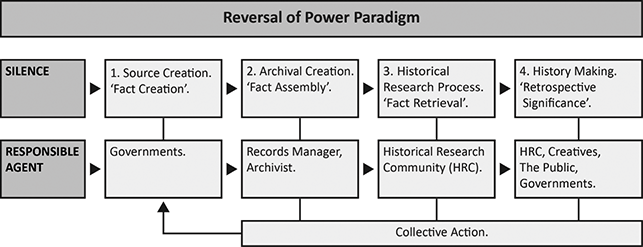
It behoves us to remember the enormous sacrifices that have been and continue to be made globally to protect cultural heritage and bear witness to injustice. In listing the tragic deaths of those he reverently describes as ‘history producers’ in Guatemala. Antoon de Baets reminds us that archival activism can be a very dangerous pursuit.Footnote 248 The fruits of such activism have ensured that records believed to be permanently lost have been rediscovered, enabling generations of repressed peoples in Latin American countries to achieve restorative justice. It has given rise to fresh research agendas and will undoubtedly lead to further history making when it is safe for historians of those countries to do so.Footnote 249 The risks to personal and professional safety must be factored into preservation campaigns, and the key to the successful effort in Germany was, without question, the courage of the people in great numbers, and it is a template that should be replicated in collective action elsewhere.
Digitisation has fallen far short of its promise, especially as new forms of warfare and cultural vandalism are developing in the digital realm through cyberattacks and the spread of mis- and disinformation. Section 5 shows how the legacy of absence in the paper record is exacerbated in the made digital and, through concentrating on the latter, there has been a reticence to come to grips with the born digital. Absence can be more easily facilitated through the slippage between generations of technologies and standards, and loss through deselection during migration to newer formats and indeed low usage statistics over the lifetime of the digital copy. Born-digital archives pose enormous challenges to the historical sciences, and unless lessons are learned from past handling of ‘super abundance’ (where destruction was the solution), these collections will inevitably become highly selective too. Again collective action can be, and is, a very powerful tool: when the UK Ministry of Justice proposed to digitise wills and destroy originals older than twenty five years in December 2023, it caused local and international outrage. The original announcement was made in the aftermath of the cyberattack on the British Library, which took vast quantities of legal deposit books, dissertations, and made- and born-digital assets offline from October 2023 indefinitely.Footnote 250 The short-term consequences of that attack were devastating. Dedicated digital librarians were unclear if the systems and files were recoverable and the problems were ongoing as of May 2026. The outrage over the potential destruction of the probate records led to a public consultation and the plan to destroy the originals was abandoned in January 2025, but what about less transparent departments and the perpetual decision-making that occurs in stages 1 and 2? How a government department could produce such an ill-conceived cost-saving plan is testimony to a lack of knowledge, short-term thinking, and a degree of contempt for the past as well as the physical fabric of records (vellum, paper, wax seals, ribbons etc.). But the outcome shows how the power over records was reversed by radical collaboration and collective action.
Public awareness of the remit of archives as well as legal access rights are of vital importance to the prevention of current and future absences. In recent decades we have seen a proliferation of modern privacy law pertaining to the living being applied to the dead and the long dead. There are two major examples of prohibitive legislation that have had a contagion affect: the Health Insurance Portability and Accountability Act 1996 (HIPAA) has had major ramifications for history of medicine in the United States of America by placing historical records of functioning hospitals in the same category as ‘working records’, and it has caused serious problems for researchers.Footnote 251 The litigious mindset that informed HIPAA has set precedent, which has had the international impact of being informally applied elsewhere. Fear of discovery of past injustices and potential liabilities has resulted in access to medical records being silently withdrawn globally. The second is recent data privacy and protection legislation the impact of which Thomas et al. describe as a ‘paradox … laws intended to promote greater access or to protect individual privacy have resulted in the mass destruction of digital records’.Footnote 252 General Data Protection Regulation (GDPR) enacted in 2018 across Europe will have enormous implications for future social histories; for example, records of schools, associations, and clubs containing personal information must be destroyed after the active period of usage expires. Freedom of Information is yet another problematic legal instrument introduced to combat ‘bureaucratic corruption’, which can be used in some jurisdictions to force the release of records from stages 1 and 2. Eunan O’Halpin neatly summarises its paradoxes: not only is it a costly instrument, it has created the legal means for preferential and exclusive access to ‘organised interests … forcing the state to effectively act as a research assistant providing data that can then be jealously hoarded by the petitioner and drawn on for profit’.Footnote 253
The retrospective (and selective) application of GDPR and HIPAA to important social and medical history sources begs many questions, and in these instances, the privacy of the living has outweighed the importance of preserving the history of past lives. The boundary between public and private domain information is unforgiving, and if strictly applied, innovative stage 3–4 projects like the Digital Panopticon (using individual convict records 1802–53) may not be possible in future whereas the Proceedings of the Old Bailey (1674–1913), as public domain information can be, and are in fact, partly possible from newspaper coverage of court cases.Footnote 254 If archives are silenced as Thomas et al. fear, then the craft of the historian will become obsolete too: the digital turn and advances in technology have changed research environments and history making irrevocably. In this era of Gen AI, misinformation, and disinformation, complacency and passivity are simply no longer tenable. The encroachment of the present on the past is something we must address and resist, especially when ill-fitting legislation is used to keep historical records out of the public domain. It is beyond time for General Historical Data Protection instruments at supranational and national levels to mitigate the risks that the broadbrush application of GDPR poses to future memory.
Conclusion
Absence in archives is a deeply entrenched, multi-faceted, and dynamic entity, making the work necessary to protect and broaden current access rights an urgent but a perpetual issue that we can never lose sight of. I reiterate past ‘calls to arms’ for radical action by Hitchcock, Armitage, and Guldi, and more recently by Ahnert et al., to demand greater transparency from our respective governments about the retention of, and access to, official records, so we can prevent further losses and ensure more transparency in current and future history making. If silence in the archives is an epistemological problem, then absence is a structural one, and together, we have considerable agency.
Acknowledgements
Every scholarly work comes with debts to the various communities that shape it and they each deserve acknowledgement. In the gestation of this Element, I was fortunate to have had the benefit of rich scholarly environments while working at the University of Limerick and University College Cork (UCC), and during visiting fellowships at the Universities of Cambridge and Oxford. Three anonymous reviewers challenged me to think more broadly about archival absence, and I am very grateful to them. Sincere thanks go to the archivists who have supported my research over the past few decades, particularly Brian Donnelly, whose vast knowledge of the National Archives of Ireland’s holdings and generosity in sharing it merit special mention. Students, past and present, have made an undeniable impression on this Element, and it was primarily written with them in mind.
Drs Rakesh Ankit, Rachel Murphy, Kirsten Mulrennan, and Professors Eunan O’Halpin and Enda Delaney kindly read and provided feedback on excerpts and drafts. Errors are of course my own. Professors David Hayton, Anthony McElligott, Oonagh Walsh, and Drs Thomas Bayer, Laurence M. Geary, Laura Kelley, Mary Kelly, Gillian Kenny, Hiram Morgan, Catherine Lawless and Andrew Sneddon have acted as astute sounding boards, as has Kevin Maguire (my far better half). Working with Professor Daniel Woolf throughout this process has been an absolute pleasure; he truly is a rare type of gem. I have shamelessly banked all of his measured and excellent advice, and I will take great pride in citing its source when sharing it on this side of the pond. Go raibh míle maith agaibh.
I wish to acknowledge research funding from the Future Humanities Institute, UCC, and a Principal Investigator ‘overhead’ from a past Taighde Éireann (Research Ireland) Laureate Award (2017/32) held at the University of Limerick 2018–2023, which covered open access costs.
Daniel Woolf
Queen’s University, Ontario
Daniel Woolf is Professor of History at Queen’s University, where he served for ten years as Principal and Vice-Chancellor, and has held academic appointments at a number of Canadian universities. He is the author or editor of several books and articles on the history of historical thought and writing, and on early modern British intellectual history, including most recently A Concise History of History (CUP 2019). He is a Fellow of the Royal Historical Society, the Royal Society of Canada, and the Society of Antiquaries of London. He is married with three adult children.
Editorial Board
Dipesh Chakrabarty, University of Chicago
Marnie Hughes-Warrington, Adelaide University
Ludmilla Jordanova, University of Durham
Angela McCarthy, University of Otago
María Inés Mudrovcic, Universidad Nacional de Comahue
Herman Paul, Leiden University
Stefan Tanaka, University of California, San Diego
Richard Ashby Wilson, University of Connecticut
About the Series
Cambridge Elements in Historical Theory and Practice is a series intended for a wide range of students, scholars, and others whose interests involve engagement with the past. Topics include the theoretical, ethical, and philosophical issues involved in doing history, the interconnections between history and other disciplines and questions of method, and the application of historical knowledge to contemporary global and social issues such as climate change, reconciliation and justice, heritage, and identity politics.
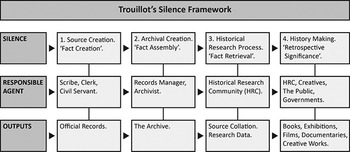
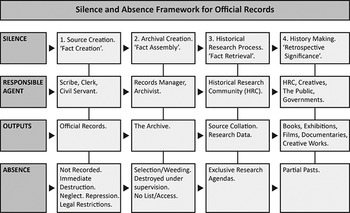
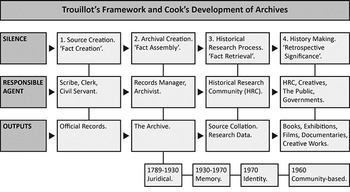
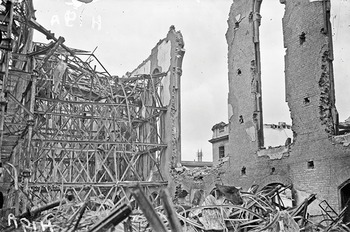
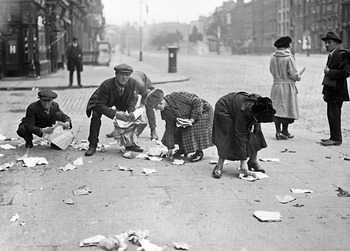
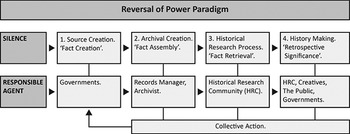

 Open access