





Introduction
Against a background of population ageing, the delivery of healthcare services for long-term care home residents is of increasing clinical and policy interest throughout the developed world (Pickard et al., Reference Pickard, Comas-Herrera, Costa-Font, Gori, di Maio, Paxtot, Pozzi, Rothgang and Wittenberg2007; Tolson et al., Reference Tolson, Rolland, Andrieu, Aquino, Beard, Benetos, Berrut, Coll-Planas, Dong, Forette, Franco, Franzoni, Salva, Swagerty, Trabucchi, Vellas, Volicer and Morley2011; WHO, 2015). In the UK, estimates suggest that around 430,000 older people live in care homes. This figure is almost three times the bed base of NHS hospitals and is predicted to rise by over 75% in the next two decades (Laing and Buisson, 2010; Wittenberg and Hu, Reference Wittenberg and Hu2015). Most care home residents have complex needs, many of which stem from progressive, chronic conditions including neuro-degenerative, musculoskeletal and cardio-respiratory disease. Visual and hearing deficits are common, the majority of residents have dementia and many live with depression and/or pain (British Geriatrics Society, 2011; Lievesley et al., Reference Lievesley, Crosby and Bowman2011; Gordon et al., Reference Gordon, Franklin, Bradshaw, Logan, Elliott and Gladman2014). The average care home resident has six diagnoses (Gordon et al., Reference Gordon, Franklin, Bradshaw, Logan, Elliott and Gladman2014), and median life expectancy from care home admission to death is just 15 months (NHS England, 2015). Even in the absence of chronic illness, older care home residents require appropriate medical care for acute conditions, and the broad range of preventive care services recommended for home-dwelling older adults is also relevant to this population (Thorpe et al., Reference Thorpe, Thorpe, Kennelty and Pandhi2011; Smith et al., Reference Smith, Sherlaw-Johnson, Ariti and Bardsley2015).
Although the importance of ready access to specialist mental health services was recognised in England’s National Dementia Strategy, which advised commissioning an extension to the role of the existing national network of multidisciplinary community mental health teams to support care homes (Department of Health, 2009a; 2009b; Tucker et al., Reference Tucker, Wilberforce, Brand, Abendstern and Challis2014), there is no equivalent provision for residents’ physical healthcare needs. This is of concern, as early research indicated that across the UK, 68% of care home residents did not get a regular planned medical review by their GPs, while 44% had no regular review of their medication (British Geriatrics Society, 2011). Further, subsequent studies have suggested that the healthcare services that care homes receive vary greatly in terms of both the support available and the personnel providing it, variation that is not explained by resident need or care home type (Carter, Reference Carter2012; Iliffe et al., Reference Iliffe, Davies, Gordon, Schneider, Dening, Bowman, Gage, Martin, Gladman, Victor, Meyer and Goodman2016; Goodman et al., Reference Goodman, Davies, Gordon, Dening, Gage, Meyer, Schneider, Bell, Jordan, Martin, Iliffe, Bowman, Gladman, Victor, Mayrhofer, Handley and Zubair2017). Although pockets of excellence exist, more than half of care homes do not have access to all the services they require from the NHS, and it is sometimes difficult for them to access timely and appropriate diagnosis and treatment for their residents (British Geriatrics Society, 2011; Gordon, Reference Gordon2015).
While in the Netherlands, medical input to care homes is provided by dedicated physicians, care home residents in the UK typically rely on GPs in primary health for their medical care and referral to specialists (Donald et al., Reference Donald, Gladman, Conroy, Vernon, Kendrick and Burns2008; Conroy et al., Reference Conroy, Van Der Cammen, Schols, Van Balen, Peteroff and Luxton2009; Government Equalities Office, 2010; Tolson et al., Reference Tolson, Rolland, Andrieu, Aquino, Beard, Benetos, Berrut, Coll-Planas, Dong, Forette, Franco, Franzoni, Salva, Swagerty, Trabucchi, Vellas, Volicer and Morley2011). In homes without on-site nursing, NHS-funded community nurses and specialist nursing support services will also visit. Although some GPs successfully manage this commitment, many are overstretched and lack the skills and training to meet care home residents’ needs (British Geriatrics Society, 2011; British Medical Association, 2016), a situation mirrored across much of Europe (Briggs et al., Reference Briggs, Robinson, Martin and O’Neill2012). As such the prevailing model of provision – ad hoc, reactive and GP-led – means many care home residents do not receive the specialist, coordinated support they require, healthcare needs are unrecognised and medication is sub-optimal (Barber et al., Reference Barber, Alldred, Raynor, Dickinson, Garfield, Jesson, Lim, Savage, Standage, Buckle, Carpenter, Franklin, Woloshynowych and Zermansky2009; Steves et al., Reference Steves, Schiff and Martin2009; Davies et al., Reference Davies, Goodman, Bunn, Victor, Dickinson, Iliffe, Gage, Martin and Froggatt2011; British Medical Association, 2016). This in turn contributes to inappropriate and unplanned admissions to hospital, with potentially significant consequences for residents’ mental, physical and emotional well-being, as well as healthcare costs (Centers for Medicare and Medicaid Services, 2012; Dwyer et al., Reference Dwyer, Gabbe, Johannes Stoelwinder and Lowthian2014; Hanratty et al., Reference Hanratty, Lowson, Grande, Payne, Addington-Hall, Valtorta and Seymour2014; Smith et al., Reference Smith, Sherlaw-Johnson, Ariti and Bardsley2015; NHS England, 2016).
In recent years, multiple policy initiatives have sought to address these concerns (Department of Health, 2007, 2008; NHS England, 2014), and there is now a good understanding of the key elements care home medicine should provide, starting with the comprehensive, multidisciplinary assessment of new residents on admission. Regular (six-monthly or more) structured multidimensional reviews (including medication reviews) are also advocated, while other important facets of care home support services include the prevention of falls and the identification and management of incontinence. A need for the prompt recognition and appropriate management of care home residents who require end-of-life care (including the creation of advanced care plans) is also recognised, as is the importance of training/upskilling care home staff (Nolan et al., Reference Nolan, Davies, Brown, Wilkinson, Warnes, McKee, Flannery and Stasi2008; Burns and Nair, Reference Burns and Nair2014; NHS England, 2015; 2016; British Geriatrics Society, 2016).
Against this background, a number of different models of care home support have emerged. These include specialist (mono or multidisciplinary) care home support services with expertise in the generic or particular healthcare needs of care home residents (e.g. falls prevention and palliative care); enhanced payment schemes for GPs who undertake additional work in care homes (e.g. regular scheduled visits on the same day each week to discuss the care of any care home resident the care home staff are concerned about and/or perform routine reviews, sometimes with the support of a geriatrician); and pharmacist-led services focusing on medication reviews (Donald et al., Reference Donald, Gladman, Conroy, Vernon, Kendrick and Burns2008; Hays et al., Reference Hays, Clarkson, Tucker and Challis2012; Burns and Nair, Reference Burns and Nair2014; British Geriatrics Society, 2016; Iliffe et al., Reference Iliffe, Davies, Gordon, Schneider, Dening, Bowman, Gage, Martin, Gladman, Victor, Meyer and Goodman2016). However, little is known about the effectiveness of these different approaches (Goodman et al., Reference Goodman, Davies, Gordon, Meyer, Dening, Gladman, Iliffe, Zubair, Bowman, Victor and Martin2015; British Geriatrics Society, 2016; Iliffe et al., Reference Iliffe, Davies, Gordon, Schneider, Dening, Bowman, Gage, Martin, Gladman, Victor, Meyer and Goodman2016), and there have been calls for a classification scheme that will enable research staff to study their relationship with resident outcomes, including quality of life, admission to hospital and locus of death (Goodman et al., Reference Goodman, Davies, Gordon, Meyer, Dening, Gladman, Iliffe, Zubair, Bowman, Victor and Martin2015; Iliffe et al., Reference Iliffe, Davies, Gordon, Schneider, Dening, Bowman, Gage, Martin, Gladman, Victor, Meyer and Goodman2016).
The exploratory work described in this article sought to derive such a schema via a new application of latent class analysis (LCA), a statistical approach for identifying subgroups of related cases from multivariate categorical data (Goodman, Reference Goodman1974; Magidson and Vermunt, Reference Magidson and Vermunt2002). While LCA has previously been used to identify groups of healthcare services based on their common service features (eg, Mauro et al., Reference Mauro, Furr-Holden, Strain, Crum and Mojtabai2016; Rodríguez-Benavente et al., Reference Rodríguez-Benavente, Herrera-Usagre, Palop-Río and Barrera-Vargas2017), to the best of our knowledge no previous studies have used this approach to categorise specialist healthcare support services for care homes.
Aim
The study sought to identify discrete classes of specialist healthcare support services for older care home residents in the UK and to estimate their prevalence. For the purposes of this article, these are defined as services whereby visiting healthcare professionals, with time dedicated to this role, provide specialist clinical support to identify and address care home residents’ healthcare needs.
Method
Study design
LCA was used to identify discrete classes of specialist healthcare support services for older care home residents using data from a UK survey.
Questionnaire development
A self-administered questionnaire was developed to capture information on the organisation, responsibilities and activities of specialist healthcare support services for older care home residents in the UK. The tool was designed by the researchers and was informed by a systematic literature review of specialist care home support services undertaken by the research team (Clarkson et al., Reference Clarkson, Hays, Tucker, Paddock and Challis2018) and guidance on effective survey design (Dillman, Reference Dillman2007; Fowler, Reference Fowler2009).
The questionnaire was devised for both postal and electronic distribution (as a form in Microsoft Word), and contained a mix of (predominantly) pre-coded multiple-option and open-ended questions, facilitating the collection of systematic information about different service characteristics while enabling respondents to provide more detail about particular aspects of their work. There were four sections:
Background (funding, age, coverage, aims);
Staffing (size, composition, allocation of medical responsibility);
Activities (assessments, medication reviews, hands-on care and training); and
Service evaluation (resident outcomes and costs).
The final draft was piloted with two consultant geriatricians who had experience of delivering specialist care home support services and revised prior to dissemination.
Approach to sampling
Data collection took place between 2011 and 2012. In the absence of an existing sampling frame, a multipronged approach was undertaken to identify the population of interest, that is, specialist healthcare support services for care homes in the UK.
First, the questionnaire was sent to all consultant physicians on the British Geriatric Society (BGS) mailing list who worked in geriatric medicine or elderly care (n = 1250) on the basis that consultant physicians were likely to be involved in many specialist healthcare support services and to be aware of others. This version of the questionnaire thus contained an initial screen to identify clinicians who were part of such services, and a subsequent section for respondents to provide the contact details of any other services they knew of, which were then also sent questionnaires.
Second, key staff in healthcare organisations responsible for service delivery and commissioning in the UK at the time of the survey (51 × NHS clusters in England, 6 × local health boards in Wales, 7 × NHS boards in Scotland and 5 × health and social care trusts and their associated local commissioning groups in Northern Ireland) were asked to provide contact details of any specialist healthcare support services for care homes in their area. All identified services were then sent questionnaires.
Third, questionnaires were sent to a further 27 service contacts identified by a systematic literature review of specialist care home support services for care homes (Clarkson et al., Reference Clarkson, Hays, Tucker, Paddock and Challis2018) or other sources (mainly a small number of individuals who approached the researchers directly nominating their service for inclusion in the study).
Irrespective of mode of identification, non-respondents were followed up at six and twelve weeks post initial contact and data collection closed in the summer of 2012.
Data analysis
Questionnaires were checked prior to entry into Stata (Release 12) and services that specifically addressed the needs of short-term care home residents (ie, dedicated intermediate care services) or that were solely concerned with residents’ mental health were excluded. As the unit of analysis was the discrete service, where more than one response was received about the same initiative, a set of predetermined rules were used to combine the responses on a question-by-question basis, creating a single record for each service. Frequency distributions were run to identify the spread of service characteristics.
LCA, a probabilistic clustering approach for multivariate categorical data (Goodman, Reference Goodman1974; Magidson and Vermunt, Reference Magidson and Vermunt2002), was used to allocate the sample into subgroups of services (classes) with similar characteristics. Although latent class membership is not directly observable, it can be inferred from patterns in core sample components (predictor variables), with each service placed in a class based on the highest probability of membership. The choice of predictor variables in this study was clinically driven and was made by the research team (a multidisciplinary group including a senior consultant geriatrician, a nurse and a social worker) taking into account the findings of a literature review (Clarkson et al., Reference Clarkson, Hays, Tucker, Paddock and Challis2018) and professional guidelines (eg, British Geriatrics Society, 2016). Four predictor variables capturing key aspects of the support provided by the different services were employed: ‘scheduled input’, ‘all residents’, ‘medication management’ and ‘training’. ‘Scheduled input’ referred to the availability of the service and indicated that the specialist service staff undertook regular, preplanned visits to the care home (rather than visiting only ‘as required’). ‘All residents’ related to service coverage and signified that all care home residents were eligible to receive the service (as opposed to services that targeted subgroups of residents with specific conditions or solely provided guidance for staff). ‘Medication management’ pertained to the extent to which the specialist service staff took responsibility for managing residents’ health and signified that they undertook the prescription of medication (rather than advising residents’ GPs on this). Finally, ‘training’ referred to the degree to which services sought to increase care home staff’s knowledge and skills, and indicated that the service provided formal, planned training (as opposed to ad hoc resident-specific advice).
Following confirmation, through Chi-square tests, that conditional dependence was absent between these variables (Lazarsfeld and Henry, Reference Lazarsfeld and Henry1968), LCA was conducted in Latent GOLD (5.1) (Vermunt and Magidson, 2005; Reference Vermunt and Magidson2013). The number of random sets and iterations was set to 50 and 3000, respectively, to control for local maxima (a phenomenon in which the programme trying to find best-fitting values for quantities converges on values that are not best fitting) (Linzer and Lewis, Reference Linzer and Lewis2011). This allowed estimations to begin several times with different initial parameter values (Vermunt and Magidson, Reference Vermunt and Magidson2005). The performance of two and three latent class models was assessed, and the selection of the best-fitting model was informed by a combination of theoretical considerations and four statistical fit indices: the Akaike information criterion (AIC) (Akaike, Reference Akaike1987); the Bayesian information criterion (BIC) (Nylund et al., Reference Nylund, Asparouhov and Muthen2007); the Bootstrap likelihood-ratio test appropriate for small sample sizes; and the associated P-value (Vermunt and Magidson, Reference Vermunt and Magidson2005). SI-CHAID (an add-on package to Latent GOLD) was subsequently used to investigate associations between class membership and other service characteristics (Magidson, Reference Magidson2005).
Results
Response rate
Responses were received from 438 of the 1250 consultant physicians on the BGS mailing list (35%); 2 further geriatricians who had been alerted to the survey by their colleagues; 49 of the 77 healthcare organisations approached (64%: 57% in England, 86% in Wales, 71% in Scotland and 80% in Northern Ireland); and 5 other service contacts, that is, 494 individuals in total. Together these provided information on 64 specialist healthcare support services: consultant physicians provided information about 24 discrete specialist care home support services; other contacts provided data on 40 further services.
Specialist support service characteristics
The majority of services provided support to care homes with and without nursing with a view to reducing hospital admissions, enhancing end-of-life care and/or identifying unmet needs, and had been operational for between one and four years (see Table 1). Services typically employed fewer than 10 staff. Nurses were the most frequently reported discipline, followed by consultant physicians (typically part-time). However, medical responsibility for care home residents was commonly retained by residents’ GPs outside the specialist service. More than half of the participating services (56%) contained at least two disciplines.
Service characteristics
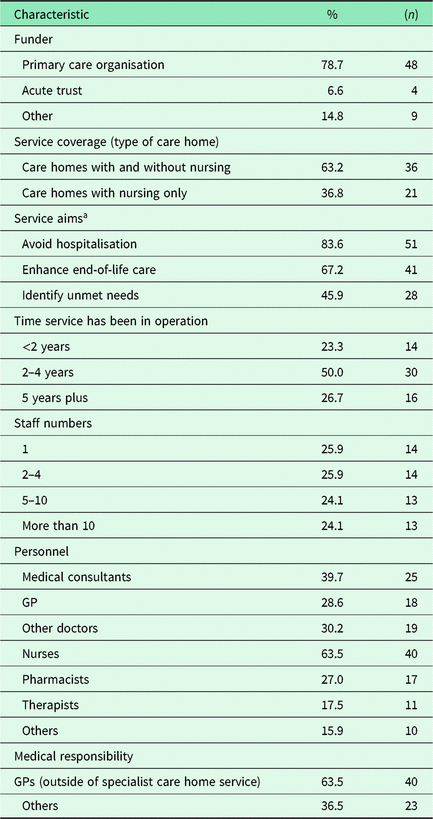
a Three most common aims only.
Care arrangements
Just over three quarters of specialist care home services provided input for all care home residents, and approximately four-fifths undertook regular, preplanned visits (Table 2). Most undertook assessments of care home residents and reviewed their medication. However, only around half prescribed medication for residents, and still less provided hands-on care (eg, dressing pressure ulcers or setting up syringe drivers). Just over half delivered formal training to care home staff.
Care arrangements

a The four predictor variables used in the latent class analysis.
Latent class results
Sixty services provided sufficient data for inclusion in the LCA. To identify the appropriate number of subgroups, the model fit indices of the two and three class models were compared. Both the AIC and BIC values were lower for the two than the three class model, suggesting that the two class model was a better fit and the bootstrap likelihood-ratio test and associated P-value also favoured this. However, it is important that the final latent class model includes classes that are qualitatively distinct (Petscher et al., Reference Petscher, Schatschneider and Compton2013), and based on theoretical justification and interpretability, the three class model was deemed the most appropriate solution.
The three class model (see Figure 1):
• Class 1 was the largest group and contained 55% (n = 33) of the sample. Members of this group had a high probability of providing scheduled input (0.99) and support for all residents (0.90), and a moderate probability of undertaking medication management (0.60). However, the probability that they would deliver formal training was low (0.25). As such they were deemed to provide ‘predominantly direct care’ for care home residents.
• Class 2 comprised 23% (n = 14) of the sample. Like Class 1, members of Class 2 had a moderate to high probability of providing scheduled input (0.66), offering support for all residents (0.77) and undertaking medication management (0.80), but in contrast to Class 1, they also had a high probability of delivering formal training for care home staff (0.96). They were thus characterised as providing both ‘direct and indirect care’.
• Class 3 contained 22% (n = 13) of the sample. Members of Class 3 had the lowest probability of providing scheduled input (0.47) and offering support for all residents (0.36), and a particularly low probability of undertaking medication management (0.03). On the other hand, the probability of their delivering formal training was high (0.77). They thus provided ‘predominantly indirect care’.
The latent profiles of specialist healthcare support services for care homes

Associations between classes and other service characteristics/arrangements
No association was found between the three classes and the funder, type of care home served, aims of the service or length of operation. However, there was a significant difference between the classes with regard to the involvement of medical consultants, with those services that provided ‘predominantly direct care’ more likely to contain consultants than services providing ‘direct and indirect care’, which in turn were more likely to contain consultants than services providing ‘predominantly indirect care’ (Table 3). Weak evidence suggested that the prevalence of other doctors (χ2 = 8.98, P = 0.062) and GPs (χ2 = 7.90, P = 0.095) followed the same pattern. In keeping with this, GPs were significantly more likely to hold medical responsibility for residents in care homes where the specialist service provided ‘predominantly indirect care’ than in the other two classes. As expected, significant relationships were also found between the classes and the provision of assessments and medication reviews, with services in the ‘predominantly direct’ and the ‘direct and indirect’ classes more likely to undertake these activities than those in the ‘predominantly indirect’ class.
Comparison of other service characteristics across the three latent classes

Discussion
Despite a good understanding of the healthcare needs of care home residents, and over a decade of debate about the best way to address these, it is not clear which approaches to service delivery are most effective (Carter, Reference Carter2012; Burns and Nair, Reference Burns and Nair2014). There is, thus, a need for a classification scheme that will permit researchers to identify the prevalence of different models, and compare their relative costs and benefits (Goodman et al., Reference Goodman, Davies, Gordon, Meyer, Dening, Gladman, Iliffe, Zubair, Bowman, Victor and Martin2015; Iliffe et al., Reference Iliffe, Davies, Gordon, Schneider, Dening, Bowman, Gage, Martin, Gladman, Victor, Meyer and Goodman2016). To the best of our knowledge, this is the first study to use LCA to develop such a scheme, placing specialist healthcare support services for care home residents into three subgroups on the basis of four key dimensions of service arrangements (Goodman, Reference Goodman1974; Bailey, Reference Bailey1994; Magidson and Vermunt, Reference Magidson and Vermunt2002). The first class (the most prevalent) captured services that focused on the provision of direct care; the second captured services that provided direct and indirect care; and the third (the least common) represented services that focused on the provision of indirect support. The remainder of this article will discuss the potential practice implications of these different arrangements and consider the utility of LCA in creating a taxonomy of specialist healthcare support services for care home residents whose effectiveness can be explored in future research.
Potential practice implications
The identified service models highlight a number of important issues for the design of specialist care home support services of interest to both commissioners and service providers. One of these is the extent to which specialist service staff personally engage in care home residents’ management, as opposed to focusing on training care home staff as a means of promoting positive change. At present, the dominant model (Class 1) focuses on the delivery of direct care, with specialist staff (often including consultants) undertaking regular, preplanned visits to care homes where the care and management of any care home resident can be discussed. As such, these services provide a structured, proactive and expert-led approach, facilitating the early identification and treatment of health problems and the avoidance of inappropriate hospital admissions (Gordon, Reference Gordon2015; NHS England, 2016). Further, in taking responsibility for the management of residents’ medication, they address an area of particular concern in care home medicine internationally. Research shows that around the world up to 75% of residents are prescribed at least one potentially inappropriate preparation (Barber et al., Reference Barber, Alldred, Raynor, Dickinson, Garfield, Jesson, Lim, Savage, Standage, Buckle, Carpenter, Franklin, Woloshynowych and Zermansky2009; Ferrah et al., Reference Ferrah, Lovell and Ibrahim2017), and although studies of interventions to reduce inappropriate prescribing have not yet resulted in consistent improvements in clinical outcomes, there is evidence of benefit in the reduction of drug burden (Alldred et al., Reference Alldred, Kennedy, Hughes, Chen and Miller2016; Thiruchelvam et al., Reference Thiruchelvam, Hasan, Wong and Kairuz2017).
In contrast, the provision of a predominantly indirect (training-focused) approach (Class 3) addresses the globally acknowledged importance of increasing the confidence, knowledge and skills of care home staff (Nolan et al., Reference Nolan, Davies, Brown, Wilkinson, Warnes, McKee, Flannery and Stasi2008). Many registered nurses working in care homes recognise that they are ill-prepared for their role and would benefit from external specialist training (Seymour et al., Reference Seymour, Kumar and Froggatt2010; Cooper et al., Reference Cooper, Spilsbury, McCaughan, Thompson, Butterworth and Hanratty2017), particularly in wound management, bowel and catheter care, nutrition, dementia and end-of-life care (NAO, 2008; NHS England, 2016; Cooper et al., Reference Cooper, Spilsbury, McCaughan, Thompson, Butterworth and Hanratty2017). More generally, it is important that appropriate training is available for all staff grades, and that they perceive this to be relevant to their needs. A systematic review indicated that interventions to change care home staff practice were more likely to have a positive effect on resident outcomes where they targeted specific care activities (eg, oral care and hygiene) as opposed to global practice (eg, quality improvement and philosophy of care) (Low et al., Reference Low, Fletcher, Goodenough, Jeon, Etherton-Beer, MacAndrew and Beattie2015). Training must also be of sufficient quality. A recent review of education and training to enhance end-of-life care for nursing home residents concluded that the provided input was ‘not of a standard that could be expected to alter clinical behaviour’ (Anstey et al., Reference Anstey, Powell, Coles, Hale and Gould2016: 353). Other research has indicated that training must also be systematic, planned and ongoing (Nolan and Keady, Reference Nolan and Keady1996; Nolan et al., Reference Nolan, Davies, Brown, Wilkinson, Warnes, McKee, Flannery and Stasi2008). Indeed, in view of the typically high staff turnover in care homes, this is particularly important (Low et al., Reference Low, Fletcher, Goodenough, Jeon, Etherton-Beer, MacAndrew and Beattie2015).
Arguably, a mixed direct and indirect approach (Class 2) would offer the most opportunity to improve the healthcare of care home residents. However, this is potentially the most time intensive and demanding model, for the skills required to provide individual support for residents are different from those needed to provide training. It is possible that the former (direct care) approach reflects the existing skill mix of services, and their preferred ways of working. To adopt the Class 2 approach would be likely to raise significant workforce issues relating to the composition of such services and the balance of time they spend on direct versus indirect care. Such decisions also have important implications for the number of care homes specialist services can support. Services placing a greater emphasis on direct care may be able to cover only a relatively small percentage of homes, leaving GPs to oversee the remainder, whereas services investing more time in training might potentially support a larger number of care homes. Alternatively, there would appear to be no reason why commissioners might not consider a two-tiered approach, whereby one provider takes responsibility for the ongoing training of care home staff across a wide geographical area, while another offers a more resident-focused service in a subset of homes. Obviously, each of these options carries associated costs, and choices must be made within the existing funding envelope. Irrespective of the approach adopted, in order to maintain benefits, services must be resourced at a sustainable level. However, the life expectancy of many past service initiatives had been less than three years (Davies et al., Reference Davies, Goodman, Bunn, Victor, Dickinson, Iliffe, Gage, Martin and Froggatt2011).
A taxonomy of specialist healthcare support services
The creation of a taxonomy of specialist healthcare support services provides a means of instilling order on the complexity of the real world by organising cases of interest into groups according to their measured similarity on observed variables (Bailey, Reference Bailey1994). Such classifications are important, not only because they enable researchers to define and compare complex cases, but because they provide for the study of ‘relationships between organisational strategy, structure and performance’ (Bazzoli et al., Reference Bazzoli, Shortell, Dubbs, Chan and Kralovec1999: 1683). They have thus been used extensively in health and social care research (Bailey, Reference Bailey1994; Bazzoli et al., Reference Bazzoli, Shortell, Dubbs, Chan and Kralovec1999; Nickerson et al., Reference Nickerson, Varshney and Muntermann2013).
In forming a taxonomy, the basic rule is that groups must be both mutually exclusive and exhaustive, while the goal is to minimise within-group variance and maximise between-group variance. As Bailey (Reference Bailey1994) notes although this is simple to describe, in reality the complexity of the cases to which it is addressed can make it very complicated, and the creation of a taxonomy thus usually involves some form of statistical analysis. To date this has most commonly been cluster analysis (Nickerson et al., Reference Nickerson, Varshney and Muntermann2013). However, it has more recently been argued that LCA has a number of advantages over cluster analysis in the formation of a taxonomy, including the fact that whereas standard cluster analysis methods use somewhat-arbitrary cluster criterion, LCA allows for rigorous statistical testing of model fit, assisting model selection. In addition, LCA is not limited to analysis of continuous dependent variables, can easily accommodate covariates and is more robust (has lower misclassification rates) to departures from the assumptions of equal variance and local independence (Eshghi et al., Reference Eshghi, Haughton, Legrand, Skaletsky and Woodford2011; Thorpe et al., Reference Thorpe, Thorpe, Kennelty and Pandhi2011).
Obviously the quality of any classification depends on ascertaining the fundamental characteristics on which it is based (Bailey, Reference Bailey1994), and the relatively small absolute number of services identified in this study restricted the analysis to four predictor variables. Future research studies may wish to explore other possible variables. However, the choice of variables used in the current analysis was clinically driven and informed by both an international literature review and professional guidelines. Moreover, the authors believe that the resultant classification fulfils all Nickerson’s criteria for a taxonomy to be useful, in that it is:
Concise, that is, it contains a limited number of dimensions and a limited number of characteristics in each dimension so as to not overload the researcher and make it difficult to comprehend;
Robust, that is, it contains enough dimensions and characteristics to clearly differentiate the objects of interest;
Comprehensive, that is, it classifies all known cases;
Extendible, that is, it allows for the inclusion of additional dimensions and new characteristics if new types of cases arise, and the tracking of initiatives over time; and
Explanatory, that is, it contains dimensions and characteristics that, rather than describing every detail of the cases in question, provide useful explanations of their nature (Nickerson et al., Reference Nickerson, Varshney and Muntermann2013).
In considering these findings, however, it should be acknowledged that it is not known what proportion of the whole population the identified specialist healthcare support services represented. Although the research team went to considerable lengths to identify as many services as possible, involving multiple approaches to relevant sources, it is likely that some services will have been overlooked, particularly those lacking consultant involvement. This would not have affected the choice of constructs used in the modelling but may have affected the relative prevalence of the different models. It is also possible that the latter will have changed in the six years since the data were collected. Recent years have certainly seen an upsurge of interest in the best ways to provide enhanced support for care home residents with a view to preventing avoidable hospital admissions and enabling care home residents to remain in the care home at the end of life (Tucker et al., Reference Tucker, Buck, Roe, Hughes and Challis2018). However, research on the (generic and specialist) healthcare support received by care homes across Greater Manchester currently being undertaken by the research team suggests that most services are continuing to focus on the provision of direct support.
Conclusions
Other than a statutory duty to provide registration with a primary care provider, the obligations of NHS commissioners for the provision of community and specialist health care to care homes in England are not presently prescribed (Goodman et al., Reference Goodman, Davies, Gordon, Meyer, Dening, Gladman, Iliffe, Zubair, Bowman, Victor and Martin2015). It is thus perhaps unsurprising that reports repeatedly highlight a lack of consensus among commissioners about the services care home residents need, how these should be provided and what they should do, while there are also concerns about the unequal access to services between care home residents and people living at home (British Geriatrics Society, 2011; Carter, Reference Carter2012). This is the first study to use LCA to identify a taxonomy of specialist healthcare services for care homes, providing a framework for the exploration of the extent to which different organisational forms are associated with better resident, process and service outcomes. As such it is hoped that it will enable researchers to start to move beyond the plethora of descriptive surveys of current NHS provision for this patient group, and facilitate exploration of what it achieves (Iliffe et al., Reference Iliffe, Davies, Gordon, Schneider, Dening, Bowman, Gage, Martin, Gladman, Victor, Meyer and Goodman2016). Clearly, given the diversity of wider healthcare arrangements for health care residents across the UK, it is unlikely that any single model of care will work in all localities. Nevertheless, as high-income countries around the world continue to try and shift the locus of long-term care from hospital to residential settings, such research is urgently required (WHO, 2015).
Acknowledgements
We thank all the specialist healthcare staff who participated in the survey. We also thank Martin Vernon and Stuart Parker for assisting in the testing and development of the questionnaire, and the former for input into the choice of attributes for analysis.
Authors’ Contribution
CH led the statistical analysis and the interpretation of the data and drafted the manuscript. ST participated in the design of the survey, helped plan the analysis, interpret the data and co-draft the manuscript. JH helped plan the analysis, interpret the data and co-draft the manuscript. RH participated in the design of the survey, managed the data collection and helped with the preliminary analysis. DC conceived of and managed the study, participated in the design of the survey, helped plan the analysis and interpret the data. All authors read and approved the final manuscript.
Financial Support
This article presents independent research commissioned by BUPA (Project number 73); and the NIHR School for Social Care Research (Grant number C088/CM/UMDC-P113). The views expressed in this publication are those of the authors and not necessarily those of BUPA, the NIHR School for Social Care Research or the Department of Health, NIHR or NHS.
Conflicts of Interest
None.
Ethical Standards
Ethical permission was not required for this survey, which was deemed to constitute a form of audit. A cover letter sent with the questionnaire described the purpose of the research, explained why the person was being contacted and requested their participation in the study.


 Open access

