

Introduction
Amaranth (Amaranthus spp.) stands as a resilient and nutritionally rich crop with significant potential to address food security and nutrition challenges, particularly in regions like Malawi. As a member of the Amaranthaceae family, Amaranth is characterized by its pseudocereal properties, culinary versatility and high nutritional value (Mng'omba et al., Reference Mng'omba, Kwapata and Bokosi2003; Akaneme and Ani, Reference Akaneme and Ani2013). With approximately 50–60 species, including Amaranthus cruentus L., Amaranthus hypochondriacus L. and Amaranthus caudatus, Amaranth offers a diverse range of leaves and grains, showcasing variations in leaf coloration from green to purple, red and gold (Stetter et al., Reference Stetter, Müller and Schmid2015). Renowned for its nutrient density, Amaranth provides essential proteins, carbohydrates, vitamins, minerals and antioxidants, offering significant dietary diversity and nutritional security, especially in resource-constrained settings (Mng'omba et al., Reference Mng'omba, Kwapata and Bokosi2003; Alegbejo, Reference Alegbejo2013).
Despite its nutritional and economic potential, Amaranth remains underutilized and under-researched in many regions, including Malawi. Limited commercial varieties and inadequate research efforts hinder its widespread adoption and market development, posing challenges to its cultivation and utilization (Kachiguma et al., Reference Kachiguma, Mwase, Maliro and Damaliphetsa2015; Lesten and Kingsley, Reference Lesten and Kingsley2020; Nyasulu et al., Reference Nyasulu, Sefasi, Chimzinga and Maliro2021; Issa et al., Reference Issa, Onyango, Makokha and Okoth2022). Moreover, the susceptibility of Amaranth to environmental fluctuations presents challenges to yield stability, necessitating the identification of genotypes capable of consistent performance across diverse agroecological conditions (Khan et al., Reference Khan, Rafii, Ramlee and Jusoh2022).
In this context, this study aimed at addressing critical gaps in Amaranth research by conducting stability analysis and identifying high-yielding accessions suitable for varietal development in Malawi. The Eberhart and Russell model, a cornerstone in stability analysis, was employed to evaluate genotype×environment interactions (GEIs) and identify superior genotypes with stable performance. While this model has been extensively applied across various crops, its application in Amaranth remains limited, presenting an opportunity to elucidate stability and high-yielding genotypes specific to this crop (Eberhart and Russell, Reference Eberhart and Russell1966; Pham and Kang, Reference Pham and Kang1988; Adejuwon, Reference Adejuwon, Kinne and Luhe2006; Endo et al., Reference Endo, Tsuchiya, Hamada, Kawamura, Yano, Ohshima, Higashitani, Watanabe and Kawagishi-Kobayashi2009; Singh et al., Reference Singh, Mishra, Pandey and Arya2014; Lule et al., Reference Lule, Fetene, De Villiers and Tesfaye2014a, Reference Lule, Tesfaye and Mengistu2014b; Jain et al., Reference Jain, Sarial and Kaushik2019; Kancharla, Reference Kancharla2022). Additionally, the study incorporated the AMMI (Additive Main effects and Multiplicative Interaction) biplot analysis to complement the stability assessment, providing deeper insights into genetic diversity and stability patterns. Through the quantification of GEIs, this study aims to facilitate the development of stable cultivars, thereby enhancing agricultural sustainability and food security in Malawi's urban and rural landscapes. By empowering farmers and promoting nutrition-sensitive farming practices, this study seeks to foster agricultural resilience and advance food systems' resilience in Malawi.
Materials and methods
Amaranth accession selection and justification
Our selection process for the amaranth accessions was meticulous, aiming to ensure a comprehensive representation of genetic diversity and relevant phenotypic traits essential for our research objectives. It was crucial to exclude accessions with poor germination, spiny attributes, low yield and lack of popularity among farmers to maintain the study's validity. Accessions with low germination rates could affect yield assessments and stability analysis by hindering the establishment of robust plant populations (Boter et al., Reference Boter, Calleja-Cabrera, Carrera-Castaño, Wagner, Hatzig, Snowdon, Legoahec, Bianchetti, Bouchereau, Nesi, Pernas and Oñate-Sánchez2019). Spiny characteristics could impede cultivation and harvesting processes, potentially reducing overall yield outcomes. Similarly, low-yielding accessions would provide limited insights into yield potential, while those not favoured by farmers indicated undesirable traits like bitterness and unfavourable aroma after cooking (online Supplementary Table S1). Through this rigorous pre-screening process, we evaluated factors such as yield potential, germination rates, thorniness and farmer preferences to identify accessions with the most potential for further investigation. Consequently, only five promising accessions were selected for stability analysis trials: MN-BH-01, LL-BH-04, NU-BH-01, PE-UP-BH-01 and PE-LO-BH-01. While we recognize the importance of a larger sample size for robust conclusions, practical constraints such as limited resources and the complexity of conducting trials across diverse agroecologies led us to prioritize depth over breadth in our study design. Despite the smaller sample size, these selected accessions offer valuable insights into various aspects of amaranth cultivation, including yield potential, adaptability to different environments and suitability for diverse agricultural practices. We acknowledge that the reduced sample size may raise concerns about representativeness; however, we have implemented meticulous experimental design and analysis techniques to mitigate potential biases. Despite these limitations, we are confident that the chosen accessions provide significant insights into the performance and adaptability of amaranth cultivars across varied environmental conditions, thereby contributing to the advancement of amaranth cultivation practices.
Species identification verification process
The plant material collected was verified for species identification using field-based methods and consultation of botanical literature. Initially, morphological characteristics such as leaf shape, flower structure, stem morphology and overall plant habit were carefully observed and documented in the field, with reference to field guides, botanical keys and relevant literature. Expert consultation with experienced botanists or taxonomists familiar with the local flora was sought when uncertainty persisted or additional confirmation was needed. Trained personnel with expertise in plant taxonomy conducted the entire species identification process. The identified species include A. cruentus, Amaranthus spinosus, Acanthus retroflexus, Amaranthus hybridus, Amaranthus viridis and A. hypochondriacus (online Supplementary Table S1). This comprehensive approach ensured thorough verification and accurate documentation of the identified species within the collected plant samples.
Plant material and experimental site
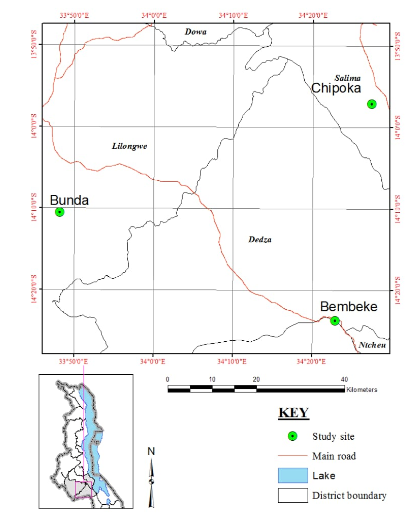
Five selected accessions of Amaranth from five districts in Malawi were used for stability studies, i.e. LL-BH-04, NU-BH-01, MN-BH-01, PE-UP-BH-01 and PE-LO-BH-01 (online Supplementary Table S2). The collection of the accessions was carried out in compliance with local laws and without any conflicts of interest. The study was conducted in three different agroecological areas: Bunda, Bembeke and Chipoka, over two seasons, representing the mid-elevation plateau, mid-elevation plateau and highlands and lakeshore and upper Shire Valley in Malawi (Nalivata et al., Reference Nalivata, Munthali, Makumba and Mbewe2017) during the main cropping seasons of 2020 and 2021. Bembeke is a horticultural research site for the Department of Agricultural Research Services (DARS), Chipoka is a field trial site for the Department of Agricultural Extension Services (DAES) and Bunda College is a site that has long been used by DARS and Lilongwe University of Agriculture and Natural Resources (LUANAR) for a variety of trials (online Supplementary Fig. S1). The average temperature, rainfall, soil type, coordinates and agroecological zones of the sites are shown in online Supplementary Table S3.
Experimental design and agronomic practices
The genotypes were arranged in a field experiment using a randomized complete block design with four replications. The experiment followed the guidelines outlined in Nyasulu et al. (Reference Nyasulu, Sefasi, Chimzinga and Maliro2021), with each plot measuring 2 m × 4.2 m and a net plot area of 3 m2 containing four ridges. Agronomic practices such as fertilizer application, cultivation and weeding, pest and disease control were carried out as described by Nyasulu et al. (Reference Nyasulu, Sefasi, Chimzinga and Maliro2021).
Data collection
At the time of flowering, data were collected from 15 randomly selected plants within each plot. Plant height was measured from the base to the top of the inflorescence. Leaf length was determined from the leaf tip to the leaf base, while leaf width was measured at the widest point perpendicular to the leaf length using a 30 cm ruler. Stem girth (mm) was measured at the midpoint between the third and fourth node using callipers on a per-plant basis.
Grain and leaf yield were assessed at the plot level, excluding border rows, and then converted to tons per hectare (tons/ha). Fresh yield data were subsequently adjusted to dry matter yield to account for moisture content. Moisture content determination was integral to this calculation. Representative samples of the harvested material were collected and subjected to moisture analysis.
To determine moisture content, samples were meticulously prepared and dried in an oven at a specified temperature range, typically between 80 and 105°C, until reaching a constant weight, indicating complete removal of moisture. The weight of the dried samples was then recorded and compared to their original weight to determine the percentage of moisture content present in the harvested material.
The conversion from fresh yield to dry matter yield was performed using the following formula:

where dry matter yield is the yield adjusted for dry matter (in the same units as fresh yield), fresh yield is the measured fresh yield data and moisture content is the percentage of moisture content in the harvested material.
This approach ensured accurate adjustment of fresh yield to dry matter yield, facilitating precise analysis of agricultural productivity and performance.
Additionally, days to 50% flowering and days to 80% maturity were determined by counting the days from planting to when 50 and 80% of the plants in the net plot flowered and reached maturity, respectively (Nyasulu et al., Reference Nyasulu, Sefasi, Chimzinga and Maliro2021).
Data analysis
The collected data were first subjected to a normality test across site analysis using the following linear model:

where Yij = response variable, μ = overall mean of the response variable, di = fixed effect of the i-th treatment, (1 + βi) = random effect of the i-th treatment, ej = random effect associated with the j-th experimental unit, δij = additional fixed effects or covariates that may be included in the model and ɛij = error term.
Normalized data were then subjected to pooled analysis of variance, and stability analysis was performed according to the linear regression model described by Eberhart and Russell using R Studio version 4.2.2 with the R package metan (Schwarzer, Reference Schwarzer2021). Linear regression is considered a measure of genotypic response to varying environments. This model is widely used because of its simplicity and reliability. It states that a genotype is stable if the regression coefficient is equal to one (bi = 1) and there is a non-significant deviation from the regression coefficient close to zero (S 2di = 0) along with a higher mean power. A linear regression coefficient equal to one (bi = 1) indicates average sensitivity to environmental variation; a regression coefficient less than one (bi < 1) indicates above-average sensitivity to environmental variation and superior adaptation to unfavourable environments; and a regression coefficient greater than one (bi > 1) indicates higher sensitivity to environmental changes but is specifically adapted to favourable environments. Deviation from regression if non-significant (S 2di = 0), the performance of genotypes for a given environment can be accurately predicted (Eberhart and Russell, Reference Eberhart and Russell1966; Lakshmidevamma et al., Reference Lakshmidevamma, Deshpande, Jagadeesha, Patil, Patil and Mirajkar2022). Pearson correlation was also performed using R studio version 4.2.2 and the R package corrplot (Wei and Simko, Reference Wei and Simko2017; Rstudio Team, 2022). While AMMI analysis biplot for grain and leaf yield were plotted by GenStat 22nd edition (VSN International, 2022).
Results
Genotype × environmental effects
Significant GEIs were observed for various traits in Amaranth, indicating different responses of genotypes to diverse environmental conditions. This highlights the dynamic nature of Amaranth cultivation, where genotype performance is influenced by environmental factors. While genotypes showed significant differences in traits like leaf yield, grain yield, plant height, stem girth, leaf length, leaf width, days to 50% flowering and days to 80% maturity, inflorescence length did not vary significantly. GEIs were particularly significant for grain yield, plant height, stem girth, leaf length, leaf width and inflorescence length, showing varied responses of genotypes to different environments (Table 1).
A pooled analysis of variance for stability parameters of Amaranth trait yield attributes

GEN, genotype; ENV, environment; GY, grain yield (tons/ha); LY, leaf yield (tons/ha); PH, plant height (cm); SG, stem girth (mm); LL, leaf length (cm); LW, leaf width (cm); IF, inflorescence length (cm); D50, days to 50% flowering; D80, days to 80% maturity.
*Significant at the 5% level of significance.
Mean grain yield (tons/ha) for each accession at each site was recorded, with ranks based on performance. LL-BH-04 consistently had the highest mean grain yield across all sites, ranging from 5.55 to 6.08 tons/ha, ranking first. MN-BH-01 showed moderate performance, ranking fourth overall, while NU-BH-01 consistently ranked fifth. Accessions PE-LO-BH-01 and PE-UP-BH-01 had variable performance, with PE-LO-BH-01 ranking third and PE-UP-BH-01 ranking second overall. PE-LO-BH-01 notably showed a significant increase in grain yield at the Bembeke site (Table 2).
Mean grain yield (tons/ha) of five Amaranth accessions across three sites

Mean leaf yield (tons/ha) for each accession at each site was also recorded, with PE-UP-BH-01 having the highest mean leaf yield, consistently ranking first. MN-BH-01 ranked second, NU-BH-01 third, PE-LO-BH-01 fourth and LL-BH-04 fifth (Table 3). These results highlight the variability in leaf and grain yield among Amaranth accessions in different environments, emphasizing the importance of site-specific evaluations in breeding programmes for sustainable crop productivity. Further investigation into specific environmental factors influencing genotype performance in Amaranth cultivation is warranted.
Mean leaf yield (tons/ha) of five Amaranth accessions across three sites

Stability analyses for yield traits by Eberhart and Russell model
The stability and performance of Amaranth cultivars across different agroecologies in Malawi were analysed using the Eberhart and Russell model. Parameters such as mean values, linear regression coefficients (bi) and deviations from regression (S 2di) were employed for this assessment. Table 4 demonstrates that accession PE-UP-BH-01 exhibits stability in leaf yield across zones, with a mean value of 2.69, a linear regression coefficient (bi) of 1.658 and a deviation from regression (S 2di) of 0.0659, indicating consistent performance across varying environmental conditions. Furthermore, Table 5 highlights accession LL-BH-04 as the most stable and high-yielding grain accession across all sites. With an overall mean grain yield of 6.79 tonnes per hectare, accession LL-BH-04 demonstrates a uniform regression coefficient (bi = 1.53) and a non-significant deviation from zero in regression coefficients (S 2di = 0.37). While these values may not precisely equal unity, their proximity to 1 indicates relatively stable performance across environments, reinforcing the cultivar's resilience and suitability for diverse agroecological conditions. This comprehensive analysis provides valuable insights into the stability and performance of Amaranth cultivars, underscoring their potential for sustainable agricultural production across different regions of Malawi.
Stability parameters of Amaranth accessions for leaf yield per hectare

Stability parameters of Amaranth accessions for grain yield per hectare

Stability analyses for yield traits by AMMI analyses
In this study, we further investigated the genetic diversity and stability of various Amaranth accessions in terms of grain yield using an AMMI biplot analysis. The biplot revealed distinct clustering patterns indicating genetic relationships and provided insights into the stability of grain yield across different environments. Notably, accessions LL-BH-04, MN-BH-01 and NU-BH-01 clustered along the positive x-axis, showing genetic similarities and stable performance across multiple environments, suggesting their potential suitability for cultivation under diverse conditions with consistent grain yields. Conversely, accessions PE-UP-BH-01 and PE-LO-BH-01, positioned uniquely in the biplot, exhibited varying levels of stability compared to other accessions. While PE-UP-BH-01 showed stability in certain environments despite its distinct genetic profile, PE-LO-BH-01 displayed variable performance, indicating potential instability under specific conditions. The principal component analysis (PCA) further clarified stability trends, with PC1 explaining 87.43% of the total variation likely capturing stability across environments, while PC2 explaining 12.57% of the variation may represent interactions leading to instability (Fig. 1a). These stability insights provide valuable guidance for breeding programmes aiming to develop resilient Amaranth cultivars with consistent grain yield performance across diverse environmental contexts, enhancing agricultural sustainability and food security.
AMMI biplot illustrating the genetic diversity and stability of grain yield (Fig. 1a) and leaf yield (Fig. 1b) across different Amaranth accessions evaluated at multiple sites. Accessions are represented by points, with their positions indicating their genetic relationships and stability in yield. The x-axis represents the first principal component (PC1), capturing the main effects of the accessions, while the y-axis represents the second principal component (PC2), and highlighting interaction effects. Points closer to the positive x-axis indicate higher yield performance, while those further from the origin may represent accessions with varying stability across environments.

The investigation into leaf yield among different Amaranth accessions was conducted through an AMMI biplot analysis, shedding light on the genetic diversity and spatial distribution of these accessions. The biplot revealed distinct spatial distributions of the accessions, reflecting their genetic relationships and variability in stability. Notably, accessions NU-BH-01 and PE-UP-BH-01 were positioned along the positive x-axis, indicating not only genetic similarity but also potential stability in leaf yield across diverse environmental conditions. Conversely, accessions MN-BH-01 and LL-BH-04 were positioned along the negative x-axis, suggesting differences in stability compared to the former group, potentially influenced by distinct genetic traits. Interestingly, accession PE-LO-BH-01 occupied a unique position further along the positive x- and y-axes of the biplot, suggesting unique genetic characteristics and potentially enhanced stability in leaf yield compared to other accessions. PCA further elucidated stability trends, with PC1 explaining 87.43% and PC2 explaining 12.57% of the total variation, respectively (Fig. 1b). These results provide valuable insights into the stability of leaf yield among Amaranth accessions, offering a foundation for future breeding strategies aimed at developing resilient cultivars capable of consistent performance across varying environmental conditions, thus contributing to agricultural sustainability and food security initiatives.
Stability analyses for yield attributes
Online Supplementary Table S4 presents the mean values for yield attributes, regression coefficients (bi) and deviations from regression (S 2di) for five Amaranth accessions across three sites. The stability analysis indicates non-significant deviations from the regression line (S 2di) among the accessions for all yield attribute traits studied across the three sites. However, the accessions varied in regression coefficients (bi) for all traits. Regarding plant height, accession NU-BH-01 demonstrated stability and wide adaptability with a high mean performance of 174.30 cm, a regression coefficient (bi) of 1.35 and a deviation from regression (S 2di) of 0.0. In contrast, Amaranth accessions MN-BH-01, PE-LO-BH-01 and PE-UP-BH-01, despite having higher mean values, were not stable due to their regression coefficients. Accession MN-BH-01, with a regression coefficient of 2.38, showed sensitivity to fluctuating environments but adaptation to favourable conditions. Accessions PE-LO-BH-01 and PE-UP-BH-01 had regression coefficients of less than 1. For leaf length, accession PE-UP-BH-01 emerged as the stable and widely adapted genotype with a high mean performance of 18.95 cm, a regression coefficient of 1.1 and a deviation from the regression line of 0.0. Similarly, for leaf width, accessions PE-LO-BH-01, MN-BH-01 and PE-UP-BH-01 demonstrated stability. Regarding days to 80% maturity, accessions LL-BH-04, PE-LO-BH-01 and PE-UP-BH-01 were stable, although their mean performance was not above average. Only accession LL-BH-04 showed stability in inflorescence length, with a regression coefficient close to one and non-significant deviation from the regression line.
Phenotypic correlation between different characters in Amaranth
Online Supplementary Fig. S1 presents correlations among different quantitative traits of Amaranths with grain yield and leaf yield. Leaf yield showed significant positive correlations with days to 80% maturity (0.94, P < 0.05), inflorescence length (0.93, P < 0.05), grain yield (0.98, P < 0.01) and days to 50% flowering (0.99, P < 0.01). Similarly, grain yield exhibited significant positive correlations with days to 50% flowering (0.96, P < 0.05), leaf yield (0.98, P < 0.05), days to 80% maturity (0.94, P < 0.05) and inflorescence length (0.93, P < 0.05). These findings suggest strong interrelationships between various quantitative traits and both grain and leaf yield in Amaranths. Notably, traits such as days to maturity and flowering seem to play crucial roles in determining yield, highlighting their importance in breeding and selection efforts aimed at improving overall productivity.
Environmental index of three environments for leaf and grain yield in Amaranth
Online Supplementary Table S5 presents the environmental index and mean performance for leaf yield and grain yield across three different environments studied. The Bembeke site exhibited high mean values of 2.34 and 5.96 tons/ha for leaf yield and grain yield, respectively. Additionally, the positive environmental index of 0.323 and 2.36 for leaf and grain yield, respectively, indicates that the Bembeke site was favourable for both traits. In contrast, the other two sites were unfavourable for both parameters, as depicted in Table 5. These findings underscore the significant influence of environmental factors on leaf and grain yield in Amaranths, emphasizing the importance of site selection and management practices in optimizing productivity.
Discussion
Our study provides a comprehensive evaluation of Amaranth accessions across diverse agroecological contexts in Malawi, yielding pivotal insights into their performance and adaptability. Notably, through rigorous stability analyses, we identified cultivars with consistent leaf and grain yield performance, filling critical gaps in sustainable crop production. This research constitutes a significant leap forward, offering novel insights into the selection and cultivation of resilient Amaranth varieties (Lule et al., Reference Lule, Fetene, De Villiers and Tesfaye2014a, Reference Lule, Tesfaye and Mengistu2014b; Kiss et al., Reference Kiss, Mayer, Tóth, Mészáros and Karsai2020; Lakshmidevamma et al., Reference Lakshmidevamma, Deshpande, Jagadeesha, Patil, Patil and Mirajkar2022).
Unlike previous studies, which often focused on restricted regions (Kandel et al., Reference Kandel, Rijal and Kandel2021), our approach encompassed a wide spectrum of agroecologies, thus providing a holistic understanding of Amaranth performance under varying environmental conditions. This comprehensive analysis is paramount given Malawi's heterogeneous landscapes and climate variability (Walker and Peters, Reference Walker and Peters2007; Ngongondo et al., Reference Ngongondo, Xu, Gottschalk and Alemaw2011). By identifying stable cultivars across multiple traits, our findings offer pragmatic solutions for bolstering agricultural productivity, fortifying food security and fostering sustainable development in Malawi and beyond. Highlighting the imperative of prioritizing stable accessions in breeding programmes delineates a strategic pathway for expediting varietal development and promoting agricultural resilience (Adjebeng-Danquah et al., Reference Adjebeng-Danquah, Manu-Aduening, Gracen, Asante and Offei2017; Danakumara et al., Reference Danakumara, Kumar, Kumar, Patil, Bharadwaj, Patel, Joshi, Bindra, Tripathi, Varshney and Chaturvedi2023).
Our study achieved a paradigm shift in the field by deploying a multifaceted stability analysis, leveraging the Eberhart and Russell model alongside AMMI analysis, to discern high-performing stable genotypes across diverse environments (Singh et al., Reference Singh, Mishra, Pandey and Arya2014; Lule et al., Reference Lule, Fetene, De Villiers and Tesfaye2014a, Reference Lule, Tesfaye and Mengistu2014b; Shrestha et al., Reference Shrestha, Subedi, Acharya, Sharma and Subedi2022; Manivannan et al., Reference Manivannan, Mahalingam, Bharathikumar and Rajalakshmi2023; Memon et al., Reference Memon, Patel, Parmar, Kumar, Patel, Patel, Patel and Katba2023). Notably, LL-BH-04 and PE-UP-BH-01 emerged as stable for grain and leaf yield, respectively. This methodological innovation is indispensable for unravelling the nuanced responses of various Amaranth accessions to the diverse environmental conditions prevailing across Malawian agro-climatic zones (Kandel et al., Reference Kandel, Rijal and Kandel2021; Hasan et al., Reference Hasan, Kulsum, Sarker, Matin, Shahin, Kabir, Ercisli and Marc2022).
Furthermore, our analysis unearthed significant variations in performance across different traits among Amaranth accessions. For instance, PE-UP-BH-01 exhibited superior leaf yield performance, while LL-BH-04 demonstrated higher grain yield potential. This observation underscores the absence of a dual-purpose accession capable of optimizing both leaf and grain yields concurrently. Such findings underscore the exigency for future breeding endeavours aimed at developing Amaranth varieties that excel in both traits, thereby maximizing nutritional and economic benefits (Hoidal et al., Reference Hoidal, Díaz Gallardo, Jacobsen and Alandia2019).
Moreover, our study went beyond stability analyses to investigate the complex relationship between yield and its components, in line with the results of Khan et al. (Reference Khan, Rafii, Ramlee and Jusoh2022); Jahan et al. (Reference Jahan, Sarker, Hasan Saikat, Hossain, Azam, Ali, Ercisli and Golokhvast2023); Prajapati et al. (Reference Prajapati, Solanki and Tiwari2022); Yeshitila et al. (Reference Yeshitila, Gedebo, Tesfaye, Demissie and Olango2023). The Pearson correlation analysis in our study revealed significant positive correlations between leaf yield and days to maturity, inflorescence length and days to flowering, as well as positive correlations between grain yield and these attributes. These results highlight the interdependence of yield traits and provide valuable insights into potential strategies for increasing both grain and leaf yields (Tesfa et al., Reference Tesfa, Zewotir, Derese, Belay and Shimelis2023). Additionally, the moderate to strong positive correlations between these yield and yield components emphasize the interconnected nature of these agronomic traits, suggesting opportunities for genotype selection and management practices to optimize yield and quality. This perspective is supported by the findings of Maich and Rienzo (Reference Maich and Rienzo2014).
The environmental indices scrutinized in our study, detailed in online Supplementary Table S5, elucidated the most suitable environment positively impacting leaf and grain yield. The markedly higher mean leaf and grain yields at the Bembeke site underscore its favourability compared to other sites in the study. Intriguingly, the lower temperature at the Bembeke site, contrary to prior studies (Khandaker et al., Reference Khandaker, Akond and Oba2010; Managa and Nemadodzi, Reference Managa and Nemadodzi2023), showed conducive environment for Amaranth accessions, underscoring their adaptability to diverse environmental conditions. This finding underscores the versatility and resilience of Amaranth cultivation (Sarker et al., Reference Sarker, Islam, Rabbani and Oba2017; Nguyen et al., Reference Nguyen, Tran, Tran, Ohsawa and Yoshioka2019; Bashyal et al., Reference Bashyal, Upadhyay, Ayer, Dhakal, Bimochana and Shrestha2022), necessitating further research to decipher the underlying mechanisms governing its physiological responses to environmental factors (Vaid et al., Reference Vaid, Runkle, Room, Lansing, Frantz and Stop2014).
Future research endeavours could delve deeper into the genetic underpinnings of stability in Amaranth cultivars, leveraging advanced genomic tools and techniques to unravel the complex genetic architecture underlying yield traits and their stability across diverse environments. Additionally, integrating multi-disciplinary approaches, such as crop physiology, agronomy and bioinformatics, could provide comprehensive insights into the physiological and molecular mechanisms governing Amaranth performance. Furthermore, expanding field trials to encompass a broader geographical scope and incorporating long-term monitoring of crop performance under changing climatic conditions would enhance the robustness and generalizability of findings. Such endeavours would not only enrich our understanding of Amaranth resilience and adaptation but also inform the development of tailored breeding strategies and agronomic practices to mitigate the impacts of climate change and enhance agricultural sustainability.
In conclusion, our study reveals the complex interaction between genotype and environmental factors that impacts the performance of Amaranth cultivars in Malawi. Through detailed stability analyses, specific accessions such as LL-BH-04 and PE-UP-BH-01 have emerged as promising candidates, showcasing resilience and adaptability to various environmental stresses. These findings highlight the crucial role of genetic diversity and stability analysis in guiding breeding efforts toward developing robust cultivars that can sustain agricultural productivity and enhance food security. Additionally, our study emphasizes the importance of conducting site-specific evaluations and comprehensive stability analyses to ensure the reliability of cultivar recommendations across diverse agroecological conditions. Future research should focus on uncovering the genetic mechanisms underlying cultivar stability and elucidating GEI to refine breeding strategies and promote sustainable agricultural practices. By leveraging these insights, we can collectively address the complex challenges in agriculture and food systems, paving the way for a more resilient and sustainable future, not only in Malawi but globally.
Supplementary material
The supplementary material for this article can be found at https://doi.org/10.1017/S1479262124000327.
Data availability statement
Data supporting the results of this study are available from the corresponding authors (Mvuyeni Nyasulu and Abel Sefasi) upon request.
Acknowledgements
The study was conducted with financial support from Capacity Building and Management of Climate Change (CABMACC) through the Horticulture Department of Lilongwe University of Agriculture and Natural Resources (LUANAR), Bunda College Campus. The authors are grateful for the support of the administrators of CABMACC, and the technical staff of the student farm of the Horticulture Department, Chipoka and Bembeke sites.
Author contributions
Conceptualization: M. N. and A. S. Data collection and cleaning: M. N. Data analysis: M. N. Experimental layout: M. N. and A. S. Funding acquisitions: A. S. Supervision: A. S., S. Z. and M. M. Original manuscript draft: M. N. Writing review, editing and final approval: M. N., R. M. K., S. Z., M. M., R. G. M. and A. S.
Funding statement
The study was supported by Capacity Building and Management of Climate Change (CABMACC) project number: CABMACC 001-2015, through the Horticulture Department of the Lilongwe University of Agriculture and Natural Resources (LUANAR), Bunda College Campus.
Competing interests
We the authors of this paper hereby declare that there are no competing interests in this publication.




 Open access

