


Introduction
Exploring the historiography of madness raises some unavoidable questions about the topic under examination. What is the history of madness? Why choose the term ‘madness’ over ‘mental illness’, or the preferred (and more neutral) professional designation: ‘mental disorder’? How does the history of madness differ from the history of psychiatry, or its principal institution – the lunatic asylum? Is it possible to study madness over time, as if it were one distinct entity or a cluster of common and recognisable mental disorders that maintain coherence and integrity across cultures and generations?
The use of the term ‘madness’, though imperfect, at least has the advantage of not committing itself to one single epistemological position. It neither assumes a medical framing of mental disturbances nor excludes it entirely. It approaches mental troubles well beyond the gaze of the medical profession. It is also legitimised by the presence of those described as ‘mad’ for centuries. The mad have a longstanding presence in art, in law, and in social welfare, predating the medicalised concept of ‘mental illness’ or ‘mental disease’ that took hold in the twentieth century. Indeed, the terms ‘madness’, ‘insanity’, and ‘lunacy’ all date to some of the earliest texts in the common law tradition. Lunatics and madmen were observed and relieved under English Poor Law administration from the Elizabethan period onwards, as well as being targeted groups in vagrancy laws of the early Modern period. In these days of heightened sensitivity to the use of historical language in academic scholarship, madness also has the advantage of being acceptable to groups or individuals so designated – in a manner that, for example, the use of ‘queer’ in Queer history has now gone mainstream and is used in a valorising and self-affirming manner.
This Element has grouped scholarship into historiographical schools, organising influential works based on their shared methodological approaches, intellectual commitments, principal sources, and predominant arguments. This largely chronological structure encourages researchers to appreciate how different ways of approaching the history of madness have emerged over time; however, they did not displace one another, or discontinue, but rather constitute multiple layers of historical interpretation that have coexisted, and indeed influenced each other, over time. The groupings should be understood as reflecting the intellectual organisation of published scholarship, not a summary of the contribution of any individual author. There are some researchers who have worked on the history of madness for most of their careers, and understandably have addressed different themes, and adopted different perspectives, over time.
1 Madness and Medical History
The earliest examinations of the history of madness appeared in works that would later be grouped under the broad rubric of the ‘history of medicine’. In this literature, the medical professions, medical ideas, and medical institutions occupied centre stage, with an emphasis on the organisation of professional associations and their journals, the biographies of clinicians and scientists, changing medical ideas and diagnoses, as well as landmark discoveries and evolving therapeutics.
The history of medicine, as a genre of scholarship, dates to the latter half of the nineteenth century. Medical trainees, at that time, were introduced to the tomes of Galen and Hippocrates as part of a larger corpus of medical knowledge that traced a Western medical heritage from Classical times, through the Middle Ages, and into the Modern era.Footnote 1 The ancient texts were both symbolic and didactic. Reading about medical treatises, and memorising eponymous clinical procedures, became part of professional training in such influential medical schools as Montpellier, Oxford, Johns Hopkins, and McGill.Footnote 2 The recitation of the Hippocratic Oath itself was an oral performance whereby medical trainees paid homage to this historical legacy. Understanding the original texts (in Ancient Greek or Latin) also presumed a certain level of education and social standing amongst ‘orthodox’ practitioners who were gravitating, over the course of the nineteenth century, to the medical doctorate, or MD, as the gold standard for medical education.Footnote 3
The timing of the emergence of the history of medicine as a genre was far from coincidental. It was only in the middle decades of the nineteenth century that various branches of medicine in Western Europe and the British Isles – groups of practitioners variously known as physicians, surgeons, and apothecaries – managed to reconcile their differences and unite under state sanction and regulation.Footnote 4 Central to this process of professional closure was a claim to expert knowledge, and this claim was supported, in part, by a shared history of medical practice that highlighted advances over the centuries. In this way, the teaching of medical history to medical students was (and continued for several generations to be) part of a process of inculcating collective identity, socialising young recruits into traditions of professional behaviour, and inspiring them to continue the journey along the winding path of scientific inquiry. Despite the evident and profound differences in medical practice and cosmologies in pre-modern Europe, scholars sought to emphasise the ‘great continuity in the history of medicine’, to quote Erwin Ackerknecht in the foreword to his Short History of Medicine.Footnote 5 And at the risk of stating the obvious, it was a tradition that centred on European men who embodied and articulated the cultural values, gendered perspectives, class expectations, and racial prejudices of their respective societies.
As Western medicine specialised by the turn of the twentieth century, with the establishment of postgraduate diplomas and training programs, so too did twentieth-century histories of medicine begin to incorporate the prevailing subdisciplines of the respective era as a way of framing their profession’s past. General histories of medicine were thus occasionally an incongruent blend of chronological periodisation along with chapters devoted to the history of specific medical specialities. Arising from this approach, ‘psychiatry’, or to use the British term, ‘psychological medicine’, often merited its own consideration. Authors emphasised the transhistorical nature of mental suffering and occasionally the continuity of specific disorders – such as Melancholia and Hysteria – even if they conceded that ancient authorities misattributed the causality in their pre-modern understanding of disease to the ‘spiritual’ world. Much was made about the ‘barbaric’ way that lay communities treated the mad in the past, resorting as they sometimes did to chains, whippings, and other punishments. Medical historians often contrasted the lay and religious understandings of madness of the pre-modern period with the scientific and secular approaches that had been introduced into Western teaching from the eighteenth century. Of course, it was more challenging to chart the progress of science in the practice of psychiatry (than, say, the more identifiable advances in anatomy, physiology, or surgery), so authors emphasised the importance of pioneering thinkers and noteworthy institutions.
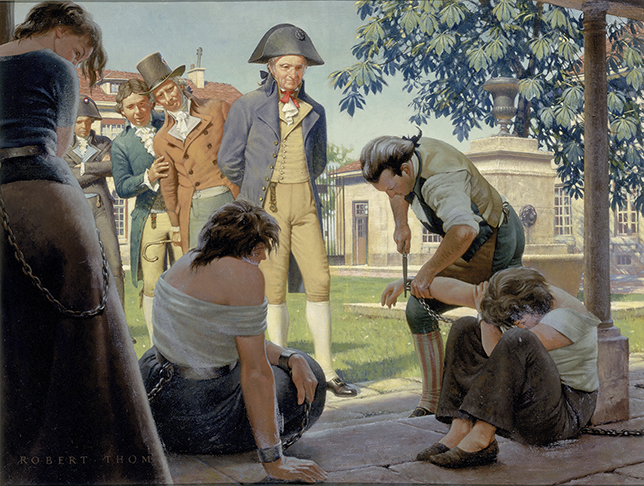
The traditional periodisation of the history of psychiatry revolves around a rupture occurring shortly after the American and French revolutions, manifested in the rise of a movement entitled ‘lunacy reform’. Lunacy reform has been understood as incorporating a coalition of progressive men and women who sought to transform society’s treatment of the mad and embrace the potential curability of all forms of lunacy. In this early literature on the history of psychiatry, the French physician, Philippe Pinel, figures primus inter pares amongst reformers. Pinel found himself the superintendent of the two large Parisian public welfare institutions – the Bicêtre and the Salpêtrière. According to these histories, Pinel lamented the widespread use of mechanical restraint and the therapeutic fatalism of many of his contemporaries. He set about unchaining inmates, much to the horror and fear of those around him. The mythic moment has entered the iconography of traditional medical history, an ‘origin story’Footnote 6 reimagined in various forms (see Figure 1). For the French, of course, the mechanical restraint of lunatics mirrored Rousseau’s revolutionary dictum: ‘Men are born free, but everywhere they are in chains.’ Whether the famous unchaining of the lunatics in Paris ever actually happened in such a dramatic manner, and indeed even during Pinel’s tenure, is open to historical debate. The importance to the historiography of madness, however, is that it has become immortalised as the moment – un point charnière – in Western society’s response to madness. Just as the French Revolution represented a break from the excesses of absolutism, and ushered in modernity, so too did Pinel’s unchaining of the lunatics symbolise, to generations to come, a new compassion and optimism towards some of the most vulnerable members of society. It is for this reason that Pinel himself became the iconic pioneer not only of French, but of Western psychiatry, achieving a status akin to Louis Pasteur, and (like Pasteur) with institutes named after him throughout the world.
Pinel unchaining the lunatics, by Robert Thom (1952). Michigan Museum of Art. There have been many representations of this apocryphal moment in the history of madness. The one reproduced above is a more contemporary iteration by the American illustrator Robert Thom, as included in A History of Medicine in Pictures (Parke Davis & Company, 1957). Individual framed prints were also available so that doctors could display them in their offices or in the halls of medical schools.
The twinning of democratic republicanism and lunacy reform was hardly a phenomenon limited to post-revolutionary France. Other national historiographies put their own spin on this narrative. For example, Benjamin Rush, widely considered the ‘father’ of American medicine and erstwhile signatory to the American Declaration of Independence, was a prominent medical doctor and superintendent of the Pennsylvania Hospital. Rush created separate wards for lunatics in the 1790s and attempted to implement many of the precepts of what Pinel would characterise as ‘moral treatment’. Unsurprisingly, in many American histories of medicine, Rush’s role and impact have been enhanced accordingly. In England, lunacy reform was embraced by Protestant nonconformists, with the Society of Friends (the Quakers) establishing their own institution in the Yorkshire countryside during the same decade. The Quaker York Retreat, however, was awkwardly positioned in medical histories of madness, since it was first and foremost a religious institution founded and led by a prominent philanthropist who was sceptical of many medical remedies of the time.Footnote 7
American literature within this history of medicine tradition was dominated by a series of mid twentieth-century psychiatrists, some of whom were refugees from central Europe and thus heavily influenced by psychiatry’s turn towards psychoanalysis that would take root, particularly amongst émigré physicians, in the northeast of the United States. For example, Alexander and Selesnick’s A History of Psychiatry (1966) reflects an early attempt to provide a history of ‘psychiatry’ from time immemorial. This substantial book anchors the history of psychiatry within what was commonly referred to, at the time, as the ‘Western tradition’. (Selesnick, who passed away before the publication of the book, had previously published The Western Mind in Tradition, a nod to the framing of this subsequent history). The book is replete with the scientific optimism of the post-war United States, with the authors asserting that psychiatry, at the dawn of the 1960s, had ‘come of age’, ceasing to be medicine’s ‘neglected stepchild’ and rising to be one of the most popular and promising, even ‘pioneering’, fields of medical science.Footnote 8
Both Alexander and Selesnick had been steeped in the psychoanalytic orientation of American psychiatry that had taken hold during the early decades of the twentieth century; Alexander had even studied under Freud at the Berlin Psychoanalytic Institute just after the First World War, before emigrating to the United States. As a consequence, the book reflects the contemporary tensions between what was, by mid century, called ‘organic’ and ‘psychotherapeutic’ approaches to the treatment of the mad. Despite its repeated assertions as to the bright future of psychiatry, the book in fact reveals the deep divisions of a profession that was at a crossroads, as deinstitutionalisation began to take hold and psychopharmacology offered radical new possibilities. By contrast, general histories of psychiatry published much later in the twentieth century, such as Edward Shorter’s A History of Psychiatry (1997), characterised the rise of the new or second biological psychiatry as the triumph of a brave new world of psychopharmacological agents. Edward Shorter (who was a historian who subsequently trained, but did not practice, as a physician) portrayed psychoanalysis not as the endpoint of psychiatric history (as per Alexander and Selesnick) but rather as an unfortunate ‘hiatus’ between the first and second eras of ‘biological’ psychiatry.Footnote 9
Despite these radically different conclusions, the medical history approach was (and is) generally sympathetic to the involvement of the state, inasmuch as successive legislation, in different jurisdictions, empowered the orthodox medical profession to gain a monopoly over the definition, treatment, and legal certification of individuals deemed to be ‘of unsound mind’. This movement towards a defined set of legal powers was, unsurprisingly, framed by these physician–historians as a necessary (and legitimate) step on the onward march towards more and more scientific, dispassionate, and ultimately humane responses to madness. Meanwhile, failures of institutional care were usually placed at the feet of parsimonious taxpayers or unsympathetic local politicians rather than seen as a reflection of the shortcomings of medical knowledge and therapeutic practices.
The interest of psychiatrists in the history of madness (broadly defined) would continue for the remainder of the twentieth century, even as professional societies devoted to the history of medicine saw their membership tilt from doctors interested in the history of their own profession towards professionally trained historians interested in medicine’s past.Footnote 10 Despite this generational transformation, many psychiatrists continued (and continue) to write about various aspects in the history of psychiatry. The American psychiatrist Norman Dain, for example, authored several books on the history of mental illness, including a biography of Clifford Beers, a history of the first American state institution (in Virginia), and an overview of concepts of insanity in the nineteenth century.Footnote 11 Across the Atlantic, Richard Hunter and Ida Macalpine published their Three Hundred Years of Psychiatry (1963) as well as a monograph on Colney Hatch Asylum, one of the largest public institutions for the insane in Victorian London.Footnote 12 There have also been contemporary ‘national’ histories of psychiatry, written by senior practitioners, such as David Henderson’s history of psychiatry in Scotland, published in 1964.Footnote 13 A decade later, William Parry-Jones authored one of the first histories of private madhouses in England.Footnote 14 Continuing this longstanding tradition, Brendan Kelly, a senior Irish psychiatrist, published his own survey of the history of psychiatry in Ireland.Footnote 15 On the other side of the pond, the American psychiatrist and renowned schizophrenia researcher, E. Fuller Torrey, devoted an entire book to what he termed the ‘invisible plague’ of mental illness in the Modern era.Footnote 16
In Britain, the interest and active participation of many senior psychiatrists, such as Hugh Freeman (editor of the British Journal of Psychiatry) and Michael Shepherd (editor of the Journal of Psychological Medicine), created an unusual atmosphere of exchange between clinicians and historians.Footnote 17 This cooperation took more concrete form in the founding of the journal History of Psychiatry (1990) by Germán Berríos, a Peruvian psychiatrist and philosopher, and Roy Porter, the acclaimed British social historian. The journal’s explicit goal was to bridge the academic worlds of formally trained historians and clinical psychiatrists.Footnote 18 Other psychiatrists took an active interest in using historical sources to uncover patterns of historical epidemiology, such as Trevor Turner and Allan Beveridge.Footnote 19 Medical journals, like the Journal of Psychological Medicine, regularly published historical articles. Psychiatry has long been considered the most ‘humanistic’ of the medical specialities, so seminars and courses in the history of psychiatry found favour in many postgraduate programs.
Concurrent to this literature on the history of the psychiatric profession, many general surveys of the history of medicine devoted chapters to madness or psychiatry, variously framed. For example, Andrew Wear’s collection of essays entitled Medicine in Society includes a chapter on ‘Madness and its institutions’.Footnote 20 Western Medicine: An Illustrated History dedicates one to ‘Medicine and the Mind’ and the Routledge Companion Encyclopedia of the History of Medicine examines ‘mental diseases’ and ‘psychiatry’ in two separate chapters.Footnote 21 A further Companion to Medicine in the Twentieth Century identifies the ‘psychiatric body’ and ‘mental illness’ for particular treatment.Footnote 22 Similarly, the Cambridge History of Medicine has a chapter exploring ‘mental illness’, even though many other specialities (apart from surgery and ‘primary care’) do not merit individual attention.Footnote 23 Medicine Transformed, a survey of the history of medicine in Europe, devotes one chapter to the ‘rise of the asylum’, though focused only on Britain.Footnote 24 The tendency to divide histories of medicine along lines of twentieth-century medical specialisations continues to this day, particularly for those histories of medicine intended for clinical trainees, such as Jacalyn Duffin’s History of Medicine: A Scandalously Short Introduction.Footnote 25
The limitations of the traditional ‘history of medicine’ approach have been fully discussed elsewhere, but they are worth summarising briefly here. Many contemporary historians have derided an older tradition of medical history as ‘ … doctors writing about doctors, for doctors’.Footnote 26 It was, to borrow the words of the American historian Nancy Tomes, largely a ‘male narrative of scientific discovery’.Footnote 27 It is true that they were also explicitly (or implicitly) histories of Western medicine, tracing the predictable lineage from Classical Antiquity to medieval times, emphasising the innovations of Germany, France, and Britain, before inevitably concluding in the post-war United States. Non-Western influences are observed only inasmuch as they made their way into, or were precursors to, Western developments (or to use a more common turn of phrase now, the ‘Global North’). The histories reflect a strong triumphalist, not to say, teleological perspective. They chart how knowledge was gleaned progressively over time, where ‘discoveries’ by medical ‘pioneers’ illuminate more and more scientific (and thus ‘objective’) truths leading towards a (more enlightened) present day. Chapters, or sections of chapters, are often constructed along biographical lines, trumpeting discoveries that are largely decontextualised from their societal dynamics. As a consequence, much is made of who discovered what ‘first’.
Understandably, in the traditional history of medicine approach, patients – the ‘mad’ – are acted upon, rather than having any real agency themselves. Women were largely ignored in these histories, since the privileging of formally trained medical practitioners (in an era when women were largely excluded from medical schools and the orthodox profession) meant that the story was very much about professional men of European heritage, save for occasional references to elite activist women, such as the American reformer Dorothea Dix. Themes of class, race, and colonialism, as well as non-Western traditions, rarely figured in the discussion. The history of medicine approach also tended to skate lightly over the clogging up of psychiatric institutions in the early twentieth century, most of which operated on the edges of medical practice. The shortcomings of the ‘asylum era’, when addressed, were often framed in a way so as to emphasise the superiority of contemporary (i.e., post-Second World War) developments. Ultimately, this largely ‘internalist’ perspective would give way to an approach that was grounded in analyses of the structural and social contexts of the identification and treatment of madness.
2 The Sociological Turn
A second major school of historical interpretation groups together scholars who critically examined the process of sequestering the mad in large, purpose-built institutions. These researchers shared a common belief that the generations after Pinel were far from embracing a triumphant new era of compassion towards those suffering from mental troubles. Rather, they observed a more complicated, indeed darker, period of stigma, devalorisation, and social isolation. Commencing in the early 1960s, these researchers drew on contemporary sociological scholarship addressing several interrelated theories and concepts, including labelling, deviance, social control, and professionalisation. They sought to confront the then-existing historical characterisation of lunacy reform as the inevitable result of a new medical understanding of madness. Rather, they challenged, in the words of one prominent scholar, the ‘Whiggish view of history as progress’Footnote 28 that had flavoured many physician-written histories.
The critique of the post-Pinelian world was most famously articulated by the French intellectual, Michel Foucault. In his first of several influential works, Foucault argued that society’s response to madness changed dramatically during an era he referred to as the ‘classical age’, a period that more or less coincides with the early Modern period (1600–1800). Before the 1600s, Foucault argues, madness was tolerated, even venerated, in Europe. Starting from the mid 1600s, however, the mad were segregated as part of a ‘Great Confinement’ that targeted marginalised groups, including vagrants, beggars, and the disabled. Drawing largely on French, English, and German sources, Foucault contends that the emerging industrial societies of Western Europe sought to silence the ‘voice’ of the mad, placing unreason behind the bars of institutions like London’s Bethlehem Hospital and Paris’ Salpêtrière, or in local workhouses and Bridewells. One of the important themes, therefore, was upending the conceit that, as society moved into the Modern era proper, there was an evermore humane and inclusive approach to marginalised groups. By contrast, Foucault painted a portrait of social isolation, as medicine reduced the mad to a status similar to animals and forced individuals to confront their own unreason by altering their way of thinking and behaving. Foucault saved some of his most damning comments for what he refers to as the ‘mythical’ representation of Philippe Pinel and his unchaining of the lunatics in the years shortly after the French Revolution. For Foucault, the ascendency of Pinel (and to a lesser extent the English Quaker philanthropist William Tuke) was a moment in which the mad were condemned to undignified isolation and coerced conformity.Footnote 29
Foucault’s Madness and Civilization was first published (in French) in 1961; it was translated into English (in abridged form) in 1965.Footnote 30 It appeared along with several other important treatises that were equally critical of organised psychiatry and its institutions. Take, for example, the Canadian sociologist Erving Goffman, whose exploration of patient life at St. Elizabeth’s Mental Hospital, near Washington, would also be published in 1961 under the short title, Asylums. Goffman introduced readers to his concept of the ‘total institution’ – highly regimented residential regimes where the power dynamics emanating from institutional authority were oriented to the smooth functioning of the institution itself (rather than in pursuit of the putative goals of the institution). For Goffman, a ‘total institution may be defined as a place of residence and work where a large number of like-situated individuals, cut off from the wider society for an appreciable period of time, together lead to an enclosed, formally administered round of life’.Footnote 31 Goffman’s critique was less about psychiatry, per se, than the dehumanising effects that arose from involuntary institutionalisation and regimented residential life, what he referred to as a process engendering the ‘mortification of the self’.Footnote 32
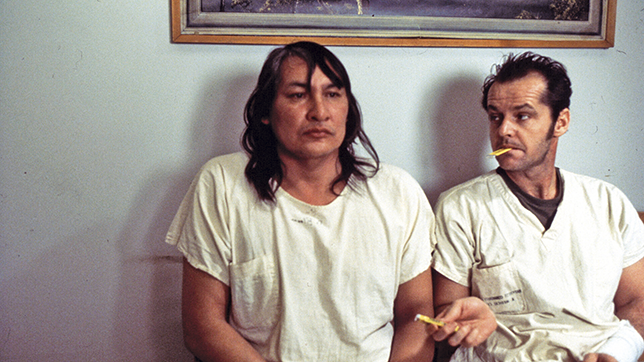
The 1960s, with its ‘counterculture’ and the popularity of questioning institutional authority, witnessed other withering critiques of psychiatry and the mental hospital, which, in the United States, at the time, housed over 500,000 people (see Figure 2). Mirroring Goffman’s suggestion that total institutions were fulfilling purposes other than the protection, education and treatment of individuals, the American sociologist Thomas Scheff studied a sample of patients admitted to psychiatric institutions in an unidentified ‘Midwestern’ American state. He arguing that a significant minority were ‘illegitimate’ admissions, inasmuch as they were not considered severely mentally ill nor at risk of harming themselves.Footnote 33 Scheff built on this interest in involuntary confinement by developing ‘labelling theory’ to explain the imperatives and impact of psychiatric diagnosis. In Being Mentally Ill (1966), he challenged the scientific nature of medical labels, referring to mental illness (and its various medical manifestations) as ‘social’, rather than ‘scientific’, categories. The mentally ill, he argued, were not really ill at all, but rather deviant (in the sociological sense) by thinking, feeling, and behaving in ways that were considered, by dominant society, to be aberrant and threatening. In this way, madness was not pathological, but in fact reflected diverse forms of ‘norm-breaking’. Nevertheless, as Scheff and others asserted, the action of labelling was dynamic: labels create an iterative process of diagnosis, performance, and feedback, which affected the way people view those who are labelled, as well as the self-perception and behaviour of those who are the objects of the labelling.Footnote 34
Will Sampson and Jack Nicholson in ‘One Flew Over the Cuckoo’s Nest’. The Academy Award-winning movie, based on a 1961 novel, was a searing indictment of state psychiatric facilities in post-war America (and by extension, elsewhere). The implications of the coercion and suppression of ‘norm-breaking’ can be read on several levels, including ‘the Chief’, the protagonist Randle McMurphy (who is a convict pretending to be ‘insane’), as well as other minor characters. Here, in the famous ‘Juicy Fruit’ scene, Sampson’s character breaks his silence and speaks for the first time, a subtle allusion to how patients perform and adopt ‘sick roles’ in coercive medical settings.
The influence of Scheff can be clearly seen in the prolific writings of Thomas Szasz, a Hungarian-born psychiatrist who turned his back on his own profession in the 1960s and would prove enormously influential (and indeed controversial) for the next generation of scholarship. Disillusioned by contemporary psychiatric practice, Szasz borrowed from contemporary critiques of psychiatry by arguing that mental illness was little more than a game of ‘medical rhetoric’, whereby psychiatrists employed scientific language to describe abnormal behaviour and justified involuntary hospitalisation of individuals who were not coping with the demands of modern capitalist life. For Szasz, there was no biological justification for claiming madness was an ‘illness’ or a ‘disease’.Footnote 35 He would even contend that the medicalisation of madness in the nineteenth and twentieth centuries showed clear parallels to other famous historical episodes of scapegoating, like the Spanish Inquisition.Footnote 36
These authors have often been grouped under the rubric of ‘anti-psychiatry’, but in many ways this is a misnomer. To be sure, psychiatry comes in for a lot of criticism, but the target was often involuntary hospitalisation and involuntary treatment (particularly, though not exclusively, psychopharmacological treatment), rather than psychiatry as a discipline. For example, Scheff acknowledged that there were indeed ‘legitimate’ psychiatric patients with severe mental illnesses who should be treated. Szasz, for his part, rejected the involuntary admission of any individuals, but accepted that it was the right of sufferers to seek voluntary admission and/or voluntary treatment by psychiatrists (or others) if they so choose. Indeed, in the immensely influential movie One Flew Over the Cuckoo’s Nest, one of the cardinal scenes is the revelation that many of McMurphy’s fellow inmates were, in fact, voluntary patients. The psychiatrist in the movie comes across as a relatively sympathetic, if aloof, figure. Rather it is the head nurse on the wards – Nurse Ratched – who occupies the role of the villain, representing (in a somewhat misogynistic manner) how individuals could distort institutional routines for purposes of retribution and abuse.
These diverse critiques of the social function of psychiatric institutions would influence mainstream historical accounts of the rise of the psychiatric profession and the institution in which it was nurtured. Arguably the first two clear American examples of this were George Rosen’s Madness in Society and David Rothman’s The Discovery of the Asylum.Footnote 37 Rosen conceptualised the rise of segregative institutions in the United States as part of a broad movement to reform the ‘deviant’. As he first articulated, in 1963: ‘All individuals who were defined as asocial or socially deviant were segregated by internment.’Footnote 38 His goal was not to explore the history of psychiatry as a medical speciality, but rather the historical sociology of mental illness, since ‘mental derangement was defined in terms of a social judgement of the appropriateness of behaviour in a given context’.Footnote 39 David Rothman took up similar themes, focusing on institutional confinement in industrialising America. The subtitle of his book – ‘Social Order and Disorder in the New Republic’ – points to his central themes of examining what he called the social regulation of ‘deviant and dependent’ populations, including the mad, beginning in the Jacksonian era. For Rothman, the decline in the authority of denominational churches in the United States led to a power vacuum, where there was no authority regulating personal behaviour, leading to the construction of coercive welfare institutions to achieve this end. Rothman pitched his definition of institutions widely, choosing to group ‘[lunatic] asylums, penitentiaries, reformatories, orphan asylums’ under the same analytic umbrella (a configuration that bears close resemblance to what Foucault would refer to as the ‘archipelago of carceral institutions’). Rothman examines why the American colonial approach of leaving the management of the ‘insane’ to families and communities was abandoned. Jacksonian America unleashed, in his words, an ‘age of the asylum’ that would last for more than a century.Footnote 40
One can see obvious similarities between Rothman’s book and those of prominent historical sociologists who would publish their principal works starting in the middle of the 1970s. For example, Andrew Scull drew heavily on medical sociology in his assessment of the ‘social organisation of insanity’ in nineteenth-century England. Starting with his article entitled ‘From Madness to Mental Illness’ (1975), Scull critiques the historical phenomenon whereby the state granted a monopoly to medical men over the diagnosis and formal treatment of the mad. Scull problematised the seeming inevitability of psychiatry’s ‘capture of the mad’, by highlighting the social contingencies of these labels. As he sharply comments: ‘ … whatever one’s opinions on the extent of mental illness today, there would, I think, be a widespread consensus on the lack of any real knowledge base in early nineteenth century medicine which would have given the medical profession a rationally defensible claim to possess expertise vis-à-vis insanity’.Footnote 41 In his book-length treatment of the topic – Museums of Madness (1979) – Scull maps out the transformation of society’s responses to the mad in industrial England, where insanity was brought under a medical authority anchored in purpose-built county pauper lunatic asylums. He combines social control, social labelling theory, and a critique of professionalisation, tying them to a new ‘commercialisation of existence’ that emerged as the expression of industrial capitalism. The new wage-labour nexus, Scull suggested, devalued dependent community members who were cast aside as a burden, as families became less willing to accommodate those who were not contributing to the household economy.Footnote 42
The emphasis on a new capitalist order was also evident in the contemporary work of German sociologist Klaus Dörner, who focused on Germany but also incorporated some material from France and England.Footnote 43 Dörner’s Bürger und Irre (1975) would be translated and published in English as Madmen and the Bourgeoisie: A Social History of Insanity and Psychiatry (1981). Dörner explicitly crafts a ‘sociological history of psychiatry’ in which he examines how psychiatrists became ‘professional surrogates’ to the mad during the nineteenth century. For Dörner, the confinement of the mad must be seen within the ‘industrial-capitalist bourgeois social revolution’ of the nineteenth century. Like Foucault, Dörner traced the ‘emancipatory claim’ of psychiatry to the Enlightenment. Assuming that the asylums were principally designed for the poor, he invokes the inevitable driver of class struggle. Dörner engages less with the sociology of labelling theory, but nonetheless emphasises the social contingency of the boundaries of (ir)rationality. Similarly, the French sociologist Robert Castel, in his L’ordre psychiatrique (1977), utilised his own disciplinary training to examine French psychiatry in the generations following the French Revolution. As with the other authors in this section, Castel emphasises the role of the emerging psychiatric profession in defining social norms and enforcing social order.Footnote 44
For a long time, this group of scholars was referred to as the ‘revisionist’ school in psychiatric historiography, since their goal was to substantially revise the triumphalist understanding of the history of madness described in Section 1. This is an understandable label: the sociological school sought to upend the conceit that lunacy reform, the early organisation of a proto-psychiatric profession, and the construction of purpose-built institutions for the treatment of the insane were all inevitable and unadorned successes. For the so-called revisionist scholars, lunatic asylums were characterised as places of neglect and mistreatment, degenerating, over time, into custodial institutions or ‘warehouses’ that provided a ‘convenient place to get rid of inconvenient people’.Footnote 45 The proto-psychiatric profession was framed by these scholars as a self-interested group of doctors intent on professional monopoly, with little scientific justification to support their claims to expertise.Footnote 46 Finally, mental illness itself was not seen as the inevitable medical/scientific uncovering of psychopathological realities, but rather the result of social labelling that reflected a prevailing capitalist ethos of individualism and productivity.
In some ways, however, this revisionist school shared similarities with the scholarship it so vehemently critiqued. These scholars focused overwhelmingly on the formal publications of male doctors of European heritage – from Philippe Pinel to John Conolly – and the sessional papers of governments. They assumed the primacy of the asylum in the century leading up to the First World War and thus did not conceive that madness continued to exist and pose challenges outside of formal medical (psychiatric) institutions and the medical gaze. They were also very much engaged with sources from a small number of Western industrial countries, principally Germany, France, Britain, and the United States.
By the end of the 1970s, the sociological school had established a large and influential body of scholarship, but it was not without its own critics. Richard Fox, an American historian, voiced his concern about ‘social control’ being imported wholesale from sociology to history. For him, revisionists tended to homogenise the ‘controllers’ in history, assumed institutions were imposed ‘from above’ on a malleable lower class, and exaggerated the novelty of nineteenth-century perspectives of disorder.Footnote 47 Just like the traditional medical history school, revisionist scholars paid relatively little attention to the patients themselves, who were too often assumed to be passive victims of professional chicanery. Gerald Grob, who would author several surveys on the history of mental health policy and institutions in the United States, believed that scholars such as Andrew Scull and Michel Foucault tended to caricature these apparently ‘monolithic’ institutions, failing to appreciate that they did provide (imperfect) care to vulnerable members of society and evolved in diverse ways, influenced by various groups, namely patients themselves.Footnote 48 Perhaps the most formidable critic was Roy Porter, who challenged Foucault’s contention that there was widespread confinement before 1800 and, later, questioned Dörner’s emphasis on the poor being the principal sequestered group. Porter emphasised the continuation of the use of private asylums by the gentry and middle classes throughout the nineteenth century, thereby challenging histories that were seeing the rise of the asylum through the lens of class struggle.Footnote 49
Nevertheless, the emphasis on the social control of deviance and social labelling theory provided fertile ground for other critiques of psychiatric practice and incarceration. The so-called ‘revisionists’ mentioned earlier (who, it should be pointed out, were all men) did not concern themselves principally with issues of gender as an explanatory variable in either the rise of psychiatry or social control. However, many of the ideas – particularly the social contingency of madness as a label reflecting contemporary values and prejudices – lent themselves readily to emergent feminist analyses. With the second wave of feminism focusing on women and their bodies, the intellectual environment was ripe for a fusion of sociological and feminist critiques of male-dominated professions, medicine included. As Nancy Tomes identified three decades ago, the foundational works of second-wave feminism – Simone de Beauvoir, Betty Friedan, Germaine Greer – all included critiques of male scientific discourse in general, and the ‘psy-professions’ in particular.Footnote 50
One of the most important early works was Women and Madness (1972) by Phyllis Chesler, a New York clinical psychologist and women’s studies pioneer. In Chesler’s hugely influential book, psychiatry proved to be a convenient vehicle for pathologising the behaviours of women that did not conform to conventional norms of women’s roles in contemporary society. Chesler sought to highlight the historical origins of what she saw as the targeting of women by a psychiatric profession that was still, by the late 1970s, largely male-dominated. The ‘otherness’ of madness, that had been highlighted by Foucault, was thus adapted to the ‘otherness’ that was inscribed onto women’s bodies and to their nonconforming behaviours. Chesler’s book was historical inasmuch as she highlighted four prominent women in the past whose psychological distress and behaviours were interpreted by her as rebelling against what she referred to as ‘sex-role stereotypes’. Her insights can be read alongside other seminal publications in women’s studies, such as Barbara Ehrenreich and Deirdre English’s For Her Own Good (1979), which positioned psychiatry as one medical speciality that sought to marginalise women healers and pathologise behaviours that challenged the patriarchal status quo.Footnote 51
These ideas were further pursued by the cultural historian and literary theorist Elaine Showalter, who played upon an old trope of Melancholia being an ‘English Malady’, when she authored The Female Malady in 1985. Showalter argued, in what she calls her ‘feminist history of psychiatry’, that the cultural representation of madness was always feminine, asserting ‘madness as an essential feminine nature unveiling itself before scientific male rationality’.Footnote 52 Drawing largely on cultural history, she focused, in particular, on literary and visual representations of female madness, conceiving of the ‘war on women’ as one that took flight in the Victorian era. Showalter was an early proponent of asserting that some forms of madness or mad behaviour could be conceived as expressions of resistance. She draws on arguments about the social contingency of labelling: ‘The language of psychiatric medicine, especially in the nineteenth century, when there was scant scientific documentation for most assumptions, is as culturally determined and revealing in its metaphors as the language of fiction.’Footnote 53
Yannick Ripa, the French social historian, published her La ronde des Folles one year after Showalter’s pioneering work. Ripa’s book would appear in English under the title four years later as Women and Madness. Although focusing on post-1838 France, Ripa shared many of the conclusions and critiques of her American homologue – namely, drawing on the iconography of female madness and French literature, and emphasising the use of psychiatric ‘labels’ to impose ‘social order’ on the ‘deviant’ populations of nineteenth-century France. ‘Alienists’, Ripa assured the reader, ‘were a vehicle for bourgeois ideology’.Footnote 54 Many of these same themes were taken up by Wendy Mitchinson, the Canadian social historian, in her work on the psychiatric profession in the province of Ontario at the close of the Victorian period. Two of her chapters about women’s bodies address the experimental surgeries and theories of women’s disorders that emerged in the last decades of the nineteenth century (discussed further below).Footnote 55 Mitchinson quotes freely from Showalter to the effect that one condition – hysteria – was ‘an unconscious form of feminist protest, the counterpart of the attack on patriarchal values carried out by the women’s movement’.Footnote 56
As women’s studies were superseded by gender studies in the 1990s, the emphasis shifted from a (male) psychiatrist interrogating a (female) patient to one in which social contingencies were reflected in the diagnosis and gendered treatment of female and male patients. This reflected broader historiographical trends, often traced to a landmark essay by Joan Scott in the American Historical Review, in which she made the case for ‘gender’ as a primary category for historical analysis.Footnote 57 This intellectual transformation was given impetus, within the history of madness, by quantitative sociologists who began to pick away at some of the assumptions of the social control/revisionist school. Joan Busfield, for example, took aim at the oft-repeated contention that psychiatry had targeted women during the Victorian era, revealing there was little empirical basis to support this contention.Footnote 58 A new generation of social historians, described below, clearly demonstrated that asylums filled up with as many male admissions as female ones. While understandable assumptions presumed that a male-dominated medical profession in a patriarchal society would ultimately lead to women as the primary targets of involuntary institutionalisation, a scrutiny of patient records revealed that this did not materialise in any straightforward manner.
By the 1990s, gender began to feature more and more prominently in many works. Peter McCandless, for example, in his examination of the South Carolina Asylum, dismissed the idea of asylums being solely or disproportionately concerned with female madness. In his case study of women patients, he identified only one in six female patients where there was either any reference in the case books to reproductive issues or any reproductive ‘cause’ of insanity in the admission register. Rather, he agreed that asylums ‘tended to reinforce [contemporary] cultural norms relating to gender’.Footnote 59 Many of the same themes can be seen in the first book of Catharine Coleborne, who explored, in a gendered manner, the ‘reading’ of madness in colonial New South Wales.Footnote 60 In this new literature, culturally sanctioned norms about women’s roles in turn-of-the-century society were reflected in, and reinforced (rather than created or enhanced) by a consolidating psychiatric profession. An edited volume by Jonathan Andrews and Anne Digby mapped out this transformation in the historiography of madness.Footnote 61
The impact of the sociological turn in the history of madness proved to be immense. Very few researchers, from the 1980s onwards, would accept uncritically that madness somehow lay outside the broader social and cultural context in which it was defined, or that medical professionals were disinterested parties in the institutional structures created by the state from the late eighteenth century onwards. Whether invoking ‘social construction’ or ‘social regulation’ or ‘social contingency’, the social – society’s influence on ever-changing paradigms of madness and mad behaviour – proved essential to later histories of madness. Of course, the lens through which the ‘social’ was understood would itself change over time, as early considerations of class struggle gave way to gender analysis, and later explorations of race, colonialism, and non-Western traditions, to be discussed below.
3 Asylums for the Mad
The 1980s witnessed new trends in medical history that would lay the groundwork for social histories of institutions constructed specifically to house the mad. Researchers increasingly adopted a microhistory approach, exploring individual lunatic asylums as a way of analysing patterns of care, surveillance, and treatment in regional or national jurisdictions. The interest in the history of lunatic asylums is understandable. By any measure, the reported inpatient population in licensed institutions exploded in the nineteenth century. The number of residents in lunatic asylums in England and Wales grew from 20,000 to over 100,000; in France from 10,000 to 70,000; and in the United States from 30,000 to over 200,000.Footnote 62 Asylums became the largest quasi-medical institutions in the Western world by the dawn of the twentieth century. Even given the population increase in most countries during the same period (Ireland exempted), the expansion in the number and size of public asylums was astounding.
Within this context, British social historians, often with the generous funding of the Wellcome Trust, led the way in terms of examining the confinement of the insane in the century leading up to the First World War. John Walton, for example, mined admission records of the Lancashire county lunatic asylums for possible explanations for the tenfold increase in the reported per capita rate of confinement in nineteenth-century England.Footnote 63 Walton was interested in what possible links there might be between industrial development, poverty, and institutional confinement. He was less concerned with contemporary Victorian theories about the relationship between civilisation and mental disease and more drawn to investigating the socio-geographical origins of patients and economic stresses that befell working class families. He certainly accepted the sociological contention that defining ‘lunacy’ or ‘insanity’ was far from an objective process: the boundary between sane and deviant behaviour could, and did, change over time. His methodological approach, however, drew on traditions in British economic and social history, with their emphasis on quantitative analysis, a growing interest in marginalised social groups (such as the mentally disordered), and an attempt to ground these themes in the social and demographic change of the Industrial Revolution.
Although Walton’s work never coalesced into book length form, his emphasis on what he dubbed the ‘casting out and bringing back’Footnote 64 of lunatics did herald a new era of writing about the history of madness, one anchored in the quantitative analysis of patient records derived from individual lunatic asylums (in contradistinction to tabular results compiled from national statistics or asylum annual reports). In the many institutional case studies that followed, historians often devoted one or two chapters to reconstructing the socio-demographic characteristics of patients (from admission registers and/or case files) as well as examining how legal protocols for involuntary confinement operated in practice. Some care was given to compare asylum patient demographics to those of the population at large. Examples of this new genre of historical scholarship include Mark Finnane’s survey of insanity in post-famine Ireland (1981) and Stephen Garton’s examination of colonial New South Wales (1988). While sympathetic to some of the general observations of the social contingency of mad labels and the role of the asylum (in part) as an instrument of social control, these works also proved critical of some of the claims implicit in sociological theories mentioned previously. For example, Finnane concluded that marginalised elderly patients tended to be directed to the workhouse, rather than the asylum, and women were ‘almost invariably less vulnerable to committal than men’.Footnote 65 In turn, historians began to question the importance of asylum doctors in the process of confinement and discharge. In a historiographical article written several years after the publication of his book, Finnane admitted that he had over-emphasised the role of the state and placed too little emphasis on family and community dynamics in the social use of these quasi-medical institutions.Footnote 66
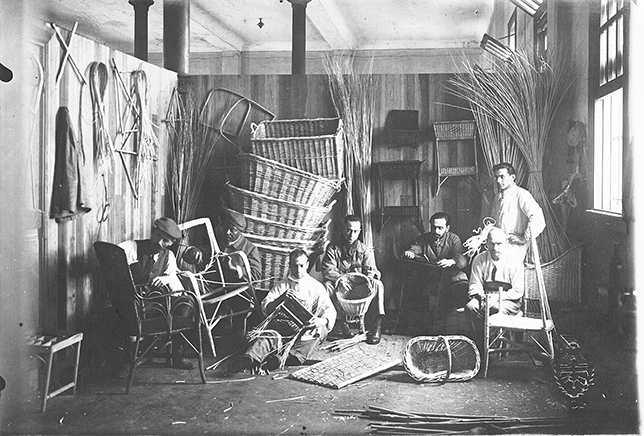
Major works on the social history of lunatic asylums appeared from the middle of the 1980s, analysing a range of philanthropic, public, and private psychiatric institutions. Noteworthy books include Anne Digby’s monograph on the Quaker York Retreat (1985) and Nancy Tomes’s exploration of the Pennsylvania Asylum (1985). Shortly thereafter Ellen Dwyer compared two upper New York State public institutions for the poor (1987),Footnote 67 while Charlotte MacKenzie investigated the prestigious Ticehurst Home in southern England (1992).Footnote 68 These four authors, amongst many others, sought to recast the lunatic asylum as a social welfare, and not just a medical institution. In their respective works, medical superintendents acted in dialogue with the families and communities they served, reflecting shared, if uneven, power and authority. Similarly, the asylum itself was understood as a complicated community of actors, where the dozens of non-medical staff were central to everyday life. In these histories, medical superintendents were far from ‘all powerful’; their actions were circumscribed and mediated by inspectors, families, economic realities, and by governing bodies (like local magistrates). Much has been made of how historians sought to employ medical and institutional records to explore, however tentatively, patients’ experiences of ‘asylum life’ (see Figure 3). This reflected the trends in medical history more generally, when scholars sought to write history ‘from below’, as encouraged by a famous position paper authored by Roy Porter in 1985.Footnote 69
Male asylum patients, in the basketweaving shop, Buenos Aires, c. 1923. Archivo General de la Nación (Argentina). Photographs of groups of asylum inmates were comparatively rare and often staged to lighten the otherwise dreary and oppressive atmosphere that permeated many institutions. More common were individual portraits that were often affixed to medical case books (for administrative purposes) or, occasionally, as illustrations of specific mental states in formal medical publications.
These institutional histories laid the groundwork for a flood of asylum-centred social histories of madness during the 1990s. Some of the largest projects, like the team that examined admissions to the Devon County Lunatic Asylum or the group involved in reconstructing the North Wales asylum at Denbigh, involved interdisciplinary researchers and multiple thousands of individual patient records.Footnote 70 Other book projects focused on county/district/state/provincial institutions, from Leicestershire to Quebec, from South Carolina to Norfolk. There were also important technological influences at play. The growing affordability of laptop computers, the relatively open access to patient records (outside of 100 years in most English-language jurisdictions), and the accessibility of relational databases facilitated the amassing of large datasets in a manner that would have required advanced computer programming skills and whole teams of researchers a generation earlier.Footnote 71
Quantifying certain variables (age, sex, religion, and marital status), as well as calculating lengths of stay and rates of readmission derived from admission registers and death records, these major works uncovered findings deeply at odds with assumptions made by some of the sociologically inspired works of the 1970s. The case studies revealed that women and men were admitted in proportions consistent with their presence in the general population; asylums did not silt up with the elderly or chronic patients but tended to accept adult patients in the prime of their lives. Lengths of stay varied considerably, with nearly half of the new admissions being discharged within eighteen months of their admission. Indeed, almost as many patients were ultimately discharged as died in the institution. More indirectly, the work on charitable asylums (for the respectable poor) and the persistence of private homes for the wealthy,Footnote 72 as well as the presence of paying patients in institutions that were ostensibly meant for the poor, called into question the most basic associations between economic marginalisation and involuntary hospitalisation. Although researchers disagreed about the advisability, or not, of anonymising individual patient records in their historical narratives,Footnote 73 they nonetheless arrived at a broad consensus about their quantitative findings.
Until recently, most of the asylum case studies focused on Western Europe, Britain and Ireland, and the northern states of the United States. Given the demographic context, race tended not to figure prominently. More recently, however, a renewed interest in Black diasporic history has shifted race and ethnicity from secondary to principal historical questions of interest. Two of the first observations have been the persistence of institutional segregation and the demographic under-representation of African Americans (and racial minorities in other jurisdictions) in formal lunatic asylums. As illustrated by Peter McCandless three decades ago, many American states, like South Carolina, insisted on the racial segregation of inmates, either in separate buildings on the asylum grounds or (preferable to contemporaries) in separate institutions entirely. Black residents were strongly under-represented in South Carolina compared to their general composition in the state. In the 1850s, there were 30 Black patients and 600 White patients in what was a majority Black state.Footnote 74 A recent article on the Illinois State Hospital (i.e., lunatic asylum) revealed that of the 4,462 patients admitted between 1851 and 1872, all but two, during this pre-Emancipation era, were listed as White.Footnote 75 Emancipation appears to have had a profound effect on the presence of Black patients in American psychiatric institutions, though it was a presence that was informed by segregation and differential access to treatment, diet, and accommodations.
Two recent books have cast light on a small handful of institutions in the United States that included, or even prioritised, racialised mad patients. Wendy Gonaver, in The Peculiar Institution, examines two Virginia state asylums: Williamsburg, noteworthy as the first state lunatic asylum in the United States, and Petersburg, being the first American asylum devoted solely to African American patients. She illustrates how the asylum superintendent, John Galt, was seemingly out of step with his colleagues by advocating for the co-residence of Black and White patients prior to the Civil War. Unsurprisingly, this position proved to be contentious with his White colleagues across the United States, ultimately leading to Galt’s professional isolation. Nevertheless, the Williamsburg institution utilised enslaved attendants to perform many of the daily (and often disagreeable) tasks. This unusual situation, however, did not outlast Galt’s demise during the American Civil War. After the cessation of hostilities, state authorities in Virginia opted for separate, racially segregated institutions.Footnote 76 Similarly, Martin Summers’ Madness in the City analyses St. Elizabeths Hospital, a rarity as a federally funded (rather than state funded) institution for the insane dedicated to the care and treatment of ex-soldiers and ex-sailors. Needless to say, the charged atmosphere of whether (or not) to segregate African–American ex-military patients intersected with the passionate debates, before and after the American Civil War, over racial equality.Footnote 77 Over time, racial segregation would dominate psychiatric provision, with under-funded institutions for African Americans coexisting alongside ones unofficially devoted to Whites (with the presence of African Americans as over-represented as attendants in the latter). Even in the very few ‘mixed’ asylums – like St. Elizabeth’s, Black and White patients were divided into separate wards (regardless of diagnosis) by the end of the century.
While most of these works include detailed examinations of the asylum medical superintendents of their respective institutions, they also call into question their power and authority. Asylum records reveal a social, legal, and medical process that involved the family, local magistrates, sometimes local religious leaders, and welfare officials, as well as non-specialist doctors. Alienists saw future patients at the end – not the beginning – of a complicated protocol of familial negotiation and experimental measures of surveillance in the community. Indeed, confinement often represented a ‘last resort’, a perceived solution to disruptive behaviour that could not be accommodated in the respective family, household, or local community. Throughout this process, according to these authors, the labelling of madness was socially informed, starting with identification in the community.Footnote 78 Madness is understood, in these works, as occasioning ‘real’ suffering and challenging behaviours to which community members and asylum medical staff affixed different, and at times contested, causes and meanings.
Overall, the history of individual lunatic asylums proved to be a tremendously popular genre within the history of madness, but these microhistories were not without their own limitations. The historian Thomas Brown, for example, believed that the proliferation of asylum histories in the 1980s and 1990s represented a retreat from theoretical engagement, whereby authors prioritised ‘local’ dimensions of confinement and asylum management – that is, the uniqueness of the institution under study – while remaining agnostic about the broad structural forces that had animated scholars of a previous generation.Footnote 79 Or, to put it another way, asylum case studies were effective in knocking down overarching theses of the sociologically inspired school of the 1970s, but less successful in constructing any grand analytical frameworks in their place.Footnote 80
Although most of the literature has been focused on the establishment and expansion of the asylum system – or ‘asylumdom’ as it is sometimes dubbed – there is also now a body of literature on the closing of the asylum system, often referred to as deinstitutionalisation. The decision to reorient public policy responses away from long-stay mental hospitals is associated with the 1960s movement described in Section 2 of this Element. Most Western countries began what would be a decades-long process of introducing ‘community care’ through the introduction of smaller community-based day treatment centres and group homes. There is, of course, a vivid debate over the reasons for this policy shift. Early academic explanations attributed much to the impact of the new pharmaceuticals, like chlorpromazine (Thorazine), which made discharge possible for some of the most treatment-refractory patients. Other historians have identified the huge cost associated with upkeep of these ‘crumbling Victorian asylums’, costs that were no longer desirable, or sustainable, in the stagnating economic context of the 1970s. Still others point to the stigma attached to psychiatric institutions, hoping that treatment in psychiatric wards of general hospitals, as one alternative, would help integrate psychiatry into medicine and destigmatise mental illness.Footnote 81
Regardless of the relative contribution of these factors, few could argue that the process of deinstitutionalisation wasn’t profoundly important as a social welfare phenomenon that affected tens of thousands of those suffering from diverse psychological conditions. Whether deinstitutionalisation was ‘successful’, however, has been a matter of some debate. Two books stand out as stinging critiques of the movement: one by Andrew Scull, entitled DecarcerationFootnote 82 and another by Peter Barham, entitled Closing the Asylum.Footnote 83 Both authors explore the fundamental challenges involved in the implementation of deinstitutionalisation, which too often manifested itself in directing the severely mentally ill to the care of family members, to the streets, or to poorly staffed urban group homes. The transition to the community was far from perfect, as the resources saved from downsizing (or closing) long-stay psychiatric hospitals were not then fully transferred into community services. Former hospital patients often found themselves falling between health and social service departments, with little follow-up. Some argued that the era of the psychiatric institution never really ended – rather, the large state institutions were replaced by smaller community institutions that were no less stigmatising, or more integrated, than their predecessors. Meanwhile, despite the criticisms of abuse in long-stay institutions, local communities often blocked the integration of the mentally ill in their neighbourhoods. This combination of factors led to the clustering of group homes in undesirable urban centres, often close to the old institutions, the famous phenomenon of twentieth-century ‘psychiatric ghettos’ (discussed in Section 7, below).
4 Madness in the Colonies
The asylum system arose concurrent to the expansion of European empires during the nineteenth century. Within imperial medicine, madness occupied an unusual, almost exceptional, place. Rather than perceive the descent into madness as indicative of a (racial) weakness, European-trained doctors often understood insanity, in part, as a ‘price to be paid for civilisation’; they thus started from the premise that madness was less pronounced amongst non-European peoples, though, over time, modernisation created certain location-specific mental maladies.Footnote 84 As historians have well documented, when European-styled lunatic asylums began to appear in diverse contexts of empire, they were first directed towards populations of European descent. Warwick Brunton has illustrated how extensive the British colonial lunatic asylum network had become by 1863, as witnessed in a Colonial Office survey of that year.Footnote 85 French colonial institutions dotted West Africa, the circum-Caribbean, and Southeast Asia. Spain seeded lunatic asylums throughout the Americas and the Spanish West Indies. The Dutch East Indies managed four large public asylums and a dozen urban clinics.Footnote 86 The web of European-style asylums in the colonies was impressive in scope, and despite having relatively few ‘native’ patients, constituted important symbols of modernity and science.
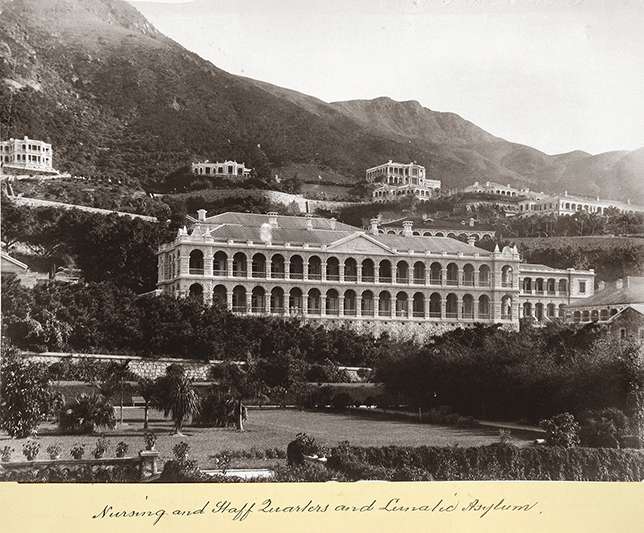
The social context of European colonialism, of course, varied enormously. There were Caribbean domains whose economies were plantation-based (and in the wake of the abolition of slavery, complicated by the arrival of tens of thousands of South Asian indentured labourers),Footnote 87 British India or Vietnam, where European medical institutions and their patients were minuscule compared to the non-European populations.Footnote 88 Temperate settler colonies had their own dynamic that developed over time and coincided with the establishment of a handful of Dominions (Canada, Australia, and New Zealand), where British (and other European immigrants) had physically displaced, dispossessed, and marginalised Indigenous populations. Even within these so-called ‘White Dominions’, there was considerable variation, from the French-speaking, predominantly Catholic region of Lower Canada to the penal colony of New South Wales.Footnote 89 There were also highly ethnically mixed, more transient environments in island colonies like Hong Kong, Singapore, and Fiji (see Figure 4).Footnote 90 Given these diverse situations, was there, to adapt a turn of phrase from the South African historian Shula Marks, something essentially ‘colonial’ about ‘colonial psychiatry’?Footnote 91
The European Lunatic Asylum, Hong Kong, c. 1890s. The National Archives, UK. Lunatic Asylums were constructed throughout the British and French empires, at first to treat ‘European’ patients. Over time, separate institutions for non-Europeans were also built, but often with inferior funding and accommodation. Psychiatric facilities often became a lightning rod for debates over modernisation, nation-state building, and ‘race’.
The temptation, at first, was for researchers to assume that the malleability of psychiatric labels lent themselves easily to European attempts to pathologise behaviours of non-European peoples. Given the power imbalance, this would be understandable; however, the historical record is far from straightforward. Yes, the presumption of ‘White’ or ‘European’ racial superiority permeated medical writings, but the conceit and prejudices manifested themselves in peculiar ways. Over the course of the late Victorian era and into the early twentieth century, British asylum doctors, at least, showed comparatively little interest in non-European forms of madness. This was emphasised in the pioneering work of Megan Vaughan on Nyasaland (Malawi), where the records of the Zomba Lunatic Asylum reflect both the limited scope of institutional confinement as well as the hybridisation of European and native ‘idioms’ of madness.Footnote 92 By contrast, in French Africa, where European doctors and anthropologists did pay attention to ‘Native madness’, they forged idiosyncratic syndromes that putatively explored the influence of Westernisation on ‘foreign’ cultures, as observed by Nina Studer’s examination of ‘alcohol-induced madness’ amongst North African Muslims.Footnote 93 Similarly, Katie Kilroy-Marac has illustrated how colonial psychiatrists believed that mental disorder in Senegal and other French colonial contexts might well increase due to the ‘inability to successfully adapt to the new conditions of [] modernity’, as well as from the inevitable dislocation and fragmentation of native cultures wrought by colonisation.Footnote 94
Vaughan, who pioneered work on the history of madness in different African colonial contexts, cautioned researchers that the reach of Western psychiatry proved to be heavily constrained in practice. Researchers working on other global sites of colonialism have agreed.Footnote 95 Waltraud Ernst, for example, has published extensively about how lunatic asylums in the Indian subcontinent were first created to care for insane colonial administrators (and their family members) as well as European soldiers and sailors.Footnote 96 Only over time, a small number of ‘Native’ asylums were established for (non-European) Indians, and then with a preoccupation to control the cannabis trade and the perception of rampant addiction, as explored by James Mills.Footnote 97 These institutions tended to be insubstantial if seen within the enormous population of the subcontinent during the 1800s. Moreover, the tensions arising from the mixing and mingling of different castes led to ongoing problems of internal institutional management. By contrast, asylums for the European insane often functioned as holding centres, where madness could be stabilised before individuals were returned, on a veritable ‘ship of fools’, back to Britain and Europe.
The historical literature on British colonial psychiatry has focused intensely on the southern African colonies. As Lynette Jackson and Julie Parle have demonstrated, in the context of colonial Zimbabwe and Natal, respectively, formal institutions and the small proto-psychiatric community were directed towards elite ‘European’ patients.Footnote 98 Indeed, Shula Marks, in her own case study of the Valkenberg Lunatic Asylum in the Cape Colony, revealed the importance, for turn-of-the-century psychiatrists, of separating their ‘European’ and ‘African’ asylum residents.Footnote 99 This, in effect, reflected the growing racial segregation in South African society that would reach its nadir during the Apartheid era. Her work addresses a fundamental question about the social dynamics within asylums: Did mental hospitals engender a ‘levelling’ of class, gender, or race within the walls of the asylum, or simply re-create the social inequities in the surrounding communities? For the most part, it would appear to be the latter.
The limited reach of European psychiatry in non-European African populations was further evidenced in Jonathan Sadowsky’s monograph on institutions of madness in Nigeria. Focusing on the Yaba Lunatic Asylum (in Lagos) and the Aro Mental Hospital (in Abeokuta), Sadowsky differentiates between medical-legal writings and the growing preoccupation of Europeans with the distinct ‘African mind’ from the actual social practices of institutionalisation. Like Vaughan, Sadowsky sees psychiatric discourses as reflecting the anxieties and precarity of European powers in African colonial environments as much as any neutral scientific observation of mad behaviour. Having said that, he emphasises that the presence of European-style lunatic asylums should not obscure the fact that domestic healers – as he demonstrates in the case of the Yoruba – had a well-developed understanding of madness that pre-dated European medical intrusions. In addition, he concludes that, in the small minority of cases where officials conveyed individuals to the asylum, this was often in agreement with families and communities who concluded that the person was indeed mad and troubled.Footnote 100 The implication is clear: labels of madness were not ‘imposed’ by Western medical men during the formative years of European psychiatry, but rather existed in culturally validated or ‘vernacular’ concepts before, during, and after the arrival of European medical practitioners.Footnote 101
In the ‘White Dominions’, the construction of British- and European-style lunatic asylums was similarly reserved for (indeed often restricted to) the growing settler populations of European heritage. In this regard, Canada and Australia – with their federal structures that delegated provincial/state authorities control over medical institutions – followed similar trajectories. Both countries witnessed public lunatic asylums and committal processes that copied, with very little variation, British laws and admission protocols.Footnote 102 The timing of colonial asylums, however, did impact discourses around madness and institutions. In the case of Canada and Australasia, the dramatic increase in the asylum population at the turn of the twentieth century was increasingly associated with unprecedented immigration levels. Rather than attributing the disproportionate numbers of residents in lunatic asylums to the psychological distress of global migration or the lack of kinship supports, as Angela McCarthy has extensively documented,Footnote 103 diasporic doctors and politicians feared that Britain (and other European jurisdictions) were ‘dumping’ mentally fragile (and economically dependent) insane community members on the colonies. Ian Dowbiggin and Jennifer Kain have thus illustrated how Canada, the United States, Australia, and New Zealand all justified turn-of-the-century immigration restrictions by undergirding them with assertions that such measures would help stave off racial degeneration. Within this eugenic discourse, ‘lunatics’ and the ‘mentally deficient’ became targets for restrictive legislation and, in some cases, deportation.Footnote 104
One common, and surprising, finding, at least for researchers expecting these institutions to be used as a means of social control of marginalised populations, has been the striking absence of Indigenous peoples in lunatic asylums. Indigenous Australians, Māori in New Zealand, and First Nations, Métis and Inuit populations in Canada, were curiously under-represented in asylum populations compared to their demographic profiles in the settler societies.Footnote 105 In the United States, there was only one ‘Indian Asylum’ in the entire Union – the Canton Asylum for Insane Indians.Footnote 106 By contrast, there were over 400 residential schools to assimilate and Westernise American Indian children.Footnote 107 Although there were two dozen Indian hospitals in Canada, from the 1920s, these were targeted at ‘tubercular Indians’;Footnote 108 there were no psychiatric establishments reserved for Indigenous patients. Unsurprisingly, the very few non-European patients who found their way into psychiatric institutions were subject to a highly racialised gaze in these Western, predominantly White, lunatic asylums. On the other hand, it may well be that Indigenous and First Nations communities, notwithstanding their physical restrictions on ‘reserves’, did not embrace medicalised understandings of what the Europeans characterised as ‘insanity’.Footnote 109
Despite the differences in colonial regimes, there were many thematic similarities in the development of asylums, psychiatry, and madness in the Americas. Spain, it should be recalled, had some of the first European institutions dedicated to the care and control of the insane, with asylums in locations such as Valencia, Seville, and Barcelona, reputedly dating back to the early fifteenth century. It is thus not a surprise that colonial asylums in Spanish America also appeared in the early modern period. Indeed, as Christina Ramos has recently revealed, the first European-style asylum in the Americas – the Hospital de San Hipólito, in Mexico City – was established in colonial Mexico some two hundred years before the first American state asylum. San Hipólito may well have been modelled on a long tradition of Iberian institutions that, scholars have hypothesised, were a legacy of the Islamic tradition of caring for the mentally ill in specialist hospices, or maristans, that had been transplanted by the Moors to the Iberian Peninsula.Footnote 110
Apart from the New Spain territories that would become Mexico, most of the European-style asylums in Spanish and Portuguese Latin America became deeply intertwined with nation-building in the second half of the nineteenth century. For example, in the case of Argentina, the rise of psychiatry and the establishment of dedicated lunatic asylums were inextricably linked to the attempted modernisation and ‘Europeanisation’ of Argentine society. Lunacy reform, in that Latin American country, was thus central to understanding the successes and failures of the emerging nation-state. As with immigrant-receiving countries in North America, Argentina shared with other nations the concern over immigration as a driver of madness (and institutionalisation) at the turn of the century.Footnote 111 Brazil’s experience also reflected this fascinating combination of psychiatry, asylum building, and modernity. In her case study of Rio de Janeiro, Manuella Meyer illustrates the challenges of establishing a Pinelian-inspired ‘moral reform’ in a country that had the dubious reputation of having received the largest number of African slaves. Like many South American counterparts, the proto-psychiatric profession in South America’s largest country sought to establish an ordered, rational, disciplined modern society that, like Argentina, prioritised ‘European’ values.Footnote 112
As Meyer has emphasised, race figured prominently, as doctors of European origin prioritised ‘White’ insane patients and isolated Black and Indigenous mad community members in lesser institutions (and sometimes in agricultural colonies). As a rule of thumb, White males were more likely to be institutionalised, while Black males were more likely to be criminalised. Having said that, race was more ambiguous and fluid in Latin American medical and psychiatric treatises than in the United States. Examining Bolivia’s first lunatic asylum – the Manicomio Pacheco – Ann Zulawski emphasises the wider and more complicated conceptualisation of race than one tends to see in the American literature (which is almost always a proxy for African Americans and White Americans). In Bolivia, ‘race’ was more differentiated from ‘colour’; for example, the recognition of mixed race, or ‘mestizo’, as well as gradients of ‘whiteness’. Thus, a patient could be of the ‘white race’, but then further differentiated by colour, such as blanco (white), trigeñio (olive-skinned), or moreno (dark brown).Footnote 113 A recent work on Uruguay reveals the dominant themes of much of this literature. Here, the ‘medicalisation’ or ‘pathologisation’ of madness is perceived as being central to installing order in an emerging quasi-European nation-state and guarding against the bogeyman of European-influenced, turn-of-the-century science: degeneration. Throughout, South Americans, in their collective aspiration of establishing European-style nation-states, looked to the French and German precursors – like Pinel and Kraepelin – as signifiers of modernity, science, and civilisation.
One major difference between the Spanish-speaking and English-speaking colonies, through this process of nation-building, was the central role of religious orders in the administration of institutions for the mad. In Catholic Latin America (and French-speaking Québec), the direct administration of lunatic asylums was often conducted by religious groups, whether it was in the Santa Casa de Misericórdia (in Rio) or by the Soeurs de la Providence (in Montréal).Footnote 114 Indeed, the European religious connection is more than just denominational, as the nurses serving in some American jurisdictions were, in fact, recruited from France, where religiously run institutions continued throughout the nineteenth century. Institutions for the mad being overseen by religious orders led to inevitable tensions between religious and scientific authority in the latter decades of the nineteenth century, frictions that bled into larger debates about the causes and treatment of madness. Within the English-speaking literature on the history of madness, the persistence of religious orders and authority in the nineteenth and twentieth centuries has tended to receive less attention, since most English-speaking jurisdictions operated under Protestant authority and traditions.
Colonial spaces often made possible innovative strategies in the social responses to mad behaviour. Claire Edington, for example, has argued that local initiatives – like agricultural colonies – provided homegrown solutions to developing and decolonising countries, giving them models to imagine a type of ‘social psychiatry’ that then went on to influence wider global trends. As she demonstrates in her study of French Indochina, one can creatively redeploy Western medical and institutional records to cast a light on the social transformation of Vietnamese society at the end of French colonial rule. In a manner that mirrors Sadowsky’s work on Nigeria, Edington moves beyond the dichotomies of ‘Western’ and ‘Indigenous’ healing practices to explore how two different systems (with different dynamics of power and medical assumptions) interacted, coexisted, and influenced each other. The point being that colonial asylums were not dropped into terra nullius, but rather were grafted onto pre-existing social, medical, and cultural systems.Footnote 115
Edington’s work reminds us of the limited publications available in translation on the history of madness within French colonial regimes. One notable exception, of course, has been Richard Keller’s exploration of the development of psychiatry and Western psychiatric institutions in French North Africa (Algeria, Tunisia, and Morocco) almost two decades ago. In the Maghreb, the European prejudices against the ‘Muslim mind’ enabled and justified, in Keller’s analysis, invasive somatic therapies.Footnote 116 In his work, the figure of Frantz Fanon looms large, as the writings of this Marxist and anti-colonialist Afro–Caribbean psychiatrist turned his attention to the Algerian Civil War, in which he fought. Fanon famously posited that the very existence of colonialism engendered a form of madness that required resistance and liberation. It is noteworthy, however, how delayed the uptake of Fanon’s work has been in English-language academic circles, compared to Foucault’s monograph published the same year. And yet Fanon’s Les damnés de la terre (1961) has recently become a touchstone for the psychopathologisation of racialised subjects under colonial rule.Footnote 117 Keller’s review of the English and French colonial historiography, however, indicates that the psychiatric gaze observed the colonisers as well as the colonised. That is, the repatriation of mad Europeans, from colonial contexts to their European metropoles, for example, said much about the insecurity of Europeans themselves, and their need to ensure that the administrators demonstrated a racial superiority of character.Footnote 118
5 Treating Madness
By the early twentieth century, significant advances were being celebrated in certain areas of medicine, such as the breakthroughs in bacteriology that would underpin the new laboratory medicine, or the refinement of anaesthesiology and antisepsis that would revolutionise surgery. By contrast, asylum doctors seemed adrift, managers of large institutions where magic bullets proved elusive. For certain, an older generation of alienists could point to ‘occupational therapy’, special diets, or even the order of the asylum regime itself as broadly ‘therapeutic’, but most of these aspects of asylum life were considered helpful to a recovery that might otherwise arise spontaneously. It was perhaps this clinical crisis that encouraged a generation of therapeutic experiments that would characterise psychiatric treatment for the first two-thirds of the twentieth century. Unsurprisingly then, historians have looked at individual therapeutic modalities to ameliorate or cure madness as central themes of works on the twentieth century. In doing so, however, they were posing the question: What did it mean to ‘treat’ madness in the past? How did previous generations understand what constituted a ‘cure’?
One of the first areas of historical interest, in terms of treatment, was the various forms of surgical interventions used on madwomen and madmen, most often in closed institutional environments. For example, Sam Shortt explored the unusual surgical procedures conducted by Richard M. Bucke, the asylum superintendent in London (Ontario), in the last decades of the nineteenth century. Shortt illustrates how Bucke believed in the close relationship between insanity and women’s reproductive system that had been championed in the last third of the nineteenth century by notable contemporary alienists, such as Henry Maudsley. Gynaecological operations were conducted at the London Asylum for about a decade, despite the criticisms of some of Bucke’s fellow asylum superintendents.Footnote 119 Many of the same themes that animated Shortt’s work – including surgical experimentation and lack of accountability – can be seen in Andrew Scull’s monograph on Henry Cotton, in which he details the dental surgeries and tonsillectomies that were carried out at the New Jersey Lunatic Asylum in Trenton during the 1920s. Cotton engaged in literally hundreds of involuntary surgeries that were conducted according to a belief that ‘focal infections’ caused certain types of mental disorders.Footnote 120
There is some question as to what degree the eccentricities of Bucke and Cotton were practised more generally, or rather reflected the aberrant activities of a small number of overly confident medical men operating with little oversight. Indeed, in many jurisdictions, doctors who experimented in surgery opened themselves up to potential charges of battery.Footnote 121 By the 1930s, however, experimental surgical interventions became more widely practised. The Portuguese asylum doctor Egas Moniz famously engaged in human experiments to ablate the frontal lobe of the brain of treatment-refractory patients in order to reduce aggressive behaviour. Moniz was far from an obscure practitioner, having made several important medical contributions in the interwar period. His approach was based on the then-current research on the behavioural impact of similar surgery on chimpanzees. This intervention, first used in the Iberian Peninsula, was adapted in North America by the psychiatrist Walter Freeman and the neurosurgeon James Watts. Unlike the original technique of ‘burr holes’, Watts’ proposed surgery through the orbital cavity, using an orbitoclast (the so-called ‘ice pick’ surgical instrument), which would be driven into the cranium and then rotated to shear off parts of the frontal lobes. The technique became known as ‘lobotomy’ in American medical circles and has achieved notoriety beyond psychiatry as one of the most harmful experimental procedures of the twentieth century. Jack Pressman, however, pushed back on the more sensationalist, villain-driven narratives to explore why there emerged such a demand, often amongst family members, for experimental psychosurgery in the middle decades of the twentieth century.Footnote 122
Concurrent to the use of surgical experiments were a range of other clinical interventions that are now generally known as ‘somatic’ (in contradistinction to psychotherapeutic approaches). Hydrotherapy (in baths), malaria and other fever therapies, sexual sterilisation (therapeutic, rather than eugenic), insulin coma therapy, as well as Electroconvulsive Therapy (ECT), all have merited academic scrutiny. Through exploring them, historians have sought to understand their invention and adoption, as well as their persistence, despite often inconclusive or ambiguous results. Rather than dismiss them as medical misadventures, several researchers have sought to place them in their social and medical contexts. Joel Braslow, for example, has examined the advent of somatic therapies in the first half of the twentieth century in California, demonstrating how changing treatments altered practitioners’ conceptions of what ‘cure’ and ‘improvement’ actually constituted in the past. Changing interventions encouraged physicians to look at behaviours differently, providing ‘conceptual filters’ through which diseases could be understood. Braslow also suggests that novel treatments – such as the advent of malaria fever therapy for paretics (those suffering from neurosyphilis) – even had an effect on the enhanced compassion of doctors since it solidified the view that patients were suffering from a ‘real’ medical disease.Footnote 123
As Braslow has observed, the history of madness is ‘strewn with onetime successful somatic treatments that investigations have later shown to be of dubious value’.Footnote 124 Many of the early practitioners were hailed as medical pioneers only to be later shrouded in controversy. The discoverers of malaria fever therapy and lobotomy both received Nobel Prizes, and their techniques were adopted throughout the world, often within months. Take, for example, the ‘convulsive’ techniques of insulin coma therapy and metrazol therapy, largely forgotten somatic interventions that were being practised from Tokyo to Thailand within a few years of their experimental use in Europe (see Figure 5).Footnote 125 There has also been an interest in the diffusion of techniques, not just from ‘centre to periphery’, but in a circular manner, including how marginal medical situations might create opportunities for medical experimentation and innovation. The psychiatric use of Lithium, for example, was pioneered by an Australian doctor, without access to state-of-the-art labs or university infrastructure.Footnote 126
Insulin Coma Therapy, New York, c. 1945. Bridgeman Images. Now largely overshadowed by the more dramatic therapeutic interventions of lobotomy and electroconvulsive (shock) therapy, insulin-induced coma was a treatment option of choice for certain chronic mental illnesses in the decades leading up to the 1950s and the advent of psychopharmacology. The status of insulin as a ‘wonder drug’ had been solidified by its extraordinary success in treating diabetes and by the rise in the cultural caché of the Nobel Prize in Physiology and Medicine, which was given to its discoverers in 1923.
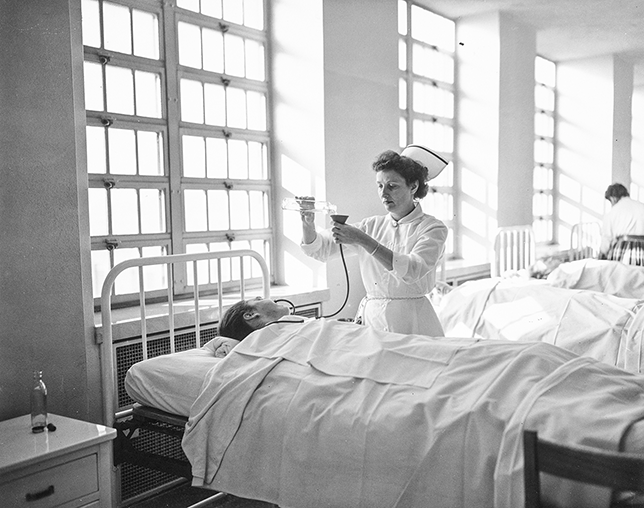
Not all of the histories of specific treatments have focused (to varying degrees of criticism) on the failures or dead ends of psychiatric therapies. Edward Shorter and David Healy, for example, charted the rise, fall, and then rise again of ECT. In Shock Therapy, they contest the popular depiction of ECT as little more than reckless experimentation or thinly veiled punishment. Shorter and Healy provocatively frame ECT’s critiques as being mostly politically driven polemics that have wilfully ignored the real benefits that have accrued from its use.Footnote 127 The polarising nature of the debate over the history and legacy of ECT has also been explored by Jonathan Sadowsky in Electroconvulsive Therapy in America. In a manner that draws on the work of Pressman, Sadowsky emphasises how complicated and constantly changing the methods of evaluating success were, as clinical observation (often by the proponents of a new procedure) gave way to randomised control trials. Sadowsky also introduces a fascinating, if oft-neglected topic, in the history of madness – the history of side effects.Footnote 128
Unsurprisingly, clinical experimentation has figured prominently in the historiography of medicine. But defining the boundaries of what was ‘experimental’ is far from straightforward. Insulin – often hailed as one of the great medical discoveries of the last two hundred years – was only made possible by the animal (and later child) experiments conducted by a group of Toronto-based researchers. Many practitioners of the first half of the twentieth century identified their interventions as constituting necessary risks given the situations or justified (as in insulin) as interventions of ‘last resort’. Similarly, psychiatric experimentation spanned the gamut of professional activities, including auto-experiments, such as the early antihistamine trials in 1950s France, or the experiments with psychedelics in the Canadian province of Saskatchewan during the same decade.Footnote 129 More darkly, some of the experiments were undertaken for potential military uses, particularly in the form of enhanced interrogation. This explains the (undisclosed CIA-funded) MK-ULTRA trials by Ewen Cameron at the Allan Memorial Institute at McGill University in the 1960s, in which the former President of the World Psychiatric Association subjected patients to ‘depatterning’ experiments that left many feeling permanently psychologically damaged.Footnote 130 Although not limited to the history of madness, there is much work still to be done on the vulnerability of institutionalised patients to involuntary post-war experimentation. We know much more, for example, about the coercion of Puerto Rican women in the early pill trials, but much less, for example, about the trials on the psychiatric patients that predated them.Footnote 131
With the rising popularity of psychopharmacology at the turn of the twenty-first century, it is not surprising that its history, as a dominant treatment approach since the 1950s, has also come under the historian’s gaze. David Healy, himself a trained psychopharmacologist, is the most prominent of authors who have suggested that different classes of drugs have been heavily promoted by an international pharmaceutical industry driven by profit motives, while the principal companies suppressed or downplayed research that either questioned their effectiveness or revealed unintended side effects. In a host of popular books, from Let Them Eat Prozac to Pharmageddon, he is particularly critical of regulatory regimes that permit companies to claim proprietary rights over research data, thereby making it very difficult for independent researchers to verify industry claims of efficacy and safety. He is equally scathing of the medical research community that became so entangled with pharmaceutical funding that it has brought into question their scientific independence.Footnote 132 The pharmaceutical industry, as suggested also by Healy, was only too willing to follow suit with psychotropic medications, despite the fact that scientific research failed over and over again to find any biological correlates to major psychiatric conditions.
The second major branch of psychiatric interventions in the twentieth century could be seen in the popularity of psychotherapeutic modalities. ‘Talk therapy’ was famously associated in Europe in the years leading up to the First World War and closely related to central European doctors who left for Britain, the United States, and South America. There is, of course, a vast literature on Sigmund Freud and the diverse psychoanalytic schools that followed him, which lies outside the scope of this Element contribution. Talk therapy did not necessitate institutional treatment, and indeed was reserved principally for individuals who were suffering from certain types of ‘neuroses’. Outpatient clinics, often in urban environments and tending to be oriented to a wealthier clientele, dominated psychoanalytic practice. For several decades in the middle of the twentieth century, psychoanalysis was required by psychiatry training programs in prominent American medical schools. This fed into the frames used by psychiatrist-historians, as explained in Section 1. Anne Harrington’s Mind Fixers charts the rise of a new biological psychiatry as a power play against psychotherapies (including, but not limited to psychoanalysis) and its legions of non-medically trained practitioners. Unnerved by the encroachment of non-physicians into the field of ‘mental health’ – be they psychoanalysts, psychologists, or vaguely described ‘therapists’ – the doubling down on a biological origin of psychiatric illness was, for Harrington, a way for psychiatry to reassert its medical legitimacy and cultural hegemony.Footnote 133
6 Biographies of Madness
Despite the substantial attention directed towards the history of madness in general, researchers proved reluctant, at least at first, to examine particular mental disorders, symptoms, or associated behaviours as discrete topics of historical interest. Some of this hesitation derived from the legacy of sociological approaches of the 1970s. According to certain scholars, it was almost naive to investigate the history of specific mental disorders over time. Mad behaviour, we were told, was largely, if not solely, a reflection of the cultural preoccupations and social values of contemporary observers. What’s more, studies of the diagnostic systems, such as the often-maligned American DSM, revealed how much diagnoses had expanded and been revised over time.Footnote 134 Could one then legitimately trace a clear historical transformation from Melancholia to Depression, or from Dementia Praecox to Schizophrenia? Were these really the ‘same’ conditions? Despite these ontological questions, a rich literature has nonetheless developed over time with a singular condition as its starting point and then using the psychiatric diagnosis as a prism through which to examine wider societal themes of the time.
One of the pioneering works of this school was authored by Janet Oppenheim, who, in Shattered Nerves, examined the social and medical phenomenon of nervous breakdown in the ‘pre-Freudian’ era. The elasticity of the term ‘nerves’ was useful to this author as a way of shedding light on the cultural role of medicine in Victorian society. ‘Nervous exhaustion’, ‘nervous collapse’, and ultimately ‘neurasthenia’ proved to be contested terrain between psychiatry and neurology. Oppenheim used a case study of the Scottish alienist James Crichton-Browne to reveal the tension between asylum-based psychiatrists and neurologists. Crichton-Browne emphasised specialised diets, electrotherapy and massage, along with various tonics, all in conjunction with novel psychological interventions. Ultimately, he would embrace hydrotherapy at the turn of the century, for both male and female patients. However, the book balances the approach of this medical officer with non-medical sources in order to explore what the disorder meant to the men and women who suffered from it. Oppenheim argues that there was little shame in admitting that one suffered from ‘nervous exhaustion’, and literate people wrote about it extensively.Footnote 135
If ‘nerves’ were a reflection of the anxieties of turn-of-the-century English bourgeoisie, then ‘trauma’ would arise as an important cultural touchstone in the last third of the twentieth century. The medical anthropologist Allan Young, for example, examined what he called the ‘invention’ of Post-Traumatic Stress Disorder (PTSD) in post-war American society. While the traditional narrative invoked the modern reformulation of trauma dating back to ‘shell shock’ and the First World War, Young anchored PTSD in the political maelstrom of 1970s America, when soldiers returning from Vietnam rallied to secure medical benefits from the American government (and Veterans Administration hospitals). The formalisation and inclusion of PTSD in the Diagnostic and Statistical Manual of Mental Disorders (DSM-III) of the American Psychiatric Association legitimised the condition as one that was ‘official’ and thereby merited medical intervention and coverage by state and private insurance plans. Thus, for Young, PTSD was not something that was ‘discovered’ or ‘better understood’ with the onward march of medical science; rather, it was a new psychiatric formulation of suffering that served certain social, economic, and political ends.Footnote 136
A similar interpretive framework can be found in Andrea Tone’s history of anxiety. In the Age of Anxiety, Tone identified a complicated dynamic in post-war American society whereby the rise and influence of the international pharmaceutical companies found a lively market in psychoactive drugs. Through clever marketing, ‘Big Pharma’ succeeded in pathologising emotional fatigue and reframing domestic stressors as requiring a medical remedy. Women’s magazines and television advertisements helped popularise tranquilisers in American culture, thus formalising a condition – anxiety – that had not before been understood in psychiatric terms. Post-war American consumerism and the normalisation of pill-taking made for a receptive market. However, Tone takes care not to diminish or denigrate the emotional experience of those suffering from anxiety, but rather locate the phenomenon of self medication within broader, cultural, and economic forces.Footnote 137
Over time, other major mental disorders found their historians. Richard Noll examined the origin and evolution of dementia praecox, a classification of psychosis whose first onset was identified in early adulthood, and which would be famously renamed schizophrenia. Noll anchors the history of dementia praecox within the generation when the germ theory of disease had given doctors an objective monocausal explanation of many contemporary killers, such as anthrax, tuberculosis, and typhoid. Emil Kraepelin, whose psychiatric textbook became deeply influential in the German- and English-speaking medical worlds, believed that the condition was due to some sort of auto-intoxication arising from the sex glands. Noll entitled his book ‘American Madness’, reflecting a tendency in many of these major works by US-based authors to locate psychiatric conditions – PTSD, Anxiety, and Schizophrenia – as products of twentieth-century American culture.Footnote 138 Following from this, Jonathan Metzl, for example, has traced the history of the use of the term schizophrenia over the course of the twentieth-century United States, using the Ionia State (criminal lunatic) Asylum records as a case study. He argues that schizophrenia, as a diagnostic label, changed dramatically in the 1960s, from a disease category that was originally applied to passive, ‘introspective’ White women to one that was increasingly associated with ‘violent’ young Black men. Metzl attributes this transformation to the anxiety raised by the civil rights movement and ‘Black Power’ in the United States. In a manner similar to Young and Tone, Metzl emphasises how seemingly ‘objective’ psychiatric diagnoses could be deeply influenced by social movements and, in his particular case study, the racialised boundaries of acceptable behaviour.Footnote 139
One sees a similar American-centric framing in histories of depression. Laura Hirshbein adopted a ‘constructivist’ approach by validating the experiences of sufferers whilst also arguing that the professional diagnosis of the condition has been subject to strong cultural and professional interests over time. In a manner that mirrors Allan Young’s work on PTSD, she identified contemporary forces (in this case, cultural and commercial ones) that resulted in ‘depression’ being adopted in the third iteration of the Diagnostic and Statistical Manual of the American Psychiatric Association (the DSM, sometimes popularly referred to as ‘Psychiatry’s Bible’). Throughout her book, notably entitled American Melancholy, Hirshbein attempts to explain why there was ‘explosive’ growth in the clinical and social use of the term ‘depression’ in the United States.Footnote 140 By contrast, Jonathan Sadowsky, drawing on his training as a historian of African and colonial medicine, seeks to position the United States as an important node, but only a node, in the global evolution of depression as a complicated and contested transcultural condition.Footnote 141
If social and commercial forces animated a medicalisation and widening of ‘depression’, somewhat different transformations occurred in the history of autism. Chloe Silverman, for example, has traced its long history, accounting for the multiple influences – parents, professionals, school boards – that interacted to constitute diagnosis and treatment over the last two generations. Placing particular attention on the affective considerations and political influence of parents, Silverman illustrates the transition from a psychogenic condition to one that is now referred to as a neurodevelopmental disorder. As Silverman demonstrates, early conceptualisations, such as those of Leo Kanner (who incidentally wrote a book on the history of mental retardation), were infused by a 1940s psychoanalytic framework that conceptualised parents (mothers in particular) as being aloof and thus ‘responsible’, to some extent, for the onset of the condition. Silverman uses memoirs to explore how parents became self-styled amateur experts in autism. Her book is as much about autism advocacy as about the history of the disorder, somehow independently constructed.Footnote 142
Autism, as a medical term, however, changed over the generations in the twentieth century as it became, in certain professional contexts, pervasive developmental disorder and, elsewhere, part of a ‘spectrum’ of autistic disorders. With the rise of new autisms – like Asperger Syndrome – the coherence of autism, as a singular disorder or condition, began to unravel. No longer was it a syndrome solely about children or always associated with severe intellectual deficits. Adults who self-identified as ‘autistic’ began to eschew the pathological frame of autism entirely, claiming, with a nod to R.D. Laing and his view of schizophrenia a generation earlier, that autism was merely a ‘different way of being’ in the world. Bonnie Evans, underlining a dominant analytic theme, speaks of a ‘diagnostic bracket creep’, whereby psychiatric disorders were widened and generalised over time.Footnote 143 Just as with depression, trauma, or anxiety, there is a question as to who benefits from this apparent diagnostic enlargement. For historians of madness, histories of autism raise fundamental questions as to whether they are actually writing histories of the same ‘thing’.
The debate over the transhistorical stability of conditions is implicit in the work of Hilary Marland, who wrote extensively on puerperal insanity, a dramatic situation of postpartum women in the nineteenth century who displayed sudden swings towards mania or melancholia, threatening the households as well as, occasionally, their own newborns. Was this merely the Victorian manifestation of postpartum depression, or postpartum mania? And how do we understand the formulation of such conditions generations before the advent of Big Pharma? The contested terrain – between obstetricians, general practitioners, and alienists – provided a rich set of sources through which Marland explored the emerging specialisation of medicine. Drawing on her background in the history of midwifery, Marland centred the case notes of puerperal insanity to examine situations that, relatively speaking, were more apt to see positive resolutions than many of the other serious cases destined for the asylums of the time. Needless to say, considering the nature of postpartum conditions, it was paramount to disentangle the conceptualisation and treatment of the disorder from the gendered expectations of women’s – and, in this case, mothers’ – behaviour.Footnote 144
Continuity and change (or, in this case, near virtual disappearance) of a diagnosis of madness can be seen in Gayle Davis’ monograph on General Paralysis of the Insane (GPI). GPI became the paradigmatic asylum condition for male asylum admissions before the First World War, accounting for as many as one-fifth of all male patients at the dawn of the twentieth century. ‘Paresis’, as it was often known, was the asylum term for the tertiary and most often fatal stage of syphilitic infection, accompanied by a gruesome cocktail of medical symptoms and dementia. Davis explores this disease in multiple Scottish asylum locations to understand the institutional treatment and evolution of a proto-psychiatric profession in the late Victorian and Edwardian periods. As she demonstrates, a condition that bridged bacteriology and psychiatry proved symbolically important to contemporary doctors who saw it as a vindication that mental illnesses could have an identifiable biological origin. Near the end of the nineteenth century, the presence of a large number of paretics and growing knowledge of bacteriology prompted asylum authorities to establish institutional laboratories that would adopt the early tests for syphilitic infection (the Wassermann reaction test) as well as mercurial and arsenic treatments that proved common before the advent of malaria fever therapy. Davis remarks how disease-specific histories tend (for understandable reasons) to focus on the disorders that are still prominent today, rather than those that have been relegated to history, as neurosyphilis largely was, with the advent of antibiotics at mid century.Footnote 145
A small cohort of researchers have hypothesised that changing socio-cultural norms, institutional practices, and ‘diagnostic creep’ cannot alone account for the exponential rise in reported rates of mental disorder since 1800. The psychiatrist Edward Hare, in a now famous presidential address to the British Psychiatric Association, pursued this line of inquiry by invoking the title of Victorian alienist Henry Maudsley’s address in 1872 – ‘Is Insanity on the Increase?’Footnote 146 Hare suggested that historians had too easily dismissed this rhetorical question. He posited that there would appear to have been an increase in three common conditions – insanity related to alcoholism, insanity arising from tertiary syphilis, and a real increase in schizophrenia.Footnote 147 His speculation found its way into Edward Shorter’s influential History of Psychiatry (1996) and was the inspiration for the American psychiatrist E. Fuller Torrey’s The Invisible Plague (2002).Footnote 148 These works hypothesised that an unknown virus, combined with urban living, had led to an increase in schizophrenia. The implication was clear – just as certain diseases of the industrial era (e.g., cholera or Polio) waxed and waned during the last two centuries, so too might schizophrenia have undergone an epidemiological expansion, since, the authors contend, it was largely absent from pre-industrial accounts of insanity (see Figure 6).
‘Four Types of Insanity’ as depicted by the Canadian National Committee for Mental Hygiene. Courtesy of the Centre for Addiction and Mental Health Archives. This early example of a public awareness campaign attempts to depict, in photographic form, four common states of mental debility. By the early twentieth century, many voluntary organisations had become increasingly sympathetic to eugenic ideas about the relationship between heredity and insanity. Immigrant-receiving countries, like Canada, the United States, Australia, and Argentina, became increasingly anxious that their institutions were being overrun with ‘degenerate’ immigrants from European countries.
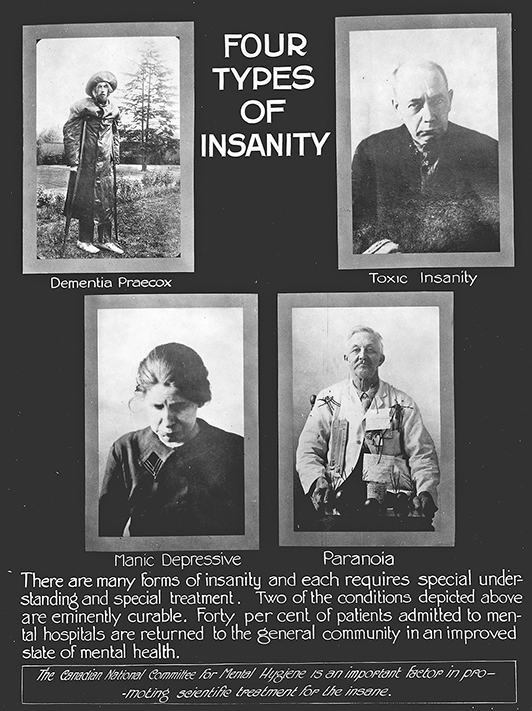
Biographies of disease have proved popular in recent decades, not least because of the attractiveness to publishers who sense that the public is more likely to find national or global histories of a particular disorder or illness more attractive and easily accessible than seemingly abstract historical themes or distant historical epochs. As previously mentioned, researchers have taken pains to emphasise the historical contingency of many diagnoses, guarding against any facile sense of a progressive, even Whiggish, unfolding of scientific truth over time. Indeed, historians have argued that the diagnostic label – say of schizophrenia or autism – has changed so fundamentally to probably represents distinct historical entities. Nevertheless, as Jonathan Sadowsky emphasises in his recent global biography of depression, psychiatric diseases, or illnesses, can be shaped by society and culture but still possess their own rich history worth exploring.Footnote 149
7 Madness and the Law
Aberrant behaviour and cognitive impairment implicated courts and local welfare administration for centuries. The advent of legal decisions and deliberations concerning capacity, relief of the poor, suicide, and criminal responsibility have provided important non-medical perspectives about mad behaviour. As a consequence, the intersection of law and mental impairment has proved to be immensely important to our understanding of the history of madness in general, and extramural responses in particular. It also guards against the easy assumption that changing societal responses were merely a reflection of the growing power and authority of organised medicine.
The common law long recognised two states of being that were relevant to inheritance and the management of property, as far back as the thirteenth century: ‘lunacy’ and ‘idiocy’. Simply put, lunatics were considered individuals who had a mind and lost it; idiots were individuals who, from birth or an early age, were never capable of governing their own, or their family’s, affairs. The common law thus approached the two conditions somewhat differently, since ‘lunatics’ might regain their sanity, whereas ‘idiots’ would not be expected to ever become competent stewards of their own property. The British Crown created structures of wardship to intervene when those affected were in charge, or the natural inheritors of, property. The Court of Wards and Liveries in England created protocols for determining mental capacity and for providing remedies.Footnote 150
Over the course of the early Modern period, a system of lunatic investigations was inaugurated in England and New England, consisting of local juries charged with determining insanity (or not) in disputed cases. As James Moran has demonstrated, early modern British and colonial courts attempted to create procedures for the management of estates that balanced the interests of families with safeguards for the accused against potentially malicious actions of kin. This imperfect legal tradition was established long before the predominance of medical ideas about madness and the rise of a proto-psychiatric profession in the nineteenth century. In his comparative study of lunacy inquisitions in New Jersey and England, Moran analysed civil court proceedings that provided temporary custodial oversight of land as well as personal care for the mad during their periods of insanity. These public inquiries incorporated diverse members of the community, including family, neighbours, and sometimes local doctors. Since families were the primary instigators of lunacy law proceedings, the process was decidedly non-medical in content and one implicating, by its very nature, those prosperous enough to have property in dispute.Footnote 151 The surviving testimony provides unprecedented insight into the contested boundaries of what contemporaries considered to be aberrant behaviour.
The legal sources that underpin this approach to the history of madness have thus tended to decentre the role of medically trained individuals. For example, Rab Houston authored an investigation of the legal responses to madness in eighteenth-century Scotland, where a separate legal tradition continued after the Act of Union in 1707. As he did in his later work on the history of Scottish suicide, Houston mined local ‘brieves’, being petitions regarding the alleged lack of capacity of a family member. Presenting a ‘social history of mental incapacity’, Houston challenged Michael MacDonald’s controversial assertion that the eighteenth century proved to be a ‘disaster’ for the insane, when they were socially marginalised and physically isolated in madhouses. He emphasises the very circumscribed status of medical practitioners in the legal proceedings and the emphasis on non-institutional solutions.Footnote 152 Akihito Suzuki used similar records to shed light not on the role of the state, but rather to rethink how we understand ‘psychiatry’ within the domestic realm. Using the aforementioned de lunatico inquirendo, he explored domestic treatment outside of the formal lunatic asylum, emphasising the influence of families as reflecting a subtle form of ‘domestic psychiatry’ in the early nineteenth century.Footnote 153
Within the civil code tradition, a similar set of responses was invoked. As Thierry Nootens has demonstrated in the case of nineteenth-century Québec, local magistrates might place disorderly or ‘profligate’ family members under some sort of tutelle or curatorship (curatelle), in order to protect the family either from violence or financial ruin. These court case testimonies reveal the degree of accord, or discord, amongst family members in the face of extravagant and erratic behaviour that might have been caused, or aggravated by alcohol or drug use.Footnote 154 The investigation of this type of insane behaviour in the ‘community’ has attracted considerably less attention than institutional histories, in part due to the relative lack of sources. Nevertheless, those who have followed local civil and criminal procedures have provided an important perspective on mad behaviour outside of the realm of formal medicine. Take, for example, the recent work of Anatole Le Bras and his examination of criminal investigations in Bretagne. Through an analysis of judicial proceedings involving unlawful sequestration, he has illustrated the practice of ‘domestic confinement’ in rural nineteenth-century France, providing a much-needed balance to a historiography consumed with documenting the rise of the formal asylum.Footnote 155
The operation of poor laws in various jurisdictions has also provided fruitful insights into the social history of madness before and during the Industrial Revolution. The consolidated English poor laws date from the reign of Elizabeth I but were subject to multiple amendments before their overhaul in 1834. The acts obliged local parishes across England and Wales to provide ‘relief’ to the indigent poor of their communities (through a system of ‘settlement’). Individual parishes appointed Overseers of the Poor to administer this system. In practice, the poor law records list not only the elderly and infirm, but also ‘idiots’ and ‘lunatics’, supporting them through a diverse system of food, clothing, shelter (indoor relief), boarding out in community homes, and rudimentary medical or nursing care. Often framed as a proto-welfare state measure, the poor laws – and their variants in Scotland and parts of North America – were, in fact, legal responsibilities of communities to their most desperate members, including those deemed mad. Local studies reveal that ‘lunatics’ and ‘idiots’ formed part of the indigent and vagrant who became the recipients of relief over time.Footnote 156
Another principal domain where legal and quasi-legal proceedings have shed light on madness lies in the evolving judicial and religious responses to suicide. Since suicides were proscribed by the Christian church, they were acts that were highly charged in meaning. After the Protestant Reformation, there was also a growing tension between state and clerical prerogatives. With the growing reach of the state in the early modern period, local authorities began to systematise the investigation of dead bodies discovered in suspicious circumstances. Was a corpse floating in a river the result of an accident (slipping on a bridge while drunk at night), foul play (being pushed), or suicide (purposefully jumping to end one’s life)? Local coroners gathered evidence in a quasi-judicial manner, including the testimony of family, friends, co-workers, and neighbours (see Figure 7). Over time, many jurisdictions differentiated between intentional self-murder (felo de se) and murder that was non fully intentional, since it resulted from a state of unsoundness of mind (non compos mentis). Sometimes these became full-blown inquests in front of juries.Footnote 157
Coroner’s inquest record for John Balmer, 1852, New Zealand. Archives New Zealand. Page from the coroner’s inquest file regarding the death of John Balmer, 1852. Legal and quasi-legal investigations into the mental state of those who had committed suicide preserve a host of competing voices about the nature and boundaries of madness in local communities.
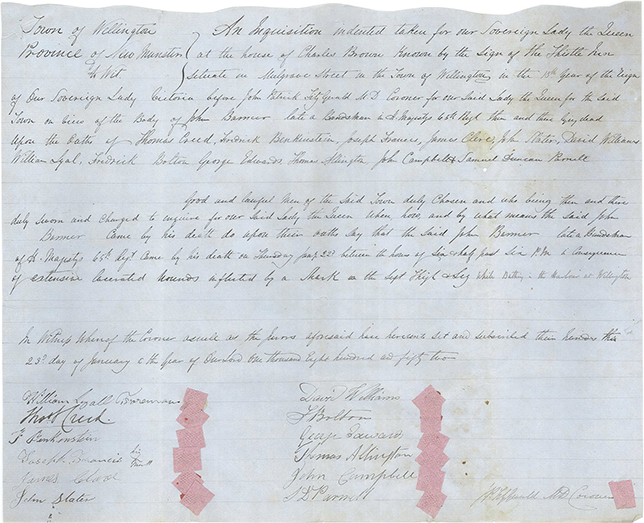
Michael MacDonald and Terence Murphy were two of the first scholars to analyse what appeared to be the growing use of the so-called ‘lunacy verdict’ in suicide inquests. Was this the reflection of an increasing secular or ‘medical’ manner of understanding voluntary death? Or was the use of the lunacy verdict an act of compassion, whereby local jurors spared families the further pain of posthumous penalties?Footnote 158 Their work has inspired other major studies of coroners’ reports, such as John Weaver’s analysis of thousands of Australasian records.Footnote 159 Weaver problematises the tempting conclusion that there was a medicalisation of suicide in the nineteenth and twentieth centuries. Rather, his research points to a more pluralistic view, where the historical evidence suggests that ‘rational suicide’ was widely recognised. In his work, mirroring that of Houston, medical authorities did not play an important role in coroners’ investigations, at least before the twentieth century. In any case, the legal and administrative procedure of gathering testimonies – including the minority of suicides who left written explanationsFootnote 160 – provides a fascinating window into psychological distress and suffering in the past.
The verdict of non compos mentis in cases of suspected suicide points to one of the principles of the common law tradition – namely, in order to be responsible for one’s actions, there had to be both actus rea (the act itself) as well as mens rea (criminal intent). This raised a fundamental question of jurisprudence – could the mad actually form mens rea? And if so, under what circumstances? Publications on the advent and evolution of criminal responsibility (of the mad) have thus examined the growing use of the so-called ‘insanity defence’ in court cases, particularly over the course of the nineteenth century. The literature on the history of criminal responsibility illustrates repeated questions about its allegedly unfettered use. As Joel Eigen has demonstrated, the complexity and contentiousness of madness over time, and new ideas about consciousness and the ‘self’, opened the door to all sorts of suggestions that individuals were not ‘conscious’ or ‘aware’ of their actions at the time of the criminal act. In these court cases, medical men became more visible, but that does not mean that the judges and juries were convinced by their testimony, particularly when alienists testified for both sides. Indeed, Eigen attributes the rise of arguments about criminal non-responsibility not to the expanding influence of a proto-psychiatric profession, but rather to opportunistic defence lawyers who were increasingly empowered by the court system to cross-examine witnesses and challenge evidence. Nevertheless, he argues, the legal use of the insanity defence helped contribute to an expansion of the definitional boundaries of madness.Footnote 161
Even when medical practitioners were required to weigh in on the evaluation of madness, their participation was often hesitant and even risky. Take, for example, the transnational phenomenon of medical certification, required in most Western jurisdictions for the (legal) involuntary confinement of an individual. As Filippo Sposini has demonstrated, the safeguards put in place in the nineteenth century to prevent wrongful confinement were often vague and poorly understood. Yes, ordinary medical practitioners received a fee for this medical encounter, but they also left themselves open to legal challenges and possible professional sanctions in cases of improperly completed certificates. In an era before ‘psychiatry’ became a formal postgraduate program, some doctors avoided the process altogether.Footnote 162 Such liminal space of medical encounters with the mad extended to the situation of so-called ‘criminal lunatics’. In Disorder Contained, Catherine Cox and Hilary Marland explore the history of prisoners’ mental health in Victorian Ireland and England. Their book illustrates how the mental status of prisoners constituted an ongoing point of contestation amongst contemporaries and charts how prison medical officers became central actors in the identification (and mediation) of mental suffering as well as the recommendations for transfer to (regular) lunatic asylums. The co-existence of the prison and asylum systems – and the hybridised criminal lunatic asylum – created tensions in the decision over the appropriate locus of surveillance for individual convicts who appeared to be suffering from psychological impairment or distress. The authors harness the ambiguities and controversies within contemporary debates to reflect on changing attitudes towards the effectiveness of punishment (particularly solitary confinement) as well as the causes of mental disorder.Footnote 163
8 Representing Madness
From the early years of the asylum, the physical environment of the institutions was frequently represented as important to the amelioration of madness, a consideration that included choices over the physical location of mental hospitals and the architectural plans of buildings. From a geographical perspective, Chris Philo has examined ‘pathways’ to the asylum, the location of the asylums themselves, as well as the history of asylum cemeteries.Footnote 164 With the rise of industrial society, it was common to situate mad institutions just outside of towns, so as to conform to ideal retreats far from the madding crowds of the city, but close enough for transportation of goods and people. Paintings and drawings of new institutions emphasised their bucolic, and yet ordered, surroundings (see Figure 8).Footnote 165 By the end of the nineteenth century, asylums for the insane constituted impressive civic buildings that featured on postcards and were often open to visitors and tourists.Footnote 166 However, as urbanisation continued into the twentieth century, many of the original buildings found themselves incorporated into the expanding suburban landscapes, making the ‘retreat’ of asylums, majestically recreated in Daniel Hack Tuke’s famous representation of the York Retreat, no longer realistic.Footnote 167
The York Retreat, from Daniel Hack Tuke, Reform in the treatment of the insane: early history of The Retreat, York, its objects and influence, with a report of the celebrations of its centenary (1892). Wellcome Collection. This iconic representation of the famous Quaker institution idealised the idea of a ‘retreat’ that would symbolise the humanistic impulses of moral treatment. This image would act as a visual lament for future generations of Alienists, who witnessed the ideal of individual care and compassion overcome by monstrous institutions housing thousands of patients.
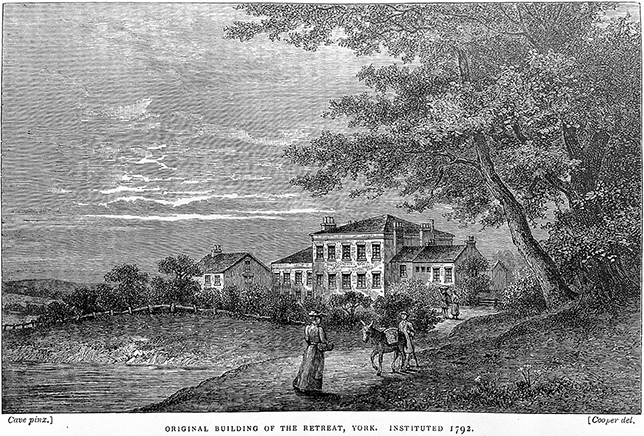
With the generalisation of photography in the middle decades of the 1800s, some innovative asylum superintendents attempted to represent their institutions and patients in strategic ways. In particular, they sought to capture certain mental states and, by doing so, create visual representations for what could not be ‘seen’. This new representation of madness took several forms, including asylum portrait photography (often affixed in medical casebooks) as well as the use of select asylum photographs in contemporary medical textbooks. Photographs of stereotypical conditions – mania or melancholia, for example – were also supplemented by professional and popular imagery of mental states and emotions. A small number of asylum superintendents, like Hugh Welch Diamond and John Langdon Down, became famous for their glass slide photography and their attempts to visualise certain forms of madness or mental disability.Footnote 168 ‘Seeing the insane’, to borrow the title of a well-known interdisciplinary book by Sander Gilman,Footnote 169 gave the impression of objectivity; the impact of photography occupied an important role in this regard, at least before the arrival of medical imaging. Once embedded in institutional culture and practice, photography became integral to laboratory medicine, providing new tools to investigate the cerebral origins of insanity throughout post-mortem research.Footnote 170 This was far from being an Anglo–American phenomenon. As H. Yumi Kim has demonstrated, photography was used by psychiatrists to criticise the system of ‘home cages’ in early twentieth-century Japan, forming part of a broader campaign against domestic care and in favour of the institutionalisation of the mentally ill.Footnote 171
Prior to the 1800s, the imagery of madness was prominent in Renaissance art, while ‘fools’ acted as a standard trope in theatre. The use of the mad, and madness, as satirical critique of contemporary political and social mores has a long history. Elizabethan drama often played on the motif of madness, such as in Shakespeare’s Hamlet, where the two gravediggers joke about sending the prince to England, where everyone is as ‘mad as he’.Footnote 172 The mad fool became a stock character who articulated truths that sane individuals refused to acknowledge. A full exploration of themes of madness in English literature is far beyond the scope of this study. But it is worth observing the continuity of several key tropes that date back to the eighteenth century. For example, the idea that the mad are more insightful than the sane, or indeed tragically possess attributes far beyond ‘normal’ people, figures prominently in our understanding of Van Gogh’s paintings or in popular cinematic depictions of autism, such as the movie Rain Man. One sees the inversion of roles, whereby the psychiatrists (or equivalent) are actually the ones of unsound or unstable mind. Whether Hollywood or Bollywood, another dominant theme of films has been the portrayal of the psychiatrist as a corrupt figure with a hidden agenda.Footnote 173 Most prominently, the fact that the asylum or mental hospital, though meant as a place for therapeutic rehabilitation actually becomes a locus for the generation of mental instability or a type of ‘institutional neurosis’ as Russell Barton, the British psychiatrist, once claimed.Footnote 174 However, the enduring interweaving of madness, violence, and involuntary confinement (and medical experimentation) continues to be a popular (if too often stigmatising) trope in twentieth-century cinema, from films such as Hitchcock’s Psycho onwards.Footnote 175
Within English-language literature, Bedlam became a multifaceted point of reference that went far beyond a mere popularisation of the Bethlem Royal Hospital in London. William Hogarth’s famous print depicting ‘Bedlam’ in A Rake’s Progress has been read as a commentary on the social and political ills of Georgian England and, at the same time, the ultimate consequence of a life of moral depravity. This cultural use of madness as a metaphor through which to reflect the political failings of a nation has re-emerged as a theme in recent histories. For example, Jennifer Lambe’s study of the ‘Mazorra’, the Cuban mental hospital on the outskirts of Havana, traces its centrality from the end of Spanish colonial rule, through American occupations and domestic dictatorships, and into the Revolutionary era of Castro. Rather than a social history of the mental hospital, Lambe positions the institution once known as the Casa de Dementes as a microcosm of Cuban modernity. ‘Mazorra’s liminality’, she suggests, ‘has paradoxically rendered it an acute barometer of [Cuba’s] political and social tides.’Footnote 176 Echoes of this approach can be seen in the work of James Dunk, who characterises the establishment of the Tarban Creek Asylum as a ‘perfect analogy’ to the madness of the New South Wales penal colony itself.Footnote 177 Meanwhile, Joelle M. Abi-Rached’s recent ‘Asfuriyyeh also uses madness and the psychiatric hospital as a prism through which to understand the violence and ‘failure of modernity’ in Mandate and post-Mandate Lebanon.Footnote 178 In the United States, Antonia Hylton argues that the Crownsville institution in Maryland (formerly named the Hospital for the Negro Insane) reflects the exploitation and suppression of civil rights suffering by Blacks in post-emancipation America more generally.Footnote 179 In each of these cases, the examination of particular asylum practices recalls not just the history of institutional treatment but rather points to broader societal shortcomings.
9 Voices of the Mad
One of the newest historiographical approaches, and perhaps the most experimental, centres on attempts to bring ‘voice’ and empowerment to the mad, who, it has been argued, have been silenced not just by psychiatrists, but by historians of madness themselves. Most historiographical surveys tend to date this urgency to see the world from the ‘patient’s perspective’ to the influential article by the renowned medical historian Roy Porter, who, in ‘The Patient’s View’ (1985), encouraged historians to do medical history ‘from below’.Footnote 180 Porter gave voice to a central tenet of the social history of medicine, one that dated back to the foundational works of the 1970s.Footnote 181 Most of the social histories of lunatic asylums in the 1980s and 1990s, outlined in Section 3, expressed the hope to recover the ‘voice’ of the mad, or at least the perspectives of the patients themselves (see Figure 9). And while social histories of institutions have incorporated patient letters (often for illustrative purposes), only a handful of notable works have sought to privilege patients’ own narratives as the principal objective of research.Footnote 182
Bedroom in Arles, by Vincent Van Gogh. The Art Institute of Chicago, Helen Birch Bartlett Memorial Collection. Van Gogh’s lifelong struggle with madness has been well documented, and several of his most famous paintings speak to a sufferer’s perspective of their surroundings. Here, a depiction of the artist’s bedroom in Arles, where Van Gogh would later be institutionalized, in the nearby asylum, as a patient. Some have interpreted the representation of a closed bedroom as reflecting a state of emotional isolation.
A small number of anthologies have appeared over time pursuant to this general approach, including an early contribution by Dale Peterson, a Stanford English professor, who had previously worked as a psychiatric attendant and later collected historical perspectives of ‘mad people and mental patients’ in an anthology of annotated memoirs and autobiographies.Footnote 183 Allan Ingram’s Voices of Madness showcased mad individuals in the long eighteenth century,Footnote 184 as did Roy Porter’s own A Social History of Madness.Footnote 185 Recovering the ‘voice’ of women patients was also centrally important to the early work on women and psychiatry, described in Section 2. Phyllis Chesler, for example, foregrounded the experience of four historical women of note (including Sylvia Plath), giving them a historical ‘voice’. In a similar manner, Jeffrey Geller and Maxine Harris, in Women of the Asylum: Voices from Behind the Walls, 1840 –1945 (1994), recovered twenty-six accounts of women who were involuntarily institutionalised.Footnote 186 The very real challenge lies in the scarcity of sources, thus raising questions of the representativeness of the ‘voices’ left behind. For example, most of the correspondence cited in Geller and Harris are critical accounts published in local newspapers after their discharge. Former patients speak of ill treatment, wrongful confinement, and engage in the settling of scores. These types of exposés, of course, are hardly novel. Popular tracts denouncing ‘wrongful confinement’ date from the origins of the asylum itself.Footnote 187 The criticism, of course, was that these voices were those of privileged women of European descent and not a broader representation of the diverse women and men who found themselves acted upon, in the past, because of their perceived madness.
One innovative example of what some are now calling ‘mad history’ was authored by Geoffrey Reaume, who, in his history of the Toronto asylum, attempted to centre patients’ perspectives in his social history of what was Ontario’s first provincial psychiatric facility. Reaume affirms that his goal was to recover ‘the hopes, dreams and sorrow of people who have been in mental hospitals’ in the past. To achieve this, he selected 197 individuals from the 18,000 case files held at the Archives of Ontario based on the ability of the primary sources to reveal asylum life from the patients’ perspective. His narrative style privileges patients’ views through a detailed reading of patient case notes and inmates’ letters. The author’s task was assisted by the unfortunate asylum practice of the asylum medical officers withholding letters written by, or sent to, patients, thereby preserving them for posterity in the provincial archives.Footnote 188 Reaume is an important writer as he bridges the academic world with that of the self-described psychiatric survivor community. Made up of activist former patients, they have laid claim to ‘their’ own history – mad history – by demanding a central role in the way the history of madness is written.
Many of the tenets of mad history return to the sociological theories of the 1960s and 1970s, discussed earlier. Mad studies writers invoke the paradigms that there are no disabling conditions, but merely societies that do not incorporate different abilities and ways of being in the world. With a faint echo to Foucault, Michael Rembis, in his recent contribution to this field, contends that ‘mad voices have, until now, been largely silenced by a world that medicalises, pathologises, and devalues or ignores them.’Footnote 189 Researchers adhering to mad history often question the traditional structuring of their research as a sub-theme in the history of medicine. As Catherine Kudlick has articulated, the historical examination of disability has been dominated by researchers involved in the history of medicine, who have implicitly accepted that people with disabilities were (and are) people who are ‘victims’ with problems that need to be ‘fixed’.Footnote 190 Scholars such as Kudlick thus seek to reposition mad history under the broader category of disability history, one which rejects the medical model of disability and endeavours to integrate political activism within academic research. This historical work intersects with contemporary movements around de-stigmatisation and valorisation of certain mental conditions, such as the ‘Hearing Voices’ movement. Indeed, one of the accelerators of mad history has been the desire for academics to involve former psychiatric patients as partners and collaborators in contemporary history projects.Footnote 191
Emerging Trends
As this historiographical survey has highlighted, scholarship on the history of madness is both vast and diverse. From Foucault to Fanon, from Goffman to Gilman, researchers have pursued fascinating avenues of intellectual inquiry that have illuminated major themes in Modern history. While their approaches and conclusions have varied, most researchers would concur that far from ‘out of mind, and (therefore) out of sight’, the mad have occupied a central role in major historical debates. And while historians should always be wary of predicting future avenues of research, one can highlight a few trends that have become increasingly important in recent years.
First, changing approaches to the history of madness have called into question the all-powerful dominance of the biomedical profession during the last two centuries. Gone are the days in which researchers took as axiomatic the progressive ‘medicalisation’ or, in this case of this field ‘psychiatrisation’, of aberrant behaviours and cognitive conditions over time. Rather, scholars have emphasised the limitations and contestations of medical authority. The work of Ramos on the Spanish Inquisition and Moran on Anglo–American lunacy inquisitions are but two examples of how madness has been defined and contested outside the realm of medicine traditionally understood, illustrating how non-medical sources can be mined for new perspectives on madness and society. As historians have moved beyond medical treatises, medical men, and medical institutions, they have engaged in exploring the myriad ways madness has been defined, responded to, contained, and cared for in past generations. This de-centring of psychiatry and the lunatic asylum, within the history of madness, will likely continue to reap intellectual benefits during the next generation.
Second, there has been a rapidly growing interest in non-Western jurisdictions and the way in which we understand the invention and circulation of new ideas and practices. Few historians would now embrace a ‘hub and spoke’ approach where pioneering treatments and discoveries radiated outward from European and American metropoles. Researchers are now inclined to examine the complicated circulation, hybridisation, co-creation, and regionalisation of ideas and treatment that made ‘Western’ and ‘non-Western’ approaches constantly intersect, sometimes in unpredictable ways. Despite a Western-oriented post-war universalism that sought to understand and standardise madness across a global context,Footnote 192 we now know that diverse forms of understanding of madness co-existed and influenced each other. Theodore Jun Yoo’s examination of colonial Korea, and Emily Baum’s analysis of the ‘invention of madness’ in the twilight years of imperial China are but two examples of notable scholarship that eschew the classic paradigms of traditional Anglo–American scholarship.Footnote 193
Third, ‘decolonisation’ has figured increasingly important in this strand of recent scholarship, but a reframed decolonisation that looks at interimperial regionalism, thereby acknowledging the heterogeneity of the colonial experience.Footnote 194 For example, a new generation of scholars has problematised ‘colonial’ as a uniform lens through which to understand the political and medical responses to madness. In its place, one is likely to see more regionalised analyses of madness in, for example, South Asia, the Caribbean, the South Asian Pacific, and the Islamic Mediterranean. With regard to the last, recent publications on madness and colonialism in the French and British Mandates have continued these fascinating new avenues of research.Footnote 195 In addition to new knowledge about the madness and psychiatry ‘peripheral to Europe and North America’, this new literature reconfigures regions along geographic groupings, such as MENA – the Middle East and North Africa.Footnote 196
Fourth, as more and more historians, in general, turn to the post-Second World War era, so too have researchers engaged with the dynamics of psychiatric practice and political formation and understandings of the ‘mind’ during the Cold War, such as Ana Antíc’s analysis of ‘non-aligned’ psychiatry. She argues that the ‘psy’ professions, more generally, proved pivotal in many of the political debates of the Soviet Bloc countries in the 1950s and 1960s.Footnote 197 Examinations of ‘Communist Psychiatry’ have been accompanied by new works on the cohabitation of psychiatry and populist movements.Footnote 198 Much work still remains to be done on the use of psychiatry amongst right wing juntas in South America, or dictatorships that arose out of the withdrawal of European colonial administrations. To what extent was psychiatry deployed by state actors as part of post-war geopolitics?
Finally, historians will likely continue to explore the long history of extramural situations of the care and control of the mad, challenging an earlier generation that focused more narrowly on the controversial rise of the lunatic asylum and the formal psychiatric profession. Clearly, there is a social history of madness that existed outside of, and concurrent to, the era of the asylum. The lunatic asylum did not displace social responses and experiences of madness, but rather created an institutional focus that operated in interaction with the local communities. Exploring this extramural history has its challenges, of course, due to the asymmetrical archiving of sources for researchers. The history of household and community care is also highly gendered, as exemplified in the recent work of H. Yumi Kim, who has explored the gendered responsibilities of ‘home confinement’ of the mad in pre-war Japan.Footnote 199 Nevertheless, such work is crucial to gain a more comprehensive and nuanced understanding of the history of madness in the Modern era.
Acknowledgements
The author is deeply grateful to Professor Daniel Woolf and the constructive recommendations of three anonymous referees. He would also like to thank Lilia Scudamore, Cerys Williams, and Sara Holub for their excellent research assistance in support of this Element. Funding for open access was made possible by the Canada Research Chairs program (grant # 950–232537).
Daniel Woolf
Queen’s University, Ontario
Daniel Woolf is Professor of History at Queen’s University, where he served for ten years as Principal and Vice-Chancellor, and has held academic appointments at a number of Canadian universities. He is the author or editor of several books and articles on the history of historical thought and writing, and on early modern British intellectual history, including most recently A Concise History of History (CUP 2019). He is a Fellow of the Royal Historical Society, the Royal Society of Canada, and the Society of Antiquaries of London. He is married with 3 adult children.
Editorial Board
Dipesh Chakrabarty, University of Chicago
Marnie Hughes-Warrington, Adelaide University
Ludmilla Jordanova, University of Durham
Angela McCarthy, University of Otago
María Inés Mudrovcic, Universidad Nacional de Comahue
Herman Paul, Leiden University
Stefan Tanaka, University of California, San Diego
Richard Ashby Wilson, University of Connecticut
About the Series
Cambridge Elements in Historical Theory and Practice is a series intended for a wide range of students, scholars, and others whose interests involve engagement with the past. Topics include the theoretical, ethical, and philosophical issues involved in doing history, the interconnections between history and other disciplines and questions of method, and the application of historical knowledge to contemporary global and social issues such as climate change, reconciliation and justice, heritage, and identity politics.
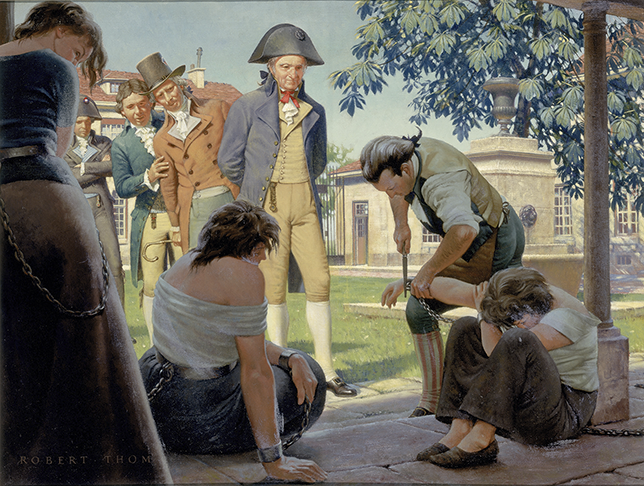
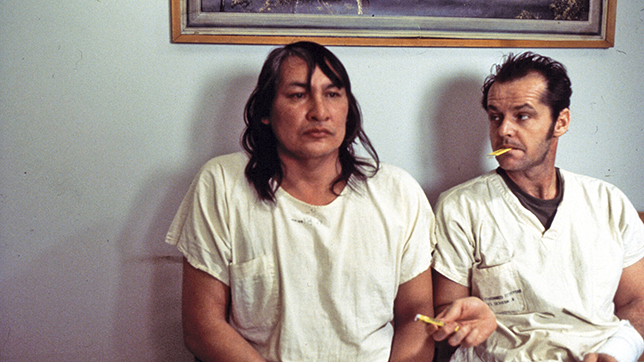
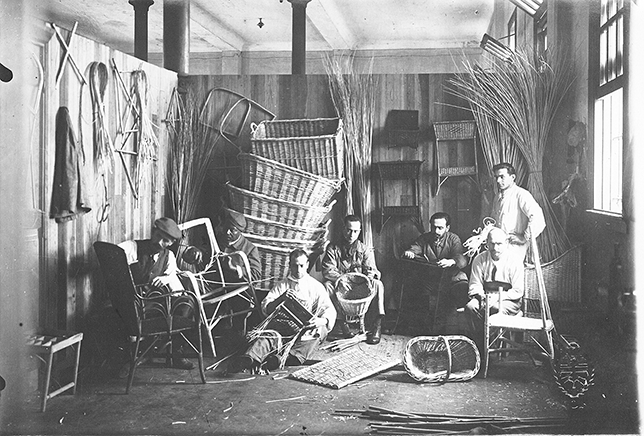
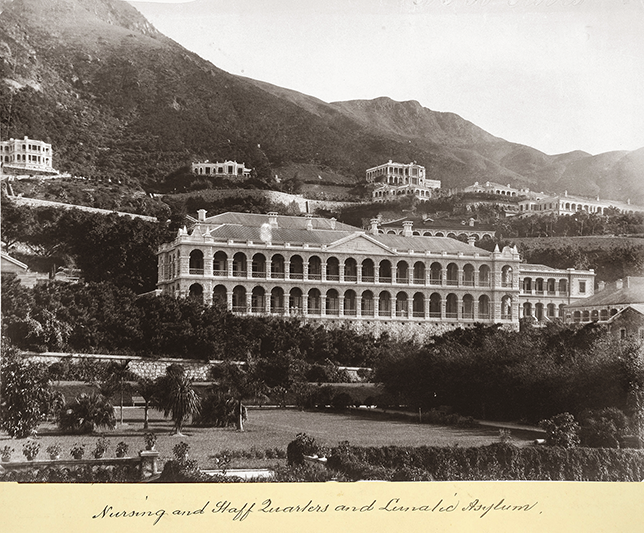
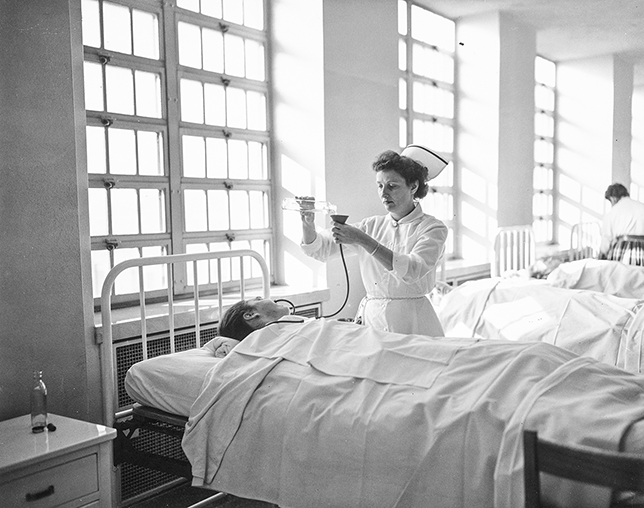
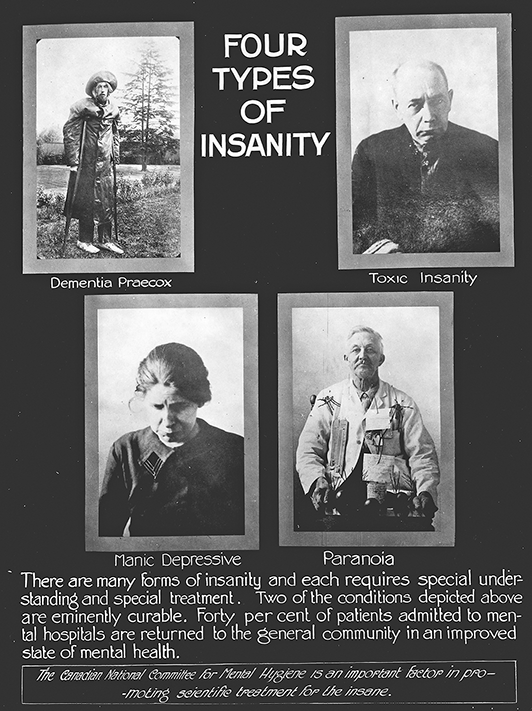
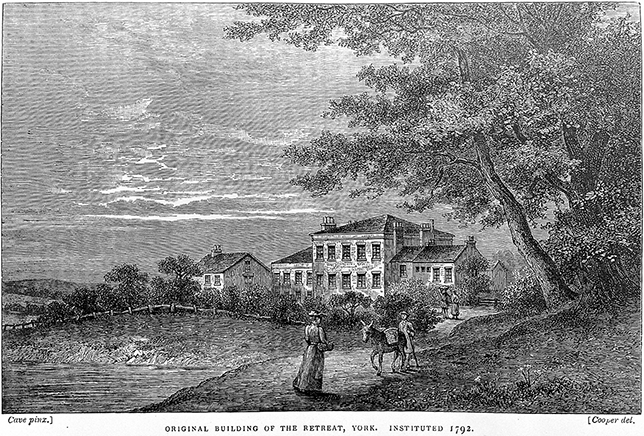

 Open access