


Introduction
Since its seminal contributions, the concept of policy implementation has emerged as a phase of both centrality and cogency within the policy cycle. Its centrality lies in its role as the critical link between the “setting of goals and the actions geared to achieving them” (Pressman and Wildavsky, Reference Pressman and Wildavsky1973), highlighting its function as the operational bridge for translating policy design into practice. Its cogency stems from its function as the stage where values, priorities, and resources are operationalized, ultimately determining the success or failure of public policies (Lipsky, Reference Lipsky1980). Already in what is considered the foundational work in implementation studies, Pressman and Wildavsky (Reference Pressman and Wildavsky1973) highlighted the inherent complexity of the process: not a straightforward, linear sequence, but a fragmented one shaped by numerous decision points. Additionally, it is a political process, involving street-level bureaucrats whose discretion and actions significantly influence policy outcomes (Lipsky, Reference Lipsky1980). Implementation, therefore, stands as both the engine and the battleground of policy realization.
Specifically, the “implementation issue” in social policy analysis is more relevant today than ever, following the transformation of welfare systems over the past decades. Particularly in Europe, and Western societies more broadly, the shift from compensatory mechanisms to active social policies has been intensifying for the past 30 years (Hemerijck, Reference Hemerijck2013; Busilacchi and Giovanola, Reference Busilacchi and Giovanola2023).
Several recent studies have examined the relationship between compensatory policies and more active or Social Investment-oriented approaches within the welfare state. Some of this literature has explored the degree of integration between these policy components, conceptualizing welfare state change as a “double movement” (Ferragina, Reference Ferragina2022). Another important line of research focuses on the distinction between stock, flow, and buffer policies, where the latter correspond to compensatory measures (Hemerijck, Reference Hemerijck2017). This perspective highlights that, in many cases, countries that invest more heavily in social investment policies also tend to sustain high levels of traditional social assistance and compensatory spending (Hemerijck et al., Reference Hemerijck, Ronchi and Plavgo2023). This process has significantly transformed some traditionally compensatory policies, such as minimum income schemes, which are the focus of this study, by combining income support with activation services. While implementation challenges have always existed in social policy, the shift toward integrated approaches that require beneficiaries’ active engagement has brought new layers of complexity. As a result, scholarly attention to implementation issues has grown, particularly in relation to these types of conditional and service-intensive policies. Despite its importance, social policy implementation remains one of the least explored stages of the policy cycle in both academic and political spheres. Scholars and policymakers have often prioritized agenda-setting and formal policy design over the practical aspects of implementation.
One of the main reasons why scientific research has paid relatively little attention to the implementation of social policies is the analytical difficulty it presents, particularly due to two factors: the complexity of operationalization and the reproducibility of results.
The first aspect can be linked to a broader issue inherent to the study of the welfare state, of which the implementation of social policies represents a specific subset, commonly referred to as the “dependent variable problem” (Pierson, Reference Pierson2001). This problem arises from the challenge of analysing and operationalizing complex, multidimensional concepts as dependent variables, especially when available data fail to capture their full complexity. Similarly to the concept of the welfare state, implementation encompasses a wide range of dimensions and variables (O’Toole, Reference O’Toole1986; Goggin, Reference Goggin1986), making it particularly difficult to operationalize and assess effectively.
The second reason why the study of social policy implementation is relatively “unattractive” from an empirical research perspective concerns the limited reproducibility of results. As classic and contemporary implementation literature has shown (Pressman and Wildavsky, Reference Pressman and Wildavsky1973; Winter, Reference Winter, Peters and Pierre2012), the inherently context-dependent nature of social policy implementation limits the reproducibility of empirical findings and contributes to its relative unattractiveness as a field of quantitative research. The implementation phase is an arena where multiple actors, various administrative levels, and different institutional contexts interact, resulting in highly heterogeneous processes at the local level. This condition, known in the social sciences as the ‘small N problem’, makes it challenging to identify a sufficient number of comparable cases to generate inductive generalizations that can provide meaningful explanations of phenomena related to the implementation of social policies.
Despite the increasing number of contributions on social policy implementation in recent years (Sager and Gofen, Reference Sager and Gofen2022; Steinebach, Reference Steinebach2022; Hill and Hupe, Reference Hill and Hupe2002; Fernández-i-Marín et al., Reference Fernández-i-Marín, Hinterleitner, Knill and Steinebach2024), there is still a gap in the literature regarding attempts to address the two theoretical issues described above, particularly by simplifying the relevant “implementation variables” and enabling inductive generalization.
This paper aims to address this gap by focusing on social policies that require active beneficiary engagement and operational collaboration among local institutions within a framework of horizontal multilevel governance. Its primary objective is to identify the key drivers of successful performance in achieving specific policy outcomes. Our specific research question is: what are the drivers of success or failure in the implementation of social policies at the local level?
More specifically, we focus on how implementation arrangements – namely the institutional setting and organizational design (Sager and Gofen, Reference Sager and Gofen2022), implementation capacity (Fernández-i-Marín et al., Reference Fernández-i-Marín, Hinterleitner, Knill and Steinebach2024), and institutional cooperation and communication among the various local bodies involved in policy implementation – affect the achievement of one of the policy’s primary objectives: returning capable individuals to the labour market. Our aim, therefore, is to understand how local-level implementation, particularly the cooperation and communication among the local institutional bodies involved, influences this policy outcome.
The chosen case is Italy’s minimum income policies. This case is particularly suitable for broader generalization for several reasons. First, it exemplifies a contemporary active policy where local institutions play a crucial role in shaping beneficiaries’ reintegration into the labour market. Second, it is a national policy implemented in a decentralized manner and overseen within a horizontal multilevel governance framework by two local institutions responsible for different domains, including social needs, social inclusion, and labour market activation. In addition, few studies have explored the local heterogeneity in labour market re-entry outcomes for income support beneficiaries in Italy, making this analysis a novel contribution to the literature. Finally, since our aim is to examine how the implementation process and communication among local actors influence policy outcomes, our findings can offer valuable insights not only for the Italian context but also for countries with similar institutional frameworks.
The paper is structured as follows: the next section provides a review of the literature on the “implementation issue”; the second section contextualises the specific features of minimum income policy implementation in Italy; the third section presents the empirical methodology and data; the following section details the empirical results; and the final section concludes with policy recommendations.
Implementation: the cornerstone of policy effectiveness
A literature review
Implementation is a complex process in which policy designs take shape on the ground. The effectiveness of a policy and its chances of achieving its objectives rely heavily on its implementation. Successful implementation also depends on the more or less complex structure of the delivery system and the degree of centralization (Salamon and Lund, Reference Salamon, Lund and Salamon1989). For this reason, implementation arrangements have become a critical focus in public policy and public administration research. Over time, the study of implementation has revealed its decisive role in bridging the gap between policy design and outcomes, shaping the trajectory of public interventions.
The literature on policy implementation is often described as developing in three waves: an initial phase in the 1970s marked by exploratory, qualitative case studies; a second phase in the 1980s characterized by theory-driven, hypothesis-testing research; and a third, more recent wave focused on scientifically rigorous research design (Goggin et al., Reference Goggin, O’Bowman, Lester and O’Toole1990; Lester, Reference Lester, Bowman and Goggin1987; Hill and Hupe, Reference Hill and Hupe2002; Saetren, Reference Saetren2014).
The classical phase was defined by two seminal contributions that paved the way for distinct approaches to implementation research: Pressman and Wildavsky (Reference Pressman and Wildavsky1973) laid the foundation for the top-down approach, while Lipsky (Reference Lipsky1980) did so for the bottom-up one.
Pressman and Wildavsky’s case study of the Oakland Project (1973) was among the first systematic analyses of this process of implementationFootnote 1. They demonstrated how complex institutional structures, bureaucratic inefficiencies, and local-level interactions could derail even the best-designed policies. Their analysis revealed that implementation is not simply an extension of policy design but a complex process involving numerous actors, decision points, and contextual factors, illustrating how chains of reciprocal interactions often complicate the achievement of intended outcomes.
This approach framed implementation as the second stage in a linear process, following decision-making with the primary focus on compliance and fidelity to central directives (Elmore, Reference Elmore1980). Mazmanian and Sabatier (Reference Mazmanian and Sabatier1989) expanded on this perspective, offering an analytical framework that identified key conditions for successful implementation, including clarity of objectives, resource allocation, political commitment, and institutional capacity. This model was instrumental in systematizing the study of implementation, providing a structured way to analyze the conditions under which policies succeed or fail. Their approach, like that of Pressman and Wildavsky, reflected the top-down paradigm, which viewed implementation as a hierarchical process requiring local compliance with centrally defined goals.
In contrast, Lipsky (Reference Lipsky1980) introduced the bottom-up approach, shifting the focus to the agency of frontline workers—"street-level bureaucrats”—such as teachers, social workers, and police officers. Lipsky emphasized how these actors exercise significant discretion in their interactions with the public, effectively becoming co-creators of policy outcomes and often shaping them in ways that deviate from the original design. This work marked a significant shift in focus from high-level decision-making to the operational level, emphasizing the need to consider the behaviours and motivations of implementing agents in understanding policy success or failure.
Hjern and Porter (Reference Hjern and Porter1981) further advanced the bottom-up perspective by highlighting the importance of local contexts and the adaptability of policies during implementation. They argued that implementation often depends on structured interactions between implementing agents and the public, emphasizing the role of networks and collaborative arrangements in delivering services. Together with Lipsky’s earlier work, these perspectives paved the way for more nuanced understandings of implementation, recognizing it as a process shaped by both central directives and local dynamics.
Recognizing the strengths and limitations of both approaches, scholars like O’Toole (Reference O’Toole1986) advocated for a synthesis, combining top-down and bottom-up perspectives to provide a more comprehensive understanding of implementation. This integrative framework underscored the need for central coordination alongside local flexibility, marking the transition to more multidimensional approaches to studying implementation, emphasizing the importance of multilevel governance in ensuring consistent outcomes across diverse institutional and territorial contexts. It is during this period that implementation studies become more rigorous in terms of hypothesis testing and increasingly theory-driven.
As the field matured, researchers began addressing the “too many variables” problem, highlighted by Matland (Reference Matland1995) and Meier (Reference Meier1999): these works stressed the need for parsimonious models that could account for the complexity of implementation without becoming overly unwieldy.
In particular, Matland (Reference Matland1995) offered a solution by categorizing policies based on their levels of ambiguity and conflict to explain variations in implementation outcomes. This model became one of the most used contributions in the field, providing a valuable tool for understanding why some policies succeed while others fail and demonstrating the importance of integrating contextual factors into implementation studies. Similarly, Winter (Reference Winter1989, Reference Winter, Peters and Pierre2012) contributed to this evolution by developing an integrative model that combined top-down directives with bottom-up discretion, emphasizing the interaction between central policy design and local implementation practices. These contributions underscored the importance of adopting multidimensional approaches to studying implementation, moving beyond the dichotomy of top-down versus bottom-up to capture the complexity of real-world processes. Hill and Hupe (Reference Hill and Hupe2002) consolidated these developments by introducing the concept of “operational governance,” which connects decision-making and operational levels to better understand implementation. Their work emphasized the importance of viewing implementation as an integral part of broader governance dynamics and offered a comprehensive overview of the field, bridging theoretical insights with practical considerations and reinforcing the centrality of implementation in public policy research.
In the context of social policy, Barrett (Reference Barrett2004) and Brodkin (Reference Brodkin2007) explore how changes in governance models, such as the rise of new public management, have influenced implementation processes, often complicating the roles of street-level organizations. These studies collectively underscore that implementation is not merely a technical process but a political and organizational one, shaped by the interactions among design, execution, and context.
In the more recent phase of implementation studies, attention has shifted to the growing complexity of governance systems and the challenges posed by multilevel governance. This perspective acknowledges that policy implementation frequently involves interactions across multiple levels of government or various local institutions, as well as between public and private actors. Kazepov and Cefalo (Reference Kazepov, Cefalo, Kazepov, Cucca and Barberis2022) emphasize the territorial dimensions and local capacities required for effective implementation, arguing that these factors are often overlooked in discussions of social policy effectiveness. They stress that successful implementation depends not only on national directives but also on the ability of local institutions to adapt policies to their specific contexts.
Implementation polity and arrangements: an updated state of the art
Despite the growing attention to multilevel governance in implementation processes, its operationalization remains an unresolved issue in the literature. Recent contributions have sought to address these gaps by focusing on the “implementation arrangements” that shape policy outcomes. Steinebach (Reference Steinebach2022) demonstrates the importance of well-designed implementation structures in achieving better outcomes, while Sager and Gofen (Reference Sager and Gofen2022) reinforce the idea that implementation arrangements – including institutional settings, organizational structures, and inter-agency collaboration - are key determinants of success. These authors identify three key dimensions for future research: vertical and horizontal cooperation in multilevel settings, emphasizing the interaction between central authorities and local implementers; public-private partnerships, focusing on how collaboration with non-state actors influences implementation success; and organizational identities, exploring how the self-perception of implementing agencies shapes their approaches to operationalizing policies. These dimensions reflect the increasing complexity of implementation arrangements in contemporary governance systems and the need to better understand their operation within multilevel systems (Casula, Reference Casula2024). They argue that policy implementation is not only a technical process but also a formative stage in the policy cycle, lying at the intersection of politics, policy, and the public. In fact, Sager and Gofen (Reference Sager and Gofen2022) refer to the concept of implementation polity, suggesting that arrangements should not be understood merely as technical-administrative tools, but rather as genuine political institutions, with their own internal dynamics and the capacity to actively influence policy outcomes. This perspective underscores the need for a more integrated approach to studying implementation, one that combines theoretical rigor with practical relevance.
In recent years, the literature has increasingly emphasized “implementation arrangements” as the institutional, organizational, and procedural configurations that shape how policies are operationalized on the ground. This shift reflects a broader recognition of the role of governance architectures and coordination mechanisms in influencing implementation effectiveness, particularly in multilevel and polycentric systems (Casula and Steinebach, Reference Casula and Steinebach2025).
Implementation arrangements encompass a wide variety of factors: the degree of central coordination (Casula and Steinebach, Reference Casula and Steinebach2025), the legacy of past policy models (Nesti and Graziano, Reference Nesti and Graziano2025), the use of pilots (Nesti et al., Reference Nesti, Cittadini and Bassoli2025), and the interplay between formal institutions and informal practices in participatory processes (Schröder and Watson, Reference Schröder and Watson2025). They affect both upstream dynamics (agenda-setting, strategic planning) and downstream execution (street-level discretion, local adaptations) (Di Mascio et al., Reference Di Mascio, Natalini and Profeti2025).
Recent empirical studies have employed this analytical framework, yielding insightful findings on the implementation polity process. For instance, Waheed (Reference Waheed2025) highlights how absorptive capacity and coordination – two specific features of implementation arrangements – influence the performance of environmental projects. Green and Koebele (Reference Green and Koebele2025) demonstrate the importance of state-brokered implementation support for improving school outcomes within multilevel governance systems. Ran et al. (Reference Ran, Rui, Songtang and Hongxia2025) develop a dynamic framework linking institutional control and policy mobilization with collective action logic to explain implementation in the context of farmland protection in China. Together, these contributions suggest that implementation arrangements should not be seen merely as background variables but as active components of policy capacity.
Despite growing interest in implementation structures – or “implementation polity” as defined by Sager and Gofen (Reference Sager and Gofen2022) – research in this area still suffers from major gaps. In particular, as highlighted by Casula and Steinebach (Reference Casula and Steinebach2025), we know little about why different implementation arrangements are chosen across contexts and what effects these choices have on policy effectiveness.
Accordingly, this paper explores the hypothesis that variations in implementation arrangements – including multilevel (horizontal) coordination, institutional legacies, and the discretionary space at the local level – can significantly shape policy outcomes.
By focusing on a nationally designed but locally implemented policy, this study empirically investigates how local variation in institutional capacity, inter-institutional cooperation, and organizational design leads to divergent implementation models, even within a shared governance framework. It shows that these arrangements are not neutral or random but are deeply embedded in existing administrative structures, historical legacies, and horizontal governance dynamics.
In doing so, the paper makes three key contributions to the literature. First, it offers an empirical operationalization of the concept of implementation polity, going beyond abstract theorization. Second, it identifies concrete structural and organizational drivers behind the selection of different implementation arrangements. Third, and most importantly, it demonstrates how these arrangements directly affect policy effectiveness, particularly in terms of labour market reintegration outcomes. By shedding light on the mechanisms that link governance structures to policy performance, this article helps close a critical gap in the implementation literature and advances a more nuanced understanding of policy delivery in multilevel systems.
Empirical strategy
In this paper, we examine how the implementation arrangements affect the expected outcomes of income support policies, focusing on the dimensions of institutional settings and organizational design, which Sager and Gofen (Reference Sager and Gofen2022) described as “implementation polity.” Specifically, we address the gaps identified by Sager and Gofen, emphasizing horizontal cooperation within multilevel governance systems. We aim to explore how these arrangements influence the effectiveness of policy implementation and the achievement of policy goals.
To this end, we operationalize the concept of implementation polity by focusing on three specific dimensions. First, the implementation strength of local institutions, measurable in terms of organizational capacity, experience derived from policy legacy, and the robustness of the public administration. Second, the degree to which the mission of local institutions aligns with the policy goal. For example, if the final objective set by the policy design is labour market integration rather than social inclusion, the quality of Public Employment Services may prove more effective than that of local social service institutions (Ambiti Territoriali Sociali). Third, the capacity of local institutions to build networks among themselves in order to ensure effective implementation, an aspect we can define as the strength of institutional ties within multilevel governance.
Our research hypothesis is that the greater these three dimensions of implementation polity, the better the expected policy implementation outcomes - in our case, successful reintegration into the labour market.
The selected case study
The Italian case of minimum income policies provides a valuable context for examining the multilevel implementation of social policies, especially given the significant evolution of these policies in Italy. Over the past decades, the Italian welfare state has undergone a complex and fragmented transformation, marked by the slow and discontinuous development of a universalistic minimum income scheme (MIS). While several European countries introduced comprehensive MISs during the expansion of the welfare state, in Italy, this process faced strong institutional and political resistance, due to a historically categorical and fragmented social assistance system (Jessoula and Natili, Reference Jessoula and Natili2020). From the late 1980s onward, various expert commissions proposed MIS reforms aimed at restructuring assistance and promoting selective universalism, such as the “reddito minimo di inserimento” and the later “minimo vitale.” However, these initiatives were often abandoned or limited in scope, particularly under centre-right governments (Busilacchi and Valbruzzi, Reference Busilacchi and Valbruzzi2023). A more substantial shift occurred only in the 2010s, with the introduction of the Sostegno per l’inclusione attiva (SIA) and, later, the Reddito di inclusione (Rei), which for the first time established a statutory right to a national MIS. This development coincided with increasing European pressure on social inclusion and growing social mobilization. However, the broader evolution of MIS policies in Italy cannot be understood without considering the parallel liberalization of the labour market, characterized by increasing segmentation and flexibility, particularly affecting outsiders. As noted by Ferragina and Arrigoni (Reference Ferragina and Arrigoni2021), this selective neoliberal trajectory reshaped the balance between protection and activation. In 2019, Rei was replaced by the Reddito di Cittadinanza (RdC), a more expansive program with greater financing and a stronger emphasis on active labour market policies (ALMPs) (Busilacchi et al., Reference Busilacchi, Gallo and Luppi2021).
Despite differences in policy design, both measures share the same local implementation structure, making Italy an interesting case for analyzing how horizontal institutional cooperation impacts implementation. The short period between the two measures limits potential exogenous factors like labour market fluctuations, providing a controlled environment to test the consistency of implementation hypotheses.
Both schemes aim to combat poverty and promote labour market reintegration, and their implementation has exposed significant challenges in coordinating central and local institutions. The delivery system for these measures involves two core components: economic benefits and personalized family projects to support beneficiaries’ reintegration into society and the workforce. Under the ReI, social services played a central role in diagnosing the multidimensional aspects of family poverty, referring only employable beneficiaries to Public Employment Services (PES), which are in charge of labour market re-entry. The RdC introduced an algorithm to streamline this division, highlighting a shift towards a more systematic, workfare-oriented approach.
Italy’s social service infrastructure operates in the implementation of both the ReI and RdC through ‘Local social planning institutions’ (LSPI), which oversee the governance of social services, coordinating their management across territories. These institutions, often composed of multiple municipalities, aim to enhance connectivity and support social policy implementation at the local level (D’Emilione and Giuliano, Reference D’Emilione and Giuliano2022). In the design of the ReI and RDC policies, PES are responsible for assisting employable beneficiaries in their journey towards re-entering the labour market. Given that both measures under analysis pursue a dual objective – to combat poverty and promote labour market reintegration – the local institutions considered in the analysis, PES and LSPI, must cooperate at the territorial level, each within its primary sphere of competence:
LSPI coordinates social care services, while PES focuses on employment-related interventions.
Despite the delayed introduction of minimum income schemes, Italy’s integrated system of social services has a long history of managing social inclusion policies. However, this contrasts with PES, where integrating beneficiaries of social policy measures into the labour market represents a relatively new area of interventionFootnote 2 (Busilacchi et al., Reference Busilacchi, Gallo and Luppi2021). This divergence highlights the uneven institutional capacity between the two bodies. For LSPI, the recognition of essential service levels in social care, formalized through ReI and RdC, did not introduce significant operational changes. In contrast, PES faced considerable shifts, with the Ministry of Labour and Social Policy defining a specific package of essential services to ensure equitable treatment nationwide. These services included labour market reintegration activities aligned with the minimum income schemes. However, as shown in government data, the activation of these services has varied significantly across regions, reflecting territorial disparities in PES capacity and resources (Anpal, 2021).
The degree to which PES activated the essential services package provides a robust proxy for assessing their implementation capacity. The significant variation across regions underscores the well-documented challenge of territorial inequalities in Italy’s public administration. On the other hand, the absence of a defined package of essential services for LSPI has shifted attention to their role in planning and organizing local service delivery. The ReI law emphasizes integrated management, requiring LSPI to coordinate activities within and between institutional bodies across healthcare, social care, and active labour market services. Additionally, the law promotes structured networks between public, private, and non-profit stakeholders to develop multidisciplinary and integrated local service systems (Gori, Reference Gori2017).
Two critical areas of intervention emerge for LSPI. The first involves fostering an integrated system of services among territorial institutions, ensuring coordination across healthcare, social care, and active labour market services. The second focuses on building local networks among diverse stakeholders to create a holistic and multidisciplinary service framework. These interventions aim to address fragmentation and enhance the effectiveness of policy delivery at the local level. In assessing effective implementation, it is also important to consider that, after four years of RdC implementation and at the end of its cycle, experts estimate that the measure’s take-up rate has been low and, more importantly, that the outcomes achieved through active and social inclusion programmes have been limited and highly uneven across regions (Nesti and Graziano, Reference Nesti and Graziano2025). The reasons behind this relatively unsatisfactory performance are still under examination, but preliminary evaluations attribute it to both the policy design and structural constraints rooted in past institutional legacies (Sacchi et al., Reference Sacchi, Ciarini, Gallo, Lodigiani, Maino and Raitano2023; Nesti and Graziano, Reference Nesti and Graziano2025). The Italian case illustrates the complexity of implementation polity and arrangements related to the two measures under consideration. While LSPIs have a well-established tradition in terms of implementation strength and network-building – particularly in managing integrated social care services – PES has faced the dual challenge of taking on new responsibilities and addressing territorial disparities in capacity, while also ensuring alignment with the measures’ policy goals, especially that of the RdC.
By analyzing the interplay between local institutional bodies, this case sheds light on the drivers of successful implementation and the barriers posed by institutional heterogeneity. These insights contribute to broader discussions on how to optimize implementation arrangements in multilevel governance systems, particularly in the context of social policies that aim to balance poverty alleviation with active labour market integration.
Data
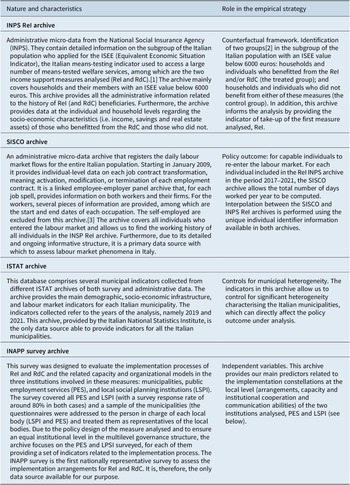
The analysis draws on four distinct data sources to comprehensively gather the extensive information required to address our research hypotheses. These sources include: administrative microdata from the National Social Insurance Agency (INPS); administrative data from the Sistema Informativo Statistico delle Comunicazioni Obbligatorie (SISCO) (Statistical Information System of Mandatory Communications) provided by the Ministry of Labour and Social Policy; the archive of municipal indicators from the Italian National Institute of Statistics (ISTAT); and an innovative dataset from a recent INAPP survey conducted on local social planning institutions (LSPI) and public employment services (PES) responsible for implementing both the ReI and RdC. This survey, conducted using CAWI methodology, covered 80% of LSPI and PES and aimed to investigate how national anti-poverty measures in Italy were implemented at the local level through the welfare network (Ancora and Giuliano, Reference Ancora and Giuliano2022).
Table 1 summarizes these data sources, detailing their nature, characteristics, and relevance to the adopted empirical strategy.
Sources of data used: overview, characteristics, and relation to empirical strategy
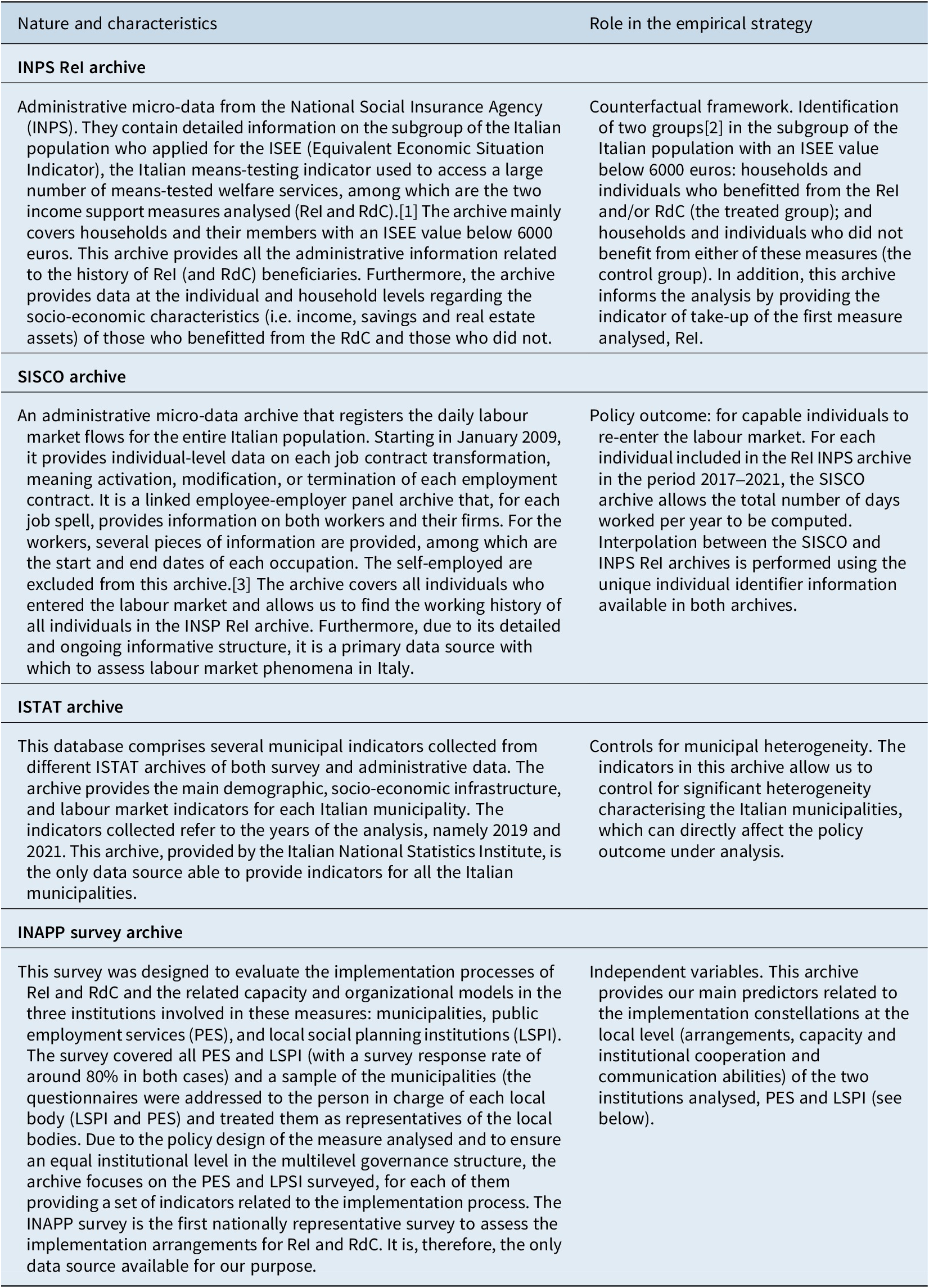
*See the INPS site for more information: https://www.inps.it/it/it/dati-e-bilanci/osservatori-statistici-e-altre-statistiche/dati-cartacei---rdc.html
**The matching procedure between the control and the treatment groups employs the propensity score technique. The propensity score is estimated using separate logistic regression models for each group on the probability of being included in the treatment group according to several covariates (individual level: region of residence, age, family composition, family size, the household equivalized income indicator; temporary employment; employment in a standard occupation; receiving unemployment benefits; presence of retired people in the household, presence of inactive individuals in the household; and presence of minors in the household). For each individual treated, seven controls are identified and ranked in terms of proximity to the treated individual using the radius-caliper technique, assuming a radius threshold of 0.03.
***Furthermore, a small group of workers – maritime personnel – are not included in the archive as their communications take place via a template (unimate) not included in the data extraction. For a complete description, see the publications of the Ministry of Labour (2020, 2021, 2022).
As explained in the following section, the final dataset, which integrates the four data sources presented in Table 1, uses Italian municipalities as the unit of analysis rather than individuals or households. Consequently, data from the INPS, SISCO, and ReI archives are aggregated at the municipal level. Variables from each archive are then merged into a single database using the unique identifiers of the municipalities.
Methodology
Dependent variable and main predictors
This study examines the impact of implementation polity and arrangements on the re-entry of capable individuals into the labour market through Italy’s income support measures. We analyze two key measures, the Reddito di Inclusione (ReI) and the Reddito di Cittadinanza (RdC), over the period 2017–2021. This timeframe allows us to evaluate implementation effects using the pre-ReI year (2017) as a baseline, capturing the transition between the two measures and their long-term outcomes. Within our selected populationFootnote 3, four subgroups are identified: individuals benefiting exclusively from ReI, those benefiting exclusively from RdC, those receiving both measures, and a control group with similar characteristics who did not benefit from either measure.
The dependent variable for this analysis is a proxy for municipal-levelFootnote 4 success in reintegrating individuals into the labour market. Using data from the SISCO archive, we identify individuals who increased their annual working days between 2017 and subsequent years (2019 and 2021). Ratios are calculated for each subgroup and municipality, indicating the proportion of individuals with increased working days. These ratios form the dependent variables, enabling a comparative analysis of implementation effectiveness across different institutional and policy contexts. In other words, the effects of different LSPI and PES implementation polity and arrangements on the reintegration of beneficiaries into the labour market are measured at the municipal level using this proxy.
To address the potential effects of external shocks, including the COVID-19 pandemic, we analyze two timeframes (2017–2019 and 2017–2021). While the pandemic introduced significant disruptions, its impact is treated as a latent and exogenous factor. Recent studies (Ancora and Giuliano, Reference Ancora and Giuliano2022) suggest that the pandemic affected both implementation capacity – especially within Public Employment Services (PES) – and labour market outcomes, exacerbating pre-existing challenges in income support measures. However, our analysis focuses primarily on the role of local implementation processes and institutional cooperation, minimizing the confounding effects of policy design limitations or external crises.
Control variables include municipal characteristics such as size, dependency ratio, foreign population share, educational attainment, and geographic classification (e.g., inner areas). Socioeconomic factors like employment rates, self-employment prevalence, income inequality (Gini index), and income distribution are also considered. Additionally, labour market composition by sector (NACE classifications) and ReI take-up rates are included to account for local economic contexts and policy adoption variations.
The primary predictors for implementation polity and arrangements are categorized into two dimensions: the implementation strength and the capacity of local institutions to build institutional networks at the local level.
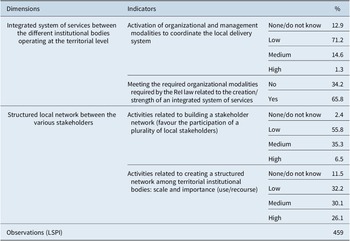
First, implementation strength is measured separately for LSPI and PES. For Local Social Planning Institutions (LSPI), implementation strength is measured using a clustering approach – previously developed in Author (2021) – based on their ability to meet organizational and management requirements under ReI law. These requirements include creating integrated service systems, establishing stakeholder networks, coordinating territorial institutional bodies, and activating organizational modalities for local service delivery (see Table A1b). Based on these criteria, municipalities are classified into three groups: scarce capacity (reference category), medium capacity, and good capacity. For Public Employment Services (PES), implementation capacity is assessed through a categorical indicator measuring the number of essential services adequately activatedFootnote 5 (see Table A1a). These services, defined under ReI law, aim to ensure uniformity in policy implementation across municipalities. The indicator categorizes PES into three levels: fewer than three services provided (reference category), three to five services, and more than five services. This approach highlights the variation in PES performance across territories, reflecting differences in resource allocation, infrastructure, and administrative capacity.
Second, to capture the capacity of LSPI and PES to build institutional networks among themselves we use four predictors assessing the quality of information exchange between these bodies within the same territorial area. The quality of communication and coordination is evaluated separately for ReI and RdC, with categories of poor, moderate, and high quality (reference category: poor quality). These predictors help assess how collaboration and data-sharing practices influence policy outcomes.
Models and sample size
The econometric analysis proceeds as follows. For each reference period (2017–2019 and 2017–2022), a series of regression models (OLS) is conducted. To address potential endogeneity among the covariates and account for varying sample sizes, the first set of models evaluates the effects of municipal infrastructure and socio-economic characteristics on the LSPI and PES capacity to reinsert individuals into the labour market. Subsequently, the models are extended to include the variables related to implementation polity and arrangements presented above.
Combining data from different sources inevitably reduces the sample size. The first set of models, focusing solely on infrastructure and socio-economic characteristics, includes 3,810 municipalities. However, incorporating survey data into the analysis reduces the sample size to 1,588 municipalities. Additionally, the population is divided into five groups to reflect different interactions with the two policy measures under study, leading to variations in group-specific sample sizesFootnote 6. To address these differences, municipality size weights are applied to all descriptive statistics and regression analysesFootnote 7.
Empirical results
Descriptive statistics
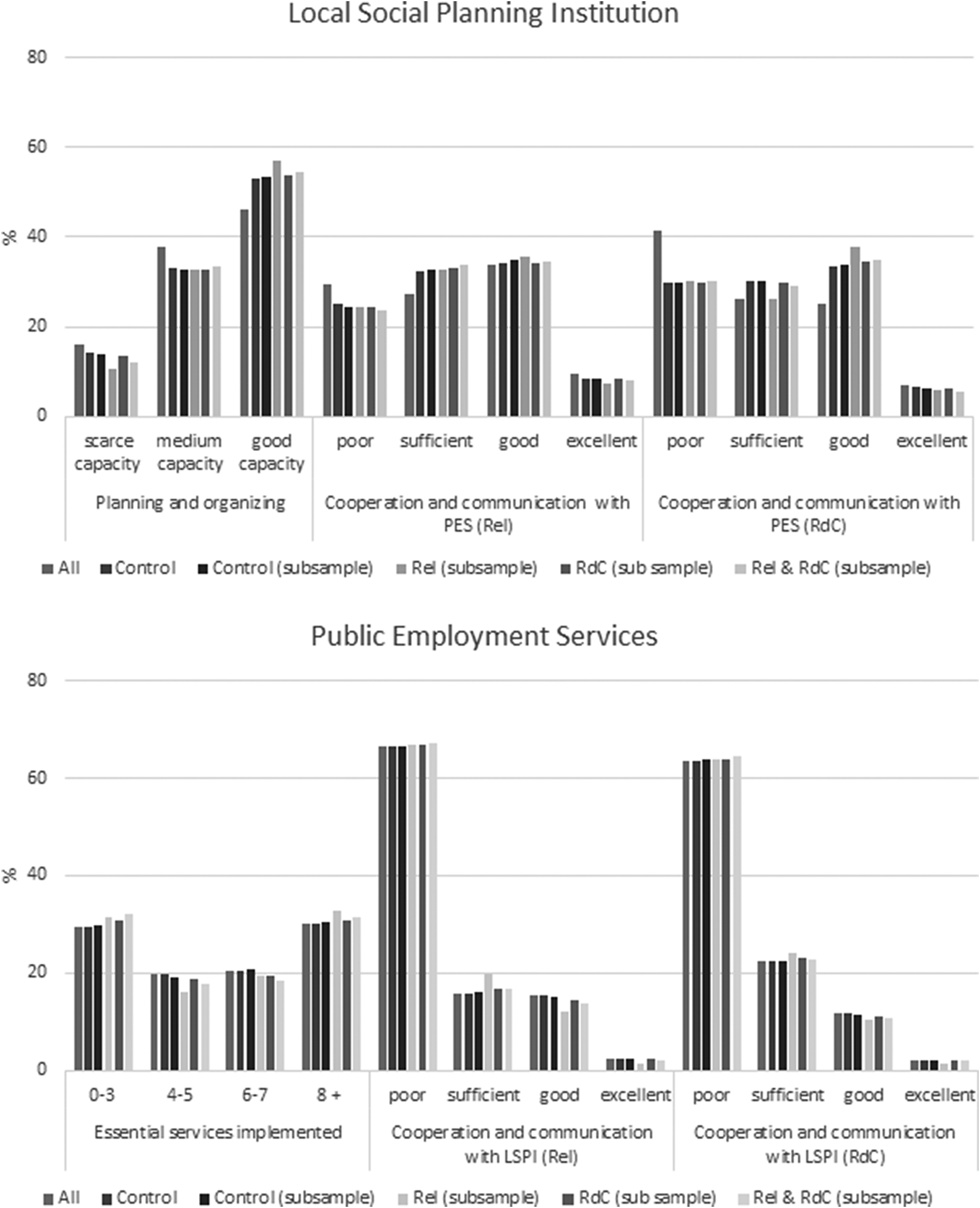
The descriptive statistics indicate that the distribution of indicators concerning the implementation strength planning and organizing and essential services implemented in Figure 1 and capacity to build institutional networks (cooperation and communication in Figure 1) remains stable across the different population subgroups analyzed. This suggests that different implementation models are consistent across the various subgroups (see Table A2 and Figure A1 in the Appendix). However, significant differences emerge between the two institutional bodies examined. LSPI (Local Social Planning Institutions) perform better than PESs (Public Employment Services) regarding implementation arrangements, particularly in terms of institutional cooperation and communication. A significant proportion of LSPI demonstrate medium-to-good implementation capacity. Conversely, more than half of PESs show limited capacity to implement the essential services required.
Distribution of Italian municipalities by the implementation process and institutional cooperation, and communication indicators. Local Social Planning Institutions and Public Employment Services.
Source: authors’ elaboration of INPS, INAPP, ISTAT, and Ministry of Labour and Social Policy data, weighted by municipal size.
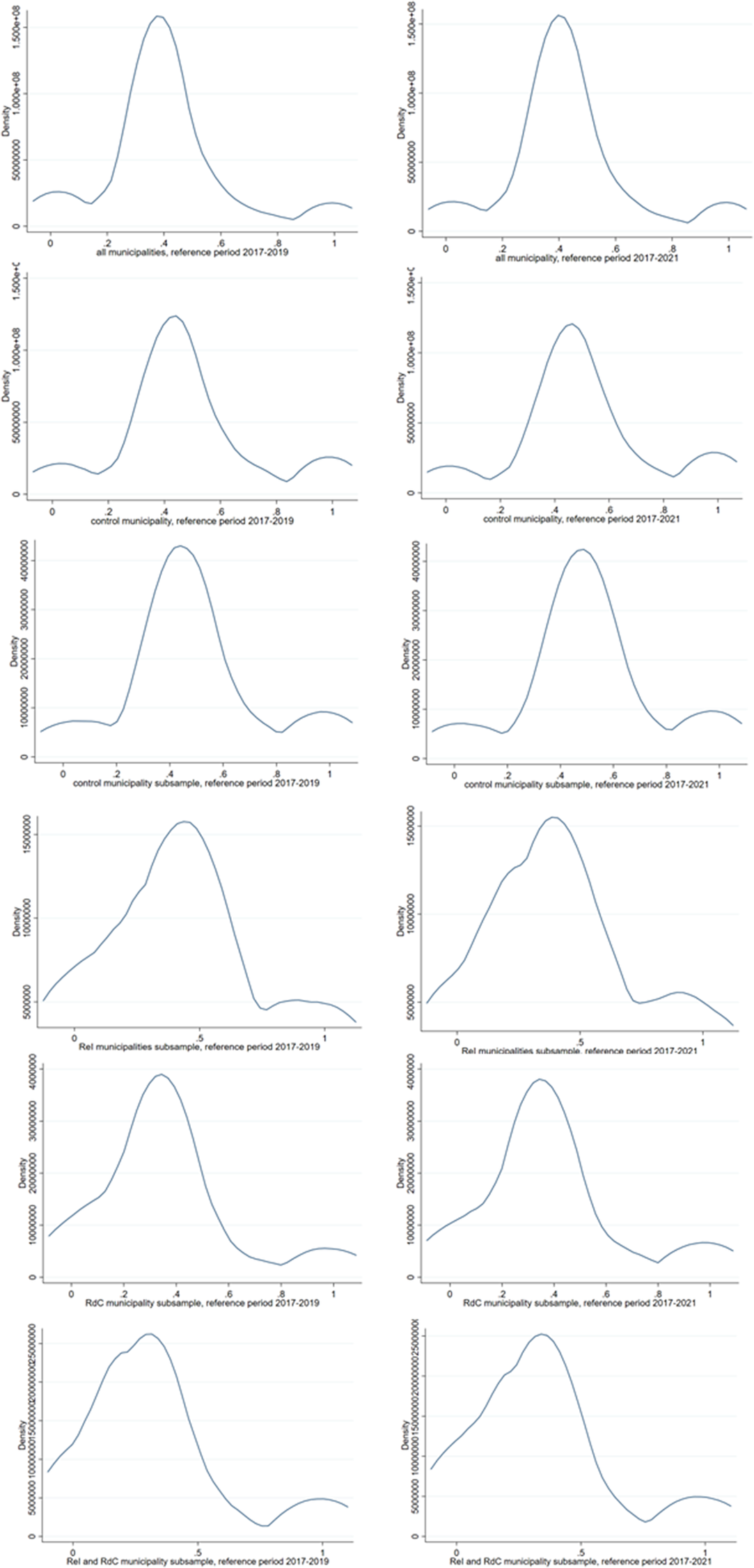
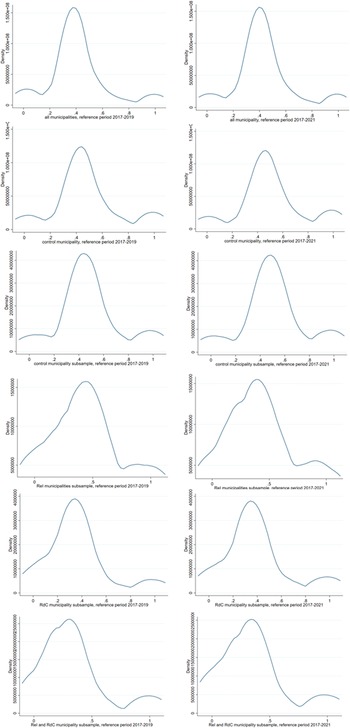
Regarding labour market re-entry for individuals capable of working, the descriptive data reveal a counterintuitive result. Given the greater distance from the labour market of individuals who benefited from the two measures, the treated subgroups exhibit lower performance on average—measured as the increase in the number of annual working days – compared to the control group. This is observed at the municipal level between the reference year and the year analyzed. Figure A1 in the Appendix presents kernel density plots showing the distribution of municipalities based on the dependent variables for the two observed periods (2019 and 2021). The distributions remain relatively constant across all subgroups analyzed during the two periods (2017–2019 and 2017–2021).
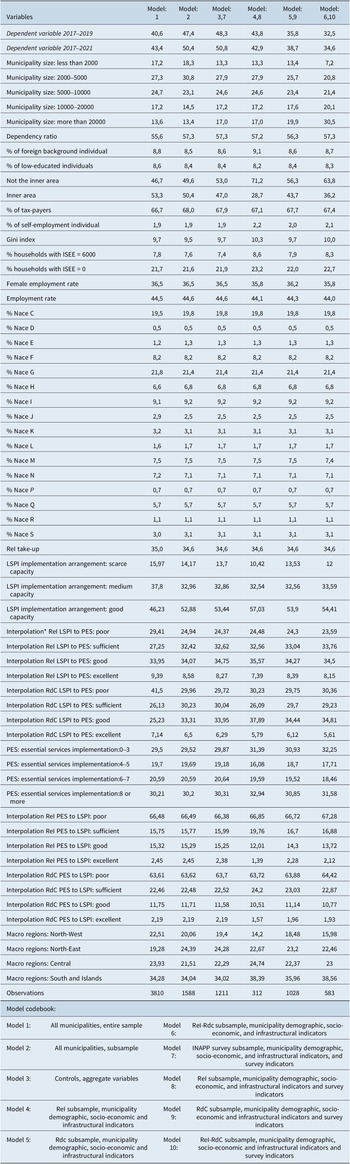
Descriptive statistics (Table A2) show that, at the municipal level, around half of the individuals in the control subgroup increased their annual working days (47.4% to 48.3% from 2017 to 2019; 50.4% to 50.8% from 2017 to 2021). In contrast, these figures are slightly lower across the treated subgroups. Among all municipalities included in the analysis (pooled sample for model 1), the average proportion of individuals increasing their annual working days was 40.6% for 2017–2019 and 43.4% for 2017–2021.
These values are even lower for the subgroup benefiting from both measures (ReI and RdC), with only 32.5% (2017–2019) and 34.6% (2017–2021) showing improvements. As expected, these beneficiaries are more marginalized and further removed from the labour market. This distance is clearly reflected in the data: despite the matching procedure controlling for individual and household labour market proxies, micro-level analysis indicates that control group individuals tend to perform better across several labour market dimensions. Nevertheless, as our primary objective is to assess the effects of different implementation processes at the local level on policy outcomes – rather than evaluating policy outcomes themselves – we consider our data and empirical strategy suitable for this aim.
Figure 1 illustrates the distribution of Italian municipalities based on LSPI and PES implementation processes for the two measures (ReI and RdC).Footnote 8
Three indicators assess LSPI performance (upper quadrant), and three others evaluate PES performance. For LSPI, more than 50% of municipalities across all groups demonstrate good implementation strength, with the exception of the overall group, where this share falls to 46.3%. Evaluations of LSPI institutional cooperation and communication abilities with PESs are similarly consistent, with 33% to 35% of municipalities rating this factor as good for ReI beneficiaries, while excellent evaluations range between 7% and 9%. A similar trend is observed for RdC beneficiaries. Overall, LSPI receives positive evaluations, with only 15% of municipalities reporting low implementation capacity and around one-third rating institutional cooperation and communication abilities with PESs as poor.
In contrast, PESs encounter substantial challenges concerning implementation strength and their capacity to build an institutional network‥ Among all groups analysed, 29% to 32% of municipalities are associated with PESs implementing fewer than three essential services required by the Ministry of Labour and Social Policy. Meanwhile, 30% to 32% of municipalities are linked to well-performing PESs capable of providing more than eight essential services. The disparity with LSPI arises from lower evaluations of PESs’ institutional cooperation and communication abilities. Over 80% of municipalities rate PES cooperation with LSPI for ReI beneficiaries as sufficient or poor, a figure that rises to over 86% for RdC beneficiaries. Overall, PES evaluations indicate relatively poor implementation capacity, with few municipalities associated with PESs demonstrating effective cooperation with LSPI or ensuring adequate service levels.
Empirical analysis
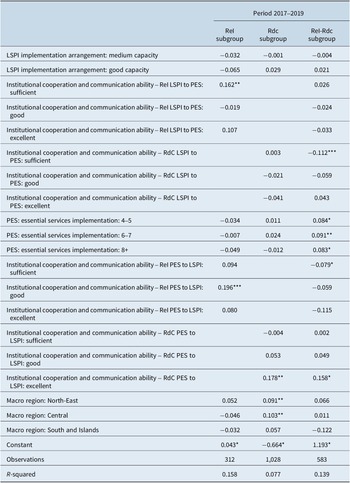
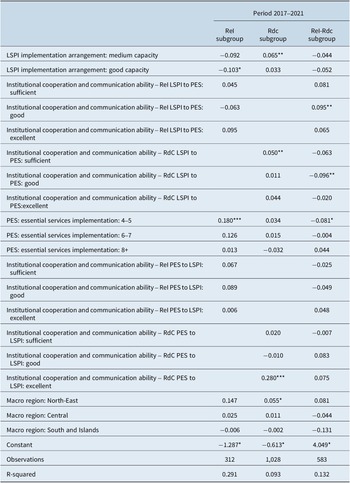
Tables A3 and A4 in the Appendix present the results of linear regression models for the two reference periods analysed: 2017–2019 and 2017–2021. Initially, reduced models were estimated, including only aggregated territorial characteristics for all groups analysed (models 1 to 6). Subsequently, information on the implementation arrangements of PES and LSPI was incorporated (models 7–10). To improve readability, Tables 2 and 3 summarize the regression outputs for the three subgroups of treated individuals, namely ReI beneficiaries, RdC beneficiaries, and ReI-RdC beneficiaries. Given that demographic, socio-economic, and infrastructure indicators at the municipal level remain stable across models, these tables focus solely on the results related to our main predictors: implementation strength and the capacity for institutional networking between the two local bodies consideredFootnote 9.
Changes in numbers of working days between 2017 and 2019 for selected subgroups: municipality determinants. Linear regression models
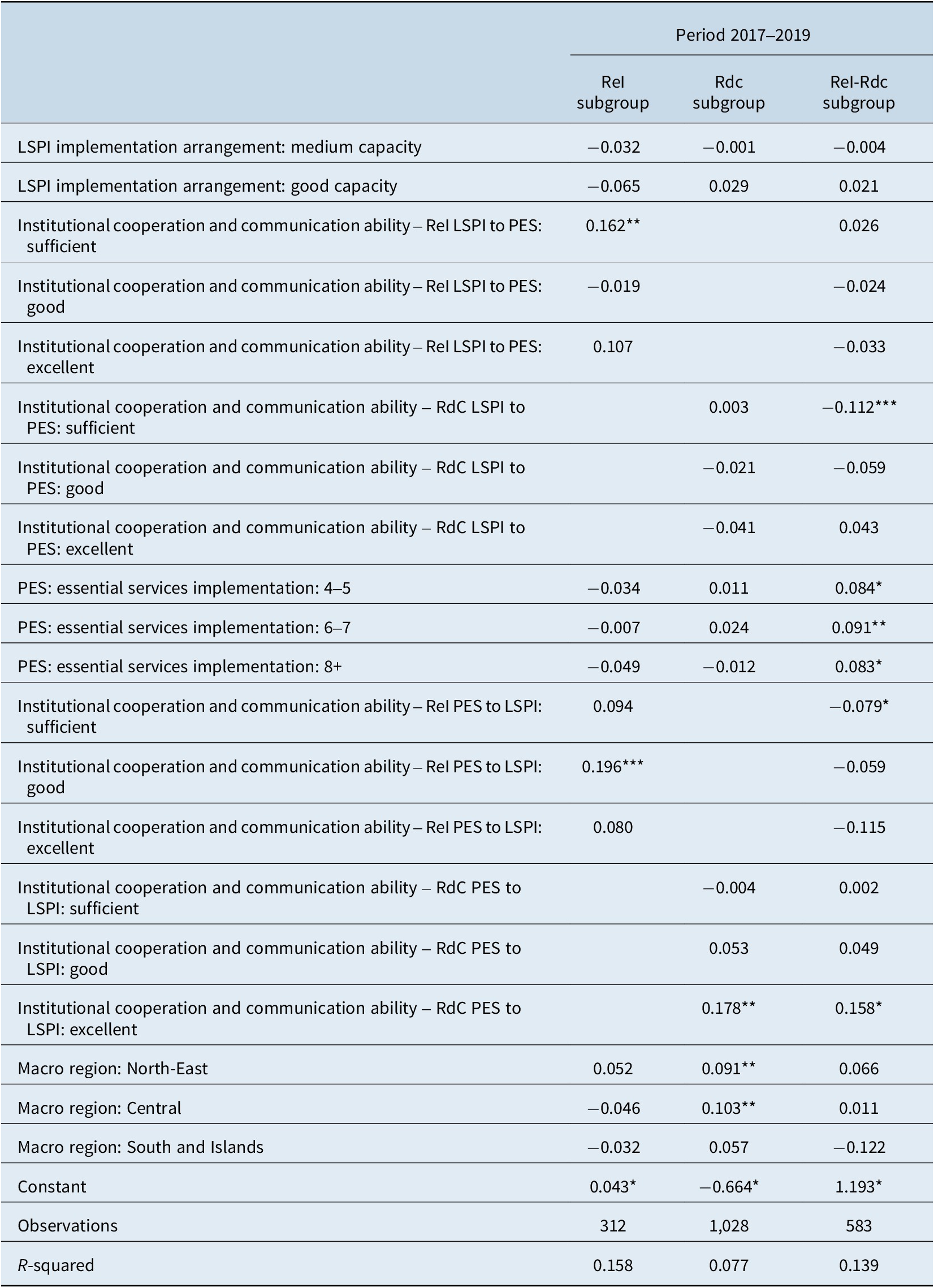
Source: author elaboration of INPS, INAPP, ISTAT and Ministry of Labour and Social Policy data weighted by municipal size. *** p < 0.01, ** p < 0.05, * p < 0.1.
Note: Full models are reported in Table A3 in the Appendix.
Changes in numbers of working days between 2017 and 2021 for selected subgroups: municipality determinants. Linear regression models
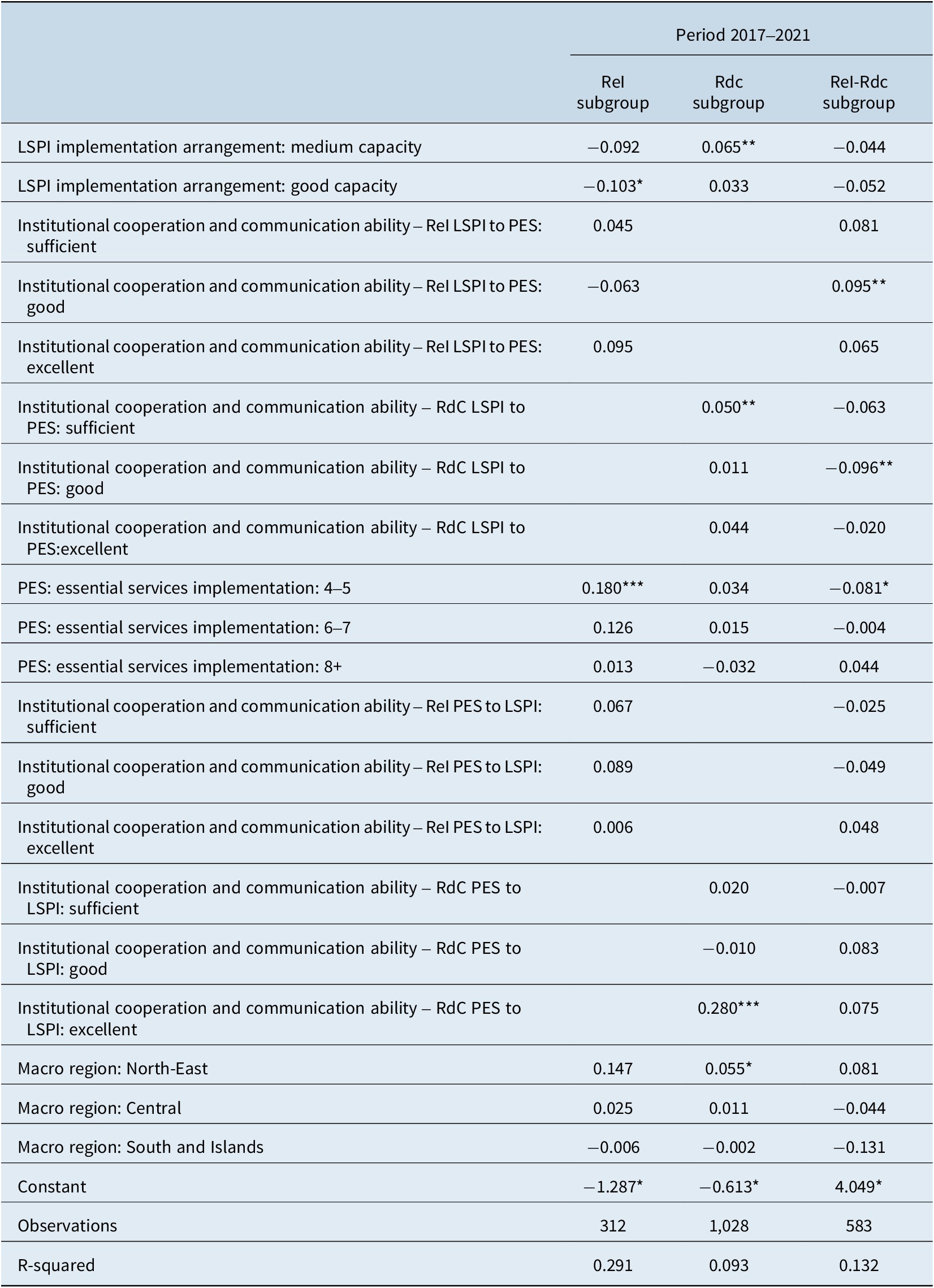
Source: author elaboration of INPS, INAPP, ISTAT and Ministry of Labour and Social Policy data weighted by municipal size. *** p < 0.01, ** p < 0.05, * p < 0.1.
Note: Full models are reported in Table A4 in the Appendix.
While it is not possible to identify a general positive effect of high-quality implementation processes (implementation strength and capacity for institutional networking) on the reintegration of individuals into the labour market at the municipal level, some notable findings emerge. Public Employment Services (PES) that effectively activate the essential services required by law and/or demonstrate excellent institutional cooperation and communication with LSPI show significant positive effects on policy outcomes. These results are particularly noteworthy given that PES bodies are primarily responsible for the policy outcome analysed here. In other words, the mission of PES aligns with the policy goal of reintegrating individuals into the labour market, which was the primary objective of the RdC measures. Moreover, although the descriptive analyses indicate only limited differences in implementation models across population subgroups, the empirical findings confirm the relevance of implementation polity.
For PES, results indicate a clear link between implementation strength, institutional networking and policy efficiency. Conversely, LSPI results only partially support this reasoning, though they highlight the positive effects of institutional cooperation and communication and the ability to establish an integrated system of services at the territorial level (implementation strength). These latter findings are noteworthy, considering that LSPI mission is not primarily aligned with achieving labour market re-entry outcomes, as their mission is more focused on beneficiaries’ social inclusion. However, these results suggest, particularly in light of the integrated nature of the measures’ policy design at the local level, an interesting element for policymakers that supports the importance of an integrated approach for the implementation of social policies at the local level.
In summary, the results indicate that implementation polity significantly impacts outcomes, with exemplary implementation delivering better results. Moreover, the findings suggest that within a horizontal multilevel governance framework, efficient cooperation among local authorities operating within the same territory can generate positive spillover effects, transcending the specific missions of individual institutions.
Given the marginalized characteristics of the population studied, aggregate territorial features show limited explanatory power in predicting labour market reintegration. Furthermore, the nature of our dependent variables – focused on increases in working intensity rather than employment rates –reduces the explanatory utility of aggregated indicators. This approach, however, allows us to better evaluate the territorial-level effects of implementation processes on policy outcomes. Despite this limitation, certain results align with expectations and the literature. For instance, a high prevalence of income-poor households (ISEE = 0) is consistently associated with negative effects on the dependent variables across both reference periods. Similar patterns are observed for the share of self-employed individuals, the percentage of poorly educated individuals, the dependency ratio, and the proportion of foreign-born residents at the municipal level, particularly over the longer time span (2017–2021). Additionally, in the same period, municipalities with higher shares of workers in arts, entertainment, and recreation (R) and other service activities (S) sectors show negative effects on the dependent variables (see Tables A2 and A3 in the Appendix for detailed results).
Regarding LSPI indicators, results from the 2017 to 2019 period suggest that their implementation polity does not significantly influence increases in working days for either treated or control groups at the territorial level. Similarly, indicators of institutional cooperation and communication abilities for the same period show mixed results, with a few statistically significant coefficients related to sufficient-quality cooperation. However, over the longer period (2017–2021), the quality of LSPI institutional cooperation and communication begins to impact outcomes. Municipalities with LSPI positively evaluating their cooperation and communication abilities under the ReI measure exhibit positive effects on the dependent variable for both the ReI (excellent category) and ReI-RdC (good category) groups. However, this trend does not extend to RdC-specific cooperation, where good-quality cooperation is associated with adverse effects on the ReI-RdC group. A robustness check, substituting the LSPI implementation arrangements indicator with the original variables used to derive the clusters (see Table A1b in the Appendix), reveals an interesting finding. Specifically, the ability of LSPI programming acts to enhance an integrated social services system significantly affects outcomes for the group of ReI and RdC beneficiaries in both reference periods. This result further underscores the importance of an integrated approach involving public, private, and nonprofit stakeholders in achieving more efficient policy implementation with positive spillover effects.
For PES, the findings reveal a different picture. In the short term, their capacity to provide essential services mandated by law is directly linked to policy outcomes, particularly for the most marginalized beneficiaries (ReI and RdC). Compared to municipalities with PESs implementing fewer than three essential services, those with better-performing PESs are more effective in increasing the number of working days for treated individuals. Additionally, high-quality institutional cooperation and communication (rated good under ReI and excellent under RdC) are positively associated with labour market reintegration. For instance, in the 2017–2019 period, PESs with positively evaluated cooperation under the ReI measure demonstrated a 19-percentage-point improvement in the ratio of individuals increasing their working days compared to those in poorly rated areas. This result is replicated for the RdC and ReI-RdC groups, confirming the importance of networking in institutional building. In the 2017–2021 period, municipalities with PESs rating their cooperation and communication abilities under the RdC measure as excellent showed an approximately 28-percentage-point increase in the dependent variable compared to poorly rated areas.
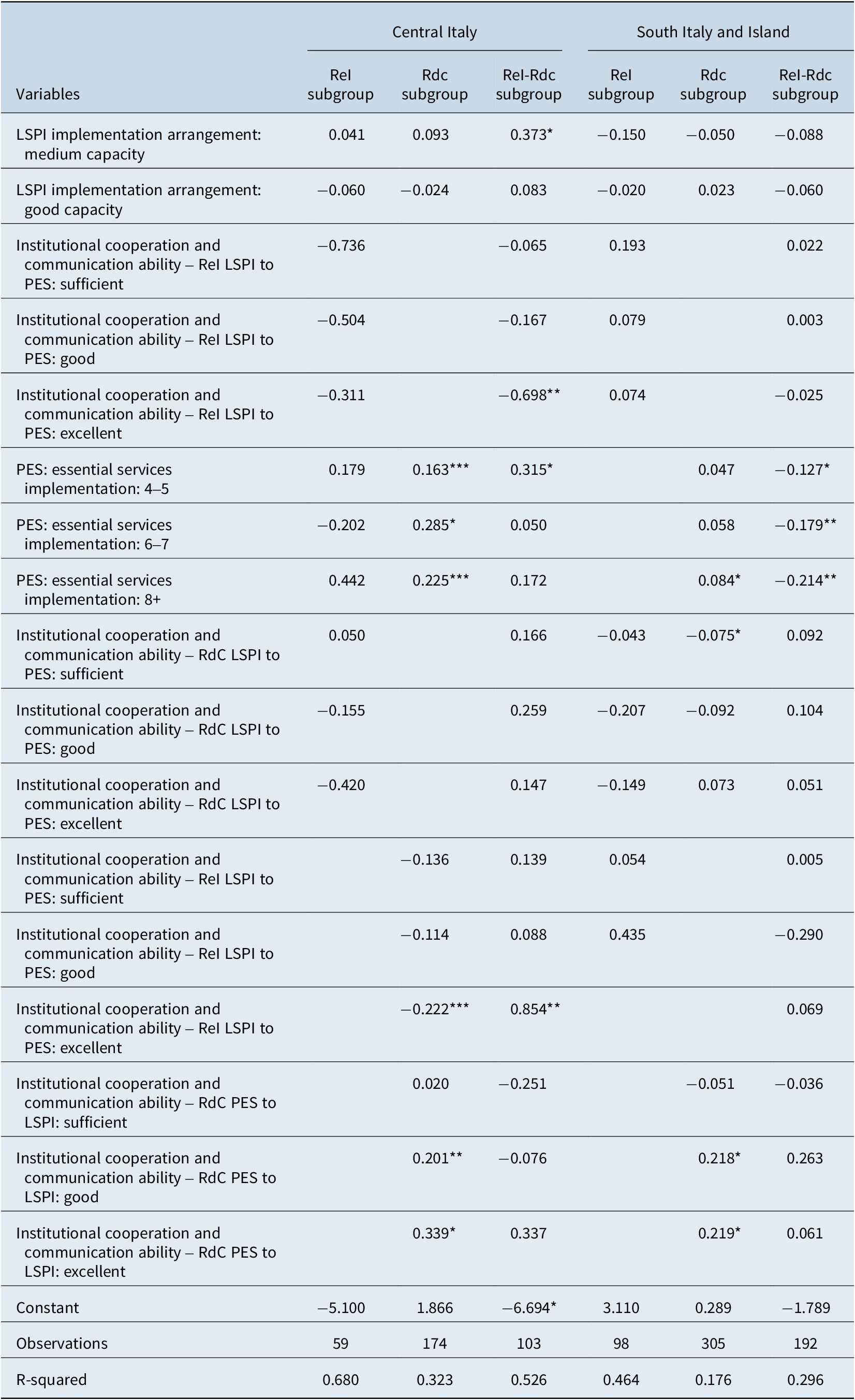
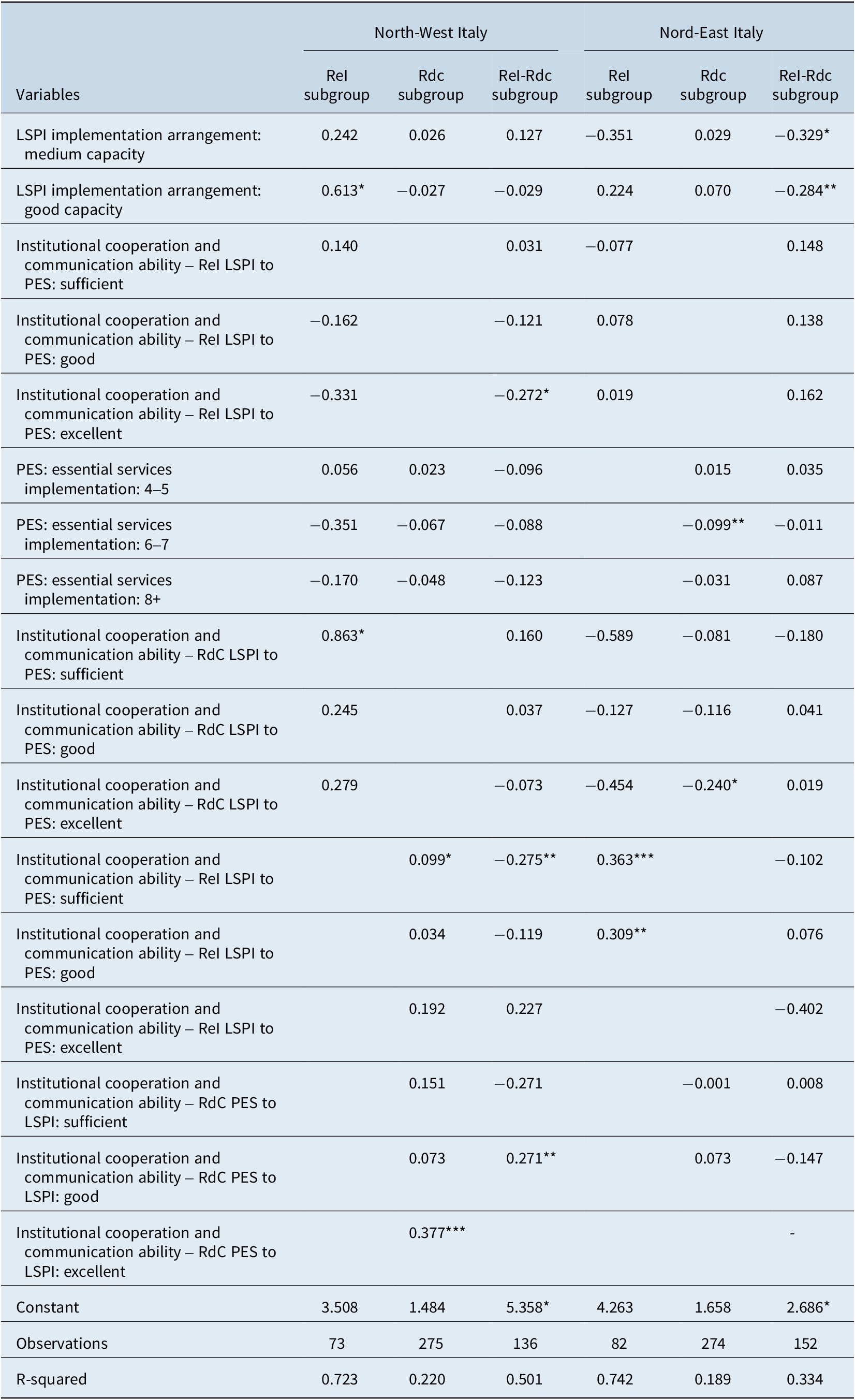
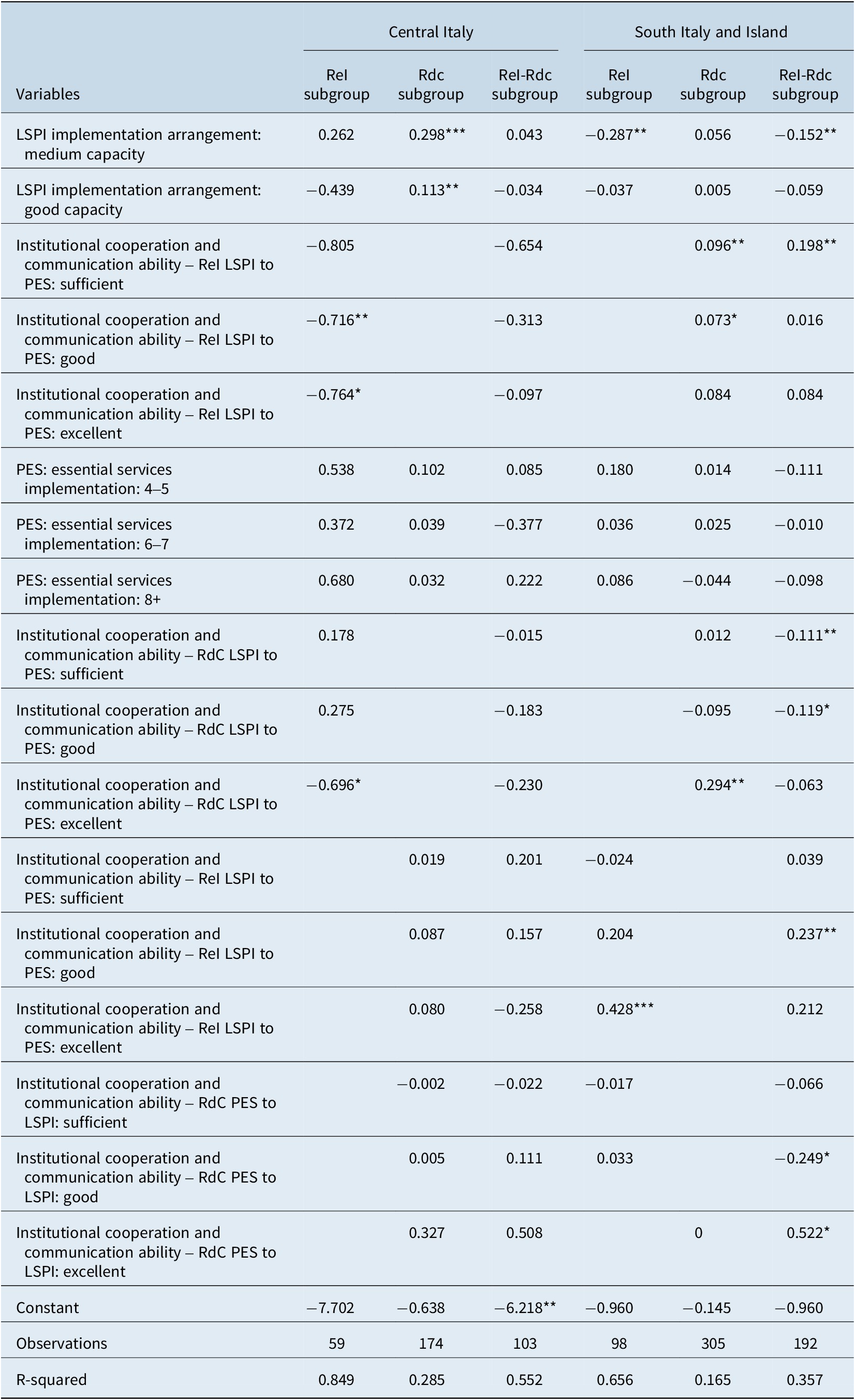
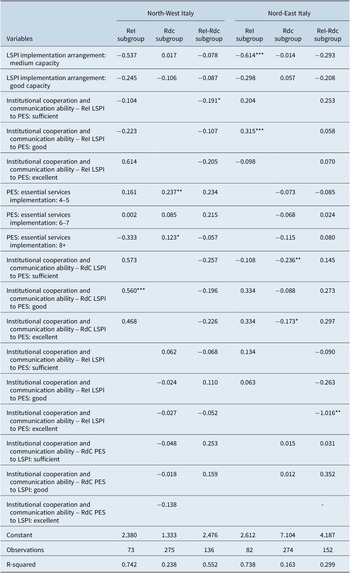
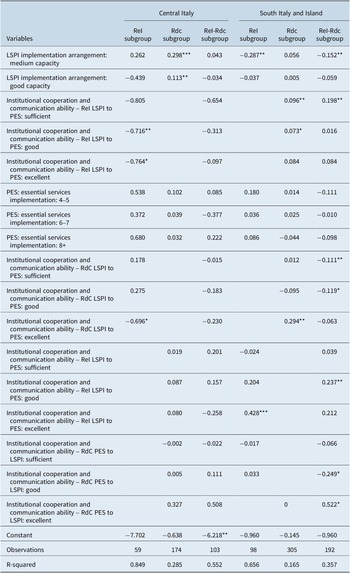
To account for the high degree of heterogeneity across Italian territories, Tables A5a, A5b, A6a, and A6b in the Appendix present the results of the main models replicated for macro-territorial areas as a robustness checkFootnote 10.
The findings confirm the role of implementation polity in achieving the observed outcomes for PES, particularly regarding implementation strength in the north-west and central regions of Italy during the 2017–2019 period. Furthermore, the significance of institutional networking is validated across all regions and both periods analysed, with the only adverse effects observed in the north-east.
Conversely, the implementation strength of LSPI appears to play an additive role in achieving the policy goals, especially in the central regions and, to a lesser extent, in the north-west. In contrast, in the north-east as well as in the south and islands, negative effects are associated with this dimension. Moreover, the south and islands deviate from the national pattern, as during the 2017–2019 period, adverse effects are also observed in relation to PES implementation strength. This latter finding indirectly confirms the considerable heterogeneity among Italian regions, particularly in the South, and highlights the need for further in-depth analysis of regional effects.
In summary, these findings underscore the critical role of PES in supporting labour market reintegration for income support beneficiaries, and confirm the importance of aligning the missions of local institutions with the overarching policy goals.
Notably, implementation polity and arrangements, in all three dimensions considered, emerge as key drivers of efficient policy outcomes.
Conclusions
The effectiveness of public investment in combating poverty is intricately linked to the capacity of institutional systems to implement policies effectively. In the Italian case, the dual nature of minimum income measures – offering economic support while fostering social and labour market reintegration – operates within a complex multilevel governance framework characterized by significant regional heterogeneity and frequent policy shifts (Busilacchi and Fabbri, Reference Busilacchi and Fabbri2024; D’Emilione and Giuliano, Reference D’Emilione and Giuliano2022). These structural challenges make the implementation phase a decisive battleground where policy success or failure is ultimately determined, as emphasized by Lipsky’s (Reference Lipsky1980) seminal work on the discretion of street-level bureaucrats and by Pressman and Wildavsky’s (Reference Pressman and Wildavsky1973) exploration of the intricacies of local-level interactions.
By leveraging a rich combination of administrative data and findings from a recent INAPP survey specifically designed to evaluate the implementation of Italy’s minimum income schemes (Reddito di Inclusione and Reddito di Cittadinanza), this study has sought to address gaps in the literature by exploring how implementation polity and arrangements affect policy outcomes.
Using a counterfactual framework, we analyzed Italy’s minimum income policies over the period 2017–2021, focusing on the capacity of local institutions to achieve labour market reintegration for marginalized beneficiaries. By integrating data on institutional capacity, cooperation, and communication between two primary implementing bodies – Public Employment Services (PES) and Local Social Planning Institutions (LSPI) – our analysis provides a nuanced understanding of the drivers behind policy success or failure.
Our findings demonstrate that the quality of implementation at the local level is a decisive factor in bridging the gap between policy design and policy outcomes, echoing the arguments of Mazmanian and Sabatier (Reference Mazmanian and Sabatier1989) on the importance of clarity, resources, and institutional commitment.
The analysis reveals that public employment services (PES) play a central role in achieving the labour market objectives of income support measures. Municipalities where PES demonstrated high implementation strength – measured by the activation of essential services mandated by law – achieved significantly better outcomes in terms of labour market reintegration. This finding supports Steinebach’s (Reference Steinebach2022) emphasis on the importance of well-equipped delivery systems and underscores the necessity of addressing territorial disparities in institutional resources. By contrast, the broader implementation capacity of Local Social Planning Institutions (LSPI) showed limited direct effects on labour market outcomes, confirming the minor alignment of the institution with the policy goal analysed. However, when LSPI actively engaged in fostering integrated service systems at the territorial level, their efforts contributed positively, reflecting the value of multidisciplinary approaches and collaboration among diverse stakeholders, as highlighted by Kazepov and Cefalo (Reference Kazepov, Cefalo, Kazepov, Cucca and Barberis2022). In this regard, it is essential to consider that the policy design of both Rei and RdC envisions an integration of LSPI and PES activities to define the beneficiaries’ paths.
Perhaps the most striking finding of the study is the pivotal role of horizontal institutional cooperation and communication between PES and LSPI. The quality of information exchange between these bodies emerged as the most significant determinant of policy success. High-quality institutional communication facilitated the alignment of social services and employment-related interventions, allowing institutions to better address the multidimensional nature of poverty and to coordinate efforts for the socio-economic reintegration of beneficiaries. This cooperation allowed for a more comprehensive understanding of beneficiaries’ needs, strengthening the capacity of local systems to address the socio-economic reintegration of disadvantaged families effectively.
This study contributes to filling several gaps identified by Sager and Gofen (Reference Sager and Gofen2022), particularly the need for more research on horizontal cooperation in multilevel governance systems. Institutional networking has critical implications for policymakers. Strengthening institutional cooperation and communication should be a top priority, particularly in policies targeting highly disadvantaged populations. Investments in technical and relational tools, such as digital platforms for information sharing, joint training programs, and formal communication protocols, can enhance the capacity of local systems to deliver integrated and effective services. Additionally, addressing the territorial disparities in PES performance through targeted resource allocation and capacity-building initiatives is essential to ensuring equity and consistency in policy implementation. In conclusion, this paper provides evidence that the design of implementation arrangements significantly affects the success of income support policies. By addressing gaps in the literature and offering insights into the drivers of policy outcomes, our findings contribute to the broader understanding of multilevel governance in social policy. As Pressman and Wildavsky (Reference Pressman and Wildavsky1973) aptly noted, implementation is the bridge between goals and outcomes – a bridge that must be robust, adaptive, and well-coordinated to ensure that policies truly make a difference in the lives of the most vulnerable. For Italy and other countries grappling with similar challenges, the lessons from this study underline the need for sustained investment in institutional capacity, collaboration, and a governance framework capable of delivering equitable and effective results.
Appendix
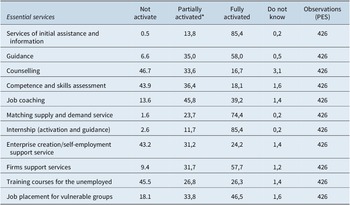
Degree of activation of the PES services recognised as essential levels by the Ministry of Labour and Social Policy in relation to ReI and RdC implementation, year 2021 (%)
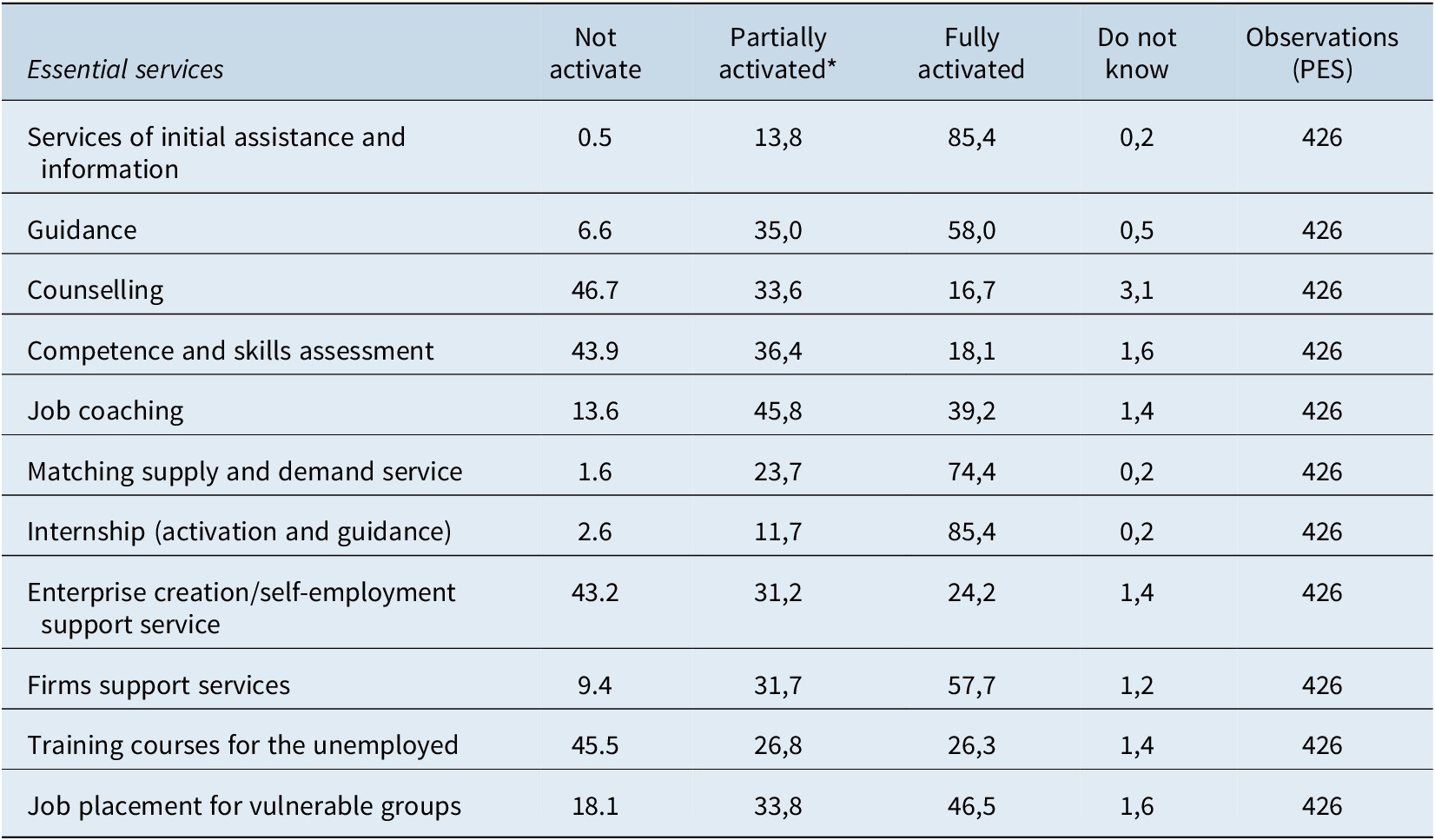
Source: authors’ elaboration of INAPP data, weighted used.
Degree of activation for the LPSI of the integrated management of the activities both within and between local institutional bodies in relation to ReI and RdC implementation, year 2021 (%)
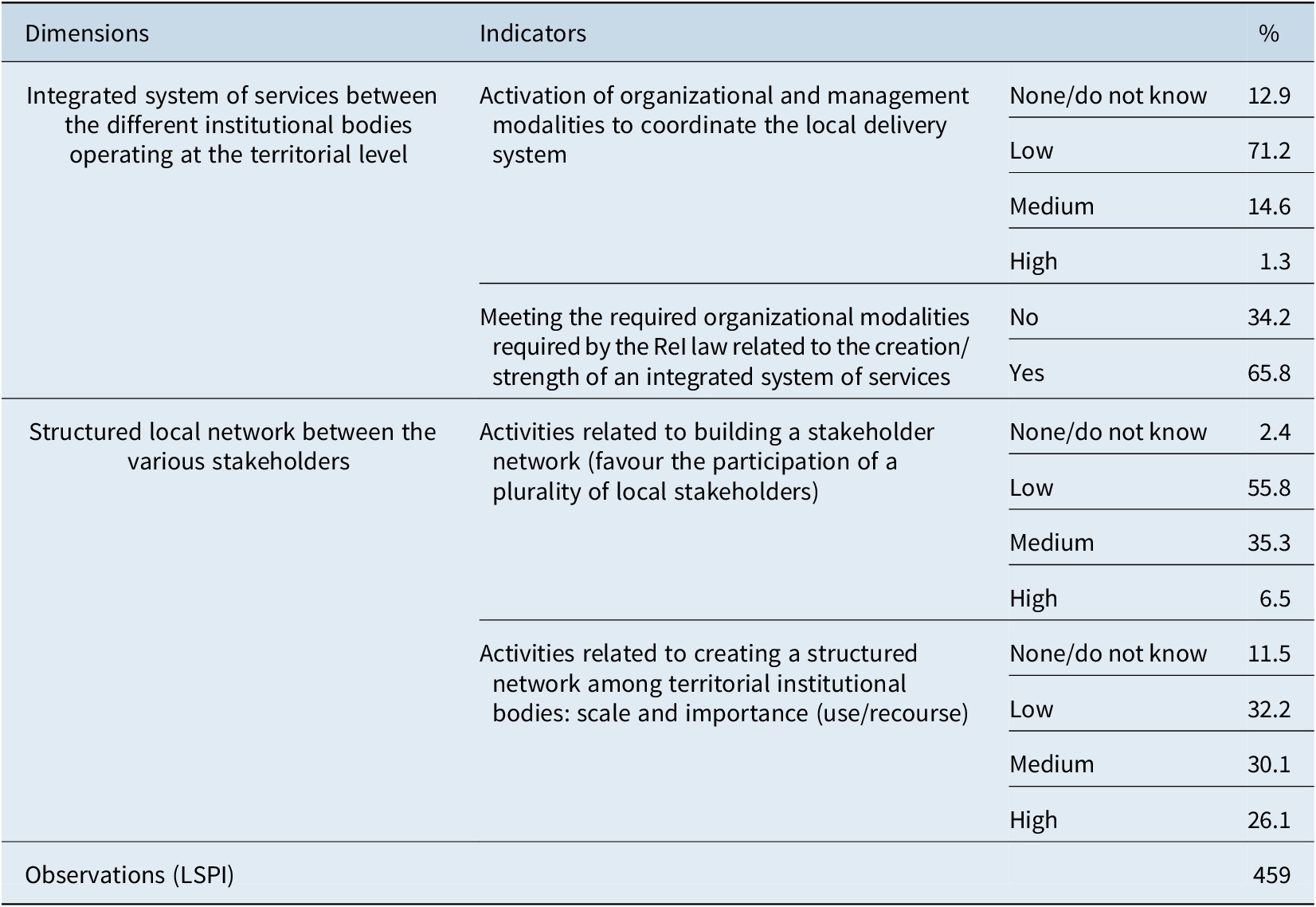
Source: authors’ elaboration of INAPP data, weighted used.
Descriptive statistics of variables included in the models (%)
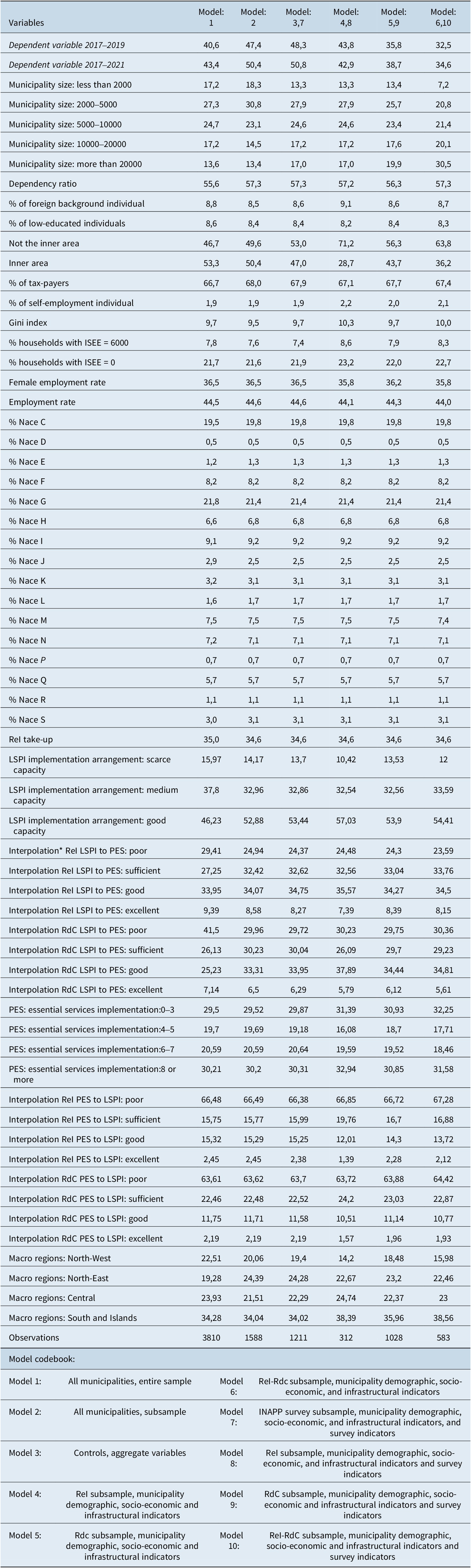
Source: author elaboration on INPS, INAPP, ISTAT and Ministry of Labour and Social Policy data. Municipal size weight used. *: the terms interpolation refers to the Institutional cooperation and communication ability.
Incrementing working days between 2017 and 2019 of a selected population: municipalities determinants. Linear regression models

Source: author elaboration on INPS, INAPP, ISTAT and Ministry of Labour and Social Policy data. Note *** p < 0.01, ** p < 0.05, * p < 0.1, Municipal size weight used. *: the terms interpolation refers to the Institutional cooperation and communication ability.
Incrementing working days between 2017 and 2021 of a selected population: municipalities determinants. Linear regression models

Source: author elaboration on INPS, INAPP, ISTAT and Ministry of Labour and Social Policy data. Note *** p < 0.01, ** p < 0.05, * p < 0.1, Municipal size weight used. *: the terms interpolation refers to the Institutional cooperation and communication ability.
Incrementing working days between 2017 and 2019 of a selected population: municipalities determinants. Linear regression models. North-West Italy and North-East Italy are main predictors
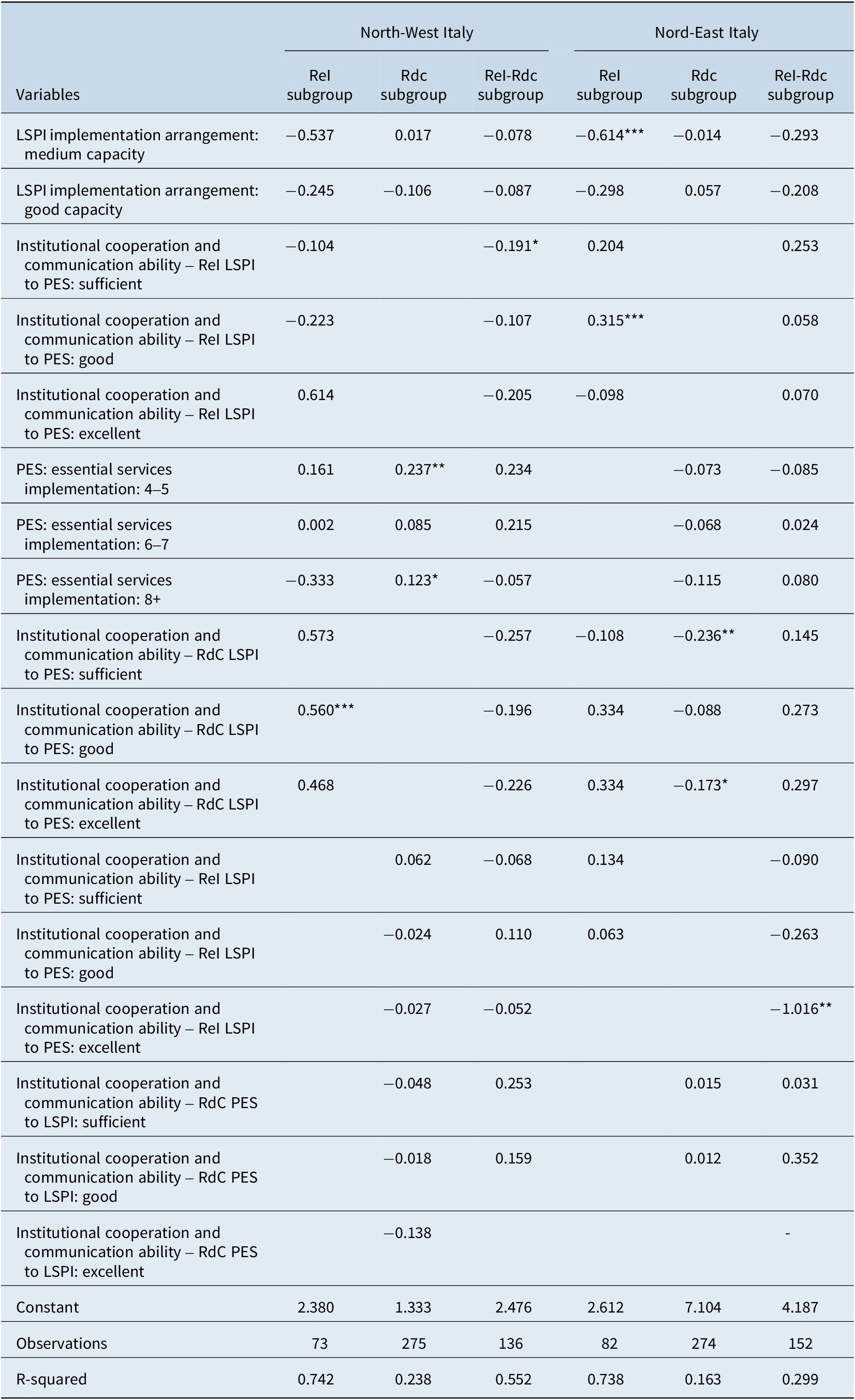
Source: author elaboration on INPS, INAPP, ISTAT and Ministry of Labour and Social Policy data. Note *** p < 0.01, ** p < 0.05, * p < 0.1, Municipal size weight used.
Incrementing working days between 2017 and 2019 of a selected population: municipalities determinants. Linear regression models. Central Italy and South Italy and Island, main predictors
Source: author elaboration on INPS, INAPP, ISTAT and Ministry of Labour and Social Policy data. Note *** p < 0.01, ** p < 0.05, * p < 0.1, Municipal size weight used.
Incrementing working days between 2017 and 2021 of a selected population: municipalities determinants. Linear regression models. North-West Italy and North-East Italy are main predictors
Source: Author elaboration on INPS, INAPP, ISTAT and Ministry of Labour and Social Policy data. Note *** p < 0.01, ** p < 0.05, * p < 0.1, Municipal size weight used.
Incrementing working days between 2017 and 2021 of a selected population: municipalities’ determinants. Linear regression models. Central Italy and South Italy and Island are main predictors
Source: author elaboration on INPS, INAPP, ISTAT and Ministry of Labour and Social Policy data. Note *** p < 0.01, ** p < 0.05, * p < 0.1, Municipal size weight used.
Distribution of municipalities in relation to municipalities’s ability to activate individuals in the labour market (proxy) between 2017–2019 (right) and 2017–2021(left) by identified groups.
Source: author elaboration on INPS, INAPP, ISTAT, and Ministry of Labour and Social Policy data. Municipal size weight used.






 Open access

