




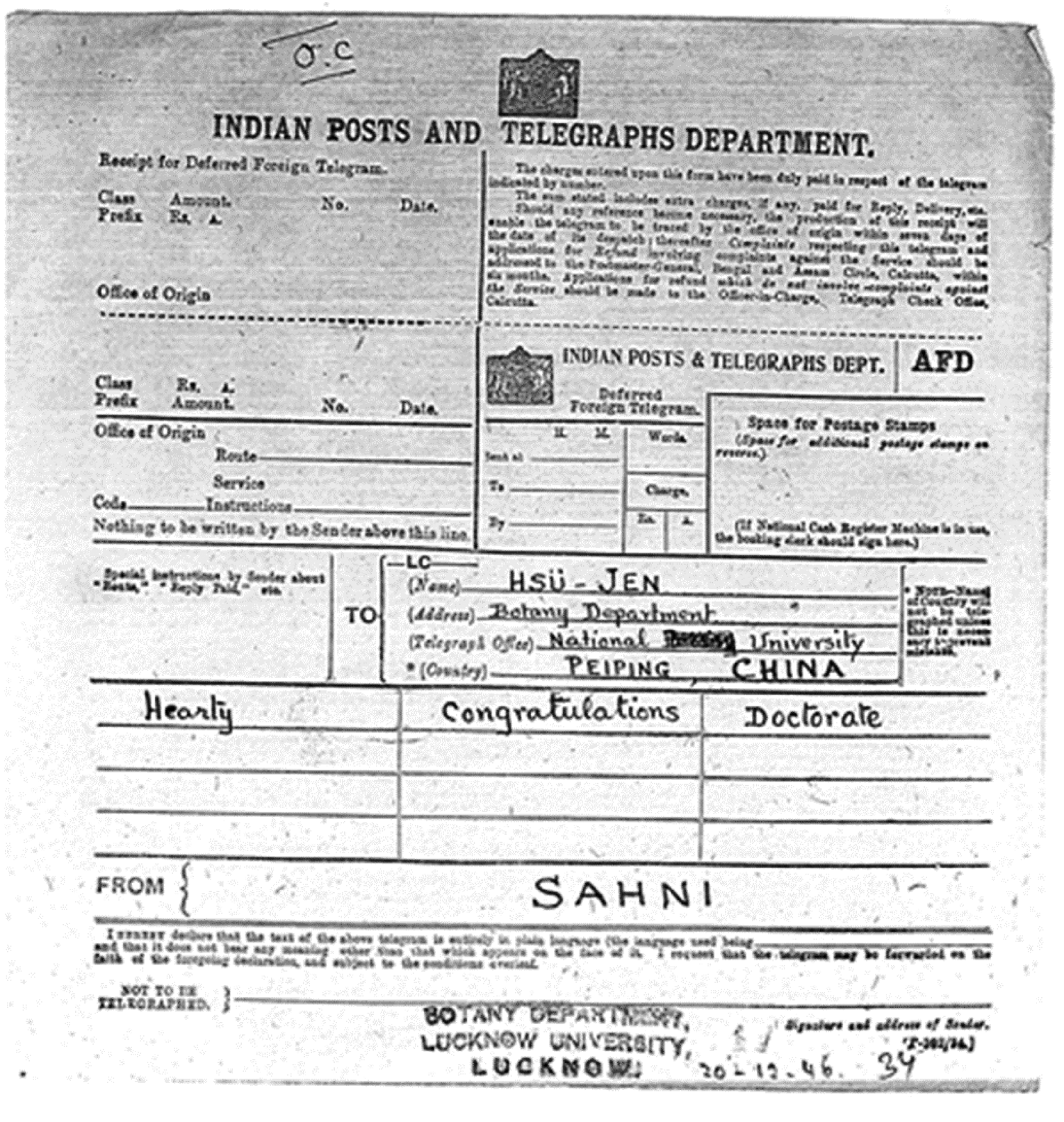
In the history of a medium known for its brevity, Birbal Sahni's (1891–1949) telegram to Hsü Jen (Xu Ren 徐仁; 1910–1992) likely ranks amongst the tersest. Sent on December 20, 1946, its three words – “Hearty Congratulations Doctorate” – meant the world to both sender and recipient.Footnote 1 (Fig. 1) Sahni was among the world's foremost paleobotanists. He had sent these words to his student Hsü, who had recently returned to Beiping (present-day Beijing) after spending two and a half years studying in Sahni's lab at Lucknow University. Hsü thus became, quite possibly, the first Chinese scientist to earn a PhD from an Indian university.Footnote 2 Within two years, Sahni enticed Hsü back to Lucknow. Appointed a professor and museum curator at Sahni's newly established Institute of Palaeobotany – the first of its kind anywhere in the world – Hsü brought with him specimens of fossilized plant life that he had collected in China. Sahni's tragic passing within a week of laying the foundation stone for the Institute's new building in April 1949 left the fledgling institution in a precarious position. Hsü was among the group of young scientists who provided stability and leadership through this difficult phase, even representing the Institute at gatherings abroad. After four years in Lucknow, Hsü returned to Beijing, where he helped set up the Institute of Botany at the Chinese Academy of Sciences and carved out a distinguished career.
Original Copy of Sahni's Congratulatory Telegram to Hsü Ren. Source: BSP #164, Corr. Hsu, Jen, 34.
This paper reconstructs Sahni and Hsü's collaboration and uncovers the motivations that drove them. In so doing it offers alternate histories of twentieth-century China and India, which have long been mired in a civilization/realpolitik binary (Duara Reference Duara and Pande2010). As a result, the majority of existing scholarship gravitates toward one of two poles: cultural and intellectual history or foreign policy and geopolitics.Footnote 3 A history such as this one, centered on the inter-Asian circulation of experts, scientific knowledge, and materials, also helps decenter Europe and the United States in global histories of science. Barring notable exceptions, histories of the science of China and India, are written either within primarily national contextsFootnote 4 or are framed with the West (also Japan, in the case of China) as points of contact and comparison. And yet, as the case of Sahni and Hsü suggests, such a ‘standard model’ paints a clearly incomplete and insufficient picture of mid-century science.Footnote 5
In addition to networks of scientists, the Sahni- Hsü story is also about the circulation of palaeobotanic specimens. Hsü and Sahni were avid trekkers and exchanged specimens of plant fossils collected in their native lands. Following these samples allows us to map a second set of circulations and connections (Star and Griesemer Reference Star and Griesemer1989). By studying these samples, which demonstrated variations in geology and plant life north and south of the Himalayas, Hsü and Sahni's were exploring an enduring problem within the discipline of geology: the validity of the then-still-controversial theory of Continental Drift. This interest in a primordial land yet to be carved up by human hands points to the alternate spatial and geographic imaginaries that exist in synchronous tension with the political realities of empires, colonies, nation states, and the world at war.
We are also at a time when historians are recognizing anew the importance of inter-Asian connections and comparisons from a variety of perspectives (Duara Reference Duara2015; Harper and Amrith Reference Harper and Amrith2012; Ho Reference Ho2017; Liu Reference Liu2020, and Tagliocozzo et al. 2015). The ambition is to generate new theoretical frameworks through which to understand history, a task all the more urgent in a century when the center of geo-economic and geopolitical gravity continues to drift toward Asia.Footnote 6 In that spirit, Sahni and Hsü's story offers new ways to think about Pan-Asianism. A focus on scientists and their activities provides an instance where the practice of science – carried out by scientists pursuing primarily scientific questions – also produced a form of Pan-Asianism.Footnote 7 Such a formulation expands on existing work on the Pan-Asianist articulations and activities of intellectual and political figures (Saaler and Szpilman Reference Saaler and Szpilman2011, Stolte Reference Stolte2012, Tsui Reference Tsui2015).
In terms of structure, this article strikes a balance between two objectives. On the one hand, it reconstructs, in largely chronological order, the relationship between Sahni and Hsü, shedding light on topics such as institution-building, the (multi-lingual) nature of communications, scientific networks, and financial and logistical obstacles to collaboration. On the other hand, it explores the research questions that brought Sahni and Hsü together. I devote particular attention to their findings in relation to the theory of Continental Drift, a topic that would continue to drive aspects of Hsü's research well after Sahni's death. To achieve these two objectives, I rely heavily on a range of primary materials in English, Chinese, Hindi, and German. The most important among these is a trove of correspondence between Sahni and Hsü and between Sahni and several other Chinese scientists, located within the Birbal Sahni Papers at the Nehru Memorial Museum and Library in New Delhi. These letters provide an intimate view of scientific relationships at a time of war and political instability. Epistolary collections apart, I also draw upon materials from the Birbal Sahni Institute in Lucknow; Lucknow University Annual Records; Hsü's personnel file (ge ren dang'an 个人档案) from the Chinese Academy of Sciences (including multiple autobiographical essays in Hsü's own hand); Sahni and Hsü's publications; and essays by their students and colleagues.
Discovering Sahni and Hsü
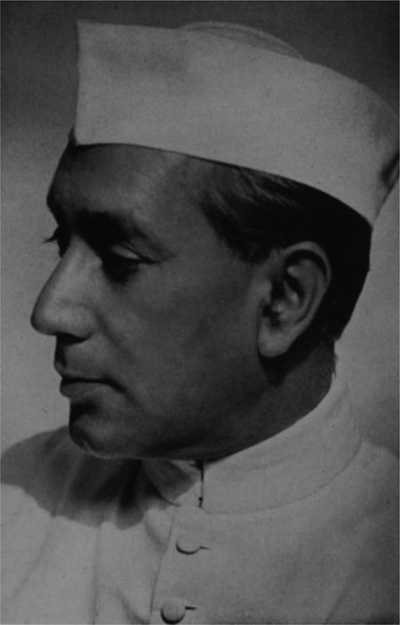
Birbal Sahni is a well-known figure in the history of paleobotany and Indian science.Footnote 8 Born on November 14, 1891 in Bhera in West Punjab (present-day Pakistan) to a prominent Punjabi family, Sahni's father Ruchiram Sahni would go on to serve as a professor of Chemistry at Government College, Lahore.Footnote 9 His amateur scientist grandfather headed a flourishing banking business in Dera Ismail Khan. Sahni was first introduced to Botany as a student at Government College, Lahore, and he graduated with a BSc. from Punjab University in 1911. He then proceeded to Cambridge University and enrolled for the Tripos at Emmanuel College. He earned a BSc in 1914 and stayed at the University for much of the rest of the decade. It was during these years that he met and was influenced by the geologist and botanist Albert Charles Seward (1863–1941), who instilled in him a lifelong fascination for fossilized plants.Footnote 10 After earning a DSc from the University of London in 1919, Sahni returned to India and held brief appointments at Benares Hindu University and Panjab University before taking up a professorship in Botany at the University of Lucknow in 1921. He remained in Lucknow for the rest of his life (Fig. 2).
Birbal Sahni. Source: Hamshaw, “Birbal Sahni.”
At Lucknow University, Sahni pursued a rigorous research and teaching agenda that made him among the foremost paleobotanists of his age. Defined as a branch of botany that deals with extinct and fossil plants, paleobotany was a young discipline that shared close ties with geology and paleontology.Footnote 11 As late as 1935, it was viewed by many as a subdiscipline of Paleontology, which “may be divided into paleobotany, treating of fossil plants, and paleozoology, treating of fossil animals” (Twenhofel and Shrock Reference Twenhofel and Shrock1935). Sahni's varied contributions did much to place discoveries in India within global debates on plant origins and geological evolution.Footnote 12 He was one of the vice-presidents of the sections on paleobotany at the Fifth and Sixth International Botanical Congresses at Cambridge (1930) and Amsterdam (1935). In 1936, he was elected a Fellow of the Royal Society. Had he not passed away suddenly in April 1949 due to heart failure, he would have served as one of the Honorary Presidents of the Seventh International Botanical Congress in Stockholm in 1950.Footnote 13 Among Sahni's institutional contributions was the world's first research institute dedicated to the study of paleobotany. Known today as the Birbal Sahni Institute of Palaeosciences, its foundation stone was laid on April 3, 1949, a week before Sahni died.
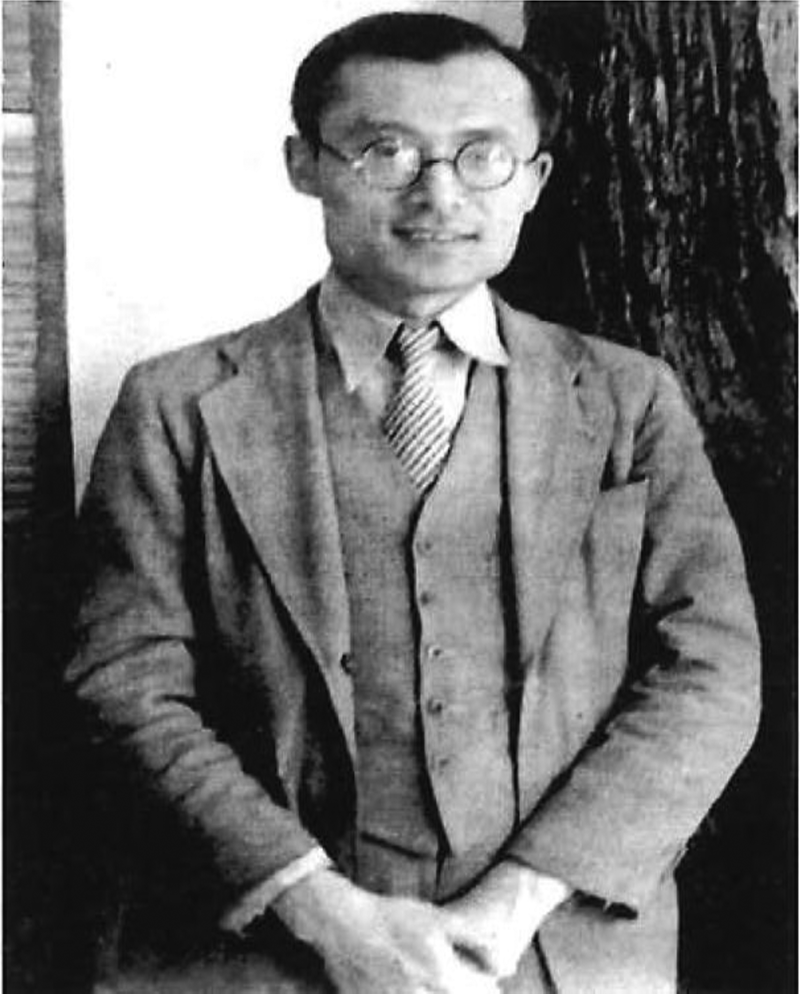
Although Sahni's biographies devote extensive space to describe his intellectual connections with scientists in Europe and the United States, they are, with one lone exception, silent about his connections with Chinese scientists.Footnote 14 It was, therefore, through an altogether different chance encounter that I discovered his relationship with Hsü Ren. Some years ago, at the Institute for the History of Natural Science in Beijing, I came across the oral history interview of the Chinese botanist Wu Zhengyi (吴征镒, 1916–2013) (Wu Reference Wu1992).Footnote 15 In the interview, Wu mentioned that he was part of a delegation that had attended an International Symposium on Crop Origins in New Delhi in 1951. This was the first Chinese Academy of Science delegation to visit a foreign country, he recalled (“建国后第一个出国任务”) (Wu Reference Wu1992, p. 5). The delegation was led by the botanist Chen Huanyong (陈换镛, 1890–1971)Footnote 16 and included three other members: the ecologist Hou Xueyu (侯学煜, 1912–1991), the plant physiologist Yin Hongzhang (殷宏章, 1908–1992), and the paleobotanist Hsü Jen. As I dug deeper, I discovered that unlike his fellow delegates, who had traveled from China, Hsü had taken the train up from Lucknow. And so began my exploration of Hsü's activities (Fig. 3).
Hsü shortly after arriving in Lucknow, 14 March 1944. Source: Xu Reference Xu2000a.
Hsü Jen was born in 1910 into a family of merchants and officials in the city of Wuhu (芜湖) in Anhui province.Footnote 17 By the time he entered his teens, the family's fortunes had begun to suffer. Things got worse when, at the age of fourteen, he lost his father and became dependent on the financial assistance of relatives. A good student, he entered Tsinghua in 1929 and was inspired by the botanist C.Y. Chang to study science.Footnote 18 After graduating with a degree in Botany in 1933, he served as a teaching assistant at Peking University's Biology Department from 1933 to 1938. It was during these years that he began to undertake research in paleobotany. In 1937, he moved with the University as it joined with Tsinghua and Nankai to form Southwest Associated University (西南联合大学), first in Changsha and then in Kunming. During 1938–1939, he was a research fellow in Botany, funded by the British Boxer Indemnity Fund, and from 1939 to 1943 he taught as an associate professor at Yunnan University in Kunming. It was around this time that he established contact with Sahni, eventually joining him in Lucknow in January 1944. Hsü received his doctorate in 1946 and spent two years as an associate professor at Peking University before returning to Lucknow in 1948 to take on a professorship at the newly established Institute of Palaeobotany. Aside from Sahni, he was the only other full professor at the Institute. Hsü returned to China in early 1952, serving initially as a researcher in the Ministry of Geology. In 1959, he helped set up the Institute of Botany at the Chinese Academy of Sciences and moved there permanently in 1962.
Sahni's China connections
Sahni's contacts with Chinese scientists far predated his taking Hsü on as a student. But most of these contacts had been snapped by the late 1930s. In April 1938, Sahni drafted a letter to the Bureau of International Exchange of the Chinese Ministry of Education, explaining that “[o]wing to the war in China I have, unfortunately, got out of touch with all my colleagues working in Botany, Geology and Paleobotany.”Footnote 19 He went on to list several prominent Chinese scientists in the hopes that the Bureau might help him reestablish contact: “Dr. H.H. Hu. Fan/Tau Memorial Institute; Prof. C. Y. Chang (Botanist); Prof. H.C. Hsieh (Paleobotanist); Prof. Sze (Paleobotanist)Footnote 20; Prof. J.S. Lee (Geologist); Prof. A.W. Grabau (Geologist); Prof. W.H. Wong (Geologist)Footnote 21; and Prof. V.K. Ting (Geologist)Footnote 22.” Sahni also requested membership rolls for “the Science Society of China, the Geological Society of China, The Fan Memorial Institute and any of the other important scientific Institutes…”Footnote 23
Among Sahni's earliest correspondents were the scientists H.C. Sze, C.Y. Hsieh, and W.H. Wong, with whom he exchanged reprints of articles and discussed works-in-progress starting in the early 1930s.Footnote 24 Sahni and his Chinese interlocutors were a cosmopolitan bunch, frequently in different parts of the world, and their letters and postcards trace global circuits that connected Lucknow, Beiping (Beijing), and Nanking (Nanjing) to Stockholm, Cambridge (UK), and Berkeley.Footnote 25 A likely and important point of early contact was the Fifth International Botanical Congress in Cambridge (UK), which was held from August 16 to 23, 1930 and had a dedicated symposium on the flora of China.Footnote 26 The conference was unprecedented in its scale, with nearly 1,000 attendees and a much wider international representation than had heretofore been achieved. Chinese participants included the botanists Chen Huanyong and C.Y. Chang. Sahni presented a paper in the paleobotanical section, which was attended by C.Y. Chang, who wrote glowingly about it to Sahni later in the year.Footnote 27
Although the letters between Sahni and his Chinese colleagues ordinarily focused on research-related topics, they frequently also veered into contemporary affairs, suggesting sensitivity to larger political events.Footnote 28 For instance, H.C. Sze wrote to Sahni in 1937 describing his recent work on “Gigantopteris-Flora.”Footnote 29 Gigantopteris-Flora was the early name given to a large variety of Asian gigantopterids.Footnote 30 As we shall see, these floras would go on to play a significant role for Sahni and Hsü. But Sze also wrote of his dismay with political events in China. In 1932, shortly after the Japanese takeover of Manchuria, he had concluded a postcard to Sahni thus: “[d]uring this critical time of our country I have indeed no pleasure, to work the fossil plants [sic] which is absolutely useless for “Verteidigung unseres Vaterlandes”!!! [the defense of our Fatherland].”Footnote 31 Sze's letters were often drafted in German or a mixture of English and German.Footnote 32 Five years later, he wrote with even greater despondence of “political catastrophe,” referring to the war with Japan, and of his consequent loss of interest in traveling to India to attend the Indian Science Congress.Footnote 33 In his reply, Sahni expressed solidarity with China's travails and hoped that there would be “more occasions to bring Chinese and Indian scientists into personal contact.”Footnote 34
Sahni's most enduring and significant correspondent – at least for our purposes – was C.Y. Chang, with whom he exchanged letters as early as 1930. One of China's premier botanists, Chang was then on a two-year visit to Europe, splitting his time between the Universities of Leeds and Basel. Chang and Sahni had likely encountered each other at meetings in Europe. In a letter written in early December 1930 from Leeds, Chang sought Sahni's comments on a paper he had written on Pteris, explaining, “I shall be glad to have your criticism on the former paper…Like everyone else who attended the paleobotanical section meetings at Cambridge, I was very impressed with that marvelous piece of petrified angiosperm wood.”Footnote 35 After corresponding for a decade and a half, the two finally met in late 1945, when Sahni hosted Chang in Lucknow for a few days.Footnote 36 Chang was then en route to the United States and, as was the norm in those days, had broken his journey in Calcutta to change ships. His Calcutta sojourn eventually lasted twenty days, during which time he along with other Chinese scientists visited botanical labs and other scientific institutions, including P.C. Mahalanobis' Indian Statistical Institute.Footnote 37 Impressed, Chang wrote to Sahni, “India is far more advanced than we in science and technology and we have a great deal to learn from her. I sincerely hope that the good contact between us made in war will be maintained in future.”Footnote 38
Chang's experience in Calcutta was hardly unique. The city served as a port of call for a whole generation of Chinese scientists traveling West during the 1930s and 1940s. Some only stayed a day or two, but in many instances, their itineraries and the nature of war-time travel meant an extended sojourn, thereby offering the possibility for some sustained intellectual exchanges. C.N. Yang (杨振宁; 1922 –), the 1957 Nobel laureate in Physics, recalled spending a few weeks in Calcutta in 1945 or 1946 en route to the University of Chicago. During his stay, he met with the Indian physicist M.N. Saha (1893–1956). Similarly, the mathematician Shiing-Shen Chern (Chen Xingshen 陳省身; 1911–2004) flew from Kunming to Calcutta on July 15, 1943. His two-week stay included four lectures at the University of Calcutta. Chern then proceeded to Karachi and arrived eventually in Miami in August of that year (Wang and Guo Reference Wang and Jinhai2019, p. 130). The city was thus an important node in transnational scientific endeavors that linked China with India and Asia with Anglo-European centers of knowledge further west.
One beneficiary of the good contact that Chang celebrated was Hsü Jen. It was Chang who had introduced Hsü to Sahni in the early 1940s and recommended that he work in Sahni's lab.Footnote 39 In a letter written after Hsü's arrival in Lucknow, Chang thanked Sahni for helping Hsü, “for in helping him you are helping China to get started in paleobotanical researches…There is not the slightest doubt that he is getting more profit from you than he could get from any European or American scientist.”Footnote 40 In his personnel dossier, Hsü would identify Chang as the close friend and teacher who had the greatest influence upon him.Footnote 41 After Hsü's return to China, Chang would see to it that he was appointed an assistant professor of paleobotany so that he could help establish the discipline in China.Footnote 42 Chang was both grateful and frank with Sahni. From his sabbatical in Berkeley in 1946, he wrote: “Chinese botany is indebted to you for the careful training you have given him. I feel sure that he will acquit himself well and make good use of his training.”Footnote 43 A year earlier, he had explained to Sahni that “Mr. Hsu [sic] retains a good deal of childish simplicity, but, I am afraid, he is sometimes childish. Please be very frank with him, be his master as well his teacher and patron saint.”Footnote 44
Getting Hsü to India
By the end of 1942, Sahni and Hsü were in regular correspondence. Sahni had also agreed in principle to host Hsü. “It would give us much pleasure to have you working here, and to introduce you to some of our rich plant-bearing strata,” Sahni had written, adding that “if you are able to spend about two years here it should be possible for you to do a substantial piece of work, which could be presented for a PhD.”Footnote 45 It would, however, require a fair amount of wrangling with administrative, financial, and logistical issues before Hsü was finally able to arrive in Lucknow a little over an year later in early 1944. Administrative issues at the university level were the easiest to resolve. Although Sahni sent the relevant university regulations to Hsü, he also assured him that many requirements for matriculation to the PhD, such as an MSc degree or a minimum number of terms, could be waived. Further, as a research student, Hsü was free to matriculate at his convenience and not necessarily at the start of term.Footnote 46
Financial considerations proved far more intractable.Footnote 47 An early hope was that Hsü might be selected by the Government of China as part of a recently established exchange program between China and India. Under this program, ten Chinese students would receive fellowships to study in India, with the Indian Government covering fees, travel, and a living stipend of INR 200 per month.Footnote 48 In the event, Hsü was not selected for the fellowship and Sahni was forced to expend significant social capital raising funds on his behalf.Footnote 49 From Lucknow University Sahni was able secure a waiver for all associated matriculation fees as well as a fellowship of INR 100 per month.Footnote 50 He also approached Panna Lall, an advisor to the government of the United Provinces, as well as John Sargent, the Educational Commissioner of the Government of India, for additional financial help.Footnote 51 These efforts eventually bore fruit. By October 1944, Sahni was able to inform Chang that they had secured a monthly stipend of INR 200 for Hsü, which he hoped would continue into a second year.Footnote 52
The final set of hurdles involved administrative and logistical issues with the governments of both China and India. Hsü had originally hoped to be in India by August 1942 but these hopes were quickly dashed.Footnote 53 The first obstacle he encountered was getting permission from the Chinese Ministry of Education to obtain a passport. After significant delays, he managed to acquire both by June 1943.Footnote 54 But he still needed a visa from the Indian Government. Sahni again sought help from John Sargent, the Educational Commissioner, and Panna Lall, advisor to the UP Government.Footnote 55 By early October, Hsü had been waiting for nearly four months and was increasingly concerned: “I am now held in suspense. I have resigned my post in the University of Yunnan as there is an understanding between the University of Peking and myself to the effect that I join that University upon my return from India. At present, I am without a position and without work.”Footnote 56 The delay was classically bureaucratic: the central government wanted an assurance from the UP government that Hsü had sufficient resources to maintain himself in India and a repatriation plan in the event of a crisis. This the University finally guaranteed toward the end of October.Footnote 57 And so, on November 14, 1943, Hsü wrote Sahni to say that his visa had been granted, but because he had begun to teach a course in the agricultural college, he would not be able to travel to India until January 1944.Footnote 58
Doctoral days
Hsü arrived in Calcutta on January 27, 1944 and proceeded to Lucknow on the Punjab Mail two days later.Footnote 59 A few weeks later, Sahni wrote to the Lucknow University Vice-Chancellor informing him that Hsü had been working in his lab since January 31.Footnote 60 It is clear that he quickly made a strong impression on Sahni, who wrote to C.Y. Chang in July:
[I]t is a real pleasure to have Professor Hsü with us…He has made himself popular all round. With his broad-based training, his remarkable industry and his receptive mind he has already made very good use of his time. During this [summer] vacation he has concentrated on improving his English, and I think he has done well.Footnote 61
English would remain a challenge for Hsü and although his letters display an effective command of the language, he was never able to rid his writing of infelicities.Footnote 62 A second challenge was the Indian weather. Later that fall, Sahni wrote to C.Y. Chang:
I am glad to tell you that he has on the whole stood the Indian climate quite well, though the summer was very trying for him at first. In fact, he has gained in weight and is looking distinctly better than he first came here. He has also made good progress with the English language.Footnote 63
By August, Hsü was deeply immersed in his work, requesting process plates and sheets of bromide paper for his research.Footnote 64 Much of his lab work involved working with samples he had brought with him from China. Prominent among these were samples of Gigantopteris flora from Yunnan, which he described and compared with specimens from other parts of Asia:
Today I have finished the description of Gigantopteris flora specimens. From tomorrow I will discuss their relations with Sumatra, Indian and Central Shansi and Honan flora. It definitely shows no relation with Indian permo carboniferous flora and makes the link between Sumatra and North Chinese flora. Totally, 34 specimens have been recorded (some with seeds). I think I have try [sic] my best to search them out for the fragments. I do hope, this coming half a month I will find the Rhaetic flora part.Footnote 65
The work on Gigantopteris would figure as the fifth and final chapter of his doctoral thesis and Sahni and T.G. Halle (1884–1964) would both be very pleased with it.Footnote 66 In 1944, Hsü received further recognition when his work on Devonian spores (泥盆纪孢子 nipenji baozi) was awarded a University Research Award.Footnote 67
Sahni had been keen for Hsü to bring with him paleobotanical samples from China. And he was quite specific about what would be of greatest interest: “If you can bring any material at all please do not trouble about Tertiary fossils. Devonian material would be interesting even if poorly preserved. Jurassic plants from China should be specially interesting for comparison with the Indian upper Gondwana floras.”Footnote 68 Hsü had been worried about how much he would realistically be able to bring given that he planned to fly to Calcutta and extra air freight would likely be exorbitant.Footnote 69 In the event, he did bring with him, at considerable personal expense, several samples of fossil plants collected from Yunnan.Footnote 70 Having worked on them during his time in Lucknow, he left them behind as a gift when he returned to China in April 1946. These included Devonian plants, Brown Shale, Permian plants from the Huitsch District, Rhaetic plants, and two pieces of Tertiary wood.Footnote 71 A grateful Sahni returned the favor some months later, gifting specimens of Otomazite pecten, Glossopteris, Schizoneura gondwanensis, and Homoxylon rajmahalense, that he and his colleagues had collected over the years.Footnote 72
In addition to lab work, Hsü also participated in treks through the Himalayas with Sahni and other scientists. An avid trekker since his childhood, Sahni frequently undertook such treks, both for pleasure and to collect specimens.Footnote 73 In the summer of 1944 (May−June), Sahni, Hsü, and their colleague Dr. R.D. Misra, made a trek “between Gujrat, Bhimbar, Nowshera, Rajauri, Thanamandi, Poonch, Aliabad, Uri and finally Srinagar.”Footnote 74 To escape the heat wave in the plains, Hsü spent much of the summer of 1945 in the hill station of Almora (in the present-day state of Uttarakhand).Footnote 75 He also made fast friends in Lucknow, recalling them by name in correspondence after his departure.Footnote 76 By the end of his stay in India, Sahni too had grown fond of the man, beginning to refer to him simply as “My dear Hsü,” instead of the more formal “Dear Professor Hsü”.Footnote 77 Hsü's own affection for Sahni and his wife is evident from a letter written to the latter after his return to Beijing: “Last night, I dreamed I was still sleeping in your house. It seems you and Professor were resting on the upper floor. The moon light was so bright.”Footnote 78
In the spring of 1946, Hsü submitted his PhD thesis and returned home to China. His thesis consisted of five chapters:
(1) Search for Microfossils in the Purple Sandstone
(2) Plant fragments from Devonian Beds in Central Yunnan, China
(3) Plant Microfossils from Devonian rocks at P'oshi, in the District of Lishien, Central Yunnan, China
(4) Plant Microfossils from Brown Shales in the District of Lunan, Central Yunnan, China
(5) Some Permian plants from the Huitsch District, North-Eastern Yunnan, ChinaFootnote 79
In his role as the internal examiner, Sahni judged the thesis excellent and noted that “[w]orking in my laboratory for a period of a little over two years Mr. Hsü, who came here with no previous training in fossil botany, has produced a series of original papers which would do credit to many an experienced palaeobotanist.”Footnote 80 Hsü's external examiners were C. A. Arnold (1901–1977), an associate professor of Botany and curator of Paleobotany at the Museum of Botany at the University of Michigan, and the Swedish botanist T. G. Halle. Although both Arnold and Halle provided detailed comments and disagreed on many of the finer points (Halle in particular), they were both sufficiently impressed to recommend that Hsü be granted the degree without further examination.Footnote 81 By the time Sahni sent his three-word congratulatory telegram in December 1946, Hsü had been back in China for nearly eight months.Footnote 82
Institution-building during a return to India
Hsü and Sahni remained in touch following his departure from Lucknow. In late 1946, Sahni informed Hsü that he had been made the first non-Indian member of the recently established Palaeobotanical Society.Footnote 83 In Beiping, Hsü found the going tough. Although the Second World War had ended, its eight years had left China in a perilous state. Compounding affairs was the civil war that had broken out between the Nationalists and the Communists earlier in the year. In September 1946, Hsü had written to Sahni, complaining that no field work was possible because of the war. Financial conditions were also dire, with inflation rampant. In the midst of these troubles, Hsü still longed to do research and expressed a desire to work on the environment of the recently discovered Peking Man. But he also clearly missed being in Lucknow.Footnote 84 By 1947, the situation was significantly worse. In January, he wrote that he was “very happy and willing to come to India again. I need more training + I wish to stay in India for some time. If China is still in Civil War, I would like to settle in India. For there is hope [sic], there is life.”Footnote 85 Several months later, his frustrations were further compounded when he was denied permission to pursue fieldwork in southwest China. A lack of teaching staff – many foreign teachers had chosen to delay their return to Beiping – meant additional burdens on those who were available, he explained.Footnote 86
Faced with such increasingly difficult circumstances, the prospect of returning to India must have been an appealing one. Sahni had first floated the idea in late 1946, when he wrote to update Hsü on the Palaeobotanical Institute he hoped to set up. Sahni told Hsü about his plans to acquire a rectangular area for the Institute measuring 425 feet by 700 feet. He then enticingly added: “I look forward to welcome you as one of the workers at the Institute…Will you come if invited?”Footnote 87 Some months later, he wrote more forcefully and more formally:
Sometime in 1948, we may formally open the Institute, of which the nucleus, as you know, already exists and is active here in the department itself. We hope that on that occasion at least, if not earlier, you will be again in India. There will be a place for you here always. We can offer you a post, say, as Curator of the Museum, with research duties, and a pay of about R. 500/- per month; but please write early, so that I know well before our departure [on an international tour] whether you will accept.”Footnote 88 (Emphasis in original)
Hsü required little further encouragement. After negotiating with his colleagues C.Y. Chang and Wu Zhengyi, he accepted Sahni's offer. By October 1948, he was back in Lucknow. This time, his wife and three young children accompanied him.Footnote 89 Appointed a full professor and also the curator of the Institute's fledgling museum, he was thus present at the Institute's foundation stone laying ceremony on April 3, 1949.Footnote 90 Within a week Sahni was dead.Footnote 91
Sahni's untimely passing left Hsü and other colleagues at the embryonic Institute in a challenging position. They shouldered the burden and soldiered on and, with the support of Sahni's widow, Savitri Sahni, pursued tasks that would establish the Institute on a firm footing.Footnote 92 As the only full professor at the Institute, Hsü took on a leadership role. But he shied away from becoming the acting director, despite Savitri Sahni's desire that he take the job. Instead, T.M. Harris from the University of Reading was appointed an advisor from December 1949 to January 1950, and in May 1950, R.V. Sitholey was appointed as interim Director (office-in-charge). Hsü also helped bring O.A. Høeg of the University of Oslo to serve as Director from October 1951 to the beginning of August 1953.Footnote 93 With Sitholey, Hsü also helped organize and produce the first issue of the journal The Palaeobotanist (1952−). In 1950, the geologist D.N. Wadia (1883–1969) requested Hsü to take his place as the secretary of the section on Gondwana (冈瓦纳) at a three-day international geological conference. Hsü's summary of the session was subsequently published in the proceedings of the XIXth International Geological Congress, held in Algiers in 1952.Footnote 94
In 1950, Hsü traveled abroad and represented the Institute in Sweden and England.Footnote 95 He spent three months in Sweden and participated in the Seventh International Botanical Congress in Stockholm in July 1950.Footnote 96 In addition to meeting with T.G. Halle and a host of other prominent botanists, he delivered two papers.Footnote 97 He also met the Swedish geographer and topographer Sven Hedin (1865–1952) and studied his research methods, especially his approach to note-taking and record maintenance. At the Swedish Museum, he visited Otto Gunnar Elias Erdtman's (1897–1973) Palynology Laboratory, where he saw samples of the Swedish Varve (a type of sedimentary rock) (Fig. 4).
Hsü in Musoorie, India, during the summer of 1950. Source: Xu Reference Xu2000a.

Back in Lucknow, Hsü continued to conduct research, write, and teach. In August 1951 he accompanied a Mr. Bharadwaj on a trek through Laredura, Zewan, and Srinagar (all in Kashmir) to collect quaternary samples.Footnote 98 He also inherited from Sahni the Institute's first doctoral student, M.N. Bose (1925–2011). With Bose, Hsü co-authored an essay for the Sahni Memorial Volume (Hsü and Bose Reference Hsü and Bose1952).Footnote 99 More co-authored essays with Bose and other colleagues followed.Footnote 100 Hsü regarded training Bose as his most important contribution to Indian paleobotany. Bose's own distinguished career culminated in the directorship of the Institute from 1980 to 1985.Footnote 101 Hsü also took charge of the Institute's museum. The Institute's Annual Report for 1952–53 noted that “[m]uch preliminary work and planning of the museum had been done by Dr. Jen Hsu, but the final effort was left to Dr. K.R. Surange, who was given charge of the museum from 22 September 1952.”Footnote 102
Throughout these years, a return to China was never far from Hsü's mind. He had originally negotiated a three-year leave with C. Y. Chang and Sun Yunzhu 孙云铸 (1895–1979), the respective heads of the departments of Botany and Geology at Peking University. But upon his arrival in Lucknow he had discovered that his appointment was a permanent one.Footnote 103 It is possible that these considerations were on his mind when he turned down Savitri Sahni's offer of the Institute's directorship. During his time in Sweden in the summer of 1950, he discussed the matter with Halle, who encouraged him to return because he felt that materials in China were more plentiful than in India (Xu Reference Xu and Xu2000b, p. 316). But Savitri Sahni was particularly keen that Hsü stay on in India, even take Indian citizenship if necessary. Hsü suspected that she had even enlisted Indian Prime Minister Jawaharlal Nehru in her charm offensive. During their meeting in 1951, Nehru advised Hsü to remain in India, explaining that China was unlikely to recover for another ten years; it was India that would have the greatest prestige in Asia. Hsü politely declined (Xu Reference Xu and Xu2000b, p. 317). Much, of course, had changed in China since his departure. The Civil War had ended in 1949, the Nationalists had retreated to Taiwan, and the mainland was under Communist rule.
Global politics would also have their say. The Chinese annexation of Tibet that same year turned public opinion in India against China, souring some of Hsü's relationships and generating a sense of unease. When he met with the CAS delegation in New Delhi later that year, he was therefore especially susceptible to the pressure applied on him to return. Within a year he resigned his position at the Institute. Having left the Republic of China at the end of 1948, Hsü returned to the People's Republic of China in May 1952.Footnote 104
Transnational science in a time of Pan-Asianism
The intersection of science, colonialism, and nationalism has been a significant theme in the historiographies of both China and India. Also dominant are frameworks that typically connect science in China and India to ‘Western’ science.Footnote 105 And although we are no longer hostage to the kind of diffusion model proposed by George Basalla (Reference Basalla1967), who theorized that modern science was a distinctly Western product that was subsequently transmitted unidirectionally everywhere else, the frameworks and themes noted above remain influential. Recently, scholars have begun to explore transnational networks from a variety of new perspectives, tracing overseas Chinese contributions to medical practice and policy in mainland China and Taiwan, Indian medical aid to China after 1937, and south−south Cold War scientific networks anchored in Asia (Anon. 2021; Framke Reference Framke2017; Ghosh Reference Ghosh2016; Soon Reference Soon2020).
Consonant with these new approaches, Sahni and Hsü's story exemplifies two important forms of circulation – of scientists and of scientific materials – that can help us push beyond the dominant frameworks. But what propelled this relationship? We can certainly ascribe partial responsibility to that most banal of human frailties: ego. In 1942, Sahni had written to Panna Lall, “I am indeed proud that a scholar from China has expressed a desire to come and work in my laboratory.”Footnote 106 But linked to such personal concerns was an appreciation of the wider politics of the time, at both national and transnational scales. Among the products of the enthusiasm for Pan-Asianism during the first half of the twentieth century was interest among Chinese and Indian intellectuals for mutual rediscovery and for forging a united front against colonialism.Footnote 107 Sahni and Hsü reflected the zeitgeist. In a letter to C.Y. Chang written a few months after Hsü's arrival in Lucknow, Sahni had stated, “I consider it a great privilege to be allowed to do anything towards reviving the cultural contacts of India with China, which are thousands of years old but have long been neglected.”Footnote 108 According to Hsü, Sahni understood that he (Hsü) was a patriot and that everyone deeply hated foreign aggression. He wanted Hsü to join him and fight for the people of the Orient together (共同为东方人争气 gongtong wei dongfang ren zhengqi).Footnote 109 Hsü recalled that he and Sahni were of like mind – the establishment of a Paleobotanical Institute in Lucknow following India's independence (achieved in 1947) would be a fitting reply to Europeans and Americans who deemed the people of the Orient incompetent (认为东方人不行 renwei dongfangren bu xing; Xu 2000b: 315–16). Sahni and Hsü were, of course, not alone in sharing these sentiments. In a July 1943 letter to Tsinghua University President Mei Yiqi (梅貽琦 Yi-chi Mei), the mathematician Shiing-shen Chern, recalling his recent sojourn in Calcutta, observed that the conditions for research at the University of Calcutta were “as good as in England and America.” Chern further noted that Indians desired exchanges with China as Sino-Indian and not as Sino-British interactions. He recommended that Chinese scientists should try to stay in India for longer periods to help improve bilateral relations.Footnote 110
Such a desire to connect science and scientists across Asia was not always evident at more formal levels. Following the end of the Second World War, new forms of contestation arose over the idea of Asia and the ideal of Asian solidarity jostled uncomfortably with realities of a fast-decolonizing world and the articulation of new national interests. Much of this was exemplified at the March 1947 Asian Relations Conference, where China and India presented competing visions of their historical zones of cultural influence.Footnote 111 Even as political ideas of Asia were being refashioned, and despite a fair amount of discussion about the importance of Science, there was little participation by Chinese or Indian scientists: of India's 57 delegates and observers, only four were scientists; of China's nine delegates and observers, not a single one was a scientist.Footnote 112
Distanced from such elite-level politics, Sahni and Hsü's collaboration and research point to heretofore neglected facets of the history of science in Asia. In particular, their research into the native habitats of two types of Permian plants had implications for the theory of Continental Drift.Footnote 113 In some of his early research, Sahni had compared and correlated Indian fossil flora with those found in the Southern Hemisphere. A focus of this work was the plant Glossopteris (a type of seed fern), which typically needed cold temperate conditions to thrive (Sahni Reference Sahni1935a). That its fossils were found in regions as diverse as India, South Africa, Australia, South America, and Antarctica posed an interesting puzzle, suggesting that these regions had once belonged to a larger landmass. In 1927, T.G. Halle discovered in the Chinese province of Shanxi a different type of large flora, called Gigantopteris (Wang Reference Wang1999). This plant grew under moist tropical conditions and soon there was evidence that its habitat extended south into Central Sumatra. These findings suggested that the Himalayas were the physical embodiment of a geological process that had reshaped continents. Shakti M. Gupta in her biography of Sahni explains:
This floristic contrast is so striking as by itself to raise the suspicion that the two floras, one essentially northern, the other southern, must have lived in different climates. Indeed, the current view is that the Glossopteris flora was probably evolved in a temperate climate on a continent just emerged from glaciation, the Gigantopteris flora in a warmer climate analogous to that of the European coal measures. (Gupta Reference Gupta1978, p. 45)
Sahni thus came to believe “that the peninsula of India had once been part of an old continental block, Pangea, which had broken up, and that the Indian part had drifted into close proximity with the land mass forming the main Asiatic continent (Proc. 24th Indian Sci. Congr., Hyderabad, 1937, pp. 502–506)” (Hamshaw Reference Hamshaw1950, pp. 270–271; Sahni Reference Sahni1935b; Sahni Reference Sahni1937) (Fig. 5).
(a) Gigantolloclea guizhouensis from Hsianwei Group, Shuanghu, Northern Tibet, China. Upper Permian. (b) Glossopteris communis from Qubu Formation, Kujian, Southern Tibet, Upper Permian.
Source: Hsü 1978, p. 143 (Plate 1) and p. 145 (Plate 3).

It is therefore not surprising that Hsü decided to devote one chapter of his thesis to specimens of Gigantopteris flora that had been collected in northeastern Yunnan, nor that Sahni was so interested in his analysis. In his evaluation of the thesis, Sahni wrote, “The fifth and last paper describes a collection of plants belonging to the Gigantopteris flora in Yunnan, among which five new species have been recognized. Geographically as well as in its composition the flora serves as a link between the typical Gigantopteris flora of China and Korea on the one side and that of Sumatra on the other” (emphasis in original).Footnote 114 Halle too was impressed by Hsü's chapter, commenting that “[p]erhaps the most interesting result of Mr. Hsu's work is that the Huitseh flora is shown to be entirely different from the Indian Gondwana flora [referring to glossopteris]. Since the discovery of the Huitseh flora extends the distribution of the East Asiatic Cathaysia flora yet farther towards the west, this fact enhanced the extraordinary difficulty of explaining the contrast between two floras which are so near in space, and coincide or at least overlap in time.”Footnote 115 (Fig. 6)
MAP 1 - Fossil localities mentioned in Hsü's paper. ■ Cathaysia flora; ● Glossopteris flora; arrows indicating the direction of crustal movement of the India plate and the Eurasia plate.
Source: Hsü 1978, p. 135.

Hsü would revisit these questions in writings later in his career. In 1976, he published on the discovery of glossopteris flora in southern Tibet in Dizhi kexue (Scientia Geologica Sinica), noting that:
The Qubu Formation is widely distributed in a belt about 50 km north to the main Himalayas, from Longda, Selong, Tulong, Qubu to Quzong, that indicates that the Himalayan region was then the interior part of the [sic] Gondwanaland. Thus, it disproves the so-called “Himalayan Geoscyncline” and the geosuture line between the Indian Plate and the Eurasia Plate. (Hsü Reference Hsü1976)
Two years later, he wrote another paper drawing upon his research in the same region, concluding that,
The recent discovery of the Glossopteris flora from the Qubu Formation of Southern Tibet and the Gigantopteris flora from Shuanghu of Northern Tibet shows no relationship with each other. This strongly supports the view of Continental drift that the India block drifted in Cretaceous from the south-eastern corner of Africa and later on in Eocene joined up with Asia to become its subcontinent. (Hsü Reference Hsü1978) (See Fig. 6)
By exploding the temporality and spatial character of both Asia and modern nation states, Hsü and Sahni's research made a mockery of nationalism and human-scale history. Two interpretations are possible here. On the one hand, their activities expand how we might think about a practice of Pan-Asianism that was driven by research questions and centered on the circulation and exchange of knowledge, expertise, and scientific specimens. On the other hand, they also point to the limitations of the term itself, which should be seen as problematic not just for the various kinds of political and cultural power projection it enabled, whether initially by Japan or later by China and India, but also for restricting a broader understanding of twentieth-century inter-Asian history (Sen and Tsui Reference Sen and Tsui2021).
Conclusion
Hsü's association with Sahni and his time in India would render him continuously suspect in the eyes of the Chinese state and Communist Party.Footnote 116 Shortly after his return to Beijing in the summer of 1952, he underwent thought reform. He admitted – almost pro forma – that he had adopted the thinking of a comprador (maiban 买办), valorizing a purely technical view on things (chun jishu guandian 纯技术观点, i.e., he had ignored politics). He acknowledged he had come under the spell of Sahni and Halle and adopted their international outlook. As a result, he had become detached from reality.Footnote 117 The official verdict on his thought reform would list shortcomings and strengths (in that order): Hsü suffered from an ambivalent nature, especially as it applied to ideology. He cherished too much a good reputation, could not tolerate much hardship, and lacked focus because of too many interests. On the other hand, he was enthusiastic about work and had great patience. He was receptive to criticism and advice, friendly, and happy to help those in need.Footnote 118
Although the matter-of-fact admission – detached from reality – is a commonplace CCP thought reform “formulation” (tifa 提法), in the case of Hsü it forces an altogether different reckoning, one between “reality” as defined by the nation, and “reality” as grasped from the perspective of the earth (Schoenhals Reference Schoenhals1992). In unexpected ways, Hsü's “thought reform” thus reveals how within the logic of the nation state, engaging the scale of the earth necessarily became a kind of “detachment,” for to think geologically, one could not but confront the utter insignificance and arbitrariness of the nation and human existence itself (Bjornerud Reference Bjornerud2018).
Some fourteen years later, Hsü's international connections would remain a political handicap. A career-sketch drafted in 1966 observed that although there was no evidence of his having joined reactionary groups, he did have complicated relations with people abroad. Particularly noteworthy in this regard were his communications in 1954 with scholars in India, Sweden, and the US.Footnote 119 Further, during Mrs. Sahni's visit to the PRC in 1958, he had gone to receive her without permission and even gifted to her academic literature and fossil samples. Within a few weeks of the drafting of the career-sketch, China was engulfed in the Great Proletarian Cultural Revolution (1966–1976). To protect himself and his family, Hsü destroyed a signed copy of Nehru's autobiography.Footnote 120 In spite of such difficulties, Hsü continued to send offprints of his articles to the Sahni Institute well into the 1980s, invariably inserting friendly hand-written annotations.Footnote 121 As a fitting tribute to his legacy, starting in 2003 some of his Chinese students retraced his steps in Southwestern China and Northern India (Li, Wang, and Yao Reference Li, Wang and Yao2007).
The story of Sahni and Hsü offers us new perspectives on the connected histories of science across China and India and should spur us to recover and reassess other accounts of inter-Asian scientific connections. Although news tickers today are dominated by stories of tense geopolitical machinations, instances of China−India scientific cooperation and collaboration nonetheless persist. Much as in the case of Sahni and Hsü, the object of such research sometimes transcends contemporary politics (Lewis and Songster Reference Lewis and Songster2016). On occasion, it also transcends the earth, shifting our collective gaze toward the firmament. Near Pangong Lake, which straddles the Line of Actual Control between China and India, both countries have established telescope stations to observe and record solar flares, supernova, and other events in space. Since 2014, scholars have traveled back and forth and co-authored papers. Plans are now afoot to jointly construct a Thirty-Metre Telescope, which when complete will be three times larger than its nearest equivalent in Hawaii (Karnad and Tikkoo Reference Karnad and Tikkoo2020).
Acknowledgments
I would like to thank the editors of this special issue, Adhira Mangalagiri and Tansen Sen, as well as the two anonymous reviewers for their incisive and thorough feedback on earlier drafts of this article. Jiang Lijing, Wang Zuoyue, Emma Rothschild, Bill Kirby, and Partha Ghosh generously read or discussed various versions. Chen Yuqian provided expert research assistance. A special word of thanks to Li Ang at the Institute for the History of Natural Sciences at the Chinese Academy of Sciences in Beijing and to Mukund Sharma at the Birbal Sahni Institute of Palaeosciences in Lucknow. For their incisive comments and questions, my grateful thanks also to audience members at Haverford College, Fudan University, Christ University (Bangalore), the Asia Research Institute (ARI; National University of Singapore), and Heidelberg University. A two-week fellowship at ARI in the fall of 2019 allowed me to begin work on a preliminary draft. My thanks to Anthony Medrano, Stefan Hübner, and Tim Bunnell for hosting me and making me feel so welcome. Research for the article was supported by an SSRC Transregional Research Junior Scholar Fellowship (InterAsian Contexts and Connections).


 Open access

