

1. Introduction
Although hunger and malnutrition may be viewed by some as problems reserved for the developing world, inadequate access to food remains a serious concern for many people in the United States.Footnote 1 A recent report from the U.S. Department of Agriculture (USDA) indicates that 14% of U.S. households in 2014 were considered food insecure during at least some part of the year, meaning that these households did not always have access to an adequate amount of food or food of sufficient quality for a healthful lifestyle. Of these food insecure households in the United States, more than a third (5.6% of the U.S. population) were considered to have very low food security. In other words, household members experienced inadequate food intake or disrupted eating patterns because they lacked resources for acquiring food (Coleman-Jensen et al., Reference Coleman-Jensen, Rabbitt, Gregory and Singh2015).
Concern about food insecurity stems at least in part from its linkages with poor mental and physical health (Laraia, Reference Laraia2013). Health problems in women may include depression and anxiety (Bronte-Tinkew et al., Reference Bronte-Tinkew, Zaslow, Capps, Horowitz and McNamara2007; Whitaker, Phillips, and Orzol, Reference Whitaker, Phillips and Orzol2006), dyslipidemia (Tayie and Zizza, Reference Tayie and Zizza2009), and the metabolic syndrome (Parker et al., Reference Parker, Widome, Nettleton and Pereira2010). Problems in children may include greater likelihood of anemia, asthma, and behavioral problems (Alaimo et al., Reference Alaimo, Olson, Frongillo and Briefel2001; Eicher-Miller et al., Reference Eicher-Miller, Mason, Weaver, McCabe and Boushey2009; Kirkpatrick, McIntyre, and Potestio, Reference Kirkpatrick, McIntyre and Potestio2010; Melchior et al., Reference Melchior, Chastang, Falissard, Galéra, Tremblary, Côté and Boivin2012). Compounding this concern, food insecurity has been associated with poorer management of chronic diseases, such as diabetes (Nelson et al., Reference Nelson, Cunningham, Andersen, Harrison and Gelberg2001).Footnote 2
The objective of this article is to review broadly the challenges associated with food insecurity in the United States, from measuring it to assessing the effects of programs designed to address it. This article will also provide a model for food insecurity in the household-decision making framework and a review of relevant research related to this framework. Because the existing literature on food insecurity is vast, this study is useful in providing a summary of the current state of knowledge. The article also provides suggestions for the direction of future research on this topic.
2. Background: The Measurement and Meaning of Food Insecurity
Since the 1990s, food insecurity has been widely defined as “limited or uncertain availability of nutritionally adequate and safe foods or limited or uncertain ability to acquire acceptable foods in socially acceptable ways” (Anderson, Reference Anderson1990, p. 1598). Research on food insecurity in the developing world has often focused on measures of adequate energy or nutrients, sometimes at the national level (Pinstrup-Andersen and Herforth, Reference Pinstrup-Andersen and Herforth2008). In this context, food security is framed in terms of availability, access, use and stability, although the importance of incorporating cultural and social dimensions has been considered as well (Noack and Pouw, Reference Noack and Pouw2015; Pinstrup-Andersen and Herforth, Reference Pinstrup-Andersen and Herforth2008).Footnote 3
Although national-level information is also available for the United States, most recent research on domestic food insecurity has relied on self-reports from surveys targeting people living in households. Over the years, several nationally representative surveys have included items regarding food-related circumstances within the household. A measure of food hardship was developed by the USDA for use in its Nationwide Food Consumption Surveys in 1977–1978 and 1987–1988. Food sufficiency was measured by a single question asking respondents: “Which of the following statements best describes the food eaten in your household: 1. Enough of the kinds of food we want to eat. 2. Enough but not always the kinds of food we want to eat. 3. Sometimes not enough to eat. 4. Often not enough to eat” (Briefel and Woteki, Reference Briefel and Woteki1992, p. 25S). The food sufficiency question was included in the third round of the National Health and Nutrition Examination Survey (NHANES), which was administered from 1988 to 1994.
Efforts by the USDA and other agencies to develop a consistent and reliable measure of food hardship culminated in the development of the food security module, first implemented in the 1995 Current Population Survey (CPS) administered by the U.S. Census Bureau. This module has been included in the CPS consistently since 1995. Using these data, the USDA releases annual estimates of food security in the United States.Footnote 4
The food security module contains 18 questions concerning behaviors and experiences related to household food security (Bickel et al., Reference Bickel, Nord, Price, Hamilton and Cook2000). Ten items (e.g., household and adult measures) are asked of all respondents. The remaining eight items pertain to children in the household and are therefore asked only of households with children. The full text of the questionnaire module can be found in Coleman-Jensen et al. (Reference Coleman-Jensen, Rabbitt, Gregory and Singh2015). Based on responses to the module, households are characterized as either highly (or fully) food secure, marginally food secure, or food insecure. Responses to the module can also be coded into a continuous food insecurity scale (Bickel et al., Reference Bickel, Nord, Price, Hamilton and Cook2000; Nord and Hopwood, Reference Nord and Hopwood2007).
In households with high food security, no difficulty in accessing sufficient food is reported. Marginally food secure households respond positively to one or two of the measures, typically concerning worrying that food would not last or being unable to afford balanced meals, but generally do not report disruptions of food intake. Although households with marginal food security do experience some level of food hardship, it is not severe enough for the household to be classified as food insecure.Footnote 5
Initially, food insecure households were subdivided into those considered “food insecure without hunger” and those considered “food insecure with hunger” (further subdivided into moderate and severe). Following a 2006 assessment of the food security measure by the National Academies, the nomenclature was changed to reflect the critique that hunger is an individual physiological response that can be unrelated to the circumstances of food insecurity (Wunderlich and Norwood, Reference Wunderlich and Norwood2006). Food insecure households are now subcategorized as having either low food security or very low food security.
For the national estimates of food insecurity developed by the USDA, households (whether with or without minor children) are classified as food insecure if they respond positively to three or more questions in the module. Those subclassified with low food security (previously food insecurity without hunger) report problems with variety and/or quality of the diet because of their limited resources but generally do not report skipping meals or not eating for an entire day. By contrast, households with very low food security (previously food insecurity with hunger) report problems with variety and/or quality as well as disrupted food intake. Households without children are classified as having very low food security if they report six or more food insecure conditions, whereas households with children are classified as having very low food security if they report eight or more food insecure conditions among adults and/or children. For households with children, the USDA also computes a separate measure of food insecurity among household children, based solely on the experience of the children. In 2014, 9.4% of households with children reported that the children experienced food insecurity during at least some periods of the year (Coleman-Jensen et al., Reference Coleman-Jensen, Rabbitt, Gregory and Singh2015).
The food security module reflects household experiences over the entire previous year, and thus a household may be classified as food insecure based on only one or two episodes of food hardship during the past 12 months. A 30-day version of the module has also been developed. When compared with results from the annual measure, data from the 30-day measure suggest that in the United States food insecurity is more likely to be a recurrent condition rather than a chronic state (Coleman-Jensen et al., Reference Coleman-Jensen, Rabbitt, Gregory and Singh2015).
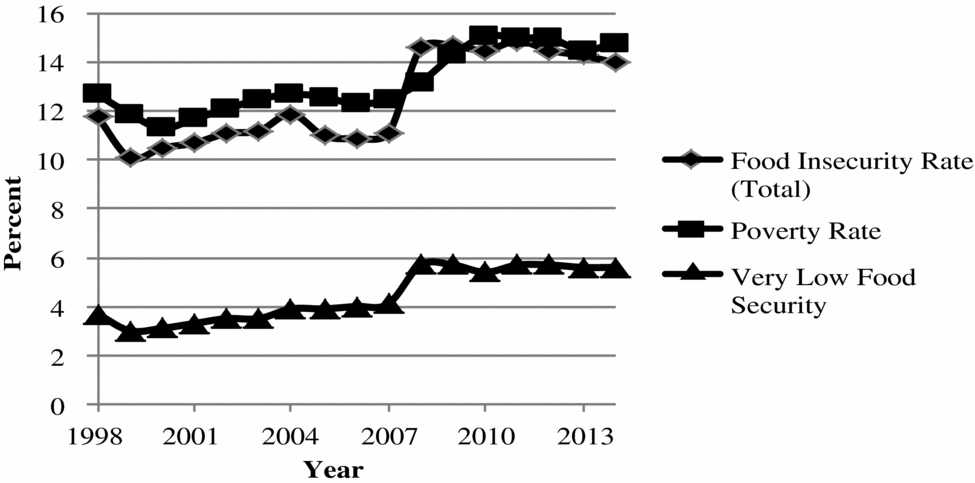
The relationship between food insecurity and other measures of deprivation, such as poverty, food expenditures, and food intake, has been examined in a number of studies. Intuitively, measures of poverty, low food expenditures, and inadequate food intake should all be highly correlated with food insecurity. Indeed, food insecurity is associated with poverty as expected. Figure 1 summarizes historical data from the USDA's annual food insecurity estimates along with the annual household poverty rates from the U.S. Census Bureau, covering the period 1998 to 2014. These national estimates of food insecurity and poverty closely reflect each other over time, with the correlation between the national poverty rate and the national level of food insecurity more than 90% during this period. However, not all households below the poverty line are food insecure, and not all food insecure households are poor. Using data from the 2009 December supplement of the CPS, Gundersen, Krieder, and Pepper (Reference Gundersen, Krieder and Pepper2011) examined the relationship of food insecurity to household income as a percentage of poverty. At no point in the income distribution did more than half the households report being food insecure. Even at relatively high incomes (three to four times the poverty threshold), some households continued to report being food insecure.
Food Insecurity and Poverty Rates, 1998–2014 (source for food security data: Coleman-Jensen et al., Reference Coleman-Jensen, Rabbitt, Gregory and Singh2015; source for poverty rate data: U.S. Census Bureau, 2015).

Household food expenditures and household food security are also correlated in the expected direction. In 2014, food secure households averaged $50 per person per week on food, compared with $37.50 per person per week in food insecure households (Coleman-Jensen et al., Reference Coleman-Jensen, Rabbitt, Gregory and Singh2015). However, the correlation between objective measures of food expenditures and self-reports of food insecurity is weak. Even among households with both very low income and very low food expenditures, approximately half self-report as food secure (Gundersen and Ribar, Reference Gundersen and Ribar2011).
In the United States, as opposed to parts of the developing world, food insecurity is generally not associated with reduced energy intake (Zizza, Duffy, and Gerrior, Reference Zizza, Duffy and Gerrior2008). In fact, research has found an association between food insecurity and obesity in adult women (see, e.g., Basiotis and Lino, Reference Basiotis and Lino2003; Wilde and Peterman, Reference Wilde and Peterman2006). Research on the relationship of food insecurity to diet quality has had mixed results, although the preponderance of the evidence suggests that food insecure adults have a lower diet quality than those who are food secure, particularly with respect to fruit, vegetables, and dairy products, and food insecure children have lower fruit intake (Hanson and Connor, Reference Hanson and Connor2014; Laraia, Reference Laraia2013).
3. Decision-Making Model for Household Food Consumption
Employing a theoretical model can assist in developing a rationale for the observed discrepancies between food insecurity and the three measures: poverty, food expenditure, and food intake. In the classic utility maximization problem, the household (or individual) maximizes utility, U,
 $$\begin{equation}
U = U\left( {F,OG;X} \right),
\end{equation}$$
$$\begin{equation}
U = U\left( {F,OG;X} \right),
\end{equation}$$subject to the budget constraint I,
 $$\begin{equation}
I = {P_f}F + {P_{og}}OG,
\end{equation}$$
$$\begin{equation}
I = {P_f}F + {P_{og}}OG,
\end{equation}$$where F is a composite commodity for all food items consumed at home, including both quantity and quality; OG is a composite commodity of all other goods; and X is a vector of fixed factors that influence utility. Pf and Pog are price indices for food and other goods, respectively. The Lagrangian function is thus
 $$\begin{equation}
{\rm{Max}}\ U = U\left( {F,OG;X} \right) + \ \lambda \left( {I - \ {P_f}F - {P_{og}}OG} \right),
\end{equation}$$
$$\begin{equation}
{\rm{Max}}\ U = U\left( {F,OG;X} \right) + \ \lambda \left( {I - \ {P_f}F - {P_{og}}OG} \right),
\end{equation}$$where utility is maximized over F and OG, and λ is generally taken as the marginal utility of income.Footnote 6
The sequence of events from acquiring, storing, preparing, and eating food is complex, and thus the simple model has been modified to reflect these complexities. Because purchased groceries generally must be transformed into edible meals or snacks by the household, the model can also be elucidated in the household production framework (Becker, Reference Becker1965). In this framework, leisure (L) would typically be included in the utility function, and F is specified as a function of both the groceries purchased and the time spent in purchasing and preparing these items.
Food assistance programs in the United States can increase resources for obtaining food for qualifying households. Thus, Gundersen, Jolliffe, and Tiehen (Reference Gundersen, Jolliffe and Tiehen2009) included both the benefits (e.g., increased food) and costs (e.g., stigma, transaction costs) of participating in food assistance programs in the utility framework. Putting these together would yield the following type of utility model:
 $$\begin{eqnarray}
U &=& {\rm{max}}\{ {U^P}({F^P},O{G^P},S,\ T,\ L\left( {H{f^p});X} \right),\ {U^{PN}}({F^{PN}},O{G^{PN}},\nonumber\\
&&S,\ T,\ L\left( {H{f^{PN}}} \right);X\} ,
\end{eqnarray}$$
$$\begin{eqnarray}
U &=& {\rm{max}}\{ {U^P}({F^P},O{G^P},S,\ T,\ L\left( {H{f^p});X} \right),\ {U^{PN}}({F^{PN}},O{G^{PN}},\nonumber\\
&&S,\ T,\ L\left( {H{f^{PN}}} \right);X\} ,
\end{eqnarray}$$where
 $$\begin{equation}
{F^j} = F\left( {{R^j},H{f^j};E} \right),
\end{equation}$$
$$\begin{equation}
{F^j} = F\left( {{R^j},H{f^j};E} \right),
\end{equation}$$where L is total leisure time for the household, which depends in part on the time spent shopping and preparing for food, represented by Hf in this function; S represents stigma from participation in food assistance programs; and T represents transaction costs (e.g., time to fill out applications and any transportation costs to a local office) of participation. The superscript j takes the value of P or PN, depending on whether the household participates in a food assistance program.
In the food production function (5), R represents ingredients or other food items that are transformed into meals and snacks and thus increase F. Hf, the time spent shopping for and preparing food (which reduces L), is also assumed to increase F. The variable E represents a set of household characteristics such as access to stoves and refrigeration, nutritional knowledge, skill as a cook, and so on that affect the production process either positively or negatively.
The household production process by which ingredients are turned into meals and snacks has received some treatment in the food insecurity literature, and time constraints have been found to have an important impact on household food security (Beatty, Nanney, and Tuttle, Reference Beatty, Nanney and Tuttle2013; Davis and You, Reference Davis and You2010; Rose, Reference Rose2007). Homemaking skills and household access to appliances have received less formal attention, although general education level of household heads has been included in some household production models (e.g., Davis and You, Reference Davis and You2013). Further, the time spent shopping for food can be affected not only by household characteristics, such as possession of a means of transportation, but also by characteristics of the neighborhood, including distance to grocery stores.Footnote 7
In the presence of food assistance programs, the budget constraint becomes
 $$\begin{equation}
I\ + \ D\left( j \right)\ = \ {P_f}F\ + {P_{og}}OG;\ F \ge D\left( j \right),
\end{equation}$$
$$\begin{equation}
I\ + \ D\left( j \right)\ = \ {P_f}F\ + {P_{og}}OG;\ F \ge D\left( j \right),
\end{equation}$$where D is the program benefit, equal to 0 if nonparticipation is chosen and equal to a positive value if participation is chosen. Because D cannot be converted to other goods, but must be used on grocery items, the benefit if taken shifts the budget constraint up vertically, but with truncation occurring at F = D(P).Footnote 8
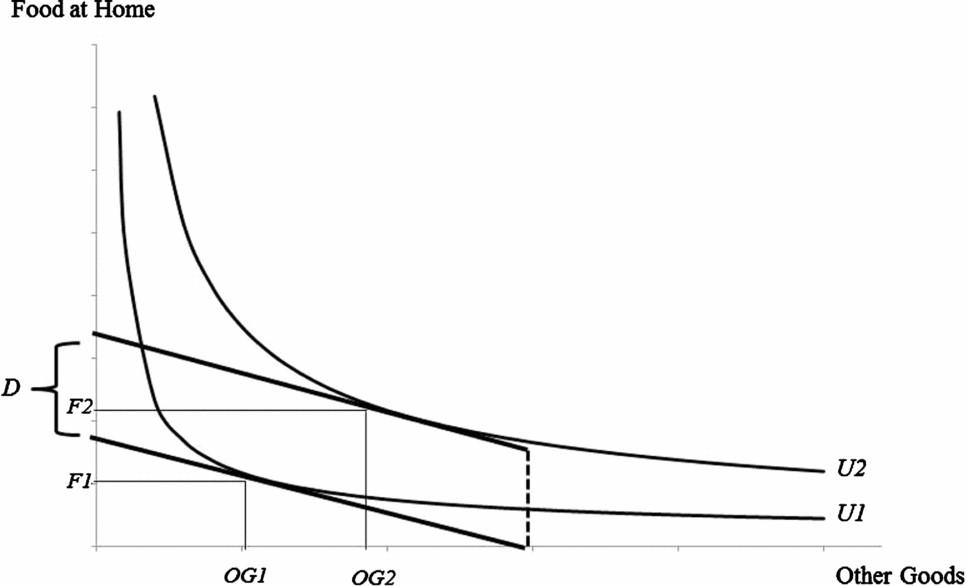
Figure 2 depicts the change in the income constraint for a household that chooses to participate in the food assistance program. With the food assistance benefit, this household can move from utility level U1 to the higher utility level U2. Households that would see a decrease in utility from participating would not elect to take the benefit. The model assumes that once a household has elected to receive food assistance, the utility from food purchased with cash or benefits is equal. Further, it assumes that the marginal propensity to consume food at home is greater than 0 and less than 1 in accordance with empirical findings (see Beatty and Tuttle, Reference Beatty and Tuttle2015). Consequently, consumption of both food at home and other goods will increase if the benefit is taken.Footnote 9
Effect of Food Assistance (D) on Household Purchases of Food and Other Goods
The basic model could be expanded to include explicit time constraints and to cover multiple periods (with saving and borrowing) and different types of discounting. Alternative formulations for time preferences and future discounting for consumers have been postulated and analyzed. This vein of literature generally does not explicitly treat food insecurity, although some studies do deal explicitly with discounting and poverty (see, e.g., Lawrance, Reference Lawrance1991). Although the study does not specifically address time preferences, Gundersen and Gruber (Reference Gundersen, Gruber, Andrews and Prell2001) put forward a model of the dynamic determinants of food insecurity that includes a multiperiod framework addressing income shocks and savings. They found that average monthly income is a better predictor of food insecurity than current monthly income. They also found that income shocks, including loss of food stamps, can precipitate food insecurity and that household savings have a protective effect. Homeownership, with the associated equity capital, was also found to be protective. More broadly, assets of varying kinds including labor and social capital are important considerations in assessing the impact of poverty on vulnerability to deprivation (Moser, Reference Moser1998).
4. Food Insecurity and Competing Demands
The imperfect correlation between poverty and food insecurity at the household level could be explained by factors that affect the budget constraint, the utility map, or the household production function. As shown in the simple model of Figure 2, households allocate their limited resources between food and other needs and desires. Competing demands on resources could arise at the individual level, the household level, or the neighborhood level and beyond.
At the individual level, chronic disease, with associated costs, has been found to increase the odds of food insecurity (Berkowitz, Seligman, and Choudhry, Reference Berkowitz, Seligman and Choudhry2014; Tarasuk et al., Reference Tarasuk, Mitchell, McLaren and McIntyre2013) as has out-of-pocket medical expenditure generally (Nielsen, Garasky, and Chatterjee, Reference Nielsen, Garasky and Chatterjee2010). Competing demands on the primary food preparer's time would affect food insecurity via the household production process that transforms the raw ingredients into meals. Along these lines, Coleman-Jensen (Reference Coleman-Jensen2011) found that households in which the head works multiple jobs with varying hours are more likely to be food insecure than similarly placed households in which the head holds one full-time job. She posits that the vulnerability could arise either from unstable income or the complicated schedule.
At the household level, the link between food insecurity and other expenses is intuitive, and research supports this linkage. Kirkpatrick and Tarasuk (Reference Kirkpatrick and Tarasuk2011) found a positive relationship between housing costs and the odds of households being food insecure in Toronto, Canada. Similarly, Bartfeld and Dunifon (Reference Bartfeld and Dunifon2006) found that higher median rent is associated with an increase in food insecurity for households with children in the United States, and Bernell, Weber, and Edwards (Reference Bernell, Weber and Edwards2006) found that living in a high-housing-cost county in Oregon was positively associated with increased food insecurity. Seasonal variations in food insecurity, related to winter heating or summer cooling costs, have been discovered (Bhattacharya et al., Reference Bhattacharya, DeLeire, Haider and Currie2003; Nord and Kantor, Reference Nord and Kantor2006). Thus, although not directly affecting food availability, programs providing low-income families relief in out-of-pocket medical expenses or expenditures for shelter would be expected to reduce food insecurity.
Some competing demands on income are imposed beyond the household. State and local taxes vary considerably across different areas of the United States, and many such taxes are regressive. Bartfeld and Dunifon (Reference Bartfeld and Dunifon2006) studied the impact of state and local taxes on food insecurity for households with children in the bottom quintile of earnings for their state. They found that higher tax burdens on low-income families were associated with an increased risk of food insecurity, such that a 1% increase in the tax burden was associated with a 1.7% increase in the odds of food insecurity. In a handful of states, food itself is subject to sales taxes, which raises the relative cost of food.
Availability of inexpensive public transportation may also reduce the probability of food insecurity, especially in low-income urban areas where residents are less likely to own personal vehicles. We found only one work that explicitly addresses this topic (Baek, Reference Baek2015), however, so more work in this vein is warranted. Moreover, transportation problems would be exacerbated in neighborhoods that lack nearby full-service grocery stores (Whitley, Reference Whitley2013). Although not specifically addressing food insecurity, a recent report by Rahkovsky and Snyder (Reference Rahkovsky and Snyder2015) found a modest negative relationship between diet quality and living in an area with limited access to food. This effect was mitigated for those who traveled farther to purchase food. For those without access to reliable transportation, traveling farther to access healthful food may not be a realistic option.
The impact of other expenses on food insecurity may be exaggerated if food is a residual claimant of income. Classical models of household utility maximization, as shown in Figure 2, assume that expenditure decisions are made simultaneously. In the short-run, however, expenses related to shelter or utilities are generally fixed. Food expenditures, on the other hand, are flexible, so that consumers may spend more or less on food in a given period, depending on what is “left over” after paying their fixed expenses. Although rent or mortgage payments are known well in advance, medical and utility expenses can fluctuate unexpectedly, leaving a family vulnerable to a short-term bout of food insecurity. The findings from Gundersen and Gruber (Reference Gundersen, Gruber, Andrews and Prell2001) that low-income households experiencing income shocks are more vulnerable to food insecurity than those with more consistent incomes may give some support for food being a residual claimant, as households would likely set fixed expenses based on expected income. Similarly Edin et al. (Reference Edin, Boyd, Mabli, Ohls, Worthington, Greene, Redel and Sridharan2013) found that among Supplemental Nutrition Assistance Program (SNAP) recipients, hardship was often triggered by temporal variation in income or expenses, including holidays and family birthdays.
4.1. Addictions
Other types of competing demands on household income could include costs associated with addictions such as smoking, drinking, and gambling. The link between addictions and food insecurity has not been widely researched, although a few studies have examined smoking. This relationship was first explored in a 2007 Federal Reserve Bank working paper by Armour, Pitts, and Lee. Using data from the Panel Study of Income Dynamics for 2001, they found that smoking among household heads or spouses is associated with an increase in food insecurity, even after controlling for other factors. Similarly, in a 2008 study, Cutler-Trigges et al., using the 1999 to 2002 NHANES data, found that living with an adult smoker is a risk factor for food insecurity among household children.
Although the impact of smoking on food insecurity was not a focus of their study, Mykerezi and Mills (Reference Mykerezi and Mills2010) included smoking status of the household head as an explanatory factor in their model of food insecurity and found it to be significant. Addictions may affect food insecurity in a simple way—that is, money spent on addictive substances is not available for food purchase—or the relationship may be more complex. For example, smoking may be a coping mechanism for vulnerable individuals experiencing the stress of food insecurity (Ding et al., Reference Ding, Wilson, Garza and Zizza2014). Current research has not explored the relationship sufficiently for definitive conclusions.
4.2. Food Insecurity and Food Expenditures: Exploring the Discrepancy
Although differences in other expenses (including expenditures for addictions) could explain the loose relationship between food security and poverty, it does not explain the low correlation between food insecurity and food expenditures. The impact of food prices on food insecurity has been studied extensively in the international arena, but there is little research on how food prices affect domestic food insecurity. A recent article by Gregory and Coleman-Jensen (Reference Gregory and Coleman-Jensen2013), however, found that food prices have a positive and significant effect on food insecurity. Further research on local prices (and local sales taxes on food) would thus be warranted.
Another factor that could explain the loose relationship between expenditures and food security would be “food gifts.” Swanson et al. (Reference Swanson, Olson, Miller and Lawrence2008) studied the use of both formal and informal support systems. They found that for the low-income rural mothers in their survey, informal food assistance in the form of groceries or meals was more likely to come from parents or grandparents. In addition to family and friends, some households may receive meals or groceries informally from fellow church members or formally via groceries from food pantries, which are often faith-based organizations.
Although use of food pantries has been studied fairly widely (e.g., Bartfeld, Reference Bartfeld2003; Clancy, Bowering, and Poppendieck, Reference Clancy, Bowering and Poppendieck1991; Daponte et al., Reference Daponte, Lewis, Sanders and Taylor1998; Daponte, Haviland, and Kadane, Reference Daponte, Haviland and Kadane2004; Feeding America, 2014; Molnar et al., Reference Molnar, Duffy, Claxton and Bailey2001), the use of other informal means of obtaining “food gifts” has not received much research attention. Kempson et al. (Reference Kempson, Keenan, Sadani, Ridlen and Rosato2002) described informal means used by low-income people to acquire food, including attending social functions to obtain food, exchanging resources, and relying on their support system of family and friends to obtain groceries or meals. Edin et al. (Reference Edin, Boyd, Mabli, Ohls, Worthington, Greene, Redel and Sridharan2013) found that SNAP recipients with higher levels of food security were likely to have access to support networks. Different levels of access to informal support systems could explain, at least in part, the loose relationship of food insecurity and food expenditure.
Hunting, fishing, and gardening may also supplement a household's food supply, although such activities are typically seasonal (Skinner, Hanning, and Tsuji, Reference Skinner, Hanning and Tsuji2014). The role of home food production in determining food security has not been widely researched in the United States. In an exploratory study set in Toronto, Canada, Kortright and Wakefield (Reference Kortright and Wakefield2011) found that gardening did contribute to household food security at all income levels. More research on the impact of gardening and other types of home food production on household food security in the United States seems warranted, particularly with respect to a household food production process that involves both income and time constraints. Although neither study directly addressed the impact of gardening on food security, Kinnucan and Sexauer (Reference Kinnucan and Sexauer1978) and Blaylock and Gallo (Reference Blaylock and Gallo1983) used a household production framework to analyze factors affecting the likelihood of home gardening. Both studies found that having a higher opportunity cost of time was negatively related to the likelihood of home gardening. Further, Blaylock and Gallo (Reference Blaylock and Gallo1983) found that an average gardening household saved $40 per year on vegetables (or approximately $100 per year in today's dollars), which provides additional evidence that home gardening and other types of home food production should be considered as a possible mediating factor between a household's food expenditures and objective measures of their food needs.
Characteristics of the household and managerial skills of the household members may also partly explain the discrepancy between expenditures and reports of food insecurity. Edin et al. (Reference Edin, Boyd, Mabli, Ohls, Worthington, Greene, Redel and Sridharan2013) report that among food stamp recipients, the more food secure households often reported spending time reading ads about sales, traveling to a number of stores several times each month to look for the lowest prices, and planning meals around sale items. These activities require specific managerial skills as well as time. Owning a stove, a refrigerator, and other appliances such as slow cookers and blenders may also provide cost-reducing options (including time costs) for meal preparation. In a study of low-income Canadian women, Engle-Stringer, Stringer, and Haines (Reference Engle-Stringer, Stringer and Haines2011) found that those who prepared more complex meals also were more likely to be food secure. Given the exploratory nature of the study, no definitive conclusion about this association could be drawn; however, the study does give some support to the notion that homemaking skills could play an important role in household food security.
4.3. Food Insecurity and the Utility Function
The amount of food required to avoid deprivation in a household may be based partly on objective factors, such as household size and composition, but may also vary based on subjective factors, such as tastes and preferences. The “Thrifty Food Plan,” developed by the USDA, is the weekly cost of a nutritious low-cost diet for individuals of different ages and sex and for families of differing compositions. The diet underlying the plan is based on the Dietary Guidelines for Americans, 2005 (U.S. Department of Health and Human Services and USDA, 2005) and the associated MyPyramid food intake recommendations. All food is assumed to be prepared and consumed at home.
In theory, the Thrifty Food Plan would represent the minimum expenditure for food so that a family would not be food insecure. Gundersen and Ribar (Reference Gundersen and Ribar2011), however, found that household food insecurity is more highly correlated with the survey respondent's subjective measure of minimum food expenditure needs than with the objective measure provided by the Thrifty Food Plan. Their study used data from the 2003 Food Security Supplement of the CPS, which in addition to providing information on usual expenditure for food also includes a separate item asking respondents what they would need to spend to meet their household food needs. They report that only approximately a third of low-income households with food expenditures lower than half the Thrifty Food Plan report food insecurity. However, when usual expenditures are compared with subjectively reported needs, reports of food hardship are more consistent.
Although different food prices and “food gifts” across households could explain why objective measures (e.g., food expenditures) do not track well with reports of food hardship, different utility functions could also explain these results as some households may derive higher utility from food than do others. In addition to affecting the budget constraint, addiction may also affect a consumer's utility with respect to food. Nicotine may serve as an appetite suppressant, for example, whereas other drugs (e.g., marijuana) may increase the appetite.
Another explanation for the discrepancy could be related to the observed link between food insecurity and depression and anxiety among women (Bronte-Tinkew et al., Reference Bronte-Tinkew, Zaslow, Capps, Horowitz and McNamara2007; Leung et al., Reference Leung, Epel, Willett, Rimm and Laraia2015; Whitaker, Phillips, and Orzol, Reference Whitaker, Phillips and Orzol2006). The direction of the causality is not known. It could be the case that food insecurity increases these psychological disorders, but it could also be the case that people with underlying depression and anxiety are more likely to report hardship when facing the same objective circumstances as those without these disorders. In terms of the utility framework, depression and anxiety may warp the indifference curve map. Research from psychology provides evidence that poverty and its associated stressors affect cognition, mood, and behavior (Haushofer and Fehr, Reference Haushofer and Fehr2014). Further, depression, which is linked both to poverty and food insecurity, biases memories in favor of negative experiences (Vrisjen et al., Reference Vrisjen, van Oostrom, Isaac, Becker and Speckens2014).
A final factor that could affect utility stems from the theory of relative deprivation (Davis, Reference Davis1959; Runciman, Reference Runciman1966). According to this theory, an individual's sense of deprivation depends on comparison, either with others in his or her social group or with his or her own expectations. The theory of relative deprivation could also explain in part why some individuals with very low incomes and low food expenditures self-report as food secure, whereas others with higher incomes and higher food expenditures self-report as food insecure. The reference groups and expectations of these individuals may differ.
4.4. Some Cautionary Words on the Household Model and Food Insecurity
Although a household decision-making framework grounded in the theory of utility can provide some insights into food insecurity, it is important to consider the limitations of this model. As noted by Maxwell and Smith (Reference Maxwell, Smith, Maxwell and Frankenberger1992), a key assumption of economic models of household behavior is often that all household members operate to jointly maximize a shared household welfare function. However, household members may have different and even competing preferences (intrahousehold issues). Further, sets of households may interact in meaningful ways that impact food security such as sharing resources (interhousehold issues).
A further concern is that although food insecurity is typically measured and reported at the household level, experiences of household members may differ. To account for this possibility, food insecurity is measured at the level of individuals in some surveys. In the NHANES, for example, at the mobile examination center those individuals living in households in which the household respondent replies affirmatively to at least one of the food security module questions are asked five or six personal food insecurity questions dealing with the more severe aspects of food insecurity measured over 30 days.
Work by Nord and Hanson (Reference Nord and Hanson2012), comparing the personal measure with the household measure, found that adolescents’ self-reports of food insecurity were only weakly correlated with responses of adult proxies and that adolescents were more likely to report themselves food insecure than were their adult respondents. Adult respondents with children may underreport food insecurity because of shame or embarrassment (Gundersen and Kreider, Reference Gundersen and Kreider2008; Hamelin, Beaudry, and Habicht, Reference Hamelin, Beaudry and Habicht2002). However, even when using household-level data some discrepancies can be found across respondents. Matheson and McIntyre (Reference Matheson and McIntyre2014), for instance, find that women respondents are more likely to report food insecurity than similarly situated men. The discrepancy may arise because mothers have been found to protect their children's diets at the expense of their own, making adult women more likely to experience food insecurity than adult men (Stevens, Reference Stevens2010).
5. Government Programs and Food Insecurity
In fiscal year 2014, the Food and Nutrition Service of the USDA spent nearly $104 billion on programs designed to address food insecurity. The largest and best-known program, the SNAP, formerly the Food Stamp Program, served more than 46 million people in nearly 23 million households at a cost of approximately $74 billion. SNAP provides benefits via an electronic card that can be used to purchase food to prepare and consume at home. The maximum benefit is based on the Thrifty Food Plan for a reference family consisting of one adult male, one adult female, one child 6 to 8 years old, and one child 9 to 11 years old and then adjusted for family size. The maximum monthly benefit for fiscal year 2014 is $155 for one person, $357 for two people, $511 for three people, and $649 for four people, with the benefit continuing to increase with additional people. Benefit levels are not adjusted because of family composition (age and sex of members) or special dietary needs (e.g., diabetes or food allergies) but are adjusted downward for income as the family is expected to contribute 30% of its net income toward food purchases. SNAP is an entitlement program, meaning that all who meet the eligibility requirements will receive benefits.
As shown in Figure 2, people would elect to take SNAP benefits if by so doing they would reach a higher utility level. In this diagram, at the new equilibrium the quantities of food and other goods have both increased. It is possible, depending on the shape of the utility map, that food purchases could decrease after receipt of SNAP benefits, but that would require a negative income elasticity for food in the aggregate, which is counter to empirical findings (Beatty and Tuttle, Reference Beatty and Tuttle2015). Accordingly, a typical household that elects to take SNAP benefits would almost certainly have higher food expenditures and a lower likelihood of reporting food insecurity than if benefits were not taken.
Although much effort has been devoted to assessing the possible benefits of participating in food stamps/SNAP, estimating the program's impact on well-being remains a challenge. This challenge stems from several factors including those previously discussed regarding the measurement of household food security. In addition, serious self-selection problems have plagued empirical work on this topic. The more food insecure a household, the more likely it is to find that the benefit of the program outweighs transaction costs (in terms of both time spent applying and transportation costs to the local office) and/or the negative effects of stigma associated with program use. This tendency for more highly food insecure households to participate in the program (e.g., self-selection) makes it difficult to assess the program's effectiveness as the logical comparison group (low-income people who do not use the program) would likely have a higher base level of food security than those who opt to participate (Nord and Golla, Reference Nord and Golla2009).
A number of studies have provided reviews of the impact of food stamps/SNAP on household food security. Wilde (Reference Wilde2007), for example, provides a review of studies published through 2006 of the effect of food stamps on food security, and Gundersen, Krieder, and Pepper (Reference Gundersen, Krieder and Pepper2011) also provide a review of articles addressing this issue.Footnote 10 Wilde's study discusses six empirical techniques that have been used in attempts to correct for self-selection bias: controlling for covariates, simultaneous equation modeling, using longitudinal panel data, propensity score matching, “dose-response” modeling (e.g., using the amount of the benefit as an explanatory variable rather than a 0–1 indicator), and natural experiments. None of these approaches, according to Wilde, clearly demonstrated that food stamps significantly alleviated food insecurity. A possible seventh approach was also discussed: random assignment research design. However, ethical considerations would limit the types of such studies that could be conducted.
Gundersen, Krieder, and Pepper's (Reference Gundersen, Krieder and Pepper2011) review of the literature in this area reiterates some of the concerns brought forward by Wilde but also covers some more recent articles that have yielded more promising results. Specifically, Van Hook and Balistreri (Reference Van Hook and Balistreri2006) compared immigrants who were eligible for SNAP with those who were not and found that the eligible group was less likely to be food insecure. Further, Nord and Prell (Reference Nord and Prell2011) found that the temporary increase in benefits under the American Recovery and Reinvestment Act of 2009 led to a reduction in food insecurity in the eligible population. Gundersen, Krieder, and Pepper (Reference Gundersen, Krieder and Pepper2011) also discussed the problem of nonrandom measurement errors, specifically the misreporting of SNAP participation by survey respondents, which further complicates research efforts to assess the impact of SNAP on family health and well-being.Footnote 11
In some recent work, a beneficial impact of food stamps/SNAP on food security has been found. Mykerezi and Mills (Reference Mykerezi and Mills2010), for example, used both an endogenous treatment effects model and a second method in which they assessed the effect of losing benefits because of a government decision. Using a continuous scale variable to measure food insecurity, the authors found food stamps significantly lowered the severity of food insecurity. Assessing food security among those who left SNAP versus those who continued in the program was a technique also used by Nord (Reference Nord2012). Using CPS data from 2001 to 2009, he found the odds of very low food security among households that continued on SNAP through the end of a survey year were 28% lower than among those leaving SNAP before the 30-day period during which food security was assessed.
Li et al. (Reference Li, Mills, Davis and Mykerezi2014) used monthly data to assess levels of child food insecurity in the months before and after the household participates in the food stamp program. They found that child food insecurity increases in the months leading up to participation, but following participation, child food security improves to some degree. Mabli and Ohls (Reference Mabli and Ohls2015) compared ongoing SNAP participant households with new households that had just entered SNAP and also used a longitudinal sample of the new entrants to examine their food security 6 months after beginning the program. Results indicate that SNAP participation reduced food insecurity by 6% to 17% and reduced households experiencing very low food security by 10% to 19%. The research design in this study eliminates the problem of selection bias (as the sample is only composed of participants) and also avoids the problem of “false negatives” for self-reports of program participation.
An area of research that has not received much attention is the impact of SNAP/food stamps on other hardships. If households are redirecting some non-SNAP income toward other necessities, as empirical work indicates, then SNAP benefits could have a beneficial impact on hardships other than food insecurity (Figure 2). Shaefer and Gutierrez (Reference Shaefer and Gutierrez2013) used a bivariate probit model to assess the impact of SNAP participation on both food and nonfood hardship. They found that SNAP reduces not only the likelihood of food insecurity but also of other hardships ranging from shelter costs to medical hardship. This study highlights the importance of considering the array of hardships that low-income people face and the likely spillover effects of a program designed to reduce one hardship on other household stressors.
Other large federal food assistance programs include the Child Nutrition Program (e.g., school lunch and school breakfast) and the Special Supplemental Program for Women, Infants, and Children (WIC). The WIC program provides federal grants to the states, which in turn provide vouchers for particular foods to nutritionally at-risk women who are pregnant, postpartum, or breast-feeding and to children under 5 years old. The school lunch and school breakfast programs provide free or reduced-cost meals at school to eligible low-income children.
A study by Metallinos-Katsras et al. (Reference Metallinos-Katsara, Gorman, Wilde and Kallio2011) found a significant impact of the WIC program in increasing food security for both women and young children. As with food stamps/SNAP, researchers need to account for self-selection of food insecure individuals into the WIC program. Compared with SNAP or WIC, relatively few studies have assessed the school lunch or school breakfast program, and existing studies have not found consistent results on the benefits of the programs (Bhattacharya, Currie, and Haider, Reference Bhattacharya, Currie and Haider2006; Campbell et al., Reference Campbell, Nayga, Park and Silva2011; Gleason and Suitor, Reference Gleason and Suitor2003; Gundersen, Krieder, and Pepper, Reference Gundersen, Krieder and Pepper2012). As with food stamps, self-selection bias and measurement error problems complicate assessment of these programs (Gundersen, Krieder, and Pepper, Reference Gundersen, Krieder and Pepper2012). Programs such as WIC and the school lunch/breakfast, which provide in-kind assistance that would not be included in measured household expenditures for food, may partly explain the weak correlation between expenditures and food security as these programs (although run by the government) would function in much the same way as private “food gifts” discussed previously.
6. The Role of Food Pantries and Emergency Kitchens
In addition to the previously mentioned federal programs, in-kind food assistance may be obtained from food pantries and emergency kitchens. In 2014, approximately 27% of food insecure households reported using a food pantry, which provides groceries to prepare at home, and 3% reported using a soup kitchen, which provides cooked meals, at some time during the year (Coleman-Jensen et al., Reference Coleman-Jensen, Rabbitt, Gregory and Singh2015a, Reference Coleman-Jensen2015b). Feeding America (formerly America's Second Harvest), the nation's largest food bank network (which includes food pantries, emergency kitchens, shelters, senior centers, and community centers), recently reported serving an estimated 46.5 million people per year (Feeding America, 2014).
Feeding America's “hunger” studies provide a detailed overview of the types of people who seek emergency food assistance. A high percentage of the people are food insecure (84%). Of those who sought emergency food assistance in 2014, 55% reported receiving SNAP benefits that year. Among households with children, approximately 24% report receiving WIC. Of those with school-age children, more than 90% reported participating in the school lunch program, and approximately 45% participated in the school breakfast program. “Food gifts” from family and friends were reported by half the respondents, and approximately a quarter grow food in a garden.
There has been little empirical work to assess the effectiveness of organized private food aid in alleviating food insecurity. One exception is a study by Daponte, Haviland, and Kadane (Reference Daponte, Haviland and Kadane2004), in which the authors assessed how well public and private food assistance programs allowed a household to attain enough resources to acquire the Thrifty Food Plan. They found that food stamps were far more effective than food pantries in providing the means to acquire a minimally healthful diet. Unlike government programs, which provide standard benefits to all recipients, the emergency food system is locally controlled, and the amount of aid can vary considerably from area to area (Molnar et al., Reference Molnar, Duffy, Claxton and Bailey2001). In impoverished areas, where demand is high and resources scarce, pantry benefits may be restricted to a box of food received only a few times per year. It is thus not surprising that food stamps/SNAP would be more effective in alleviating household food insecurity. However, the emergency food system may nevertheless provide an important supplement so that families can avoid the more extreme forms of food insecurity during periods when other resources are very low. As such, food pantries and emergency kitchens are worthy of further research efforts.
7. Conclusions and Implications for Further Research
Food insecurity affected 14% of U.S. households in 2014 and is typically one of many hardships for low-income families who must try to meet their various needs for food, shelter, and medical care with constrained resources. A vast quantity of literature across multiple disciplines has addressed food insecurity. We know that the types of households most likely to experience food insecurity are those headed by single mothers with low education, and that African American race and Hispanic ethnicity also increase the likelihood of household reports of food insecurity, as does living in either an urban or rural area (Coleman-Jensen et al., Reference Coleman-Jensen, Rabbitt, Gregory and Singh2015; Nord, Reference Nord2009). We also have evidence that food insecurity relates to a lower diet quality and is correlated with a number of negative health outcomes. However, a great deal remains unknown about food insecurity, including why some very low-income households do not report this problem. Also, the known nonrandom measurement errors for program participation and the potential for measurement error in self-reports of food insecurity itself plague efforts to assess the impact of food assistance programs on recipients.
The dynamic aspects of food insecurity, and the impact of savings, income shocks, sudden health emergencies, or other unexpected hardship, constitute a vein of work that may provide more insight into the imperfect connection between food insecurity, income, and food expenditures. The international development literature may provide useful insights for framing the dynamic aspects of domestic poverty and vulnerability. Moser (Reference Moser1998), for example, puts forward an asset vulnerability framework that distinguishes between poverty and vulnerability. Her framework includes both tangible and intangible assets including labor, human capital, housing, household relations, and social capital. In this framework, the effect of both tangible and nontangible household characteristics that affect the food production function could be explored.
Although the emergency food system (pantries and soup kitchens) has been the subject of a great many articles and studies, few of these studies have addressed the impact of emergency food receipt on food security or other measures of household well-being. Although these programs no doubt provide needed support for families experiencing short-term problems, if families are increasingly using these programs as longer-term solutions, as some literature suggests, further research on their efficacy would be useful. As with the government programs, self-selection and data quality issues would likely prove to be challenges. Further, exploring how the use of in-kind food aid (whether through privately run charities or through a government program such as WIC) moderates the relationship between food security and food expenditures could shed some light on this observed discrepancy.
Another underexplored area of research is the connection between food security and addictions. Although a handful of studies found smoking among household adults to be significantly related to household food insecurity, there is not yet a good understanding of the causal flow. Further, research on the impact of other types of addictions appears to be nonexistent.
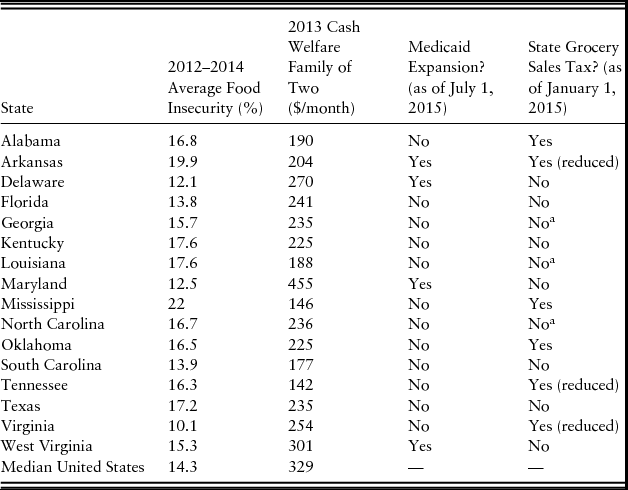
Researchers may also wish to explore the connection between food insecurity, other hardships, and the various types of programs designed to relieve those hardships, including food assistance programs, cash welfare, housing assistance, and Medicaid. Such research could be especially important for the southern region, which holds a number of states with high poverty and high food insecurity rates. For each state in the southern region, Table 1 shows the 2012–2014 average food insecurity rates, the maximum 2013 cash welfare (Temporary Assistance for Needy Families) benefits for a family of two (taken from Huber, Kassabian, and Cohen, Reference Huber, Kassabian and Cohen2014), whether the state has approved the Medicaid extension under the Affordable Care Act, and whether the state levies a sales tax on groceries (states that have a lower tax rate on groceries than most other products are noted as “reduced”). The southern region holds 8 of the 10 states with the lowest cash welfare benefits, and only 1 southern state (Maryland) provides benefits above the U.S. average of $329 per month for a family of two. Four of the 16 southern states have approved the Medicaid expansion, as compared with 23 of the 34 nonsouthern states. Further, 6 southern states (Alabama, Arkansas, Mississippi, Oklahoma, Tennessee, and Virginia) levy a sales tax on groceries (Federation of Tax Administrators, 2015). Although federal law prohibits charging sales tax on groceries purchased with SNAP benefits, the grocery tax increases the cost of food for low-income families that do not receive SNAP and, even in SNAP households, creates a higher cost for any food purchased after the monthly benefit runs out.
Food Insecurity, Cash Welfare, Medicaid Expansion, and Grocery Tax in 16 Southern States
a Although the state does not impose a tax on groceries, groceries may be subject to local taxes.
Educational attainment, which is linked to higher levels of food security, is also lower in many southern states than in other parts of the country, and rates of cigarette smoking are high in some southern states. West Virginia, for example, lead the nation in rates of adult cigarette use, with more than 27% of adults smoking in 2013, and in Kentucky more than 26% of adults smoked, compared with the national rate of approximately 19% (Centers for Disease Control and Prevention, 2015). A confluence of factors thus makes the South especially vulnerable to the problem of food insecurity, creating a need for increased research to inform the policy debate.
Thus, although the literature on food insecurity is vast, additional research on this topic is warranted. We conclude with six suggestions for future research efforts:
1. Recognize underreporting of food assistance program participation in survey data and its impact on efforts to assess program efficacy. Bollinger and David (Reference Bollinger and David2005) linked state administrative records to the 1984 Survey of Income and Program Participation to study this issue and found that, for food stamps, false negatives are a nontrivial problem, and that the false negatives are related to earnings and are more likely to occur when the household is headed by a single man. Similarly, Mittag (Reference Mittag2013) linked administrative data to American Community Survey Data from New York State and also found systematic underreporting linked to demographic and economic variables. Correcting this problem requires that researchers either link to administrative data or make corrections in their estimates (see Bollinger and David, Reference Bollinger and David1997, Reference Bollinger and David2005; Kreider et al., Reference Korale-Gedara, Ratnasiri and Bandara2012; and Mittag, Reference Mittag2013).
2. Examine the effect of household characteristics, including specific food-related managerial skills and access to food-preparation appliances, as well as time constraints and transportation problems, on household food production and associated reports of food insecurity. Some promising work on the impact of time constraints on household food security has been reported, but this work could be extended to include a variety of household characteristics that might affect the time constraints.
3. Develop a better understanding of the objective manifestations of food insecurity in terms of dietary behaviors. Although there has been work in this area, results are not strongly conclusive. Some problems in finding objective manifestations of food insecurity may result from the time periods of most surveys, with food insecurity (which is often episodic) measured over the past year (or past month) while diet recall is for the past few days.
4. Place food insecurity in the broader context of general deprivation and assess social safety net programs in conjunction, rather than separately. It is plausible that housing assistance, expanded Medicaid, and/or assistance paying utility bills may be as effective as food assistance programs in relieving food insecurity. It is equally likely that food assistance can help relieve other hardships such as those related to housing and medical needs.
5. In examining the relationship between household food expenditures and food insecurity, explore the ways in which in-kind food assistance, whether from private food pantries or government programs, and household food production (gardening, hunting, and fishing) moderate this relationship. It would be useful to know the extent to which both in-kind aid and home food production serve to fill the gap between a household's food expenditures and a household's food consumption.
6. Focus on wealth, as well as income, as a determinant of food security. Wealth can be tapped not only to avert a short-term crisis, but also to limit participation in food assistance programs. Information on household wealth could thus be used both to more accurately delineate the population deemed eligible for a benefit and to plumb the weak relationship between household income and reported food insecurity.

 Open access

