


Suicide is the main cause of premature death among individuals with schizophrenia. Reference Caldwell and Gottesman1 There is some evidence that the risk factors for self-harm may be different for those with schizophrenia compared with other groups. Reference Haw, Hawton, Sutton, Sinclair and Deeks2 In addition, there is some emerging evidence that risk factors for self-harm may alter during the course of a psychotic illness. Reference Addington, Williams, Young and Addington3,Reference Clarke, Whitty, Browne, Mc Tigue, Kinsella, Waddington, Larkin and O'Callaghan4 It is well established that suicidal behaviour is more common during the early phases of a psychotic illness. Reference Palmer, Pankratz and Bostwick5 The period between the onset of psychotic symptoms and an individual's first contact with services may be a time of particularly high risk, Reference Clarke, Whitty, Browne, Mc Tigue, Kinsella, Waddington, Larkin and O'Callaghan4 although few studies have examined this period in detail.
In this study we aimed to describe both the frequency and the nature of self-harm in individuals presenting with psychosis for the first time, and to investigate whether there were any identifiable pre-treatment differences between those who engaged in self-harm and those who did not. We aimed to specifically focus on self-harm that occurred during the period between the onset of psychotic symptoms and an individual's first presentation to services.
Method
Study design and sample
The ÆSOP (Aetiology and Ethnicity in Schizophrenia and Other Psychoses) study is a population-based study of all incident cases of psychosis presenting to services over 2 years in three centres: south-east London, Nottingham and Bristol. This study presents data from the south-east London and Nottingham centres only because of a lack of outcome data on participants recruited in Bristol. Recruitment was carried out over the 2-year period between 1 September 1997 and 31 August 1999. Potential participants were individuals who were resident within the catchment area of the study, aged 16–64 years and who made their first lifetime contact with mental health services owing to a psychotic episode during the study period. A leakage study, based on the methods used by Cooper et al, Reference Cooper, Goodhead, Craig, Harris, Howat and Korer6 was conducted after the survey period to identify any individuals missed by the initial screening process. A more detailed description of the ÆSOP study has been published elsewhere. Reference Fearon, Kirkbride, Morgan, Dazzan, Morgan, Lloyd, Hutchinson, Tarrant, Fung, Holloway, Mallett, Harrison, Leff and Jones7–Reference Morgan, Dazzan, Morgan, Jones, Harrison, Leff and Murray9
All potential participants were assessed by research staff as soon as possible after making contact with mental health services. Written consent was obtained for all those who agreed to be interviewed by research staff. With the consent of participants, a relative or other close informant was also contacted to provide information. When individuals refused to be interviewed, or were not contactable, ethical approval for this study allowed the clinical case notes to be reviewed.
Self-harm
The main outcome in this study was self-harm occurring during the period between the onset of psychotic symptoms and first pre-sentation to services. In order to be classified as an episode of self-harm, clear evidence of bodily harm was required. Information on self-harm was obtained from two separate sources. A Psychiatric and Personal History Schedule (PPHS) Reference Jablensky, Sartorius, Ernberg, Anker, Korten, Cooper, Day and Bertelsen10 was completed on all participants based on information gained from interviews and/or case note review. The PPHS provides information about the circumstances of presentation, past psychiatric history, past forensic history, drug and alcohol misuse, mode of illness onset and pathways to care. As part of the PPHS, the main reasons for contact with services are recorded from a list including ‘attempted suicide or bodily harm’. In addition, the medical records of all participants were examined to ascertain whether any self-harm not documented in the PPHS had occurred. The timing of self-harm was assessed to ensure it had occurred after the onset of psychotic symptoms but prior to presentation to services. Information was also obtained from the medical records regarding the nature of any self-harm, the reasons given by participants for this and any evidence of intoxication at the time of self-harm. All medical records were scrutinised by one of the authors (S.B.H) using a detailed checklist devised for this study.
Diagnostic assessment
Participants were interviewed using the Schedule for Clinical Assessment in Neuropsychiatry (SCAN). 11 The medical records of all adults were also examined in detail. Diagnoses according to ICD–10 Diagnostic Criteria for Research 12 were made on the basis of consensus by senior clinicians in meetings where all available information for each case was reviewed. All those with a psychotic disorder (ICD–10 codes F20–29 and F30–33) qualified for this study. Interrater and inter-centre diagnostic reliability results, based on a random sample (n=20), were satisfactory with kappa scores between 0.63 and 0.75.
Symptom and socio-demographic variables
The following schedules were completed on all participants using information from research interviews and/or case note reviews.
-
(a) The Medical Research Council Sociodemographic Schedule Reference Mallett13 was used to elicit information on participants' age, gender, ethnicity (self-ascribed and based on the 1991 census categories), employment and place of residence. The social class of adults was derived from their highest ever occupational status. Participant's social class at birth was derived from their father's occupation.
-
(b) The SCAN interview provided information about specific symptoms. All researchers were trained in the use of the SCAN interview at a World Health Organization-approved course and pre-study reliability was established using independent ratings of videotaped interviews. The SCAN is based on phenomenological descriptions in the Present State Examination Reference Wing, Cooper and Sartorius14 and encompasses a large number of symptoms and signs. Symptoms were recoded according to the SCAN's item group checklist algorithm. The item group checklist combines scores on several SCAN items that are specific to a particular group of symptoms. The item group checklist symptom variables were converted into binary variables coding for either the presence or absence of a range of affective and psychotic symptoms. The following symptom groups were included: depressed mood; special features of depressed mood (including biological symptoms); expansive mood; motor retardation; overactivity; delusions; delusions of reference; delusions of persecution; bizarre delusions; auditory hallucinations; thought disorder; and threat-control override symptoms (delusions of control or persecution).
Participants who agreed to an initial research interview were requested to return for further interviews and neuropsychological testing. As a result the following interview-based information was available on a sub-section of the sample.
-
(a) The revised Wechsler Adult Intelligence Scale Reference Wechsler15 and National Adult Reading Test Reference Nelson16 were administered to gain estimates of participant's premorbid and current intellectual functioning.
-
(b) The expanded Schedule of Assessment of Insight Reference Kemp, David and Blackwell17 was used to measure insight. This is a semi-structured interview that provides a measure of insight in three separate domains: treatment compliance, recognition of illness and re-labelling of psychotic phenomena.
Statistical analysis
Statistical analysis was performed using SPSS for Windows (version 13.0) computer software. Descriptive statistics for the whole sample were obtained using proportions, means or medians according to the measurement type and distribution, with t-tests and χ2-tests used to identify any differences by centre, interview status and inclusion status.
Univariate associations between socio-demographic and symptom variables were investigated by calculating odds ratios with 95% confidence intervals (CIs). Multivariate analyses were then conducted using logistic regression. All socio-demographic, clinical and service contact variables which were significant predictors of self-harm on univariate analysis were entered into a multivariable logistic regression model together with age and gender. Variables only available on a small subsection of the sample, such as insight and IQ measurement, were considered in separate multivariate models.
Ethics
Ethical approval for this study was obtained at each of the two study centers from the local research ethics committees at the time of study commencement.
Results
During the 2-year study period, 512 adults with first-episode psychosis presented to services: 309 in south-east London and 203 in Nottingham. There was insufficient information relating to the outcome of interest on 16 of these participants, who were, therefore, not included in the current analysis. In each of these latter cases, an interview had not been possible and clinical record information was insufficient to assess whether any self-harm had occurred. We found no differences between those excluded from the current analysis and those included in terms of age, gender, ethnicity or diagnostic category. Of the 496 adults included in the analysis, interview data (participants and/or relative) was available for 328 individuals (66.1%). Case notes were scrutinised for all participants. Information on previous employment was not consistently documented in case notes. As a result, highest ever social class could only be ascertained for 386 participants (77.8%). No significant differences were found between those with information on social class available and the remainder of the sample with regard to gender, diagnostic category, duration of untreated psychosis or the self-harm outcome. However, younger participants (P<0.001) and those of Black or moniroty ethnicity (P=0.006) were less likely to have information on their social class available.
As mentioned previously, information on IQ and insight was only available when participants agreed to additional interviews. Information on insight was available on a sub-sample of 217 individuals (43.7%), while complete IQ assessments were available on 149 participants (30.0%). There were no significant differences between those who had an assessment of either insight or IQ and the remainder of the sample in terms of gender, age, duration of untreated psychosis or levels of self-harm. However, those of Black or minority ethnicity were less likely to have an insight assessment (P=0.005) though more likely to have an IQ assessment (P<0.001). Individuals with a diagnosis of schizophrenia were less likely to undergo an assessment of their insight (P<0.001).
Sample characteristics
A summary of the socio-demographic and clinical characteristics of the whole sample is presented in the online Table DS1. Because of gender differences in the incident rate for psychosis, there were more male than female participants. Individuals were aged between 16 and 62 years with the mean age being 30.8 years (s.d.=10.8, median 29). The majority of participants (n=358, 72.2%) were given a broad diagnosis of schizophrenia (schizophrenia, schizoaffective disorder, brief psychotic episode or other non-affective psychosis) with the remainder receiving a diagnosis of either mania or depressive psychosis. Ethnicity was the only variable to differ significantly by centre, with a greater proportion of London-based participants belonging to African–Caribbean and Black African ethnic groups, reflecting known demographic differences between the two catchment areas.
Prevalence and description of self-harm
Of the 496 participants, 56 (11.3%) had engaged in self-harm between the onset of their psychotic symptoms and their first presentation to services. On 41 (73.2%) of these occasions, self-harm occurred at or immediately prior to an individual's first presentation to services. The majority of individuals who had engaged in self-harm had either taken an overdose (n=16, 29%) or cut themselves (n=17, 30%). A significant minority had jumped from a height (n=5, 9%), hit themselves (n=5, 9%) or endured starvation serious enough to require medical treatment (n=4, 7%). Of those who self-harmed, only 9 (16.1%) of the participants described command or passivity experiences directing them to injure themselves. The majority of participants (n=40, 71.4%) described the self-harm as being in response to the distress of their symptoms. Only 13 (23.2%) self-harm episodes occurred in the context of acute intoxication with drugs or alcohol.
Univariate associations with self-harm
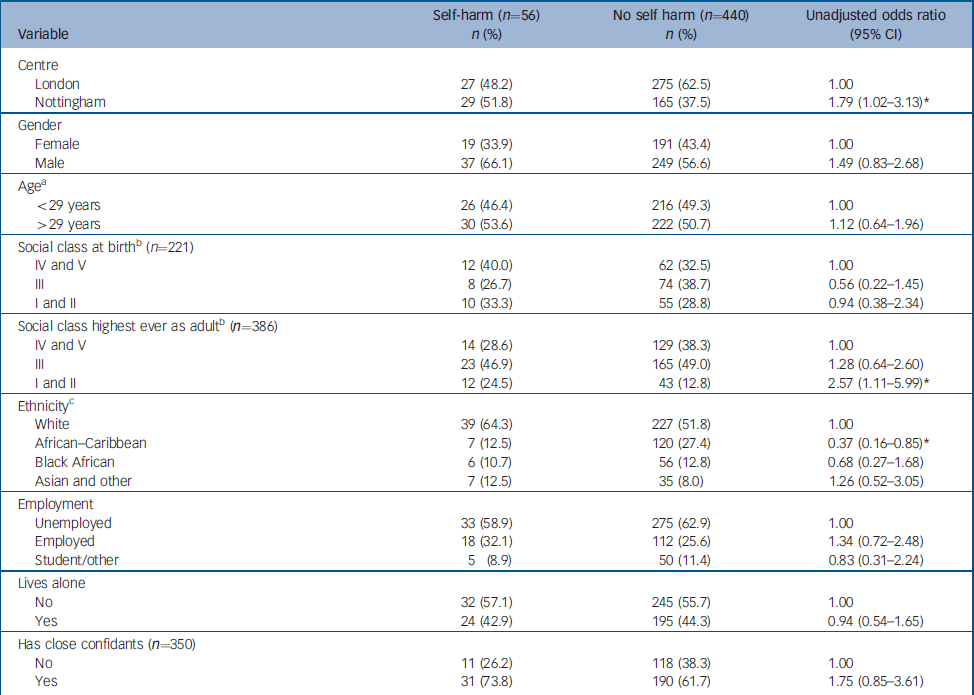
The associations between socio-demographic factors and self-harm during the pre-treatment phase are shown in Table 1. There were significantly higher rates of self-harm in Nottingham and in adults belonging to social classes I and II. Although there was no association between the risk of self-harm and social class at birth, the risk for self-harm increased as the level of social class in adulthood increased (P=0.03 for linear trend). Compared with White participants, those of African–Caribbean ethnicity had lower rates of self-harm.
Socio-demographic factors and self-harm during the pre-treatment phase of first-episode psychosis
| Variable | Self-harm (n=56) n (%) | No self harm (n=440) n (%) | Unadjusted odds ratio (95% CI) |
|---|---|---|---|
| Centre | |||
| London | 27 (48.2) | 275 (62.5) | 1.00 |
| Nottingham | 29 (51.8) | 165 (37.5) | 1.79 (1.02-3.13)* |
| Gender | |||
| Female | 19 (33.9) | 191 (43.4) | 1.00 |
| Male | 37 (66.1) | 249 (56.6) | 1.49 (0.83-2.68) |
| Agea | |||
| < 29 years | 26 (46.4) | 216 (49.3) | 1.00 |
| > 29 years | 30 (53.6) | 222 (50.7) | 1.12 (0.64-1.96) |
| Social class at birthb (n=221) | |||
| IV and V | 12 (40.0) | 62 (32.5) | 1.00 |
| III | 8 (26.7) | 74 (38.7) | 0.56 (0.22-1.45) |
| I and II | 10 (33.3) | 55 (28.8) | 0.94 (0.38-2.34) |
| Social class highest ever as adultb (n=386) | |||
| IV and V | 14 (28.6) | 129 (38.3) | 1.00 |
| III | 23 (46.9) | 165 (49.0) | 1.28 (0.64-2.60) |
| I and II | 12 (24.5) | 43 (12.8) | 2.57 (1.11-5.99)* |
| Ethnicityc | |||
| White | 39 (64.3) | 227 (51.8) | 1.00 |
| African—Caribbean | 7 (12.5) | 120 (27.4) | 0.37 (0.16-0.85)* |
| Black African | 6 (10.7) | 56 (12.8) | 0.68 (0.27-1.68) |
| Asian and other | 7 (12.5) | 35 (8.0) | 1.26 (0.52-3.05) |
| Employment | |||
| Unemployed | 33 (58.9) | 275 (62.9) | 1.00 |
| Employed | 18 (32.1) | 112 (25.6) | 1.34 (0.72-2.48) |
| Student/other | 5 (8.9) | 50 (11.4) | 0.83 (0.31-2.24) |
| Lives alone | |||
| No | 32 (57.1) | 245 (55.7) | 1.00 |
| Yes | 24 (42.9) | 195 (44.3) | 0.94 (0.54-1.65) |
| Has close confidants (n=350) | |||
| No | 11 (26.2) | 118 (38.3) | 1.00 |
| Yes | 31 (73.8) | 190 (61.7) | 1.75 (0.85-3.61) |
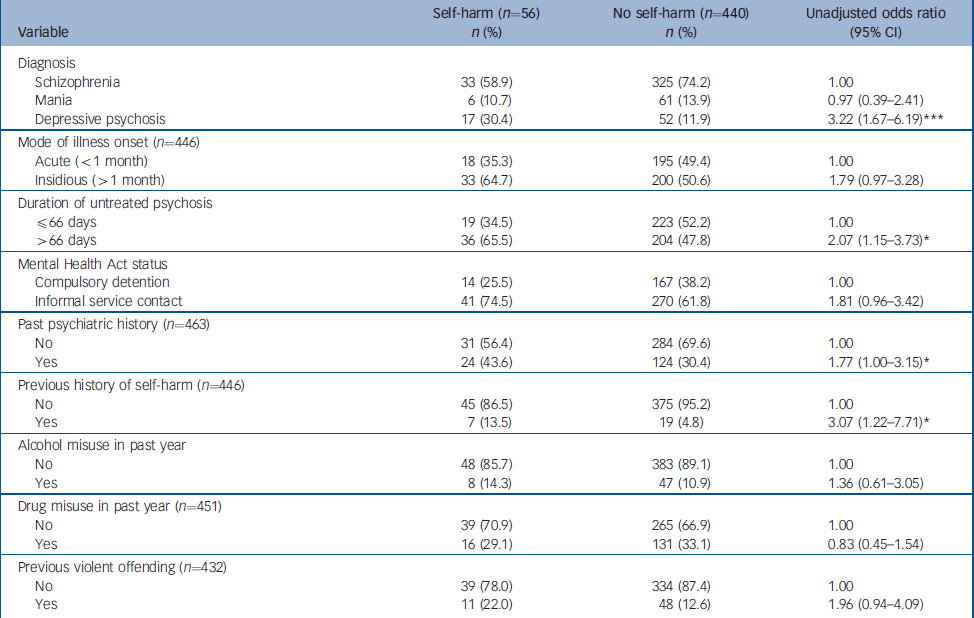
Table 2 and online Table DS2 show the associations between clinical variables, including symptomatology, and the occurrence of self-harm. Those who self-harmed were more likely to have a diagnosis of depressive psychosis than schizophrenia (odds ratio (OR) 3.22, 95% CI 1.67–6.19). The duration of untreated psychosis was dichotomised by the median (66 days). Those who self-harmed during the pre-treatment phase were more likely to have a longer duration of untreated psychosis (OR=2.07, 95% CI 1.15–3.73). Those with a history of previous non-psychotic psychiatric illness or previous self-harm (prior to their psychotic symptoms beginning) were also at increased risk. Neither alcohol nor drug misuse over the previous year was related to risk of self-harm. With the exception of depressed mood, the presence or absence of various symptoms did not affect the likelihood of self-harm.
Clinical and service contact correlates of self-harm during the pre-treatment phase of first-episode psychosis
| Variable | Self-harm (n=56) n (%) | No self-harm (n=440) n (%) | Unadjusted odds ratio (95% CI) |
|---|---|---|---|
| Diagnosis | |||
| Schizophrenia | 33 (58.9) | 325 (74.2) | 1.00 |
| Mania | 6 (10.7) | 61 (13.9) | 0.97 (0.39-2.41) |
| Depressive psychosis | 17 (30.4) | 52 (11.9) | 3.22 (1.67-6.19)*** |
| Mode of illness onset (n=446) | |||
| Acute (<1 month) | 18 (35.3) | 195 (49.4) | 1.00 |
| Insidious (>1 month) | 33 (64.7) | 200 (50.6) | 1.79 (0.97-3.28) |
| Duration of untreated psychosis | |||
| ≤66 days | 19 (34.5) | 223 (52.2) | 1.00 |
| >66 days | 36 (65.5) | 204 (47.8) | 2.07 (1.15-3.73)* |
| Mental Health Act status | |||
| Compulsory detention | 14 (25.5) | 167 (38.2) | 1.00 |
| Informal service contact | 41 (74.5) | 270 (61.8) | 1.81 (0.96-3.42) |
| Past psychiatric history (n=463) | |||
| No | 31 (56.4) | 284 (69.6) | 1.00 |
| Yes | 24 (43.6) | 124 (30.4) | 1.77 (1.00-3.15)* |
| Previous history of self-harm (n=446) | |||
| No | 45 (86.5) | 375 (95.2) | 1.00 |
| Yes | 7 (13.5) | 19 (4.8) | 3.07 (1.22-7.71)* |
| Alcohol misuse in past year | |||
| No | 48 (85.7) | 383 (89.1) | 1.00 |
| Yes | 8 (14.3) | 47 (10.9) | 1.36 (0.61-3.05) |
| Drug misuse in past year (n=451) | |||
| No | 39 (70.9) | 265 (66.9) | 1.00 |
| Yes | 16 (29.1) | 131 (33.1) | 0.83 (0.45-1.54) |
| Previous violent offending (n=432) | |||
| No | 39 (78.0) | 334 (87.4) | 1.00 |
| Yes | 11 (22.0) | 48 (12.6) | 1.96 (0.94-4.09) |
The Wechsler Adult Intelligence Scale (WAIS–III) and National Adult Reading Test scores were available for 149 participants. Univariate analysis on this subset did not reveal any associations between premorbid or current IQ estimates and the occurrence of self-harm.
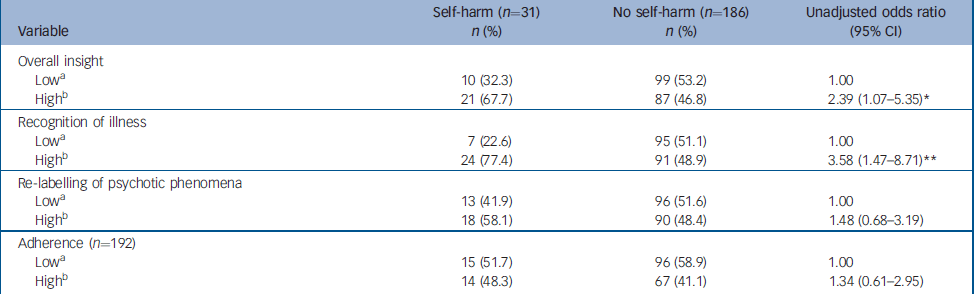
The associations between measures of insight and self-harm are shown in Table 3. Participants were classified as having low or high levels of insight depending on whether their scores on the expanded Schedule of Assessment of Insight were above or below the median (total and individual component scores). Those with a higher level of insight were more likely to self-harm, especially those with higher levels of illness recognition
Insight measures and self-harm during the pre-treatment phase of first-episode psychosis (n=217)
| Variable | Self-harm (n=31) n (%) | No self-harm (n=186) n (%) | Unadjusted odds ratio (95% CI) |
|---|---|---|---|
| Overall insight | |||
| Lowa | 10 (32.3) | 99 (53.2) | 1.00 |
| Highb | 21 (67.7) | 87 (46.8) | 2.39 (1.07-5.35)* |
| Recognition of illness | |||
| Lowa | 7 (22.6) | 95 (51.1) | 1.00 |
| Highb | 24 (77.4) | 91 (48.9) | 3.58 (1.47-8.71)** |
| Re-labelling of psychotic phenomena | |||
| Lowa | 13 (41.9) | 96 (51.6) | 1.00 |
| Highb | 18 (58.1) | 90 (48.4) | 1.48 (0.68-3.19) |
| Adherence (n=192) | |||
| Lowa | 15 (51.7) | 96 (58.9) | 1.00 |
| Highb | 14 (48.3) | 67 (41.1) | 1.34 (0.61-2.95) |
Multivariate models
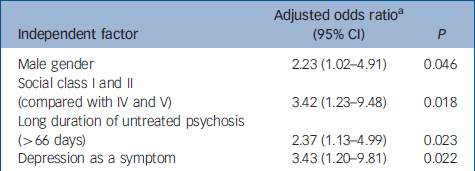
All significant socio-demographic, clinical and service contact variables were entered into a multivariate logistic regression model together with age and gender. As data on insight were available only on a sub-set of 217 participants, this variable was considered in a multivariate model separately. Being male, belonging to social class I or II, having depression as a symptom and having a prolonged duration of untreated psychosis were the only factors that remained independently associated with self-harm. This final model is presented in Table 4. As information on social class was only available for 386 participants, the inclusion of this variable reduced the numbers included in the multivariable model. The exclusion of social class increased the number of participants included in the model up to 427, but did not significantly alter the results, with duration of untreated psychosis and depression as a symptom remaining as the only clinical factors independently associated with self-harm.
Multivariable model showing independent predictors for self-harm in the pre-treatment phase of first-episode psychosis (n=348).
| Independent factor | Adjusted odds ratioa (95% CI) | P |
|---|---|---|
| Male gender | 2.23 (1.02-4.91) | 0.046 |
| Social class I and II (compared with IV and V) | 3.42 (1.23-9.48) | 0.018 |
| Long duration of untreated psychosis (>66 days) | 2.37 (1.13-4.99) | 0.023 |
| Depression as a symptom | 3.43 (1.20-9.81) | 0.022 |
In a separate multivariate analysis, high levels of insight were found to independently predict self-harm after controlling for age, gender, social class, ethnicity, duration of untreated psychosis and depressive symptoms. The adjusted OR for those with low total insight engaging in self-harm was 3.03 (95% CI 1.09–8.40, P=0.03).
Discussion
A significant proportion of adults in our study harmed themselves during the pre-treatment phase of their first psychotic episode. The risk of self-harm was higher in males, those from a higher social class, those with depressed mood, a longer period of untreated psychosis and a greater level of insight. Episodes of self-harm appeared to occur in response to symptom-induced distress and usually without any associated intoxication.
Strengths and weaknesses
The ÆSOP study is the largest study to date of first-episode psychosis conducted in the UK. The large size and detailed information available allowed a range of potential risk factors to be investigated. Unlike many previous studies, we were also able to examine the occurrence of self-harm in both affective and non-affective psychotic groups. Clinical information was collected soon after contact with services had been made ensuring a relatively close temporal relationship between the outcome of interest and measurement of potential correlates. Despite these strengths, some methodological issues merit further discussion. There may be selection bias resulting from the ascertainment of cases via contact with services. However, on the basis of previous UK population studies it seems unlikely that large numbers of individuals with psychosis would have remained in the community undetected by mental health services. Reference Morgan, Dazzan, Morgan, Jones, Harrison, Leff and Murray9,Reference Harrison18 In addition, a comprehensive leakage study was undertaken to ensure that any individuals initially missed at the stage of recruitment were identified and included. The use of medical records to gain additional information on self-harm does create a possible source of observation bias. Some participants may have undergone more detailed questioning about self-harm because of the nature of their presentation. Where possible, information on self-harm was obtained from multiple sources including research interviews in an attempt to reduce any bias.
The lack of information regarding personality is also a potential limitation. Within the general population, personality traits, such as neuroticism and novelty seeking, Reference Fergusson, Woodward and Horwood19 and personality disorders, such as borderline personality disorder, Reference Krysinska, Heller and De Leo20,Reference Tyrer, Tom, Byford, Schmidt, Jones, Davidson, Knapp, MacLeod and Catalan21 are known to increase the risk of suicidal behaviour. At present, it is unclear whether personality is an important risk factor among those with psychosis, although high levels of impulsivity have been reported to be associated with increased risk of suicide among individuals with psychosis. Reference Hawton, Sutton, Haw, Sinclair and Deeks22
Prevalence and nature of self-harm
Over one in ten adults in our study engaged in self-harm between the onset of their psychotic symptoms and their first contact with services. These results confirm previous observations that self-harm is common among those in the pre-treatment phase of a psychotic illness. Reference Addington, Williams, Young and Addington3,Reference Clarke, Whitty, Browne, Mc Tigue, Kinsella, Waddington, Larkin and O'Callaghan4
Case studies have previously suggested that those with schizophrenia are more likely to engage in violent forms of self-harm. Reference DeHert, Peuskens, Hawton and Van Heeringten23 Our results show that although a minority employ unusual and highly lethal methods of self-harm, the majority of individuals with first-onset psychosis who self-harm use relatively non-violent methods. This supports the findings of a recent case–control study which concluded that the majority of acts of self-harm among individuals with schizophrenia were similar in nature to those seen in adjustment reactions. Reference Symonds, Taylor, Tippins and Turkington24 These conclusions should be viewed with some caution as our study did not have a control group, and may have been biased through the exclusion of those who died as a result of self-harm. High rates of intoxication (between 46% and 77%) at the time of self-harm is well established in other patient groups. Reference Hufford25 However, in our sample, intoxication at the time of self-harm was evident in only 23% of adults.
Socio-demographic risk factors for self-harm
Our results support the notion that those with psychosis may have different socio-demographic risk factors for self-harm compared with other groups. Reference Haw, Hawton, Sutton, Sinclair and Deeks2 Studies of self-harm in the general population have shown that young adult females and those of low socioeconomic status are at increased risk of self-harm. Reference Schmidtke, Bille-Brahe, DeLeo, Kerkhof, Bjerke, Crepet, Haring, Hawton, Lönnqvist, Michel, Pommereau, Querejeta, Phillipe, Salander-Renberg, Temesváry, Wasserman, Fricke, Weinacker and Sampaio-Faria26 In contrast, our results suggest that during the early phases of psychosis age does not have an impact on the risk of self-harm and that males and those from higher socio-economic groups are at increased risk. Previous studies have shown that individuals with schizophrenia tend to experience a decline in social class prior to the onset of psychosis, whereas those with affective psychosis do not. Reference Jones, Bebbington, Foerster, Lewis, Murray, Russell, Sham, Toone and Wilkins27 In our study, the association between higher socio-economic status and self-harm remained, even after controlling for diagnosis. Since socio-economic status was assigned on the basis of highest ever occupation, this finding may be the result of distress due to a greater potential for occupational and social decline. This hypothesis is supported by previous findings of unemployment being associated with a lower risk of self-harm in psychosis, Reference Haw, Hawton, Sutton, Sinclair and Deeks2 and by fear of mental disintegration being a known risk factor for suicide. Reference Hawton, Sutton, Haw, Sinclair and Deeks22 While we were not able to replicate an association between employment and self-harm, we did find that those with increased levels of insight were more likely to have self-harmed. Taken together, these results suggest that it is the awareness of an emerging illness, together with the fear of social and possibly occupational decline, that contributes to the motivation for self-harm in this group. Given this hypothesis, it is of particular interest that participant's social class at birth did not affect the risk of self-harm, suggesting that it is those who have obtained a more affluent social status during their own life who are particularly fearful of this potential decline.
The observation, on univariate analysis only, that rates of self-harm were reduced for those of African–Caribbean ethnicity has been reported previously. Reference McKenzie, van Os, Fahy, Jones, Harvey, Toone and Murray28 Other studies have found that lower risk of self-harm is restricted to older African–Caribbean people. Reference McKenzie, van Os, Samele, van Horn, Tattan and Murray29 The reasons for this are not clear, although various cultural factors, together with a possible selection bias in those who decided to migrate, have all been suggested as possibilities. Reference McKenzie, van Os, Samele, van Horn, Tattan and Murray29 We found evidence that the association between ethnicity and self-harm was confounded by other risk factors.
Clinical risk factors for self-harm
Clinical risk factors, unlike many socio-demographic factors, are often treatable or malleable at an individual level. As a result, the clinical risk factors identified in this study have the potential to direct future research and service improvements.
Despite considerable debate, Reference Pelosi and Birchwood30 the provision of specialist mental health services for individuals in the early phases of a psychotic illness is now government policy in the UK. 31 One of the main areas of emphasis for such services is achieving a reduction in the duration of untreated psychosis. Previous studies have examined the relationship between the duration of untreated psychosis and risk of self-harm, but they have been mixed in their conclusions. Reference Haw, Hawton, Sutton, Sinclair and Deeks2,Reference Addington, Williams, Young and Addington3,Reference Altamura, Bassetti, Bignotti, Pioli and Mundo32,Reference Nordentoft, Jeppesen, Abel, Kassow, Petersen, Thorup, Krarup, Hemmingsen and Jørgensen33 Other studies have observed higher levels of suicidality in areas without early detection programmes. Reference Melle, Johannesen, Friis, Haahr, Joa, Larsen, Opjordsmoen, Rund, Simonsen, Vaglum and McGlashan34 One of the main difficulties in examining the effect of duration of untreated psychosis on various outcomes is the association between duration of untreated psychosis and a number of other early illness and social factors. We were able to control for a number of such factors and found duration of untreated psychosis remained an independent risk factor for self-harm. In particular, we did not find evidence of confounding by substance misuse or the level of social support. Incidents of self-harm did not appear to be evenly spread throughout the period of untreated psychosis, with around three-quarters of the episodes of self-harm occurring at, or immediately before, presentation to services. This would suggest that increased rates of self-harm among individuals with a prolonged duration of untreated psychosis are not solely due to increased opportunity and time.
With the exception of low mood, no other symptoms were found to be associated with self-harm. The majority of those who self-harmed appeared to do so in response to the general distress resulting from a range of symptoms rather than in direct response to any specific psychotic symptoms. These results are in keeping with other studies that have found psychotic symptomatology to be only a weak predictor of both completed suicide and other more general outcome measures. Reference Hawton, Sutton, Haw, Sinclair and Deeks22,Reference Carpenter, Bartko, Strauss and Hawk35,Reference Gaebel and Pietzcker36
The association between increased insight and suicidal behaviour has been reported previously, Reference Crumlish, Whitty, Kamali, Clarke, Browne, McTigue, Lane, Kinsella, Larkin and O'Callaghan37–Reference Schwartz and Smith39 our finding of an association during the pre-treatment phase appears to be unique. However, as insight data was only available on a small, and not totally representative sub-sample, this result needs to be interpreted with caution. The association between increased insight and self-harm may be related to individuals becoming demoralised over the possible future effects of their illness. Reference Schwartz and Petersen40 Interventions to reduce levels of hopelessness, such as cognitive therapy, Reference Power, Bell, Mills, Herrman-Doig, Davern, Henry, Yuen, Khademy-Deljo and McGorry41 may be important in reducing levels of demoralisation.
Concluding remarks
A significant number of patients with psychosis will self-harm during the time between the onset of their psychotic symptoms and their first presentation to services. Male gender, higher socio-economic class, depression as a symptom and a prolonged period of untreated psychosis all independently increase the risk of self-harm in the pre-treatment period. A greater level of insight, especially regarding illness recognition, is also associated with self-harm. With the exception of depressed mood, individual symptoms do not appear to influence the risk of self-harm.
Our findings demonstrate a need to consider the unique risk factors associated with self-harm in individuals with psychosis and emphasise the potential benefits of early intervention and treatment of this group.
Acknowledgements
The Aetiology and Ethnicity in Schizophrenia and Other Psychoses (ÆSOP) study was funded by the UK Medical Research Council. We also acknowledge the Stanley Medical Research Institute for their support. We thank Prof. Matthew Hotopf (Institute of Psychiatry, London) for his advice on earlier drafts of this paper. We also wish to thank the ÆSOP researchers who helped with the data collection and the individuals who took part in the study. The South London and Maudsley NHS Foundation Trust/Institute of Psychiatry (King's College London) is an NIHR Biomedical Research Centre.




eLetters
No eLetters have been published for this article.