

Alexander von Humboldt’s Rejection
In 1812, the Prussian naturalist Alexander von Humboldt, recently returned from his celebrated expedition to South America, wrote to Emperor Napoleon describing his next goal: to explore the Himalayas, that “high mountain chain that stretches from the source of the Indus to the source of the Ganges.”Footnote 1 Two years later, in June 1814, he was in London accompanying the prince of Prussia on a diplomatic tour. Humboldt visited the library at India House and presented to the Court of Directors his desire to travel to India. Humboldt’s case was also pressed with the prince regent. Nothing came of these requests, and Humboldt was not granted access to India. Three years after that, this time accompanied by his friend the French astronomer François Arago, Humboldt once again visited London and once again sought approval to travel to India, and, once again, he was unsuccessful. Over the next several years, Humboldt continued to press his case with the directors while also gathering financial support. But he never made it to India, most likely because he was never granted permission by the Company.Footnote 2
Instead of Humboldt, a series of Company servants would be the first Europeans to explore the ecologically unique and politically significant string of high mountain ranges. At exactly the time Humboldt was enquiring about access, the Company was employing the Scottish surveyor Alexander Gerard to explore various roads and routes through the Himalayas. His expedition eventually reached nearly 20,000-feet altitude and the border asserted by China. Gerard sent his notebooks with barometric, trigonometrical and meteorological readings, as well as maps and accounts of villages (in regions previously assumed to have been uninhabited and uninhabitable), together with a geological collection gathered at 19,000 feet, back to India House. They would sit in storage for several years before the Company administrator and orientalist Henry Thomas Colebrooke requested access to the materials.Footnote 3 Colebrooke then arranged for the duplicates in the collection to be separated out and donated to the newly established Geological Society of London (founded in part by Company servants). He also edited Gerard’s journal into a publication sponsored by the Royal Asiatic Society.Footnote 4 Less than a decade later, under the patronage of the Company, the Company surgeon, naturalist and curator John Forbes Royle would begin to publish his extensive and influential biogeographical study of the Himalayas (more on Royle in the next chapters).Footnote 5
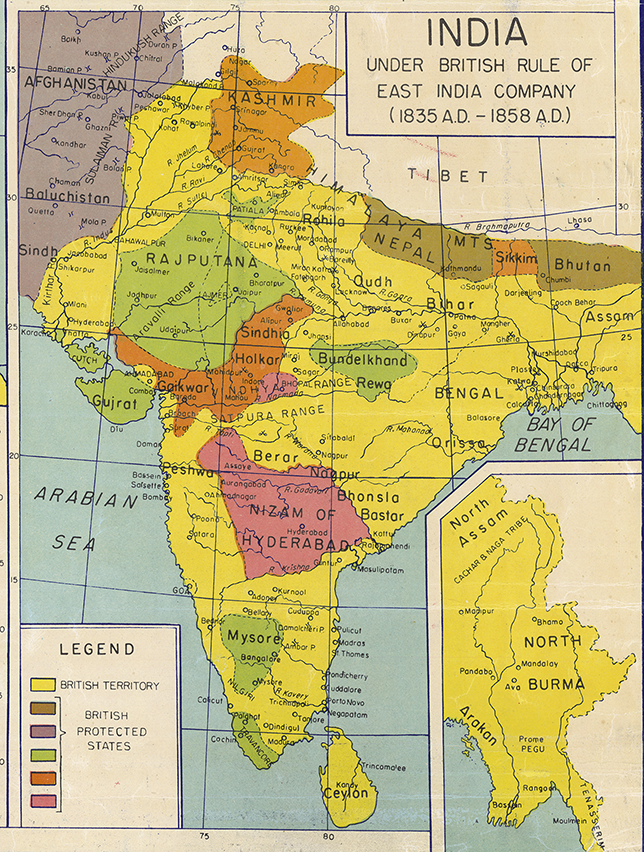
Map of India under British rule, 1833–1858.
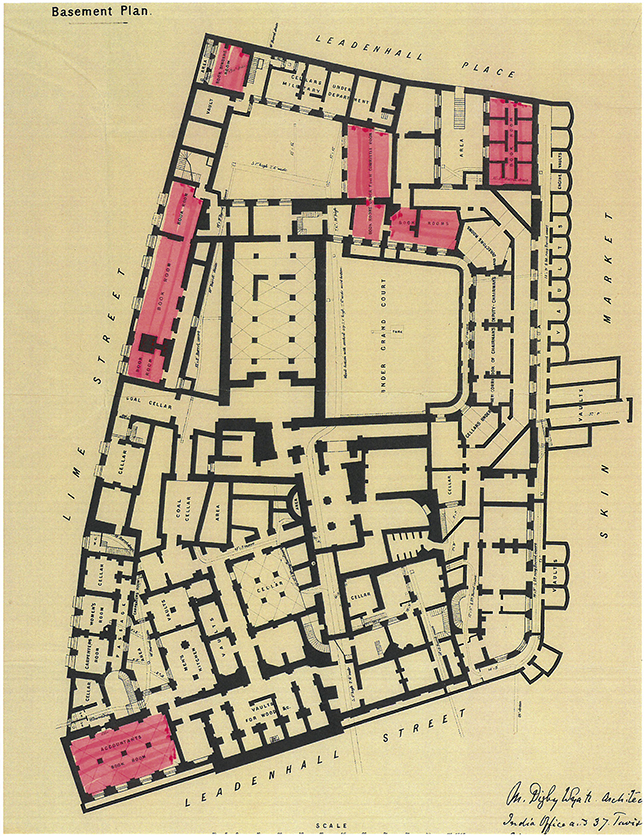
Basement floor with “Book Rooms” highlighted. In the early 1800s much of the basement of India House was used to store Madeira wine, wood, coal and other necessities. Between 1800 and 1858, more and more rooms in the basement were given over to book and record storage, accountants’ rooms and a bookbinder. At some point a “Women’s Room” was added in the southeast corner. Based on plans of the East India House produced by W. Digby Wyatt in 1860, just before its demolition. From a reproduction in Birdwood, George C. M. Relics of the Honourable East India Company: A Series of Fifty Plates. Quaritch, 1909.
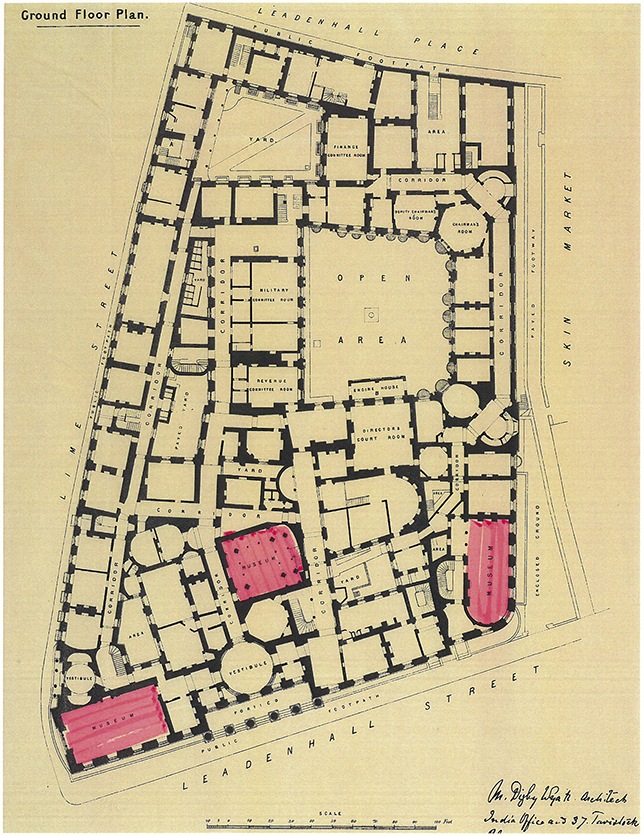
Plan of the ground floor of East India House as it was in 1860, with museum spaces highlighted. The museum has expanded to fill the large rooms in each corner along Leadenhall Street as well as the old Tea Sale Room just past the main vestibule on the right. Based on plans of the East India House produced by W. Digby Wyatt in 1860, just before its demolition. From a reproduction in Birdwood, George C. M. Relics of the Honourable East India Company: A Series of Fifty Plates. Quaritch, 1909.
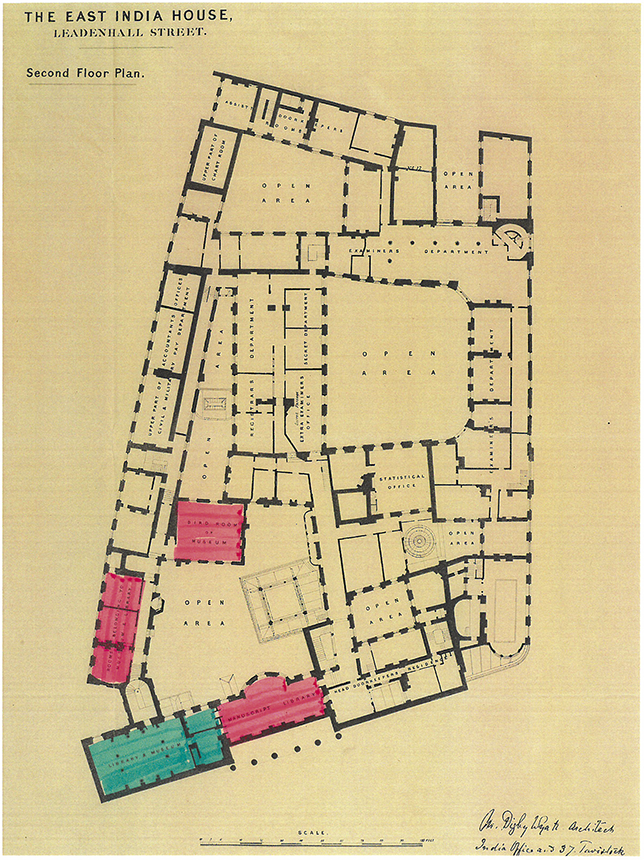
Plan of the second floor. The original library and museum space from 1801 is in the bottom-left corner. By 1860, the museum and library space had expanded to both adjacent rooms as well as the old surveyor’s office down the hall and to the right, here labeled “bird room of museum.” Based on plans of the East India House produced by W. Digby Wyatt in 1860, just before its demolition. From a reproduction in Birdwood, George C. M. Relics of the Honourable East India Company: A Series of Fifty Plates. Quaritch, 1909.
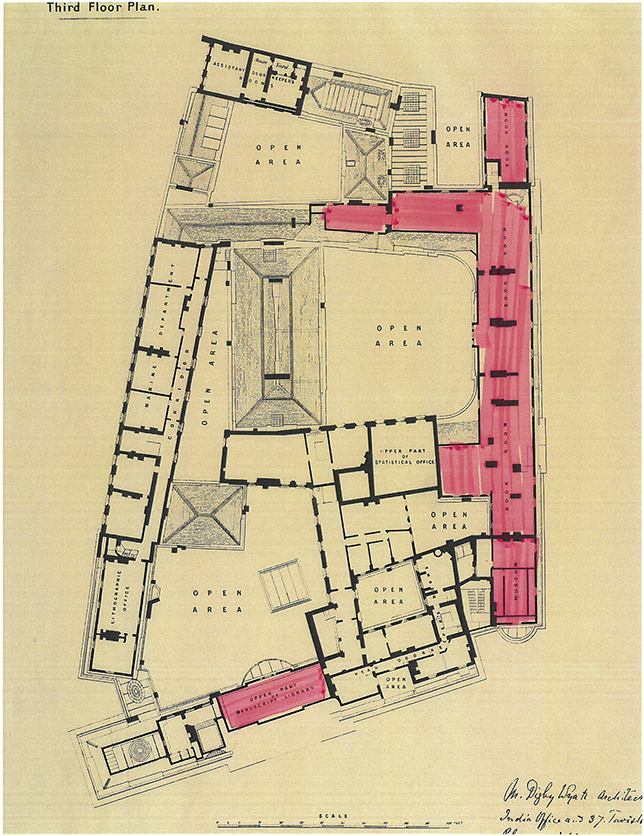
By 1860, the third floor of India House now contained more museum galleries as well as the lithographic office, the upper part of the statistical office and more “Book Rooms.” Based on plans of the East India House produced by W. Digby Wyatt in 1860, just before its demolition. From a reproduction in Birdwood, George C. M. Relics of the Honourable East India Company: A Series of Fifty Plates. Quaritch, 1909.
Napoleon had believed that Humboldt was a Prussian spy, and it is possible the directors were uncomfortable with Humboldt’s relationship with both Napoleon and the Prussian court, both of which were potential imperial rivals. But, as David Arnold notes, it was generally routine for the directors to deny access to naturalists and explorers who weren’t connected to the Company.Footnote 6 Humboldt’s great legacy makes his inability to access the Himalayas seem all the more historically significant, but his rejection is one especially striking example or illustration of how the Company’s powerful monopoly on access to India directly shaped the political economy of science in the period. In exercising their control of access to India, the directors may have been trying to, as Arnold argues, “preserve [their] commercial privileges and prevent outsiders from undermining [their] authority.”Footnote 7 But perhaps it was not so much a worry about their authority being undermined by outside explorers as it was a more basic calculation of a lost opportunity to expand their own circle of authority that drove such policies. And, given the high value, both in direct economic and indirect social and intellectual terms, of the rights to explore, collect and publish on those results, it should not be surprising that access to those resources was routinely restricted by the directors at this time.
This chapter is about the patterns of accumulation at India House after the foundation of the library-museum and during the period in which, despite changes to its charter, the Company retained control over British access to the natural and knowledge resources of Asia. The chapter begins by describing how the Company came to play a more direct role in the acquisition and management of knowledge resources for repositories in Britain. Between the opening of the library and museum and the Great Exhibition of 1851, survey collecting for the Company and private collecting by Company surveyors were primary means by which the Company’s new institutions of knowledge management were enriched. Company surveys during this period became closely tied to both military plundering and biogeographical collecting. Embedded in a series of ongoing conflicts over territory and trade, the making of these collections served as a means of further weakening rival states. Once back in London, these collections would also be crucial to the early development of the Company’s library-museum.
During the same period, Crown support for the old monopoly was beginning to wobble. The last section of this chapter considers the place of knowledge accumulation and management in the tumultuous period around the charter debate of 1813, when many of the Company’s monopoly privileges would be annulled. During these debates, a key defense of the monopoly was for the directors to present the administration at India House as the most trustworthy, authoritative source of knowledge regarding Asia in Britain, and thus the institution most suited to controlling trade and exercising governance. Within the Company, however, confidence in the Company’s grasp of knowledge about Asia was far less absolute, and after the Company’s losses in the 1813 charter, new worries about the Company’s knowledge management practices would lead to even further efforts to centralize and better organize the stores of information accumulating at India House.
Territorial Expansion and Postwar Surveys
June 2, 1802: “Three Chests containing a collection of insect shells, minerals and other objects of natural history made at Ceylon by Mr. Jonville accompanied by a memoir in French and sundry drawings. Received from the Baggage warehouse.”Footnote 8
These chests were the first substantial natural history collections to arrive at the Company’s new museum from abroad. They were also among the first acquisitions made in the context of the Napoleonic wars in Asia. “Mr. Jonville” was Joseph Marie Eudelin Mervé de Jonville, a Corsican hired by the first British governor of Ceylon, Frederick North, when the British occupation began in 1798.Footnote 9 Jonville was first employed to study the lucrative cinnamon plantations. Meanwhile, North had also instructed Jonville to “inquire into, and Collect, whatever regards the Natural philosophy, the natural history, and the meteorology of this island … likewise … the Customs, usages, history, and even languages of the Country.”Footnote 10 Jonville reported in 1800 that while he had managed to acquire “a Considerable Collection of Natural Curiosities,” including roughly 500 specimens and 800 draft drawings, his collecting had been severely limited by his not having been allowed to survey beyond the cinnamon country. Within a few months of writing to North of his desire to collect more broadly across the island, Jonville had been sent with a diplomatic expedition beyond the Company’s territory to the Court of Kandy, where he was to act as official collector, illustrator and interpreter. On returning to the British base at Colombo, he was appointed surveyor-general of the British possessions and was instructed to begin a new survey of the entire island. He began producing a steady stream of maps and reports on subjects such as rice cultivation, elephant hunting, the pearl fisheries and the different regions of the island. Along with two locals, whom Jonville identifies as Andrisaratchi and Adrian Rajapakse, he collected accounts of the religions of the island, and attempted to produce translations of Sinhalese into English.Footnote 11
Among the most prominent of the new generation of collectors were now the Company’s surveyors such as Jonville, formally employed to chart and report upon the vast new territories, simultaneously accumulating observations, measurements, manuscripts and specimens. In the first decades of the nineteenth century, the Company would initiate three different surveys of the vast central territory in India over which it had gained control after the Mysore wars, in 1798. William Lambton would begin a “general survey” using trigonometrical methods, measuring two arcs of the meridian through the Carnatic and one parallel running west from Madras. When transferred to Bengal in 1817, this project would become the root of the Great Trigonometrical Survey of India. A second survey was the geographically detailed topographical survey led by the future first surveyor-general of India, Colin Mackenzie. Colonial surveying and collecting intersect vividly in the life of Mackenzie.Footnote 12 Over the course of a thirty-eight-year career in India, Mackenzie would supervise the construction of dozens of charts and maps and lead the new All-India Survey. Again and again, Mackenzie was dispatched to follow in the wake of Company expansion of formal territorial or informal political control. He was sent to Hyderabad in the 1790s, Mysore between 1799 and 1810 and Java from 1811 to 1813. He became the surveyor-general of Madras in 1810 and then of British India in 1814, a post he held until 1821. On all of his survey assignments, he collected voraciously, usually with the help of local scholars and guides. At his death, Mackenzie had amassed arguably the most significant European collection of information on South and Southeast Asia produced before 1830. Nowhere else was there a government surveyor who was simultaneously one of the most active collectors of literature and manuscripts.Footnote 13
For the Mysore survey, Mackenzie would spend 1800–1807 in the field, during which time he was running two parallel surveys. First, there was the Company’s topographical survey, for which the Company provided assistants and sub-assistants For the Company, he regularly produced large regional maps at 4 miles to the inch, together with district maps at 2 miles to the inch plus an assortment of more detailed maps of areas of special interest.Footnote 14 He also directed some of these Company-funded assistants to pay attention to a wide range of subjects: Mackenzie’s “Hints or Heads of inquiry for Facilitating our Knowledge of the More Southerly Parts of the Deckan [Deccan], 1800” arranged sets of enquiries in different categories ranging from the geographical (modern and ancient names of towns, districts, features of landscape, rivers; local and British distances between locations) to the natural and social (population, languages, ancient and modern history, legal and land revenue systems, local diseases and medicines, “Productions of the country,” plants and animals, “minerals, fossils, ores etc.,” meteorology, arts and sciences, commerce, customs, and [perhaps the category he was most interested in himself] “books and depositories of native learning”).Footnote 15 Some assistants specialized in different areas. Benjamin Heyne, for example, focused in part on natural history. In addition to his notes and publications or “statistical tracts,” Heyne’s collection of birds arrived at the museum in 1813.Footnote 16
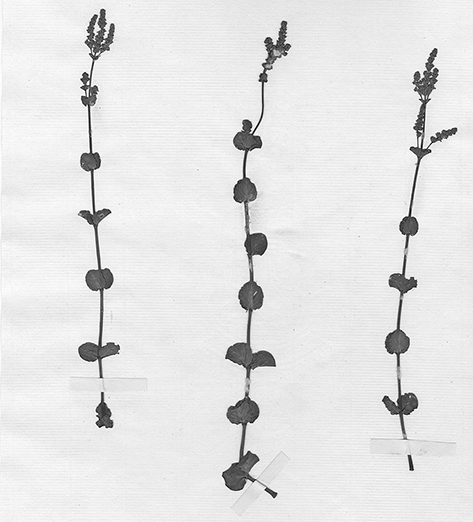
Type specimen of Rotala Rotundifolia collected by Francis Buchanan-Hamilton during his survey of Mysore in the early 1800s. Now at the Natural History Museum, London.
In tandem with this official surveying and collecting, Mackenzie was also building up a vast private collection. For much of this work, he paid for his own assistants and sub-assistants, who were trained largely by the Kavali brothers, Borayya and later Lakshmayya.Footnote 17 In practice, the surveys ran as one. As Horace Hayman Wilson, future Company librarian and an early cataloger of the Mackenzie collection, described it:
The collection of books, papers, and inscriptions went hand in hand with the survey …. In the course of his surveying operations [Mackenzie visited] … all the remarkable places …. Accompanied in his journeys by his native assistants, who were employed to take copies of all inscriptions, and obtain from the Bhramans of the temples, or learned men in the towns or villages, copies of all records in their possession or original statements of local traditions.Footnote 18
Meanwhile, yet another survey of Tipu Sultan’s former territories was commissioned by Wellesley, with the intention of providing, relatively quickly, a “statistical” (descriptive, for the purposes of the state) account of the virtually unknown territory. Some Company shareholders and directors remained skeptical of these territorial expansions. On the advice of William Roxburgh of the Calcutta Botanic Gardens, this commission went to Francis Buchanan (later Buchanan-Hamilton), a surgeon and botanist who had recently acted as botanist and surveyor on a political mission to the Kingdom of Ava (Myanmar) (and whose journal had made its way into Tipu Sultan’s library.)Footnote 19 According to Buchanan’s instructions, the “first and great object” of his survey was to describe the agriculture of the region, but the full list of the information he was tasked with collecting included not only animal and vegetable productions and modes of farming but also climate, mineralogy, manufactures and “the condition of the inhabitants.”Footnote 20 Under this last category, Buchanan was asked to collect whatever information he could about the societies he encountered: food, clothing, religion, history, law, police, custom, commerce. For virtually all categories, Buchanan was asked to pay particular attention to the opportunities for “improvement” of methods, materials and so on.Footnote 21
British occupation of Dutch Java began in 1811, after Napoleon invaded the Netherlands and the Stadtholder sought British protection of its colonies in Asia. Mackenzie was sent from Madras to lead initial reconnaissance and surveying. During the first two years of the British occupation, he would play a key role in reorganizing the administration of Dutch Java under the British lieutenant-governor Stamford Raffles. As head of a committee tasked with comprehending the state of the country, this included conducting a massive survey of the Dutch colonial archives, from which (similar to Orme’s and Dalrymple’s collecting during the British invasion of the Manila in the Seven Years’ War) copies were made and originals taken, resulting in a huge transfer of information about administration, land tenure, revenue and trade, history, natural history, and arts. This archival survey was then complemented with a series of military and topographical surveys. Mackenzie also participated in (and made valuable personal collections during) Raffles’s surprise invasion of the wealthy royal city of Yogyakarta in October 1812.Footnote 22
Mackenzie’s summary of his surveying and collecting work in Java makes clear that large sections of the Dutch archives, which included information on not only Java but also all of the Dutch possessions in the East, had been either copied or removed by the British.Footnote 23 But, as in Mysore, Mackenzie also conducted in parallel a “private” collecting expedition that targeted all kinds of Dutch and Javanese collections. Again, Mackenzie’s work was made possible by the hiring of local informants, one of whom – “an ingenious native of Java” – would return with Mackenzie to India to continue translating the Javanese materials.Footnote 24 A certain amount of coercion in obtaining access to some of the privately held collections seems to have been required:
The colonists were found willing to assist and produce their stores, and the natives were soon reconciled, even the class whose interests might be presumed to travers[e], if not oppose these enquiries. The regents and their dependents were, though at first shy, ultimately cordially assisting to the objects of investigation: and … to the last moment of stay at Batavia (18 July 1833) materials, MSS [manuscripts] and memoirs, in copy or original, with letters in reply to the questions circulated, were transmitted from the most distant parts.Footnote 25
Meanwhile, Raffles was conducting his own surveys of Java, employing the naturalist and surgeon Thomas Horsfield. Horsfield was an American doctor trained at the University of Pennsylvania who had been working for the Dutch East India Company in Java since 1801.Footnote 26 He had been employed as a surveyor and naturalist since 1804, traveling and collecting more or less continuously. In the early decades of his time in Java, he was focused on materia medica and published – mostly in the Batavian Society’s transactions – descriptions of over sixty plants with medical uses.Footnote 27 Together with the Batavian Society, he had also produced a plan for a great Hortus Medicus for the region, to be paid for by sale of the medicines. When he received funding from the government for an expedition along the northwest coast of the island, his attention was also drawn to mineralogy and geology, and to natural history more broadly, especially entomology. By the time the British took over, Horsfield had amassed a large botanical, mineralogical and zoological collection. Now under the enthusiastic patronage of Raffles, Horsfield continued his travels and collecting. A first shipment of Horsfield’s specimens arrived at India House in 1813. Raffles, meanwhile, was leading his own military expeditions to the interior, including the attack on Yogyakarta, to assert British rule. Topographical surveys and collections of archaeological and ethnographic material were gathered along the military route.Footnote 28
Although the French Empire was formally defeated in 1815, the Company remained aggressively entangled in related territorial conflicts for a decade or more. Very soon began some of the so-called little wars of the British Empire in Asia during Europe’s “long peace” of the nineteenth century. On the Indian subcontinent, British defeat of Mysore precipitated a vicious series of conflicts with the powerful Maratha Confederacy, which ended in Britain’s favor in 1818 and was followed by a survey of the Company’s new territories on the Deccan plateau. One of the largest single collections form this period was the massive set of papers, maps and specimens from William Sykes’s survey of this vast central Indian territory. After a furlough back in Britain, in 1824 Sykes returned to India and was hired as the “statistical reporter to the government of Bombay,” a new position that coincided with his survey work but which was cut from the budget in 1829.Footnote 29 Over 4,000 specimens in addition to several hundred drawings and other papers arrived at India House in 1831.Footnote 30 On the northeastern frontier, the wealthy and extensive Burmese Empire attempted to push back the Company’s expansion into northeastern India. The first Anglo-Burmese war from 1824 to 1825 was hugely costly to the British and the Burmese, in terms of both money and lives. Again, following Britain’s success, surveyors would follow and the library and museum would receive a wave of materials.
Material bought, plundered, collected and otherwise acquired in the context of Company surveys made its way back to India House in a variety of ways. Some, like Jonville’s collection from Ceylon, arrived as “gifts,” which the administration had actively encouraged its officers to produce, and for which the administration dangled the possibility of future preference or reward. This was the first material from the island to arrive in the Company collections, possibly in all of Britain. Their status as a “gift” suggests the London administration had no prior knowledge of, or claim to, the materials collected by Jonville, despite the collections having been made while North was surveying land for the Company. Jonville’s salary was likely paid by North rather than by the Company directly, and what he collected seems to thus have been treated as his own (or possibly North’s) property.
As with Orme and Dalrymple decades earlier, Mackenzie, Raffles, Horsfield and Buchanan benefited from the wartime upheaval that created favorable conditions for acquiring manuscripts and other materials. And, as in earlier years, Company servants in this period were still permitted to amass private collections. But, unlike in the days of Dalrymple and Orme, the primary purpose of these surveys was to amass information for the Company, and specifically for the collections being developed at India House. The directors now exercised much greater control over the acquisition of knowledge resources in these newly occupied territories, and encouraged it in formal and direct ways. Thus, Buchanan’s collections and drawings (and also, in the tradition of ship captains’ journals, all of his journals) were considered Company property from the moment the hired officer had acquired or produced them. By 1802, therefore, Buchanan had forwarded a seed collection to Roxburgh in Calcutta and the rest of his materials to the Company library and museum. He also produced a large collection of zoological and botanical drawings.Footnote 31 A portion of these were first claimed by Calcutta; after a tussle, the India House library-museum managed to acquire those in several shipments between 1817 and 1819.Footnote 32 But the vast majority of information collected by him sat unexamined at Madras, and by the early 1830s the Buchanan survey had developed into a scandal, as it emerged during the charter debates that the Company had spent over £30,000 on the survey to little effect. In response, in 1835, the Company took the unusual measure of sending an officer, Montgomery Martin, to India for the sole purpose of reviewing and reporting on the materials.
This would be the first of multiple cases in which the directors were accused by shareholders of egregiously neglecting expensive and valuable information resources. The cost of the collections of Colin Mackenzie also came under scrutiny. The status of a catalog and access to the collection was asked about at the Court of Proprietors on March 19, 1834, to which the directors responded that one Captain Harkness was currently employed at India House cataloging the collections.Footnote 33 Around the same time, a liberal periodical was probing the “actual situation of the Mackenzie collection, with reference to it having been rendered accessible to the public,” and suggested that the recently established Public Records Commission should investigate the status of the collection.Footnote 34 Around the same time, in 1836, the Company’s new surveyor-general of India, Thomas Best Jervis, used part of a period of leave back in London to launch a public campaign against what he saw as outdated cartographic and geographic practices at the Company. Jervis was especially critical of the Company’s lack of support back in India for printing surveys, maps and memoirs.Footnote 35 Since 1821, the Company had employed London lithographic engravers to print the Company’s principal topographical series, the Atlas of India. But the Court continued to resist establishing lithographic presses in British India, arguing that the climate was not conducive to quality printing (to which Jervis replied that the best prints in the world are produced in Italy, which has “as bright a sky and as high a temperature” as the subcontinent).Footnote 36 Thus many maps and plans produced in India remained in manuscript form, and, according to Jervis, much time and money was being wasted on making copies of these by hand.
Like Jonville, Horsfield had been employed by Raffles as a subcontracted collector and explorer, which meant the Company did not claim direct ownership of the material he collected on his surveys. The first set of Horsfield’s collections from Java thus also arrived as a “gift” (when he also sent specimens to Joseph Banks).Footnote 37 In 1813 a collection of zoological specimens, medical and botanical reports and mineralogical studies by Horsfield were gathered in Jakarta and sent on to the Company museum. Charles Wilkins described the first set of Horsfield’s specimens as “a very curious collection of stuffed Birds and Quadrupeds with a great many beautiful and rare insects … in the highest state of preservation.” Wilkins, on behalf of the Library Committee, then requested funds to purchase glazed cases so that the collections “be mounted or set up in the way usually practiced for Cabinets of Natural History.”Footnote 38 Meanwhile, news of the end of the Napoleonic wars, and the orders to return Java to Dutch control, caught Raffles and Horsfield by surprise. Raffles’s first plan was to pack everything up immediately in 1815 and return, with Horsfield in tow, to London. This didn’t happen. Horsfield and the bulk of the collections stayed, while Raffles, now removed from lieutenant-governorship amid accusations of financial impropriety in Java, was called back to England. And while it seems Horsfield did consider either remaining in Java or moving on with his collections to Holland, in the end it was the Company that gained possession of them. Horsfield was hired to be an assistant in the Company museum, then “sold” his entire collection to the East India Company by exchanging the material for a significant salary advance.Footnote 39 Some hurried plans for shipments thus commenced. He would move to London with the last of this material in 1819 in order to join the museum and begin work on publications. Raffles was relieved, writing to Banks in a letter accompanying Horsfield back to London that although “the Dutch have offered to him every possible inducement as far as money and fame would go, to join their party and send his Collections to Holland,” all such offers were refused and “his collections are securely manifested for the Port of London.”Footnote 40 Horsfield would remain working at the museum for the rest of his life, publishing its first catalogs and going on to succeed Wilkins as curator in 1836. For his own part, Raffles would soon return to Java, conduct more surveys and expeditions, and, in 1819, in his most consequential “purchase” of all, acquiring for the Company, under dubious circumstances, the island of Singapore. In 1824, Raffles was returning to London with his family and yet another even bigger haul, over 120 cases of manuscripts and other items, when, just off Bencoolen (Kota Bengkulu, Indonesia), a fire broke out on the ship. All persons were safely evacuated before the fire reached the magazines and the ship exploded.
The Charter of 1813: Company Science in Defense of the Monopoly
When the next charter renewal season began in 1812, the Company’s overall reputation was on a much more positive footing than it had been during the previous charter renewal of 1793. The generally more positive perception of the Company is all the more remarkable given how little had changed in the Company’s structure between the 1790s and 1813. Although the Board of Control now gave the government a more direct role in Company affairs, British India was still being ruled by a corporation, which was led by a board of directors and beholden to shareholders.Footnote 41 Even with the Company’s improved reputation, provincial port representatives and anti-monopoly petitioners organized a lively campaign against the dominance of the Company and of the London ports. In the years leading up to 1813, Britain’s economic order was under multiple stresses: the loss of overseas markets in the wake of the wars, high unemployment, sharply rising food prices and associated riots in towns such as Bristol and Sheffield. All of this put old trade arrangements under new pressure, since they were widely seen as maintaining artificially high import prices. Continuing to allow the Company’s control of the Asian import trade (under which, for example, auctions at India House set floor prices under which sales would not proceed) now carried heavier liabilities for the government. The expanding textile industries were particularly influential, and the government was eager to support them.
When Parliament collated a raft of complaints against the monopoly and presented them to the Company, the rhetorical force of the Company’s reply relied heavily upon two points: first, that the Company’s monopoly was a unique thing, and a political arrangement, with control over trade merely part of that arrangement; and second, that the Company’s institutional expertise regarding Asia was unrivalled, therefore the Company’s ability to govern in and trade with British India was also unrivalled.Footnote 42 It was the Committee of Correspondence, by now the committee from which many policy statements and decisions issued, that drew up the initial defense in reply to Parliament’s questions.Footnote 43 The Committee projected the Company’s authority as not only a state in terms of its current function but also a state in its epistemological position with respect to other British interests involved in the debate. The provincial port owners and merchants, as well as the would-be missionaries pushing to end the ban on evangelizing, were painted by the Committee as dangerously ignorant.Footnote 44 The critics, wrote the Committee, display “so many proofs of want of knowledge on Indian subjects” that their complaints against the monopoly and their proposals for India could not be taken seriously.Footnote 45
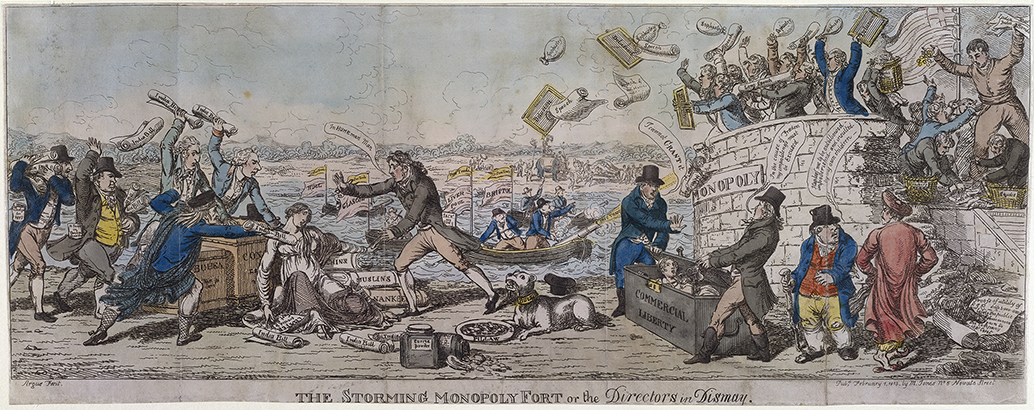
“The Storming of Monopoly Fort,” an 1813 satirical cartoon by Charles Williams, showing the Court of Directors defending “Monopoly Fort” with “long speeches,” “solipsism” and dissertations on the “utility of the EIC.” c.
In support of the monopoly, the Committee also presented its own views of India and the India trade, drawing on a particular worldview, a combination of orientalism, political economy, conjectural history and the history of the Company itself. Parts of the argument could have been pulled straight from the classrooms of Haileybury. At the Company’s new college, the students were introduced, via Malthus in particular, to Adam Smith’s The Wealth of Nations as a foundational work. But Smith’s economic arguments against trade monopolies, and his understanding of the Asia trade, were a point of controversy.Footnote 46 True understanding of the India trade was represented by the Committee as a matter of both knowledge of the culture of India and of the landscape of global trade. Such a combination, it was asserted, came only out of the institutional expertise that the Company had amassed. Scrutiny of the Company and its greatly expanded possessions now entailed ever more detailed renderings of regional history and political structures across a variety of Asian polities. Here, the Committee relied upon the survey reports of Buchanan and Mackenzie for evidence of the social and economic status of the vast new territories now under Company rule. The work of the Company orientalists was required to translate, quite literally, many of the descriptions and features of India that were now taken up as evidence for and against the monopoly. For example, for the largest and most consequential parliamentary report on the monopoly question, the so-called Fifth Report, Wilkins was tasked with producing a glossary of terms. The glossary runs to fifty-eight pages and gives definitions and etymology for, says Wilkins, “all Oriental Terms” that appear in the Report, coming not only from Persian and Arabic but also from “Sanskrit, Hindustany, Bengaly, Telinga, Tamul, Canara, Malabar … Turkish and Malay.”Footnote 47
Many critics of the Company’s monopoly were especially focused on the longstanding trade imbalance between Britain and India. British merchants were still struggling to build markets in British India. Thus, a central, and controversial, issue in the debates was to do with whether it was even possible to increase the Asian market for British exports. And at the core of this question were broad historical-philosophical speculations about the nature of “civilization” in British India, and the degree to which the region could be materially “improved.” The Company had, since the charter of 1793, been required to take on a certain minimum quantity of British exports every year, and had therefore, the Committee claimed, “in a long course of years, made numerous, persevering, costly experiments, in attempting to push the vent [i.e. sale] of British commodities.”Footnote 48 From this experience, as well as from the long history of Asian trade in general, they argued that the India trade – and the failures of British exports to succeed – was as much a fact of nature as the Indian climate itself. Quoting Montesquieu, the Committee agreed that such fixed differences as soil and climate
shall for ever fix the character of commerce …. Every nation which has traded with India has uniformly brought precious metals thither, and brought back precious goods in return. Nature herself produces this effect … India always has been, and always will be what it is now; and those who trade to India will carry money thither and bring none back.Footnote 49
That Indian culture, in the abstract, was ancient, heathen, unchanging and static was a belief shared by all sides of the monopoly debate.Footnote 50 The essence of the debate came down to whether this perceived stagnant civilization could be improved (i.e. made more like Britain), and if so, how. The Committee asserted repeatedly (and in some ways contradicting its own claims of having also effected “improvement” on the subcontinent) that Indian culture, and thus its markets, is largely unchanged and unchangeable.Footnote 51 But to the anti-monopolists, and to the aligned causes of utilitarianism and Christian evangelism, it did not follow from recent history that the Eastern trade would forever remain fossilized. This group argued that the true experiment – that of free trade – had yet to begin. Free trade would be “a substitute and a cure for all commercial evils; would open an unbounded field to British manufacturers, British capital, skill enterprise and knowledge, which would not only supply the wants of the vast population of the East but create wants where they do not exist.”Footnote 52 The anchor of these arguments was (again) Adam Smith, who had claimed in The Wealth of Nations that “the East-Indies offer a market for the manufacturers of Europe, greater and more extensive than both Europe and America put together.”Footnote 53
In response, the Committee asked, “But who should be trusted in judging what would happen … if the monopoly were ended?” Even the theory of “Dr Adam Smith” did not “anticipate any sudden burst of commerce,” and in any case Smith had very little reliable information on India: “His information respecting India was very defective, and erroneous; his prejudices against the East-India Company extreme, and his prognostics concerning the Indian government wholly mistaken.”Footnote 54 Perhaps the greatest strike against the application of Smith’s theories to the Eastern trade, continued the Committee, was the history of that trade since the publication of The Wealth of Nations nearly forty years earlier. Although “all Europe and America” had searched for “that immense market for European manufactures” that Smith said should be found in the East, none had yet been found. Furthermore, they pointed out (without any reference to the slave trade) that Britain’s trade with Africa was nearly as weak as with India and China, yet no similar monopoly existed.
But the real weight of their argument, the Committee asserted repeatedly, came from the Company’s long accumulation of experience and knowledge of India, China and the Eastern trade. The Company derived its opinion “not from any single authority [i.e. Smith] but from the broad page of history and practice.” “On the side of the merchants there is, in truth, nothing but a sanguine theory. On the side of the Company there is the experience of all the nations of Europe for three centuries; there is the testimony of ancient history; there are the climate, the nature, the usages, tastes, prejudices, religious and political institutions of the Eastern people.”Footnote 55 In concluding, the Committee painted the decision of whether to extend the Company’s monopoly as not a matter of policy but a matter of expertise and risk assessment. It asks the Crown, will it risk “such a mighty convulsion” as to put the India trade into the hands of the ignorant? Or will the free trade lobby’s “rage of theory, speculation and innovation” excite instead what it should: a “salutary fear” and a move to “stop short of the precipice” and “rest at some place, so far safe, as not to expose the whole of the empire, Indian and European, to the terrible alternative here brought to view”?Footnote 56
In the end, the Committee’s epistemological tactics for defending the monopoly were largely unsuccessful. The new charter, which would take effect in 1814, maintained the Company’s China trade monopoly and left the government of the Asian colonies in the Company’s hands. But the India and Southeast Asia trade was opened to any private ships of 350 tons and larger, and those traders were also free to enter and leave most British ports rather than being restricted to London. Within British India, though, trade and movement were generally still limited to the main Company settlements. Taken together, these provisions, although opening up trade competition, still left the Company with a significant degree of control over access to India’s natural and knowledge resources; for example, naturalists such as Humboldt would still need permission from the Court of Directors to proceed.
The fate of Haileybury College under the new charter was also initially unclear, but Malthus and others came strongly to the defense of their employer and reiterated (somewhat unconvincingly given the scandals involving student behavior) Haileybury’s goals of educating moral improvement for better governance.Footnote 57 The college was increasingly under pressure from the growing political importance of education in both domestic and colonial circles.Footnote 58 The college, mixing both elements of classical liberal education and specialized training in oriental languages and literature, sat uneasily within the growing controversy between, on the one hand, political conservatives, who broadly favored maintaining the Company’s monopoly as well as India’s traditional legal and cultural systems, along with civil servant training in Indian languages, and, on the other hand, political liberals who broadly favored abolishing the monopoly and introducing European systems of law, languages and even religion to India, as well as civil service training in European subjects. In the end, Haileybury College survived, and the Company retained control over it. However, the Board of Control gained new powers over the Company colleges in India, and the Company was now required to spend at least 1,000,000 rupees (roughly £10,000 at the time) per year on supporting education in India. In addition, the restrictions on Christian missionary activity were lifted and evangelicals were free to establish new schools and societies. This change would be immensely consequential for the future of education in British India.
The Company’s unsuccessful defense of the monopoly also had an immediate material impact on the Company’s knowledge management practices. By the end of the charter debate period, the library-museum was both growing steadily and continuously being used by different Committees within India House. The day books of the library record steady movement of maps, plans, books and other kinds of records to and from different committees within India House. Briefly reviewing the day books from April to December 1815, for example, reveals the following: the Examiner’s Office sending “maps” to the library and receiving, on June 27, the Materia Medica of Hindustan by W. Arnold (Madras, 1813); letters from the court of Persia from 1790 on August 30; and various manuscript reports, such as, on October 6, “a copy of Captain Canning’s Report of his proceedings at Acheen.” In the same period, the Secretary’s Office returned to the library plans of districts (Prince of Wales Island and George Town), bills related to the regulation of shipping, printed copies of the minutes of the Court of Directors’ meetings, and other proceedings, minutes and letters sent to the Company. In November and December 1815, the Chairman’s Office frequently requested the use of certain books about China (e.g. “Staunton’s Chinese Embassy, Barrow’s China, Milburn’s Oriental Commerce”).
But the loss of the India monopoly also further spurred a drive toward internal information organization. In the immediate aftermath of 1813, the directors and the Library Committee seemed intent on reforming how the Company managed and made use of its own archives and collections. During the negotiations over the charter renewal, Committees and the Court reported being frustrated with the state of the Company’s records.Footnote 59 Soon after, the Library Committee proposed a variety of measures that would apply throughout India House and would further centralize archiving and record-keeping. The Registrar’s historical and record-keeping duties were to be folded under the wing of the library. The “particular duties … and object” of the office of the current historiographer, John Bruce, were to be investigated.Footnote 60 The organization of the Secretary’s Office also came under scrutiny. This seems to have been part of a broader conversation over how the Company’s official history was to be generated going forward, and what role the library and the librarian would have in this. New archiving regulations for debates in the Court of Proprietors were proposed, and, most importantly, a regular publication of the debates was to be commenced.Footnote 61 The Library Committee also wanted to take control of the distribution of new publications subscribed for by the Company. All publications coming into India House were now to go through the library and be recorded in the day books. It is unclear when, or if, all the orders were formally put in place, but by 1817, in one way or another, Wilkins had taken over the role of historiographer and the library had absorbed many of the duties of the former Register Office. Along with these new roles came more clerks (including three former assistants to the historiographer) for the library staff and a doubling of the budget for the librarian’s book purchases and other costs.Footnote 62 In these ways, out of the crisis of 1813 came an even stronger institutional commitment to, and pride in, the accumulation and management of knowledge resources at India House.
Missions and Subterfuge
After 1813, with the loss of the Company’s monopoly on the India trade, the remaining monopoly on the China trade gained new importance. The directors had always had a particular focus on gathering material from China, although British access to Chinese territories was relatively limited and constrained. Since its opening, the library and museum had welcomed a small but steady stream of gifts of curiosities for the museum from China, usually opportunistic gifts, such as four paintings and three jade or stone carved landscapes, intended for Empress Josephine but found aboard a ship captured by the British.Footnote 63 Around 1800, there were very few Chinese-language books in Britain; by far the greatest collections of Chinese books and manuscripts were in France.Footnote 64 Jesuit missionaries had been able to supply France and the Vatican with materials from China, but the Company had no similar means of access. There was no chance of obtaining permission to conduct surveys or purchase books or maps for export. The directors had to rely on the initiative and subterfuge of their writers and factors. One set of documents records the interest and means by which the directors attempted to obtain material from China for India House. After having received instructions to obtain books and drawings for the Company’s library, George Staunton, the resident at Canton, replied on January 29, 1804 that
[a] Botanical Painter has been employed in capturing the plants, fruits and flowers of this Country, as they come successively in Season, and we shall continue him till all that is curious in vegetable nature shall be designed. Mr. Kerr His Majesty’s Botanical Gardener directs his employment and sends us descriptions of those already painted which go in the Earl Camden’s Packet together with Drawings of the Malacca Fruits by the same Artist.Footnote 65
These drawings, along with the first shipment of Chinese books, arrived in 1805 on the return of the Earl Camden’s first voyage. With the help of one of the resident’s Chinese interpreters, Staunton had gathered what he said were some of “the most valuable [books] in Chinese literature.” Staunton promised to continue hunting down books, noting his interpreter had provided him with a second list of valuable books to be searched out as well.Footnote 66 In reply, the directors noted one title – described as “Whu-Frou” – appeared to be missing on arrival. They also asked for books specifically on “History, Art and Manufactures” and for materials – “some Elementary Books and implements of writing” – that would be useful for teaching Chinese languages at Haileybury.Footnote 67 In reply, on February 26, 1806, the resident promised that more botanical drawings were to be sent along, and a title that Staunton thought matched the missing title had also been procured, as well as a small collection of writing instruments and “books employed by the Chinese youths.” However, Staunton also goes out of his way to stress the great difficulty of obtaining books for export:Footnote 68
It may be proper however to notice in this place that, exclusive of the difficulty there exists of obtaining such Chinese books, for their utility or curiosity may be deserving of a place in the Hon Company’s library, much embarrassment is experienced in afterwards conveying them to our Ships, as the exportation of Chinese Books is positively forbidden by the Laws and regulations inforced at this Post.
Commercial intelligence was desperately wanted, but such intelligence was often sought in what could be learned about Chinese history, languages, technology and culture. In the series of exchanges just described, a subject of particular interest to the India House orientalists became a focus of inquiry: the relationship between “Babylonian” and Chinese writing. In 1797, the directors sponsored an expedition from their residency at Bussorah (Basra, Iraq) to the ruins of a city on the Euphrates River that French scholars had identified as Babylon (Hillah, south of Baghdad). The aim of the expedition was to collect and send on to India House inscriptions rumored to have been discovered in the ruins.Footnote 69 In 1800, nine large bricks containing inscriptions arrived at India House, the first “Babylonian” inscriptions in England, and became some of the first items displayed in the Company’s library-museum. The directors also distributed some of the smaller stones, including one to the British Museum and one to Banks.Footnote 70 French antiquaries had speculated that “Babylonian” was a form of Chinese, and it was on this question that the directors requested input from French missionaries. A copy of the inscriptions had been sent out to a missionary informant a few years earlier, and a short reply was passed on, only noting that he promised to study the question. However, as Staunton noted in reply, the Chinese authorities had recently severely tightened the rules of communication and movement for Christian missionaries on the mainland, and he did not have hope of hearing any more from his source.
The closure of British access to the missionary network also made it difficult for Staunton to provide any new intelligence on the directors’ final questions: “the date and origin of printed maps of China purchased by the Company [and] whether engraving and printing from metal plates is practiced in China.” In answer, Staunton apologized that “The reasons stated in the last paragraph will account for the delay and difficulty we shall unavoidably experience in endeavoring to satisfy your Hon Court’s enquiries on this subject.” He thus could only speculate that “we are inclined to believe that the art of engraving and printing from metal plates is well known and occasionally practiced in China, in confirmation of which opinion we may add that several Chinese Books have been shown us, for the Printing of which it is affirmed metal types had been employed.”
Eventually, a set of nearly 500 highly detailed botanical illustrations were deposited at India House, each with names in Chinese characters and English transliterations, some with Linnaean classifications.Footnote 71 A large collection of detailed paintings of over fifty Chinese ships drawn from the Canton harbor and its environs were also sent at around the same time. In addition, a set of large and very ornately carved silk lanterns were sent to the library and museum, where they hung in the main rooms for decades.Footnote 72 Other miscellany collected in the first decades included the “last will and testament” of an emperor;Footnote 73 “a commercial vocabulary in Chinese;Footnote 74 an ingot of silver;Footnote 75 the cap of a Mandarin; and the “shoe of a Chinese lady.” As for books, a catalog of Chinese books in the Company library from sometime after 1816 lists eighty-six works, many in multiple volumes, and usually many copies of each title. The collection included many of the books that would be identified as important by the administrator and explorer (and future secretary of the Admiralty) John Barrow, who had accompanied Staunton on a diplomatic mission to Peking, in his Travels to China (1804).Footnote 76 In particular, the works of Confucius were collected in many different editions, including the “nine king [ching] or sacred classics” (or the “four books and five classics”) forming a standard canon of Confucius, the I-Ching, a 134-volume encyclopedia from 1710 (abridged from a 6,000-volume work), and other works on subjects ranging from language, literature and poetry to astronomy, medicine, geography, law, mathematics and history.Footnote 77
The Company establishments in Canton and Macao continued to secrete out books and seek expertise in Chinese languages and culture. The directors also supported a dictionary project, with a printing press set up in Macao, where the Company for a time had more leeway to gather and transmit information, and where early editions of Morrison’s Chinese Dictionary were printed.Footnote 78 In the early 1830s, John Reeves sent a collection of natural history specimens from Macao as well.Footnote 79 In 1815 when another embassy to China was sent, led by William Pitt Amherst, the Company arranged for a naturalist (Clarke Abel, on the recommendation of Joseph Banks) to “get plants for the museum.” The delegation was refused a meeting with the emperor, and though collections apparently were made, they were lost when a returning ship sank.Footnote 80 In roughly the same period, the Company also had allowed (though given little material support to) an Englishman, Thomas Manning, to travel to the interior and all the way to Lhasa.Footnote 81 In these ways over the first thirty years, the Company’s library and museum slowly built up what would be, by then, Britain’s largest collection of books, manuscripts, articles and specimens from China. But, as it would turn out, these collections would be dwarfed by those that would be made once Britain went to war with China in the 1840s and 1860s.
The directors were also keen to acquire information and materials from the neighboring kingdoms and states beyond the Company’s control. The Company’s trade eastward of India across the Bay of Bengal and on to China was of critical importance. Of particular interest were China’s cosmopolitan trading partners in Southeast Asia: Ava (Upper Burma [Myanmar]), Siam (Thailand) and Cochinchina (southern Vietnam). In these regions, the Company was in a very different situation than on the Indian subcontinent. Here, the Company was not yet a territorial power, and the information order was quite different. A mission to Siam and Hué during 1820–1821 was entirely unsuccessful in gaining trading concessions or relations with these states, but did result in new material being sent back to the museum: George Finlayson, a naturalist assigned to the mission, sent back mammals, birds, fish, reptiles and fossils collected.Footnote 82 Much more material was captured and brought back to Britain during the first Anglo-Burmese war of 1824–1826. Much of this ended up, through the prize agent process, in private hands. But many precious manuscripts, natural history collections and works of art were also separated out to be sent to the Company’s library and museum.Footnote 83 And the directors hired at least one covert collector moving beyond Company territory: in 1835, for example, the directors hired as a “news-agent” Charles Masson, who had deserted the Company’s army in the 1820s and had since traveled extensively in Afghanistan collecting information, artifacts and especially a vast collection of ancient coins, now in the British Museum. Masson was granted clemency and a small pension in exchange for the collections he had gathered in Afghanistan.Footnote 84
1799: Last Anglo-Mysore War: East India Company (EIC) gains large parts of southern India 1802: Eudelin de Jonville: A series of Insects from Ceylon, chiefly Lepidpotera, presented to the Indian Government on the transfer of Ceylon to the British Crown; A series of Drawings of Birds from Ceylon; Zoological specimens from Ceylon, chiefly Insects and Shells; with Drawings and descriptions 1803–5: Second Anglo-Maratha War: EIC gains small regions of central India and Gujarat 1804: Claude Russell, esq. Indian Serpents 1808: John Fleming, Esq. – Drawings of Birds 1808: The King of Tanjore’s collection of drawings of mammals and birds 1808: Francis (Buchanan) Hamilton, M.D. Drawings of Mammalia, Birds and Tortoises from “Continental India.” [Collections from the survey of Mysore] 1812: The King of Tanjore. Drawings of Mammalia and Birds from Southern India. Presented by John Torin, Esq. 1817–8: Last Anglo-Mahratta War: EIC gains large parts of central India 1817: Francis (Buchanan) Hamilton, M.D. Drawings of Mammalia and Birds. [Collections from the survey of Mysore] 1819: Francis (Buchanan) Hamilton, M.D. [Collections from the survey of Mysore]; Drawings of Mammalia, Birds, and Reptiles 1831: Colonel W. H. Sykes. The Collection of Natural History made during the Statistical Survey of the Dukhun [Deccan], consisting of specimens and descriptions of Mammalia, Birds, Fishes, Reptiles and Insects 1850: Colonel W.H. Sykes. A Collection of Reptiles, Insects, Mollusca, and miscellaneous Zoological specimens from the Dukhun [Deccan], preserved in spirit 1811: EIC Invasion and Occupation of Dutch Java 1812: Richard Parry, Esq. Drawings of Mammalia and Birds from Sumatra 1812: Thomas Horsfield, M.D. Collections of Mammalia, Birds, Insects, Fishes, Reptiles ] from Java “during the possession of that island by Britain” consisting of “a large series of Insects of all Orders; A large Collection of preserved Birds from Java, with Drawings” 1813: Thomas Stamford Raffles, Lieutenant-Governor of Java- Specimens of Mammalia, preserved Birds and Insects from Java: Horsfield’s Collection 1817: Thomas S. Raffles. Mammalia and preserved Birds from Java: Horsfield’s Collection 1819: Thomas Horsfield, M.D. Collections of Mammalia, Birds, Insects, Fishes, Reptiles from Java consisting of “a large series of Insects of all Orders; A large Collection of preserved Birds from Java, with Drawings” 1820: Sir Thomas Stamford Raffles, Lieutenant-Governor of Fort Marlborough-A collection of Mammalia, Birds and Reptiles from Sumatra 1821: Sir Thomas Stamford Raffles, Drawings of Mammalia and Birds from Sumatra 1823: George Finlayson, Esq. Surgeon and Naturalist to the Mission of John Crawfurd Esq., to Siam & Hué, the capital of Cochinchina. Collection of Mammalia preserved Birds, Fishes, Reptiles and Osteological Specimens made during the Mission. 1824–1826: First Anglo-Burmese War: EIC Gains Large Territories from the Burmese Empire Including Parts of Assam and Manipur (Now in Eastern India) and Arakan (Rakhine) and Tenasserim (Tanintharyi) (Now in Myanmar) 1833: John Reeves, Esq. A Collection of preserved Birds from China, with specimens of Edible Birds’-nests. (Macao) 1840: John William Helfer, M.D. A Collection of Mammalia and Birds from the Coast of Tenasserim. (Burma) 1840–1842: First Opium War: EIC Extends Trade into Southeast Asia and China 1842: Bengal Government – in three shipments: The Entomological Collections made in Chusan, Canton &c. by Theodore Cantor, M.D., acting as Naturalist during the Chinese Expedition; Mollusca and other subjects of Natural History collected at Chusan, Canton &c.; Crustacea from Singapore and the China Sea 1849: Lieut. James W. J. Taylor: Collection of Shells from Singapore and the Indian Archipelago 1854–5: Second Anglo-Burmese War: EIC gains large territories from the Burmese Empire Including Pegu 1854: Theodore Cantor, M.D. – A large Collection of Birds, from Penang and the Indian Archipelago 1814–1816: Anglo-Nepalese War (Gurkha War): EIC gains portions of Nepal and Sikkim 1827: Capt J. D. Herbert. Birds collected during his Geological Survey of the Himalayan Mountains 1832: Nathaniel Wallich, M.D. Skins of Mammals and Birds from Nepal 1837: John McClelland, Esq. Member of the Deputation to Assam for the purpose of investigating the Culture of the Tea Plant. Specimens of Mammalia, Birds and other subjects of Natural History, with drawings and descriptions 1840: Major R Boileau Pemberton. Specimens of Mammalia, Birds, and Insects collected during his Mission to Bootan [Bhutan] in 1837–8 1841: J.T. Pearson Esq.: A collection of Insects from Darjeeling 1841: C.W. Smith, Esq.: A collection of Insects from Chittagong 1842: Ganges Canal Project begins: EIC builds new infrastructure 1843: Hugh Falconer, M.D. [Ganges Canal Project], collection of birds from Northern India. [Large collection of fossils from the Siwalik Hills of Northern India] 1845–1846: First Anglo-Sikh War; EIC Gains Large New Northern Territory 1845: B. H. Hodgson, Esq. A large Collection of Birds from Nepal 1845: B. H. Hodgson, Esq. assistant to the British Resident in Nepal. A large Collection of Mammalia and Birds from Nepal and Tibet 1848: B. H. Hodgson, Esq. Mammalia and Fossils from Sikkim and Darjeeling; Several Birds from Sikkim and Darjeeling 1849: Colonel F. Buckley. A large Collection of Insects in all orders from the Himalayas 1850: Captain Richard Strachey. A large Collection of Mammalia and Birds from Ladakh and Kumaon [Large collection from Tibetan Boundary Commission.] 1854: Captain R.C. Tytler, Bengal Army. Several Specimens of Birds from Dacca 1839–1842: First Anglo-Afghan War 1842: The Bengal Government – Mammalia and Birds collected by William Griffith, Esq. during the Expedition to Afghanistan 1843: The Bombay Government – The Collection of Birds made during the mission of Capt. W C Harris to the Court of Shoa, Abyssinia 1846: Colonel W. H. Sykes. Specimens of Black and other Corals from the Persian Gulf 1851: The Bombay Government – Specimens of the Zoology of Mesopotamia, received from Commander Jones of the Indian Navy, consisting of Birds, Reptiles in spirit, and a few Mammalia and Fishes 1824: Lieut-General Thomas Hardwicke. A Collection of Birds, Mammalia and miscellaneous Zoological Specimens 1829: Madras Government: A Collection of Mammalia, Birds and Insects made by the Company’s Naturalist at Fort St. George 1832: John George Children, Esq. Specimens of Insects 1833: Madras Government: The Zoological Collections made by the late A. T. Christie, M.D., consisting of specimens in all classes of Zoology 1837: Mrs. Impey – Indian Reptiles in spirit 1841: Asiatic Society of Bengal. A collection of Mammalia, preserved Birds and Insects 1841 & 1843 : John McClelland, Esq. Specimens of Mammalia, Birds, and Insects 1842: J. T. Pearson, Esq. - Specimens of Mammalia and Birds 1843: William Griffith, Esq. Specimens of Mammalia, Birds, Fishes and Reptiles 1844: Asiatic Society of Bengal. A large Collection of Mammalia and Birds, with smaller Collections of Fishes, Reptiles and Insects, received by several separate dispatches 1845: Matthew Lovell, Esq., Bengal Medical Service. Several Birds 1845: J Bax, Esq. through Colonel Barnwell. A Collection of Birds 1846: Asiatic Society of Bengal. Large Collections of Birds, received by several separate dispatches 1847: Asiatic Society of Bengal. A Collection of Mammalia, Birds and Crustacea 1849: Ezra T. Downes, Esq. Deputy Assay Master, Bombay Mint. Large Collections of Coelopterous and Hymenopterous Insects 1851: The Bombay Government: Specimens of Birds, received from Commander Jones of the Indian Navy 1851: W. E. Wood, Esq, Hon E.I.C. Medical Service. A specimen of the Adjutant or Gigantic Crane
The South and Interior of the Indian Subcontinent
Eastern Frontiers: Southeast Asia and East Asia
Northern Frontiers
Western Frontiers
Geography unlisted/Mixed collections
Rangoon Relics for a Racquet-Ball Court
In the mid 1850s, Company garrisons were settling into occupation of the royal city of Rangoon (Yangon, Myanmar) after the Company prevailed in the second Burmese war of 1852–1853 and annexed Pegu and Lower Burma into what would be called “British Burma.” Parts of the city were being razed to make space for barracks. One commander reported back to Madras that, during leveling of one of the temple sites in the Eastern Heights district, a large quantity of treasure had been unearthed.Footnote 86 The contents included gold pagodas, a bejeweled gold helmet and belt, gold-leaf manuscripts and “one gold bowl, with cover, containing a lot of charred human bones.”Footnote 87 Brigadier Commander C. Russell forwarded a translation of the scroll but nothing else, requesting instead that his garrison be allowed to sell the grave-robbed items in order to pay for local improvements, partly waterworks but also, most especially, he hoped that “the proceeds [could] be appropriated for the erection of a theatre for the amusement of the European soldiers … [and] for a Racket court for the officers.”Footnote 88
As British building and development projects expanded in the colonies, construction, and especially the frequent practice of leveling sites where old structures or burial mounds had been, now often unearthed such treasures. Coins and other antiquities were continuously being discovered in the colonies as more and more roads and canals were built, towns expanded, forests cleared and fields turned over. Buried treasure, for example, was increasingly subjected to a growing set of regulations. When a find came to the attention of the authorities, tax collectors, antiquaries and, increasingly, archaeologists often clashed with landowners over the rights of ownership of the treasure. Complicating things was the fact that all across the subcontinent, it was not uncommon for families to keep family heirlooms and treasures buried for safekeeping. An 1822 law detailing the rights to finders of a treasure trove required government to pay the finder half the value of the treasure. But this law did not distinguish between “hidden treasure” deposited by residents or their ancestors and a “treasure trove” deposited by unrelated people.Footnote 89 In 1851, the case of fifteen gold coins uncovered in a field in Kandesh (in northern Maharashtra) by one Patel seems to have forced a revision of that law to distinguish cases where owners or relatives of owners of buried treasure are present. Patel had produced evidence that there was “traditional information on his ancestors having buried some treasure in this field” and had obtained permission from an assistant magistrate to search for it. After the search, Patel reported that three pieces of gold had been found, but the magistrate suspected that more treasure had been found than reported, and conducted his own search, finding thirteen more gold coins. Although the laws of treasure also stipulated that finders’ fees would be forfeited if unreported treasure were found, Patel was paid in this case.Footnote 90 In another case from Benares in 1851, a man identified as “Bulijore Sing” discovered “a lot of old gold coins … while digging in or near his house.” Sing reported this to the local police, but only after more than five months. The delay almost caused him to lose out on any payout, but the deputy commissioner in Benares judged
that it would be politic for Govt to waive its right to the Treasure …. By doing so the people would acquire confidence and in the event of any coins or valuables turning up they would be inclined to come forward … curious relics of antiquity would thus be brought to light instead of their being melted down by the finders.Footnote 91
In this case, the finder was allowed to keep half the coins, and the rest went first to the hands of Major M. Kittoe, “Archaeological Enquirer,” who produced a study and a chronological ordering of the coins, noting “many of the coins in this valuable collection appear to be new, at least they are not described by [James] Prinsep in his records in the JAS [Journal of the Asiatic Society of Bengal].” The coins were then sent to Calcutta, to the Asiatic Society of Bengal for inspection and exhibition, and only then were they sent on to the museum at India House.Footnote 92
For the officer in Rangoon wanting a theater and ball court, the cultural and scientific significance of such treasure was entirely commonplace; the finds represented nothing more than a potential increase in the garrison budget. Having conscientiously had the scroll translated – perhaps presuming the information was, to the orientalists and administrators, the most valuable part of the find – he hoped to be able to convert the objects into cash. But the request to sell the items was not approved, and they made their way – like so many cultural and scientific resources – first to Calcutta and then, by 1856, to the India House museum.
The 1830s were a rare decade without territorial wars, so there were no new surveys or wartime collecting expeditions. Still, the wars of the 1810s and 1820s continued to be a major force shaping the India House collection. The first Anglo-Burmese war of 1824–1826 ended with Company gains from the Burmese Empire all along the northeastern coast of the Bay of Bengal, including parts of Assam and Manipur (now in eastern India), Arakan (Rakhine) and Tenasserim (Tanintharyi, now in Myanmar). During the lull up to the first Anglo-Afghan war of 1839–1842, much of the material arriving at India House came from the northern edge of the Company’s territories: birds from the Himalayas in 1827 (sent by J. D. Herbert, Geological Survey of the Himalayan Mountains); mammals and birds from Nepal in 1832 (sent by Wallich); mammals, birds, insects and drawings from Assam in 1837 (sent by John McClelland, collected during a deputation to Assam to investigate the culture of tea); and mammals and birds from Tenasserim in 1840 (sent by John William Helfer). Also in 1840 mammals, birds and insects arrived from Bhutan (again sent by John William Helfer, collected during a mission to Bhutan of 1837), as well as insects from Darjeeling (sent by J. T. Pearson) and Chittagong (sent by C. W. Smith) in 1841.Footnote 93 Birds, fish, reptiles and fossils from Siam and Cochinchina collected in 1823, and from farther east arrived rare and valuable edible bird nests and birds collected from Macao in.
Company wars came roaring back at the end of the 1830s, with renewed imperialist policies pushing aggressive dominance of trade with China and increasingly focusing on the security of the northern borders and the Russian Empire. By this time, the directors (or likely the India House curators via the directors) had secured funds to embed naturalists and collectors within the moving armies. By 1840 it would not be uncommon for specific instructions from the museum to be sent out to officers on campaigns. For example, a memorandum attached to the Tibetan Boundary Commission stressed “the importance which Government attach to the labours of the scientific department of this Mission” and listed “a few points which have an immediate reference to the interest of the Museum of Natural History in this House,” asking for several dozen specific mammals to be collected.Footnote 94 The disastrous attempt to expand into Afghanistan (the first Anglo-Afghan wars of 1839–1840) carried with it the surgeon and naturalist William Griffith. Griffith had been assigned to the Army of the Indus “in a scientific capacity” and was primarily situated among the engineering corps in advance parties.Footnote 95 Griffith was thus granted rare access to areas of great interest to British administrators and naturalists alike. But it was also deemed too dangerous to go on collecting expeditions any distance from camp, making the actual work of collecting very difficult. Ultimately, Griffith would rely on a series of intermediaries, hiring out the work of collecting to locals and purchasing specimens from camp followers. Lachlan Fleetwood records at least twenty assistants hired by Griffith.Footnote 96 Many of Griffith’s looted collections were lost, stolen or damaged (especially by camel transport), but his report and fourteen cases of specimens made it back to Calcutta and were sent on to India House in 1841. Griffith had hoped to return to London and to analyze his collections and publish the results. He had written to William Hooker at Kew Gardens that “my aim has been to amass materials for further study … when a residence in Europe may enable me to avail myself of its splendid libraries and herbaria.”Footnote 97 Yet Griffith never returned to Britain (he died in Malacca four years later). His Afghanistan collections, made at considerable cost to the Company, were, as Horsfield made clear, “bona fide the property of Government.” Griffith had distributed other collections to individuals, but he had claimed these were “collections made away from the country in which I am employed by the Government …. Govt has been so extremely liberal to me that I should feel ashamed if people supposed I would dispose of any part of Govt collections on my own authority.”Footnote 98
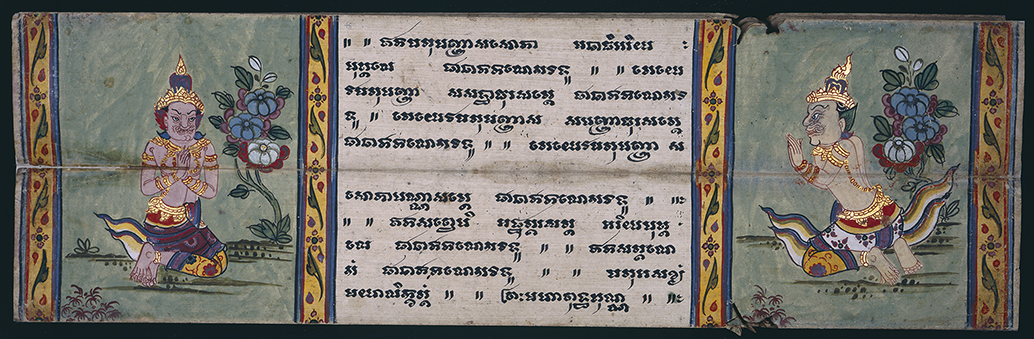
Extracts from “Sutta Pitaka” (“Basket of Discourse”), a canonical collection of Buddhist texts, written in Pali, the language of Theravada Buddhism practiced in much of Southeast Asia. Acquired in 1824 during the first Anglo-Burmese war. Now at the British Library (IO Pali 207, folio f.48).
Some of the zoological material went on display soon after arrival. It was also cataloged by Horsfield. However, the largest collection – Griffith’s botanical collection – remained in the basement of India House, unopened for decades. The remaining papers in Calcutta, including maps and drawings, were eventually collected, edited and published by another surgeon-naturalist, John McClelland. Ironically, McClelland’s justification for publishing the papers before sending them back to India House was exactly because of the acceleration of accumulation of Company science, an acceleration he believed the curators were not fit to handle: “the labours of the greatest Botanist that ever to set foot in India will be lost, perhaps for ever, swamped amidst the accumulated records of hundreds of men that are daily being added to their stores.”Footnote 99
The invasion of Afghanistan was an attempt to secure the far western borders of Company territory. At nearly the same time, the Company also pushed a trading dispute into military action at the far eastern edge of its range. During the first opium wars of 1840–1842, in which the Company sought to protect its trade, and especially the ability to supply opium to China, the Company also assigned a surgeon-naturalist to collect along with the campaign. Theodore Cantor, a nephew of Nathaniel Wallich, and a future collaborator with Horsfield on cataloging work at India House, went to India in 1835 and was hired in 1837 as surgeon attached to the Bombay Marine Survey (where he made a collection of fishes of the Ganges, sent on to India House). He was then sent to China with a Company regiment in 1840. Like Griffith, Cantor was instructed to collect for the government, meaning India House.Footnote 100 Also like Griffith, Cantor paid all expenses himself on the expectation that he would be reimbursed by the directors. Writing to Horsfield from Calcutta on April 20, 1841, he complains: “somehow or other I never received any assistance from Govt except a small quantity of spirits of wine [for specimen preservation], and even that rather late in the day. In a late letter from Govt, I am told they will pay the expenses I have actually incurred, leaving all other renumeration to the decision of the Court of Directors.”Footnote 101
In addition to having to put up his own money for supplies, Cantor would have taken a pay cut to go on “detached” duty as an assistant surgeon. He became ill at the end of the short collecting season (“nothing can be done at Chusan from the middle of October till the commencement of May”) and sent his collections and drawings on to Horsfield, asking that he or “Mr. Hope” (Fredrick William Hope, clergyman, zoologist and first professor of zoology at the University of Oxford) would “do me that favor” and publish a summary and description of the collection in the Transactions of the Entomological Society. “What I wish beyond all things is to have a general conspectus of the Entomology of Central China like that Hope has given of the Himalayah in Royle’s work.”Footnote 102 A complete series of the substantial collections and drawings was then forwarded to India House. The cataloging and publication preparation work was, as we will see was so often the case, taken up by a collective. William Griffith worked on the plants, Fredrick William Hope on the insects, Edward Blyth on the birds and William Benson on the mollusks. It was eventually published, at great expense and with color plates, by the Asiatic Society of Bengal.Footnote 103
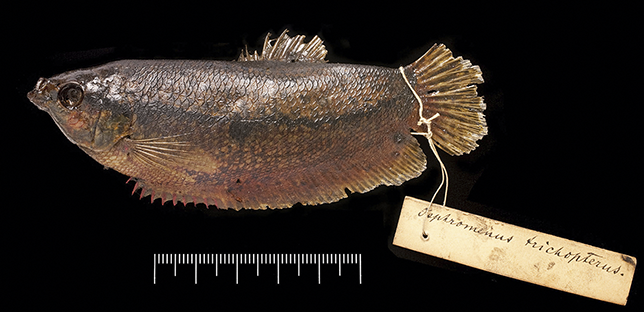
A holotype specimen of Osphromenus trichopterus cantoris, a freshwater fish, collected for the Company’s museum by Theodore Cantor in Penang in 1840. Now in the Natural History Museum, London.
In 1842, Cantor was assigned as a civil surgeon to Prince of Wales Island (Penang), where he was also expected to continue his natural history collecting. Here he was handed the management of five hospitals in addition to a new sanitation department. Still, he sent onward to India House nineteen cases of specimens, containing 11,024 specimens collected during three years of service, including “specimens of edible birds’ nests” of the “best kind,” costing, he says, £300, and, in Case 12, a rare deposit of human remains: “Human Skulls … murderers executed at Pinang December 21, 1843.”Footnote 104 After a short stint as garrison assistant surgeon at Fort William, in 1848 he was sent back to war, this time to Ferozepur during the first Anglo-Sikh wars. He continued to send large collections back to India House until well into the 1850s.Footnote 105
*
The territorial and trading expansion that followed the Napoleonic wars in Asia would result in another great influx of knowledge resources at India House. After an initial wave of wartime plunder such as that from the siege of Seringapatam, there would come more collections that now were the result of Company-led surveys and expeditions into newly acquired territory. The plunder-led phase of wartime collecting – where plunder would be gathered by the prize officers, sold at auction and only then were the proceeds distributed – was now followed by a much more organized and official form of collecting. The result was that even as collections were also growing all across Asia, such as those at the Calcutta Botanical Gardens, the cultural and scientific capital held at India House grew at an even faster pace during the Napoleonic wars and in the “little wars” of border aggression that followed.Footnote 106
War-backed territorial expansion was critical to the growth of Company science in Britain. In addition to material accumulation in the context of war, areas beyond the Company’s formal control were also targets of Company collecting, although, as we have seen, different means had to be employed in these regions. Consequently, as the next chapter will argue, the Company’s missions and attempts at territorial expansion also becomes a driver of the changing material culture and practices of the historical and natural sciences in Britain in this period. Margot Finn has explored this connection with clarity, arguing that “colonial loot and military booty … played an active role in inciting historical practice in nineteenth-century Britain.”Footnote 107 Before 1800, semi-sanctioned practices of individual looting, collecting and personal enrichment were the norm. Such norms were beginning to change during and after the Napoleonic wars.Footnote 108 By 1855, the regulation of material designated “treasure” in formal terms had been replaced by a set of regulations and policies ostensibly meant to ensure that treasure became the property of British India. But even after such laws were in place, and after wartime looting had generally come to be seen as unethical in Europe, even more material flowed into Europe.Footnote 109 In no small part due to the growing pull of the library and museum at India House as a center of Company science, “national” treasure unearthed in the colonies, and often the most valuable and rare items, made their way back to India House to be eventually merged into Britain’s state museums.
We have seen how the establishment of the Company’s new library, museum and colleges was accompanied in the first decades by two related developments in the accumulation and management of knowledge resources at India House: internally, attempts at improving the organization and use of the materials, and, externally, projecting the Company as an institutionalized authority on knowledge of Asia. It is tempting to interpret these developments as yet another step in the Company’s move toward becoming – or trying to appear to become – more state-like by adopting a state-like position of epistemological authority regarding Asia. This might be true were it not for the fact that, at the time, British offices of state were only just beginning to articulate and act upon those ideas themselves. It might be more accurate to interpret the Company, Parliament and Crown offices all undergoing in this period, at the level of information accumulation and management, a similar set of changes.Footnote 110
However, within the next several decades, as political pressures put new stresses on the old form of the Company, part of these debates would turn attention to the India House repository and the Company’s knowledge monopoly. In the aftermath of the loss of the India monopoly, within India House, an increasingly urgent concern for better institutional self-knowledge now joined the ever-present worries over the limitations of the Company’s understanding of the land and people under its domain. As Bowen has shown, there was also plenty of skepticism of the Company’s system of conducting all business in writing and its ever-growing mass of documents at India House, and a persistent worry about the usefulness and quality of the information being accumulated. For example, some members of the Board of Control complained that most of the Company’s correspondence tended to cover matters “that were extremely obvious and almost trifling.” In 1823, Thomas Munro, former governor of Madras, called the archives and India House “a mass of useless trash.”Footnote 111 Munro’s larger point was to stress the limitations of knowledge gained through the written word when compared to understanding that comes with direct experience. With its specimens, samples, manuscripts and works of art, the library and museum contained a different kind of record of India, meaning, at the very least, that the directors did not have to rely “solely on the written word.”Footnote 112 As we will see in the next few chapters, however, the debate over experience versus the archives only became more intense in subsequent decades. Furthermore, as the Company’s relationship to the state further changed, and as new commercial and trading interests took hold, the discourse related to the utility of the library and museum – what it was for and whose interests it should serve – would also begin to change.
James Mill’s Man in the Closet
Just after the 1813 charter renewal, the young writer James Mill took it upon himself to compose a new history of the Company’s empire in Asia. At the time, Mill had been barely supporting himself and his large family through his prolific journalism work. Devoting precious hours to a History of British India was a gamble, especially for someone who had never worked for the Company or set foot anywhere in Asia. Writing from a liberal perspective that heavily critiqued the monopoly was even riskier. But the book turned out to be a great success for Mill; most importantly, it landed him, a year later, a coveted salaried position at India House as an assistant in the Committee of Correspondence. At that time, it was extremely unusual for someone without any experience in Asia to join the upper administration at India House. But the supposed expertise of the “British Indian” (i.e. a Briton who has spent time in Asia) is precisely what Mill criticizes in the opening pages of the work that made his India House career possible. Whereas – as in the case of Orme, Dalrymple, Wilkins, Marsden, Colebrooke and so many other orientalists and administrators – experience in India had long been seen as the essential basis for being considered an authority on India, Mill boldly asserted that it was now time for that quaint old idea to be retired. One line of the argument proposes that experience in India leads to bias and partiality, which leads to defective reasoning about India.Footnote 1 The other key to his argument was to do with the new collections in Britain:
Whatever is worth seeing or hearing in India, can be expressed in writing. As soon as every thing of importance is expressed in writing, a man who is duly qualified may attain more knowledge of India, in one year, in his closet in England, than he could obtain during the course of the longest life, by the use of his eyes and his ears in India.Footnote 2
Leadenhall Street looking west toward India House, with the booksellers Parbury and Allen in the foreground.
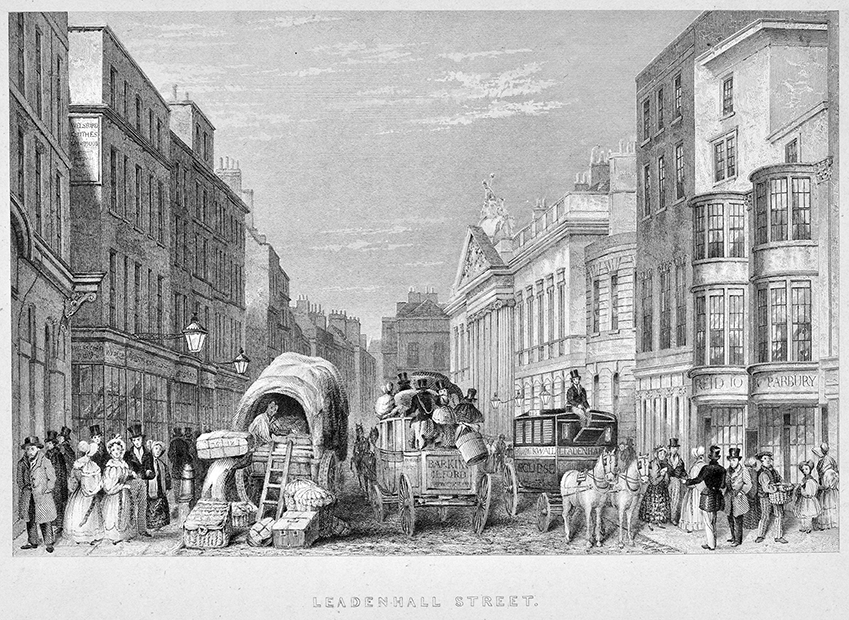
Mill’s preface infamously makes the case for the superior power of the home-country imperial archive, of not only the possibility of knowing at a distance but also the likely superiority of knowledge generated out of imperial centers. Mill’s preface to the History of British India is a remarkable construction of a new metropolitan imperial authority based on the archival record. It is one prominent example of how the growth of collections and archives about Asia in Britain would begin to transform scientific practice. To some contemporaries, Mill’s new imperial epistemology crystalized what had heretofore been a rather hazy vision of the utility of the kind of knowledge management institutions now growing at India House. And, although his epistemological critique of experience goes much farther than his contemporaries, it also came just at the start of a general trend in just that direction within government in Britain generally.Footnote 3 It is in this new perspective that some historians have seen the origins of a uniquely Victorian obsession with an imperial “total archive.”Footnote 4
This chapter and the next turn to the methods and practices of science at India House in the first three decades of the library-museum’s growth. The first section focuses on the orientalists working at India House and Haileybury, and on how the material related to Asian languages, culture and history would be put to use for both specific administrative purposes and grand philosophical arguments. The second section turns to the naturalists at India House and the Company’s colleges, and similarly explores the way Company science was engaged with both specific colonial projects and natural philosophical debates. For both orientalists and naturalists – that is, for both philosophical history and philosophical natural history – questions of classification and ordering were paramount. The unprecedented scope of information available would lead to an active search for new methods and practices. In nearly every discipline, the growing mass of information was seen as both a boon and a crisis. Orientalists, political economists and naturalists at work at India House and the colleges thus focused in similar ways on questions of systematics; that is, how to produce knowledge through the sorting, classification and comparison of information.
The increase in the quantity of knowledge resources in Britain was, in part, a consequence of the increasingly centralized organization of scientific labor across the empire. It was more and more common for naturalists and orientalists to argue that “theoretical” work was best pursued in Britain, while data collection should be the focus of the colonies. As Mill would put it: “The man best qualified for dealing with evidence is the man best qualified for writing the history of India. It will not, I presume, admit of much dispute, that the habits which are subservient to the successful exploration of evidence are more likely to be acquired in Europe, than in India.”Footnote 5 For example, for Mill, the work of making a “really useful history” (a scientific endeavor for him) now involved more than anything having the ability to process “evidence”; that is, the records and reports of “observers.”Footnote 6 The scholar located at the center of imperial administrative accumulation should therefore act as a “judge” relative to colonial officers, who are like “witnesses”:Footnote 7
He who, without having been a percipient witness in India, undertakes, in Europe, to digest the materials of Indian history, is placed, with regard to the numerous individuals who have been in India, and of whom one has seen and reported one thing, another has seen and reported another thing, in a situation very analogous to that of the Judge, in regard to the witnesses who give their evidence before him.
Mill’s claim – that observers on the ground gathering particulars are less well adapted to “philosophize” – is not so idiosyncratic as one might think; at around the same time, similar debates were emerging among the British-based naturalists and their peers in the colonies, this time the question being who was qualified to identify new species (rather than mere varieties), with the metropolitan actors claiming only they had the necessary training and materials. Such distinctions were always contested by those based outside the metropolitan centers, and they were also sometimes drawn within metropole and province in the colonies as well. But the debate over the geography of scientific production was itself spurred by the relative growth of knowledge resources in the imperial home country, and that would, in turn, go on to support a Eurocentric distribution of scientific labor in the long term.
In the final section of this chapter, I turn to the place of Company science within the growing networks of civic science in Britain. Well beyond the confines of Leadenhall Street, Company science was in this period shaping the matter at hand available for knowledge production in Britain. Out of the materials extracted from India and gathered at India House and elsewhere would be built an increasingly profitable web of what would now be called intellectual property resources, generally owned and traded by Europe-based actors. The folding of information about Asia into Britain’s provincial systems of ordering and classification would contribute to the growth of European sciences at the time, while also generating social, intellectual and financial capital for the authors. This systematic possession of Asia in Europe was the stuff out of which not only careers and intellectual property but also whole disciplines and institutions could be made.
Philosophical Histories
Well before Mill’s time, British orientalists from Jones and Wilkins onward were constructing relationship between Britain and Asia, between home and colony, that served and reflected political purposes in Britain. The publication of Wilkins’s translation of the Bhagavad Gita in 1785 had been promoted by Hastings as a way of translating Indian culture for the understanding of Britons, a way of bridging physically disparate cultures supposedly united under the empire. Thirty years later, at Calcutta College, India House and Haileybury, the study of Sanskrit was now a cornerstone of both administrative training and philosophical study. At Haileybury, it remained the case that, most fundamentally, language skills were taught as part of the basic training for the Indian civil service. Sanskrit held out special promise, since the leading Sanskrit scholars of the day – Jones, Colebrooke, Wilkins and Hamilton – agreed that dozens of vernacular languages were derived from Sanskrit. In much the same way as Latin was studied as an entry into a range of Latin-based languages, so Wilkins and others now saw Sanskrit as key to the efficient mastery of multiple other languages of India. Sanskrit was also believed to be a powerful and flexible language, especially in relation to philosophical or scientific topics; without it, “the power of expressing abstract ideas, or terms in science, would be absolutely reduced to a state of barbarism.”Footnote 8
Like Latin and Greek, Sanskrit was thought by some to impart a particularly refined mentality upon the speaker. For the comparative philologist and Haileybury professor Alexander Hamilton, even more important was what the study of Sanskrit would reveal about the mind of the Sanskrit-speaker past and present. If, as Hamilton believed, languages were mirrors of the mind, then Sanskrit opened a path for the British to (finally!) comprehend their subjects; and it also raised, for Hamilton, the larger puzzle of how such a “perfect” language (suggesting a highly advanced intellectual culture) could have developed historically under such “despotic” conditions of governance as were (widely assumed by the British to be) prevalent in ancient Asia. Studying Sanskrit, Wilkins argued, would attract, “uplift” and amuse Haileybury students, as well as fascinate the “lover of science, the antiquary, the historian, the moralist, the poet, and the man of taste.”Footnote 9 The “extraordinary” language, was, in the famous estimation of William Jones, “of a wonderful structure; more perfect than the Greek, more copious than the Latin, and more excellently refined than either.”Footnote 10
Because of its antiquity, its widespread influence and its tantalizing similarities to Latin and Greek, Sanskrit philology was believed by some to hold the key to a new understanding of the history of civilization.Footnote 11 Hamilton and other Haileybury philologists argued that Sanskrit was the means to uncovering the genealogical connections between the world’s civilizations. For example, in his review of Wilkins’s Grammar in the Edinburgh Review in 1809, Hamilton uses the Grammar to make the case for a structural “analogy,” as he called it, between Sanskrit and Latin, Persian, German and English, including in the review his own comparative wordlists to illustrate the argument.Footnote 12 Critically, this work required the construction of a history of the civilizations of the subcontinent, which in turn justified even more, and broader, antiquarian collecting. As Bernard Cohn has put it: “Each phase of European effort to unlock the secrets of the Indian past called for more and more collecting, more and more systems of classification, more and more building of repositories for the study of the past and the representation of the European history of India to Indians as well as themselves.”Footnote 13
Comparative philology was also important to the conjectural or philosophical histories of Adam Smith and later the Edinburgh professor James Ferguson (who influenced James Mill). Smith and others proposed models of different stages of society, moving stepwise from barbaric to civilized, and attempted to define metrics for different stages according to cultural markers such as the complexity of legal codes, or modes of agricultural production, or systems of governance.Footnote 14 These stage-based, or stadial, theories of history were, essentially, works of historical-political economy, and the political economists at Haileybury were tackling similar philosophical-historical questions. For Malthus, as with Ferguson and Hamilton, language was a window onto the mind, and understanding the natural philosophy of the mind was essential to any theory of political economy.Footnote 15 The first edition of his Essay on the Principles of Population began with two chapters on naturalist philosophy of mind. For Malthus, the critical question of how and whether societies can be “improved” came down to the question of how mind and body limited one another. He argued there was a natural limit on how much the mind can influence the body, and thus on how much improvement an individual and a society could make: “We can be quite sure,” he wrote, “there is a limit to the improvement, though we do not exactly know where it is.”Footnote 16 Referring to this edition, the natural philosopher and collector Alfred Russel Wallace called Malthus’s Essay “the first work of philosophical biology” he had ever read.Footnote 17
When Haileybury opened, although it may have been readily agreed that Sanskrit should be taught, the material for doing so was not available in England. There were no grammar books, no dictionaries, no workbooks. But among Wilkins’s collections were manuscript copies of at least six of the manuscript grammars that the pandits of Benares had used, some dating back to at least the twelfth century. And so he set about compiling from these and other sources a Grammar of the Sanskrita Language for the use of the college (see Figure 5.2).Footnote 18 To print it, however (and to teach the students how to write Sanskrit), Devanagari typeface was needed. Wilkins designed, cut and cast the typeface himself Wilkins’s Grammar was published in 1808 and immediately put to use in the Company colleges (giving Wilkins a nice side-stream of income).Footnote 19 Wilkins also worked with the printer J. & H. Cox to bring printing in various foreign typefaces to London. At several points in 1813, Cox would make use of the Company’s collections of type, borrowing from the library “casts of Sanskrita Types” and “five Devanagari Copper plates and One Persian Plate” (March 17).Footnote 20 Wilkins also worked with Cox to produce textbooks for Haileybury and Addiscombe. Other professors were also busy publishing for the growing print market. In 1813, Cox printed for the Company 100 copies of the Addiscombe professor John Shakespear’s Hindustani Grammar. Hamilton published the Hitopadeśa (1810), the first edition of a Sanskrit text to be published outside India, as well as a Grammatical Analysis of the Sanskrita Hitopadeśa (1810–11) and Terms of Sanskrit Grammar (1814).Footnote 21 A few years later Professor Charles Stewart published a descriptive catalog of the library of Tipu Sultan, as well as translations of some memoirs of Hyder Ali and Tipu Sultan.Footnote 22 Professor Dealtry published a mathematics textbook, The Principles of Fluxions (1810).Footnote 23 Professor Bridge published two volumes of Mathematical Lectures (1810 and 1811), as well as textbooks on mechanics, algebra and trigonometry.Footnote 24 Malthus was publishing articles on various political economic issues (the problems in Ireland, currency, principles of commerce, and currency and bullion) in the Edinburgh Review.Footnote 25 And as books flowed out from Haileybury professors, textbooks and other publications flowed in from the Company’s library and its warehouses, where newly printed books for the library and colleges also arrived by the cartload from Bengal and Madras.
Wilkins’s table of the elements of the Devanagari characters and numerals. From Wilkins, Charles. A Grammar of the Sanskrîta Language. London: Printed for the author by W. Bulmer, 1808.
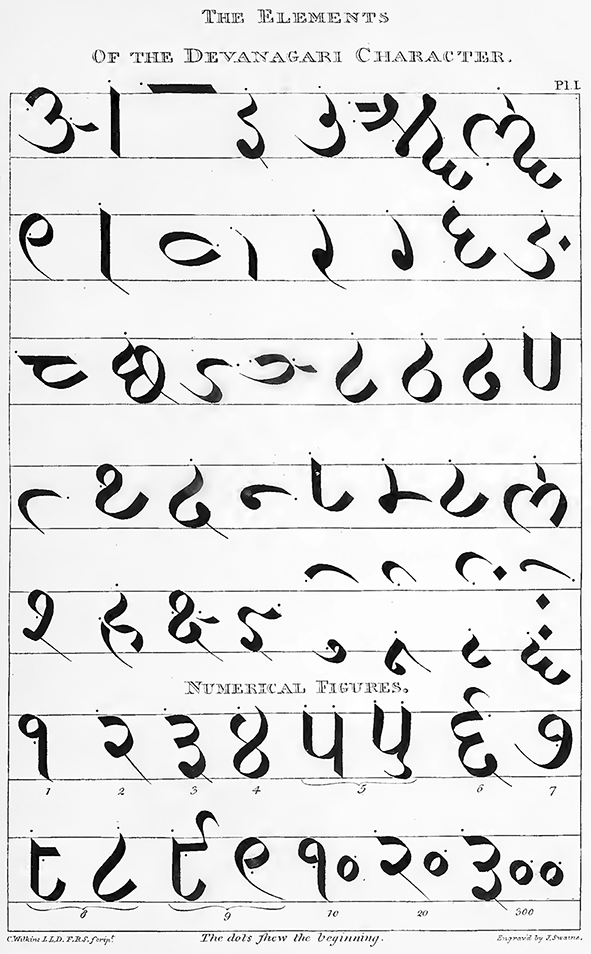
The world of Company politics was never far removed from the teaching and publishing of the Company’s professors and curators. Malthus, through correspondence with former pupils such as Brian Houghton Hodgson, also sought to collect data from India and other regions with which to test his theory that civilizational development was dependent upon achieving agricultural surplus.Footnote 26 The Histories, Travels and Journeys of the surveyors, collectors and administrators were usually written or commissioned with broad policy aims in mind. The administrator, explorer and future secretary of the Admiralty John Barrow produced what Ja Yun Choi has argued is a distinctly “philosophical” account of China in his Travels in China (1804), which declares in the subtitle that the book attempts “to appreciate the rank that this extraordinary empire may be considered to hold in the scale of civilized nations.”Footnote 27 Raffles’s History of Java (1817) was undoubtedly intended to repair Raffles’s somewhat battered reputation but it was also an impassioned argument in favor of maintaining British colonial interests in the region, a view that ran against those of many in both Parliament and India House. To make his argument, Raffles mobilized the information gathered over the past five years to paint a picture of a rich, fertile, productive, peaceful, pliant and strategically significant region.Footnote 28 Raffles’s History of Java reads like a policy brief with its strong economic optimism. Even with Raffles’s glowing optimism about the future value of having in Singapore a foothold in the region, the Company only very reluctantly (and after six years of legal wrangling with the Dutch) defended and ratified Raffles’s acquisition of Singapore.
Buchanan’s Journey from Madras was also written with a particular policy aim to hand. Buchanan’s survey was the governor-general’s chance to convince London that the war had been worth it, that these were possessions that would serve the Company’s interests and aims.Footnote 29 But the argument for the value of this acquisition to the Company is cast in a very different light than that of Raffles’s depiction of Java as a frontier of endless resources. David Arnold notes that Buchanan’s instructions contain many references to the opportunities for “improvement”; and that Buchanan is asked to report in particular on the opportunities for improvement.Footnote 30 Thus, for example, with regard to the inhabitants, Buchanan’s instructions were to note in particular the condition and treatment – the “protection, security, and comfort” of “the lower orders of the people.” Under “manufactures and manufacturers” he is asked to pay attention to “how far the introduction of any of the manufactures of Mysore into any other of the Company’s possessions might be productive of advantage, and respectively whether Mysore might derive advantage from the importation of the growth, produce or manufacture of Bengal.”Footnote 31 Or, under “Farms,” he is asked to comment on “how far the cultivation of the country may be improved.”Footnote 32 He is even asked to inspect the cattle to consider possibilities for “the improvement of the breed.”Footnote 33
Buchanan responded with a multi-layered argument for the economic benefits – the better management of the “household” economy – that would be guaranteed by British rule. The overall depiction of the region provided by Buchanan is, however, and again in contrast to Raffles’s Java, of a barren, unproductive landscape: traveling through Mysore in the dry season (but not distinguishing the two seasons), he found the landscape “sterile,” lacking “verdure,” having a “desert appearance.”Footnote 34 The farmers he described as “indolent” and “slovenly.”Footnote 35 In terms of “improvement,” he presented the land itself as having great potential, and suggested it was “perfectly fitted for the English manner of cultivation” and should be “enclosed …. And planted with hedge-rows.”Footnote 36 The great similarity between Raffles’s History and Buchanan’s Journey is that both lay primary blame for the present circumstances upon the prior political system and blame the countries’ poverty, wants, waste and neglect on the policies of the vanquished states (and Tipu’s reign is much more harshly depicted than that of the Dutch). Thus, through the surveys of the natural productions and farmlands (neglected), domestic culture (oppressed by monarchical laws), agricultural technology (backwards), commerce (repressively controlled), religions (silenced), monuments (destroyed) and so on, a case is made for a desperate need for a new domestic policy to rebuild the economy of the region.Footnote 37
Thus, when published in 1817, Mill’s History of British India was far from unique in being designed as a vehicle for particular political economic purposes. What does distinguish Mill’s History, however, is both methodological and philosophical. Methodologically, the distinction lies, again, in his claim to authority by way of the imperial archive (in conjunction with a liberal education) rather than by way of experience (often also in conjunction with a liberal education). Philosophically, Mill’s History stands out for its investment in a particular liberal utilitarian vision of the British Empire in Asia.Footnote 38 For Mill, history was a philosophical exercise, one that begins with theory and proceeds to marshal evidence in support of that theory. This results in (or, rather, begins with) a deeply negative depiction of the culture and society of “British India.” Mill’s remarkable claims about the backwardness of India, for example, draw heavily from his affinity with both the philosophy of mind and the historical traditions of the Scottish Enlightenment, in what Jennifer Pitts has called an “uneasy alliance of conjectural history and utilitarianism.”Footnote 39 Even more than the epistemological arguments in the preface, Mill’s History is now well known for the image of India that the book constructs, and for the widespread influence that image had for many years. According to Thomas Trautmann, it is “the single most important source of British Indophobia and hostility to Orientalism.”Footnote 40
Throughout the book, Mill uses his own utilitarian rules for inserting “India” into a worldwide civilizational hierarchy. He makes many comparisons between not only “Indians” and “Chinese” but also “Indians” and “Africans,” and “Indians” and “Mexicans.” All of these societies and cultures, or more accurately all of the accounts, interpretation and reflections on these societies and cultures made by European travelers, were compared and ranked by Mill according to the strictures of liberal utilitarianism, wherein liberty of a particular form was calculated to generate the greatest happiness for the greatest number. The end result is to package “India” into a case study designed to prove the utility of liberalism for Britain and the necessity of imperial despotism for India.
The mission of Mill’s “critical history” is to convince the reader that the societies of Asia are “uncivilized” or on the lowest rung of the ladder of civilization. But to do this he has to try to sweep away any argument for literary, scientific, moral, religious and artistic accomplishments – not an easy task when, for example, Sanskrit was then being studied with such reverence and enthusiasm. In chapter 10 of the notoriously bigoted “Of the Hindoos,” Mill addresses the reasons scholars such as Jones, Wilkins and Colebrooke have so much praise for Asian cultures, arguing in essence that the scholars were simply overawed by the exotic.Footnote 41 In these and other ways, Mill disparages the orientalist histories, survey reports and administrator histories. But the rest of his research for the book also inevitably draws on the very scholarship that the preface criticizes. It is heavily dependent upon the work of Company officers or connected figures, including John Bruce (cited three times); Francis Buchanan (twenty-five times); Edmund Burke (twenty-one); John Barrow (eight); Clive; Colebrooke; Elphinstone; Teignmouth; Nathaniel Halhed (ten); William Jones (thirty-three); and James Rennell and Charles Wilkins.Footnote 42 For Mill, however, to use “flawed” sources such as he has, in order to build up a factual – a “really useful” – history is not contradictory. This just means that the sources must be evaluated and compared by a capable third party, someone qualified to act as a “judge” before these textual “witnesses.”Footnote 43 Interestingly, Mill’s methodology for his science of history is strikingly similar to methods becoming popular in astronomy at the time for correcting for perceptual differences across observers – what would become known as the “personal equation” – averaged out through the method of least squares. Mill talks of “comparing the whole collection of statements with the general probabilities of the case … collected from the testimony of a great number of individuals.”
The rhetorical use of this “scientific” history is very different from that of the earlier generation of orientalists. Recall that in Hastings’s preface to Wilkins’s Bhagavad Gita, he argued that “every accumulation of knowledge … attracts and conciliates distant affections; it lessens the weight of the chain by which the natives are held in subjection; and it imprints on the hearts of our own countrymen the sense of obligation and benevolence.”Footnote 44 This is precisely the “cosmopolitanism of sentiments” that Uday Singh Mehta ascribes to Edmund Burke as representative of the proto-“conservative” political ideology. In contrast, Mill, in rejecting experience and sentiments (and thus, says Mehta, any ability to truly engage and understand the strange and unfamiliar) in favor of the primacy of his philosophy of history, is engaged in a “cosmopolitanism of reason.”Footnote 45
The directors’ decision to hire James Mill in 1819 was controversial. Not only was Mill’s History critical of Company rule but Mill was also a vocal anti-imperialist generally, arguing that the colonies were only beneficial to “the few” – that is, a small group of investors – and were financially detrimental to Britain as a whole. But Mill was also convinced that utilitarian principles of governance were the only way to alleviate poverty in British India, and on this point he had key supporters.Footnote 46 Mill would become an immensely influential figure within the Company (and he pushed for expanding the roster of utilitarian political economists in the Company; he tried, for example, to get Ricardo to join the Court of Directors).Footnote 47 His long tenure influenced the future direction of British policy in Asia and its organization in Britain. But Mill’s attempt to overturn the authority of experience, and of those with direct experience of India, was immediately debated and never uncontroversial, a reminder of the ever-present ideological hybridity within the ranks of the Company. Most famously, T. B. Macaulay attacked Mill’s claims in “Mill on Government” (1829). Here Macaulay directly addresses the question of how political knowledge is acquired and what a “science” of government would look like. Arguing against Mill’s abstract approach to the production of (politically useful) knowledge, Macaulay defends an inductive, empirical approach and argues for the utility of direct experience in acquiring politically useful knowledge.Footnote 48 It was also immediately critiqued as unjustly negative, and in later editions of the History, which the Company librarian was required to update, editorial additions would attempt to soften some of Mill’s claims.Footnote 49
Philosophical Natural Histories
1821, January 5 – Delivered to Dr Horsfield for delineation – Eight birds from Sumatra as specified on fileFootnote 50
While the orientalists and political economists worked to insert Asia into their historical orders of the world’s civilizations, the naturalists were doing something similar with respect to orders of nature. The main focus of Company naturalists at India House in the 1820s would be to bring the Company’s collection to bear on the contested question of the fundamental organization of nature, and whether or how it may be discovered. The period between 1820 and 1860 was the heyday of “philosophical natural history” in Britain.Footnote 51 Just around this time, natural history was taking on a much more geographical, or biogeographical, focus. The question of how distinct kinds emerge was increasingly answered with reasons of climate, altitude, topography and other geographical issues. Works like Alexander von Humboldt’s biogeographical treatise on the Americas (and his proposed work in the Himalayas) not only enumerated species but also mapped their distribution and speculated as to the reason for their particular geographical range.
These discourses were in constant dialogue with the civilizational theories of the conjectural historians. Groups of plants and animals were described as populations, using statistics similar to those of census taking, sometimes organized into categories like “province,” “county” or “nation.” Both Darwin and Wallace were deeply influenced by Malthus. Interactions between groups and species were often described as wars or acts of colonization, of “obtaining the possession of the earth by conquest” and a “struggle against the encroachments of other plants and animals,” as geologist and naturalist Charles Lyell put it.Footnote 52 Even more directly, the history, distribution and diversity of humankind itself was always part of the subject matter of natural history as well, and even the geographical origins of theories, philosophies and sciences were at the forefront of many of the naturalists’ minds. For example, James Smith, longtime president of the Linnaean Society, in a survey of scientific methods concluded that “in those northern ungenial climates, where the intellect of man indeed has flourished in its highest perfection, but where the productions of nature are comparatively sparingly bestowed, her laws have been most investigated and best understood.”Footnote 53 All of this, as Janet Browne has shown, was symbiotic with the Company’s war-based imperial expansion.Footnote 54
The cornerstone of classification in natural history had, since the late eighteenth century, been dominated by Carl Linnaeus’s system of binomial nomenclature. Linnaeus was widely influential in Europe and his classification system was avidly taken up in colonial collecting. Linnaeus’s “artificial” system was so called because it was not represented as capturing the essential distinctions between types in nature but instead was a useful human-made imposition of structure. It was based on distinguishing groups according to a few simple external characteristics, which themselves were chosen for ease of identification. The system of Linnaeus had, in the late eighteenth and early nineteenth centuries, been especially popular in Britain; the purchase of Linnaeus’s own collection, and the founding of the Linnaean Society in London in 1788, extended that influence.
After the end of the Napoleonic wars, however, the Linnaean system increasingly came under attack in Britain. There was a general revival of philosophical debate over the aims and methods of species classification. Part of this revival of interest in systematics was related to identity and distinction among scientific laborers: at a time when the pursuit of natural history was being taken up by more and more classes of people, including army and navy subalterns and working-class men and women, a small group sought distinction as “scientific” or “philosophical” naturalists.Footnote 55 Part of this involved drawing distinctions between naturalist in the colonies and those working at metropolitan or imperial centers. Along the same lines that James Mill had argued in the preface to his History of British India, heads of imperial collections, such as Joseph Hooker at Kew Gardens, argued that the naturalist’s “philosophical” work, such as deciding when a new species had been discovered, should be left to the scientists in Britain and other centers of science.Footnote 56
For those who were becoming unsatisfied with Linnaeus’s Systema Naturae, the limitations of that system were now becoming clear because of the great new volume of material from all parts of the world being subjected to classification. The Linnaean system was, they claimed, both too “artificial” and too restrictive. Thus began an active search for a new theoretical foundation for describing the distribution and diversity of life on earth. In the early nineteenth century, the French theorist Antoine Laurent de Jussieu’s proposed “natural” system revived debate about the validity and value of “artificial” versus “natural” systems of classification. The British botanist William Roscoe, for example, in 1815 defended the use of artificial systems on the grounds that the natural system, if indeed there was one, was currently unknown beyond “mere fragments,” and quite likely unknowable:Footnote 57
[Nature’s] vegetable productions are so numerous, their characteristics often so difficult to ascertain, they are related to each other by so many ties, that it is vain to expect that we shall ever be able clearly to define them, and accurately to seize upon the true distinctions; so as to combine the whole in the precise order in which they were primarily disposed by her hand.
Roscoe compared the rejection of Linnaeus’s widely used artificial system in favor of Jussieu’s new proposal to “those who, having a convenient and well roofed house, overturn it, in order to build one in the place of it of which they are unable to finish the roof.”Footnote 58
At India House, philosophical natural history arrived in the wake of a large collection of specimens from Java. A year after Humboldt’s last visit, and at just about the same time that Mill joined the Committee of Correspondence at India House, Thomas Horsfield arrived to take up the post of assistant curator and naturalist (see Chapter 4). Like Wilkins, much of Horsfield’s time was spent managing the library, including supervising visitors and fetching books for visiting scholars and readers. As the naturalist at India House, Horsfield was also responsible for a vast amount of correspondence, of which only some materials survive. Some are from Company naturalists in the colonies asking for assistance, such as the letters of Edward Blyth, the influential zoologist and curator of the Asiatic Society of Bengal’s museum, repeatedly complaining to Horsfield of a lack of communication from naturalists in Britain.Footnote 59 Others are to do with arranging visits to the India House collections or borrowing materials; for example, on November 23, 1820, William Buckland, the theologian and Oxford geology professor, sends a letter of thanks for a recent visit and a reference for an unnamed friend who would like to visit the entomology collections; on February 14, 1829, the geologist Charles Lyell, then in Paris, asks Horsfield to help an assistant of Baron Cuvier by allowing him access to any of the drawings of fishes at India House; on July 7, 1829, George Ord, the American naturalist and secretary of the American Philosophical Society, sends the first of a series of letters describing a trip to Paris, noting for his curator-friend such interesting facts as that the “[Parisian] men of science … are not very communicative … [but] the great collections are open to every one; and the libraries, which are extensive, may be enjoyed without either trouble or expense.”Footnote 60 On August 1, 1835, a letter from David Don, botanist, professor at King’s College and secretary of the Linnaean Society, asks Horsfield to go with him to see the collection at the Duke of Northumberland’s Syon House. On October 3, 1837, John Joseph Bennett, assistant keeper at the Banksian Herbarium at the British Museum, asks Horsfield to exchange notes in preparation for a meeting with the head keeper, Robert Brown. On March 22, 1841, J. T. Peale of Government House Calcutta forwards a “circular” he had printed and distributed, which advertises the governor-general’s interest in obtaining zoological specimens for the menagerie at Barrackpore, the Zoological Society and the East India Company’s museum, clarifying that payment will be made on receipt of the live animals (while “only mere subsistence money” will be reimbursed “if they die on the road”).Footnote 61
In between all of this, from his office adjacent to the reading rooms, Horsfield was also at work on some of the most basic questions in natural philosophy: Is there an order or pattern to the organization of life, and if so, what explains it? Horsfield initially set to work displaying, describing and classifying the birds of the Company’s museum. His primary source of reference was the Dutch aristocrat, bird collector and naturalist Coenraad Temminck.Footnote 62 In 1820, Temminck had founded the new National Museum of Natural History (the Rijksmuseum van Natuurlijke Histoire) in Leiden. (If Raffles hadn’t convinced Horsfield to leave Java with his vast collection, much of it collected before the Company’s brief takeover, before the Dutch returned, it is likely Horsfield’s collections would have ended up in that institution instead of London.) Horsfield had first read his paper on the birds of Java at the Linnaean Society in 1820. A few years later, the Society itself splintered under the pressure of the nomenclature debates. Those who tended to be more radically opposed to the Linnaean system formed the Zoological Club in 1822. Horsfield was an early member and here he developed a friendship with William Sharp Macleay.
Macleay was a civil servant and entomologist, the son of Alexander Macleay, a collector of beetles and secretary of the Linnaean Society. The younger Macleay, working from his father’s beetle collection, developed what came to be known as Quinarianism, which emerged as one of the most influential new “natural” systems of classification in Britain (and only Britain) in this period. In direct rebuttal to Roscoe, William Sharp Macleay believed that the search for a natural system should be the primary aim of natural history. He accused naturalists of “indolence,” dismissing those who were content with filling out the Linnaean system as “mere practical botanists,” like “the village herbalist,” or worse: “The truth is that, like the religion of Mahomet, the Linnaean system has given rise in some parts of Europe to an unfortunate species of self-content, a barbarous state of semi-civilization, which is so far worse than absolute ignorance, that the existence of it seems to preclude every attempt at further improvement.”Footnote 63 And so he went in search of the “natural” system. He believed he found evidence of it in the scarabs of his father’s cabinet. One of Macleay’s main critiques of the Linnaean system was that its linear, branching structure was unable to capture the gradual and continuous change from one group to the next that is observed in nature. Macleay’s circular “Quinarian” system was, he claimed, able to capture this continuous spectrum of change. The basic assumption was that all natural groups form circular chains of members with what Macleay termed “affinities.” Individuals had an affinity if they shared multiple points of subtle similarity (based on comparative anatomy), and the more points of similarity, the stronger the affinity. This is in contrast to “analogy,” which also played an organizing role in the system, and which denoted a small number of major anatomical similarities. Furthermore (and controversially), all groups had five members. Thus, in a family of groups A–E, a chain of affinity would be described in which A had affinity with B, B with C, C with D, D with E, and E with A, closing the circle. Groups are nested within other groups in the same circular structure of affinities. The process of classification required detailed analysis of each specimen in order to rank the level of affinities and construct the circular chain. As a whole, as should be clear, the system was a radical departure from the system of Linnaeus.
All of this was first proposed in Macleay’s Horae Entomologicae of 1819 and 1821. Volume 1 is a classification of Scarabeus according to the new system. The convoluted system of five-part nested circular chains worked beautifully in this limited case. Volume 2 is an audacious attempt at expanding the system to cover the whole animal kingdom. Importantly, as Aaron Novick has recently made clear, this second move was a conscious effort on Macleay’s part to provoke challenges and tests to his proposed system.Footnote 64 For Macleay, this was how the discovery of the natural system must proceed. Remarkably, Macleay’s difficult challenge was taken up by a number of contemporaries. Thomas Horsfield was one of them. Henry Colebrooke also adopted the Quinarian system in the 1820s. But, as with so many other areas, there was no single systematics dogma within the Company; other Company naturalists, such as Edward Blyth and Hugh Strickland, were harsh critics of the search for a “natural” system.Footnote 65
In order to deal with the mass of specimens from Java, Horsfield had to divide up the work. He offered the opportunity to organize the insect collection to Macleay, and the plant classification to Robert Brown, future curator of the Botanical Department of the British Museum.Footnote 66 Both Macleay and Brown accepted, and Horsfield himself took up the project of classifying and describing the birds and mammals. So it was that Macleay next moved on to attempt to apply his system to the Company’s insects from Java, what he called “the most valuable mass of entomological information … a near-complete sample of forms” that had ever been collected “in the tropics.”Footnote 67
William Sharp Macleay’s sample classification of the animal kingdom, showing “how the classes into which the animal kingdom may be resolved are thus found to return into themselves.” Macleay, William Sharp. Horae Entomologicae: Or, Essays on the Annulose Animals. S. Bagster, 1819, pp. 317–318.
In justifying some of his bold rearranging, Macleay discusses at length the bloated state of Linnaeus’s classifications, such as the genus Carabus to which was now assigned 1,600 species. “We every day hear of the difficulty of natural history having increased,” says Macleay, “and doubtless it is increasing every hour; but this is owing to the number of new species which are pouring in upon us.”Footnote 68 And yet, as he continues, the great advantage of this increase to science is that it had allowed the discovery of natural affinities, “which is now within reach of every person who does not allow himself to be frightened by the multitude of names which necessarily crowd the pages of the best modern works on natural history.”Footnote 69
Horsfield’s Zoological Researches in Java (see Figures 5.4, 5.5 and 5.6) was also completed in 1825. Both works were published by the “Company’s booksellers” Kingsbury, Parbury and Allen located just down the road from India House on Leadenhall Street, but the Zoological Researches was a very different type of publication than Macleay’s Annulosa. It contained technically advanced illustrations (twenty-four of which were after drawings by William Daniell) and descriptions of seventy-six mammals and birds. As the keeper of zoology at the British Museum John Edward Gray would later recommend for all zoological cataloging, the work was issued in a series, and each description was given its own unnumbered pages, so that the collection could potentially be arranged according to different systems.Footnote 70 The plates were lithographed, only the second English work of natural history to use this expensive new technique.Footnote 71 In the introduction, Horsfield introduced a few new genera and engaged critically at various points with the Linnaean models of his day and the endless debate over whether naturalists (particularly those in the field who collect) were becoming too quick to name variations as new species. Horsfield’s style of objections to the Linnaean system can be seen in a lengthy discussion of the Javanese otter (Lutra Leptonyx):Footnote 72
The Common Otter, the Javanese Otter, and the American Otter (including both the Canadian and the Brazilian Otter) are so nearly alike in external appearance, that the specific character drawn by Linnaeus for the Mustela Lutra, applies to them all. But as research is extended, and as new subjects are added to our Collections, a greater amplitude is required, both in the specific character and in the descriptions, in order to afford means to the naturalist to discriminate those species, which from an agreement in several external characters, are liable to be confounded.
In his 1828 Descriptive Catalogue of the Lepidopterous Insects Contained in the Museum of the Honourable East-India Company Horsfield takes on the task of further extending and testing the Quinarian system.Footnote 73 The introduction makes clear that Horsfield intends this work to be an extension of Macleay’s Annulosa Javanicae and a further elaboration of the Quinarian system. In a long passage, he tries to explain the logic of the system, and the way in which each of the five “tribes” (as Macleay calls them) of a given group slowly edge into another, with the last of the group edging back into the first (see Figure 5.3):Footnote 74
I have now traced the whole order of Lepidoptera in a rapid manner. I have attempted to show that it consists of five tribes, and that in the metamorphosis of each tribe, certain prominent or typical forms are manifested, indicating the subdivisions next in rank …. The gradual passage of one tribe into another, or the connexion of these higher groups by a natural affinity, has been only superficially stated; but it will be sufficiently apparent, I trust, that in the disposition of these tribes, I have attempted to follow the most gradual succession of nature; and I shall leave the proofs of this to the progress of the work itself. There is, however, one point regarding the connexion of the two principal tribes which presents itself for immediate notice. If the position above advanced be conformable to truth, we are now enabled to show with cogency, that the whole order of Lepidoptera constitutes a series returning into itself … the circle is completed.
The centrality of classification and taxonomy to the scientific practices of European imperialism, and particularly the popularity of Linnaeus’s system, has sometimes been interpreted by scholars as an attempt to impose an eminently practical but also hierarchical and gendered order upon the colonial world; the Linnaean system was, as one scholar puts it, a “grid that could aid in the rational ordering of the natural and social world.”Footnote 75 On this reading, the draw of so many colonial naturalists to the Linnaean system was also a performance of Enlightenment reason (akin to the “cosmopolitanism of reason” Mehta attributes to Mill) that also served to justify European superiority and imperial expansion. From this perspective, it is surprising, then, to find India House in the 1820s and 1830s to be a center for the pursuit of a radically different system, one that is rooted in “affinities” and circularity (“a series returning into itself”).
Rhinolophus Lavartus (horseshoe bat) type specimen collected by Thomas Horsfield in Java. Skull and label from the Natural History Museum, London (NHMUK ZD 1879.11.21.93).
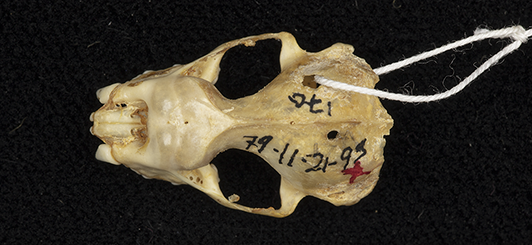
Label for Rhinolophus Lavartus (horseshoe bat) type specimen collected by Thomas Horsfield in Java. Skull and label from the Natural History Museum, London (NHMUK ZD 1879.11.21.93).
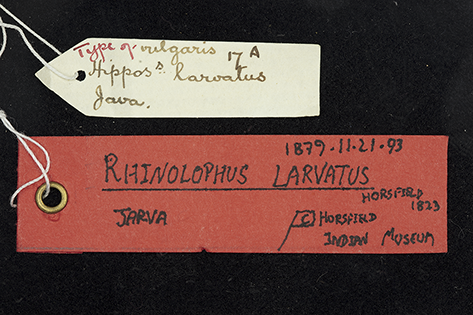
Illustration of a horseshoe bat (Rhinolophus Lavartus) from Horsfield, Thomas. Zoological Researches in Java, and the Neighbouring Islands.
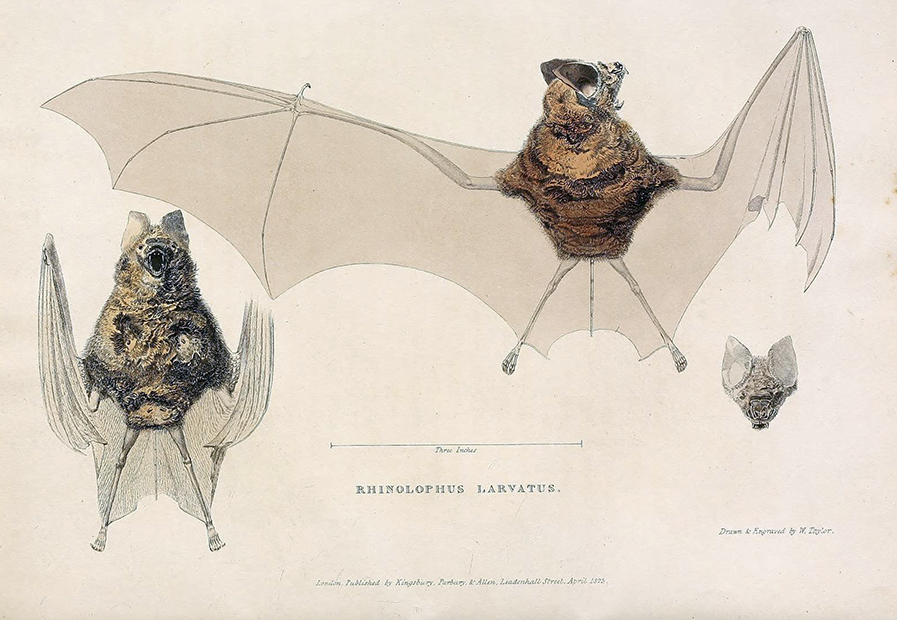
But perhaps the most fundamentally “imperial” aspect of Linnaean classification is not the taxonomic structure but the application of the system itself, as an exercise of renaming, and thus taking a certain kind of intellectual ownership of the matter at hand. In this way, the Linnaeans and the Quinarians are equally rooted in, and helping to extend, the colonial political economy of science. Just as British scholars constructed both Anglicist and Orientalist versions of “India” for their stadial theories of history, so too did both Quinarians and Linnaeans voraciously order and name and take systematic possession of the natural history of Asia. Cumulatively, the result was that a robust business of knowledge production about Asia grew within, and for, Europe.Footnote 76
Monopolies and Networks
By 1830, the material impact of the collections was also felt well beyond India House. Company science was also growing in tandem with the new professions, societies and intellectual networks of Britain’s second scientific revolution. Between 1820 and 1840, the social organization of what was once called natural philosophy began to take on modern disciplinary distinctions. These changes happened in and around the growing collections of libraries and museums, as new subject-specific societies often formed around a perceived need to accumulate and manage information specific to their domain. In London alone, some of the new societies included: the Royal Horticultural Society (founded 1804, chartered 1861), the Geological Society (f. 1807, c. 1825), the Royal Astronomical Society (f. 1820, c. 1831), the Society for the Diffusion of Useful Knowledge (f. 1826), the Zoological Society (f. 1829), the Geographical Society (f. 1830, c. 1859), the British Association for the Advancement of Science (f. 1831), the Entomological Society (f. 1833), the Ethnological Society (f. 1843) and the Hakluyt Society (f. 1846). Privately organized and funded through individual membership subscription, Britain’s thriving scientific societies figure prominently in the standard picture of a uniquely British form of private, civic scientific enterprise. Here, as has often been argued, is where Britain’s unique culture of grand amateurs thrived, and space and resources were created for the dedicated practice of science in a time before university science faculties or other professional positions existed. Meanwhile, as Charles Babbage and other “declinists” worried about the status of British science often asserted, state support for science, even in the case of the Royal Society or the British Association, was minimal.Footnote 77
However, in ways large and small scientific clubs and societies benefited greatly from the free labor of state and Company resources: Company servants, members of the military, politicians and government bureaucrats were all well represented in the new scientific society movement. Taking the Zoological Society, for example, the first president (and on many accounts the “founder”) was the former lieutenant-governor of Java, Sir Stamford Raffles. As a group, the founding members listed in the Society’s charter are remarkably diverse but the aristocracy and state servants are well represented. The list includes a landed aristocrat (Nicholas Vigors), a liberal Member of Parliament and “fashionable aesthete” (Charles Baring Wall – son of the private merchant Charles Wall), a tax bureaucrat (Joseph Sabine), a secretary of state (Henry Lansdowne) and a Whig politician who was both First Lord of the Admiralty and governor-general of India for the Company (George Eden). The role of wealthy amateurs and the political elite within scientific and literary societies would become the subject of much debate and much criticism.Footnote 78 Nevertheless, the existence of state connections through these elite participants was certainly there, bringing scientific societies at least partly within the orbit of political culture. In the case of the Zoological Society, these connections to the Crown would be especially fruitful, since it was through such channels that Queen Victoria was persuaded to grant the Society a portion of Regent’s Park for their growing menagerie.Footnote 79
As with members of the Royal Army and Navy, Company scientists and scholars were active in a wide array of clubs and societies. As will be seen in the next chapter, the society most closely related to the Company was the Royal Asiatic Society (f. 1824) (later the Royal Asiatic Society of Great Britain and Ireland), modeled on the Asiatic Society of Bengal, in which Henry Thomas Colebrooke, George Staunton, Charles Wilkins and Horace Hayman Wilson (Wilkins’s successor) were all very involved.Footnote 80 To give just a few other examples, James Mill, T. R. Malthus and a group of friends founded the influential Political Economy Club in 1821. Mill was also central to the founding of the Society for the Diffusion of Useful Knowledge, and Mill and William Sykes were founding members of the Statistical Society in 1824.Footnote 81 Thomas Horsfield was also a founding member of the Zoological Society (along with Stamford Raffles) and the Entomological Society (where he was founding vice president).Footnote 82 John Forbes Royle (future India House curator; see Chapter 6) was a member of the Geological Society, the Linnaean Society, the British Association for the Advancement of Science and the Royal Society (where he was sometimes vice president). In addition to being a founding member of the Royal Asiatic Society, Royle also helped found the Philosophical Club of the Royal Society, the Royal Horticultural Society and the Royal Asiatic Society. But perhaps no Company servant was more involved in scientific society culture than Thomas Henry Colebrooke, who was, as Rosane and Ludo Rocher have shown, a “primary conduit” for connecting Company people and collections to the sciences in Britain.Footnote 83 Since his return to Britain, as the Rochers argue, Colebrooke’s main concern “had been to integrate data on India into the purview of a vast range of scientific societies.”Footnote 84 In addition to being the primary driver behind the founding of the Royal Asiatic Society, Colebrooke was also an inaugural member of the Royal Astronomical Society, where he contributed work on Hindu astronomy, and for whom he convinced the directors to house the records and reports of the Madras Observatory. He was also a founding member of the Zoological Society, helped get the literary magazine The Athenaeum off the ground and was an active member of the Geological Society, where he channeled specimens and reports from the Company’s museum to the society meetings, as well as a member of the Linnaean Society, the Medico-Botanical Society of London and the Royal Institution.Footnote 85
For present purposes, it is important to stress just how central collections were to these new societies, the majority of which formed around an existing or proposed library or museum. Much of the early work of the Zoological Society, for example, was devoted to getting their collections off the ground. One of the very first orders of the first council meetings in 1825 was to secure arrangements with the keepers of the menageries at the Tower of London and Exeter in exchange for the temporary keeping of “such animals as may be presented to the society, until their own establishment is completed.” The next several items record the status of their current small collection, including several new presents offered to the Society (two “rapacious birds” from Joshua Brooks and a deer taken by a naval captain from an island off the coast of Calcutta). The remainder of the business involved setting up the four main committees to manage, in addition to the finances, the Society’s menagerie, the museum and the library.Footnote 86 Then, when the Zoological Society received its Royal Charter in 1829, the investments already made in accumulating a collection were key to the standing and status of the Society. The charter notes both that the Society has been formed for “the introduction of new and curious subjects of the Animal Kingdom” and that the members have already “subscribed and expended considerable sums of money for that purpose.”Footnote 87 Similarly, the Geological Society’s charter, adopted in 1827, stresses that the members have already “expended considerable sums of money in the purchase and collection of Books, Maps, Specimens and other objects and in the publication of various works.”Footnote 88
The Company’s museum supplied materials to many of the new society collections. For years, it had been the practice to share so-called duplicate specimens with other collectors, as when, for example, in 1828 the directors permitted members of the Medico-Botanical Society of London to visit “the Herbarium of the Company … and [take] duplicates of such medical plants as are therein contained.”Footnote 89 By 1830, the Company was sending duplicate specimens to the British Museum as well as other institutions such as at Oxford, Cambridge, the Zoological Society and the University Museum in Geneva.Footnote 90 It was also donating manuscripts and works of literature to literary societies.Footnote 91 In general, and like other museums at the time, the Company’s museum often operated less as a final resting place for inflows from the empire and more as a sorting house or sieve.Footnote 92 Well-preserved and rare items were first offered to (or requested by – as sometimes happened when the museum put duplicates on display) the “other national collections,” as Horsfield referred to the British Museum and Kew. An agreement of formal regular exchanges of publications with the British Museum began in 1852. The many different grades of other unwanted specimens would be wound outward across Britain to Europe and abroad. While Kew, the British Museum and then, usually, Cambridge and Oxford were the first in line within a hierarchy of outflow recipients, a surprisingly broad number and type of institutions were also in line to receive the museum’s donations.
An oft-repeated justification for moving collections from the colonies to London was climatic. Horsfield and other European curators worried that the specimens and manuscripts would rot in the heat and humidity of the tropics. They also argued that institutions in the colonies were not capable of proper preservation and care. Ironically, however, the Company’s own voracious collecting would lead to the neglect and mistreatment of stored specimens. With the cellars in Leadenhall Street packed full by the 1830s, crates of documents, artworks or specimens would sometimes be left in the dockyard warehouses in New Street, vulnerable to “city dust, rats & other vermin.”Footnote 93 Kew Gardens eventually rescued a huge quantity of materials from the basement of India House.Footnote 94 The Linnaean Society, the Zoological Society and the Geological Society were also regularly fed from the Leadenhall Street stores. The Horticultural Society helped to distribute seeds that came through the museum’s doors. Smaller municipal societies also benefited, such as at Manchester, Liverpool, the Isle of Wight, Cornwall, Dublin, Boston, Philadelphia and even farther afield in Missouri. Most of the Company material organized by Joseph Hooker (see Chapter 7) was sent on to other repositories around the world. As we will see in the next chapter, half of the Siwalik Hills fossils of Hugh Falconer were sent directly to the British Museum, and into the early 1850s the Company produced plaster-casts of its share of fossils and shipped them on to Oxford and Cambridge, the St. Petersburg Academy of Science, the Military Academy at Addiscombe, and institutions in Australia, Sweden, the United States, Germany, India and beyond. Especially after 1833, war trophies from Company wars such as the Afghan and Opium wars would be donated to the new United Services Museum, an even larger military-linked museum, which had new display rooms in Whitehall near the War Office. Altogether, Ray Desmond reckons, sixty-four universities, museums, societies and individuals benefited from the Company’s disgorging.Footnote 95 The East India Company thus became a prominent participant in an economy of barter, exchange, purchase and donation of material among hundreds of repositories across the world (Table 5.1).
|
|
|
*
This chapter has explored some of the ways in which, after the establishment of the Company’s library, museum and colleges in Britain, an imperial, Eurocentric geography of knowledge production would begin to take shape. Part of this had to do with physical ownership of and access to knowledge resources. The Company’s remarkable ability to control access to Asia, and to dominate the accumulation of information about Asia in Britain, had, by the 1830s, given Company science a prominent role in shaping the material culture of science in Britain. The Company’s influence was now exercised not only through restriction and protection but also through selectively opening access and sharing resources. The Company’s formal monopoly was gone, but Company science now operated within a different social configuration of access and exclusion: the narrow social networks of club-society cultures of science.Footnote 96 This selective opening up also coincided, as the next chapter will make clear, with even more radical changes to the Company’s remaining monopoly rights and its sovereignty with respect to the Crown. In consequence, even within Britain, there was a growing debate and disagreement over the nature and scope of access to the Company’s library and museum, including accusations that the Company was maintaining an illegal knowledge monopoly.
But the establishment of British dominance within the colonial political economy of science also had to do with how the material was put to use, and in particular, at this moment, the systematic, intellectual possession of Asia through the placing of data about Asia within local theoretical and taxonomic systems. It would only be later in the nineteenth century, when modes and practices of European science began to establish a global presence, that the long-term consequences of the growing cultures of science in Britain would become clear. In the early nineteenth century, however, the philosophical and taxonomic work of Company science in Britain was – although certainly acquisitive and possessive – by and large a provincial, inward-looking world. Taxonomic debates were not aimed, in Horsfield’s time, at capturing or overtaking the ordering and naming systems of Asia and imposing a new British order of things. Rather, the battle was much more provincial, between the Linnaean Society and the Zoological Club, or between those influenced by German naturphilosophie and those wedded to distribution studies akin to that of Humboldt.Footnote 97 That provincial battle was nevertheless still over intellectual property claims (as they would be called today). And, with such a prize, the issue of priority of naming – and the general rule that the first “scientific” name given would remain the name – was equally critical.Footnote 98
It is hard to find a more direct statement of the power of naming systems as generators of valuable property than William Kirby’s address at the opening meeting of the Zoological Club, which Horsfield no doubt attended. Here, in a speech about the reasons for the new club, he also lays out in explicit terms how the philosophical issue of classification resolves into concrete material benefits:
“Nomina si pereunt, perit et cognitio rerum,” says Linne. Names are the foundation of knowledge; and unless they have “a name” as well as a “local habitation” with us, the zoological treasures that we so highly prize might almost as well have been left to perish in their native deserts or forests, as have grown moldy in our drawers or repositories. But when once an animal subject is named and described, it becomes a possession for ever, and the value of every individual specimen of it, even in a mercantile view, is enhanced.Footnote 99
The Company’s collections were now being used in policy debates, in the construction of philosophical theories and as the resources out of which the reputations and careers of Company scientists were made. And beyond India House, Company science was also coextensive with the new professions, societies and intellectual networks of Britain’s so-called second scientific revolution. Out of these fragile networks would grow, over the next century, some of the key structures for the European dominance of the business of modern science.
A Radical Pearl Merchant’s Demand
On April 22, 1834, the exact day that the new charter of 1833 took effect, one unnamed editor of a magazine wrote to the directors of the East India Company and demanded that they throw open access to the library and museum at India House:
To H. St. George Tucker Esq., Chairman of the East India Company;–
Sir, as that abominable monopoly expires this day, I request that the subordinate Government Board, called the Court of Directors of the East India Company, will direct that you and the other servants of the Crown, service in Leadenhall, facilitate my access to the public papers and books, the property of the nation, which have been so long buried in Leadenhall. If I do not receive immediate admission I shall apply to the superior authorities of the nation. Remember! Licenses and passports are out of date. Don’t harden your hearts about what power is left.
With sincere sorrow that House and all is not already at the hammer, your most obedient servant,
The charter of 1833 dealt another blow to the Company’s corporate sovereignty and monopoly privileges. Under the conditions set out in 1833, the remaining monopoly on the China trade was lifted, the Company was to cease all trading activities and all Company property was formally transferred to the Crown, to be held in trust by the Company.Footnote 2 This last directive meant that the Company’s entire imperial infrastructure, from the presidencies to the Company ports to India House itself and everything within it, was now, on paper at least, a part of the British government. In practice, however, the Company retained control over much of that property, and in many ways operations at India House remained unchanged after 1833. But, for the author of the above letter, the new ownership arrangement made all the difference: the Company’s library and museum was now, so the author claimed, a “public” resource.
The East India Docks in 1806. The Company’s control over shipping, and the associated dominance of the London docks, was a key target of the free-trade reformers. From Wikimedia Commons. Also see Green, Henry and Robert Wigram. Chronicles of Blackwall Yard. Whitehead, Morris and Lowe, 1881.
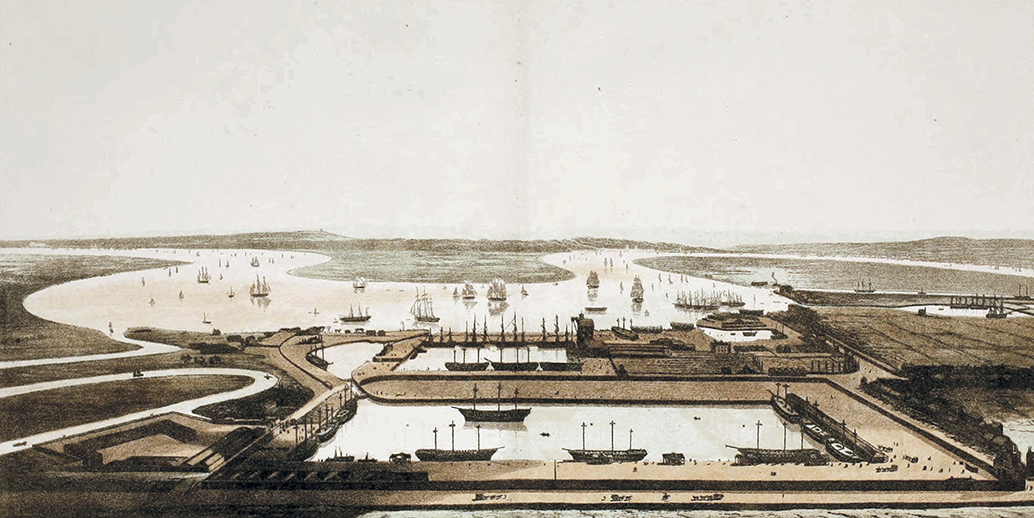
The author is very likely Peter Gordon a writer, adventurer and one-time pearl fishery manager in Madura, who had been in conflict with the Company for years over alleged mistreatment.Footnote 3 Gordon had been back in London since around 1830, and among other things was working on a set of volumes, coauthored with John Crawfurd, on the history of China.Footnote 4 Presumably it was this research that took him into the India House library in the first place. Alexander’s East India and Colonial Magazine, which ran from 1831 to 1843, was relatively prominent, one of very few periodicals devoted to Britain’s empire in Asia.Footnote 5 According to one periodical survey from 1838, its politics were “ultra Radical” and its circulation numbers small in comparison to the other principal journal on Indian topics, the Asiatic Journal and Monthly Register (which was “conservative, but not violently so”).Footnote 6 In the years after the end of the Company’s monopoly in 1833, in the pages of Alexander’s Gordon would use the museum and library as a pressure point to expose all that was wrong, in the editors’ views, with the remaining subcontracted and corporate-shareholder structured form of British rule in India. Gordon and other critics would use the issue of access to the Company’s collections as a litmus test for the relationship between the British state and the Company. As the editors argued, if the Company had now truly relinquished its monopoly, and set aside any sovereignty claims with respect to the Crown, then the Company’s library and museum should now be run exactly as a public resource; that is, like “the other National Museum,” the British Museum and its library.Footnote 7
This chapter turns to the changing relationship between the Company and its publics – in Britain and British India – and focuses on debates and practices related to ownership of, and access to, the Company’s library and museum after 1833. As we saw in the last chapter, for one sector of the British public – naturalists, orientalists and other members of the scientific community – access to the Company’s collections was growing ever wider during this period. But in terms of visitors to the brick-and-mortar spaces of Company science, access was much more restrictive than, for example, the British Museum. As we will see, while the legal ownership of the Company’s knowledge resources could be transferred to the Crown with the passage of a new charter, just what it meant to be a “public” knowledge resource was up for debate. In this period, just as natural philosophy was resolving into separate disciplines with separate institutional structures (more on that in Chapter 7), the cultural space of knowledge production was separating into new and separate spheres: public versus private, national versus imperial, professional versus amateur. The Company’s piecemeal absorption into the British state was not so much the erasure of a historical anomaly as it was part of the very process by which “states” and “publics” came to be more clearly defined against corporations and “private” interests.
The Sale Room at India House, where until 1813 all goods from Asia (and until 1833 all goods from China) would be auctioned by the Company. By Joseph Stadler, 1808.
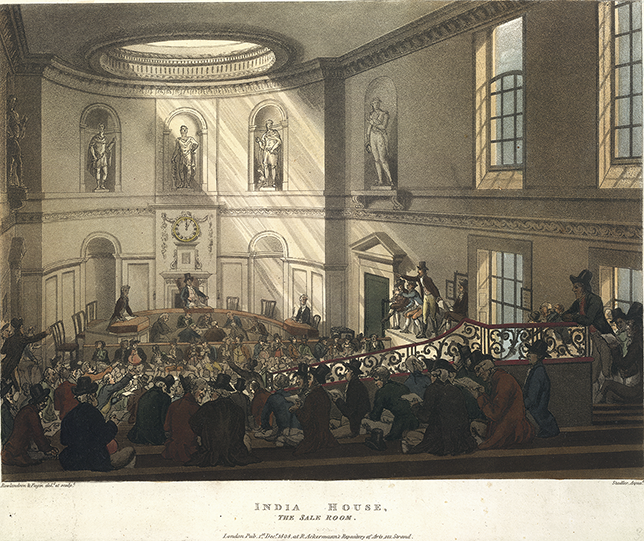
Historians such as Phil Stern and David Ciepley have charted the changing history of the corporate–state relationship at the level of politics and economics.Footnote 8 In what follows, I consider how the public–private status of the Company was also debated and constructed in relation to science, education and access to knowledge resources. At a time when a coherent British imperial identity was only just beginning to crystalize, the extremely convoluted property relations for the library-museum (held in trust by the Company for the Crown, which in turn held it in trust for the people of British India) raised awkward questions about the very idea of an imperial public.
The Charter of 1833: The Library-Museum in the Era of Reform
Received … 1000 cards of admission to library. Printed to order.
The 1830s were a transformative period in British culture, and these changes would bring new pressures to bear on the practices of Company science at India House. The reformist Whig party had come into power in 1830. The Reform Act of 1832 significantly expanded voting rights. By the Slave Emancipation Act of 1833, slavery became illegal throughout the British Empire. Agitation to repeal import laws (Corn Laws) that favored agricultural landholders was growing, and the working-class Chartist movement was gaining momentum. Discourses and practices of knowledge production were also reshaped during the so-called Age of Reform. With liberal utilitarianism came a push for increasing access to, and state support of, science and education. Cheap periodicals such as those produced by the Society for the Diffusion of Useful Knowledge (SDUK) were aimed at facilitating the self-improvement and self-determination of the “middle ranks” at the center of Jeremy Bentham and James Mill’s utilitarian social philosophy. The incorporation of the secular University of London in 1836 sought to break the hold of the Anglican Oxbridge colleges. Radical newspapers attacked “taxes on knowledge.”Footnote 9 Scientific societies were also swept up in the vanguard. The British Association for the Advancement of Science (f. 1831) was established as an antidote to the perceived aristocratic elitism of the Royal Society. Subsequently the Royal Society, too, changed its rules of membership and governance in the late 1830s. Attention also turned to exhibitions, museums and galleries, and to the British Museum in particular, when in 1832 and 1835 a Parliamentary inquiry scrutinized the public utility of that institution.
It is in this context that, as the next charter renewal season approached, some shareholders began questioning whether the Company had done enough to make the library and museum accessible to the public. The India House library-museum had always been described by Wilkins and the Court of Directors as a “public” repository. Although free, access was restricted through a variety of different measures. Visitors were required to have a ticket of admission, and generally only directors had tickets to disburse. Wilkins also could admit visitors without tickets, but these were supposed to only be people “distinguished by rank or science.”Footnote 10 Special arrangements would always be made for “persons of extraordinary high rank or status.”Footnote 11 It was also rumored that anyone could bribe their way in with a small gift to one of the porters.Footnote 12 Descriptions of India House and its repository appear in London guidebooks in this period, and the wider reading public also came into contact with Company science through books that drew on the collections. Edward Moor’s popular Hindu Pantheon (1810), for example, used illustrations of sculptures and drawings from the Company’s museum (and Wilkins provided the Sanskrit labels).Footnote 13
But India House was far less of a draw, and far less spectacular, than the many other cheap shows and rotating exhibitions for which London was becoming famous.Footnote 14 In the streets of London in this period, museum displays of foreign curiosities were of a piece with commercial displays of foreign commodities, and the experience of each shaped the experience of the other.Footnote 15 Across London, shows and exhibitions were integral to the booming city’s new shopping arcades and other innovations in consumer culture. For instance, at the Baker Street Bazaar, from the mid 1820s onwards, a gallery of shops sat adjacent to special exhibitions ranging from new carriage styles to livestock shows to, most famous of all, Madame Tussaud’s waxworks.Footnote 16 Some popular shows about India or China could be found outside India House, such as the spectacular panorama of the battle of Seringapatam that was installed in 1800 at the Lyceum in the Strand, and could be experienced any day of the week for one shilling.Footnote 17
Within India House in this period, consumer culture and new forms of exhibition were juxtaposed in a different way. The library-museum sat not alongside shops but the auction rooms where merchants would bid. The foot traffic that might lead to a side-trip into the displays was made up of Company employees and associates of all ranks, from sailors and warehouse workers to tea traders, shareholders and nabobs. The numbers of Company shareholders, pensioners, widows and current employees who might come to India House for business of some kind or another was by this time into the tens of thousands. Still, since no records of visitor numbers from this period survive (the earliest is the chairman telling a meeting of shareholders that about 4,000 visited in 1833), it is unclear how many people were actually wandering through the library and museum rooms when Wilkins began complaining in 1817 of the “immense crowds of all classes who have by various means obtained leave to visit the Library and Museum.”Footnote 18 At that point, ticket-bearers were admitted any day of the week except Sunday. In the custom of the public museum before 1830, visitors would be accompanied by a guide, sometimes Wilkins or (later) Horsfield, other times an assistant. Although restricted to the guide’s tour, visitors were allowed to handle objects, such as turning the crank that set Tipu’s tiger growling, leaf through some of the manuscripts and even play some of the Malayan instruments on display from Raffles’s collections. Wilkins and Horsfield also themselves fetched and returned books and manuscripts for library visitors, so the number of users is likely to have been relatively small. Peter Gordon, the radical anti-monopolist, gives one of the most detailed descriptions of the library visitor experience in 1835:
Our first object naturally was to ascertain the contents of the library; the library is not sufficiently catalogued, therefore, an actual inspection of many books was the only means of ascertaining their contents. At the British Museum, the reading-rooms are furnished with such books as the readers are most likely to have occasion to refer to, and they are placed so that each reader can help himself to them; but, at the India House, all the books are taabooed; Dr. Horsfield alone can take a book from its shelf; hence, every reader is a constant source of trouble to the assistant; so much so, that, each reader cannot but feel a great degree of repugnance to go into the Doctor’s room, and to disturb the studies of a man of science, for each book he requires, and to be quite embarrassed with the over strained politeness of the Doctor or the miserable economy of the Company which constrains Dr. Horsfield himself to perform the laborious and dirty work of a common porter, in taking down the books and bringing them to the reading desk. … The Doctor simpers and says that nothing can be a trouble to a librarian.Footnote 19
Back in 1817, Wilkins had requested that the directors cut the opening times, such that “the curiosity of the public may be liberally satisfied” without so much inconvenience for himself and the users of the library. The directors agreed to put new restrictions on visiting days, so that it was only open on Mondays, Thursdays and Saturdays between 10am and 3pm.Footnote 20 Although crowds were apparently unwanted by the librarian and visitors working in the library (who sometimes complained of the frequent growling and squealing of Tipu’s tiger coming from the display galleries), both Wilkins and Horsfield also steadily expanded and changed the displays throughout the late 1810s and 1820s.Footnote 21 Such improvements were usually presented to the directors as being required by growing visitor numbers, such as when, in March 1818, Wilkins requested
greater accommodation for the depositing of works which have greatly accumulated, and also for displaying certain works of natural history which have not been arranged for want of sufficient space … which will contribute to make the Library and Museum more worthy of the attention of the numerous visitors, among whom are to be numbered Persons of rank and science of all nations.Footnote 22
A little over a decade later, the issue of public access would re-emerge as part of the debates surrounding the charter renewal of 1833. In the Court of Proprietors (see Figure 6.3), shareholders raised questions about the running of the library and museum. The lack of museum guides or catalogs was brought up several times in the Court of Proprietors in 1832.Footnote 23 Catalogs and guides were two things that the Parliamentary Commission discovered the British Museum was doing very well, and which visitors voraciously consumed. Cheaply available, these publications were regarded by the Commission as key to making the collections as widely accessible as possible. The Penny Magazine of the SDUK, a cheap periodical aimed at working- and middle-class “improvement,” published guides to the British Museum, and the museum itself sold an affordable guide as well. The print representation of the collections was also seen by curators such as John Edward Gray, keeper of the British Museum zoological collections, as critical to the accessibility of the museum.Footnote 24
Engraving of a regular meeting of the Court of Proprietors at India House.
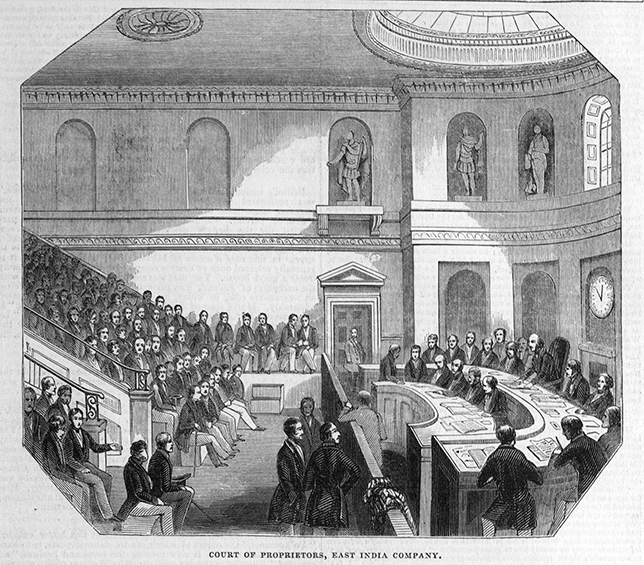
The Company, meanwhile, still had no catalogs for any of its collections.Footnote 25 One proprietor, Captain Gowan, repeatedly compared the running of the Company’s museum to that of the British Museum. Noting that the British Museum was now open to visitors six days a week, he proposed that India House should “meet them halfway” and open its museum to general admission three days per week. He and other proprietors also asked about the lack of labels on displays and the system of needing a card of introduction for admittance. Having heard that it was under consideration to transfer the whole collection to the British Museum (a rumor that seems to frequently crop up after 1833), Gowan seems to have been keen to make the case that the collection would be better cared for and more accessible in the hands of that institution.Footnote 26 Gowan also sometimes forcefully questioned the necessity and value of the Company running its own college, noting that even Oxford now had a Sanskrit Chair.Footnote 27 Reporting on these debates in the Court of Proprietors, Alexander’s East India Magazine took the proprietors’ complaints as evidence of the extremity of the Company’s “despotic power of expulsion” and “corrupt patronage”: “the Court of Directors persist in excluding the British Public from the Museum and Library at the India House; they also persist in refusing free access to their own constituents, and in resisting the expressed wish of the Superior Court for a descriptive catalogue.”Footnote 28
Somewhat surprisingly, the chairman and the Court of Directors (see Figure 6.4) did not reply to the shareholders by agreeing that the museum needed to improve access to the general British public. Instead, he defended the relatively closed nature of its collections as a necessity. The reason was that this was a specialized collection to be used for “serious study,” and that if the museum were “thrown open,” not only would things most likely go missing through “sleight of hand” (periodicals at the time often commented that the British public was uniquely untrustworthy when it came to acting properly in a museum) but it would also be much too disruptive to the “really useful” aspect of the collections, which was to serve the true orientalist, the scholar working on any and all topics to do with Asia.Footnote 29 In short, and not surprisingly, the directors regarded the knowledge produced by “scholarly” orientalist work as coextensive with the useful knowledge required in governance: history, languages, literature, natural history and so on. After all, this very unique scholarly culture of British orientalism had, since its early days in the late eighteenth century, been totally intertwined with the Company and its shifting position within India. In this way, no matter its ownership status, the India House library and museum was not like the British Museum because it remained very closely tied to the actual work of state. The collections sat somewhere on a continuum between state archives (which themselves were only just then beginning to become organized into standalone institutions, let alone with conventions of public access) and public museums.
Engraving of a meeting of the Court of Directors at India House.
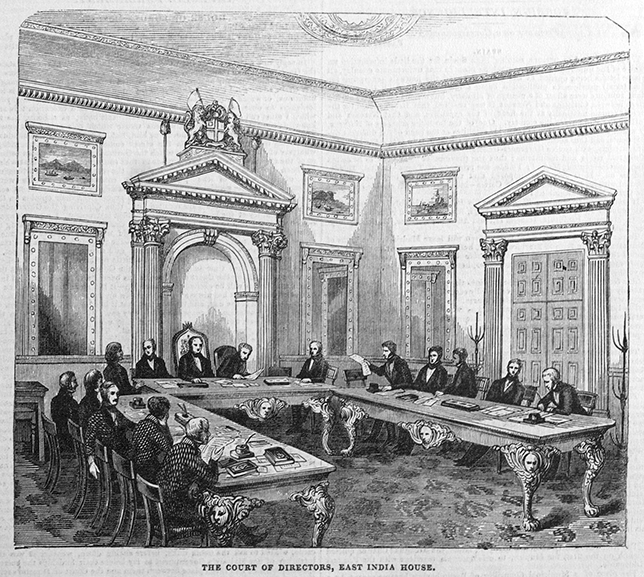
From the first plans for the India House library and museum back in 1798, it had always been discussed as a set of institutions intended to serve the interests of the people of British India, and it was also the British Indian taxpayer who funded the administration at India House. In these debates, however, the interests of the Indian taxpayer seem to have never been brought up directly. Serving the interests of the people of India had, in this case, always been understood as having nothing to do with providing the Indian public physical access (or even virtually in the form of catalogs or guides) to what was in effect their national museum and library. The assumption seems to have been that resources were to be put to use for the good of the Indian public, without being able to be used by them. This assumption is especially striking given that, during the Parliamentary inquiry into the British Museum in 1832, reformers were greatly worried about the inaccessibility of those resources to the typical taxpayer living outside London.
Liberal reforms bubbled their way into the Company administration through many of the changes made in the Charter Act of 1833. The starkest realignment of Company politics with the growth of liberalism came with the formal end of all Company trading, and the beginning of “free trade” (though still heavily mediated by laws and tariffs) between Britain and Asia. But radicals and reformers in Britain took up the cause of “improving” British India in many different ways during the charter renewal season. The proposed instruments of improvement were often not directly political or economic (though reformers worried greatly about the economic and political status of India) but fundamentally about education. Thus, promoting the growth of science and education in India became a key focus of the 1833 charter debates. For example, the remaining restrictions on “free” colonization – British travel to and settlement in India – were increasingly under attack by those who argued they also severely limited the free movement of ideas between Britain and India. The industrialist Dwarkanath Tagore and the writer and reformer Rammohun Roy were among a group of Calcutta businessmen and reformers who made a formal petition in 1829 for the end of such restrictions on free movement as well as free trade.Footnote 30 Both saw the opening up of India to more European business and enterprise as a prerequisite for widespread educational transformation through informal interaction and communication. William Bentinck, governor-general of India during this period (1828–1835), echoed these views repeatedly. Bentinck’s governorship is often taken as the beginning of a period in which liberal utilitarian views were particularly influential within British Indian politics, and he did push for similar kinds of education-driven reforms for India as Bentham and his allies were building in Britain. He avoided wars and sought financial reform in order to create a surplus for investment in education and improvement schemes. He promoted (in anticipation of Macaulay) English-language education over native-language education, started planning for a Ganges canal system and experimented with steam navigation to improve communication.Footnote 31
Bentinck saw greater interpersonal mixing between Britons and Indians as key to raising the “mind” of India, which had been so he believed with a now-typical dogmatism, “buried for ages in universal darkness.”Footnote 32 Although praising the “superior aptitude” and “thirst after knowledge” among Indians, he believed that it was only through anglicizing Indian culture that “improvement” in India could be effected. He argued that the “rigid preclusion of the free admission of Europeans to India” had “dammed up … the main channel of improvement to India.”Footnote 33 Already by 1830 the size of the British communities in India had grown significantly, along with the scale of the Company’s government. By 1830, the Company had nearly 40,000 individuals on its India payroll: 875 civil servants, 745 medical officers and over 36,000 “European” (mostly British) troops in its Indian army.Footnote 34 Bentinck also believed that the movement must go both ways, with more encouragement for Indian men “to go to Europe; [and] there to study in the best schools of all the sciences” and, above all, to see “what India may become by [seeing] what Europe, and especially England, is.”Footnote 35
During the charter debates of 1833, the directors therefore attempted to show that the Company was deeply invested in the growth of education, specifically in “European science” and literature, in British India. Noting that they had kept up the promise made in 1813 to give substantial annual support to native education, the directors cited one report from 1826 that listed over sixty Company-supported schools, madrassas, colleges, book societies and presses. The majority of these institutions were, at that time, conducted in local languages and separate from Christian missionary schools. And, according to the directors, this investment was already opening up more pathways for natives to access skilled civil service careers. Through the disbursement of Company funding to smaller independent schools and colleges, “a considerable number of learned natives are retained, in their capacities as moulavees, moonshees, pundits and professors of the art of writing in native characters.” Similarly, medical schools were “instructing native doctors in the science of medicine with a particular view of more effectively discharging their duties as vaccinators.”Footnote 36 At the same time, with the charter of 1833 formally ending the ban of non-Christians and non-British employees in the Company’s civil service, the Company’s British-based colleges were now an obstacle to Asian subjects gaining some key civil service positions.
The subject of the Company’s patronage of education and science in Britain came under scrutiny as well, and the record of the Company’s education regime in the home country was shakier and harder to defend against the move for reform. Some close to the Company were highly critical of the financial and moral benefit of Haileybury for British India. The Member of Parliament and former chairman Richard Jenkins, for example, advocated for a revival of Wellesley’s grand plan for Calcutta College, suggesting that this was in the best interests of the people of India. In the end, the Company just barely succeeded in keeping the Company’s British colleges open. Any civil servants or military officers bound for India still had to obtain degrees from Haileybury or Hertford.
How to Break a Knowledge Monopoly
The Charter Act of 1833 transformed the nature of the Company. In the broadest terms, the Act significantly reshaped British colonialism into a now more familiar form of nation-based imperialism. In the process, both Britain and “India” resolved into more nation-like bodies. In the case of Britain, the arguably separate sovereignty of the Company was nearly entirely eroded: the Act explicitly designated India as a colony possessed by the Crown. And in the case of “India” – which at this time stretched northeast around the Bay of Bengal to include the Straits Settlements (i.e. parts of present-day Myanmar, Malaysia, Singapore) – it was for the first time united as a single administrative and legislative entity, with the creation of the governor-general of India position, and the raising of the Bengal government to the Supreme government of India, and the removal of the independent legislative powers of the Bombay and Madras presidencies. And as Tagore and Bentinck and other liberals had hoped, the Act also enabled, for the first time, the free movement of Europeans, and thus encouraged “colonization” in large parts of the new nation-like territorial entity as well as removing one of the Company’s means of monopolizing knowledge of Asia.
Eventually, the Company’s library and museum would also become more state-like and would merge with Britain’s state collections. But the process itself was not at all smooth, would take many decades to complete and wouldn’t really begin until after the abolition of the Company in 1858. One interesting immediate effect was the first disciplinary splintering of the museum collection, in this case “war trophies” being separated out from the rest of the collection and relocated. Standards and flags of vanquished powers such as those of Tipu Sultan were soon transferred over to a new naval museum at Haslar Hospital.Footnote 37 In another change, in 1838, public opening hours were eventually extended, with no tickets required on Saturdays between 11am and 3pm. At the same time, however, the directors continued to assert that the India House museum was not a public collection and that the business of empire came first. As the chairman wrote to a Member of Parliament enquiring about the museum opening times: “although the Museum in this house does not come under the denomination of a Public Institution, the Court feel happy in consenting to its being opened to the inspection of the public so far as may be practicable with reference to the business transacted under its roof.”Footnote 38
Another attempt at accommodating the public view within the necessities of the “business transacted under its roof” was a new policy explicitly barring visitors from copying or extracting “official documents” or other designated materials from the library, with the interesting exception of “documents of a literary or scientific character.”Footnote 39 It seems to have been Peter Gordon, the anti-monopolist, who prompted the Committee to clarify what visitors were and were not allowed to transcribe.Footnote 40
The effects of the charter can also be seen in some changes to the collecting and patronage patterns for the library and museum. For example, after the rules for British travel to India became less restricted in the 1830s, the Company’s control over exploration and travel writing would weaken, although expeditions into most inland areas still needed approval from the Company. For example, the well-known traveler and writer Emma Roberts, author of Scenes and Characteristics of Hindustan of 1836, made her career with the financial support of the periodical press (and only the tacit support of the directors). In 1839, she arranged a sponsored trip sponsored by the Asiatic Journal and Monthly Register who serialized her “Notes of an Overland Journey through France and Egypt to Bombay in 1839,” and the directors supported her expedition with a substantial subscription.Footnote 41
By far the biggest challenge the new charter created for the library and museum had to do with the new ownership status of the India House collections. Now that all Company property had been transferred to the Crown, the formal ownership status was clear, but the future physical location seems to have been in doubt. We have seen that some shareholders were now bringing up the possibility of merging the Company’s collections with the British Museum. In the week that the new charter took effect, a London newspaper reported on the “important alterations” now taking place at India House since the new “arrangement” between the Company and government: some clerks and officers had been dismissed; others were now planning to retire; Haileybury College was (to the paper’s surprise) not going to be broken up; “a great portion of the premises of the East-India House will become useless to the Company, in consequence of the loss of the exclusive trade with China and other commercial arrangements”; and “we have not heard whether the museum is still to remain in the East India-House, or the Library, which consists of a great number of scarce books and valuable manuscripts [will be moved].”Footnote 42
Ultimately any decision on the location of the library and museum depended upon whether or not the British government agreed that the library and museum constituted part of the material necessary for the governance of India. This was an issue emerging from the state-like nature of the Company. However, there was also another set of issues emerging from the corporate nature of the Company: how the Company’s privileged possession of two centuries’ worth of commercial knowledge might impact the opening up of the India trade to other British firms. Were critical trade secrets being kept locked up at India House? Was the Company doing enough to support the interests of British merchants and traders? Was the ability of British manufacturers to increase sales in India, or export raw materials for their factories, being hindered by the natural monopoly now maintained by the library and museum?
The potential commercial value of the knowledge resources held within the Company’s library and museum would frame one attempt by another institution to take over management of the Company’s collections. After 1833, amidst the discussion about the future of the India House library and museum, one possibility being considered was to transfer the whole of the collections to the Royal Asiatic Society.Footnote 43 Could the apparent or possible conflicts of interest over the Company keeping control of its library and museum be resolved by transferring it to a specialized third party such as the Royal Asiatic Society? With the prospect on the horizon, the members invited the writer William Cooke Taylor to remark on the “Present State and Future Prospects of Oriental Literature in 1835” to essentially make the case for the Royal Asiatic Society as the proper future home for the India House collections. Taylor opens his remarks with a nod to the utilitarian fashion of the moment:
It may seem strange to connect Oriental commerce with Oriental literature, and many may deem the association unnatural; but no country in the world is more thoroughly utilitarian than England; in no other nation is it so difficult to introduce a new object of study … without demonstrating its immediate pecuniary advantages.Footnote 44
Taylor goes on to press the real economic utility of orientalist study to the nation. Essentially he takes the Company’s still semi-sovereign defense of keeping the library and museum for reasons of (Indian) state and turns it back around to a properly (to him) imperial alignment: yes, the library and museum is essential to the work of the government of India, but as the Indian state is now formally subsumed under the Crown, its success and improvement, its relationship to the mother country, is now a matter of concern to all of the people of Britain, and – most importantly – a possible source of commercial gain for all.
Taylor also argues that the Royal Asiatic Society is deserving of the patronage and support of not merely scholars of the orient but also “all engaged in the commerce of the East, all who derive advantage from general traffic.”
The RAS [Royal Asiatic Society] is designed to be the great storehouse of intelligence for all who desire information respecting the present state of trade and capabilities of all the countries between the Eastern Mediterranean and the Chinese seas. … Were its advantages as clearly understood as they ought to be, it would have a branch in every port and a member in every counting house. In nothing more than in trade, and in no branches of trade than in those between England and eastern countries, has the truth of the aphorism been demonstrated, that “KNOWLEDGE IS POWER.” … But there are too many in the world … who desire much to see the power increased and perpetuated, but neglect the knowledge which is its first element.
The Royal Asiatic Society was far from alone in gravitating toward work that was considered to be useful to British trade and industry, or in presenting collections as central to the development of commerce and trade. The spectacular expansion of industrial production in the first decades of the nineteenth century also coincided with a growing chorus of doubt and worry about the effects of such growth on the quality of design and the scope of industrial innovation. The potential for museums to support manufacturing and improve craft and industrial design was just then beginning to be promoted; similar claims were made, for example, in the House of Commons Select Committee Report on Arts and Manufacture of 1835.Footnote 45
It is in this wider context that those who were really pushing the Company and the British state on this question of access to commercial knowledge at India House were often reformers and traders invested (either economically or ideologically) in the growth and expansion of trade with Asia. Peter Gordon was among the most vocal critics. It is unclear how invested Gordon really was in the future of the India trade (or of the Company’s library-museum), but the Company’s repository was especially useful to Gordon’s crusade precisely because of the apparent contradiction of access to a publicly owned collection being managed by a corporation of shareholders (“publicly owned but kept very private”).Footnote 46 For Gordon, it perfectly encapsulated how out-of-synch was the very existence of the Company with the era of free-trade reform; the library-museum is the one incongruously uncorrupted “object” hidden within the otherwise degenerate body of the Company, and as Gordon dramatically suggests, it will be the undoing of the whole thing:
The library at the India House has been hid from the notice of the Crown, the Parliament and the People in the immense mass of corruption which has hitherto filled every apartment of the India House, but now that the Company of merchants has been compelled to give up its commerce, its museum stands forth as a conspicuous object; indeed it is so conspicuous that the Directors, who were merchant kings, seem likely to dwindle into puppet show men.Footnote 47
Gordon’s attention was also drawn to the Company’s library and museum in the context of a records crisis at the level of the British government. In October 1834, the old Houses of Parliament burned to the ground. The fire was caused by an attempt to clear out some of the old archives. Bundles of wooden tally sticks used in accounting were added to the basement furnaces, causing them to overheat, and burning all the rest of the archives along with the entire building. In the wake of that fiasco, Parliament set up a Commission to investigate the state of public record-keeping in Britain, a move that would eventually lead to the establishment of Britain’s first Public Records Office. Gordon, however, was focused on the differential treatment being given to colonial public records versus British public records by the Commission. Why, he asks, isn’t government treating the Company’s library and museum as the “national” collection that it is? Shouldn’t the Public Records Commission survey include the India House archives and records, and, in fact, all of the libraries and archives in British colonies? Shouldn’t the Commission reports be sent throughout the empire, and not given only, as the Commission had done, to libraries and archives in the UK? Gordon is essentially telling the government to act like the empire it now is and take more direct control of the records of its vast territories. (The Commission is called the “Public Records Commission of the United Kingdom” but Gordon refers to it as the “Public Records Commission of the Empire.”)Footnote 48 Worst of all, he argues, is the situation at India House: “The libraries of Benares, Arcot, Tanjore, Seringapatam and Poonah have been plundered of their contents, which now lie rotting in the cellars of Leadenhall, corroded by damp and covered with dirt. The state of the archives, libraries, colleges, and schools of every portion of the British empire is constitutionally a proper subject for a grand jury to investigate.”Footnote 49
According to Gordon, Government, by its inaction, is allowing the Company to continue to hoard and neglect materials that the public now has a right to access. The “public” of the “Public Records Commission” is being (provocatively) understood as a trans-imperial entity, an imperial public, which has equal rights to knowledge of the records of its government:
In India, from time-to-time, severe threats are promulgated against officers, copyists &c who presume to reveal the secrets of the offices in which they are employed. We hope that every literary society in each colony will immediately apply to the British government for a copy of the publications of the Commission on the Public Records of the kingdom; the library at Arbroath [a royal residence in Scotland] has received a copy of the Board’s publications, and surely the libraries at Colombo, Sydney, and Hobart Town have as good a claim as those at Arbroath and Lubeck, unless every British colony is to be branded as a Lubberland [i.e. lazy, unproductive].Footnote 50
Government is here, by excluding colonial archives and libraries from the remit of “Public Records,” failing to embrace the reality of the newly unified imperial sovereign and the new geography of the “public” under British law.
The Company, according to Gordon, is, in its turn, further exploiting this government inaction by actively mismanaging the collections. Gordon essentially claims that the Company is maintaining its knowledge monopoly through criminal neglect and mistreatment of the library resources, which amounts to a passive way of blocking public access. Gordon argues, for example, that the Company uses the library and museum as a personal treasury, selling and gifting items for profit. As proof of “the extreme impropriety of continuing to employ the India directors as the curators and conservators of a National Museum,” Gordon relays a story about the directors misusing the ”invaluable collection of Indian coins” and melting down ancient “Dariecs” (Daric coins) found buried near Benares.Footnote 51 Although no record of coin melting has been found, the library day books record numerous occasions where items were brought into the warehouse and then sent out as presents, or (less often) where precious items were taken out of display and made into gifts. Some of these gifts were very publicly made, such as the gold tiger’s head and other precious items captured from Tipu Sultan that were presented to the royal family in 1832 just before the charter renewal debates began.
Even more, the pages of Alexander’s detail the criticisms familiar from other visitor guides and the shareholder debates: lack of opening hours, few guides, no catalogs, unsystematic and unhelpful labels on objects, and the system of needing a card of admission provided by a director or curator. Gordon remains particularly focused on the lack of catalogs for the Company’s library and museum. Gordon suggests that the lack of good documentation and access is willful and favors the ongoing corrupt rule of the Company. Of the chairman, “his grand secret is to keep [Indians] in a state of profound ignorance … naturally enough this monster seizes upon all records, and locks up those which he does not destroy.”Footnote 52 Noting that the Company has long experience in producing catalogs for its auction sales, Gordon argues that the Company’s “Manuscripts, Books, Antiquities, Maps and Medals certainly deserve some degree of the care which is bestowed on compiling Catalogues of the Company’s ‘old musty’ ‘tarry flavoured’ teas.”Footnote 53 But as the Company refuses to make the collections accessible through proper documentation, Gordon sets out, as he tells his readers, to produce a catalog and guide to the library himself.
The first installments of his guide to “The National Library at India House” were published in Alexander’s between 1834 and 1835.Footnote 54 Gordon begins by again reminding the readers that they should think of the Company’s resources as a public asset.Footnote 55 The “guide” then goes on to detail the shoddy functioning of the library as a research institution, purposely underfunded, with the curators woefully overworked. But then, about two issues into the guide, in a dramatic turn, which Gordon relays in real time (“This article has been cut off, abruptly, by the receipt of the following letter”) after the directors receive a copy of Gordon’s Guide, they revoke his permission to access the library and museum. This “censorship” gives Gordon and the Alexander’s editors much more fire, and they continue probing and attacking the Company library and museum from afar.
In Gordon’s attacks on the Company’s library and museum, there is always a lack of clarity in which people, he believed, rightfully own the India House collections. At one point, he argues that the right thing would be to “force” the “tyrants of Leadenhall” to restore the “records of India” to India. But at other points it is also argued that the Company (and thus the government of India) is so in debt to the British government that its records should stay in British hands.Footnote 56 Gordon’s more common suggestion is that “The [India House] museum and library should immediately be removed to the British Museum where they would be accessible to every person.”Footnote 57 The corrupt management of the Company is certainly seen as detrimental to the interests of India, but, to be clear, that is the case only because it stands in the way of liberal improvement that would anglicize the whole system and, ultimately, increase British trade with India. The Company is therefore (as is a common trope in the Anglicist literature) painted as an old Asian despot itself, having adopted the old “corrupt rule of the ancient rulers of India”:Footnote 58
Look at the rights of the cultivators of India – ask about the pergunnah rates – the tenure of land – the nature of slavery – the laws of caste – the rights of heads of families – the modes of trial – or any other important subject; and instead of finding it defined as by an English record, we find it uncertain as a Mahratta chieftain would desire, so that whenever occasion offered, he might intermeddle, and raise a dispute with his weaker neighbour.
In the end, Gordon’s attacks seem to have had little effect on the question of whether the Company’s collections should be moved out of India House and merged with the British Museum. The Royal Asiatic Society (which Gordon had claimed was almost as corrupt as the Company itself – it was “Philip sober” whereas the Company was “Philip drunk”) was also unsuccessful in its bid to take control of the collections. However, in a move likely intended to appease such criticism, the directors did introduce one major change to the running of Company science at India House. In 1838, a new position was created: the reporter on the products of India. The first post-holder was John Forbes Royle. Royle was born in Cawnpore, India, was sent back to Britain for his education at Edinburgh High School and then Addiscombe, and returned to India in 1819. For nearly a decade he was the director of the Company’s botanical garden at the former Dutch factory town of Saharanpur. He had arrived back in London in 1831 – yet another Company surgeon-naturalist with a rare collection in tow. Royle had wide-ranging interests, but he became known as a “pioneer of economic botany,” as the distinct branch of botany focused on economically useful plants came to be called.Footnote 59
The Office of the Reporter on the Products of India represented a new articulation of how the India House repository served not only British interests but also, so it was argued, the interests of the Indian taxpayer. Royle’s office was meant to aid the “improvement” of India by, very specifically, increasing commercial trade between Britain and India. By 1850 this commerce-based economic route to India’s improvement had, within the world of Company science in London anyway, begun to eclipse the earlier discursive focus on creating consilience on the grounds of artistic and literary exchange and translation. The market was to be the new meeting place and site of mutual benefit. And, as we shall see in Chapter 7, the Great Exhibition would allow Royle and his contemporaries to push this vision of the economic utility of museums to entirely new heights – with unexpected results.
Fossils in the Old Pay Office
Although possibly through no influence of Gordon and the radical anti-monopolists, the India House library and museum did, in the 1830s and 1840s, slowly open up access to the public, increase gallery spaces and finally begin publishing catalogs. Change came to the running of the museum and library in 1836, when Charles Wilkins, at eighty-six still in charge of the library, became ill and died soon after. Instead of succeeding Wilkins, Horsfield was given a separate position as naturalist and curator of the Company’s museum, and an orientalist was sought to head the library. The Company succeeded in hiring one of the most prominent orientalists in Britain, Horace Hayman Wilson, who had recently been hired to the first chair in Sanskrit studies at Oxford. Wilson, the son of an accountant of the Company, went out to India as a surgeon in 1809. He had been trained at St. Thomas’s Hospital, London and, as he explains it, turned to the study of languages on his outward voyage when a fellow passenger from India began teaching him Hindustani.Footnote 60 Once in India, he was hired by Dr. John Leyden, assay master at the Calcutta mint, as his assistant. Wilson took over from Leyden in 1816, and remained assay master until he returned to Britain in 1833. By 1811 Wilson had joined and (with Colebrooke’s aid) become secretary of the Asiatic Society of Bengal. In 1813 he published his first translation, The Cloud Messenger (a translation of Kalidasa’s Meghadhuta), and in 1819 he published a Sanskrit–English Dictionary. Wilson was also involved in the education debates of the 1820s, was on the board of the School Book Society and the Hindu College, and was secretary for public instruction in Calcutta.Footnote 61 While in Calcutta, Wilson had already delved into Company collections, publishing the first catalog of the vast (and controversial) Mackenzie Collection. The massive catalog was printed at great expense at the Asiatic Society’s press in 1828.Footnote 62 He was known for his opposition to the requirements of Christian instruction, evangelization and attempts to regulate Indian religious practices (he even opposed Bentinck’s very public and popular measure to abolish suttee), all of which put him in favor with many of the Indian scholarly and political elite in Calcutta but made him less popular among some circles in London. All of this makes it even more surprising that Wilson would in 1832 be elected as the first Boden professor of Sanskrit at Oxford – a new position intended formally to support the spread of Christianity in India. When Wilkins died, the directors offered him the post of Company librarian, which he took on in addition to his professorship, cementing a new link between Oxford and the Company.
The hiring of Wilson and Forbes Royle and other expenditures on the museum and collections at India House are especially notable in this period after 1833, during which time internal “reform” was slashing the number of clerks, which sunk from around 200 in 1828 to 56 in 1844 (the smallest administration since 1765).Footnote 63 These were also years of financial strain, as Company profits declined and its expenditure, especially on border wars, continued to grow. But the positions devoted to information management continued to multiply. By at least 1847, India House also had a “statistical office” with eight clerks.Footnote 64 There are other signs that the charter of 1833 stimulated an expansion of investment in the sciences at India House. The astronomer and natural philosopher John Herschel was asked to be a general scientific advisor to the Company in 1838.Footnote 65 Although Herschel declined, from the late 1830s onward the directors were much more often seeking advice from the Royal Society, and the exchange of publications and reports (especially astronomical, magnetic and meteorological records) between the India House library and the library of the Royal Society was increasingly frequent.
The increase in curator positions after Wilkins’s death would have been a welcome addition given the growing scope of the Company’s collections. Throughout the 1830s and 1840s, the India House collections expanded much faster than in the previous decades. With so much material coming in, much of the curators’ work involved managing the inflows. Wilson was dealing with a steadily increasing amount of library material, particularly printed matter sent from India. By 1830, four daily English newspapers and multiple weeklies in both Bengali and English were being printed in Calcutta alone, and the India House library was meant to receive and retain copies of all of metropolitan newspapers and journals published in India. Printing technology was now in the hands of not only the presidency and missionary presses but also book publishers and state-civic associations such as the Calcutta School Book Society and the Bibliotheca Indica series published by the Asiatic Society of Bengal. And even in Britain, the number of books coming out on topics related to Asia or to the Company was higher than ever (though nowhere near the number of Asia-printed works being gathered at India House).
Separately from the imports received and the purchases made by the librarian, the Court of Directors exercised one form of cultural patronage by way of subscription for publications. The directors were approached by hopeful authors who wrote to them and usually included a prospectus or a printed copy of their work. The most successful applications for support would result in the Company purchasing 100 copies, although this was quite rare. More often a large subscription would be forty copies of a work; less fortunate authors would be granted only six, or often just one subscription. As the century progressed, the number of authors who approached the Company slowly increased. Some of the successful authors were well-known, successful writers; others were Company servants or were connected to the Company in some way.
In 1844, the first year exact visitor numbers are available, 16,003 persons are recorded in the visitor books, and the numbers would grow slightly until the Great Exhibition of 1851, when the numbers would jump significantly (from 18,623 in 1850 to 37,490 in 1851).Footnote 66 Despite the criticisms of reformers and anti-monopolists, the Company’s collections were still largely considered private property; the now formally national character of the Company’s collections seems not to have made a very wide impression. The Saturday Journal reports on the extended opening times with a brief review:
A SMALL museum at the East India House is now open freely to the public on Saturdays. The day is rather an awkward one for the majority of London sight-seers; but as the museum is, of course, private property, that is, the property of the East India Company, it is a privilege to be admitted to see it on any day that the directors may choose. It would add considerably to the privilege if the objects in the museum were labelled with a few descriptive particulars, which might inform the visitors, not merely of names, but of history, meaning, or use.Footnote 67
The Penny Magazine also published a guide to the India Museum in 1841 after learning that the India House collections were now open to the public without an admission card from 10am to 3 pm on Saturdays.Footnote 68
In 1851, Henry Greene Clarke, who also published pamphlet guides to other national collections (including the British Museum, the National Gallery and the Naval Gallery at Greenwich Hospital), published a short guide to the museum at India House, which depicted the galleries as needing more English-language labels, difficult to access, poorly lit and sometimes small, cramped and “subterranean.”Footnote 69 Guidebooks from the 1840s and 1850s usually stressed two things about the Company’s library and museum. First, it was one of very few London museums that could be accessed free of charge, especially in East London.Footnote 70 Second, generally India House was still in 1850 the only place where one could see a large amount of material from India, Southeast Asia and China on permanent display.
One material effect of the charter of 1833 was that some of the most spectacular spaces inside India House – including the auction rooms and pay offices – were now redundant. By the mid 1840s, the museum was expanding into new rooms in India House. From the time Horsfield took over as curator, a steady stream of museum construction, expansion and improvements were presented to the Court of Directors, which almost always approved the expenditures. In 1837, Horsfield had five large glazed cases constructed for specimens of birds and other specimens from Assam and Madras.Footnote 71 The floor space of both the library and the museum continued to expand and, while Wilson kept building bookshelves, Horsfield kept building cases.Footnote 72 The old pay office, one of the largest rooms on the ground floor, was now refitted on the model of the British Museum but “of course to a much more limited extent” to house large archaeological finds (“various articles of ancient Hindoo Sculpture”) and natural history specimens. Additional rooms above the original library and museum rooms were given over to an expanded natural history display, particularly focused on Horsfield’s collection of birds and insects.Footnote 73
In these ways, within India House, by 1850 the everyday work of imperial administration ran alongside the everyday work of museum management. Every September the library and museum would close to the public and extra hands would be brought in, cleaning the rooms and all the cases, doing repairs, and preparing and mounting specimens.Footnote 74 Such maintenance continued on a smaller scale all year long. Printed matter had to be sent to the binders. Specimens also had to be stuffed, pinned or otherwise prepared. Some of this – likely the insect preparations – Horsfield did on his own; in addition to paper, ink and candles, the library and museum also regularly purchased large quantities of pins. By the early 1850s, the Company’s entomological collection was, according to some entomologists, beginning to rival that of the British Museum.Footnote 75 Throughout 1830–1 several hundred specimens were sent to taxidermists, for example the ornithologist and preparer John Gould. Gould (whose Birds of Asia of 1850 would be dedicated to the Company) would sometimes be paid for his taxidermy work with bird specimens selected from the Company’s collections.Footnote 76
Perhaps the most elaborate new natural history preparation and display at India House involved the Siwalik Hills fossils from northern India (see Figures 6.5 and 6.6). The fossil collection made by the naturalist Hugh Falconer (1808–1865) and engineer Proby Cautley arrived during the 1840s. Soon after graduating from the University of Edinburgh in 1829, Falconer went to London to assist Nathaniel Wallich on his cataloging of the herbaria from Calcutta. At the same time, he also assisted in the cataloging of John Crawfurd’s fossil collections that had been extracted from the banks of the Irrawaddy during a diplomatic trading mission to Ava (Myanmar), which Crawfurd had donated to the recently established Geological Society. Falconer succeeded Royle at the Saharanpur Gardens (see Figure 7.2) in 1832, and would take up a professorship of materia medica at the Calcutta College, and superintendence of the Calcutta Botanic Gardens, when Wallich retired in 1848. Some fossils had been uncovered by the Bengal engineers during work clearing riverbeds for the construction of the Doab canal. Between 1834 and 1839, and relying on local sources – Falconer mentions in particular scrutinizing Ferishta’s History of Dekkan (a Company-sponsored English translation of an influential seventeenth-century Persian work) and tracking down a rumored gift to a raja of a giant elephant tooth – Falconer and Cautley, an engineer, surveyed the Siwalik Hills at the base of the Himalayas for fossil remains.Footnote 77 Their discoveries would be by far the largest yet found by Europeans in Asia; huge deposits of fossil remains of many reptiles and mammals.Footnote 78 From Calcutta, the Nautilus shipped on July 1, 1841 with 187 crates of fossils.Footnote 79 Falconer arrived back in London in 1841 with eighty more crates, and Cautley sent along another twenty-two cases, which arrived in August 1844. The shipments were so heavy that special arrangements had to be made with HM Treasury in order to allow the arrival to be duty free.Footnote 80
In agreement with the directors, the British Museum was given a large set of Falconer and Cautley’s collection, and Falconer’s work on his collection in the British Museum is well known.Footnote 81 But Falconer (with the aid of Horsfield and Wilson) was at the same time supervising the preparation and display of an extensive and only partially duplicate set of fossils at India House. The directors had seen to it that “a room will be appointed in this house for the reception of the collection of fossils made from the Himalayan Range and for its use in the suitable arrangement of the Collections during his furlough.” (The same letter also informed Falconer that his botanical collection from Saharanpur was in transit “for the court and will be taken charge of by Dr Royle and Dr Horsfield.”)Footnote 82 With the aid of Falconer, Wilson convinced the Court to hire the same assistants Falconer had employed in the British Museum, to continue the delicate and laborious process of “freeing similar specimens from the earthy matter by which their true forms are, in a great measure, concealed.” The stonecutter Frederick Pullman and two assistants spent at least a year at India House working on extracting the fossils.Footnote 83 And once this was done, he was retained for another few years in order to make plaster-casts of the fossils for distribution to other museums and universities.Footnote 84 Pullman was recommended to the directors as highly experienced, having, for example, “cleared the mastodon’s head” (the large mastodon skull was one of the most famous of the British Museum collections), and at the same time cheaper than either “artists” or “lapidaries.” Still, when the directors questioned the need for India House to enter into fossil cast production, Horsfield stepped in to explain that such casts would be a kind of currency with which the Company could purchase missing specimens for its own collections:
[Pullman’s] labors have produced a series of specimens which the geologists of Europe will appreciate and be compelled to refer to, from their absence from the cabinets of the Continent or the British Museum. Nevertheless, the series is not complete, and gaps can only be filled up by Casts of Specimens from Continental collections or from the British Museum, but these casts can most readily be obtained by an interchange of Casts from the Company’s rare specimens.Footnote 85
By 1850 sets of casts were regularly being requested by different institutions and sent out to them; for example, the University Museum Stockholm and the naval museum at Haslar Hospital received “a complete series of Casts of the Himalayan Fossils, in five cases,” while the Ludlow Museum of Natural History received “a Cast from the Head of the Rhinoceros … from the Siwalik Hills.”
All of this growth, together with the greater opening to the public, presented by Wilson as “the improved condition of the library,” as he put it, suggested it was time for a catalog of the printed books.Footnote 86 Printed in a run of 1,000, this was the first catalog for the Company’s library or museum. It would soon be followed by numerous other partial catalogs of the museum. The first major published museum catalog, Horsfield’s catalog of mammals, was printed in 1851, just in time for the opening of the Great Exhibition. A catalog of the Company’s collection of birds followed in 1854, and an insect catalog was published in 1857.Footnote 87 Meanwhile, in 1841, Wilson had produced a descriptive catalog of the coins and antiquities from Afghanistan in the Company’s collections. Many of these had been plundered and purchased before the first Anglo-Afghan war by the agent Charles Masson.Footnote 88 Wilson had also continued to publish Sanskrit translations, as well as, in 1840, two books on Hindu history and religion.Footnote 89 Catalogs, books and expanding exhibits were just a few of the ways in which the knowledge resources of the Company were increasingly on the move.
*
After the end of the Company’s monopoly and the transfer of the library and museum to Crown ownership in 1833, the Company’s scientific and educational institutions in London could not easily be resolved into a British “public” institution. The 1833 charter was just the beginning of a long and convoluted process that would remake the Company’s knowledge monopoly into a public knowledge resource in Britain. In this way, in the first decades of the Age of Reform, the brick-and-mortar library-museum at India House was not only a mediator between visitors and the idea of “India” in Britain but also a mediator between reformers and the idea of “empire.” Historians have argued that, in the eighteenth century, the Company’s expanding empire was significant in forging a sense of “Britishness.”Footnote 90 Now, as the monopoly was unwound, the question of how the Company’s knowledge resources should be managed became one of the many issues through which the sense of “British imperialness” and in particular the idea of an imperial public would be established.
The Company’s piecemeal absorption into the British state was not so much the erasure of a historical anomaly as part of the very process by which “states” and “publics” came to be more clearly defined against corporations and “private” interests.Footnote 91 While these issues stemmed from the old state-sovereign elements of the Company, other issues stemmed from the corporate-shareholder structure of the Company. As British manufacturers and merchants sought to increase the India trade, the Company remained a target of criticism, and in this context the directors were accused of hoarding knowledge essential to the development of free trade between Britain and India. The new position of the reporter on the products of India was likely intended to address some of this criticism by actively focusing on disseminating commercially useful information. But in practice, as we will see, Royle’s position at India House was equally tied to a “commercial public” as well as a “scientific public,” two categories that very often overlapped. To be sure, from the radical perspective of Alexander’s, the shared club culture of the monopolists and the scientists was nothing to celebrate. Its pages ridiculed the tight connection between the Company (“Philip drunk”) and the Royal Asiatic Society (“Philip sober”): the former were “men incorporated for the wicked and corrupt purpose of plundering India”; the latter were “the self-same men meeting in their better moments to make some return for the evils they inflict upon the people of India.”Footnote 92 Clubs and societies were also the point where scientists in Britain increasingly were able to plug directly into the Company’s knowledge resources and build upon the resources provided by the Company’s former monopoly and still paid for by British Indian taxpayers. In the contemporary discourse on the utility of these rapidly expanding venues for self-improvement and rational entertainment, the incongruity of British India’s “national museum” being located thousands of miles away at India House could not have been more acute.
Illustration of a reconstruction of a Stegodon skull, which Falconer classified as “Elephanta Gansea,” plate 23, in Falconer, Hugh and Proby T. Cautley. Fauna Antiqua Sivalensis, Being the Fossil Zoology of the Sewalik Hills, in the North of India. Smith, Elder and Co., 1846. Also see Falconer, Hugh and Charles Murchison. Description of the Plates of the Fauna Antiqua Sivalensis. R. Hardwicke, 1845.
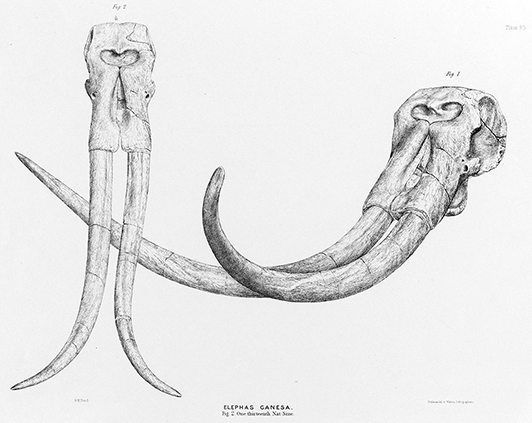
Reconstructed fossil skull of a Stegodon, an extinct genus of proboscidean, collected by Proby Cautley and Hugh Falconer in the Siwalik Hills in the late 1830s.
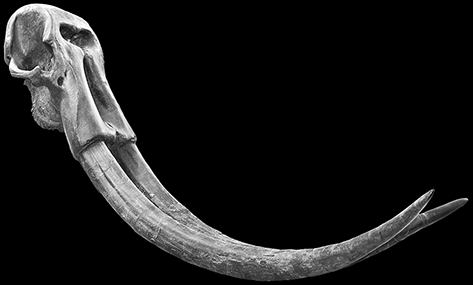
Margaret Tytler’s Model India
The Bengal Government engages Miss Tytler to prepare a set of models of Indian manufactures and agricultural implements for transmission to the East India Company’s Museum in London.
In 1819, Margaret Tytler, a Scotswoman with a self-described “love of science,” accompanied her brother, Dr. John Tytler, on his first assignment with the Bengal Medical Service, where he was assigned to Patna.Footnote 2 Between 1821 and 1823, Tytler embarked on a remarkable project to construct highly detailed scale models of social and economic life in the region (see Figure 7.1). Visiting farms, forests, homes, workshops, mills and distilleries, Tytler employed local artists to draw and measure the tools and instruments of different manufacturers, then hired local makers of toys and statuettes to produce scale models (usually at half an inch to a foot) out of carved stone, wood and leather. Her process was empirical and observation-based. She describes, at one point, being sickened by the fumes in the distillery where she went to measure an apparatus. She also describes being “instructed” by a local distiller, who she calls Mushoo, in the gathering and preparing of herbs to make toddy. Tytler claimed the models are so exacting that, after constructing the model still, she claims, “by means of this model I distilled a tumbler full of spirits.”Footnote 3 In all, she made over sixty precise models of a wide range of workers and their instruments, from bird catchers to millers of grains and oils, to weavers and makers of gold and silver thread to butter churners and poppy lancers. After one set was produced for the Bengal government, Tytler was asked to produce a second set specifically for the India House museum.
Ebony model showing a method of catching birds, produced in Bihar Patna c. 1815–1821, commissioned by Margaret Tytler.
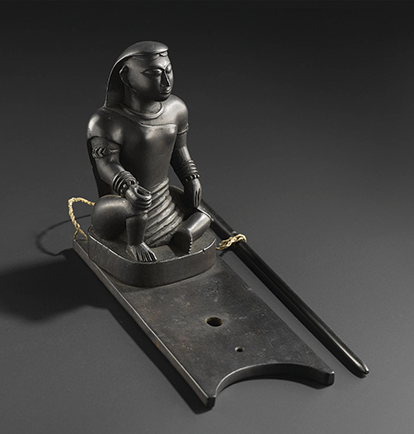
Tytler’s models were early forerunners to a major new focus for the India House museum in the 1850s: the production of detailed industrial intelligence about India’s trades and industries, intended for the use of British manufacturers and traders. As we have seen throughout the book, although Wilkins’s 1798 proposal to the Court of Directors was nearly completely full of items of commercial value or related to understanding Asian trade, the actual shape that the library-museum took was much broader and, at least until the 1840s, bore little relation to Wilkins’s proposal. By the late 1850s, India House would display many hundreds of models similar to those of Tytler’s. As an article in The Times would put it in 1857, an hour spent in the new “model room” would “convey clearer ideas of Indian life and Indian customs than would be gained by the perusal of many dreary volumes.”Footnote 4 This is just one way in which, in the final decades of the Company’s existence, the discourse of knowledge production at India House was increasingly about growing and facilitating trade. This focus was amplified, as we saw in the previous chapter, in the new office of the Reporter on the Products of India, and especially in connection with the Company’s central role in the Great Exhibition.
To be clear, however, focusing on commercial utility in no way meant the abandonment of engagement with questions of broad historical and philosophical interest discussed in the previous chapters. On the contrary, the rise of the economic museum movement in this period involved those very same questions, but now also applied in new ways to questions of how to develop the British–Indian trade. For example, Tytler’s models were accompanied by a manuscript catalog that sets the whole project within a stage-based understanding of civilizational development similar to that of Adam Smith. On the surface, Tytler appears to have produced a relatively straightforward collection of models illustrating common commercial and agricultural practices in Patna. But Tytler’s catalog also folds her observations into a broad theoretical framework of understanding of both economy and empire. She has chosen and ordered the particular models in order to illustrate the progress of civilizational needs according to the stadial theories of Smith, whom she quotes repeatedly. She also references a range of other European influences such as Erasmus Darwin’s “Love of the Plants.” The catalog at times works hard to create a “model” of rural Indian society designed to fit the Smithian economic-material stages of civilization. But it is also clear that Tytler’s worldview has been shaped by her time in North India. For example, she discusses articles from the Asiatic Researches as well as the “Treatise on Agriculture” by one “Mater Jeet Singh Rajah Tikaree” (probably Mitrajit Singh Tikari Raj, a prominent zamindar).Footnote 5 Although in this way Tytler’s analysis is a cosmopolitan production, it also sets this new world within what would be, to the intended audience, a very familiar intellectual register.
This chapter follows the economic turn in Company science at India House in the decades after 1833. The first section considers new institutional developments in the connection between the India House library-museum and collections-based science institutions in the colonies. Increasingly, the India House library and museum would be represented as at the top of a hierarchy of Company science establishments, reaching from London to the presidency governments and out into the rural divisions and settlements. The chapter then turns to the growing economic focus within the India House library-museum. The Company itself was no longer directly participating in trade, but it was responsible for the agricultural, industrial and other trade-related policies for British India. Part of the new responsibilities of the Reporter on the Products of India position were meant to aid the administrators in such areas of state. But the turn to a science of trade and industry was also, in part, the result of the directors more fully embracing the mission of making the library and museum useful for the (British) public. Altogether, with a new, more clearly defined role as a mediator of industrial, educational and scientific relations between the home country and the colonies, these developments combined to bring new energy and purpose to the library and museum at India House. In almost exactly the same moment, however, the decisive undoing of the Company was brewing, fermented not by the free-trade liberals in Britain but instead by the disaffection and defiance among British Indian subjects.
The Library-Museum and Company Science in British India after 1833
In 1840, amid an endless stream of incoming and outgoing books and documents, the library day books briefly record the beginning of the Victorian era with a notice of the deposit of a gilt-framed color print depicting the young queen opening Parliament for the first time in 1838.Footnote 6 By this time, the Company’s collections at India House were overflowing, and Horsfield sought extra storage space in the cellars and attics. More and more, India House was redirecting donations and deaccessioning portions of its collections to other libraries and museums, which were mushrooming up all over what was, by now, the biggest city the world had ever seen. One London guide from 1851 lists eighty libraries.Footnote 7 Another from 1853 describes seventy-seven “literary and scientific institutions,” virtually all of which held some kind of collection.Footnote 8
Perhaps the constant commerce in and out of the Company’s stores is one reason why the curators could worry about a lack of storage space in one memo and, in another, demand more material from India. Various policies were now in place to encourage the regular movement of materials from the colonies to the imperial center. Significantly, it became routine for the Company to cover any port duties on items sent to India House for the museum or library. By at least the 1830s anything designated a “specimen of natural history” was guaranteed a duty-free import.Footnote 9 As the Royal Navy would do for statues, tombs and obelisks shipped to the British Museum from Egypt, the Company regularly footed the transport bill for massively heavy imports, such as the cache of ancient sculptures from Amaravati, or the semi-regular shipments of cases of books weighing over 500 pounds, destined for its library and museum.Footnote 10 Despite, therefore, the loss of the last vestiges of formal monopoly power in 1833, the Company’s ongoing natural monopoly ensured that, Company science in Britain would emerge as an even greater center of accumulation and production, and its place within British scientific networks would continue to expand.
Printed matter from the colonies arrived less as gifts or the results of particular surveys or expeditions and more with the regularity of scheduled export commodities. By the 1840s, the library was trying to keep up with the outputs of British India’s rapidly growing (and closely monitored) periodical press. Each quarter, presidency governments sent out collections of the latest periodicals. Both native-owned and government-aligned or missionary presses were churning out new books in dozens of languages in Calcutta, Bombay, Madras and elsewhere.Footnote 11 At Wilson’s repeated insistence, sets of many of these works were sent back to London. The Calcutta Book Society, for example, supplied not only regional schools and colleges but also the Company’s library and the students of Haileybury with vocabularies, primers and works of literature in Hindustani and many other languages. Many hundreds of copies of works would be exported to London, and much of this was distributed to Haileybury for use in classes or as student prizes. But many more were sold by the Company to bookshops such as Allen & Co. In fact, the Company’s bookselling activities were becoming so regular in the later 1840s that it could be seen to violate the legal ban on Company direct engagement with trade. However, the practice seems to have been to only sell on imported books at cost, as the directors were keen to stress. As was made clear to one assistant librarian: “we are not to be Booksellers, nor have we ever been.”Footnote 12
The curators at India House were now much more active and aggressive in monitoring collections and finds via the Indian periodical press and pushing for the shipment of finds back to Britain. The Court of Directors (or, more likely, the museum staff via the chairmen) kept close tabs on the movements of these collections through various ports, noting, for example, when only portions of a collection were received in London while other parts had been siphoned off into collections in the colonies.Footnote 13 The India House curators’ more aggressive attempts at policing the flow of knowledge resources were in part a matter of the increased self-regard as the center of the Company’s sciences but also in response to the increasing pull of the growing centers of accumulation in the colonies. The number of museums, botanical gardens, libraries and scientific societies in British India had grown rapidly in the last few decades, and that growth was accelerating markedly in the early 1850s. In the wake of the 1833 charter, dozens of colleges and madrassas were established in British India and many of these had their own museums and botanical gardens.Footnote 14 One of the largest college museums was at the Medical College of Calcutta. In terms of large urban institutes, the Bombay Literary Society (f. 1804), Madras Literary Society (f. 1812) and Singapore Institution (f. 1826) all supported libraries and museums. When the Geographical Society of Bombay (f. 1832) formed, the first order of business was to begin establishing a library and collection of maps, manuscripts and instruments.Footnote 15 The fate of numerous colonial collections would be tied to the fluctuations of the Company Museum’s appetite.Footnote 16
Perhaps no colonial institution was more closely tied to the India House library and museum than the Asiatic Society of Bengal (ASB), the collections of which would eventually form the first national museum in British India in 1875. The dynamic between the Company’s Museum in London and the ASB was, during this period at least, quite the reverse of the case of the London societies just described. Nathaniel Wallich had become the first curator of the ASB’s collection in 1814, and (later exports to London aside) he had strongly argued for the importance of establishing libraries and museums in the colonies.Footnote 17 As Wallich had expected, the ASB’s collection grew quickly:Footnote 18 “from China, from New South Wales, from the Cape, and from every quarter of the Honourable Company’s possessions, specimens of natural history, of mineralogy and geology, have flowed in faster than they could be accommodated.” But as collections grow, so do their costs, and by 1836 the ASB, now in debt, was considering putting the collection up for sale. Having grown too big to be funded by a voluntary organization, the collection was proposed as a foundation for the creation of the Government of India’s first national museum. The problem, however, was that India already had a national museum; it just happened to be in London. When approached with the request to fund a national museum by establishing government support for the ASB collections, the governor-general of Bengal, the same George Eden who had co-founded the Zoological Society, passed the decision on to the Home Government, since the Court of Directors were already supporting a library and museum “at considerable expense.” Although Eden believed that “such institutions in Europe, however perfect, do not supersede the necessity of providing similar in India,” he sensed it was unlikely the Court of Directors would then fund a similar institution in India.Footnote 19
Upon hearing that the question would be passed back to London, the ASB requested an interim 200 rupees per month in order to keep its collections in basic maintenance. When the question of a national museum in India finally came in front of the Court of Directors, they replied in 1839 that the Court would not object to that small sum “for the cost of preparing specimens and maintaining the collection in order.” It was silent on the idea of a national museum, although it also sanctioned the Bengal government to spend some small amount of funds on purchases for the ASB museum, so long as “on all such occasions, you will forward to our Museum [that is, the one at India House] a selection from the articles which may have been so procured.”Footnote 20
Meanwhile, back in London, Horsfield kept surveillance on the ASB’s Transactions, which published lists of new donations. He would at times aggressively seek the transfer of material collected by officers on duty. He also interpreted the ASB’s new collection grant as a contract binding it even more clearly to a subordinate position under the London museum. As he reiterated in a letter to the ASB chasing up a missing section of materials from Bhutan and Nepal:Footnote 21
We now call your attention to several points respecting the relation in which the Asiatic Society is placed towards the Company’s Museum in England in consideration of this grant …. For any naturalist or officer who may accompany any mission or deputation on behalf of Government, the most full and complete series resulting from his labors … the most valuable and interesting results of scientific deputations and missions on behalf of Government … are to be dispatched to England for the Company’s Museum by the earliest opportunity.
But the transregional picture of Company collections is more complicated than Horsfield’s demands upon the Calcutta museum might suggest. For one thing, the ASB’s collections were growing overall, as were those of the branch societies in the Madras and Bombay presidencies. Madras, too, was by the 1830s receiving small but regular government subsidies, and it, too, was regularly sending materials back to London. By 1851, Madras had a Government Central Museum, whose 40,000 annual visitors dwarfed the visitor numbers of the India House museum.Footnote 22
Within the Company’s expanding territories, Calcutta, in particular, emitted its own gravitational pull, attracting many donations from across the Company’s territories. This would, for example, be the case for parts of the so-called British Museum in Macao, a library and natural history museum founded by three East India Company supercargoes in 1829.Footnote 23 The collections of the library and museum grew largely from the donations of Company personnel, but private British traders and Portuguese locals also contributed. It grew steadily for several years until 1833 when the East India Company finally lost its China monopoly, when the supercargoes packed it up, along with the rest of the Company’s offices, for transfer back to Calcutta. Some of the material was then donated to the ASB; for example, the trader Robert Inglis donated his collection of birds to the Society’s museum. But much of what would become the well-known parts of this collection – John Reeves’s collection of fishes, for example – would soon make their way to India House in London. As the Journal of the Asiatic Society of Bengal noted sourly, “It had been proposed to transfer the whole [Macao] collection to Calcutta, and as far as concentration is beneficial, it is to be regretted that this munificent intention had been abandoned.”Footnote 24 By the 1840s, the ASB collection was massive, and the Society itself a hive of activity. A typical meeting such as that of May 5, 1847 begins, as reported in the Bombay Times, with a list of gentlemen balloted for election from all over British India, from Pondicherry to Singapore and also as far away as the United States (F. E. Hall Esq. of Harvard University).Footnote 25 Then letters were read. The Court of Directors thanked the Society for recent “important contributions to the Museum of the India House in the Zoological Department,” from the Marine Department a recent meteorological register for “Kyook Phyoo” (Kyaukpyu) in Burma; from the surveyor-general’s office a recent meteorological record from Calcutta; a query from the secretary to the Military Board, requesting information about timber trees in Bengal. Then contributions for publications received through Captain Newbold were listed, including: a notice by Hekekyau Bey, late president of the Ecole Polytechnique of Cairo, on the temples and emerald mines of the eastern desert of Egypt; a notice from Mr. [Brian H.] Hodgson from Darjeeling submitting several essays on natural history; from Captain Hutton, of Mussoorie, a note on the Ovis Ammonvides of Hodgson; from Major Showers, of Moorshadabad, a copy and translation of the Persian inscription on a gun of Aliverdy Khan; from the Reverend Mr. Mason, a note on the Landshells of the Tenasserim Province, and a report from Dr W. B. O’Shaughnessy of the Mint, forwarding an assay of gold dust from the Boundary Commissioner of the Punjab. Then the curators and librarians submitted their monthly reports of additions to the collections and the meeting was adjourned save the final comment: “We should not omit to notice that the tables were as usual covered with numerous and beautiful specimens of objects of Natural History.”
The Science of Trade and Industry
After 1833, as we have seen, some politicians, shareholders and would-be India traders accused the directors of maintaining, in effect, a natural monopoly on knowledge of Asia by way of the library-museum. However, among scientists, savants and a certain sector of the British public, access to Company science was now wider and more active than ever. On the night of March 24, 1835, for example, King’s College held an outdoor lecture series in the Strand by the inventor and professor of experimental philosophy Charles Wheatstone, who used a variety of instruments to illustrate a lecture about sound and vibrations of air.Footnote 26 The centerpiece of the demonstration was one of the Javanese musical instruments brought back to India House by Stamford Raffles. Several complete Gamelan sets survived the ship fire that destroyed the rest of Raffles’s exports from Java, and these had been on display at India House since the 1820s. Wheatstone had asked to borrow the instruments in order to study their acoustical qualities, particularly their “remarkable employment of reciprocal vibration.”Footnote 27 The Raffles collection of Javanese instruments was something of a regular guest on the thriving popular lecture circuit – back in 1828, Michael Faraday had used a set at the Royal Institution during a Friday night lecture on “vibrations producing sound.” In this instance, Faraday had wanted to use a “China Gong supposed to be in the E.I. Company’s Museum.” Wilkins, a member of the Royal Institution himself, had informed him that “we have never been in possession of such a specimen” but suggested Lady Raffles might have something to loan.Footnote 28 In another Royal Institution lecture in 1830, Faraday had displayed the Company’s new “geodetic instrument” that was to be used in the Survey of India.Footnote 29 In 1841, glazed tiles in the Company’s museum were loaned to the Society of Arts.Footnote 30 Models of Indian boats were loaned to the Society of Engineers. In 1853, a set of model ploughs were loaned to the Royal Institution for a lecture on “ploughs of the world.”Footnote 31 Company curators also sometimes gave lectures at the Royal Institution, such as in June 1838 when the newly hired India House curator John Forbes Royle was the speaker at Faraday’s Friday evening lecture series, entertaining the audience with a discourse on “The vegetation of the Himalayan chain in connection with climate.”Footnote 32 Royle also lectured on the materia medica of India at King’s College, for which he sometimes borrowed specimens and samples from the Company’s museum.
These are just a few of the contexts in which objects from the Company’s collections were loaned out for public lectures or events at universities or scientific societies. From the 1820s onward, as discussed in Chapter 5, Company science was strongly represented in Britain’s civic clubs, institutes and societies devoted to science and education. And, from the 1830s onwards, it is in these settings, among the literary and scientific public who filled public lectures and private clubs, that the Company’s collections and their curators played an active role in shaping a more public discourse about Asia in Britain. In the 1830s, the brick-and-mortar location of Company science, within the galleries at India House, was, by all accounts, devoid of interpretation or instruction (i.e. no catalogs, useless labeling). It was instead beyond Leadenhall Street, in the thriving public and civic spaces for research and education, where Company science participated in seemingly endless exercises in comparing, contrasting and ranking the similarities, differences and historical connections between “India” and “Britain” or “Asia” and “Europe.” The Javanese instruments, for example, were integrated into a comparative study of musical knowledge across the world, while at the same time Wheatstone, a prolific inventor, especially of electrical apparatus related to telegraphy, also used the instruments to demonstrate physical theories about the nature of sound.Footnote 33 Royle’s lectures combined the history of medicine with the latest knowledge on the “laws which regulate the geographical distribution of plants,” illustrated with his encyclopedic collection of contemporary Indian medicines.Footnote 34 His ultimate aim was to aid in the discovery of new (to Europe) medicines and treatments, but his method was deeply historical, and he also claims to have been able to “pick up one or two of the lost links in the history of the science”: using new translations of Sanskrit canons by his India House colleague Horace Hayman Wilson, Royle plotted connections between his bazaar collections from India and ancient Greco-Arabic medical treatises (and thus Britain’s own scientific history).Footnote 35 In a similar vein, Henry Thomas Colebrooke’s work on the history of Hindu mathematics and astronomy, which he presented at many scientific society meetings, was devoted to examining Hindu contributions to Arabic (and thus European) history of science.Footnote 36 The glazed tiles were one of numerous museum items lent to the Society for the Encouragement of Arts and Manufactures (the Society of Arts) for the purpose of illustrating the history of different trades and manufactures. Arthur Aikin, a chemist and lecturer at the Society of Arts, found the Company’s museum especially rich in “models, in specimens, and in products illustrative of the arts and manufactures of India, and other oriental countries” and regularly requested Wilkins’s help in locating objects from the museum to use in his presentations.Footnote 37 For example, the tiles, from the ruins of a fifteenth-century mosque in Gauda, as well as specimens of bricks, were used in a historical survey on pottery.Footnote 38 Aikin’s influential lectures on the history of arts and crafts also used, for a chapter on bone-based manufactures, a Chinese lantern from the museum; in a section on the history of iron, manuscripts and specimens from the Company’s library; and, in a section on the history and art of paper making, samples of bark-cloth paper from Java and wood and cotton paper from Kashmir.Footnote 39
Other Company offices and departments, at India House and throughout the presidencies, had always been focused on gathering and analyzing information on the economy and productivity of the colonies. The Company’s vast tax collection apparatus, surely the most information-intensive sector of Company administration by this time, depended upon fine-grained revenue surveys that attempted to measure village finances, landholdings, agricultural productivity, manufacturing and consumption. At the Company’s library and museum, however, until the late 1830s, the projects and publications that came out of India House or Haileybury were no more focused on, for example, manufacturing or agricultural productivity, than those of other institutions such as the British Museum or Royal Society. The distinctly trade-related collection of Tytler’s kind was still rare in the 1820s.Footnote 40 A few other donations and gifts similarly connect directly to the ongoing attempts by British merchants and manufacturers to gain ground in the Indian market. For example, in June 1813 “sixty-one specimens of sacrificial and domestic utensils [in wood] used by the Hindus; transmitted to England as patterns for the manufacturers” arrived.Footnote 41 In the 1820s, Henry Thomas Colebrooke had successfully instituted a study of weights and measures used throughout the Company’s territories.Footnote 42 In general, though, Company collecting remained much more wide-ranging, opportunistic, war-driven and unstructured, and the pursuit of economically useful knowledge more diffuse, until well into the 1830s.
Several factors contributed to this change. One is, in both Britain and the colonies, the steady acceleration in the rate of accumulation and the multiplication of related institutions. By the late 1830s, disciplinarily specific collections were becoming common, and (as we saw after the charter of 1833) India House faced the question of whether it made sense to maintain a Company museum in its broad organization encompassing all things Indian. Already, by 1838, the curators tended to immediately pass on botanical donations to Kew Gardens or the Linnaean Society for storage and cataloging.Footnote 43 A second factor is the expanding influence of liberal utilitarian political views and imperial policies, in particular the discourse of a particularly commercial form of improvement.
A third, closely related, factor is the erosion of the Company’s privileges and therefore its autonomy with respect to other commercial interests. It had always been the case that British manufacturers were more interested in pushing for increasing Britain’s exports to Asia. After 1833, manufacturers could and did exert a much more direct force upon trade and trading policy.Footnote 44 This was the period in which the factory-produced machine loom cotton textiles from Lancashire were just beginning to challenge the long-held dominance of Indian textiles in the global trade. Commerce with Asia was now thrown open to a raft of new players, and the meaning and the value of “commercial knowledge” was rapidly transforming. The British takeover of the Indian textile and manufactures market, and the shift in Indian exports from manufactures to raw cotton that would feed the machine looms in Britain, was still decades away. But there are signs that, as early as 1834, the directors were taking up the idea of developing cash crops for European export with a new level of commitment. Since the late 1790s, some members of the Board of Control (often with the support of Joseph Banks) had periodically tried to push the development of cash crop plantations in India, but there had so far (with the exception of opium for the China trade) been little incentive for the Company to try to make a major shift in Indian agriculture in this direction.
In short, after 1833, the interests of British industry were able to make a stronger impression upon colonial policy, and this was reflected in the new branches of specialization within Company science. Projects came and went for plantations or harvests of the anti-malarial bark of the chinchona, indigo, teak for shipbuilding and, most of all, cotton. From 1836 onward, experiments and trials aimed at expanding cotton production for export were conducted in all three presidencies. A decade on, however, little had changed: in 1847 the majority of cotton production in India was small-scale and sold domestically.Footnote 45 And finally, at the same time, the measures of “improvement” for British India were increasingly tied not only to education or even the spread of Christianity but also to economic and material change.Footnote 46
Nowhere was this new discourse more visible than in the growing “economic museum” movement. London’s first self-described “economic” museum was the Museum of Economic Geology (f. 1835), which opened as a small gallery under the direction of the Ordnance Survey and by 1851 had moved to a purpose-built gallery in Jermyn Street. The Horticultural Society, specializing in commercially useful plants, was the driving force behind the establishment of Kew Gardens as a national botanical garden in 1840, opening up the former royal gardens and plantations to the public, and at the same time developing new varieties for export and commercial development. As we saw in Chapter 6, even the Royal Asiatic Society was, by 1835, expressing its own mission and importance in commercial terms. Some of the first economic museums were established by agricultural societies in British India, such as the Agricultural Society of Western India and the Agricultural and Horticultural Society of India, both of which announced new economic museums in 1847. One article in the Bombay Times captures the vision of these collections and their role in “improvement”:
Few things could be devised more likely to assist … in the extension of improvement. A collection could be formed of all the artificial and mineral productions of the districts – of our dyes, drugs, gums, pigments, ores, gems marbles, limestones, and building stones, of our arms, tools and implements of all sorts, such as would be fruitful alike of instruction and amusement. At home, collections such as this become a sort of show-room for the benefit of the selling and buying classes of the community. [Visitors] have placed before them things long desired had they known where or how they were to be procured. Our bazaars and godowns are full of such things, and people are every month sending home [to Britain] for articles which, had they known it, have long been quite within their reach in Bombay. As illustrative of the productions of the industry of the east, Bombay could quickly form a collection not to be surpassed in any part of the world.Footnote 47
The key difference between these “economic” museums and other kinds of museums is that, as the Bombay Times article explains, the aim is specifically related to communicating commercial or market knowledge: household consumers will discover new things to buy for their home; manufacturers large and small will discover new materials or designs for their workshops or factories; traders will discover new wares to export.
Back in India, Royle (the future Reporter on the Products of India) had been director of the Company’s botanical garden at the former Dutch factory town of Saharanpur (West Bengal) (see Figures 7.2 and 7.3). From that base, and while also acting as medical director of two local hospitals, Royle had amassed a large collection of information and specimens related to the relatively unexplored but politically significant Himalayan region at the northern edge of British influence, and at the geographical dividing line between China and India. Royle hired local collectors to make field trips and investigated the plants and medicines sold locally.Footnote 48 He was focused in particular on Indian materia medica, which he studied with an eye to correlating with ancient Greek medical traditions. The herbarium Royle had brought from Saharanpur contained about 10,000 specimens. Royle’s herbarium was part of a boom in Company botanical collections in London. A few years earlier, another massive herbarium – in fact, the entire collection of the Calcutta Botanical Gardens up to about 1827 – had arrived back in London as well. Nathaniel Wallich, who had taken over as director of the Calcutta Botanical Gardens, returned to London with this vast collection while on a health leave and with the intention of publishing a catalog of the herbarium. Although Wallich had returned to London earlier than was strictly allowed, the directors supported Wallich, providing him an apartment in Soho to work in.Footnote 49 The secretary, writing to Bentinck on Wallich’s return to India, noted that Wallich “has labored hard in the distribution of the collections from India which have been sent throughout Europe and which have gained for the East India Company in the scientific world, as the professors say, immortal fame.”Footnote 50
Royle’s collections from Saharanpur were initially deposited in the Company warehouses, and were later donated to the Linnaean Society, where Royle was an active member (along with the Royal Society, the Geological Society and the Horticultural Society). Starting in 1832, working from his collection, Royle began organizing the publication of a biogeography of the Himalayas. He enlisted the help of many others, making it a collaborative project typical of these large works of natural history. Royle drew on the wide network he had cultivated while at Saharanpur, including: De La Beche (geology), Proby Cautly and Hugh Falconer (fossil drawings), Reverend Hope and Mr. Ogilby (zoology) and, for the botanical section, Robert Brown, George Bentham, Augustus de Candolle, W. J. Hooker and Don Lindley. The publication to come out of this, the Illustrations of the Botany and Other Branches of the Natural History of the Himalayan Mountains, was issued in eleven parts between 1833 and 1839. Many of the original illustrations were produced in India by Indian artists either before his return or while he was in London, sent along by Wallich after his return to Calcutta.Footnote 51 As with many other works of Company science at the time, it was published by Allen & Company of Leadenhall Street.
Plan of the Company’s botanical gardens at Saharanpur, describing such sections as the “Linnaean garden,” “Medicinal garden,” “Agricultural garden” and “Doab canal trees nursery.” In Royle, J. Forbes. Illustrations of the Botany and Other Branches of the Natural History of the Himalayan Mountains: And of the Flora of Cashmere by J. Forbes Royle. Vol. 1, Wm. H. Allen, 1839. https://doi.org/10.5962/bhl.title.449.
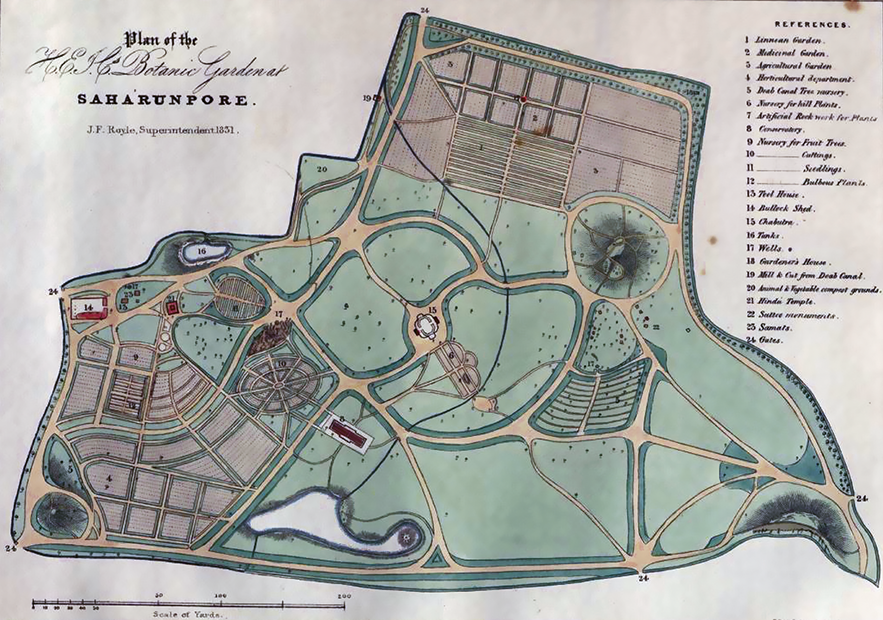
Illustration of the Cassia or Senna plant, from Royle, J. Forbes. Illustrations of the Botany and Other Branches of the Natural History of the Himalayan Mountains: And of the Flora of Cashmere by J. Forbes Royle. Vol. 1, Wm. H. Allen, 1839. https://doi.org/10.5962/bhl.title.449.
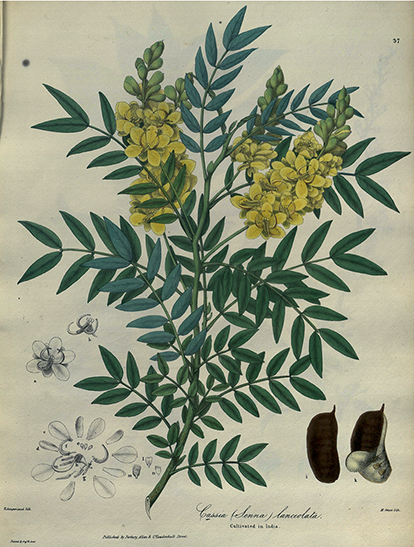
With a focus on the geography of plants, the Illustrations was undoubtedly influenced by Alexander von Humboldt’s work on South America. Royle’s Illustrations was much more than a catalog of plants; it was also a treatise on the influence of climate and altitude on plant distribution, containing suggestions of the historical relationship and contemporary similarities between “European” and “Asian” species. It also incorporated Royle’s interest in the history of Indian materia medica, giving not only a geography of plants but also a historical record of local plant knowledge. For example, it contains an index of plants mentioned in the work that are also mentioned in Persian and Arabic sources (together with the name in Latin and Arabic).
In 1835, Royle was involved in the Royal Asiatic Society’s push to gain public funding (if not also the Company’s museum), and he was the driver behind the Society’s new “agricultural committee.” In 1837, Royle took up the post of professor of materia medica at the new King’s College in London. His first set of lectures were on the “Antiquity of Hindoo Medicine” in which he explored the history and properties of common medicines found in the bazaars of North India.Footnote 52 When, in 1838, Royle was also hired into India House as the first Reporter on the Products of India, his new office was, at first, devoted exclusively to botany (and was sometimes then referred to as the “botanical office” at India House).Footnote 53 According to Company surveyor T. B. Jervis, both Royle and Wilson were of a new generation that saw the Company’s science as particularly “muddling” and “unsatisfactory” with “no practical utility.”Footnote 54 From this time onward, the trajectory of Royle’s work turned sharply toward investigating economically significant natural resources and making the Company museum better serve the needs of British industry and the interests (as understood in Britain) of Indian trade and agriculture. Biogeography – understanding what kinds of plants would flourish under which climatic and soil conditions – was, for Royle, the critical starting point for any plantation or agricultural experiments. After his biogeography of the Himalayas, his publications turned sharply toward economically significant topics, including a survey of the “productive resources” of India, a manual of materia medica, several books on cotton cultivation in India, a catalog of Indian woods for craft and manufacturing, and a catalog of the “fibrous plants” of India, for use in making rope and cord.Footnote 55 Each addressed a pressing natural resource issue of the time. British manufacturing had become hugely dependent upon American cotton produced by slave labor, exposing the British economy to a potentially crippling weakness should the abolition movement succeed in America or should a war break out with the former colony. Wood for manufacturing, ships and furniture was in high demand, and supply concern would lead to the Company’s first forest protection laws.Footnote 56 Cordage was vital to shipping, and Britain relied significantly on imports from Russia, an uneasy situation given the accelerating expansion of the Russian Empire in the 1840s leading up to the Crimean war.Footnote 57
It is important to stress that, at the time, in practice, there were always deep institutional connections between “economic” botany, biogeography and the philosophical natural history explored in Chapter 5. For example, Royle’s office was an important resource for Darwin in the years leading up to his Origin of Species. In the audience at Royle’s Royal Institution lecture in 1838 was the young Charles Darwin, who had just returned from his voyage on HMS Beagle, and who had written to Royle to introduce himself a few weeks before the lecture.Footnote 58 Some of Darwin’s thoughts on the lecture are recorded in his notebooks, where he notes Royle’s argument that “Botanical Provinces will turn out not nearly so confined as now thought” and takes down the evidence presented of similarities in certain genera across continents and vastly different geographies.Footnote 59 The year before, Royle, as secretary of the Geological Society, had worked with Darwin on one of Darwin’s earliest publications for the Society’s journal, on coral formations and points of elevation in the Pacific.Footnote 60 The two remained in correspondence through the 1840s. Darwin also corresponded with others associated with India House, including Horsfield, Edward Blyth (the former curator of the ASB’s museum) and the surveyor and paleontologist Hugh Falconer.Footnote 61 But it was Royle to whom Darwin most often turned for answers to natural historical questions regarding India, evidence of how the Office of the Reporter on the Products of India sat at the intersection of economic botany and philosophical natural history.
Royle’s office was an important resource for Darwin. He enquires about, among other things, a map of coastal elevations that appears in the Calcutta journal Gleanings in Science,Footnote 62 who he should send some unusual seeds toFootnote 63 and if he could borrow copies of a journal published in India, the Transactions of the Agri-Horticultural Society of India. Regarding the latter, Royle was unable to loan it at the time (he seems to have been using it during preparation of a report on cotton), so the courier Darwin had sent returned empty handed.Footnote 64 A few months later, however, Royle comes through and offers to lend it to Darwin, to which Darwin replies and promises: “I will take the greatest care of this valuable work and will return it as soon as I can.” Darwin also immediately asks whether Royle could provide him with another work, “Blacklock’s treatise on sheep” (which Royle had cited in his Essay on the Productive Resources of India regarding sheep-breeding in India).Footnote 65 Upon returning the Transactions, Darwin writes to thank Royle, discussing what he learned of the varieties of domestic animals and plants common in India. He is disappointed to have learned that experiments in introducing new varieties to India are so recent that the effects of climate are unknown. But, in an indication of the moral and scientific value British naturalists placed on the work of Company science in India (as well as Darwin’s desire to stay on Royle’s good side), he closes by expressing his “delight and astonishment” at “the energetic attempts to do good by such numbers of people & most of them evidently not personally interested in the result. Long may our rule flourish in India. I declare all the labor shown in these Transactions is enough by itself to make one proud of one’s countrymen.”Footnote 66
Club and society business also brought Darwin and Royle together. On one occasion, Darwin mentions that Royle had discouraged him from accepting the post of secretary of the Geological Society. On another, Darwin solicited Royle’s support for the election of his brother Erasmus Darwin into the Athenaeum Club. At the foundation of the reformist Philosophical Club of the Royal Society, Royle invites Darwin to join (Darwin, noting with regret he “cannot often dine out,” declines, though he does give his enthusiastic support for the new venture).Footnote 67 Behind Royle’s back, however, Darwin displays a touch of the elitism sometimes directed at salaried medical men and overseas naturalists employed by the Company. To his friend Joseph Dalton Hooker, the botanist son of Kew director William Jackson Hooker, Darwin writes that he is reading Royle’s work on the Himalayas “& I have picked out some things which have interested me, but he strikes me as rather dullish & with all his Materia Medica smells of the Doctor’s shop. I shall ever hate the name of Materia Medica, since hearing [Edinburgh professor Andrew] Duncan’s lectures at 8 o’clock in a winter’s morning – a whole, cold, breakfastless hour on the properties of rhubarb!”Footnote 68
Hooker, for his part, also often references Royle (and sometimes Horsfield) as sources he might have access to in his correspondence with Darwin.Footnote 69 This was especially true, unsurprisingly, during his trip to India in the late 1840s. More surprisingly, Hooker, who, as future director of Kew, often belittled the work of naturalists working in the colonies, displayed some humility with respect to the challenges facing European naturalists in India: “I am perfectly bewildered by the number of facts hourly thrown before me whose importance I can scarce appreciate from my ignorance of Indian Nat-Hist. & all I can do now is to attempt to collect those relating to the larger or more common animals.”Footnote 70
From the Great Exhibition to the Great Rebellion
By 1850, the India House museum was displaying all kinds of new material that had arrived in the wake of the wars of the 1830s and 1840s. A London guidebook from 1851 was particularly impressed by some of the plunder from the recent Anglo-Nepalese war: “a copy of the great cyclopedic aggregate of Tibetan literature, contained in upwards of 300 large oblong volumes, printed with wooden blocks on the paper of the country. There is but one other set of this work in Europe – in the National Library of France, both having been procured by Mr. Hodgson when political resident at Nepal.” Other newly acquired loot and purchases mentioned by the guide include some of Charles Masson’s covert grave-robbed antiquities from Afghanistan (“reliques and curiosities found in the Topes of Afghanistan”). The guide also highlights some of the more spectacular items that had now been on display in India House for nearly fifty years: the huge silk lanterns from China; the large cuneiform tablet from near Baghdad, still undeciphered; a large collection of ancient sculpture from central India (“Hindu idols”); jade and rock scenery carvings from China (“handsome models of the Chinese beau ideal of country village life”); weaponry and musical instruments; and Tipu’s tiger, as well as a treasury of rare and valuable Qurans, “some owned by kings, some miniature copies, very ancient ones dated to the seventh century … many belonged to the library of Tipu Sultan, having been presented to the Company’s library by the captors of Seringapatam.”
The passages leading between the original library and museum were now lined with dresses, fabrics and ornamentation, “some of Indian, some of Malay or Javanese, and some of Abyssinian origin,” as well as “models of boats and instruments of various kinds,” not only the ones commissioned from Margaret Tytler, but now many more scale reproductions of scenes, figures and, in the case of the cosmopolitan city of Lahore, an entire city. Into the natural history display rooms, new “Abyssinian material” – collected on the recent military foray into Abyssinia – is also highlighted, as well as the “very extensive and complete” ornithological collection and the “remarkable” entomological collection, which, like the manuscript collection, is judged “unrivalled.”Footnote 71
Last but not least was the transformed Pay Office on the ground floor, into which all of the items too large or heavy to be taken upstairs were placed. Here the guide describes “more miscellaneous variety of objects”:
Hindu images and specimens of sculpture, a state palankeen [palanquin] and elephant seat and trappings captured at Bhurtpore, Chinese lanterns, a model of the car of Jagannath, and of one of the bhaulis or large wells of Hindustan, and a well-preserved series of the cases enshrining an Egyptian mummy [and] … a collection of eastern Mammalia, and one of Indian fishes.
But the main feature of the large new gallery was the collection of fossils from the Siwalik Hills, “presented partly to the British Museum and partly to the museum of the Company … the most striking object is a cast of the restored shell, upper and lower, of the gigantic tortoise, made up of fossil bones actually found and divided between the Company’s and the British Museum.”
Despite its growth and expansion, however, in 1851 the library and museum at India House was, for the first time, not the place to see the largest collection of materials on Asia in London. For that, the public would have to go to the India Section of the Great Exhibition of the Industry of All Nations, which ran at the purpose-built Crystal Palace from May to October. First conceived by the Society of Arts as a way to boost the quality and range of British manufactures (and to become more competitive with the high-quality production of France, which had a tradition of industrial exhibitions), the idea of an industrial exhibition in London was welcomed by the Board of Trade and the Company, whose chairman, Sir Archibald Galloway, served on the planning commission (as did Francis Edgerton, president of the Royal Asiatic Society).Footnote 72
View of part of the India Section of the Great Exhibition in 1851, showing samples of horn, skins, furs and other materials of interest to manufacturers. Between these displays, in the background, the more famous elephant howdah and other spectacular works are visible. From an illustration by Joseph Nash in Comprehensive Pictures of the Great Exhibition of 1851, Vols. I and II: From the Originals Painted for His Royal Highness Prince Albert. Dickenson Publishers, 1854.
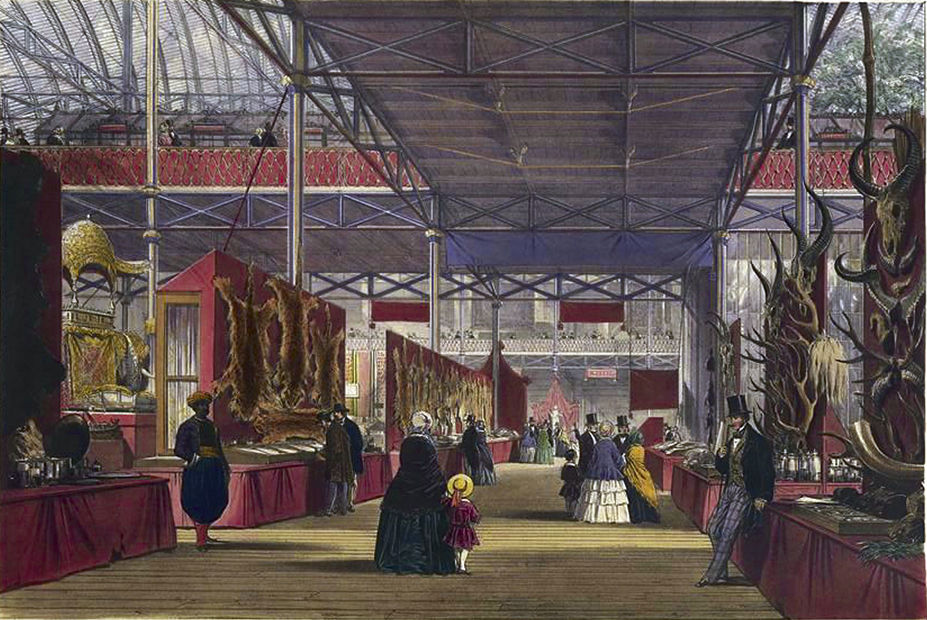
Royle was the critical point of connection between the two. Royle published prodigiously, but he had a much greater impact as a curator and promoter of industrial exhibitions. He was the head of the India section (General Commissioner and Keeper for India) and, as an authority on botany and materia medica, was also given the supervision of two classes of the British section: “Substances Used as Food” and “Vegetable and Animal Substances.” Royle’s vision for the Exhibition of 1851 was to boost Britain’s manufacturing quality and therefore its export trade (see Figure 7.4). The Exhibition, it was hoped, would stimulate innovation by presenting the world of manufacturing materials, techniques and raw materials to the widest possible audience in the most efficient way. From Royle’s perspective, the particular challenge of matching British factories with Asian suppliers was of massive political and economic significance, and the Great Exhibition would, he believed, be the start of a new era for the Indian supply of raw goods for British industry.
But Royle’s was only one vision for the Great Exhibition, and his aims did not go unchallenged. Priti Joshi has traced the processes through which collections were formed in the colonies to be exported, and revealed yet another part of the Exhibition that took a different direction than the planners had imagined. Most importantly, Joshi has shown how dependent were Royle and the London organizers upon the decisions and designs of the local organizing committees, which in many cases were composed of both Indian and British gentlemen. One Anglo-Indian newspaper closely reported on the preparations, and the coverage reveals the diverging visions of what kinds of materials should be sent to represent a region. Royle had widely distributed what the Friend of India (1850) called an “enormous list of articles.”Footnote 73 As might be expected from Royle, the list was heavy on raw materials (plant, animal and mineral) and also asked for samples of manufactures produced with those materials. One report praises the list but worries it does not do enough to distinguish “purely Indian” productions. But just what should represent “purely Indian” productions is up for debate, as when, a few months later, one organizing committee in Bengal submitted its items and the same paper reacted with dismay. The committee had selected many luxurious items produced specifically for the exhibition, such as carved-ivory chairs, jewels, cashmere shawls and a cushion embroidered with the names of Victoria and Albert in diamonds and pearls. The Friend complained that “none of these articles are exactly calculated to display either the resources or peculiarities of India. Indeed we would rather that these magnificent presents had not been sent, as they will tend to revive the old assertion – not yet extinct – that India is land where gold and diamonds are the most common specimens of the mineral world.”Footnote 74 The same pattern repeated itself all over British India, from Bombay to Singapore. Organizing committees, usually made up of a mix of government employees, prominent merchants, civic leaders and educators, were hugely successful in collecting materials to be forwarded on to London. The small port city of Singapore, whose organizing committee included prominent merchants Tan Kim Seng and Syed Omar, contributed 663 items, all shipped tariff-free as with all contributions to the Exhibition.Footnote 75
The end result was a much larger and more eclectic collection than perhaps Royle had expected. Virtually all of the categories that Royal had suggested for collection were well represented in the final exhibition (although not always from the regions that Royle had suggested samples be provided from). However, these were not displayed, as had been the original plan, according to type rather than region, so that, for example, samples of raw cotton from all over the world could be compared side by side. Instead, largely due to time constraints, the exhibitions were organized into regional displays. Furthermore, artisanal luxury items such as jewels, thrones and extravagant textiles were also much more strongly represented, and it was this vision of the opulent orient that garnered most of the press and public attention. Still, for Royle, it was a great success, most importantly as the beginning of, as one commentator put it, “a great transformation in Education.” The Exhibition had convinced many, Royle believed, of the social, economic and scientific significance of a new biogeography. As he put it:
I could almost hope that the time is come, or very nearly so, in which knowledge of natural subjects should be considered a part of general education, and that what is called the study of geography be connected with a general knowledge of the soils, the climate, the plants and the animals of the different regions of the globe, and not be confined, as it often is, to boundaries, to the heights of mountains, the lengths of rivers, and to the bare enumeration of places. Some of the improved views, now entertained on such subjects, must be ascribed to the discovery that so many made of their own ignorance at the Great Exhibition of 1851, which in this, as in so many points, will continue to be, as it has already been, of immense benefit both to producers and consumers in all parts of the world.Footnote 76
Whether or not the Great Exhibition had such a wide effect on geographical thinking, it did result in some radical changes to the Company’s museum spaces in India House. One set of changes was connected to the fact that the scale of the accumulated India donations went well beyond what Royle had imagined. The Company’s warehouses in New Street were modified to enable storage of the articles as they arrived for the Exhibition.Footnote 77 And a radically successful new self-funding mode of accumulation was born. After the Exhibition, the materials were to be auctioned to cover expenses and create a fund for future exhibitions. Before the India materials were auctioned, Horsfield and Royle were permitted to make selections from the exhibition material for the India House collections that remained at the New Street Warehouse:Footnote 78 “In making this selection I have confined myself … to such objects as are in accordance with the primary concerns of the museum, namely: native weaving & apparel; native shipping; figures in clay illustrating the native costumes and trades; native musical instruments; and miscellaneous articles illustrating Indian Ethnology.”
Materials were also donated to a dozen other institutions, and the remainder was auctioned off in June 1852. In that year, the Company also donated over 120 items related to arms, armor and military history to the newly opened Asiatic Room in the Tower of London.Footnote 79 It is worth noting that this seems to be one of the first times Horsfield used “Ethnology” in describing the museum’s collecting interests. Both textiles and musical instruments already had designated gallery spaces, and ship models had also long been collected, but other scale model collections (aside from those Margaret Tytler had commissioned) were only now starting to take up more museum space. From 1851 onward, the focus of the museum would indeed take a strongly “ethnological” turn, but in a way that was directed as much to British manufacturers, who were interested in items of dress and decoration from a commercial vantage, as to the small but growing profession of ethnological science. It is unclear how much, if any, of this material from the Great Exhibition was put on display at that time. Both storage and display space were tight. Horsfield’s request for dry cellar space in the basement of India House to store museum specimens was denied.Footnote 80 At the same time, the New Street Warehouse, where many records were stored, was dealing with a serious rat infestation and new record and book storage space was being installed in the attic and the basement.Footnote 81
It is possible that the popularity of the Great Exhibition, and the Company’s very visible role in it all, helped smooth Company–state relations in the next charter renewal season of 1853. The subject of raw material supplies for British manufactures received a great deal of attention. Now Royle was called in to testify, giving precise and technical reports on topics such as the difference between long-staple American and short-staple Indian cotton, the problem of adulteration in Indian cotton exports, the state of Indigo farm financing around Bombay and ongoing experiments in growing American varieties of cotton. In addition to cotton and indigo, Royle was also asked to report on the progress of the relatively new tea plantations in the north of India, on the prospects of mass production of chinchona and on the sourcing of rope-making fibers such as hemp and flax from India. These were all areas in which British industrialists and politicians worried about global supply chains. It was often Royle’s job to not only report on British India’s current ability to supply raw goods need but also defend the Company’s historical efforts to supply such materials.
The role of museums in colonial relations was also still very much on the minds of legislators. The state of museums in British India was part of the much larger review of the state of “native education” in the wake of the new education laws passed in 1835 that codified T. B. Macaulay’s Anglicist model for the colonies. The tone of the reporting on the state of Indian education is generally self-congratulatory. As a summary from the statistical office at India House put it in 1853: “In its attempts to introduce and extend the pursuit of the higher branches of sound and useful learning the Government may be regarded as completely successful. Every year will add something to the evidence of its success.”Footnote 82 In the previous two decades, the Anglicist model of education – European literature, philosophy and science taught in English – had taken hold on the subcontinent: “English is now the classical language of India,” noted the same report approvingly.Footnote 83 Annual expenditure on education had increased from the £10,000 required of the Company in 1813 to “between £70,000 and £80,000 per annum.”Footnote 84 And a new examination system for native entry into the civil service had been established throughout the presidencies.
During the 1853 charter debates, once again, Haileybury and the directors’ control over the patronage came under severe questioning. Macaulay and others, again, advocated for opening British entry to the Indian civil service to competitive examination rather than continuing to allow the directors to hand-pick the incoming classes to Haileybury. At first it seemed that the Company’s control of the patronage and the Haileybury system would survive intact. The new charter of 1854 kept Haileybury open. However, instead, six months later, at the request of the Board of Control, Parliament would move, without debate, to close Haileybury for good. Two developments were behind the rapid reversal of Haileybury’s fortunes. The first was the successful lobbying by established universities, particularly Oxford, for the charter of 1854 to be amended to include a clause that allowed the Board of Control to decide upon the conditions of admittance to Haileybury. Although the Board might then allow the current director-controlled system to continue, it also opened the door to the possibility of introducing a system of admittance based on competitive examination. And, depending on the nature of the examination, this could be a major boon to British universities. Although there were only about forty Indian civil service entry-level positions per year, it was expected that many hundreds would apply, and, if an entrance exam required the kind of knowledge obtained at university, all of those applicants would be coming from British universities, giving a significant financial and social boost to the university system overall. As Benjamin Jowett, a tutor at Balliol College Oxford, and one of the campaigners, would put it in a letter to William Gladstone, member for Oxford, in July 1854:Footnote 85
I cannot conceive a greater boon which could be conferred upon the University than a share in the Indian appointments. The inducements thus offered would open to us a new field of knowledge: it would give us another root striking into a new soil of society: it would provide what we have always wanted, a stimulus reaching beyond the Fellowships, for those not intending to take [religious] orders: it would give an answer to the dreary question which a College Tutor so often hears asked by a B.A. even after obtaining a first Class & a Fellowship: “What line of life shall I chose, with no calling to take orders & no taste for the Bar & no Connexions who are able to put me forward in life?”
Importantly, the British civil service was, just at this time, also undergoing a review that was considered likely to result in the institution of a competitive examination, and the old universities, in particular, were looking to civil service examination in general as another “root striking into a new soil of society,” as Jowett called it.
The second development was a report on Indian civil service training and education, commissioned immediately after the completion of the new charter. T. B. Macaulay led the commission and was the primary author. Not only did Macaulay make the case for competitive examination but he also proposed a curriculum and structure for the examination process that essentially required a liberal arts B.A. as preparation. Here, Macaulay returns to his well-known arguments in favor of a classical liberal education as the best preparation for India service: mainly because of the value for “higher order thinking” of an education that can “open, invigorate, enrich the mind,” but also because of what, Macaulay assumes, are the limited educational resources for British officers once in India.Footnote 86 Macaulay therefore details a preliminary Indian civil service entrance exam that is heavily devoted to “liberal arts,” with only a small portion of the exam covering Sanskrit and Arabic. Jowett was also a member of the commission, and the report also echoes Jowett’s giddiness at the thought of how the change could energize British universities:Footnote 87
It is with much diffidence that we venture to predict the effect of the new system; but we think we can hardly be mistaken in believing that the introduction of that system will be an event scarcely less important to this country than to India …. We are inclined to think that the [new civil service exams] will produce an effect which will be felt in every seat of learning throughout the realm.
On Macaulay’s plan, the select students who succeed in these exams would then be given “probationary” admittance to the Company. The “probationers” would then be required, within a maximum of two years, to take a second exam dealing explicitly with subjects particular to the post (“Indian History, the science of Jurisprudence, financial and commercial science, the oriental tongues [vernacular languages]”).Footnote 88 The question then arose as to where the probationary studies would be taken: only at Haileybury, or at both Haileybury and other universities? Macaulay noted that, either way, Haileybury would have to be restructured and reorganized, given that entering students would now be mature postgraduates rather than seventeen-year-olds straight out of grammar school.
The Board of Control wholeheartedly adopted Macaulay’s recommendations. Haileybury could still have survived as the main training ground for the probationers. But rather than restructure the entire College, the Board of Control argued, the more economical path would be to close it altogether, devolving the orientalist training to other universities as well.Footnote 89 Eventually other schools devoted to the specialized education for the Indian civil service would be established, such as the Indian Institute at the University of Oxford (f. 1883) and eventually the School of Oriental Studies (f. 1916). With private funding, from the Crown as well as Indian elites and “many old Haileyburians,” the Oxford Indian Institute was well established with a new building on Broad Street near the Bodleian Library, complete with library and museum (now dispersed among other Oxford museums), and would be a center for Indian civil service training for many years.Footnote 90 Thus, in the face of both utilitarian meritocratic ideals and competition from the old universities, the Company’s lucrative control over access to civil service positions was finally and decisively undone.
In the same year that the closure of Haileybury was ordered, plans for a “New Museum” inside India House were approved by the Court of Directors. The Exhibition of 1851 would greatly accelerate of the Company’s move toward explicitly industrial exhibitions and a new understanding of public utility as fundamentally related to commercial utility. Soon yet another industrial exhibition would bring a new wave of donations. In 1854, the New Street Warehouse was again prepared to receive exhibition goods, this time items from Madras for the Paris Exhibition of 1855.Footnote 91 Royle was, again, the head of a major India section. And, again, the curators were able to pick and choose which donations would become India House property. This time, however, construction began on a “New Museum” within India House to house the items from the Paris Exhibition and other industrial exhibitions.Footnote 92 This would be a major expansion of the footprint of the display space at India House. With oriental architecture and a focus on models of life in India, samples of arts and crafts, and an extensive display of raw materials, a whole swath of the interior India House was remade in the image of the Great Exhibition (see Table 7.1, Figure 7.5 and Figure 7.6). The design and expense of these new spaces, which materially and symbolically overwrote old unused spaces, such as the Tea Sale Room that had formerly been at the heart of the Company’s operations, expressed a confident realignment of Company science at India House with the political and public expectations of imperial exhibition and display.
|
|
|
“1852 May 25th Received from Mr Downing the under mentioned articles being portions of the Hon Company’s Collection from the Exhibition for deposit in the Museum as Order of Committee” (BL MSS EUR F/303/7).
The new museum opened under politically desperate circumstances. After months of flashpoints of conflict within the ranks of the Company’s vast Indian army, the first large-scale troop mutiny began at Lucknow in May 1857. The rebellion roiled the northern and central regions of the subcontinent for over two years; the large battles had ended after the Battle of Gwalior in May 1858, but peace was not formally declared until July 1859. At the height of the conflict, the Company’s “New Museum,” as it was called, would open its doors. It had been designed and promoted by Royle. It would open sometime between November 1857 and January 1858. Royle only just got to see it finished; he died in January 1858. Horsfield took over the domain of the New Museum as well, but not for long. In August of that year, Queen Victoria signed a bill transferring the administration of British India from the Company to the Crown.
A visitor might begin a tour of the Company’s New Museum at the new dedicated public entrance, passing under the portico and turning right. This led to a lofty horseshoe-shaped ground-floor gallery (see Figure 7.6). The ground floor was lined with towering glazed cases, reaching nearly to the double-height ceiling. The cases were “filled to overflowing with models” – most, apparently, still without labels – hundreds if not thousands of miniatures, usually made of wood or clay but sometimes ivory or semiprecious stones. The subjects ranged in every direction: famous buildings, manufacturing machines and implements, tools for agricultural production, public works, temples, towns and cities. There were models of modes of transportation – palanquins, carts, wagons and dozens of different boats. There were also models of people working at dozens of different tasks – planting, spinning, weaving, barbering, cooking, snake-charming – and of marriages, religious ceremonies, legal proceedings and military exercises. There were model households depicting the comfortable lifestyle of the wealthy classes.Footnote 93
The new gallery in the old tea sale room, transformed by W. Digby Wyatt in an orientalist style.
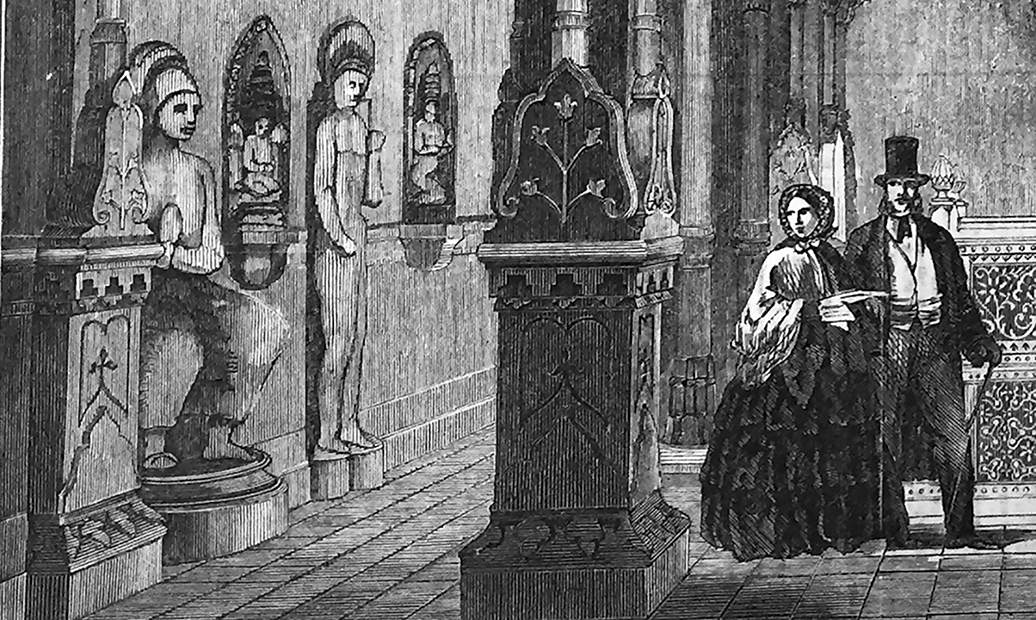
To a public now thoroughly familiar with live exhibitions, panoramas, dioramas and other spectacles on offer in the metropolis, this strange archive, these shelves upon shelves of miniature abstractions of Indian society, may have been less than overwhelming.Footnote 94 Despite Royle’s hopes, the extensive display of raw materials and products made from them – thousands upon thousands of samples – may also not have left much of an impression.
But it wasn’t only this utilitarian encyclopedia of economic opportunity that was carried over from the Great Exhibition into the New Museum. The exoticism and spectacle was just across a hallway and through another wide, large set of doors. Upon entering the former sale room (see Figure 6.2), the experience turned dramatic and sensorial. One of the largest open spaces in India House was now transformed by Matthew Digby Wyatt, secretary of the Great Exhibition and the Company’s surveyor, into a mock “Indian Court” or “Mosque,” the interior remade by rows of delicate columns and archways, the walls lined with innate carvings and stone screens (see Figure 7.5). This space was one of the earliest in a coming wave of “orientalist” architectural design – and Wyatt would become a leader in the genre – so much that an architectural trade journal recommended that any serious student of this style make a pilgrimage to the New Museum.Footnote 95 The curators referred to this new space as the “sculpture gallery,” and in it were placed five large sculptures from Amaravati in southern India that had been collected by Mackenzie and sent back to Britain by Wilson in 1827 (see Figure 7.7).Footnote 96 As the gallery opened, ninety additional sculptures and fragments (the so-called Elliot marbles) from the Amaravati tope were in transport from Madras and destined for the new museum. (By the time they arrived, it was clear the Company was on track to being disbanded, so the sculptures were moved to an old shed at Fife House, where they sat unprotected for nearly a decade.)Footnote 97 But there were also paintings and furnishings such as thrones and palanquins, and soon Horsfield would begin adding other quite different kinds of material. By the summer the walls were also hung with the ghost-white masklike face casts of living subjects recently made by the Prussian explorer-adventurers the brothers Schlagintweit during their covert exploration of the northern territories.Footnote 98
The transformed secretary’s apartment for the new museum at India House. Illustrated London News, March 6, 1858.
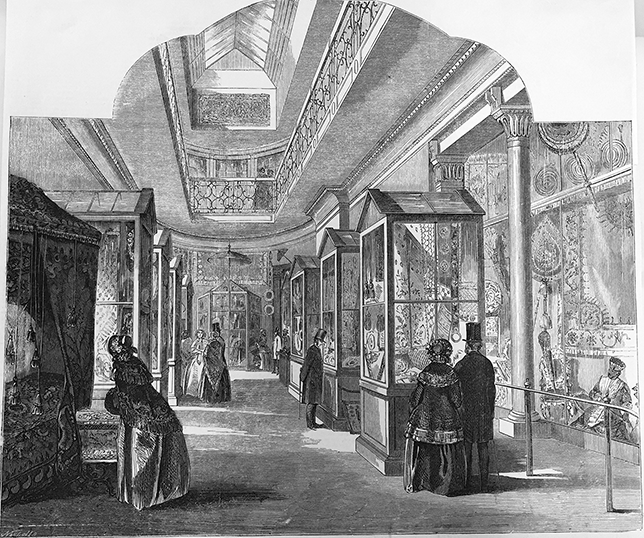
Carving from the temple or stupa at Amaravati. Sculpted panel in limestone carved with the goddess Cundā. Intended for the expanded museum at India House, the Amaravati materials arrived just after the Company was dissolved, so became part of the collection at Fife House, next to the new India Office. Now at the British Museum.
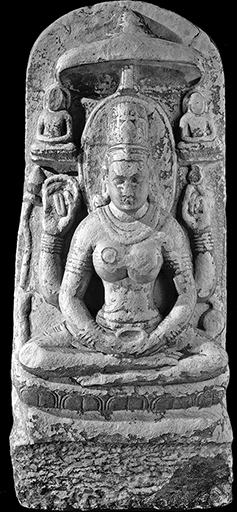
Despite the oriental spectacle, however, the real draw to the New Museum was the ongoing rebellion in India. Those periodicals that covered the opening of the New Museum generally didn’t fail to point out that, as Christian weekly Leisure Hour would remark in 1858, “recent events” had brought new interest to such a visit. The India House museum gained much more attention in the context of the rebellion, and the public gaze as reproduced in the periodical press took a harsher view of both the “India” they were being presented with and the Company under whose watch the rebellion broke out. The Journal of the Royal Geographical Society was relatively sanguine when it mused that “Dreadful as the recent much-to-be-deplored events in India have been, they will probably bring great advantages to the human race: India will be more entirely ours, and the progress of Christianity and civilization more certain and rapid.”Footnote 99 Harsher were, for example, commentaries in The Builder, imagining the colossal elephant statues of the Delhi Royal Palace standing at the entrance to a London park, and advocating for a large-scale looting of India along the lines of Napoleon in Egypt (“If ever there was a time when we might justify the removal … of works of art from India is it not now?”).Footnote 100 Although those statues remained, the scale of looting and plundering in the Siege of Delhi during the rebellion was indeed unprecedented.Footnote 101
The opening of the New Museum was but one expression of the Company’s confidence in its knowledge resources and management in the period just before the rebellion. After the rebellion, administrators and observers were thrown into an information panic, as Christopher Bayly has put it, and the whole rebellion came to be seen as a great failure of political intelligence.Footnote 102 As with each of the charter renewal debates, the rebellion spurred an anxious reevaluation of the state of British knowledge of its colonial possessions. But now facing an unprecedented crisis of authority, the anxiety ran much deeper. The underlying assumption was that governance is a problem of knowledge, and the more complete or useful or accurate the knowledge, the stronger and more effective the governance. The cause of the rebellion was often diagnosed as a lack of knowledge on multiple fronts: ignorance on the part of Indians about the aims and intentions of English rulers; ignorance on the part of English people about the beliefs and experiences of Indian people. Part of the expression of crisis now took the form of a reconsideration of just what kind of information is needed by a colonial state such as the Government of India.
Another, perhaps even deeper, concern was the failed promise of the utilitarian focus on spreading “knowledge” among the colonial subjects. The quite explicit plan to generate harmony among the colonized and their foreign rulers through a program of education in modern sciences, English literature, moral philosophy and Anglicist political and economic theory had not, it seems, had the intended effect. Sir Syed Ahmed Khan (1817–1898), a high court judge, political writer and supporter of the Empire, wrote in the Causes of the Indian Mutiny (1862) that, on the part of the British, “the loss of the acquaintance with the Vernacular which prevailed in the old days” was in part to blame. But Khan, a founding member of the Scientific Society of Aligarh and supporter of the Aligarh University, also argued for an expansion of education in “Western science” among Muslims as an inoculation against future clashes.Footnote 103 Critically, however, Khan stressed that if it is to play the intended role of aligning the people of India with their British government, the introduction of Western science and other education reforms cannot be an end in itself. They must be (as the utilitarian promise always held out) a step for Indians toward real, meaningful participation in government. The deepest cause of the mutiny, says Khan, was the barrier to Indian participation in the civil service, and no meaningful route to expanding self-government. In a similar vein, S. C. G. Chukerbutty (1824–1874), a prominent doctor (one of the first to be trained in the UK) and supporter of British rule, called the rebellion a war of “ignorance and fanaticism against knowledge and religious toleration, a war in which the educated native has as great a stake as any European in his country.”Footnote 104 He noted with pride that very few native doctors had joined the rebellion, but he also warned of the dangers posed at the same time by existing barriers for native entry to the Indian Medical Service and the dominance of “European opinions and interests” at the Calcutta Medical College.Footnote 105 This – the place of colonial scientific and educational institutions within the constellation of unresolved contradictions of British liberal imperialism – is the sense in which, according to Khan and others, the mutiny revealed a crisis of knowledge. Christopher Bayly’s conclusion is that – at least in terms of the broad category of political intelligence – Britain’s information-gathering practices had indeed, after the 1830s, changed character, with negative consequences for British rule in India. More was not better, and rationalization did not bring new clarity.Footnote 106
Caught by surprise by the Crown’s swift decision to abolish it, the Company organized its defense and John Stuart Mill and his office issued a Memorandum on the Improvements in the Administration of India during the Last Thirty Years, together with the petition to Parliament to reverse the Crown’s decision.Footnote 107 Here it is argued that the liberal imperial project of the last thirty years has – bar a few bumps such as the ongoing state monopoly on salt production – been more transformative than any other period in the history of the Empire. Mill draws a picture of a rapidly improving colony, covering everything from judicial and land reform to the establishment of police and prisons; the abolition of slavery and forced labor; the protection of oppressed races; the suppression of piracy, extortion, suttee and witchcraft; the establishment of medical schools, hospitals and clinics that now serve over half a million patients a year; the introduction of education at all levels of society from villages to the large metropolitan universities, including initiatives to expand female education; the improvement and extension of irrigation canals, transcontinental roads and railways; and the beginnings of the electric telegraph. Mention of the New Museum come near the end under “Miscellaneous Improvements” where the work of the “unrivalled” Dr. Royle is highlighted, and where the new “Industrial Museum” at India House is presented as evidence of “the accelerating” of the improvement of the productions of India.Footnote 108 Still, after unrolling this long list of “improvements,” Mill is compelled to end with a plea for leniency, given the great informational challenge inherent in being “a Government of foreigners, over a people most difficult to be understood, and still more difficult to be improved – a Government which has had all its knowledge to acquire, by a slow process of study and experience.”Footnote 109
*
We had thought there was really nothing left of the belongings of the old East India Company to be appropriated by the Imperial Government; but we are reminded by a rumor which has recently been in circulation that there is still something left of an Indian character to be fused into the general mass of Imperialism. It is even said that the old Museum and Library of the India-house are to be made over bodily to the gigantic establishment in Great Russell-street, there to become part and parcel of the national collections known by the name of the British Museum.
The New Museum at India House would have given space and resources for a new science of colonial trade and industry. Instead, in the wake of the rebellion, a much deeper reorganization of (what was formerly) Company science was now underway. Despite the rumors, the Company’s collections were not at first transferred to the British Museum. The Government of India Act of 1858 had abolished the Company and transferred administration of British India to the new India Office, located in Whitehall near the Foreign and Colonial Office. The library and museum were moved to a vacant building in Whitehall, Fife House, which was adjacent to the museum of the Royal United Services Institute, where many of the Company’s war trophies had already been donated. The remaining contents of India House were auctioned off – thousands of desks and bookshelves and hundreds of carpets, down to the mantelpieces and lighting fixtures – and in 1860 India House was razed.Footnote 110
The demolition of the Company and its headquarters, and the absorption of the Government of India into the British state, would mark the ideological, formal and material transfer of Company science to the British state. But although British India eventually became folded into Britain’s new “general mass of Imperialism,” most of the resources of Company science would begin to be spun off into other institutions; and although it was initially thought necessary to keep the centers of colonial science in close physical proximity to the Colonial Office, the razing of India House would also mark the beginning of an even more intense separation of certain forms of science from state administration. The abolition of Haileybury would lead to the absorption of orientalist training, civil service exam preparation and scholarship on Asia into Oxford and other universities. Likewise, the abolition of the Company’s library and museum would, over the course of another half-century, in a process deserving a separate study, lead to the absorption of the old Company’s knowledge resources and expertise by new, specialized museums and growing university departments. Under a new welding of public science and educational regimes to a consolidated imperial government, Britain’s growing dominance of the production of science within its empire would take new forms.Footnote 111
Initially at Whitehall, the small gallery space that Fife House provided was devoted to the material that had made up the new museum: raw materials and finished products. No longer would John Stuart Mill be passing rooms full of stuffed birds and pinned insects as he made his way to budget meetings.Footnote 112 Like his father James Mill, John Stuart strongly advocated for the value of centralization and consolidation of knowledge resources within metropolitan centers: “power may be localized,” he wrote in 1861, “but knowledge, to be most useful, must be centralized.”Footnote 113 Both across the Empire and within Britain, a new geography of science was emerging out of the rubble of the old India House. By the end of the century, however, the overlapping worlds of science, company and state had disaggregated. Orientalists, historians and naturalists who once worked side by side (if not always in harmony) at the Company had found new, separate homes in university departments that divided the natural and the social sciences. Only the administrator, now in pursuit of a newly redrawn domain of “political intelligence,” remained part of government. Likewise, the museum and library, which once contained under one roof materials ranging from historical manuscripts to cultural artifacts to natural history specimens, were broken up across other “national” museums: the British Museum, the Natural History Museum and the Victoria and Albert Museum, as well as the new India Museum in Calcutta. The separation of Company and state, and the remaking of Company science into public science, transformed the landscape of the sciences in Britain. What remained constant, however, was the steady accumulation of Britain’s global information resources, and the growing divergence between the scale of Europe’s information stores and those of its colonies.
A Thames Mahal
A vacant plot near the new County Hall on the “Surrey bank” of the Thames suited perfectly. The building plan, commissioned by the East India Association, by the influential architect Robert S. Chisholm, former architect for the Government of Madras, called for 16,000 square feet of exhibition, education and storage space. It would rise on the bank of the Thames in an ambitious oriental style, complete with domes and turrets, announcing to London its purpose of being the center of knowledge of Asia. This was the 1910 proposal for a new India Museum, which would gather together once again all the now-dispersed East India Company collections and, more importantly, provide a dedicated space for the scientific specimens and works of art from India that continued to arrive at London’s docks, since “at present India sends her geological and mineralogical products to Jermyn Street, her vegetable products to Kew, and her antiquities to the British Museum.”Footnote 1
Chisholm’s design was the last, and unsuccessful, iteration of a push for a dedicated space in London to house the India Museum collections that had begun almost as soon as India House was demolished. The first proposal, for a new India Institute, was the work of Royle’s successor, John Forbes Watson, in 1874.Footnote 2 Forbes Watson had joined the India Office as the Reporter on the Products of India in 1859. For fifteen years, Forbes Watson had managed the museum at Fife House, continued to organize the India sections of international exhibitions, published reports on the natural resources and industries of India, and developed a wide network of correspondence and specimen exchange. Now, in 1874, he and a range of “India interests” were mounting a campaign to make the next home of the Company’s collections even grander than the first one at India House had been. Construction could begin as early as 1875. The budget of £50,000 was large but, so it was argued, more than reasonable given the importance of the object, and especially considering that the new India Museum Calcutta was expected to cost twice as much. This was the proposal for a new “India Institute,” a combined library, museum, research center and civil service training institute. In a letter in Nature, the orientalist Hyde Clarke argued that such a plan was long overdue and admonished government for neglecting its duty to care for and make use of the old Company’s collections.Footnote 3 In another letter in Nature, the naturalist Alfred Russel Wallace avidly supported the idea and tried to increase its appeal to Parliament by suggesting ways to achieve the same scientific and educational results, but with a cheaper price tag than that of Forbes Watson’s palatial proposal.Footnote 4
Wallace’s instincts were right. In Parliament, the proposal ran aground on the question of who would supply the funds. Whereas the Company had used Indian tax revenue to fund the museum and library, as part of the Home Government, by this time the use of Indian tax revenue for such a project – perhaps because it was now clearly separate from the state administration, perhaps because the national museum movement in India was now going strong or perhaps because Bengal was again in the grips of a terrible famine – was not on the table. Forbes Watson thus had to argue for the use of British public funds to support the India Institute. As he argued, it was about time:Footnote 5
the whole of the collections has either been purchased by Indian money, or presented by people connected with India … the cost of maintenance of the Museum, as also that of the Department of the Reporter on the Products of India, from the action of which England derives a benefit fully equal to that of India, is entirely borne by India …. Under such circumstances, it may be held that England has sufficient interest in the undertaking to warrant her taking a share in the cost of erecting a suitable structure for the Museum and Library … in view of recent circumstances [i.e. the famines] fresh in the memory of everybody, such a course would be only a graceful act on the part of England.
In the end the grand plan would not succeed. No palatial Mughal-style building went up along the Thames, no institution for the literary, artistic and scientific study of Asia was opened to the British (and, as it was imagined, also Indian) public. This would not become a new center for commercial and cultural exchange between India and Britain to the supposed economic and social benefit of both. Instead, as had begun in the 1880s, the Company’s collections would remain divided between the British Museum, Kew Gardens and the new South Kensington museums, including the Natural History Museum and the future Victoria and Albert Museum. Teaching and scholarship became the domain of new specialized university programs such as the Oxford India Institute and the School of Oriental Studies at London University. In this final step, the Company’s imperial scientific and educational resources were transformed into a British public resource intended to, among other things, demonstrate the civility and liberality of the imperial project.Footnote 6
In the later part of the Victorian era, state-funded museums and exhibitions were simultaneously places where a new ideal of inclusive public participation in politics and culture was nurtured that depended on using works of art and craft, natural history specimens and antiquities, and even exhibited peoples extracted from colonized regions. Via the institution of the public museum, British cultural and religious chauvinism was hardened into racialist and racist beliefs about who should and should not be granted political rights and economic sovereignty. Today, as the colonial foundations of Britain’s public museums have become a subject of heated public discussion and critique, those institutions have become the site for a new round of debate over the tensions between liberalism and empire. The contradictions of liberal imperialism are woven deeply into the fabric of these institutions. That legacy is a huge dilemma for these institutions, which otherwise still carry an aura and a mission devoted to liberal, even progressive, cosmopolitan ideals.
The colonial origins of many of the world’s most famous collections had long been largely ignored or irrelevant in the public eye. Clearly that is no longer the case, although natural history museums have so far faced less scrutiny over the provenance of their collections and fewer calls for repatriation. It may be that the only way for museums to begin to extract themselves from the hypocritical bind their colonial history places them in is to fully and openly acknowledge that history. In some areas of the professional museum world, moves are already being made in that direction: some museums have begun a new round of much more in-depth provenance research than ever. In grappling with the role of the Company and its monopoly in the history of public science, I hope to have added a useful new perspective on the debates surrounding postcolonial collections today.
In addition, I hope to have made clear how the dilemmas posed by the colonial history of public museums are only one part of an even wider story that includes public university systems, the structure of public–private investment in scientific research and development, and the deep and ongoing structural inequalities in global scientific practice. Scientific research and innovation today involves a sprawling, transregional set of enterprises, many of which are as historically rooted in the “great data divergence” of the imperial era as Europe’s national museums.Footnote 7 Compared to the postcolonial dilemmas of museums today, the global inequalities in access to scientific and cultural resources (i.e. data, education, instrumentation, expertise) that are maintained by these other institutions are arguably much more severe. It is therefore especially important to recognize the much broader imprint that colonialism has made upon science. The emergence of European museum cultures in the colonial era was a key moment in the history of the making of the modern global political economy of science.Footnote 8 In the last fifty years, knowledge resource management in the natural sciences has radically changed, and a new era of corporate collecting has expanded alongside government-funded programs. There has also been a gradual shift from collecting whole specimens to collecting (or buying or renting) genetic data.Footnote 9 These developments have been accompanied by a set of regulations and agreements that have both accelerated and restricted accumulation by European and American corporations and states, profoundly shaping the global political economy of science today.Footnote 10
I have tried to give a longer historical view of the making of the global political economy of science, one in which museums, libraries, colleges and other institutions for the accumulation and management of information are key. Equally important is how the history of these institutions can help to clarify the complex interplay between public and private interest and the the fuzzy boundary between “state science” and “corporate science.” It is now common to worry about the threat of the “corporatization” of science in, for example, the growing influence of industry upon publicly funded universities or the corporate sponsorship of many of the biggest exhibitions in public museums. This book has explored both the very long history of corporate engagement with science and the very long history of our preoccupation with that connection. We have also seen the organization of science under a very different form of state, one in which the distinction between “public” and “private” became unsettled exactly when it was applied to science, revealing the historical contingency of our familiar forms of state or public science, and of their dependency on their supposed opposites, private or corporate science. However, if gaining a better understanding of the place of the Company in the making of Britain’s “second scientific revolution” has in some ways naturalized ties between corporate and state interests within institutions of science and education, I hope that this case might also allow us to think more clearly about the likely future consequences of allowing those deepening connections to go unchecked.
Finally, in following the rise and decline of the Company and its museum, this book also traces the reorganization of British institutions of science across the nineteenth century through three interlinked arguments. First, it was stimulated by the expanding collections made by states and state-like bodies such as the Company; second, the acceleration of such accumulation was itself conditioned by the political economy of scientific practice under colonial capitalism; and third, it was through this reorganization that the institutional distinctions between “public” and “private” science began to crystalize into their modern forms. Taken together, this is how the sweeping changes across the sciences in nineteenth-century Britain depended upon the advance of colonial capitalism. That political debt was then partly obscured when, in the case of Britain, state science subsequently claimed a different form of monopoly on scientific knowledge.
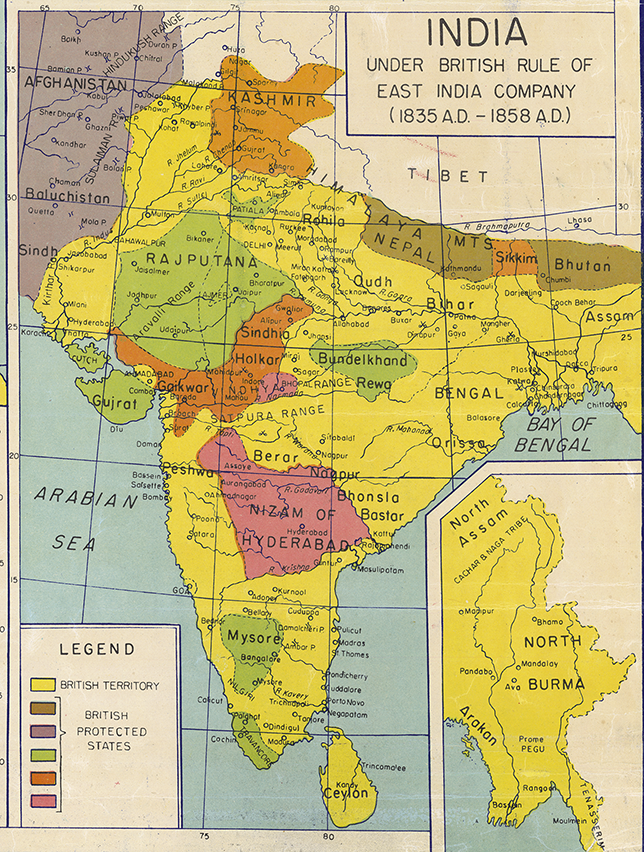
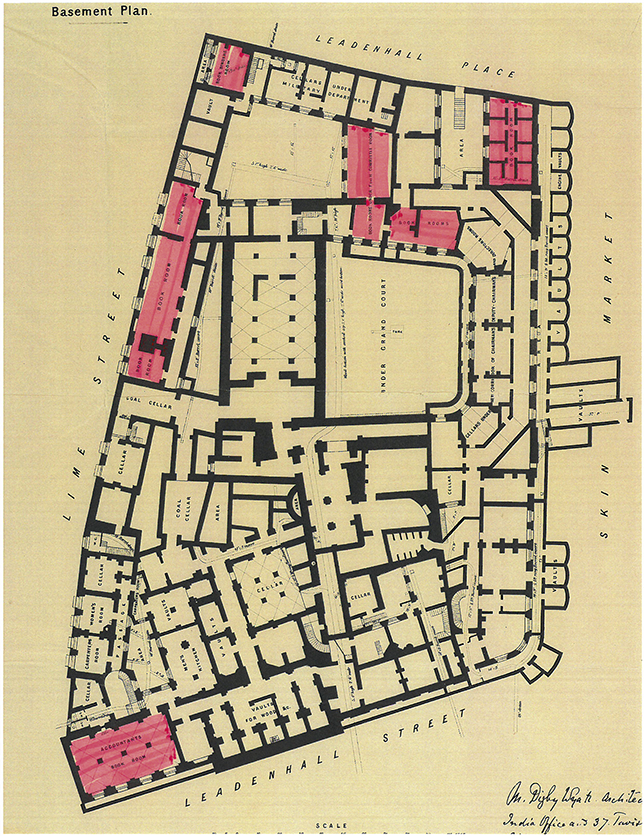
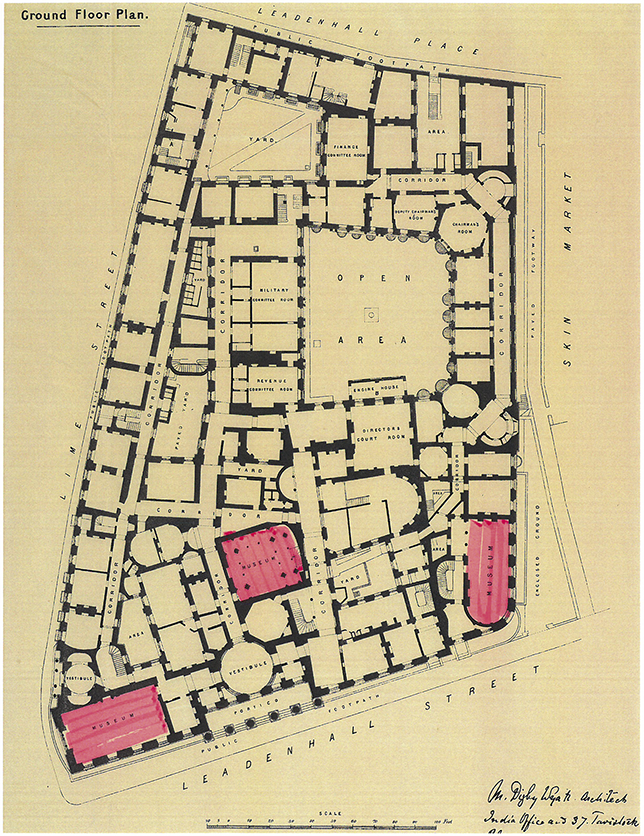
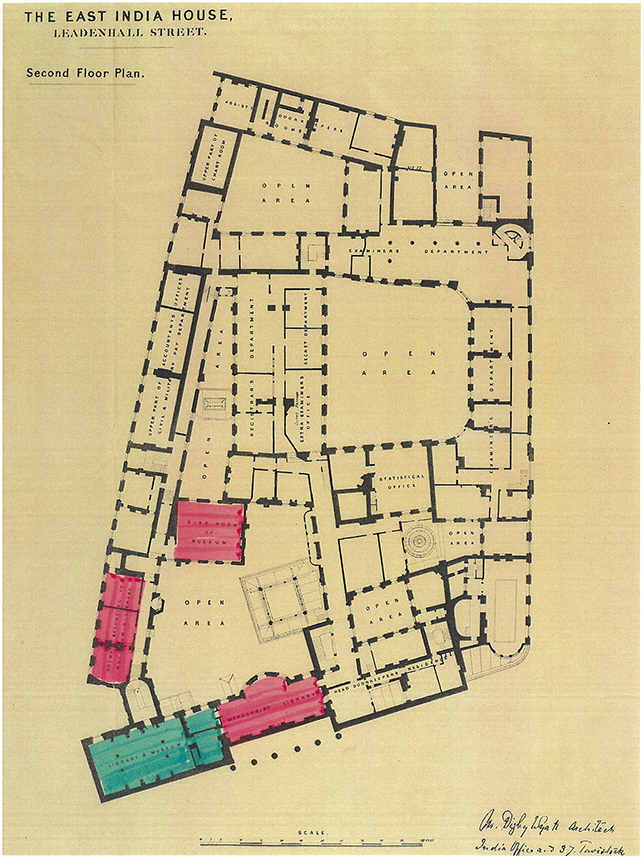
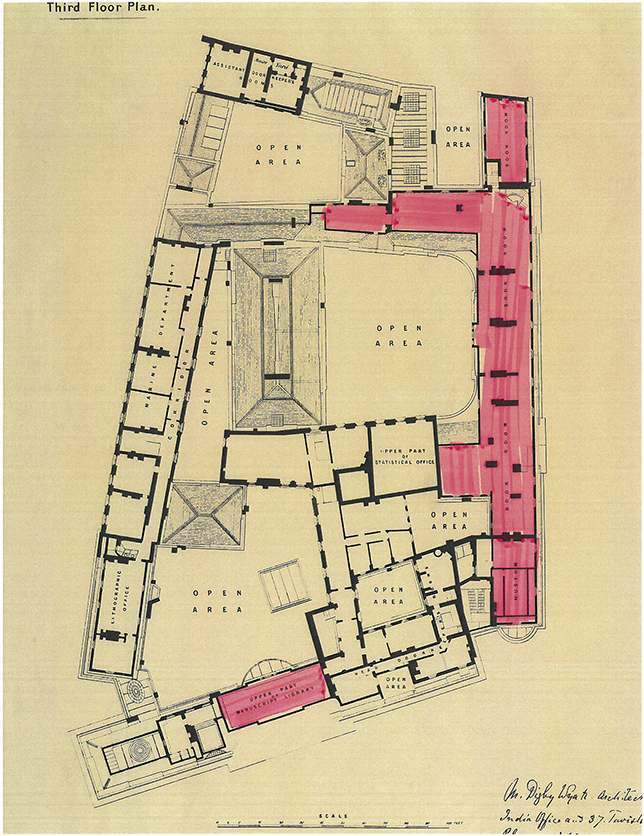
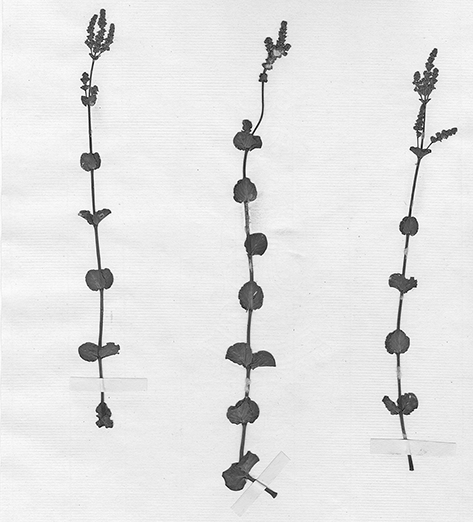
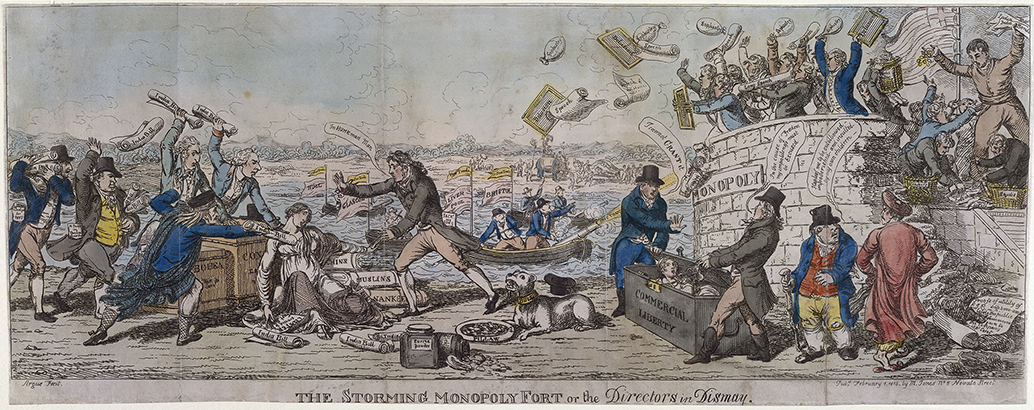

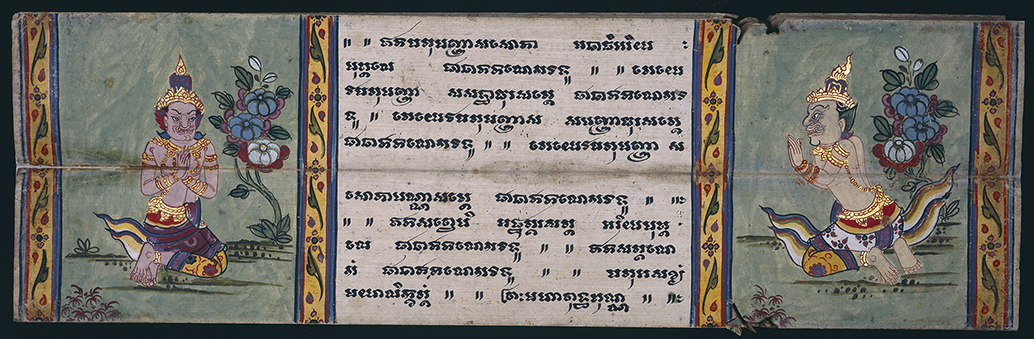
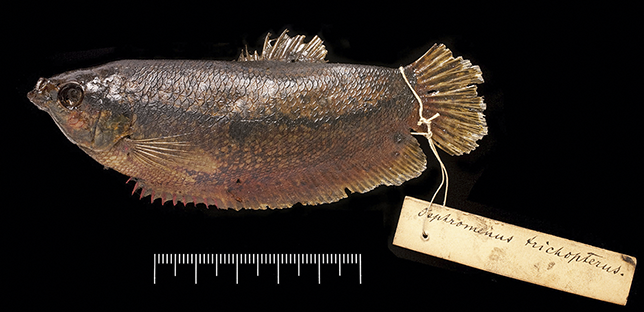
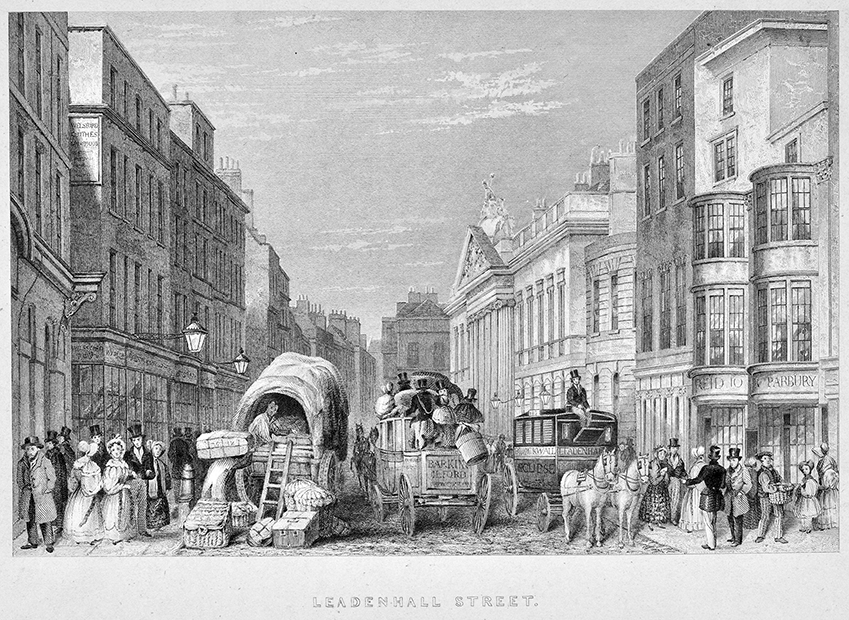
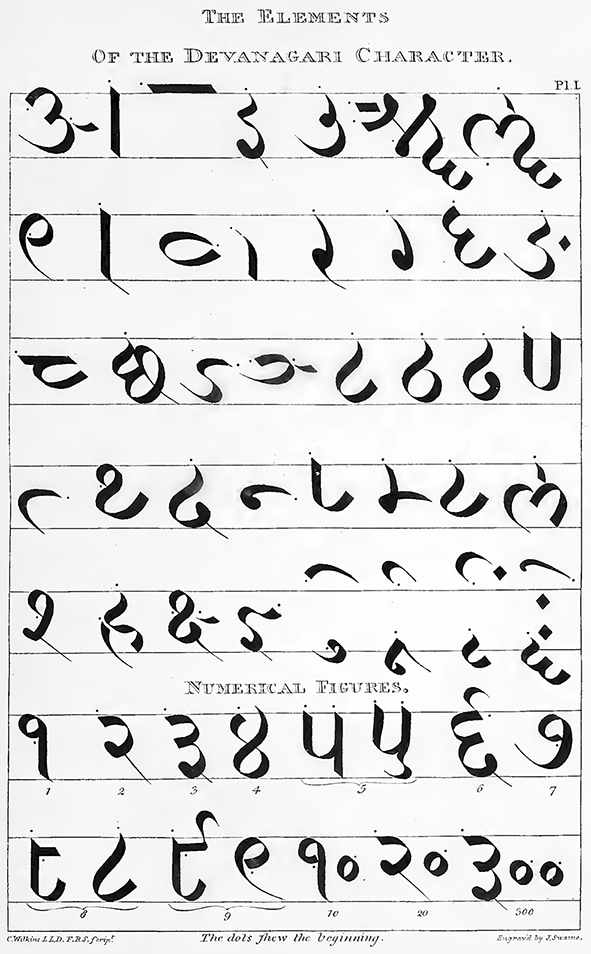
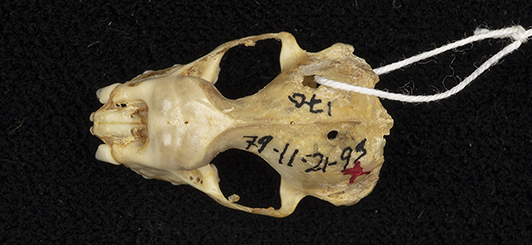
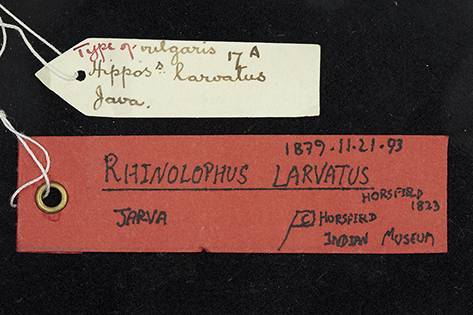
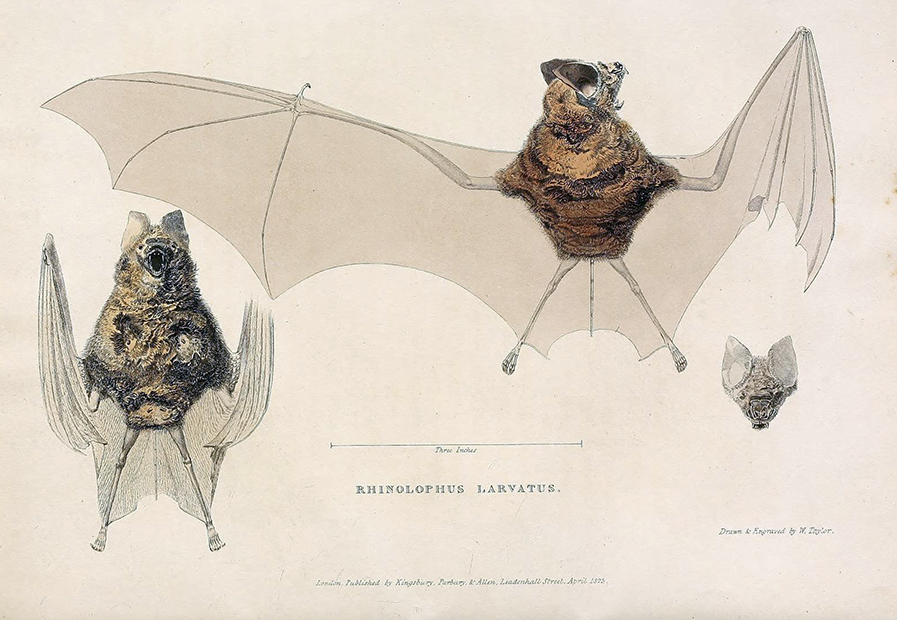
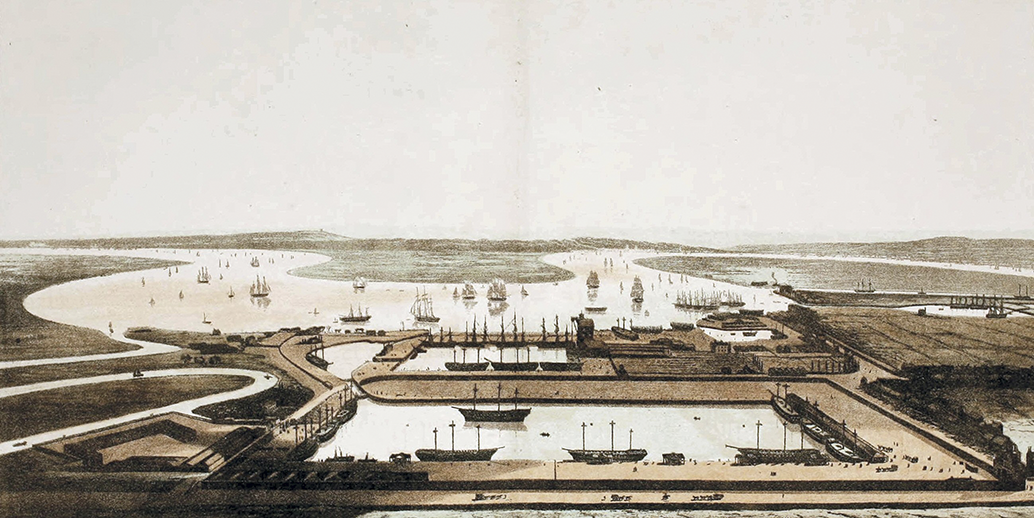
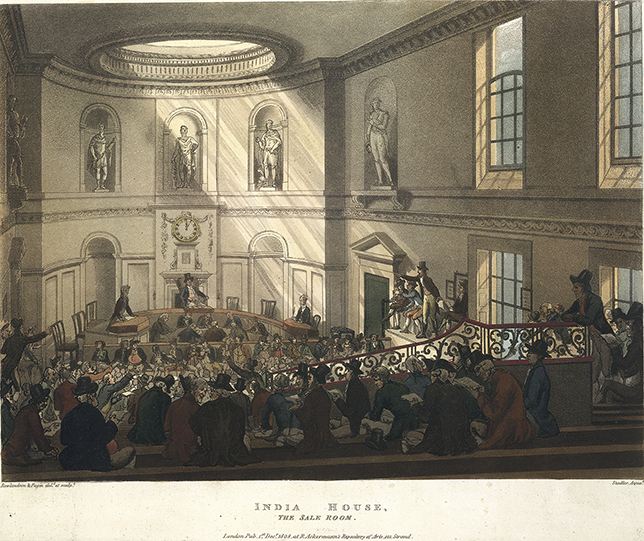
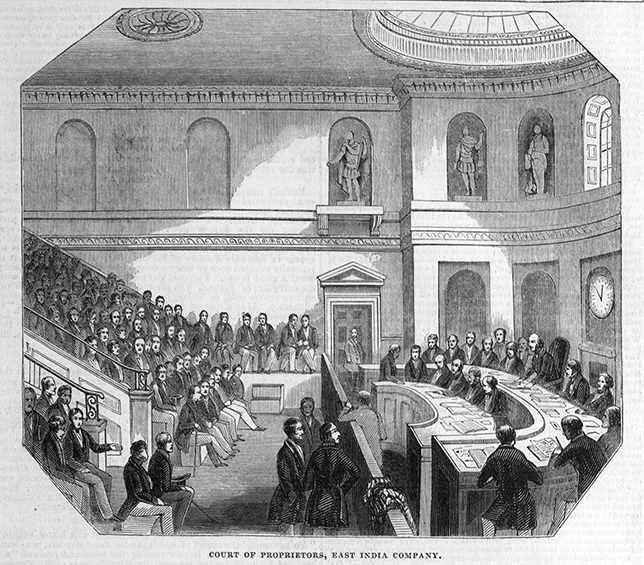
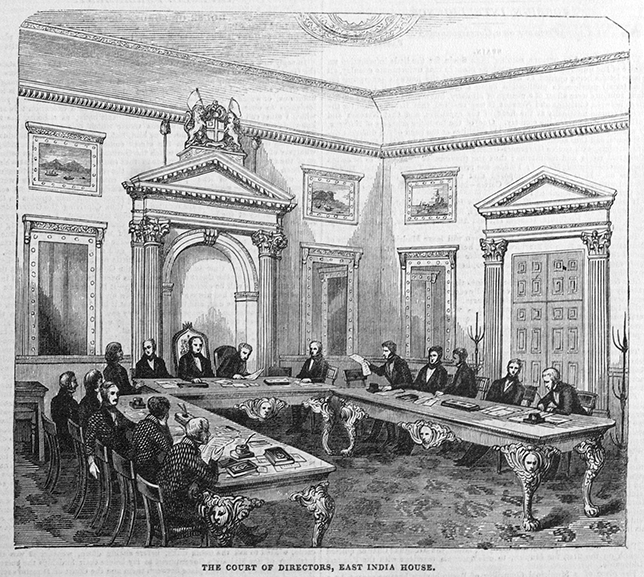
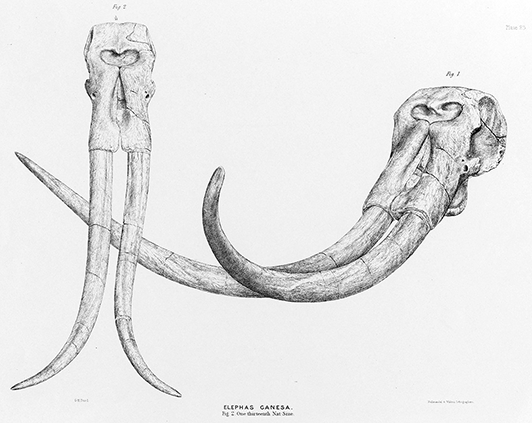
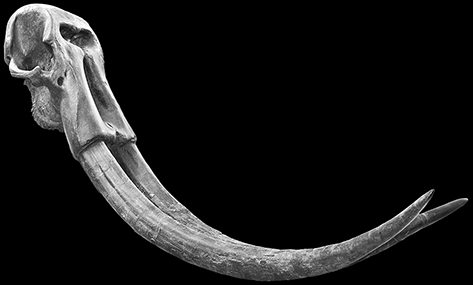
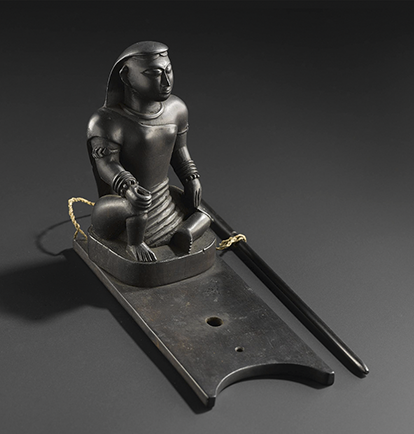
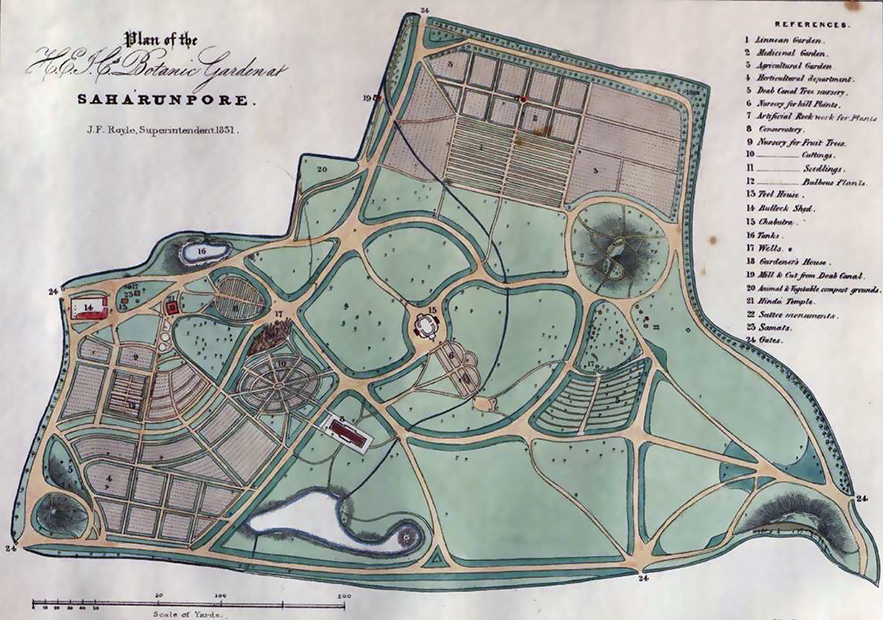
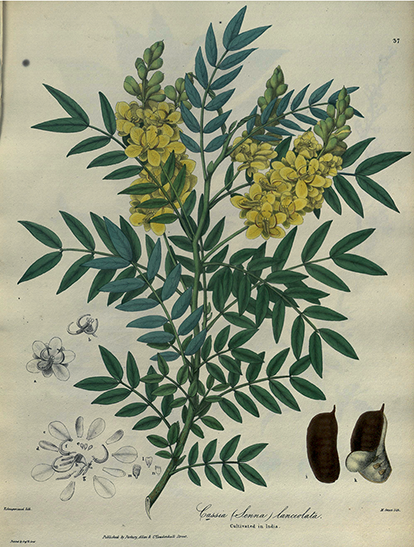
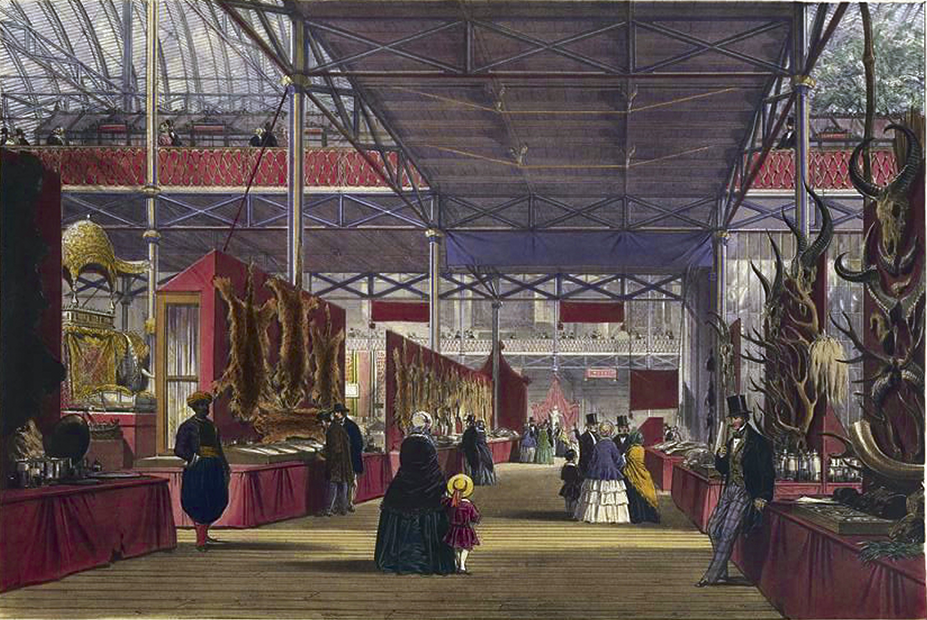
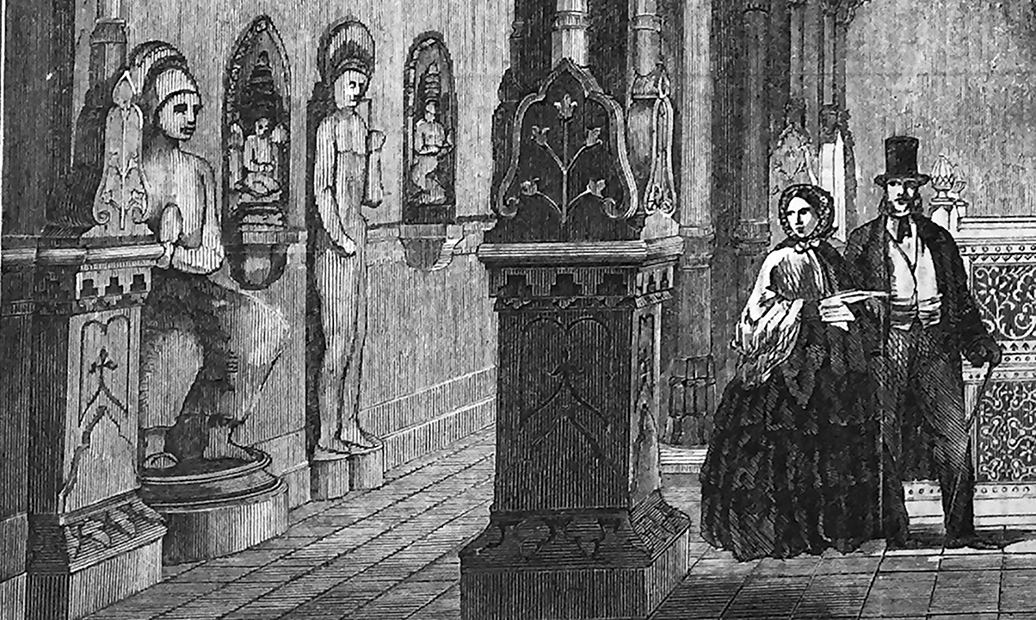
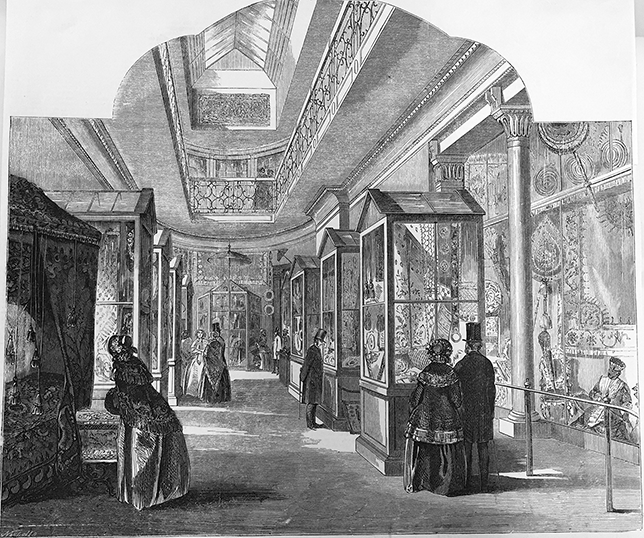

 Open access