


Birth problems and low socio-economic status (SES) are risks in biological and environmental aspects of life. The study described here had two broad objectives: to determine if the effect of birth stress contributes to the development of common mental disorders in adulthood; and to assess the potential interactive or moderating effect of SES on the relationship of birth risks with adult mental disturbances. Birth insult serves as a useful illustration of the complexities associated with identifying risk and protective factors in an aetiological chain extending throughout the life course, encompassing both social problems and mental disorders (Reference Mrazek and HaggertyMrazek & Haggerty, 1994).
Many birth problems are indicators of possible injury to the central nervous system, even in the absence of obvious neurological signs and symptoms. A series of retrospective investigations of the associations between several complications of pregnancy and delivery, and specific neurological conditions of childhood, were published in the 1950s by Lilienfeld, Pasamanick and their colleagues (Reference Lilienfeld, Pasamanick and RogersLilienfeld et al, 1955; Reference Pasamanick, Rogers and LilienfeldPasamanick et al, 1956; Reference Pasamanick, Knobloch and CaplanPasamanick & Knobloch, 1961). These studies indicated a relationship between pregnancy and delivery complications with cerebral palsy, epilepsy and mental deficiency, as well as learning and behavioural difficulties. The authors stressed the strong influence of socio-economic factors that seemed to underlie certain of these complications. Drillien (Reference Drillien1964) later postulated that ‘minimal cerebral damage’ might cause lowered resistance to environmental stress. In Drillien's study, middle- and upper-class school children showed little or no effects of birth complications, whereas lower-class children showed marked effects. McNeil & Kaij (Reference McNeil, Kaij, Wynne, Cromwell and Matthyss1978) made a strong case for the importance of obstetric complications in the aetiology of schizophrenia; and Eaton (Reference Eaton1980) argued that it is precisely among the lower classes that the likelihood of such complications and ensuing minor foetal damage will be highest. Similarly, Stott (Reference Stott1978) emphasised the contribution of prenatal stressors to the increased rate of mental illness among less privileged segments of society (cited in Reference Ortega and CorzineOrtega & Corzine, 1990).
Williams (Reference Williams1995) proposed that the difficult conditions of low SES increase the likelihood that children are both deprived of maternal care and subjected to neglect, which probably induces in them a persistent decrease in serotonin levels that accounts for the neurohormonal responsitivity to stress, which in turn may increase depression, social isolation and hostility, along with activities of the sympathetic nervous system that contribute to ill health. Kohn (Reference Kohn1976) suggested that lower-class children are brought up in an atmosphere that encourages a ‘conformist orientation’ without the flexibility necessary to deal with a stressful situation. Other effects of low SES suggested by previous researchers include lowered self-esteem, blocked aspirations, status frustrations, impaired efficacy, fatalism, lowered mastery and personal control. Incremental life crises, and lessened resources to deal with any crisis situation that may arise, are also more prevalent in the lower-income groups than in the upper ones. Such a cascade of undesirable social circumstances may potentiate the negative effects of heightened mental disorders.
Adverse conditions in a child's environment do not necessarily produce adverse outcomes, but a combination of risk factors may produce greater vulnerability. Rutter & Quinton (Reference Rutter, Quinton and McGurk1977) suggested that a four-fold increase in the amount of stress in childhood produced a 24-fold increase in the incidence of later mental disorder. O'Grady & Metz (Reference O'Grady and Metz1987) indicated that infancy risk factors appear to be magnified synergistically when family environments in childhood are negative or when a child is subjected to stressful life events. Furthermore, Brodsky & Brodsky (Reference Brodsky and Brodsky1981) described a form of interaction involving interpersonal transaction, where a biologically jeopardised infant (as a result of pregnancy and delivery complications) is at greater risk from the deleterious effects of impaired social environment. On the other hand, it has also been demonstrated that the interaction of protective factors with risk factors mitigates some of the detrimental results. Bowlby's continuity and discontinuity theory (Reference BowlbyBowlby, 1988) emphasised vulnerability and resilience, and Werner & Smith (Reference Rutter and Smith1992) advanced those concepts by showing that some vulnerable children are resilient and can overcome biological, family or environmental risk factors to grow and develop normally. The empirical results supporting the resilience concept imply that a disastrous outcome is not inevitable.
The previous investigations on the impact of birth complications have, in general, several problems in research design. First, most were subject to selection bias and recall bias associated with case-control studies. Second, the study population often included varying degrees of neonatal interventions. Third, almost all the studies followed the subjects only to a young age, that is, not past the peak age for adult mental disorders. Fourth, conceptual and methodological issues concerning protective factors are less well developed than for risk factors. Fifth, studies focusing on common mental distress as outcomes rather than schizophrenia are rare. In general, the hypothesis that social environment modifies the adverse birth conditions has not received consistent support.
METHOD
Sample
The Johns Hopkins Collaborative Perinatal Study (JHCPS), part of the National Collaborative Perinatal Project (NCPP) of the National Institute of Neurologic and Communicative Disorders and Stroke, in the USA, contains prospective data on first generation mothers (G-1), their second-generation children (G-2) and third-generation grandchildren. The NCPP is a multi-institutional, transdisciplinary collaborative project that attempts to identify the precise mechanisms operating during the prenatal, perinatal and early childhood periods that adversely influence subsequent development. Twelve university-affiliated hospitals cooperated in a single design, which called for the systematic collection of data through the prospective observation and examination of approximately 60 000 pregnancies through the first 7 years of life. Reports from the NCPP have been summarised by Hardy et al (Reference Hardy, Drage and Jackson1979), Niswander & Gordon (Reference Niswander and Gordon1972) and Broman et al (Reference Broman, Nichols and Kennedy1975).
The G-1s of JHCPS were selected at random from those living in a prescribed inner-city area who registered for prenatal care at Johns Hopkins Hospital public obstetric clinic between 1 January 1960 and 31 December 1964. Of the 2307 G-1s eligible for follow-up, 1552 completed interviews. In 1992-1994, the Johns Hopkins Pathways Study bridged the period from age 7-8 years of the G-2s to the age of 27-33 years. Of the 2694 G-2s eligible for follow-up, 1758 completed the full interviews. The interview procedure, potential biases, missing data and attrition of the sample have been discussed in detail elsewhere (Reference Hardy, Shapiro and MellitsHardy et al, 1997). This report concerns the 1824 G-2s who provided information on their life time emotional and nervous conditions. Differences at birth were found between the G-2 children with complete interviews, partial data and those not located. Mothers of the G-2 children who could not be located in adulthood were more often younger, poorly educated, unmarried and poor at the time of the G-2 children's birth than were mothers of the G-2 children interviewed (all P values <0.001). The proportion of G-2s who had low birthweight did not differ between groups. Those who were located but did not complete full interviews had mothers with characteristics generally similar to those who were interviewed (Reference Hardy, Astone and Brooks-GunnHardy et al, 1998). This evidence suggests that attrition in this follow-up study is unlikely to result in overestimation of effect of either low SES or adverse birth conditions because it is those with poorer outcomes who tend to be lost to follow-up.
The G-1s enrolled in the study lived in East Baltimore, mostly within a 10-block radius of the hospital. Twenty-three per cent of the women were White and 77% were Black; public assistance support was reported by 4% and 9%, respectively. At birth, 46% of the G-2 children lived in families at or below the poverty level established by the United States Department of Agriculture (Social Security Bulletin, 1993). Where specific income data were missing, reported income groups were used, with short intervals ($2500) in the lower ranges (i.e. below $10 000), increasing as income increased to $50 000 and above. Table 1 summarises some characteristics of the study population by their mental conditions through adulthood.
Characteristics of the G-2 study sample

| Total sample (n=1824) | Had life time emotional nervous condition (n=131) | General mental distress as adult (n=98) | Depression as adult (n=45) | |
|---|---|---|---|---|
| Sex | ||||
| Male (%) | 47 | 37 | 35 | 42 |
| Female (%) | 53 | 63 | 65 | 58 |
| Race | ||||
| White (%) | 18 | 38 | 30 | 36 |
| Black (%) | 82 | 62 | 70 | 64 |
| Completed high school (%) | 70 | 49 | 47 | 40 |
| Household annual income ($), mean (s.d.) at age 27-33 years | 33 572 (24 240) | 25 531 (19 107) | 24 355 (29 624) | 21 818 (17 364) |
| Mother's profile at child's birth | ||||
| Completed high school (%) | 28 | 31 | 23 | 24 |
| Household annual income ($), mean (s.d.) | 4116 (2063) | 3724 (1948) | 3847 (2055) | 4045 (2233) |
| Receiving public assistance (%) | 9 | 12 | 12 | 13 |
| Not married (%) | 28 | 32 | 33 | 31 |
| Age <20 years or ≥35 years (%) | 40 | 47 | 46 | 53 |
| Parity 0 or 4 (%) | 56 | 58 | 62 | 71 |
| Perinatal risk factors | ||||
| Low 5-minute Apgar score (<7) (%) | 6 | 8 | 11 | 16 |
| Birthweight <2500 g (%) | 15 | 21 | 23 | 22 |
| Preterm delivery (<37 weeks) (%) | 18 | 23 | 27 | 30 |
| Small for gestational age (%) | 12 | 16 | 18 | 16 |
| Any of the four risks above (%) | 29 | 38 | 51 | 53 |
Measures
Median household income of the children was used to divide the cohort into ‘high’ and ‘low’ income categories. The G-1 mothers' completion of high school was used to divide the cohort into ‘high’ and ‘low’ education categories.
The dependent variable, ‘life time emotional/nervous condition’ was derived from one of the questions that were administered to the G-2 children at their age 27-33 years: ‘Now I will read you a list of health problems that some people have. Would you tell me if a doctor has ever said that you had one of these problems: an emotional or nervous condition?’
The General Health Questionnaire (GHQ) was also administered to the G-2 at the same time. ‘Mental distress’ was the sum of the 28 items, and ‘depression’ was the sum of response for the seven depression questions. Both were defined as cases by using the traditional cut-off point of 0-4 v. 5+ (Reference GoldbergGoldberg, 1978; Reference Goldberg and HillierGoldberg & Hillier, 1979). Among the subjects with above-threshold GHQ mental distress as young adults, 35% also reported earlier emotional/nervous conditions. Among the subjects with above-threshold GHQ depression, 39% reported earlier emotional/nervous conditions.
The six major birth risks under this investigation included four perinatal risk factors: low 5-minute Apgar score (total score less than 7), low birthweight (<2500 g), preterm delivery (born before 37 complete weeks), small for gestational age (the lowest 10th percentile birthweight for gestation); and two maternal risk factors: maternal age <20 years or ≥35 years, and parity 0 or ≥4.
Analysis
The specific hypothesis was that both low SES in childhood and obstetric complications increase vulnerability for developing life time mental disturbances. Multiple logistic regression models were used to identify differences of mental conditions through adulthood among groups of low SES variable alone, birth risk alone and both low SES and birth risk. Adjusting variables include socio-economic and demographic risk factors, such as mother's age, parity, education, income and marital status, and offspring's education, income as adult, race and gender. These covariates were included because they had been demonstrated to be strongly related to adult mental conditions and birth risks by previous studies.
Separate logistic regression models were developed for each birth-risk factor. Simultaneous adjustment for the four highly correlated perinatal risk factors may underestimate their individual effects. However, we still tested the adjustment of all four together at first, and found that the effects were reduced but not eliminated.
The frequency of missing data for most independent variables was negligible (less than 1%). The rate of missing data for income, similar to that of other survey data, is 18%. Previous studies suggested that non-response occurs disproportionately among the rich and poor, so that low response rates lead to a loss of both tails of the income distribution, and thus to an artefactual narrowing of the reported income differences (Reference WilkinsonWilkinson, 1997).
RESULTS
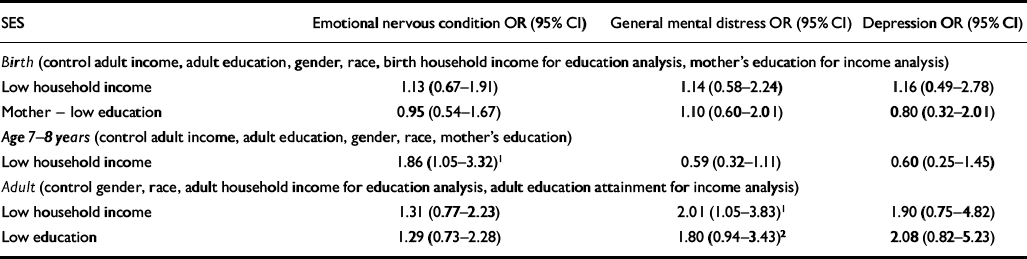
The association of different SES variables at three different times in the life course, with life time and adult mental disturbances, are shown in Table 2. A significant relationship of subjects' income level as adult with general mental distress as adult was indicated. Before adulthood, it is the household income level at age 7-8 years that significantly predicts life-time prevalence of mental disturbance in early adulthood, with males being affected much more than females (odds ratio 3.2 in males v. 1.4 in females). As expected, there are consistently higher rates of unfavourable conditions associated with these low-income families. In our data, the children raised in low-income families at age 7-8 years were born with more birth risks, had less income when they became adults, had lower educational attainment and lived in more crowded housing at birth and at age 7 years. Their mothers had lower education and were less likely to be married.
Odds ratio (95% CI) of mental conditions through adulthood by socio-economic status (SES) at different time point of life
| SES | Emotional nervous condition OR (95% CI) | General mental distress OR (95% CI) | Depression OR (95% CI) |
|---|---|---|---|
| Birth (control adult income, adult education, gender, race, birth household income for education analysis, mother's education for income analysis) | |||
| Low household income | 1.13 (0.67-1.91) | 1.14 (0.58-2.24) | 1.16 (0.49-2.78) |
| Mother — low education | 0.95 (0.54-1.67) | 1.10 (0.60-2.01) | 0.80 (0.32-2.01) |
| Age 7-8 years (control adult income, adult education, gender, race, mother's education) | |||
| Low household income | 1.86 (1.05-3.32)1 | 0.59 (0.32-1.11) | 0.60 (0.25-1.45) |
| Adult (control gender, race, adult household income for education analysis, adult education attainment for income analysis) | |||
| Low household income | 1.31 (0.77-2.23) | 2.01 (1.05-3.83)1 | 1.90 (0.75-4.82) |
| Low education | 1.29 (0.73-2.28) | 1.80 (0.94-3.43)2 | 2.08 (0.82-5.23) |
In this population, mother's education and household income at birth do not show a strong predictive effect. Attention should also be given to the fact that this group of mothers in the 1960s had generally low education (only 30% completed high school).
Children born with the four perinatal risk factors experienced greater rates of life time and adult mental disturbances than comparable children without these birth risks (Table 3). Of the four perinatal risk factors, the 5-minute Apgar score most strongly predicts later mental conditions. Women were more strongly affected than men (for example, the percentages of later emotional/nervous conditions following a low 5-minute Apgar score were 19.0% for women v. 2.2% for men; the percentages for mental distress were 12.2% for women v. 9.8% for men). The other three birth risk factors do not show such strong and consistent effects as the 5-minute Apgar score. Preterm delivery significantly predicted adult depression. In men, preterm delivery and smallness for gestational age moderately predicted adult general mental distress (OR 2.89 and 2.80, respectively, in 0.1 statistically significant level), whereas low birthweight significantly predicted adult depression in women (OR 3.64).
Odds ratio (95% Cl) of mental conditions through adulthood by birth risk

| Perinatal risk factors | Emotional/nervous conditions1 OR (95% Cl) | General mental distress2 OR (95% Cl) | Depression2 OR (95% Cl) |
|---|---|---|---|
| Low 5-minute Apgar total score (<7) | 3.01 (1.15-7.93)* | 3.89 (1.46-10.38)** | 8.33 (2.57-27.01)*** |
| Low birthweight (<2500 g) | 1.30 (0.65-2.58) | 1.02 (0.44-2.38) | 1.65 (0.58-4.67) |
| Preterm delivery (<37 weeks) | 1.32 (0.66-2.64) | 1.42 (0.67-3.00) | 2.88 (1.15-7.22)* |
| Small for gestational age | 1.14 (0.51-2.54) | 1.17 (0.48-2.89) | 1.20 (0.34-4.24) |
| Any of the four risks above | 1.58 (0.88-2.84) | 2.94 (1.52-5.68)** | 4.43 (1.73-11.32)** |
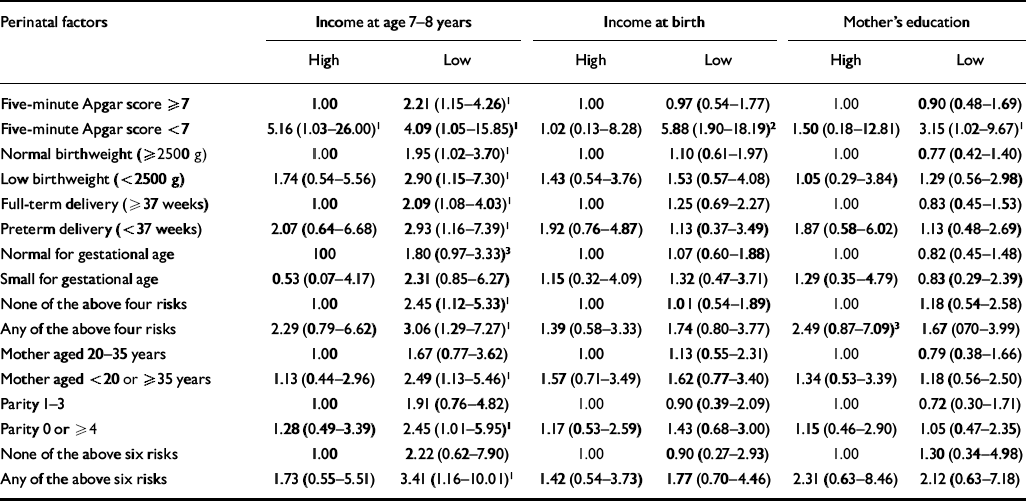
The joint effects of income level at birth, age 7-8 years and maternal education with birth risks are shown in Table 4. The SES variable most predictive of life time mental conditions among children born with high birth risk is income level at age 7-8 years. A low-income environment at this age doubled the risk of life time emotional and nervous conditions in children of normal birth conditions, but tripled these risks for children born with adverse birth conditions. Among the birth-risk variables, the low 5-minute Apgar score consistently predicted vulnerability in the context of sub-optimal social environment. Females were affected much more than males (for example, the percentages of later emotional/nervous conditions for those with a low 5-minute Apgar score and low family income at age 7-8 were 20% in women v. 4% in men; the percentages for those with a low 5-minute Apgar score and low family income at birth were 25% in women v. 5% in men and the percentage for those with low 5-minute Apgar score and mothers of low education were 26% in women v. 3% in men). Other SES and family variables — such as degree of physical crowding of the housing at birth or age 7-8 years, receiving public assistance at birth or age 7-8 years; growing up with a single parent, more children being born in the family after the subject and neighbourhood crime problems at age 16 years — were also analysed, and their effects were not strongly significant.
Odds ratio (95% Cl) of life time emotional/nervous conditions by birth risk and household income and mother's education at birth and age 7-8 years
| Perinatal factors | Income at age 7-8 years | Income at birth | Mother's education | |||
|---|---|---|---|---|---|---|
| High | Low | High | Low | High | Low | |
| Five-minute Apgar score ≥7 | 1.00 | 2.21 (1.15-4.26)1 | 1.00 | 0.97 (0.54-1.77) | 1.00 | 0.90 (0.48-1.69) |
| Five-minute Apgar score <7 | 5.16 (1.03-26.00)1 | 4.09 (1.05-15.85)1 | 1.02 (0.13-8.28) | 5.88 (1.90-18.19)2 | 1.50 (0.18-12.81) | 3.15 (1.02-9.67)1 |
| Normal birthweight (≥ 2500 g) | 1.00 | 1.95 (1.02-3.70)1 | 1.00 | 1.10 (0.61-1.97) | 1.00 | 0.77 (0.42-1.40) |
| Low birthweight (< 2500 g) | 1.74 (0.54-5.56) | 2.90 (1.15-7.30)1 | 1.43 (0.54-3.76) | 1.53 (0.57-4.08) | 1.05 (0.29-3.84) | 1.29 (0.56-2.98) |
| Full-term delivery (≥ 37 weeks) | 1.00 | 2.09 (1.08-4.03)1 | 1.00 | 1.25 (0.69-2.27) | 1.00 | 0.83 (0.45-1.53) |
| Preterm delivery (< 37 weeks) | 2.07 (0.64-6.68) | 2.93 (1.16-7.39)1 | 1.92 (0.76-4.87) | 1.13 (0.37-3.49) | 1.87 (0.58-6.02) | 1.13 (0.48-2.69) |
| Normal for gestational age | 100 | 1.80 (0.97-3.33)3 | 1.00 | 1.07 (0.60-1.88) | 1.00 | 0.82 (0.45-1.48) |
| Small for gestational age | 0.53 (0.07-4.17) | 2.31 (0.85-6.27) | 1.15 (0.32-4.09) | 1.32 (0.47-3.71) | 1.29 (0.35-4.79) | 0.83 (0.29-2.39) |
| None of the above four risks | 1.00 | 2.45 (1.12-5.33)1 | 1.00 | 1.01 (0.54-1.89) | 1.00 | 1.18 (0.54-2.58) |
| Any of the above four risks | 2.29 (0.79-6.62) | 3.06 (1.29-7.27)1 | 1.39 (0.58-3.33) | 1.74 (0.80-3.77) | 2.49 (0.87-7.09)3 | 1.67 (070-3.99) |
| Mother aged 20-35 years | 1.00 | 1.67 (0.77-3.62) | 1.00 | 1.13 (0.55-2.31) | 1.00 | 0.79 (0.38-1.66) |
| Mother aged < 20 or ≥ 35 years | 1.13 (0.44-2.96) | 2.49 (1.13-5.46)1 | 1.57 (0.71-3.49) | 1.62 (0.77-3.40) | 1.34 (0.53-3.39) | 1.18 (0.56-2.50) |
| Parity 1-3 | 1.00 | 1.91 (0.76-4.82) | 1.00 | 0.90 (0.39-2.09) | 1.00 | 0.72 (0.30-1.71) |
| Parity 0 or ≥ 4 | 1.28 (0.49-3.39) | 2.45 (1.01-5.95)1 | 1.17 (0.53-2.59) | 1.43 (0.68-3.00) | 1.15 (0.46-2.90) | 1.05 (0.47-2.35) |
| None of the above six risks | 1.00 | 2.22 (0.62-7.90) | 1.00 | 0.90 (0.27-2.93) | 1.00 | 1.30 (0.34-4.98) |
| Any of the above six risks | 1.73 (0.55-5.51) | 3.41 (1.16-10.01)1 | 1.42 (0.54-3.73) | 1.77 (0.70-4.46) | 2.31 (0.63-8.46) | 2.12 (0.63-7.18) |
With respect to the adult mental disturbances measured by GHQ at the subjects' age 27-33 years, the analyses showed weaker joint effects. The effect of duration of low household income on life time mental disturbances was considered. The detrimental SES impact was mainly from the income level at subjects' age 7-8 years; adding the effect of low income at birth to low income at age 7-8 years did not strengthen the prediction ability of the model.
The association of the poverty index (which takes into account income, family size and the inflation rate) with mental conditions and birth risks was also tested. The impact of living below the poverty level at age 7-8 years (32% of the total sample) is not so strong as being in the lower half of the household income group (median household income $6500). The contrast between the strong association between income level and mental health and the weak association with poverty suggests that mental disturbance depends more on people's relative income and status in society than on their absolute material living standards. Linking mental health to social position rather than to absolute material standards seems to provide new scope for explaining health gradients in terms of selective social mobility. The profound implications suggest that the psychosocial causes of the mental health gradients within a society are more powerful than the direct physical effects of exposure to poorer material circumstances. That is, relatively higher income in the same neighbourhood, as a protective factor, may ameliorate or buffer a child's reaction to a situation that in ordinary circumstances would lead to maladaptive outcomes. The modification may be underlined by increased self-esteem and efficacy that lead to the opening up of opposition.
Interaction of birth risk and SES was evaluated by subtracting the minus 2 log-likelihood for the model with the interaction and main effects, from the likelihood for the model of the main effects only, and comparing the change in the deviance to the chi-squared distribution. The interaction terms were not significant. It is possible, though, that the interaction terms of 5-minute Apgar score with income may show significance by statistical exact tests aiming on sparse and unbalanced data-sets, because these terms are close to significant level in our asymptotic analyses.
DISCUSSION
Our analyses remind us that the effects of birth risk and SES are neither simple nor direct. As Rutter (Reference Rutter1986) noted, “ interactive processes do not mean just multiplicative synergistic effects (although they occur) but rather many variables operate indirectly through their effects on interpersonal interactions both dyadic and polyadic rather than directly through any lasting change in the individual”. Rutter (Reference Rutter1985) outlined several ways in which these factors can interact: multiplicative interaction (the presence of one factor multiplies the effect of another); potentiating (the presence of one factor may potentiate the effect of another); and catalytic transactional (factors affect behaviour only in the presence of other factors, but do not independently alter behaviour). Garmezy et al (Reference Garmezy, Masten and Tellegen1984) also proposed three models for the possible interaction of risk and protective factors to produce competence in children: the compensatory model, in which stressors, risk and vulnerability factors combine additively and potentiate each other; the challenge model, which suggests a curvilinear relationship, that is, as long as stress is not excessive it enhances competence; and the protective model, which suggests that protective factors modulate or buffer the impact of stressors, by, for instance, improving coping, adaptation and competence building.
Our hypotheses were that some sequelae of birth problems might be modified by the social environment, and the advantages afforded children in higher income classes during early school age might protect them against the development of life time mental disturbances for which children with birth problems are at risk. The low 5-minute Apgar score at birth appears to be a good indicator of life time vulnerability to mental disturbances. Socio-economic status shapes the types of events that one experiences, and there is little doubt that there is an inverse relationship between SES and mental disorders.
The finding that the SES at age 7-8 years has a more profound influence than at birth may be accounted for in biologically oriented theories such as the neurodevelopmental theory, as well as in socially oriented theories involving diverse precipitants or stressors at various life stages. Data deriving from studies of neurodevelopmental cognitive and social organisations suggest that there is a discontinuity at 7 years that corresponds to a second biodevelopmental shift. The brain attains its adult format and reaches the asymptote of its maximum weight at 7 years. Neuronal dendrites are most dense at this age. Moreover, it is after 7 years that children begin to understand that their feelings, intuitions and thoughts may be of interest to others and, more important, may be thought about by others. Children of this age begin to infer feelings and to understand cause-and-effect relationships between objects, events and situations, and concepts such as ambivalence (Reference Shapiro, Hertzig, Hales, Yudofsky and TalbottShapiro & Hertzig, 1994). Furthermore, these children have just entered the school system and begun to acquire skills of language and reading. If the parents need to deal with environmental distress, they may not have the energy to monitor their children's development of language and reading or the knowledge to appreciate the value of so doing.
Longitudinal studies that have followed high-risk children to maturity find that, at each developmental stage, there is a shifting balance between the stressful life events that heighten children's vulnerability and the protective factors that enhance their resilience. This balance not only changes with the stages of the life cycle but also varies with the sex of the individual and the cultural context in which he or she matures (Reference Werner, Meisel and ShonkoffWerner, 1990). Our analyses indicate that male subjects, both in this whole population group and in preterm or low birthweight groups, suffer more from low household income level at age 7-8 years.
Public health implications
Advances in medical technology increase the survival rate of children born with adverse conditions, and may actually increase the number of children at high risk of developing emotional and behavioural problems later on in life (Reference Ramey, Bryant and WasikRamey et al, 1992). Given the high rate of adverse birth conditions in many developing countries and disadvantaged urban communities of the USA, and with the percentages converted to real numbers of the population, the public health impact in these populations is of particular concern. As our study sample was a generally poor urban population, a sample with greater variance in socio-economic indicators might produce even higher odds ratios of mental disturbances. An increased occurrence of common mental disturbances among offspring with a history of birth risks might indicate that these births require extra mental health intervention later in life. Moreover, understanding that mental conditions throughout the life course are associated with SES implies that efforts to reduce SES inequalities must recognise that economic policy is also public health policy (Reference Lynch, Kaplan and SalonenLynch et al, 1997; Reference WilkinsonWilkinson, 1997).
Although the larger societal and structural issues will require societal and macroeconomic solutions, studies have shown that even reducing only a portion of a multi-risk situation results in significant improvement in outcomes. Because of developmental sequencing, the timing of the reduction of risk may be more critical than the number of risk factors addressed. A number of creative and comprehensive programmes have shown that it is possible to address the adverse effects on mothers and children of the heightened risks associated with poverty (Olds et al, Reference Olds, Henderson and Tatelbaum1986, Reference Olds, Henderson and Tatelbaum1988; Reference Mrazek and HaggertyMrazek & Haggerty, 1994).




eLetters
No eLetters have been published for this article.