




There is something peculiar about the story of modern consumer culture in Iran. One might assume that the mantle of “modernization” taken up by Nasir al-Din Shah, whose reign as a monarch spanned from 1848 to 1896, rapidly shifted the marketplace of desire among Iranians. Or that the entry of enchanting Western European, Russian, and Ottoman products during the nineteenth century generated and bolstered consumerism in the country. But this is not entirely true. Consumer culture developed in a profoundly slow process in Iran. Take, for instance, European furniture. Despite the relentless promotion of the chair by Europeans and affluent Iranians beginning in the nineteenth century, it took over a hundred years for it to be widely adopted in Tehran.Footnote 1 This is all the more puzzling given the chair’s simple structure and the modest means required to incorporate it into daily life. Or take, as another example, the failure of American Point Four specialists to convince people in Isfahan in the 1940s to use ice cubes instead of the naturally occurring ice that they took from the bases of mountains.Footnote 2
This general lack of enthusiasm for Western products was not entirely rooted in the distinct Islamic ideologies prevalent in Iran during the nineteenth and twentieth centuries. Yes, some Iranians viewed Western appliances, including the chair, as impure products that needed ritualistic cleansing. But electricity hardly fell within the category of things that required religious purification. Still, Iranians did not welcome electricity during the 1940s. People’s refusal to give up their oil lamps frustrated the municipality in Tehran to such an extent that it conditioned providing licenses for shopkeepers on their subscription to electricity.Footnote 3 So, what were the impediments to consumerism in Iran?
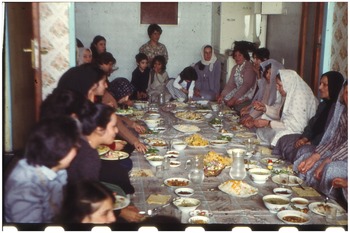
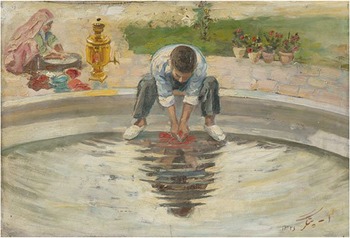
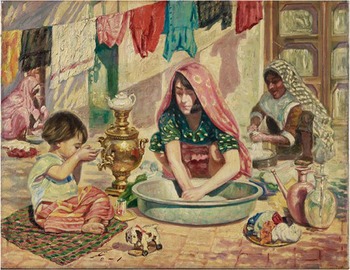
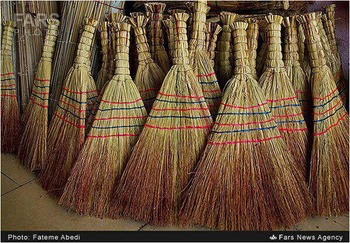
We argue that the spatial configuration of Iranian homes and the habituated embodiment it engendered helped slow the advance of consumer culture in Iran during the nineteenth and early twentieth centuries. By habituated embodiment, we are referring to the idea that bodies develop ingrained patterns of movement and interaction (e.g., sitting, sleeping, walking, seeing) through engagements with their physical environments.Footnote 4 Domestic life in Iran was oriented toward and unfolded in close proximity to the floor. From baking bread in the underground tanoor (clay oven; Fig. 1), to eating meals on the sofreh (dining spread; Fig. 2), to washing cloths and dishes in the howzcheh (small pool; Fig. 3) and the tasht (washbasin; Fig. 4), to taking notes on the mizcheh (little table; Fig. 5), to praying on the ja namaz (prayer mat; Fig. 6), to sleeping on the toshak (floor mattress; Fig. 7), to sweeping the floor with jaroo (short brooms; Fig. 8) and using dastshuyi-e Iran (squat toilets; Fig. 9), domestic life in Iran was centered on sitting, squatting, and sleeping on the floor.
This grounded mode of spatial habituation resisted Western objects that needed elevated or upright usage, including sofas, desks, refrigerators, stoves, and washing machines. European missionaries in the nineteenth century and the Point Four American specialists during the mid-twentieth century already had a sense of the sorts of challenges that this spatial arrangement posed. They often expressed the need to get Iranians, literally, off the ground. Take, for instance, comments made by the head of the US home economics department in Iran, Bernice W. King. Her contention was that Western furnishing would “give a real opportunity … to raise the level of living for Iran as a whole” (emphasis added).Footnote 5 Indeed, commentary by missionaries is replete with terms and motifs such as “raise,” “rise,” “upright,” “uplift,” “walk” (as opposed to “squat” and “crawl”), all of which performed a dual task. On the one hand, they referred to progress in the context of the Western civilizing mission that sought to fulfill the promise of Christianity within profane history in Iran (and in the broader Middle East). On the other, they referred to elevation of spatial habituation in Iranian homes.
Baking bread in the tanure, Emaraat-e Asef, Sanandaj. Taken from Manije Ghaznavian's personal archives.

Eating on the sofreh, Tehran, 1980s. Taken from Manije Ghaznavian's personal archives.

Washing clothes in the howzcheh. Painted by Ali Asghar Petgar. Taken from Maryam Harandi’s Galleray.

Washing clothes in the tashk. Painted by Ali Asghar Petgar. Taken from Maryam Harandi's gallery.

The mizcheh in use. Painted by Kamal al-Molk.

Praying on the janamaz, Tehran, 1980s. Taken from Manije Ghaznavian's personal archives.

Sleeping on the toshak. Painted by Ali Miri and taken from Ali Miri's gallery.

The jaru. Picture taken by Fatemeh Abdi in Rasht, 2010. Taken from Fatemeh Abdi's personal archives.

Old Iranian Squat Toilet, Kangavar, 1999. Taken from Manije Ghaznavian's personal archives.

Even though Iran was never a formal colony, the European and American missionaries and specialists worked tirelessly to overcome the spatial distance between the Iranian and Western modes of habituation under the rubric of progress. As the author of America’s Point Four reforms, John Dewey, noted, “Nations, like men, must learn to crawl before they walk.”Footnote 6 To facilitate the shift from crawling to walking, countless missionaries, quasi-colonial administrators, and Iranian royals and intellectuals sought to teach Iranians the principles of hygiene, critical self-awareness, sensitivity, intelligence, and sincerity through all sorts of educational, commercial, and governmental programs that covered ground from table etiquette to rationalizing household chores by employing “smarter” methods. Not surprisingly, all such principles required Western consumer objects.
It is important to bear in mind, however, that although these missionary, governmental, and commercial programs were an important source of agency for instituting an Iranian consumer culture, modern heating technology in general, and the Aladdin heater in particular, were the unsung heroes of consumerism in Iran in the mid-twentieth century. We argue that this is because they helped elevate the spatial flow of domesticity, opening Iranian homes up to Western goods that demanded upright usage above the floor.Footnote 7
To shed light on the transformation to mass consumerism in Iran, we focus on the traditional heating ecology centered on the korsi (heating system) and its replacement with the new oil-based portable systems manifested by, among others, the Aladdin. The aim here is not to reflect, yet again, on how important oil is to modern Iran. To be sure, there is a fecund literature on the social implications of oil—its discovery, nationalization, distribution, and so on—in the field of Iranian studies.Footnote 8 This article is, in part, our attempt to contribute to this ongoing discussion by positioning oil within a broader network through which it acted in the domestic sphere and the prior modes of habituation that it helped transform, including the spatial flow of life in Iranian homes.
The korsi was at the epicenter of the traditional heating ecosystem. This system was shaped by the very architectural designs of Iranian homes that sought to get the most out of the sun during the winter months and protect against it in the summertime. Internally, it included rugs and mats on floors and thick curtains that hung over walls and windows to help insulate residents from cold and hot weather. Characterized by fixity, the korsi operated by burning charcoal and was in use annually for up to seven months in many of Iran’s eastern, northern, and northwestern provinces, organizing life in close proximity to itself on the floor, where people slept, ate, and even underwent childbirth.
The emergence of new fossil fuel–based technology, and the Aladdin in particular, helped unravel the prior grounded spatial ecology of domesticity by targeting the traditional heating ecosystem. The Aladdin took off in Iran during the 1940s and 1950s as a portable object that could be interacted with both while squatting, sitting, or sleeping on the floor and sitting or sleeping above the floor. Unlike the korsi, the portability of the Aladdin and, as such, its ability to distribute heating across the house, meant that houses no longer needed to be built with the sun in mind. Although not solely responsible, this process nonetheless helped facilitate the transformation of architectural designs across Iran, endowing houses with a utaq-i pazirayi (guest room), utaq-i nishiman (living room), utag-i khab (bedroom), and utagh-i nahar khuri (dining room), each distinguished by the kinds of objects it contained.
Further, the portability of the new heating technology permitted spatial distancing within the home’s internal setting. Chairs could now be placed in the four corners of living rooms and residents could sleep not only above ground on beds but also in separate bedrooms throughout various seasons. What the new heating technology helped achieved, then, was an elevated material baseline, opening up Iranian houses to the seemingly endless inflow of Western goods. The result helped engender a pervasive consumer culture and, by extension, a distinctive form of modernization in Iran.
The transformation of heating technology from the korsi to the Aladdin structures our argument. We continue the introduction by centering imperialism as a broader context for understanding the interrelationships between technology, consumer culture, and Iran’s semiperipheral status within the global economic system. The next section then provides the korsi’s itinerary as a heating device and highlights its constitutive emplacement within the spatial continuity of domesticity oriented toward the floor. In the following section, we posit the emergence of new heating technology and the spatial shifts it afforded against the backdrop of the Western civilizing mission. We conclude by calling for further investigation of infrastructural imperialism to better illuminate the invisible mechanisms by which empire continues to structure the material and moral landscapes of semiperipheral societies like Iran.
Imperialism and Modernity
The decolonial turns in sociology and anthropology have demonstrated that modernity is inseparable from colonialism.Footnote 9 The notion of modernity/coloniality advanced by Walter Mignolo highlights how Western capitalism and modernity occurred through colonialism and imperialism.Footnote 10 Indeed, from the perspective of world systems theory, the world economy is one of unequal economic (and also ecological, cultural, etc.,) exchange affixed to a global division of labor that emerged from Western European colonialism beginning in the fifteenth century.Footnote 11 Here, a small number of “core” countries with political and economic power have dictated the global division of labor and terms of trade in ways favorable to themselves. These core states, which now also include the United States, specialize in high-end commodities and receive a large share of the global economy. Peripheral countries, having been colonized directly by Western Europe and the United States, were and are used for their raw materials and continue to receive a very small share of the global wealth; whereas semiperipheral states, like Iran, have focused on the export of raw materials and lower-end manufactured goods. Semiperipheral states have received a medium-size share of the global wealth. This colonial global division of labor has had clear winners and losers.
Not surprisingly, scholars of Iran have thoroughly discussed the hegemonic force of European and American imperialism from the eighteenth to the twentieth centuries as constitutive of Iranian modernity. By “imperialism,” we are referring to a modality of power by which one state or social actor exerts unequal influence and control over another society or people.Footnote 12 Although colonialism is but one subtype of imperialism, scholars of Iran tend to use the notion of “modernity” to capture the hegemonic mode of Western imperialism. By modernization, these scholars often refer to how a given local condition or entity, whether in Europe or North America, has succeeded in extending its reach over the Middle East and, by doing so, developed a universal identity associated with modernity, while designating rival social conditions or practices as “local.” Within the field of Iranian studies, this local is generally construed as “tradition.” Some see tradition as living in the shadow of hegemonic globalization. Others argue that aspects of tradition are actively implicated in modern sociopolitical configurations that are established in Iran.
In advancing these discussions, the canon of Iranian studies has been attentive to both the strategic powers of humans and the logistical powers of material things (although the former is often privileged over the latter). Insofar as strategic power is concerned, the primary focus is on the intentional and meaningful exercise of will for domination. This includes the forceful European figuration of Iran as a semiperipheral state and the repeated British, Russian, and American interventions in its affairs throughout the nineteenth and twentieth centuries.Footnote 13 It also includes numerous attempts, some more successful than others, to merge capitalist development with authoritarian politics.Footnote 14 This slide is fundamentally linked to the capitalist engenderment and incorporation of markets in Iran and the domination and/or territorialization of those markets through a variety of means, including American aid development programs and various marketing schemes.Footnote 15
Others have highlighted the impact of European methods of military organization and techniques of warfare on Iran’s modern state-building project.Footnote 16 Also noted within this body of work are the European disciplinary techniques that were transferred into Iran through the inauguration and proliferation of prison systems in the nineteenth and twentieth centuries.Footnote 17 Finally, much of this literature is concerned with how numerous Iranian intellectuals weaponized the ideals of the Enlightenment in their liberal and Marxist strands, sometimes sprinkling them with Islamic motifs and vocabulary, to help bring about modern phenomena in Iran, including constitutional and social revolutions in the twentieth century.Footnote 18
On the other hand, although not mutually exclusive from strategic power, the analysis of logistical power is about how various forms and flows of materiality can originate and sustain distinctive and asymmetrical social relations.Footnote 19 The recent, but growing, body of work on material infrastructures in Iran, including railroads, electricity, and pipelines, has made a tremendous contribution to our understanding of how this sort of power enforces patterns of governmentality that seem quite the opposite of overt political praxis and regulation.Footnote 20 Other scholars of Iran have illustrated the ways in which various orders of public objects shape not only our conceptions of freedom, justice, and nature, but also delimit the scope of public action.Footnote 21
And yet, apart from a few exceptional works,Footnote 22 relations between objects, the private, and modern modes of being in Iran have not received the attention they deserve, generating a gap in the field of Iranian studies. As Pamela Karimi’s and Abbas Kazemi’s pioneering works on material culture illustrate, a significant component of modernization in Iran advanced through consumer culture centered on domesticity.Footnote 23 On the cusp of Iranian modernity, says Karimi, “the rules and tenets that had traditionally defined the Iranian home began to vanish and the influx of new household goods gradually led to the substantial physical expansion of the domestic milieu.”Footnote 24 In this paper, we expand on this body of work by exploring the entanglements between private technological objects, their spatial affordances, and Western imperialism in Iran.
So doing, we highlight a relationship that has not been adequately problematized in the field of Iranian studies: the spatial shift that emerged through new heating technology within the domestic sphere on the one hand, and consumerism and imperialism or modernity on the other. The result, we hope, will demonstrate how the Western “civilizing mission” in Iran unfolded through industrial modernity by elevating the spatial baseline of domesticity. In the process, we illustrate how modernity, in general, and consumer culture, in particular, were constituted through an alliance between technology and Western imperialism in the form of its “civilizing mission” in Iran.
Let us now turn to the korsi and its itinerary and spatial coordinates.
The Floor as the Center of Gravity
In Living with the Desert, Elizabeth Beazley and Michael Harverson refer to Iran as a “country of extremes.”Footnote 25 This is partially because of the Persian plateau’s location within the arid belt of the Eastern Hemisphere, which is internally differentiated by expansive mountain ranges that generate steep weather fluctuations.Footnote 26 To be sure, seasonal temperatures vary widely across the country, such that exceedingly hot summers can be followed by freezing winters.Footnote 27 These oscillations imposed numerous challenges on households in premodern Iran. Local meteorological sciences and technologies were key to maintaining temperatures at levels suitable for the conduct of daily life. Such science and technologies were geared toward the sun and fire as the two key sources of heat.Footnote 28
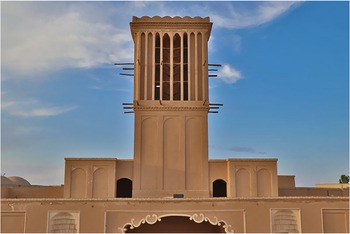
Iranian architects often had the dual task of making the most out of the sun during the winter months while also finding ways to remedy hot summers. The traditional courtyard house design, for instance, was the result of the central concern of mediating the sun and geography. Adobe clay as construction material was used to make thick walls in drier environments such as the Yazd province, insulating the house by keeping the heat inside and outside during winters and summers, respectively.Footnote 29 A design that divided the house into two sections dominated the largely dry lands, with the east and west wings enabling seasonal horizontal movement across the house to the cooler or warmer enclosure. This was accompanied by a vertical movement. During the summer days, for instance, members of the household could take refuge in the underground cellar, while sleeping on rooftops at night to take advantage of the cool breeze. In addition, a vernacular system called badgir was developed and used for vertical cooling in the central Iranian Plateau, which directed the breeze downward into the house (Fig. 10).
The badger, Yazd province, open source.

Fire also was used for heating, but it was a complicated source. This is because most of Iran has a semiarid climate, and wood is scarce. French merchant and writer, Jean-Baptiste Tavernier (1605–89), underscored this point during the Safavid era, stating: “[Iranians] tend to avoid making fire with firewood as much as possible, not least because of how rare and expensive it is.”Footnote 30 Jakob Eduard Polak, the Austrian physician and instructor at Dar ul-Fanun (the oldest Western-modeled institute of higher education in Iran) offered a comparable note during the nineteenth century. “The fuel is both expensive and of poor quality here [in Tehran] … it consists mainly of bushes, roots of plants such as milkvetch, chaff, and dry branches of fruit trees. Here and there, they use juniper and wild almond wood too. They weigh and sell it. They use fire pans in their houses but even this is less common in comparison to Turkey.”Footnote 31
Consequently, in addition to dried dung, which was a common fuel for those with modest resources,Footnote 32 charcoal carried the main burden of providing heating across most parts of Iran. One way to produce charcoal is to place kindling wood in a pit and set it afire. A large piece of wood is then set on top of the flames and covered with dirt and rocks with a bit of space left open to permit the flow of oxygen. The wood is carbonized in the process to produce charcoal. The charcoal can then be reprocessed to generate the easy-burning, soft-texture fuel for indoor usage. Charcoal also was attained as dust. The dust had to be collected during the summer months and cleansed from its soot. It then had to be manually mixed with other materials, including ash, to produce konjaleh to be used for indoor heating.
During the eighteenth and nineteenth centuries, the Caspian region was a major source of charcoal for Tehran.Footnote 33 And in the nineteenth century, Tabriz imported most of its charcoal from the low forests in the neighboring area. Elsewhere, charcoal was produced wherever enough firewood was available.Footnote 34 In 1928, at least four major charcoal sellers’ shops operated in Tehran to serve its approximately 210,000 inhabitants.Footnote 35 Given that a tax was levied on charcoal at the city gates, it is quite plausible that a substantial black market supplemented the official sellers’ shops. Nonetheless, the most economical method of indoor heating was to burn charcoal or konjaleh in a korsi, usually in a designated room in which there was a dug pit (Fig. 11).
This is an illustrate example of a korsi that is based on a hole dug in the ground. The item belongs to the Emarat Asef Museum of Anthropology in Sanandaj. Taken from Majine Ghaznavian's personal archives.

The korsi was installed and in use annually at various times, depending on geography and the duration of cold weather. It was used between early fall and early spring (about seven months) in western and northwestern Iran and between mid-fall and the end of winter in central Iran and the inland provinces in the north and northeast. The picture of the korsi taken by Georgian Armenian photographer Antoin Sevruguin during the Nasseri era (1848–96), and another taken during the 1980s, show that little about its structure has changed over the years (Figs. 12 and 13). It consists mainly of three parts: the tanur that refers to either a pit dug in the ground or a fire pan that contains the fuel; a wooden or metal stool placed over the tanur; and a large thick blanket that covers the area above and around the korsi and under which one tucks oneself.Footnote 36
The picture of the Korsi taken by Georgian-Armenian photographer Antoin Sevruguin in Tehran between 1848-1896.

The korsi in Qazvin, 1985. Taken from Manije Ghaznavian's personal archives.

Although scholarship on the korsi is scarce, we know that a similar device, called the kotatsu, was used in Japan from the twelfth century onward (Fig. 14). The similarity in names may indicate that the korsi was introduced to Iran by the Mongolians in the thirteenth century.Footnote 37 Mir Seyed Ali Hamedani’s poem in the fourteenth century and its reference to the korsi may well be the first written record of it in Persian. The verse is: “Try to be like the korsi, associated with ground, endure the fire and do not wish for snow.”Footnote 38
The Japanese Katatsu. Open source.

By the nineteenth century, the korsi was a key component of Iranian households. We can trace its wide usage through various bourgeois travelogues during this time, which, similar to Hamedani’s poem, emphasize the korsi’s association with the ground. American Orientalist Abraham Jackson (1862–37), for instance, described his winter experience in a village in Orumiyeh in the following manner: “In a large living room filled with women, men, children, and smoke, we enjoyed the hospitality of the local people. Due to the low temperature and rain, everyone was gathered on the ground round a vase-like hole that was dug in the clay bottom and contained burning charcoal that produced lots of smoke.”Footnote 39 Polak, too, described a similar experience in 1865: “In the courtyard, they use a special device for heating known as korsi or Tanour … around which we sat, tucked under a blanket.” Footnote 40 And in his account of Naseri Iran between 1848 and 1896, German Orientalist, Heinrich Karl Brugsch, alluded to the korsi in the following manner: “People in Iran warm their houses with a Tanur and place a Korsi over it and cover it with a blanket while the household gathers around it to get warm. They sleep there overnight without fearing the harms of the smoke charcoal produces.”Footnote 41 General Yasumasa Fukushima (1852–1919) of the Imperial Japanese Army, who entered Tehran in 1896, noted: “In the midst of the room there was a big Korsi of about two meters on each side and covered with a large blanket. At nights, they put a charcoal pan inside these Korsies and the whole family gets warm sleeping around it.”Footnote 42
Indeed, the korsi was the central mode for night sleep during the cold seasons. The division of space around the korsi entailed many informal rules. Household parents along with elders, for instance, often sat with their backs against the wall. Adolescent siblings of opposite sexes were generally separated from one another at night. Sleeping angles could have been vertical or diagonal to the korsi, and parallel sleeping angles also were common in smaller families (Fig. 15). In western and northwestern Iran, it was common to serve meals around the korsi. At times, cooking traditional Iranian foods like meat stew (abgoosht) took place under the korsi on a metal pan.Footnote 43 The korsi was quite often a focal point in family gatherings. The very central place of the korsi in everyday life within the household was such that even midwives assisted with childbirth next to it during the cold seasons.Footnote 44
Two different ways of sleeping in relation to the Korsi. taken by Georgian-Armenian photographer Antoin Sevruguin in Tehran between 1848–1896.

The grounded nature of the korsi was part of the spatial continuity of domesticity oriented toward the floor. Rugs and mats complemented the korsi within the broader ecology of heating in traditional Persian houses, not least by helping to insulate them from cold and hot weather. In 1934, the American missionary, Clara Colliver Rice, concluded that “A house is properly furnished for a Persian when it is well carpeted and curtained.”Footnote 45 During meals, house residents would normally sit cross-legged in front of plates, bowls, and silverware, all placed on a cloth (the sufrah) resting on top of a rug.Footnote 46 At night, residents placed cushions and blankets on the rug to sleep on. The same space allowed sexual relations.Footnote 47 The traditional Iranian house did not have immediately identifiable single-purpose enclosures such as a dining or living room.Footnote 48 Rather, it was a multipurpose communal space in which various functions took place within a spatial domain that was oriented toward the floor.
Numerous American missionaries implicitly criticized this spatial orientation by highlighting what Iranian homes “lacked.” Rice, for instance, complained that “The furniture in a Persian house is conspicuous by its absence!”Footnote 49 A report by Presbyterian American missionaries from 1934 notes that Western “toilet fixtures” that required upright usage, as opposed to Iranian toilets, were scarce, and “water for baths” was “heated” on “charcoal fire” burning on pans on the floor.Footnote 50 The stone charcoal-burning oven in kitchens was equally problematic because one had to squat to use it.
Other reports from missionary stations complained about the “inadequate nature” of missionaries’ places of residence.Footnote 51 In particular, the “impracticality of traditional elements” such as “small Persian doors” were highlighted as components that needed to be “standardized.”Footnote 52 The Persian doors hardly accommodated the entry of large furniture that missionaries brought with them from abroad or guided local craftsmen to produce, which afforded Western modes of spatial habituation above the ground. Further, although tiling was regularly used in bathing areas as well as basement rooms intended to be cool during the summer, Iranian domesticity on the whole resisted tiles because it augmented both cold weather during the winters and hot weather during the summers, making the floor an inhospitable space on which to sleep. Western missionaries, on the other hand, tended to plaster the rooms and cover the floors with tiles before moving into local residences, given that they did not intend to sit or sleep on the floor.Footnote 53
The Iranian mode of domestic habituation was still predominantly oriented toward the floor in the 1940s. But this was not for the lack of others’ efforts, spanning over a hundred years of missionary and governmental programs, along with the efforts of Nasir al-Din Shah (1848–96) to take up the mantel of “modernizing” Iran.
Next, we posit the emergence of heating technology and its spatial affordances against the backdrop of the “civilizing mission” in general, and the American Point Four program in particular.
New Heating Technologies, the Point Four Plan, and Getting Off the Floor
“Civilizing mission” usually conjures up the idea of European colonialism during the nineteenth and twentieth centuries. The mission consisted of ever-shifting sets of ideas and practices meant to justify and legitimize various forms of colonialism. The stories that the civilizing missions told about themselves were centered on “uplifting” and “developing” the supposedly “backward” peoples of the colonies.Footnote 54 And although Iran was never a formal colony, Western missionaries were given, more or less, a free hand in Iran by Nasir al-Din Shah. For historians Pamela Karimi and Michael Zirinsky, American missionaries were among the most important agents for “Westernizing change” in Iran prior to the Second World War.Footnote 55 Their influence persisted well into the Pahlavi dynasty (1925–79).
What emerged was a sustained strategy to replace “traditional ways of life” with more “rational Western norms” related to a variety of themes from hygiene to home decoration, to proper ways to sit and sleep.Footnote 56 This strategy was advanced by a conglomeration of actors, from consecutive Qajar and Pahlavi shahs to Iranian elites to the missionaries themselves, beginning with the establishment of modern European and American schools in the city of Tabriz (1865), and then in Isfahan (1865), Tehran (1870), Qazvin (1889), and so forth. This strategy, however, placed a special emphasis on “home” as a locus of moral growth.Footnote 57 “When a heathen man becomes a child of god and is changed within,” said one American missionary, “he wants his external life and surroundings to correspond: he wants the Christian dress and the Christian home.”Footnote 58
Despite this ever-expanding strategy, the adoption and appropriation of “rational Western” norms and objects could not have gone any slower for the Qajar monarchs, Iranian elites, and Western missionaries. Indeed, Nasir al-Din Shah’s “modernizing” project was centered on his own palaces and their surrounding suburbs between 1869 and 1892.Footnote 59 Further, although Nasir al-Din Shah granted concessions to Europeans for manufacturing glass and pottery beginning in 1882, these “fine” objects were hardly prevalent across different strata in Tehran; material “modernization” within the domestic space largely influenced those of the upper and, later on, upper-middle classes.Footnote 60
Samuel Peterson’s case study of the chair’s adoption in Iran provides an illustrative example.Footnote 61 Although the chair was imported from the West as early as the Safavid dynasty (1501–1736), it also was used in pre-Islamic Iran by the ancient Achaemenid (c. 550–330 BCE) and Parthian (247 BCE–224 CE) kings. During the early Qajar era, the chair was exclusively used by the king and key members of the royal family. Delegates from Europe, along with the Iranians who accompanied them, were required to stand when the shah was seated on his throne. By the 1850s, more people could use European-style armchairs in the palace, but even then the chair remained a sign of authority.Footnote 62 Beyond the palace, the chair was considered an exotic object and functioned as an item on display rather than a piece of furniture. This also was the case later in the homes of laypersons. The American missionary Clara Colliver Rice underscores this point as late as 1934 when describing the interior of a typical Persian house: “Men who have come so much in contact with Europeans may have a table and chairs in their guest rooms, and some aspire to European bedsteads, but all these are more for ornament than use.Footnote 63
When the chair began to be used more widely in Iranian houses during the first half of the twentieth century, its domain was still rather restricted. Some houses in Tehran were divided into two parts. One was the “furnished” zone with chairs and sofas, which was reserved for guests or foreign visitors and was either not used during the cold seasons or had portable heating technology. The other was the traditional lifestyle zone with its grounded ecology, which remained the central space for the household members themselves.Footnote 64 Indeed, it took nearly a century to fully work out how, when, and where the chair might be used. Karimi is correct to point out that part of this was because of the impurity of Western products perceived by Iranian families.Footnote 65 But there was more at play here. Iranian families began to incorporate chairs as new heating technology gained widespread use, affording elevated modes of habituation.
The Entry of the Aladdin and a Shift in Spatial Habituation
European hegemony was not globally achieved before the nineteenth century. And the use of fossil fuels was central to its domination.Footnote 66 Not surprisingly, histories of the extraction and use of fossil fuels occupy an important place in the social sciences, including the field of Iranian studies. But less attention has been given to how oil (and oil-based products such as kerosene) actually entered Iranian homes and how it helped transform the fabric of relations between humans and their domestic nonhuman collaborators and environments. New heating technology was a key mediator in this respect. By mediator, we mean an object whose input and output are neither the same nor equal. In other words, the object itself acts by means of its immanent properties to make a difference.
Here, although we discuss some of the key national trends implicated in the transition of heating technology, we also wish to narrow our geographical and temporal focus to provide a more nuanced account of these processes. Our case study is centered in the provinces of Tehran and Qazvin from the 1940s to the 1980s. The city of Tehran has been the capital of Iran since 1795, and Qazvin is an industrial town located about 150 kilometers to the northwest of Tehran.
At the macro level, Iran’s oil revenues took off in a substantial way in 1973, rising to $19,000 million from $817 million in 1968.Footnote 67 Oil-based heating technology, however, began to proliferate much earlier, in the 1940s. Western heaters made out of metal were spotted from time to time in the more affluent houses in Tehran toward the end of the Qajar era. But, like chairs, they seemed to have been objects of prestige and decoration rather than utility.Footnote 68 And although the British Valor company began to mass produce oil heaters in 1902, oil was discovered in Iran in 1908. Even then, it took another four decades and dozens of legal battles with the British before Iranian oil was nationalized. Therefore it was only in the late 1940s that we see oil-run engine rooms in architecturally modern houses in Tehran.Footnote 69 By 1953, the first gasoline company, Butan, was established in Tehran. It brought gasoline capsules and tanks to homes in Tehran and Qazvin, making it a common fuel across both cities.
At the same time, government policies moved toward creating domestic industries that produced oil-based heating and cooling technologies. Almost immediately after the nationalization of oil in Iran in 1950, Prime Minister Mohammad Mosaddegh inaugurated the Alinassab Oil and Gas Company, which produced oil-based heating devices. “Our goal,” said the prime minister, “is the domestic use of oil and its by-products.”Footnote 70 The Azmayesh industrial factory was built in 1958 and produced heating devices. A production line for oil-based heating systems was added to the Arj factory in the same year.Footnote 71
All of this paved the way for the proliferation of the portable gasoline heater that came to be known as the Aladdin (Figs. 16 and 17). As two major cities, Tehran and Qazvin were among the primary targets for print and radio advertising that began during the 1950s. In the advertising images published in magazines at the time (Fig. 18), the Aladdin was introduced as a quality product that generated heat for as long as twenty-five hours with only 4.5 liters of gasoline. In comparison to the korsi, the Aladdin took less labor to prepare and less fuel to produce heat. There was no need to assemble or disassemble it, and it could be easily moved to different locations in the house. Multiple Aladdins could be deployed across the house and in different bedrooms.Footnote 72
The Aladdin in the Moghadam Museum House. Taken from Manije Ghaznavian's personal archives.

The Aladdin. Open source.

Aladdin advertisement in the Etelaat Newspaper, February 1963.

This made the Aladdin particularly appealing for women in Tehran and Qazvin. This is because historically women undertook the bulk of labor in preparing, assembling, operating, and disassembling the korsi. This division of labor and its merger with the politics of heating technology at the meso level is captured in numerous oral history accounts. Take, for instance, an interview conducted with Reza Niazmand, the deputy minister of economy during the Pahlavi era.Footnote 73 Niazmand notes that one of his first missions at the ministry was to facilitate the use of oil-based energy in the villages surrounding major cities, including Tehran and Qazvin. This was based on the recommendation of the American advisory board in Iran, which encouraged the use of oil as an “abundant and cheap” fuel.Footnote 74 Although women often welcomed this initiative, Niazmand faced vigorous pushback from men in just about all of the villages he visited.
This is because men were not accustomed to paying for their source of heating. They often used bushes, roots of plants such as milkvetch, chaff, and dry branches of fruit trees along with dried dung for free or charcoal for very little money. Niazmand notes that the government reached an agreement “with the men” on the price of oil, and oil-based lamps were provided for them in Qazvin for free.Footnote 75 Niazmand further states that this deal facilitated the entry of oil (and its by-products) as the main source of heating in villages surrounding Tehran and Qazvin. The uptake of the Aladdin in households in Tehran and Qazvin also is notable in documents called suraat jahiziye forged between the 1950s and the 1970s (Fig. 19). The suraat jahiziye is similar to a dowry list, and it was quite common in early to mid-twentieth-century Iran. We studied a dozen of these lists put together by families in Tehran and Qazvin that included the artifacts that the bride brought to a marriage. All but one of these documents included the Aladdin by 1969.
Suraat jahiziye, 1969, Taken from Manije Ghaznavian's personal archives.

In addition to the labor that went into preparing and administering the korsi, Iranian women had other reasons for welcoming the Aladdin into their homes. One of our interlocutors, a woman born in the 1960s in Qazvin, recalled the following: “My mother used the Aladdin in order to do much of her cooking in the living room with us.” Indeed, meals could be prepared on the Aladdin, and this gave many women the chance to spend less time in the kitchen and more time in their living rooms with their families (Figs. 20 and 21). Another interlocuter, a woman from Tehran, explained that “The old rooms [in the 1960s] were large. We used to have the korsi at one end and the Aladdin at the center. We would turn off the Aladdin before going to sleep under the korsi. But during the day it was really difficult to do homework under the korsi because it would make my sisters and I drowsy. So my mother would push us to gather around the Aladdin and do our homework there.” So, at the micro level, the Aladdin came to mediate women’s domestic responsibilities, including managing the children’s schoolwork.
Painting by Kamran Pouyan.

Taken from Manije Ghaznavian’s personal archive.

Further, the Aladdin had engendered the “bedroom” for some of the women we interviewed. One of these interlocutors, a woman born in Tehran in 1960, recounted how she began to use her father’s workroom after he passed away in the early 1970s. His personal Aladdin made the room “a warm and quiet space” during the day where she could immerse herself in “Russian novels.” At night, she would sleep next to her sisters on the floor in the living room. Eventually, however, a bed was moved into her late father’s workroom and it became her room, in which she would sleep throughout the year.
To be sure, the Aladdin was not the only alternative to the korsi during this time. In the mid-1950s, the Butan factory brought liquid gas to homes in Tehran and Gazvin. Heaters that worked on liquid gas capsules also appeared on the market in both cities. Stationary oil heaters, diesel engines, and, to a lesser extent, electric heaters found their way into Iranian homes and workplaces. Together, they helped unravel the hegemony of the korsi. The installment of gas pipelines beginning in the middle of the 1970s brought cheap gas to almost every household in Tehran and Gazvin. This was the final blow to the korsi.
One of our interlocutors in Tehran explained: “When I was single, we had a korsi at my father’s house, maybe until the early 1970s, but then it was removed and replaced by the Aladdin and the bukhari nafti (oil heater). A decade later, when I got married, almost no one used the korsi in Tehran anymore. Of course, my mother-in-law still used it in its old style until the early 1980s, but she was really the exception in my family.” Another interlocutor from Qazvin noted, “After I got married [in the 1970s], we only set up the korsi for one year during the war [Iran–Iraq war, 1980–88], when diesel and gas were scarce. Then we moved to a small apartment and got rid of all of our korsi equipment in the process.”
Such transformations in heating technology corresponded with profound changes in the architectural designs of homes that stood in stark contrast to the traditional Persian courtyard house. The replacement of the korsi with portable heating devices meant that there was no longer the need for summer and winter sections in the house. Nor was there the need for cool underground cellars, small windows and doors, thick walls, courtyards, and small pools. Many traditional courtyard houses were demolished as a result. In the late 1940s, the American embassy estimated that between fifteen to thirty thousand homes had been demolished in Tehran by the state.Footnote 76 “Tehran,” notes a letter from the American embassy, “looks as if it has been destroyed by an earthquake.”Footnote 77
What developed instead were designs that Karimi has categorized into three groups: (a) split-level, freestanding, single-family villas; (b) multiple-story, one-family homes facing main streets; and (c) small-scale apartment houses with commercial units at ground level, which lined main streets.Footnote 78 As Karimi and Chavoshian explain, by the last decades of the twentieth century, popular terminology associated with the courtyard house such as the sardab (summer room) and hashti (vestibule) had to a large extent lost their meanings in daily life and language.Footnote 79 They were replaced by the utaq-i pazirayi, utaq-i nishiman, utag-i khab, and utagh-i nahar khuri, each of which was demarcated by the distinct furniture and materials it featured, including refrigerators, upright stoves, sofas, desks, dining tables, and, not least, chairs. These new objects helped elevate the spatial baseline of habituation within the domestic sphere. Not surprisingly, it is with the widespread proliferation of new heating technology that American corporations began to make a killing in Iran.
General Electric, Carrier Corporation, Hoover Company, McGraw Edison, Electric Bond and Share Company, Coleman, International Harvester, Emerson Electric, and CertainTeed all started to sell products, from building materials to cooler chests, to washing machines, to vacuum cleaners, to ovens and dishwashers.Footnote 80 What developed was a circular closure with heating technology at its center. New heating technology enabled architectural transformations and changed domestic modes of spatial habituation that facilitated the entry of Western consumer goods, many of which needed fossil fuels to be manufactured and to function, leading to increased significance of fossil fuels, which in turn generated more and newer heating technology and consolidated domesticity above the ground in newer homes. The Aladdin and the new ecology of domesticity it helped bring about in Iranian houses marks a key chapter in the story of expansion of multinational corporations centered in the United States, with the value of US exports to Iran more than doubling during the 1970s.Footnote 81 A highly asymmetrical relationship was reestablished between the US as a core state and Iran as a semiperipheral state, in which the former benefited from a global trade system rooted in colonialism and empire.
Despite over a century of missionary, educational, commercial, and governmental programs to modernize and civilize Iran, it would be difficult to imagine how the colonial aspiration to get Iranians “off the ground,” to raise their level of living, to teach them to walk instead of crawl, and to endow them with the desire for a “Christian home,” would have been achieved without the new heating technology that elevated the material baseline of domesticity, opening it up to the seemingly endless inflow of Western goods as part of a new consumer culture in Iran.
Conclusion
In this article, we demonstrated that the transformation of domestic space in twentieth-century Iran cannot be understood without attention to the material infrastructures of heating and the imperial ideologies that animated their circulation. Far from being a simple technological substitution, the replacement of the korsi with portable oil heaters, especially the Aladdin, signaled a profound shift in spatial habituation that reoriented Iranian households from a grounded ecology toward a vertical and object-centered modernity. This elevation of domestic life was not merely functional but deeply ideological, fulfilling the civilizing aspirations of Western missionaries and Iranian elites who viewed spatial elevation as synonymous with moral and cultural progress.
By centering heating technology as both a material and symbolic mediator of change, we have reframed Iran’s modernization within the broader context of imperialism, in which power was exercised not only through formal conquest or political coercion, but also through the intimate restructuring of everyday life. The Western civilizing mission in Iran operated with a double movement: it sought to elevate the Iranian subject above the floor physically, while simultaneously situating Iran within a global hierarchy of cultural and economic value. This dual movement reveals the infrastructural depth of imperialism and its capacity to naturalize asymmetrical relations under the guise of domestic reform.
Moreover, our analysis invites scholars of Iranian studies to reconsider the role of seemingly mundane technologies in shaping historical transformations. Objects like the Aladdin heater are not passive tools but active agents embedded in global networks of production, aspiration, and domination. They facilitated not only the entry of Western goods but also the internalization of Western norms, altering bodily practices, architectural forms, and affective rhythms of Iranian domesticity. In doing so, these objects reconfigured the spatial and symbolic boundaries between the West and “the rest,” including Iran.
Future research might expand upon this study by exploring other domains of infrastructural imperialism such as sanitation, lighting, and transportation and their entanglements with gender, class, and urban planning. Doing so would further illuminate the subtle and often invisible mechanisms by which empire continues to structure the material and moral landscapes of semiperipheral societies like Iran. As we have shown in this article, the story of modernization in Iran is not only one of resistance and adoption, but also one of spatial negotiation, played out on the ground, and eventually above it.
Financial support/disclosures
The authors have no funding agencies to report.
Kusha Sefat is an Assistant Professor in Sociology at the University of Tehran.Manije (Zahra) Ghaznavian is a Doctroal Student in Sociology at the University of Tehran.Mohammad Reza Javadi Yeganeh is a Professor in Sociology at the University of Tehran.






 Open access

