

Introduction
Companion animals, particularly dogs, are frequently exposed to a range of parasitic infections through environmental contact, interactions with other animals, and shared living spaces with humans. These parasites cause severe debility in pets and have potential for zoonotic transmission to humans (Matos et al. Reference Matos, Alho, Owen, Nunes and Madeira de Carvalho2015; Faraguna et al. Reference Faraguna, Vlahek, Miočić, Andreanszky and Pećin2023). Human exposure occurs through direct contact with pets or indirect exposure to contaminated faecal matter.
Various factors can influence the level of parasitosis in pets, including hygiene, climatic factors, and animal age (Drake et al. Reference Drake, Sweet, Baxendale, Hegarty, Horr, Friis, Goddu, Ryan and von Samson-Himmelstjerna2022; Farrell et al. Reference Farrell, McGarry, Noble, Pinchbeck, Cantwell, Radford and Singleton2023). Temperature and humidity are crucial to the life cycle of these parasites, influencing their transmission rates and infection prevalence (Zhu et al. 2023). Despite this, infestations can occur year-round, so a well-established routine for combating parasitic infections in these animal groups is essential.
An essential aspect of companion veterinary care in the United States involves adopting routine prophylactic interventions aimed solely at preventing and controlling parasites (Evason Reference Evason2023). Common drugs include dewormers and acaricides, which aim to reduce or kill the parasite population in the gut or on the animal. Most antiparasitic preparations come as oral or topical formulations to aid drug administration.
In recent years, due to rising cases of resistance and co-infection, veterinarians have adopted broad-spectrum and combination antiparasitic products (Campbell and Soman-Faulkner Reference Campbell and Soman-Faulkner2025). These drugs target a wide range of parasites, such as moxidectin, a topical endectocide used selectively against fleas and helminths, and a combination of pyrantel pamoate, fenbendazole, and praziquantel, indicated in dogs and cats and expected to target multiple helminths (Langston and Varela-Stokes Reference Langston and Varela-Stokes2019). This reduces the frequency of visits to the veterinary clinic because multiple parasites can be addressed following a single intervention. However, its downsides include resistance, drug hypersensitivity, and drug cost (González Canga et al. Reference González Canga, Sahagún Prieto, Diez Liébana, Fernández Martínez, Sierra Vega and García Vieitez2008). Understanding long-term patterns of antiparasitic usage is therefore essential to inform stewardship-oriented practices.
This study aimed to characterise patterns of antiparasitic drug usage among Golden Retrievers enrolled in the Morris Animal Foundation’s Golden Retriever Lifetime Study over a 9-year study period (corresponding to years 0 to 8). Specifically, we examined drug types, routes of administration, temporal trends, and seasonal patterns of antiparasitic use.
Materials and methods
Data collection
This study was conducted in December 2025, utilising secondary data collected from the Morris Animal Foundation’s Golden Retriever Lifetime Study. This study is one of the most extensive, most comprehensive prospective canine health studies in the United States. Previous studies have reported the details of data collection and the study design (Guy et al. Reference Guy, Page, Jensen, Olson, Haworth, Searfoss and Brown2015; Labadie et al. Reference Labadie, Swafford, DePena, Tietje, Page and Patterson-Kane2022). The study included an analysis of antiparasitic drug usage from a dataset compiled from antiparasitic treatment records for 17,715 cases spanning 9 years (years 0 to 8). The dataset included information on antiparasitic classes, ingredients of medication, frequency of use, and was curated for epidemiological assessment of antiparasitic usage patterns and stewardship implications. The study was designed following established frameworks for surveillance of antimicrobial and antiparasitic utilisation, emphasising transparency, reproducibility, and policy relevance rather than hypothesis-driven inference.
Data preparation and cleaning
The original medication data consisted of 52,224 entries. Only antiparasitic medications were considered in this analysis. Records were retained if they contained identifiable antiparasitic agents and could be linked to defined parasite groups. When combination products were recorded, each antiparasitic component was classified separately to avoid underestimation of class-specific utilisation. Drug classes excluded from the data set included antibiotics, antidepressants, antiemetics, antifungals, antihistamines, antipyretics, antiseptics, and antivirals. After cleaning the data for the relevant drug class, the dataset contained 17,715 reports. These 17,715 records corresponded to 2,671 unique dogs enrolled in the study.
Statistical analysis
RStudio (Version 2025.05.1+513) was used to clean and descriptively analyse the dataset. Analyses were descriptive in nature. Frequencies and proportions were calculated to summarise the distribution of antiparasitic classes, medication ingredients, and administration methods. Results are presented numerically using counts, percentages, and tabulated summaries. Graphical representations included a line plot and a bar plot. The analysis also identified the 20 most frequently consumed antiparasitic medications. Data was further grouped by administration methods to better understand usage patterns across delivery methods.
No inferential statistical testing was performed, consistent with the study’s surveillance and exploratory objectives. All analyses were conducted using reproducible analytical workflows, and figures and tables were generated directly from the cleaned dataset.
To evaluate whether antiparasitic use changed over the study period, a non-parametric temporal trend analysis was conducted using the Mann–Kendall test and Sen’s slope estimator. These methods assess monotonic (consistently increasing or decreasing) temporal patterns without assuming normality and are well-suited for longitudinal prescription or utilisation data that may fluctuate across years. Kendall’s τ was used to quantify the direction and strength of the trend, while Sen’s slope estimated the magnitude of annual change in antiparasitic use.
Results
Overview of antiparasitic utilisation
As described in the Methods, the dataset comprised 17,715 recorded cases of antiparasitic use in Golden Retrievers, spanning multiple antiparasitic classes. Antiparasitic utilisation was not uniformly distributed across classes, with a small number of pharmacological groups accounting for the majority of recorded use events.
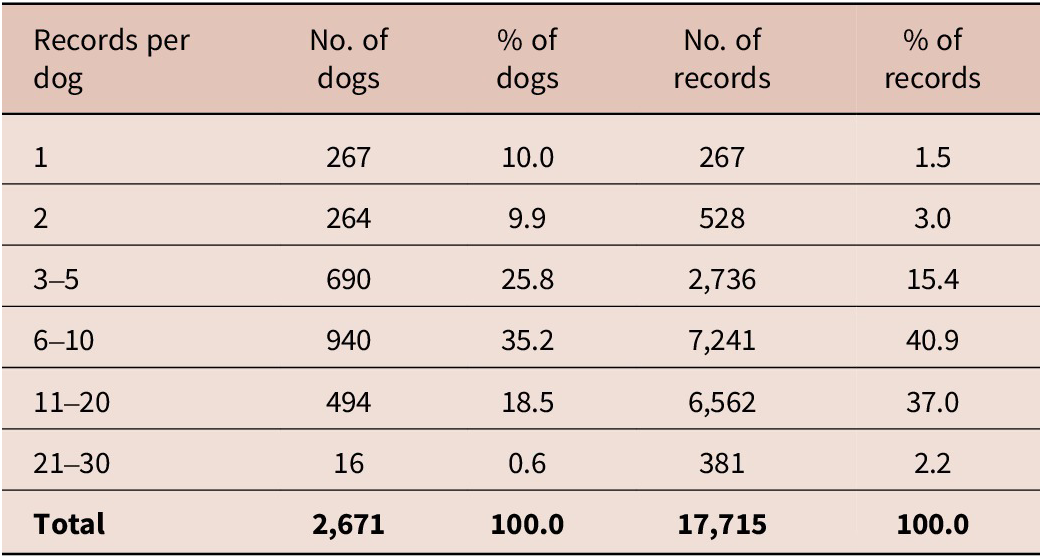
The 17,715 records originated from 2,671 unique Golden Retrievers, yielding a mean of 6.6 antiparasitic use records per dog (median: 6; SD: 4.4; range: 1–30). Drug use records were not uniformly distributed across individual dogs. The largest group of dogs (940/2,671; 35.2%) had between 6 and 10 records over the study period, accounting for 40.9% of all records. Dogs with 11–20 records (18.5% of dogs) contributed 37.0% of all records, while a small proportion of dogs (16/2,671; 0.6%) had 21 or more records and accounted for 2.2% of records. At the other extreme, 267 dogs (10.0%) had only a single antiparasitic use record, contributing just 1.5% of total records. Overall, the top 20% of dogs by record count (n = 534) accounted for approximately 40.5% of all antiparasitic use records, indicating moderate concentration of drug use within a subset of individuals (Table 1).
Frequency distribution of antiparasitic use records per dog among Golden Retrievers enrolled in the Morris Animal Foundation’s Golden Retriever Lifetime Study (study years 0–8; n = 2,671 unique dogs; 17,715 total records)

Table 1. Long description
The table consists of five columns: Records per dog, Number of dogs, Percent of dogs, Number of records, and Percent of records.
* Row 1: 1 record per dog; 267 dogs (10.0 percent); 267 records (1.5 percent).
* Row 2: 2 records per dog; 264 dogs (9.9 percent); 528 records (3.0 percent).
* Row 3: 3 to 5 records per dog; 690 dogs (25.8 percent); 2,736 records (15.4 percent).
* Row 4: 6 to 10 records per dog; 940 dogs (35.2 percent); 7,241 records (40.9 percent).
* Row 5: 11 to 20 records per dog; 494 dogs (18.5 percent); 6,562 records (37.0 percent).
* Row 6: 21 to 30 records per dog; 16 dogs (0.6 percent); 381 records (2.2 percent).
* Total: 2,671 dogs (100.0 percent); 17,715 records (100.0 percent).
Antiparasitic usage pattern across the study period
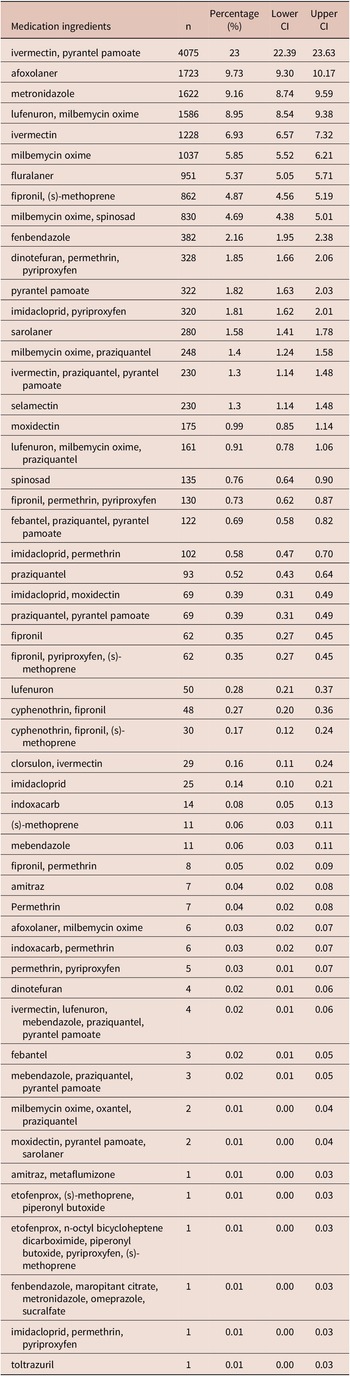
Evaluation of antiparasitic use across the nine-year study period demonstrated consistent dominance of the same major group of medications (Table 2). The ivermectin–pyrantel pamoate combination remained the most frequently used product throughout the study, accounting for 23.0% (95% CI: 22.39–23.63) of cumulative use. Other commonly used medications included afoxolaner (9.73%), metronidazole (9.16%), and lufenuron–milbemycin oxime (8.95%).
Antiparasitic usage pattern among Golden Retriever Dogs across 9 years of the Morris Animal Foundation’s Golden Retriever Lifetime Study (study years 0–8; n = 17,715 antiparasitic use records). Medications are listed by active ingredient(s), with corresponding frequency counts, percentage of total use, and 95% confidence intervals (CI)

Table 2. Long description
The table contains five columns: Medication ingredients, n (frequency), Percentage (%), Lower C I, and Upper C I.
Top usage records include:
* ivermectin, pyrantel pamoate: n = 4075, 23% (C I 22.39 to 23.63).
* afoxolaner: n = 1723, 9.73% (C I 9.30 to 10.17).
* metronidazole: n = 1622, 9.16% (C I 8.74 to 9.59).
* lufenuron, milbemycin oxime: n = 1586, 8.95% (C I 8.54 to 9.38).
* ivermectin: n = 1228, 6.93% (C I 6.57 to 7.32).
* milbemycin oxime: n = 1037, 5.85% (C I 5.52 to 6.21).
* fluralaner: n = 951, 5.37% (C I 5.05 to 5.71).
* fipronil, (s)-methoprene: n = 862, 4.87% (C I 4.56 to 5.19).
* milbemycin oxime, spinosad: n = 830, 4.69% (C I 4.38 to 5.01).
Mid-range usage includes fenbendazole (2.16%), pyrantel pamoate (1.82%), and sarolaner (1.58%).
Low-frequency usage (below 1%) includes moxidectin (0.99%), spinosad (0.76%), and praziquantel (0.52%).
The table concludes with several combinations having a frequency of 1 (0.01%), such as toltrazuril and various multi-ingredient topical or oral formulations.
Most other antiparasitic medications individually accounted for less than 5% of total use. Several products, including amitraz-based formulations, indoxacarb combinations, toltrazuril, and complex multi-ingredient therapies, were recorded only sporadically, each representing less than 0.1% of total antiparasitic administrations.
Classification by drug class and clinical indication
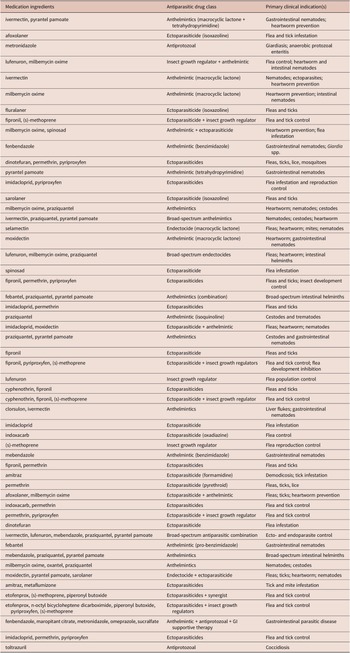
Antiparasitic medications recorded in the dataset represented multiple pharmacological classes, including anthelmintics, ectoparasiticides, antiprotozoals, insect growth regulators, and broad-spectrum combination products (Table 3). Anthelmintic agents, particularly macrocyclic lactones and tetrahydropyrimidines, were commonly used for gastrointestinal nematode control and heartworm prevention. Ectoparasiticides, including isoxazolines, pyrethroids, and formamidines, were primarily indicated for flea and tick control, while antiprotozoal agents were mainly used for gastrointestinal protozoal infections.
Classification of medications by antiparasitic drug class and clinical indication for all antiparasitic agents recorded in Golden Retrievers enrolled in the Morris Animal Foundation’s Golden Retriever Lifetime Study (study years 0–8). Each row lists the active ingredient(s), the pharmacological class, and the primary parasitic indication(s) based on labelled use

Table 3. Long description
The table consists of 54 rows of data under three headers.
Key entries include:
* ivermectin, pyrantel pamoate: Anthelmintics (macrocyclic lactone plus tetrahydropyrimidine) for gastrointestinal nematodes and heartworm prevention.
* afoxolaner: Ectoparasiticide (isoxazoline) for flea and tick infestation.
* metronidazole: Antiprotozoal for Giardiasis and anaerobic protozoal enteritis.
* lufenuron, milbemycin oxime: Insect growth regulator plus anthelmintic for flea control, heartworm, and intestinal nematodes.
* fluralaner: Ectoparasiticide (isoxazoline) for fleas and ticks.
* milbemycin oxime, spinosad: Anthelmintic plus ectoparasiticide for heartworm prevention and flea infestation.
* fenbendazole: Anthelmintic (benzimidazole) for gastrointestinal nematodes and Giardia species.
* dinotefuran, permethrin, pyriproxyfen: Ectoparasiticides for fleas, ticks, lice, and mosquitoes.
* selamectin: Endectocide (macrocyclic lactone) for fleas, heartworm, mites, and nematodes.
* moxidectin: Anthelmintic (macrocyclic lactone) for heartworm and gastrointestinal nematodes.
* febantel, praziquantel, pyrantel pamoate: Anthelmintics (combination) for broad-spectrum intestinal helminths.
* imidacloprid, moxidectin: Ectoparasiticide plus anthelmintic for fleas, heartworm, and nematodes.
* amitraz: Ectoparasiticide (formamidine) for demodicosis and tick infestation.
* toltrazuril: Antiprotozoal for Coccidiosis.
The table covers a wide range of single-agent and combination therapies targeting internal parasites (nematodes, cestodes, heartworms) and external parasites (fleas, ticks, lice, and mites).
Usage pattern by therapy type distribution
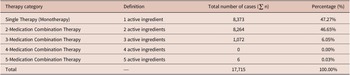
Classification of medications by therapy type showed that single-agent therapy was the most frequently observed usage pattern, accounting for 8,373 cases (47.27%) (Table 4). Two-medication combination therapies were similarly common, with 8,264 cases (46.65%) recorded. In contrast, three-medication combination therapies were less frequent, accounting for 1,072 cases (6.05%), while four-medication combinations were not observed. Five-medication combination therapies were rare, with only six cases (0.03%) recorded.
Distribution of medications by therapy type among Golden Retrievers enrolled in the Morris Animal Foundation’s Golden Retriever Lifetime Study (study years 0–8; n = 17,715 antiparasitic use records). Therapy type is defined by the number of distinct active antiparasitic ingredients in a given administration record

Table 4. Long description
The table consists of four columns: Therapy category, Definition, Total number of cases (summation n), and Percentage (percent).
* Single Therapy (Monotherapy): Defined as 1 active ingredient, with 8,373 cases representing 47.27 percent.
* 2-Medication Combination Therapy: Defined as 2 active ingredients, with 8,264 cases representing 46.65 percent.
* 3-Medication Combination Therapy: Defined as 3 active ingredients, with 1,072 cases representing 6.05 percent.
* 4-Medication Combination Therapy: Defined as 4 active ingredients, with 0 cases representing 0.00 percent.
* 5-Medication Combination Therapy: Defined as 5 active ingredients, with 6 cases representing 0.03 percent.
* Total: 17,715 cases representing 100.00 percent.
Route of administration
Of 17,715 cases in the Golden Retriever Lifetime Study database, the most commonly used antiparasitics by route of administration were oral formulations, accounting for 11,561 cases (65.28%), as shown in Figure 1. Topical formulations accounted for a substantial but smaller proportion of use (9.60%), while other administration routes were infrequently recorded. This distribution reflects a strong preference for orally administered antiparasitic products within the dataset.
Percentage of antiparasitics by route of administration among Golden Retrievers enrolled in the Morris Animal Foundation’s Golden Retriever Lifetime Study (study years 0–8; n = 17,715 antiparasitic records). Oral and topical routes are shown; ‘other’ includes unspecified routes.

Trend analysis of antiparasitic use
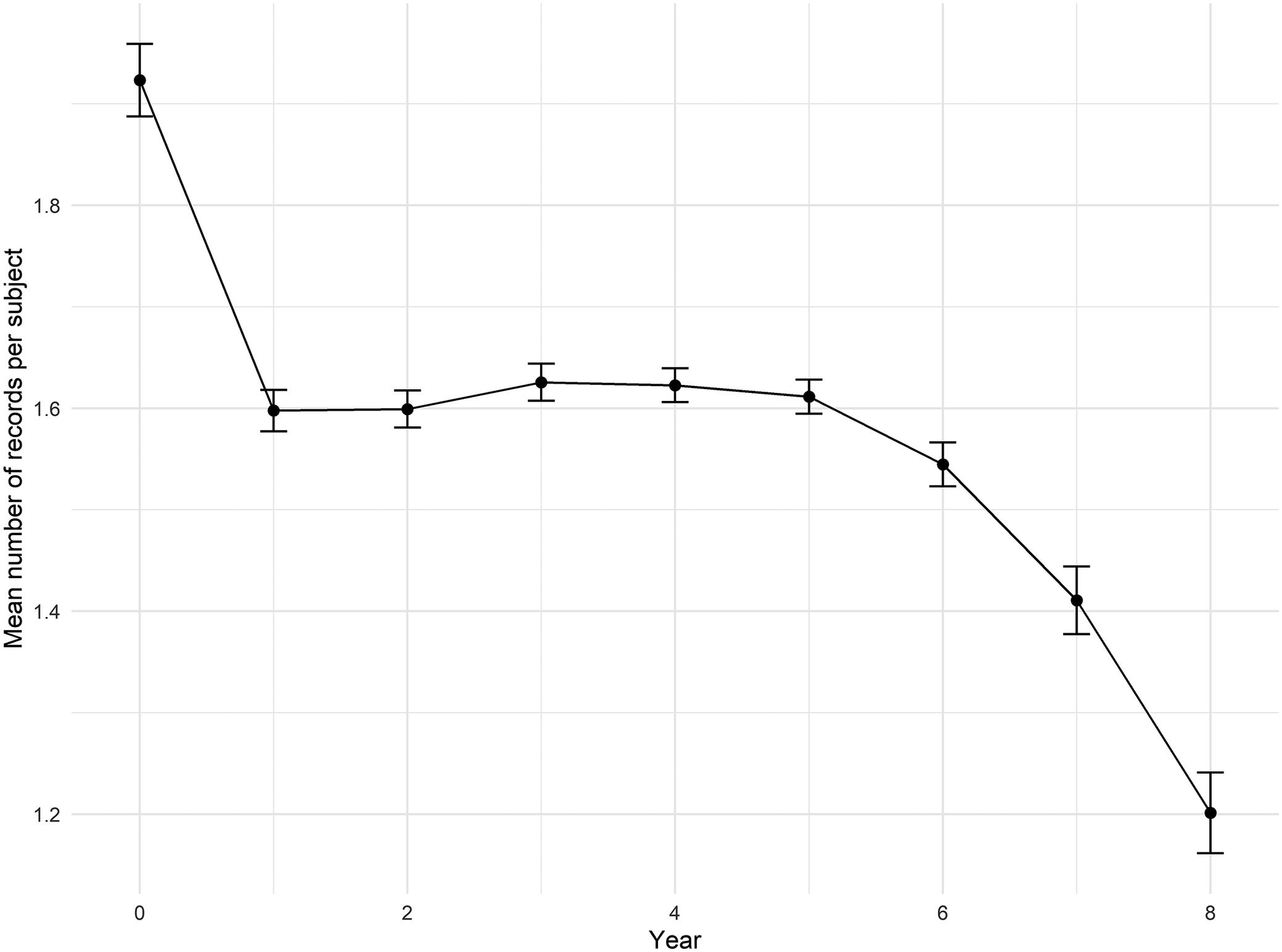
Year-by-year evaluation revealed a decline in overall antiparasitic use across the 9-year study period (Figure 2). Although antiparasitic use was observed across all study years, its magnitude varied. We observed a period of high utilisation in year 0, followed by a sharp decline in year 1, a relatively consistent usage pattern from year 1 to year 5, and then another downward trend from year 5.
Yearly trend in antiparasitic use among Golden Retrievers in the US. Data are from the Morris Animal Foundation’s Golden Retriever Lifetime Study (n = 17,715 records across study years 0–8). Each data point represents total antiparasitic records per subject in that study year. A statistically significant downward trend was identified (Mann–Kendall τ = −0.72, p = 0.009; Sen’s slope: −1.8 percentage points per year, 95% CI: −2.97 to −0.65).

Figure 2. Long description
The horizontal X axis is labeled Year and ranges from 0 to 8 in increments of 2. The vertical Y axis is labeled Mean number of records per subject and ranges from 1.2 to 1.8 in increments of 0.2.
Data points with vertical error bars show the following progression:
* Year 0: Approximately 1.92 records.
* Year 1: Drops sharply to 1.60.
* Year 2: Remains stable at 1.60.
* Year 3: Slight increase to 1.63.
* Year 4: Slight decrease to 1.62.
* Year 5: Slight decrease to 1.61.
* Year 6: Decreases to 1.55.
* Year 7: Decreases to 1.41.
* Year 8: Reaches the lowest point at 1.20.
The overall trend shows a significant initial drop followed by a plateau between years 1 and 5, and a steady decline from year 6 through year 8.
Temporal trend analysis revealed a clear, statistically significant decline in yearly antiparasitic use over the study period. The Mann–Kendall test indicated a strong negative monotonic trend (τ = −0.72, p = 0.009), demonstrating a consistent year-to-year decrease rather than random variation. Sen’s slope further quantified this pattern, estimating an average annual reduction of approximately 1.8 percentage points (95% CI: −2.97 to −0.65). The entirely negative confidence interval supports the robustness of this downward trend. Overall, these findings indicate a substantial and sustained decline in antiparasitic utilisation across the study period.
Seasonal patterns of antiparasitic utilisation
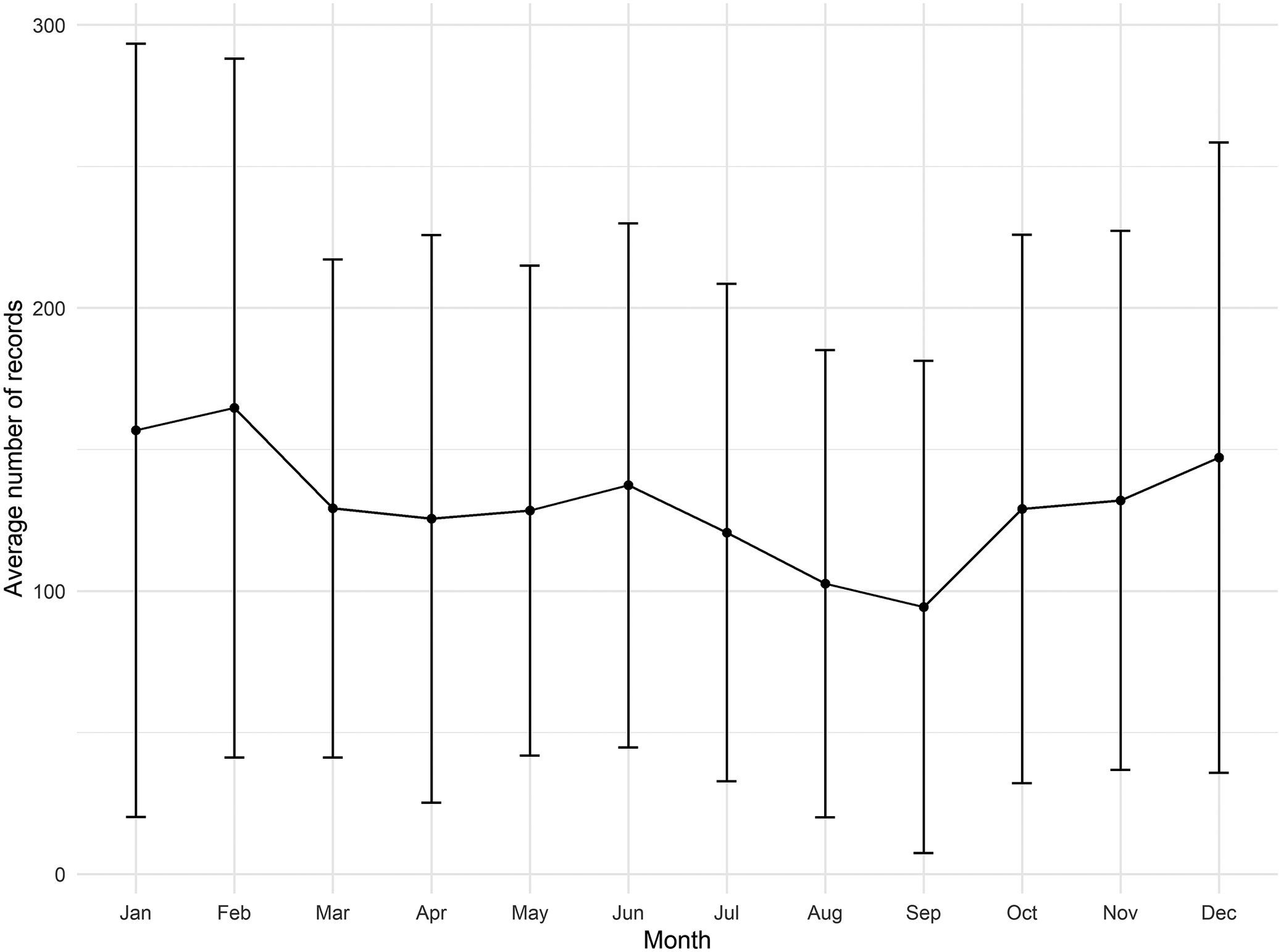
Assessment of average monthly use demonstrated distinct seasonal variation in antiparasitic administration (Figure 3). Utilisation was high in specific months of the year, with the highest observed in February and the lowest in September. This seasonal pattern showed a downward trend in usage from February to September, then a reversal in September.
Average monthly pattern of antiparasitic use across 9 years among the Golden Retriever breed of dogs enrolled in the Morris Animal Foundation’s Golden Retriever Lifetime Study (study years 0–8; n = 17,715 total records). Each bar represents the mean monthly antiparasitic use averaged across all 9 study years. Error bars represent the standard deviation across years, reflecting inter-year variability in monthly use.

Figure 3. Long description
The x-axis is labeled Month and lists the twelve months from Jan to Dec. The y-axis is labeled Average number of records and ranges from 0 to 300 in increments of 100.
Data points are represented by black dots connected by a line, with vertical error bars extending above and below each point.
* Jan starts at approximately 160.
* Feb shows a slight peak at approximately 170.
* Mar drops to approximately 130.
* Apr and May remain relatively stable near 130.
* Jun shows a small increase to approximately 140.
* Jul, Aug, and Sep show a downward trend, reaching the lowest point of the year in Sep at approximately 95.
* Oct, Nov, and Dec show a steady recovery, ending the year at approximately 150.
The error bars are very large for every month, often spanning from near 20 to over 280, indicating significant inter-year variability in the data.
Discussion
This study provides a detailed longitudinal assessment of antiparasitic usage patterns in a large cohort of Golden Retrievers. This offers rare insight into how parasite control practices evolve over time in a well-characterised dog population. Antiparasitic use was highly concentrated within a limited number of products, dominated by agents targeting both endoparasites and ectoparasites. Ivermectin–pyrantel pamoate combinations account for the largest proportion of recorded administrations. The prominence of this formulation reflects its broad-spectrum efficacy against gastrointestinal nematodes and its established role in heartworm prevention, which is similar to previously reported prophylactic and broad-spectrum strategies recommended in small animal practice (Theodorides et al. Reference Theodorides, Chang, Di, Grass, Parish and Scott1973; Clark et al. Reference Clark, Daurio, Plue, Wallace and Longhofer1992; Hayes et al. Reference Hayes, Wiseman and Snyder2021). Its frequent use could be attributed to the monthly routine administration of medications in dogs.
The strong preference for oral formulations observed in this study is notable and likely reflects the predominantly prophylactic nature of antiparasitic usage in companion animals. In contrast to parenteral routes, which are more commonly reserved for therapeutic interventions or acute clinical presentations, oral antiparasitics are well-suited for long-term prevention owing to their ease of administration, favourable safety profiles, and high owner compliance. Previous studies of veterinary prescribing behaviour and pet owner practices have similarly identified oral formulations as the preferred route for drug administration in dogs (Panchim et al. Reference Panchim, Saengpradub, Rakkijpradit, Watananontchai, Chansiripornchai and Angkanaporn2024; Wright et al. Reference Wright, Hillier, Lambert, Mwacalimba, Lloyd, Kagiwada, Hashiguchi, Hours, Riley, Enstone and Wyn2024). The dominance of oral products in this cohort, therefore, supports the interpretation that most recorded administrations are preventive rather than curative in intent.
The distribution of antiparasitic classes and clinical indications further highlights this interpretation. Anthelmintic agents, particularly macrocyclic lactones and tetrahydropyrimidines, were commonly used for gastrointestinal nematode control and heartworm prevention, while ectoparasiticides, especially isoxazolines, pyrethroids, and formamidines, were primarily indicated for flea and tick control. Antiprotozoal agents such as metronidazole and fenbendazole were less frequently used and were largely associated with gastrointestinal protozoal infections. These patterns are consistent with epidemiological studies indicating that gastrointestinal nematodes, heartworm exposure, fleas, and ticks represent the most common parasitic risks faced by dogs in temperate regions of North America (Saleh et al. Reference Saleh, Allen, Lineberry, Little and Reichard2021; Sharma and Rathore Reference Sharma and Rathore2022; Mwacalimba et al. Reference Mwacalimba, Sheehy, Adolph, Savadelis, Kryda and Poulsen Nautrup2024).
The widespread usage of broad-spectrum and combination antiparasitic products observed in this study reflects contemporary trends in veterinary parasite control. Combination therapies offer practical advantages by reducing dosing frequency and simplifying the management of mixed infections. However, their extensive use raises significant concerns about resistance. Repeated exposure of parasite populations to the same active ingredients may accelerate the development of antiparasitic resistance, which is a growing challenge in both veterinary and companion animal medicine (Kaplan Reference Kaplan2004; Wolstenholme et al. Reference Wolstenholme, Fairweather, Prichard, von Samson-Himmelstjerna and Sangster2004; Kramer et al. Reference Kramer, Baneth, Dantas-Torres, Hamer, Lappin, Otranto, Roura, Sager, Schunack, Scorza, Traub and Geary2025). Resistance to macrocyclic lactones in canine nematodes, although not yet widespread, has been increasingly documented and underscores the need for judicious use of these agents (Wolstenholme et al. Reference Wolstenholme, Evans, Jimenez and Moorhead2015). Therefore, the concentration of use within a narrow range of active compounds in this study highlights the need for resistance-aware prescribing practices supported by diagnostics and risk assessment.
At the individual drug level, the prominence of ivermectin-based combinations reflects their long-standing efficacy, affordability, and integration into routine preventive protocols. Isoxazolines such as afoxolaner and fluralaner were also frequently used. This is consistent with their proven effectiveness against fleas and ticks and their increasing adoption in small animal practice. While these agents have transformed ectoparasite control, emerging reports of reduced susceptibility in some arthropod populations emphasise the need for ongoing surveillance and stewardship (Kramer et al. Reference Kramer, Baneth, Dantas-Torres, Hamer, Lappin, Otranto, Roura, Sager, Schunack, Scorza, Traub and Geary2025). Antiprotozoal agents were used less frequently, suggesting that protozoal infections were managed more selectively, likely following clinical diagnosis rather than routine prophylaxis.
Analysis of therapy type usage patterns revealed that nearly half of all administrations involved single-agent medications, while two-drug combinations accounted for a comparable proportion of use. Three-drug combinations were relatively uncommon, and regimens involving more than three active ingredients were rare. This pattern suggests a general tendency toward simplified treatment strategies, with escalation to more complex combinations reserved for specific clinical scenarios. While combination therapy may be justified in cases of mixed infections, unnecessary polypharmacy can increase the risk of adverse effects, drug interactions, and selective pressure for resistance (Hunter and Isaza Reference Hunter and Isaza2017). Hence, the low frequency of high-order combinations in this dataset may therefore reflect appropriate clinical restraint.
Temporal analysis demonstrated a sustained decline in antiparasitic usage over the 9-year study period. Several factors may contribute to this trend, including cohort aging and changes in perceived parasite risk. Older dogs have been shown to harbour more stable gut microbiota and may exhibit reduced susceptibility to certain gastrointestinal parasites, which potentially decreases the need for frequent deworming (Gates and Nolan Reference Gates and Nolan2009; Lee et al. Reference Lee, Jo, Abbas, Gui, Ali, Kim and Park2025). In addition, increased awareness of targeted parasite control and evolving veterinary guidelines may have influenced prescribing practices over time.
Clear seasonal variation in antiparasitic use was also evident, with higher use during winter months and lower use in summer. This pattern likely reflects the biology and life cycles of common canine parasites, many of which exhibit seasonal dynamics influenced by temperature, humidity, and other environmental factors that affect the survival of infective stages. Reports show that winter months may be associated with increased prevalence of canine parasitism, frequent indoor contact, and heightened awareness of parasite prevention during annual veterinary visits (Drake and Carey Reference Drake and Carey2019; Nagamori et al. Reference Nagamori, Warren, Houma and Samarakoon2025). Conversely, extreme summer temperatures may reduce environmental parasite survival, leading to lower perceived risk and reduced preventive use (Short et al. Reference Short, Caminade and Thomas2017).
When considered alongside findings from other geographic regions, the usage patterns observed in Golden Retrievers align closely with reports from Canadian and South American studies, which similarly documented dominance of macrocyclic lactones and isoxazolines, strong reliance on oral prophylaxis, and seasonal variation in use (Andresiuk et al. Reference Andresiuk, Sardella and Denegri2007; Vale et al. Reference Vale, Sousa, Tavares, Silva, Luz, Gomes, Sargison and Costa-Junior2021; Defalque Reference Defalque2022). This consistency suggests that the trends identified in this cohort likely reflect broader paradigms in contemporary companion animal parasite control rather than location-specific behaviour alone.
From a One Health perspective, this study’s findings provide important insights into how long-term antiparasitic usage patterns in companion animals may intersect with human and environmental health. The concentration of antiparasitic use within a limited number of active ingredients, particularly broad-spectrum and combination products, highlights patterns that are relevant beyond individual canine care. Dogs occupy a unique position at the human–animal–environment interface, and routine antiparasitic administration can influence environmental contamination with drug residues, alter parasite population dynamics, and potentially affect exposure pathways for zoonotic parasites. By documenting temporal, seasonal, and product-specific usage patterns within a large cohort, this study contributes empirical evidence that can inform integrated parasite control strategies and stewardship discussions within a One Health context (Picot et al. Reference Picot, Beugnet, Leboucher and Bienvenu2022).
In terms of canine health implications, this study advances understanding of real-world antiparasitic usage patterns in dogs by demonstrating sustained reliance on specific agents and administration routes over time. Such patterns have direct relevance for optimising parasite prevention, minimising unnecessary exposure, and supporting long-term drug effectiveness. The observed decline in antiparasitic usage across study years, together with clear seasonal variation, highlights the need for age- and risk-adjusted parasite control strategies rather than uniform, blanket dosing. By leveraging longitudinal cohort data, this work moves beyond cross-sectional snapshots and provides a comprehensive view of how antiparasitic practices evolve throughout a dog’s lifespan.
Conclusion
It was concluded that these findings provide important baseline evidence on the burden of endoparasites and ectoparasites in dogs and highlight the need for stewardship-oriented, risk-based parasite control strategies. Diagnostic-guided interventions, prophylaxis, and prudent use of broad-spectrum agents are essential to sustaining antiparasitic efficacy while minimising unnecessary exposure. In addition, this study advances understanding of real-world antiparasitic use and provides a foundation for evidence-based policy and One Health–aligned parasite control frameworks.
Acknowledgements
We would like to thank Morris Animal Foundation, its staff members, and all participants in the Golden Retriever Lifetime Study, including the dog owners, their Golden Retrievers, and the Study veterinarians who made this work possible.
Author contribution
MO, BA, and OA conceived and designed the study. BA and MO conducted data gathering. MO performed statistical analyses. MO, OA, and HRM wrote the article. All authors reviewed and approved the manuscript for submission.
Financial support
The Golden Retriever Lifetime Study and this manuscript were made possible through financial support provided by the Morris Family Foundation, the Mark & Bette Morris Family Foundation, VCA, the V Foundation, Blue Buffalo Company, Petco Love, Zoetis, Antech Inc., Elanco, the Purina Institute, Orvis, the Golden Retriever Foundation, the Hadley and Marion Stuart Foundation, Mars Veterinary, generous private donors, and the Flint Animal Cancer Center at Colorado State University. The funders had no role in study design, data collection and analysis, decision to publish, or preparation of the manuscript.
Competing interests
The authors declare there are no conflicts of interest.
Ethical standard
Not applicable.


 Open access

