

14.1 Introduction
14.1.1 Description of the Region
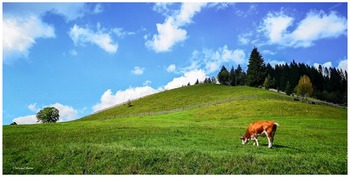
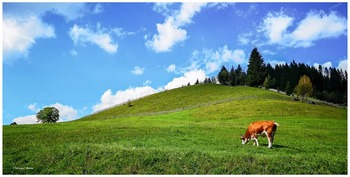
In the Nord-Est region more than half of the population (58.4 per cent) lives in rural areas. The regional landscape is highly diversified, including mountains, hills and plains, and climate conditions vary along altitude and landscape, from mountain to temperate-continental climate. The low hills and plains are favourable for a very diversified range of agricultural activities, being also exposed to extreme weather events, mostly frequent droughts. The agricultural area of the region totals 2.12 million ha and includes 65 per cent arable land, 32.6 per cent grassland, 1.5 per cent vineyards and 0.9 per cent orchards. The main crops are maize, wheat, sunflower and vegetables; important quantities of fruits and wine are also produced in the region. Livestock is composed mainly of cattle and sheep, pigs and poultry. In the last two decades, bee farming developed as well. Forests also cover 1.23 million ha. Agriculture, forestry and fishery produce 7.4 per cent of the GVA of the region. The case study concerns small, mixed, family farms (under 20 ha, with field crops and livestock), which represent 99 per cent of the total number of farms in the region. These operate 54 per cent of the utilized agricultural area (UAA) and own 89 per cent of livestock units in the region. Agritourism also developed in the region, based on local traditions, rich historical and cultural heritage and wonderful landscapes (Figure 14.1).
14.1.2 Historical Context and Background of the Farming System
In the period of the centrally planned economy (1949–1989), there were three main ownership forms of agricultural land in Romania: state ownership (state-owned farms) which operated 30 per cent of the agricultural area (AA), collective ownership (collective farms) (61 per cent of AA) and private households (9 per cent of AA, located in high hills and mountain areas). The collective farms were established between 1949 and 1962 by forcing farmers to join their land and assets.
In the 1950s and 1960s, this structure of Romanian agriculture allowed its modernization compared to the pre-war development level. The large size of the agricultural units, the funding and investments coordinated through the centralized plans showed the advantages of economies of scale (new technologies, irrigations, use of tractors, agricultural machinery, fertilizers and pesticides). Since the 1970s, the centrally planned economic model with its main characteristics (almost complete elimination of private property, lack of decisional and financial autonomy of agricultural units, lack of demand and supply mechanisms as signals for production and resource allocation), began to show its limits. Centralized price fixing of agricultural commodities at low levels, which did not cover costs, aimed at transferring economic value from agriculture to industry, and pushed the agricultural sector into chronic inefficiency. Exports of agricultural products for the payment of external debt led to food shortages in urban areas. The overall deterioration of the economic and social environment eventually led to the major political and economic changes that started in December 1989, which represent an essential milestone in the Romanian history.
After the collapse of Communism in 1989, deep transformations occurred in the agricultural sector in terms of land ownership and farming systems. The former collective farms were dismantled, and land and assets were restituted to former owners or their heirs, resulting in a huge number of small farms, i.e. in the Nord-Est region there were 880,000 farms with an average size of 2.39 ha UAA (General Agricultural Census 2002). The former state farms were dismantled a decade later (year 2000), resulting in the emergence of large farms (over 100 ha) and agricultural companies. In the last fifteen years, land concentration occurred mostly in the small and medium-sized group, resulting in the diminution of the total farm number by 18 per cent, while the average area per farm increased to 2.65 ha (Farm Structure Survey 2016).
The food industry of the centrally planned economy period was concentrated in very large processing units that collected agricultural raw products from the large agricultural units. In the 1990s, all food industry enterprises were privatized, divided or went bankrupt and disappeared. Small private units emerged, but the former supply chains (adequate for large enterprises) disappeared as well.
The Romanian farming system is facing important challenges – economic, environmental, social and institutional. The rural population is heavily dependent on agriculture in economic terms (93 per cent of farms use more than half of the production for on-farm consumption). At the same time, when investment is needed for business development, small farms rely on private (family) funds and income from alternative off-farm jobs rather than on credit.
The rural population is characterized by an accelerated aging process, by low levels of education and by redundant skills in a labour market where the pace of adoption of technological innovation is very fast (Tudor Reference Tudor2017, p. 112). Statistically, there is an abundance of labour force in rural areas and agriculture in particular (agriculture takes 19.1 per cent of total employment), but in reality this results in under-employment of the rural population, hence a low level of income. Together with the lack of job opportunities in non-farming activities in rural areas, it became the main driver for a significant migration of people included in the active working age groups to either urban areas or abroad. As a consequence, in fact there is a chronic shortage of seasonal workers on farms.
There is a debate among different authors about the importance of subsistence and semi-subsistence farms in rural Romania. Some authors (Bohatereţ et al. Reference Bohatereţ, Brumă and Tanasă2018) consider that they have a social function as the main priority and an economic function as the subsidiary priority. For the last decades, the small farms acted as a social safety net and ensured food self‐sufficiency for farmer families and their urban relatives. There are also other roles that small farms appear to play in the wider rural economy, e.g. as providers of environmental public goods, supplying specialty foods and ensuring the continuation of local and cultural traditions (Hubbard et al. Reference Hubbard, Mishev, Ivanova and Luca2014). Other authors (Steriu and Otiman Reference Steriu and Otiman2013) argue that small farms are a loss of economic potential for agriculture, representing an inefficient form of land resource allocation and contributing to land fragmentation and low productivity.
In terms of environmental characteristics, water availability is a problem: frequent droughts affect the production and income levels, especially on the small and medium-sized farms located in areas with no irrigation systems. Other extreme weather events (flooding, hail, late spring frost) mostly affect the small- and medium-sized farms due to limited access to insurance instruments, prohibitive prices or unfavourable contract terms. Moreover, the intensive farming on medium- and large-sized commercial farms create water pollution problems due to the widespread use of fertilizers and pesticides.
Small farms have a limited access to financial resources from CAP for direct payments and rural development programmes, therefore they are less vulnerable to uncertainties related to the future of CAP. On the institutional side, in terms of the embedding in the value chain, the main problem is the lack of cooperation among small farmers, which results in lack of sales organization and poor development of local chains. It also results in poor bargaining power with more concentrated upstream input providers and downstream actors in the value chain (processors and retailers).
14.2 Current State of Resilience
14.2.1 Main Functions of the System and Their Performance
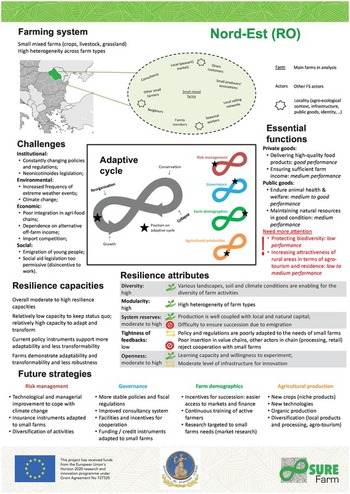
In the FoPIA-1 SURE-Farm Workshop, the participants appreciated that the private functions of the farming system in the Nord-Est region are more important than the public ones. In their opinion, food production is the main target of the whole agricultural system, and the focus should be on it, since their general perception is that at present Romania has not yet achieved its full production capacity and ability to ensure the population’s food security. The functions considered as most important were the ‘delivery of healthy and affordable food products’ and ‘ensuring economic viability’ (see Annex 14.1). Crop, vegetable and animal production – indicators of the ‘food production’ function – was perceived to perform well, as it is seen as essential in the farming system. With regard to the ‘economic viability’ function, the highest score was for the ‘subsidies’ indicator, because subsidies were evaluated as very important for bringing incomes for small farms at a reasonable level. Availability of financial resources from CAP for direct payments is essential for small and medium-sized farms, since it may cover up to 30 per cent of production costs. ‘Sales of crop and vegetable products’ (indicator for ‘bio-based resources for the processing sector’ function) was ranked as the second important (Gavrilescu et al. Reference Gavrilescu, Tudor, Voicilaş and Luca2019).
On the other hand, ‘ensuring animal welfare’ was seen as the key function in the delivery of public goods, since the activity in the farming system is mixed (crops and livestock). The diversification of farm activities and income sources (through local/on-farm processing, selling farm products on local markets, agri-tourism, etc.) also contributes to the sustainable development of the rural area in the region.
14.2.2 Past and Present Challenges
An important economic challenge identified for the farming system in the case study region is the poor integration of small farms in domestic agri-food chains (long-term pressure) (see Annex 14.1). Only part of the farm production is sold; the remaining production is consumed on-farm. There is reluctance in association (due to the bad memories of the 1950s and early 1960s when farmers were forced to join collective farms and were depleted of their land and assets). The lack of associative forms (or cooperatives) prevents the concentration of supply, hence wholesalers and retailers are not interested in buying products from small farmers, due to high transaction costs. Despite important efforts from public authorities that provided an enabling legislation and from advisory bodies, which are carrying out intense information campaigns, the number of associations/cooperatives is still low. Nevertheless, small producer associations started to emerge where small farmers found common interests, such as being eligible for grassland subsidies or being part of a group of farmers selling to supermarkets. There are several alternative selling channels for the small farmers: local and urban peasant (wet) markets, local selling networks and sales to direct customers (using ‘customer lists’). Wet markets are very popular in urban areas, as they are perceived by consumers as supplying more diversified, cleaner, fresher and better-quality vegetables and fruit, at lower prices, as opposed to longer preserved and more processed products in the super- and hypermarkets. Prices are strongly influenced by competition from other small farmers. The farmers are influenced by the volatility of the demand and by the changes in the consumers’ requirements concerning the origin of products: there is an increasing demand for local products (as opposed to imported products).
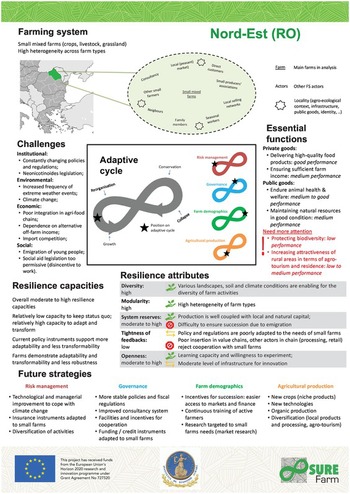
Another important challenge is the lack of integration in EU markets and competition of imported products. Due to the lack of supply concentration, processors and exporters are not willing to buy products from small farms. The large milk- and meat-processing units prefer to use imported agricultural raw products (milk from Hungary, meat from Poland, etc.), which are cheaper than the local products, because imported commodities come from specialized and more efficient farms in other member states. Supermarkets and hypermarkets prefer to import fruit and vegetables in large batches from other member states or from Turkey rather than buying them from local producers, which are not organized in associations and thus not able to concentrate supply so as to meet the retailers’ requirements. There is an important debate regarding the low-quality ‘counterfeit products’ imported from other EU countries which also negatively influence local prices. A discussed example was honey; on the domestic market, imported low-quality ‘counterfeit products’ are much cheaper than the domestically produced products of good quality. Local producers therefore do not get the right prices. As a result, in this particular case, much of the production is exported.
Changing EU and national laws and regulations was perceived as a huge challenge – even as an obstacle. National regulations are changing too often and farmers can barely keep up with the changes. This creates problems in filling in the applications and in receiving the subsidies, which are amplified due to a perceived excessive bureaucracy imposed by public authorities. The participants in both FoPIA-1 and FoPIA-2 workshops expressed a major discontent with the fact that the Romanian authorities do not protect their own farmers. The example concerned eco-conditionality rules: the CAP proposed eleven different criteria to choose from; Hungary chose only four of them, Poland chose quite a few, while the Romanian authorities chose to fulfil all of them, thus disadvantaging its own farmers.
Another challenge discussed in FoPIA workshops is climate change, pests and diseases. Drought frequency increased in the last two decades as a result of climate change; the hill and plain areas in the case study region are more exposed to severe droughts. At the same time, excessive rainfall in some years and early frost resulted in an increased frequency of years when farmers incurred production losses. Besides lower yields, drought significantly diminishes feed availability for livestock, pushing up the costs that are not covered by the price of meat and milk. The lack of primary irrigation infrastructure prevents the development of the secondary irrigation networks, to which even small farmers might connect without major investments. Furthermore, input costs increased in the last decade; the higher prices of pesticides resulted in a lower use, thus exposing the crops to increased phytosanitary risks. In addition, the African Swine Fever severely affected small farms growing pigs, although they received a compensation for the pigs killed in order to prevent the spread of the disease. There are no insurance instruments tailored to the needs of small farms. Overall, with losses incurred in almost half of the years, the small, mixed farming system is highly vulnerable to extreme weather events as well as to pests and diseases.
14.2.3 Past and Present Risk Management Strategies
At the time of its accession to the EU (1 January 2007), the Romanian farming system was significantly less developed compared to the old member states and even compared to some of the new member states. Romanian small farmers are increasingly aware that they need to develop and increase their presence on the markets. There are two major directions to achieve that: increasing the size of their farms (by purchasing and/or leasing land and investing in livestock) and implementing technological and managerial improvements in order to increase productivity, sales and income. The strategy of introducing more technology is also essential for agriculture development in the case study area. Increasing farm size in combination with more technology is assessed to positively contribute to all three resilience capacities – robustness, adaptability and transformability. In the context of the EU Green deal objectives, farm consolidation policies dedicated to small farms represent an opportunity for Romania where the small-farming system is ‘greener’ than other agricultural systems (being less intensive, there is a general less usage of fertilizers and pesticides).
Although cooperation is not a popular organization form among most farmers (especially those over forty years old), younger farmers and especially those who worked in farming abroad for some time are more open to the idea and benefits of joining various forms of associations or producer groups in order to better cope with the challenge of entering the domestic agri-food chains.
Increasing the sales of high-quality products is considered as an important past and present strategy. However, it may be expected to have a negative effect on robustness and adaptability. It diminishes the current turnover – the price difference between ‘regular’ and ‘high quality’ products is not very important. Given the fact that the regular consumers’ main driver is low price and not quality of products, high-quality products are still seen as niche products. The demand for (more expensive) high-quality products is currently low due to consumers’ modest purchasing power. Hence, the producers of high-quality products have lower income as compared to those who sell regular products. The strategy is assessed to have positive effects on transformability only – e.g. by completely re-orienting the farm activity to niche products. Consequently, for this strategy a trade-off was perceived between robustness and adaptability on the one hand and transformability on the other hand.
14.3 Future State of Resilience
14.3.1 Future Challenges
In a survey performed among 122 small mixed farms in the case study area, the main future challenges identified by the farmers as very likely to occur were: small size of the farm (business), technological shortage of the farm, sale of products (due to lack of markets and low prices), climate change (mainly increased drought frequency), policy changes (in terms of subsidy reduction), lack of access to funding, the need for activity diversification in the farm and the lack of labour (skilled and unskilled workforce).
14.3.2 Future Alternative Systems
The stakeholders participating in the FoPIA-2 workshop selected and discussed four alternative systems as most probable for the next decade in the case study region (Figure 14.2): commercial specialization of mixed family farms (B1,2), cooperation and multifunctionality (R3), organic farming (R2) and alternative crops and livestock (R1) (Gavrilescu et al. Reference Gavrilescu, Tudor, Voicilaș and Luca2020).
Causal loop diagram for the farming system in the Nord-Est region in Romania.
Notes: A ‘+’ sign implies a positive cause–effect relationship and a ‘–’ sign implies a negative cause–effect relationship. ‘B’ stands for a balancing feedback loop and ‘R’ stands for a reinforcing feedback loop. ‘I’ indicates an important system indicator related to the system’s functions. ‘C’ indicates a system challenge. ‘A’ indicates an indicator related to a resilience attribute. Alternative systems are represented in orange boxes
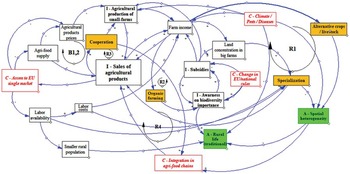
The relationships between challenges (C), resilience indicators (I), resilience attributes (A) and strategies for achieving future alternative systems are shown in the Casual Loop Diagram (Figure 14.2). The discussions pointed out that in general, the alternative systems can moderately improve the functions and resilience attributes of the farming system, but also showed that, in some cases, the alternative systems can induce strong positive changes. The resilience attributes were generally perceived to be maintained or improved in the alternative systems.
There are many loops in the farming system, but some of them stand out. Access to the European single market, and workers’ free movement in particular, has two negative implications for the system of small, mixed farms in the Nord-Est region: increasing the supply of agri-food products at low import prices and the external migration of younger workers looking for better paid work, respectively.
Balancing loop (B1,2): Imports of low-priced agri-food products force a downward alignment of prices on the domestic market, which makes small farms unprofitable. As a result, they diminish their production since the market no longer pays for their efforts. Hence, farm incomes decline, and small-scale agriculture becomes an increasingly less attractive activity in economic terms. A consequence is the migration of rural population to urban areas or abroad, which results in the lack of labour availability and hinders the generational renewal. Another important consequence is that some farmers exit the system by selling or renting their land to larger, more viable farms. Large farms are strongly commercially oriented and, in order to be efficient, they get specialized. Keeping that in mind, there are two different directions for the evolution of the farming system in the Nord-Est region that are expected to co-exist: (i) an intense concentration of land operations in very large farms (operating thousands of hectares) and which, in general, are practicing an industrial-type of farming, dominated by cereals and oilseeds; (ii) a moderate land concentration in commercially specialized medium-sized mixed family farms. These farms can either integrate in supply chains, or seek to cover local market niches by specializing in new crops and livestock, or in organic production. These directions of evolution will decrease the spatial heterogeneity specific to the small farms’ system, but, at the same time, favour the integration in agri-food chains because: (i) the supply by large specialized holdings is better able to meet the requirements of product homogeneity and quantity required by processors, retailers and exporters, and, (ii) the supply of medium-sized family farms responds to the new preferences of local consumers. In the latter case, the integration in the agri-food chain is often organized in short supply chains. By concentrating the operation of agricultural land in very large, intensive and very narrowly specialized holdings, a radical change would occur in the specific agricultural landscape of the region, previously characterized by a mosaic of crops and livestock.
Reinforcing loop (R1): The introduction of new crops and animal species at the level of family farms, in response to new market niches, contributes to maintaining the local territorial heterogeneity, as well as to integration in agri-food chains by diversifying and increasing the sales of agricultural products. This would result in increasing farm income, which can allow for innovation and new products. Policies aimed at diversifying production in the small farms’ system would contribute to achieving the European priorities of the Green Deal.
Reinforcing loop (R2): The strategy of orienting small farms towards organic farming is positively correlated with the level of awareness of biodiversity importance, since organic farms are more inclined towards nature conservation, thus contributing to the preservation of traditional rural life. Moreover, a higher awareness of biodiversity in organic farms leads to an increase in the level of subsidies (especially transfers for environmentally friendly agricultural practices), with a positive impact on farm income. This reinforces the orientation to organic farming and goes in the same direction as EU greening policy.
Reinforcing loop (R3): Small farms have mechanisms to keep themselves on the market. These farms can reunite in producer associations to be able to provide an aggregate response to the demand for agricultural products by the processing industry and retailing system. Functional producer associations facilitate increase in agricultural production and sales, while increasing the chances of integration of small farms into agri-food chains and improving their bargaining power with upstream and downstream actors in the chains. The integration of small farms in agri-food chains must become a priority of public policies so as to change the perception of agriculture in young people and make this activity more attractive for them.
The shortage of labour in rural areas as a result of migration results in increased farm operating costs and leads small farmers to change their production structure into less labour-intensive activities (e.g. by abandoning vegetable growing or animal husbandry and reorienting to field crops) or to simply exit farming. It results in a decrease in the number of small rural households, who are responsible for preserving the rural traditions and lifestyle.
14.4 Conclusions
As the literature shows, small farms are revealed to be the microeconomic systems with the highest resilience in the Romanian rural area. The lack of strict production specialization allows the small farms to quickly change their production orientation according to the market requirements – i.e. if they decide to sell (most of) the products obtained on the farm (yet, the on-farm consumption remains quite important). This change in the production structure is possible because small farms have the minimum knowledge (based on agricultural practice) as well as the technical means to produce (at a small scale) a wide range of crops, vegetables, fruit and/or animal products (both unprocessed and primarily processed). In contradiction with the general belief that specialization results in better economic performance, the argumentation made here show that the lack of strict production specialization in the particular case of small farms is a means of ensuring economic resilience in a market where agri-food preferences change continuously.
The current small, mixed farming system is very much adaptable and could satisfactorily become commercially specialized or multifunctional if it is included in real and effective association/cooperation forms. They could also adapt by better satisfying the local demand through short supply chains. Another form of adaptation would be to actively look for uncovered market niches.
Currently, there is a certain capacity for transformation: some small farms sell or lease out their land to large farms, highly specialized in cereals and oilseeds production (for processing or export). There is also capacity for a part of the small farms to transform by engaging in alternative crops or livestock. The orientation towards organic production is growing from year to year, mainly on small, mixed farms located in hilly and mountain areas, specialized in livestock raising. In the short and medium term, an important impediment to this is the low demand for organic products on the domestic market due to the high prices that only a small part of the population can afford, and the strong competition on international markets.
The cooperation alternative was perceived by stakeholders in the Nord-Est region as highly desirable, but its implementation, although very necessary for the integration of small farms in the agri-food chains, is hampered by negative historical memories and also by the lack of interpersonal trust between potential members and requires important changes of attitudes (towards increased cooperation), as well as changes (improvement and simplification) in the rules and regulations.
Future policies should be directed to stimulate investment for development and innovation in line with the European priorities and goals of the Green Deal and thus provide an enabling environment for the small, mixed farming system to become increasingly sustainable and resilient.


 Open access