


Work disability due to stress-related and other mental disorders is increasing in several European countries (Järvisalo et al., Reference Järvisalo, Anderson, Boedeker and Houtman2005). In Sweden, stress-related mental disorders and depression are the most common reasons for sick leave (Social Insurance Agency, 2011). Stress-related health problems, such as burnout, are also prevalent in the population (Hallsten et al., Reference Hallsten, Bellaagh and Gustafsson2002; Norlund et al., Reference Norlund, Reuterwall, Hoog, Lindahl, Janlert and Birgander2010). Burnout has been found to affect mental health negatively (Hakanen et al., Reference Hakanen, Schaufeli and Ahola2008), and several studies have found that symptoms of burnout increase the risk of sick leave (Ahola et al., Reference Ahola, Kivimäkia, Honkonena, Virtanena, Koskinenc, Vahteraa and Lönnqvistd2008; Borritz et al., Reference Borritz, Rugulies, Christensen, Villadsen and Kristensen2006; Duijts et al., Reference Duijts, Kant, Swaen, van den Brandt and Zeegers2007; Hallsten et al., Reference Hallsten, Voss, Stark, Josephson and Vingard2011), especially due to mental disorders but also due to somatic conditions (Peterson et al., Reference Peterson, Bergström, Demerouti, Gustavsson, Åsberg and Nygren2011; Toppinen-Tanner et al., Reference Toppinen-Tanner, Ojajärvi, Väänänen, Kalimo and Jäppinen2005). However, the underlying pathways remain unknown. Studies of depressed women on stress-related, long-term sick leave have identified that hypothalamic-pituitary-adrenal (HPA) axis hyporeactivity found in these patients may be a pre-existing trait (Rydmark et al., Reference Rydmark, Wahlberg, Ghatan, Modell, Nygren, Ingvar and Heilig2006; Wahlberg et al., Reference Wahlberg, Ghatan, Modell, Nygren, Ingvar, Asberg and Heilig2009). Twin studies have found that a substantial part of variation in burnout (Blom et al., Reference Blom, Bergstrom, Hallsten, Bodin and Svedberg2012; Middeldorp et al., Reference Middeldorp, Stubbe, Cath and Boomsma2005; Reference Middeldorp, Cath and Boomsma2006) and sick leave (Gjerde et al., Reference Gjerde, Knudsen, Czajkowski, Gillespie, Aggen, Roysamb and Orstavik2013; Reference Gjerde, Røysamb, Czajkowski, Knudsen, Østby, Tambs and Ørstavik2014; Svedberg et al., Reference Svedberg, Ropponen, Alexanderson, Lichtenstein and Narusyte2012), as well as disability pension due to mental disorders (Harkonmäki et al., Reference Harkonmäki, Silventoinen, Levälahti, Pitkäniemi, Huunan-Seppälä, Klaukka and Kaprio2008; Narusyte et al., Reference Narusyte, Ropponen, Silventoinen, Alexanderson, Kaprio, Samuelsson and Svedberg2011), is explained by genetic factors. As both burnout and sick leave have genetic risk factors, it is possible that a shared genetic liability is the reason for the association between phenotypes. To the best of our knowledge, the importance of familial factors (genetic and shared environment) in the association between burnout and sick leave has not been studied previously.
Most studies on burnout focus on working populations and describe a reaction to long-term stress not necessarily requiring sick leave (Hallsten et al., Reference Hallsten, Voss, Stark, Josephson and Vingard2011). Hence, burnout is not a medical diagnosis but rather a psychological phenomenon. The Pines Burnout Measure (Enzmann et al., Reference Enzmann, Shaufeli, Janssen and Rozeman1998) is a context-free measure of burnout symptoms in which it is not assumed that burnout is caused only by work-related stress. The Pines Burnout Measure correlates highly with the emotional exhaustion dimension of the Maslash Burnout Inventory, the most commonly used scale to measure job burnout (Shirom & Ezrachi, Reference Shirom and Ezrachi2003). Moreover, the correlation between the Pines Burnout Measure and depression is stronger than the correlation between the Maslash Burnout Inventory and depression (Enzmann et al., Reference Enzmann, Shaufeli, Janssen and Rozeman1998; Shirom & Ezrachi, Reference Shirom and Ezrachi2003). Although gender differences in burnout have been found to be small internationally (Purvanova & Muros, Reference Purvanova and Muros2010), in Sweden, burnout and sick leave due to stress-related mental disorders, as well as depression, are more than twice as common among women than in men (Hallsten et al., Reference Hallsten, Bellaagh and Gustafsson2002; Mather et al., Reference Mather, Blom and Svedberg2014; Social Insurance Agency, 2011). Moreover, the proportion of long-term sickness absentees who have a mental disorder is increasing among both women and men (AFA Insurance, 2013).
In addition to being a risk factor for sick leave due to mental disorders, burnout can be a risk factor for physical illness (Melamed et al., Reference Melamed, Shirom, Toker, Berliner and Shapira2006), increase the risk of premature mortality (Ahola et al., Reference Ahola, Vaananen, Koskinen, Kouvonen and Shirom2010), and increase the risk of sick leave due to somatic conditions such as diseases of the musculoskeletal and circulatory systems (Toppinen-Tanner et al., Reference Toppinen-Tanner, Ojajärvi, Väänänen, Kalimo and Jäppinen2005). Increased knowledge on the progression of burnout and the pathways to sick leave due to stress-related mental disorders, other mental disorders, or somatic conditions is needed to better understand and ultimately prevent these public health problems.
This study aims to assess whether the associations between burnout and sick leave due to stress-related mental disorders, other mental disorders, and somatic conditions are influenced by familial (genetic and shared environmental) factors.
Materials and Methods
Sample
The study has a prospective cohort design, and data from the following sources were merged using the unique personal identification number of participants:
-
• The Swedish Twin Registry (STR): A population-based registry that contains details of all twins born in Sweden since 1886 (Lichtenstein et al., Reference Lichtenstein, de Faire, Floderus, Svartengren, Svedberg and Pedersen2002);
-
• The Longitudinal Integration Database for Health Insurance and Labor Market Studies Register (LISA by Swedish acronym): A register held by Statistics Sweden that contains demographic information for all Swedish residents over the age of 16 years (Statistics Sweden, 2013);
-
• The National Social Insurance Agency's database, Micro Data for Analyses of the Social Insurance (MiDAS): A register that contains data on sick leave spells longer than 14 days, including start and ending dates, main diagnoses, number of spells per year, full or part time, and also data on disability pension for the whole population of Sweden.
Study participants were included if they responded to the STR Study of Twin Adults: Genes and Environment (STAGE). This was an extensive web-based questionnaire study conducted between 2004 and 2006. All twins (42,582) born during 1959–1985 were invited to participate. The response rate was 59.9%; hence the STAGE dataset contained 25,496 twins (70.4% complete pair responses). For a more detailed description of STAGE, see Lichtenstein et al. (Reference Lichtenstein, Sullivan, Cnattingius, Gatz, Johansson, Carlstrom and Pedersen2006).
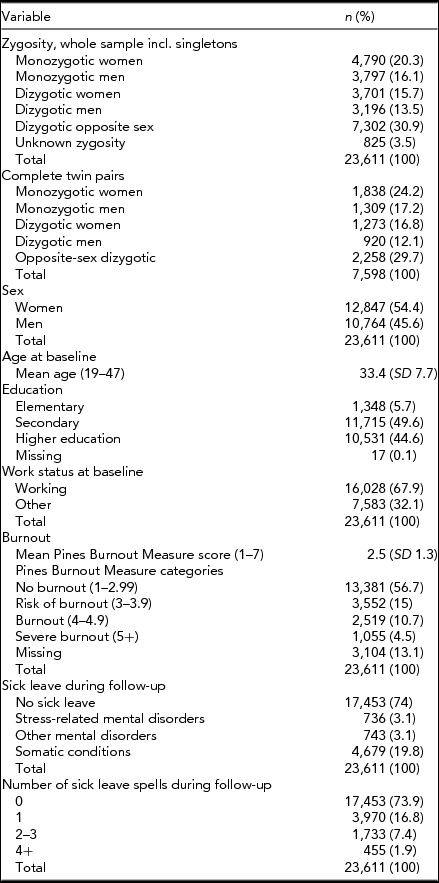
Respondents who were missing in LISA (236; emigrated or deceased) the year they answered the STAGE questionnaire were excluded as well as those on disability pension (742) or sickness absent (837) at the time of their STAGE response (varying 2004–2006). Further, 70 participants with unknown response dates could not be followed up and were excluded. The final sample contained 23,611 twins (aged between 19 and 47 years, 54.4% women), including 7,598 complete twin pairs, 3,147 monozygotic (MZ) pairs, 2,193 same-sex dizygotic (DZ), and 2,258 opposite sex DZ. The sample also contained 8,415 singletons (where only one twin responded and met inclusion criteria). The majority of the sample (67.9%) reported that they were working (employed or self-employed) at baseline, and 96% of the sample was registered as working for at least 1 hour per week during one or more of the years 2007–2010. Moreover, 44.6% of the participants were registered in LISA as having higher (post-secondary) education (Table 1).
Frequencies of Outcomes, Exposures, and Covariates Among 23,611 Swedish Twins
Exposure
The short form of Pines Burnout Measure that includes the questions ‘How often during the last 12 months have you felt low?’, ‘How often during the last 12 months have you felt emotionally exhausted?’, and ‘How often during the last 12 months have you felt run down?’ was included in STAGE. The answers ranged from 1 = never to 7 = all the time. This short-form scale is strongly correlated (0.9) with the full 21-item Pines Burnout Measure (Hallsten et al., Reference Hallsten, Josephson and Torgén2005), and Cronbach's alpha was 0.87 in the present study. The mean burnout score across items was calculated and used as a continuous variable (1–7) in the logistic regression analysis. The skewness value was 0.81, and the kurtosis value was 2.98. However, for the bivariate twin analysis, an ordinal variable with four groups was created: no burnout (1–2.99), risk of burnout (3–3.99), burnout (4–4.99), and severe burnout (5+) as a liability threshold model was used due to a binary outcome. These cutoff points have been used in previous studies (Takaia et al., Reference Takai, Takahashib, Iwamitsua, Andoa, Okazakia, Nakajimab and Miyaokab2009; Reference Takai, Takahashi, Iwamitsu, Oishi and Miyaoka2011). Answering ‘don't know/don't want to answer’ was treated as missing values.
Outcome
STAGE participants were followed up for sick leave spells from their response date, ranging from November 1, 2004 to May 2, 2006, using MiDAS, until December 31, 2010 (follow-up for approximately 5 years). Sick leave is paid by the employer for the first 14 days, after an unpaid qualifying day; after that the Social Insurance Agency reimburses lost income of up to 80% (different amounts of qualifying days apply for self-employed and unemployed, after which they get sick leave benefits from the Social Insurance Agency). Hence, only spells that lasted longer than 14 days are included in the register. Hierarchy was applied and priority was given to spells in stress-related mental diagnoses, followed by other mental diagnoses. Hence, if one or more spells in a stress-related mental diagnosis occurred during follow-up, classified as diagnostic code F43 in the International Classification of Diseases (Version-10; National Board of Health and Welfare, 2010a; World Health Organization, 2013), the participant was included in the stress-related mental group. If no stress-related mental sick leave spell during follow-up had occurred, but there was at least one sick leave spell in another mental diagnosis, classified as Diagnostic Chapter F (excluding F43) in ICD 10, the participant was included in the other mental disorder group. If no mental spells were present but at least one sick leave spell in another diagnosis, the participant was included in the somatic conditions group. Three binary outcome variables were created, all using those with no sick leave during follow-up as the reference group. Number of spells and length of sick leave were not taken into account to avoid empty cells in the analysis.
Covariates
Sex was entered in the analyses as a dichotomous variable. Age was used as a continuous variable derived by subtracting the date of the STAGE interview from the date of birth. Zygosity was measured in the STAGE interview by a set of questions assessing twin pair similarity, a validated method with 99% accuracy (Lichtenstein et al., Reference Lichtenstein, de Faire, Floderus, Svartengren, Svedberg and Pedersen2002).
Analysis
Three types of analyses were performed: logistic regression analyses of the whole sample, co-twin control analyses using conditional logistic regression, and bivariate twin analyses using Cholesky models. Confidence intervals were set to 95% (95% CI).
First, logistic regression analyses of the whole sample were performed to assess to what extent symptoms of burnout was a risk factor for sick leave due to stress-related mental disorders, other mental disorders, or somatic conditions. These analyses included the whole cohort, with both singletons and complete pairs irrespective of zygosity. The clustered robust standard error (clustered on twin pair identification number) was used to take into account that data from twins in a pair are not statistically independent. The analysis was adjusted for sex and age.
Second, co-twin analyses were performed using conditional logistic regression. As twins are matched on genetics (100% for MZ twins and 50% for DZ twins) and shared environment (100% for both MZ and DZ) while growing up (if raised together), this analysis adjusts for these factors. By comparing the results of the whole sample adjusted for sex and age with the results of the conditional analyses adjusted for sex, age, and familial factors using matching, it is possible to assess the impact of familial confounding on associations (Kujala et al., Reference Kujala, Kaprio and Koskenvuo2002). These analyses include only complete same-sex MZ and DZ twin pairs discordant for the outcomes (sick leave due to stress-related mental disorders: 141 pairs; other mental disorders: 135 pairs; and somatic conditions: 1,071 pairs). Only same-sex twin pairs were included as utilizing same-sex twins not only allows control for age but also for sex. These analyses were also stratified by zygosity. If the odds ratio (OR) for MZ twins is lower than the OR for DZ twins, it can be expected that genetic factors are of greater importance than shared environment (Kujala et al., Reference Kujala, Kaprio and Koskenvuo2002). Logistic and conditional logistic regression analyses were performed in STATA IC 12.
Third, bivariate Cholesky models were built. In these analyses, structural equations modeling was used to estimate the effects of latent variables, additive genetics (A), dominant genetics (D), shared environment (C), and unique environment (E) on the covariation between the traits (Rijsdijk & Sham, Reference Rijsdijk and Sham2002). Liability threshold models were used, as the outcome variable was binary, where it is assumed that there is an underlying liability to categorical variables that is normally distributed. In these analyses all MZ and DZ twins were included, both discordant and concordant pairs as well as singletons, as they contribute to the variation. Intra-pair polychoric and tetrachoric correlations of the variables were calculated for MZ, DZ same-sex, and DZ opposite-sex twins. If the DZ same-sex twin and DZ opposite-sex twin correlations differ, this indicates qualitative sex differences. Cross-twin, cross-trait correlations were calculated for MZ and DZ twins separately. The sample had no DZ male twin pairs concordant for sick leave due to stress-related mental disorders or for the highest level of burnout. Hence, it was not possible to build a five-group model to evaluate quantitative sex differences. Therefore, a two-group model with women and men pooled, including the opposite-sex twins, was used. Saturated models were built and compared with a nested model, restricting the thresholds to be equal between twin 1 and twin 2 in a pair and between MZ and DZ twins; as twins are randomly assigned to be twin 1 or twin 2 in a pair, these should not differ significantly. Full ACE and ADE (A = additive genetics, D = dominant genetics, C = shared environment, E = unique environment) models were built. As these models are not nested, the best fitting model was chosen based on the Akaike's Information Criterion (AIC) and the Bayesian Information Criterion (BIC), in which a small value means a better fit and parsimony of the model (Akaike, Reference Akaike, Petrov and Csaki1973; Raftery, Reference Raftery1995). Chi-square tests were then used to test the nested submodel AE against the full ADE model. Further, a nested AE model without a unique environmental covariation path and an E model were tested against the AE model. If the fit is not significantly worse, the more parsimonious model with the least parameters is preferred (Purcell, Reference Purcell, Plomin, DeFries, Knopik and Neiderhiser2013). Both path estimates and covariance components for the best fitting model were obtained. The genetic correlations were calculated from the covariance components, where the path that loads on to sick leave from burnout was divided by the square root of the product of univariate heritabilities. The proportion of the phenotypic correlations that were explained by genetic effects was calculated by multiplying the genetic correlation with the square roots of the univariate heritabilities and then dividing this product by the phenotypic correlation (Purcell, Reference Purcell, Plomin, DeFries, Knopik and Neiderhiser2013). Post-hoc analysis was performed, including sex as a covariate in the models. Analyses were performed using OpenMx software (Boker et al., Reference Boker, Neale, Maes, Wilde, Spiegel, Brick and Fox2011), and the polychoric and tetrachoric correlations were calculated using the polychor and psych package, all run within the R environment (R-Development-Core-Team, 2010).
This study has been approved by the regional ethics committee board in Stockholm (Dnr: 2007/524-31, Dnr:2010/1346-32/5 and Dnr: 2014/311-32).
Results
Table 1 contains frequencies of exposure, outcomes, and covariates in the sample. During follow-up, there were a total of 837 sick leave spells due to stress-related mental disorders, 1,082 spells due to other mental disorders, and 8,206 spells due to somatic conditions (numbers not shown). Among the 23,611 study participants, 6,158 (26%) had at least one sick leave spell during follow-up (Table 1).
Burnout was associated with sick leave due to stress-related mental disorders in the crude logistic regression analysis. With each 1-point increase on the 7-point burnout scale, the odds for stress-related sick leave increased by 47%. When adjusted for sex and age, the OR was slightly attenuated to 1.39. In the co-twin analysis, the OR was reduced to 1.02, and was no longer statistically significant, indicating that the association was explained by familial factors (Table 2).
Odds Ratios With 95% Confidence Intervals for the Associations Between Burnout (1–7) and Sick Leave in the Whole Sample and Conditional Analysis of the Complete Same-Sex Pairs Discordant for the Outcome (Co-Twin Model)

Statistically significant associations are highlighted in bold.
Crude: crude analysis of the whole sample; Adjusted: analysis of the whole sample adjusted for sex and age; Co-twin model: adjusted for sex, age, and familial factors by matching; MZ (monozygotic) co-twin model: adjusted for sex, age, shared environment, and 100% genetics by matching; DZ (dizygotic) co-twin model: adjusted for sex, age, shared environment, and 50% genetics by matching.
In the analysis of sick leave due to other mental disorders, ORs were somewhat higher than for sick leave due to stress-related mental disorders. With each 1-point increase on the 7-point burnout scale, the odds for sick leave increased by 63%. The OR was slightly attenuated to 1.56 when adjusted for sex and age. The co-twin analysis showed that familial factors are of importance in this association, as the co-twin OR was reduced to 1.19, and was no longer significant (Table 2).
In the analysis of sick leave due to somatic conditions, the odds for sick leave increased by 10% for each increase on the burnout scale and the OR was somewhat attenuated when adjusted for age and sex. However, in the co-twin analysis, the OR did not decrease, indicating that familial factors were not of importance in this association (Table 2). Furthermore, the phenotypic correlation between burnout and sick leave due to somatic conditions was 0.07. Hence, sick leave due to somatic conditions was not investigated with the bivariate Cholesky analysis.
The intra-pair correlations and the cross-twin, cross-trait correlations for burnout and sick leave due to stress-related and other mental disorders can be seen in Table 3. As the intra-pair correlations were similar for DZ same-sex twins and DZ opposite-sex twins, no major qualitative sex differences were suspected in any of the phenotypes. However, in the cross-twin, the cross-trait correlation between burnout and sick leave in stress-related mental disorders, the estimates differed between same-sex and opposite-sex DZ twins. This indicates that qualitative sex differences may be present.
Polychoric (Burnout) and Tetrachoric (Sick Leave) Within Pair Correlations and Cross-Twin, Cross-Trait Correlations (Polychoric) with 95% Confidence Intervals, Stratified on Zygosity

MZ = monozygotic; DZ = dizygotic.
In the bivariate Cholesky models for sick leave due to both stress-related and other mental disorders, restricting the thresholds to be equal between twin 1 and twin 2 and between MZ and DZ twins did not significantly worsen the fit compared with the saturated models. In the analyses of sick leave due to both stress-related and other mental disorders, the ADE model was chosen since it provided a better fit than the ACE model, based on AIC and BIC values (Table 4). Model fitting showed that dropping the D parameter did not significantly worsen the fit. Further dropping the unique environmental correlation between the phenotypes did not worsen the fit compared with the full AE model. Dropping the A parameter significantly worsened the fit, thus the AE model with no unique environmental covariation path was chosen as the final model for both types of sick leave; this was also the model with the lowest BIC value (Table 4). The models, including sex as a covariate, gave the same path estimates as the unadjusted models; however, they had a slightly worse fit, although not statistically significant (data not shown). Therefore, results from the models not including sex were chosen as the final models. Since age showed no correlation to burnout (r = −0.004, p = .594) and only minor age differences were found in sick leave, age was not included as a covariate in the models.
Model Fit Statistics of the Bivariate Cholesky Models for Pines Burnout Measure and Sick Leave Due to Stress-Related Mental Disorders and Other Mental Disorders

Best fitting model is highlighted in bold.
NEC = no unique environmental covariation, df = degrees of freedom, -2LL = -2 Log likelihood, AIC = Akaike's Information Criterion, BIC = Bayesian Information Criterion.
Phenotypic variation was decomposed into additive (A) and dominance (D) genetic variation, shared (C) and unique (E) environmental variation.
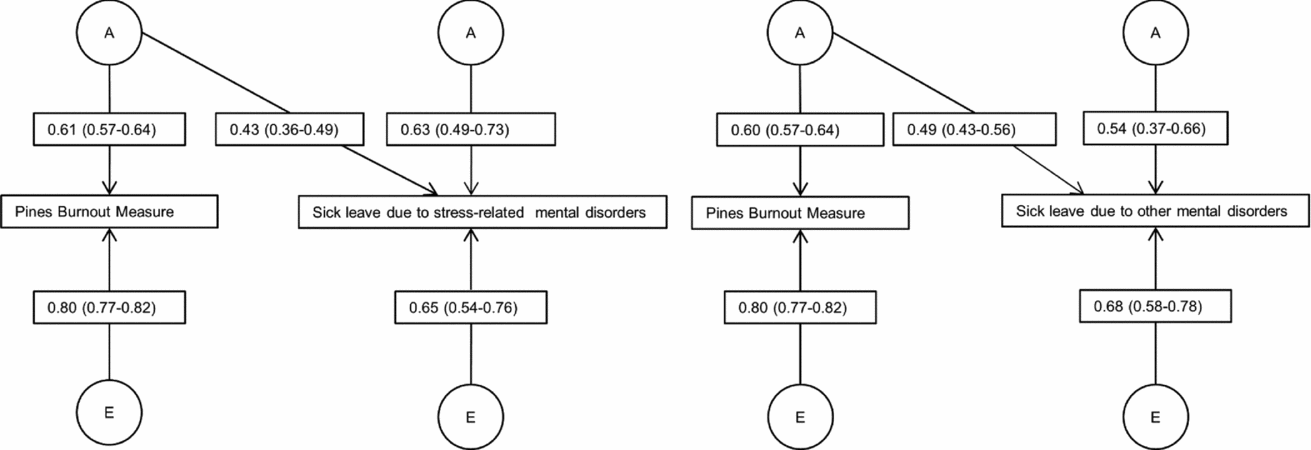
Path estimates can be seen in Figure 1. The heritability of burnout was 37% (95% CI: 32–41%), the remaining variation was due to unique environmental factors that were not shared with sick leave. The heritability of sick leave due to stress-related mental disorders was 58% (95% CI: 43–71%). The genetic correlation between sick leave due to stress-related mental disorders and burnout was 0.56. The phenotypic correlation was 0.26, and 100% out of that phenotypic correlation was explained by genetic factors. The heritability of sick leave due to other mental disorders was 54% (95% CI: 39–67%). The genetic correlations between sick leave due to other mental disorders and burnout was 0.68. The phenotypic correlation was 0.30, and 100% out of that phenotypic correlation was explained by genetic factors.
Path estimates with 95% confidence intervals for the best fitting model for covariation between the Pines Burnout Measure and sick leave due to stress-related mental disorders (left) and the covariation between the Pines Burnout Measure and sick leave due to other mental disorders (right).
Discussion
In this population-based prospective twin study we found that burnout was a risk factor for sick leave due to both stress-related and other mental disorders. However, these associations were explained by familial factors. The association between burnout and sick leave due to somatic conditions was modest and not influenced by familial factors. Additive genetic factors explained 37% of the variation in burnout, 58% in sick leave due to stress-related mental disorders, and 54% in sick leave due to other mental disorders. The remaining variation was explained by unique environmental factors, which was not shared between the phenotypes. The phenotypic correlations between burnout and sick leave due to stress-related mental disorders (0.26) and between burnout and sick leave due to other mental disorders (0.30) were completely explained by genetic factors common to both.
These results indicate that burnout is not an independent risk factor for sick leave due to mental disorders, but rather an expression of the same genetic liability in the presence of different environmental stressors. Given that burnout research to a large extent has focused on work stressors in the etiology of burnout, it is an interesting finding that genetic factors have such a substantial influence in the transition from burnout to sick leave. Since unique environment had a significant impact on both burnout and sick leave due to mental disorders, environmental measures may be effective in reducing the number of sick leave spells and levels of burnout in the population. However, reducing burnout will probably not have an effect on reducing levels of sick leave.
The phenotypic correlations in the present study were relatively modest. While symptoms of burnout was common in this sample, with more than 15% scoring above 4 on the Pines Burnout Measure, only 13% out of those went on to have at least one sick leave spell due to a mental disorder during the 5-year follow-up, and 22% went on to have sick leave due to somatic conditions. Hence, the majority of the individuals with a high burnout score did not require sick leave during the follow-up period.
The presence of a genetic liability to burnout and sick leave due to mental disorders is in line with previous research; however, there is still a limited amount of studies on the subject. Previous twin studies have found that genetic factors explain 36–50% of the liability to all-cause sick leave (Gjerde et al., Reference Gjerde, Knudsen, Czajkowski, Gillespie, Aggen, Roysamb and Orstavik2013; Reference Gjerde, Røysamb, Czajkowski, Knudsen, Østby, Tambs and Ørstavik2014; Svedberg et al., Reference Svedberg, Ropponen, Alexanderson, Lichtenstein and Narusyte2012). Studies of disability pension due to mental disorders found that genetics explained 42–49% of the variance (Harkonmäki et al., Reference Harkonmäki, Silventoinen, Levälahti, Pitkäniemi, Huunan-Seppälä, Klaukka and Kaprio2008; Narusyte et al., Reference Narusyte, Ropponen, Silventoinen, Alexanderson, Kaprio, Samuelsson and Svedberg2011). It is well established that common mental disorders, such as depression and anxiety, have genetic risk factors. Heritability for these disorders has been estimated to be 30–40% (Hettema et al., Reference Hettema, Neale and Kendler2001; Sullivan et al., Reference Sullivan, Neale and Kendler2000) and the genetic risk factors are shared between the traits (Kendler et al., Reference Kendler, Neale, Kessler, Heath and Eaves1992, Reference Kendler, Gardner, Gatz and Pedersen2007). Hence, the heritability coefficients in the current study were somewhat higher than previous findings of similar measures. Heritability of burnout was found to be slightly higher than the 33% found by Blom et al. (Reference Blom, Bergstrom, Hallsten, Bodin and Svedberg2012), and the 13% in women and 30% in men found by Middeldorp et al. (Reference Middeldorp, Cath and Boomsma2006). The study by Blom et al. (Reference Blom, Bergstrom, Hallsten, Bodin and Svedberg2012) used the same cohort as the current study, but did not have the same exclusion criteria, which can explain the difference in results.
Studies of the pathophysiology of stress-related disorders have put forward that there may be pre-existing genetic vulnerabilities in patients on sick leave due to job stress-induced depression (Rydmark et al., Reference Rydmark, Wahlberg, Ghatan, Modell, Nygren, Ingvar and Heilig2006; Wahlberg et al., Reference Wahlberg, Ghatan, Modell, Nygren, Ingvar, Asberg and Heilig2009). These studies found that a decrease in HPA reactivity was present a year after the stress-induced depression, when clinical symptoms had disappeared and cognitive function returned to normal. Another study found that having a family history of depression predicted emotional exhaustion, the key feature in burnout (Nyklicek & Pop, Reference Nyklicek and Pop2005), a finding that could point to shared genetic risk factors. Personality traits, such as neuroticism and performance-based self-esteem, have been shown to be associated with burnout and mental health outcomes, and are also heritable (Hallsten et al., Reference Hallsten, Josephson and Torgén2005; Kendler et al., Reference Kendler, Gardner, Gatz and Pedersen2007; Svedberg et al., Reference Svedberg, Blom, Narusyte, Bodin, Bergström and Hallsten2013). It is possible that some of the shared genetic risk factors are reflections of personality traits.
To our knowledge, this is the first study of the covariation between symptoms of burnout and sick leave due to stress-related or other mental disorders. However, previous studies have found significant correlations (0.3–0.5) between depression and burnout, with emotional exhaustion explaining 20% of the correlation (Glass et al., Reference Glass, McKnight and Valdimarsdottir1993; McKnight & Glass, Reference McKnight and Glass1995). A previous twin study found a phenotypic correlation between burnout and anxious depression of 0.40 and the proportions of this correlation explained by shared genetic factors were 66% for women and 50% for men (Middeldorp et al., Reference Middeldorp, Cath and Boomsma2006). In previous studies on association between burnout and future sick leave due to mental disorders, ORs were high. Peterson et al. (Reference Peterson, Bergström, Demerouti, Gustavsson, Åsberg and Nygren2011) found an OR of 5.17 for each increase on the 4-point Oldenburg Burnout Inventory (OLBI) exhaustion scale. Toppinen-Tanner et al. (Reference Toppinen-Tanner, Ojajärvi, Väänänen, Kalimo and Jäppinen2005) found a relative risk of 3.15 for the highest quartile of the MBI compared with the lowest quartile. These strong associations may be due to burnout being correlated with depression (Glass et al., Reference Glass, McKnight and Valdimarsdottir1993; McKnight & Glass, Reference McKnight and Glass1995), and thus the future research on the covariation between burnout, depression, and sick leave is warranted.
The phenotypic correlation between burnout and sick leave due to stress-related mental disorders was slightly lower than that of burnout and sick leave due to other mental disorders. Even though burnout measured with the Pines Burnout Measure was found to be separate from depression (Shirom & Ezrachi, Reference Shirom and Ezrachi2003), the correlation between the Pines Burnout Measure and depression was stronger than the correlation between the Maslash Burnout Inventory and depression (Enzmann et al., Reference Enzmann, Shaufeli, Janssen and Rozeman1998; Shirom & Ezrachi, Reference Shirom and Ezrachi2003), which may be reflected in our results. Also, the outcome measures of sick leave are quite broad in the current study, and sick leave diagnostic groups somewhat overlapping. Since differential diagnostics can sometimes be difficult at an early stage of the disorder (National Board of Health and Welfare, 2010b), which mental diagnosis appear on the first sick leave certificate as the main diagnosis may to some extent be arbitrary. A related limitation is that, as far as we know, sick leave diagnoses in the MiDAS register have not been validated. The validity of diagnoses is often discussed but such studies are rare; however, a previous study showed high validity of sick leave diagnoses compared with diagnoses from medical records (Ljungdahl & Bjurulf, Reference Ljungdahl and Bjurulf1991).
Stress-related mental disorders include acute stress reaction, post-traumatic stress syndrome, adjustment disorder, and other specified reactions to severe stress; this includes exhaustion syndrome and stress/crises reaction (National Board of Health and Welfare, 2010a). In this study, it was not possible to identify the subgroups of the participants. However, most cases of long-term sick leave due to stress-related mental disorders are in reactions to severe stress (AFA Insurance, 2013; Social Insurance Agency, 2013). Reactions to severe stress include exhaustion syndrome, a diagnosis that was added to the Swedish version of ICD in 2003 (National Board of Health and Welfare, 2003). It is a reaction to long-term psychosocial stress without adequate recovery, which often requires long periods of sick leave (National Board of Health and Welfare, 2008). If the diagnostic criteria for depression are also met, exhaustion disorder should be given as a secondary diagnosis (National Board of Health and Welfare, 2003). However, as secondary diagnoses are not available in the register used in this study, it is likely that some of the depression spells of sick leave may have been caused by stress. The fact that hierarchy was applied can also have caused the correlation between burnout and sick leave due to stress-related mental disorders to be somewhat diluted, as this category as a result contained a high degree of comorbid cases.
The strengths of this study include the large population-based sample of twins and the high quality of registry data. Moreover, two types of twin analyses were performed assessing both association and covariation between burnout and sick leave. There has been criticism of the co-twin model as it only includes discordant pairs and hence may result in biased estimates (Frisell et al., Reference Frisell, Öberg, Kuja-Halkola and Sjölander2012; McGue et al., Reference McGue, Osler and Christensen2010). In this study, we were able to confirm the findings with supplementary analysis of the covariation using a Cholesky model that also includes concordant twin pairs. Notably, while the results of the bivariate Cholesky model indicated that genetic factors were of importance (Figure 1), the co-twin analysis showed similar results for MZ and DZ twin pairs (Table 2), indicating that shared environment was of importance. Weaknesses include the somewhat low response rate to the STAGE questionnaire and the fact that women were overrepresented among the responders (Lichtenstein et al., Reference Lichtenstein, Sullivan, Cnattingius, Gatz, Johansson, Carlstrom and Pedersen2006). Even though a fairly large sample was available, there were no concordant DZ male twin pairs available in all categories, and we were not able to assess quantitative sex differences. This is perhaps also a reflection of the fact that burnout and sick leave due to mental disorders are more common among women (Hallsten et al., Reference Hallsten, Bellaagh and Gustafsson2002; Social Insurance Agency, 2011). Previous research found no sex differences in sick leave (Gjerde et al., Reference Gjerde, Knudsen, Czajkowski, Gillespie, Aggen, Roysamb and Orstavik2013; Svedberg et al., Reference Svedberg, Ropponen, Alexanderson, Lichtenstein and Narusyte2012), but some quantitative sex differences have been found in burnout (Blom et al., Reference Blom, Bergstrom, Hallsten, Bodin and Svedberg2012; Middeldorp et al., Reference Middeldorp, Cath and Boomsma2006). The cross-twin, cross-trait correlations between burnout and sick leave due to stress-related mental disorders indicated that there might have been some qualitative sex differences present. The fact that we were not able to assess these may have underestimated the effect of shared environment and overestimated the effect of dominant genetic effects somewhat. Another potential limitation is related to that burnout and sick leave may vary with age. However, this was not evident in the present study since age was not correlated with burnout and only to a small degree with sick leave. An age effect would inflate co-twin similarity that in turn would inflate shared environment. But, since we found no support for shared environmental influences, we do not believe this was a problem.
To conclude, this population-based prospective twin study found that the association between burnout and sick leave due to mental disorders was explained by familial factors. The association between burnout and sick leave due to somatic conditions was modest and not influenced by familial factors. The phenotypic correlations between burnout and sick leave due to stress-related and other mental disorders were relatively modest, but completely explained by common genetic factors. Therefore, symptoms of burnout are not an independent risk factor for sick leave due to mental disorders, but instead the association seems to be a reflection of a shared genetic liability.
Acknowledgments
This study was supported by grants from Karolinska Institutet faculty funding for doctoral students (KID) (LM) and Strategic Research Program in Epidemiology (PS), The Swedish Society of Medicine, Magnus Bergvall Foundation, and the Swedish Research Council for Health, Working Life and Welfare (2009-0548). The Swedish Twin Registry is supported by Sweden's Department of Higher Education, AstraZeneca, and the Swedish Research Council. The Study of Twin Adults: Genes and Environment (STAGE) was supported by the National Institute of Health, USA, grants DK 066134 and CA 085739.



